
❖ Compiled by: Abu Hamzah Salafi
This article critically examines the objection raised against Shaykh Zubair Ali Zai رحمه الله, alleging that he authenticated a munkar (denounced) narration while translating Imām al-Bayhaqī’s book "Ithbāt ʿAdhāb al-Qabr", particularly a narration from ʿAbdullāh ibn ʿUmar رضي الله عنهما about seeing a tormented soul emerging from the grave.
The objection is based on the claim that this narration is severely weak or contains abandoned narrators. It also argues that according to authentic hadiths like that of Ṣaḥīḥ Muslim, people cannot witness the punishment of the grave, otherwise the Prophet ﷺ would have prayed that all may see it.
Shaykh Zubair Ali Zai allegedly confirmed its authenticity by translating it.
However, this narration is munkar, containing severely weak or abandoned narrators in all chains.
Furthermore, according to an authentic hadith in Ṣaḥīḥ Muslim, punishment of the grave is hidden from people.
✔ He merely translated Imām al-Bayhaqī’s words.
✔ Imām al-Bayhaqī himself said: “This narration has supporting witnesses.”
✔ The real error lies in Bayhaqī’s leniency in authentication, as he combined a munkar narration with authentic reports.
 Therefore, the criticism should be directed towards Imām al-Bayhaqī’s leniency, not Shaykh Zubair.
النص (Ṣaḥīḥ Muslim, Ḥadīth 2867):
«إِنَّ هَذِهِ الْأُمَّةَ تُبْتَلَى فِي قُبُورِهَا، فَلَوْلَا أَنْ لَا تَدَافَنُوا، لَدَعَوْتُ اللهَ أَنْ يُسْمِعَكُمْ مِنْ عَذَابِ الْقَبْرِ الَّذِي أَسْمَعُ مِنْهُ»
Translation:
“Indeed, this Ummah will be tested in their graves. Had I not feared that you would stop burying one another, I would have asked Allah to let you hear the punishment of the grave that I hear.”
Explanation:
This hadith clearly establishes that the punishment of the grave is hidden from people. If Ibn ʿUmar رضي الله عنهما had seen such a thing, it would have been proven through authentic chains. Since the Prophet ﷺ himself affirmed that such matters are concealed, this narration attributed to Ibn ʿUmar is munkar and weak.
Summary: Ibn ʿUmar saw a man emerge from a grave, with fire upon him and chains on his neck, crying for water.
◈ al-Jawāb: Chain Analysis
The central narrator is ʿUbādah bin Kulayb, also known as ʿAbbād bin Kulayb – a severely weak and abandoned narrator.
✿ Statements of Scholars:
① al-Dhahabi:
«متروك» — Mizān al-Iʿtidāl
② al-ʿUqaylī:
«لا يُتابع عليه» — No corroboration for his narration. (al-Ḍuʿafāʾ al-Kabīr)
③ Abū Ḥātim al-Rāzī:
«صدوق وفى حديثه إنكار» — Apparently truthful but narrates munkar reports. (al-Jarḥ wa al-Taʿdīl)
④ Imām al-Bukhārī:
Cited in Kitāb al-Ḍuʿafāʾ.
Conclusion:
This narration is unreliable and cannot be used in matters of ʿAqīdah.
◈ al-Jawāb: Chain Analysis
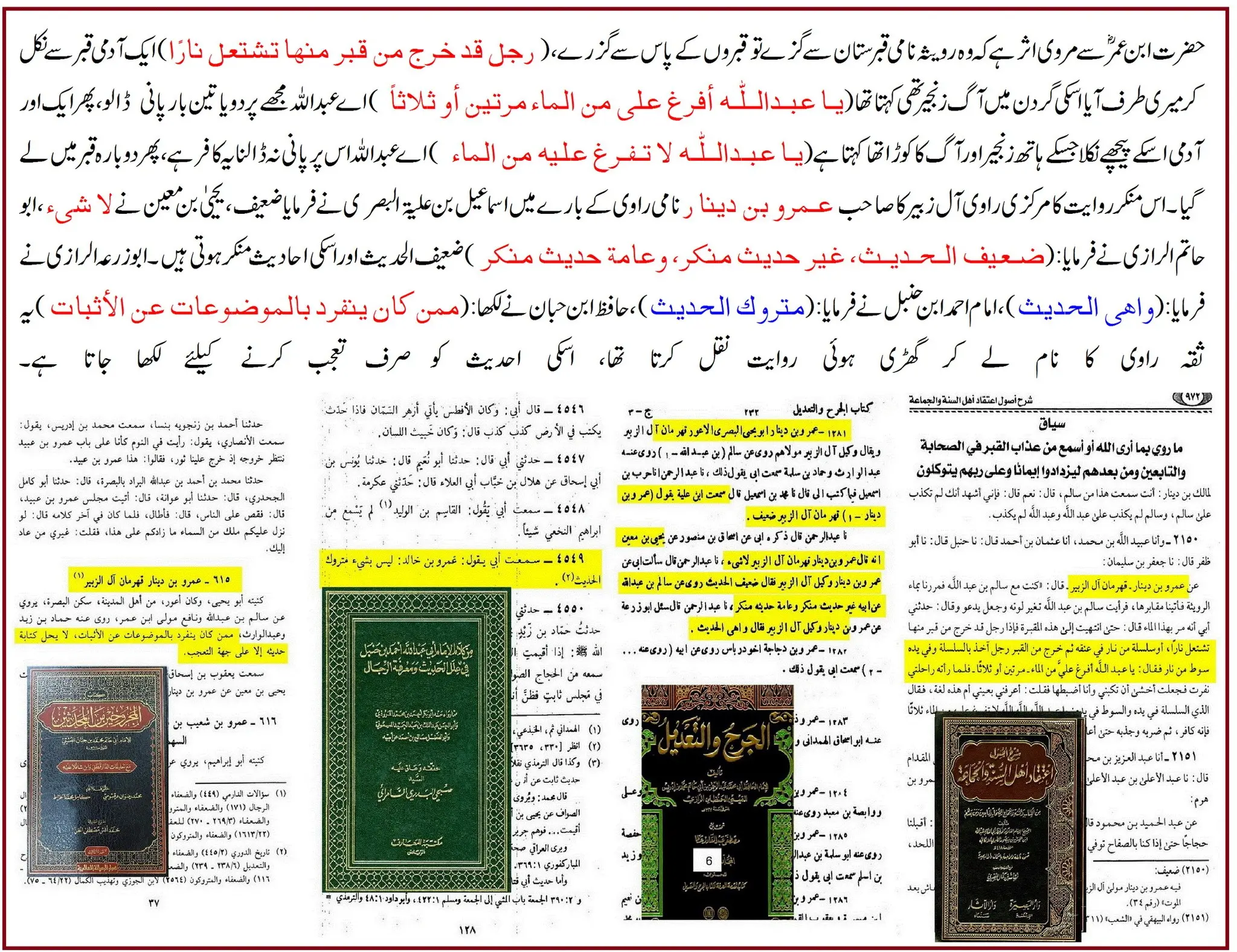
Central narrator: ʿAmr bin Dīnār (Qahramān Āl al-Zubayr)
✿ Statements of Scholars:
① Ismāʿīl bin ʿUlayyah:
«ضعيف»
② Yaḥyā bin Maʿīn:
«لا شيء» — Worthless
③ Abū Ḥātim:
«ضعيف الحديث … عامة حديثه منكر»
④ Abū Zurʿah:
«واهي الحديث» — Extremely weak
⑤ Aḥmad bin Ḥanbal:
«منكر الحديث»
⑥ Ibn Ḥibbān:
«ينفرد بالموضوعات … لا يحل كتابة حديثه إلا على جهة التعجب» (al-Majrūḥīn)
Conclusion:
This narration is also unacceptable due to a central weak narrator.
◈ al-Jawāb: Chain Analysis
Key narrator: ʿAbdullāh bin Muḥammad bin Mughīrah
✿ Statements of Scholars:
① Abū Zurʿah:
«منكر الحديث»
② al-Dhahabī:
«متروك … روى الطامات»
③ Ibn Yūnus:
«منكر الحديث»
④ Ibn al-Jawzī:
«كذاب»
⑤ al-Haythamī:
«متروك» (Majmaʿ al-Zawāʾid)
Conclusion:
This narration is extremely weak, even declared fabricated.
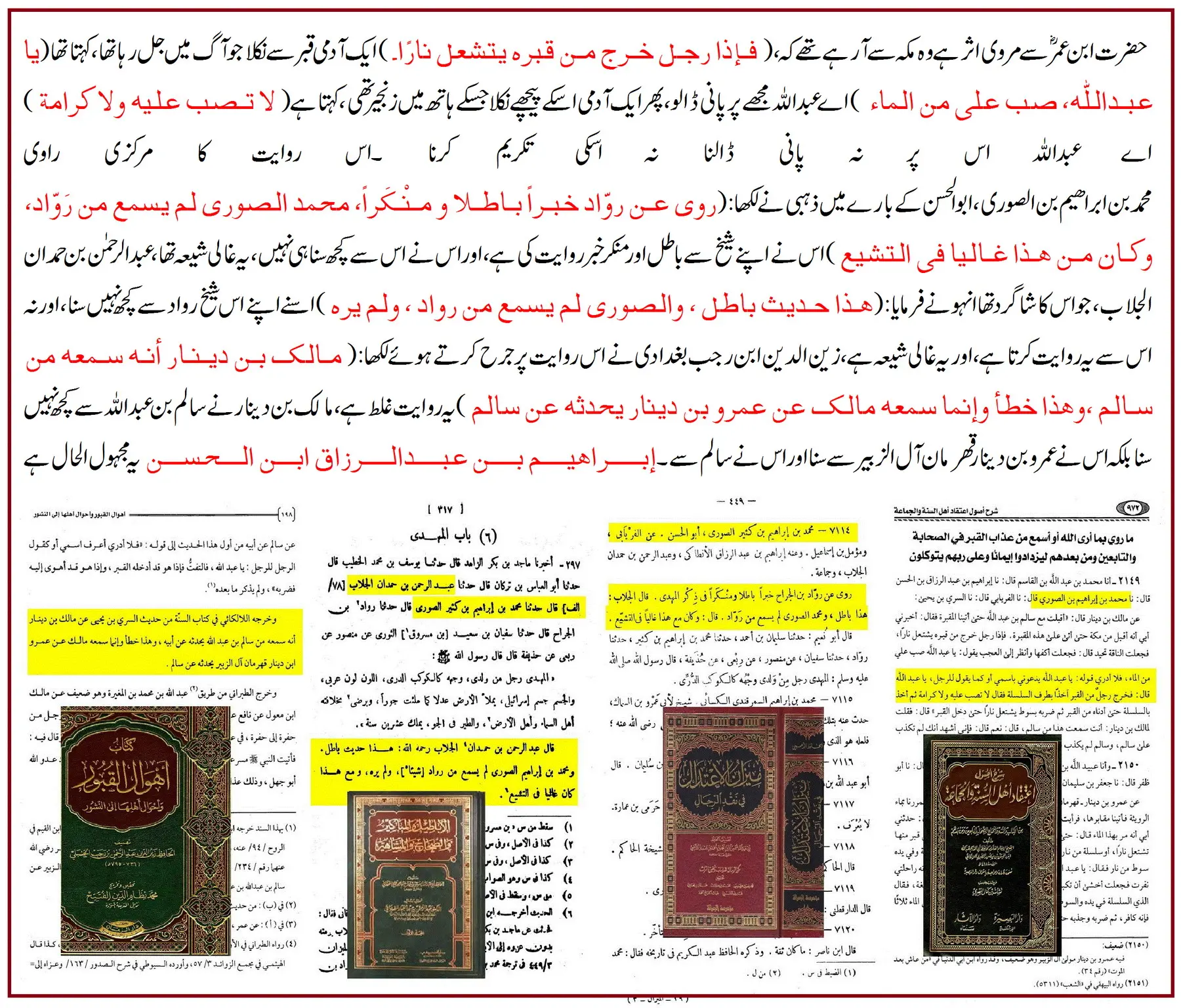
◈ al-Jawāb: Chain Analysis
✿ Issues in the chain:
① Ibrāhīm bin ʿAbd al-Razzāq — Majhūl
② Muḥammad bin Ibrāhīm al-Ṣūrī — Abandoned and extreme Shīʿī
③ Mālik bin Dīnār — Did not hear from Sālim bin ʿAbdillāh
Ibn Rajab:
“This is a mistake. Mālik only heard this from ʿAmr bin Dīnār (Qahramān), whose hadith is already munkar.” (Ahwāl al-Qubūr)
Conclusion:
This chain is disconnected and unreliable.
From: Khālid bin Ḥayyān → Kulthūm bin Jawshan → Yaḥyā al-Madīnī → Sālim → Ibn ʿUmar…
◈ al-Jawāb: Chain Analysis
Key narrator: Kulthūm bin Jawshan
✿ Statements of Scholars:
① Abū Dāwūd:
«منكر الحديث»
② Ibn Ḥibbān:
«يروي عن الثقات المقلوبات…» — Narrates fabricated material from trustworthy sources.
③ Abū Ḥātim:
«ضعيف الحديث»
Conclusion:
Like others, this narration is also very weak and not fit for use in ʿAqīdah.
① ʿUbādah bin Kulayb
② ʿAmr bin Dīnār
③ Ibn Mughīrah
④ al-Ṣūrī and companions
⑤ Kulthūm bin Jawshan
All are either abandoned, liars, or narrators of munkar reports.
al-Dhahabī said:
«وأبو عيسى الترمذي، وأبو عبد الله الحاكم، وأبو بكر البيهقي متساهلون.»
— al-Dhahabī in “Dhikr Man Yuʿtamad Qawluhu fi al-Jarḥ wa al-Taʿdīl”
Meaning: Imāms like Tirmidhī, Ḥākim, and Bayhaqī occasionally relaxed conditions of hadith authenticity.
◈ Shaykh Zubair Ali Zai merely translated Imām al-Bayhaqī’s words.
◈ He did not authenticate the narration himself.
◈ The narration is inherently weak due to all its chains being severely criticized by hadith scholars.
◈ The blame, if any, lies in Bayhaqī’s leniency, not in Shaykh Zubair's translation.
Hence, the accusation against Shaykh Zubair Ali Zai is baseless and refuted.
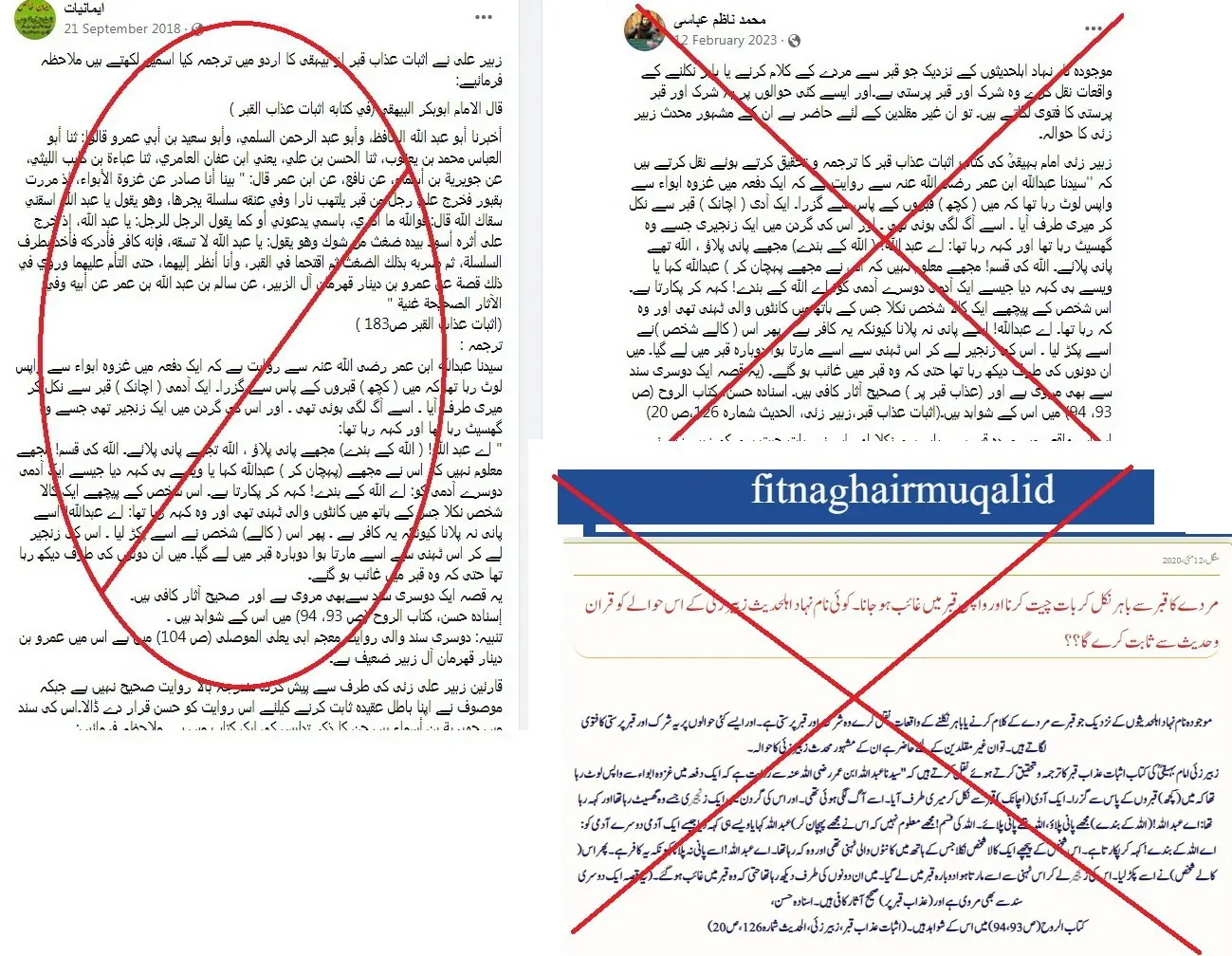
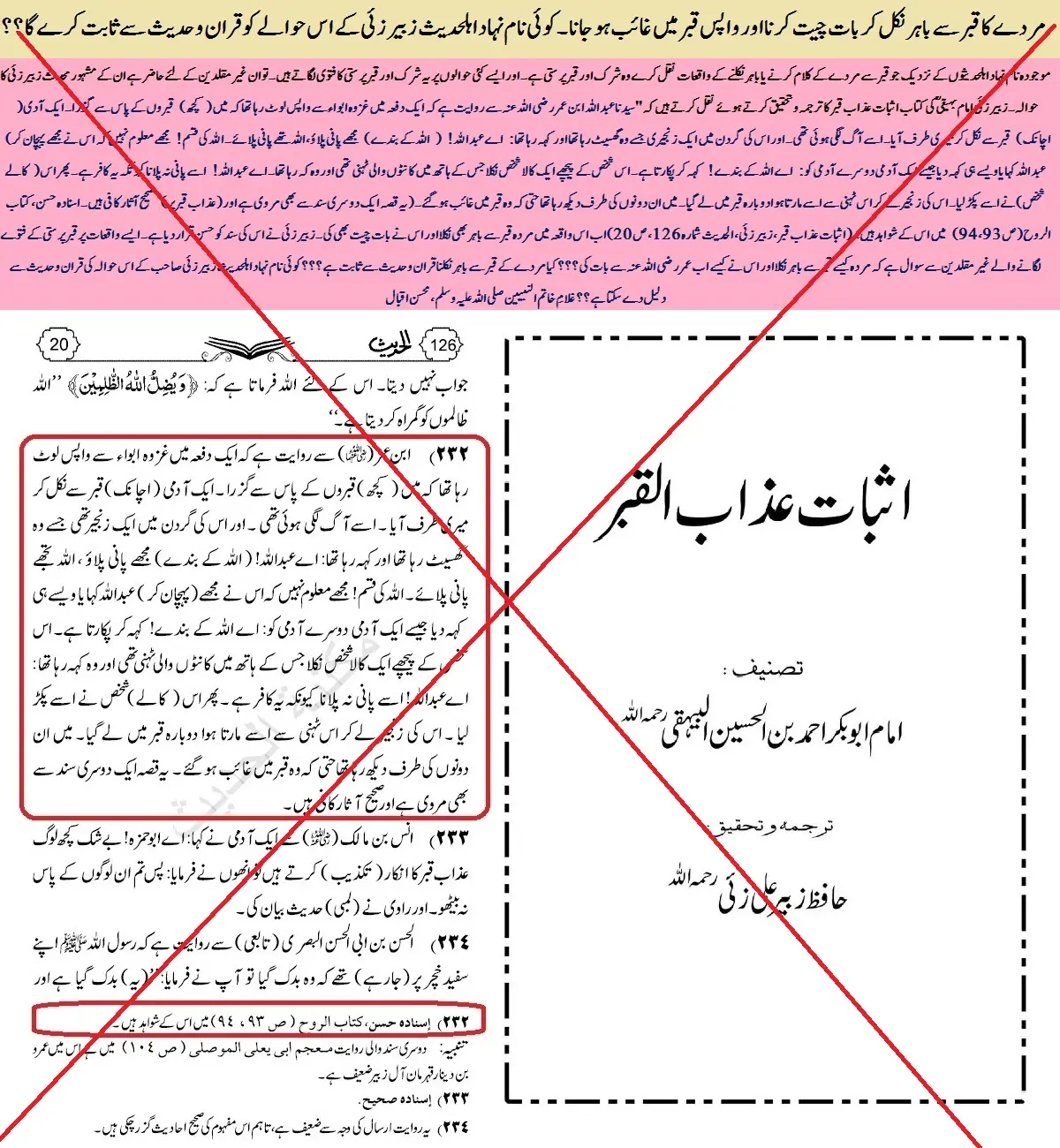




This article critically examines the objection raised against Shaykh Zubair Ali Zai رحمه الله, alleging that he authenticated a munkar (denounced) narration while translating Imām al-Bayhaqī’s book "Ithbāt ʿAdhāb al-Qabr", particularly a narration from ʿAbdullāh ibn ʿUmar رضي الله عنهما about seeing a tormented soul emerging from the grave.
The objection is based on the claim that this narration is severely weak or contains abandoned narrators. It also argues that according to authentic hadiths like that of Ṣaḥīḥ Muslim, people cannot witness the punishment of the grave, otherwise the Prophet ﷺ would have prayed that all may see it.
✿ Claim of the Opponent
Imām al-Bayhaqī narrated in Ithbāt ʿAdhāb al-Qabr that Ibn ʿUmar رضي الله عنهما saw a man emerge from a grave while being punished.Shaykh Zubair Ali Zai allegedly confirmed its authenticity by translating it.
However, this narration is munkar, containing severely weak or abandoned narrators in all chains.
Furthermore, according to an authentic hadith in Ṣaḥīḥ Muslim, punishment of the grave is hidden from people.
◈ al-Jawāb: General Clarification
It is incorrect to say Shaykh Zubair Ali Zai authenticated this narration. The reality is:✔ He merely translated Imām al-Bayhaqī’s words.
✔ Imām al-Bayhaqī himself said: “This narration has supporting witnesses.”
✔ The real error lies in Bayhaqī’s leniency in authentication, as he combined a munkar narration with authentic reports.
Therefore, the criticism should be directed towards Imām al-Bayhaqī’s leniency, not Shaykh Zubair.✿ Can a Companion See the Punishment of the Grave?
◈ al-Jawāb:النص (Ṣaḥīḥ Muslim, Ḥadīth 2867):
«إِنَّ هَذِهِ الْأُمَّةَ تُبْتَلَى فِي قُبُورِهَا، فَلَوْلَا أَنْ لَا تَدَافَنُوا، لَدَعَوْتُ اللهَ أَنْ يُسْمِعَكُمْ مِنْ عَذَابِ الْقَبْرِ الَّذِي أَسْمَعُ مِنْهُ»
Translation:
“Indeed, this Ummah will be tested in their graves. Had I not feared that you would stop burying one another, I would have asked Allah to let you hear the punishment of the grave that I hear.”
Explanation:This hadith clearly establishes that the punishment of the grave is hidden from people. If Ibn ʿUmar رضي الله عنهما had seen such a thing, it would have been proven through authentic chains. Since the Prophet ﷺ himself affirmed that such matters are concealed, this narration attributed to Ibn ʿUmar is munkar and weak.
✿ Detailed Analysis of the Narrations:
① First Chain – Narrated by Imām al-Bayhaqī
From: ʿUbādah bin Kulayb → Juwairiyah bin Asma’ → Nāfiʿ → Ibn ʿUmar...Summary: Ibn ʿUmar saw a man emerge from a grave, with fire upon him and chains on his neck, crying for water.
◈ al-Jawāb: Chain Analysis
The central narrator is ʿUbādah bin Kulayb, also known as ʿAbbād bin Kulayb – a severely weak and abandoned narrator.
✿ Statements of Scholars:
① al-Dhahabi:
«متروك» — Mizān al-Iʿtidāl
② al-ʿUqaylī:
«لا يُتابع عليه» — No corroboration for his narration. (al-Ḍuʿafāʾ al-Kabīr)
③ Abū Ḥātim al-Rāzī:
«صدوق وفى حديثه إنكار» — Apparently truthful but narrates munkar reports. (al-Jarḥ wa al-Taʿdīl)
④ Imām al-Bukhārī:
Cited in Kitāb al-Ḍuʿafāʾ.
Conclusion:This narration is unreliable and cannot be used in matters of ʿAqīdah.
② Second Chain – ʿAmr bin Dīnār (the steward of Āl al-Zubayr)
He narrates seeing a man come out of a grave asking for water, then dragged back by another figure.◈ al-Jawāb: Chain Analysis
Central narrator: ʿAmr bin Dīnār (Qahramān Āl al-Zubayr)
✿ Statements of Scholars:
① Ismāʿīl bin ʿUlayyah:
«ضعيف»
② Yaḥyā bin Maʿīn:
«لا شيء» — Worthless
③ Abū Ḥātim:
«ضعيف الحديث … عامة حديثه منكر»
④ Abū Zurʿah:
«واهي الحديث» — Extremely weak
⑤ Aḥmad bin Ḥanbal:
«منكر الحديث»
⑥ Ibn Ḥibbān:
«ينفرد بالموضوعات … لا يحل كتابة حديثه إلا على جهة التعجب» (al-Majrūḥīn)
Conclusion:This narration is also unacceptable due to a central weak narrator.
③ Third Chain – ʿAbdullāh bin Muḥammad bin Mughīrah
Narrates from Mālik bin Mighwal → Nāfiʿ → Ibn ʿUmar…◈ al-Jawāb: Chain Analysis
Key narrator: ʿAbdullāh bin Muḥammad bin Mughīrah
✿ Statements of Scholars:
① Abū Zurʿah:
«منكر الحديث»
② al-Dhahabī:
«متروك … روى الطامات»
③ Ibn Yūnus:
«منكر الحديث»
④ Ibn al-Jawzī:
«كذاب»
⑤ al-Haythamī:
«متروك» (Majmaʿ al-Zawāʾid)
Conclusion:This narration is extremely weak, even declared fabricated.
④ Fourth Chain – From al-Lālakāʾī
Includes: Ibrāhīm bin ʿAbd al-Razzāq → Muḥammad bin Ibrāhīm al-Ṣūrī → al-Firyābī → al-Sarī bin Yaḥyā → Mālik bin Dīnār…◈ al-Jawāb: Chain Analysis
✿ Issues in the chain:
① Ibrāhīm bin ʿAbd al-Razzāq — Majhūl
② Muḥammad bin Ibrāhīm al-Ṣūrī — Abandoned and extreme Shīʿī
③ Mālik bin Dīnār — Did not hear from Sālim bin ʿAbdillāh
Ibn Rajab:
“This is a mistake. Mālik only heard this from ʿAmr bin Dīnār (Qahramān), whose hadith is already munkar.” (Ahwāl al-Qubūr)
Conclusion:This chain is disconnected and unreliable.
⑤ Fifth Chain – Kulthūm bin Jawshan
From: Khālid bin Ḥayyān → Kulthūm bin Jawshan → Yaḥyā al-Madīnī → Sālim → Ibn ʿUmar…
◈ al-Jawāb: Chain Analysis
Key narrator: Kulthūm bin Jawshan
✿ Statements of Scholars:
① Abū Dāwūd:
«منكر الحديث»
② Ibn Ḥibbān:
«يروي عن الثقات المقلوبات…» — Narrates fabricated material from trustworthy sources.
③ Abū Ḥātim:
«ضعيف الحديث»
Conclusion:Like others, this narration is also very weak and not fit for use in ʿAqīdah.
✿ Final Analysis
All five chains narrating the incident of Ibn ʿUmar رضي الله عنهما seeing the punishment of the grave are weak:① ʿUbādah bin Kulayb
② ʿAmr bin Dīnār
③ Ibn Mughīrah
④ al-Ṣūrī and companions
⑤ Kulthūm bin Jawshan
All are either abandoned, liars, or narrators of munkar reports.
✿ Note on Imām al-Bayhaqī’s Leniency
Though a great scholar, Imām al-Bayhaqī was known to be lenient in authentication.al-Dhahabī said:
«وأبو عيسى الترمذي، وأبو عبد الله الحاكم، وأبو بكر البيهقي متساهلون.»
— al-Dhahabī in “Dhikr Man Yuʿtamad Qawluhu fi al-Jarḥ wa al-Taʿdīl”
Meaning: Imāms like Tirmidhī, Ḥākim, and Bayhaqī occasionally relaxed conditions of hadith authenticity. Conclusion
◈ Shaykh Zubair Ali Zai merely translated Imām al-Bayhaqī’s words.◈ He did not authenticate the narration himself.
◈ The narration is inherently weak due to all its chains being severely criticized by hadith scholars.
◈ The blame, if any, lies in Bayhaqī’s leniency, not in Shaykh Zubair's translation.
Hence, the accusation against Shaykh Zubair Ali Zai is baseless and refuted.
