
Authored by: Muhammad Azeem Hasalpuri (Hafizahullah)
“And complete the Hajj and the ʿUmrah for Allah.”
The Messenger of Allah ﷺ said regarding the reward of ʿUmrah:
“From one ʿUmrah to the next is an expiation for whatever occurs between them, and the only reward for an accepted Hajj is Paradise.”
It is narrated from Ibn Masʿūd رضي الله عنه that the Messenger of Allah ﷺ said:
“Perform Hajj and ʿUmrah repeatedly, for they eliminate poverty and sins just as a furnace removes impurities from iron, gold, and silver.”
The Prophet ﷺ said:
“Indeed, performing ʿUmrah in Ramadan equals performing Hajj, or performing Hajj with me.”
According to most scholars, performing ʿUmrah itself is not obligatory but recommended. However, once a person enters into the state of Ihrām for it, completing it becomes obligatory just like Hajj.
The requirements for performing ʿUmrah are:
After wearing Ihram from the Miqāt, proceed to the Sacred Mosque and perform Ṭawāf around the Kaʿbah.
(One may wear Ihram from home or the airport, but the intention must be made at the Miqāt.)
During the first Ṭawāf, keep the right shoulder uncovered.
This is called Iḍṭibāʿ.
After completing Ṭawāf, cover the shoulder again.
Ṭawāf begins by kissing the Black Stone, or touching it, or if unable, raising the hand toward it.
This gesture is called Istilām.
Perform seven circuits of Ṭawāf, each starting and ending at the Black Stone.
During each circuit, if possible, touch the Yemeni Corner (Rukn Yamani), but do not kiss it.
Between Rukn Yamani and the Black Stone, recite the special supplication listed later in the booklet.
In the first three circuits, walk with a strong, brisk pace (this is called Raml).
The remaining four circuits are walked normally.
After completing Ṭawāf, cover the shoulder and pray two rakʿahs at Maqām Ibrāhīm.
It is Sunnah to recite Sūrah al-Kāfirūn in the first rakʿah and Sūrah al-Ikhlāṣ in the second.
After the prayer, drink Zamzam water, which is available throughout the area.
Then perform Istilām of the Black Stone again.
Next, proceed to Ṣafā and Marwah for Saʿī.
At Ṣafā and Marwah, recite the prescribed Sunnah supplications.
Remember:
After finishing Saʿī at Marwah, shave the head or trim the hair.
Women should cut a small portion of their own hair—they do not shave.
By performing ḥalq or taqṣīr, Ihram ends and ʿUmrah is complete.
When leaving home, recite:
بِسْمِ اللَّهِ تَوَكَّلْتُ عَلَى اللَّهِ، لَا حَوْلَ وَلَا قُوَّةَ إِلَّا بِاللَّهِ
“In the name of Allah, I place my trust in Allah. There is no power and no strength except through Allah.”
When boarding the vehicle to travel to the airport, say Bismillah, then recite:
اللّٰهُ اَكْبَرُ، اللّٰهُ اَكْبَرُ، اللّٰهُ اَكْبَرُ
سُبْحَانَ الَّذِي سَخَّرَ لَنَا هٰذَا وَمَا كُنَّا لَهُ مُقْرِنِينَ، وَإِنَّا إِلَى رَبِّنَا لَمُنْقَلِبُون
اللّٰهُمَّ إِنَّا نَسْأَلُكَ فِي سَفَرِنَا هٰذَا الْبِرَّ وَالتَّقْوَى، وَمِنَ الْعَمَلِ مَا تَرْضَى
اللّٰهُمَّ هَوِّنْ عَلَيْنَا سَفَرَنَا هٰذَا، وَاطْوِ عَنَّا بُعْدَهُ
اللّٰهُمَّ أَنْتَ الصَّاحِبُ فِي السَّفَرِ، وَالْخَلِيفَةُ فِي الْأَهْلِ
اللّٰهُمَّ إِنِّي أَعُوذُ بِكَ مِنْ وَعْثَاءِ السَّفَرِ، وَكَآبَةِ الْمَنْظَرِ، وَسُوءِ الْمُنْقَلَبِ فِي الْمَالِ وَالْأَهْلِ
Translation:
“Allah is the Greatest, Allah is the Greatest, Allah is the Greatest.
Glory be to the One who has subjected this (vehicle) to us, though we could not have controlled it (by ourselves). And surely, to our Lord we shall return.
O Allah, we ask You in this journey of ours for righteousness, piety, and deeds that please You.
O Allah, make this journey easy for us and shorten its distance.
O Allah, You are the Companion in the journey and the Guardian over our family.
O Allah, I seek refuge in You from the hardships of travel, from unpleasant sights, and from returning with harm to our wealth or our family.”
Perform ghusl (bath) either at home or at the airport, then wear Ihram, and make the intention for ʿUmrah at the Miqāt.
Note: The rules of Ihram begin from the Miqāt, not earlier.
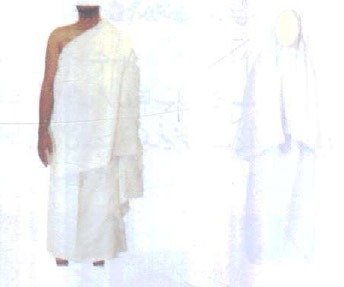
White is preferable, but any clean sheets are valid.
Even if the edges are stitched, it is permissible.
One sheet is tied as a lower garment, the other draped over the shoulders.
The head and face must remain uncovered.
Any footwear may be worn, but the ankles must remain exposed.
It should be clean, modest, and loose.
There is no restriction on color.
She should wear a large outer sheet (chador) over her clothes.
She must lower her gaze and behave modestly.
If non-mahram men approach, she should cover her face with her sheet.
As ʿĀ’ishah رضي الله عنها said:
As mentioned in Surah al-Baqarah 2:197.
Whether in Ihram or not, within the Haram boundary, hunting animals, cutting trees, or uprooting grass is not allowed, except for the grass called Idhkhir.
بِسْمِ اللّٰهِ مَجْرَاهَا وَمُرْسَاهَا ۚ إِنَّ رَبِّي لَغَفُورٌ رَّحِيمٌ
“In the name of Allah is its course and its anchoring. Surely my Lord is Most Forgiving, Most Merciful.”
The Messenger of Allah ﷺ specified five Miqāt points for the people of different regions, and for those coming through those routes:
When the Miqāt is announced on the plane (usually about half an hour before reaching Jeddah), make the intention for ʿUmrah and say:
اللَّهُمَّ لَبَّيْكَ عُمْرَةً
“O Allah, here I am in response to Your call for ʿUmrah.”
After this, continue to recite the Talbiyah repeatedly until you reach the Sacred House:
لَبَّيْكَ اللَّهُمَّ لَبَّيْكَ، لَبَّيْكَ لَا شَرِيكَ لَكَ لَبَّيْكَ، إِنَّ الْحَمْدَ وَالنِّعْمَةَ لَكَ وَالْمُلْكَ، لَا شَرِيكَ لَكَ
“O Allah, here I am, here I am. Here I am, You have no partner, here I am. Surely all praise, all favor, and all sovereignty belong to You. You have no partner.”
“Allāhu Akbar” (اللّٰهُ أَكْبَرُ)
And when you go down into a lower area, say:
“Subḥānallāh” (سُبْحَانَ اللّٰهِ)
Whenever you stop during travel or reach your hotel or place of residence, recite:
أَعُوذُ بِكَلِمَاتِ اللَّهِ التَّامَّاتِ مِنْ شَرِّ مَا خَلَقَ
“I seek refuge in the perfect words of Allah from the evil of what He has created.”
Note: It is Sunnah to perform ghusl before entering Makkah. If possible, do ghusl close to entering Makkah.
There is no special, unique dua specifically for entering al-Masjid al-Ḥarām. You should recite the same supplication that is recited upon entering any masjid:
اللّٰهُمَّ افْتَحْ لِي أَبْوَابَ رَحْمَتِكَ
“O Allah, open for me the doors of Your mercy.”
Among many people it is commonly said that only the first sight of the Kaʿbah is a guaranteed moment of acceptance for supplications.
This statement is not correct.
Rather, the general rule is that every dua made in the Sacred House and in this blessed journey is greatly honored and accepted by Allah.
The Messenger of Allah ﷺ said:
“The one who goes out in the path of Allah, the pilgrim performing Hajj, and the one performing ʿUmrah are the guests of Allah. He called them and they responded to Him; they ask of Him, and He grants them (what they ask).”
Allah the Exalted says:
ثُمَّ لْيَقْضُوا تَفَثَهُمْ وَلْيُوفُوا نُذُورَهُمْ وَلْيَطَّوَّفُوا بِالْبَيْتِ الْعَتِيقِ
“Then let them remove their dirt, fulfill their vows, and perform Ṭawāf around the Ancient House.”
The Messenger of Allah ﷺ said:
“Whoever performs Ṭawāf of the House and then prays two rakʿahs (after it), it is as if he has freed a slave.”
All three carry the same reward, if done according to the Sunnah with sincerity.
When passing the Black Stone (Ḥajar al-Aswad) in every circuit, recite:
بِسْمِ اللّٰهِ اللّٰهُ أَكْبَرُ
“In the name of Allah — Allah is the Greatest.”
The Messenger of Allah ﷺ said:
“The Black Stone is from Paradise. It was originally whiter than milk, but the sins of the children of Adam have turned it black. Whoever kisses it, it will testify for him on the Day of Resurrection.”
In the first three circuits, perform Raml (a brisk, energetic walk), and the remaining four circuits are performed at a normal pace.
Women do not perform Raml.
The Prophet ﷺ said:
“Touching the Rukn Yamānī and the Black Stone causes sins to fall away.”
During Ṭawāf, in each circuit, touch the Rukn Yamānī if possible, but do not kiss it.
If the crowd is heavy, do not point toward it and do not kiss your hand after gesturing — this is not from the Sunnah.
Between Rukn Yamānī and the Black Stone, recite this dua frequently:
رَبَّنَا آتِنَا فِي الدُّنْيَا حَسَنَةً وَفِي الْآخِرَةِ حَسَنَةً وَقِنَا عَذَابَ النَّارِ
“Our Lord, grant us good in this world and good in the Hereafter, and save us from the punishment of the Fire.”
Tasbīḥ, taḥmīd, takbīr, tahlīl, sending blessings upon the Prophet ﷺ, and reciting Qur’an are all permissible.
However, there is no Sunnah dua specified for each of the seven circuits separately.
A sick or disabled person may perform Ṭawāf while seated on them.
The Prophet ﷺ said:
“Ṭawāf around the House is like prayer.”
Therefore, if one’s wudū breaks during Ṭawāf, he must renew it.
After finishing Ṭawāf, go to Maqām Ibrāhīm and recite:
وَاتَّخِذُوا مِنْ مَقَامِ إِبْرَاهِيمَ مُصَلًّى
“Take the standing place of Ibrāhīm as a place of prayer.”
Then pray two rakʿahs.
If space is not available near Maqām Ibrāhīm, pray anywhere inside al-Masjid al-Ḥarām.
Note: There is no prohibition of praying at the time of zawāl inside the Haram. Prayer is permissible at all times.
After praying the two rakʿahs of Ṭawāf, it is Sunnah to:
In the Haram, Zamzam coolers are placed in many locations, and you may drink from any of them.
When drinking Zamzam, you may make any dua for whatever good you desire. No specific, fixed dua from the Prophet ﷺ is authentically established for Zamzam itself.
However, the Prophet ﷺ said:
“Zamzam is for whatever purpose it is drunk.”
Before starting Saʿī, perform Istilām of the Black Stone again (i.e., kiss, touch, or point toward it as per the Sunnah).
Walking seven times between Ṣafā and Marwah is called Saʿī.
The Messenger of Allah ﷺ said:
كُتِبَ عَلَيْكُمُ السَّعْيُ فَاسْعَوْا
“Saʿī has been prescribed for you, so perform Saʿī.”
When going up Ṣafā, recite:
إِنَّ الصَّفَا وَالْمَرْوَةَ مِنْ شَعَائِرِ اللَّهِ، أَبْدَأُ بِمَا بَدَأَ اللَّهُ بِهِ
“Indeed, Ṣafā and Marwah are among the symbols of Allah. I begin with that which Allah has mentioned first.”
Then, facing the Kaʿbah, raise both hands and say “Allāhu Akbar” three times, and then recite:
لَا إِلَهَ إِلَّا اللَّهُ وَحْدَهُ لَا شَرِيكَ لَهُ، لَهُ الْمُلْكُ وَلَهُ الْحَمْدُ، وَهُوَ عَلَى كُلِّ شَيْءٍ قَدِيرٌ، لَا إِلَهَ إِلَّا اللَّهُ وَحْدَهُ، أَنْجَزَ وَعْدَهُ، وَنَصَرَ عَبْدَهُ، وَهَزَمَ الْأَحْزَابَ وَحْدَهُ
“There is no deity worthy of worship except Allah, alone, without partner. To Him belongs the dominion and to Him belongs all praise, and He is over all things fully capable. There is no deity worthy of worship except Allah alone. He fulfilled His promise, aided His servant, and defeated the confederates by Himself.”
Note:
While standing on Ṣafā with hands raised, one should also make additional personal duas, asking Allah for all kinds of good in this world and the Hereafter.
(Added by Tohed.com)
Multiple narrations from the early scholars clearly state that women do not perform Raml, neither in Ṭawāf nor in Saʿī.
ʿĀ’ishah رضي الله عنها was asked: “Do women have to perform Raml (brisk walk) during Ṭawāf?”
She replied:
“Is our example not sufficient for you? There is no Raml upon you in Ṭawāf around the House nor between Ṣafā and Marwah.”
Ibn ʿUmar رضي الله عنهما said:
“There is no Raml upon women in Ṭawāf around the House nor between Ṣafā and Marwah.”
Ibn ʿAbbās رضي الله عنهما said:
“There is no Raml upon women.”
ʿAṭāʾ رحمه الله said:
“There is no Raml upon women in Ṭawāf around the House nor between Ṣafā and Marwah.”
Al-Ḥasan and ʿAṭāʾ both said:
“There is no Raml upon women, neither in Ṭawāf nor between Ṣafā and Marwah.”
After descending from Ṣafā and proceeding towards Marwah, recite while walking:
رَبِّ اغْفِرْ وَارْحَمْ وَأَنْتَ الأَعَزُّ الأَكْرَمُ
“My Lord, forgive and have mercy, and You are the Most Mighty, the Most Noble.”
Note:
During Saʿī, one should remain engaged in dhikr and supplications, because the Messenger of Allah ﷺ said:
“Saʿī between Ṣafā and Marwah has only been prescribed for establishing the remembrance of Allah.”
When you arrive at Marwah, recite the same duas you recited at Ṣafā, then return from Marwah back towards Ṣafā in the same manner.
The final (seventh) Saʿī circuit ends at Marwah. After that:
Once this is done, ʿUmrah is complete.
When leaving al-Masjid al-Ḥarām, recite:
اللَّهُمَّ إِنِّي أَسْأَلُكَ مِنْ فَضْلِكَ
“O Allah, I ask You from Your bounty.”
After returning to your home or hotel:
After spending a few days in Makkah Mukarramah, travel to Madinah Munawwarah to visit its blessed places and the Masjid of the Prophet ﷺ (al-Masjid al-Nabawī).
“In the name of Allah I enter, and peace be upon the Messenger of Allah. O Allah, open for me the doors of Your mercy.”
“In the name of Allah I depart, and blessings and peace be upon the Messenger of Allah. O Allah, I ask You from Your bounty.”
The Prophet ﷺ said:
لَا تُشَدُّ الرِّحَالُ إِلَّا إِلَى ثَلَاثَةِ مَسَاجِدَ: الْمَسْجِدِ الْحَرَامِ، وَمَسْجِدِ الْأَقْصَى، وَمَسْجِدِي هَذَا
“Mounts are not to be saddled (for a religious journey) except to three mosques: al-Masjid al-Ḥarām, al-Masjid al-Aqṣā, and this mosque of mine (Masjid Nabawī).”
The virtues of prayer in these mosques are:
مَا بَيْنَ بَيْتِي وَمِنْبَرِي رَوْضَةٌ مِنْ رِيَاضِ الْجَنَّةِ
“Between my house and my pulpit is one of the gardens of Paradise.”
اللَّهُمَّ صَلِّ عَلَى مُحَمَّدٍ وَعَلَى آلِ مُحَمَّدٍ، كَمَا صَلَّيْتَ عَلَى إِبْرَاهِيمَ وَعَلَى آلِ إِبْرَاهِيمَ، إِنَّكَ حَمِيدٌ مَجِيدٌ
اللَّهُمَّ بَارِكْ عَلَى مُحَمَّدٍ وَعَلَى آلِ مُحَمَّدٍ، كَمَا بَارَكْتَ عَلَى إِبْرَاهِيمَ وَعَلَى آلِ إِبْرَاهِيمَ، إِنَّكَ حَمِيدٌ مَجِيدٌ
“O Allah! Send Your mercy upon Muhammad ﷺ and upon the family of Muhammad ﷺ as You sent Your mercy upon Ibrahim and the family of Ibrahim. Indeed, You are Praiseworthy, Glorious.
O Allah! Send Your blessings upon Muhammad ﷺ and upon the family of Muhammad ﷺ as You sent Your blessings upon Ibrahim and the family of Ibrahim. Indeed, You are Praiseworthy, Glorious.”
Then recite:
السَّلَامُ عَلَيْكَ أَيُّهَا النَّبِيُّ وَرَحْمَةُ اللَّهِ وَبَرَكَاتُهُ
“Peace be upon you, O Prophet ﷺ, and the mercy and blessings of Allah.”
When visiting Jannat al-Baqīʿ, recite:
السَّلَامُ عَلَيْكُمْ أَهْلَ الدِّيَارِ مِنَ الْمُؤْمِنِينَ وَالْمُسْلِمِينَ، وَإِنَّا إِنْ شَاءَ اللَّهُ بِكُمْ لَاحِقُونَ، نَسْأَلُ اللَّهَ لَنَا وَلَكُمُ الْعَافِيَةَ
“Peace be upon you, O inhabitants of the graves from the believers and Muslims. Surely, we will (also) join you, if Allah wills. We ask Allah for well-being for us and for you.”
Then recite:
اللَّهُمَّ اغْفِرْ لِأَهْلِ الْبَقِيعِ الْغَرْقَدِ
“O Allah! Forgive the people of Baqīʿ al-Gharqad.”
It has been made obligatory for those performing Hajj or ʿUmrah.
Important notes:
The pilgrim should remain engaged in constant dua—during Ṭawāf, Saʿī, after ṣalāh, in Minā, Muzdalifah, ʿArafāt, and at every moment.
Below are some important Qur’anic and Prophetic supplications:
رَبَّنَا آتِنَا مِن لَدُنْكَ رَحْمَةً وَهَيِّئْ لَنَا مِنْ أَمْرِنَا رَشَدًا
“Our Lord! Grant us mercy from Yourself and guide us rightly in all our affairs.”
رَبَّنَا آمَنَّا فَاغْفِرْ لَنَا وَارْحَمْنَا وَأَنْتَ خَيْرُ الرَّاحِمِينَ
“Our Lord! We have believed, so forgive us, have mercy upon us; You are the best of the merciful.”
رَبَّنَا اصْرِفْ عَنَّا عَذَابَ جَهَنَّمَ، إِنَّ عَذَابَهَا كَانَ غَرَامًا، إِنَّهَا سَاءَتْ مُسْتَقَرًّا وَمُقَامًا
“O our Lord! Turn away from us the punishment of Hell. Indeed, its punishment is everlasting. Truly it is an evil residence and dwelling place.”
رَبَّنَا هَبْ لَنَا مِنْ أَزْوَاجِنَا وَذُرِّيَّاتِنَا قُرَّةَ أَعْيُنٍ وَاجْعَلْنَا لِلْمُتَّقِينَ إِمَامًا
“Our Lord! Grant us from our spouses and children comfort for our eyes and make us leaders for the righteous.”
رَبَّنَا لَا تُزِغْ قُلُوبَنَا بَعْدَ إِذْ هَدَيْتَنَا وَهَبْ لَنَا مِن لَدُنْكَ رَحْمَةً، إِنَّكَ أَنْتَ الْوَهَّابُ
“Our Lord! Do not let our hearts deviate after You have guided us, and grant us mercy from Yourself; indeed, You are the Bestower.”
رَبَّنَا لَا تُؤَاخِذْنَا إِن نَّسِينَا أَوْ أَخْطَأْنَا، رَبَّنَا وَلَا تَحْمِلْ عَلَيْنَا إِصْرًا كَمَا حَمَلْتَهُ عَلَى الَّذِينَ مِن قَبْلِنَا، رَبَّنَا وَلَا تُحَمِّلْنَا مَا لَا طَاقَةَ لَنَا بِهِ، وَاعْفُ عَنَّا وَاغْفِرْ لَنَا وَارْحَمْنَا، أَنْتَ مَوْلَانَا فَانْصُرْنَا عَلَى الْقَوْمِ الْكَافِرِينَ
“Our Lord! Do not impose blame upon us if we forget or make a mistake. Our Lord! Do not lay upon us a burden like that which You laid upon those before us. Our Lord! Do not burden us with what we cannot bear. Pardon us, forgive us, and have mercy upon us. You are our Protector, so help us against the disbelieving people.”
اللَّهُمَّ إِنِّي أَعُوذُ بِكَ مِنَ الْهَمِّ وَالْحَزَنِ، وَالْعَجْزِ وَالْكَسَلِ، وَالْجُبْنِ وَالْبُخْلِ، وَغَلَبَةِ الدَّيْنِ، وَقَهْرِ الرِّجَالِ
“O Allah! I seek refuge in You from worry and grief, from incapacity and laziness, from cowardice and miserliness, from being overwhelmed by debt and overpowered by people.”
اللَّهُمَّ إِنَّا نَعُوذُ بِكَ مِنْ زَوَالِ نِعْمَتِكَ، وَتَحَوُّلِ عَافِيَتِكَ، وَفُجَاءَةِ نِقْمَتِكَ، وَجَمِيعِ سَخَطِكَ
“O Allah! We seek refuge in You from the removal of Your blessings, the changing of Your protection, the sudden onset of Your punishment, and all forms of Your displeasure.”
اللَّهُمَّ إِنِّي أَسْأَلُكَ الْعَفْوَ وَالْعَافِيَةَ وَالْمُعَافَاةَ فِي الدُّنْيَا وَالْآخِرَةِ
“O Allah! I ask You for forgiveness, well-being, and protection from all harm in this world and the Hereafter.”
اللَّهُمَّ أَحْسِنْ عَاقِبَتَنَا فِي الْأُمُورِ كُلِّهَا، وَأَجِرْنَا مِنْ خِزْيِ الدُّنْيَا وَعَذَابِ الْآخِرَةِ
“O Allah! Make our outcome good in all our affairs, and protect us from the disgrace of this world and the punishment of the Hereafter.”
The Prophet ﷺ said:
“Whoever frequently recites this dua will die before experiencing any great calamity.”
اللَّهُمَّ اكْفِنِي بِحَلَالِكَ عَنْ حَرَامِكَ، وَأَغْنِنِي بِفَضْلِكَ عَمَّنْ سِوَاكَ
“O Allah! Suffice me with what You have made lawful instead of what You have made unlawful, and enrich me with Your bounty so I have no need of anyone besides You.”
اللَّهُمَّ رَحْمَتَكَ أَرْجُو، فَلَا تَكِلْنِي إِلَى نَفْسِي طَرْفَةَ عَيْنٍ، وَأَصْلِحْ لِي شَأْنِي كُلَّهُ، لَا إِلَهَ إِلَّا أَنْتَ
“O Allah! I hope for Your mercy. Do not leave me to myself even for the blink of an eye. Correct all of my affairs. There is no deity except You.”
Authenticated by al-Albānī and ʿAbd al-Qādir al-Arnaʾūṭ.
The Virtue of ʿUmrah
Allah the Exalted says:“And complete the Hajj and the ʿUmrah for Allah.”
Reference: Surah al-Baqarah 2:192
ʿUmrah as an Expiation for Sins
The Messenger of Allah ﷺ said regarding the reward of ʿUmrah:
“From one ʿUmrah to the next is an expiation for whatever occurs between them, and the only reward for an accepted Hajj is Paradise.”
Reference: Ṣaḥīḥ al-Bukhārī 1773
Reference: Ṣaḥīḥ Muslim 3289
ʿUmrah Removes Poverty and Sins
It is narrated from Ibn Masʿūd رضي الله عنه that the Messenger of Allah ﷺ said:
“Perform Hajj and ʿUmrah repeatedly, for they eliminate poverty and sins just as a furnace removes impurities from iron, gold, and silver.”
Reference: Sunan al-Tirmidhī 810 — graded Ḥasan Ṣaḥīḥ by al-Albānī
ʿUmrah in Ramadan Equals Hajj
The Prophet ﷺ said:
“Indeed, performing ʿUmrah in Ramadan equals performing Hajj, or performing Hajj with me.”
Reference: Ṣaḥīḥ al-Bukhārī 1863
Conditions of ʿUmrah
According to most scholars, performing ʿUmrah itself is not obligatory but recommended. However, once a person enters into the state of Ihrām for it, completing it becomes obligatory just like Hajj.
The requirements for performing ʿUmrah are:
- The person must be a Muslim.
- Must be sane.
- Must be an adult.
- The route must be safe.
- Must possess the ability—meaning travel provisions, transport, and sufficient funds for one’s family during the journey.
- A woman must be accompanied by her husband or a maḥram.
Conditions for Acceptance
- Possession of true faith (Tawḥīd, free from shirk).
- Sincerity (intention solely for Allah’s pleasure).
- Conformity to the Sunnah (performed as taught by the Prophet ﷺ).
- Halal income (for Allah accepts only what is pure).
- For a woman, the presence of a maḥram; she must also avoid performing Ḥajj or ʿUmrah while in ʿiddah.
Pillars (Arkan) of ʿUmrah
- Entering Ihrām from the Mīqāt.
- Performing Ṭawāf of the Kaʿbah.
- Kissing the Black Stone (Ḥajr al-Aswad).
- Praying two rakʿahs at Maqām Ibrāhīm.
- Drinking Zamzam.
- Performing Saʿī between Ṣafā and Marwah.
- Shaving or cutting the hair.
Short Method of Performing ʿUmrah
There is no fixed time or month for performing ʿUmrah. It may be done at any time of the year, whether separately or alongside Hajj.After wearing Ihram from the Miqāt, proceed to the Sacred Mosque and perform Ṭawāf around the Kaʿbah.
(One may wear Ihram from home or the airport, but the intention must be made at the Miqāt.)
During the first Ṭawāf, keep the right shoulder uncovered.
This is called Iḍṭibāʿ.
After completing Ṭawāf, cover the shoulder again.
Ṭawāf begins by kissing the Black Stone, or touching it, or if unable, raising the hand toward it.
This gesture is called Istilām.
Perform seven circuits of Ṭawāf, each starting and ending at the Black Stone.
During each circuit, if possible, touch the Yemeni Corner (Rukn Yamani), but do not kiss it.
Between Rukn Yamani and the Black Stone, recite the special supplication listed later in the booklet.
In the first three circuits, walk with a strong, brisk pace (this is called Raml).
The remaining four circuits are walked normally.
After completing Ṭawāf, cover the shoulder and pray two rakʿahs at Maqām Ibrāhīm.
It is Sunnah to recite Sūrah al-Kāfirūn in the first rakʿah and Sūrah al-Ikhlāṣ in the second.
After the prayer, drink Zamzam water, which is available throughout the area.
Then perform Istilām of the Black Stone again.
Next, proceed to Ṣafā and Marwah for Saʿī.
At Ṣafā and Marwah, recite the prescribed Sunnah supplications.
Remember:
- One trip from Ṣafā to Marwah counts as one circuit
- Returning from Marwah to Ṣafā counts as the second circuit
A total of seven circuits will end at Marwah.
After finishing Saʿī at Marwah, shave the head or trim the hair.
Women should cut a small portion of their own hair—they do not shave.
By performing ḥalq or taqṣīr, Ihram ends and ʿUmrah is complete.
The Sunnah Method of Performing ʿUmrah — In Detail, With Authentic Hadiths
① Supplication When Leaving the House
When leaving home, recite:
بِسْمِ اللَّهِ تَوَكَّلْتُ عَلَى اللَّهِ، لَا حَوْلَ وَلَا قُوَّةَ إِلَّا بِاللَّهِ
“In the name of Allah, I place my trust in Allah. There is no power and no strength except through Allah.”
Reference: Abū Dāwūd, al-Adab 5095 — authenticated by al-Albānī
② Supplication When Mounting the Vehicle
When boarding the vehicle to travel to the airport, say Bismillah, then recite:
اللّٰهُ اَكْبَرُ، اللّٰهُ اَكْبَرُ، اللّٰهُ اَكْبَرُ
سُبْحَانَ الَّذِي سَخَّرَ لَنَا هٰذَا وَمَا كُنَّا لَهُ مُقْرِنِينَ، وَإِنَّا إِلَى رَبِّنَا لَمُنْقَلِبُون
اللّٰهُمَّ إِنَّا نَسْأَلُكَ فِي سَفَرِنَا هٰذَا الْبِرَّ وَالتَّقْوَى، وَمِنَ الْعَمَلِ مَا تَرْضَى
اللّٰهُمَّ هَوِّنْ عَلَيْنَا سَفَرَنَا هٰذَا، وَاطْوِ عَنَّا بُعْدَهُ
اللّٰهُمَّ أَنْتَ الصَّاحِبُ فِي السَّفَرِ، وَالْخَلِيفَةُ فِي الْأَهْلِ
اللّٰهُمَّ إِنِّي أَعُوذُ بِكَ مِنْ وَعْثَاءِ السَّفَرِ، وَكَآبَةِ الْمَنْظَرِ، وَسُوءِ الْمُنْقَلَبِ فِي الْمَالِ وَالْأَهْلِ
Translation:
“Allah is the Greatest, Allah is the Greatest, Allah is the Greatest.
Glory be to the One who has subjected this (vehicle) to us, though we could not have controlled it (by ourselves). And surely, to our Lord we shall return.
O Allah, we ask You in this journey of ours for righteousness, piety, and deeds that please You.
O Allah, make this journey easy for us and shorten its distance.
O Allah, You are the Companion in the journey and the Guardian over our family.
O Allah, I seek refuge in You from the hardships of travel, from unpleasant sights, and from returning with harm to our wealth or our family.”
Reference: Ṣaḥīḥ Muslim, Kitāb al-Ḥajj 1342
At the Airport
Perform ghusl (bath) either at home or at the airport, then wear Ihram, and make the intention for ʿUmrah at the Miqāt.
Note: The rules of Ihram begin from the Miqāt, not earlier.
Issues Related to Wearing Ihram
➊ Perform ghusl before Ihram
Reference: Jāmiʿ al-Tirmidhī 830 — sahih
➋ Apply oil and comb the hair before Ihram.
Reference: Ṣaḥīḥ al-Bukhārī 1538
➌ Men may apply perfume before entering Ihram
Reference: Ṣaḥīḥ al-Bukhārī 1539
➍ Women in menstruation or postpartum bleeding may also perform ghusl and wear Ihram.
Reference: Ṣaḥīḥ Muslim 1210
Reference: Fatwa: Shaykh Ṣāliḥ al-Munajjid
➎ Ihram for men consists of two clean sheets.
White is preferable, but any clean sheets are valid.
Even if the edges are stitched, it is permissible.
One sheet is tied as a lower garment, the other draped over the shoulders.
The head and face must remain uncovered.
Any footwear may be worn, but the ankles must remain exposed.
Reference: Ṣaḥīḥ al-Bukhārī 134
Reference: Ṣaḥīḥ Muslim 1177
➏ The Ihram of a woman is her normal clothing.
It should be clean, modest, and loose.
There is no restriction on color.
She should wear a large outer sheet (chador) over her clothes.
She must lower her gaze and behave modestly.
If non-mahram men approach, she should cover her face with her sheet.
As ʿĀ’ishah رضي الله عنها said:
“We were with the Prophet ﷺ during Hajj. When men came near, we would lower our outer cloth over our faces, and when they passed, we would lift it again.”
Reference: Ṣaḥīḥ al-Bukhārī 1838
Prohibitions While in the State of Ihrām
➊ A person in Ihram may not wear shirts, coats, trousers, turbans, caps, socks, stockings, or vests.
Reference: Ṣaḥīḥ al-Bukhārī, Kitāb al-Ḥajj 1542
➋ After entering Ihram, applying perfume is prohibited.
Reference: Ṣaḥīḥ al-Bukhārī, Kitāb al-Ḥajj 1542
➌ Wearing gloves is not allowed.
Reference: Ṣaḥīḥ al-Bukhārī, Kitāb al-Ḥajj 1542
➍ Marriage contracts (nikāḥ) or proposals (engagement) are also forbidden during Ihram.
Reference: Ṣaḥīḥ Muslim, Kitāb al-Ḥajj 1409
➎ All forms of quarrelling, and sexual words or contact with one’s wife, are prohibited.
As mentioned in Surah al-Baqarah 2:197.
Whether in Ihram or not, within the Haram boundary, hunting animals, cutting trees, or uprooting grass is not allowed, except for the grass called Idhkhir.
Reference: Ṣaḥīḥ al-Bukhārī, Kitāb al-Ḥajj 1833
➏ Women are not allowed to wear the specific Arabian-style niqāb that is tied around the face
Reference: Ṣaḥīḥ al-Bukhārī 1838
Supplication When Boarding the Airplane
بِسْمِ اللّٰهِ مَجْرَاهَا وَمُرْسَاهَا ۚ إِنَّ رَبِّي لَغَفُورٌ رَّحِيمٌ
“In the name of Allah is its course and its anchoring. Surely my Lord is Most Forgiving, Most Merciful.”
Reference: Sūrah Hūd 11:41
Miqāt (The Appointed Boundaries)
The Messenger of Allah ﷺ specified five Miqāt points for the people of different regions, and for those coming through those routes:
➊ Dhul-Hulayfah
- Miqāt for the people of Madinah, and anyone traveling through that route.
- Located approximately 9 km outside Madinah on the way to Makkah.
- It is the farthest Miqāt from Makkah.
- Today it is known as Masjid Miqāt (Bi’r ʿAlī), situated in Wādī ʿAqīq.
➋ Rābigh
- Miqāt for people from Shām, Egypt, and North-West Africa.
➌ Qarn al-Manāzil
- Miqāt for the people of Najd, and for anyone coming via that path.
➍ Yalamlam
- Also known as Sāʿdiyyah.
- A mountain in Tihāmah, about 2000 feet above sea level, and only 54 km from Makkah.
- It is the closest Miqāt to Makkah.
- Miqāt for people from Pakistan, India, China, Yemen, and all who pass parallel to it.
➎ Dhāt ʿIrq
- Miqāt for those coming from Iraq, Iran, and the North-East, especially via the Baghdad route.
Important Note
- Those visiting Madinah first will wear Ihram from Dhul-Hulayfah when traveling to Makkah.
- Those arriving in Makkah first will wear Ihram from Yalamlam or its parallel line.
Reference: Ṣaḥīḥ al-Bukhārī 1524
Reference: Ṣaḥīḥ Muslim 1181
Sunnah Talbiyah
When the Miqāt is announced on the plane (usually about half an hour before reaching Jeddah), make the intention for ʿUmrah and say:
اللَّهُمَّ لَبَّيْكَ عُمْرَةً
“O Allah, here I am in response to Your call for ʿUmrah.”
Reference: Jāmiʿ al-Tirmidhī 821
After this, continue to recite the Talbiyah repeatedly until you reach the Sacred House:
لَبَّيْكَ اللَّهُمَّ لَبَّيْكَ، لَبَّيْكَ لَا شَرِيكَ لَكَ لَبَّيْكَ، إِنَّ الْحَمْدَ وَالنِّعْمَةَ لَكَ وَالْمُلْكَ، لَا شَرِيكَ لَكَ
“O Allah, here I am, here I am. Here I am, You have no partner, here I am. Surely all praise, all favor, and all sovereignty belong to You. You have no partner.”
Reference: Ṣaḥīḥ al-Bukhārī, Kitāb al-Ḥajj 1549
Dhikr for Ascending and Descending During Travel
During the journey, when you go up to a higher place, say:“Allāhu Akbar” (اللّٰهُ أَكْبَرُ)
And when you go down into a lower area, say:
“Subḥānallāh” (سُبْحَانَ اللّٰهِ)
Reference: Ṣaḥīḥ al-Bukhārī 2995
Reference: Ṣaḥīḥ al-Bukhārī 2993
Supplication Upon Reaching Jeddah or Your Place of Stay
Whenever you stop during travel or reach your hotel or place of residence, recite:
أَعُوذُ بِكَلِمَاتِ اللَّهِ التَّامَّاتِ مِنْ شَرِّ مَا خَلَقَ
“I seek refuge in the perfect words of Allah from the evil of what He has created.”
Reference: Ṣaḥīḥ Muslim 2708, Kitāb al-Dhikr wa’l-Duʿāʾ
Note: It is Sunnah to perform ghusl before entering Makkah. If possible, do ghusl close to entering Makkah.
Reference: Ṣaḥīḥ al-Bukhārī 1553
Dua When Entering al-Masjid al-Ḥarām
There is no special, unique dua specifically for entering al-Masjid al-Ḥarām. You should recite the same supplication that is recited upon entering any masjid:
اللّٰهُمَّ افْتَحْ لِي أَبْوَابَ رَحْمَتِكَ
“O Allah, open for me the doors of Your mercy.”
Reference: Ṣaḥīḥ Muslim 713, Kitāb Ṣalāt al-Musāfirīn
Are All Duas Accepted Only at the First Sight of the Kaʿbah?
Among many people it is commonly said that only the first sight of the Kaʿbah is a guaranteed moment of acceptance for supplications.
This statement is not correct.
Rather, the general rule is that every dua made in the Sacred House and in this blessed journey is greatly honored and accepted by Allah.
The Messenger of Allah ﷺ said:
“The one who goes out in the path of Allah, the pilgrim performing Hajj, and the one performing ʿUmrah are the guests of Allah. He called them and they responded to Him; they ask of Him, and He grants them (what they ask).”
Reference: Ṣaḥīḥ al-Targhīb wa’l-Tarhīb 1108
Reference: Sunan Ibn Mājah 2893 — ḥasan
Sunnah Ṭawāf
Allah the Exalted says:
ثُمَّ لْيَقْضُوا تَفَثَهُمْ وَلْيُوفُوا نُذُورَهُمْ وَلْيَطَّوَّفُوا بِالْبَيْتِ الْعَتِيقِ
“Then let them remove their dirt, fulfill their vows, and perform Ṭawāf around the Ancient House.”
Reference: Sūrah al-Ḥajj 22:29
The Messenger of Allah ﷺ said:
“Whoever performs Ṭawāf of the House and then prays two rakʿahs (after it), it is as if he has freed a slave.”
Reference: Sunan Ibn Mājah 2956 — ṣaḥīḥ
How to Perform the First Ṭawāf
- In the first Ṭawāf, keep your right shoulder uncovered (this is called Iḍṭibāʿ).
- After completing the Ṭawāf, cover the shoulder again.
All three carry the same reward, if done according to the Sunnah with sincerity.
- Perform seven circuits around the Kaʿbah.
- Each circuit begins at the Black Stone and ends at the Black Stone.
Reference: Sunan Ibn Mājah 2954
Reference: Jāmiʿ al-Tirmidhī 859
Reference: Sunan Abī Dāwūd 1883 — graded ḥasan by al-Albānī
Dua When Reaching the Black Stone in Each Circuit
When passing the Black Stone (Ḥajar al-Aswad) in every circuit, recite:
بِسْمِ اللّٰهِ اللّٰهُ أَكْبَرُ
“In the name of Allah — Allah is the Greatest.”
Reference: Musnad Aḥmad 4628
The Messenger of Allah ﷺ said:
“The Black Stone is from Paradise. It was originally whiter than milk, but the sins of the children of Adam have turned it black. Whoever kisses it, it will testify for him on the Day of Resurrection.”
Reference: Sunan Ibn Mājah 2944 — ṣaḥīḥ
In the first three circuits, perform Raml (a brisk, energetic walk), and the remaining four circuits are performed at a normal pace.
Women do not perform Raml.
Reference: Ṣaḥīḥ Muslim 1264
Istilām of Rukn Yamānī
The Prophet ﷺ said:
“Touching the Rukn Yamānī and the Black Stone causes sins to fall away.”
Reference: Jāmiʿ al-Tirmidhī 959
Reference: Sunan al-Nasā’ī 2922 — ṣaḥīḥ
During Ṭawāf, in each circuit, touch the Rukn Yamānī if possible, but do not kiss it.
If the crowd is heavy, do not point toward it and do not kiss your hand after gesturing — this is not from the Sunnah.
Between Rukn Yamānī and the Black Stone, recite this dua frequently:
رَبَّنَا آتِنَا فِي الدُّنْيَا حَسَنَةً وَفِي الْآخِرَةِ حَسَنَةً وَقِنَا عَذَابَ النَّارِ
“Our Lord, grant us good in this world and good in the Hereafter, and save us from the punishment of the Fire.”
Reference: Sunan Abī Dāwūd, Kitāb al-Manāsik 1892
Important Issues Related to Ṭawāf
➊ During Ṭawāf, any remembrance of Allah may be recited.
Tasbīḥ, taḥmīd, takbīr, tahlīl, sending blessings upon the Prophet ﷺ, and reciting Qur’an are all permissible.
However, there is no Sunnah dua specified for each of the seven circuits separately.
Reference: Sunan Abī Dāwūd 1888 — ṣaḥīḥ
➋ Wheelchairs (sāʾikl or riḍḍī carts) are available in the Haram.
A sick or disabled person may perform Ṭawāf while seated on them.
Reference: Ṣaḥīḥ al-Bukhārī 1612
➌ Wudū is required for Ṭawāf.
The Prophet ﷺ said:
“Ṭawāf around the House is like prayer.”
Reference: Jāmiʿ al-Tirmidhī 960 — ṣaḥīḥ
Therefore, if one’s wudū breaks during Ṭawāf, he must renew it.
Reference: Ṣaḥīḥ al-Bukhārī 214
Reference: Sunan al-Nasā’ī 2/31
➍ If a person is forced to stop Ṭawāf due to a sharʿī excuse or the iqāmah of prayer
➎ Menstruating women may not perform Ṭawāf.
Reference: Ṣaḥīḥ al-Bukhārī 1650
➏ Each circuit of Ṭawāf must pass outside the area of Ḥaṭīm (Hijr Ismāʿīl)
Reference: Ṣaḥīḥ al-Bukhārī 1586
Reference: Ṣaḥīḥ Muslim 1333
➐ If there is doubt about the number of circuits
Reference: Musnad al-Shihāb, ḥadīth 645
➑ After completing all circuits, cover the right shoulder.
Maqām Ibrāhīm
After finishing Ṭawāf, go to Maqām Ibrāhīm and recite:
وَاتَّخِذُوا مِنْ مَقَامِ إِبْرَاهِيمَ مُصَلًّى
“Take the standing place of Ibrāhīm as a place of prayer.”
Reference: Sūrah al-Baqarah 2:125
Then pray two rakʿahs.
If space is not available near Maqām Ibrāhīm, pray anywhere inside al-Masjid al-Ḥarām.
Reference: Ṣaḥīḥ Muslim 1218
Reference: Ṣaḥīḥ al-Bukhārī 4483
Note: There is no prohibition of praying at the time of zawāl inside the Haram. Prayer is permissible at all times.
Reference: Sunan Ibn Mājah 1254 — ṣaḥīḥ
Recitation in the Two Rakʿahs After Ṭawāf
It is Sunnah to recite:- In the first rakʿah: Sūrah al-Kāfirūn
- In the second rakʿah: Sūrah al-Ikhlāṣ
Reference: Jāmiʿ al-Tirmidhī 869
Drinking Zamzam Water
After praying the two rakʿahs of Ṭawāf, it is Sunnah to:
- Drink plenty of Zamzam water, and
- Pour some over the head.
Reference: Musnad Aḥmad with Fatḥ al-Rabbānī 12/72
In the Haram, Zamzam coolers are placed in many locations, and you may drink from any of them.
When drinking Zamzam, you may make any dua for whatever good you desire. No specific, fixed dua from the Prophet ﷺ is authentically established for Zamzam itself.
However, the Prophet ﷺ said:
“Zamzam is for whatever purpose it is drunk.”
Reference: Ṣaḥīḥ Ibn Mājah 3062
Doing Istilām of the Black Stone Again
Before starting Saʿī, perform Istilām of the Black Stone again (i.e., kiss, touch, or point toward it as per the Sunnah).
Reference: Ṣaḥīḥ Muslim, Kitāb al-Ḥajj 1218
Saʿī Between Ṣafā and Marwah
Walking seven times between Ṣafā and Marwah is called Saʿī.
The Messenger of Allah ﷺ said:
كُتِبَ عَلَيْكُمُ السَّعْيُ فَاسْعَوْا
“Saʿī has been prescribed for you, so perform Saʿī.”
Reference: Ṣaḥīḥ Ibn Khuzaymah 2765
What to Recite When Climbing Ṣafā
When going up Ṣafā, recite:
إِنَّ الصَّفَا وَالْمَرْوَةَ مِنْ شَعَائِرِ اللَّهِ، أَبْدَأُ بِمَا بَدَأَ اللَّهُ بِهِ
“Indeed, Ṣafā and Marwah are among the symbols of Allah. I begin with that which Allah has mentioned first.”
Reference: Ṣaḥīḥ Muslim, Kitāb al-Ḥajj, Bāb Ḥajjat al-Nabī ﷺ 1218
Then, facing the Kaʿbah, raise both hands and say “Allāhu Akbar” three times, and then recite:
لَا إِلَهَ إِلَّا اللَّهُ وَحْدَهُ لَا شَرِيكَ لَهُ، لَهُ الْمُلْكُ وَلَهُ الْحَمْدُ، وَهُوَ عَلَى كُلِّ شَيْءٍ قَدِيرٌ، لَا إِلَهَ إِلَّا اللَّهُ وَحْدَهُ، أَنْجَزَ وَعْدَهُ، وَنَصَرَ عَبْدَهُ، وَهَزَمَ الْأَحْزَابَ وَحْدَهُ
“There is no deity worthy of worship except Allah, alone, without partner. To Him belongs the dominion and to Him belongs all praise, and He is over all things fully capable. There is no deity worthy of worship except Allah alone. He fulfilled His promise, aided His servant, and defeated the confederates by Himself.”
Reference: Ṣaḥīḥ Muslim, Kitāb al-Ḥajj, Bāb Ḥajjat al-Nabī ﷺ 1218
Note:
While standing on Ṣafā with hands raised, one should also make additional personal duas, asking Allah for all kinds of good in this world and the Hereafter.
From Ṣafā to Marwah
- When walking from Ṣafā to Marwah, take the right-side path.
- Between the two green markers (green lights or tubes) in the Saʿī area, men should jog lightly (this is the Sunnah “saʿy” run).
- For women, jogging or running in Saʿī is not required.
Reference: Ṣaḥīḥ Ibn Khuzaymah 2770
Additional Evidence: No Raml for Women in Ṭawāf or Saʿī
(Added by Tohed.com)
Multiple narrations from the early scholars clearly state that women do not perform Raml, neither in Ṭawāf nor in Saʿī.
1) Statement of ʿĀ’ishah رضي الله عنها
عَنْ عَائِشَةَ أَنَّهَا سُئِلَتْ عَلَى النِّسَاءِ رَمَلٌ، فَقَالَتْ: أَلَيْسَ لَكُنَّ بِنَا أُسْوَةٌ، لَيْسَ عَلَيْكُنَّ رَمَلٌ بِالْبَيْتِ وَلَا بَيْنَ الصَّفَا وَالْمَرْوَةِ.
ʿĀ’ishah رضي الله عنها was asked: “Do women have to perform Raml (brisk walk) during Ṭawāf?”
She replied:
“Is our example not sufficient for you? There is no Raml upon you in Ṭawāf around the House nor between Ṣafā and Marwah.”
Reference: Muṣannaf Ibn Abī Shaybah, Kitāb al-Ḥajj, ḥadīth 13405
2) Statement of Ibn ʿUmar رضي الله عنهما
عَنْ ابْنِ عُمَرَ قَالَ: لَيْسَ عَلَى النِّسَاءِ رَمَلٌ بِالْبَيْتِ وَلَا بَيْنَ الصَّفَا وَالْمَرْوَةِ.
Ibn ʿUmar رضي الله عنهما said:
“There is no Raml upon women in Ṭawāf around the House nor between Ṣafā and Marwah.”
Reference: Muṣannaf Ibn Abī Shaybah, Kitāb al-Ḥajj, ḥadīth 13406
3) Statement of Ibn ʿAbbās رضي الله عنهما
عَنِ ابْنِ عَبَّاسٍ قَالَ: لَيْسَ عَلَى النِّسَاءِ رَمَلٌ.
Ibn ʿAbbās رضي الله عنهما said:
“There is no Raml upon women.”
Reference: Muṣannaf Ibn Abī Shaybah, Kitāb al-Ḥajj, ḥadīth 13407
4) Statement of ʿAṭāʾ رحمه الله
عَن عَطَاءٍ قَالَ: لَيْسَ عَلَى النِّسَاءِ رَمَلٌ بِالْبَيْتِ وَلَا بَيْنَ الصَّفَا وَالْمَرْوَةِ.
ʿAṭāʾ رحمه الله said:
“There is no Raml upon women in Ṭawāf around the House nor between Ṣafā and Marwah.”
Reference: Muṣannaf Ibn Abī Shaybah, Kitāb al-Ḥajj, ḥadīth 13408
5) Statement of al-Ḥasan and ʿAṭāʾ رحمهما الله
عَنِ الْحَسَنِ وَعَطَاءٍ قَالَا: لَيْسَ عَلَى النِّسَاءِ رَمَلٌ وَلَا بَيْنَ الصَّفَا وَالْمَرْوَةِ.
Al-Ḥasan and ʿAṭāʾ both said:
“There is no Raml upon women, neither in Ṭawāf nor between Ṣafā and Marwah.”
Reference: Muṣannaf Ibn Abī Shaybah, Kitāb al-Ḥajj, ḥadīth 13409
Dua While Performing Saʿī
After descending from Ṣafā and proceeding towards Marwah, recite while walking:
رَبِّ اغْفِرْ وَارْحَمْ وَأَنْتَ الأَعَزُّ الأَكْرَمُ
“My Lord, forgive and have mercy, and You are the Most Mighty, the Most Noble.”
Reference: Muṣannaf Ibn Abī Shaybah, “Mā yaqūlu al-rajul fī al-masʿā”, aḥādīth 16281–16289
Note:
During Saʿī, one should remain engaged in dhikr and supplications, because the Messenger of Allah ﷺ said:
“Saʿī between Ṣafā and Marwah has only been prescribed for establishing the remembrance of Allah.”
Reference: Ṣaḥīḥ Ibn Khuzaymah 2738
Upon Reaching Marwah
When you arrive at Marwah, recite the same duas you recited at Ṣafā, then return from Marwah back towards Ṣafā in the same manner.
Some Rulings Related to Ṣafā and Marwah
- From Ṣafā to Marwah counts as one circuit, and from Marwah back to Ṣafā counts as the second circuit. Thus, the seventh and final circuit ends at Marwah.
- Wudū is not a condition for Saʿī, but performing Saʿī with wudū is better.
- Due to a valid excuse, Saʿī may also be performed using a wheelchair or cart, just like Ṭawāf.
- If there is a delay between Ṭawāf and Saʿī because of a valid reason, there is no harm.
- If you become unsure about the number of Saʿī circuits, then act according to what you are certain of (i.e., the lower number).
- During Saʿī, the right shoulder should remain covered.
- During Saʿī, elderly, sick, and weak persons are not required to run, and there is no harm in them simply walking.
Reference: Ṣaḥīḥ Ibn Khuzaymah 2770
Shaving or Trimming the Hair (Ḥalāq / Taqṣīr)
The final (seventh) Saʿī circuit ends at Marwah. After that:
- Men should either shave the head (ḥalāq) or trim the hair (taqṣīr).
- Shaving the head is more virtuous.
- Women should cut a small portion of their hair themselves.
- Shaving the head is not permissible for women.
Reference: Ṣaḥīḥ al-Bukhārī 1727
Reference: Sunan Abī Dāwūd 1979
Once this is done, ʿUmrah is complete.
Dua When Leaving al-Masjid al-Ḥarām
When leaving al-Masjid al-Ḥarām, recite:
اللَّهُمَّ إِنِّي أَسْأَلُكَ مِنْ فَضْلِكَ
“O Allah, I ask You from Your bounty.”
Reference: Ṣaḥīḥ Muslim 713
After Returning Home or to the Hotel
After returning to your home or hotel:
- Remove Ihram and wear normal clothing.
- Strive to pray every ṣalāh in congregation in the Haram.
- Perform as many additional Ṭawāf as you wish.
- Engage in dhikr, duʿa, and recitation, and make heartfelt supplications:
- for yourself
- for your family
- for friends and the entire Ummah
asking Allah for all good in this world and the Hereafter.
Visiting Sacred Sites in Makkah
Outside of prayer times, it is recommended to spend some time visiting the blessed sites, such as:- Various masājid of Makkah.
- The plains of ʿArafāt, Muzdalifah, and Minā.
- Jabal al-Raḥmah and the sites of Jamarāt.
Departure to Madinah Munawwarah
After spending a few days in Makkah Mukarramah, travel to Madinah Munawwarah to visit its blessed places and the Masjid of the Prophet ﷺ (al-Masjid al-Nabawī).
Dua When Entering al-Masjid al-Nabawī
When entering Masjid Nabawī:- Enter with your right foot first, and recite:
“In the name of Allah I enter, and peace be upon the Messenger of Allah. O Allah, open for me the doors of Your mercy.”
Reference: Ṣaḥīḥ Muslim 713
Dua When Leaving al-Masjid al-Nabawī
When leaving Masjid Nabawī:- Step out with your left foot first, and recite:
“In the name of Allah I depart, and blessings and peace be upon the Messenger of Allah. O Allah, I ask You from Your bounty.”
Reference: Ṣaḥīḥ Muslim 713
Virtue of Prayer in Masjid al-Ḥarām, Masjid al-Nabawī, and Masjid al-Aqṣā
For the sake of drawing closer to Allah and attaining reward, only three masājid have been singled out in the Sharīʿah as places for which it is legislated to travel specifically.The Prophet ﷺ said:
لَا تُشَدُّ الرِّحَالُ إِلَّا إِلَى ثَلَاثَةِ مَسَاجِدَ: الْمَسْجِدِ الْحَرَامِ، وَمَسْجِدِ الْأَقْصَى، وَمَسْجِدِي هَذَا
“Mounts are not to be saddled (for a religious journey) except to three mosques: al-Masjid al-Ḥarām, al-Masjid al-Aqṣā, and this mosque of mine (Masjid Nabawī).”
Reference: Ṣaḥīḥ Muslim 1397
The virtues of prayer in these mosques are:
- In al-Masjid al-Ḥarām, one prayer is better than 100,000 prayers elsewhere.
Reference: Sunan Ibn Mājah 1406 - In al-Masjid al-Nabawī, one prayer is rewarded a thousand times more than elsewhere (except al-Masjid al-Ḥarām).
Reference: Ṣaḥīḥ al-Bukhārī 1190 - In al-Masjid al-Aqṣā, one prayer carries the reward of five hundred prayers.
Reference: Irwāʾ al-Ghalīl 1130 — ḥasan
The Rawḍah of the Prophet ﷺ
The Prophet ﷺ said:مَا بَيْنَ بَيْتِي وَمِنْبَرِي رَوْضَةٌ مِنْ رِيَاضِ الْجَنَّةِ
“Between my house and my pulpit is one of the gardens of Paradise.”
Reference: Ṣaḥīḥ al-Bukhārī 1195
Durood Ibrahimi When Visiting the Rawḍah of the Messenger ﷺ
When visiting the Rawḍah of the Prophet ﷺ, recite Durood Ibrahimi:اللَّهُمَّ صَلِّ عَلَى مُحَمَّدٍ وَعَلَى آلِ مُحَمَّدٍ، كَمَا صَلَّيْتَ عَلَى إِبْرَاهِيمَ وَعَلَى آلِ إِبْرَاهِيمَ، إِنَّكَ حَمِيدٌ مَجِيدٌ
اللَّهُمَّ بَارِكْ عَلَى مُحَمَّدٍ وَعَلَى آلِ مُحَمَّدٍ، كَمَا بَارَكْتَ عَلَى إِبْرَاهِيمَ وَعَلَى آلِ إِبْرَاهِيمَ، إِنَّكَ حَمِيدٌ مَجِيدٌ
“O Allah! Send Your mercy upon Muhammad ﷺ and upon the family of Muhammad ﷺ as You sent Your mercy upon Ibrahim and the family of Ibrahim. Indeed, You are Praiseworthy, Glorious.
O Allah! Send Your blessings upon Muhammad ﷺ and upon the family of Muhammad ﷺ as You sent Your blessings upon Ibrahim and the family of Ibrahim. Indeed, You are Praiseworthy, Glorious.”
Reference: Ṣaḥīḥ al-Bukhārī, al-Anbiyā’ 3370
Reference: Ṣaḥīḥ Muslim 402
Then recite:
السَّلَامُ عَلَيْكَ أَيُّهَا النَّبِيُّ وَرَحْمَةُ اللَّهِ وَبَرَكَاتُهُ
“Peace be upon you, O Prophet ﷺ, and the mercy and blessings of Allah.”
Reference: Ṣaḥīḥ al-Bukhārī, Kitāb al-Adhān 831
Visiting Baqīʿ al-Gharqad
When visiting Jannat al-Baqīʿ, recite:
السَّلَامُ عَلَيْكُمْ أَهْلَ الدِّيَارِ مِنَ الْمُؤْمِنِينَ وَالْمُسْلِمِينَ، وَإِنَّا إِنْ شَاءَ اللَّهُ بِكُمْ لَاحِقُونَ، نَسْأَلُ اللَّهَ لَنَا وَلَكُمُ الْعَافِيَةَ
“Peace be upon you, O inhabitants of the graves from the believers and Muslims. Surely, we will (also) join you, if Allah wills. We ask Allah for well-being for us and for you.”
Reference: Ṣaḥīḥ Muslim, Kitāb al-Janā’iz 975
Then recite:
اللَّهُمَّ اغْفِرْ لِأَهْلِ الْبَقِيعِ الْغَرْقَدِ
“O Allah! Forgive the people of Baqīʿ al-Gharqad.”
Reference: Ṣaḥīḥ Muslim, Kitāb al-Janā’iz 974
Visiting Other Sacred Sites in Madinah
Visit other blessed locations in Madinah, such as:- Masjid Qubā’ — praying two rakaʿāt here carries the reward of one complete ʿUmrah.
Reference: Sunan al-Nasā’ī 700
Returning to Makkah Mukarramah
On the return journey from Madinah:- Vehicles generally stop at Dhul-Ḥulayfah, 6–7 miles outside Madinah.
- This is the Miqāt, also known as Bi’r ʿAlī.
- Perform ghusl and wudū, wear Ihrām, and begin reciting the Talbiyah while heading toward Makkah.
- After reaching Makkah, perform a fresh ʿUmrah.
Farewell Ṭawāf (Ṭawāf al-Wadāʿ)
The final act related to Hajj or ʿUmrah is Ṭawāf al-Wadāʿ, which is your farewell meeting with the House of Allah.It has been made obligatory for those performing Hajj or ʿUmrah.
Reference: Ṣaḥīḥ al-Bukhārī 1755
Important notes:
- No Ihrām is required for this Ṭawāf.
- No Raml (brisk walking) or Iḍṭibāʿ (uncovering the shoulder).
- No Saʿī with this Ṭawāf.
Some Beautiful Sunnah Duas
The pilgrim should remain engaged in constant dua—during Ṭawāf, Saʿī, after ṣalāh, in Minā, Muzdalifah, ʿArafāt, and at every moment.
Below are some important Qur’anic and Prophetic supplications:
➊
رَبَّنَا آتِنَا مِن لَدُنْكَ رَحْمَةً وَهَيِّئْ لَنَا مِنْ أَمْرِنَا رَشَدًا
“Our Lord! Grant us mercy from Yourself and guide us rightly in all our affairs.”
Reference: Sūrat al-Kahf 18:10
➋
رَبَّنَا آمَنَّا فَاغْفِرْ لَنَا وَارْحَمْنَا وَأَنْتَ خَيْرُ الرَّاحِمِينَ
“Our Lord! We have believed, so forgive us, have mercy upon us; You are the best of the merciful.”
Reference: Sūrat al-Mu’minūn 23:109
➌
رَبَّنَا اصْرِفْ عَنَّا عَذَابَ جَهَنَّمَ، إِنَّ عَذَابَهَا كَانَ غَرَامًا، إِنَّهَا سَاءَتْ مُسْتَقَرًّا وَمُقَامًا
“O our Lord! Turn away from us the punishment of Hell. Indeed, its punishment is everlasting. Truly it is an evil residence and dwelling place.”
Reference: Sūrat al-Furqān 25:65
➍
رَبَّنَا هَبْ لَنَا مِنْ أَزْوَاجِنَا وَذُرِّيَّاتِنَا قُرَّةَ أَعْيُنٍ وَاجْعَلْنَا لِلْمُتَّقِينَ إِمَامًا
“Our Lord! Grant us from our spouses and children comfort for our eyes and make us leaders for the righteous.”
Reference: Sūrat al-Furqān 25:74
➎
رَبَّنَا لَا تُزِغْ قُلُوبَنَا بَعْدَ إِذْ هَدَيْتَنَا وَهَبْ لَنَا مِن لَدُنْكَ رَحْمَةً، إِنَّكَ أَنْتَ الْوَهَّابُ
“Our Lord! Do not let our hearts deviate after You have guided us, and grant us mercy from Yourself; indeed, You are the Bestower.”
Reference: Sūrat Āl ʿImrān 3:8
➏
رَبَّنَا لَا تُؤَاخِذْنَا إِن نَّسِينَا أَوْ أَخْطَأْنَا، رَبَّنَا وَلَا تَحْمِلْ عَلَيْنَا إِصْرًا كَمَا حَمَلْتَهُ عَلَى الَّذِينَ مِن قَبْلِنَا، رَبَّنَا وَلَا تُحَمِّلْنَا مَا لَا طَاقَةَ لَنَا بِهِ، وَاعْفُ عَنَّا وَاغْفِرْ لَنَا وَارْحَمْنَا، أَنْتَ مَوْلَانَا فَانْصُرْنَا عَلَى الْقَوْمِ الْكَافِرِينَ
“Our Lord! Do not impose blame upon us if we forget or make a mistake. Our Lord! Do not lay upon us a burden like that which You laid upon those before us. Our Lord! Do not burden us with what we cannot bear. Pardon us, forgive us, and have mercy upon us. You are our Protector, so help us against the disbelieving people.”
Reference: Sūrat al-Baqarah 2:286
➐
اللَّهُمَّ إِنِّي أَعُوذُ بِكَ مِنَ الْهَمِّ وَالْحَزَنِ، وَالْعَجْزِ وَالْكَسَلِ، وَالْجُبْنِ وَالْبُخْلِ، وَغَلَبَةِ الدَّيْنِ، وَقَهْرِ الرِّجَالِ
“O Allah! I seek refuge in You from worry and grief, from incapacity and laziness, from cowardice and miserliness, from being overwhelmed by debt and overpowered by people.”
Reference: Ṣaḥīḥ al-Bukhārī, Kitāb al-Daʿawāt 6369
➑
اللَّهُمَّ إِنَّا نَعُوذُ بِكَ مِنْ زَوَالِ نِعْمَتِكَ، وَتَحَوُّلِ عَافِيَتِكَ، وَفُجَاءَةِ نِقْمَتِكَ، وَجَمِيعِ سَخَطِكَ
“O Allah! We seek refuge in You from the removal of Your blessings, the changing of Your protection, the sudden onset of Your punishment, and all forms of Your displeasure.”
Reference: Ṣaḥīḥ Muslim, Kitāb al-Dhikr wa’l-Duʿāʾ 2739
➒
اللَّهُمَّ إِنِّي أَسْأَلُكَ الْعَفْوَ وَالْعَافِيَةَ وَالْمُعَافَاةَ فِي الدُّنْيَا وَالْآخِرَةِ
“O Allah! I ask You for forgiveness, well-being, and protection from all harm in this world and the Hereafter.”
Reference: al-Targhīb wa’l-Tarhīb, Kitāb al-Janā’iz, vol. 4 p. 507
➓
اللَّهُمَّ أَحْسِنْ عَاقِبَتَنَا فِي الْأُمُورِ كُلِّهَا، وَأَجِرْنَا مِنْ خِزْيِ الدُّنْيَا وَعَذَابِ الْآخِرَةِ
“O Allah! Make our outcome good in all our affairs, and protect us from the disgrace of this world and the punishment of the Hereafter.”
Reference: Musnad Aḥmad, vol. 4 p. 181
The Prophet ﷺ said:
“Whoever frequently recites this dua will die before experiencing any great calamity.”
⓫
اللَّهُمَّ اكْفِنِي بِحَلَالِكَ عَنْ حَرَامِكَ، وَأَغْنِنِي بِفَضْلِكَ عَمَّنْ سِوَاكَ
“O Allah! Suffice me with what You have made lawful instead of what You have made unlawful, and enrich me with Your bounty so I have no need of anyone besides You.”
Reference: Jāmiʿ al-Tirmidhī, Kitāb al-Daʿawāt 3563 — ḥasan
⓬
اللَّهُمَّ رَحْمَتَكَ أَرْجُو، فَلَا تَكِلْنِي إِلَى نَفْسِي طَرْفَةَ عَيْنٍ، وَأَصْلِحْ لِي شَأْنِي كُلَّهُ، لَا إِلَهَ إِلَّا أَنْتَ
“O Allah! I hope for Your mercy. Do not leave me to myself even for the blink of an eye. Correct all of my affairs. There is no deity except You.”
Reference: Sunan Abī Dāwūd 5090
Reference: Musnad Aḥmad 5/42
Authenticated by al-Albānī and ʿAbd al-Qādir al-Arnaʾūṭ.

