


Compiled by: Abu Hamza Salafi
In this article, the authentication of the founder of the Zahiri jurisprudence Imam Dawood bin Ali al-Zahiri (died 270 AH), known as Abu Suleiman al-Asbahani/al-Baghdadi, is presented through the statements of the majority of hadith scholars and historians, to make it clear that he was not merely a jurist but also a **trustworthy, reliable, mujtahid, scholar of hadith and Quran, and a pious and ascetic Imam**. After this, a scholarly response will be given to some weak/disconnected or unreliable criticisms directed at Imam Dawood, maintaining the principle that differences in ijtihad cannot be equated with a denial of justice and integrity.
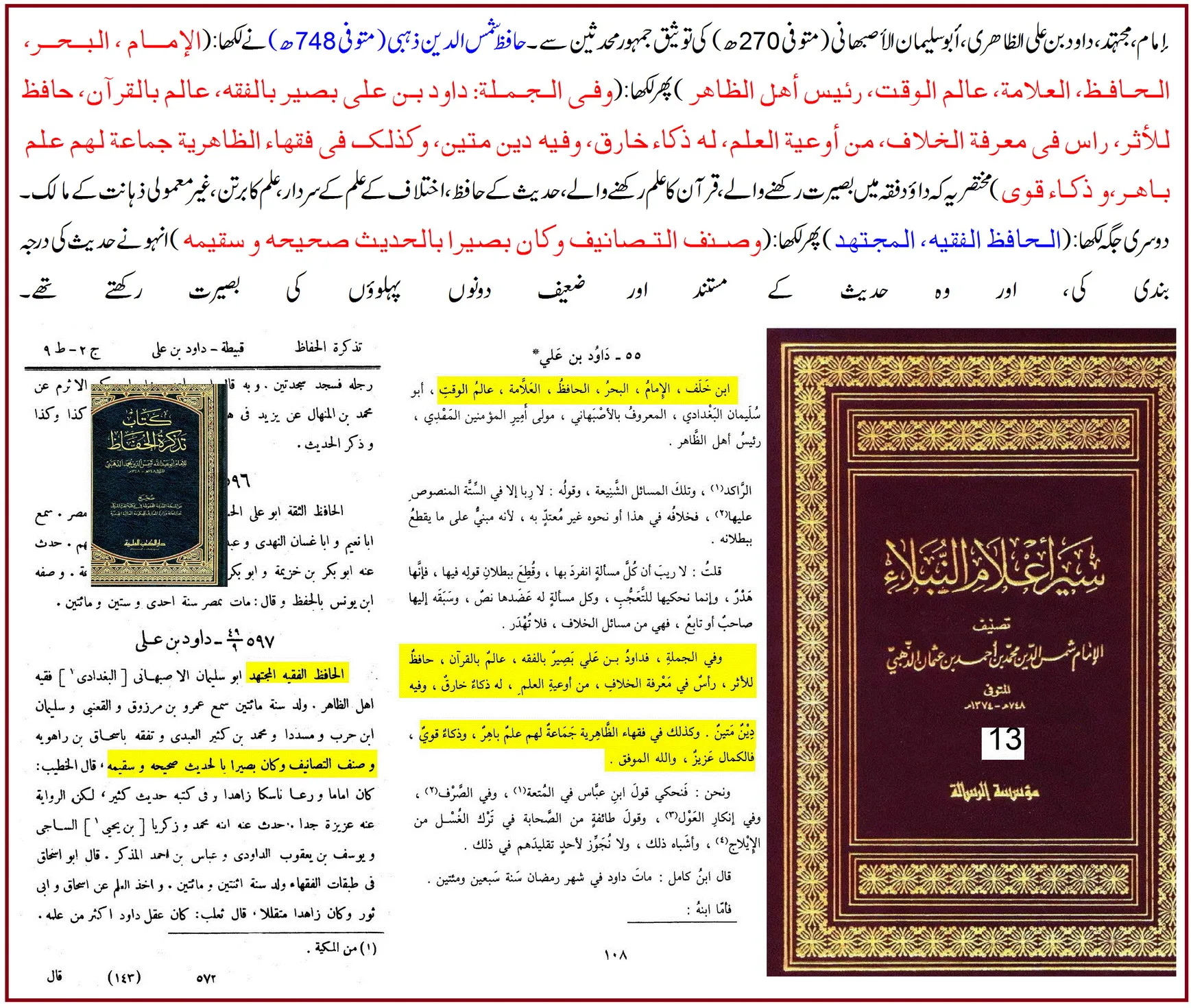
① Authentication by Hafiz Shams al-Din al-Dhahabi (from Siyar and Tadhkirat al-Huffaz)
55 - دَاوُدُ بنُ عَلِيِّ بنِ خَلَفٍ البَغْدَادِيُّ الظَّاهِرِيُّ *
الإِمَامُ، البَحْرُ، الحَافِظُ، العَلاَّمَةُ، عَالِمُ الوَقْتِ، أَبُو سُلَيْمَانَ البَغْدَادِيُّ، المَعْرُوْفُ بِالأَصْبَهَانِيِّ، مَوْلَى أَمِيْرِ المُؤْمِنِيْنَ المَهْدِيِّ، رَئِيْسُ أَهْلِ الظَّاهِرِ.
Translation:
Imam Dawood bin Ali… **an Imam, an ocean of knowledge, Hafiz, scholar, a great scholar of his time**, Abu Suleiman al-Baghdadi (known as al-Asbahani), and **the leader of the Zahiri people**.
وَفِي الجُمْلَةِ، فَدَاوُدُ بنُ عَلِيٍّ بَصِيرٌ بِالفِقْهِ، عَالِمٌ بِالقُرْآنِ، حَافظٌ للأَثَرِ، رَأْسٌ فِي مَعْرِفَةِ الخِلاَفِ، مِنْ أَوْعِيَةِ العِلْمِ، لَهُ ذكَاءٌ خَارِقٌ، وَفِيْه دِيْنٌ مَتِينٌ.
Translation:
In summary, Dawood (may Allah be pleased with him) was **insightful in jurisprudence, a scholar of the Quran, a memorizer of hadith/reports, a leader in the science of differences, a great possessor of knowledge, extraordinarily intelligent, and possessed strong piety**.
Reference: Book: Siyar A'lam al-Nubala by Al-Dhahabi
More (Tadhkirat al-Huffaz):
597- 49/ 9- داود بن علي الحافظ الفقيه المجتهد أبو سليمان الأصبهاني البغدادي فقيه أهل الظاهر: ولد سنة مائتين سمع عمرو بن مرزوق والقعنبي وسليمان بن حرب ومسددا ومحمد بن كثير العبدي وتفقه بإسحاق بن راهويه
وصنف التصانيف وكان بصير بالحديث صحيحه وسقيمه،
Translation:
Imam Dawood (RA) was a **Hafiz, Faqih, Mujtahid**, a jurist of the Zahiri school, he heard from great sheikhs, acquired fiqh from Ishaq ibn Rahwayh, wrote books, and **had the ability to distinguish between authentic and weak hadith**.
Reference: Book: Tadhkirat al-Huffaz
Author: Shams al-Din al-Dhahabi (d. 748 AH)
Author: Shams al-Din al-Dhahabi (d. 748 AH)
 Conclusion: The words of Hafiz Dhahabi at several places clearly demonstrate Imam Dawood’s **scholarly leadership, preservation of hadith, juristic insight, and integrity**.
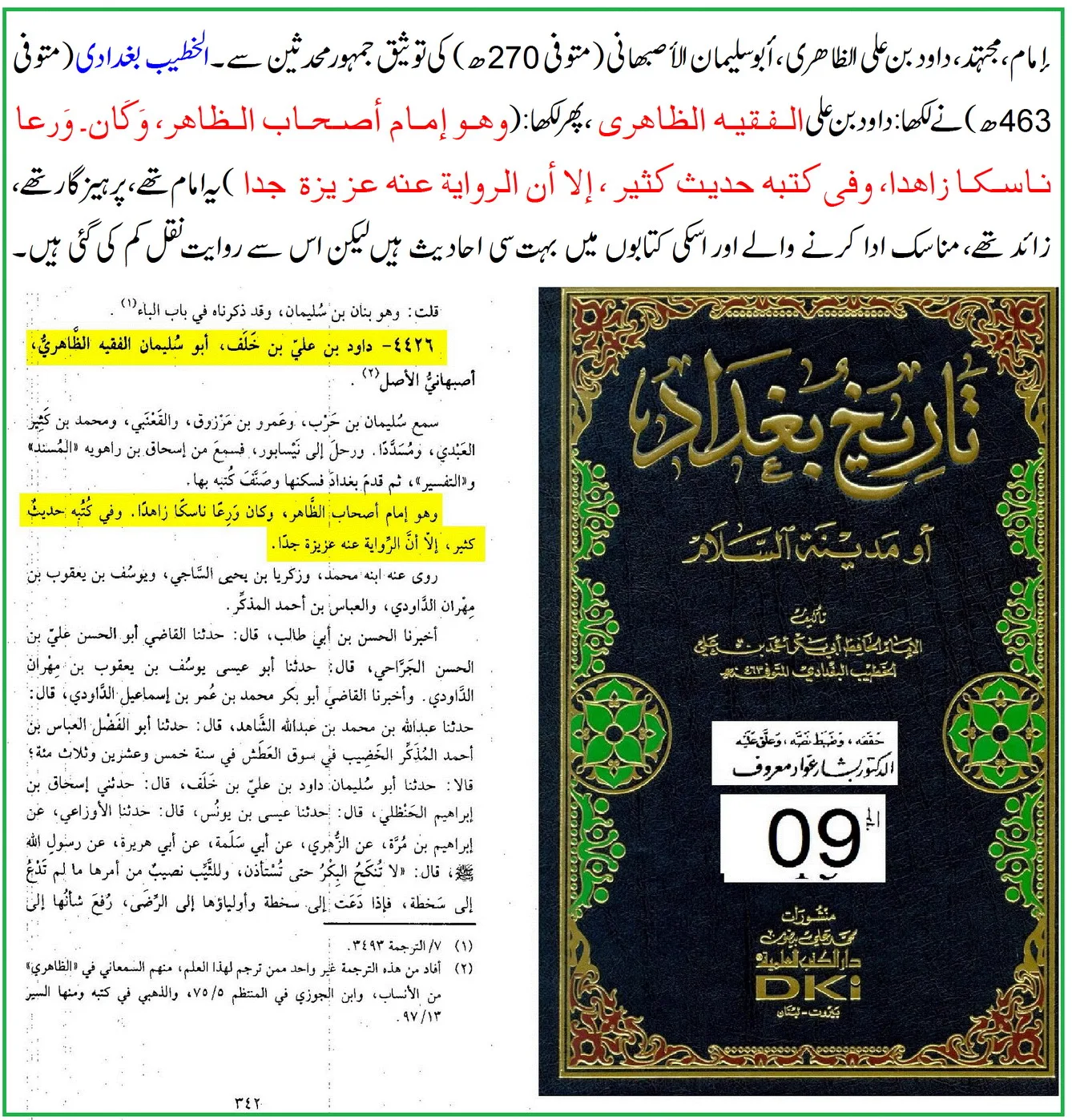
② Authentication by Al-Khatib al-Baghdadi
4426- دَاوُد بْن عَلِيّ بْن خلف أَبُو سُلَيْمَان الفقيه الظاهري أصبهاني الأصل ... وهو إمام أصحاب الظاهر، وَكَانَ وَرعا ناسكا زاهدا.
وَفي كتبه حَدِيث كثير، إِلا أن الرواية عنه عزيزة جدا.
Translation:
Dawood ibn Ali… Abu Sulayman, a Zahiri jurist… **Leader of the followers of the Zahiri school**, he was **pious, worshipful, and ascetic**; his books contain **many hadiths**, although fewer narrations were transmitted from him onward.
Reference: Book: Tarikh Baghdad
Author: Al-Khatib al-Baghdadi (d. 463 AH)
Author: Al-Khatib al-Baghdadi (d. 463 AH)
 Conclusion: According to Al-Khatib al-Baghdadi, Imam Dawood’s **leadership, asceticism, piety, and hadith legacy** are established.
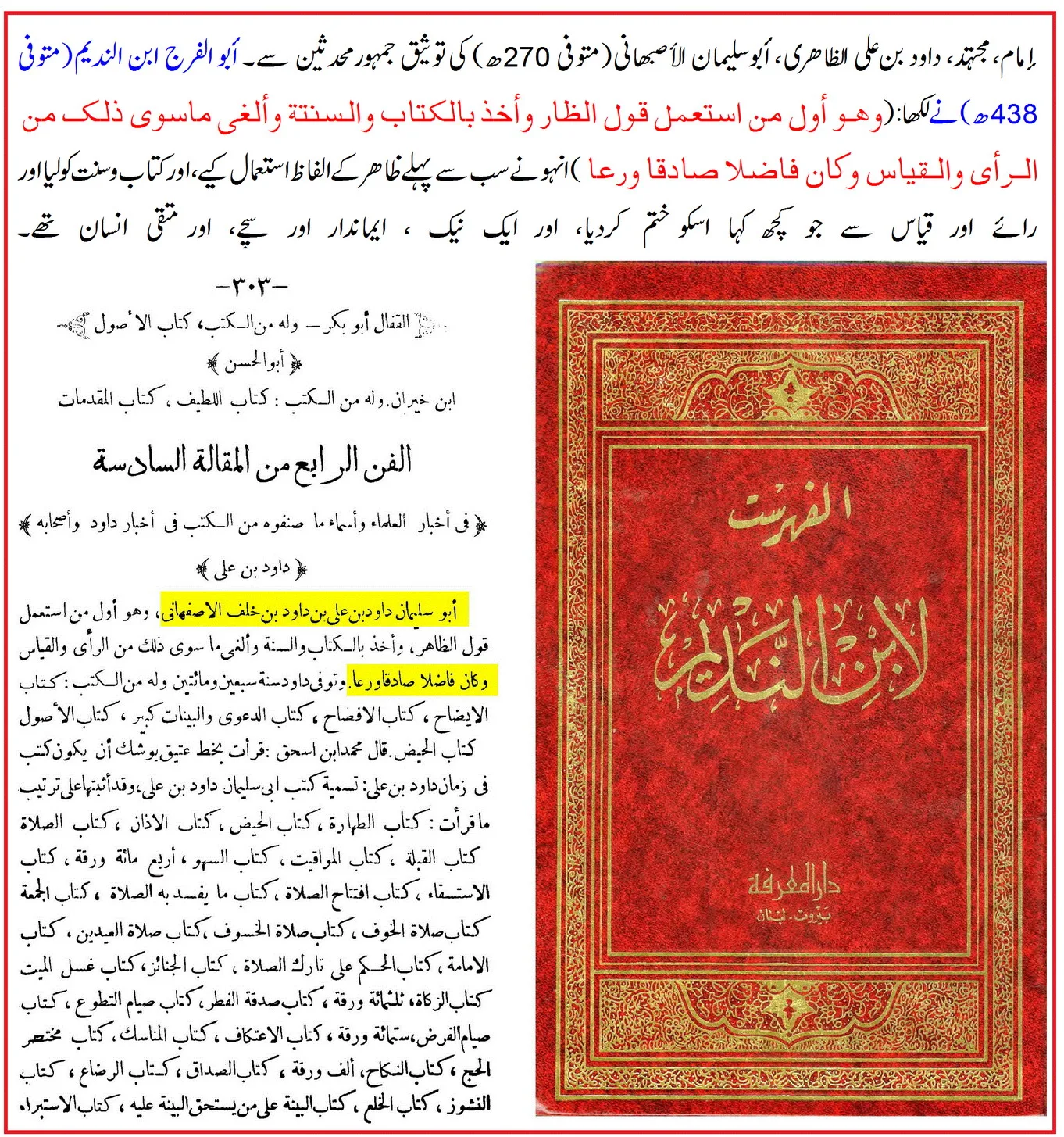
③ Authentication by Ibn al-Nadim
داود بن علي: أبو سليمان ... وهو أول من استعمل قول الظاهر وأخذ بالكتاب والسنة وألغى ما سوى ذلك من الرأي والقياس ... وكان فاضلا صادقا ورعا
Translation:
Imam Dawood (RA) is the one who emphasized the **apparent (literal) opinion** in fiqh, based his rulings on the **Book and Sunnah**, and abandoned **personal opinion and analogy**; and he was **learned, truthful, and God-fearing**.
Reference: Book: Al-Fihrist
Author: Ibn al-Nadim (d. 438 AH)
Author: Ibn al-Nadim (d. 438 AH)
Conclusion: This statement is a testimony to both Imam Dawood’s __methodology of deduction__ and __integrity__.④ Ibn Khalkan’s Authentication
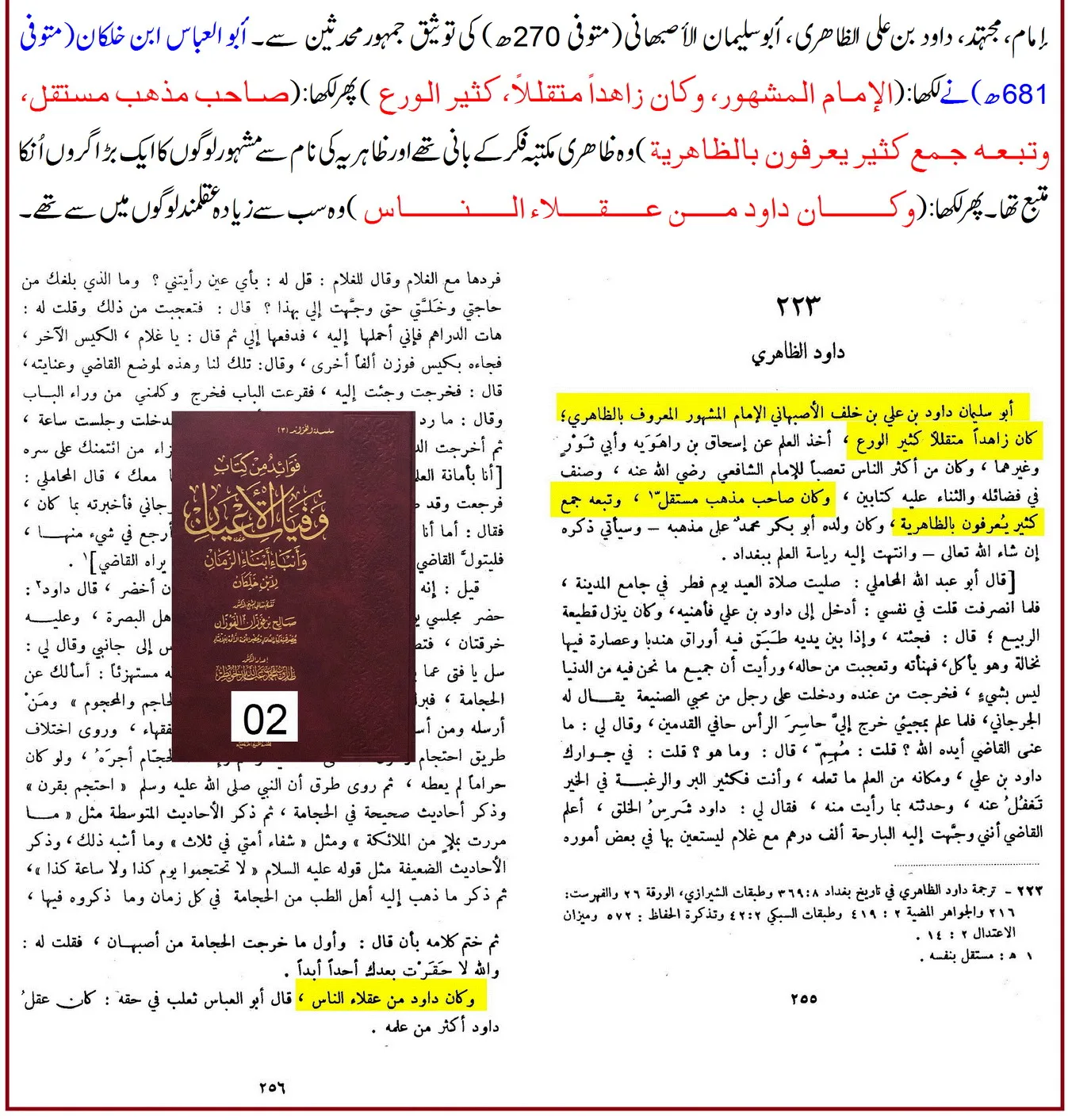
223 - (1) داود الظاهري ... الإمام المشهور المعروف بالظاهري؛ كان زاهداً متقللاً كثير الورع، أخذ العلم عن إسحاق بن راهويه وأبي ثور وغيرهما،
Translation:
Dawood Zahiri… was a **famous Imam**, **ascetic, frugal/simple-natured, and very pious**; he acquired knowledge from Ishaq bin Rahwayh, Abu Thawr, and others.
وكان من عقلاء الناس،
Translation:
And he was counted among the people of **intellect and wisdom**.
Reference: Book: Wafayat al-A'yan wa Anba' Abna' al-Zaman
Author: Ibn Khalkan (d. 681 AH)
Author: Ibn Khalkan (d. 681 AH)
 Conclusion: Ibn Khalkan remembered Imam Dawood with the attributes of **asceticism, piety, knowledge, and wisdom**.
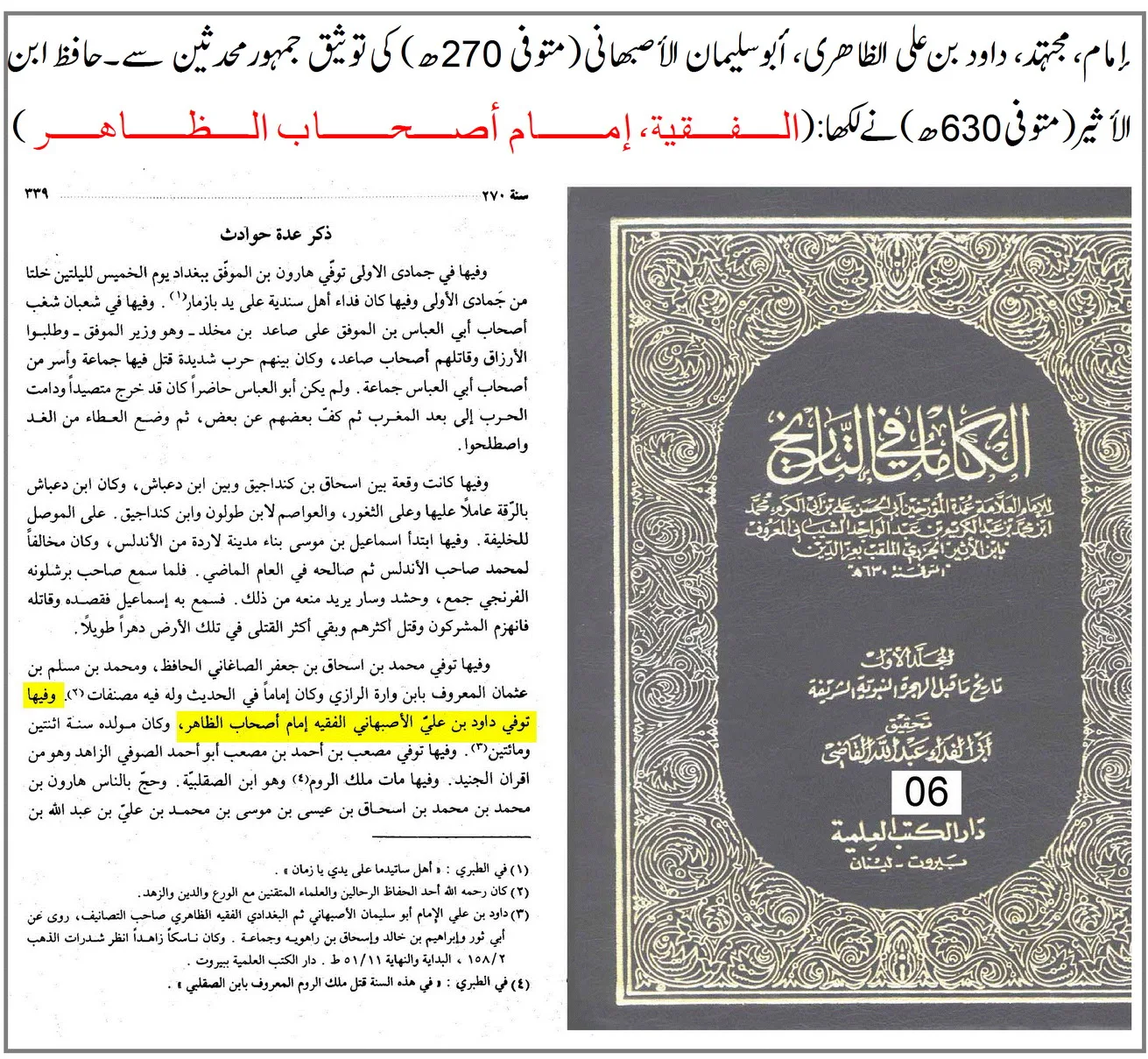
⑤ Mention by Ibn al-Athir
(فِيهَا تُوُفِّيَ) دَاوُدُ بْنُ عَلِيٍّ الْأَصْبَهَانِيُّ الْفَقِيهُ، إِمَامُ أَصْحَابِ الظَّاهِرِ، وَكَانَ مَوْلِدُهُ سَنَةَ اثْنَيْنِ وَمِائَتَيْنِ.
Translation:
In this year, Dawood bin Ali al-Asbahani, the jurist, passed away; he was the **Imam of the Zahiri school**, and he was born in 202 AH.
Reference: Book: Al-Kamil fi al-Tarikh
Author: Ibn al-Athir (d. 630 AH)
Author: Ibn al-Athir (d. 630 AH)
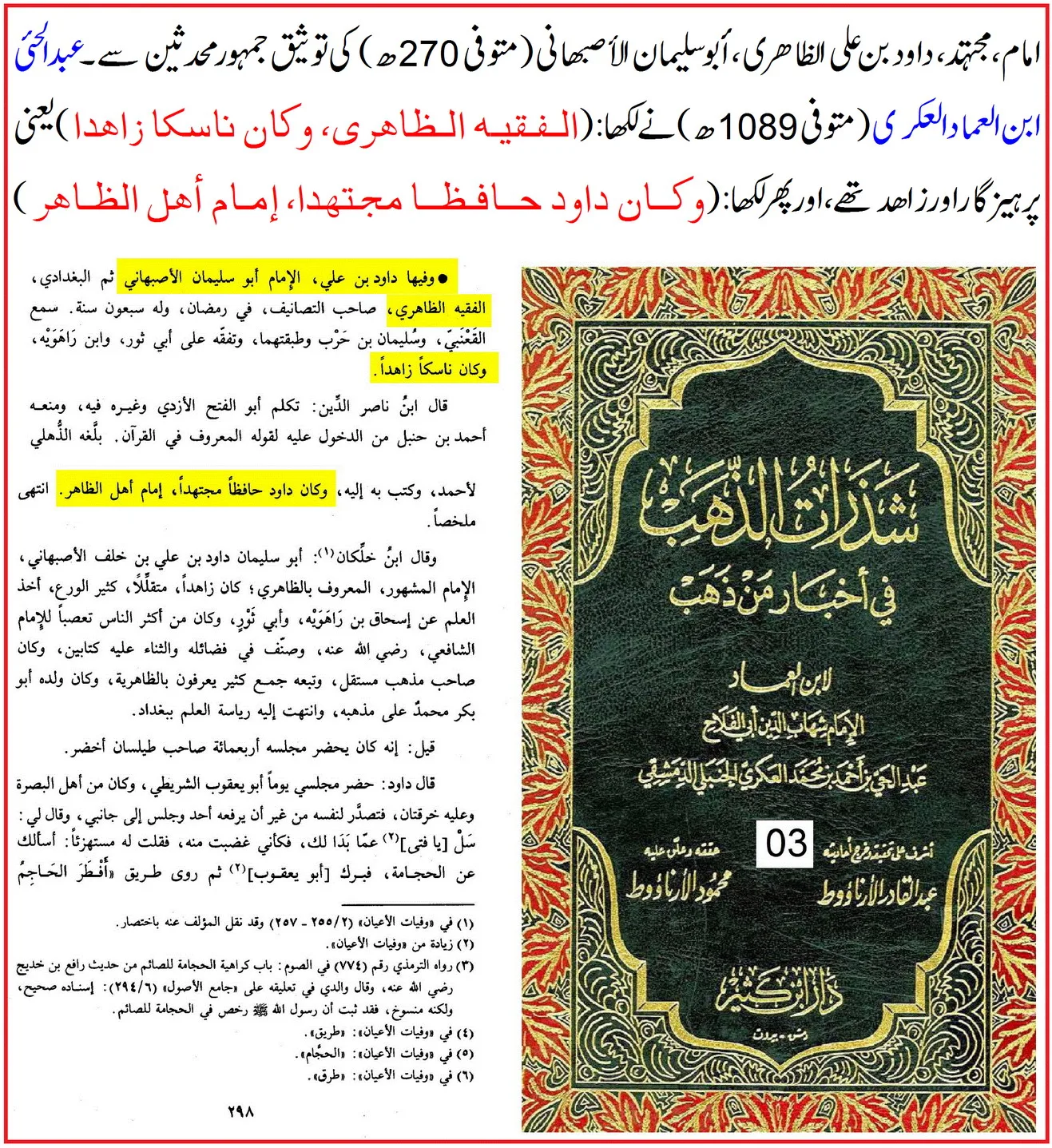
⑥ Authentication by Ibn al-Imad al-Akri
وفيها داود بن علي، الإمام أبو سليمان الأصبهاني ثم البغدادي، الفقيه الظاهري،----وكان ناسكا زاهدا.----- وكان داود حافظا مجتهدا، إمام أهل الظاهر
Translation:
Dawood bin Ali… **Imam Abu Sulayman**… Zahiri jurist… **worshipper and ascetic**; and Dawood was a **memorizer, mujtahid, and Imam of the Zahiri people**.
Reference: Book: Shadharat al-Dhahab fi Akhbar man Dhahab
Author: Ibn al-Imad al-Akri (d. 1089 AH)
Author: Ibn al-Imad al-Akri (d. 1089 AH)
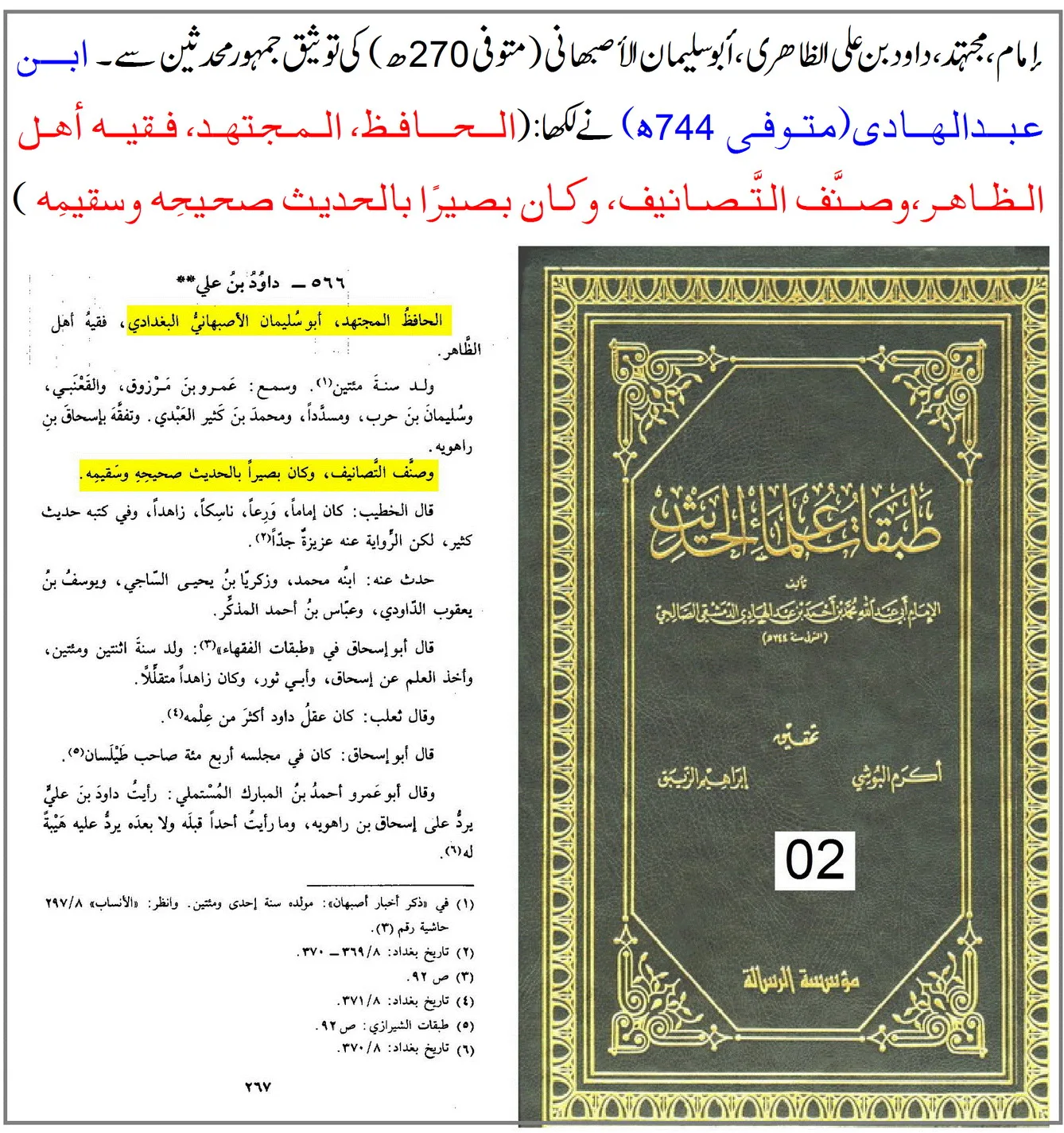
⑦ Authentication by Ibn Abd al-Hadi
الحافظُ المجتهد، أبو سُليمان الأصبهاني البغدادي، فقيه أهل الظاهر-- وتفقَّهَ بإسحاقَ بنِ راهويهٓ---وصنَّف التَّصانيف، وكان بصيرًا بالحديث صحيحِه وسقيمِه.
He was a **Hafiz and Mujtahid**, a Zahiri jurist, learned jurisprudence from Ishaq ibn Rahwayh, wrote compositions, and had **insight into authentic and weak hadith**.
Reference: Al-Kitab: Tabaqat Ulama al-Hadith
Author: Ibn Abd al-Hadi (d. 744 AH)
Author: Ibn Abd al-Hadi (d. 744 AH)
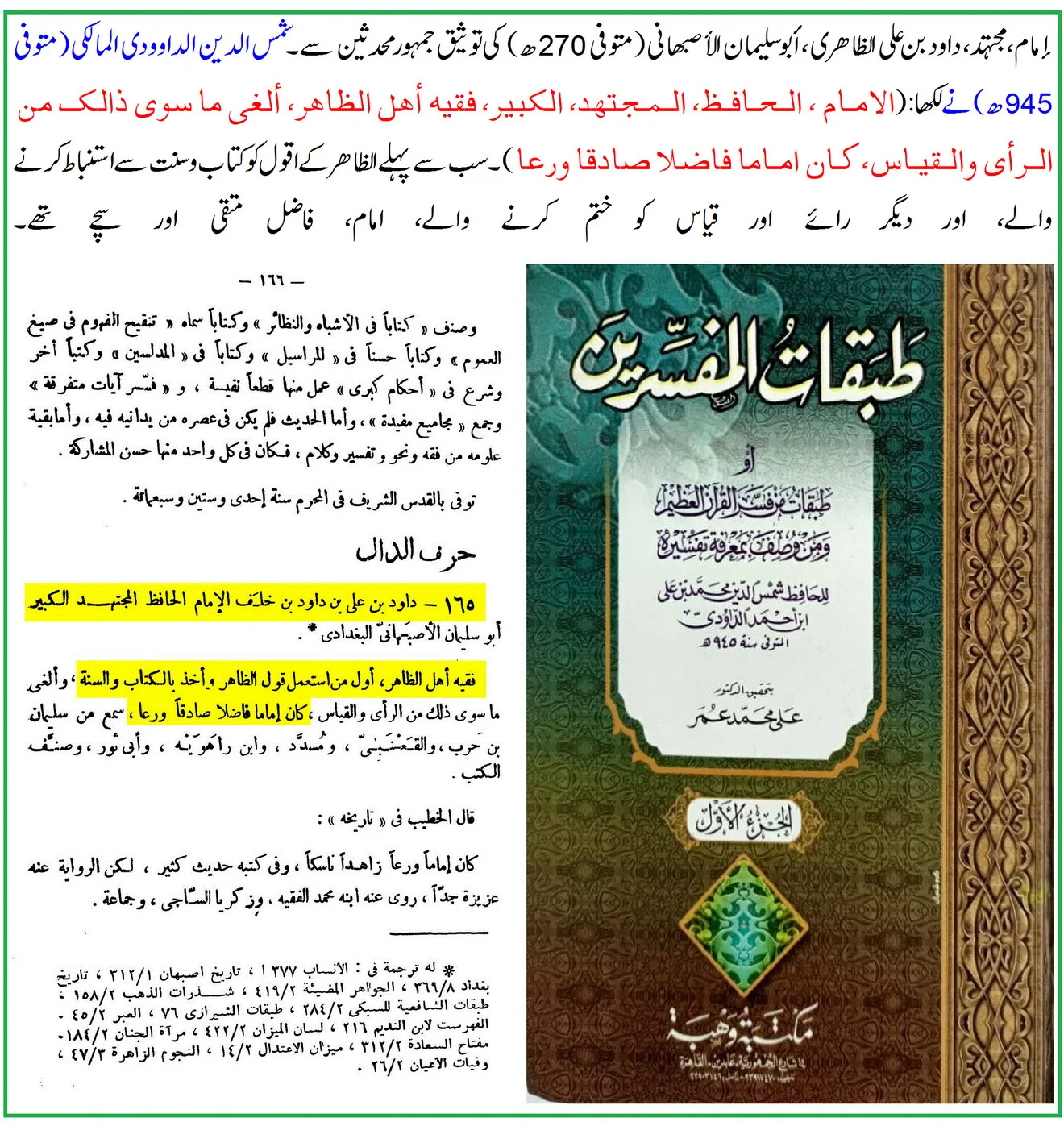
⑧ Authentication by Shams al-Din al-Dawudi al-Maliki
داود بن علي بن داود بن خلف الإمام الحافظ المجتهد الكبير أبو سليمان الأصبهانيّ البغدادي---فقيه أهل الظاهر، أول من استعمل قول الظاهر وأخذ بالكتاب والسنة، وألغى ما سوى ذلك من الرأي والقياس، كان إماما فاضلا صادقا ورعا،
Translation:
Imam Dawud… was an **Imam, Hafiz, great Mujtahid**; a Zahiri jurist; foremost in adopting the apparent meaning and basing on the Book and Sunnah; abandoned opinion and analogy; and he was an **Imam, virtuous, truthful, and pious**.
Reference: Al-Kitab: Tabaqat al-Mufassirin lil-Dawudi
Author: Shams al-Din al-Dawudi al-Maliki (d. 945 AH)
Author: Shams al-Din al-Dawudi al-Maliki (d. 945 AH)
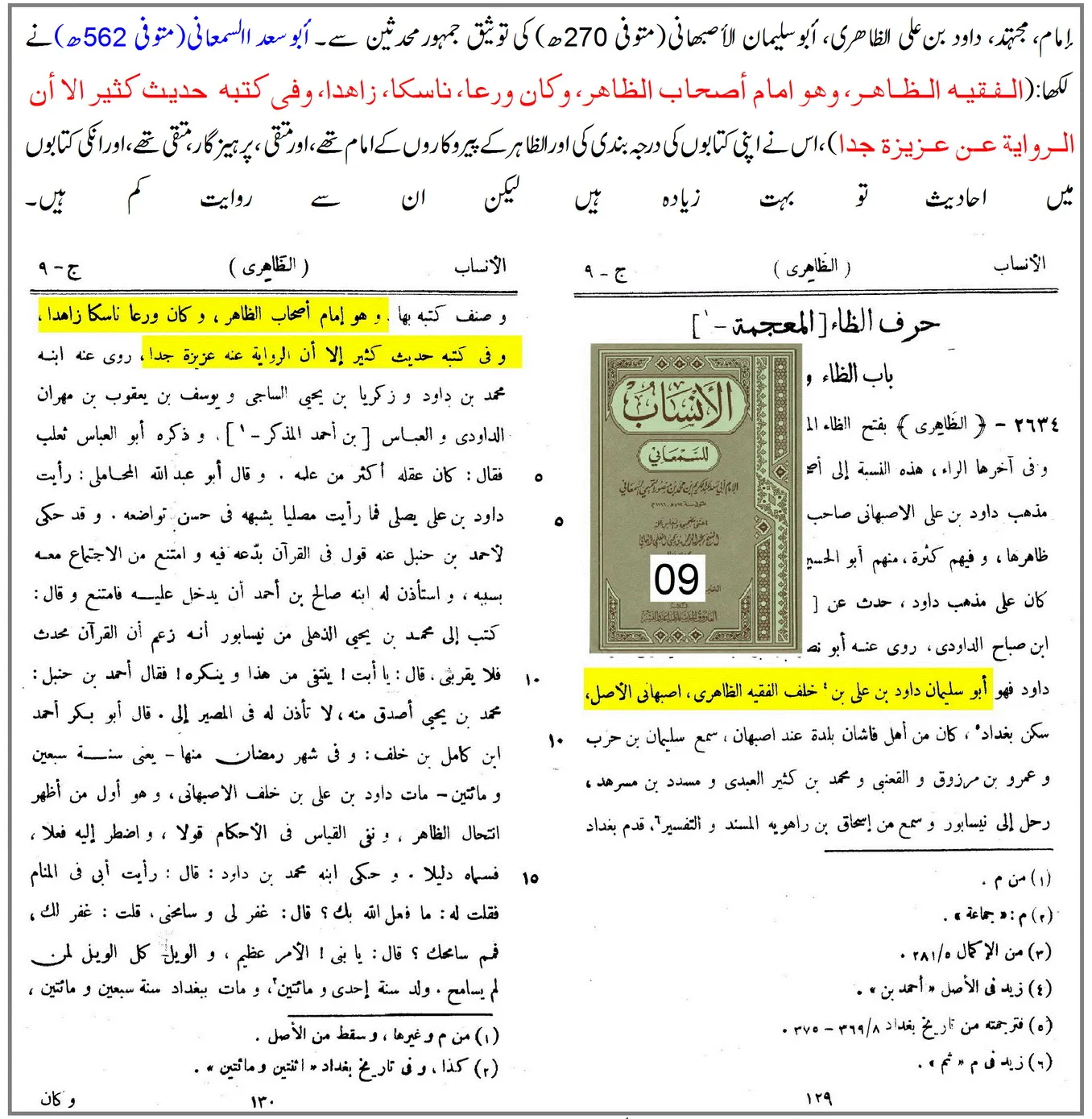
⑨ Authentication by Imam al-Sam'ani
وأما داود فهو أبو سليمان داود بن على بن خلف الفقيه الظاهري ... وصنف كتبه بها، وهو إمام أصحاب الظاهر، وكان ورعا ناسكا زاهدا، وفي كتبه حديث كثير إلا أن الرواية عنه عزيزة جدا،
Translation:
Dawud… Zahiri jurist… lived in Baghdad, wrote compositions there, he was the **Imam of the people of the apparent (Zahir)**, **pious, worshipper, ascetic**; his books contain many hadith but narrations from him are fewer.
Reference: Al-Kitab: Al-Ansab
Author: al-Sam'ani (d. 562 AH)
Author: al-Sam'ani (d. 562 AH)
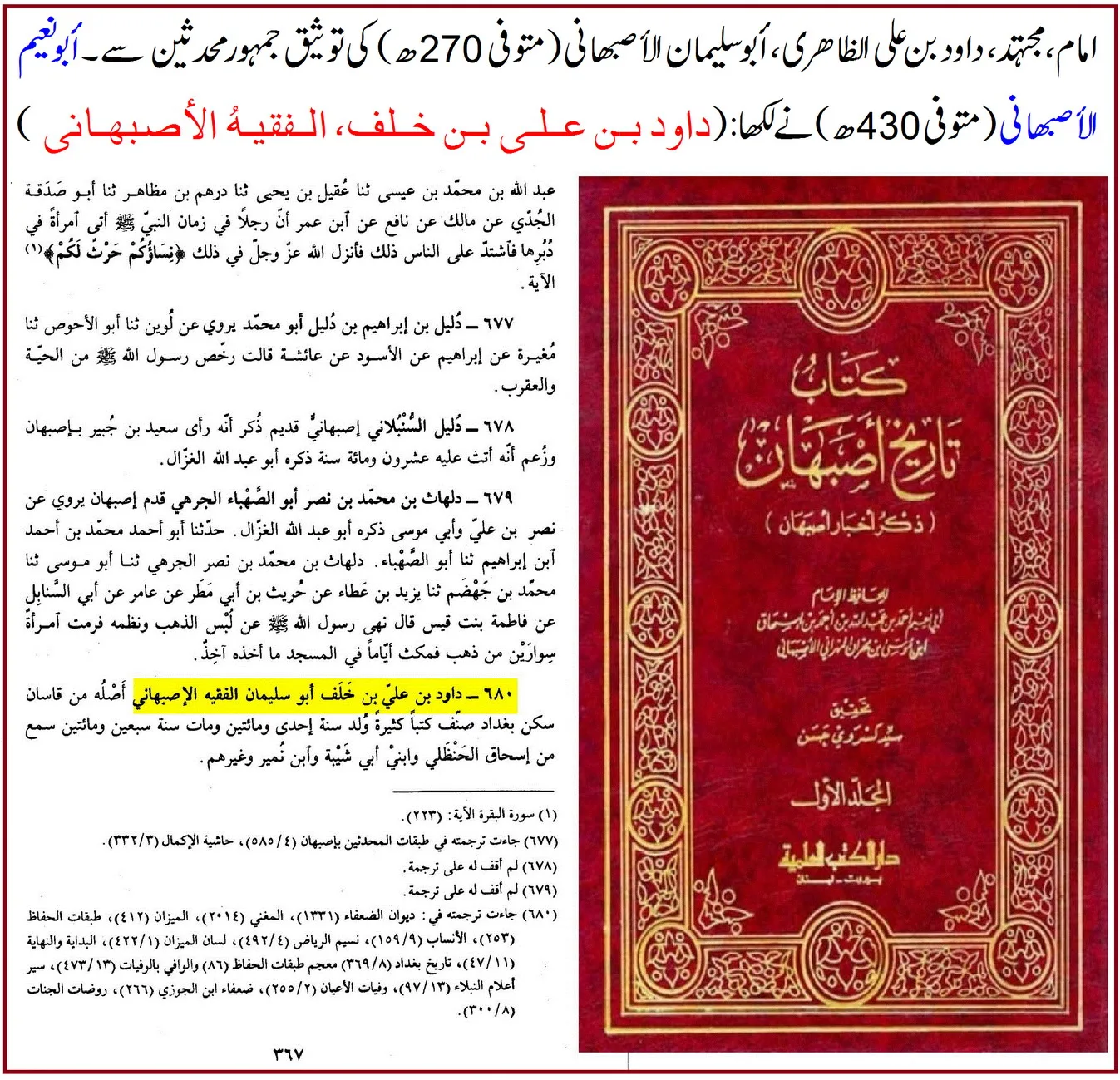
⑩ Mention by Abu Nu'aym al-Isfahani
دَاوُدُ بْنُ عَلِيِّ بْنِ خَلَفٍ أَبُو سُلَيْمَانَ الْفَقِيهُ الْأَصْبَهَانِيُّ أَصْلُهُ مِنْ قَاسَانَ، سَكَنَ بَغْدَادَ، صَنَّفَ كُتُبًا كَثِيرَةً،
Translation:
Dawud ibn Ali… Abu Sulayman, jurist… originally from Qasan, settled in Baghdad, and **authored many books**.
Reference: Al-Kitab: Tarikh Isfahan = Akhbar Isfahan
Author: Abu Nu'aym al-Isfahani (d. 430 AH)
Author: Abu Nu'aym al-Isfahani (d. 430 AH)
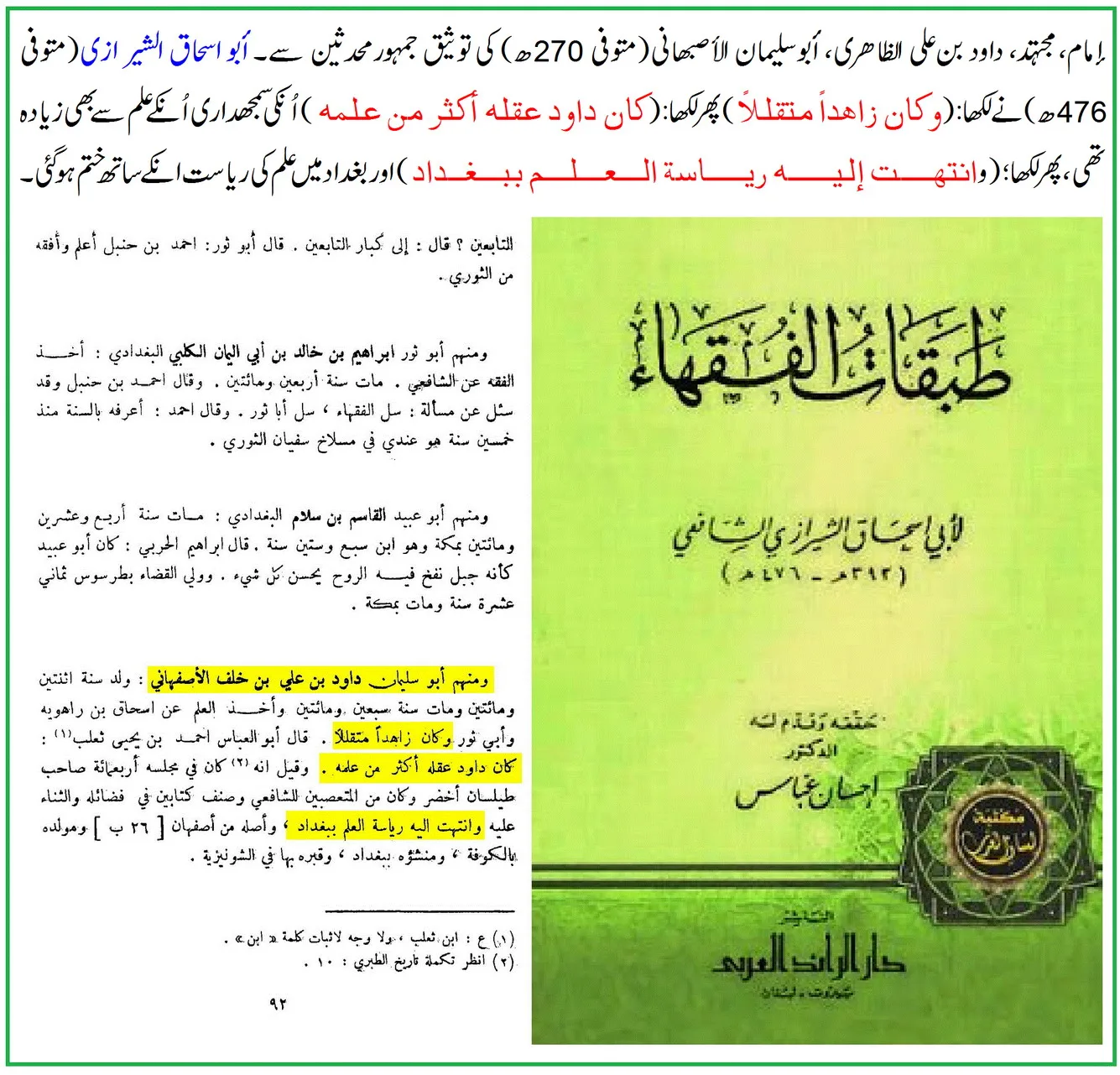
⑪ Mention of Abu Ishaq al-Shirazi
داود بن علي بن خلف الأصفهاني: ولد سنة اثنتين ومائتين ومات سنة سبعين ومائتين ... وكان زاهداً متقللاً ... كان داود عقله أكثر من علمه----وانتهت إليه رياسة العلم ببغداد،
Translation:
He was born in 202 AH and died in 270 AH; he was **ascetic and simple-natured**; and it is written about him that **his intellect (understanding) was even greater than his knowledge**; and the scholarly leadership (headship of knowledge) in Baghdad ended with him.
Reference: Book: Tabaqat al-Fuqaha
Author: Abu Ishaq al-Shirazi (d. 476 AH)
Author: Abu Ishaq al-Shirazi (d. 476 AH)
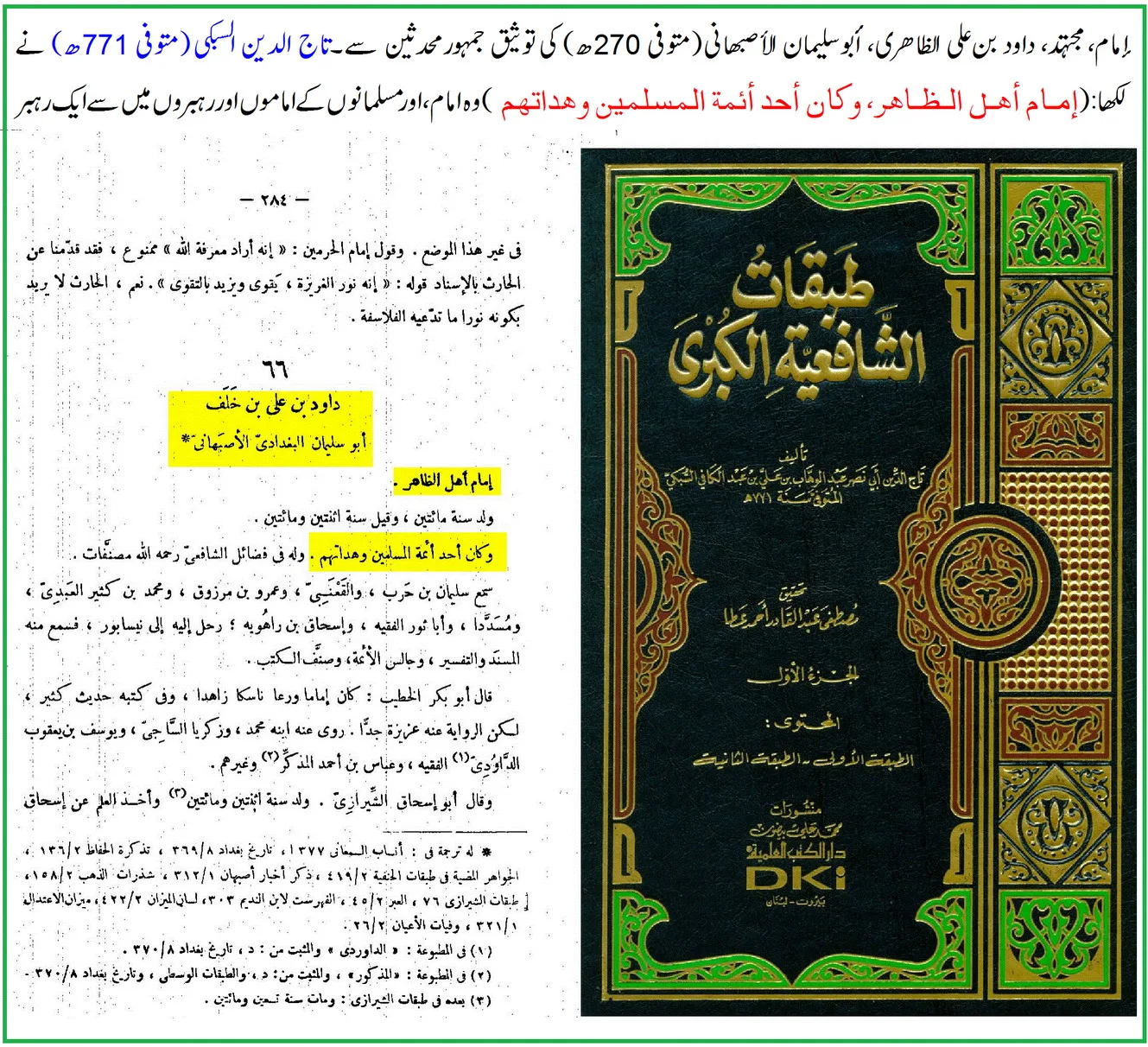
⑫ Mention of Taj al-Din al-Subki
62 - دَاوُد بن على بن خلف أَبُو سُلَيْمَان البغدادى الأصبهانى
إِمَام أهل الظَّاهِر ... وَكَانَ أحد أَئِمَّة الْمُسلمين وهداتهم ...
Translation:
Dawood bin Ali… Abu Sulayman… was the **Imam of Ahl al-Zahir**, and counted among the **Imams and leaders of the Muslims**.
Reference: Book: Tabaqat al-Shafi'iyyah al-Kubra
Author: Taj al-Din al-Subki (d. 771 AH)
Author: Taj al-Din al-Subki (d. 771 AH)
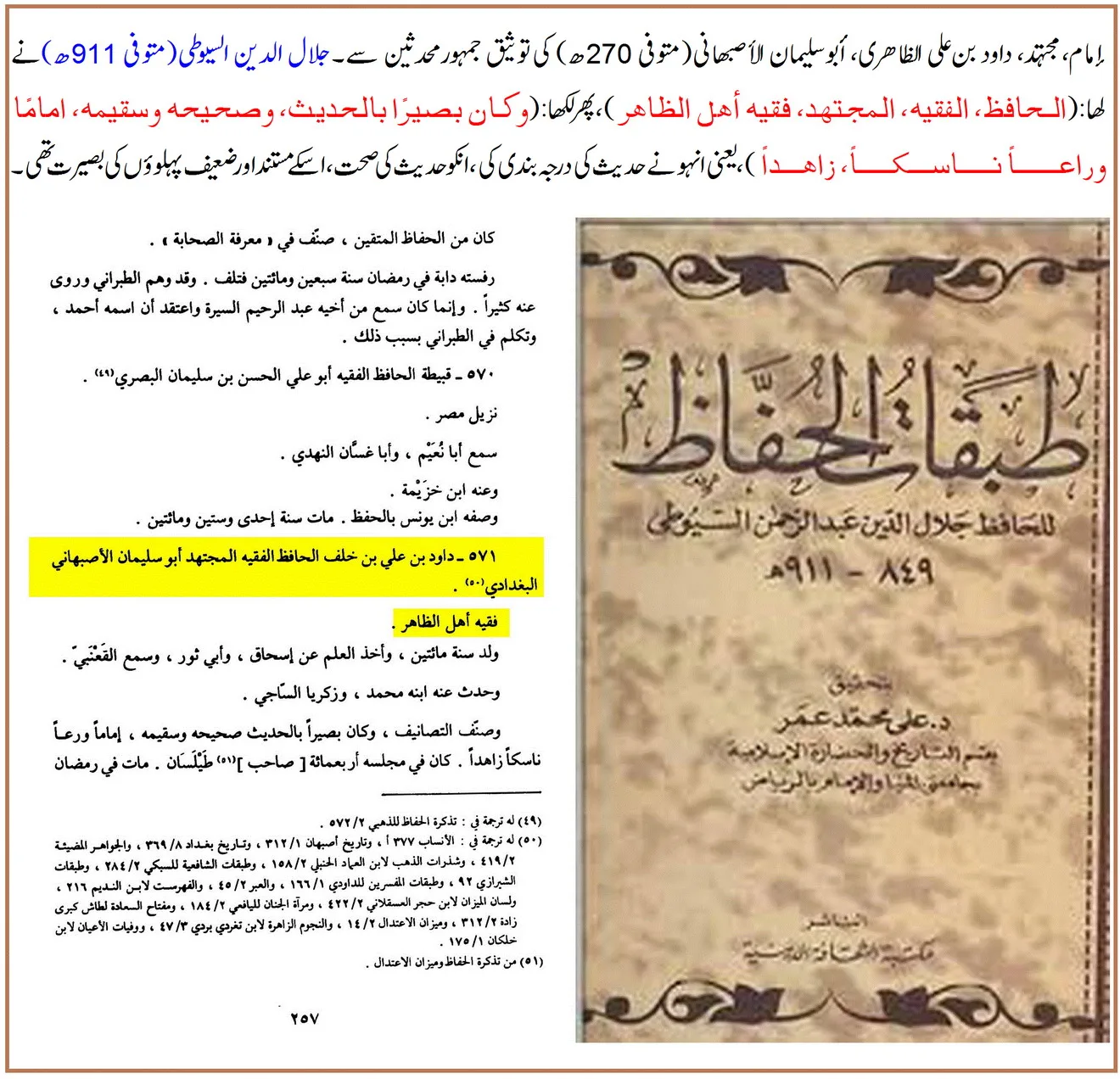
⑬ Endorsement by Jalal al-Din al-Suyuti
571 - دَاوُد بن عَليّ بن خلف الْحَافِظ الْفَقِيه الْمُجْتَهد أَبُو سُلَيْمَان الْأَصْبَهَانِيّ الْبَغْدَادِيّ ... وصنف التصانيف وَكَانَ بَصيرًا بِالْحَدِيثِ صَحِيحه وسقيمه إِمَامًا ورعاً ناسكاً زاهداً ...
Translation:
Dawood bin Ali… was a **Hafiz, jurist, and Mujtahid**… he wrote works, and had insight into authentic and weak hadith; he was an **Imam, pious, worshipper, ascetic**.
Reference: Book: Tabaqat al-Huffaz
Author: Jalal al-Din al-Suyuti (d. 911 AH)
Author: Jalal al-Din al-Suyuti (d. 911 AH)
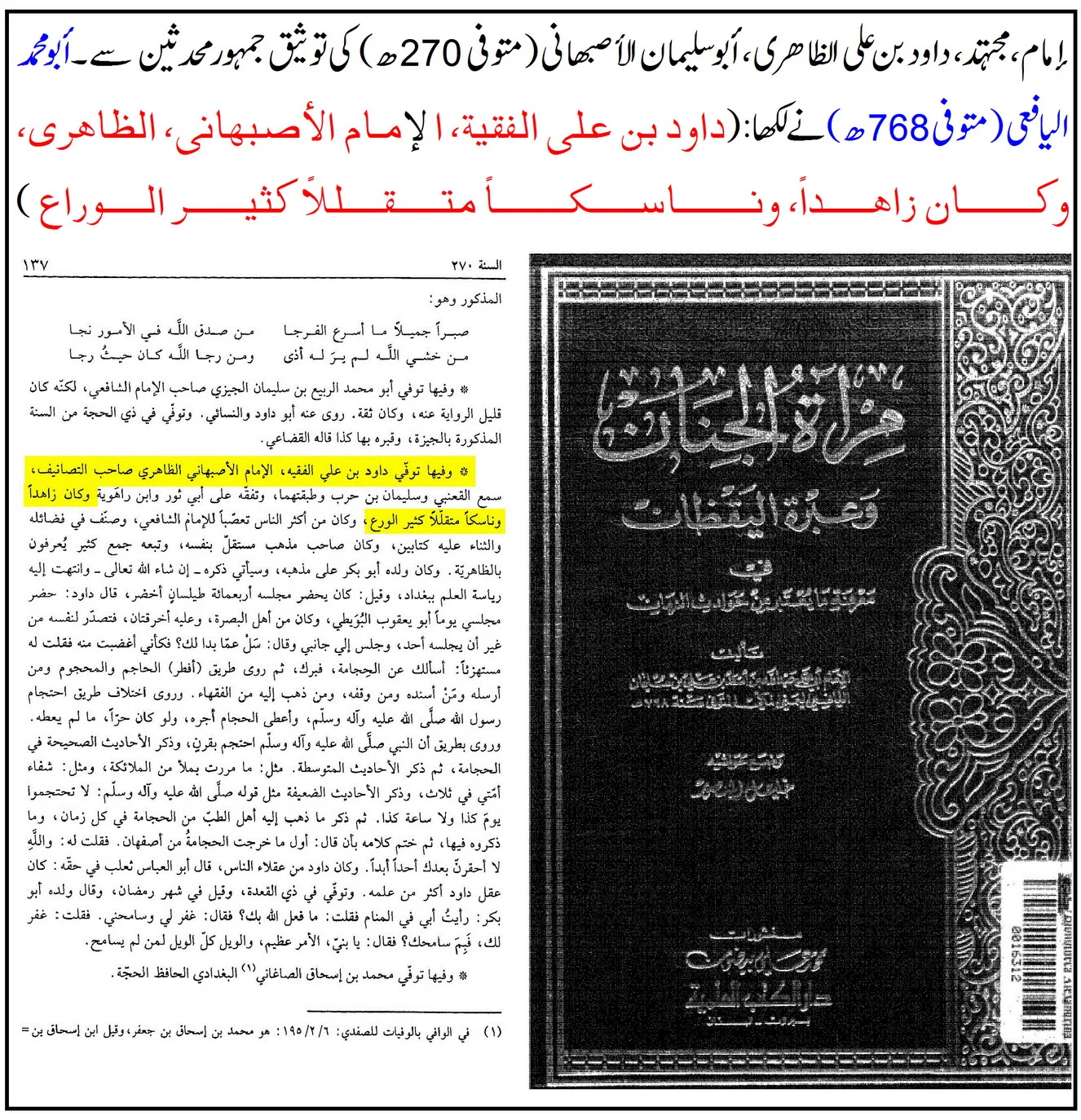
⑭ Mention of Abu Muhammad al-Yafi'i
وفيها توفي داود بن علي الفقيه، الإمام الأصبهاني الظاهري صاحب التصانيف ... وكان زاهداً وناسكاً متقللاً كثير الورع،----وكان صاحب مذهب مستقل بنفسه، وتبعه جمع كثير يعرفون بالظاهرية.
Translation:
Dawood bin Ali was a jurist… Imam Asbahani Zahiri… author of works… **ascetic, worshipper, simple-natured, very pious**; and he was steadfast in his religion, and had many followers who were called **Zahiriyyah**.
Reference: Book: Mirror of Hearts and Lesson of the Awake
Author: Al-Yafi (died 768 AH)
Author: Al-Yafi (died 768 AH)
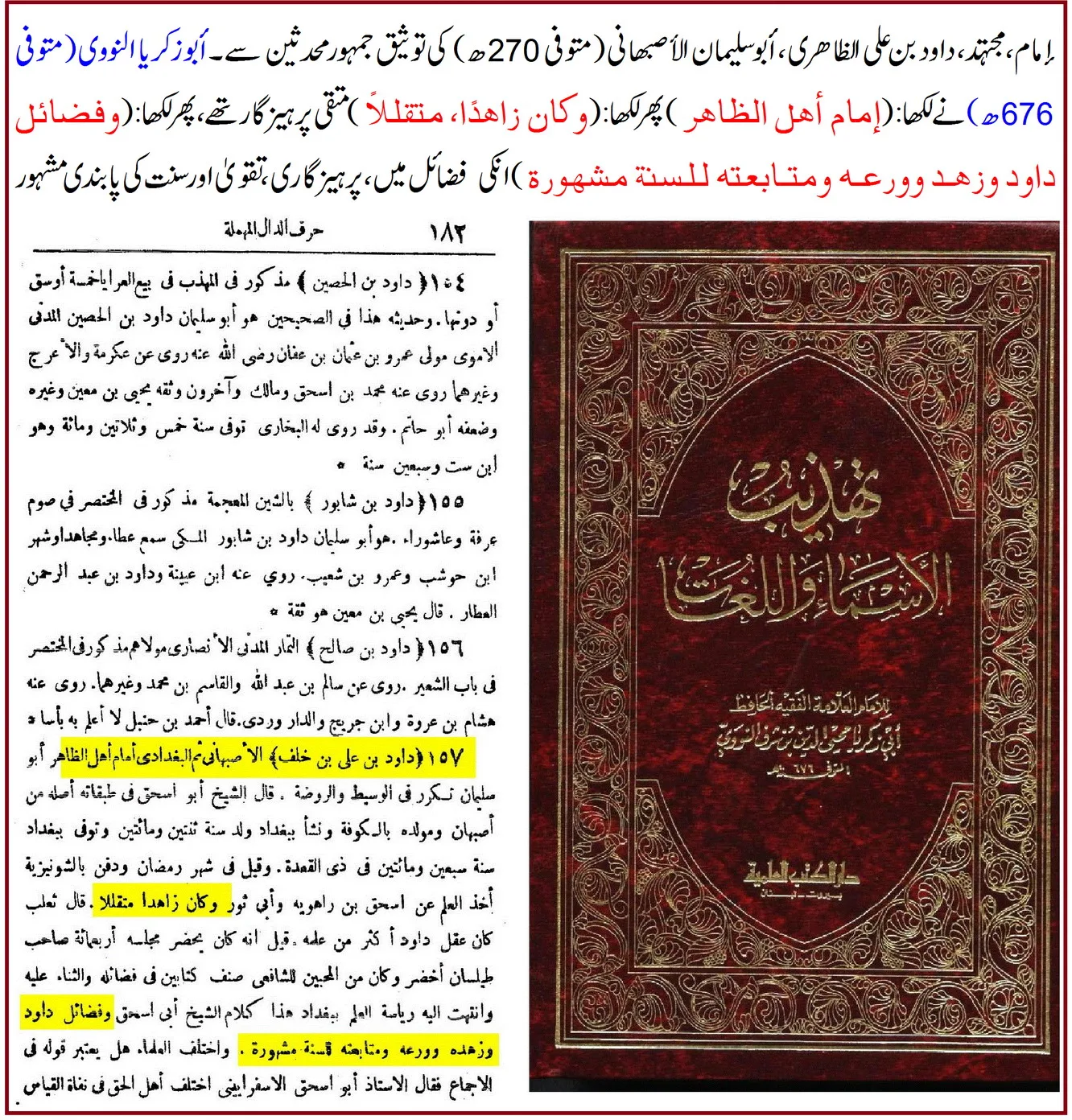
⑮ Mention of Imam Nawawi
157 - داود بن على بن داود خلف الأصبهانى ثم البغدادى:
إمام أهل الظاهر ... وكان زاهدًا، متقللاً ---وفضائل داود وزهده وورعه ومتابعته للسنة مشهورة.
Translation:
Dawood… Imam of the Zahiri school… was ascetic and simple-natured; and the virtues of Dawood, his asceticism, piety, and adherence to the Sunnah are **well-known**.
Reference: Book: Tahdhib al-Asma wa al-Lughat
Author: Abu Zakariya al-Nawawi (died 676 AH)
Author: Abu Zakariya al-Nawawi (died 676 AH)
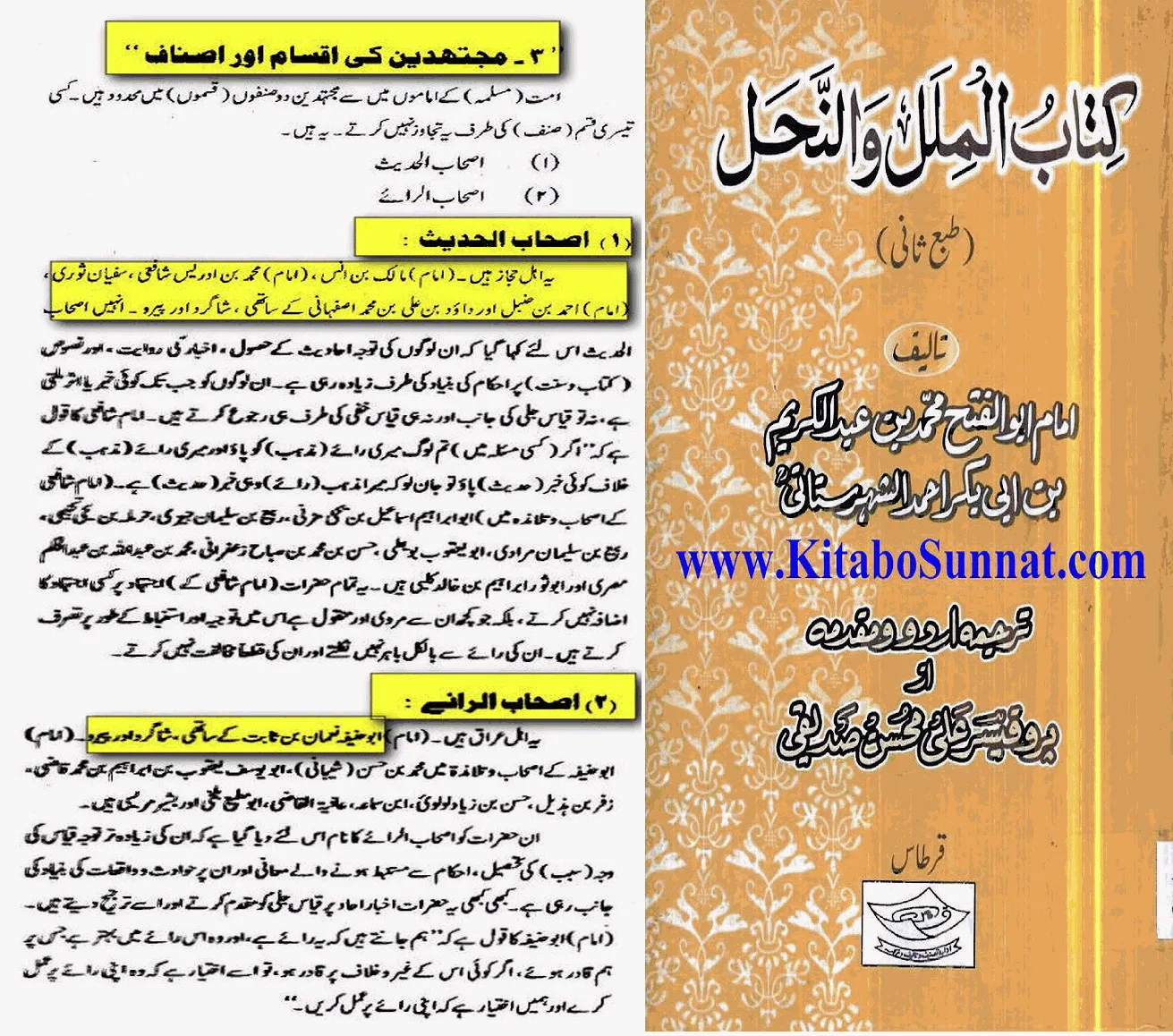
⑯ Imam al-Shahrastani’s Classification: Mention of the Zahiris among the Mujtahids of Hadith Companions
3- أصناف المجتهدين:
ثم المجتهدون من أئمة الأمة: محصورون في صنفين؛ لا يعدوان إلى ثالث
أصحاب الحديث، وأصحاب الرأي:
أصحاب الحديث:
وهم أهل الحجاز؛ هم: أصحاب مالك بن أنس، وأصحاب محمد بن إدريس الشافعي، وأصحاب سفيان الثوري، وأصحاب أحمد بن حنبل، وأصحاب داود بن علي بن محمد الأصفهاني. وإنما سموا: أصحاب الحديث؛ لأن عنايتهم:
Translation:
Al-Shahrastani mentioned the mujtahids in two categories: **companions of hadith** and **companions of opinion**. Among the companions of hadith, he also mentioned (along with others) the **companions of Dawood bin Ali al-Asbahani**—meaning that their primary basis for deduction is hadith and reports.
Reference: Book: Al-Milal wa al-Nihal
Author: Al-Shahrastani (died 548 AH)
Author: Al-Shahrastani (died 548 AH)
 Overall Summary: These attestations clarify Imam Dawood’s **trustworthiness, ijtihad, understanding of hadith, asceticism and piety**, and scholarly leadership.
① A Jurisprudential Statement of Qadi Ibn al-Arabi and Its Context
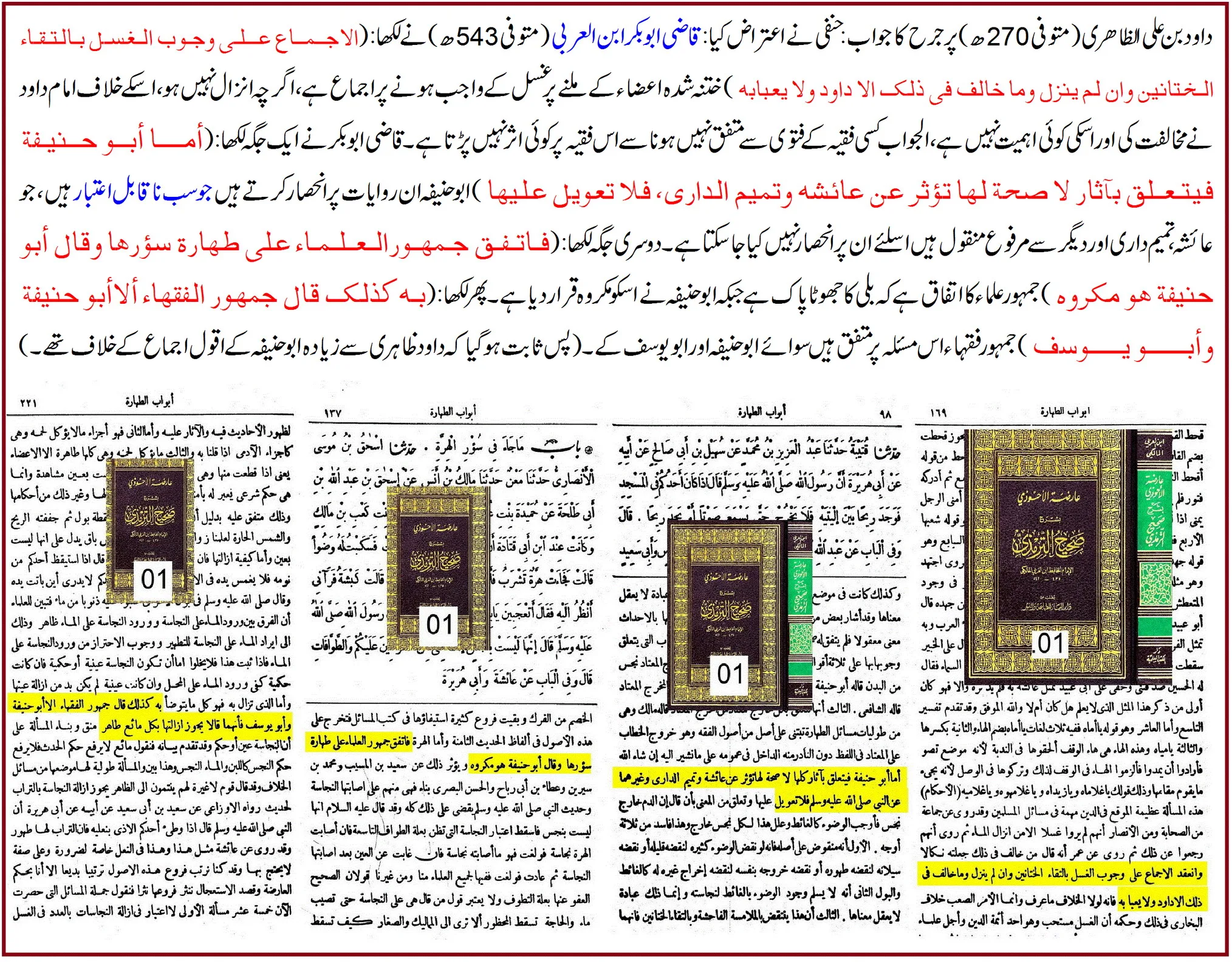
وانعقد الإجماع على وُجُوب الغسل بالتقاء الختانين وإن لم يُنزل، وما خالف في ذلك إلّا داود، ولا يُعبَأ به.
Translation:
“There is consensus on the obligation of ghusl (ritual bath) upon the meeting of circumcised parts, even if ejaculation does not occur. Only Dawood opposed this, and his opinion is disregarded.”
Reference: Book: 'Aridat al-Ahwazi (Explanation of Jami' al-Tirmidhi) 169/1
Author: Ibn al-Arabi (d. 543 AH)
Author: Ibn al-Arabi (d. 543 AH)
Summary of the answer:Here the discussion is about **a jurisprudential issue**, not about the justice and integrity of Imam Dawood (may Allah be pleased with him). The same commentator has, in many places, called the statements of other Imams "against the consensus," for example:
أما ابو حنيفة فيتعلق بآثار كلها لا صحة لها ... فلا تعويل عليها
Translation: Abu Hanifa relies on some narrations whose authenticity is not established; they are not trustworthy.
Reference: Book: 'Aridat al-Ahwazi by Ibn al-Arabi
الثامنة وأما الهرة فاتفق جمهور العلماء علي طهارة سؤرها وقال أبو حنيفة هو مكروه
Translation: The consensus is that a liar's testimony is invalid, whereas Abu Hanifa considered it disliked.
Reference: Book: 'Aridat al-Ahwazi by Ibn al-Arabi
Conclusion: It is fundamentally incorrect to nullify the scholarly status of any Imam based on a difference in a single issue—especially when that Imam is proven trustworthy and a Mujtahid according to the consensus.② Some statements on the issue of Qiyas and Hafiz al-Dhahabi's fundamental admonition
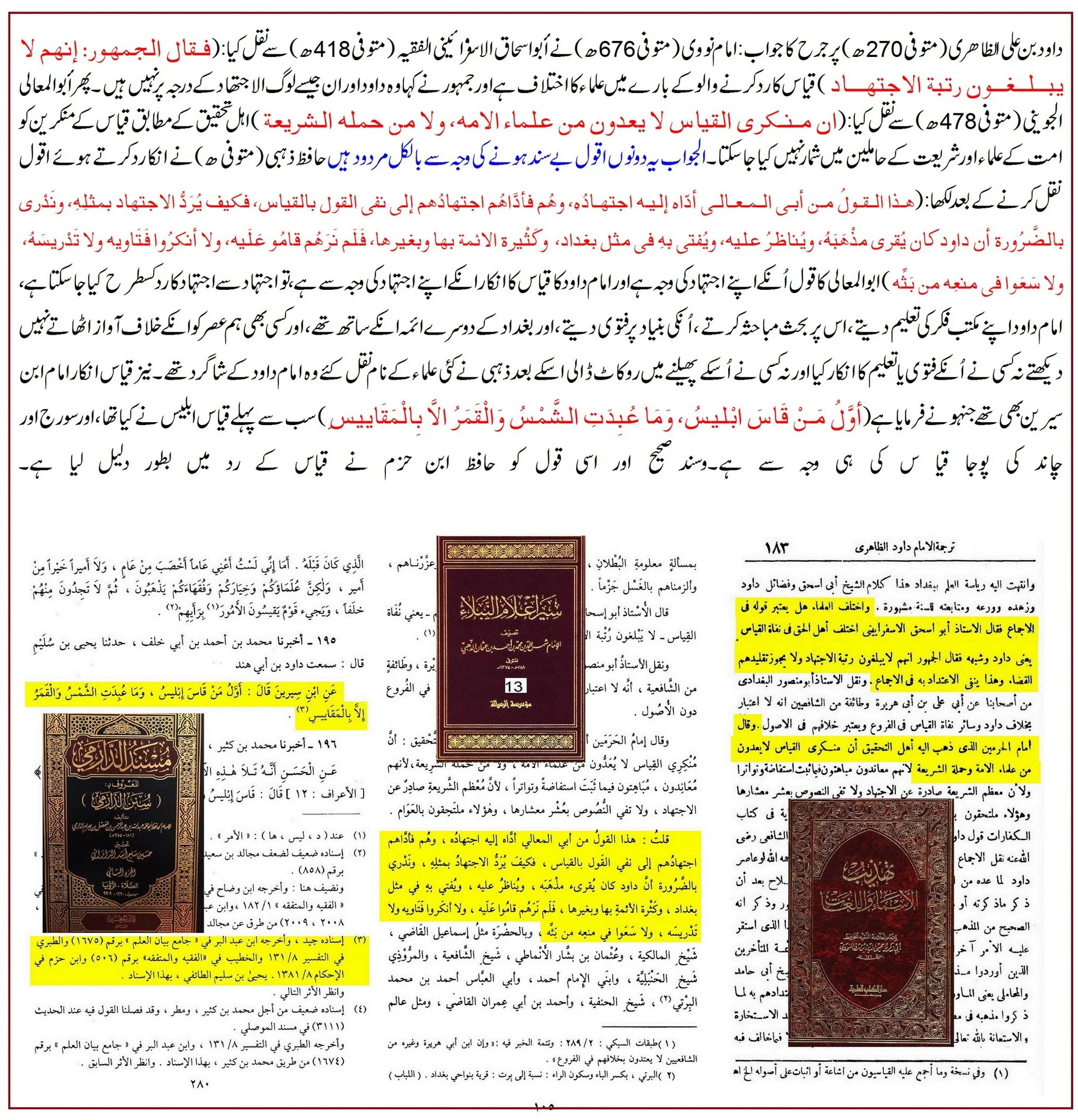
Imam Nawawi transmitted some statements from senior scholars without detailed chains of narration:
فقال الأستاذ أبو إسحاق الإسفرايينى: اختلف أهل الحق فى نفاة القياس ... فقال الجمهور: إنهم لا يبلغون رتبة الاجتهاد، ولا يجوز تقليدهم القضاء،
Translation:
According to Abu Ishaq Asfara'ini, regarding the deniers of Qiyas, the (consensus) view is that they do not reach the level of Ijtihad, etc.
Reference: Book: Tahdhib al-Asma wa al-Lughat
Author: Al-Nawawi (d. 676 AH)
Author: Al-Nawawi (d. 676 AH)
وقال إمام الحرمين: الذى ذهب إليه أهل التحقيق أن منكرى القياس لا يعدون من علماء الأمة وحملة الشريعة؛
Translation:
According to Imam al-Haramayn, those who reject Qiyas (analogical reasoning) cannot be counted among the scholars of the Ummah.
Reference: Book: Tahdhib al-Asma wa al-Lughat
Author: Al-Nawawi (d. 676 AH)
Author: Al-Nawawi (d. 676 AH)
Original Response (Hafiz al-Dhahabi's Warning):
Hafiz al-Dhahabi wrote a fundamental point on this type of discourse that **rejection of Ijtihad cannot be done merely by another Ijtihad**, and the practical reality is that Imam Dawud (may Allah be pleased with him) continued to issue fatwas, teach, and debate in Baghdad, and the great Imams of that time did not formally try to stop his teaching and fatwas:
قُلْتُ: هَذَا القَوْلُ مِنْ أَبِي المعَالِي أَدَّاهُ إِلَيْهِ اجْتِهَادُهُ، وَهُم فَأَدَّاهُم اجتِهَادُهُم إِلَى نَفِي القَوْلِ بِالقِيَاسِ، فَكَيْفَ يُرَدُّ الاجتِهَادُ بِمِثْلِهِ ... فَلَم نَرَهُم قَامُوا عَلَيْهِ، وَلاَ أَنْكَرُوا فَتَاويه وَلاَ تَدْرِيسَهُ ...
Translation:
This statement of Abu al-Ma'ali is the result of his Ijtihad, and reaching the denial of Qiyas is also the result of the Ijtihad of Imam Dawud (may Allah be pleased with him) and others; so **how can Ijtihad be rejected by another Ijtihad?** Then Imam Dawud (may Allah be pleased with him) continued to issue fatwas and teach in Baghdad, and the contemporary Imams neither rejected his fatwas and teaching nor tried to stop them.
Reference: Book: Siyar A'lam al-Nubala
Author: Al-Dhahabi (d. 748 AH)
Author: Al-Dhahabi (d. 748 AH)
Additional Benefit (The Influence of Ibn Sirin Regarding Qiyas):
195 - ... عَنِ ابْنِ سِيرِينَ قَالَ: «أَوَّلُ مَنْ قَاسَ إِبْلِيسُ، وَمَا عُبِدَتِ الشَّمْسُ وَالْقَمَرُ إِلَّا بِالْمَقَايِيسِ»
[تعليق المحقق] إسناده جيد
Ibn Sirin says: "The first to practice Qiyas was Iblis, and the worship of the sun and moon also became established through the path of Qiyas." (According to the investigator, its chain of narration is good)
Reference: Al-Kitab: Sunan al-Darimi
Conclusion: The difference of opinion regarding the issue of Qiyas is **Ijtihadi**; it cannot be used as a basis to negate the integrity/ijtihad of Imam Dawood (RA).③ The harsh statement of Abdul Rahman bin Khurash and the refutation by Abu Zur'ah al-Razi
At one place, this incident is narrated:
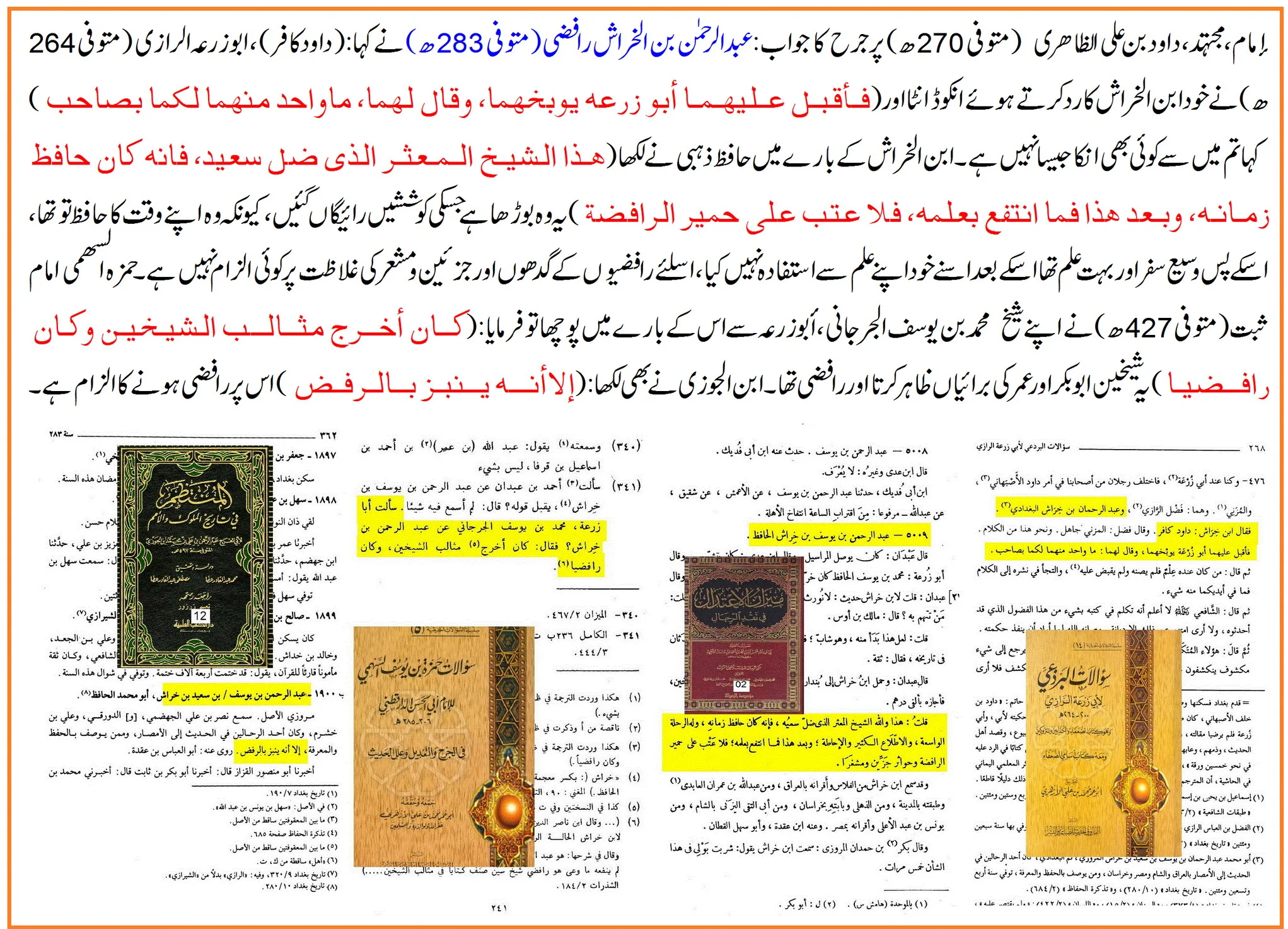
... فَقَالَ ابْن خراش: دَاوُد كافر،
Translation:
Ibn Khurash made an **extremely harsh** statement about Dawood.
Reference: Al-Kitab: Tarikh Baghdad
Author: Al-Khatib al-Baghdadi (d. 463 AH)
Author: Al-Khatib al-Baghdadi (d. 463 AH)
At the same place, Abu Zur'ah al-Razi also rebuked this style of speech:
فأقبل عليهما أَبُو زرعة يوبخهما، وَقَالَ لهما: ما وَاحد منهما لكما بصاحب ...
Translation:
Abu Zur'ah scolded both and said: None of you is a match for him...
Reference: Al-Kitab: Tarikh Baghdad
Author: Al-Khatib al-Baghdadi (d. 463 AH)
Author: Al-Khatib al-Baghdadi (d. 463 AH)
And from Abu Zur'ah al-Jurjani, this statement about Ibn Khurash is transmitted (preserving the word "Rafidi" as in the original narration):
... سألت أبا زرعة محمد بن يوسف الجرجاني عن عبد الرحمن بن خراش فقال ... وكان ... وكان رافضيا
Translation:
Abu Zur'ah al-Jurjani said about Ibn Kharash that some matters have been transmitted about him, and he has also been accused of **extreme Shi'ism/Rejectionism**.
Reference: Al-Kitab: Su'alat Hamza ibn Yusuf al-Sahmi
Author: al-Sahmi (d. 427 AH)
Author: al-Sahmi (d. 427 AH)
Conclusion: When Abu Zur'ah himself rejected that approach, and severe bias/prejudice against Ibn Kharash has also been reported, then such disproportionate harshness towards Imam Dawood does **not constitute proof**.④ The narration "Ishaq ibn Rahwayh struck him": Chain of transmission and understanding of the incident
In some books, this story is narrated as follows:
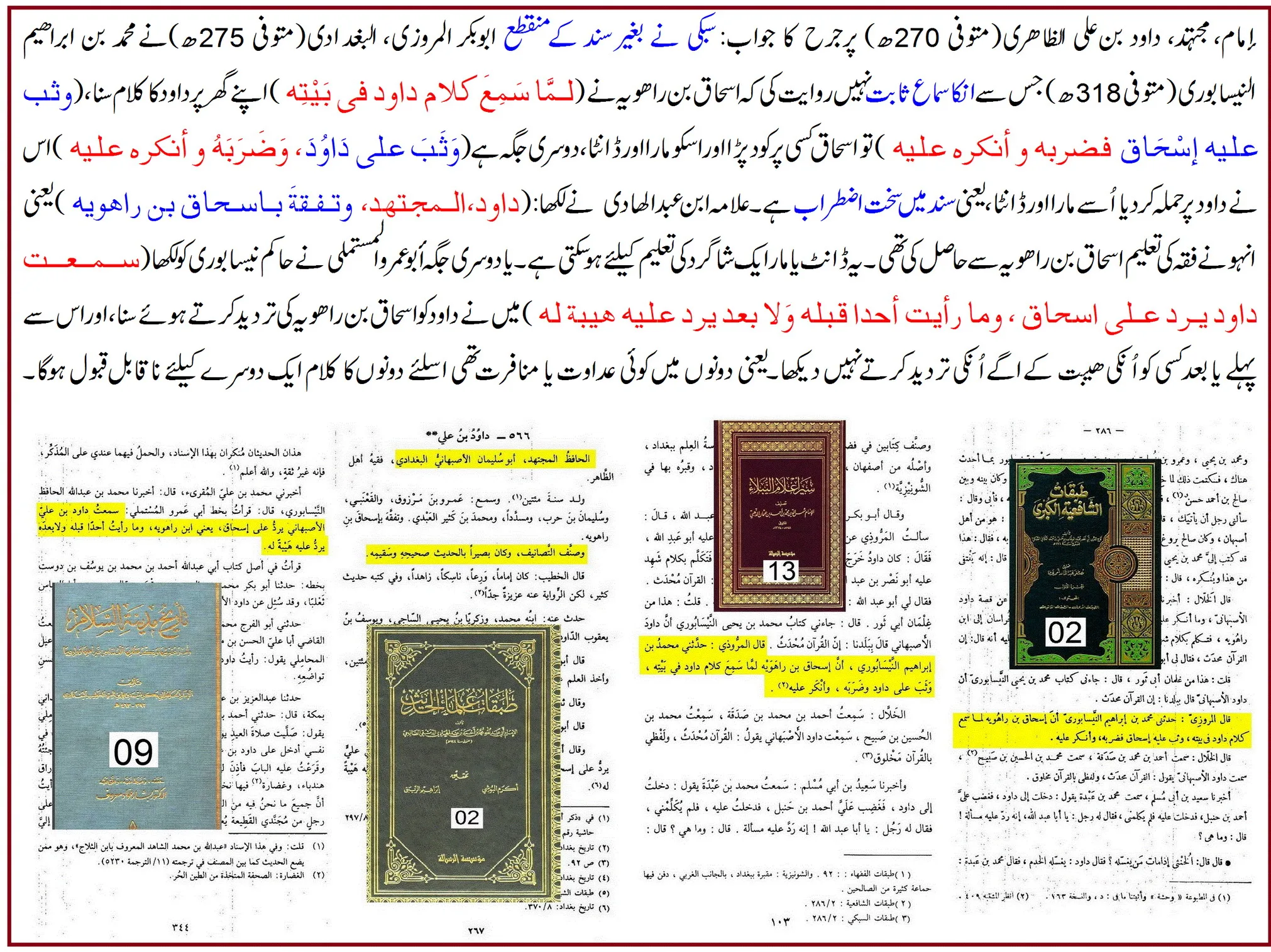
قَالَ المَرُّوْذِيُّ: حَدَّثَنِي مُحَمَّدُ بنُ إِبْرَاهِيْمَ النَّيْسَابُورِيُّ، أَنَّ إِسْحَاقَ بنَ رَاهْوَيْه لَمَّا سَمِعَ: كَلاَمَ دَاوُدَ ... وَثَبَ عَلَى دَاوُدَ، وَضَرَبَهُ وَأَنْكَرَ عَلَيْهِ.
Translation:
It has been transmitted via Marwazi that Ishaq ibn Rahwayh showed a strong reaction upon hearing Dawood's speech.
Reference: Al-Kitab: Tabaqat al-Shafi'iyyah al-Kubra / Tarikh al-Islam wa Wafayat al-Mashahir wal-A'lam
Summary of the response:
1. The fact that this incident is **proven with strong chains of narration** is a matter of ongoing debate.
2. Even if, hypothetically, some form of reproach/severity is established, it does not necessarily mean the **denial of justice and integrity**; a scholarly admonition between teacher and student is possible.
3. It is also mentioned in historical reports that Imam Dawood (رضی اللہ عنہ) refuted some matters of Ishaq (رضی اللہ عنہ), and people generally did not refute him in this manner due to Ishaq’s prestige:
... سمعت دَاوُد بْن عَلِيّ الأَصْبَهَانِيّ يرد على إسحاق، يعني ابْن راهويه، وَما رأيت أحدا قبله وَلا بعده يرد عَلَيْهِ هيبة له --
Translation:
I heard Dawood bin Ali refuting Ishaq bin Rahwayh, and before and after that, I have not seen anyone refute him due to Ishaq’s prestige.
Reference: Al-Kitab: Tarikh Baghdad
Author: Al-Khatib Al-Baghdadi (d. 463 AH)
Author: Al-Khatib Al-Baghdadi (d. 463 AH)
Conclusion: From such incidents, at most it is established that there was scholarly debate; this **does not invalidate Imam Dawood’s trustworthiness and ijtihad**.⑤ Abu al-Fath al-Azdi’s criticism and its weight
In some places, the abandonment attributed to al-Azdi is mentioned, and a response to it is narrated:
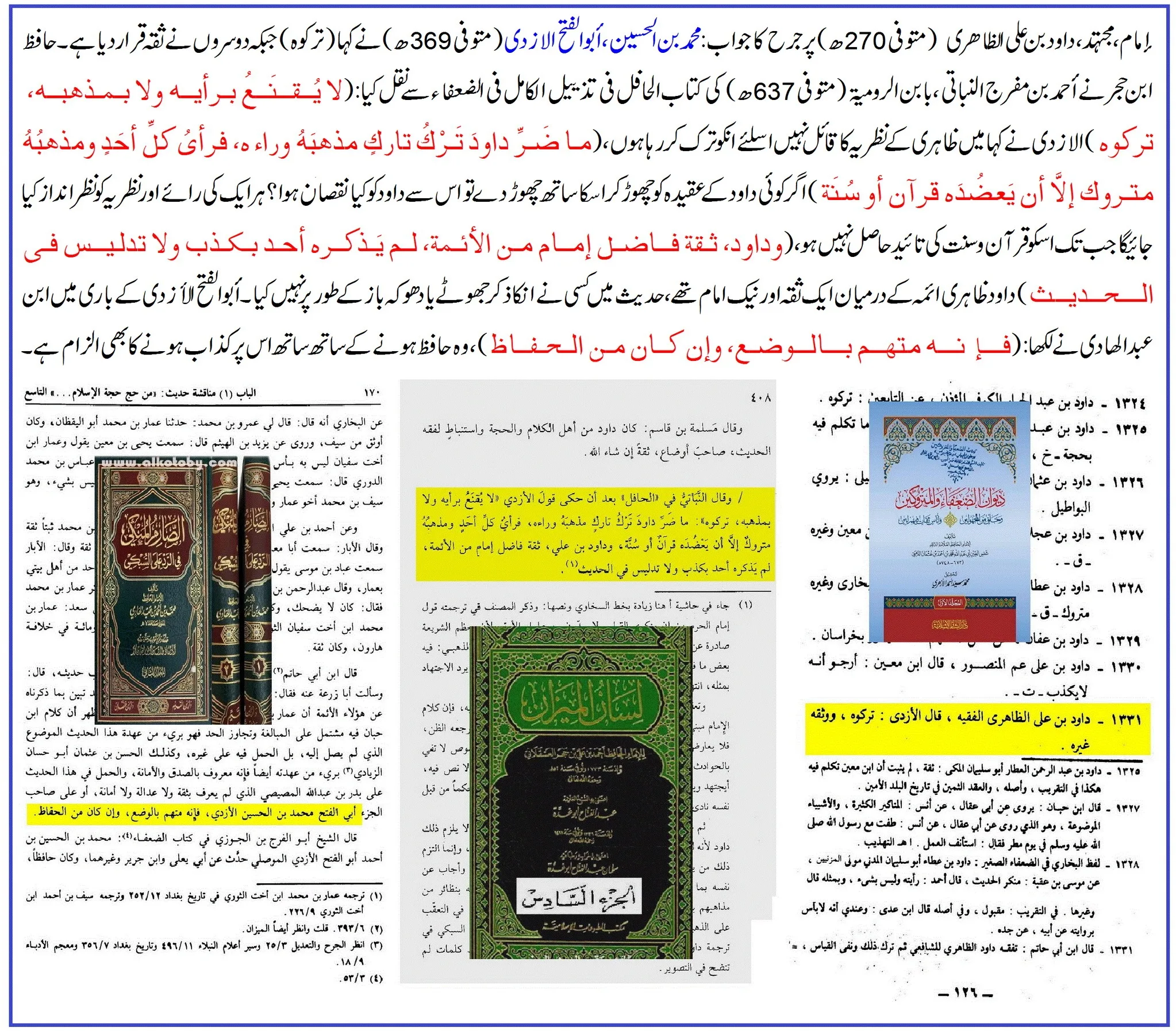
... وداود بن علي ثقة فاضل امام من الأئمة لم يذكره أحد بكذب ولا تدليس في الحديث رحمه الله تعالى.
Translation:
Dawood bin Ali is **trustworthy, virtuous, and among the Imams**; no one has mentioned him in hadith with **lying or deceit**.
Reference: Book: Lisan al-Mizan
Author: Ibn Hajar al-Asqalani (d. 852 AH)
Author: Ibn Hajar al-Asqalani (d. 852 AH)
And about Al-Azdi, it is also written:
أبي الفتح محمد بن الحسين الأزدي، فإنه متهم بالوضع، وإن كان من الحفاظ
Translation:
Abu al-Fath al-Azdi… although he was among the memorizers, he is also accused of **fabrication (hadith forging)**.
Reference: Book: Al-Sarim al-Munki fi al-Radd ala al-Subki
Author: Ibn Abd al-Hadi (d. 744 AH)
Author: Ibn Abd al-Hadi (d. 744 AH)
Conclusion: When on one side there are unanimous authentications of Imam Dawood (RA), and on the other side the objecting narrator/transmitter himself is the subject of discussion, such criticism **holds no weight**.⑥ Attributions about the Quran and Fundamental Caution
In some books, the following words have been attributed to Imam Dawood (RA):
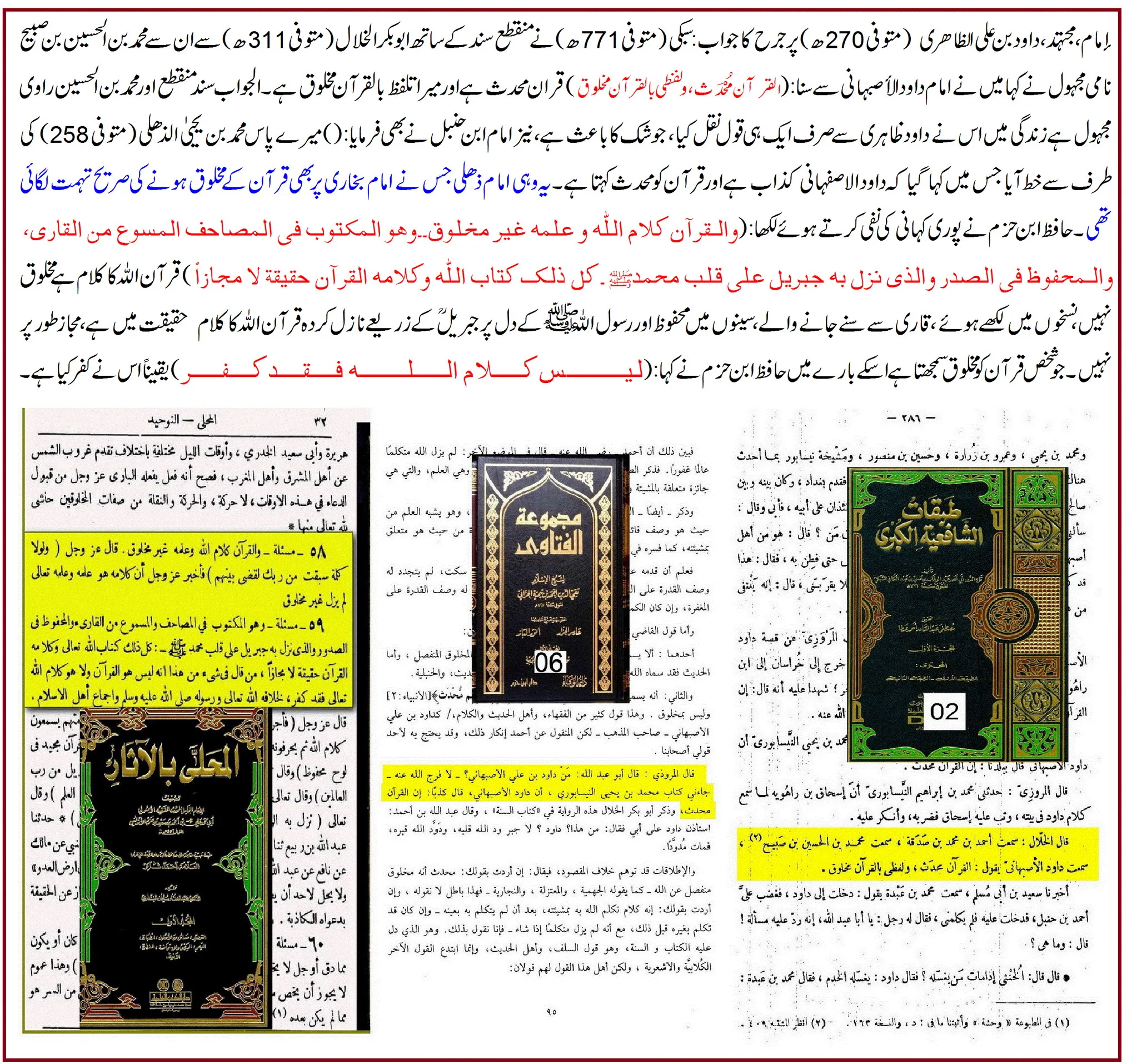
... سَمِعت دَاوُد الأصبهانى يَقُول الْقُرْآن مُحدث ولفظى بِالْقُرْآنِ مَخْلُوق
Translation:
A narrator attributed some words regarding the Quran/word to Imam Dawood (RA).
Reference: Book: Tabaqat al-Shafi'iyyah al-Kubra
Author: Taj al-Din al-Subki (d. 771 AH)
Author: Taj al-Din al-Subki (d. 771 AH)
In this regard, another narration is also transmitted:
... جَاءَنِي كِتَابُ مُحَمَّدِ بْنِ يَحْيَى النَّيْسَابُورِيِّ أَنَّ دَاوُد الأصبهاني قَالَ: كَذِبًا: إنَّ الْقُرْآنَ مُحْدَثٌ
Translation:
It is narrated that in a letter of Muhammad bin Yahya al-Nisaburi, there is mention of attributing the phrase “Quran innovator” to Imam Dawood (RA).
Reference: Book: Majmu' al-Fatawa by Ibn Taymiyyah
Fundamental Conclusion:In such attributions, **the chain of narration, the condition of the narrators, and the historical context** are decisive; it is not correct to impose a major ruling on the Imam based solely on a disconnected/defective chain—especially when on the other hand, the Imam Dawood’sؒ **integrity, piety, and adherence to the Sunnah** are established by the consensus.
The principle statement of the great apparent Imam Ibn Hazm (as an explanation of the belief of Ahl al-Sunnah):
[مَسْأَلَة الْقُرْآن كَلَام اللَّه غَيْر مَخْلُوق]
58 - مَسْأَلَةٌ: وَالْقُرْآنُ كَلَامُ اللَّهِ وَعِلْمُهُ غَيْرُ مَخْلُوقٍ... مَنْ قَالَ فِي شَيْءٍ مِنْ هَذَا ... فَقَدْ كَفَرَ
Translation:
The Quran is the Word of Allah and not a creation… whoever says otherwise (such a false statement)… has committed disbelief.
Reference: Al-Kitab: Al-Muhalla bil Athar
Author: Ibn Hazm Al-Andalusi (d. 456 AH)
Author: Ibn Hazm Al-Andalusi (d. 456 AH)
Conclusion: In such major accusations against Imam Dawoodؒ, a **definitive and continuous chain of narration** is a condition; while mere weak attributions are not decisive when there is the consensus validation of the Imam.Conclusion
The entire research makes it clear that **Imam Dawood bin Ali al-Zahiri** (died 270 AH) has strong narrations from the majority of scholars of knowledge regarding his **imamate, trustworthiness, ijtihad, understanding of hadith, jurisprudential insight, asceticism and piety, and adherence to the Sunnah** (Al-Dhahabi, Al-Khatib, Al-Sama'ani, Al-Nawawi, Al-Suyuti, Ibn Abd al-Hadi, Ibn Khalkan, Ibn al-Athir, Al-Dawoodi, and others). On the other hand, many of the objections presented are either **weak or disconnected in their chains of transmission**, or the transmitters/claimants have been noted for **bias or weakness**, or they are based merely on **disputes of ijtihadi differences**.
Therefore, the prevailing view is that Imam Dawood (may Allah be pleased with him) was a **trustworthy, established mujtahid imam**, and it is not correct to undermine his scholarly status by relying on weak criticisms against the established principled endorsements.
Last edited:

