

✍ Written by: Abu Hamzah Salafi
This article concerns the authentication of the ḥadīth narrator ʿĀṣim ibn Bahdalah, Abū Bakr al-Qārī al-Kūfī (known as ʿĀṣim ibn Abī al-Najūd). According to the majority of ḥadīth scholars, he is ṣadūq / ḥasan al-ḥadīth. In some places, brief criticisms from Ibn Ḥajar and al-Dāraquṭnī are reported. In this article, we shall:
① Present the authentication of ʿĀṣim from twenty Imams.
② Clarify the remarks/criticisms of Ibn Ḥajar and al-Dāraquṭnī.
③ Conclude that ʿĀṣim’s ḥadīth is ḥasan and acceptable for evidence, and that the criticisms against him are not disqualifying in light of the majority’s authentication.
918 – سَأَلْتُهُ عَنْ عَاصِمِ بْنِ بَهْدَلَةَ، فَقَالَ: ثِقَةٌ، رَجُلٌ صَالِحٌ خَيْرٌ، ثِقَةٌ، وَالْأَعْمَشُ أَحْفَظُ مِنْهُ.
Translation:
I asked Imām Aḥmad about ʿĀṣim ibn Bahdalah. He said:
“He is trustworthy (thiqah), a righteous and good man, trustworthy; however, al-Aʿmash has stronger memory than him.”
Reference:
Clarification:
◈ Imām Aḥmad said “thiqah” twice and added “a righteous, good man,” which testifies to his piety and integrity.
◈ “Al-Aʿmash has stronger memory” is merely comparative, not a weakening.
157 – عَاصِمُ بْنُ بَهْدَلَةَ ثِقَةٌ لَا بَأْسَ بِهِ، وَهُوَ مِنْ نُظَرَاءِ الْأَعْمَشِ، وَالْأَعْمَشُ أَثْبَتُ مِنْهُ.
Translation:
“ʿĀṣim ibn Bahdalah is trustworthy; there is no harm in him. He is among the peers of al-Aʿmash, though al-Aʿmash is more firmly established than him.”
Reference:
Clarification:
◈ Explicit authentication: “thiqah lā ba’sa bihi.”
◈ The comparison does not constitute criticism.
… سألت أبا زرعة عن عاصم بن بهدلة، فقال: ثقة.
Translation:
Abū Zurʿah was asked about ʿĀṣim ibn Bahdalah and said: “Trustworthy.”
Reference:
Clarification:
◈ A concise yet strong authentication from a major critic.
◈ “Thiqah” is among the highest levels of praise.
763 – … وكان ثقة في الحديث، ولا يختلف عنه في حديث زر وأبي وائل.
Translation:
“He was trustworthy in ḥadīth, and no اختلاف is reported regarding his narrations from Zirr and Abū Wāʾil.”
Reference:
Clarification:
◈ Clearly stated: “thiqah in ḥadīth.”
◈ No discrepancy in his narrations from key teachers, indicating precision.
… قَالَ عَلِيٌّ: هَذَا إِسْنَادٌ صَحِيحٌ كَالشَّمْسِ لَا مَغْمَزَ فِيهِ.
Translation:
“This chain is authentic like the sun, with no flaw in it.”
Reference:
Clarification:
◈ Described as “authentic like the sun,” an expression of the highest commendation.
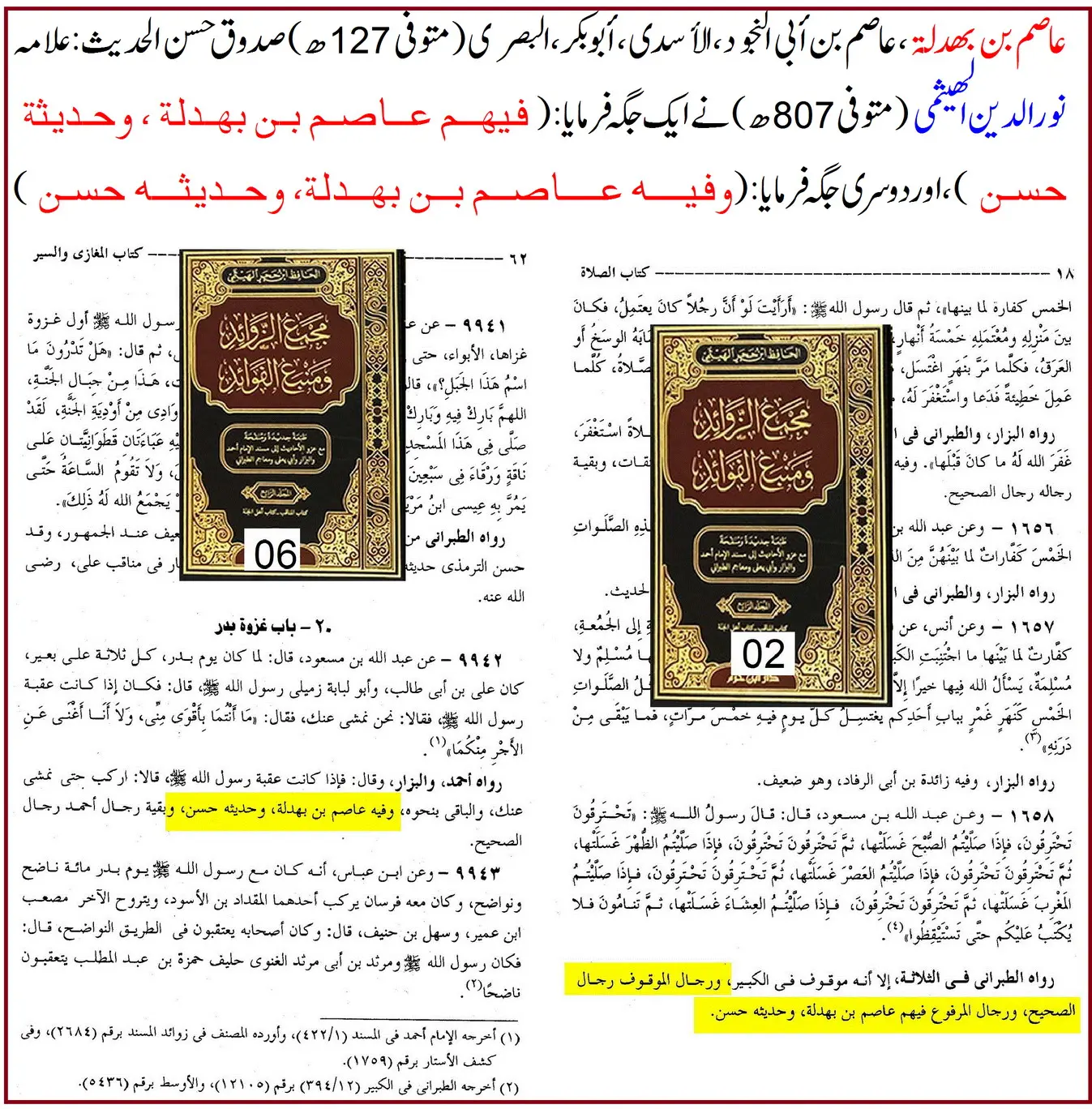
… وَفِيهِ عَاصِمُ بْنُ بَهْدَلَةَ، وَحَدِيثُهُ حَسَنٌ.
Translation:
“In it is ʿĀṣim ibn Bahdalah, and his ḥadīth is ḥasan.”
Reference:
Clarification:
◈ Explicit statement: “His ḥadīth is ḥasan.”
◈ Therefore, acceptable and suitable as proof.
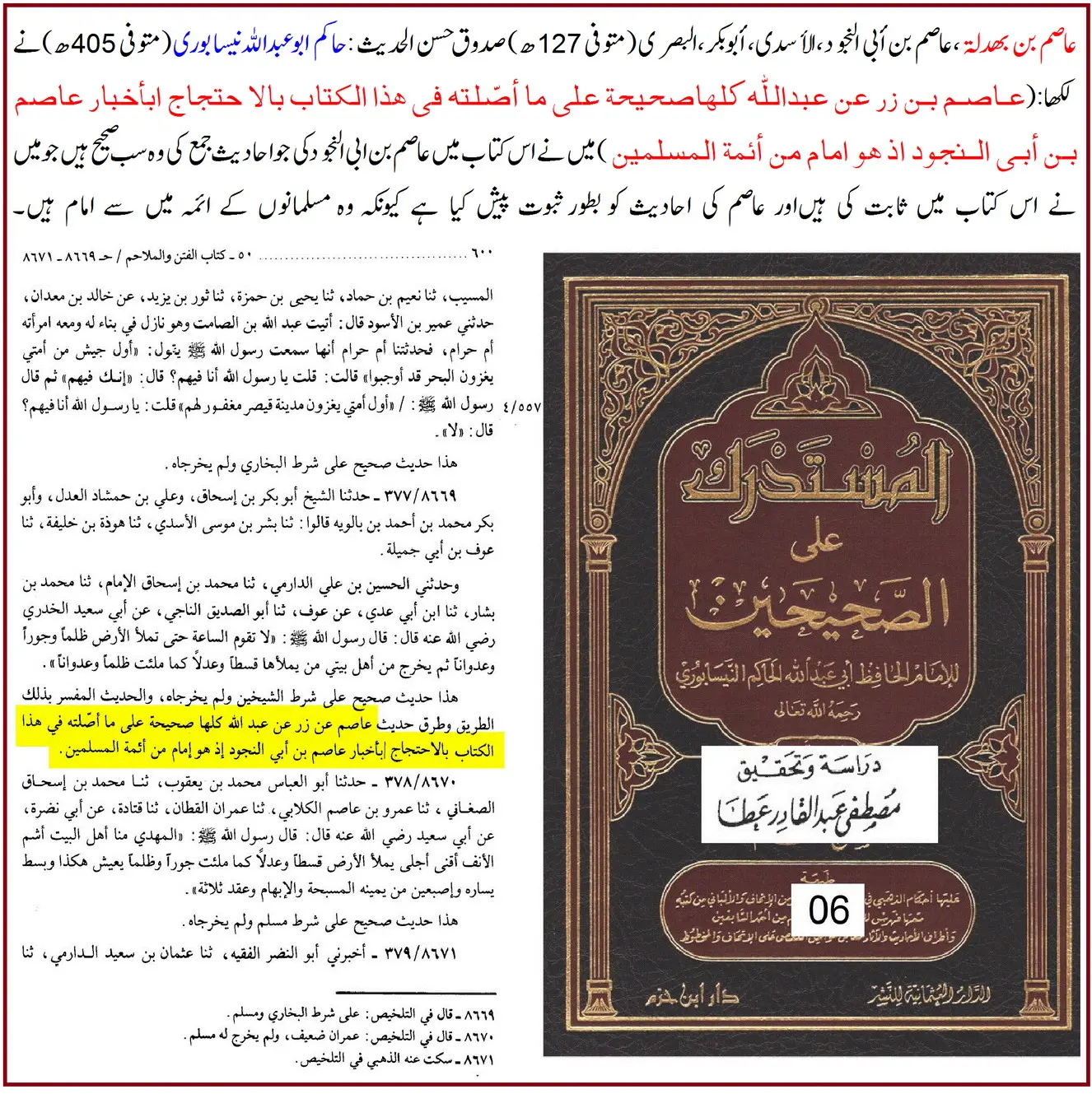
… كُلُّهَا صَحِيحَةٌ … إِذْ هُوَ إِمَامٌ مِنْ أَئِمَّةِ الْمُسْلِمِينَ.
Translation:
“All of them are authentic… for he is an Imam among the Imams of the Muslims.”
Reference:
Clarification:
◈ Declared his narrations ṣaḥīḥ.
◈ Counted him among the Imams of the Muslims.
… هَذَا إِسْنَادٌ رُوَاتُهُ ثِقَاتٌ.
Translation:
“This is a chain whose narrators are trustworthy.”
Reference:
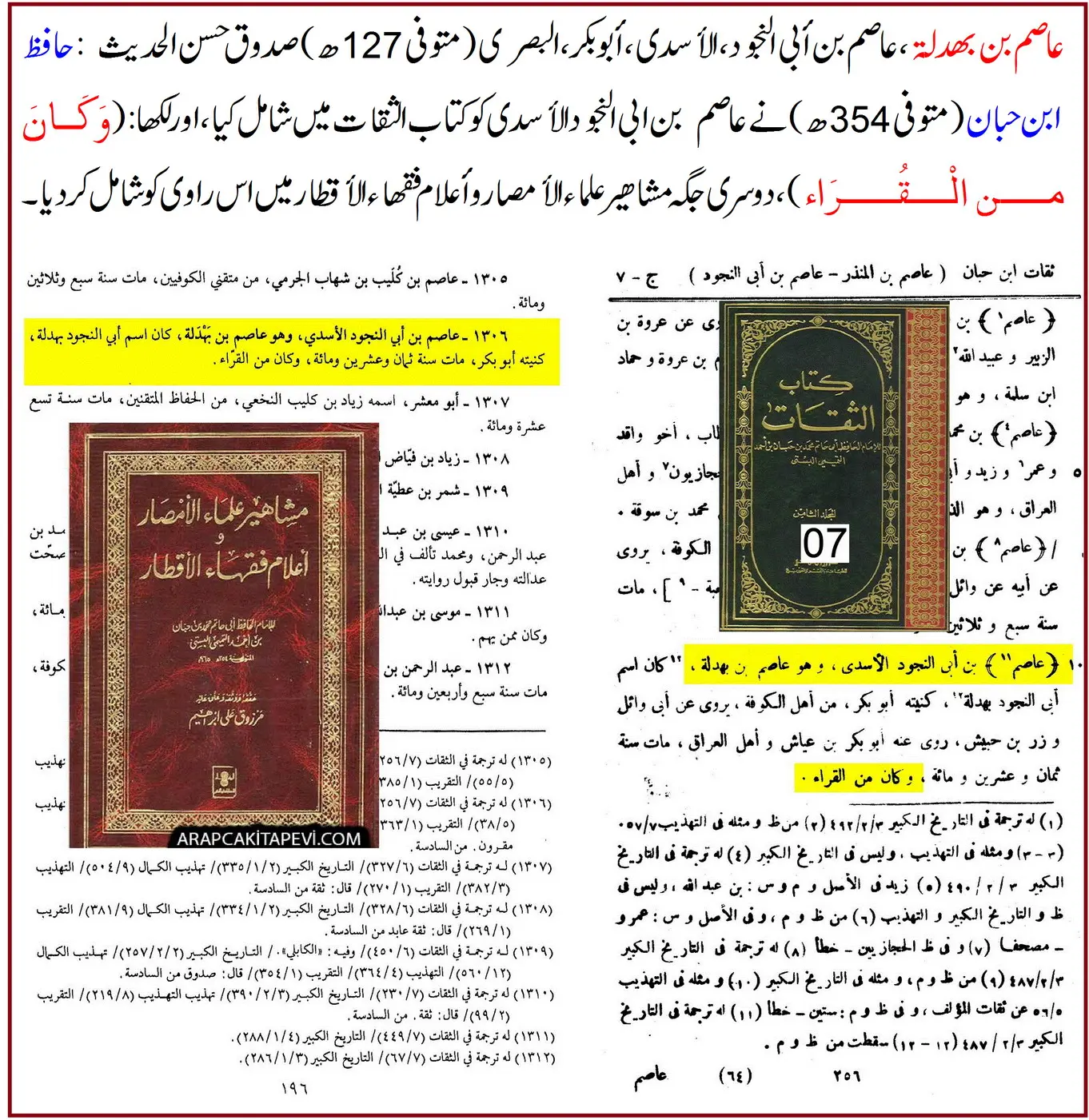
… وَكَانَ ثِقَةً.
Translation:
“He was trustworthy.”
Reference:
… هُوَ حَدِيثٌ صَحِيحٌ حَسَنٌ ثَابِتٌ مَحْفُوظٌ مَرْفُوعٌ.
Translation:
“It is a ḥadīth that is authentic, ḥasan, established, preserved, and marfūʿ.”
Reference:
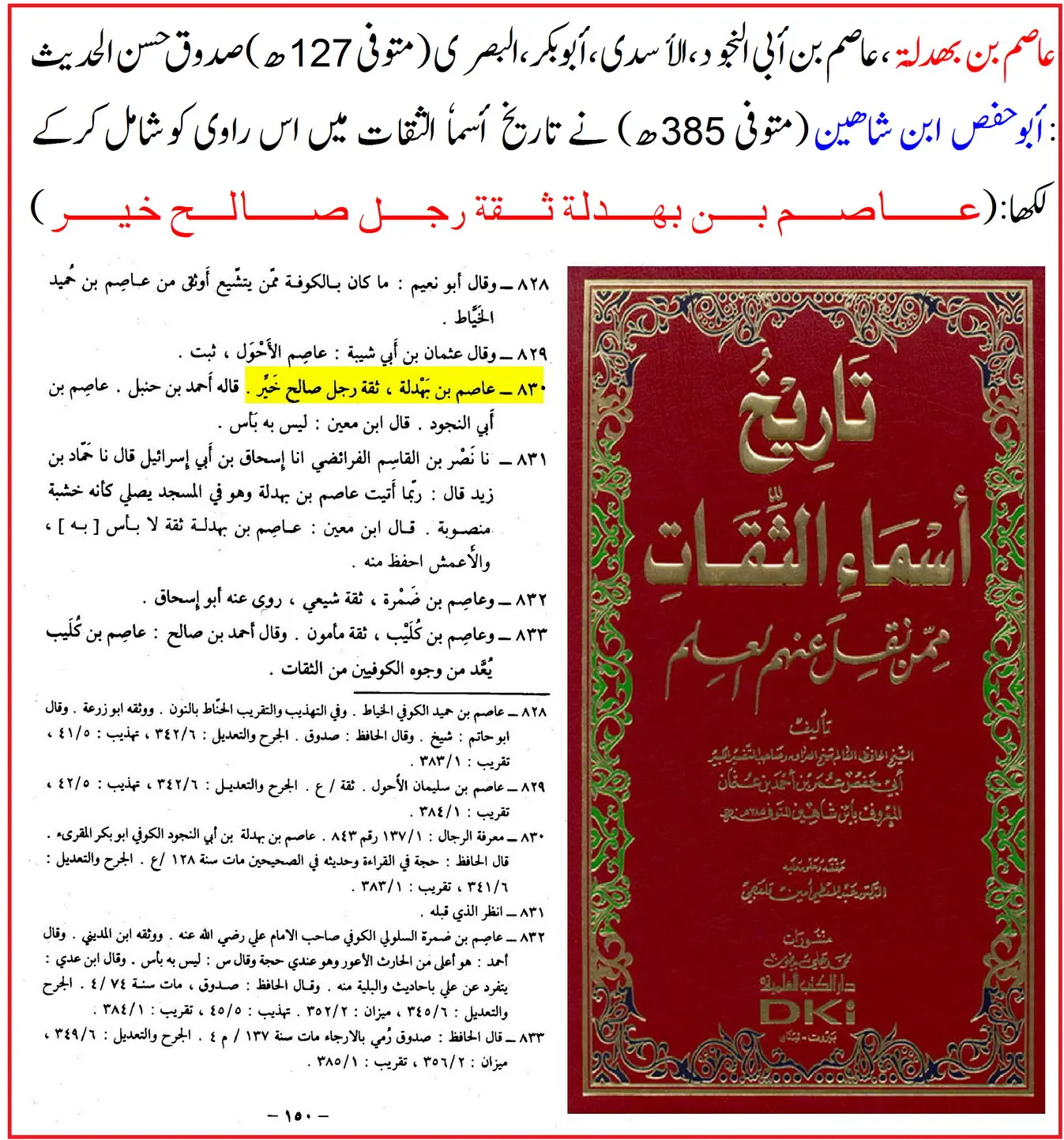
… ثِقَةٌ، رَجُلٌ صَالِحٌ، خَيْرٌ.
Translation:
“Trustworthy, a righteous and good man.”
Reference:
… وَهَذَا إِسْنَادٌ حَسَنٌ.
Translation:
“This chain is ḥasan.”
Reference:
… بسند حسن …
Translation:
“With a ḥasan chain.”
Reference:
قَالَ أَبُو عِيسَى: هَذَا حَدِيثٌ حَسَنٌ صَحِيحٌ.
Translation:
“This ḥadīth is ḥasan ṣaḥīḥ.”
Reference:
… حَافِظَانِ ثِقَتَانِ.
Translation:
“Two ḥāfiẓ, trustworthy narrators.”
Reference:
عَمْرُو فَوْقَهُ.
Translation:
“ʿAmr is above him.”
Clarification:
◈ Preference given to another narrator, not weakening ʿĀṣim.
◈ Abū Dāwūd narrated many of his reports without criticism.
… وَهَذَا إِسْنَادٌ جَيِّدٌ قَوِيٌّ.
… هَذَا إِسْنَادٌ حَسَنٌ.
Translation:
“This is a good and strong chain.”
“This is a ḥasan chain.”
Reference:
صَدُوقٌ … حُجَّةً فِي الْقُرْآنِ، صَدُوقًا فِي الْحَدِيثِ.
Translation:
“Ṣadūq… an authority in the Qur’an and truthful in ḥadīth.”
Reference:
… فِي حِفْظِهِ شَيْءٌ.
Translation:
“There is something (slight weakness) in his memory.”
Reference:
Clarification:
◈ A mild remark regarding memory, not a decisive weakening.
◈ He still narrated his reports in his works.
صَدُوقٌ لَهُ أَوْهَامٌ.
Translation:
“Ṣadūq; he has some errors.”
Reference:
Clarification:
◈ “Ṣadūq” affirms his reliability.
◈ “He has some errors” indicates occasional mistakes, common among narrators.
◈ This does not render him weak.
… فقد وثقه يحيى بن معين، وأحمد، وأبو زرعة … وكل هؤلاء وثقوه مع معرفتهم ببعض أوهامه اليسيرة.
Translation:
“He was declared trustworthy by Yaḥyā ibn Maʿīn, Aḥmad, Abū Zurʿah… and all of them authenticated him despite knowing of his minor errors.”
Reference:
✔ Early critics such as Imām Aḥmad, Ibn Maʿīn, Abū Zurʿah, al-ʿIjlī, Ibn Ḥibbān, Ibn ʿAbd al-Barr, al-Ḥākim, al-Tirmidhī, al-Haythamī, al-Būṣīrī, Ibn Shāhīn, Ibn Kathīr, al-Dhahabī, al-Zaylaʿī and others explicitly authenticated him.
✔ Ibn Ḥajar’s phrase “ṣadūq lahu awhām” and al-Dāraquṭnī’s remark “fī ḥifẓihi shay’” are mild observations, not disqualifying criticisms. They indicate relative comparison in memory, not unreliability.
✔ According to the principles of ḥadīth criticism, when minor criticism is opposed by numerous explicit authentications—especially when many scholars declared his chains ḥasan or ṣaḥīḥ—preference is given to authentication.
✔ Therefore, the narrations of ʿĀṣim ibn Bahdalah—particularly his route: ʿĀṣim → Zirr → ʿAbdullāh / Abū Wāʾil—are fundamentally ḥasan/ṣaḥīḥ, and rejecting them merely due to mention of “errors” contradicts the methodology of the ḥadīth scholars.
Conclusion:
ʿĀṣim ibn Bahdalah is ṣadūq, ḥasan al-ḥadīth / trustworthy, and the partial remarks against him do not constitute disqualifying criticism. His narrations remain acceptable for legal and theological evidence when supported by corroborating proofs.








This article concerns the authentication of the ḥadīth narrator ʿĀṣim ibn Bahdalah, Abū Bakr al-Qārī al-Kūfī (known as ʿĀṣim ibn Abī al-Najūd). According to the majority of ḥadīth scholars, he is ṣadūq / ḥasan al-ḥadīth. In some places, brief criticisms from Ibn Ḥajar and al-Dāraquṭnī are reported. In this article, we shall:
① Present the authentication of ʿĀṣim from twenty Imams.
② Clarify the remarks/criticisms of Ibn Ḥajar and al-Dāraquṭnī.
③ Conclude that ʿĀṣim’s ḥadīth is ḥasan and acceptable for evidence, and that the criticisms against him are not disqualifying in light of the majority’s authentication.

① Imām Aḥmad ibn Ḥanbal (241 AH)
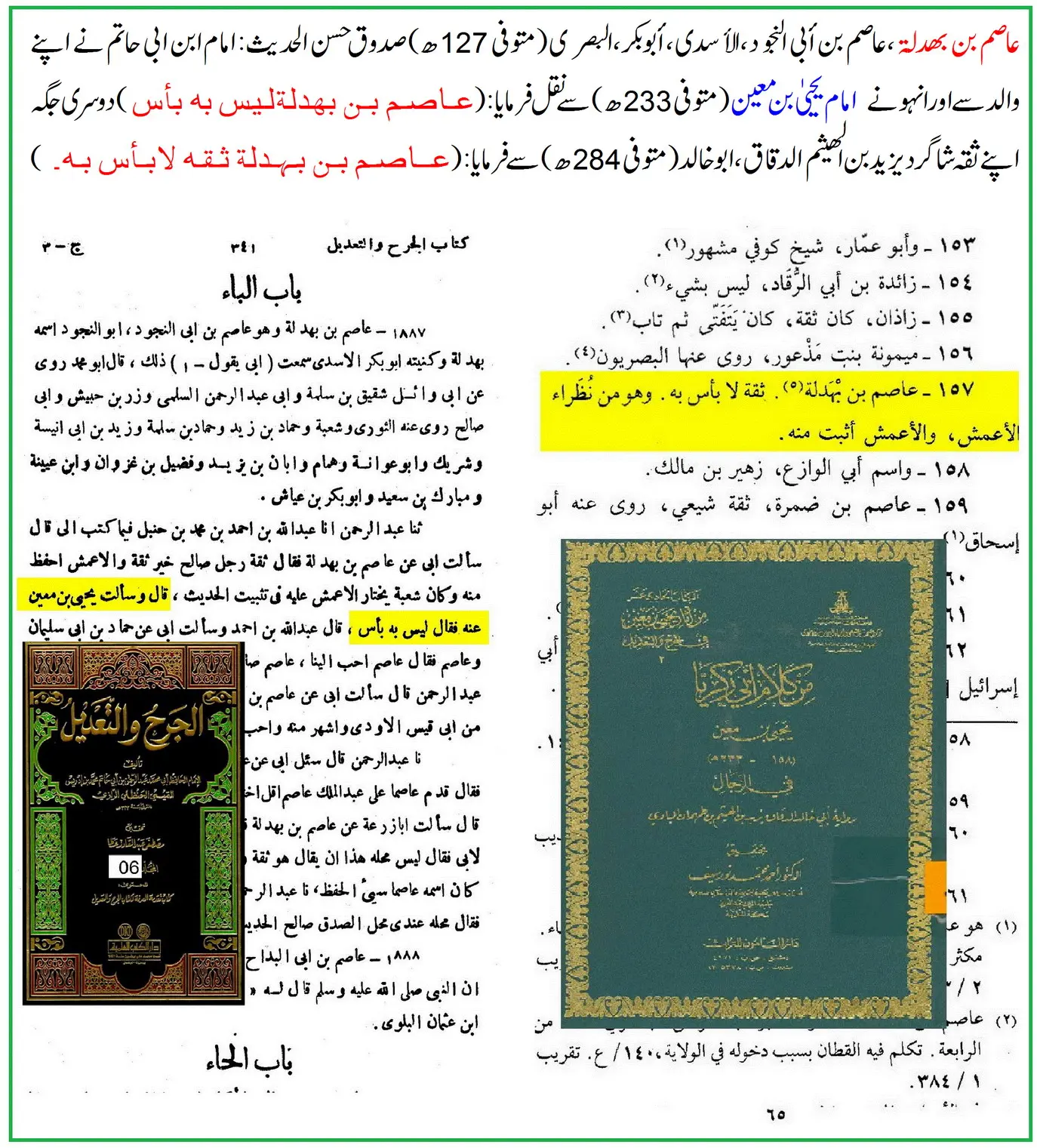
Arabic Text:918 – سَأَلْتُهُ عَنْ عَاصِمِ بْنِ بَهْدَلَةَ، فَقَالَ: ثِقَةٌ، رَجُلٌ صَالِحٌ خَيْرٌ، ثِقَةٌ، وَالْأَعْمَشُ أَحْفَظُ مِنْهُ.
Translation:
I asked Imām Aḥmad about ʿĀṣim ibn Bahdalah. He said:
“He is trustworthy (thiqah), a righteous and good man, trustworthy; however, al-Aʿmash has stronger memory than him.”
Reference:
Reference: al-ʿIlal wa Maʿrifat al-Rijāl
– Imām Aḥmad ibn Ḥanbal (d. 241 AH)Clarification:
◈ Imām Aḥmad said “thiqah” twice and added “a righteous, good man,” which testifies to his piety and integrity.
◈ “Al-Aʿmash has stronger memory” is merely comparative, not a weakening.
② Imām Yaḥyā ibn Maʿīn (233 AH)
Arabic Text:157 – عَاصِمُ بْنُ بَهْدَلَةَ ثِقَةٌ لَا بَأْسَ بِهِ، وَهُوَ مِنْ نُظَرَاءِ الْأَعْمَشِ، وَالْأَعْمَشُ أَثْبَتُ مِنْهُ.
Translation:
“ʿĀṣim ibn Bahdalah is trustworthy; there is no harm in him. He is among the peers of al-Aʿmash, though al-Aʿmash is more firmly established than him.”
Reference:
Reference: Min Kalām Abī Zakariyyā Yaḥyā ibn Maʿīn fī al-Rijāl (Riwayah Ṭahmān)
Clarification:
◈ Explicit authentication: “thiqah lā ba’sa bihi.”
◈ The comparison does not constitute criticism.
③ Imām Abū Zurʿah al-Rāzī (264 AH)
Arabic Text:… سألت أبا زرعة عن عاصم بن بهدلة، فقال: ثقة.
Translation:
Abū Zurʿah was asked about ʿĀṣim ibn Bahdalah and said: “Trustworthy.”
Reference:
Reference: al-Jarḥ wa al-Taʿdīl
– Ibn Abī ḤātimClarification:
◈ A concise yet strong authentication from a major critic.
◈ “Thiqah” is among the highest levels of praise.
④ Imām al-ʿIjlī (261 AH)
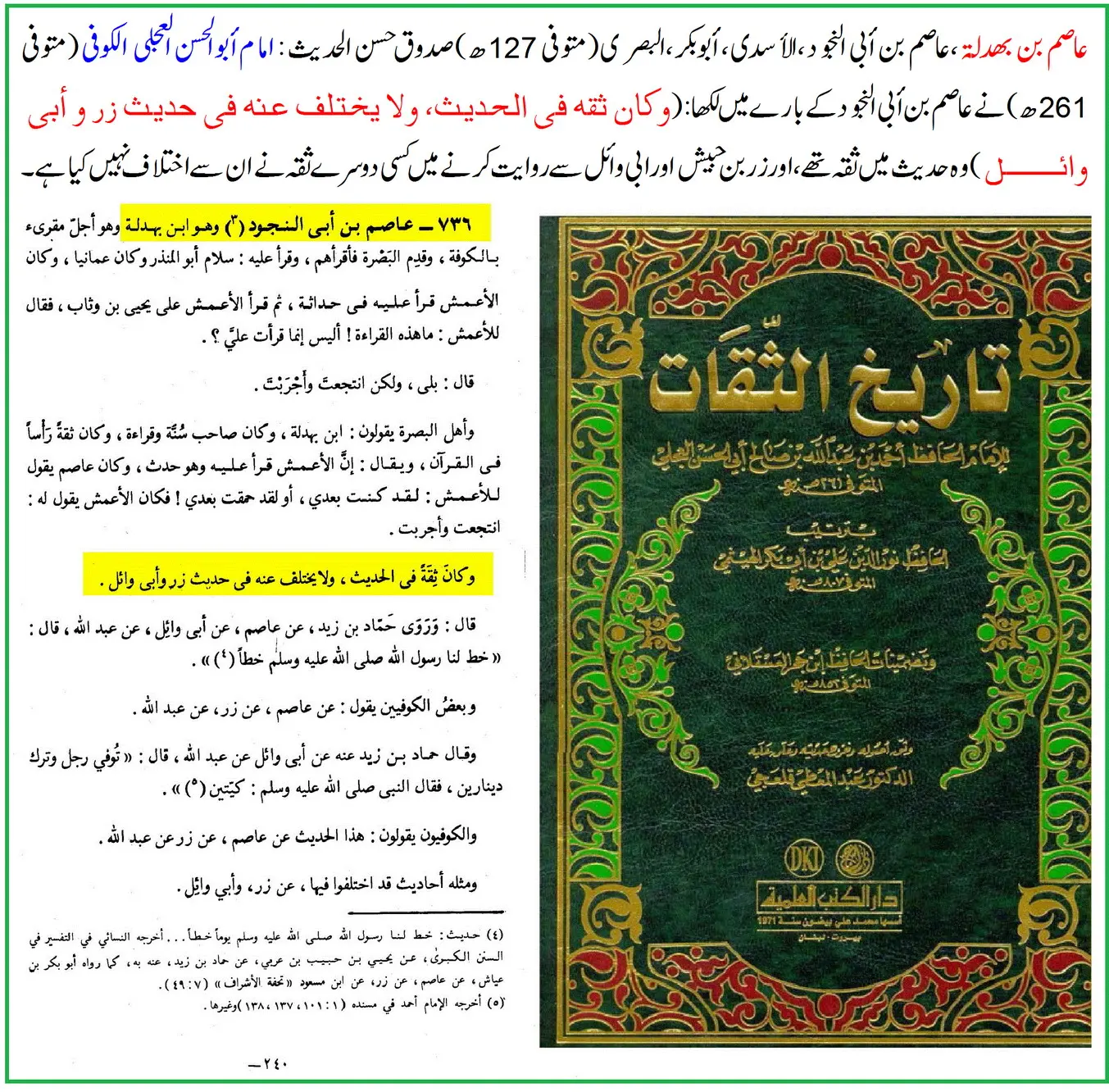
Arabic Text:763 – … وكان ثقة في الحديث، ولا يختلف عنه في حديث زر وأبي وائل.
Translation:
“He was trustworthy in ḥadīth, and no اختلاف is reported regarding his narrations from Zirr and Abū Wāʾil.”
Reference:
Reference: Tārīkh al-Thiqāt
Clarification:
◈ Clearly stated: “thiqah in ḥadīth.”
◈ No discrepancy in his narrations from key teachers, indicating precision.
⑤ Ḥāfiẓ Ibn Ḥazm (456 AH)
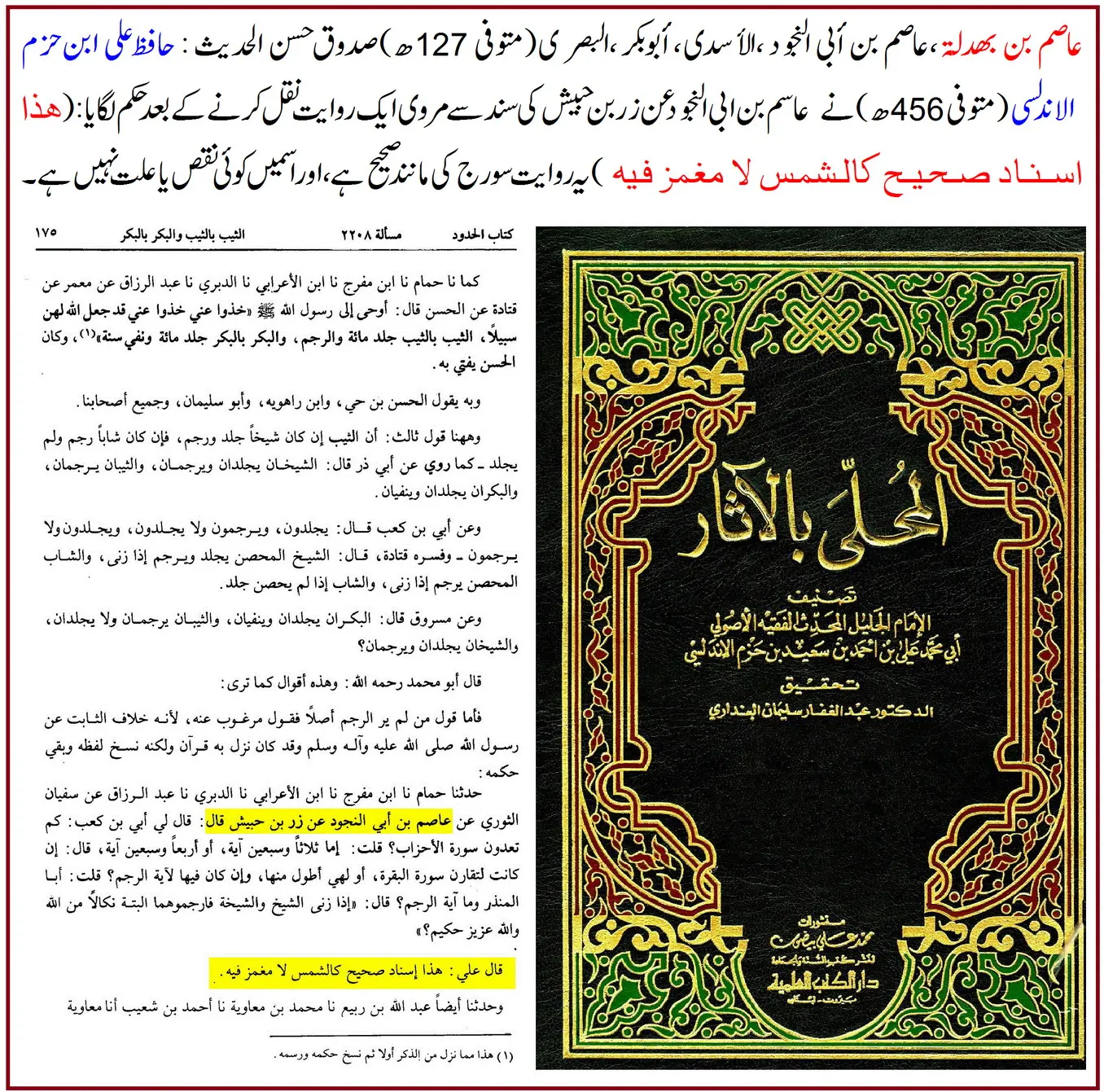
Arabic Text:… قَالَ عَلِيٌّ: هَذَا إِسْنَادٌ صَحِيحٌ كَالشَّمْسِ لَا مَغْمَزَ فِيهِ.
Translation:
“This chain is authentic like the sun, with no flaw in it.”
Reference:
Reference: al-Muḥallā bil-Āthār
Clarification:
◈ Described as “authentic like the sun,” an expression of the highest commendation.
⑥ al-Haythamī (807 AH)
Arabic Text:… وَفِيهِ عَاصِمُ بْنُ بَهْدَلَةَ، وَحَدِيثُهُ حَسَنٌ.
Translation:
“In it is ʿĀṣim ibn Bahdalah, and his ḥadīth is ḥasan.”
Reference:
Reference: Majmaʿ al-Zawā’id
Clarification:
◈ Explicit statement: “His ḥadīth is ḥasan.”
◈ Therefore, acceptable and suitable as proof.
⑦ al-Ḥākim al-Naysābūrī (405 AH)
Arabic Text:… كُلُّهَا صَحِيحَةٌ … إِذْ هُوَ إِمَامٌ مِنْ أَئِمَّةِ الْمُسْلِمِينَ.
Translation:
“All of them are authentic… for he is an Imam among the Imams of the Muslims.”
Reference:
Reference: al-Mustadrak ʿalā al-Ṣaḥīḥayn
Clarification:
◈ Declared his narrations ṣaḥīḥ.
◈ Counted him among the Imams of the Muslims.
⑧ al-Būṣīrī (840 AH)
Arabic Text:… هَذَا إِسْنَادٌ رُوَاتُهُ ثِقَاتٌ.
Translation:
“This is a chain whose narrators are trustworthy.”
Reference:
Reference: Ittiḥāf al-Khīrah al-Mahrah
⑨ Ibn Ḥibbān (354 AH)
Arabic Text:… وَكَانَ ثِقَةً.
Translation:
“He was trustworthy.”
Reference:
Reference: al-Thiqāt
⑩ Ibn ʿAbd al-Barr (463 AH)
Arabic Text:… هُوَ حَدِيثٌ صَحِيحٌ حَسَنٌ ثَابِتٌ مَحْفُوظٌ مَرْفُوعٌ.
Translation:
“It is a ḥadīth that is authentic, ḥasan, established, preserved, and marfūʿ.”
Reference:
Reference: Jāmiʿ Bayān al-ʿIlm wa Faḍlih
⑪ Ibn Shāhīn (385 AH)
Arabic Text:… ثِقَةٌ، رَجُلٌ صَالِحٌ، خَيْرٌ.
Translation:
“Trustworthy, a righteous and good man.”
Reference:
Reference: Tārīkh Asmā’ al-Thiqāt
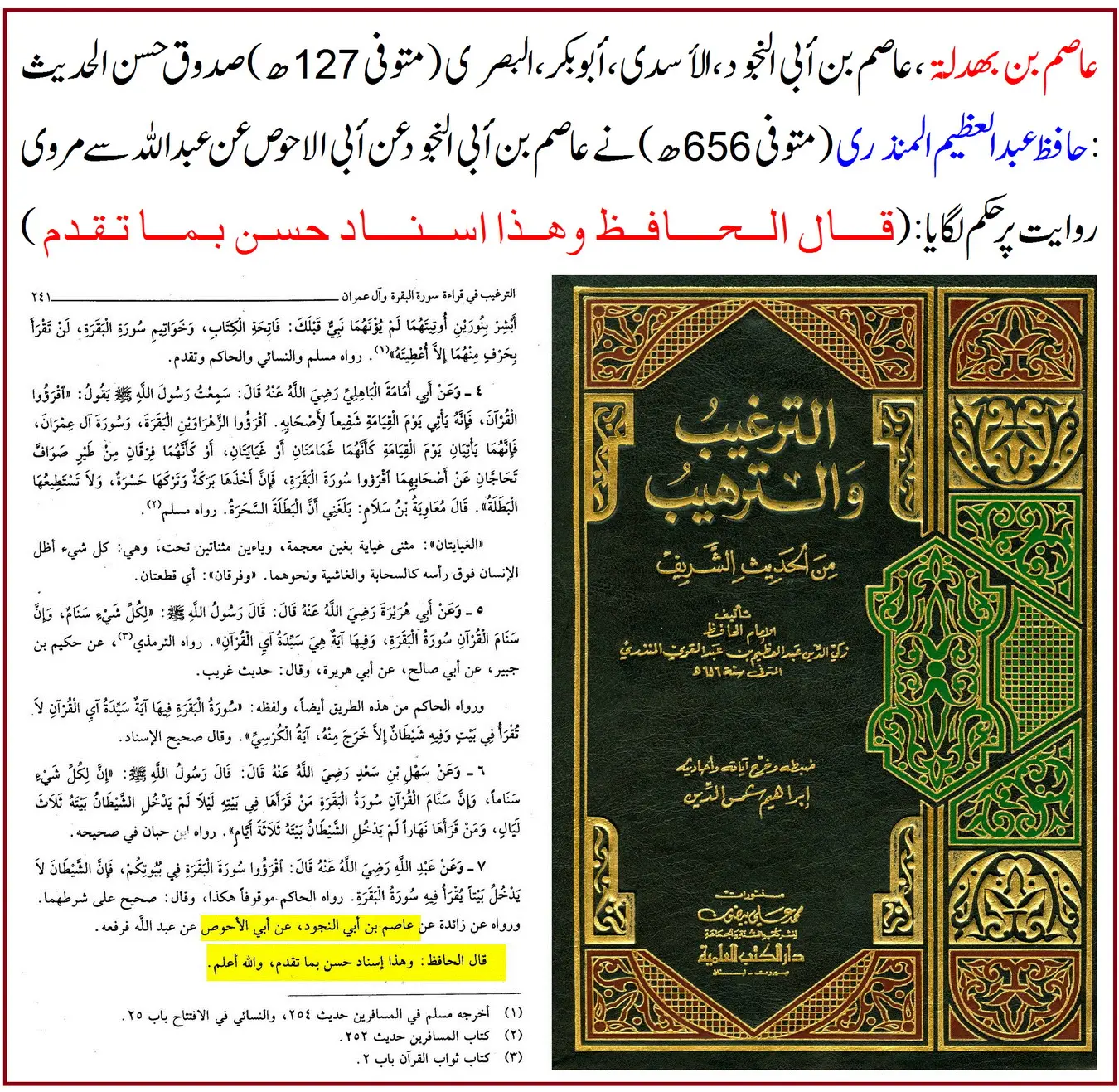
⑫ al-Mundhirī (656 AH)
Arabic Text:… وَهَذَا إِسْنَادٌ حَسَنٌ.
Translation:
“This chain is ḥasan.”
Reference:
Reference: al-Targhīb wa al-Tarhīb
⑬ al-Sakhāwī (902 AH)
Arabic Text:… بسند حسن …
Translation:
“With a ḥasan chain.”
Reference:
Reference: al-Maqāṣid al-Ḥasanah
⑭ Imām al-Tirmidhī (279 AH)
Arabic Text:قَالَ أَبُو عِيسَى: هَذَا حَدِيثٌ حَسَنٌ صَحِيحٌ.
Translation:
“This ḥadīth is ḥasan ṣaḥīḥ.”
Reference:
Reference: Sunan al-Tirmidhī
⑮ Badr al-Dīn al-ʿAynī (855 AH)
Described him among the “noble, trustworthy, pious, and righteous scholars.”⑯ Jamāl al-Dīn al-Zaylaʿī (762 AH)
Arabic Text:… حَافِظَانِ ثِقَتَانِ.
Translation:
“Two ḥāfiẓ, trustworthy narrators.”
Reference:
Reference: Naṣb al-Rāyah
⑰ Imām Abū Dāwūd (275 AH)
Arabic Text:عَمْرُو فَوْقَهُ.
Translation:
“ʿAmr is above him.”
Clarification:
◈ Preference given to another narrator, not weakening ʿĀṣim.
◈ Abū Dāwūd narrated many of his reports without criticism.
⑱ Ibn Kathīr (774 AH)
Arabic Text:… وَهَذَا إِسْنَادٌ جَيِّدٌ قَوِيٌّ.
… هَذَا إِسْنَادٌ حَسَنٌ.
Translation:
“This is a good and strong chain.”
“This is a ḥasan chain.”
Reference:
Reference: Tafsīr al-Qur’ān al-ʿAẓīm
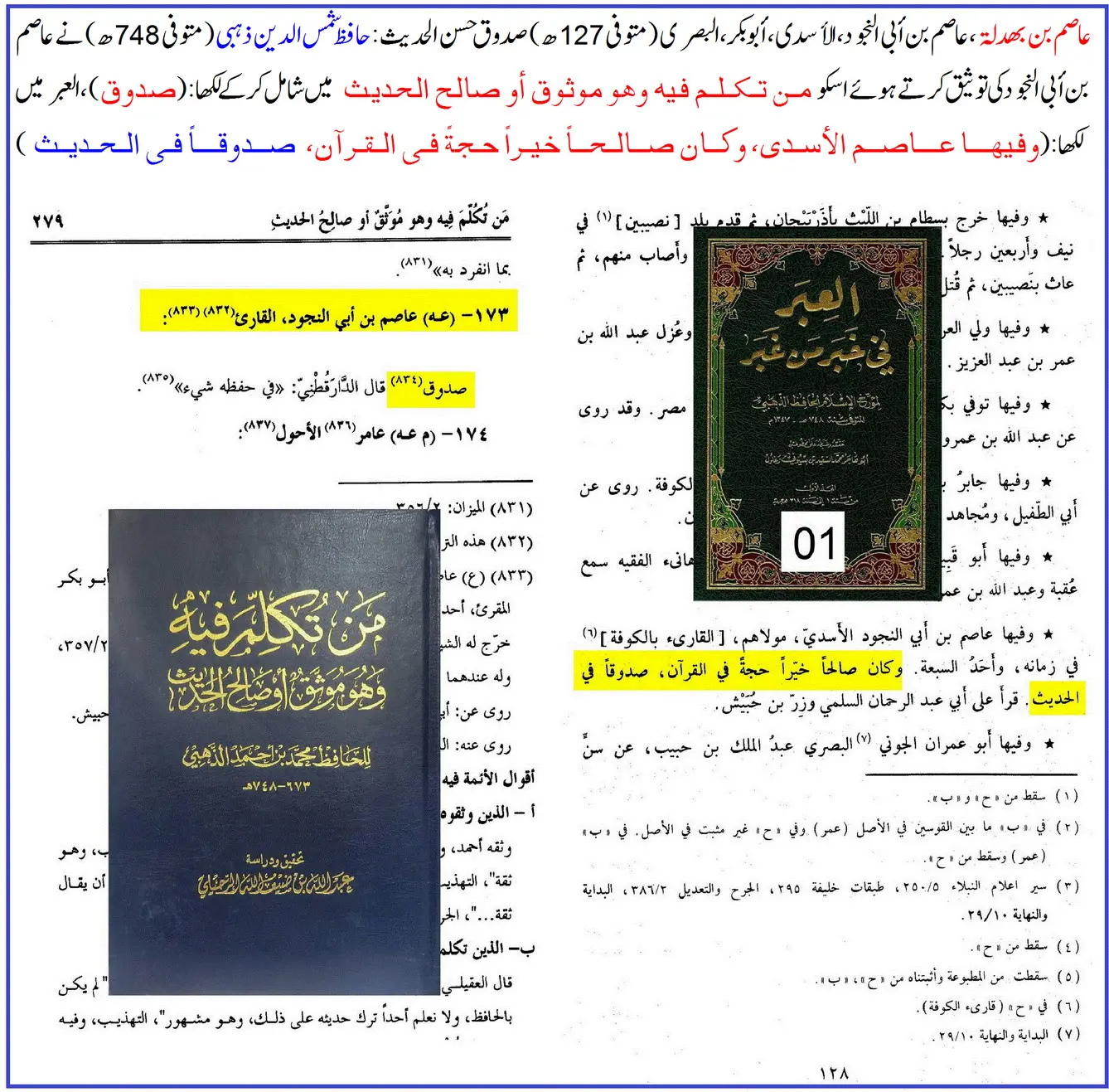
⑲ al-Dhahabī (748 AH)
Arabic Text:صَدُوقٌ … حُجَّةً فِي الْقُرْآنِ، صَدُوقًا فِي الْحَدِيثِ.
Translation:
“Ṣadūq… an authority in the Qur’an and truthful in ḥadīth.”
Reference:
Reference: Man Takallama Fīhi wa Huwa Muwaththaq
⑳ Imām al-Dāraquṭnī (385 AH)
Arabic Text:… فِي حِفْظِهِ شَيْءٌ.
Translation:
“There is something (slight weakness) in his memory.”
Reference:
Reference: Su’ālāt al-Barqānī
Clarification:
◈ A mild remark regarding memory, not a decisive weakening.
◈ He still narrated his reports in his works.
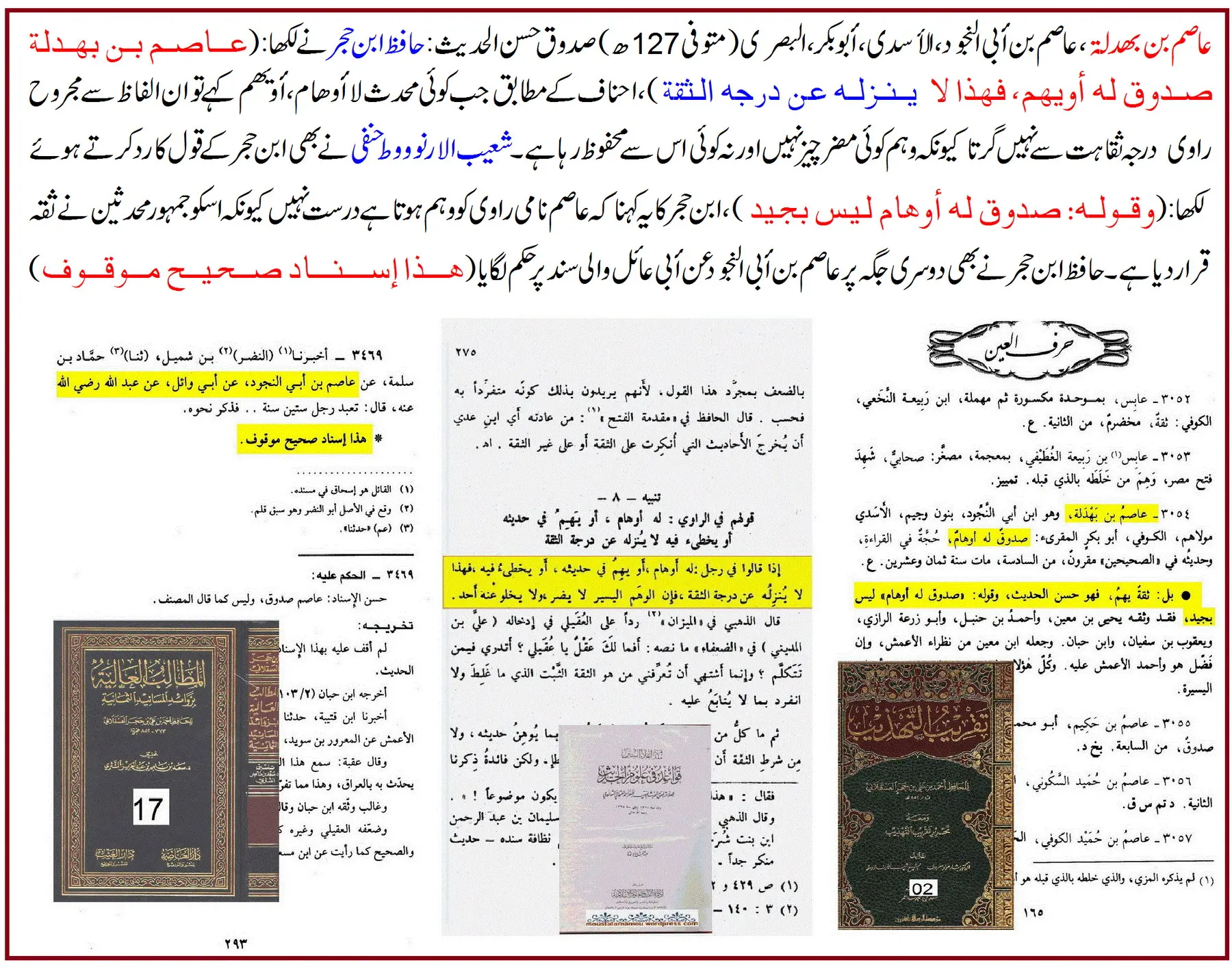
Ibn Ḥajar’s Statement and Its Clarification
Ḥāfiẓ Ibn Ḥajar (852 AH)
Arabic Text:صَدُوقٌ لَهُ أَوْهَامٌ.
Translation:
“Ṣadūq; he has some errors.”
Reference:
Reference: Taqrīb al-Tahdhīb
Clarification:
◈ “Ṣadūq” affirms his reliability.
◈ “He has some errors” indicates occasional mistakes, common among narrators.
◈ This does not render him weak.
Response of the Majority (Shuʿayb al-Arnā’ūṭ and others)
Arabic Text:… فقد وثقه يحيى بن معين، وأحمد، وأبو زرعة … وكل هؤلاء وثقوه مع معرفتهم ببعض أوهامه اليسيرة.
Translation:
“He was declared trustworthy by Yaḥyā ibn Maʿīn, Aḥmad, Abū Zurʿah… and all of them authenticated him despite knowing of his minor errors.”
Reference:
Reference: Taḥrīr Taqrīb al-Tahdhīb
Summary and Conclusion
✔ The presented statements clearly establish that ʿĀṣim ibn Bahdalah al-Kūfī (Abū Bakr al-Qārī) is regarded by the majority of ḥadīth critics as thiqah / ṣadūq, ḥasan al-ḥadīth.✔ Early critics such as Imām Aḥmad, Ibn Maʿīn, Abū Zurʿah, al-ʿIjlī, Ibn Ḥibbān, Ibn ʿAbd al-Barr, al-Ḥākim, al-Tirmidhī, al-Haythamī, al-Būṣīrī, Ibn Shāhīn, Ibn Kathīr, al-Dhahabī, al-Zaylaʿī and others explicitly authenticated him.
✔ Ibn Ḥajar’s phrase “ṣadūq lahu awhām” and al-Dāraquṭnī’s remark “fī ḥifẓihi shay’” are mild observations, not disqualifying criticisms. They indicate relative comparison in memory, not unreliability.
✔ According to the principles of ḥadīth criticism, when minor criticism is opposed by numerous explicit authentications—especially when many scholars declared his chains ḥasan or ṣaḥīḥ—preference is given to authentication.
✔ Therefore, the narrations of ʿĀṣim ibn Bahdalah—particularly his route: ʿĀṣim → Zirr → ʿAbdullāh / Abū Wāʾil—are fundamentally ḥasan/ṣaḥīḥ, and rejecting them merely due to mention of “errors” contradicts the methodology of the ḥadīth scholars.
Conclusion:
ʿĀṣim ibn Bahdalah is ṣadūq, ḥasan al-ḥadīth / trustworthy, and the partial remarks against him do not constitute disqualifying criticism. His narrations remain acceptable for legal and theological evidence when supported by corroborating proofs.

