Compiled by: Abu Hamza Salafi
The Allegation of Tadlis Against Imam Shuba bin al-Hajjaj: Definition of Tadlis, Principles of Criticism, and Scholarly Response to Three Presented Examples
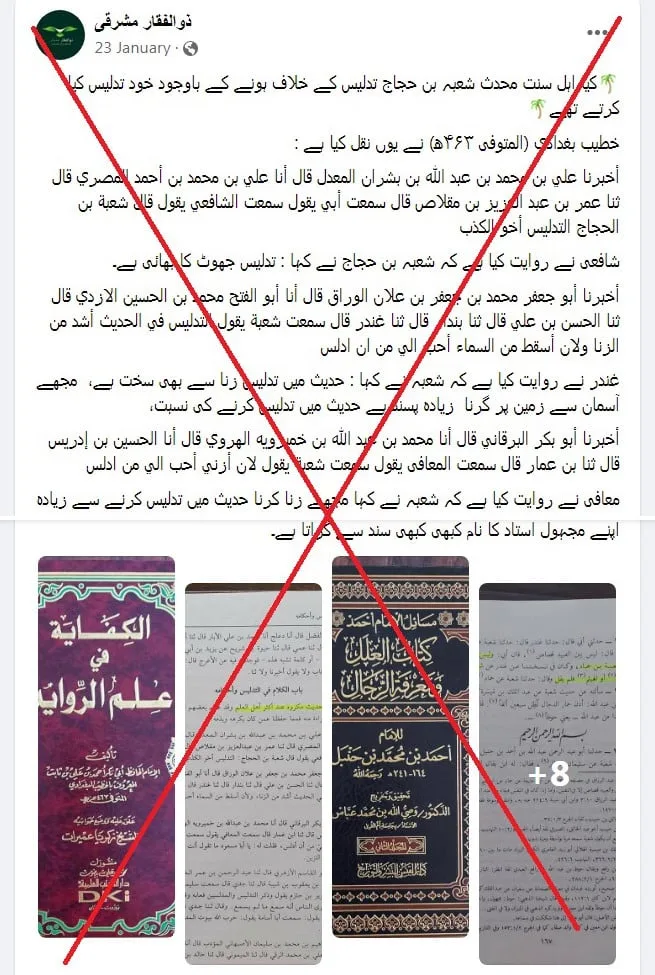
Imam Shuba bin al-Hajjaj (died 160 AH) is held in high esteem among the Ahl al-Hadith and is known for his extremely strict stance regarding the issue of tadlis. Some individuals have drawn incorrect conclusions from a few narrations and certain phrases of the ‘illal (defects) and have accused Imam Shuba of tadlis. This accusation can only be considered valid if the presented examples fully meet the definition of tadlis, and it is also proven that this act originated from Imam Shuba himself, not due to an error by the narrator, copyist, or student.
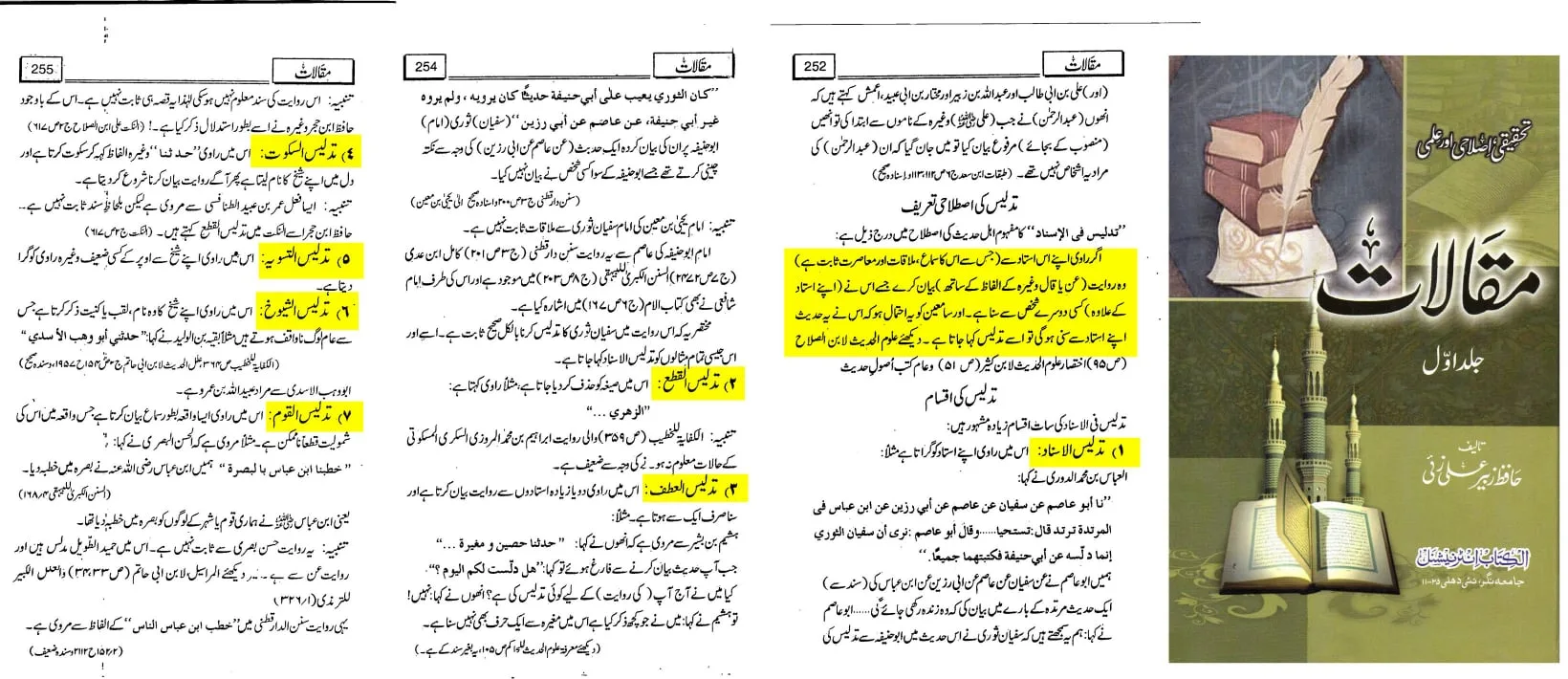
01- The Basic Definition and Place of Tadlis
According to the specialists in terminology (in summary), the basis of tadlis al-isnad is that:
◈ A narrator should narrate from a Sheikh (from whom his meeting and hearing is established) using possible forms like "عن" etc.,
◈ but if he has not heard that particular hadith directly from that Sheikh, rather there is an intermediary,
◈ and that intermediary is omitted, causing the listener to be under the impression that perhaps this hadith was heard directly from that Sheikh.
Therefore, merely the presence of "عن", or a difference in the chain, or a difference in the raising or stopping in a narration, these things by themselves do not constitute "Tadlees" unless the above criterion is fulfilled.
02- Imam Shuba's stance on Tadlees
Severe condemnation of Tadlees by Imam Shuba has been transmitted through multiple routes, for example:
قال شعبة بن الحجاج: التدليس أخو الكذب.
And it is also transmitted that he considered Tadlees a very serious crime.
These statements prove in their context that Imam Shuba's approach in the matter of tadlis was strict and cautious. Now, to prove any accusation, it is not sufficient merely that "there is a difference in a chain" or "a student has rejected a narrator," but it must be seen who is at fault.
03- Response to Objection No. 1
Summary of the Objection
Abdullah bin Ahmad narrated in "Al-‘Ilal wa Ma‘rifat al-Rijal" that a narration came through some routes:
غندر عن شعبة عن حماد عن إبراهيم
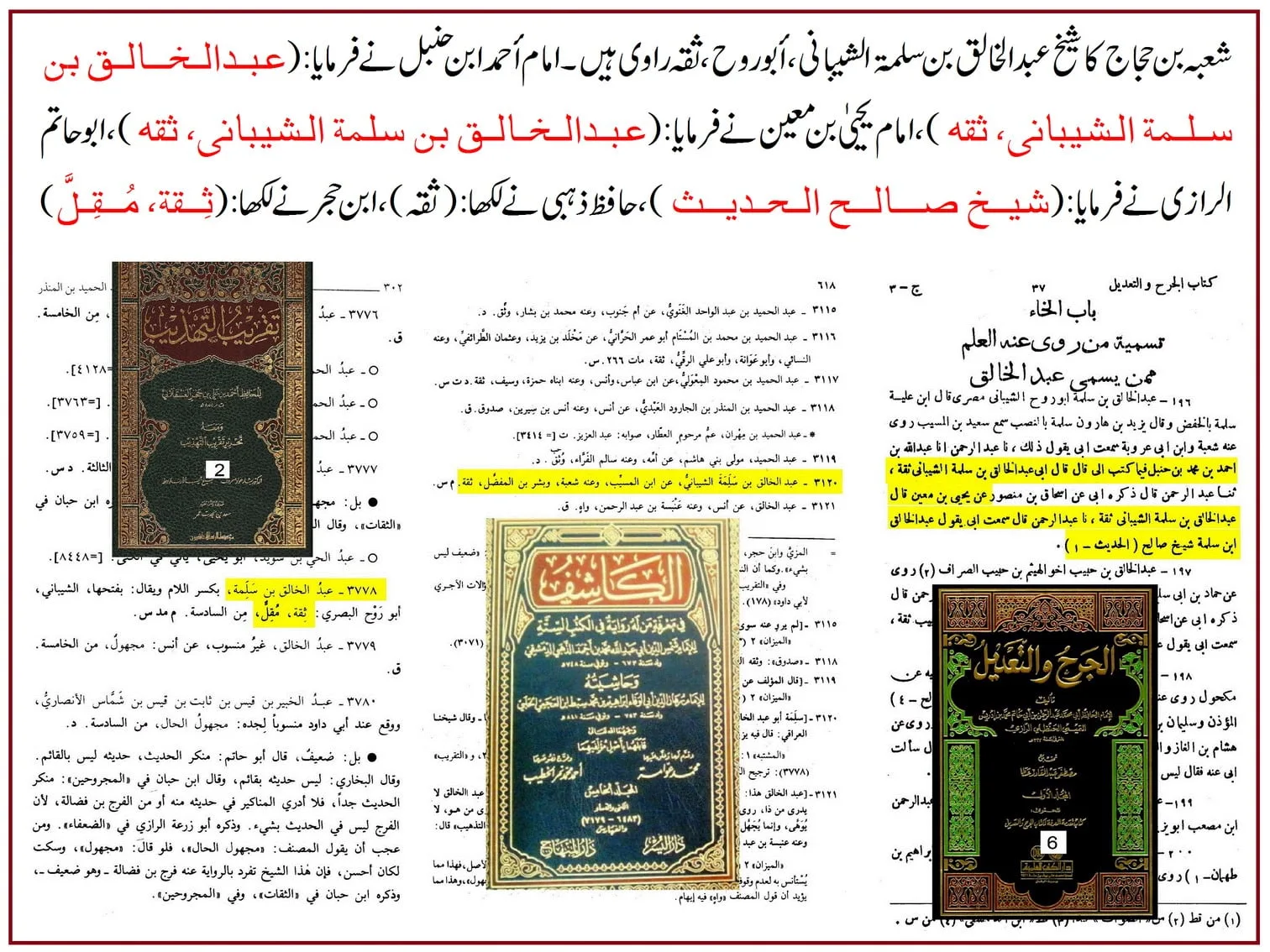
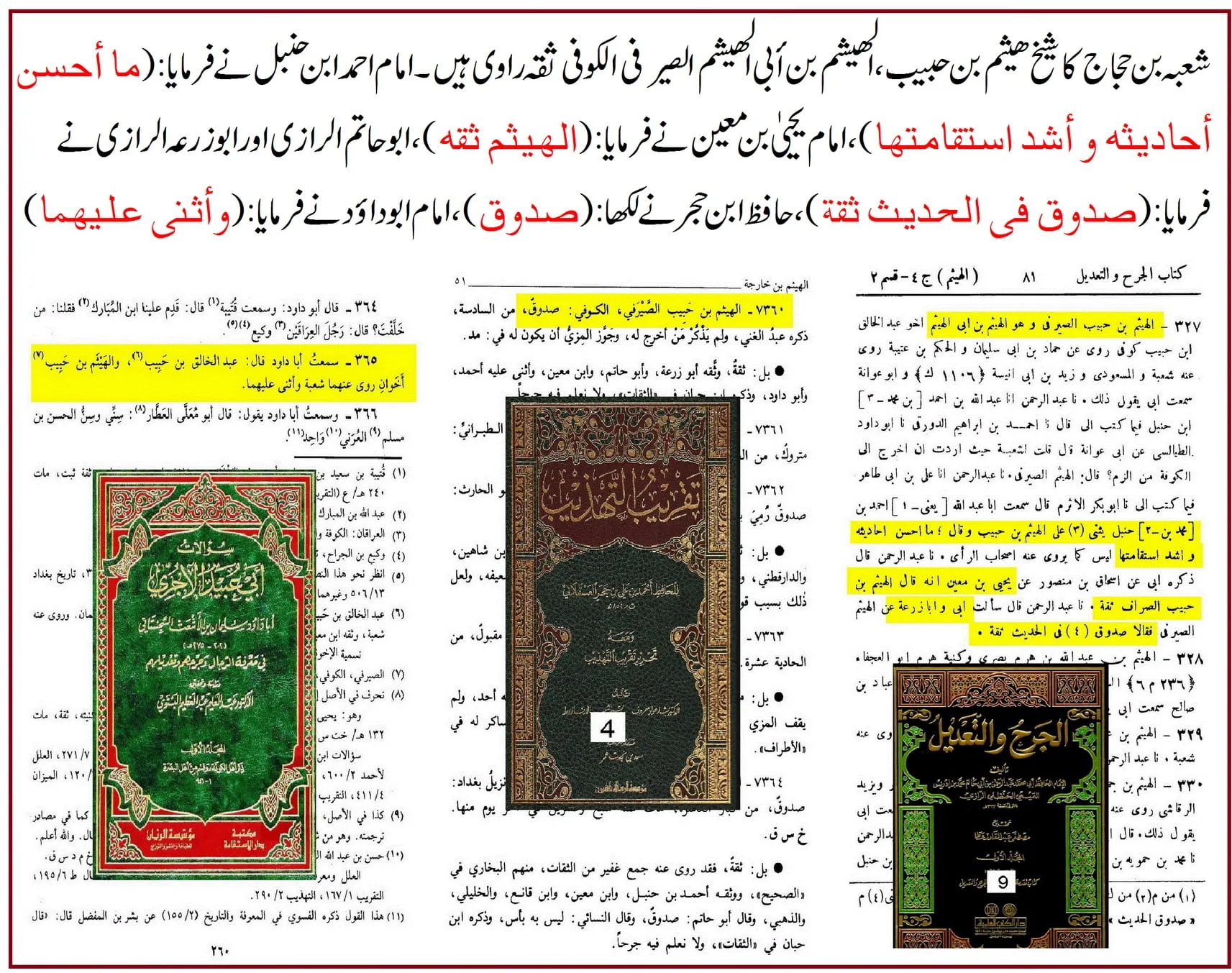
with it, then Imam Ahmad said that it is not like this that Shuba heard this from Hammad, rather in the copies available to them, there was mention of "from Abd al-Khaliq or al-Haytham," etc., and the version "from Hammad" is not correct.
From this, the objector concluded that Imam Shuba broke the link between himself and Hammad, therefore this is tadlis.
Scholarly Response
This conclusion is not correct for several reasons:
1. Here, Imam Ahmad's statement is not a clarification of tadlees, but rather an indication of manuscript variation/difference in transmission. Imam Ahmad is stating that the version with "عن حماد" is not reliable according to him, and in the authentic narration, there is another name between Shuba and Hammad.
2. If the inclusion of "عن حماد" in a chain is incorrect, then the source of this error is often the narration of Ghandar's transmission or copying error, not necessarily that Imam Shuba deliberately omitted something. Tadlees occurs when it is proven that Imam Shuba himself intentionally omitted the intermediary by saying "عن حماد," while in reality, he had taken this from Hammad through someone else. Here, this is not proven; rather, the statement implies the opposite—that there was a slip/delusion in the narration with "عن حماد," and Imam Ahmad is correcting it.
3. If in the correct form it is indeed “Abd al-Khaliq” or “Al-Haytham,” etc., as the intermediary, then attributing tadlis to Imam Shu’bah would only be appropriate if Imam Shu’bah had concealed that intermediary and narrated from Hammad with “‘an.” Here, the point of dispute is not that, but rather that the form with “‘an Hammad” is not authentic at all.
Conclusion: This example is not Imam Shu’bah’s tadlis, but rather an issue of whether the narration is authentic/inauthentic and a difference in transmission.
04- Response to Objection No. 2
Summary of the Objection
Hafiz Ibn Hajar narrated that in a narration through “As-Suddi,” Isra’il described it as marfu‘ (attributed to the Prophet), while Imam Shu’bah deliberately described it as mauquf (attributed to a companion). The objector labeled this as “tadlis.”
Scholarly Response
This matter does not fall under the definition of “tadlis” in principle:
1. The difference between marfu‘ and mauquf is not “tadlis al-isnad.”
Tadlis involves concealing the intermediary. Here, the discussion is whether the narration should be attributed marfu‘ to the Prophet ﷺ or kept mauquf on the companion. This is a matter related to “‘ilal” (hidden defects) and “tarjih” (preference), not tadlis.
2. Imam Shuba's statement "عمداً أدعه" is not deception but caution and preference.
Among the critics, it is well-known that if there is a possibility that a narration is marfoo‘ (attributed to the Prophet) and it is safe as mawquf (attributed to a companion) with a trustworthy narrator, some Imams prefer the "waqf" (stopping at the companion) narration. This is not "concealing the chain," but "caution in attribution."
3. If the objector claims that "Shuba deceived by turning a marfoo‘ into a mawquf," then this is not deception but an error claim in the matter of marfoo‘/waqf, and its judgment will be based on the principle of "safe/rare" (mahfuz/shadh), not on the principle of "deception."
Conclusion: From this example, deception is not proven against Imam Shuba.
05- Response to Objection No. 3
Summary of the Objection
In Darqutni's "Al-‘Ilal," there is a difference in a chain:
◈ In one narration it came: روح بن عبادة عن شعبة عن أبي الفيض عن معاوية
◈ And in several narrations it came: شعبة قال: حدثني رجل من بني عذرة عن أبي الفيض عن معاوية
Imam Darqutni ruled Ruh ibn ‘Ubada as "wahm" (error) and preferred the version with "a man from Banu ‘Udhra." The objector said this is actually Imam Shuba's deception because in some narrations the "man" was omitted.
Scholarly Response
This objection is also fundamentally incorrect:
1. Imam Darqutni clarified the cause of the error, stating that the mistake lies with "Ruh," and the correct version is that between Shuba and Abu al-Fayd there is "a man from Banu 'Udhrah."
That is, according to Imam Darqutni's own ruling, Imam Shuba did not conceal the intermediary at this point but rather mentioned the intermediary in the authentic narration: حدثني رجل من بني عذرة
2. If a student (here Ruh) omitted a narrator in his transmission, then this "error/omission" is attributed to that transmitter, not to Imam Shuba.
Imam Shuba would be considered to have committed tadlis only if it were proven that he deliberately omitted the "man" by saying "from Abu al-Fayd," while in reality, he had taken the hadith through that very "man." From Darqutni's statement, it is rather proven that Shuba mentioned the "man" in the preserved version.
3. If in some later chains the "man" was omitted due to a weak or less reliable chain, this does not override Darqutni's preferred ruling, because Darqutni determined the "preserved" version by comparing multiple chains, and this is the methodology of 'Illal (hidden defects).
Conclusion: This example is not of Imam Shuba's "Tadlees," but rather an example of a student's/transmitter's "error" and "slip," which Imam Darqutni himself clarified.
06- Summary Conclusion
◈ Strong statements against Imam Shuba's tadlees are well-known, and his general methodology is "clarification" and "caution."
◈ The presented example number 1 actually concerns the difference in version/method and the determination of the "preserver," not tadlees.
◈ Example number 2 is a matter of "lifting and stopping" and preference/caution, and does not fall under the definition of tadlees.
◈ In example number 3, Imam Darqutni clearly stated that the mistake was of "Ruh ibn Ubada," and in the preserved form Imam Shuba mentioned the intermediary, therefore the accusation of tadlees is false.