
✍ Compiled by: Abu Hamzah Salafi
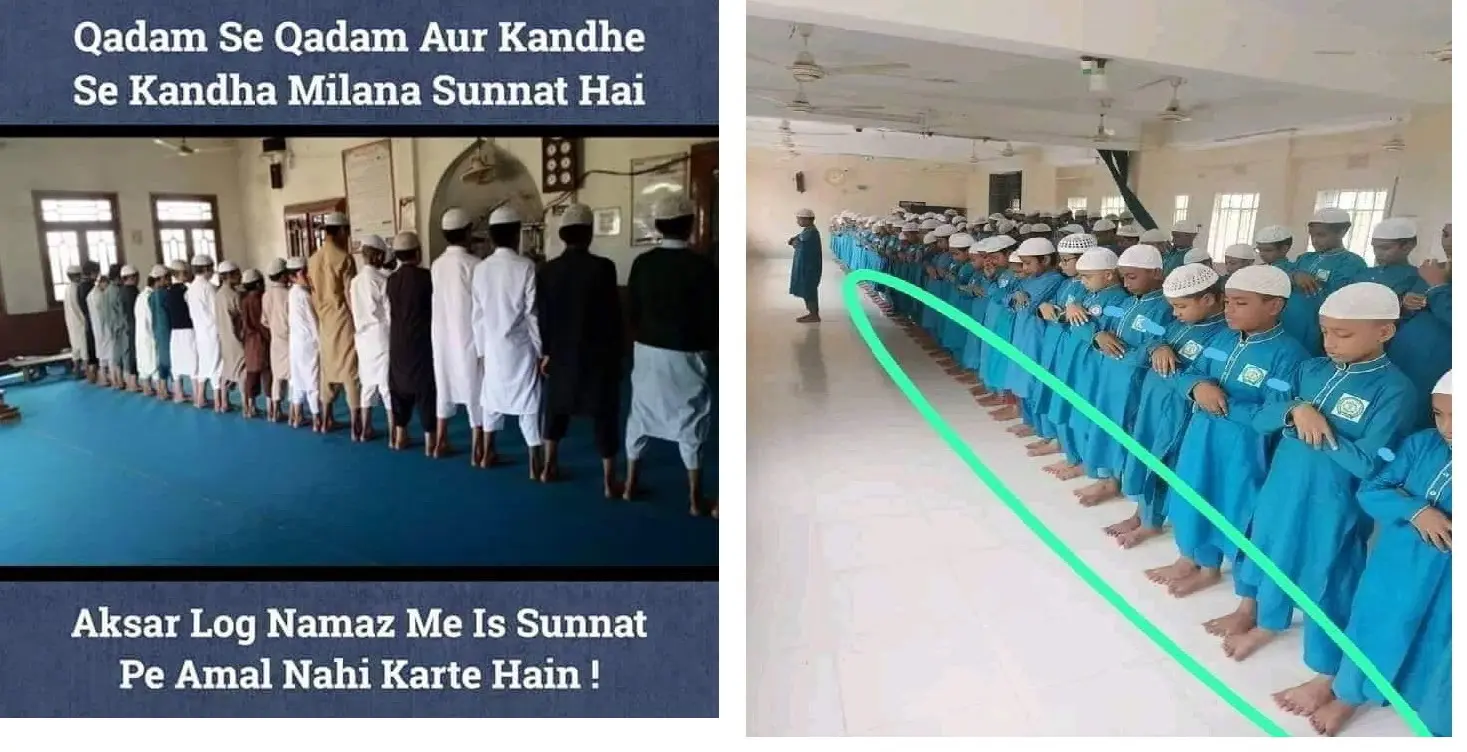
Straightening the rows in congregational prayer is a Sunnah of the Prophet ﷺ. The noble Companions ﷺ not only acted upon it but also physically demonstrated it by joining shoulder to shoulder and foot to foot. Some consider this contact as a one-time occurrence or exaggeration, but authentic Ahadith and the explanations of Muhaddithin prove it is a part of the Sunnah to remove gaps in rows.
This article will present the evidence-based reality using statements from the Companions, the Tabiʿīn, and the Imams, and clarify the prevailing misunderstanding on the issue.
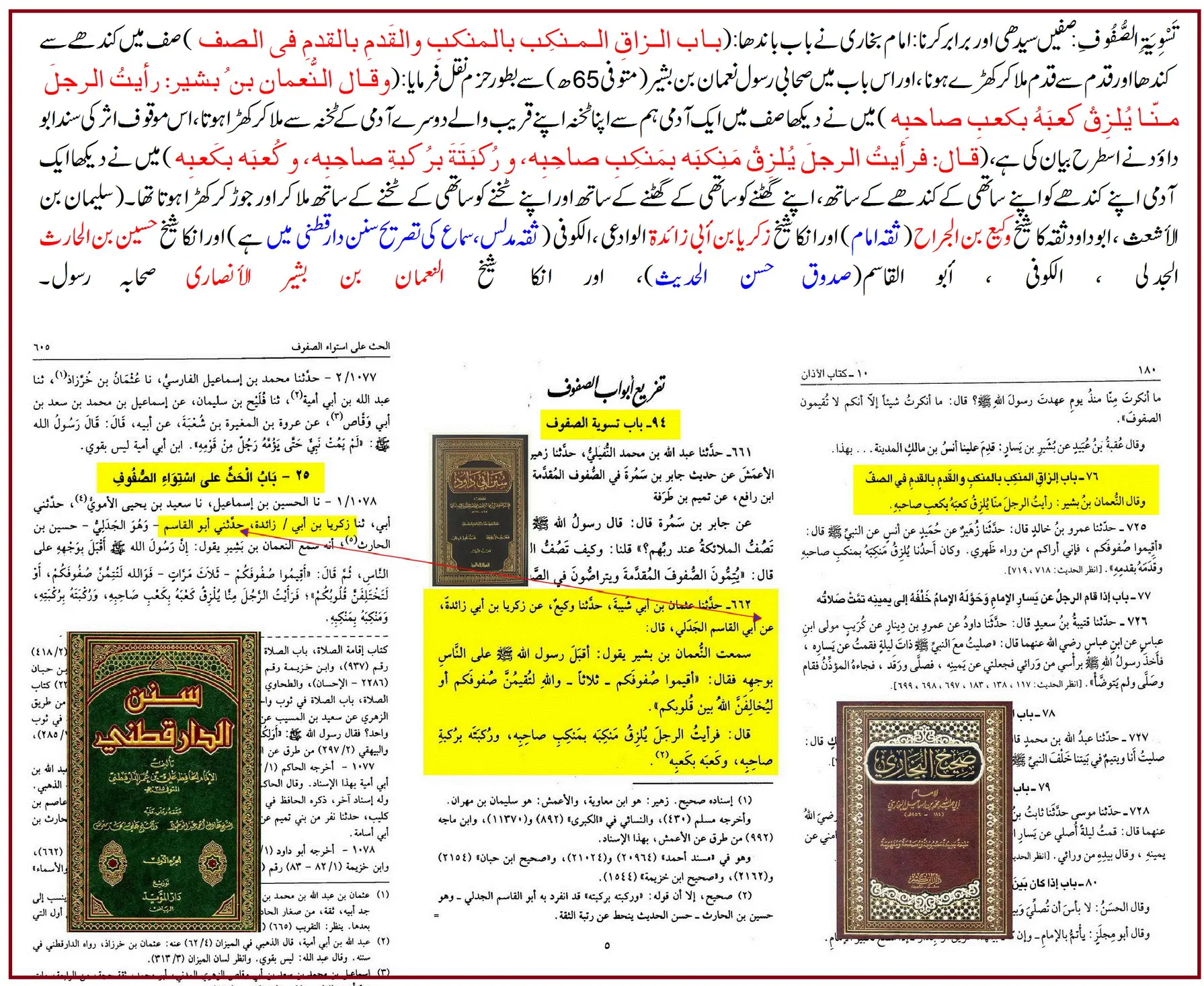
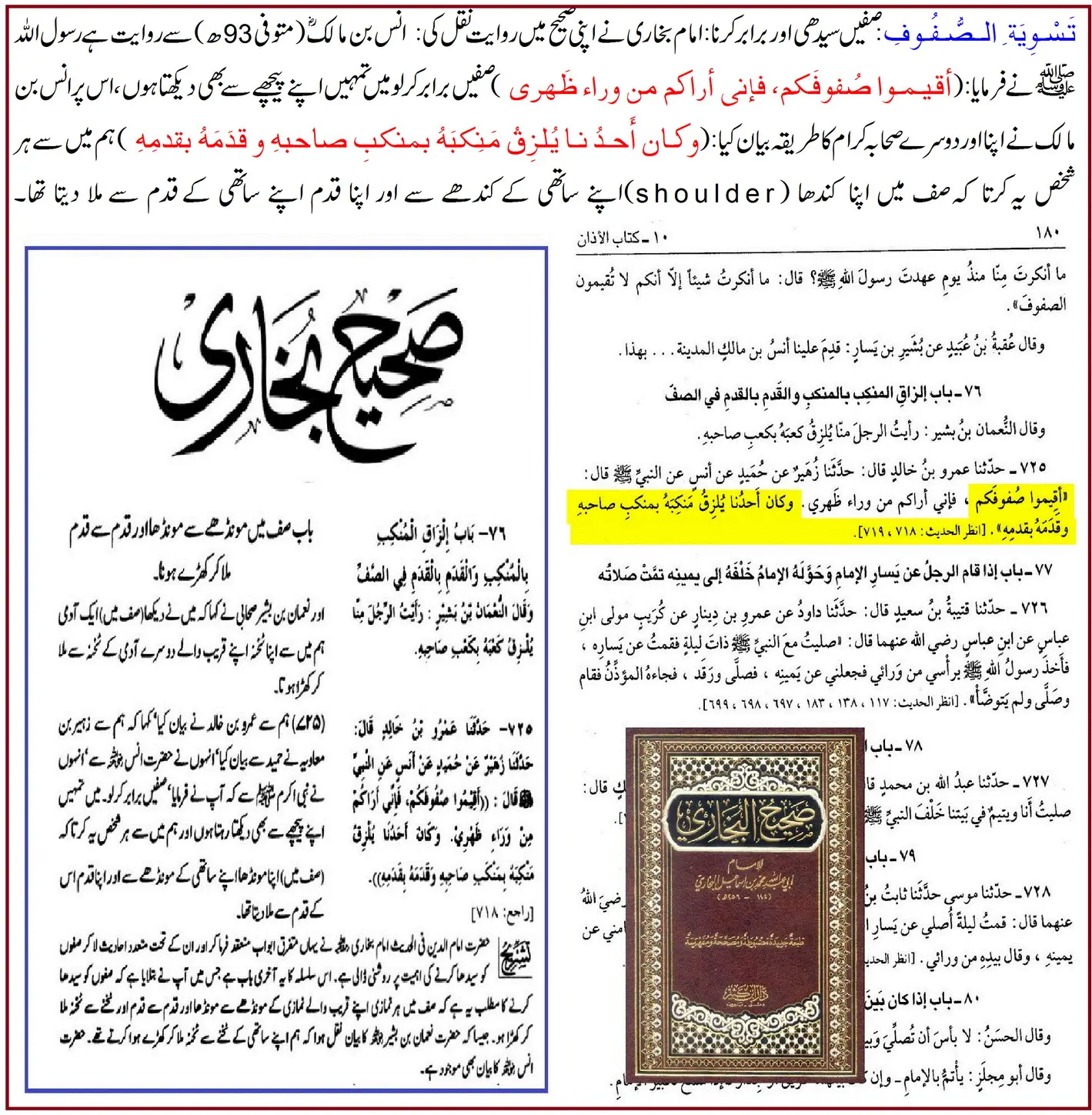
The clearest narration about joining foot to foot and shoulder to shoulder in the rows comes from Sayyiduna Nuʿmān bin Bashīr رضي الله عنه, recorded by Imām al-Bukhārī and Imām Abū Dāwūd with authentic chains.
Imām al-Bukhārī رحمه الله established a chapter:
بَابُ إِلْزَاقِ المَنْكِبِ بِالمَنْكِبِ وَالقَدَمِ بِالقَدَمِ فِي الصَّفِّ
“Chapter: Joining shoulder to shoulder and foot to foot in the row.”
Sayyiduna Nuʿmān bin Bashīr رضي الله عنه said:
«رَأَيْتُ الرَّجُلَ مِنَّا يُلْزِقُ كَعْبَهُ بِكَعْبِ صَاحِبِهِ»
“I saw a person among us placing his ankle with the ankle of his companion.”
 [Ṣaḥīḥ al-Bukhārī, Kitāb al-Adhān, Ḥadīth: 725]
In Bāb Taswiyat al-Ṣufūf, Imām Abū Dāwūd رحمه الله narrates with a full chain:
The Prophet ﷺ turned to the people and said:
“Straighten your rows!”
He repeated this three times and said:
“By Allah, you must straighten your rows or Allah will cause discord between your hearts.”
Nuʿmān bin Bashīr رضي الله عنه said:
“I saw a man join his shoulder with the shoulder of his companion, his knee with his companion's knee, and his ankle with his ankle.”
[Sunan Abī Dāwūd, Ḥadīth: 662 | Graded Ṣaḥīḥ by al-Albānī]
All narrators in the chain are trustworthy (thiqah), including:
 The chain is authentic.
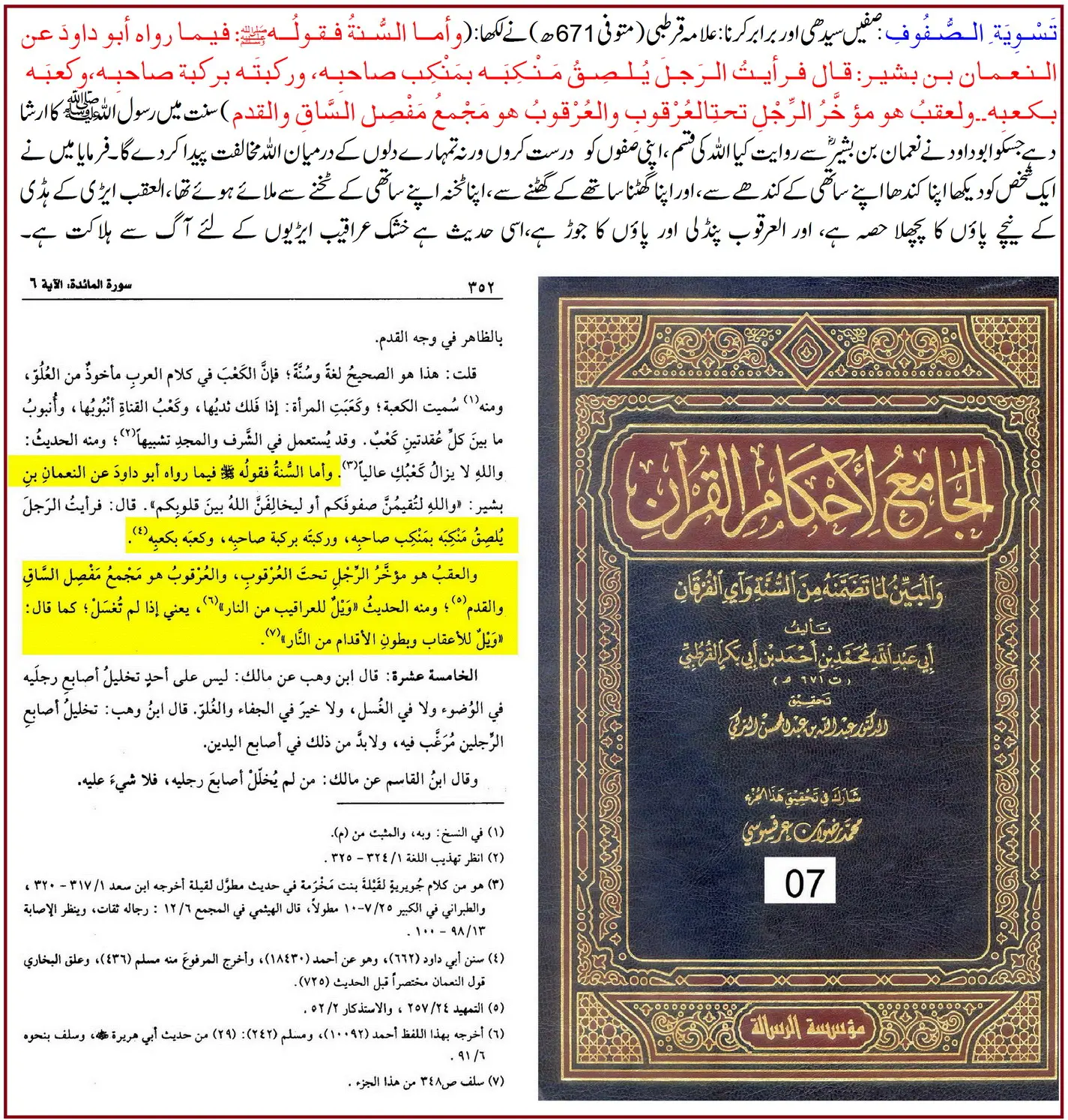
In al-Jāmiʿ li Aḥkām al-Qur’ān:
He explains this narration, saying:
This joining of shoulders, knees, and ankles is part of implementing the Sunnah of the Prophet ﷺ to straighten the rows. The Arabic words "العَقِب" and "العُرقوب" are explained in their anatomical contexts, indicating the exact joining points.
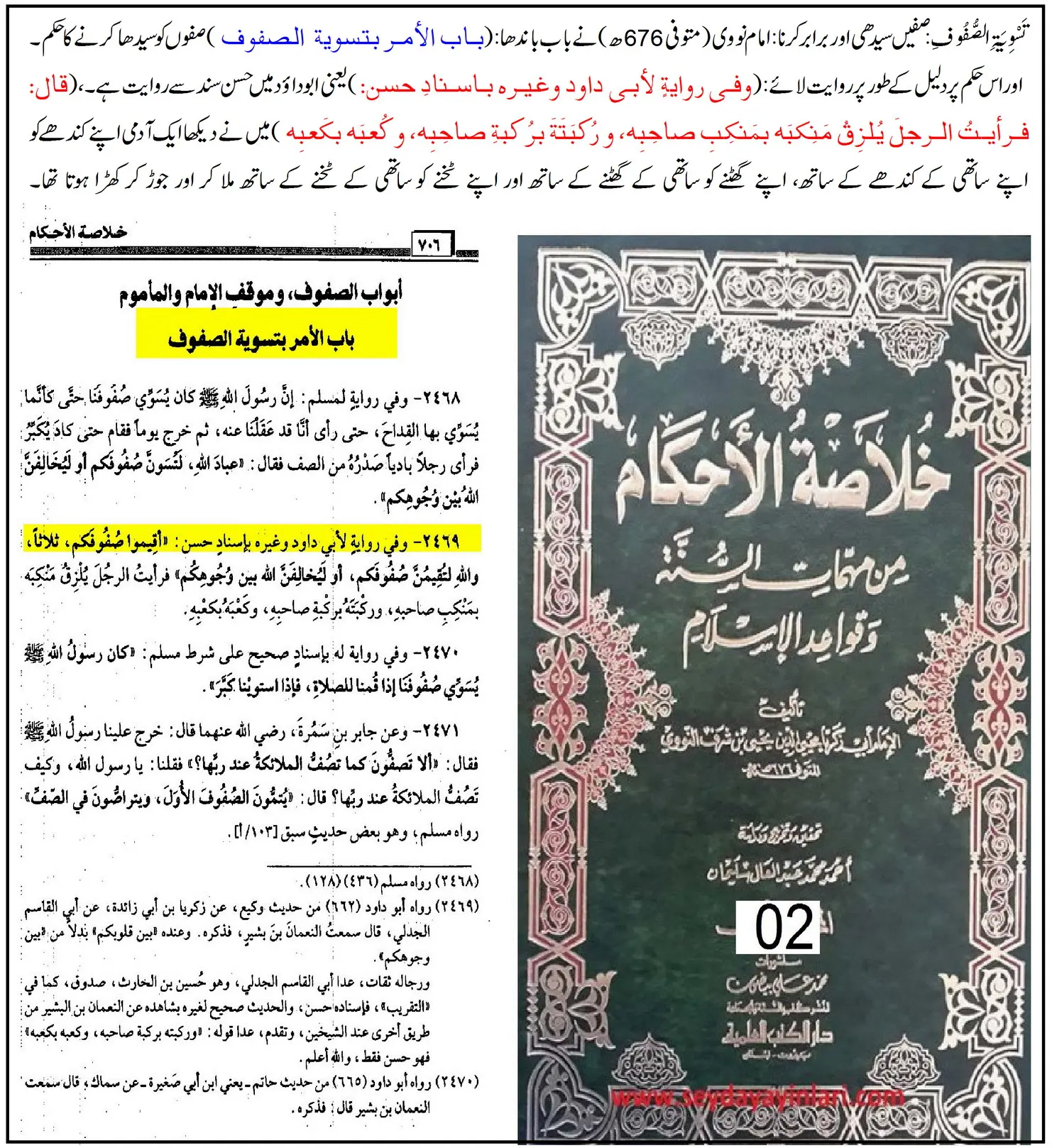
In Khilāṣat al-Aḥkām, under the chapter of straightening rows:
He confirms that Nuʿmān bin Bashīr رضي الله عنه described the exact joining of shoulders, knees, and ankles.
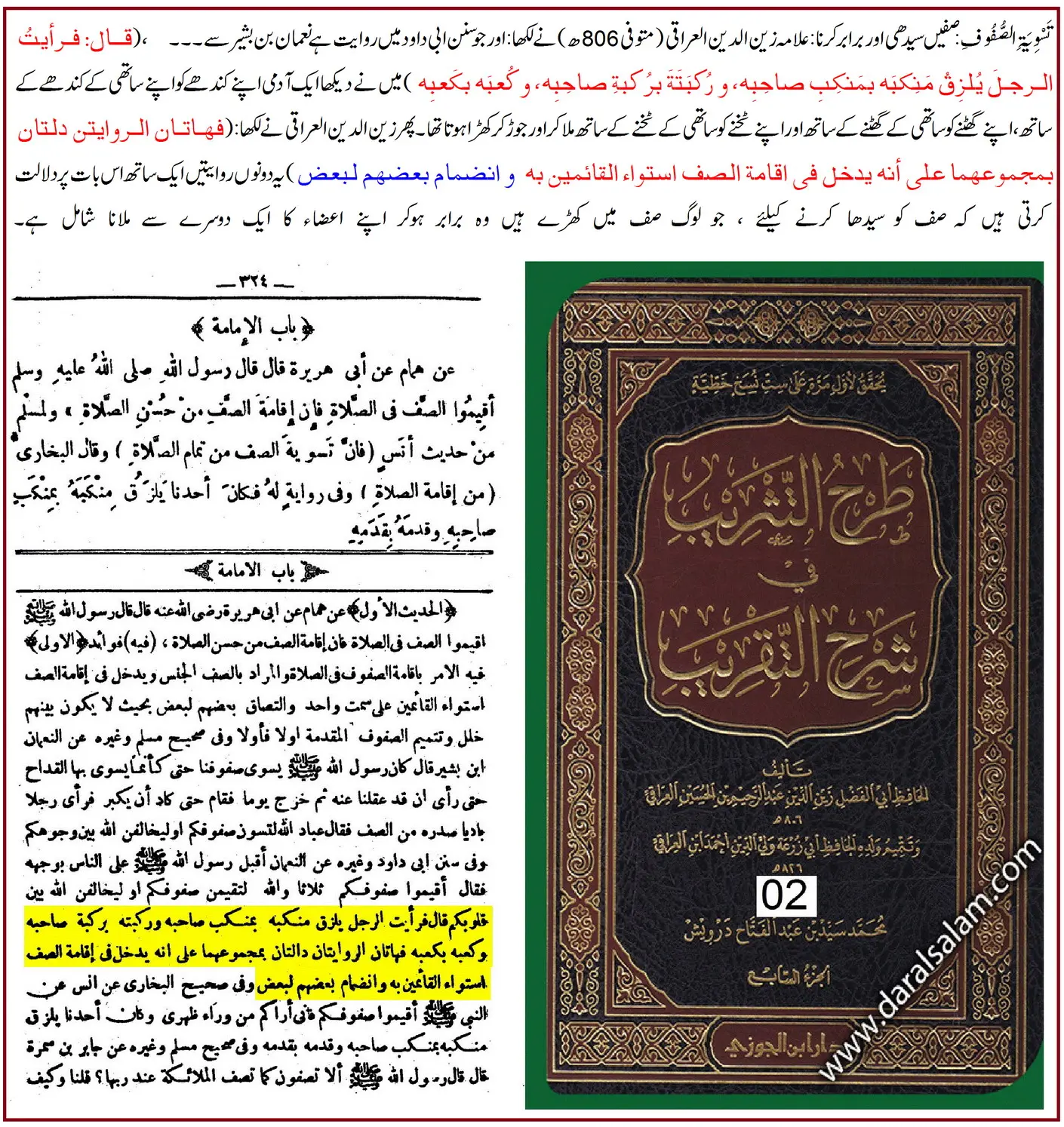
In Ṭarḥ al-Tathrīb, he mentions:
These narrations clearly indicate that aligning the body parts is part of proper row formation in prayer.
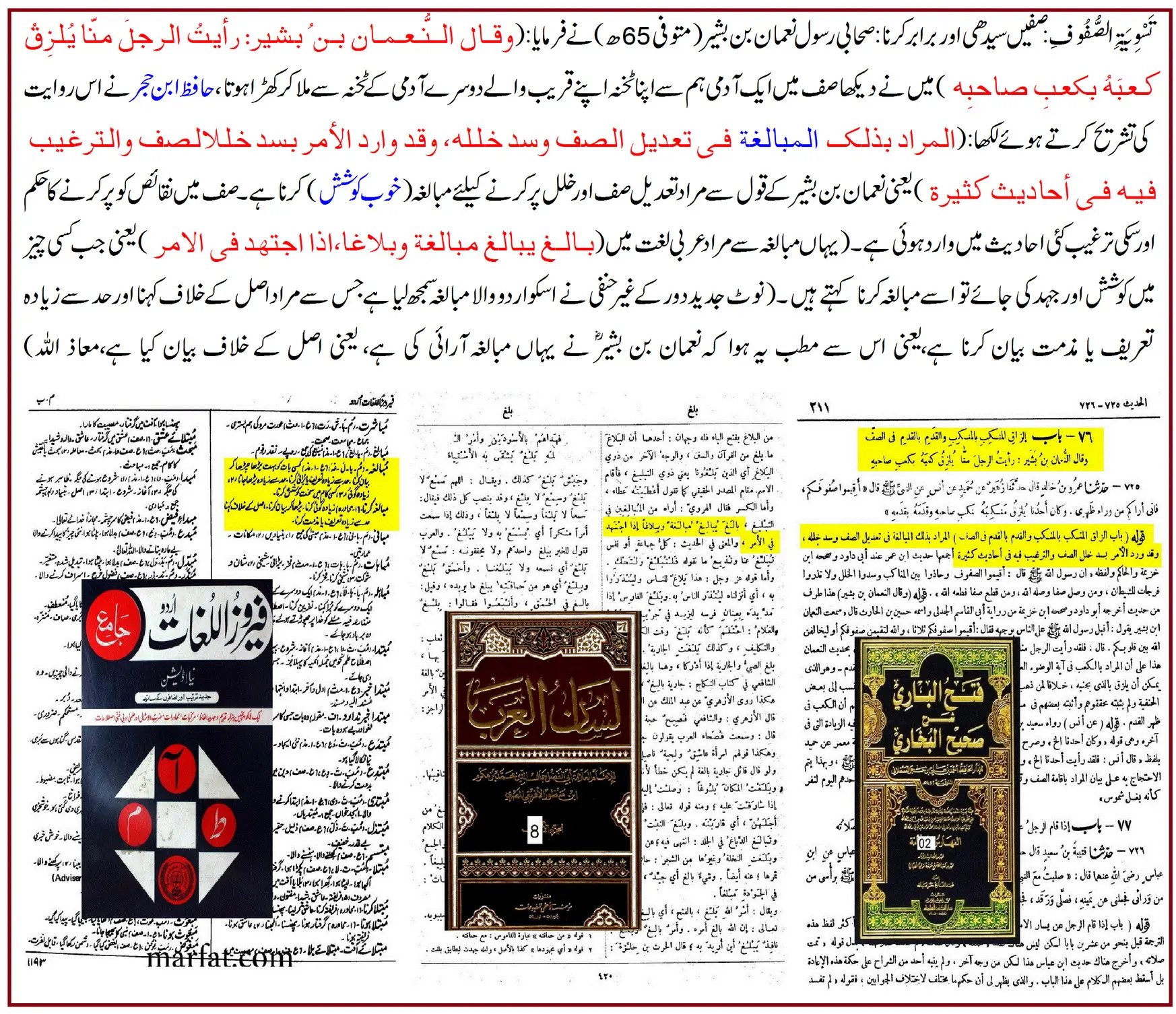
In Fatḥ al-Bārī, he explains that:
This emphasis is not exaggeration but represents careful adherence to the Sunnah.
He defines the Arabic word "مبالغة" (exaggeration) as:
«إذا اجتهد في الأمر» — i.e., to strive fully in doing something.
Hence, it is not the same as the Urdu meaning of “exaggeration,” but indicates perfect execution of the Sunnah.
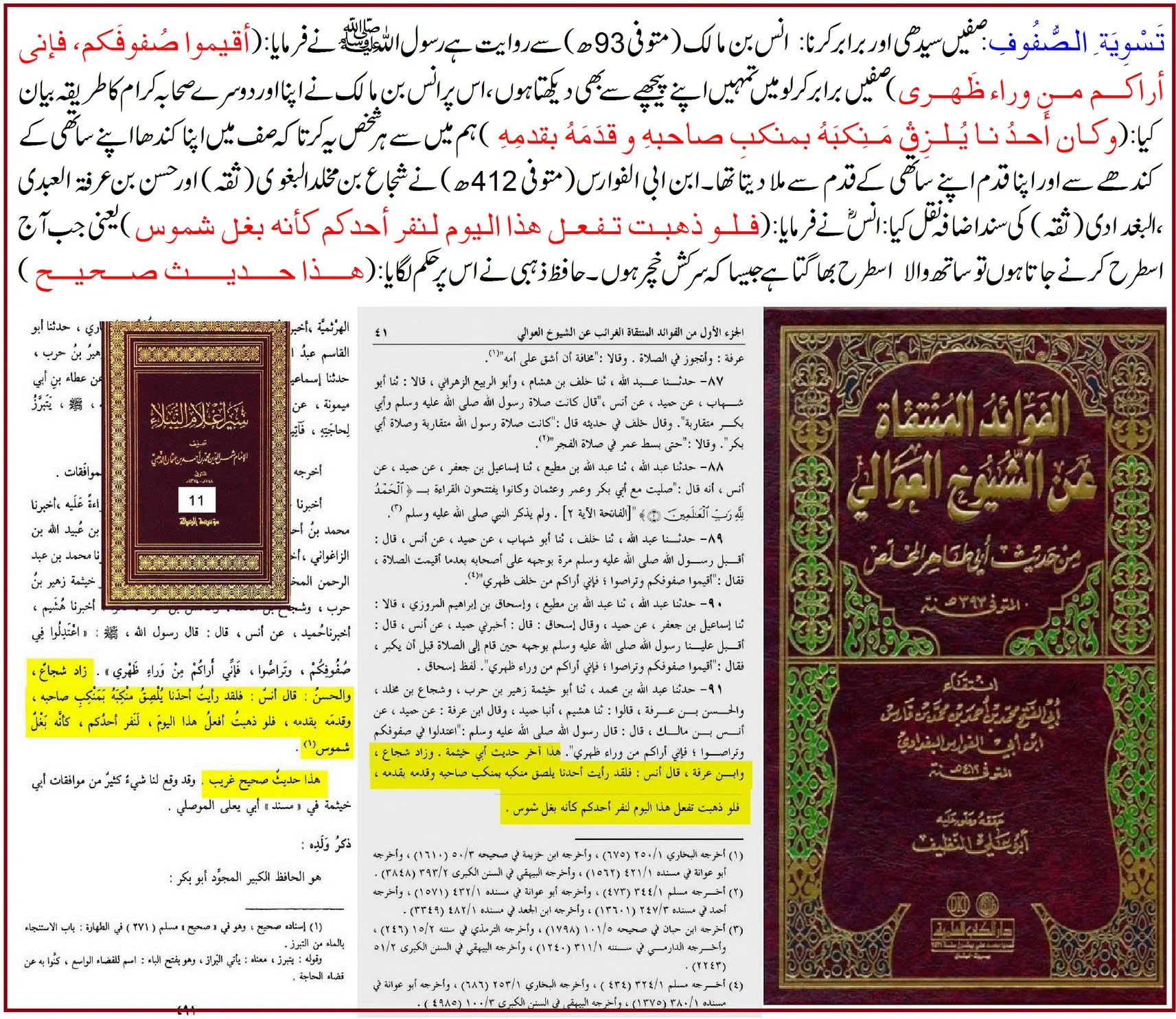
The physical demonstration of joining shoulders and feet is also reported from Anas bin Mālik رضي الله عنه in several authentic narrations.
Same chapter:
بَابُ إِلْزَاقِ المَنْكِبِ بِالمَنْكِبِ وَالقَدَمِ بِالقَدَمِ فِي الصَّفِّ
Narrated by Anas bin Mālik رضي الله عنه:
“Straighten your rows, for I see you from behind my back.”
“And every one of us would place his shoulder with the shoulder of his companion and his foot with his foot.”
[Ṣaḥīḥ al-Bukhārī, Ḥadīth: 725]
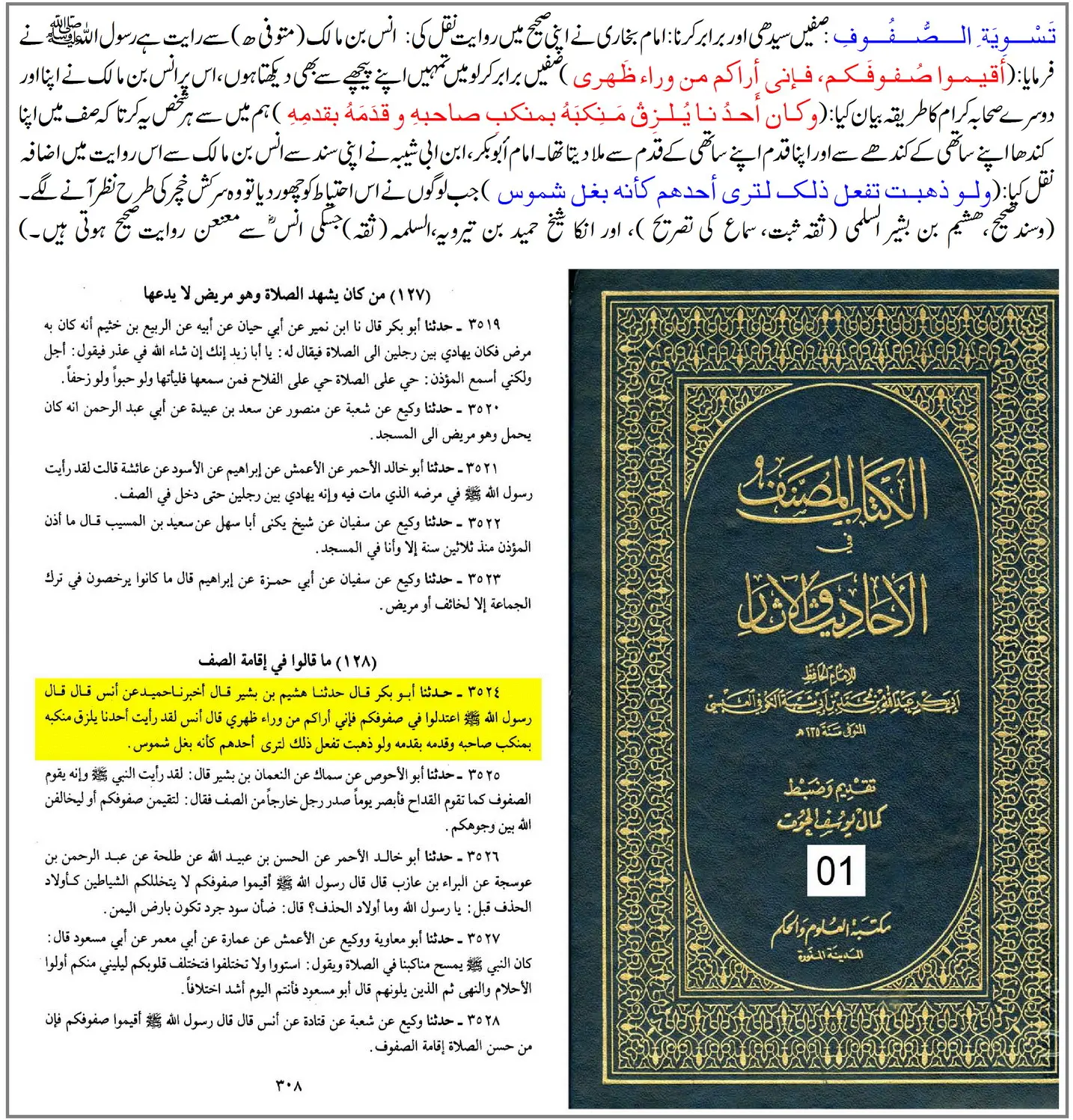
Anas رضي الله عنه said:
“We would place our shoulders and feet together, but if you do that today, people would run away as if you're a wild mule.”
Muṣannaf Ibn Abī Shaybah, Ḥadīth: 3544 | Ṣaḥīḥ chain
Anas رضي الله عنه said:
“I saw one of us join his shoulder to the shoulder of his companion, and his foot to his companion's foot, but today if you try it, people recoil like wild mules.”
Ḥāfiẓ al-Dhahabī:
“This is a Ṣaḥīḥ and Gharīb narration.”
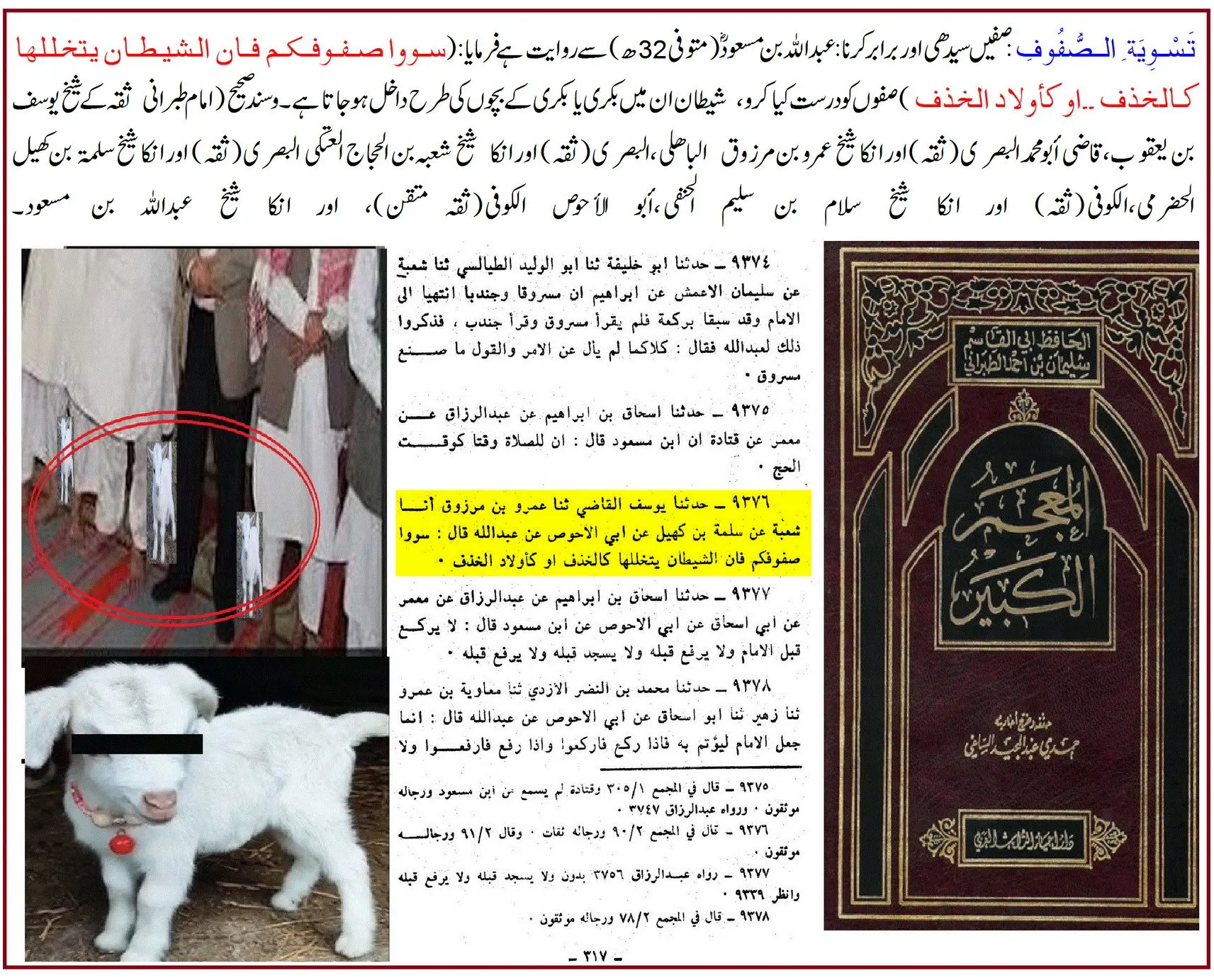
This Sunnah was not limited to Anas and Nuʿmān رضي الله عنهما. Other senior Companions also practiced and taught it.
He said:
“Straighten your rows, for the Shayṭān moves through the gaps like small goats.”
Musannaf Ibn Abī Shaybah | Authentic chain
The joining of body parts is a way to block the Shayṭān’s entry in the prayer rows.
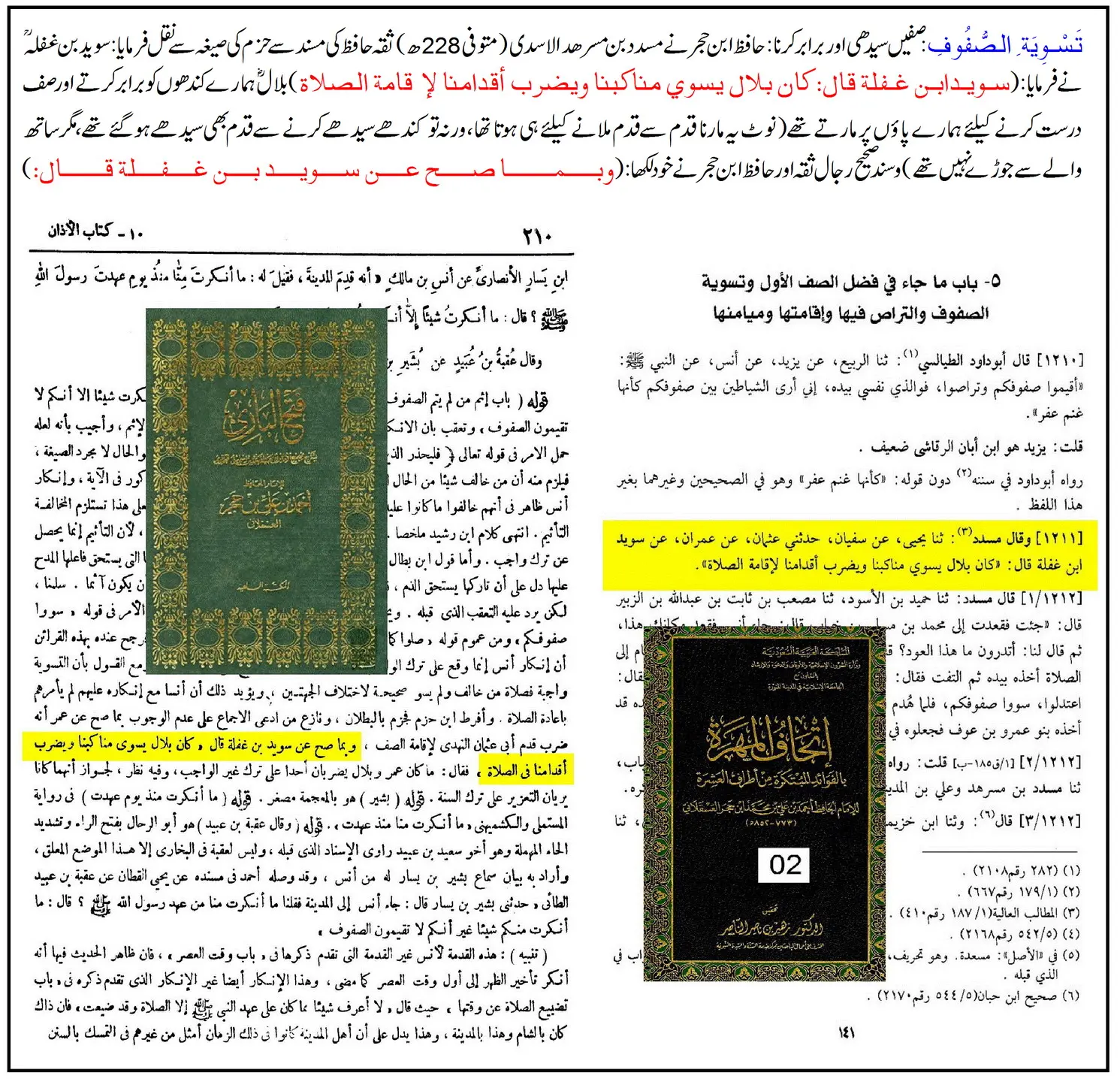
Suwayd bin Ghaflah narrates:
“Bilāl رضي الله عنه used to straighten our shoulders and strike our feet to make us align properly.”
Ḥāfiẓ Ibn Ḥajar رحمه الله confirms:
“This has been authentically reported.”
Fatḥ al-Bārī
 Note: The striking of the feet was to make the worshippers join their feet, not just stand straight — otherwise shoulder alignment alone would have sufficed.
From the above authentic narrations and scholarly explanations, it becomes abundantly clear that:
The Sunnah method of straightening rows is:
Calling this practice “exaggeration” is a misunderstanding of the Arabic terminology.
This is a continuous, well-established Sunnah of the Prophet ﷺ and his Companions, verified and approved by leading scholars of Ḥadīth.
✦ Muslims must revive this Sunnah in congregational prayer, for it not only adheres to the Prophetic method but also strengthens Islamic unity and brotherhood.
وَاللهُ أعلَمُ بالصَّواب
Introduction
Straightening the rows in congregational prayer is a Sunnah of the Prophet ﷺ. The noble Companions ﷺ not only acted upon it but also physically demonstrated it by joining shoulder to shoulder and foot to foot. Some consider this contact as a one-time occurrence or exaggeration, but authentic Ahadith and the explanations of Muhaddithin prove it is a part of the Sunnah to remove gaps in rows.
This article will present the evidence-based reality using statements from the Companions, the Tabiʿīn, and the Imams, and clarify the prevailing misunderstanding on the issue.
Narrations of Sayyiduna Nuʿmān bin Bashīr رضي الله عنه
The clearest narration about joining foot to foot and shoulder to shoulder in the rows comes from Sayyiduna Nuʿmān bin Bashīr رضي الله عنه, recorded by Imām al-Bukhārī and Imām Abū Dāwūd with authentic chains.
① Narration in Ṣaḥīḥ al-Bukhārī
Imām al-Bukhārī رحمه الله established a chapter:
بَابُ إِلْزَاقِ المَنْكِبِ بِالمَنْكِبِ وَالقَدَمِ بِالقَدَمِ فِي الصَّفِّ
“Chapter: Joining shoulder to shoulder and foot to foot in the row.”
Sayyiduna Nuʿmān bin Bashīr رضي الله عنه said:
«رَأَيْتُ الرَّجُلَ مِنَّا يُلْزِقُ كَعْبَهُ بِكَعْبِ صَاحِبِهِ»
“I saw a person among us placing his ankle with the ankle of his companion.”
[Ṣaḥīḥ al-Bukhārī, Kitāb al-Adhān, Ḥadīth: 725]② Narration in Sunan Abī Dāwūd
In Bāb Taswiyat al-Ṣufūf, Imām Abū Dāwūd رحمه الله narrates with a full chain:
The Prophet ﷺ turned to the people and said:
“Straighten your rows!”
He repeated this three times and said:
“By Allah, you must straighten your rows or Allah will cause discord between your hearts.”
Nuʿmān bin Bashīr رضي الله عنه said:
“I saw a man join his shoulder with the shoulder of his companion, his knee with his companion's knee, and his ankle with his ankle.”
[Sunan Abī Dāwūd, Ḥadīth: 662 | Graded Ṣaḥīḥ by al-Albānī]Authentication of the Chain
All narrators in the chain are trustworthy (thiqah), including:
- Abū Dāwūd, the great compiler of Sunan.
- ʿUthmān bin Abī Shaybah, Imām, trustworthy.
- Wakīʿ bin al-Jarrāḥ, reliable, ḥāfiẓ.
- Zakarīyā bin Abī Zā’idah, trustworthy (despite being a mudallis, he explicitly mentioned hearing the narration).
- Al-Ḥusayn bin al-Ḥārith al-Jadali, reliable.
- Nuʿmān bin Bashīr, Companion, died 65 AH.
The chain is authentic.③ Statements of the Scholars of Ḥadīth
◈ Imām al-Qurṭubī رحمه الله
In al-Jāmiʿ li Aḥkām al-Qur’ān:
He explains this narration, saying:
This joining of shoulders, knees, and ankles is part of implementing the Sunnah of the Prophet ﷺ to straighten the rows. The Arabic words "العَقِب" and "العُرقوب" are explained in their anatomical contexts, indicating the exact joining points.
◈ Imām al-Nawawī رحمه الله
In Khilāṣat al-Aḥkām, under the chapter of straightening rows:
He confirms that Nuʿmān bin Bashīr رضي الله عنه described the exact joining of shoulders, knees, and ankles.
◈ ʿAllāmah Zayn al-Dīn al-ʿIrāqī رحمه الله
In Ṭarḥ al-Tathrīb, he mentions:
These narrations clearly indicate that aligning the body parts is part of proper row formation in prayer.
◈ Ḥāfiẓ Ibn Ḥajar al-ʿAsqalānī رحمه الله
In Fatḥ al-Bārī, he explains that:
This emphasis is not exaggeration but represents careful adherence to the Sunnah.
He defines the Arabic word "مبالغة" (exaggeration) as:
«إذا اجتهد في الأمر» — i.e., to strive fully in doing something.
Hence, it is not the same as the Urdu meaning of “exaggeration,” but indicates perfect execution of the Sunnah.
Narrations of Sayyiduna Anas bin Mālik رضي الله عنه
The physical demonstration of joining shoulders and feet is also reported from Anas bin Mālik رضي الله عنه in several authentic narrations.
① Narration in Ṣaḥīḥ al-Bukhārī
Same chapter:
بَابُ إِلْزَاقِ المَنْكِبِ بِالمَنْكِبِ وَالقَدَمِ بِالقَدَمِ فِي الصَّفِّ
Narrated by Anas bin Mālik رضي الله عنه:
“Straighten your rows, for I see you from behind my back.”
“And every one of us would place his shoulder with the shoulder of his companion and his foot with his foot.”
[Ṣaḥīḥ al-Bukhārī, Ḥadīth: 725]② Narration in Muṣannaf Ibn Abī Shaybah
Anas رضي الله عنه said:
“We would place our shoulders and feet together, but if you do that today, people would run away as if you're a wild mule.”
Muṣannaf Ibn Abī Shaybah, Ḥadīth: 3544 | Ṣaḥīḥ chain③ Narration by Ibn Abī al-Fawāris and Validation by Ḥāfiẓ al-Dhahabī
Anas رضي الله عنه said:
“I saw one of us join his shoulder to the shoulder of his companion, and his foot to his companion's foot, but today if you try it, people recoil like wild mules.”
Ḥāfiẓ al-Dhahabī:
“This is a Ṣaḥīḥ and Gharīb narration.”
Statements of Other Companions
This Sunnah was not limited to Anas and Nuʿmān رضي الله عنهما. Other senior Companions also practiced and taught it.
① Sayyiduna ʿAbdullāh bin Masʿūd رضي الله عنه
He said:
“Straighten your rows, for the Shayṭān moves through the gaps like small goats.”
Musannaf Ibn Abī Shaybah | Authentic chain The joining of body parts is a way to block the Shayṭān’s entry in the prayer rows.② Sayyiduna Bilāl al-Ḥabashī رضي الله عنه
Suwayd bin Ghaflah narrates:
“Bilāl رضي الله عنه used to straighten our shoulders and strike our feet to make us align properly.”
Ḥāfiẓ Ibn Ḥajar رحمه الله confirms:
“This has been authentically reported.”
Fatḥ al-Bārī Note: The striking of the feet was to make the worshippers join their feet, not just stand straight — otherwise shoulder alignment alone would have sufficed.Conclusion and Summary
From the above authentic narrations and scholarly explanations, it becomes abundantly clear that:
 Established Facts
- The Prophet ﷺ’s Command:
- Repeated instructions to straighten rows.
- Warning of division of hearts if not followed.
- Practice of the Companions:
- They stood with joined shoulders, knees, and ankles.
- No Companion objected; rather, it was the standard Sunnah.
- Statements of Other Companions:
- Ibn Masʿūd: Gaps allow entry of Shayṭān.
- Bilāl رضي الله عنه corrected both shoulders and feet.
- Clarification from Ḥadīth Scholars:
- Qurṭubī, Nawawī, al-ʿIrāqī, and Ibn Ḥajar all confirmed this as part of Sunnah.
- The term "exaggeration" (مبالغة) means “thoroughness,” not “overstatement.”
Final Verdict
The Sunnah method of straightening rows is:- To stand close together.
- Join shoulders and feet.
- Eliminate all gaps to block Shayṭān.
Calling this practice “exaggeration” is a misunderstanding of the Arabic terminology.
This is a continuous, well-established Sunnah of the Prophet ﷺ and his Companions, verified and approved by leading scholars of Ḥadīth.
✦ Muslims must revive this Sunnah in congregational prayer, for it not only adheres to the Prophetic method but also strengthens Islamic unity and brotherhood.
وَاللهُ أعلَمُ بالصَّواب
