✦ Compiled By: Abu Hamzah Salafi
الحمد للہ وحدہ، والصلاۃ والسلام علی من لا نبی بعدہ۔Purpose of This Writing
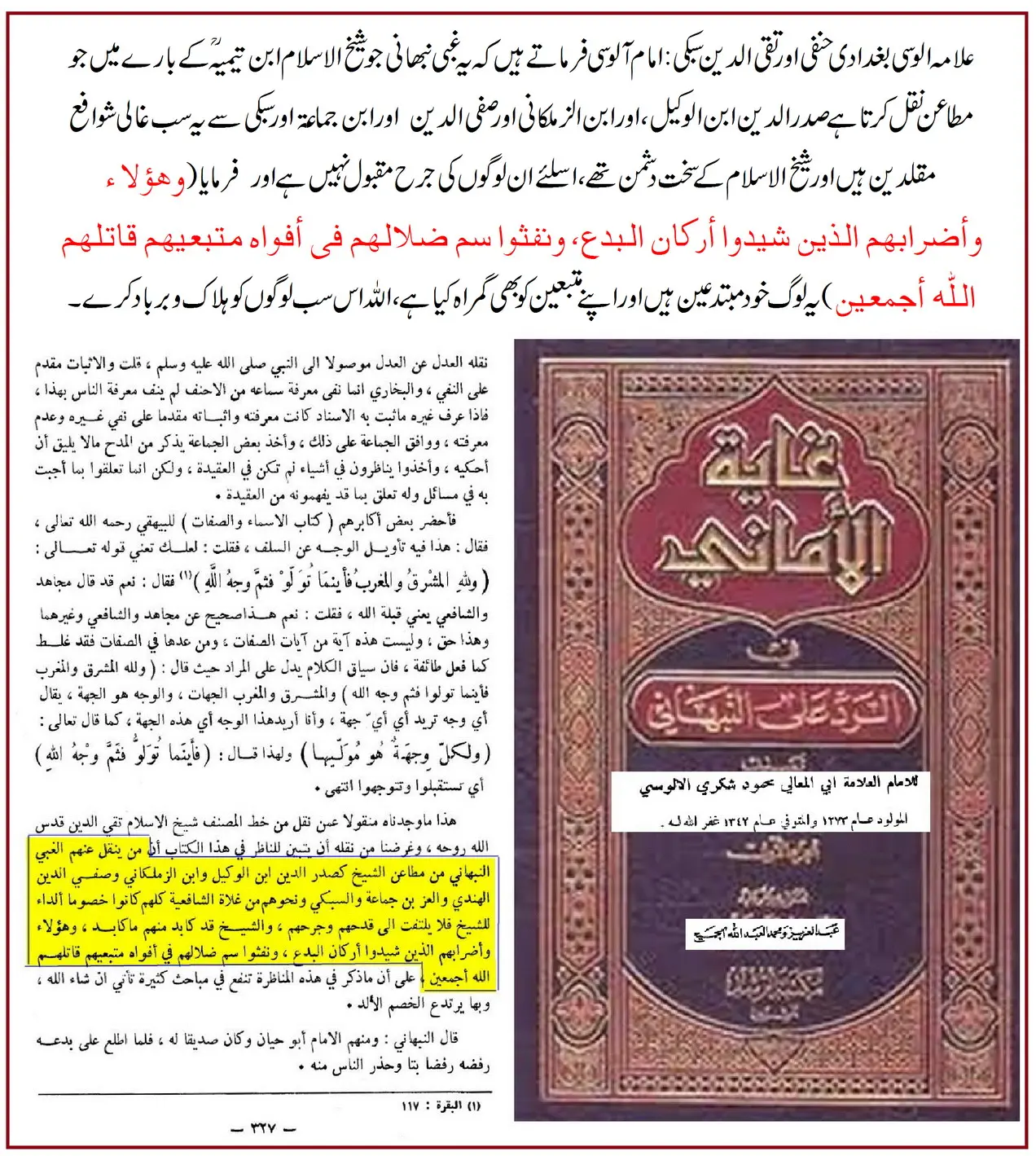
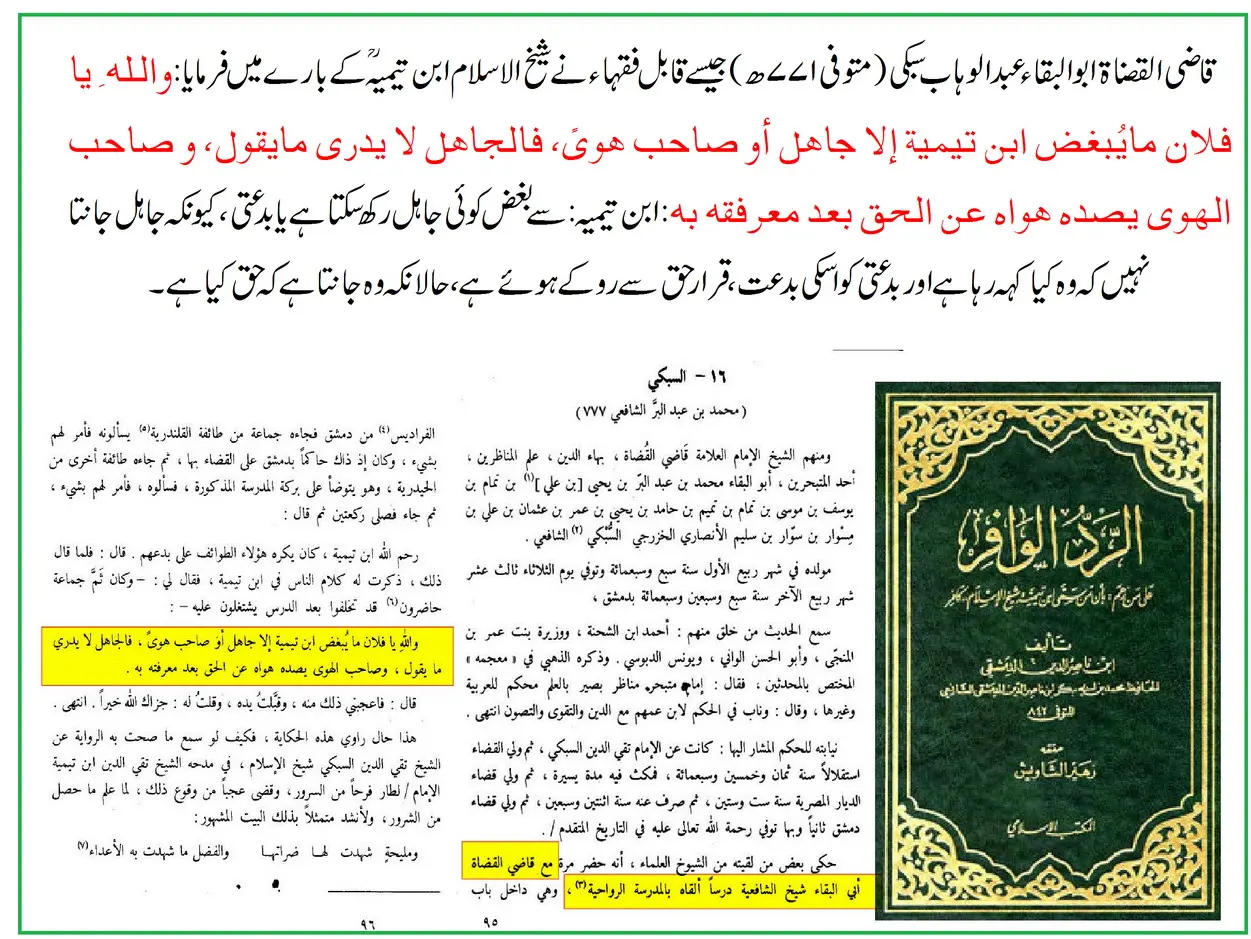
The purpose of this article is an academic examination of the attributions and allegations made by a grave-venerating debater against Shaykh al-Islām Ibn Taymiyyah (رحمه الله)—using support from Ḥanafī/Ashʿarī sources. Our methodology is simple:❀ The original text of the allegation will be presented.
❀ Then each allegation will be answered in two ways:
① A principled response (rules of Jarḥ wa Taʿdīl)
② A textual response (explicit texts/quotes with references)
❀ Where the chain is doubtful or the narrator is accused/biased, its credibility will be shown to collapse.
Main Objective
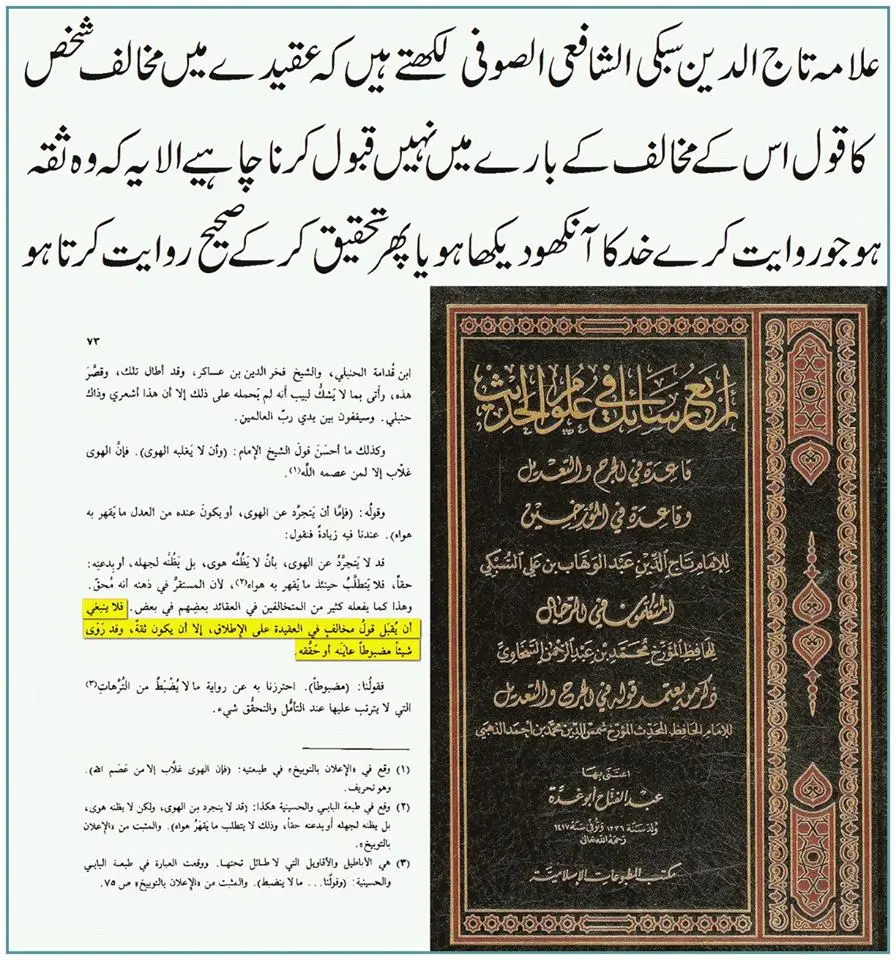
If a Ḥanafī / grave-venerating person cites a certain biased author to accuse Ibn Taymiyyah (رحمه الله), then first he must answer the clarification that those very sources/authors themselves are unqualified and biased.The criticism of a biased enemy is, in principle, rejected.
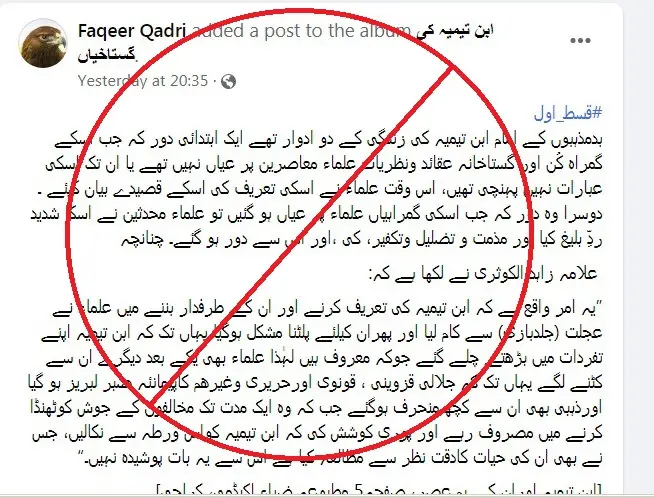
Objection ① (Zāhid al-Kawtharī)
Allegation (Quoted Claim)
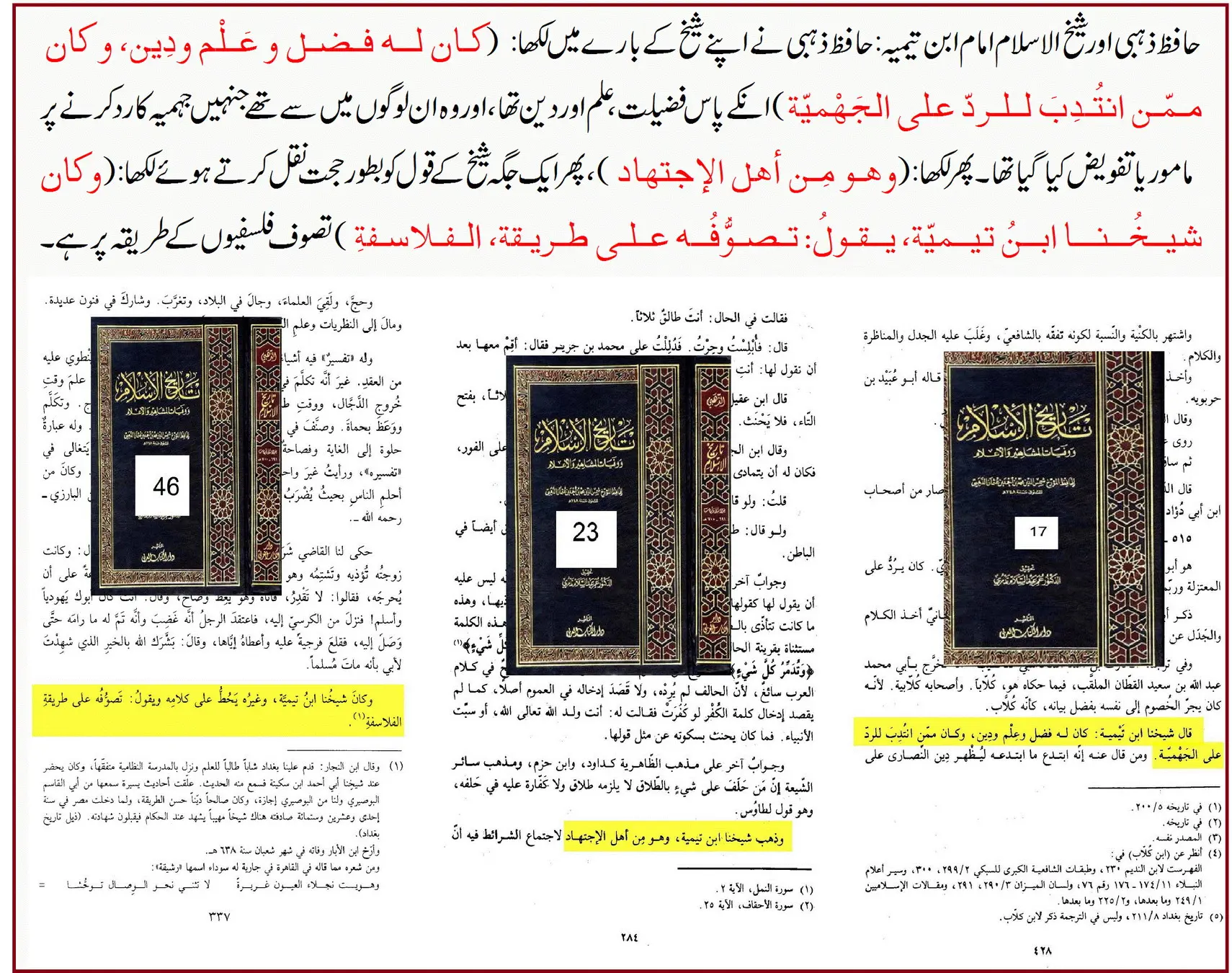
Al-Kawtharī says that scholars were hasty in praising Ibn Taymiyyah (رحمه الله); then he began increasing in his “unique opinions”; major scholars abandoned him; until even Imām al-Dhahabī (رحمه الله) eventually deviated from him, etc. (summarized)Answer (Principled + Textual)
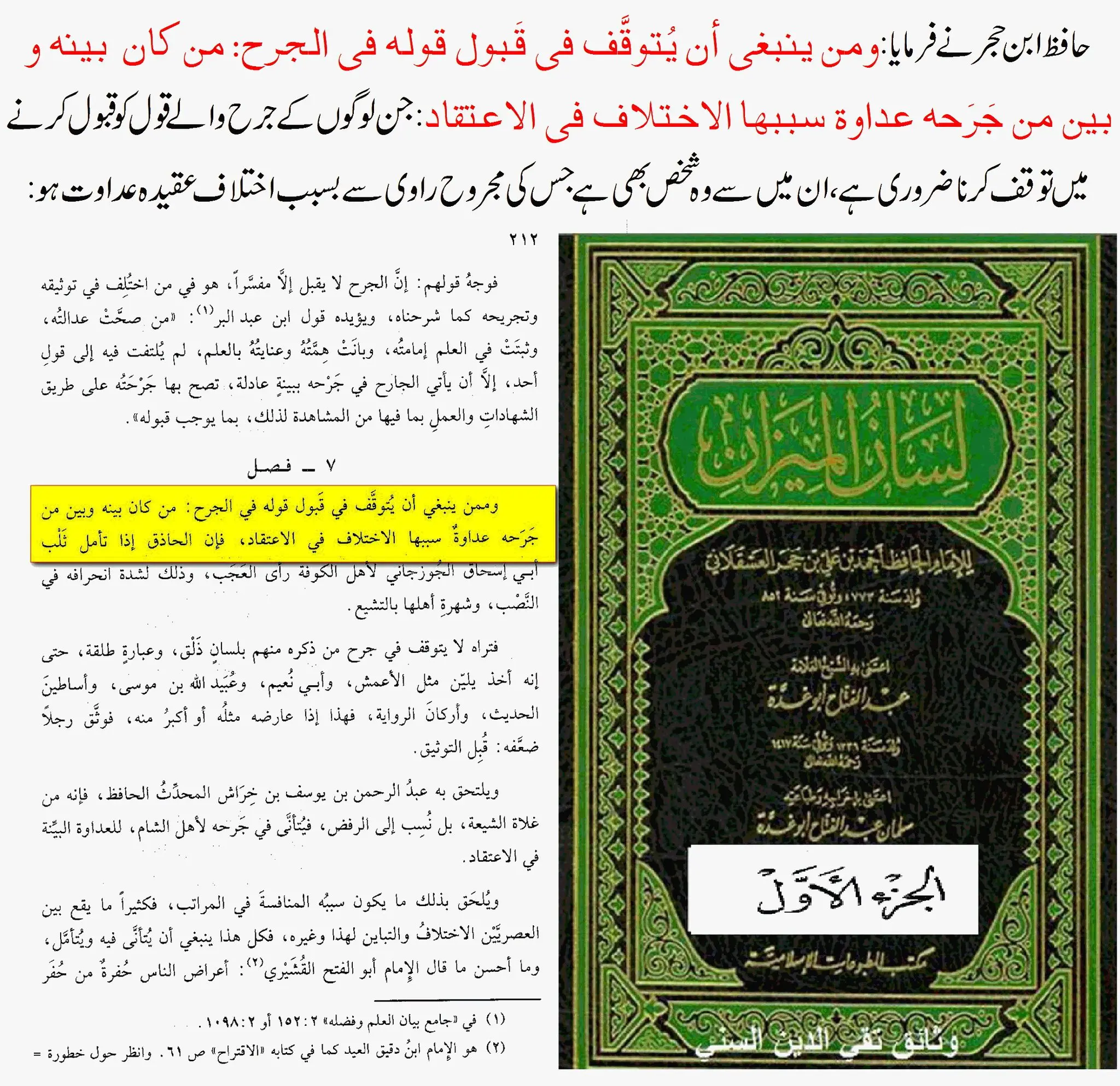
① Principle of Jarḥ wa Taʿdīl: The Criticism of a Biased Enemy Is Rejected
Arabic Text:«… ومِمَّن ينبغي أن يُتَوَقَّف في قبول قوله في الجرح: مَن كان بينه وبين من جَرَحه عداوة سببُها الاختلاف في الاعتقاد.»
— Ibn Ḥajar al-ʿAsqalānī, Lisān al-Mīzān
Translation:
Among those whose criticism should be treated with reservation is the one who has enmity with the one he criticizes due to اختلاف in creed.
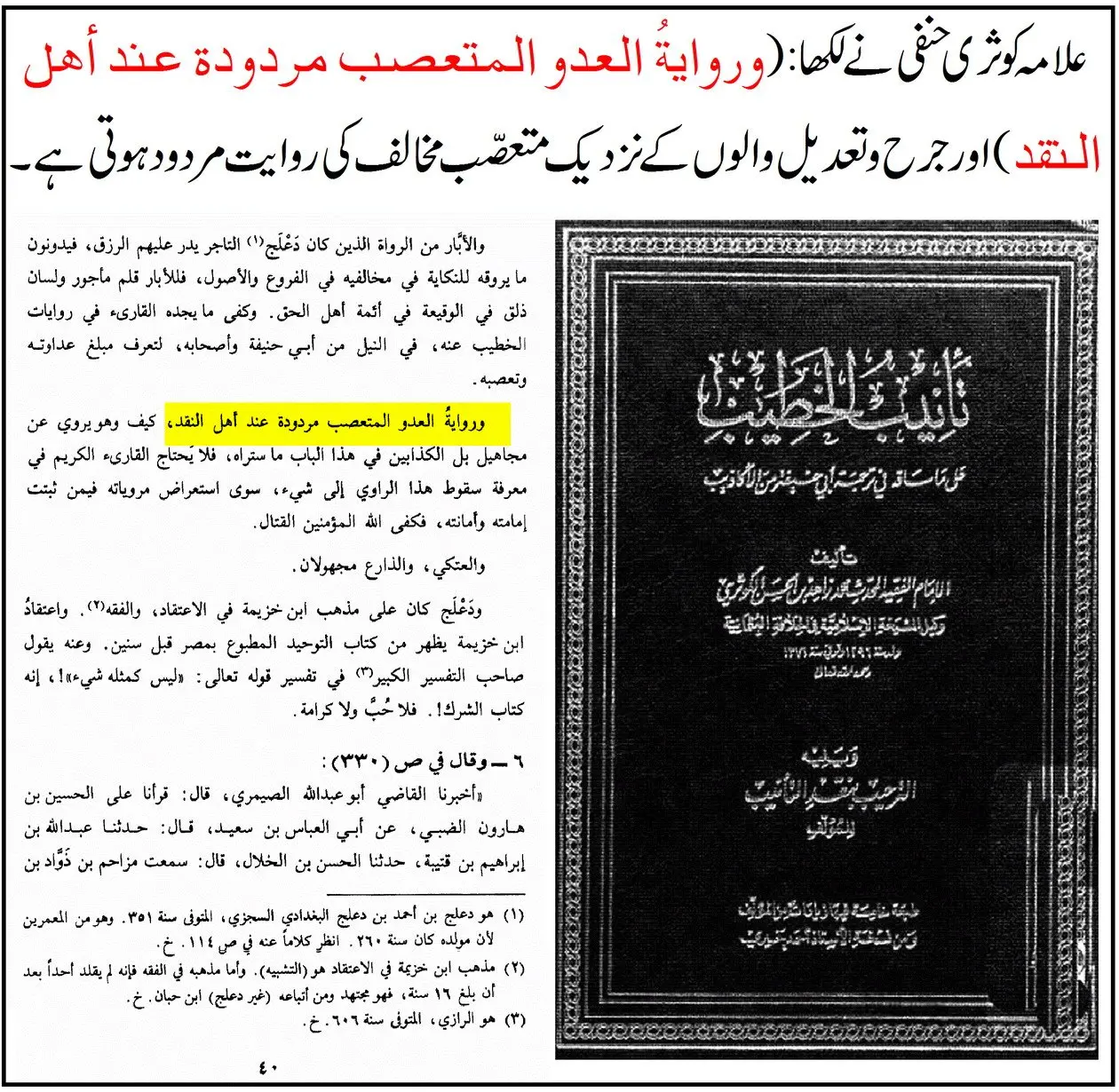
② Al-Kawtharī’s Own Admission
Arabic Text:«وروايةُ العدوِّ والمتعصِّب مردودة عند أهل النقد.»
— al-Kawtharī, Ta’nīb al-Khaṭīb
Translation:
According to the ḥadīth critics, the narration of an enemy and a fanatic is rejected.
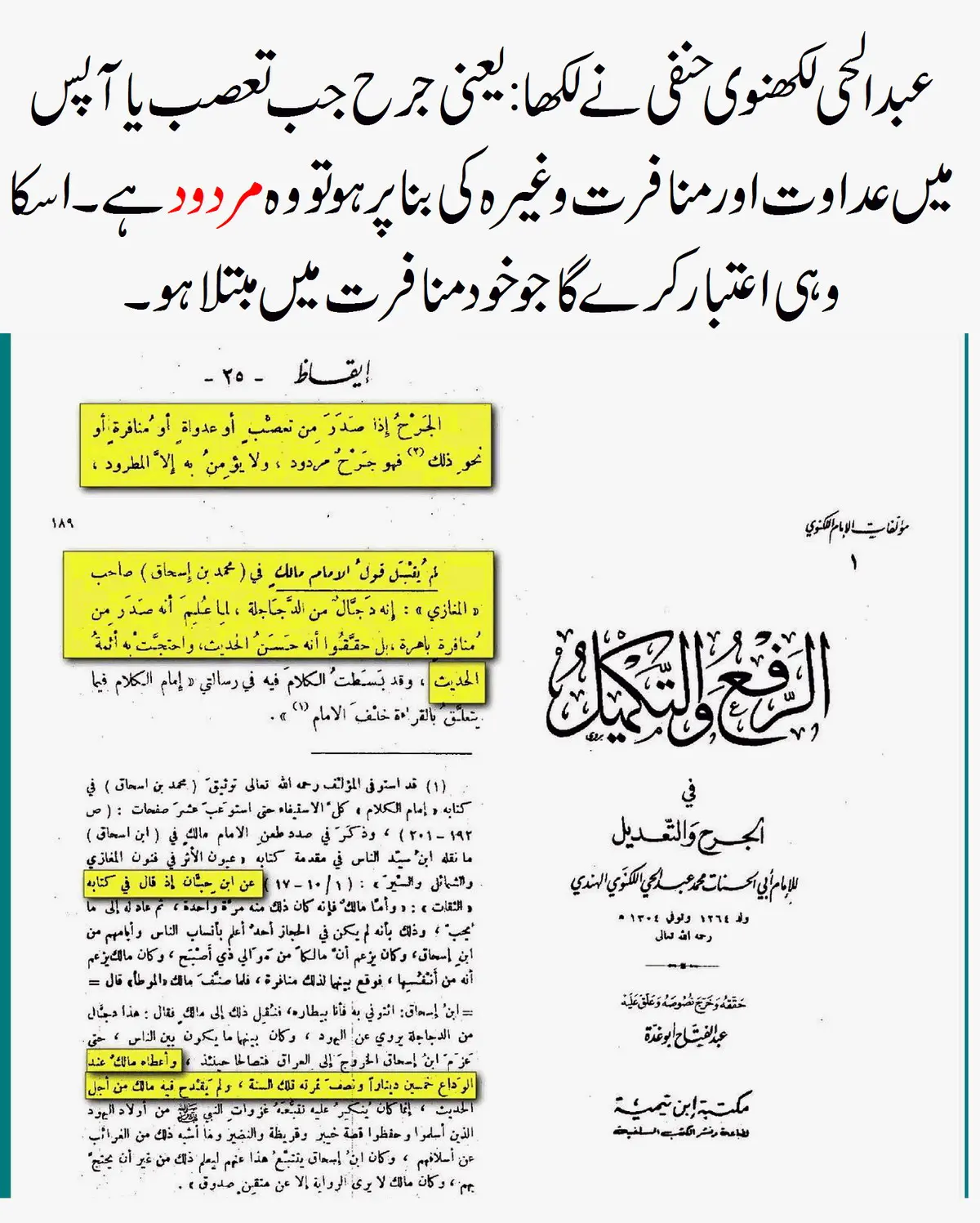
③ ʿAbd al-Ḥayy Lakhnawī
Arabic Text:«… الجرحُ إذا صدر من تعصّبٍ أو عداوةٍ فهو جرحٌ مردود…»
— al-Rafʿ wa al-Takmīl
Translation:
If criticism is issued due to fanaticism or enmity, then it is rejected.
 Conclusion: Since al-Kawtharī is ideologically opposed and biased against Ibn Taymiyyah (رحمه الله), such general attacks are not valid as evidence.
④ Claim: “Scholars abandoned him” — Where is the proof?
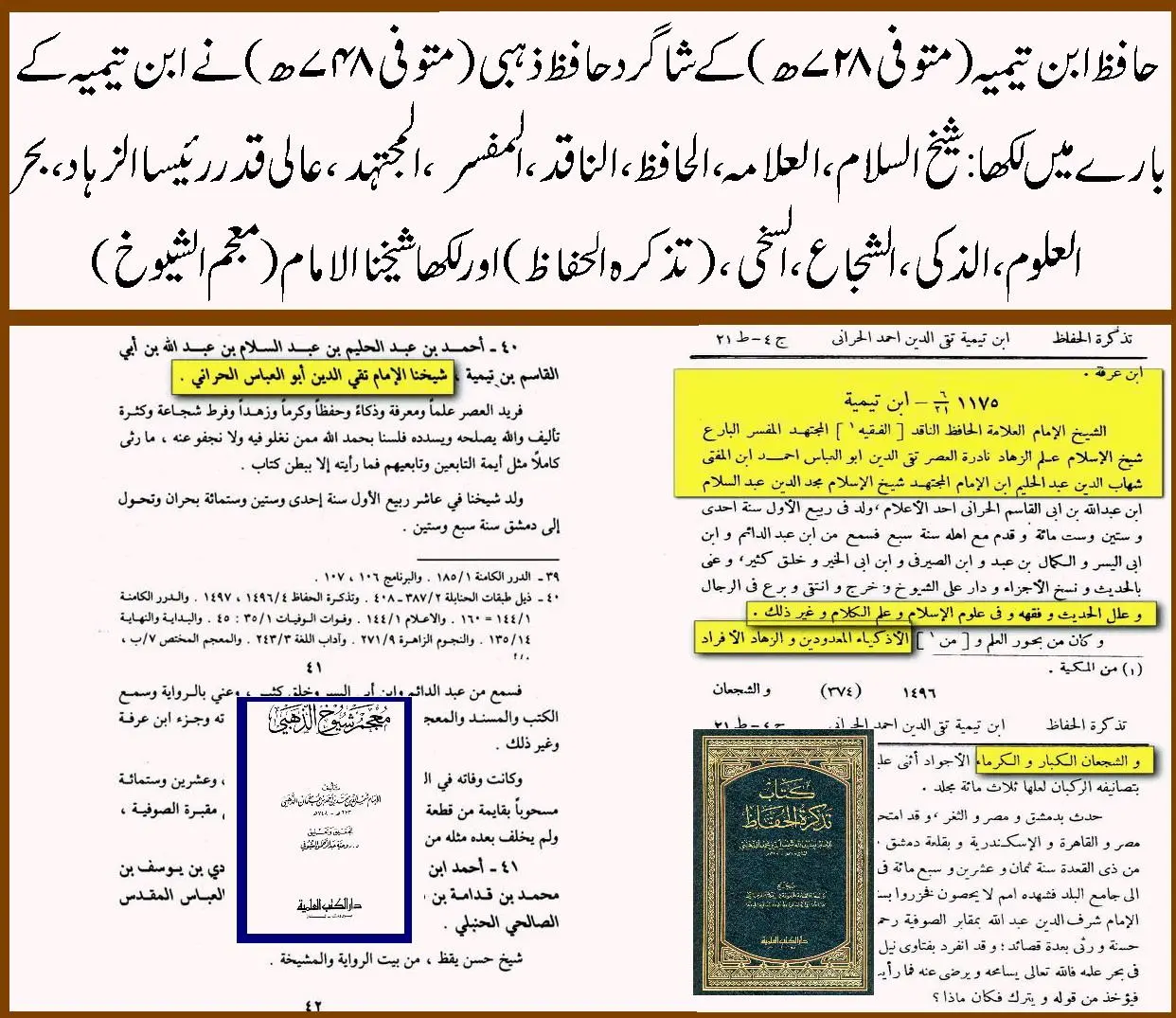
Al-Kawtharī’s statements are vague, unsupported, and lack credible documentation—no reliable chain, no clear incidents, and no contemporary evidence.In contrast, reliable sources contain explicit statements affirming Ibn Taymiyyah’s scholarly rank:
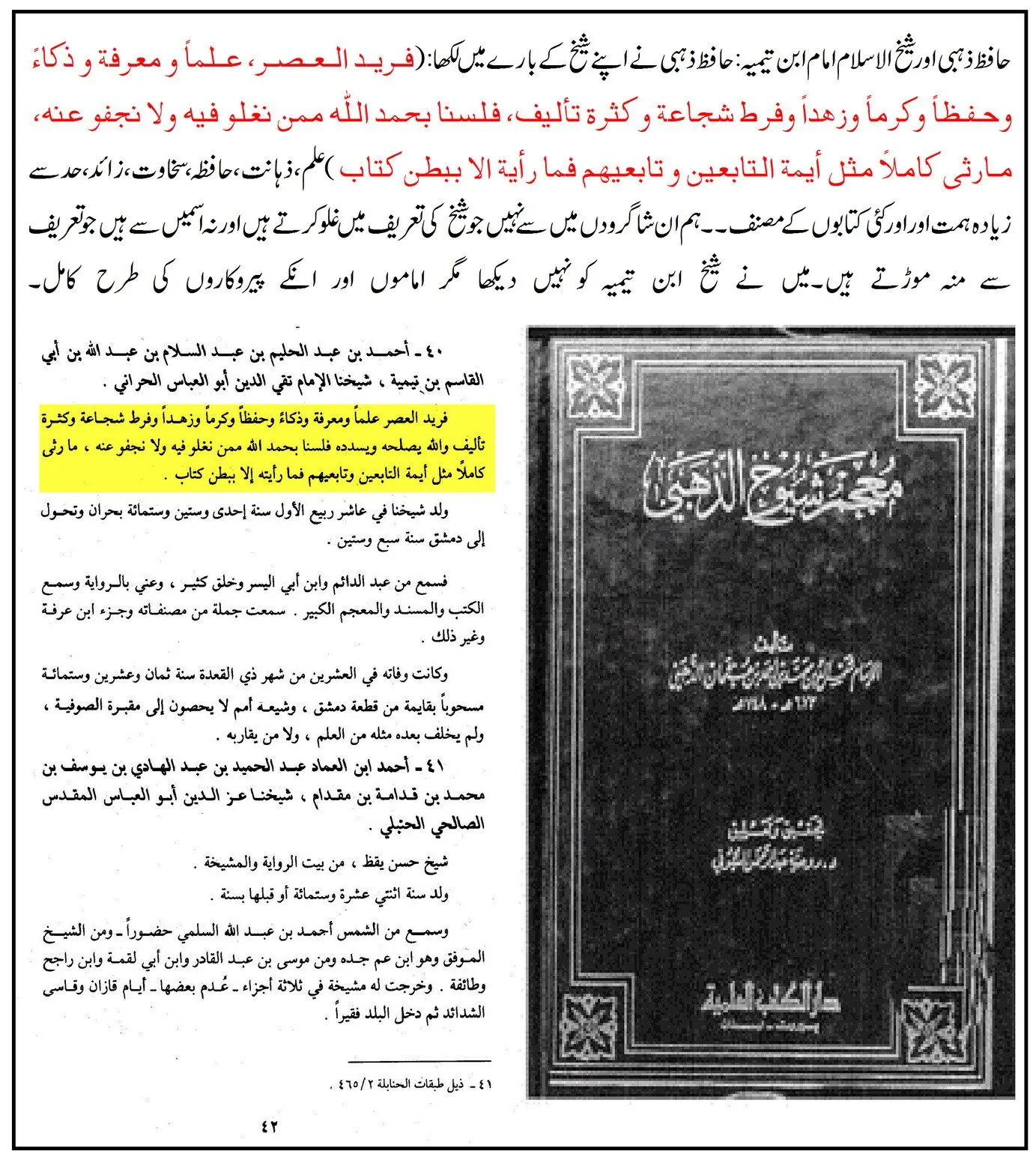
Arabic Text (al-Dhahabī):
«ابنُ تيميّة… الشيخ الإمام العلامة الحافظ الناقد الفقيه المجتهد المفسّر البارع، شيخ الإسلام… من بحور العلم… أثنى عليه الموافق والمخالف…»
— al-Dhahabī, Tadhkirat al-Ḥuffāẓ
Translation:
Ibn Taymiyyah… the Shaykh, the Imām, the great scholar, the ḥāfiẓ, the critic, the jurist, the mujtahid, the outstanding exegete—Shaykh al-Islām… an ocean of knowledge… praised by both supporters and opponents.
⑤ “Al-Dhahabī later deviated” — An Unproven Attribution
Al-Dhahabī’s established and explicit testimonies in praise of Ibn Taymiyyah (رحمه الله) remain firm. A chainless allegation holds no weight against clear, affirmed texts.Summary of Objection ①
◈ The criticism of a biased enemy is rejected.◈ Al-Kawtharī’s claims are vague and chainless.
◈ Clear praise from al-Dhahabī and other major scholars is established.
✔ Therefore, both principally and textually, this portion is not fit for proof.
Objection ② (Narrations of al-Ṭūfī / al-Āqshahrī) and Their Research Response
Objection Text
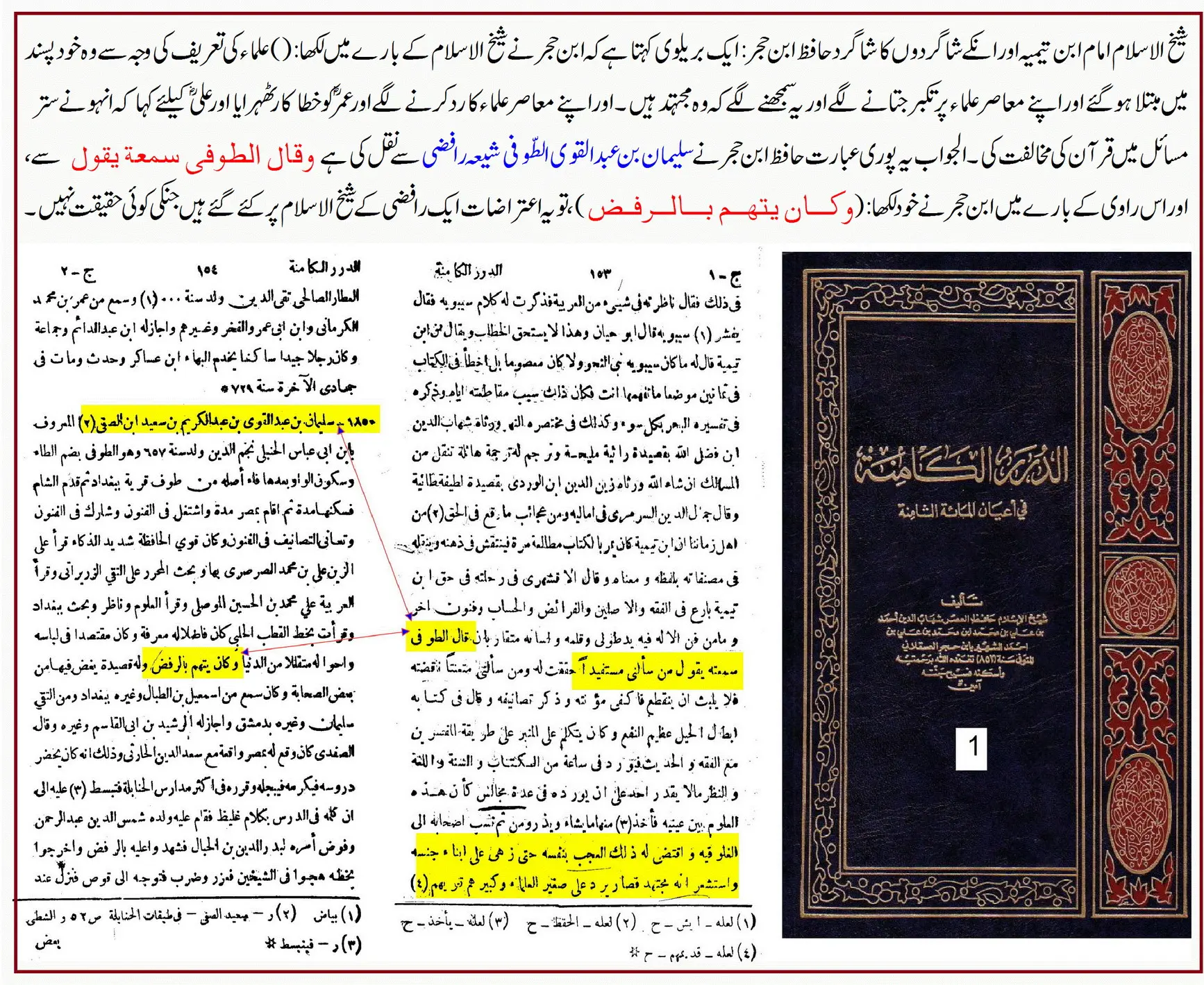
A grave-venerating debater quotes a long passage from al-Durar al-Kāminah, creating the impression that Ibn Taymiyyah (رحمه الله) fell into arrogance, refuted elders, and even attacked Sayyidunā ʿUmar (رضي الله عنه) and Sayyidunā ʿAlī (رضي الله عنه)—and that all of this was written by Ibn Ḥajar.Reality
Ibn Ḥajar (رحمه الله) merely نقل reports from some contemporary opponents (especially the treatise of al-Āqshahrī and Sulaymān b. ʿAbd al-Qawī/al-Ṭūfī). This is not Ibn Ḥajar’s own affirmation—rather, it is a نقل of circulating hostile claims.① Introduction of the Narrators and Criticism Against Them
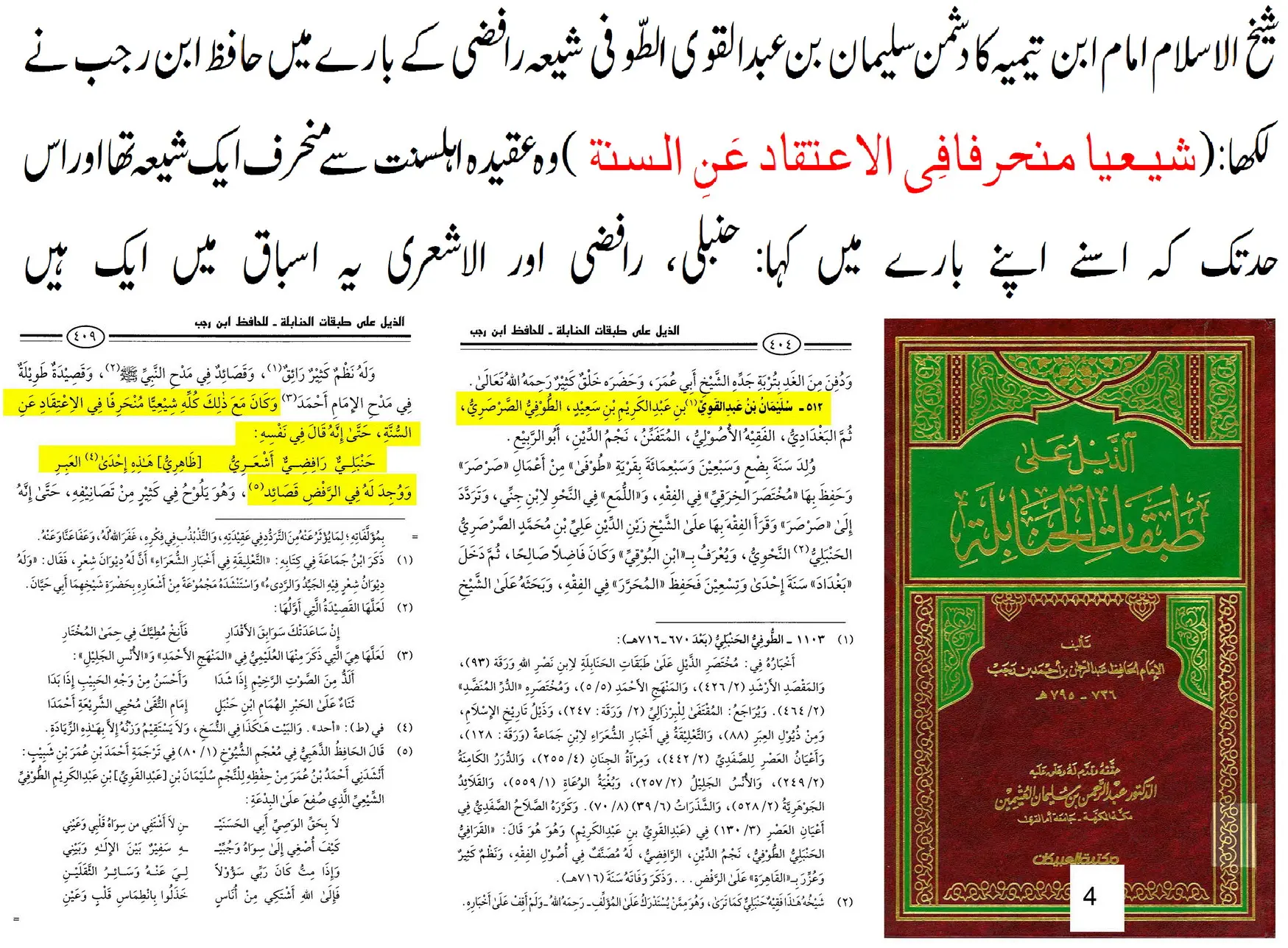
1) Sulaymān b. ʿAbd al-Qawī al-Ṭūfī al-Ṣarṣarī (d. 716H)
Arabic Text (Ibn Rajab):«… شيعِيٌّ منحرفٌ في الاعتقاد عن السُّنَّة، حتى إنه قال في نفسه:
حنبليٌّ رافضيٌّ أشعريٌّ … هذه إحدى العِبَر»
— Ibn Rajab, Dhayl Ṭabaqāt al-Ḥanābilah
Translation:
He was Shīʿī, deviated in creed away from Sunnah—so much so that he said about himself: “Ḥanbalī, Rāfiḍī, Ashʿarī…”—this is one of the strange lessons.
2) al-Āqshahrī (Muḥammad b. Aḥmad b. Amīn… al-Āqshahrī)
In al-Durar al-Kāminah, Ibn Ḥajar نقل multiple passages from al-Āqshahrī’s treatise. This is the narration of the مخالف circle; Ibn Ḥajar did not provide its isnād or establish its integrity. Principle: Such نقل from hostile and biased sources is not fit for proof.② Explicit Texts of Ibn Taymiyyah That Refute These Allegations
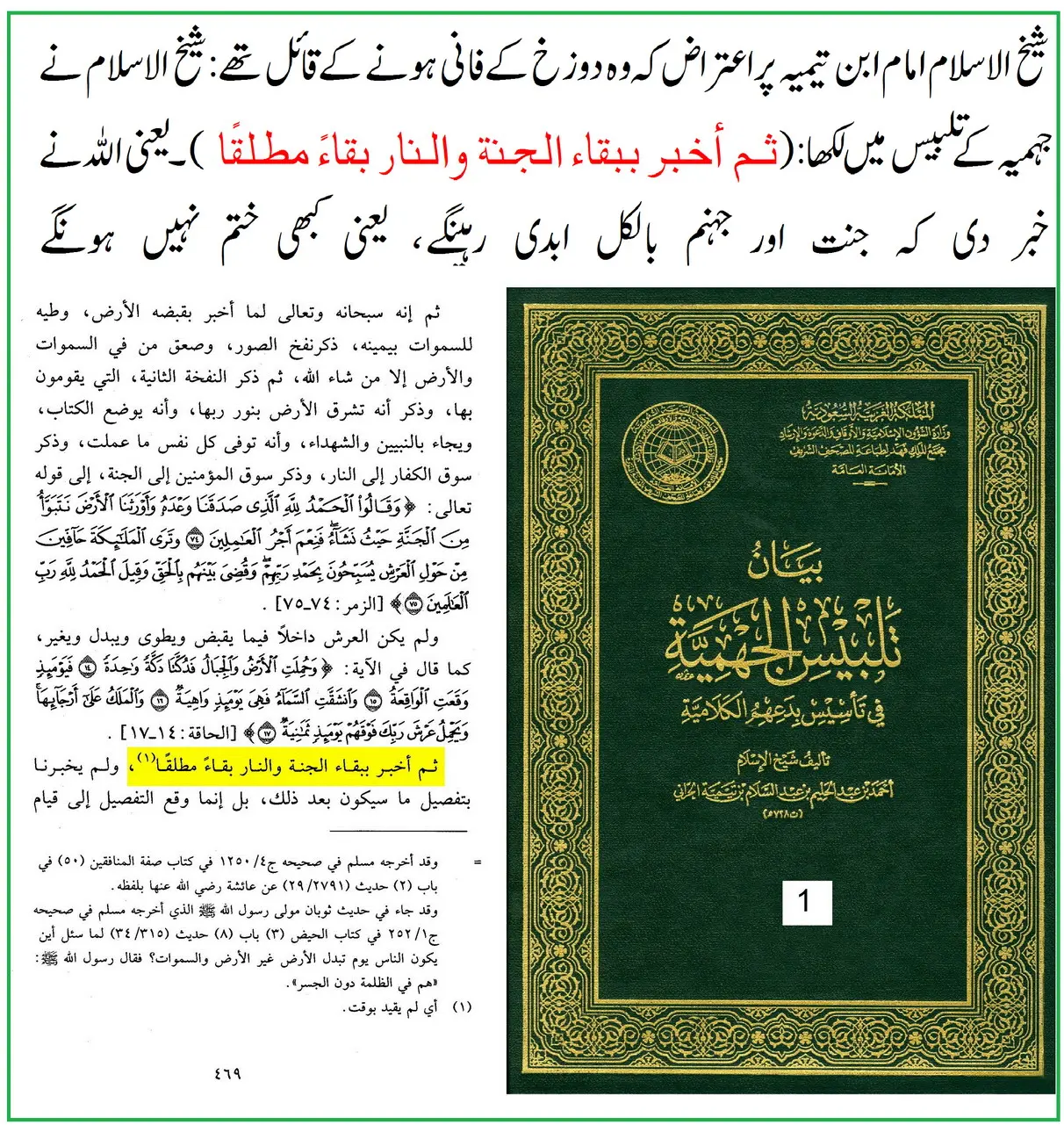
A) Eternity of Paradise and Hell (Khulūd)
Arabic Text:«ثم أخبر ببقاء الجنة والنار بقاءً مطلقًا.»
— Ibn Taymiyyah, Bayān Talbīs al-Jahmiyyah
Translation:
Then (the texts) informed of the absolute permanence of Paradise and Hell.
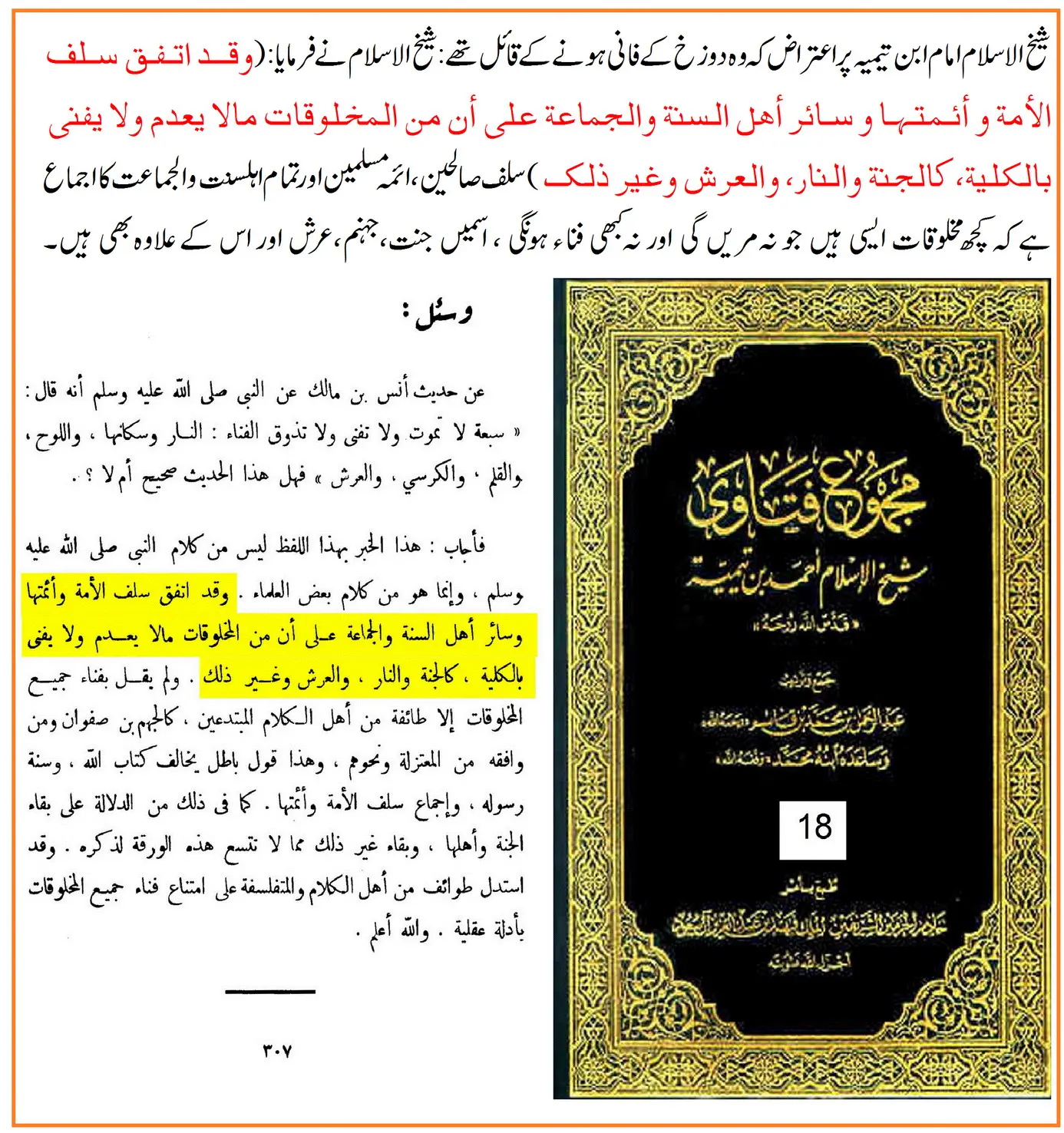
Arabic Text:
«اتَّفَق سلفُ الأمة وأئمّتها وسائر أهل السنة والجماعة على أنّ من المخلوقات ما لا يُعدَمُ ولا يَفنَى بالكلية كالجنّة والنار والعرش…»
— Ibn Taymiyyah, Majmūʿ al-Fatāwā
Translation:
The Salaf of the Ummah, its Imāms, and all Ahl al-Sunnah are agreed that among creation are things that will not perish completely—such as Paradise, Hell, and the Throne…
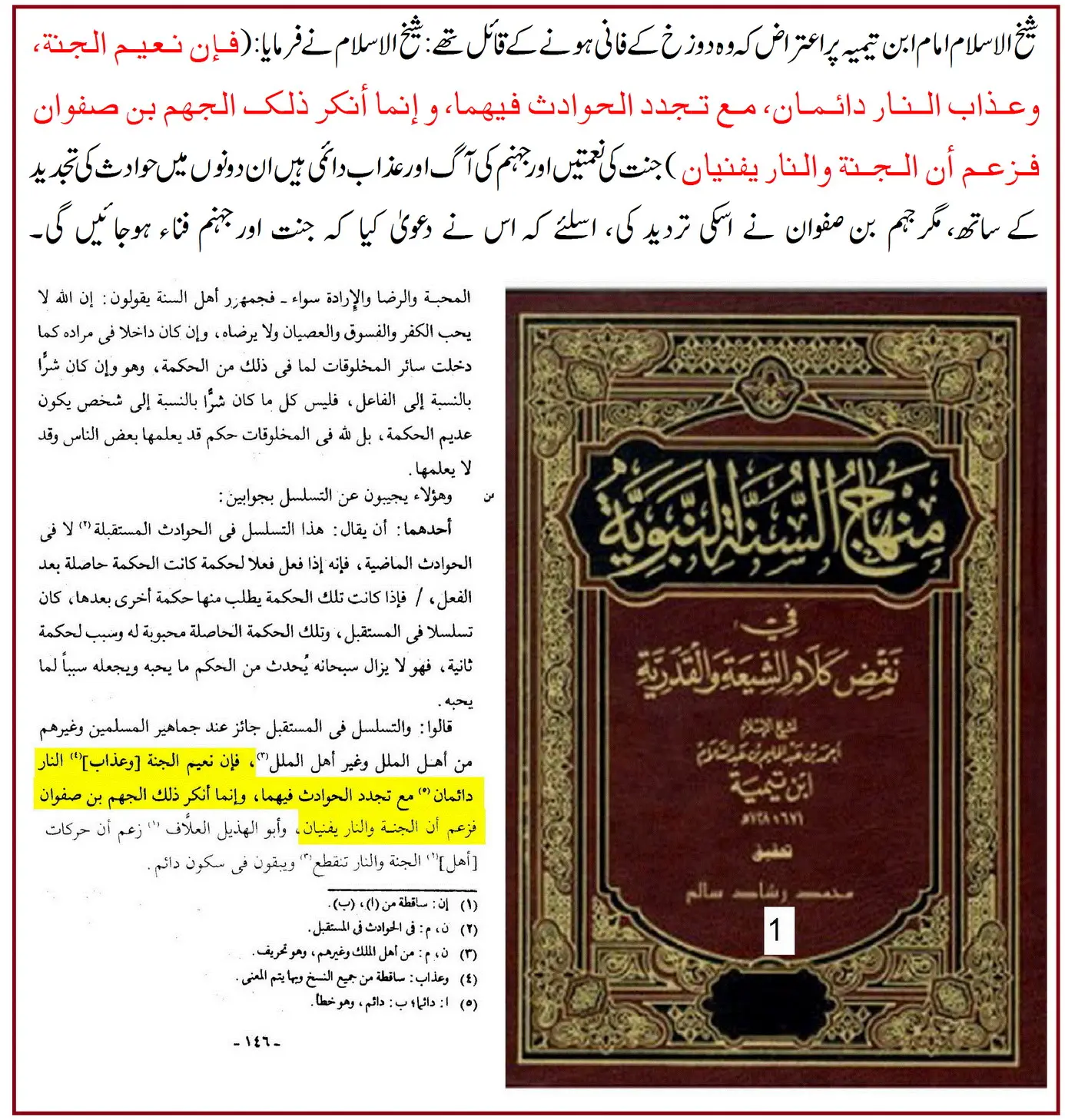
Arabic Text:
«فإنّ نعيمَ الجنة وعذابَ النار دائمَان مع تجدّد الحوادث فيهما، وإنما أنكر ذلك الجهم بن صفوان.»
— Ibn Taymiyyah, Minhāj al-Sunnah al-Nabawiyyah
Translation:
The bliss of Paradise and the punishment of Hell are everlasting, despite renewed occurrences in them; only Jahm b. Ṣafwān denied this.
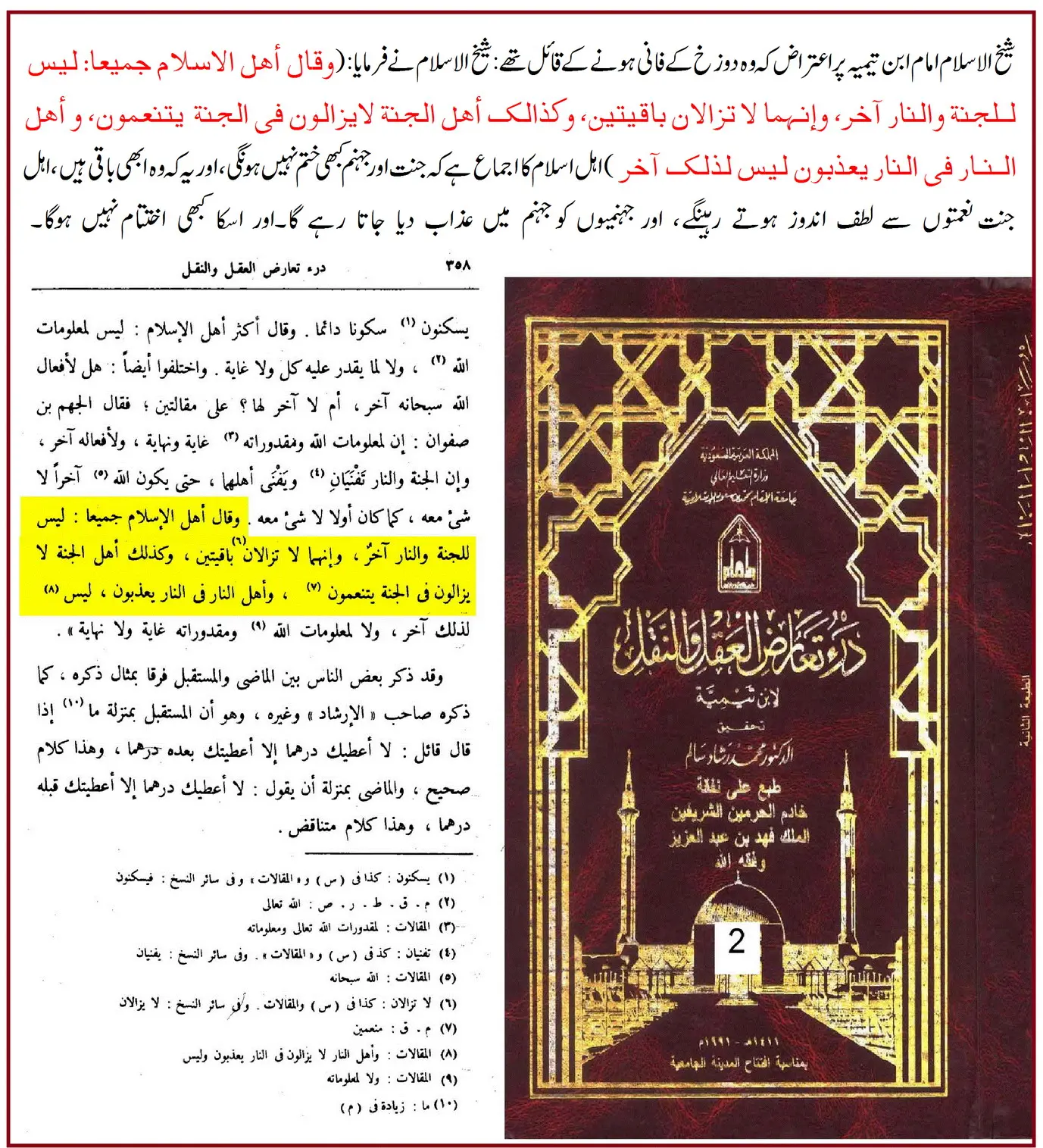
Arabic Text:
«ليس للجنة والنار آخر، وإنهما لا تزالان باقيتين؛ لا يزال أهل الجنة يتنعمون، وأهل النار يُعذَّبون؛ ليس لذلك آخر.»
— Ibn Taymiyyah, Dar’ Taʿāruḍ al-ʿAql wa al-Naql
Translation:
Paradise and Hell have no end; they remain forever—Paradise’s people remain in bliss and Hell’s people remain punished; there is no end to that.
✔ Thus, the allegation “Ibn Taymiyyah believed Hell will end” is false against these explicit texts.
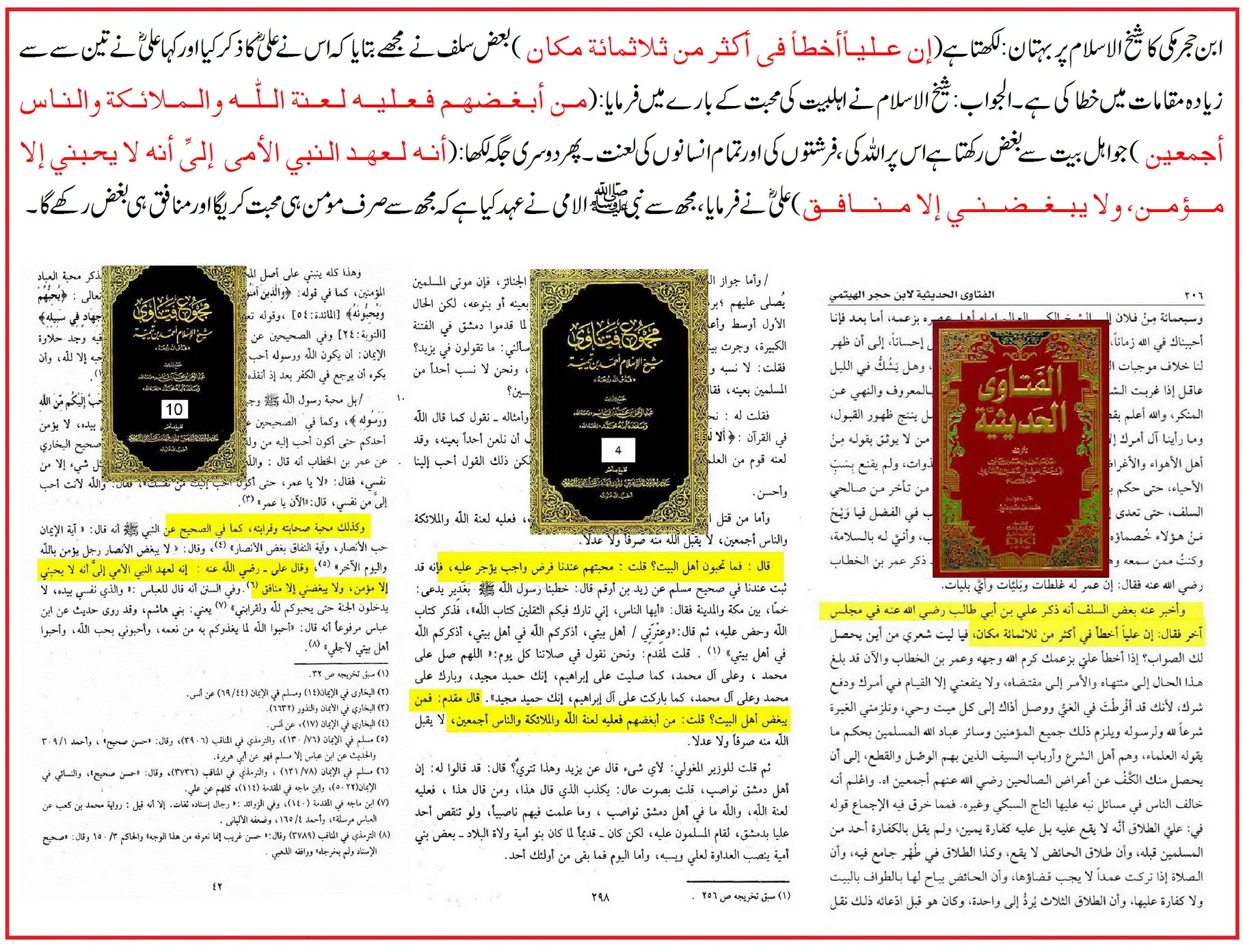
B) Love of Ahl al-Bayt—Especially Sayyidunā ʿAlī (رضي الله عنه)
Arabic Text:«قيل: فما تُحِبُّون أهلَ البيت؟ قلتُ: محبتُهم عندَنا فرضٌ واجبٌ… من أبغضهم فعليه لعنةُ الله والملائكة والناس أجمعين.»
— Majmūʿ al-Fatāwā 4/488
Translation:
It was said: Do you love Ahl al-Bayt? I said: Their love, with us, is an obligatory duty… Whoever hates them—upon him is the curse of Allah, the angels, and all people.
Arabic Text:
«وقال عليٌّ رضي الله عنه: “لا يُحِبُّني إلا مؤمنٌ، ولا يُبغضني إلا منافقٌ”.»
— Ibn Taymiyyah, Majmūʿ al-Fatāwā 10/65
Translation:
ʿAlī (رضي الله عنه) said: “None loves me except a believer, and none hates me except a hypocrite.”
✔ Therefore, attributing “insults against ʿAlī (رضي الله عنه)” is invalid.
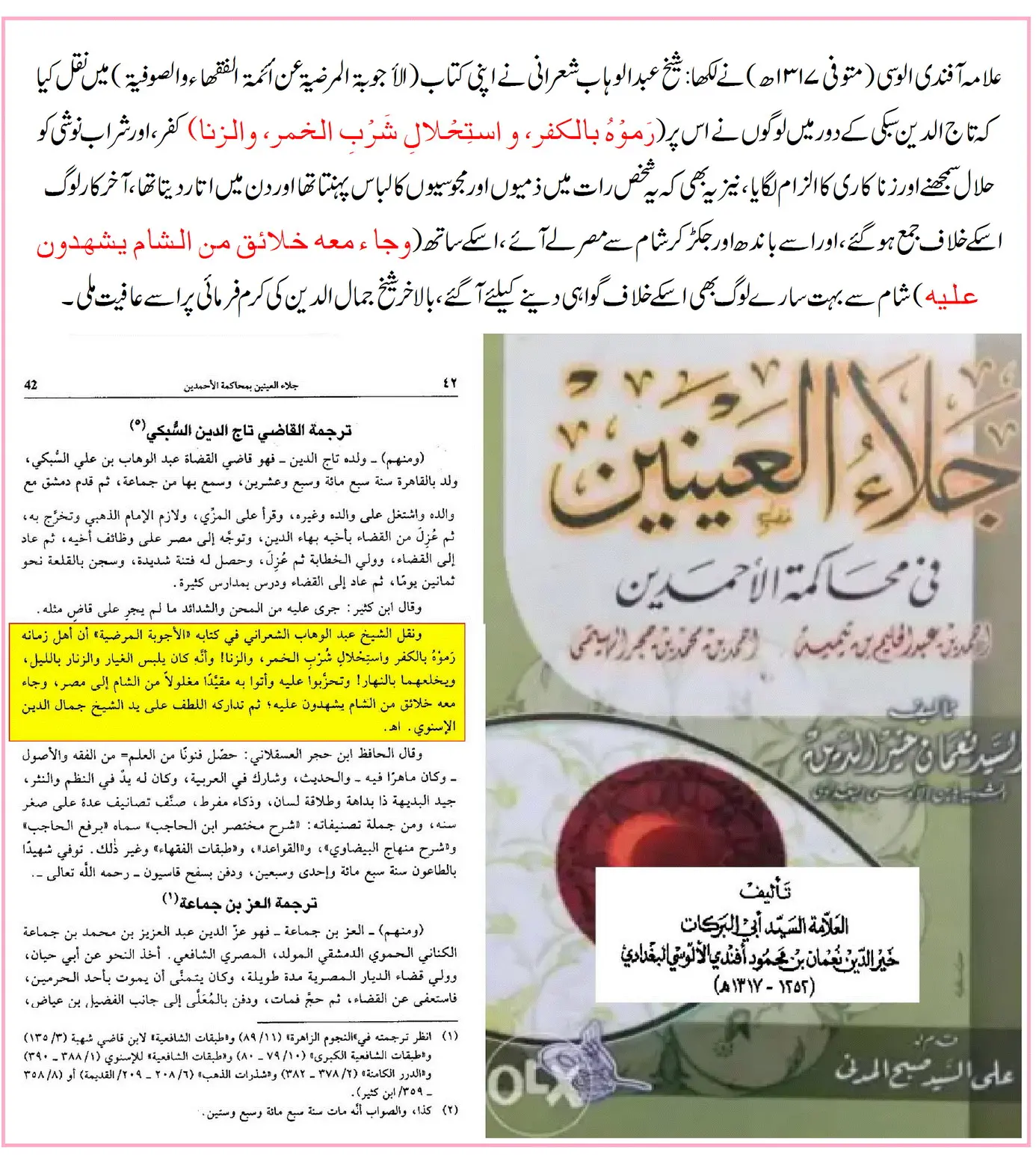
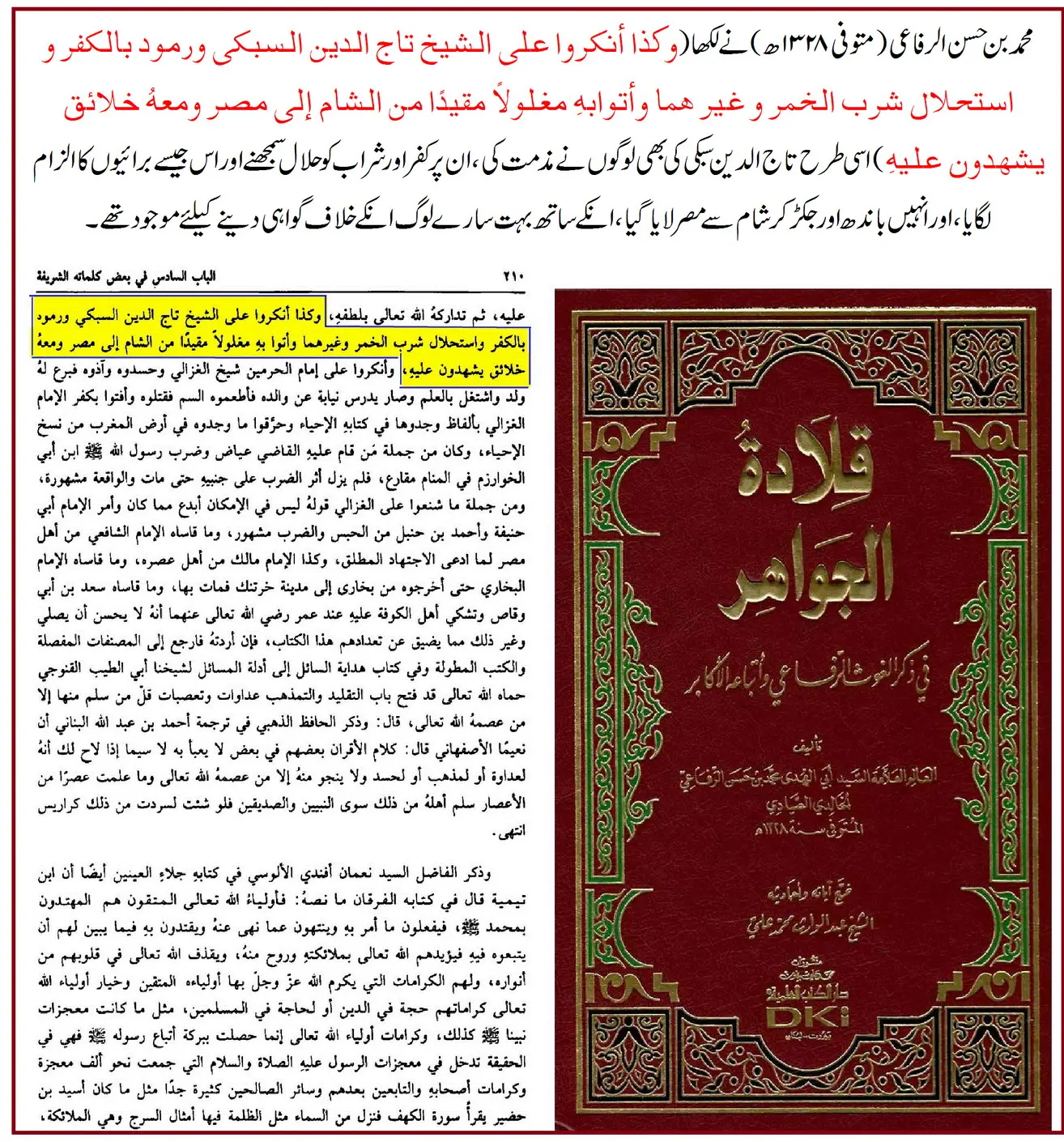
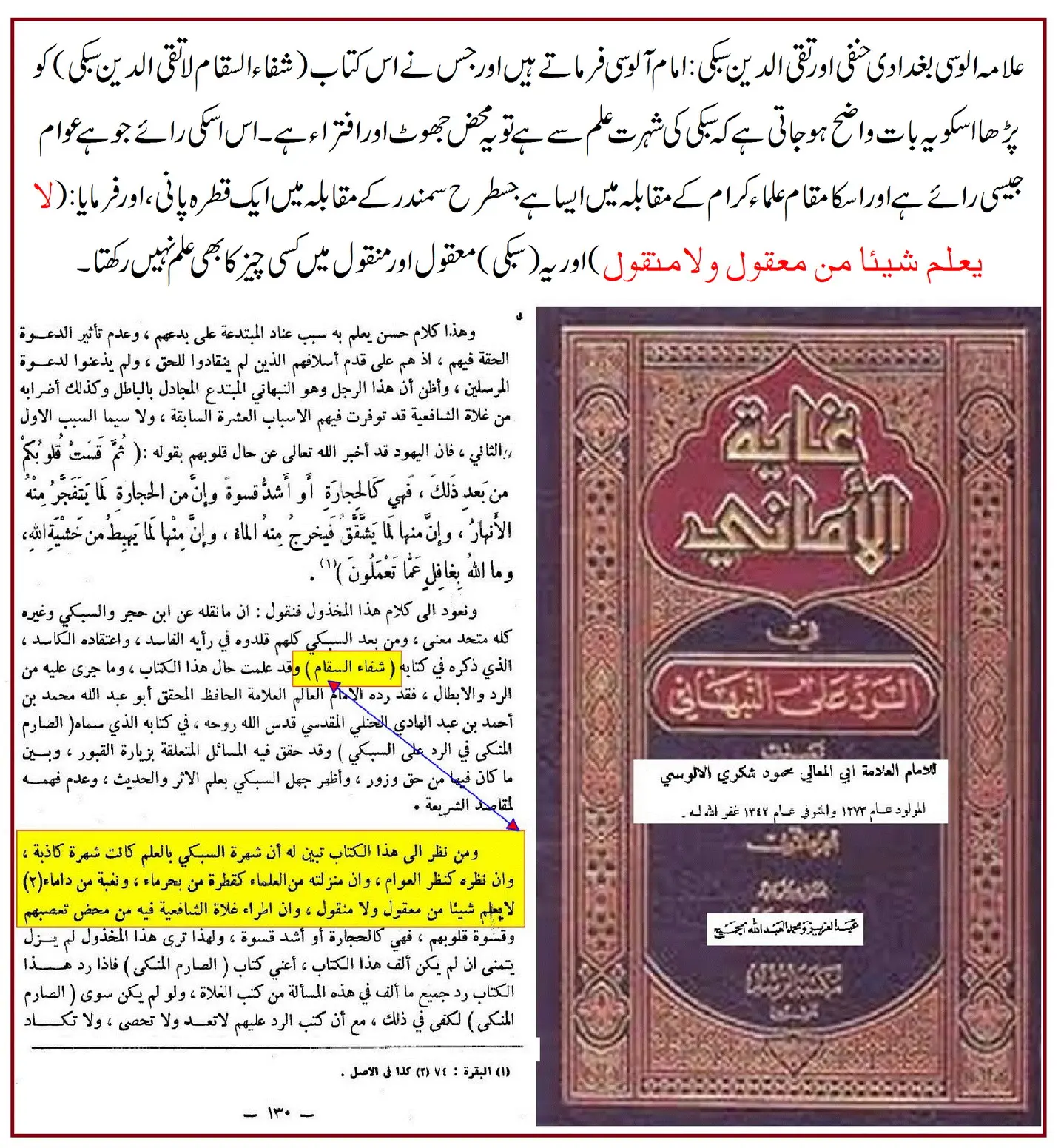
Objection ③ (al-Subkī / Fayḍ al-Qadīr) and the False Attributions of “Fanā’ al-Nār”
Objection Text
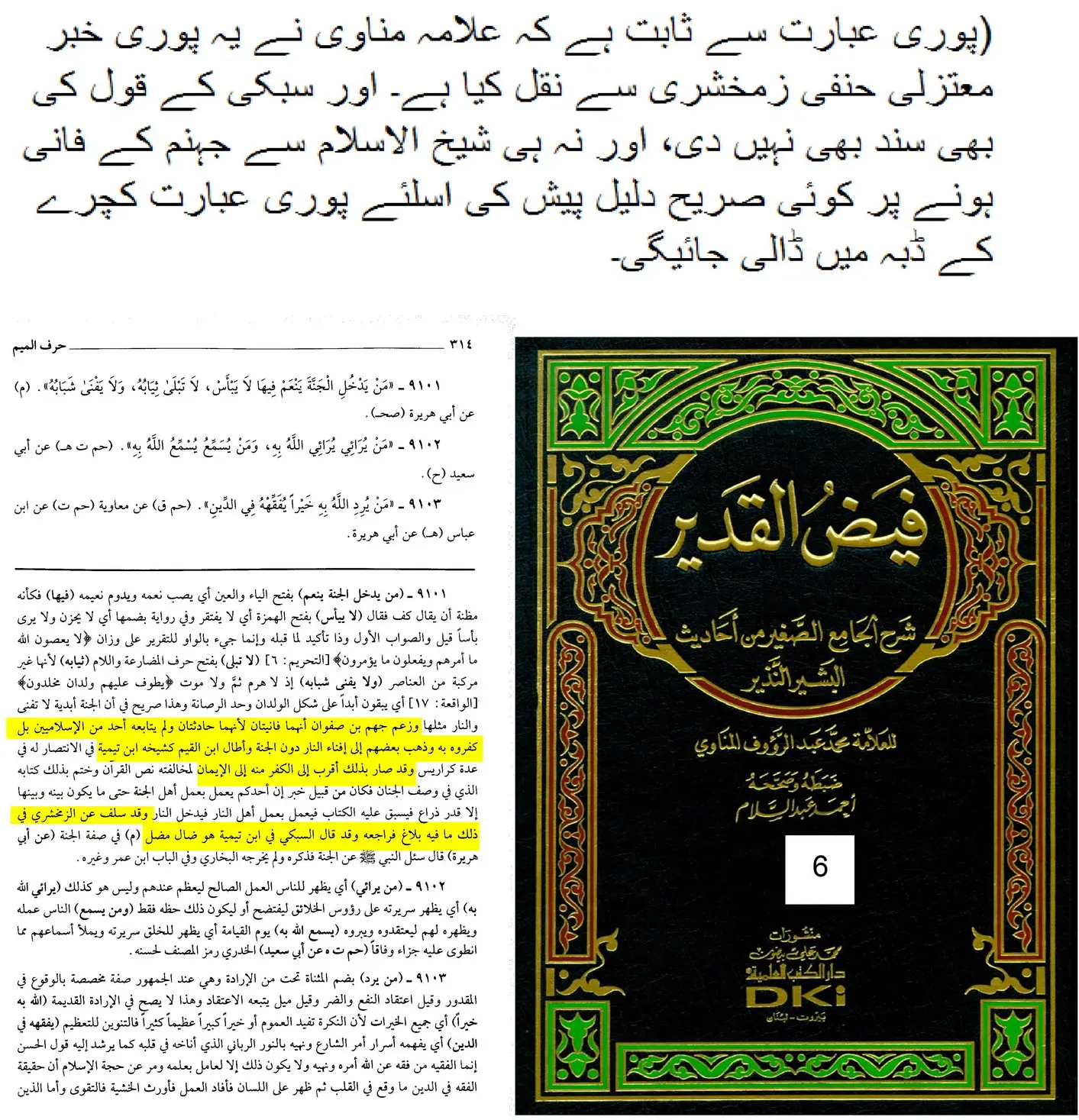
A grave-venerating debater quotes Fayḍ al-Qadīr claiming that:① al-Subkī said about Ibn Taymiyyah: هو ضالٌّ مُضِلٌّ
② and that al-Manāwī gave the impression that Ibn Taymiyyah/Ibn al-Qayyim supported “fanā’ al-nār”.
Research Reality
① Background of the نقل in Fayḍ al-Qadīr
al-Manāwī نقل statements from certain circles without providing isnād and without necessarily adopting them as a final ruling. A chainless نقل is not proof of endorsement.② “Fanā’ al-Nār” Attribution Is Rejected Against Ibn Taymiyyah’s Explicit Texts
His explicit statements—already quoted—affirm the permanence of Paradise and Hell. Therefore, any hostile chainless نقل collapses.Objection ④: Criticism Using “Zaghal al-ʿIlm” and “al-Naṣīḥah al-Dhahabiyyah”
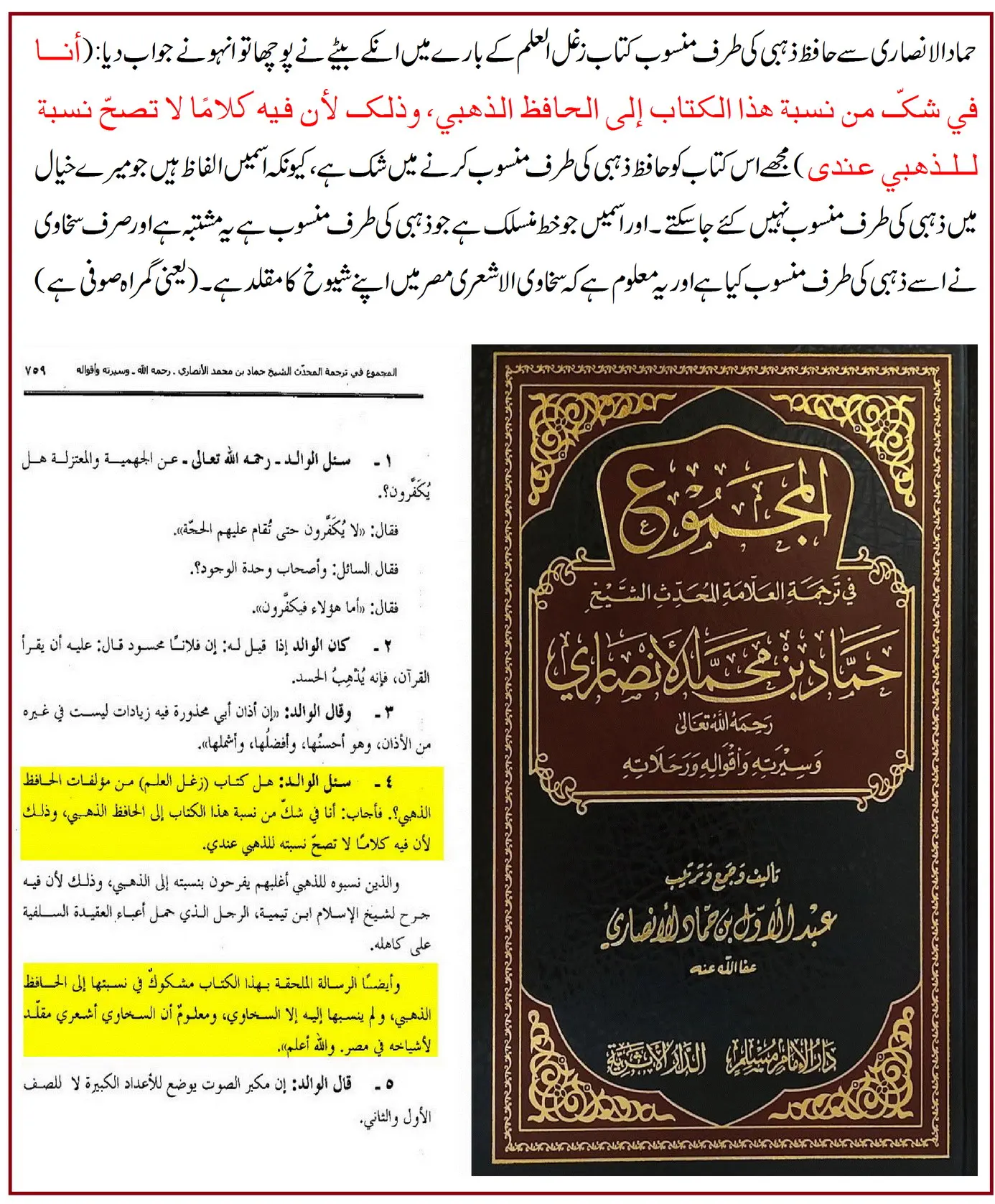
① The Attribution Itself Is Disputed
Some researchers objected to attributing Zaghal al-ʿIlm and the attached “al-Naṣīḥah al-Dhahabiyyah” to al-Dhahabī:Arabic Text (Shaykh Ḥammād al-Anṣārī):
«أنا في شكّ من نسبة هذا الكتاب إلى الحافظ الذهبي… والرسالة الملحقة به مشكوك في نسبتها إليه… ولم ينسبها إليه إلا السخاوي، ومعلوم أنّ السخاوي أشعري…»
— al-Majmūʿ fī Tarjamat al-Shaykh Ḥammād al-Anṣārī
Translation:
I am doubtful regarding attributing this book to al-Ḥāfiẓ al-Dhahabī… and the attached treatise is also doubtful in attribution… Only al-Sakhāwī attributed it to him—and it is known that al-Sakhāwī is Ashʿarī…
✔ If the attribution is not established, it cannot serve as proof.
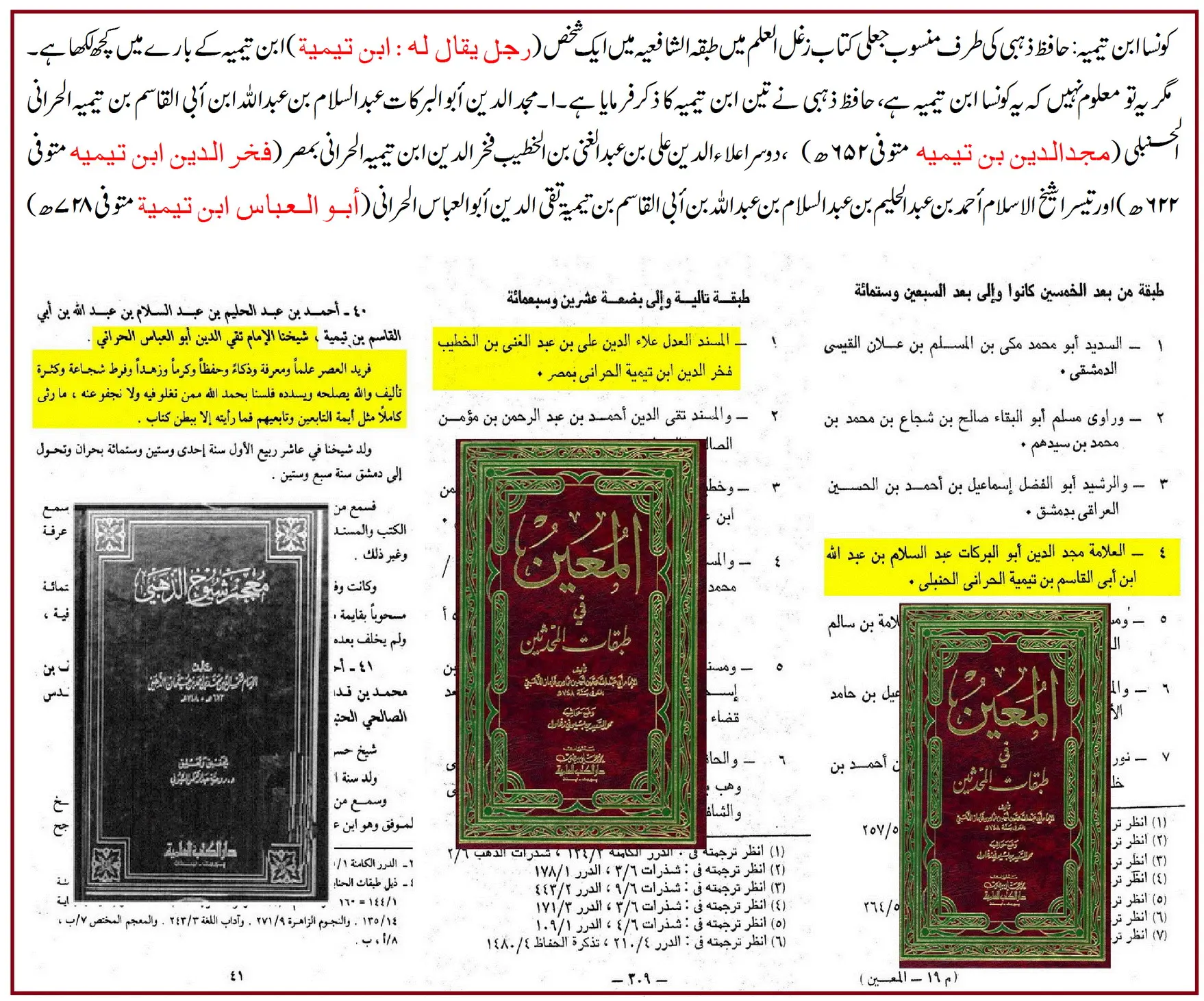
② Even If فرضاً the attribution were correct—ambiguity remains
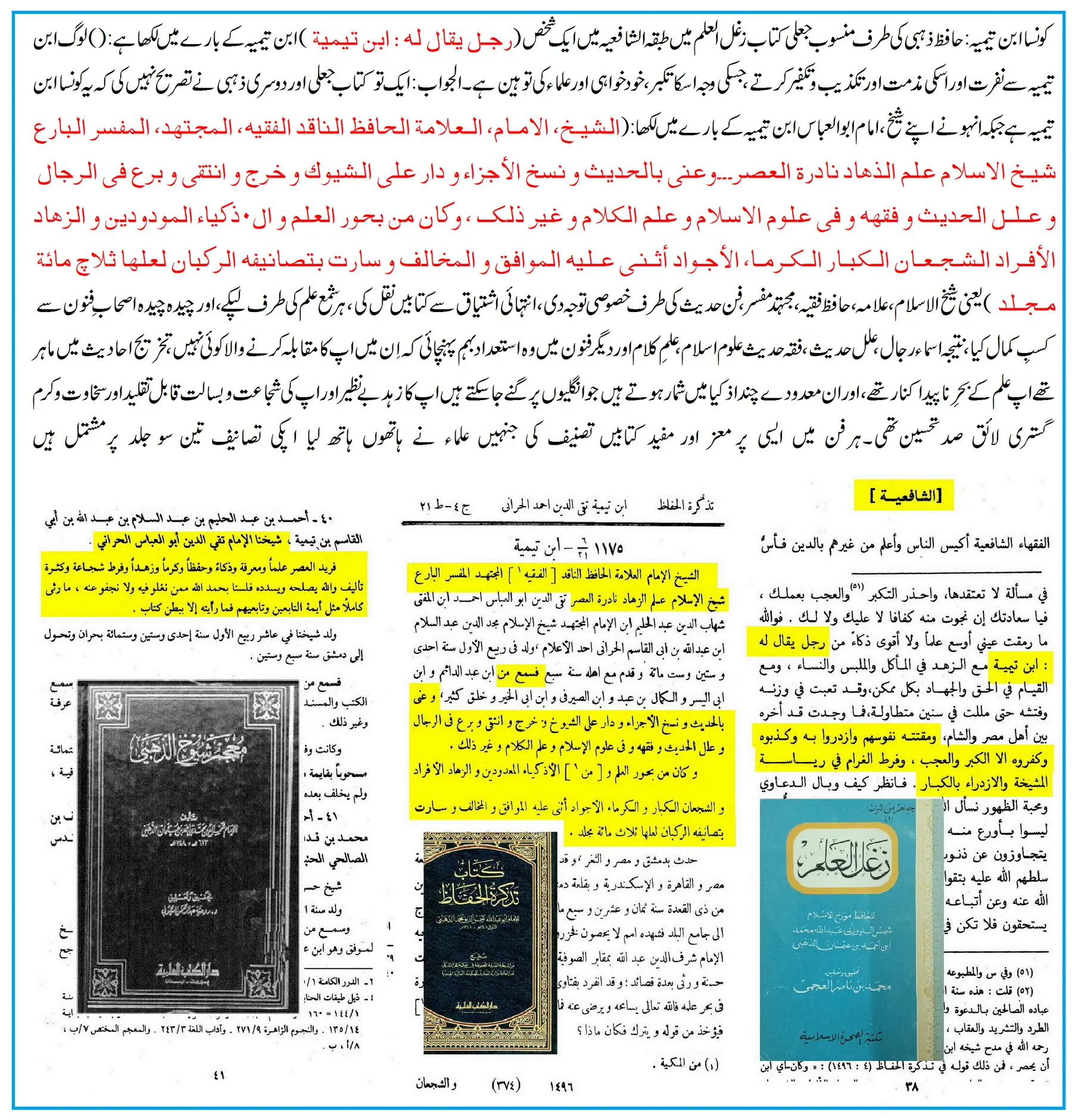
In the place where “Ibn Taymiyyah” is mentioned, it is not specified which Ibn Taymiyyah is meant—since al-Dhahabī mentioned multiple individuals with that name.③ Clear, Established Praise from al-Dhahabī
Arabic Text:«ابن تيمية الشيخ الإمام العلامة الحافظ الناقد الفقيه المجتهد المفسّر البارع، شيخُ الإسلام… أثنى عليه الموافق والمخالف…»
— al-Dhahabī, Tadhkirat al-Ḥuffāẓ
Translation:
Ibn Taymiyyah… the Shaykh, the Imām, the great scholar, the ḥāfiẓ critic, the jurist, the mujtahid, the outstanding exegete—Shaykh al-Islām… praised by both supporters and opponents…
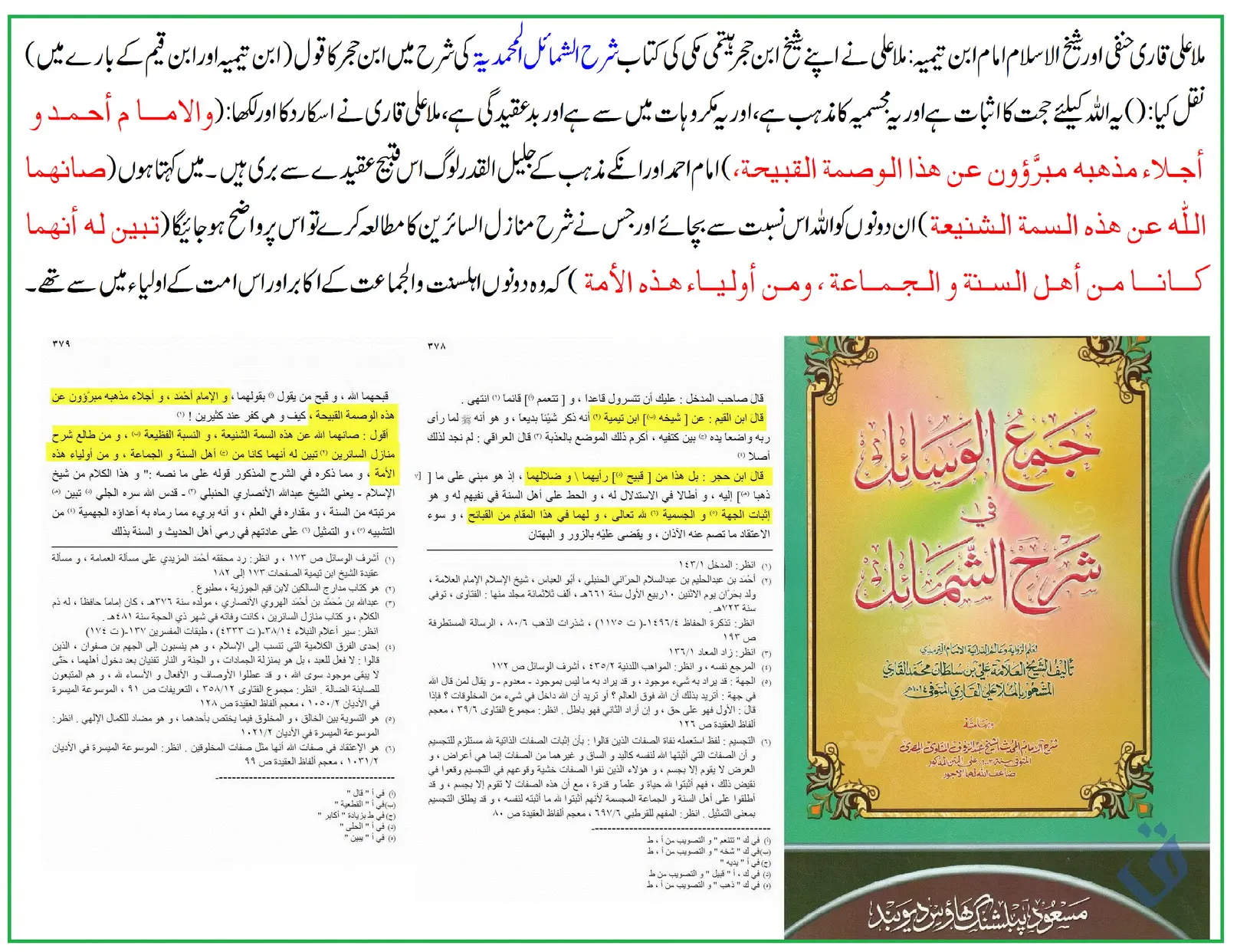
Objection ⑤: Attributions to Mullā ʿAlī al-Qārī
Harsh Early Statements and Later Retraction/Correction
Some compilations نقل severe wording from Mullā ʿAlī al-Qārī, but later in his works he corrected and described Ibn Taymiyyah and Ibn al-Qayyim as among the كبار of Ahl al-Sunnah:Arabic Text:
«… صانهما الله من هذه السِّمة الشنيعة والنِّسبة الفظيعة؛ ومن طالع شرح منازل السائرين تبيَّن له أنهما كانا من أكابر أهل السُّنّة والجماعة، ومن أولياء هذه الأمة.»
— Mullā ʿAlī al-Qārī, Jamʿ al-Wasā’il fī Sharḥ al-Shamā’il
Translation:
May Allah protect them both from this ugly label and terrible attribution. Whoever studies Sharḥ Manāzil al-Sā’irīn will realize that they were among the كبار of Ahl al-Sunnah wa al-Jamāʿah and among the awliyā’ of this Ummah.
Objection ⑥: “According to Subkī/Shāmī, Ibn Taymiyyah is an innovator regarding tawassul and visitation”
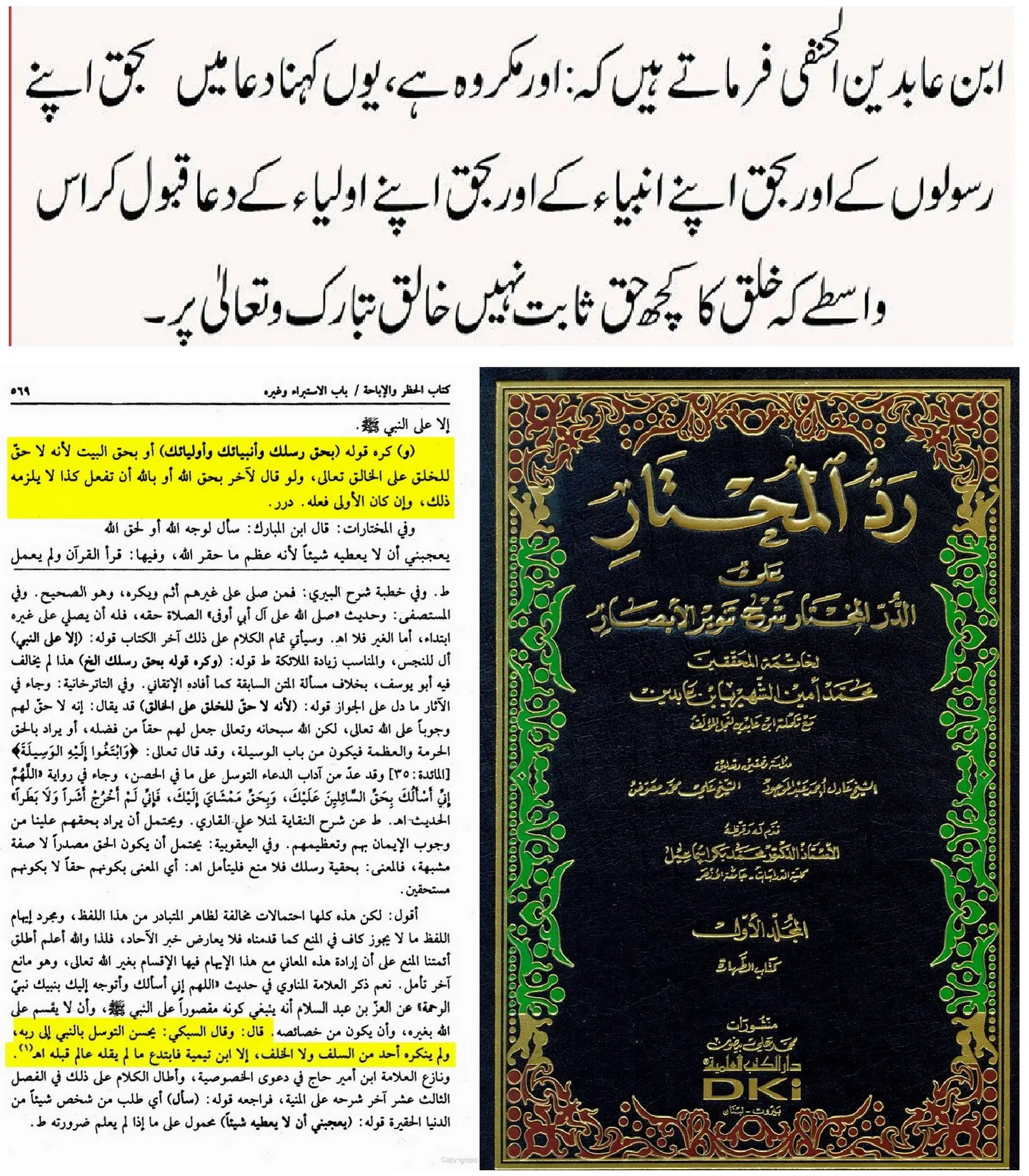
① Ibn ʿĀbidīn al-Shāmī’s Own Explicit Position
Arabic Text:«(وَ) كُرِهَ قولُه: بحقِّ رسلِك وأنبيائِك وأوليائِك أو بحقِّ البيت؛ لأنّه لا حقَّ للخلق على الخالق تعالى…»
— Ibn ʿĀbidīn, Radd al-Muḥtār (Kitāb al-Aymān)
Translation:
It is disliked to say in supplication: “by the right of Your messengers/prophets/saints…” or “by the right of the House,” because the creation has no right over the Creator.
✔ So using this exact tawassul-form as a weapon against Ibn Taymiyyah is self-contradictory.
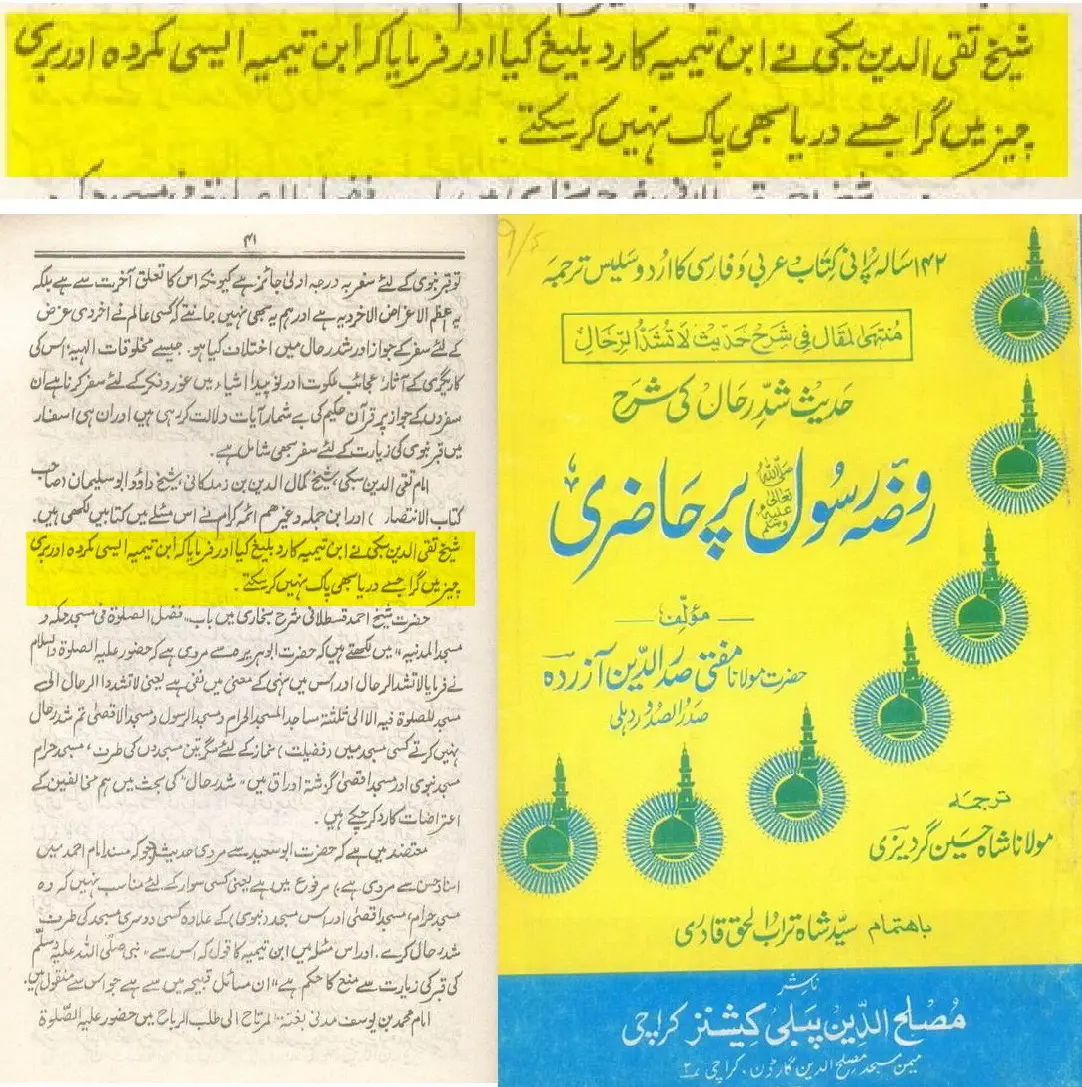
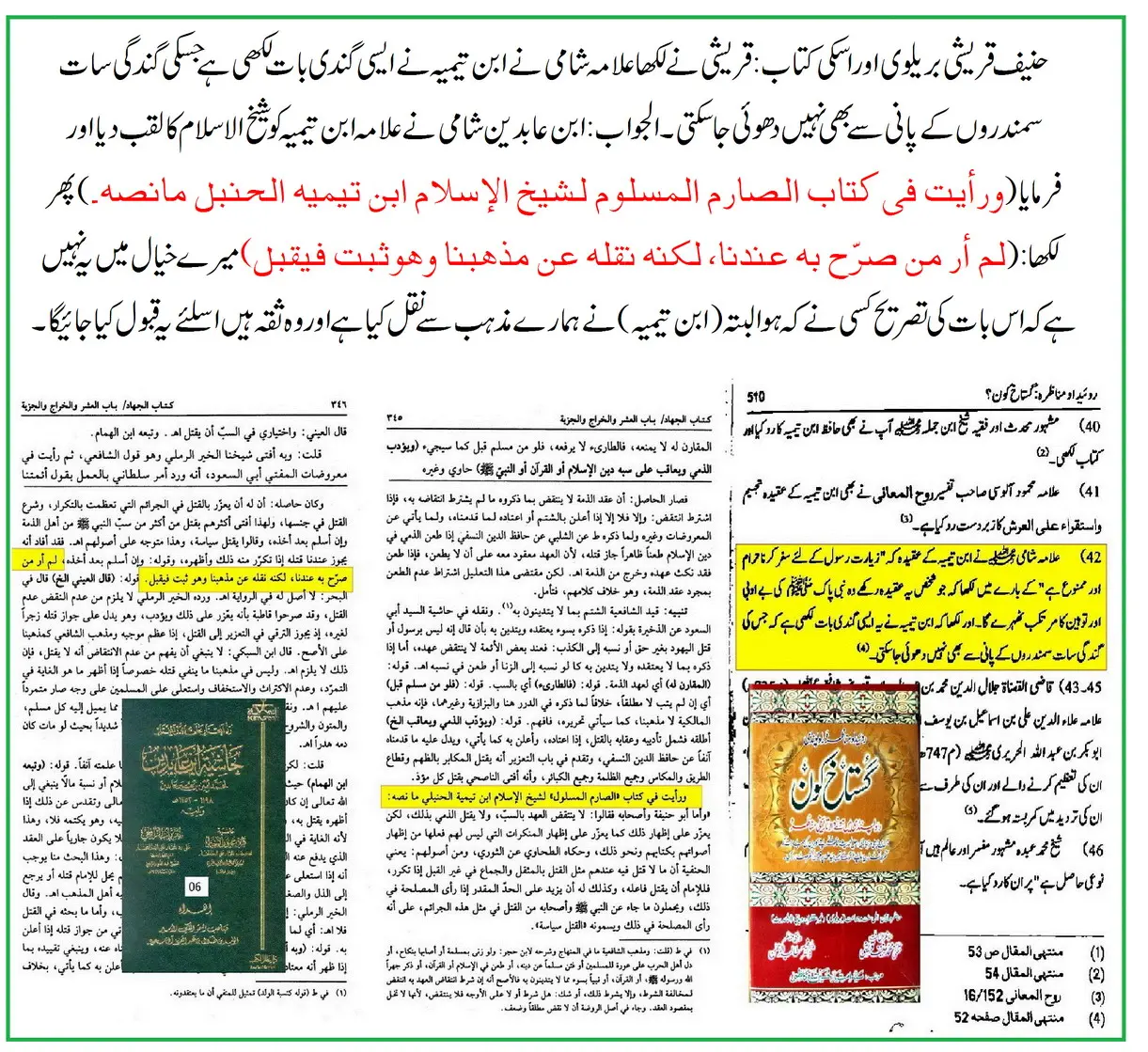
Objection ⑦: “Ibn ʿĀbidīn said: Ibn Taymiyyah’s filth cannot be washed by seven seas”
① Source Confusion and Distortion
This line is usually found in Barelwī writings via Muntahā al-Maqāl, but that book belongs to Ṣadr al-Dīn Āzurdah and contains reference to harsh words of al-Subkī—not Ibn ʿĀbidīn’s own statement.② Ibn ʿĀbidīn’s Reliance Upon Ibn Taymiyyah
Arabic Text:«ورأيتُ في كتاب الصارم المسلول لشيخ الإسلام ابن تيمية… لم أرَ من صرَّح به عندنا لكنه نقله عن مذهبنا وهو ثَبْتٌ فيُقبل.»
— Ibn ʿĀbidīn, Radd al-Muḥtār
Translation:
I saw this in al-Ṣārim al-Maslūl by Shaykh al-Islām Ibn Taymiyyah… I did not see anyone explicitly state it among us, but he نقل it from our madhhab and he is trustworthy, so it is accepted.
✔ This reliance proves such vulgar attributions are false.
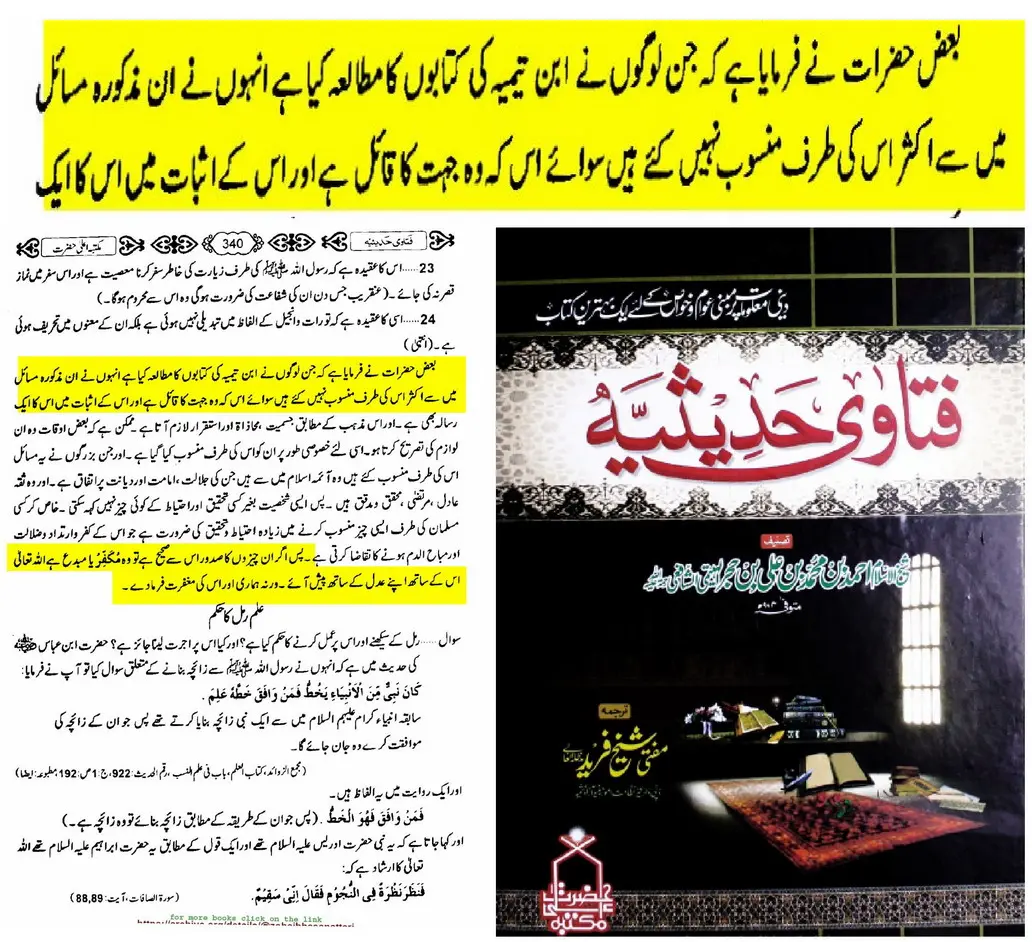
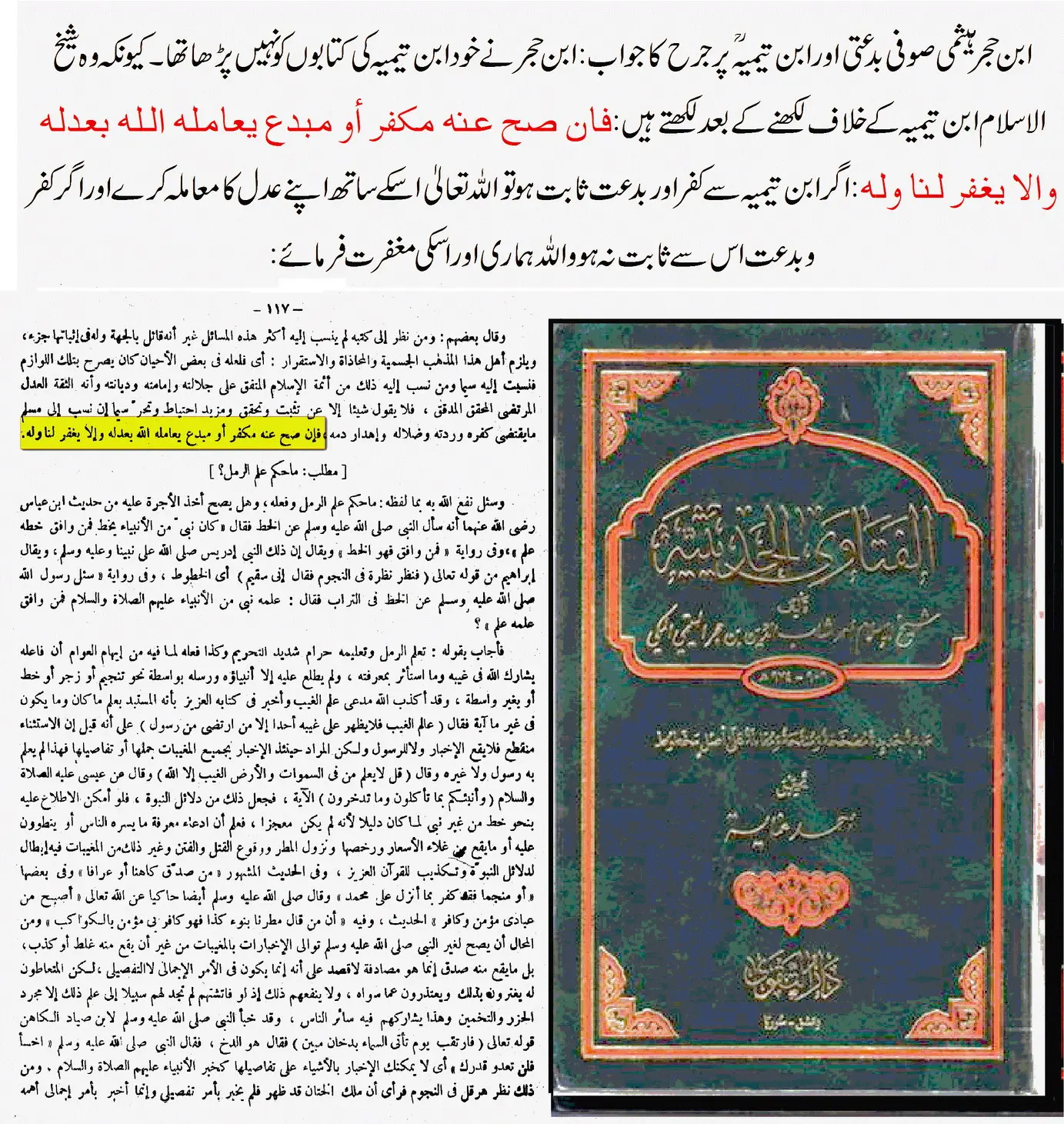
Objection ⑧: “Ibn Ḥajar al-Haytamī severely refuted Ibn Taymiyyah”
① His Wording Is نقل and Conditional
Arabic Text:«وقال بعضُهم: ومن نظر إلى كتبه لم ينسب إليه أكثر هذه المسائل غير أنّه قائلٌ بالجهة وله في إثباتها جزء… فإن صَحَّ عنه مُكفِّرٌ أو مُبدِّعٌ يعامله الله بعدله، وإلاّ يغفرُ لنا وله.»
— Ibn Ḥajar al-Haytamī, al-Fatāwā al-Ḥadīthiyyah
Translation:
Some said: Whoever looks into his books will not attribute most of these issues to him—except that it is said he affirmed جهة and has a treatise on it… If disbelief or innovation is truly established from him, Allah will deal with him in justice; otherwise, may Allah forgive us and him.
✔ This shows a نقل-based and conditional style, not absolute certainty.
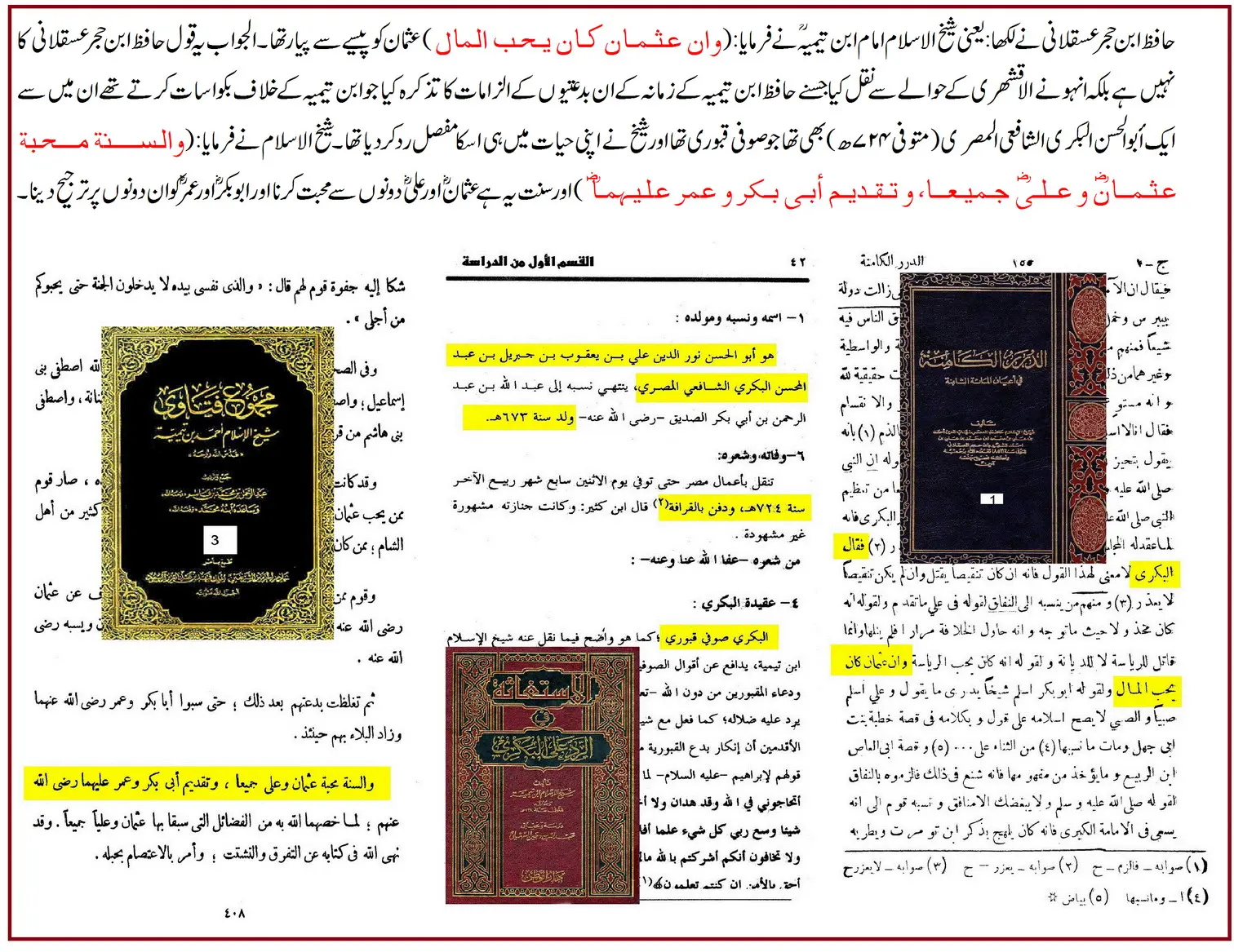
Objection ⑨: “Ibn Taymiyyah said: ʿAlī made 300+ mistakes; ʿUthmān loved wealth”
① These Are Hostile Reports Without Proof
In al-Durar al-Kāminah such statements appear as reports of opponents—without isnād.② Ibn Taymiyyah’s Explicit Texts About the Companions and Ahl al-Bayt
Arabic Text (al-ʿAqīdah al-Wāsiṭiyyah):«ومن أصول أهل السنة والجماعة سلامةُ قلوبِهم وألسنتِهم لأصحاب رسولِ الله ﷺ… ويُمسكون عمّا شجر بينهم… ويتولَّون أهلَ بيت رسول الله ﷺ…»
— Ibn Taymiyyah, al-ʿAqīdah al-Wāsiṭiyyah
Translation:
Among the اصول of Ahl al-Sunnah wa al-Jamāʿah is that their hearts and tongues remain sound regarding the Companions of the Messenger of Allah ﷺ… and they refrain from what occurred between them… and they show loyalty and love to the Ahl al-Bayt of the Messenger of Allah ﷺ…
Arabic Text:
«والسنة محبّةُ عثمانَ وعليٍّ جميعًا، وتقديمُ أبي بكرٍ وعمرَ عليهما…»
— Ibn Taymiyyah, Majmūʿ al-Fatāwā
Translation:
The Sunnah is to love both ʿUthmān and ʿAlī together, and to give precedence to Abū Bakr and ʿUmar over them…
✔ Hence the hostile attributions contradict his own explicit texts and are rejected.
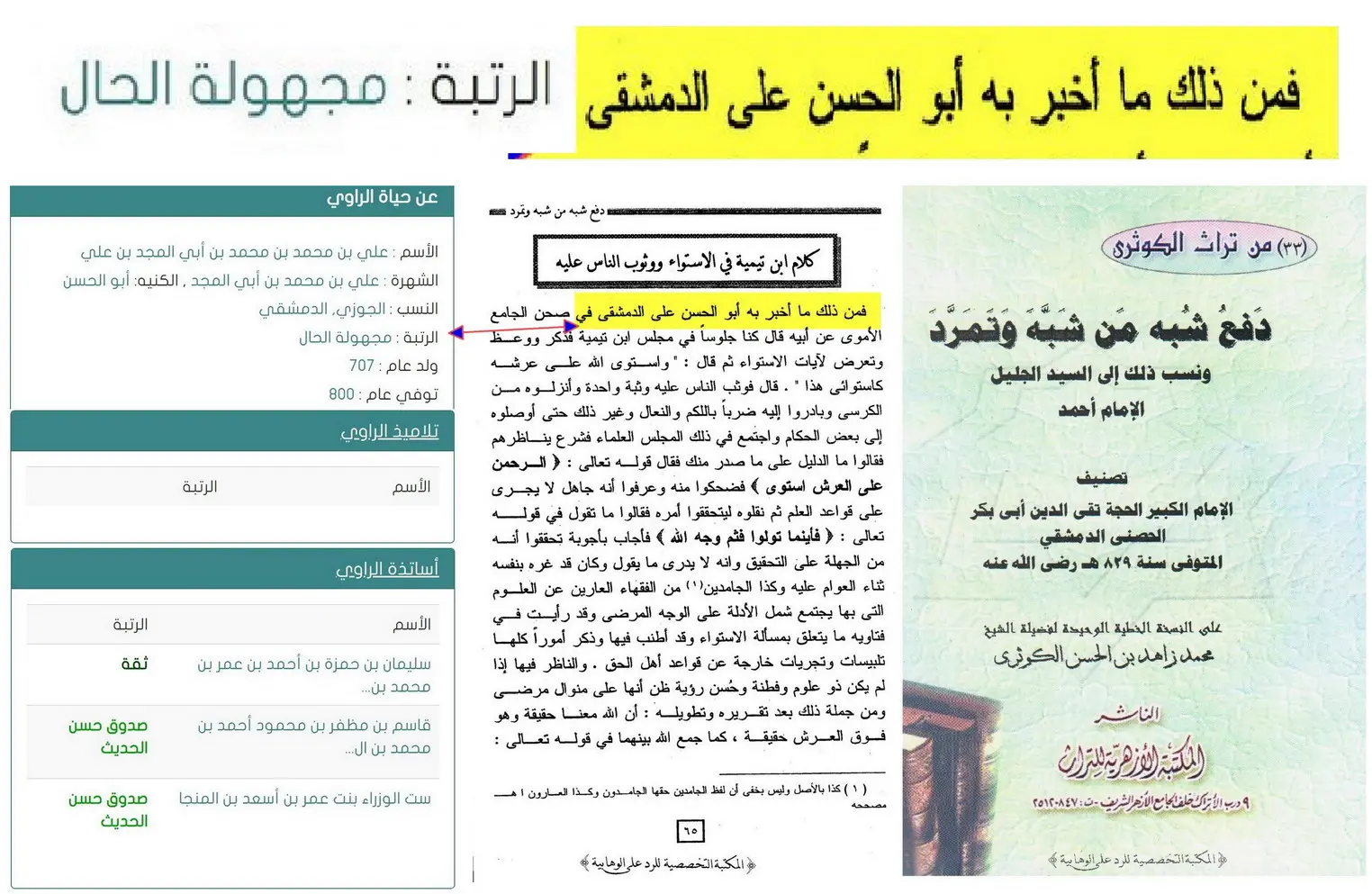
Objection ⑩: “Ibn Taymiyyah was hit with shoes in a mosque”
This story is found in Ibn Baṭṭūṭah’s travel account and al-Durar al-Kāminah, but:① its key narrator Abū al-Ḥasan ʿAlī al-Dimashqī is unknown
② Ibn Baṭṭūṭah’s own timeline conflicts (he claims a gathering while Ibn Taymiyyah was imprisoned)
✔ Chainless historical tales are not valid proof.
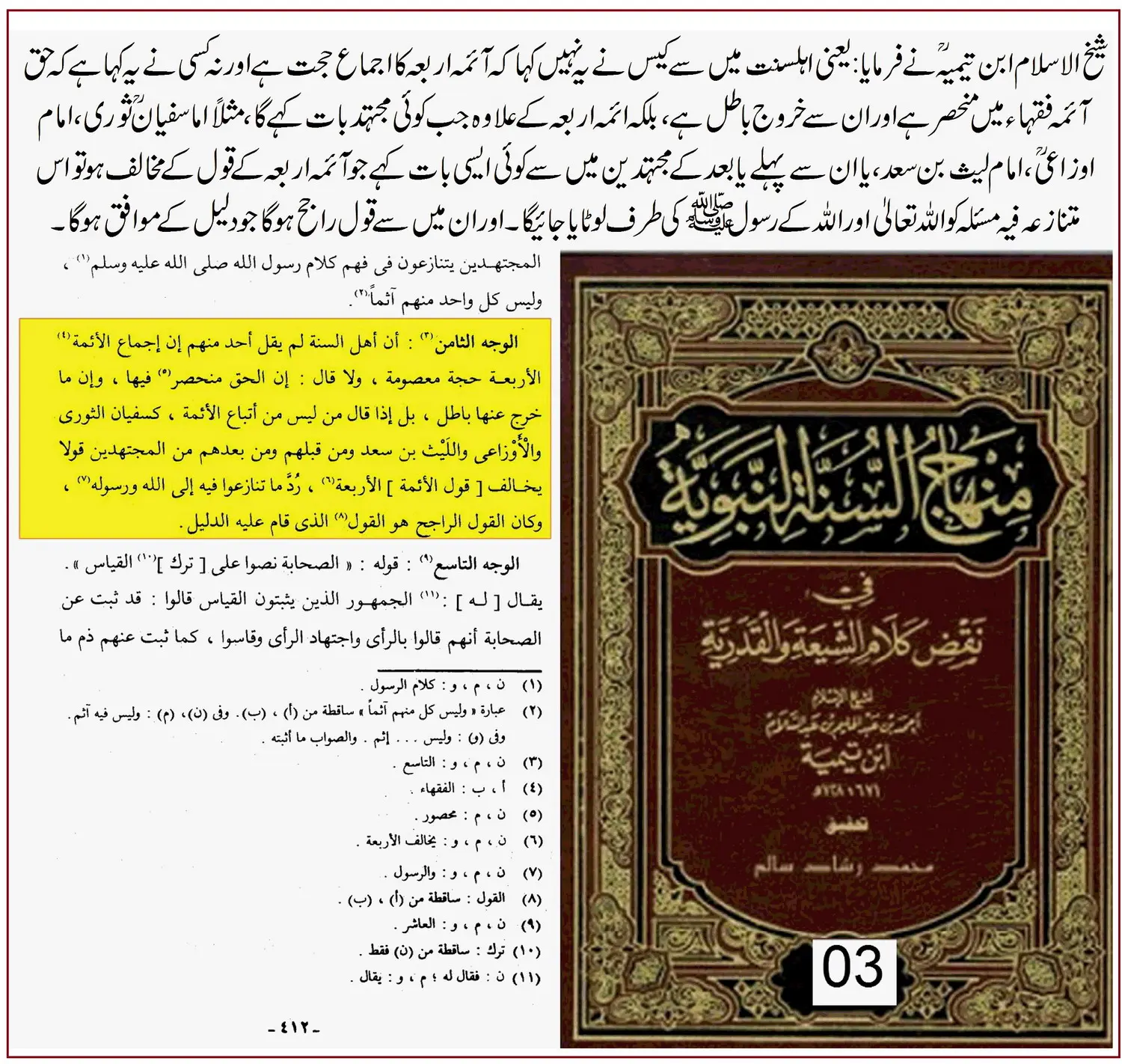
Objection ⑪: “Ibn Taymiyyah denied following the four Imāms”
Arabic Text:«لم يقل أحد من أهل السنة: إنّ إجماع الأئمة الأربعة حجّة معصومة… بل إذا قال مجتهد من غيرهم قولاً يُخالف قولَ الأئمة الأربعة، رُدّ إلى الله ورسوله، والقول الراجح ما قام عليه الدليل.»
— Ibn Taymiyyah, Minhāj al-Sunnah
Translation:
No one from Ahl al-Sunnah said that the consensus of the four imāms is an infallible proof… rather, if a mujtahid other than them says something that conflicts with the four imāms, it is referred back to Allah and His Messenger, and the strongest view is what evidence supports.
✔ Meaning: He affirmed the authority of Qur’ān and Sunnah—not absolute rejection of the Imāms.
Objection ⑫: “Ibn Taymiyyah forbade traveling to visit the Prophet’s ﷺ grave”
He discussed shadd al-riḥāl under the authentic ḥadīth:Arabic Text:
«لا تُشَدُّ الرِّحالُ إلا إلى ثلاثة مساجد…»
He held visitation to be recommended, but tied the issue of “special travel” to traveling for al-Masjid al-Nabawī.
Overall Summary of the Article
The objections raised against Ibn Taymiyyah (رحمه الله)—via al-Kawtharī, al-Subkī, al-Ṭūfī, Ibn Ḥajar al-Haytamī, Ibn Baṭṭūṭah, and others—rest either upon:① Biased / hostile narrators
② Chainless historical tales
③ Opponents’ circulating reports
According to the principles of Jarḥ wa Taʿdīl, the criticism of a biased enemy is rejected.
Ibn Taymiyyah’s Own Explicit Texts Establish:
◈ The eternity of Paradise and Hell (khulūd)◈ Love of Ahl al-Bayt is obligatory; hatred warrants curse
◈ Sound hearts and tongues regarding all Companions
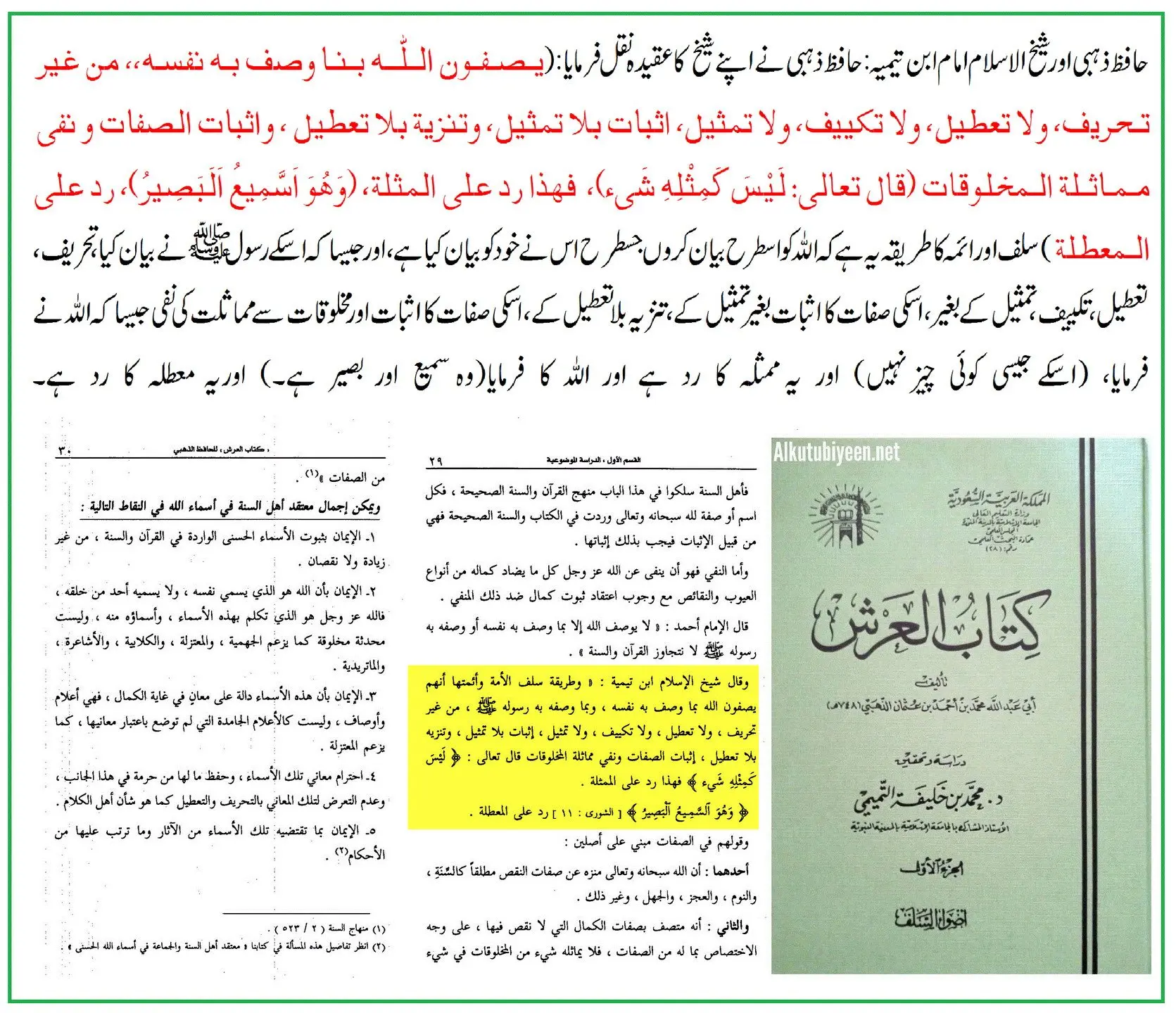
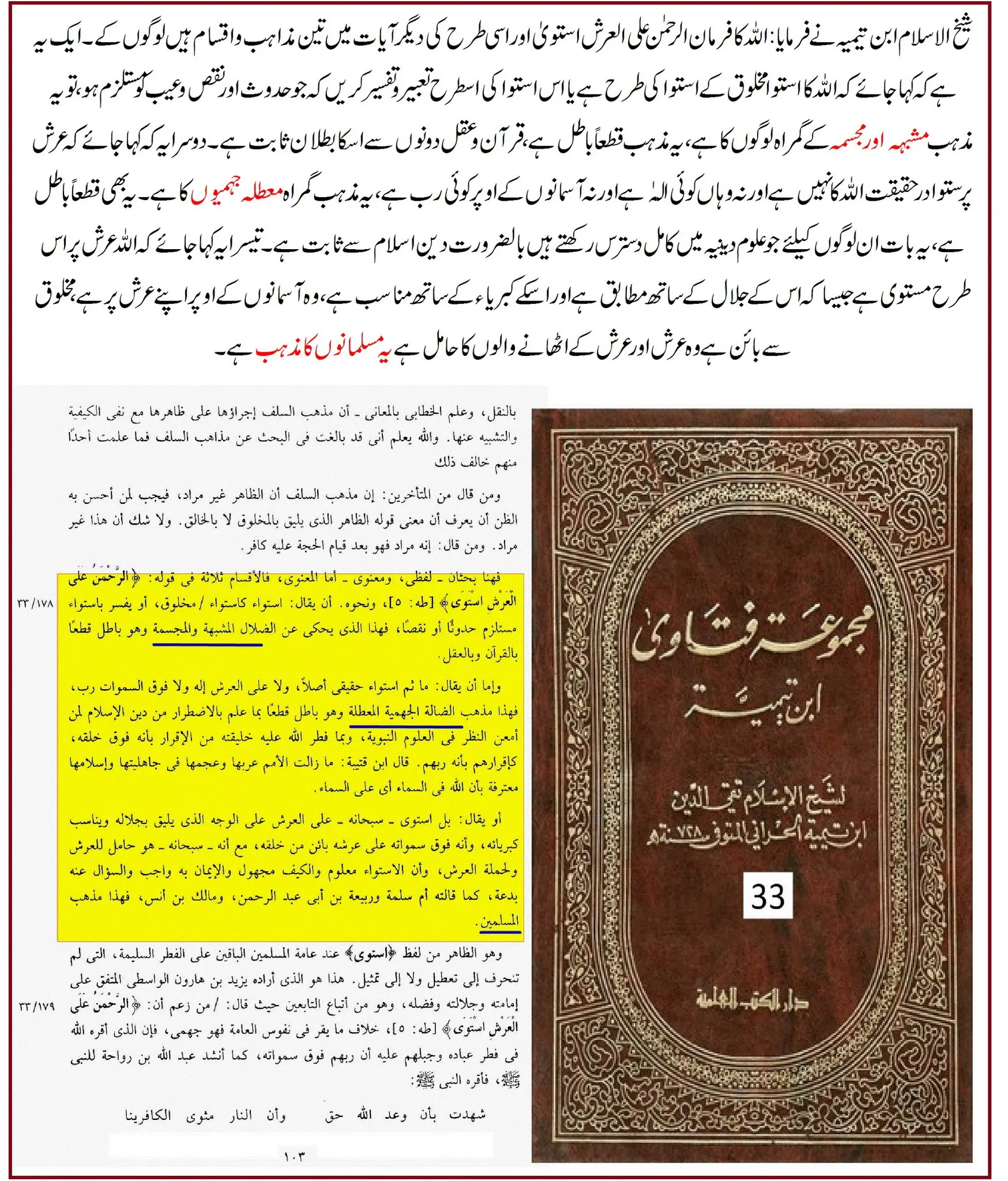
◈ Tawḥīd and Ṣifāt: affirmation without tamthīl and without taʿṭīl
◈ In taqlīd: honoring the Imāms while returning ultimately to Qur’ān and Sunnah
And major scholars (al-Dhahabī, Ibn Kathīr, Ibn Rajab, Ibn ʿAbd al-Hādī, etc.) described him as Shaykh al-Islām, Imām Mujtahid, and a unique scholar of his era.
Final Word
All objections of grave-venerating innovators are either:① false, or
② taken out of context, or
③ hostile reports from biased narrators.
The explicit texts of Shaykh al-Islām Ibn Taymiyyah (رحمه الله) and the testimonies of trustworthy muḥaddithīn refute every allegation made against him.