
Compiled by: Abu Hamzah Salafi
This article is a research-based refutation of two major allegations that some objectors level against Sayyidunā Abū Hurayrah رضي الله عنه:
① That he attributed the statements of Kaʿb al-Aḥbār to the Prophet ﷺ.
② That he attributed “hearsay” matters to the Prophet ﷺ without verification.
We aim to demonstrate that:
 The objection claims that in the narration concerning Friday, certain statements (the creation of Ādam عليه السلام, entry into Paradise, expulsion from it, the Hour, etc.) were attributed by Abū Hurayrah رضي الله عنه to the Prophet ﷺ, whereas (according to the objector) they were actually statements of Kaʿb al-Aḥbār. For this, a discussion/narration from Ṣaḥīḥ Ibn Khuzaymah is presented.
Sayyidunā Abū Hurayrah رضي الله عنه reported that the Messenger of Allah ﷺ said:
“The best day upon which the sun rises is Friday. On it Ādam was created, on it he was admitted into Paradise, and on it he was expelled from it.”
Brief Clarification:
This narration is explicitly marfūʿ and recorded in Ṣaḥīḥ Muslim with an authentic chain. According to established principles, something proven through a sound narration cannot be invalidated by a weak or defective report or by a mere claim of confusion.
Arabic Text:
Kaʿb said: “The Messenger of Allah ﷺ has spoken the truth.”
(Authenticated by al-Dhahabī: ʿalā sharṭihimā)
Brief Clarification:
The direction of the narration is clear: Abū Hurayrah رضي الله عنه narrates from the Prophet ﷺ, and Kaʿb merely confirms it based on his scriptural knowledge. Confirmation does not mean being the source.
Key Point:
Mentioning disagreement reflects scholarly honesty. However, a preference only carries weight if the supporting narration is authentic.
Commentary:
Brief Clarification:
When the “from Kaʿb” version is weak, and the same meaning is established authentically as marfūʿ in Ṣaḥīḥ Muslim, the foundation of the allegation collapses entirely.
Aws ibn Aws رضي الله عنه reported that the Messenger of Allah ﷺ said:
“Indeed, among your best days is Friday; on it Ādam was created…”
Brief Clarification:
This corroborating narration further establishes that the subject matter is authentically reported from the Prophet ﷺ through multiple Companions.
 Correct Scholarly Conclusion:
After the authentic marfūʿ narration in Ṣaḥīḥ Muslim and supporting evidences, the claim that “Abū Hurayrah رضي الله عنه took it from Kaʿb and attributed it to the Prophet ﷺ” is unproven and invalid.
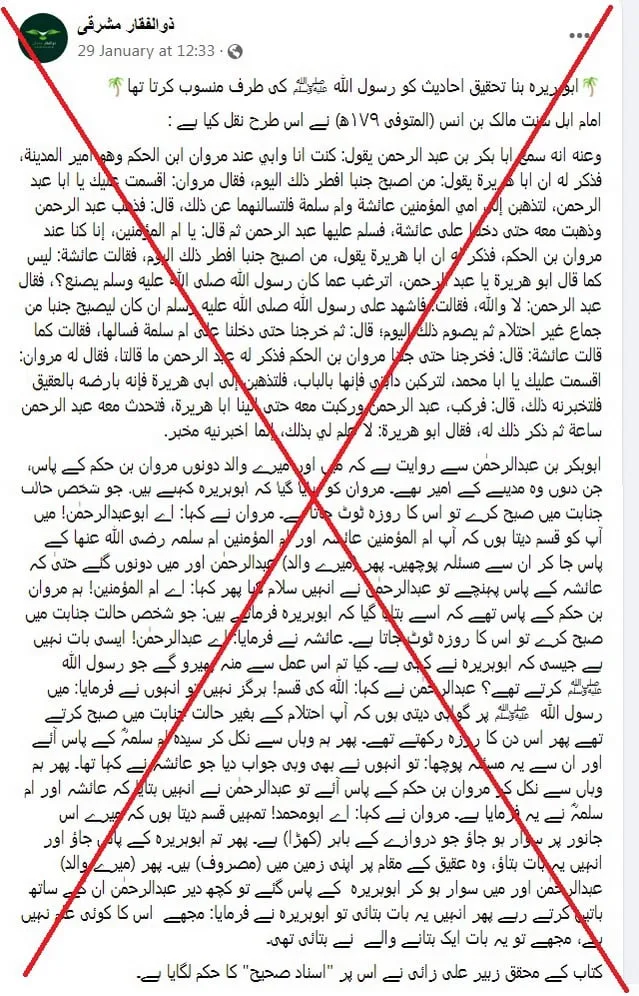
The objection is based on the incident where Abū Hurayrah رضي الله عنه initially stated that one who wakes up in a state of janābah should break the fast. When the narrations of the Mothers of the Believers رضي الله عنهن appeared—stating that the Prophet ﷺ would wake up in janābah and still fast—Abū Hurayrah رضي الله عنه said: “I do not have knowledge of this; it was told to me by someone.”
Abū Hurayrah رضي الله عنه said:
“I have no knowledge of this; it was only conveyed to me by an informer.”
Brief Clarification:
He did not claim to have heard this from the Prophet ﷺ. When stronger evidence appeared, he accepted it immediately.
“It is enough for a person to be considered a liar that he narrates everything he hears.”
Brief Clarification:
This is a general ethical principle, not an accusation against Abū Hurayrah رضي الله عنه—especially when he himself demonstrated caution and retraction.
Abū Hurayrah رضي الله عنه abandoned that legal verdict afterward.
Brief Clarification:
This reflects scholarly integrity—returning to the truth when clear evidence appears.
Ibn Ḥajar رحمه الله states that Abū Hurayrah رضي الله عنه retracted his verdict, either due to the stronger narration of the Mothers of the Believers or because he considered it abrogating the other report.
(According to al-Dhahabī) Abū Hurayrah رضي الله عنه was an Imam, jurist, mujtahid, ḥadīth master, Companion of the Messenger ﷺ, and the leader of reliable preservers.
“If a judge strives and errs, he still receives one reward.”
What is authentically established is that:
✔ Abū Hurayrah رضي الله عنه clarified the source as a report, not a marfūʿ ḥadīth.
✔ When stronger evidence appeared, he retracted immediately.
✔ This reflects scholarly caution and honesty, not fabrication.
 In summary:
◈ The allegation regarding the Friday narration rests on a weak report, while the ḥadīth is authentically established as marfūʿ.
◈ The issue of janābah and fasting was a matter of ijtihād and fatwā, not fabrication, and Abū Hurayrah رضي الله عنه retracted upon clarification—which is the very standard of scholarly integrity among Ahl al-Sunnah.





This article is a research-based refutation of two major allegations that some objectors level against Sayyidunā Abū Hurayrah رضي الله عنه:
① That he attributed the statements of Kaʿb al-Aḥbār to the Prophet ﷺ.
② That he attributed “hearsay” matters to the Prophet ﷺ without verification.
We aim to demonstrate that:
- The first allegation is based on a weak / unestablished narration, whereas the ḥadīth is authentically proven as marfūʿ (attributed to the Prophet ﷺ) through sound and preserved chains.
- The second allegation is not a case of fabricating ḥadīth at all, but rather a matter of an ijtihādī legal verdict, from which Abū Hurayrah رضي الله عنه retracted once correct knowledge became clear—and according to the principles of the scholars, such conduct is a sign of integrity and caution, not (God forbid) lying.
Allegation No. 1
“Abū Hurayrah رضي الله عنه attributed Kaʿb al-Aḥbār’s narration to the Prophet ﷺ”
Summary of the Objection
The objection claims that in the narration concerning Friday, certain statements (the creation of Ādam عليه السلام, entry into Paradise, expulsion from it, the Hour, etc.) were attributed by Abū Hurayrah رضي الله عنه to the Prophet ﷺ, whereas (according to the objector) they were actually statements of Kaʿb al-Aḥbār. For this, a discussion/narration from Ṣaḥīḥ Ibn Khuzaymah is presented.① The Marfūʿ Narration in Ṣaḥīḥ Muslim: The Primary Evidence
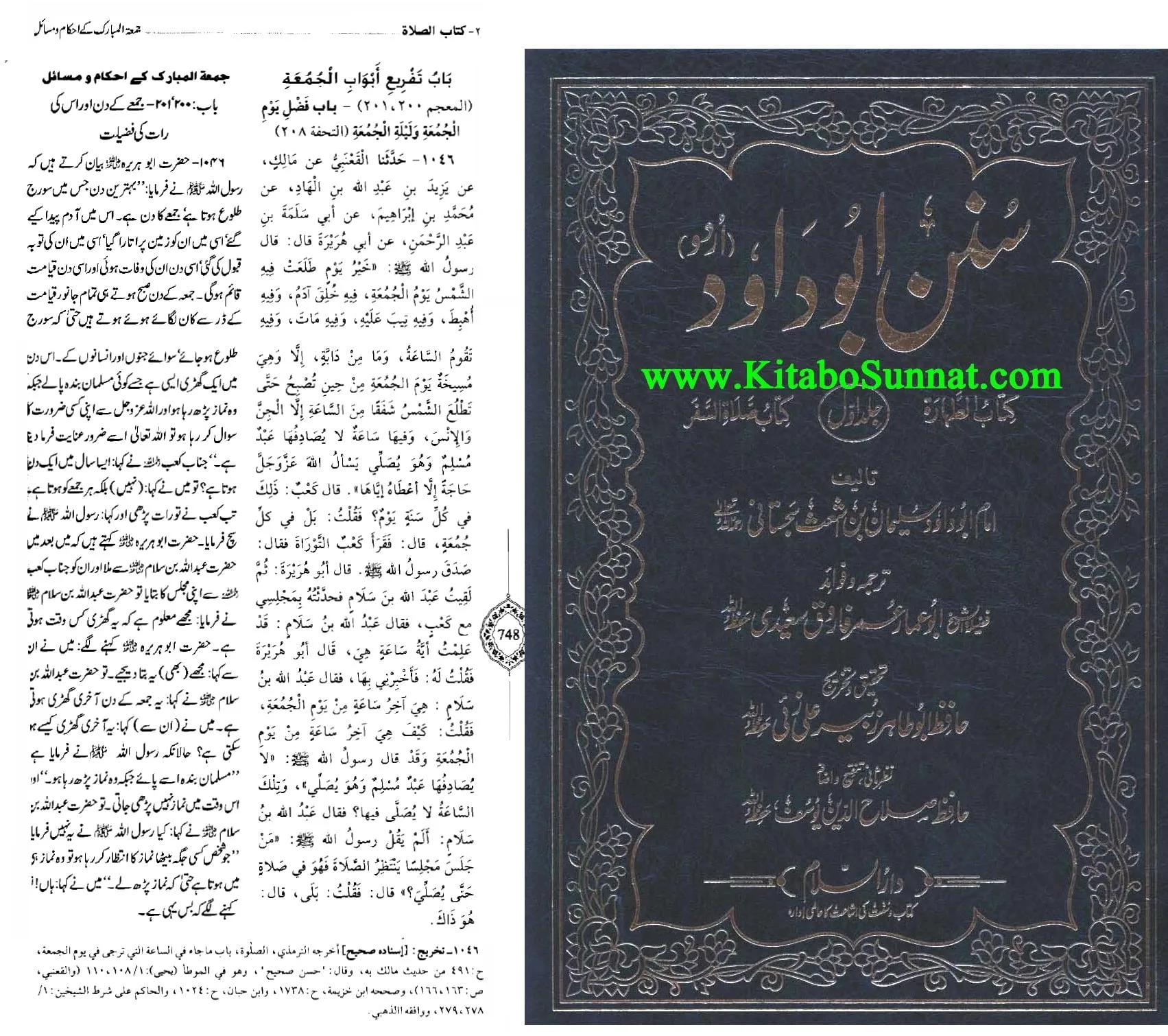
Arabic Text:Translation:قَالَ رَسُولُ اللهِ صَلَّى اللهُ عَلَيْهِ وَسَلَّمَ:
«خَيْرُ يَوْمٍ طَلَعَتْ عَلَيْهِ الشَّمْسُ يَوْمُ الْجُمُعَةِ، فِيهِ خُلِقَ آدَمُ، وَفِيهِ أُدْخِلَ الْجَنَّةَ، وَفِيهِ أُخْرِجَ مِنْهَا»
Sayyidunā Abū Hurayrah رضي الله عنه reported that the Messenger of Allah ﷺ said:
“The best day upon which the sun rises is Friday. On it Ādam was created, on it he was admitted into Paradise, and on it he was expelled from it.”
Reference: Ṣaḥīḥ Muslim: 854
Brief Clarification:
This narration is explicitly marfūʿ and recorded in Ṣaḥīḥ Muslim with an authentic chain. According to established principles, something proven through a sound narration cannot be invalidated by a weak or defective report or by a mere claim of confusion.
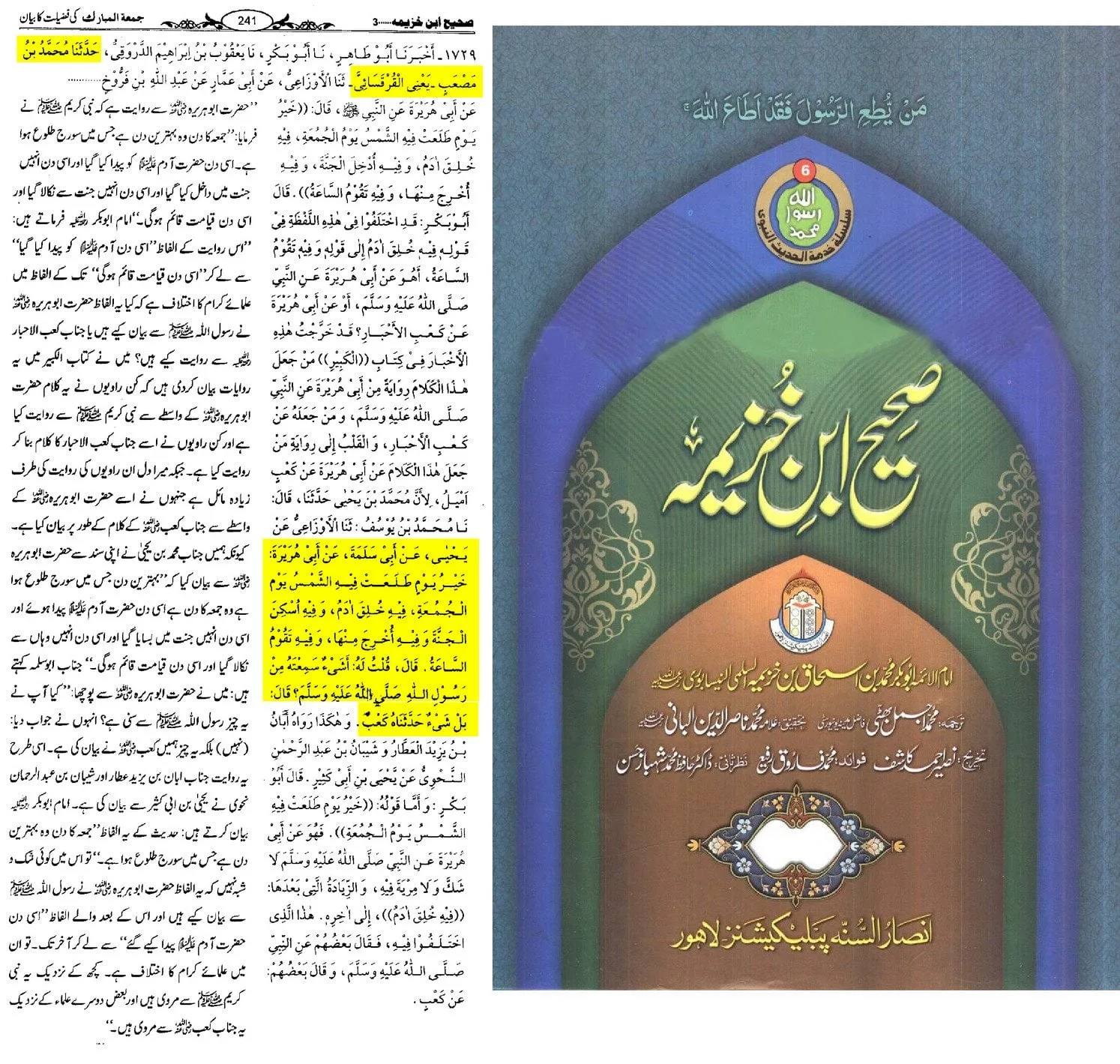
② Narration of al-Ḥākim: Kaʿb’s Confirmation Is Not “Source Attribution”
In this narration, Abū Hurayrah رضي الله عنه narrates the detailed ḥadīth of Friday from the Prophet ﷺ. Kaʿb al-Aḥbār asks a question and later, after consulting the Torah, states:Arabic Text:
Translation (Summary):فَقَالَ: صَدَقَ رَسُولُ اللَّهِ صَلَّى اللهُ عَلَيْهِ وَسَلَّمَ
Kaʿb said: “The Messenger of Allah ﷺ has spoken the truth.”
Reference: al-Mustadrak ʿala al-Ṣaḥīḥayn: 1030
(Authenticated by al-Dhahabī: ʿalā sharṭihimā)
Brief Clarification:
The direction of the narration is clear: Abū Hurayrah رضي الله عنه narrates from the Prophet ﷺ, and Kaʿb merely confirms it based on his scriptural knowledge. Confirmation does not mean being the source.
③ Statement of Ibn Khuzaymah: Mention of Disagreement, Not Final Proof
Ibn Khuzaymah رحمه الله mentioned that there was disagreement regarding whether certain phrases were narrated by Abū Hurayrah رضي الله عنه from the Prophet ﷺ or from Kaʿb al-Aḥbār. He leaned toward one view based on a particular report.Key Point:
Mentioning disagreement reflects scholarly honesty. However, a preference only carries weight if the supporting narration is authentic.
④ The “From Kaʿb” Report Is Weak
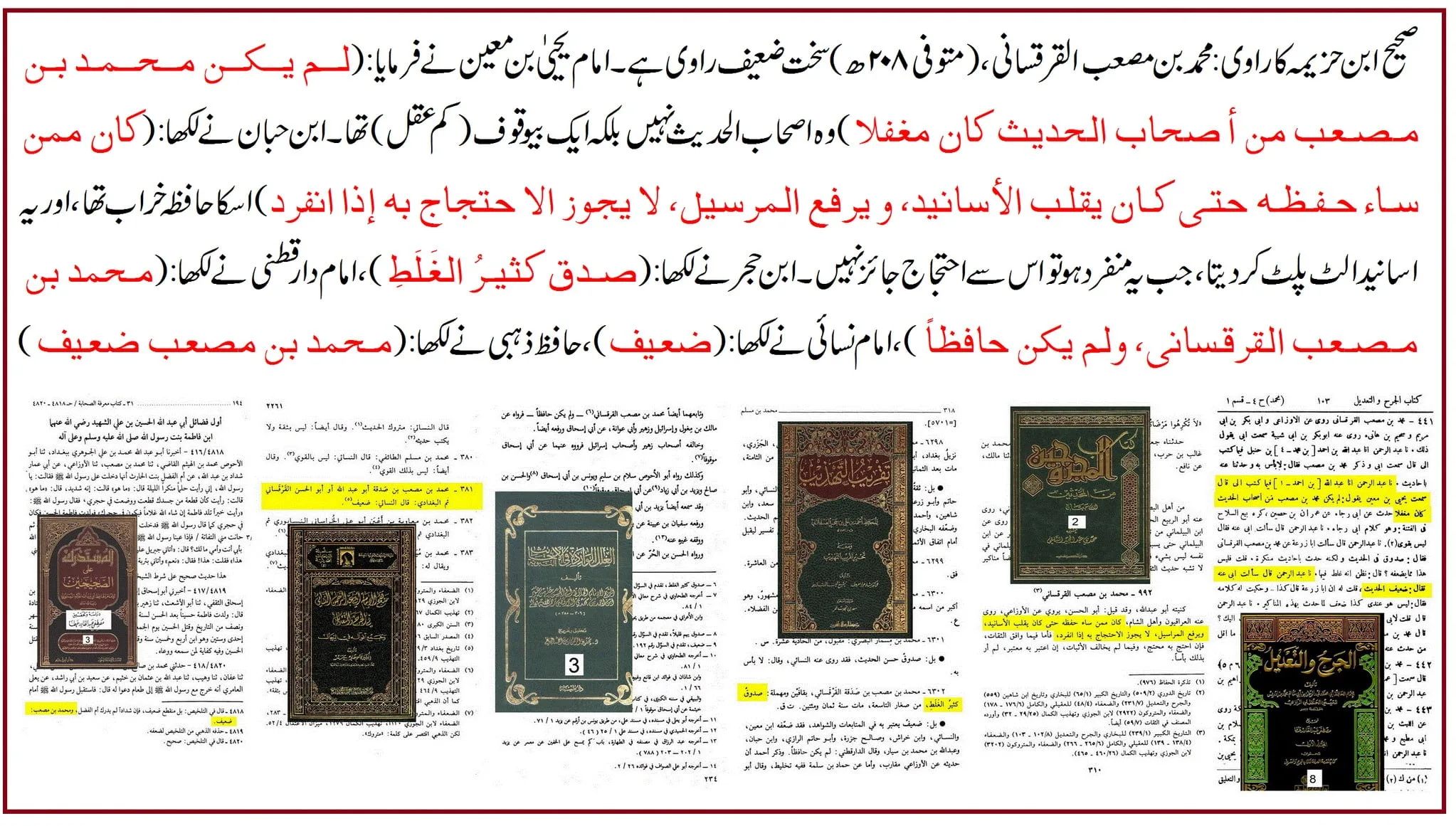
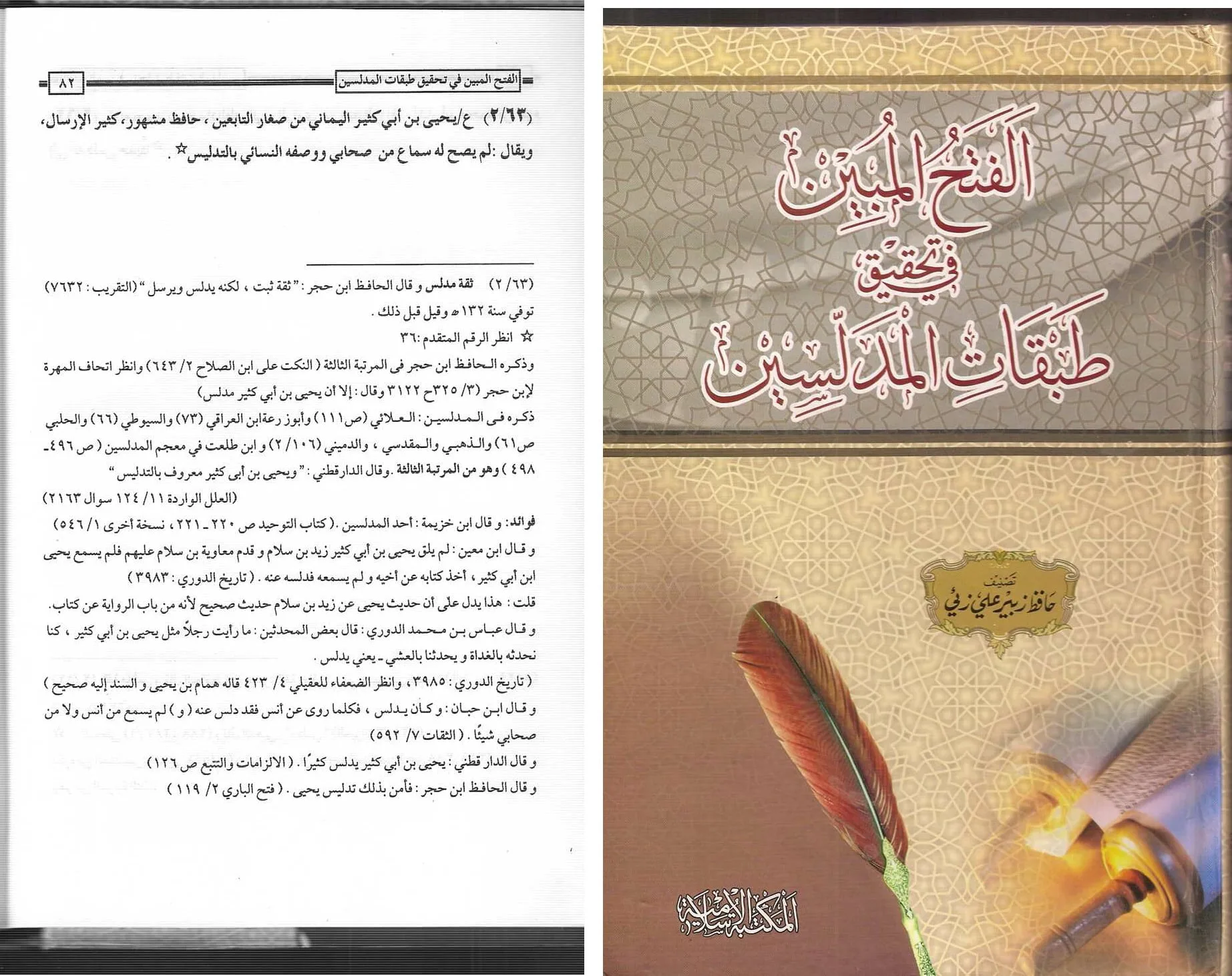
The very narration in which Abū Hurayrah رضي الله عنه allegedly said, “This was told to us by Kaʿb,” has been declared weak in its chain.Commentary:
[التعليق] 1729 – قال الألباني: إسناده ضعيف
Reference: Ṣaḥīḥ Ibn Khuzaymah: 1729
Brief Clarification:
When the “from Kaʿb” version is weak, and the same meaning is established authentically as marfūʿ in Ṣaḥīḥ Muslim, the foundation of the allegation collapses entirely.
⑤ Supporting Witness: Ḥadīth of Aws ibn Aws رضي الله عنه
Arabic Text:Translation:«إِنَّ مِنْ أَفْضَلِ أَيَّامِكُمْ يَوْمَ الْجُمُعَةِ، فِيهِ خُلِقَ آدَمُ…»
Aws ibn Aws رضي الله عنه reported that the Messenger of Allah ﷺ said:
“Indeed, among your best days is Friday; on it Ādam was created…”
Reference: Muṣannaf Ibn Abī Shaybah: 5511
Brief Clarification:
This corroborating narration further establishes that the subject matter is authentically reported from the Prophet ﷺ through multiple Companions.
Conclusion of Allegation No. 1
Correct Scholarly Conclusion:After the authentic marfūʿ narration in Ṣaḥīḥ Muslim and supporting evidences, the claim that “Abū Hurayrah رضي الله عنه took it from Kaʿb and attributed it to the Prophet ﷺ” is unproven and invalid.
Allegation No. 2
“Abū Hurayrah رضي الله عنه attributed every hearsay matter to the Prophet ﷺ”
Summary of the Objection
The objection is based on the incident where Abū Hurayrah رضي الله عنه initially stated that one who wakes up in a state of janābah should break the fast. When the narrations of the Mothers of the Believers رضي الله عنهن appeared—stating that the Prophet ﷺ would wake up in janābah and still fast—Abū Hurayrah رضي الله عنه said: “I do not have knowledge of this; it was told to me by someone.”① The Incident in al-Muwaṭṭaʾ
Arabic Text:Translation (Summary):قَالَ أَبُو هُرَيْرَةَ: لَا عِلْمَ لِي بِذَلِكَ، إِنَّمَا أَخْبَرَنِيهِ مُخْبِرٌ
Abū Hurayrah رضي الله عنه said:
“I have no knowledge of this; it was only conveyed to me by an informer.”
Reference: al-Muwaṭṭaʾ Mālik: 437
Brief Clarification:
He did not claim to have heard this from the Prophet ﷺ. When stronger evidence appeared, he accepted it immediately.
② Ḥadīth: “It is enough for a man to be considered a liar…”
Arabic Text:Translation:«كَفَى بِالْمَرْءِ كَذِبًا أَنْ يُحَدِّثَ بِكُلِّ مَا سَمِعَ»
“It is enough for a person to be considered a liar that he narrates everything he hears.”
Reference: Ṣaḥīḥ Muslim
Brief Clarification:
This is a general ethical principle, not an accusation against Abū Hurayrah رضي الله عنه—especially when he himself demonstrated caution and retraction.
③ His Retraction: Report of Ibn ʿAbd al-Barr
Arabic Text:Translation:أَنَّ أَبَا هُرَيْرَةَ تَرَكَ فُتْيَاهُ بَعْدَ ذَلِكَ
Abū Hurayrah رضي الله عنه abandoned that legal verdict afterward.
Brief Clarification:
This reflects scholarly integrity—returning to the truth when clear evidence appears.
④ Statement of Ibn Ḥajar in Fatḥ al-Bārī
Arabic Text (Excerpt):Translation (Summary):قَدْ رَجَعَ أَبُو هُرَيْرَةَ عَنِ الْفَتْوَى بِذَلِكَ …
Ibn Ḥajar رحمه الله states that Abū Hurayrah رضي الله عنه retracted his verdict, either due to the stronger narration of the Mothers of the Believers or because he considered it abrogating the other report.
Reference: Fatḥ al-Bārī
⑤ Scholarly Status of Abū Hurayrah رضي الله عنه
Arabic Text:Translation:الإمام الفقيه المجتهد الحافظ … سيّد الحفاظ الأثبات
(According to al-Dhahabī) Abū Hurayrah رضي الله عنه was an Imam, jurist, mujtahid, ḥadīth master, Companion of the Messenger ﷺ, and the leader of reliable preservers.
⑥ Principle of Ijtihād: Even Error Earns Reward
Arabic Text:Translation:«إِذَا حَكَمَ الْحَاكِمُ فَاجْتَهَدَ ثُمَّ أَخْطَأَ فَلَهُ أَجْرٌ»
“If a judge strives and errs, he still receives one reward.”
Reference: Ṣaḥīḥ al-Bukhārī: 7352
Conclusion of Allegation No. 2
What is authentically established is that:✔ Abū Hurayrah رضي الله عنه clarified the source as a report, not a marfūʿ ḥadīth.
✔ When stronger evidence appeared, he retracted immediately.
✔ This reflects scholarly caution and honesty, not fabrication.
Final Verdict
In summary:◈ The allegation regarding the Friday narration rests on a weak report, while the ḥadīth is authentically established as marfūʿ.
◈ The issue of janābah and fasting was a matter of ijtihād and fatwā, not fabrication, and Abū Hurayrah رضي الله عنه retracted upon clarification—which is the very standard of scholarly integrity among Ahl al-Sunnah.
