

Refutation of the Urine-Drinking Narration
Compiled by: Abu Hamzah Salafi
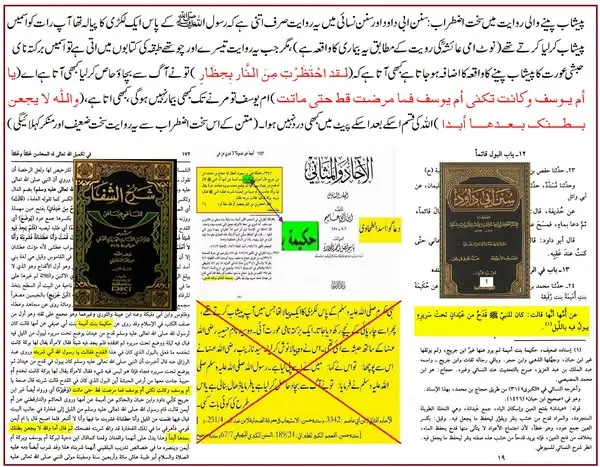
This article is a refutation of the well-known yet rejected and highly inconsistent story which claims that a female servant drank the urine of the Prophet ﷺ, and that he ﷺ gave her glad tidings of protection from Hell or cure from illness.
Although this narration appears in some Sunan and other books, however:
① There is an unknown female narrator in its chain.
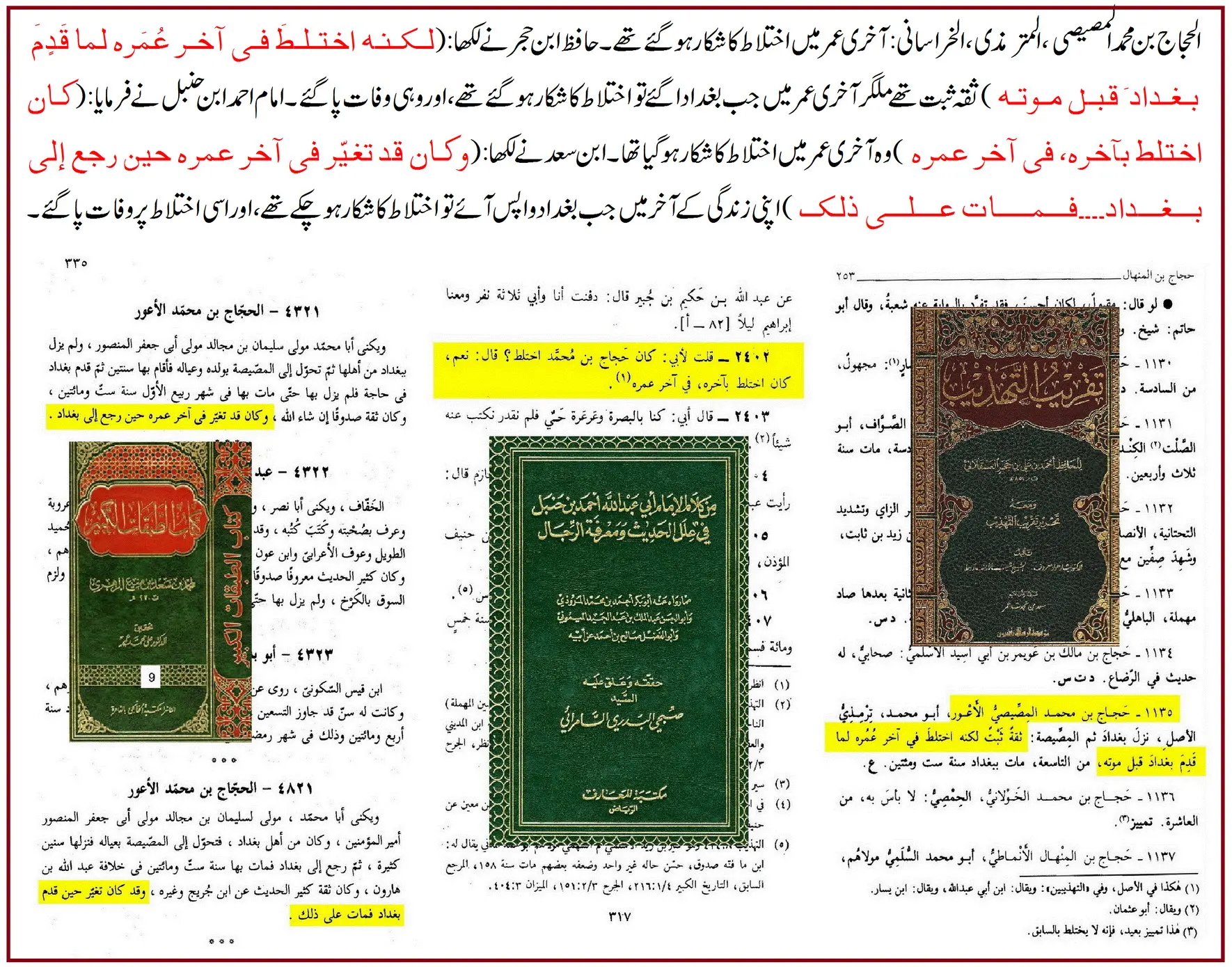
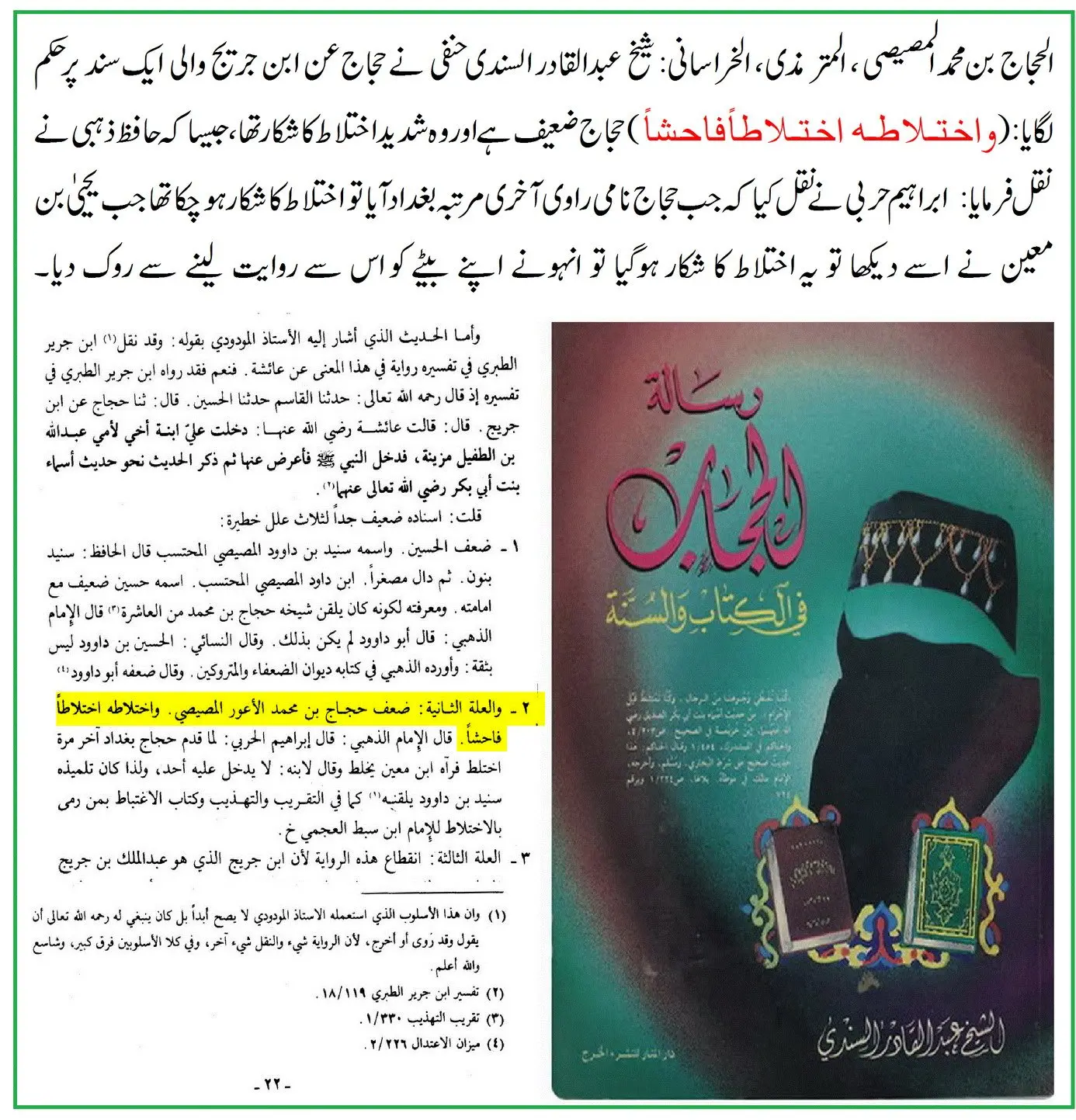
② One of its transmitters suffered confusion (ikhtilāṭ) in the latter part of his life.
③ The text contains severe inconsistencies (sometimes only mentioning a cup, sometimes “drinking,” sometimes “protection from Hell,” sometimes “no stomach illness,” etc.).
Therefore, in this article, we shall detail these three defects and clarify that this narration is unacceptable.
وبعض الطرق فيها زيادات: «… فقال: لقدِ احتضرتِ من النار بجنّةٍ» / «… لا تشتكي بطنَك…»
Reference:
(Some narrations add: “You have shielded yourself from the Fire,” or “You will not suffer from stomach illness.”)
These additional statements themselves become a major proof of textual inconsistency, as will be clarified.
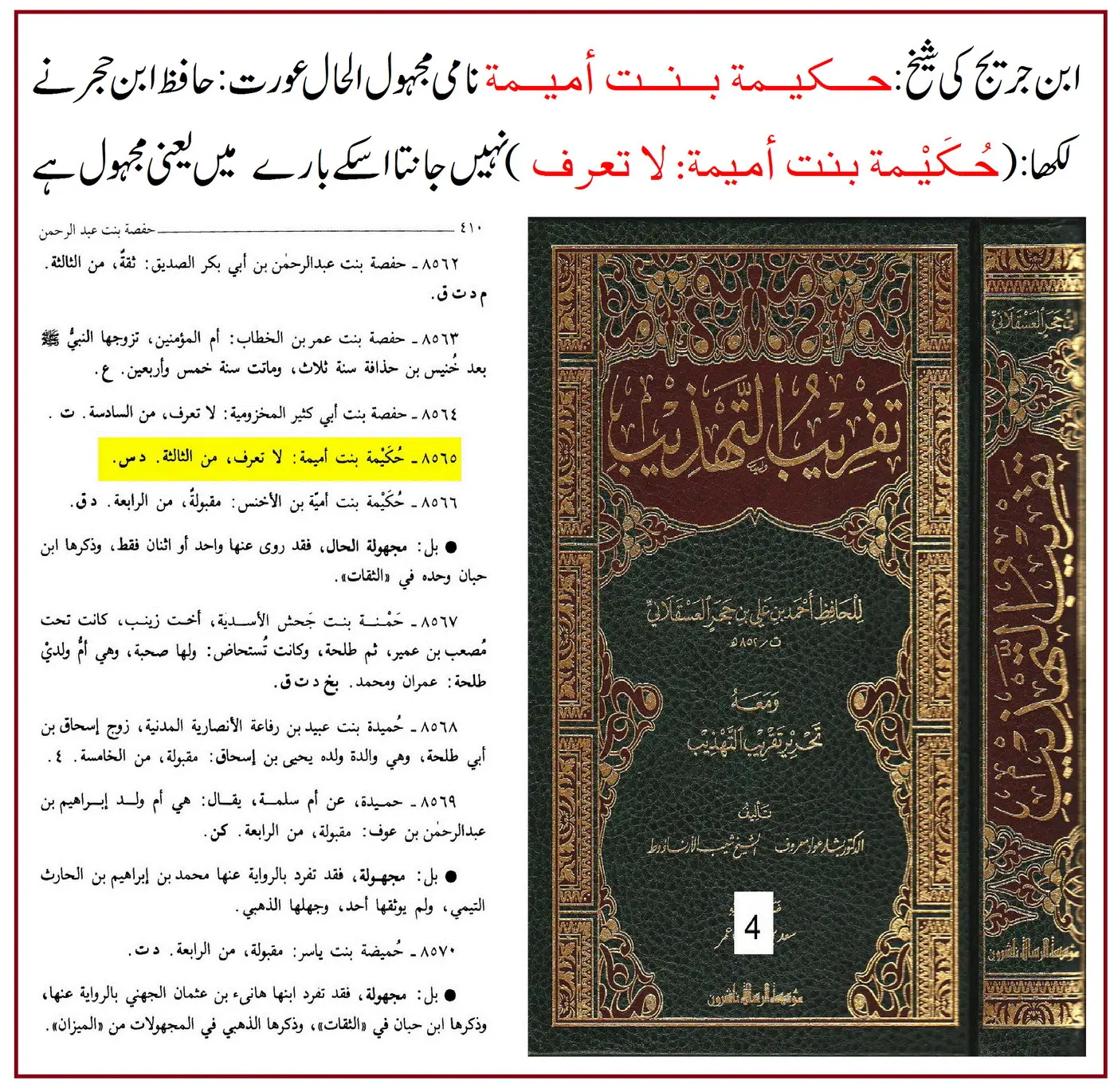
«حكيمة بنت أميمة: لا تُعرف، من الثالثة، د س.»
Translation:
“Ḥukaymah bint Umaymah is unknown; from the third generation; narrated by Abū Dāwūd and al-Nasā’ī.”
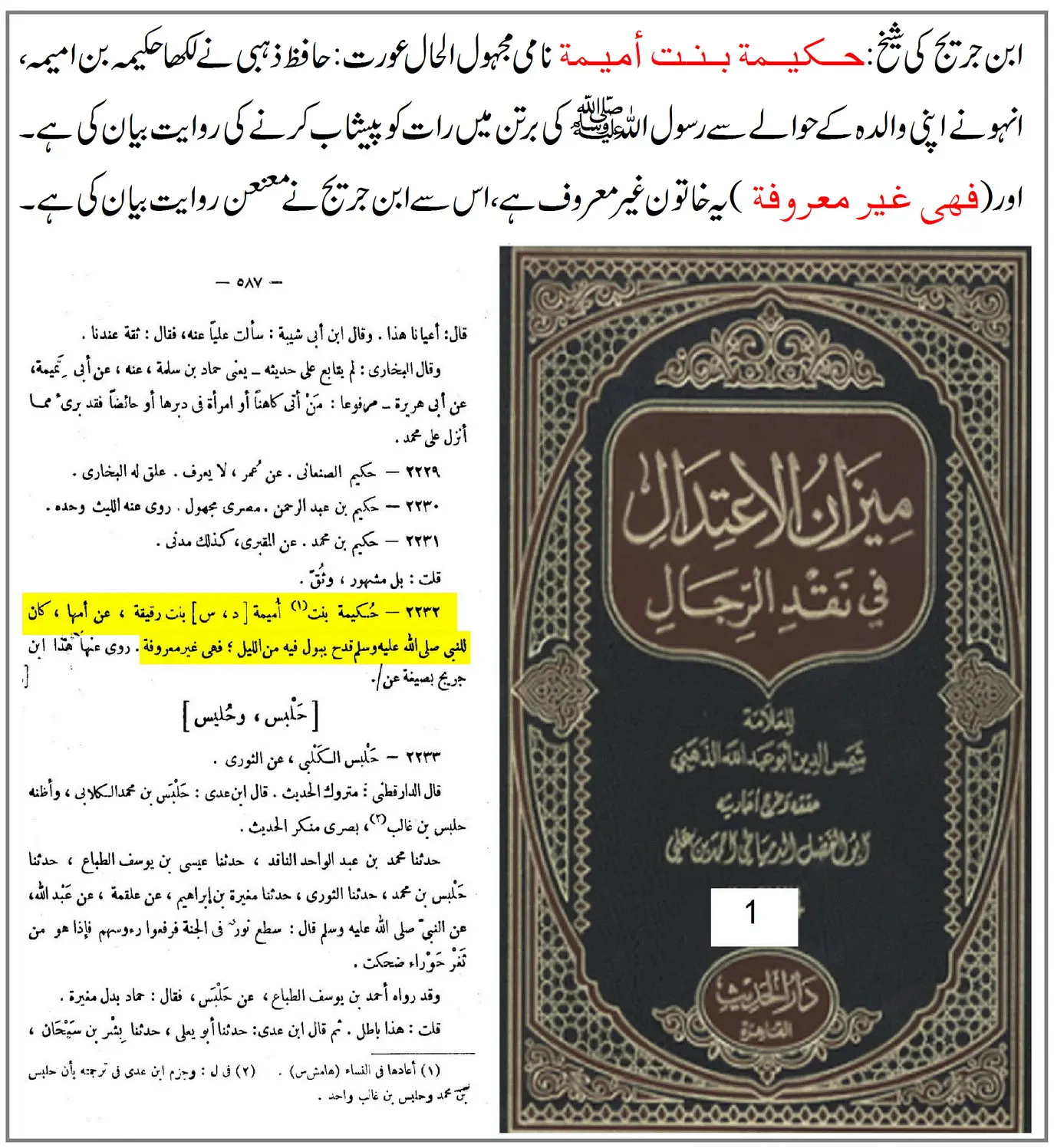
«فهي غير معروفة، روى عنها ابنُ جريج بصيغة (عن).»
Translation:
“She is not known. Ibn Jurayj narrated from her using the wording ‘ʿan’.”
«… فالاضطراب مانع من تصحيحه… وجهالةُ حكيمة بنت أميمة؛ فإنه لا يُعرف لها حال.»
Translation:
“The inconsistency prevents its authentication… and Ḥukaymah bint Umaymah is unknown; her condition is not known.”
«وهو ضعيف؛ فيه حكيمة وفيها جهالة؛ فإنه لم يروِ عنها إلا ابن جريج، ولم يذكرها ابن حبان في الثقات.»
Translation:
“It is weak; it contains Ḥukaymah, and she is unknown. None narrated from her except Ibn Jurayj, and Ibn Ḥibbān did not include her among the trustworthy.”
«… وهو إسناد مجهول… وأخرجه أبو داود والنسائي من حديث حجاج عن ابن جريج وليس فيه قصةُ بركة.»
Translation:
“It is a chain containing unknown narrators… Abū Dāwūd and al-Nasā’ī reported it through Ḥajjāj from Ibn Jurayj, and it does not contain the story of Barakah.”
Al-Dhahabī’s inclusion under “unknown women” is not authentication. Al-Suyūṭī and al-Albānī clarified that such narrations remain weak due to anonymity, though sometimes considered in supporting chains—not independently.
«ثقة ثبت، لكنه اختلط في آخر عمره لما قدم بغداد.»
Translation:
“Trustworthy and firm, but he became confused in the latter part of his life when he came to Baghdad.”
«كان اختلط بآخره.»
Translation:
“He became confused at the end of his life.”
«تغيّر حين قدم بغداد فمات على ذلك.»
Translation:
“He changed when he came to Baghdad and remained in that state until his death.”
This explains why reliable Sunan collections only mention the “cup,” without the addition of “drinking,” clearly indicating that the extra wording stems from confusion and solitary narration of an unknown narrator.
① Some versions only mention that the Prophet ﷺ urinated in a cup and placed it beneath his bed.
② Some add that Barakah drank it.
③ Some add: “You have shielded yourself from Hell.”
④ Others add: “You will not suffer from stomach illness.”
These additions contradict one another and demonstrate severe inconsistency.
Translation:
“The inconsistency prevents its authentication.”
Translation:
“Abū Dāwūd and al-Nasā’ī reported it, but it does not contain the story of Barakah.”
Thus, the “drinking” portion is isolated and inconsistent.
✔ The claim that “al-Nasā’ī and Ibn Ḥibbān included it” — they only mention the cup, not drinking.
✔ The claim that “Abū Dāwūd narrated this story” — false; it is not in his Sunan.
✔ The reliance on al-Ḥākim’s authentication — he is known for leniency.
✔ The claim that al-Haythamī authenticated her — he is also known for leniency.
✔ Al-Dhahabī explicitly said: «فهي غير معروفة» — “She is not known.”
«8565 – حكيمة بنت أميمة لا تُعرف من الثالثة، د س.»
Translation:
“Ḥukaymah bint Umaymah is unknown; from the third generation; narrated by Abū Dāwūd and al-Nasā’ī.”
Thus, Ibn Ḥajar did not authenticate her; rather, he clearly declared her unknown.
Arabic:
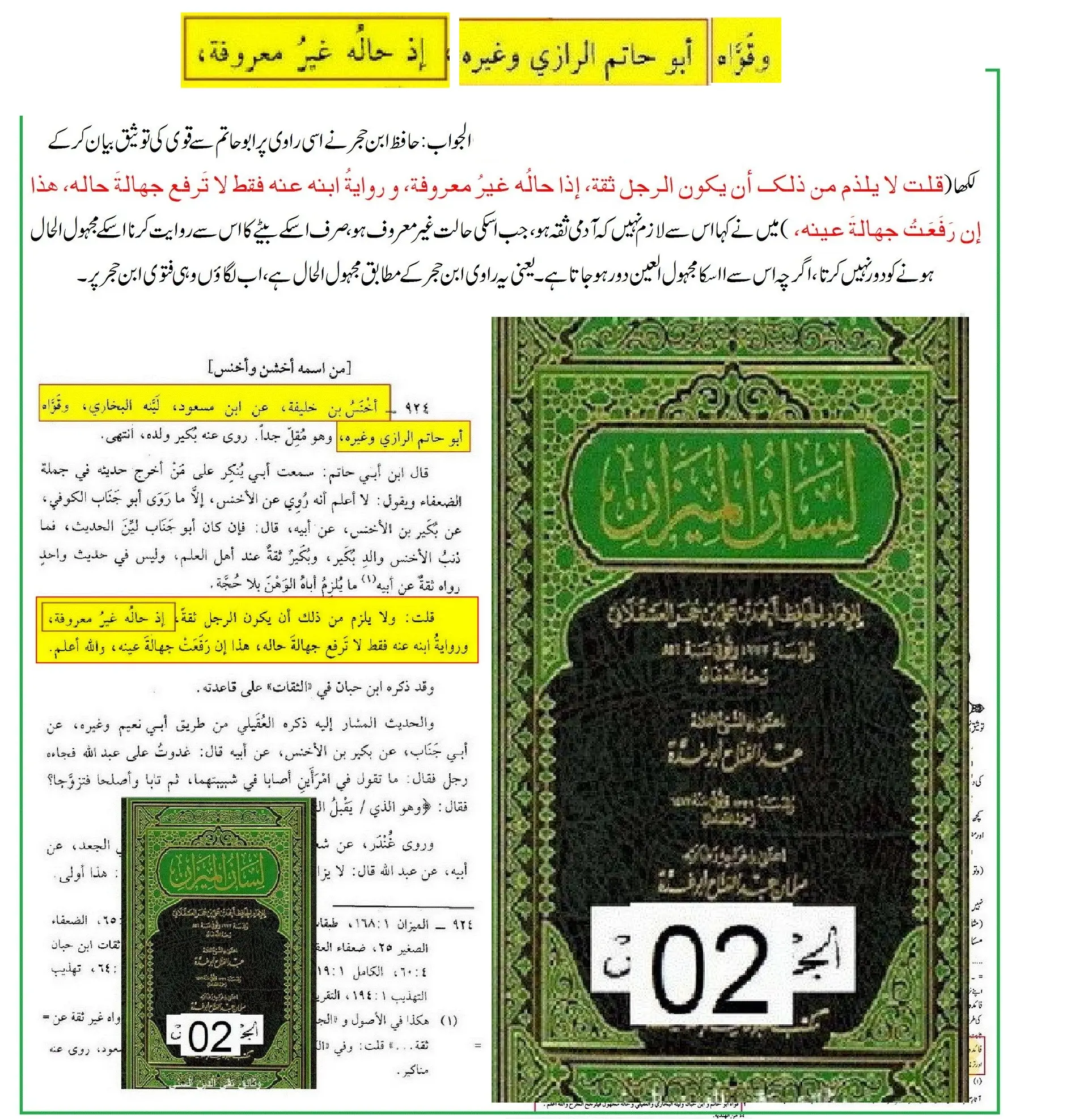
«ولا يلزم من ذلك أن يكون الرجل ثقة، إذ حاله غير معروفة، ورواية ابنه عنه فقط لا ترفع جهالة حاله…»
Translation:
“This does not necessitate that the man is trustworthy, since his condition is unknown. The narration of only his son from him does not remove the anonymity of his status…”
Thus, if only one narrator reports from someone, that person remains majhūl al-ḥāl.
«2232 – حكيمة بنت أميمة… فهي غير معروفة. روى عنها هذا ابن جريج بصيغة عن.»
Translation:
“Ḥukaymah bint Umaymah… she is not known. Only Ibn Jurayj narrated from her using ‘ʿan’.”
Therefore, according to al-Dhahabī as well, she is unknown—not trustworthy.
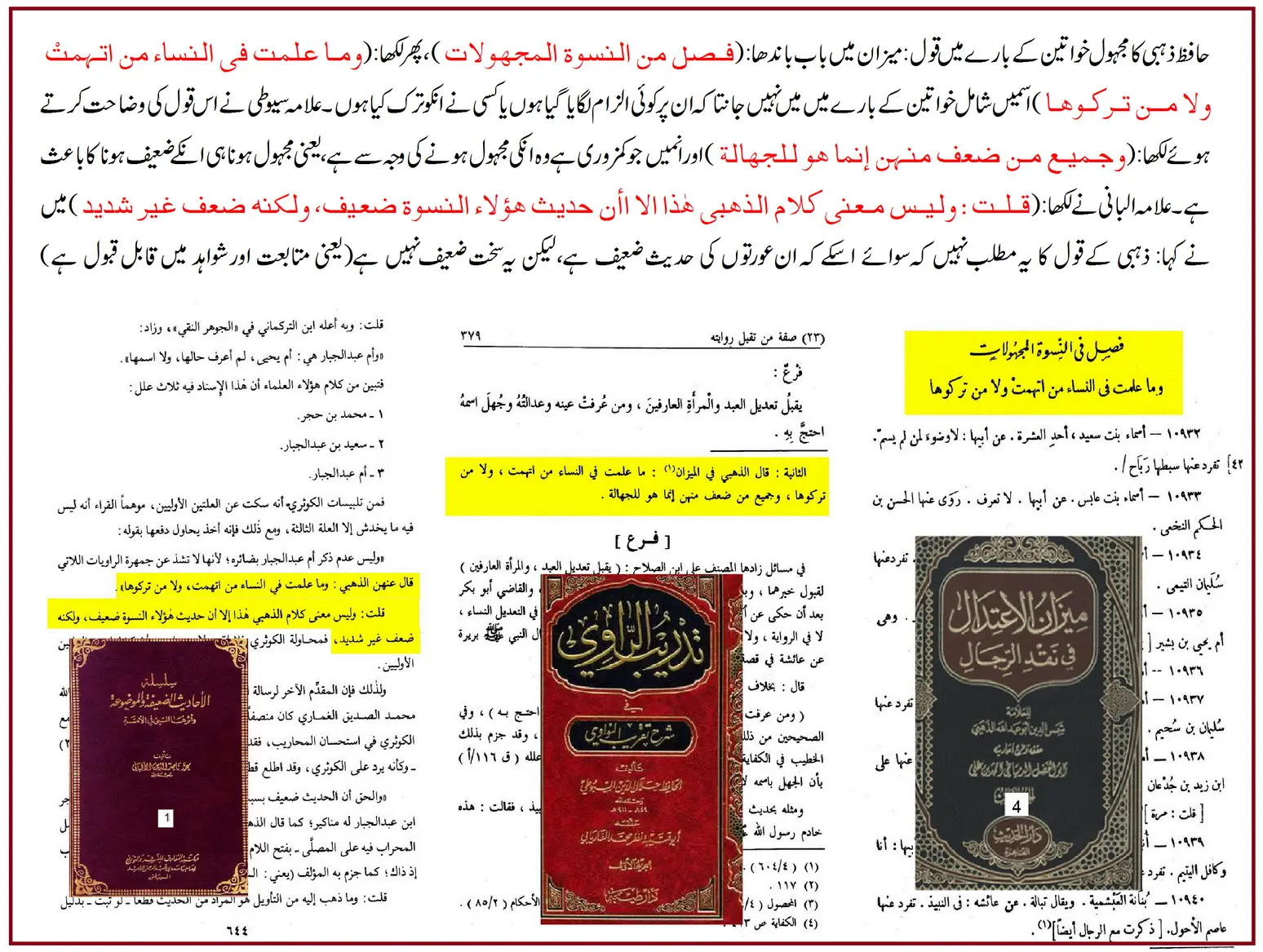
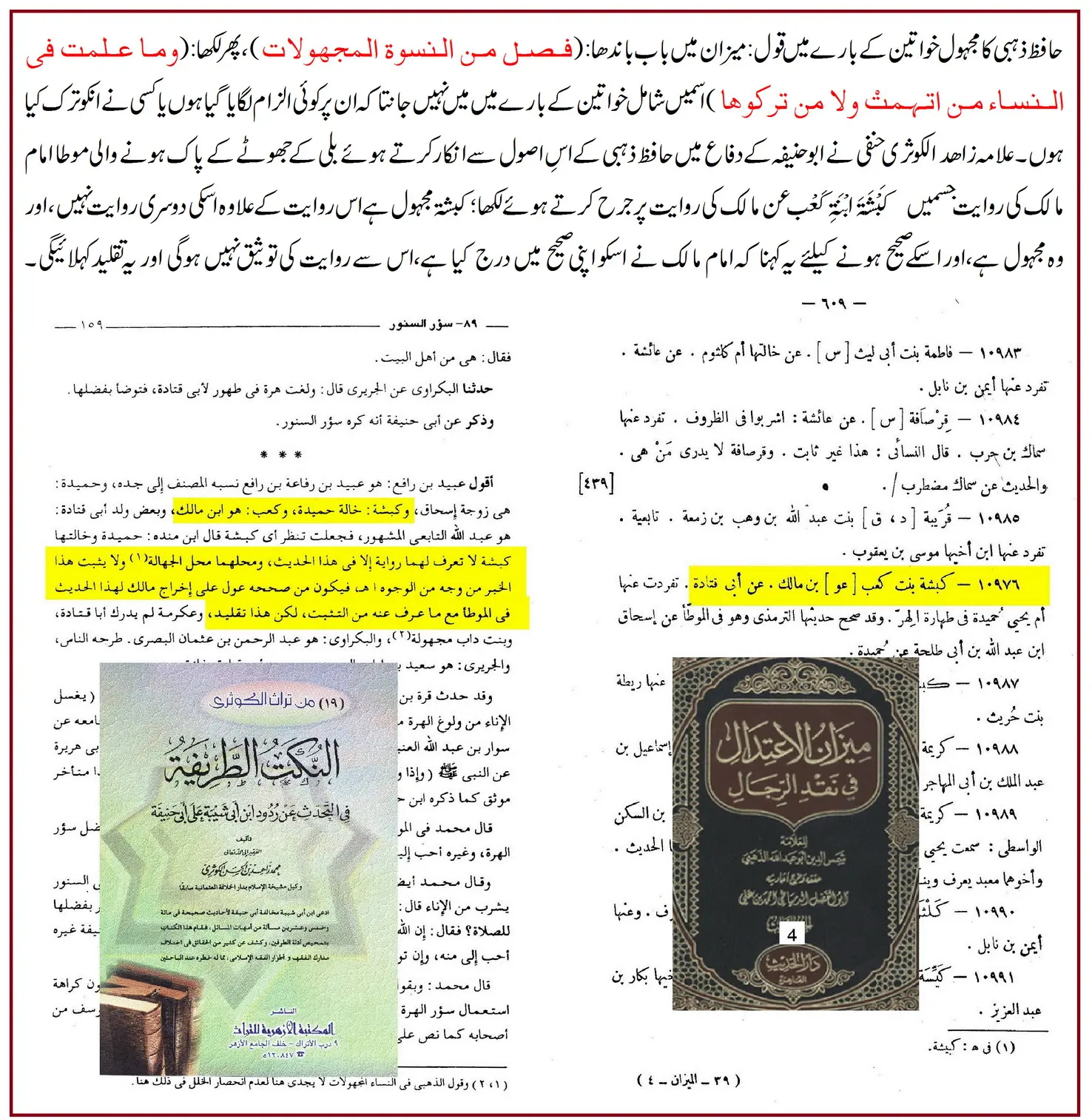
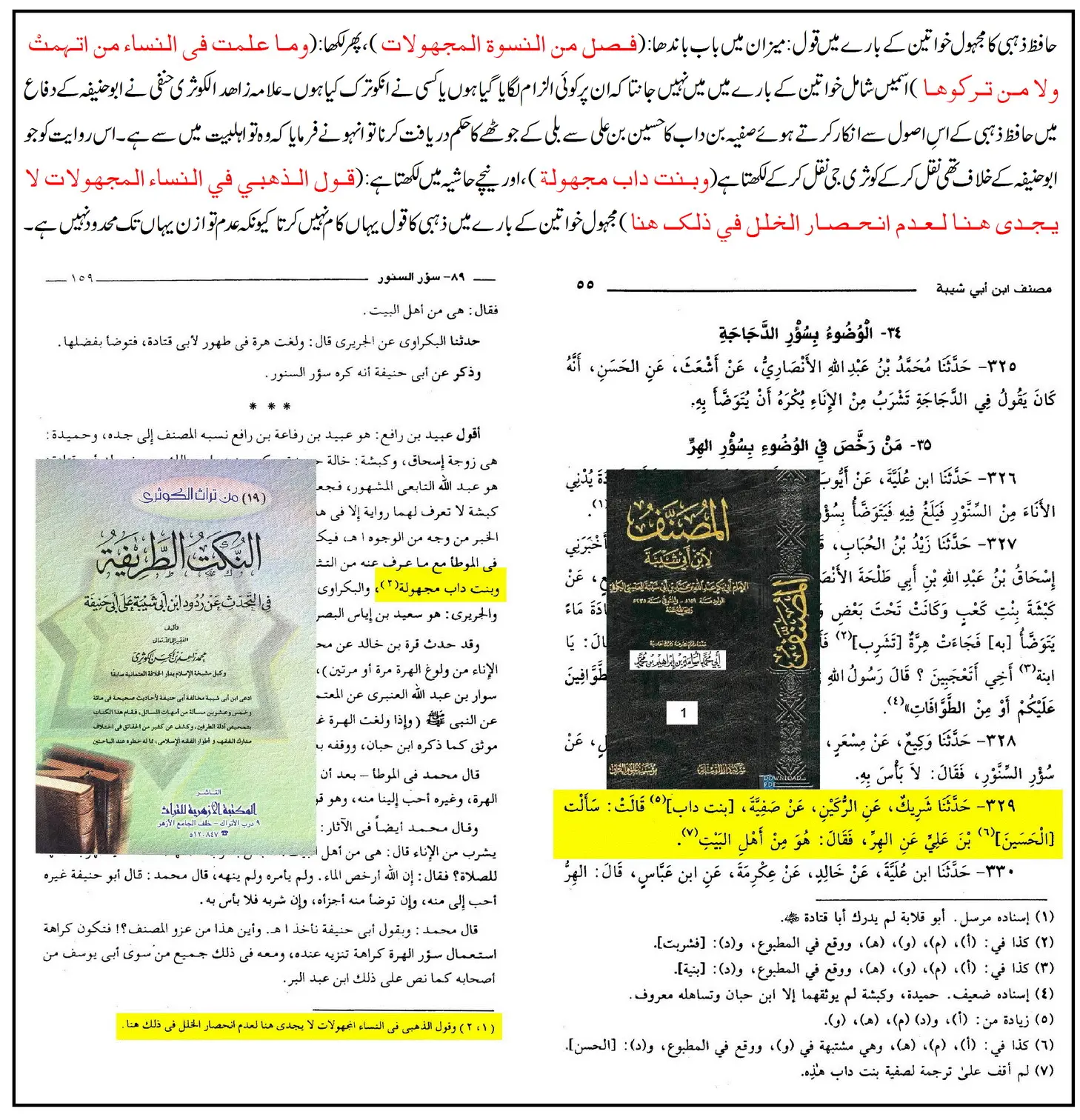
«وما علمت في النساء من اتهمت ولا من تركوها»
—implies acceptability.
However:
✔ It only means that none were accused of fabrication.
✔ It does not mean they are trustworthy.
✔ Their weakness is due to anonymity.
Translation:
“The weakness of all of them is due to anonymity.”
Translation:
“The meaning of al-Dhahabī’s statement is only that the narrations of these women are weak, though not severely weak.”
Thus, her narration cannot serve as independent proof.
✔ Ḥukaymah bint Umaymah is declared unknown by the majority of scholars (Ibn Ḥajar, al-Dhahabī, al-Munāwī, Ibn al-Mulaqqin, Ibn al-Qaṭṭān).
✔ Ḥajjāj ibn Muḥammad became confused in his later life.
✔ The narration is textually inconsistent and contradictory.
✔ Claims attributing this story to Abū Dāwūd, al-Nasā’ī, Ibn Ḥibbān, or al-Dāraquṭnī are false or misleading.
✔ Neither al-Dhahabī nor Ibn Ḥajar authenticated it.
➝ Conclusion: This narration is unacceptable. Relating such rejected and inconsistent additions is misguidance and contrary to the noble status of the Messenger of Allah ﷺ.
Compiled by: Abu Hamzah Salafi
This article is a refutation of the well-known yet rejected and highly inconsistent story which claims that a female servant drank the urine of the Prophet ﷺ, and that he ﷺ gave her glad tidings of protection from Hell or cure from illness.
Although this narration appears in some Sunan and other books, however:
① There is an unknown female narrator in its chain.
② One of its transmitters suffered confusion (ikhtilāṭ) in the latter part of his life.
③ The text contains severe inconsistencies (sometimes only mentioning a cup, sometimes “drinking,” sometimes “protection from Hell,” sometimes “no stomach illness,” etc.).
Therefore, in this article, we shall detail these three defects and clarify that this narration is unacceptable.
The Original Narration
Arabic Text (via al-Bayhaqī / Ibn Abī ʿĀṣim):
13406 – «… عن حُكَيْمَةَ بنتِ أمَيْمَة، عن أمَيْمَة أمِّها: أنَّ النبيَّ ﷺ كان يَبُولُ في قَدَحٍ من عيدانٍ، ثم يضعه تحت سريره… فجاء فأراده، فإذا القدحُ ليس فيه شيء، فقال لامرأةٍ يقال لها بركة…: “أين البول الذي كان في هذا القدح؟” قالت: شربتُه يا رسولَ الله.»وبعض الطرق فيها زيادات: «… فقال: لقدِ احتضرتِ من النار بجنّةٍ» / «… لا تشتكي بطنَك…»
Reference:
Reference: السنن الكبرى للبيهقي
(relevant chapters);
Reference: الآحاد والمثاني لابن أبي عاصم
(with similar wording).Translation
It is narrated from Umaymah رضي الله عنها that the Messenger of Allah ﷺ would urinate at night into a wooden cup and place it beneath his bed. One day when he ﷺ sought the cup, it was empty. He ﷺ asked a woman named Barakah (who had come from Abyssinia with Umm Ḥabībah رضي الله عنها): “Where is the urine that was in this cup?” She replied, “I drank it, O Messenger of Allah!”(Some narrations add: “You have shielded yourself from the Fire,” or “You will not suffer from stomach illness.”)
These additional statements themselves become a major proof of textual inconsistency, as will be clarified.
Chain Defects (Sandi ʿIlal)
① Ḥukaymah bint Umaymah — Unknown (Majhūl al-Ḥāl)
Ibn Ḥajar (Taqrīb al-Tahdhīb):
Arabic:«حكيمة بنت أميمة: لا تُعرف، من الثالثة، د س.»
Translation:
“Ḥukaymah bint Umaymah is unknown; from the third generation; narrated by Abū Dāwūd and al-Nasā’ī.”
Reference: تقريب التهذيب
Al-Dhahabī (Mīzān al-Iʿtidāl):
Arabic:«فهي غير معروفة، روى عنها ابنُ جريج بصيغة (عن).»
Translation:
“She is not known. Ibn Jurayj narrated from her using the wording ‘ʿan’.”
Reference: ميزان الاعتدال
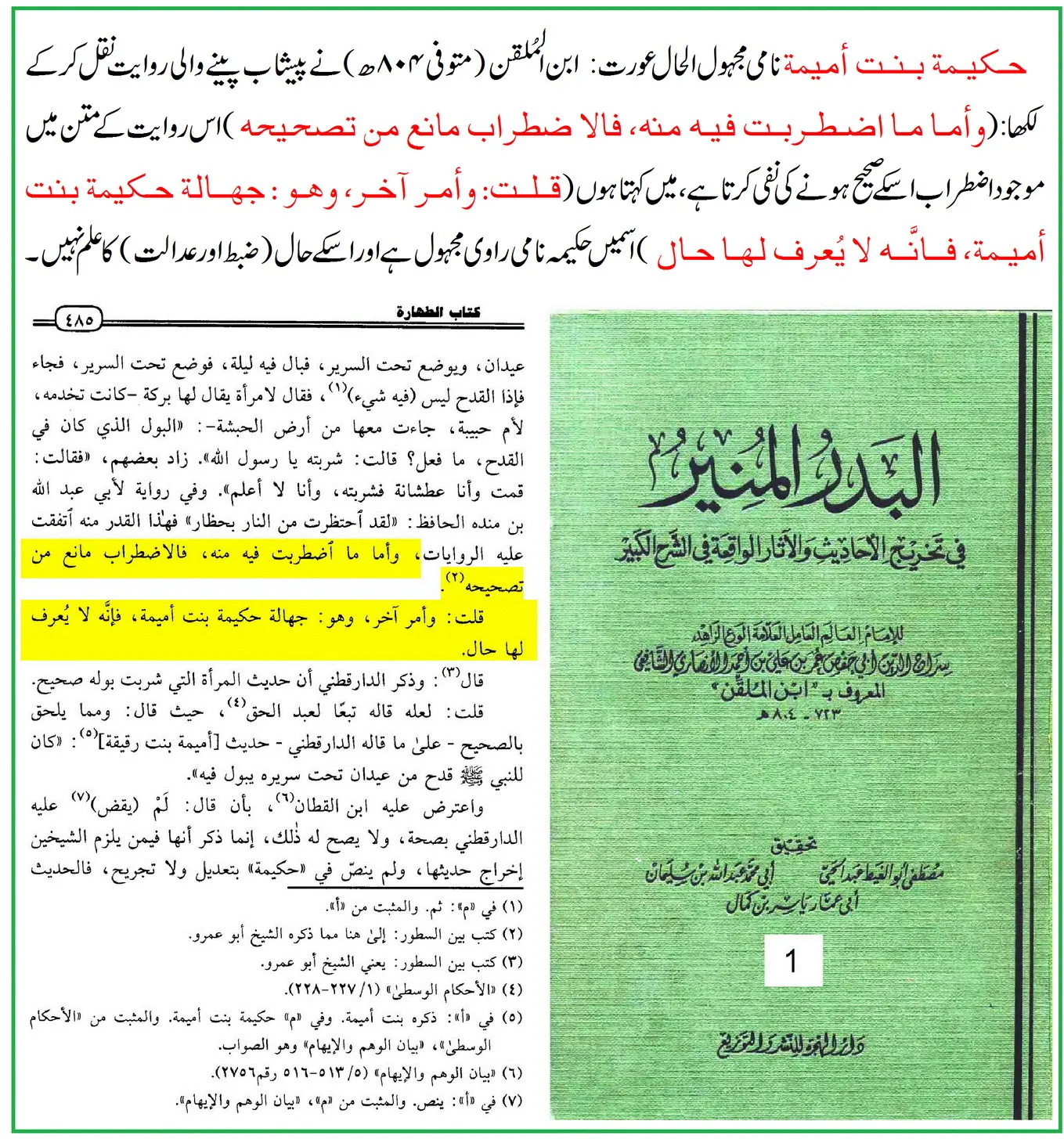
Ibn al-Mulaqqin (al-Badr al-Munīr):
Arabic:«… فالاضطراب مانع من تصحيحه… وجهالةُ حكيمة بنت أميمة؛ فإنه لا يُعرف لها حال.»
Translation:
“The inconsistency prevents its authentication… and Ḥukaymah bint Umaymah is unknown; her condition is not known.”
Reference: البدر المنير
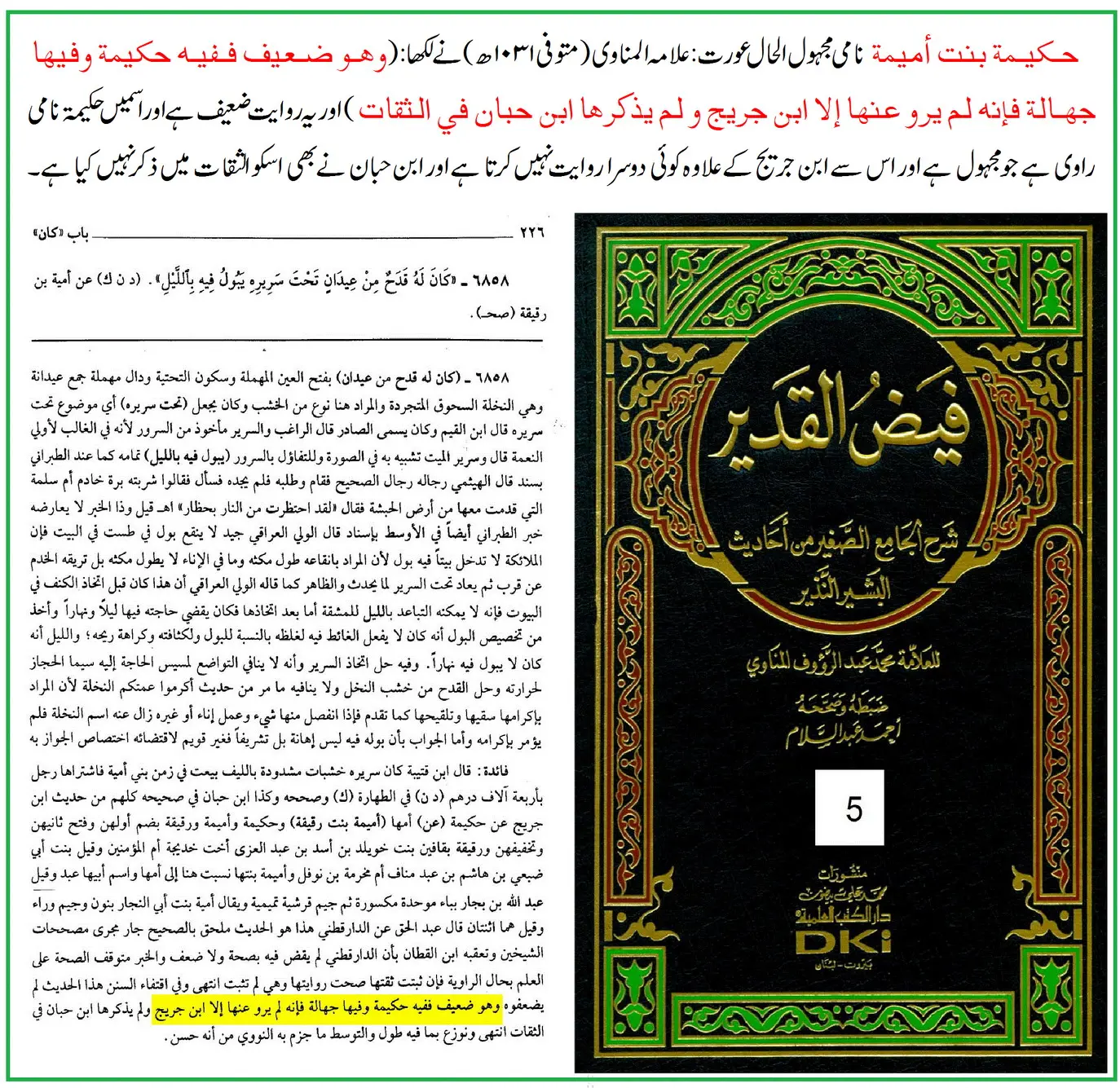
Al-Munāwī (Fayḍ al-Qadīr):
Arabic:«وهو ضعيف؛ فيه حكيمة وفيها جهالة؛ فإنه لم يروِ عنها إلا ابن جريج، ولم يذكرها ابن حبان في الثقات.»
Translation:
“It is weak; it contains Ḥukaymah, and she is unknown. None narrated from her except Ibn Jurayj, and Ibn Ḥibbān did not include her among the trustworthy.”
Reference: فيض القدير
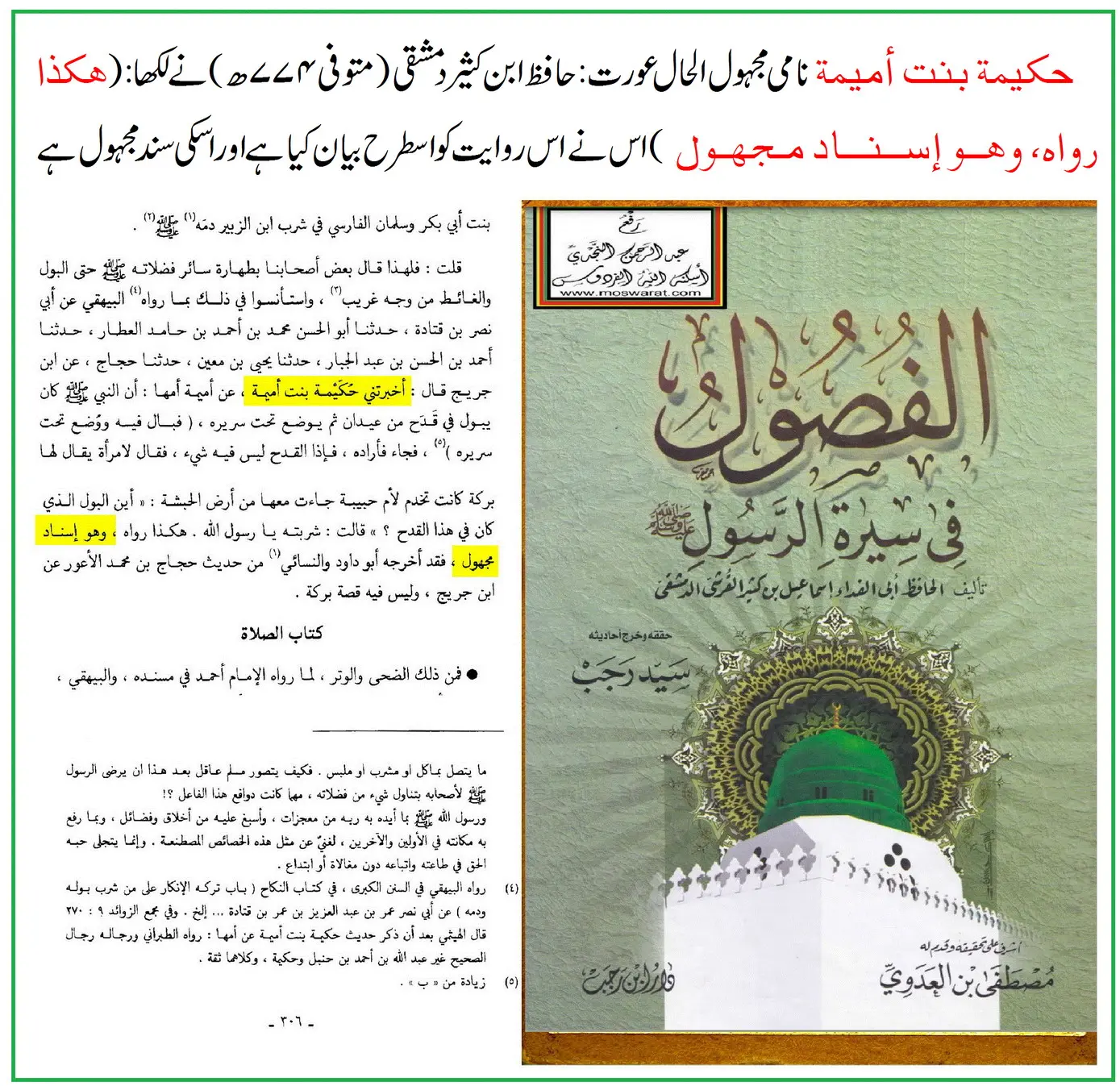
Ibn Kathīr (Negating the Addition):
Arabic:«… وهو إسناد مجهول… وأخرجه أبو داود والنسائي من حديث حجاج عن ابن جريج وليس فيه قصةُ بركة.»
Translation:
“It is a chain containing unknown narrators… Abū Dāwūd and al-Nasā’ī reported it through Ḥajjāj from Ibn Jurayj, and it does not contain the story of Barakah.”
Reference: الفصول في السيرة
Clarification Regarding the Claim of Authentication
The claim that “al-Dāraquṭnī declared Ḥukaymah trustworthy” is not established. Ibn al-Mulaqqin explicitly negated this.Al-Dhahabī’s inclusion under “unknown women” is not authentication. Al-Suyūṭī and al-Albānī clarified that such narrations remain weak due to anonymity, though sometimes considered in supporting chains—not independently.
② Ḥajjāj ibn Muḥammad al-Muṣīṣī — Confusion in Later Life
Ibn Ḥajar (Taqrīb):
Arabic:«ثقة ثبت، لكنه اختلط في آخر عمره لما قدم بغداد.»
Translation:
“Trustworthy and firm, but he became confused in the latter part of his life when he came to Baghdad.”
Reference: تقريب التهذيب
Imām Aḥmad:
Arabic:«كان اختلط بآخره.»
Translation:
“He became confused at the end of his life.”
Reference: العلل ومعرفة الرجال
Ibn Saʿd:
Arabic:«تغيّر حين قدم بغداد فمات على ذلك.»
Translation:
“He changed when he came to Baghdad and remained in that state until his death.”
Reference: الطبقات الكبرى
Conclusion Regarding the Chain
The female narrator is unknown, and another narrator became confused in his later life. In such circumstances, an addition containing severe irregularity—such as “drinking urine”—cannot be accepted.This explains why reliable Sunan collections only mention the “cup,” without the addition of “drinking,” clearly indicating that the extra wording stems from confusion and solitary narration of an unknown narrator.
③ Third Defect: Severe Textual Inconsistency (Iḍṭirāb)
The narration appears in conflicting forms:① Some versions only mention that the Prophet ﷺ urinated in a cup and placed it beneath his bed.
② Some add that Barakah drank it.
③ Some add: “You have shielded yourself from Hell.”
④ Others add: “You will not suffer from stomach illness.”
These additions contradict one another and demonstrate severe inconsistency.
Ibn al-Mulaqqin:
«فالاضطراب مانع من تصحيحه.»
Reference: البدر المنير
Translation:
“The inconsistency prevents its authentication.”
Ibn Kathīr:
«… أخرجه أبو داود والنسائي … وليس فيه قصة بركة.»
Reference: الفصول في السيرة
Translation:
“Abū Dāwūd and al-Nasā’ī reported it, but it does not contain the story of Barakah.”
Thus, the “drinking” portion is isolated and inconsistent.
④ Refutation of Certain Claims
✔ The claim that “al-Dāraquṭnī declared her trustworthy” — unproven.✔ The claim that “al-Nasā’ī and Ibn Ḥibbān included it” — they only mention the cup, not drinking.
✔ The claim that “Abū Dāwūd narrated this story” — false; it is not in his Sunan.
✔ The reliance on al-Ḥākim’s authentication — he is known for leniency.
✔ The claim that al-Haythamī authenticated her — he is also known for leniency.
✔ Al-Dhahabī explicitly said: «فهي غير معروفة» — “She is not known.”
⑤ Did Ibn Ḥajar Declare Her Trustworthy?
Arabic:«8565 – حكيمة بنت أميمة لا تُعرف من الثالثة، د س.»
Reference: تقريب التهذيب
Translation:
“Ḥukaymah bint Umaymah is unknown; from the third generation; narrated by Abū Dāwūd and al-Nasā’ī.”
Thus, Ibn Ḥajar did not authenticate her; rather, he clearly declared her unknown.
⑥ Principle Regarding Such Narrators
Ibn Ḥajar stated regarding Akhnas ibn Khalīfah:Arabic:
«ولا يلزم من ذلك أن يكون الرجل ثقة، إذ حاله غير معروفة، ورواية ابنه عنه فقط لا ترفع جهالة حاله…»
Reference: لسان الميزان 1/352
Translation:
“This does not necessitate that the man is trustworthy, since his condition is unknown. The narration of only his son from him does not remove the anonymity of his status…”
Thus, if only one narrator reports from someone, that person remains majhūl al-ḥāl.
⑦ Did al-Dhahabī Authenticate Her?
Arabic:«2232 – حكيمة بنت أميمة… فهي غير معروفة. روى عنها هذا ابن جريج بصيغة عن.»
Reference: ميزان الاعتدال 7/323
Translation:
“Ḥukaymah bint Umaymah… she is not known. Only Ibn Jurayj narrated from her using ‘ʿan’.”
Therefore, according to al-Dhahabī as well, she is unknown—not trustworthy.
⑧ Response to a Misinterpretation
Some claim that al-Dhahabī’s chapter heading—«وما علمت في النساء من اتهمت ولا من تركوها»
—implies acceptability.
However:
✔ It only means that none were accused of fabrication.
✔ It does not mean they are trustworthy.
✔ Their weakness is due to anonymity.
Al-Suyūṭī stated:
«وجميع من ضعف منهن إنما هو للجهالة.»
Reference: تدريب الراوي 2/259
Translation:
“The weakness of all of them is due to anonymity.”
Al-Albānī stated:
«ليس معنى كلام الذهبي هذا إلا أن حديث هؤلاء النسوة ضعيف، ولكنه ضعف غير شديد.»
Reference: سلسلة الأحاديث الضعيفة 2/138
Translation:
“The meaning of al-Dhahabī’s statement is only that the narrations of these women are weak, though not severely weak.”
Thus, her narration cannot serve as independent proof.
Final Summary and Conclusion
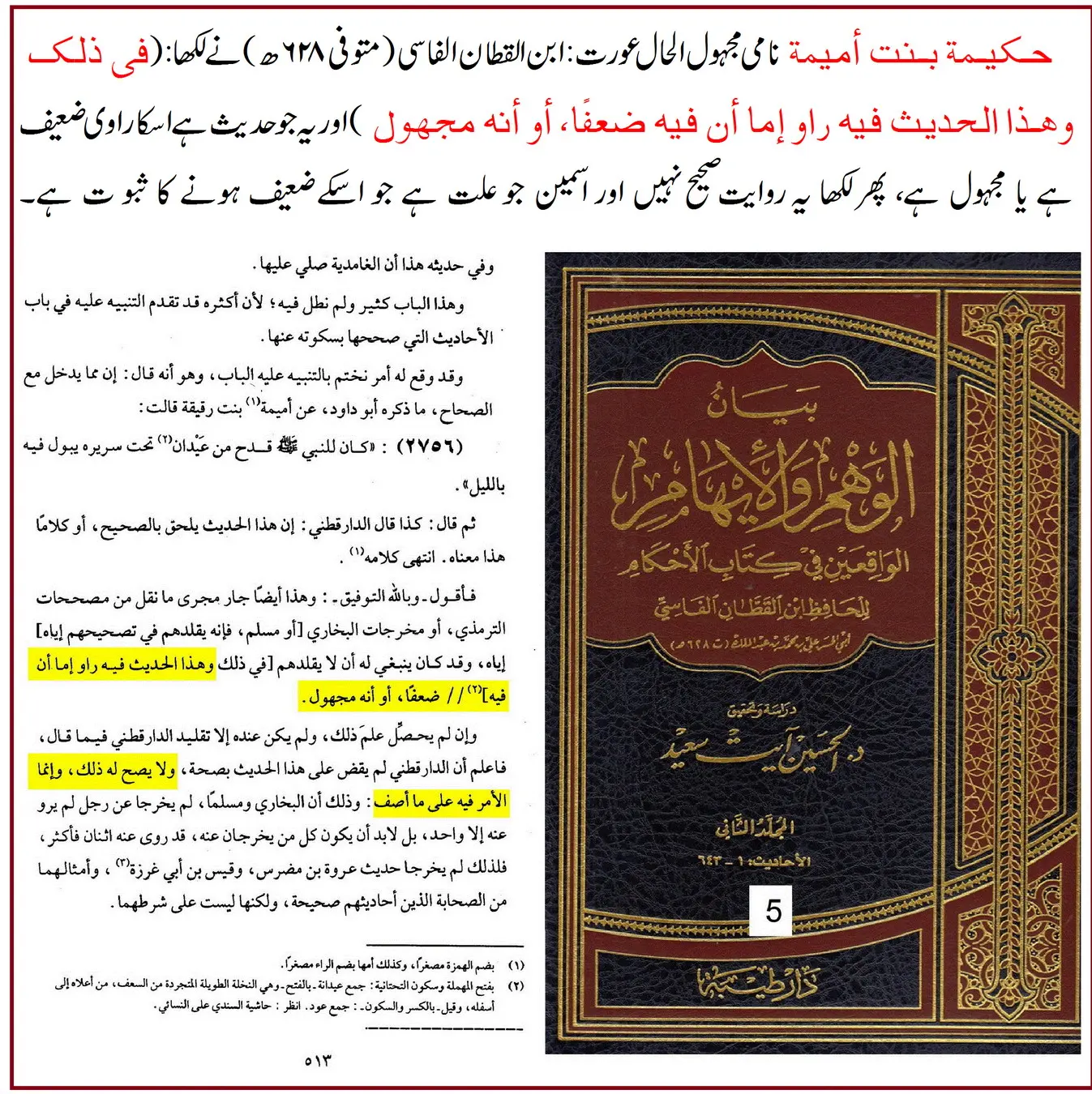
✔ The “urine-drinking” narration is severely weak in chain.✔ Ḥukaymah bint Umaymah is declared unknown by the majority of scholars (Ibn Ḥajar, al-Dhahabī, al-Munāwī, Ibn al-Mulaqqin, Ibn al-Qaṭṭān).
✔ Ḥajjāj ibn Muḥammad became confused in his later life.
✔ The narration is textually inconsistent and contradictory.
✔ Claims attributing this story to Abū Dāwūd, al-Nasā’ī, Ibn Ḥibbān, or al-Dāraquṭnī are false or misleading.
✔ Neither al-Dhahabī nor Ibn Ḥajar authenticated it.
➝ Conclusion: This narration is unacceptable. Relating such rejected and inconsistent additions is misguidance and contrary to the noble status of the Messenger of Allah ﷺ.

