Compiled by: Abu Hamza Salafi
This article clarifies with evidence the principle that personal imitation in religion is not obligatory; that is, it is not permissible to take the opinion of a single scholar/imam as a substitute for a Shariah proof and follow it in every situation. We will show that: (1) In the Marfoo’ ahadith of the Prophet ﷺ, there is explicit instruction not to base religion on personal imitation during a scholar’s error, (2) The Mauqoof narrations of the Companions (رضي الله عنهم) support the same methodology, (3) These narrations are authentic and can be used as evidence (with authentication of the narrators), and (4) Consequently, the criterion of truth is the evidence of the Book and Sunnah, not individuals; “Take what you recognize by evidence, and return what you do not recognize to the people of knowledge” — this is the methodology of Ahl al-Sunnah, and personal imitation is against it.
Hadith of Mu’adh bin Jabal (رضي الله عنه)
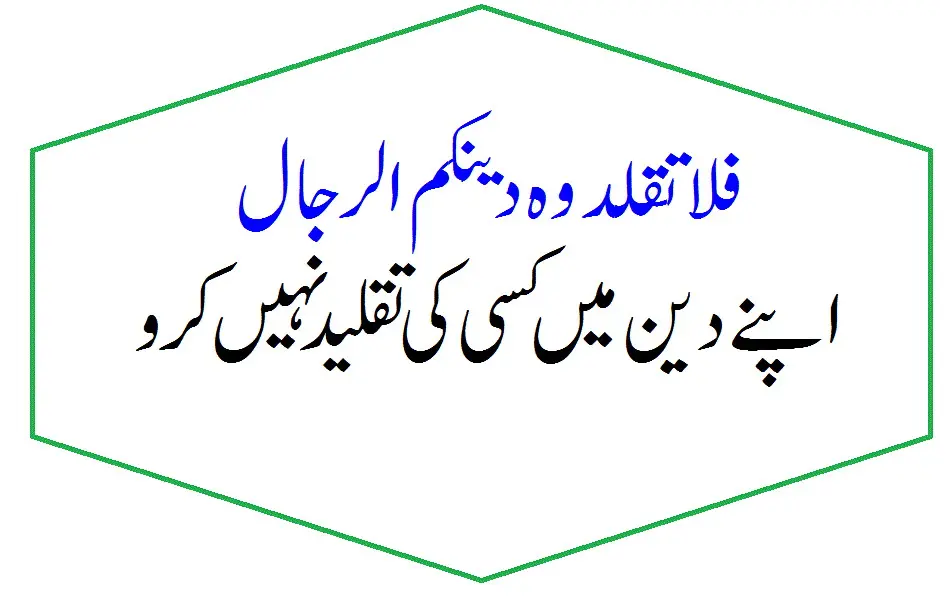
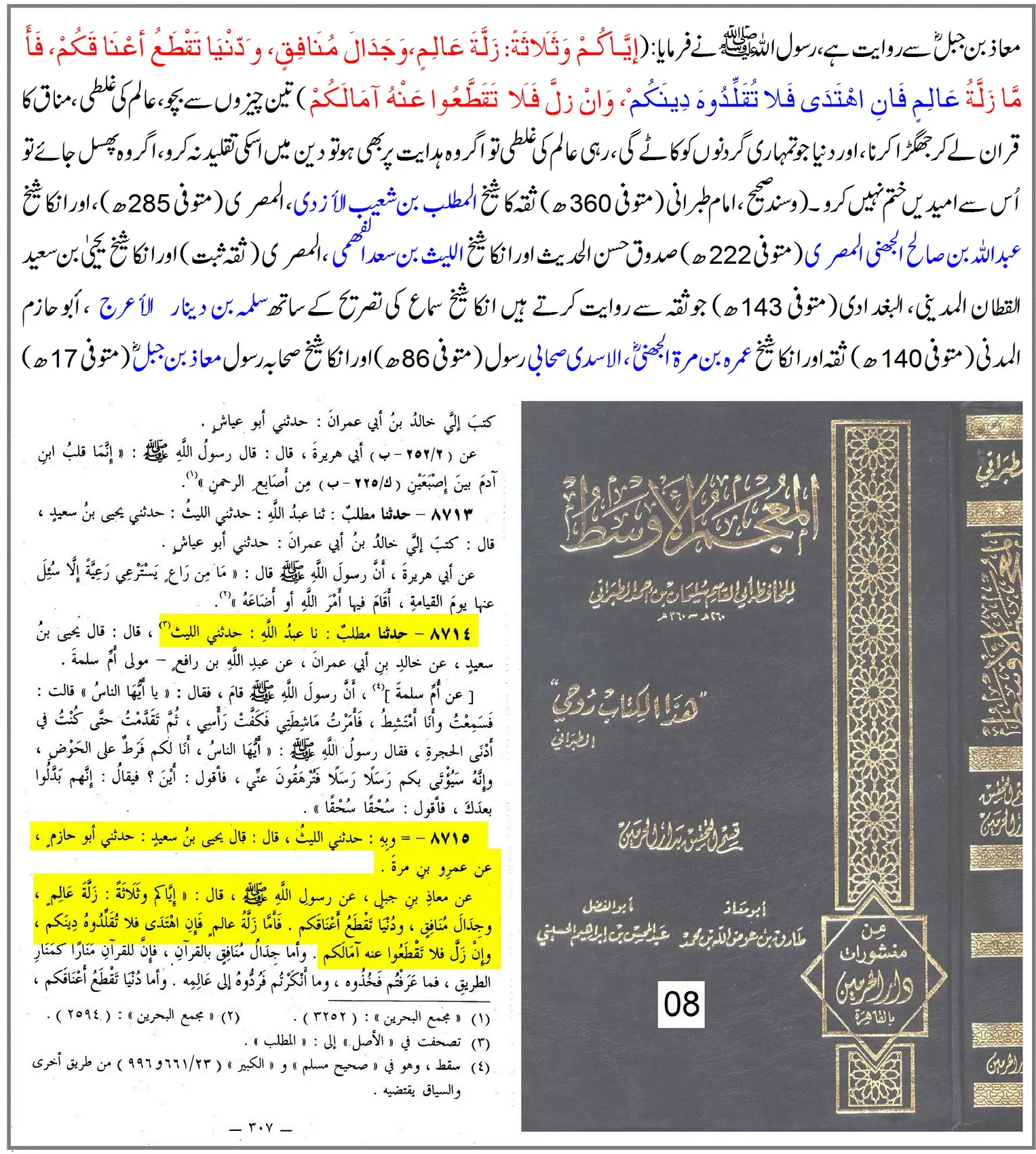
Arabic text: «إيَّاكُم وثَلاثةً: زَلَّةَ عالِمٍ، وجِدالَ مُنافِقٍ، ودُنْيا تَقطَعُ أَعْناقَكمْ. فأمّا زلّةُ عالِمٍ فإنِ اهْتَدَى فلا تُقَلِّدوه دينَكم، وإن زلَّ فلا تَقَطَّعوا عنهُ آمَالَكم… وأمّا جِدالُ منافقٍ بالقرآن فإنّ للقرآن مَنارًا كمنار الطريق، فما عَرَفْتُم فَخُذُوهُ، وما أنكرتُم فَرُدّوهُ إلى عالمِهِ…»
Translation: "Avoid three things: the slip of a scholar, the argument of a hypocrite with the Quran, and a world that will cut your necks. Regarding the slip of a scholar (keep this principle) that if he is on guidance, do not imitate him in your religion, and if he slips, do not lose hope in him… And regarding the hypocrite’s argument with the Quran (know that) the Quran has clear beacons; take the matter you recognize and return what you do not recognize to those knowledgeable in it…”
Reference:
Reference: Al-Mu'jam al-Awsat by Al-Tabarani (8714–8715); Al-Hakim: Al-Mustadrak "Sahih according to the condition of Muslim" (and he mentioned supporting evidence); Al-Dhahabi: Al-Talkhees in agreement.
Summary of the Chain:
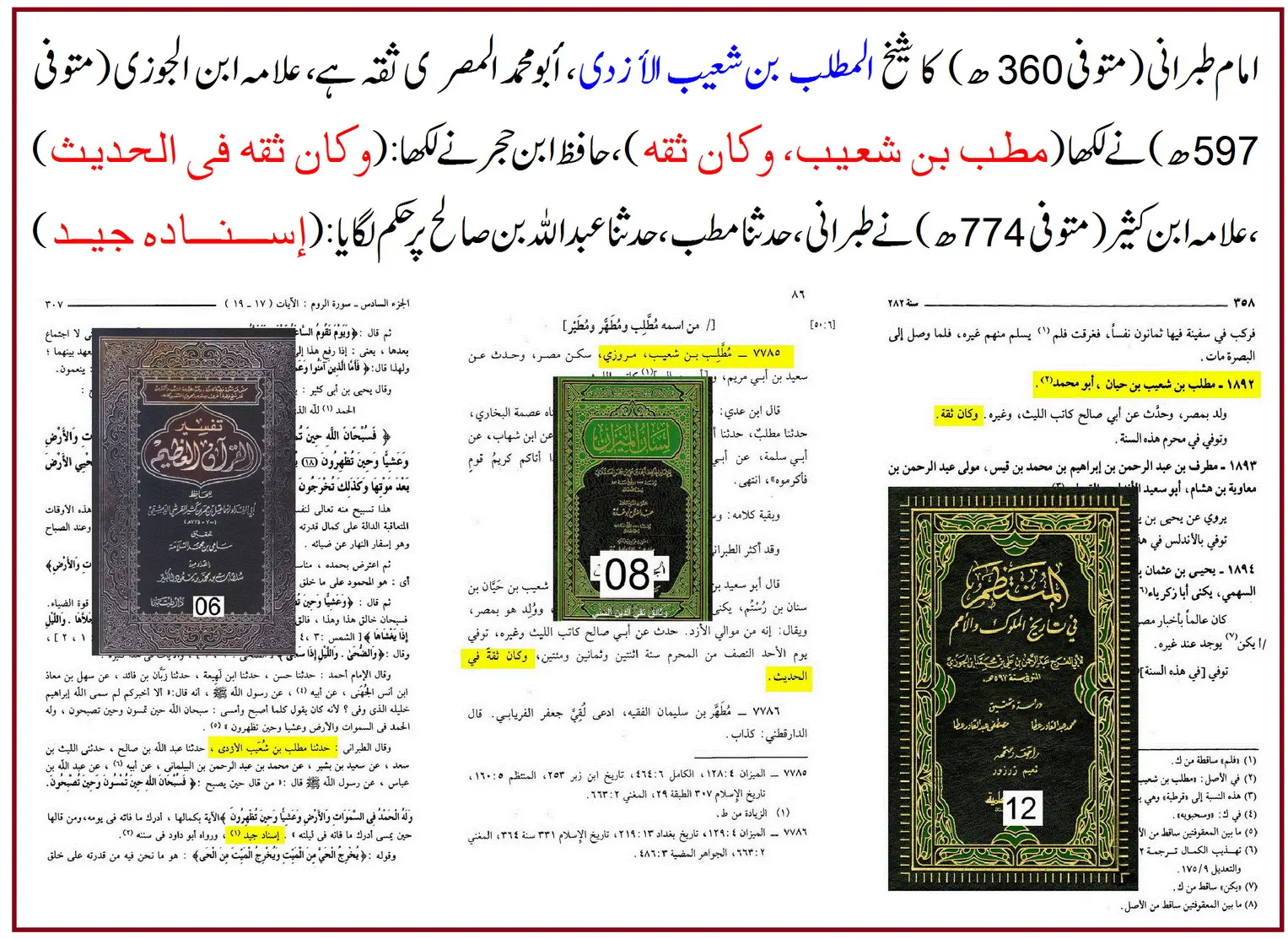
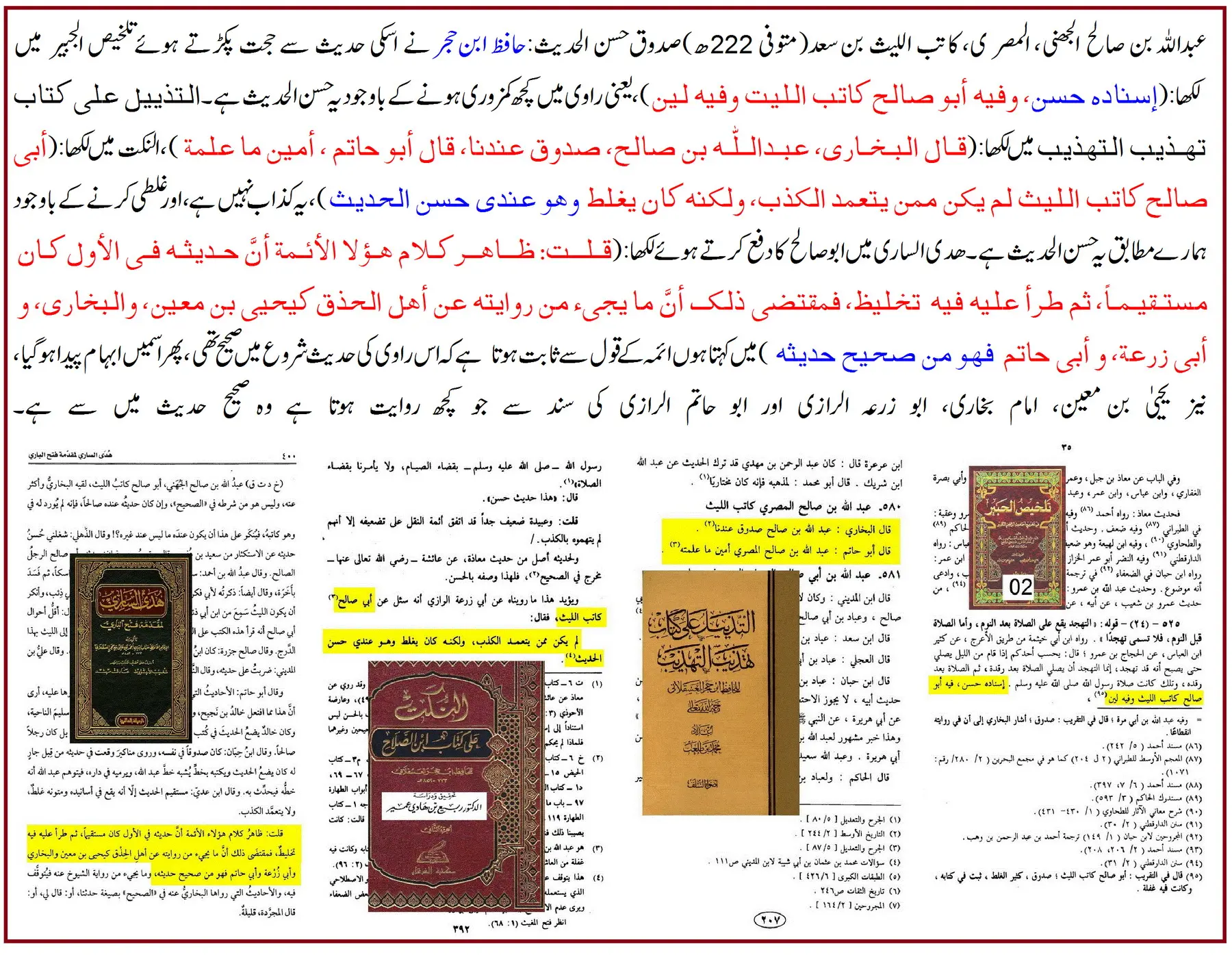
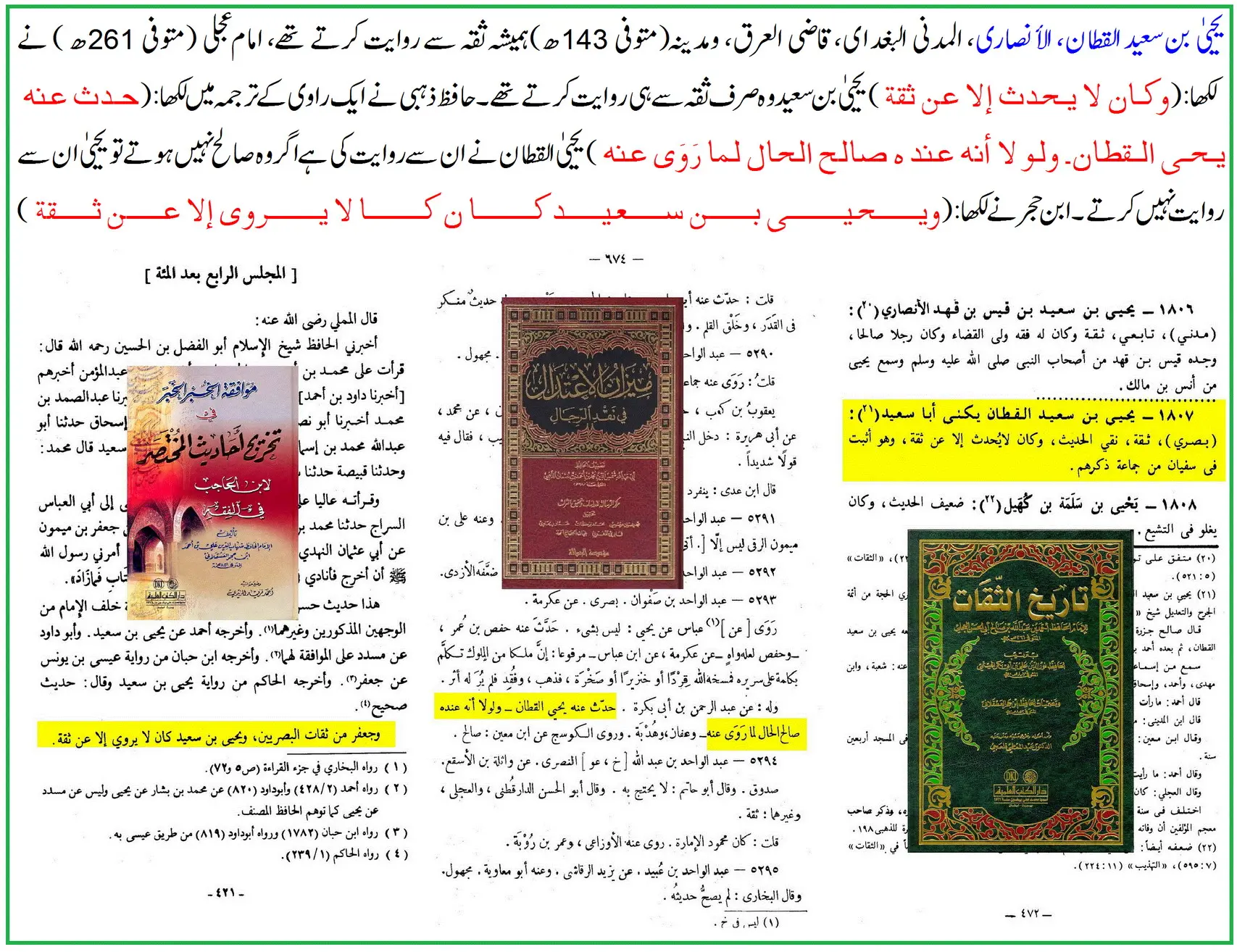
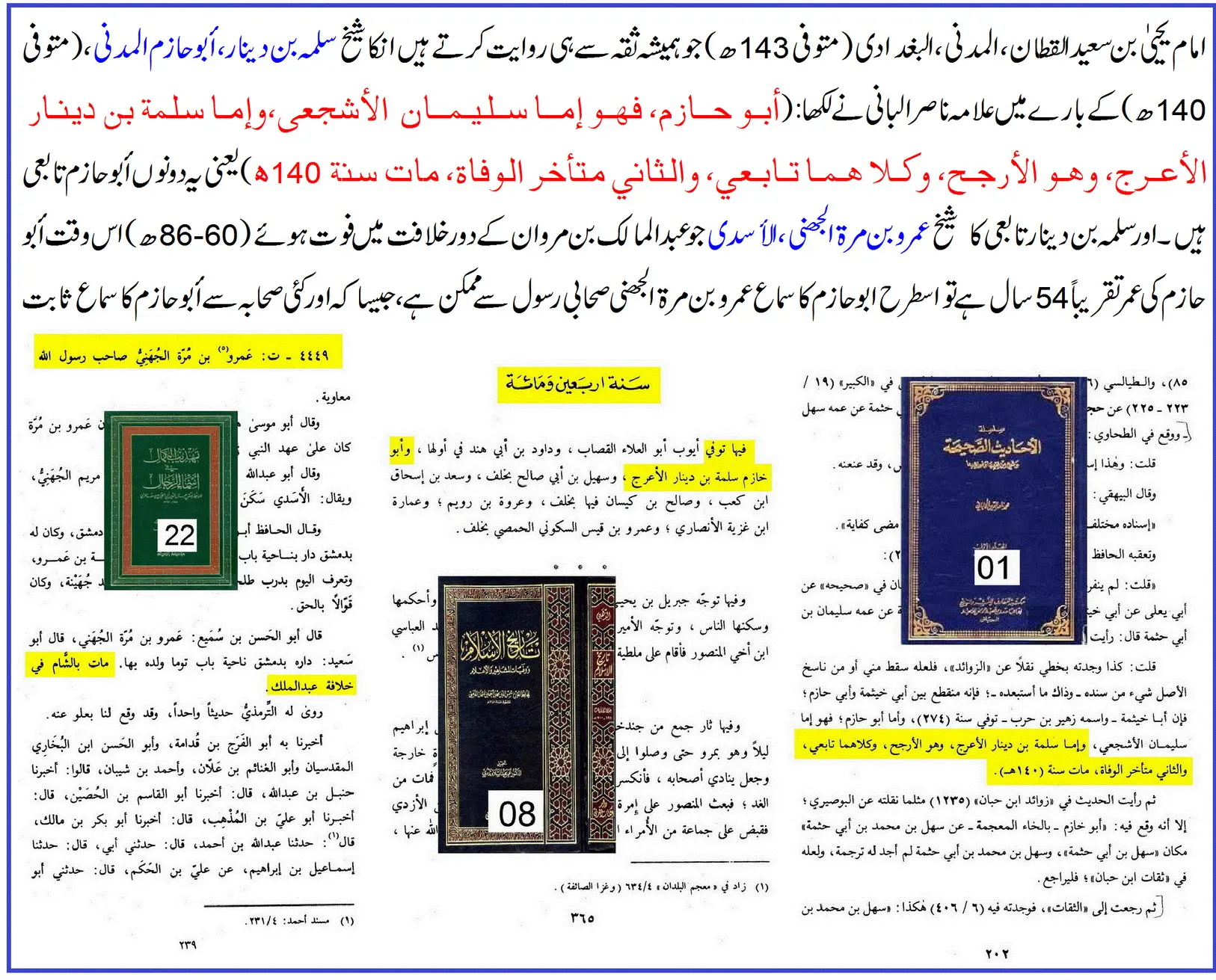
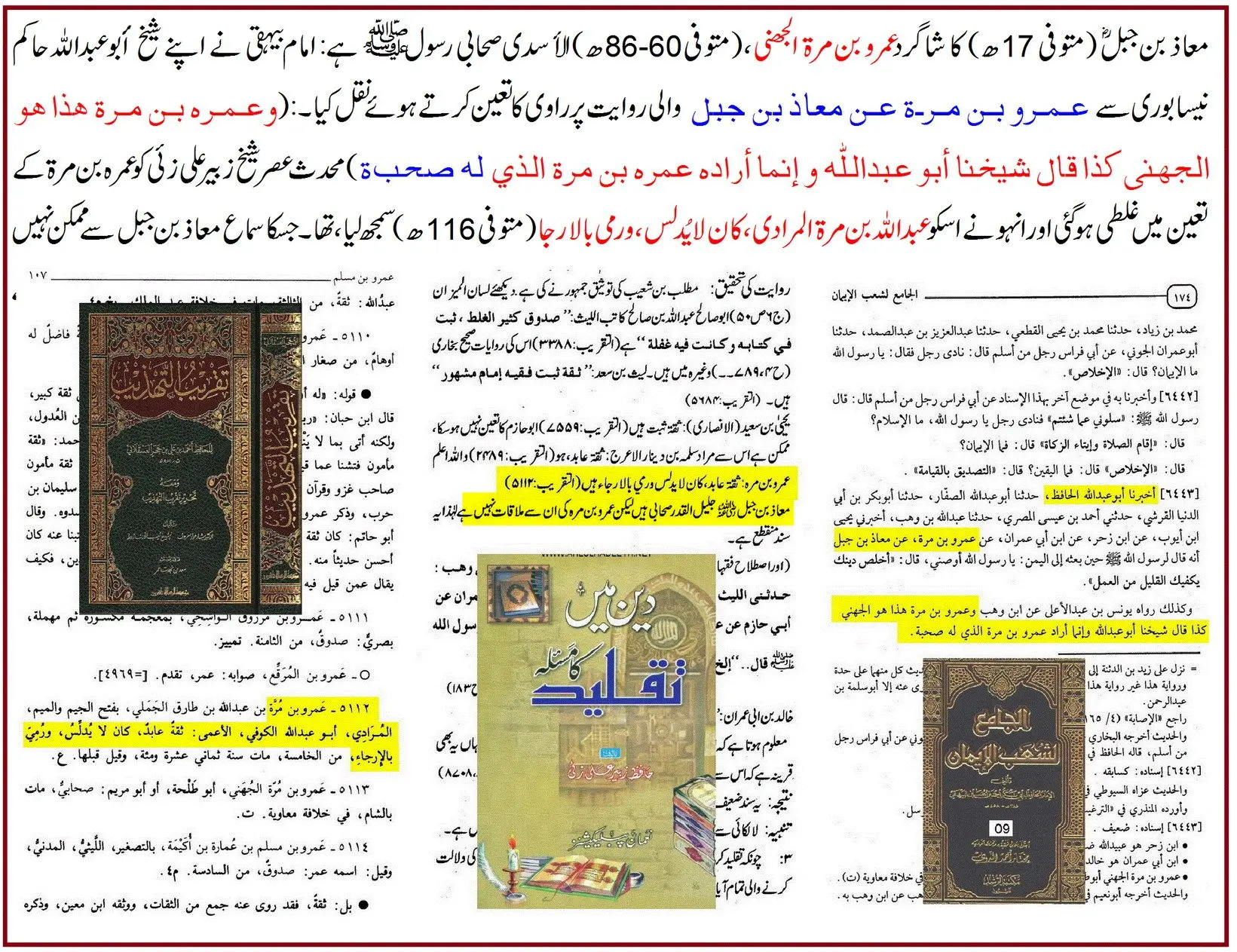
Al-Mutalib bin Shu'aib Al-Azdi — “ثقة” (Ibn al-Jawzi, Ibn Hajar); Abdullah bin Salih Katib Al-Laith — “حسن الحدیث، غیر متَّهم” (Ibn Hajar, Abu Zur'ah); Al-Laith bin Sa'd — قة ثبت; Yahya bin Sa'id Al-Ansari — “لا يروي إلا عن ثقة”; Abu Hazim Salmah bin Dinar — ثقة تابعی; Amr bin Murrah Al-Juhani — صحابی; Mu'adh (may Allah be pleased with him) — صحابی.
Point of Reasoning:
In this text, “فلا تُقَلِّدوه دينَكم” and words like “فما عَرَفتم فخذوه…” clearly negate personal imitation and establish the principle of following the proof of revelation: recognize the truth from the text, not from the person.
Hadith of Mu'adh bin Jabal (may Allah be pleased with him) with the second chain
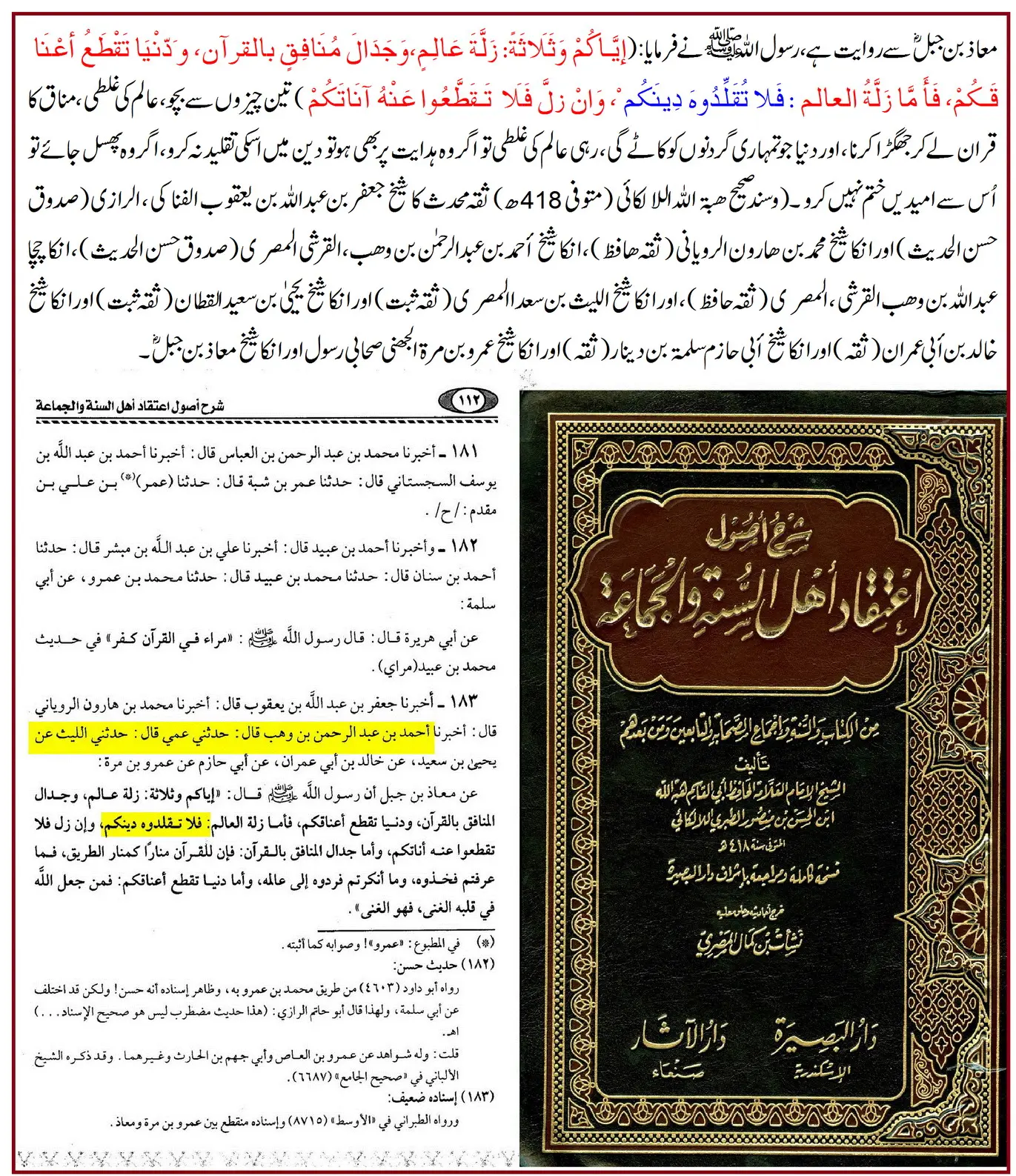
The same hadith has been narrated by Imam Hibbatullah bin Al-Hasan Al-Lalakayi (died 418 AH) with another strong and connected chain in his book
Reference: Sharh Usool I'tiqad Ahl al-Sunnah wal Jama'ah
.Arabic text:
«إِيَّاكُمْ وَثَلَاثَةً: زَلَّةَ عَالِمٍ، وَجِدَالَ الْمُنَافِقِ بِالْقُرْآنِ، وَدُنْيَا تُقَطِّعُ أَعْنَاقَكُمْ، فَأَمَّا زَلَّةُ الْعَالِمِ فَلَا تُقَلِّدُوهُ دِينَكُمْ، وَإِنْ زَلَّ فَلَا تَقْطَعُوا عَنْهُ أَنَاتَكُمْ، وَأَمَّا جِدَالُ الْمُنَافِقِ بِالْقُرْآنِ فَإِنَّ لِلْقُرْآنِ مَنَارًا كَمَنَارِ الطَّرِيقِ، فَمَا عَرَفْتُمْ فَخُذُوهُ، وَمَا أَنْكَرْتُمْ فَرُدُّوهُ إِلَى عَالِمِهِ، وَأَمَّا الدُّنْيَا فَمَنْ جَعَلَ اللَّهُ فِي قَلْبِهِ الْغِنَى فَهُوَ الْغَنِيُّ.»
Reference: (Sharh Usool I'tiqad Ahl al-Sunnah wal Jama'ah, No. 183)
Translation: "Avoid three things: the slip of a scholar, the argument of a hypocrite with the Qur'an, and the world which cuts off your necks. Regarding the slip of a scholar (keep this principle) that if he is on guidance, do not imitate him in your religion, and if he errs, do not lose hope in him. As for the hypocrite's argument with the Qur'an, (remember) the Qur'an is like the signposts of the straight path; take what you understand and return what you do not understand to the people of knowledge. And concerning the world, it is said: Whoever Allah instills contentment in his heart, he is truly rich."
Chain of transmission and reliability
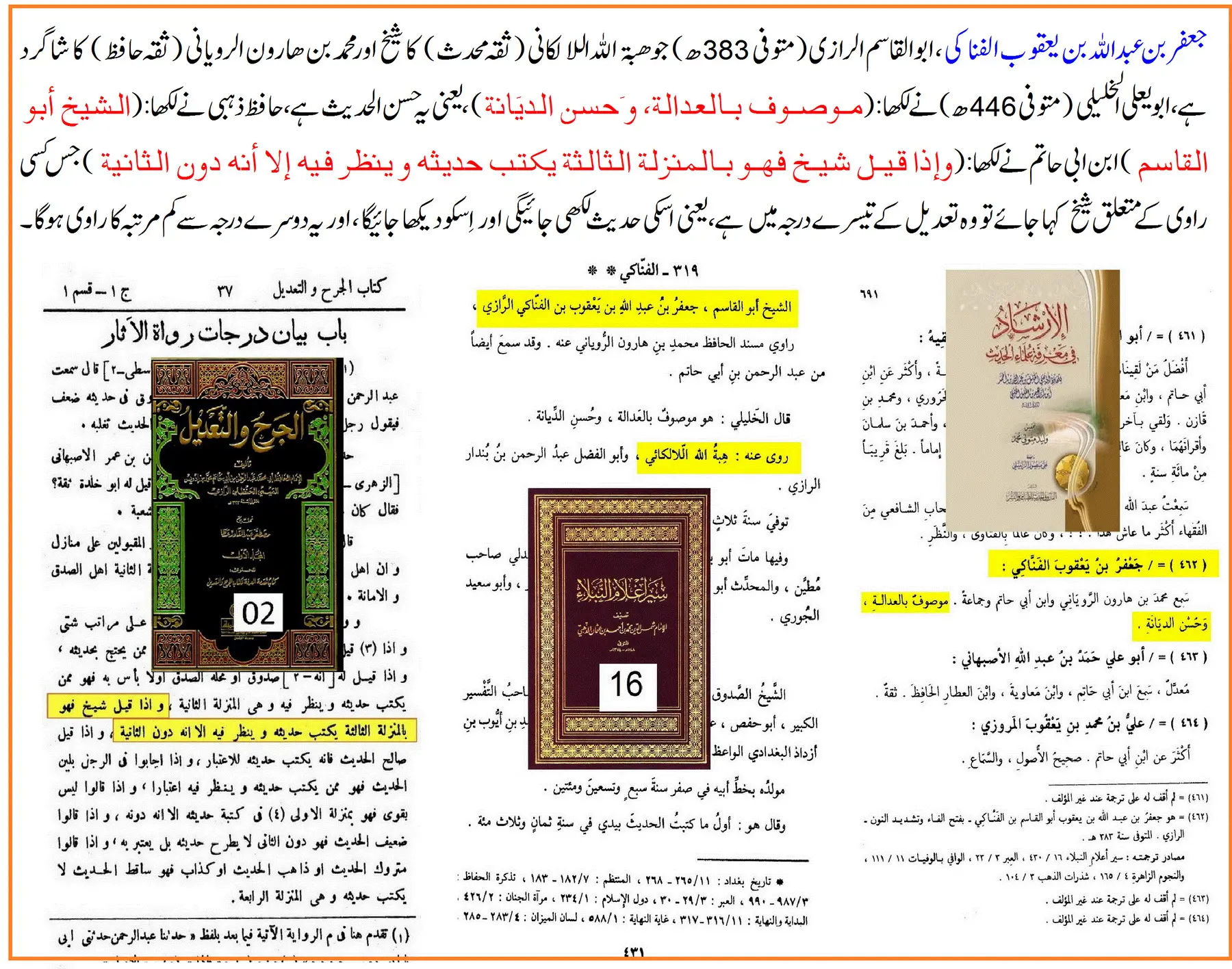
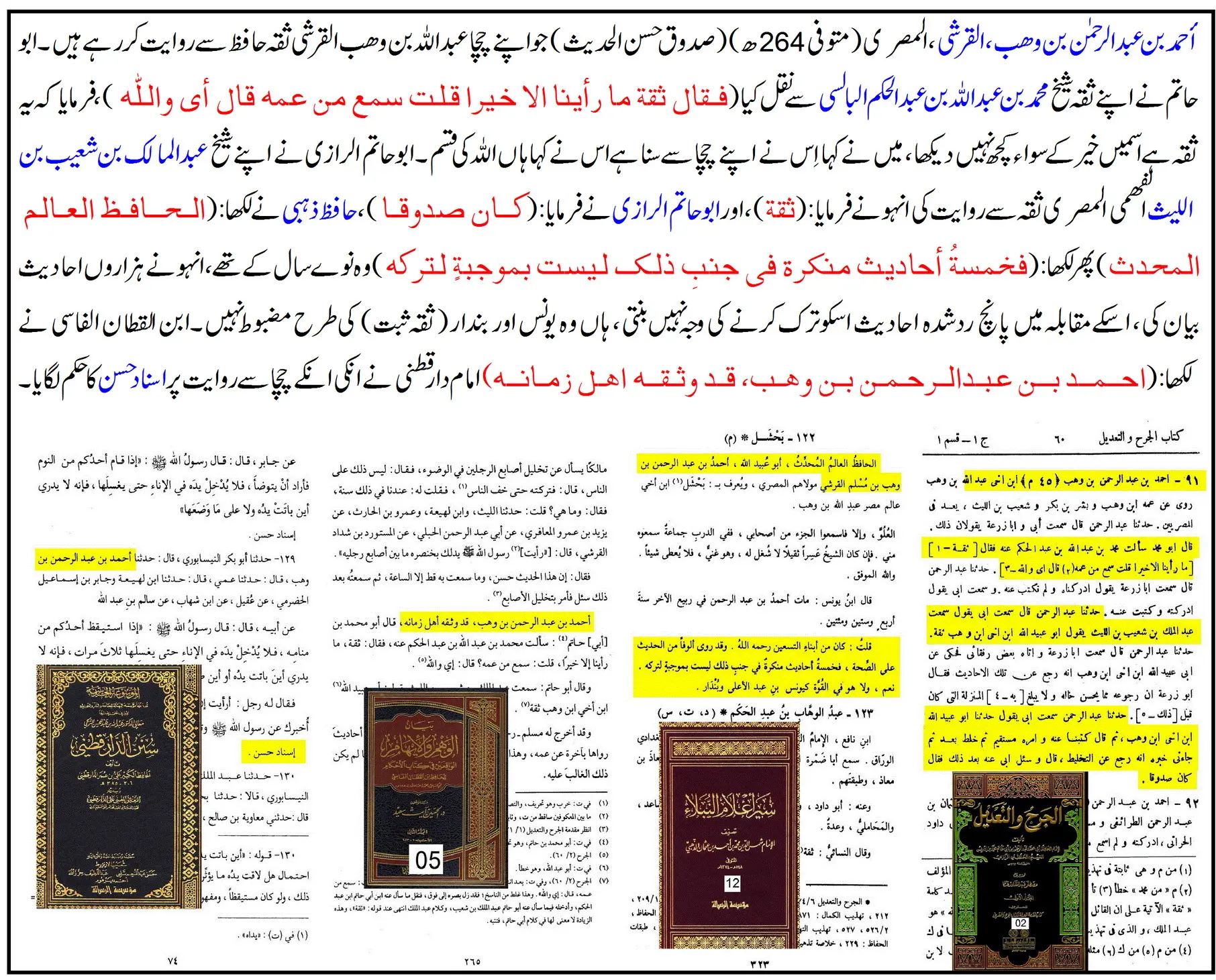
Chain of narration: Hibbatullah bin Al-Hasan Al-Lalakai (trustworthy narrator) → Ja'far bin Abdullah bin Ya'qub Al-Fanaki (truthful, good in hadith) → Muhammad bin Harun Al-Ruyani (memorizer, trustworthy) → Ahmad bin Abdul Rahman bin Wahb (truthful) → Abdullah bin Wahb (trustworthy memorizer) → Al-Laith bin Saad (Imam, jurist, reliable) → Yahya bin Saeed (trustworthy, reliable) → Khalid bin Abi Imran (truthful, good in hadith) → Abu Hazim Salmah bin Dinar (trustworthy) → Amr bin Murrah Al-Juhani (Companion) → Mu'adh bin Jabal رضي الله عنه (Companion).
Ruling:
All narrators are trustworthy or truthful in grade, and Imam Abu Ali Al-Khalili رضي الله عنه said about Ja'far bin Ya'qub:
"موصوف بالعدالة وحسن الديانة."
Reference: (Al-Irshad, p. 297)
Therefore, this narration has an authentic chain, and it is a strong supporting (confirming) narration for the narration of Al-Tabarani.
Explanation and Meaning
The Messenger of Allah ﷺ warned here about three major tribulations:
- زَلَّةُ عَالِمٍ (The slip of a scholar): Meaning when a scholar or imam makes a mistake in ijtihad or understanding, it is not obligatory for the Ummah to blindly follow him. It is stated:
"فَلَا تُقَلِّدُوهُ دِينَكُمْ" Meaning do not associate your religion with the slip of any scholar. From this, it is understood that blind following is not permissible in Shariah, because religion is understood through evidence, not personality.
 - جِدَالُ الْمُنَافِقِ بِالْقُرْآنِ: Meaning the hypocrites argue over the words of the Quran and twist matters based on desire rather than evidence. The solution to this trial was given by the Prophet ﷺ himself:
"فَمَا عَرَفْتُمْ فَخُذُوهُ، وَمَا أَنْكَرْتُمْ فَرُدُّوهُ إِلَى عَالِمِهِ" Meaning whatever you know through clear evidence from the Quran and Sunnah, adopt it, and whatever you do not understand, refer it to the people of knowledge. - دُنْيَا تُقَطِّعُ أَعْنَاقَكُمْ: The love of the world is such a calamity that it diverts a person from seeking the truth.
After the elevated guidance of the Prophet ﷺ, the stopped statements of the Companions (رضی اللہ عنہم) on the same subject are also clear and explicit. These narrations teach the principle that in religion there is no blind imitation, but following evidence. Among them, especially the statements of Hazrat Salman Farsi (رضی اللہ عنہ), Mu'adh ibn Jabal (رضی اللہ عنہ), and Abdullah ibn Mas'ud (رضی اللہ عنہ) clearly indicate the rejection of imitation in very clear words.
➊ The Stopped Statement of Hazrat Salman Farsi (رضی اللہ عنہ)
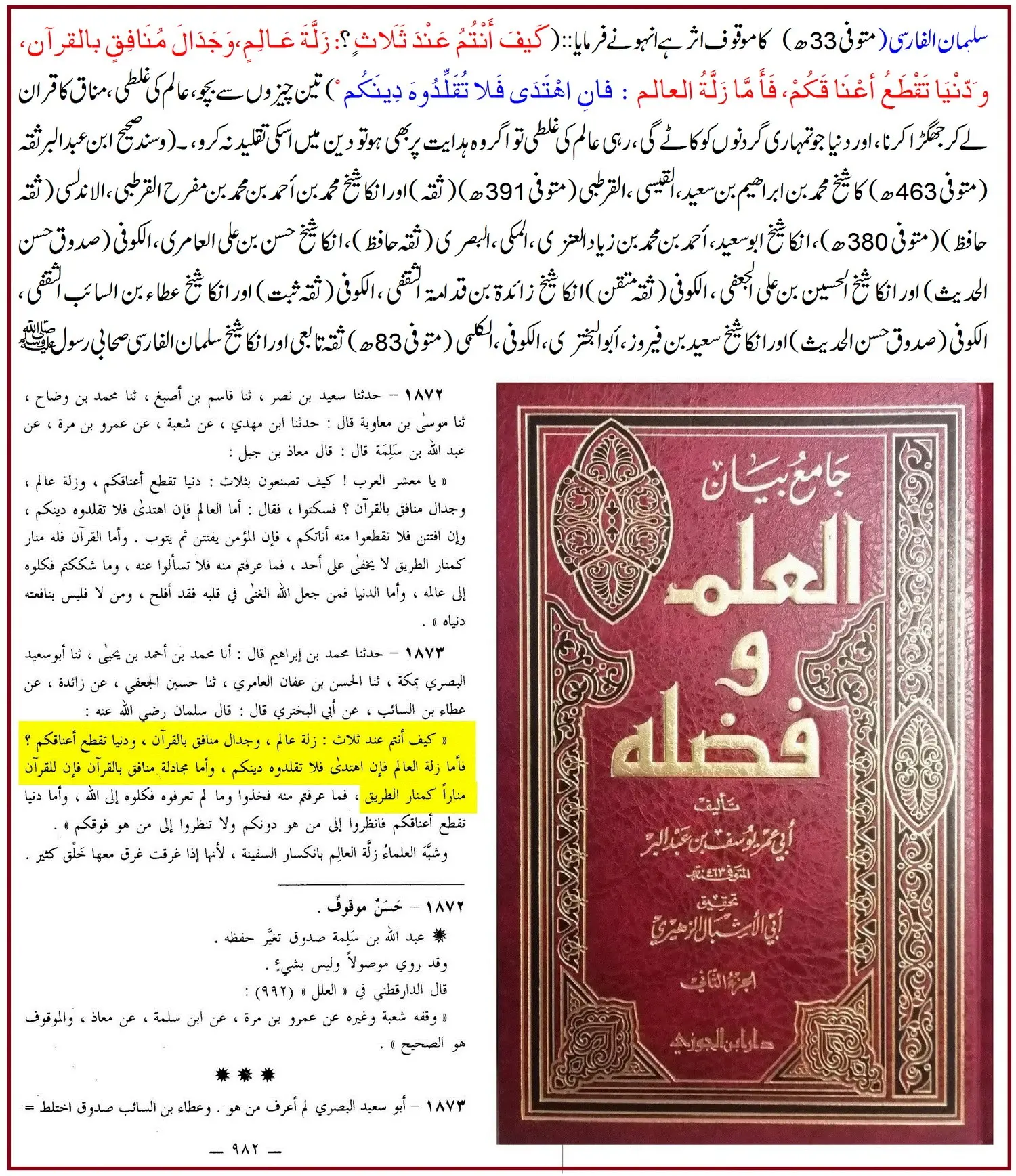
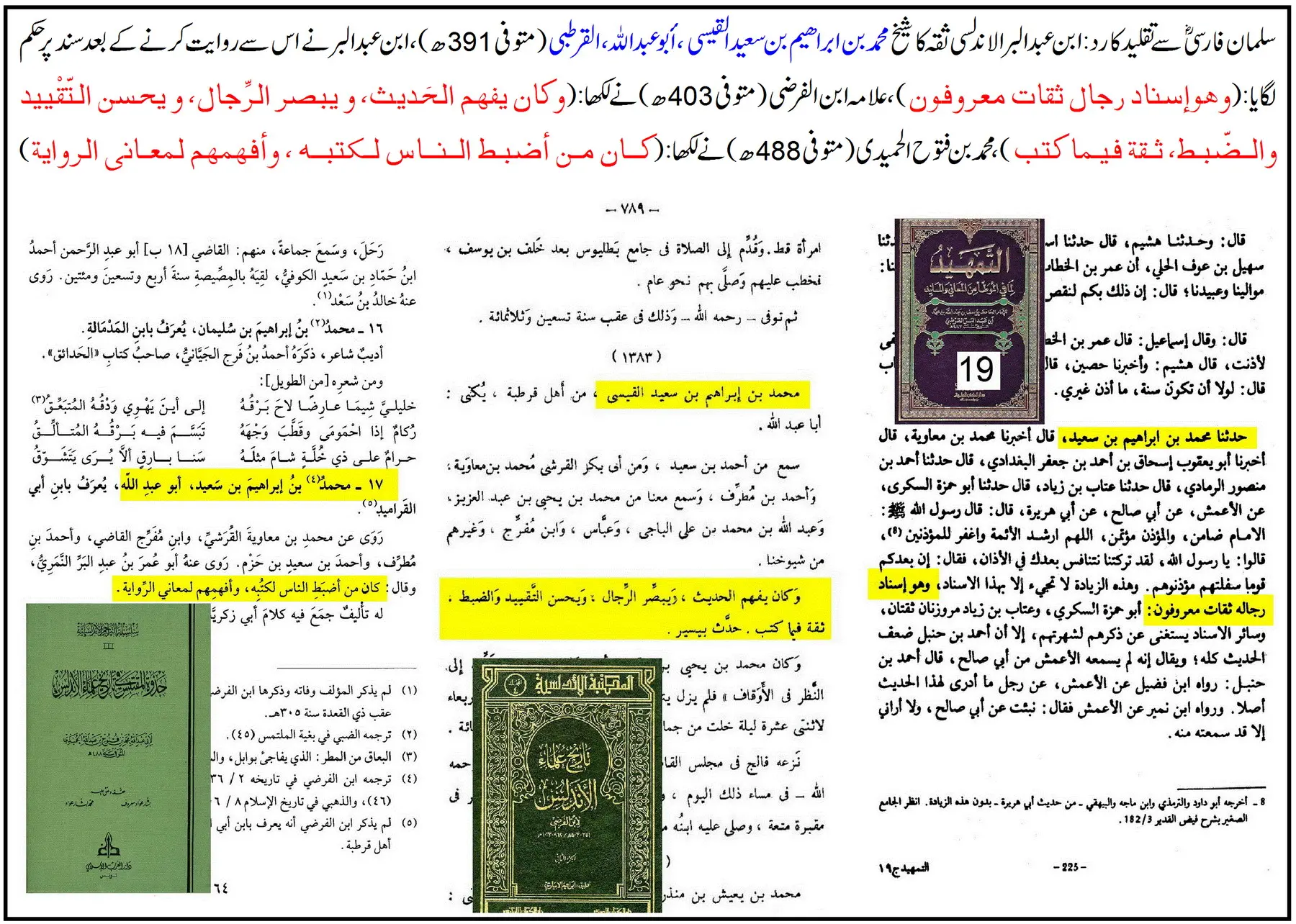
Arabic text: «كَيْفَ أَنْتُمْ عِنْدَ ثَلَاثٍ؟ زَلَّةِ عَالِمٍ، وَجِدَالِ مُنَافِقٍ بِالْقُرْآنِ، وَدُنْيَا تَقْطَعُ أَعْنَاقَكُمْ. فَأَمَّا زَلَّةُ الْعَالِمِ فَإِنِ اهْتَدَى فَلَا تُقَلِّدُوهُ دِينَكُمْ، وَأَمَّا مُجَادَلَةُ مُنَافِقٍ بِالْقُرْآنِ فَإِنَّ لِلْقُرْآنِ مَنَارًا كَمَنَارِ الطَّرِيقِ...»
Reference: (Jami' Bayan al-'Ilm wa Fadlih by Ibn Abd al-Barr, No. 1873)
Translation: Salman Farsi (رضی اللہ عنہ) said: "What will you do at the time of three trials? The slip of a scholar, the dispute of a hypocrite with the Qur'an, and the love of the world. As for the slip of the scholar, even if he is on guidance, do not imitate him in your religion. And when a hypocrite disputes with the Qur'an, (remember) the Qur'an is like the signs of the path on a minaret (recognize them through evidence)."
Chain of Transmission:
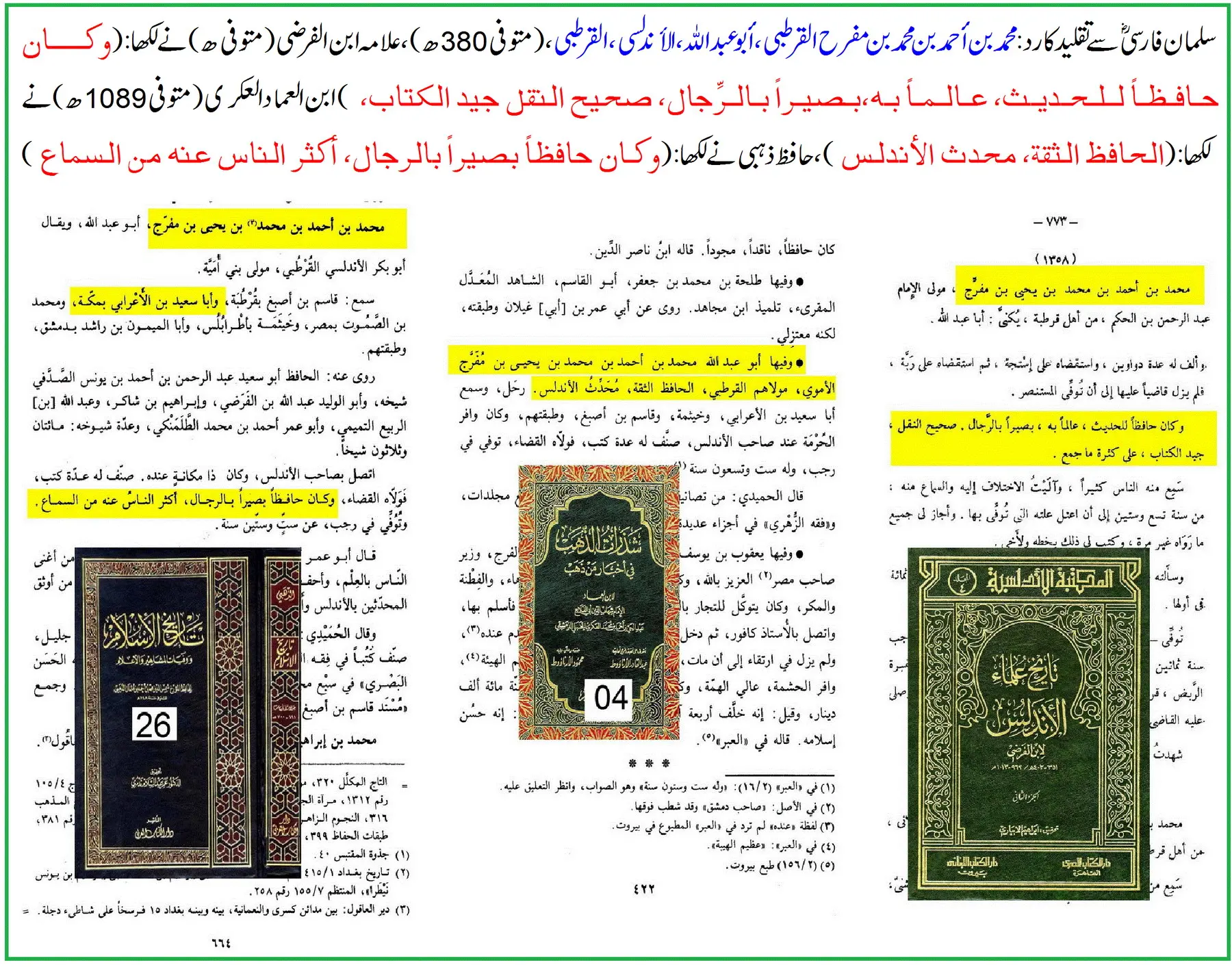
All narrators are trustworthy; Imam Ibn Abd al-Barr clarified: إسنادُه رجالُه ثقاتٌ معروفون.
Explanation:
This narration carries exactly the same meaning as the elevated hadith of the Prophet ﷺ. Here too, Salman Farsi (رضی اللہ عنہ) said:
"فَإِنِ اهْتَدَى فَلَا تُقَلِّدُوهُ دِينَكُمْ" That is, even if a scholar is on the path of guidance, do not establish your religion merely on following him.
This principle clarifies that the criterion of truth is not a person, but the argument.
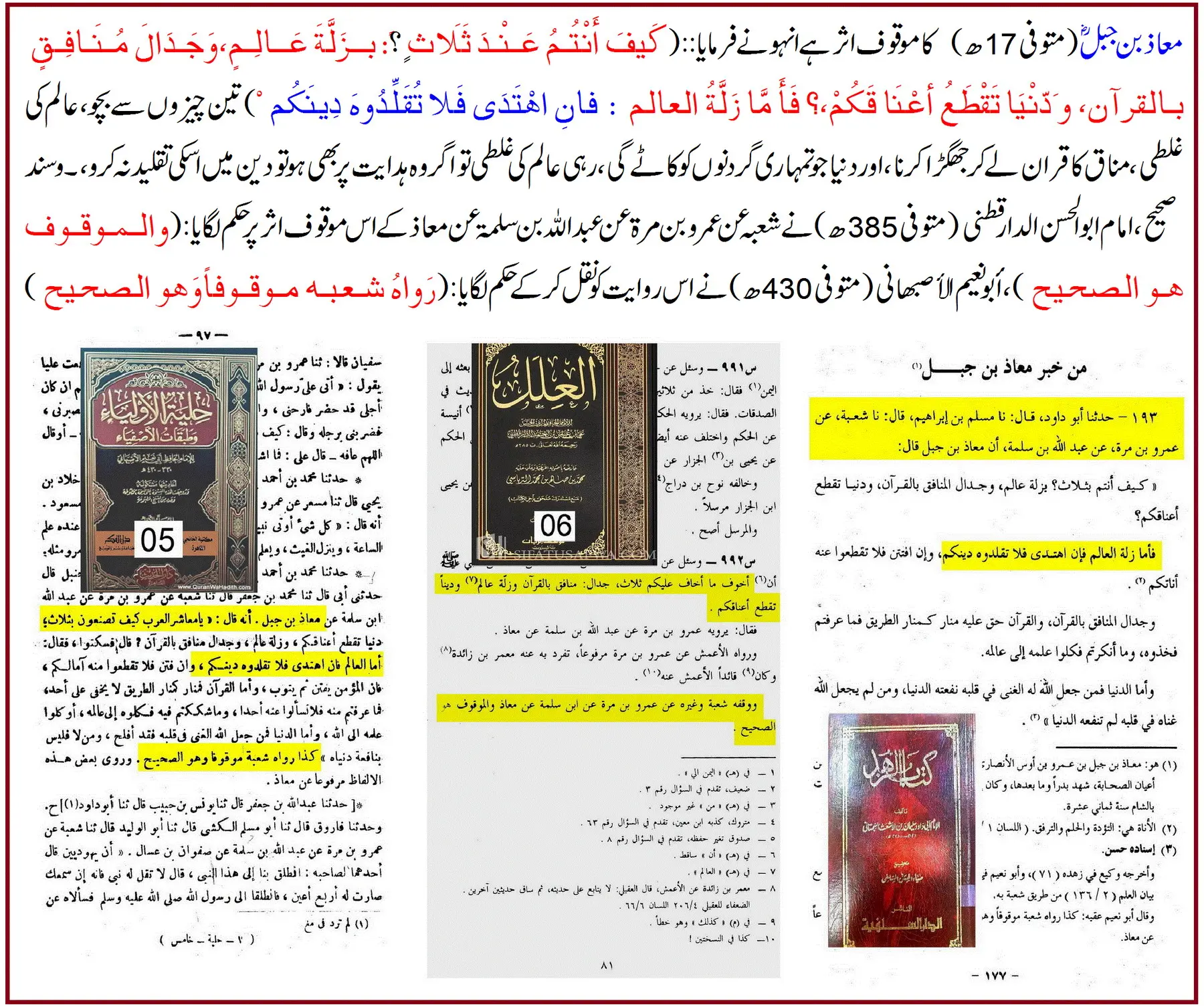
➋ The Mawkuf Statement of Hazrat Mu'adh bin Jabal (RA)
Arabic text: «كَيْفَ أَنْتُمْ بِثَلَاثٍ؟ بِزَلَّةِ عَالِمٍ، وَجِدَالِ الْمُنَافِقِ بِالْقُرْآنِ، وَدُنْيَا تَقْطَعُ أَعْنَاقَكُمْ؟ فَأَمَّا زَلَّةُ الْعَالِمِ فَإِنِ اهْتَدَى فَلَا تُقَلِّدُوهُ دِينَكُمْ، وَإِنِ افْتُتِنَ فَلَا تَقْطَعُوا عَنْهُ أَنْاتَكُمْ…»
Reference: (Al-Zuhd by Abu Dawood, No. 183)
Translation: Hazrat Mu'adh bin Jabal (RA) said: "Avoid three things: the slip of a scholar, the dispute of a hypocrite with the Quran, and the world which destroys you. As far as the slip of a scholar is concerned, if he is on guidance then do not imitate him in your religion, and if he falls into trial then do not lose hope in him."
Ruling:
Imam Darqutni (RA) said: “الموقوف هو الصحيح.” meaning the Mawkuf narration itself is authentic.
Abu Nu'aym Asfahani (RA) also narrated in حلیة الأولیاء and wrote: “كَذَا رَوَاهُ شُعْبَةُ مَوْقُوفًا وَهُوَ الصَّحِيحُ.”
Explanation:
This statement is conclusive evidence that even Mu'adh bin Jabal (RA), who was among the jurists of the Companions, was opposed to blind personal imitation. He clearly stated that if the scholar's statement contradicts the Shariah evidence, then do not blindly follow him.
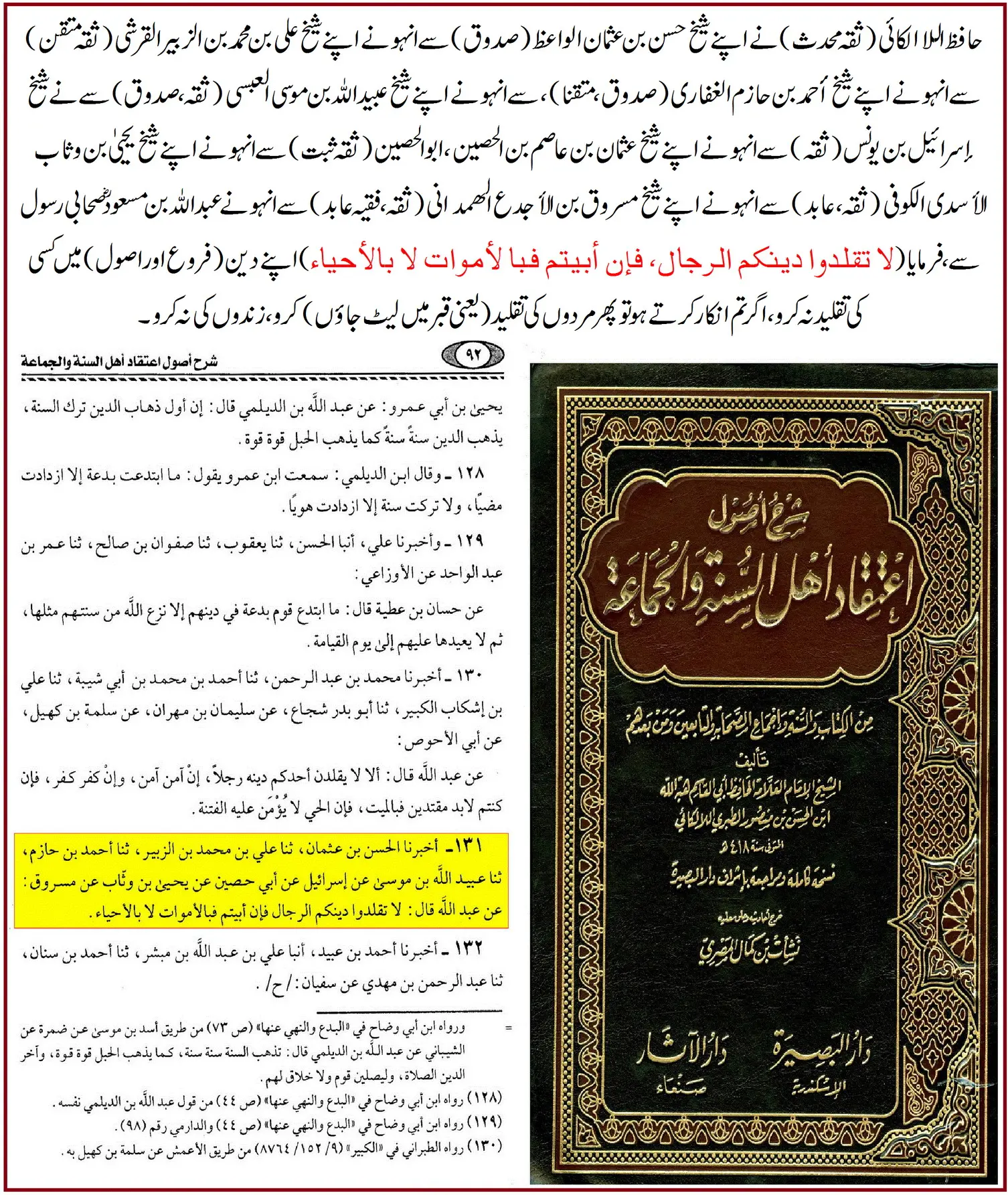
➌ The Mawkuf Statement of Hazrat Abdullah bin Mas'ud (RA)
Arabic text: «لَا تُقَلِّدُوا دِينَكُمُ الرِّجَالَ، فَإِنْ أَبَيْتُمْ فَبِالْأَمْوَاتِ لَا بِالْأَحْيَاءِ.»
Reference: (Sharh Usool I'tiqad Ahl al-Sunnah wal Jama'ah, Lalakai 1/131)
Translation: Abdullah bin Mas'ud (RA) said: "Do not imitate men (i.e., scholars) in your religion. And if you must imitate, then imitate not the living, but the dead (because a living person can err)."
Chain of Transmission:
All narrators are trustworthy; Azhari muhaddithin (Ibn Abi Hatim, Abu Zur'ah, Abu Hatim, Ajli, Ibn Hajar) have authenticated the narrators.
Explanation:
This narration carries a very profound message — Ibn Mas'ud (RA) taught to rely on evidence rather than personal imitation. He said: The statement of a living person can change, therefore keep your religion attached only to the Quran and Sunnah.
Summary:
- The statements of Salman al-Farsi (RA), Mu'adh bin Jabal (RA), and Ibn Mas'ud (RA) are very clear in rejecting personal imitation.
- The common phrase among all of them is: “فَلَا تُقَلِّدُوهُ دِينَكُمْ” meaning "Do not imitate anyone in your religion."
- These statements represent not only the theoretical but also the practical methodology of the Sahabah (RA) — they were bound to evidence, not to individuals.
- In contrast to personal imitation, the Sahabah (RA) always used the Quran and Sunnah as the measure.
After the Prophet ﷺ and the noble companions, the Tabi‘in and the Imams of the Salaf also adopted the same methodology that the evidence should be followed, not the person. It has been repeatedly emphasized in their statements that a scholar or an Imam is not infallible; if their statement contradicts the evidence, it should be rejected. This is the fundamental methodology of Ahl al-Hadith.
➊ Imam Sa‘id ibn al-Musayyib (Great Tabi‘i)
He said:
“ما أحدٌ إلا يؤخذ من قوله ويُترك، إلا النبي ﷺ.”
Reference: (Jami‘ Bayan al-‘Ilm 2/32)
Translation: “The statement of every person can be accepted or rejected, except that of the Prophet ﷺ.” Meaning, in religion, the statement of any Imam or scholar is not final; the decision will only be according to the Sunnah of the Prophet ﷺ.
➋ Imam Hasan al-Basriؒ
He said:
“اتبعوا من مات، فإن الحي لا يؤمن عليه الفتنة.”
Reference: (Al-Ibanah li Ibn Battah 2/557)
Translation: “Follow those people who have passed away, because the danger of a living person falling into trial always remains.” This same meaning is also found in the narration of Ibn Mas‘udؓ, i.e., do not make a living person the standard, make the evidence the standard.
➌ Imam Ibrahim al-Nakha‘iؒ
He said:
“كانوا إذا بلغهم عن رجلٍ شيءٌ، سألوا: ما دليله؟”
Reference: (Jami' Bayan al-'Ilm 2/78)
Translation: "When the Tabi‘een heard a person's statement, they would immediately ask: What is the evidence for it?" This is the true method of investigation — not the statement, but the evidence.➍ Imam Malik ibn Anas (RA)
He said:
“إنما أنا بشر، أخطئ وأصيب، فانظروا في قولي، فما وافق الكتاب والسنة فخذوه، وما خالف فاضربوا به عرض الحائط.”
Reference: (Al-I'tisam by Al-Shatibi 2/302)
Translation: "I am also a human being; sometimes I speak correctly, sometimes incorrectly. Examine my statement — take what is according to the Book and Sunnah, and throw what is against them on the wall."➎ Imam Abu Hanifa (RA)
He himself said:
“إذا صح الحديث فهو مذهبي.”
Reference: (Al-Intiqa by Ibn Abd al-Barr, p. 145)
Translation: "When an authentic hadith comes, that is my madhhab (not my opinion)." Elsewhere he said: “لا يحل لأحدٍ أن يأخذ بقولنا ما لم يعلم من أين أخذناه.”
Reference: (Al-Intiqa, p. 145)
Translation: "It is not permissible for anyone to take my statement until he knows by what evidence I said it."➏ Imam Shafi‘i (RA)
He said:
“كل ما قلتُ فكان عن النبي ﷺ خلاف قولي، فما قاله النبي ﷺ فهو أولى.”
Reference: (Siyar A‘lam al-Nubala 10/29)
Translation: "Whatever I have said, if there is a narration from the Prophet ﷺ against it, then leave my statement and follow the statement of the Prophet ﷺ."➐ Imam Ahmad ibn Hanbal (RA)
He said:
“لا تقلدني، ولا تقلد مالكاً، ولا الشافعي، ولا الأوزاعي، ولا الثوري، وخذ من حيث أخذوا.”
Reference: (I'lam al-Sawaleen 2/302)
Translation: "Do not follow me, nor Malik, Shafi'i, Awza'i, or Thawri. Take knowledge from the place where we took it — that is, the Quran and Sunnah."Summary
- All the Tabi‘in, Imams, and Muhaddithin have said one thing: The statement of an Imam cannot be a proof unless it is in accordance with the Quran and Sunnah.
- The Imams themselves negated personal taqlid and permitted rejecting their opinions.
- This principle clarifies that the true source of Islam is revelation, not individuals.
- Therefore, whoever gives precedence to the words of an Imam or elder over a Shari‘ah proof goes against the very methodology established by the Imams themselves.
Explanations of Muhaddithin and Later Scholars — Supporting the Non-Taqlid Methodology of the Imams
After the Marfu‘ Ahadith of the Prophet ﷺ, the Mauquf statements of the Sahabah and Tabi‘in, and the statements of the Mujtahid Imams, the Muhaddithin and learned scholars also clearly declared personal taqlid invalid and commanded the Ummah to follow the Quran and Sunnah.
➊ Imam Ibn Abd al-Barr (463 AH)
He said:
“أجمع الناس على أن المقلد ليس من أهل العلم، وأن العلم هو معرفة الحق بدليله.”
Reference: (Jami' Bayan al-'Ilm wa Fadlih 2/119)
Translation: All scholars agree that a follower (muqallid) is not among the people of knowledge, and knowledge is that which recognizes the truth with evidence. That is, one who follows statements without evidence cannot be called a "person of knowledge."➋ Imam Ibn Qayyim (751 AH)
He said about taqlid (imitation):
“التقليد في الدين محرم لا يجوز، لأنه قول بلا علم.”
Reference: (I'lam al-Muwaqqi'in 2/301)
Translation: Taqlid in religion is forbidden because it is speaking without knowledge. And he said:
Reference: “كل إمام يُؤخذ من قوله ويُترك إلا رسول الله ﷺ.”(I'lam al-Muwaqqi'in 2/309)
Translation: The statement of every Imam can be taken or left, except that of the Prophet ﷺ.➌ Imam Shatibi (790 AH)
He said about taqlid:
“التقليد إنما يكون فيمن لم يظهر له الدليل، أما من قامت عليه الحجة فلا يقلد.”
Reference: (Al-I'tisam 2/296)
Translation: Taqlid is only for the one for whom the evidence is not clear, but for the one for whom the proof is established, taqlid is not permissible.➍ Imam Ibn Taymiyyah (728 AH)
He said:
“من قلد شخصاً دون نظر في الدليل فهو مخطئ جاهل، ومن اتبع الدليل فهو المحق.”
Reference: (Majmu' al-Fatawa 20/211)
Translation: The person who accepts someone without evidence is wrong and ignorant, and the one who follows evidence is on the truth.➎ Hafiz Ibn Hajar Asqalani (852 AH)
He said in the principles of research:
“المقلد لا يقال له فقيه، لأنه لا يعرف علّة الحكم ولا مأخذه.”
Reference: (النكت على ابن الصلاح 2/321)
Translation: A follower (muqallid) cannot be called a jurist (faqih), because he does not know the cause and basis of the ruling.➏ Imam Shawkani (1250 AH)
He said in "Irshad al-Fuhul":
“التقليد في الشريعة لا أصل له، بل الواجب على المسلم اتباع الدليل.”
Reference: (ارشاد الفحول، ص 256)
Translation: There is no principle of taqlid (imitation) in the Shariah; rather, it is obligatory upon a Muslim to follow the evidence.➐ Allama Nasiruddin al-Albani (may Allah have mercy on him)
In his final stance, he said:
“التقليد الذي يُحجر على الناس من النظر في الكتاب والسنة بدعة محدثة.”
Reference: (سلسلة الهدى والنور، شريط 724)
Translation: The taqlid that prevents people from reflecting upon the Quran and Sunnah is an innovated bid’ah.Summary
- The Imams of Hadith (Ibn Abdul Barr, Ibn Qayyim, Ibn Taymiyyah, Shatibi, Shawkani, Ibn Hajar, Albani) all agree that personal taqlid is contrary to the Quran and Sunnah.
- Knowledge is that which is recognized through evidence, not through personality.
- The Prophet ﷺ is infallible; all other Imams are fallible in ijtihad.
- The command to the Ummah is to make evidence the criterion — because the proof is the Book of Allah and the Sunnah of the Prophet ﷺ, not the statement of any human being.
Conclusions of the Research
This entire research makes it very clear that personal imitation — that is, confining religion to the opinion of a specific imam or scholar and considering every statement of theirs as a legal proof — is neither established by the Quran and Sunnah nor by the methodology of the Companions and the Successors.
- In the marfoo' ahadith of the Holy Prophet ﷺ, there is a clear command not to associate your religion with a scholar at the time of his error; “فَلَا تُقَلِّدُوهُ دِينَكُمْ” — Religion is established on evidence, not on personality.
- The Companions of the Prophet ﷺ such as Salman al-Farsi, Mu'adh ibn Jabal, and Abdullah ibn Mas'ud clearly stated: “لا تُقَلِّدُوا دِينَكُمُ الرِّجَالَ” — Do not imitate men (scholars) in your religion. This is the practical embodiment of the Prophetic methodology.
- The Tabi‘in and Mujtahid Imams (Sa‘id ibn al-Musayyib, Imam Malik, Imam Shafi‘i, Imam Abu Hanifa, Imam Ahmad) all forbade blind imitation and said: “When an authentic hadith comes, that is my religion.” “Test my words by the Book and Sunnah; take what agrees and leave what contradicts.”
- The Imams of Hadith and researchers (Ibn Abd al-Barr, Ibn Qayyim, Ibn Taymiyyah, Shawkani, Albani, etc.) unanimously agreed that imitation without evidence is not permissible. Evidence is the true criterion of truth, not the personality of the Imam.
- The fundamental basis of Islam is “ittiba’” (following), not taqlid (imitation). Ittiba’ = following evidence, taqlid = following a person. And in Shariah, following is obligatory only for the Prophet ﷺ, not for anyone else.
- The claim of personal imitation is against the Quran and Sunnah, the Marfoo' Ahadith, the practices of the Companions, and the sayings of the Imams.
- The fundamental approach of Ahl al-Sunnah wa al-Jama'ah is that the Book and Sunnah are the evidence, the Imams are respected, but obedience is only to the Prophet ﷺ.
- Therefore, it is the duty of a Muslim to act upon “فَاعْتَبِرُوا يَا أُولِي الْأَبْصَارِ” — that is, to look at the evidence, recognize the truth, and follow it.