
✍ Compiled by: Abu Hamzah Salafi
Raising and pointing with the index finger during Tashahhud in Salah is a proven Sunnah of the Prophet ﷺ. Multiple authentic narrations confirm this practice, not only from the Prophet ﷺ himself but also through the actions of the noble Companions.
Despite this, early Hanafi scholars (prior to Al-Zayla’i) rejected this Sunnah—some even declared it makrūh (disliked) and insisted on abandoning it. In this article, we will present:
 Authentic narrations supporting the raising of the index finger
The actions of the Companions
Statements from early and later jurists
Internal contradictions within the Hanafi school
Arabic Text:
«كَانَ رَسُولُ اللهِ ﷺ إِذَا قَعَدَ فِي الصَّلَاةِ... وَأَشَارَ بِإِصْبَعِهِ»
Translation:
The Messenger of Allah ﷺ, when sitting in Salah, would place his left foot between his thigh and shin, spread his right foot, place his left hand on his left knee, his right hand on his right thigh, and would point with his finger.
 The phrase "أشار بأصبعه" clearly proves pointing with the index finger.
Arabic Text:
«...وَأَشَارَ بِإِصْبَعِهِ السَّبَّابَةِ، وَوَضَعَ إِبْهَامَهُ عَلَى إِصْبَعِهِ الْوُسْطَى...»
Translation:
When the Prophet ﷺ sat for supplication, he would place his right hand on his right thigh, his left hand on his left thigh, point with the index finger, place his thumb on the middle finger, and rest his left palm on his knee.
The wording "أشار بإصبعه السبابة" confirms usage of the index finger.
Arabic Text:
«...وَرَفَعَ إِصْبَعَهُ الْيُمْنَى الَّتِي تَلِي الْإِبْهَامَ، فَدَعَا بِهَا...»
Translation:
When the Prophet ﷺ sat in Salah, he placed both hands on his knees, raised the finger next to the thumb (index finger), and supplicated with it.
A clear proof that this gesture was part of supplication.
Arabic Text:
«...ثُمَّ رَفَعَ إِصْبَعَهُ، فَرَأَيْتُهُ يُحَرِّكُهَا يَدْعُو بِهَا»
Translation:
The Prophet ﷺ closed two fingers, made a circle (with another), raised his finger, and I saw him moving it while making duʿā’.
Not just raising, but moving the finger is mentioned—a strong confirmation of Sunnah.
Chain Authenticity: All narrators are trustworthy:
‘Abdullāh bin Mubārak → Zā’idah → ʿĀṣim bin Kulayb → Kulayb bin Shihāb → Wāʾil bin Ḥujr (Companion)
Arabic Text:
«...وَأَشَارَ بِأُصْبُعِهِ – يَعْنِي السَّبَّابَةَ -»
Translation:
The Prophet ﷺ placed his right hand on his right knee, left on the left, and pointed with the index finger.
This ḥadīth is from a group of Companions, not just one.
Narrated by Ibn al-Qāsim:
"I saw Mālik moving his index finger repeatedly in Tashahhud."
 [Al-Tabsirah by al-Lakhmī]
Authentic accounts show Imām Mālik moved the finger during duʿā’ in Fajr as well.
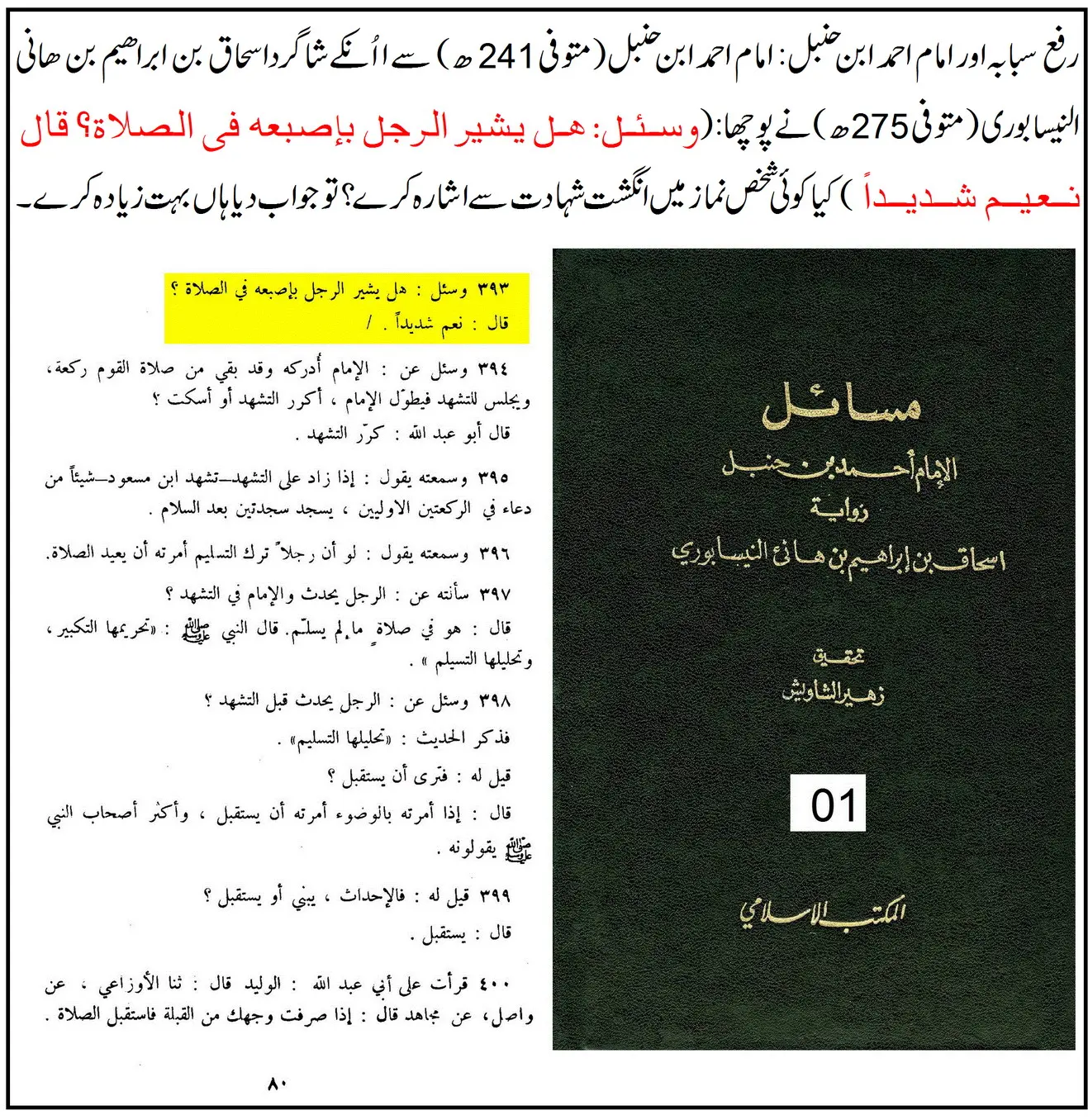
“Should a person point with his finger in Salah?” He replied: “Yes—strongly!”
[Masāʾil Ibn Hānī]
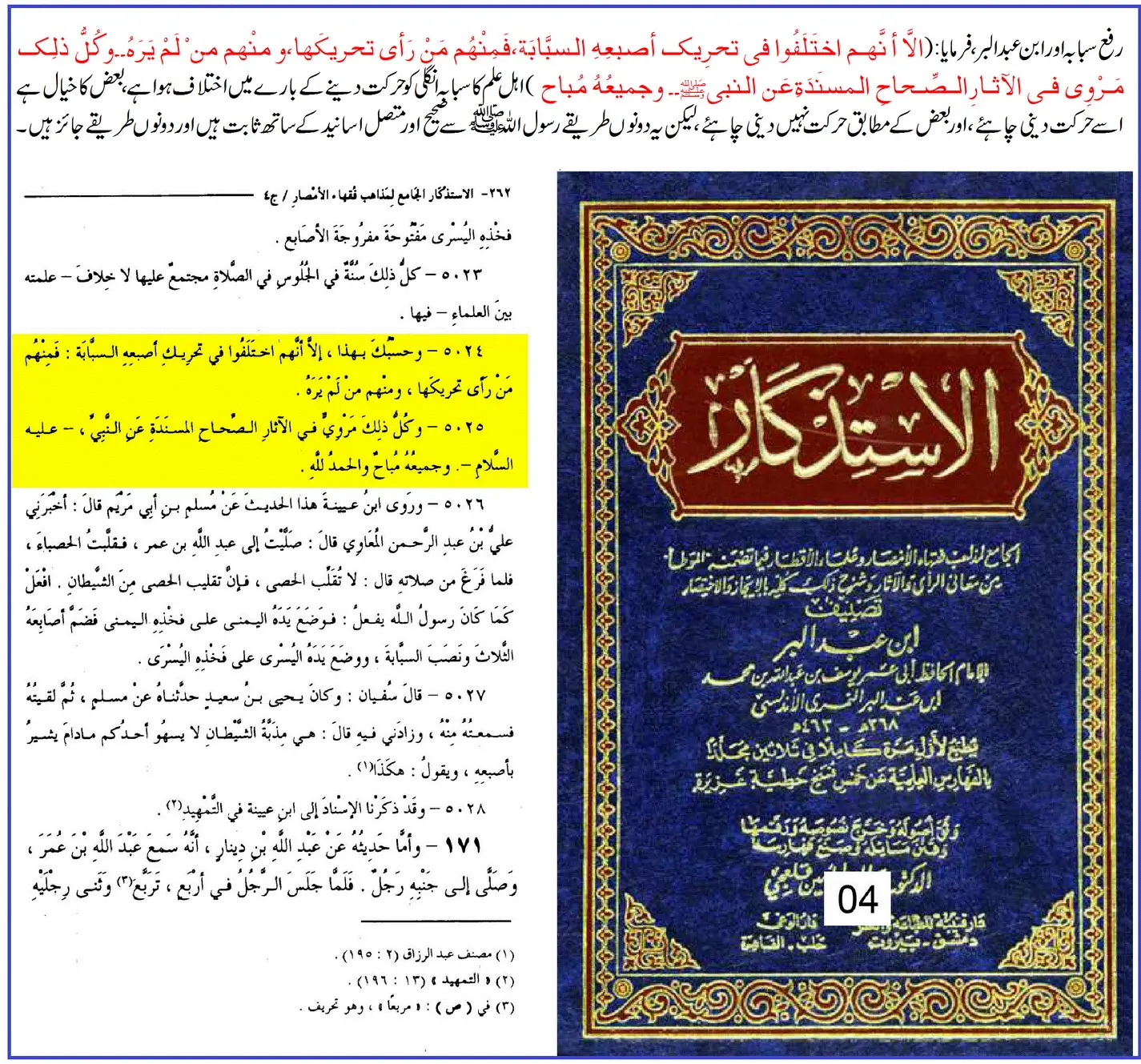
“Both actions (pointing and not pointing) are authentically reported from the Prophet ﷺ. Both are permissible.”
[Al-Istidhkār]
He compiled all reports impartially and affirmed the validity of pointing.
A direct student of Imām Abū Ḥanīfah. He supported the permissibility of raising the finger.
 However, early Hanafis later rejected his stance, opting for abandonment.
 Note: Imām Muḥammad differed with his teacher on many principles and benefited from Imām Mālik and Imām Shāfiʿī directly.
He took a revolutionary step by issuing a fatwā in favor of raising the finger, based on authentic ḥadīths—contrary to earlier Hanafis.
Later Hanafis followed him.
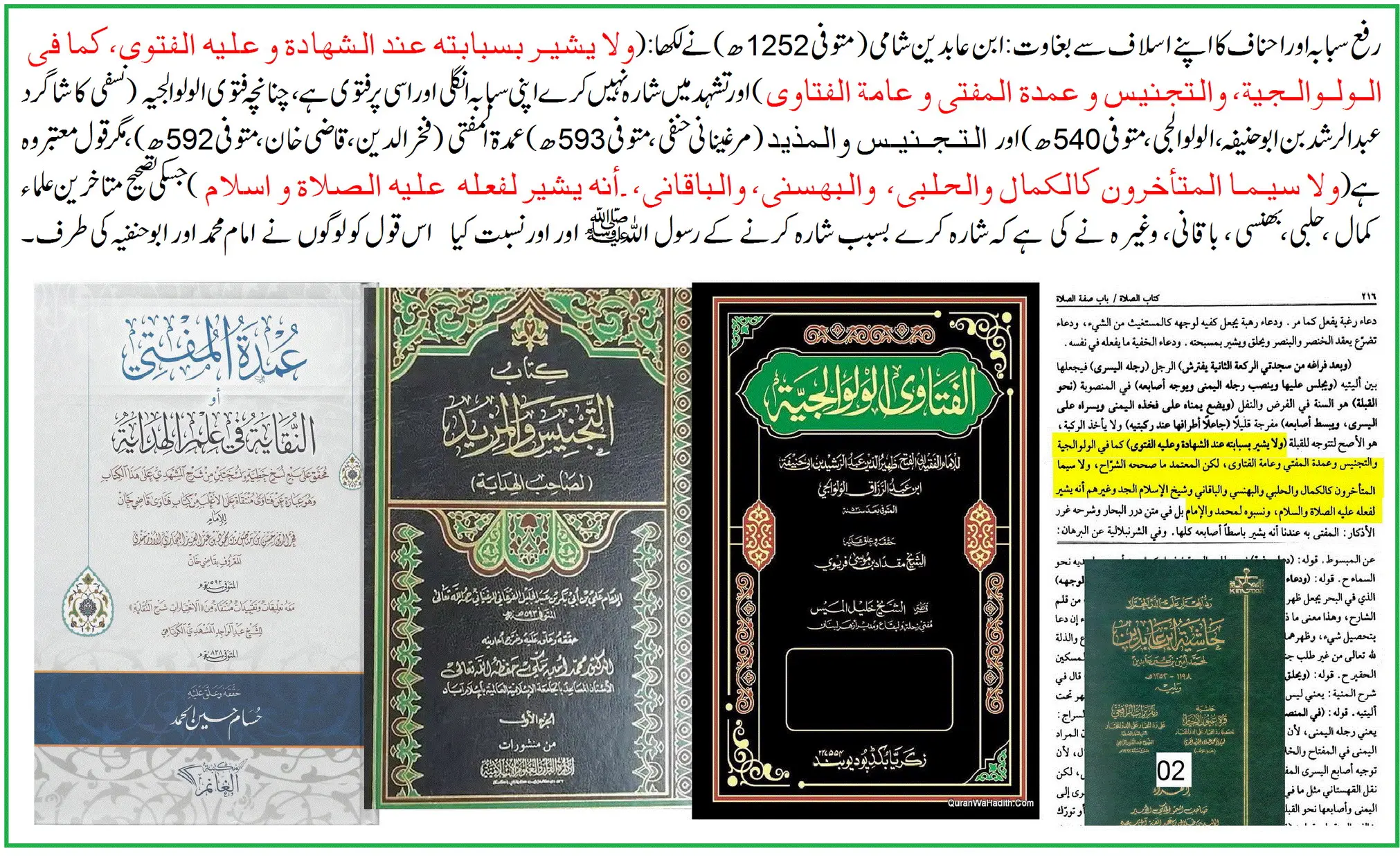
“The fatwā is not to point with the finger… but the accepted view of the later scholars is to point, since the Prophet ﷺ did so, and it is also attributed to Imām Muḥammad and Imām Abū Ḥanīfah.”
[Radd al-Muḥtār ʿala al-Durr al-Mukhtār]
Ibn ʿĀbidīn gave preference to the Sunnah-based view.
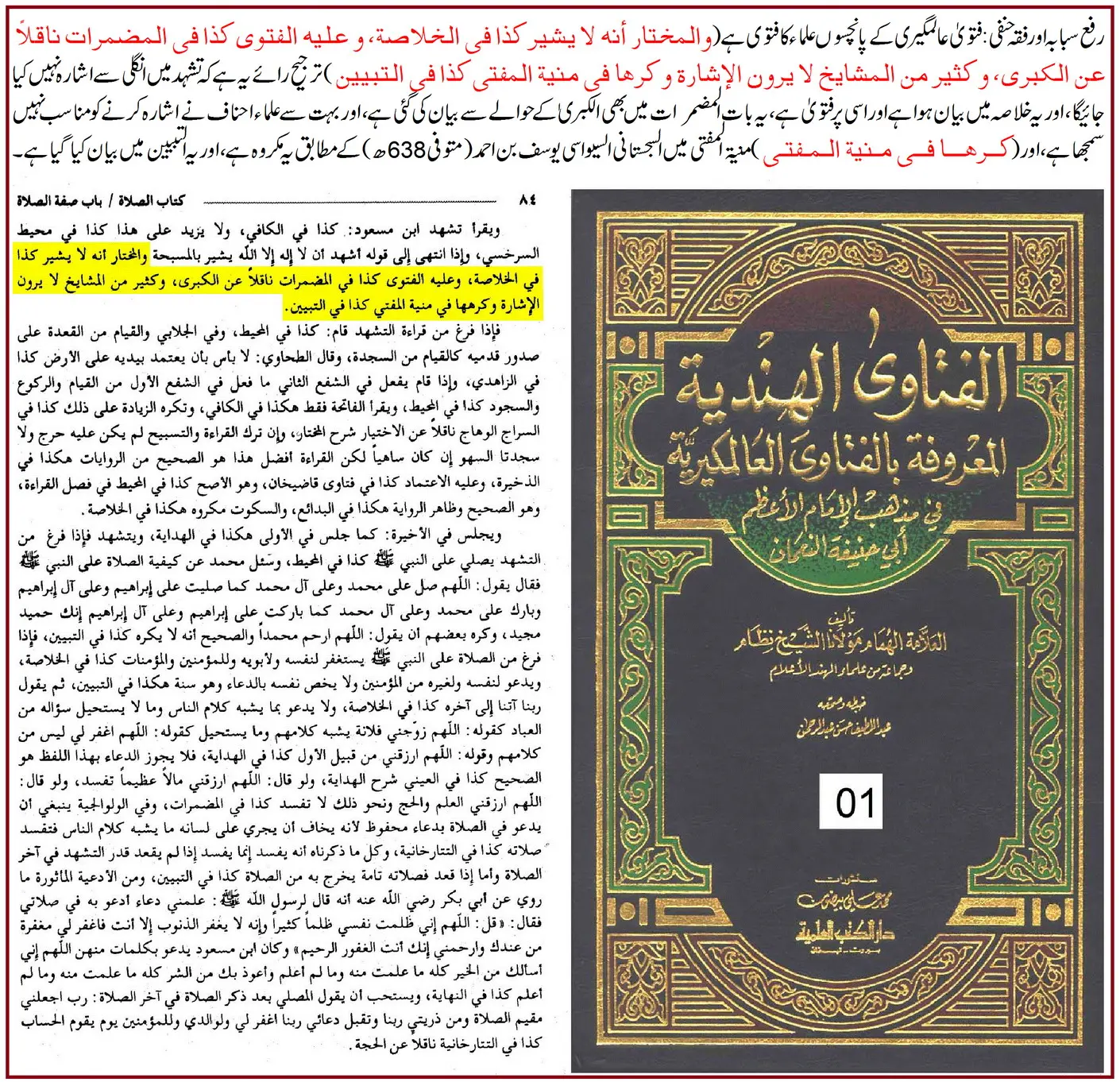
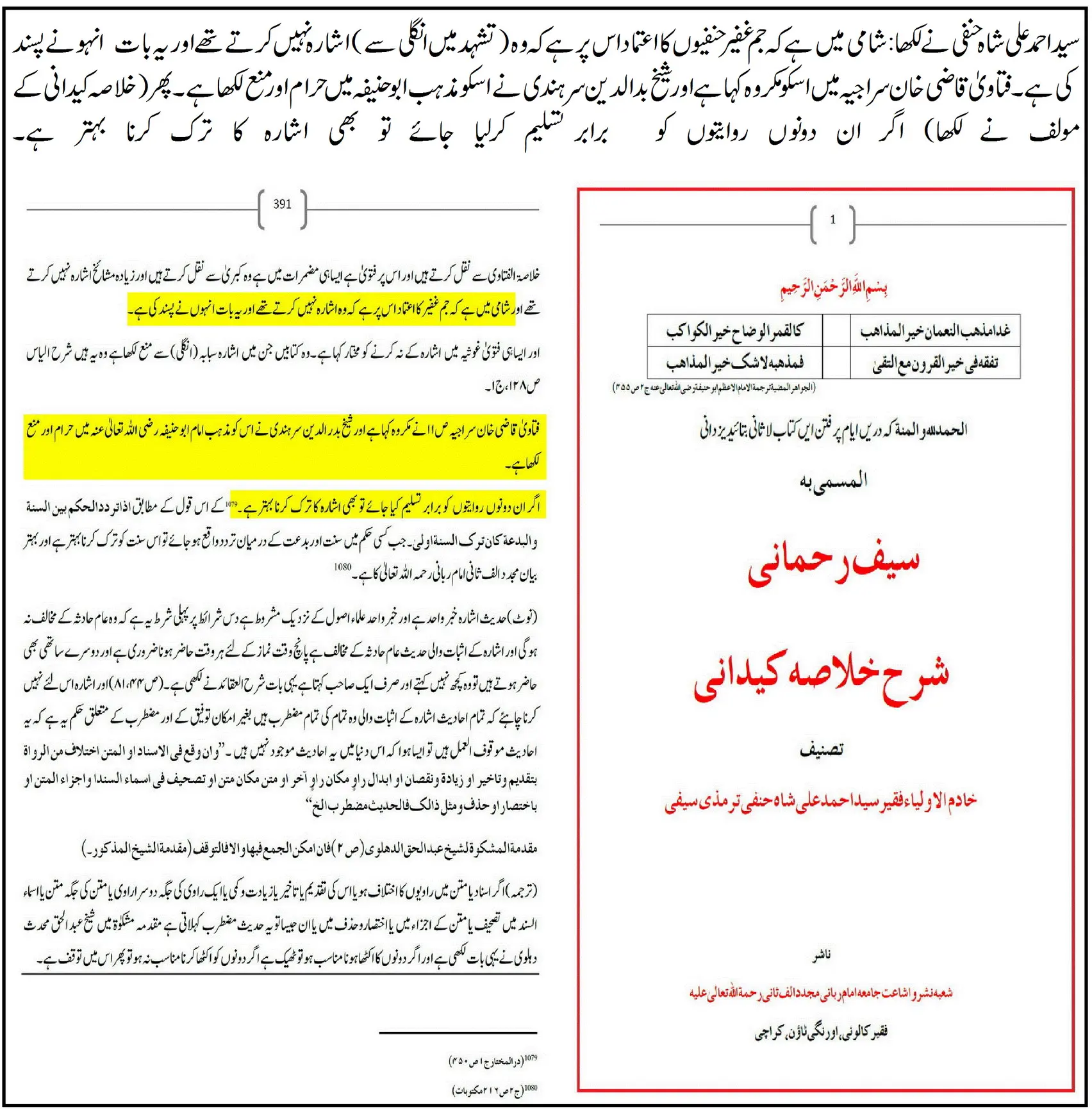
“The chosen view is that no pointing is done. This is the fatwā. Many elders disliked it and considered it makrūh.”
[Al-Fatāwā al-Hindiyyah]
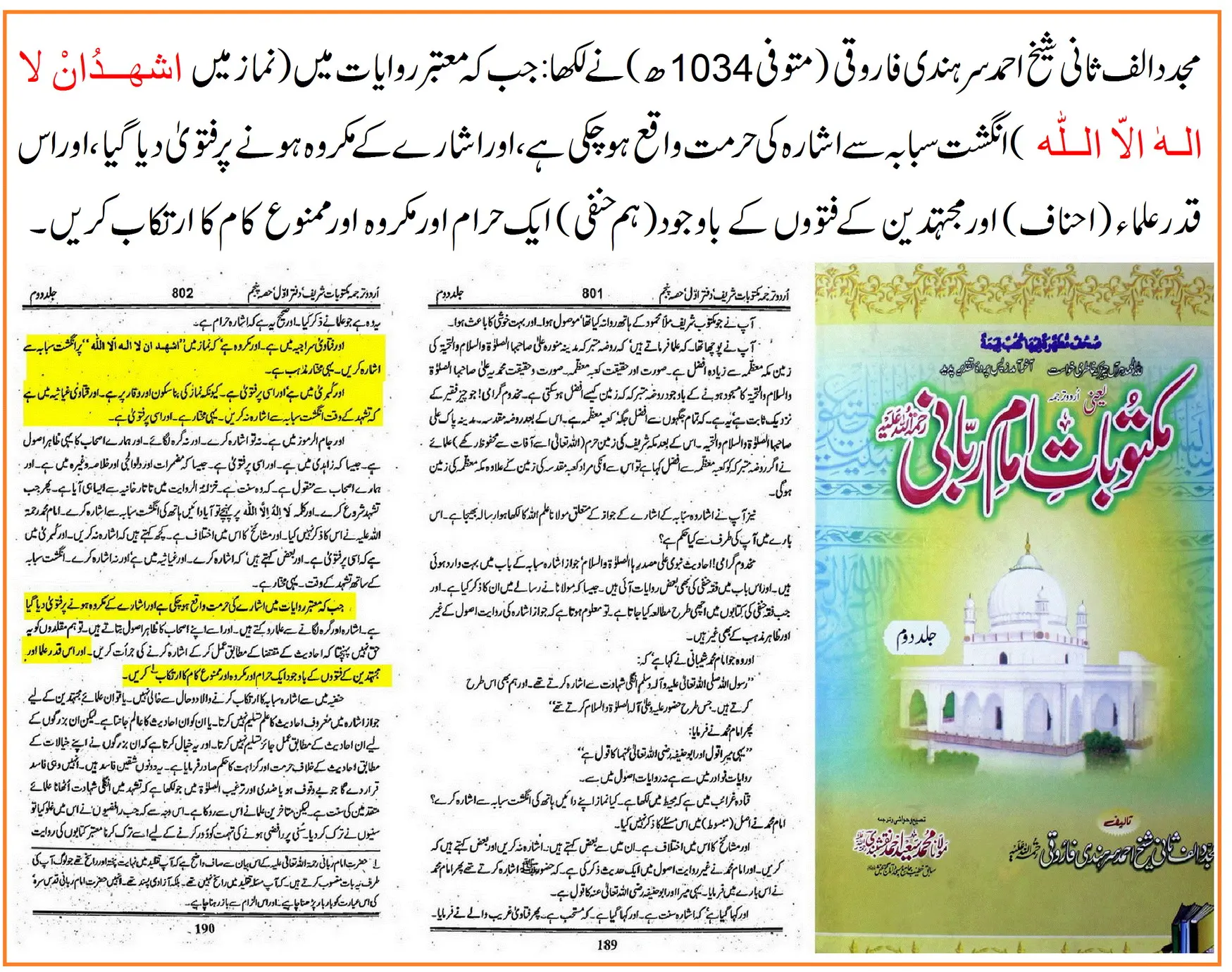
“When authentic reports prohibit pointing, and fatwās declare it makrūh, then doing it is ḥarām for Ḥanafīs.”
A strict view—despite being in contradiction to authentic narrations.
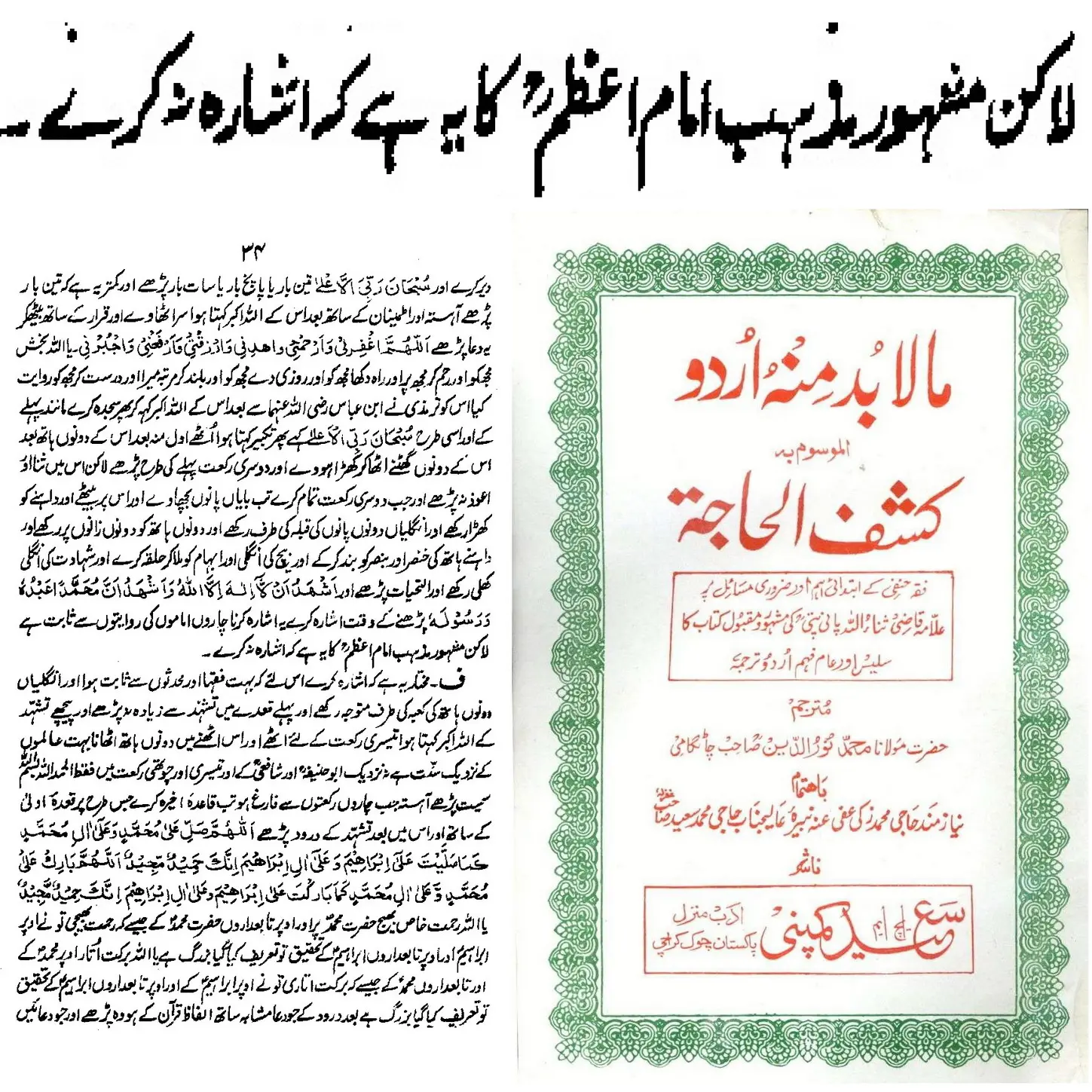
“The established view of Imām Abū Ḥanīfah is that one should not point in Tashahhud.”
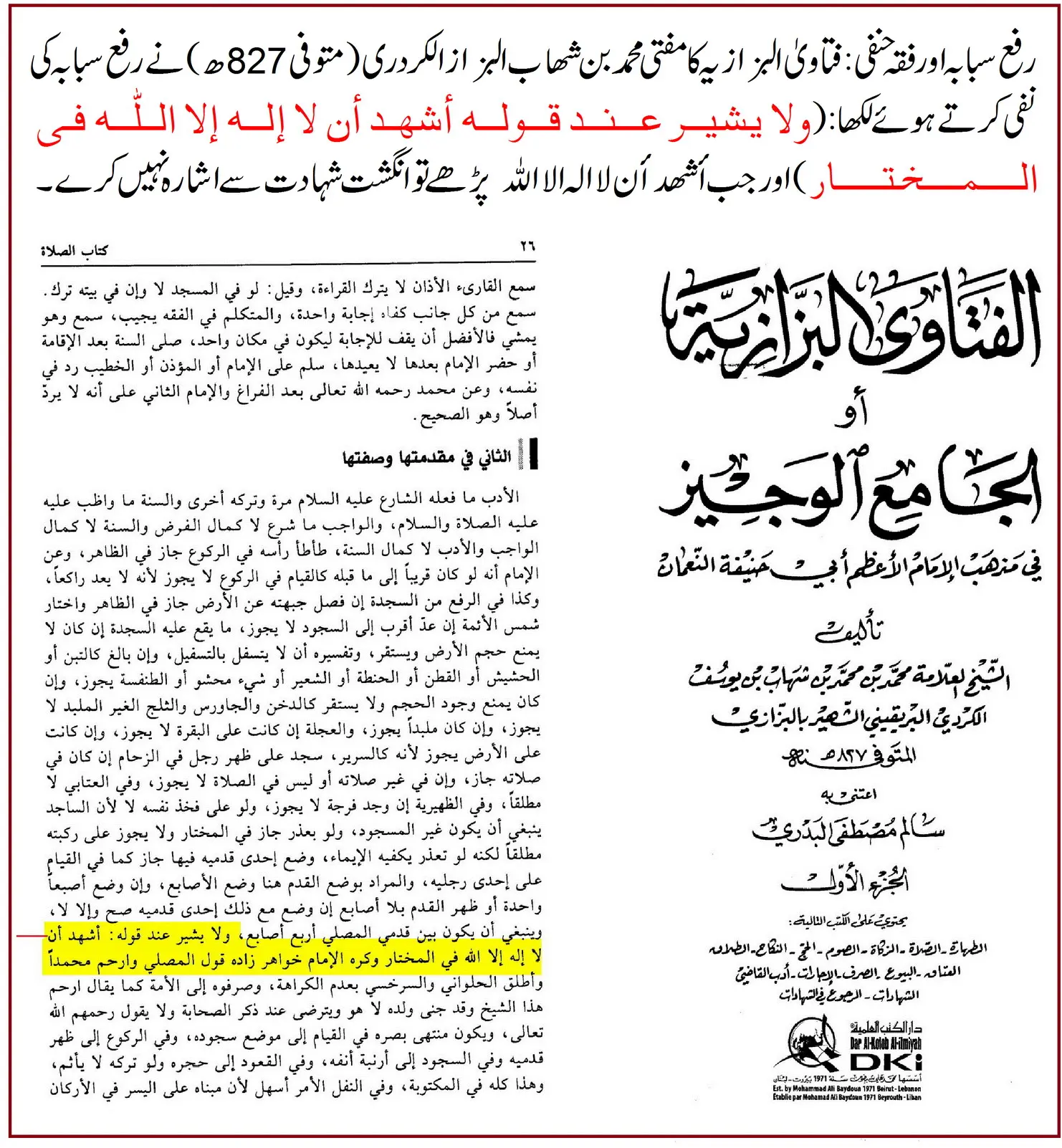
“He should not point when saying ‘Ashhadu an lā ilāha illa Allāh.’”
[Fatāwā al-Bazzāziyyah]
✔ Authentic ḥadīths in Ṣaḥīḥ Muslim, al-Nasā’ī, al-Tirmidhī, etc.
✔ Multiple Companions narrated this Sunnah:
Because of:
✔ Raising the index finger during Tashahhud is a sound and confirmed Sunnah
✔ Narrated by multiple Companions
✔ Early Hanafi opposition was based on blind following, not authentic evidence
✔ Later scholars corrected this and returned to the authentic practice
Whoever finds a practice proven authentically from the Prophet ﷺ and his Companions, should follow it.
✔ Following ḥadīth takes precedence over blind adherence to legal schools.
Raising the index finger during Tashahhud is an emphasized Sunnah, practiced and reported by many Companions, and firmly established from the Prophet ﷺ.
Hanafi opposition, labeling it as makrūh or ḥarām, contradicts the authentic Sunnah and deserves criticism.
Raising and pointing with the index finger during Tashahhud in Salah is a proven Sunnah of the Prophet ﷺ. Multiple authentic narrations confirm this practice, not only from the Prophet ﷺ himself but also through the actions of the noble Companions.
Despite this, early Hanafi scholars (prior to Al-Zayla’i) rejected this Sunnah—some even declared it makrūh (disliked) and insisted on abandoning it. In this article, we will present:
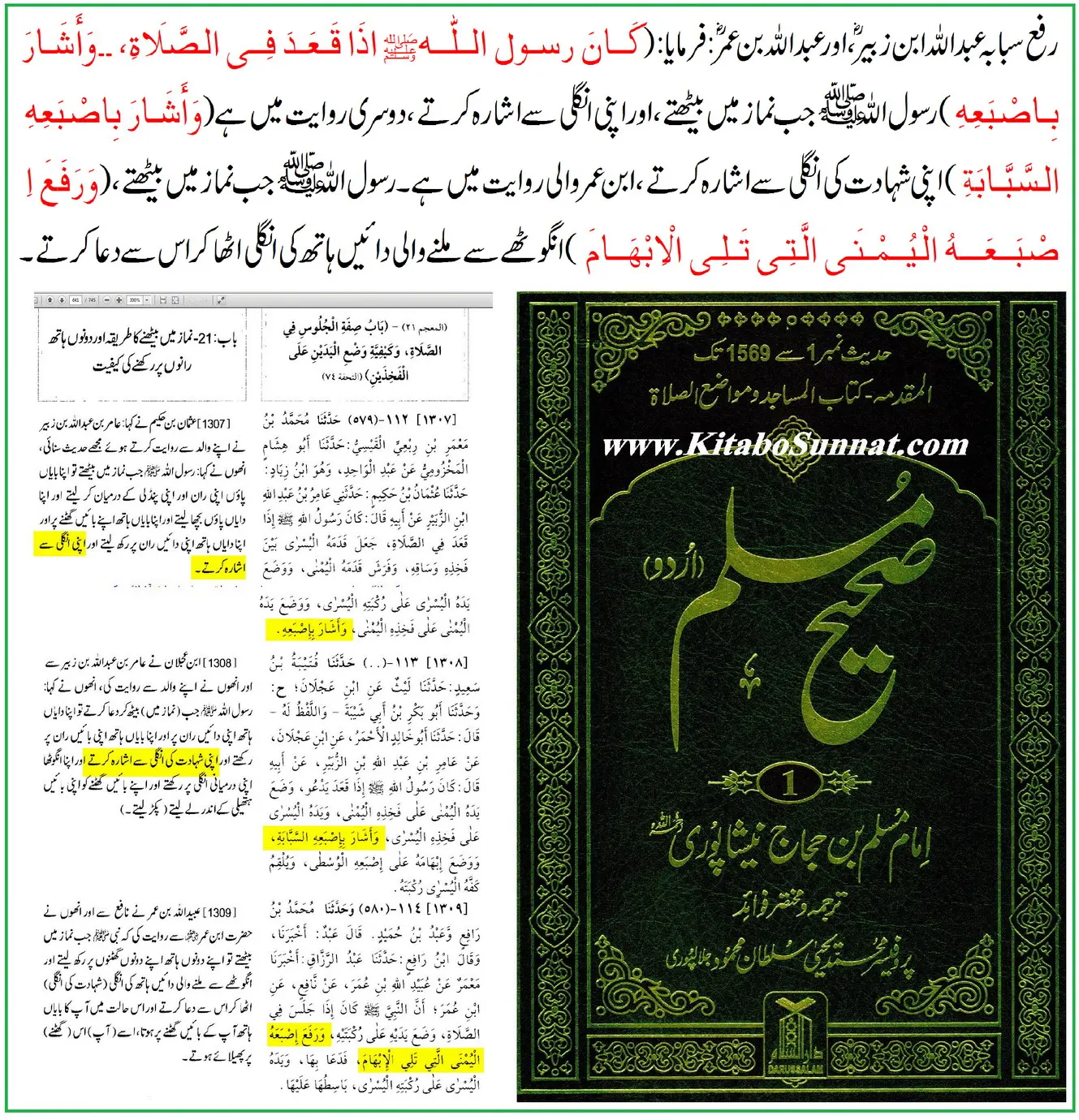
Authentic narrations supporting the raising of the index finger The actions of the Companions Statements from early and later jurists Internal contradictions within the Hanafi school① Ḥadīth of ʿAbdullāh bin Zubayr رضي الله عنه – [Ṣaḥīḥ Muslim, 579]
Arabic Text:
«كَانَ رَسُولُ اللهِ ﷺ إِذَا قَعَدَ فِي الصَّلَاةِ... وَأَشَارَ بِإِصْبَعِهِ»
Translation:
The Messenger of Allah ﷺ, when sitting in Salah, would place his left foot between his thigh and shin, spread his right foot, place his left hand on his left knee, his right hand on his right thigh, and would point with his finger.
The phrase "أشار بأصبعه" clearly proves pointing with the index finger.② Ḥadīth of ʿAbdullāh bin Zubayr رضي الله عنه (Another Chain) – [Ṣaḥīḥ Muslim, 579]
Arabic Text:
«...وَأَشَارَ بِإِصْبَعِهِ السَّبَّابَةِ، وَوَضَعَ إِبْهَامَهُ عَلَى إِصْبَعِهِ الْوُسْطَى...»
Translation:
When the Prophet ﷺ sat for supplication, he would place his right hand on his right thigh, his left hand on his left thigh, point with the index finger, place his thumb on the middle finger, and rest his left palm on his knee.
The wording "أشار بإصبعه السبابة" confirms usage of the index finger.③ Ḥadīth of ʿAbdullāh bin ʿUmar رضي الله عنهما – [Ṣaḥīḥ Muslim, 580]
Arabic Text:
«...وَرَفَعَ إِصْبَعَهُ الْيُمْنَى الَّتِي تَلِي الْإِبْهَامَ، فَدَعَا بِهَا...»
Translation:
When the Prophet ﷺ sat in Salah, he placed both hands on his knees, raised the finger next to the thumb (index finger), and supplicated with it.
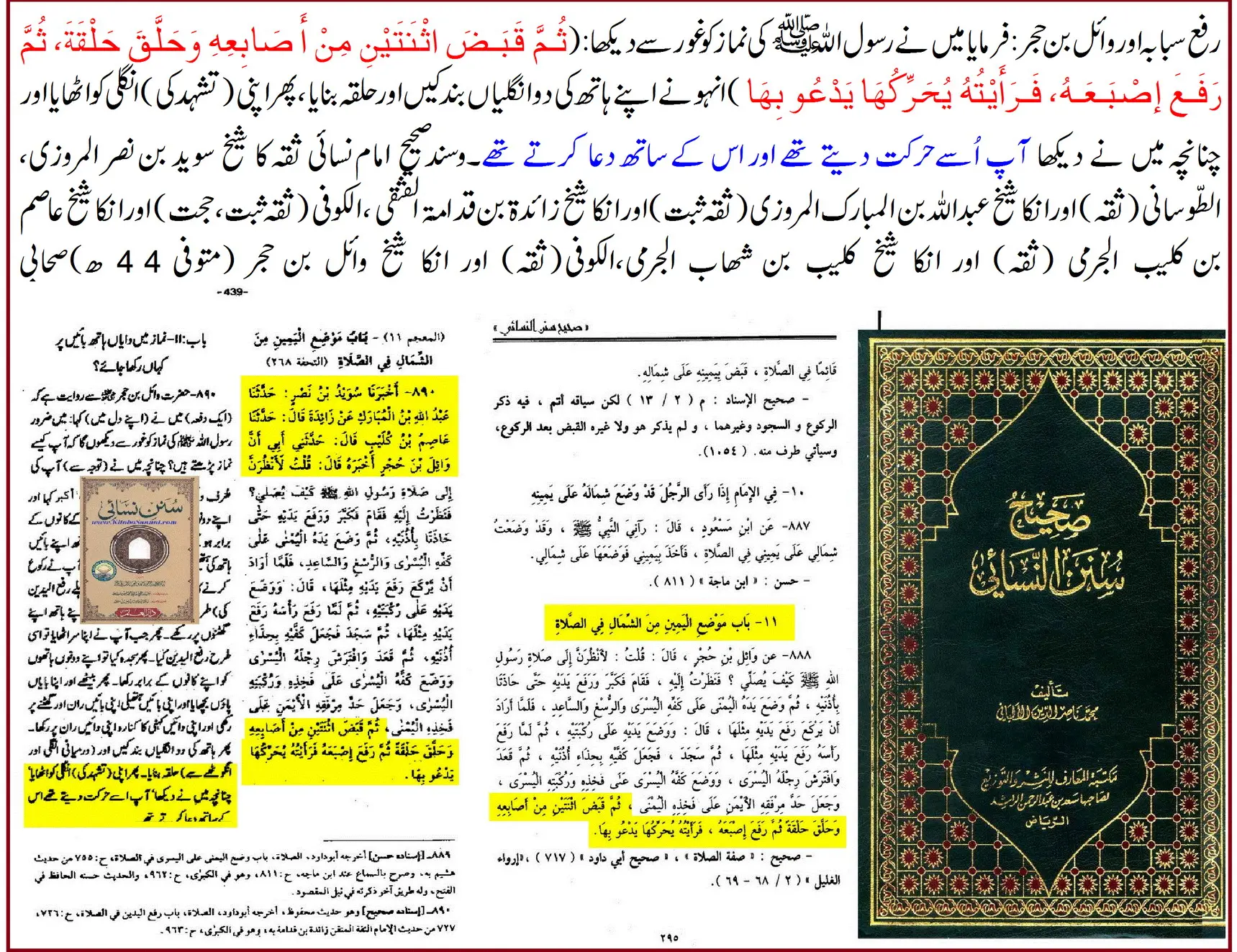
A clear proof that this gesture was part of supplication.④ Ḥadīth of Wāʾil bin Ḥujr رضي الله عنه – [Sunan al-Nasā’ī, 889]
Arabic Text:
«...ثُمَّ رَفَعَ إِصْبَعَهُ، فَرَأَيْتُهُ يُحَرِّكُهَا يَدْعُو بِهَا»
Translation:
The Prophet ﷺ closed two fingers, made a circle (with another), raised his finger, and I saw him moving it while making duʿā’.
Not just raising, but moving the finger is mentioned—a strong confirmation of Sunnah. Chain Authenticity: All narrators are trustworthy:‘Abdullāh bin Mubārak → Zā’idah → ʿĀṣim bin Kulayb → Kulayb bin Shihāb → Wāʾil bin Ḥujr (Companion)
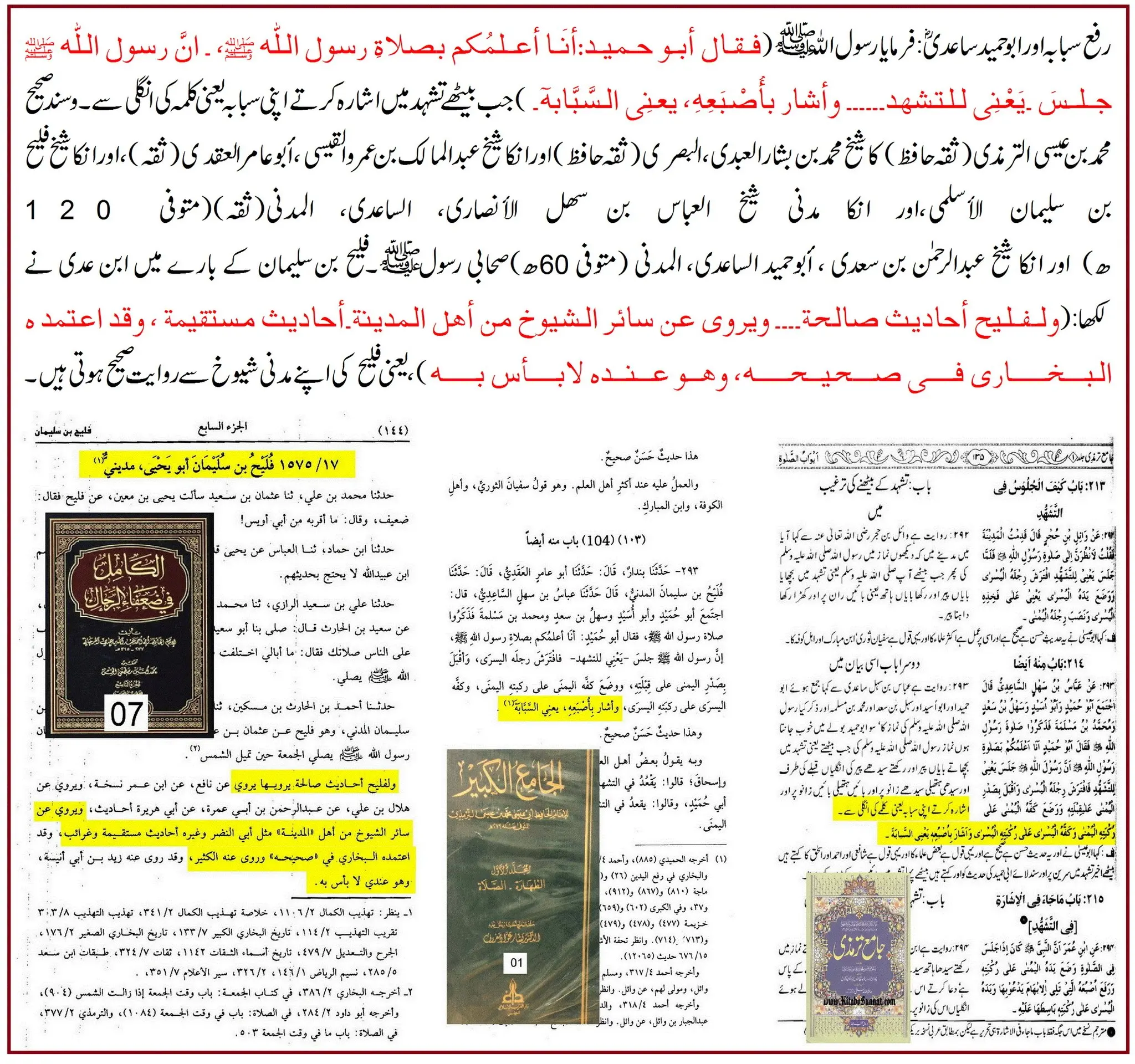
⑤ Ḥadīth of Abū Ḥumayd al-Sāʿidī رضي الله عنه – [Jāmiʿ al-Tirmidhī, 293]
Arabic Text:
«...وَأَشَارَ بِأُصْبُعِهِ – يَعْنِي السَّبَّابَةَ -»
Translation:
The Prophet ﷺ placed his right hand on his right knee, left on the left, and pointed with the index finger.
This ḥadīth is from a group of Companions, not just one.Opinions of Imams: Mālik, Aḥmad, and Ibn ʿAbd al-Barr
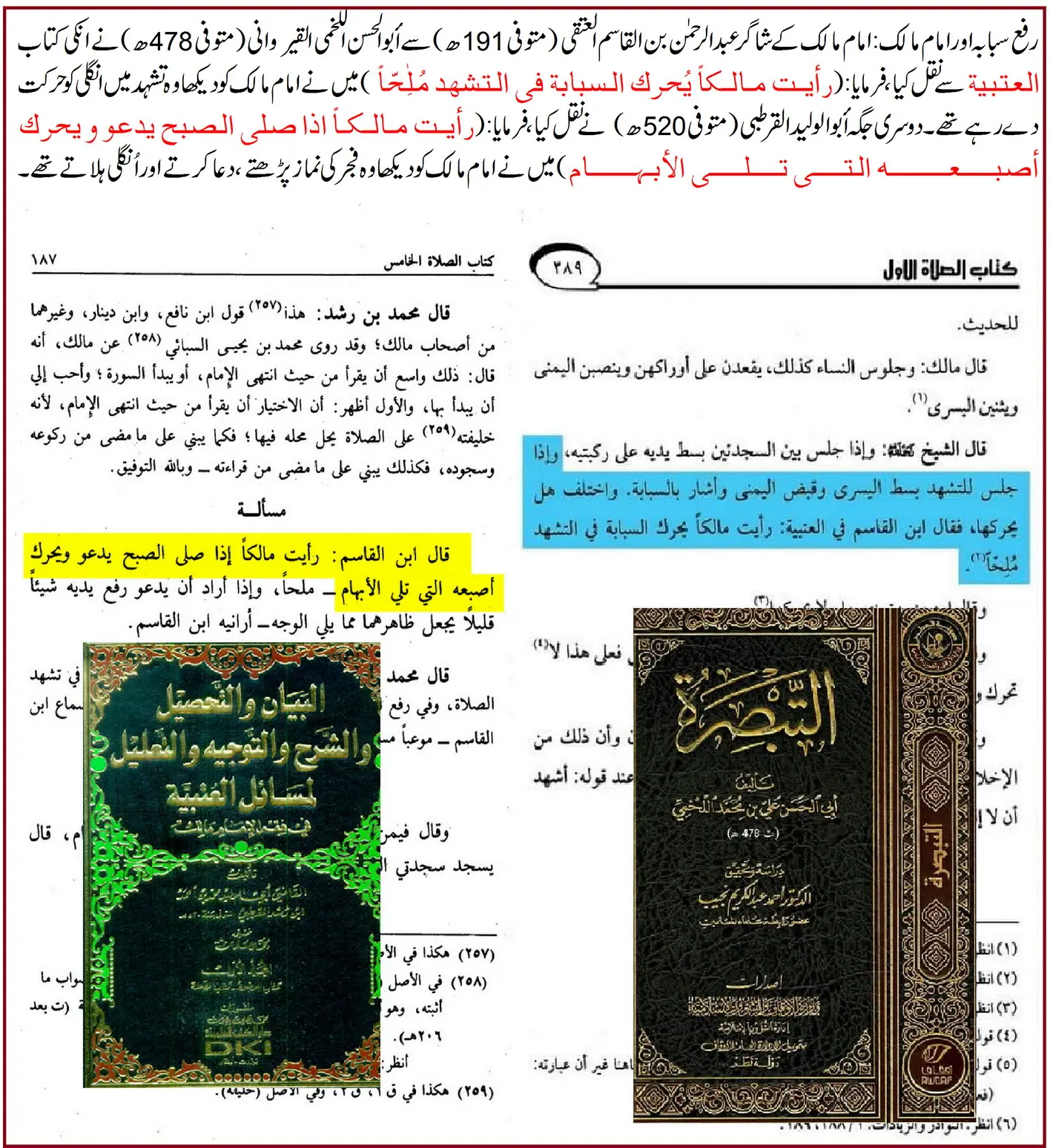
1. Imām Mālik رحمه الله
Narrated by Ibn al-Qāsim:
"I saw Mālik moving his index finger repeatedly in Tashahhud."
[Al-Tabsirah by al-Lakhmī] Authentic accounts show Imām Mālik moved the finger during duʿā’ in Fajr as well.2. Imām Aḥmad رحمه الله
“Should a person point with his finger in Salah?” He replied: “Yes—strongly!”
[Masāʾil Ibn Hānī]3. Imām Ibn ʿAbd al-Barr رحمه الله
“Both actions (pointing and not pointing) are authentically reported from the Prophet ﷺ. Both are permissible.”
[Al-Istidhkār] He compiled all reports impartially and affirmed the validity of pointing.Hanafi Fiqh and the History of Rejection of the Sunnah
1. Imām Muḥammad ibn al-Ḥasan al-Shaybānī
A direct student of Imām Abū Ḥanīfah. He supported the permissibility of raising the finger.
However, early Hanafis later rejected his stance, opting for abandonment. Note: Imām Muḥammad differed with his teacher on many principles and benefited from Imām Mālik and Imām Shāfiʿī directly.2. Al-Zaylaʿī (d. 743 AH)
He took a revolutionary step by issuing a fatwā in favor of raising the finger, based on authentic ḥadīths—contrary to earlier Hanafis.
Later Hanafis followed him.3. Ibn ʿĀbidīn al-Shāmī (d. 1252 AH)
“The fatwā is not to point with the finger… but the accepted view of the later scholars is to point, since the Prophet ﷺ did so, and it is also attributed to Imām Muḥammad and Imām Abū Ḥanīfah.”
[Radd al-Muḥtār ʿala al-Durr al-Mukhtār] Ibn ʿĀbidīn gave preference to the Sunnah-based view.Fatāwā ʿĀlamgīriyyah and Rejection of Pointing
1. Fatāwā ʿĀlamgīriyyah
“The chosen view is that no pointing is done. This is the fatwā. Many elders disliked it and considered it makrūh.”
[Al-Fatāwā al-Hindiyyah]2. Shaykh Aḥmad Sirhindī (Mujaddid Alf Thānī)
“When authentic reports prohibit pointing, and fatwās declare it makrūh, then doing it is ḥarām for Ḥanafīs.”
A strict view—despite being in contradiction to authentic narrations.3. Qāḍī Thanāʾullāh Pānīpatī
“The established view of Imām Abū Ḥanīfah is that one should not point in Tashahhud.”
4. Ibn Shahāb al-Bazzāz al-Kurdarī
“He should not point when saying ‘Ashhadu an lā ilāha illa Allāh.’”
[Fatāwā al-Bazzāziyyah]Analytical Summary & Defense of the Sunnah
❖ 1. Consensus of the Scholars of Ḥadīth
✔ Authentic ḥadīths in Ṣaḥīḥ Muslim, al-Nasā’ī, al-Tirmidhī, etc.
✔ Multiple Companions narrated this Sunnah:
- ʿAbdullāh bin Zubayr
- ʿAbdullāh bin ʿUmar
- Wāʾil bin Ḥujr
- Abū Ḥumayd al-Sāʿidī
- Others
❖ 2. Why Early Hanafīs Rejected It?
Because of:
- Blind adherence to opinions
- Giving priority to reasoning (ra’y) over authentic ḥadīths
- Prominent in post-Imām Abū Yūsuf and Muḥammad era
❖ 3. Later Hanafīs Returned to the Sunnah
- Al-Zaylaʿī validated raising the finger
- Ibn ʿĀbidīn Shāmī preferred the Sunnah
- Even Imām Muḥammad allowed it
❖ 4. Conclusion
✔ Raising the index finger during Tashahhud is a sound and confirmed Sunnah
✔ Narrated by multiple Companions
✔ Early Hanafi opposition was based on blind following, not authentic evidence
✔ Later scholars corrected this and returned to the authentic practice
❖ 5. Advice
Whoever finds a practice proven authentically from the Prophet ﷺ and his Companions, should follow it.
✔ Following ḥadīth takes precedence over blind adherence to legal schools.
 Final Verdict:
Raising the index finger during Tashahhud is an emphasized Sunnah, practiced and reported by many Companions, and firmly established from the Prophet ﷺ.
Hanafi opposition, labeling it as makrūh or ḥarām, contradicts the authentic Sunnah and deserves criticism.
