

✍ Written by: Abu Hamzah Salafi
Muhammad bin Jābir al-Yamāmī al-Suḥaymī al-Kūfī (d. 171 AH) was a narrator who was blind and illiterate (non-scribe). He had some of his books written by others and would have them read to his students by a reciter. It is reported that he said: “Abū Ḥanīfah stole my book of Ḥammād bin Abī Sulaymān.” After this incident, the rest of his books were also lost, and he became severely confused (ikhtilāṭ), particularly in narrations from Ḥammād bin Abī Sulaymān. Eventually, his confusion increased to such an extent that major Imams, such as ʿAbd al-Raḥmān bin Mahdī, abandoned narrating from him, and he relocated from Kūfah to Yamāmah. Since he was blind and unable to safeguard his aḥādīth, the scholars of ḥadīth made severe criticism against him, declaring him weak, and some even labeled him abandoned (matrūk).
In this article, we compile the criticisms (jarḥ) of the majority of ḥadīth scholars regarding Muhammad bin Jābir al-Yamāmī to make it clear that he was not reliable in the field of ḥadīth.
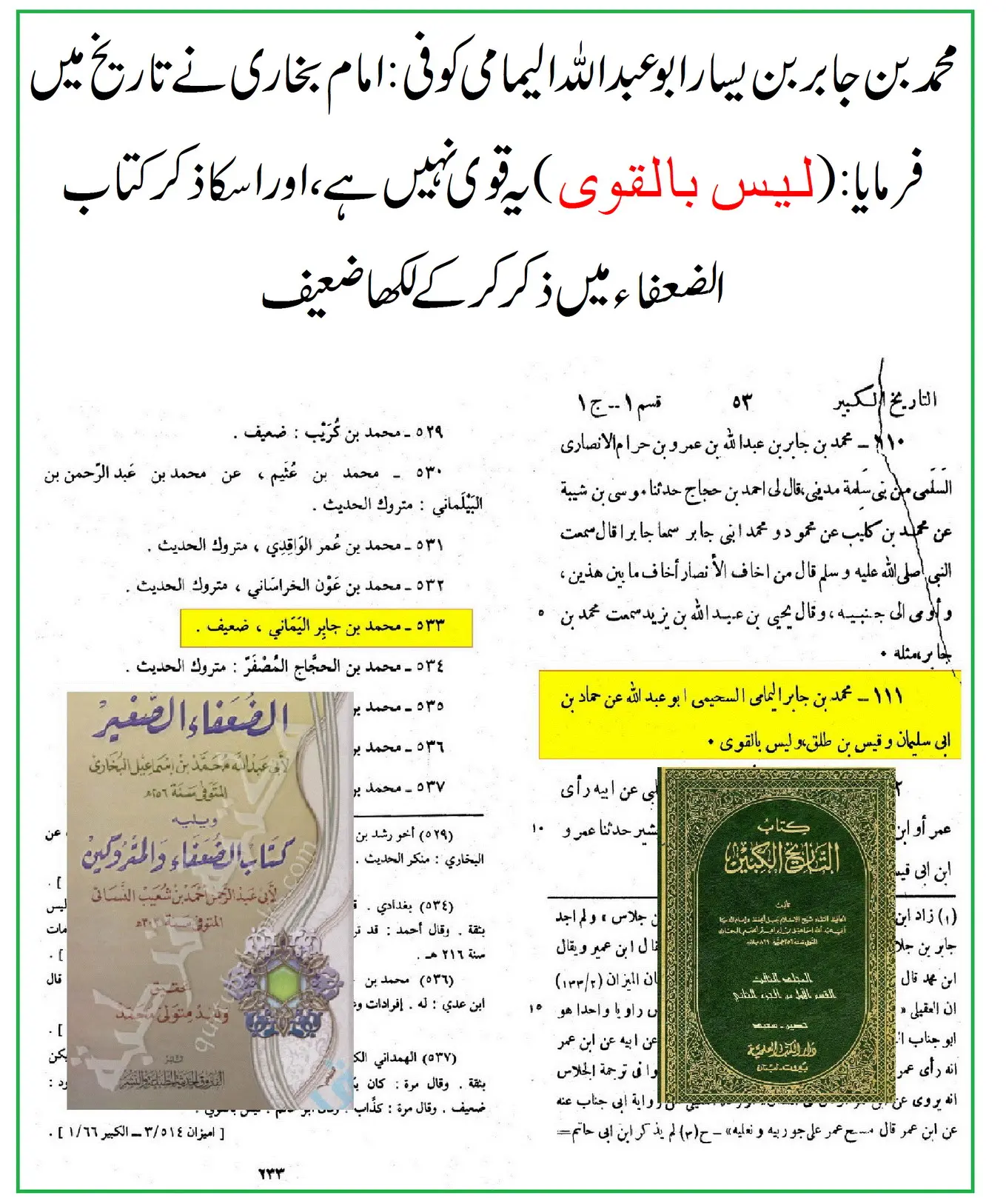
«محمد بن جابر اليمامي السحيمي … وليس بالقوي.»
Translation: Muhammad bin Jābir al-Yamāmī is not strong.
Clarification: Al-Bukhārī declared him weak in two places.
«سُئِل عن محمد بن جابر فغلظ فيه وقال: لا يحدث عنه إلا من هو شرّ منه.»
Translation: When he was asked about Muhammad bin Jābir, he spoke harshly and said: Only one worse than him narrates from him.
Clarification: Imām Aḥmad mentioned his munkar narrations and contradictions and explicitly abandoned his narrations.
«وكان أعمى، يُلحق في كتبه ما ليس من حديثه … فيحدث به.»
Translation: He was blind; things that were not from his ḥadīth were inserted into his books, and he would narrate them.
Clarification: Due to blindness and poor retention, he became unreliable.
«محمد بن جابر … اليمامي … يروي عن حماد …»
Translation: Muhammad bin Jābir al-Yamāmī is included in my book al-Ḍuʿafāʾ wa al-Matrūkīn.
Clarification: Ibn al-Jawzī declared some of his narrations fabricated, including the narration negating Rafʿ al-Yadayn.
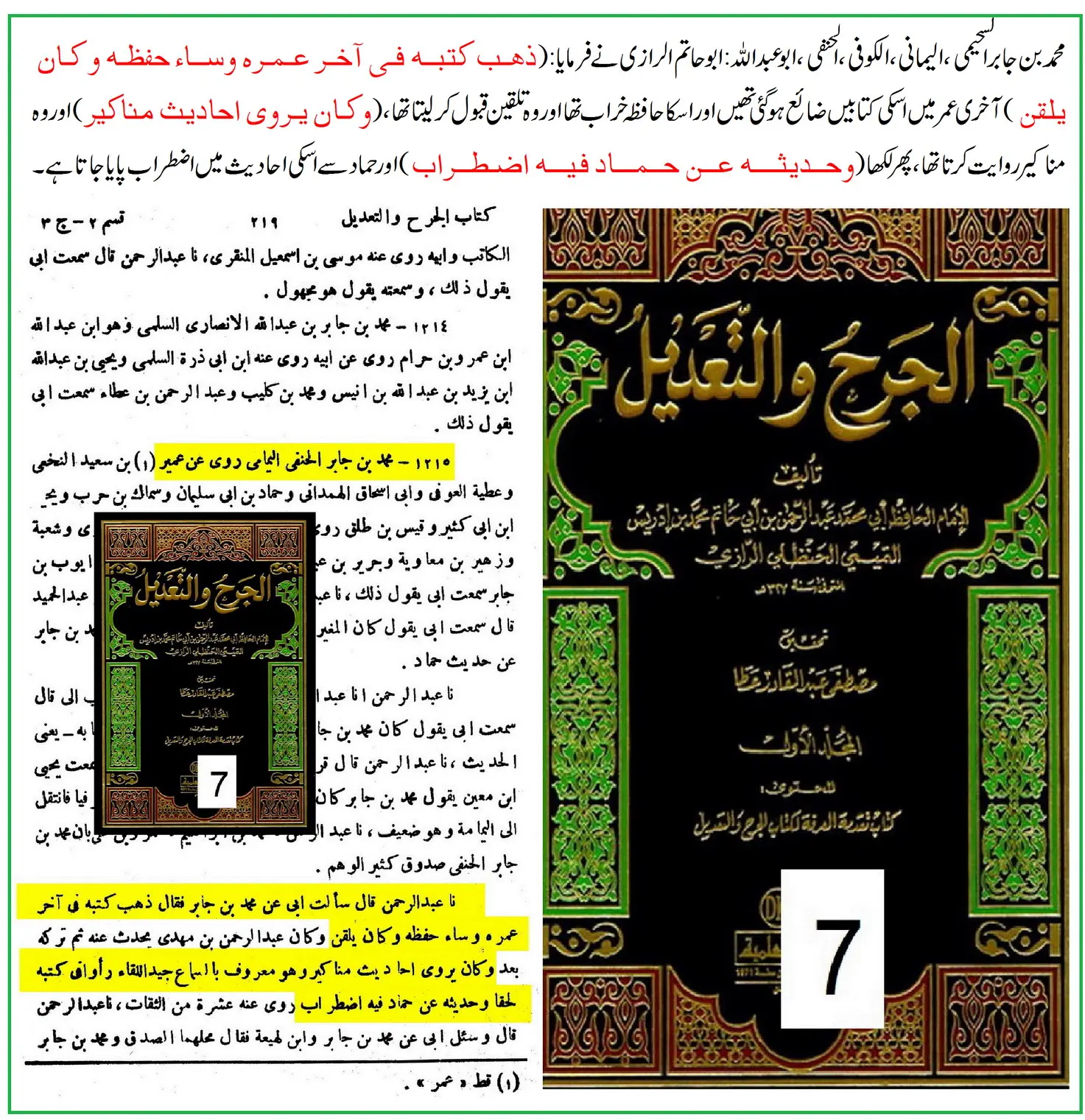
«ذهب كتبه في آخر عمره وساء حفظه وكان يلقن … ثم تركه عبد الرحمن بن مهدي.»
Translation: His books were lost toward the end of his life, his memory deteriorated, and he would accept prompting… Then ʿAbd al-Raḥmān bin Mahdī abandoned him.
Clarification: Clear evidence of his weakness and abandonment.
«محمد بن جابر السحيمي … ضعيف لسوء حفظه واختلاطه … وكان يُلقَّن فيتلقن.»
Translation: Muhammad bin Jābir is weak due to poor memory and confusion; he would accept prompting.
Clarification: Al-Haythamī mentioned his weakness repeatedly.
«محمد بن جابر ليس بشيء … لا يكتب حديثه … كان أعمى واختلط.»
Translation: Muhammad bin Jābir is nothing; his ḥadīth is not written. He was blind and became confused.
Clarification: Ibn Maʿīn repeatedly declared him unreliable.
«أيوب بن جابر وأخوه محمد بن جابر ليس حديثهما بشيء.»
Translation: Ayyūb bin Jābir and his brother Muhammad bin Jābir—neither of their ḥadīth is worth anything.
«محمد بن جابر الحنفي صدوق كثير الوهم.»
Translation: Muhammad bin Jābir was truthful but made many mistakes.
«محمد بن جابر ضعيف.»
Translation: Muhammad bin Jābir is weak.
(And likewise the remaining Imams
◈ Muhammad bin Jābir al-Yamāmī was blind, non-scribe, and after losing his books became severely confused and weak.
◈ The majority declared him weak; several labeled him abandoned (matrūk); some even declared his solitary narrations fabricated.
◈ Though a few described him as “truthful,” they clarified that due to confusion and loss of books he was not reliable.
The criticisms of the majority of ḥadīth scholars regarding Muhammad bin Jābir al-Yamāmī are decisive and agreed upon. Therefore, none of his narrations are reliable or acceptable as proof.
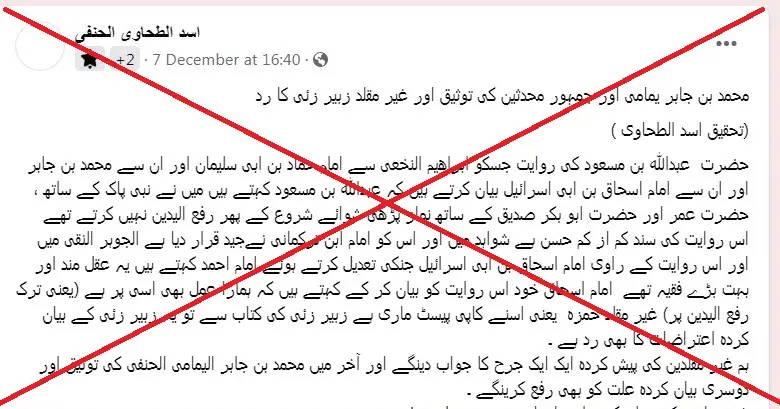

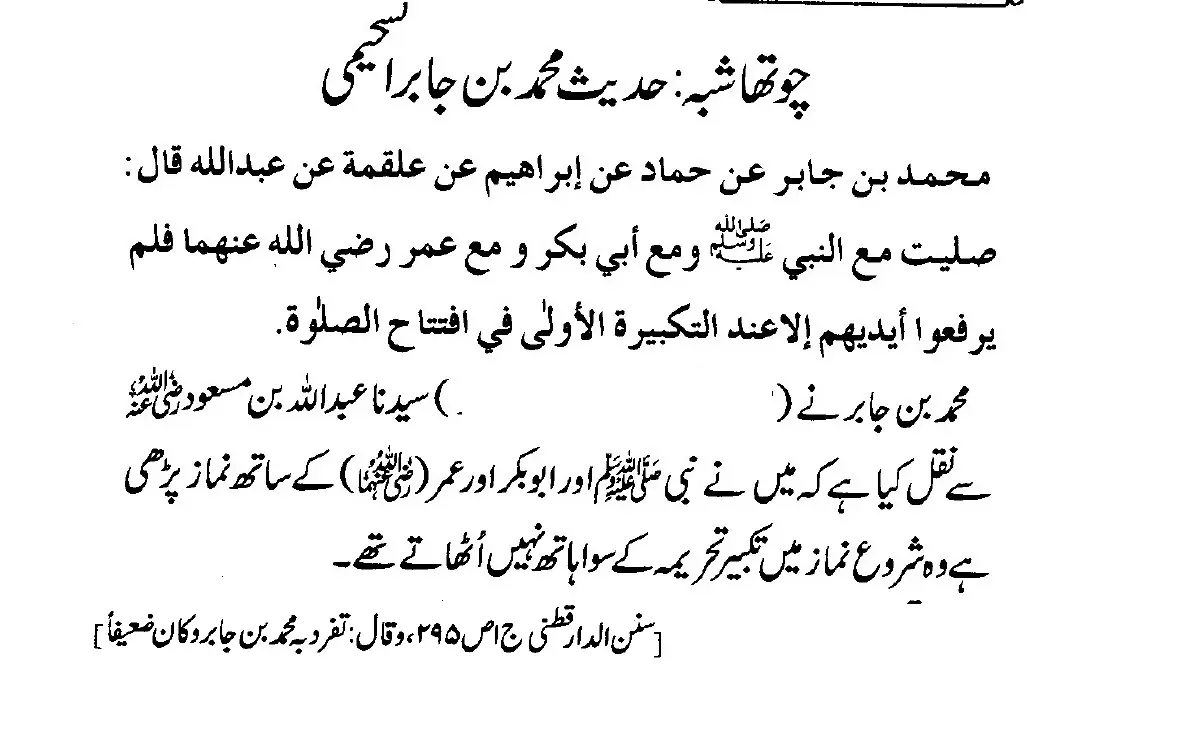


















Muhammad bin Jābir al-Yamāmī al-Suḥaymī al-Kūfī (d. 171 AH) was a narrator who was blind and illiterate (non-scribe). He had some of his books written by others and would have them read to his students by a reciter. It is reported that he said: “Abū Ḥanīfah stole my book of Ḥammād bin Abī Sulaymān.” After this incident, the rest of his books were also lost, and he became severely confused (ikhtilāṭ), particularly in narrations from Ḥammād bin Abī Sulaymān. Eventually, his confusion increased to such an extent that major Imams, such as ʿAbd al-Raḥmān bin Mahdī, abandoned narrating from him, and he relocated from Kūfah to Yamāmah. Since he was blind and unable to safeguard his aḥādīth, the scholars of ḥadīth made severe criticism against him, declaring him weak, and some even labeled him abandoned (matrūk).
In this article, we compile the criticisms (jarḥ) of the majority of ḥadīth scholars regarding Muhammad bin Jābir al-Yamāmī to make it clear that he was not reliable in the field of ḥadīth.
Criticisms of 41 Imams on Muhammad bin Jābir al-Yamāmī
① Imām al-Bukhārī
Arabic:«محمد بن جابر اليمامي السحيمي … وليس بالقوي.»
Reference: التاريخ الكبير 111، كتاب الضعفاء 328
Translation: Muhammad bin Jābir al-Yamāmī is not strong.
Clarification: Al-Bukhārī declared him weak in two places.
② Imām Aḥmad bin Ḥanbal
Arabic:«سُئِل عن محمد بن جابر فغلظ فيه وقال: لا يحدث عنه إلا من هو شرّ منه.»
Reference: العلل ومعرفة الرجال 770
Translation: When he was asked about Muhammad bin Jābir, he spoke harshly and said: Only one worse than him narrates from him.
Clarification: Imām Aḥmad mentioned his munkar narrations and contradictions and explicitly abandoned his narrations.
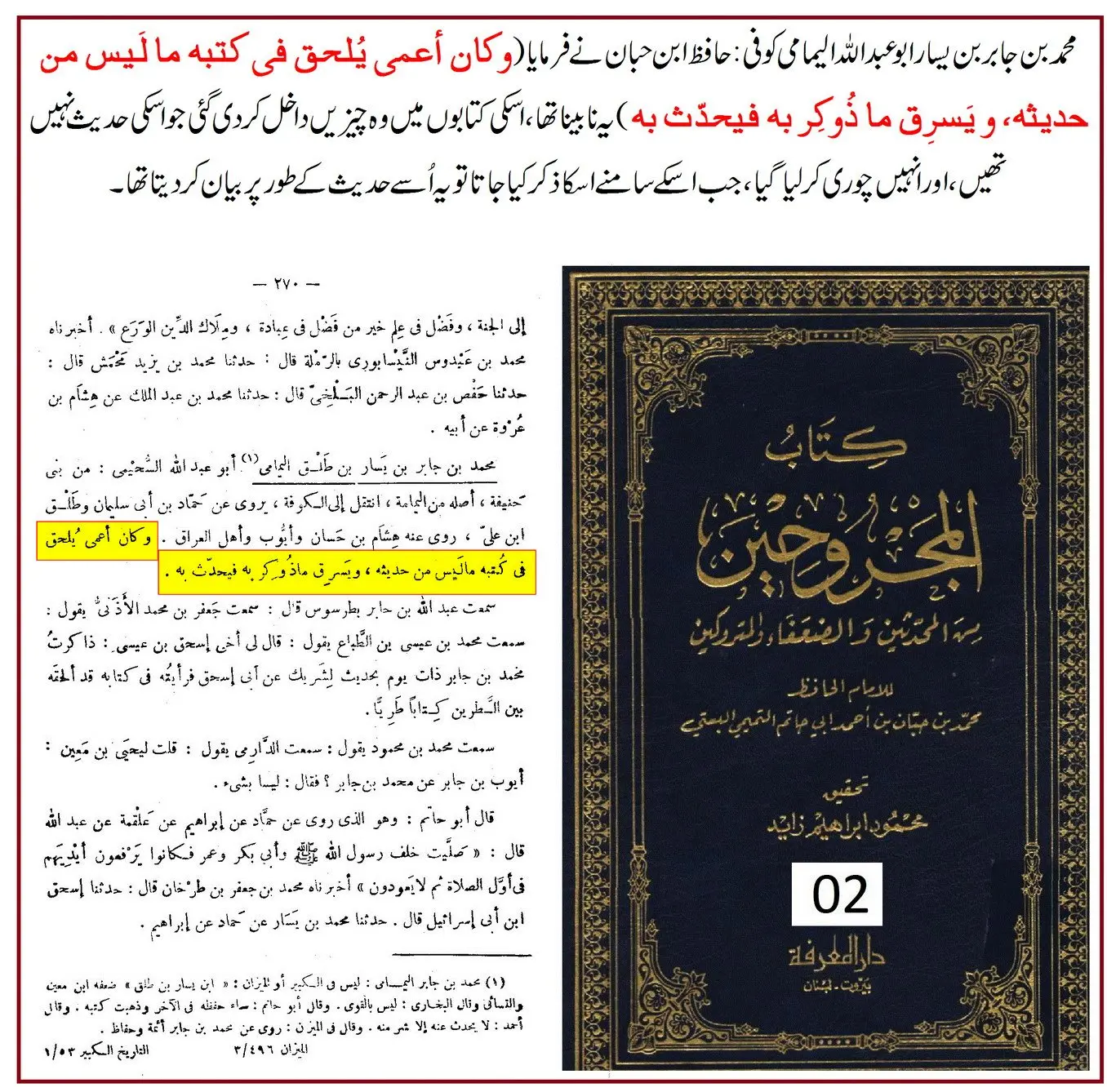
③ Ibn Ḥibbān
Arabic:«وكان أعمى، يُلحق في كتبه ما ليس من حديثه … فيحدث به.»
Reference: المجروحين 956
Translation: He was blind; things that were not from his ḥadīth were inserted into his books, and he would narrate them.
Clarification: Due to blindness and poor retention, he became unreliable.
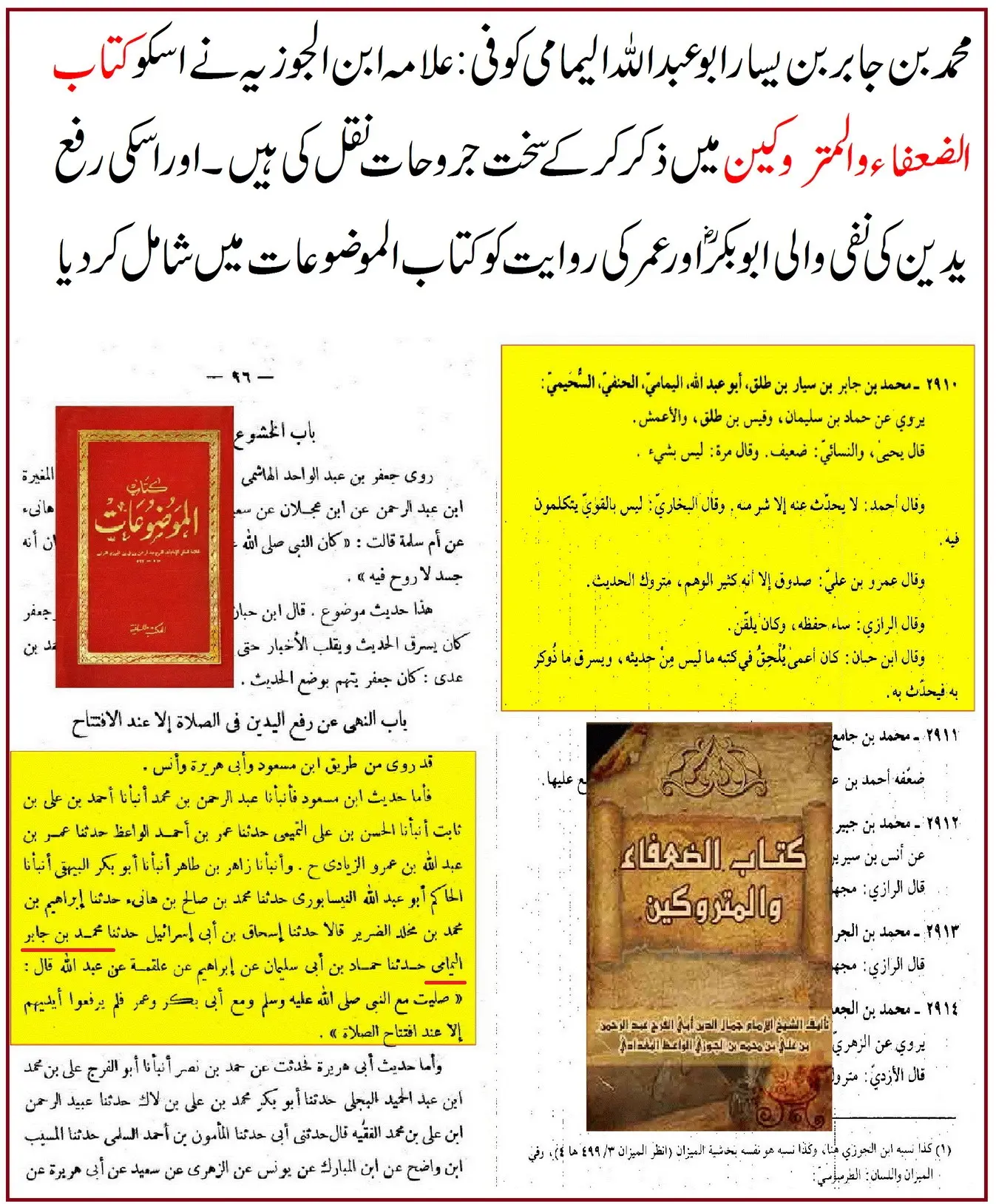
④ Ibn al-Jawzī
Arabic:«محمد بن جابر … اليمامي … يروي عن حماد …»
Reference: الضعفاء والمتروكون 2910
Translation: Muhammad bin Jābir al-Yamāmī is included in my book al-Ḍuʿafāʾ wa al-Matrūkīn.
Clarification: Ibn al-Jawzī declared some of his narrations fabricated, including the narration negating Rafʿ al-Yadayn.
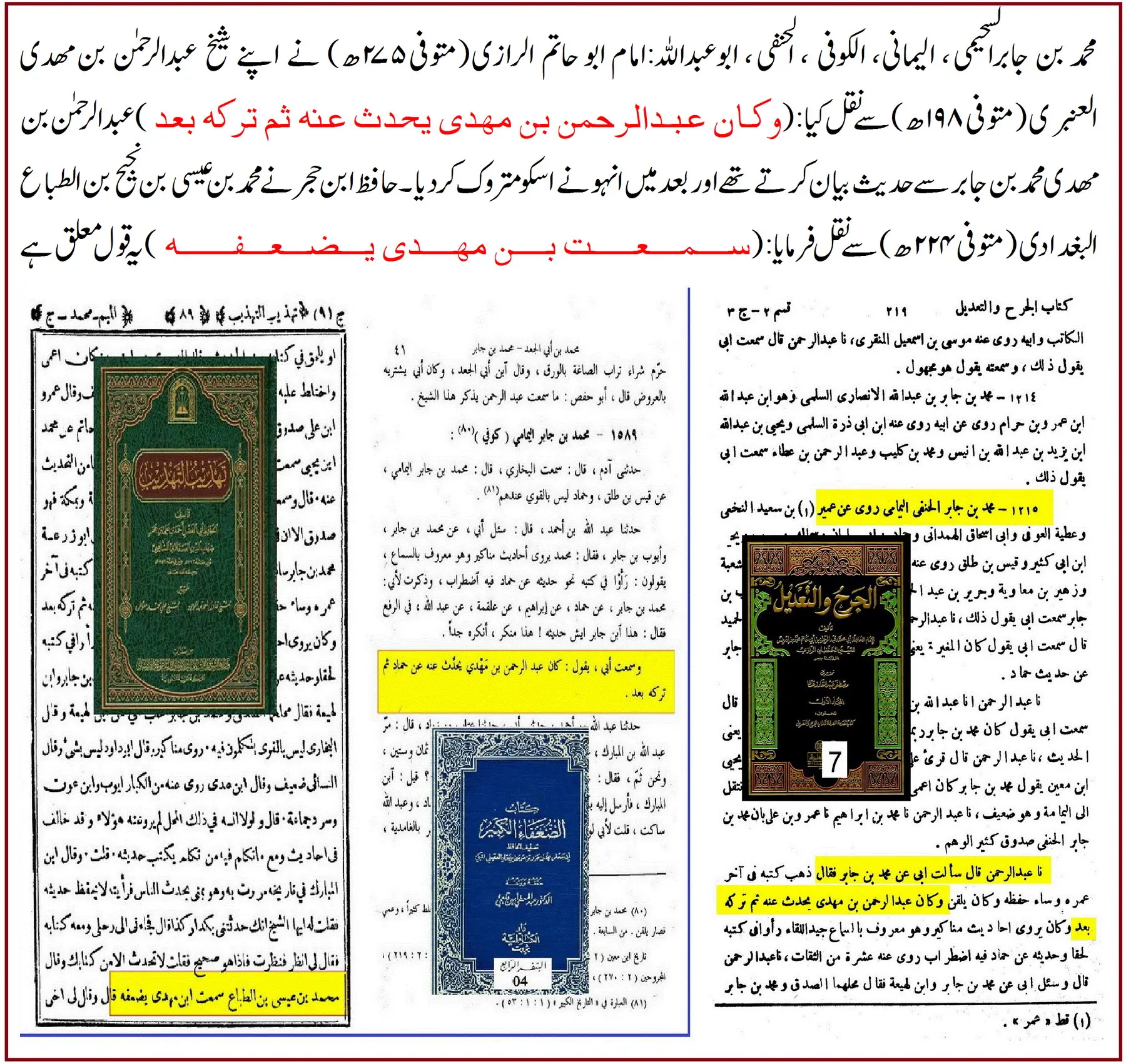
⑤ ʿAbd al-Raḥmān bin Mahdī (reported by Abū Ḥātim)
Arabic:«ذهب كتبه في آخر عمره وساء حفظه وكان يلقن … ثم تركه عبد الرحمن بن مهدي.»
Reference: الجرح والتعديل
Translation: His books were lost toward the end of his life, his memory deteriorated, and he would accept prompting… Then ʿAbd al-Raḥmān bin Mahdī abandoned him.
Clarification: Clear evidence of his weakness and abandonment.
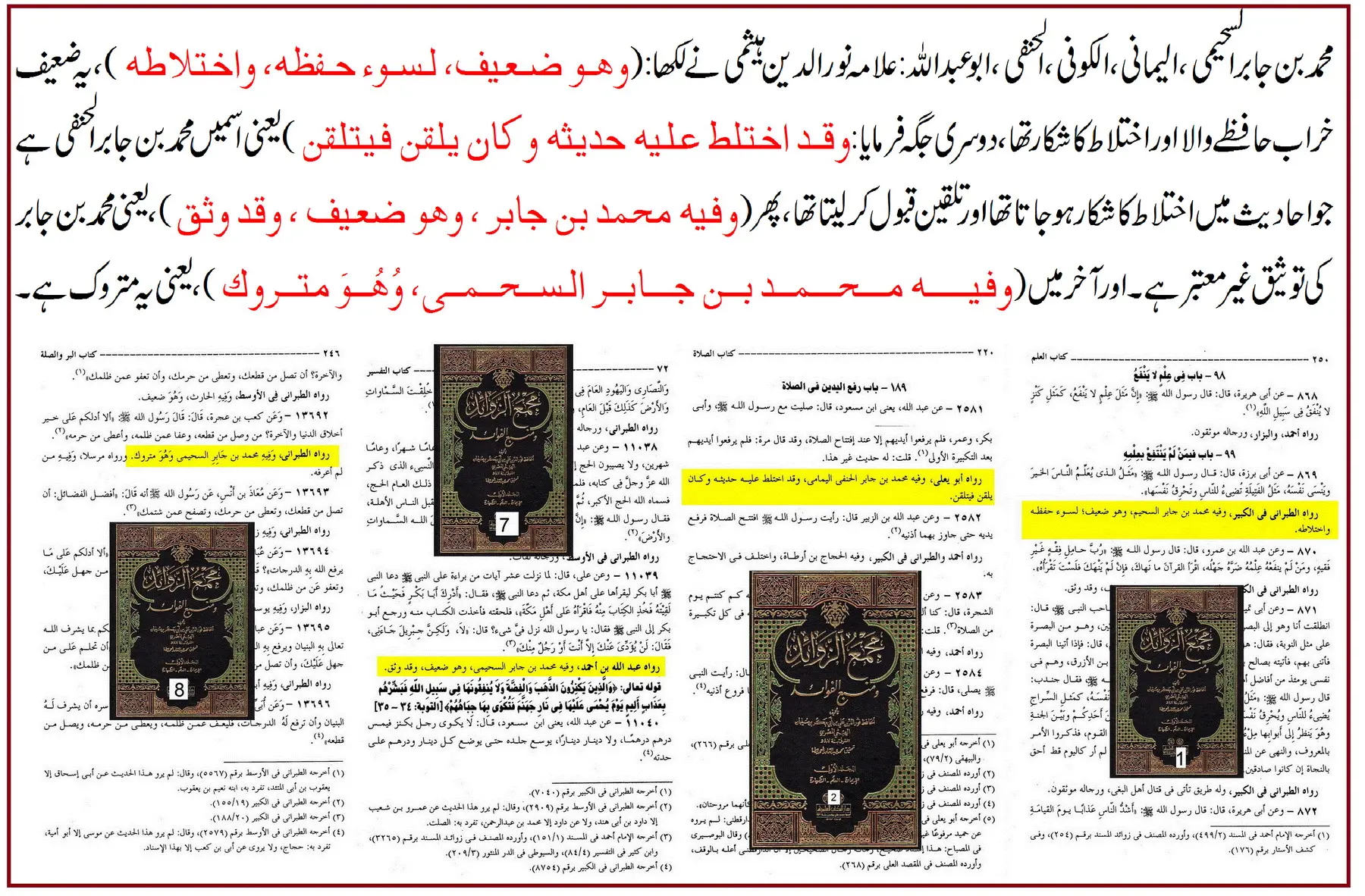
⑥ ʿAllāmah al-Haythamī
Arabic:«محمد بن جابر السحيمي … ضعيف لسوء حفظه واختلاطه … وكان يُلقَّن فيتلقن.»
Reference: مجمع الزوائد 869، 1193، 1953، 2581، 2819
Translation: Muhammad bin Jābir is weak due to poor memory and confusion; he would accept prompting.
Clarification: Al-Haythamī mentioned his weakness repeatedly.
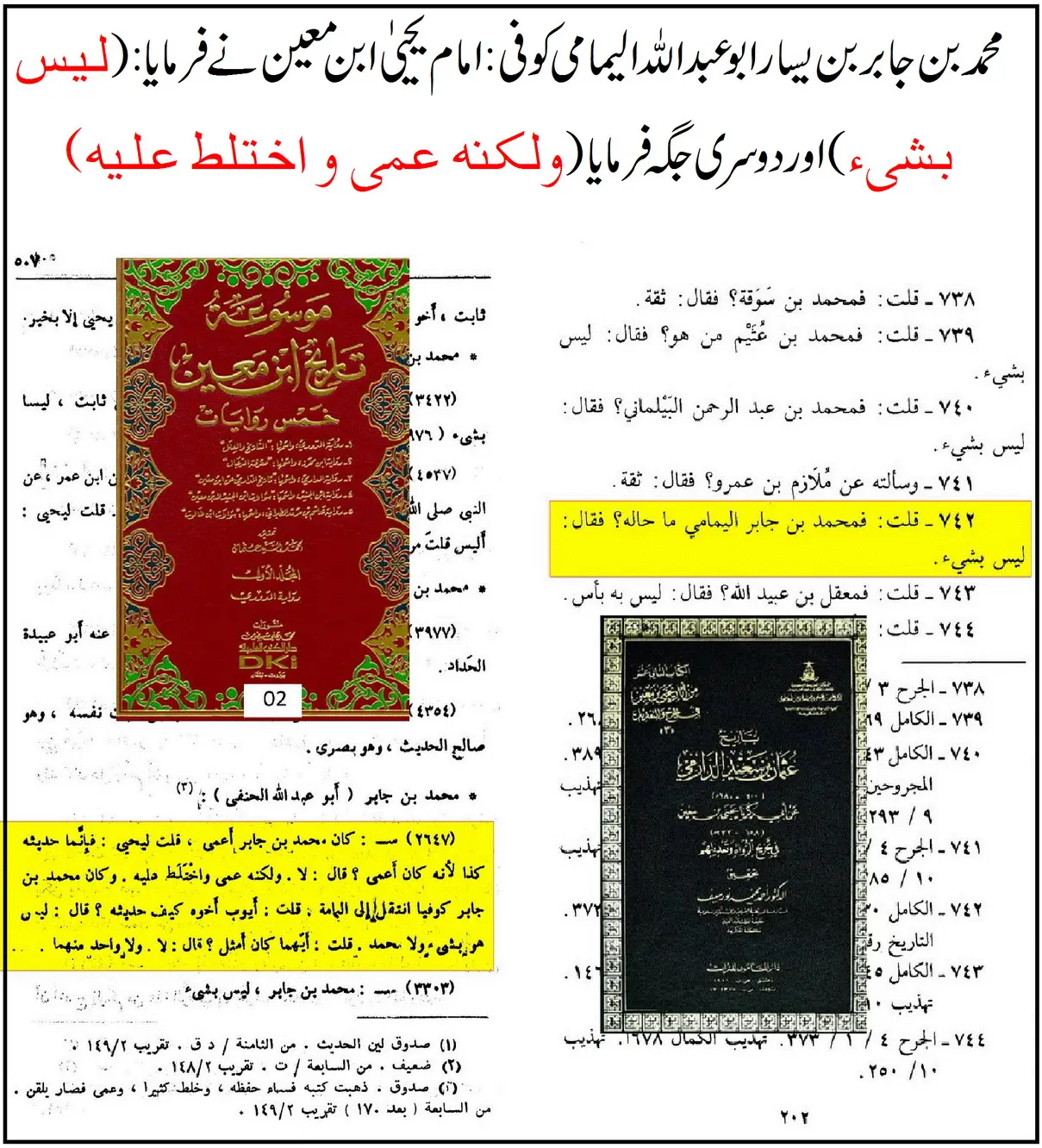
⑦ Yaḥyā bin Maʿīn
Arabic:«محمد بن جابر ليس بشيء … لا يكتب حديثه … كان أعمى واختلط.»
Reference: تاريخ ابن معين رواية الدوري 2647، 3303
Translation: Muhammad bin Jābir is nothing; his ḥadīth is not written. He was blind and became confused.
Clarification: Ibn Maʿīn repeatedly declared him unreliable.
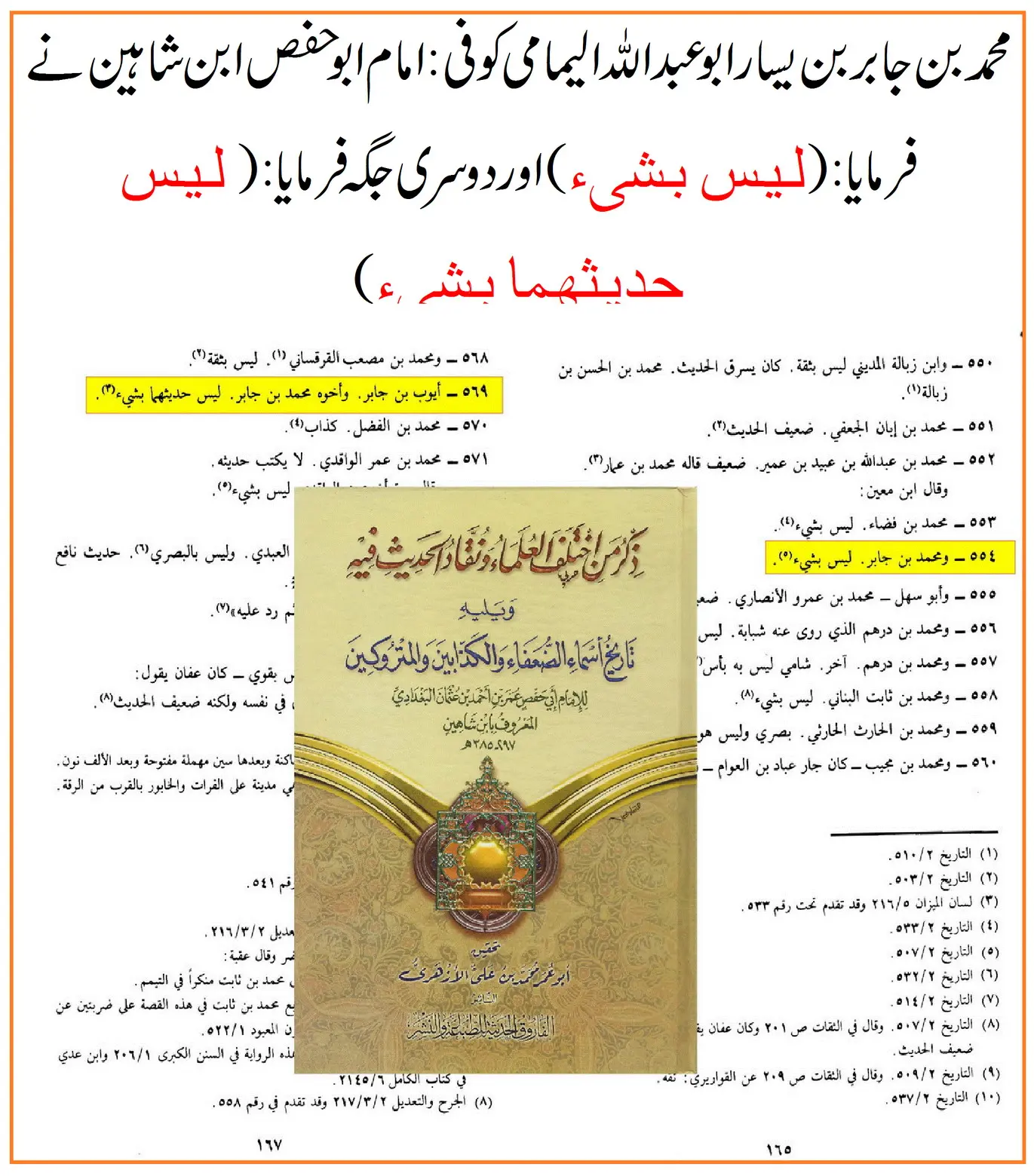
⑧ Ibn Shāhīn
Arabic:«أيوب بن جابر وأخوه محمد بن جابر ليس حديثهما بشيء.»
Reference: تاريخ أسماء الضعفاء 569
Translation: Ayyūb bin Jābir and his brother Muhammad bin Jābir—neither of their ḥadīth is worth anything.
⑨ ʿAmr bin ʿAlī
Arabic:«محمد بن جابر الحنفي صدوق كثير الوهم.»
Reference: الجرح والتعديل
Translation: Muhammad bin Jābir was truthful but made many mistakes.
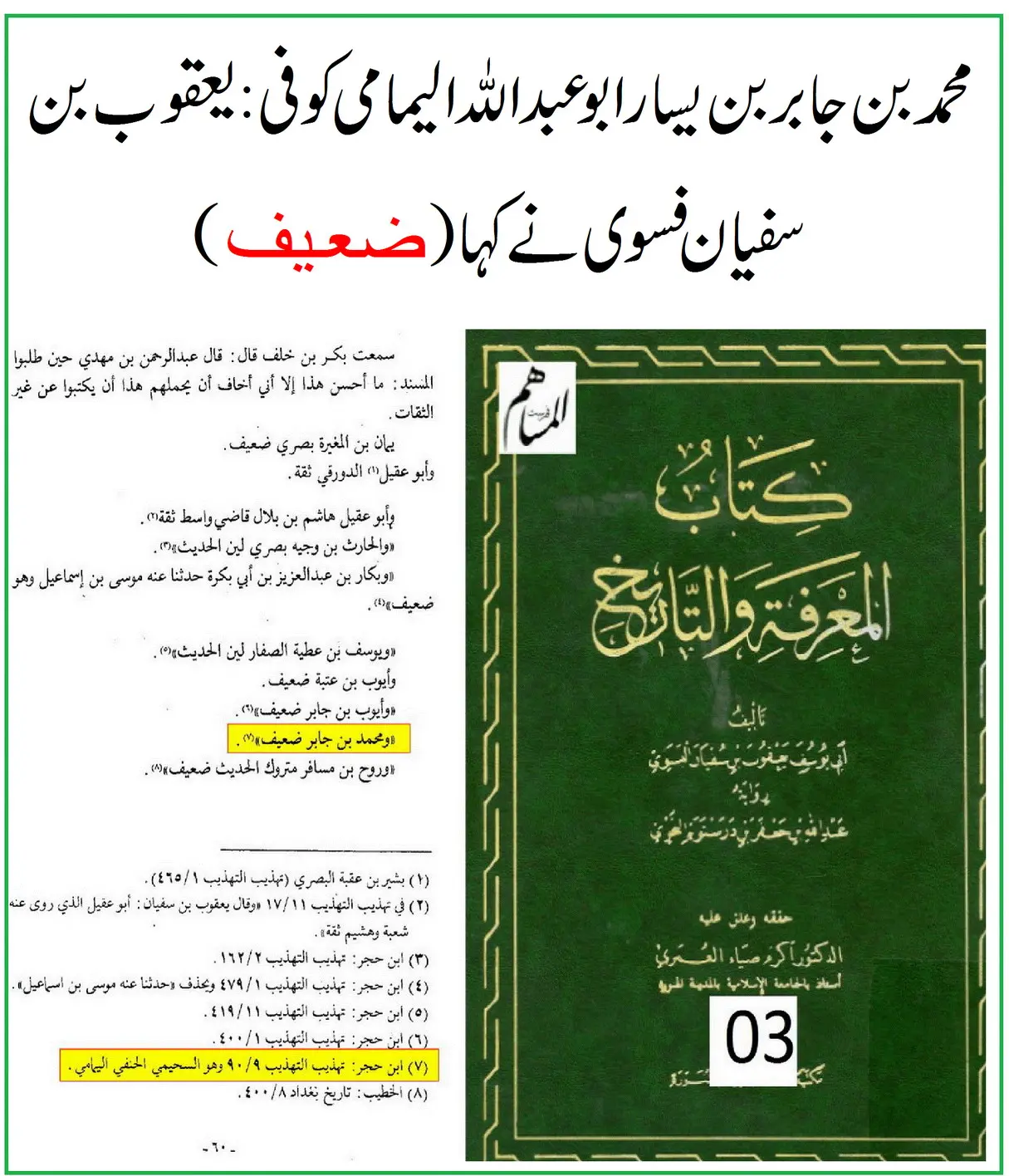
⑩ Yaʿqūb bin Sufyān
Arabic:«محمد بن جابر ضعيف.»
Reference: المعرفة والتاريخ
Translation: Muhammad bin Jābir is weak.
(And likewise the remaining Imams
⑪ Imām al-Dhahabī
He declared him weak, not a proof, and having many munkar narrations.
Reference: الكاشف 4762، سير أعلام النبلاء 1220
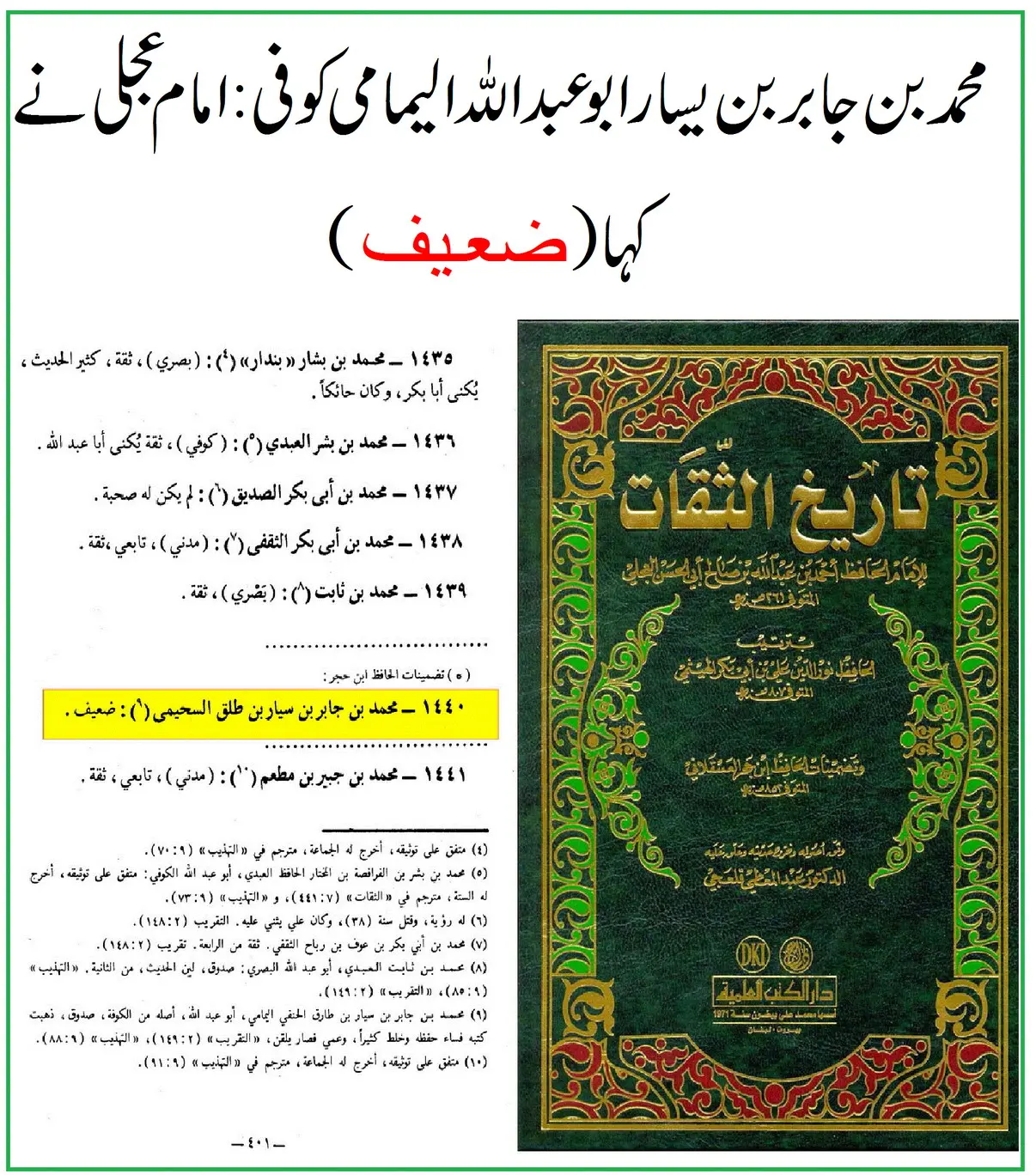
⑫ Imām al-ʿIjlī
Declared him weak.
Reference: تاريخ الثقات 1440
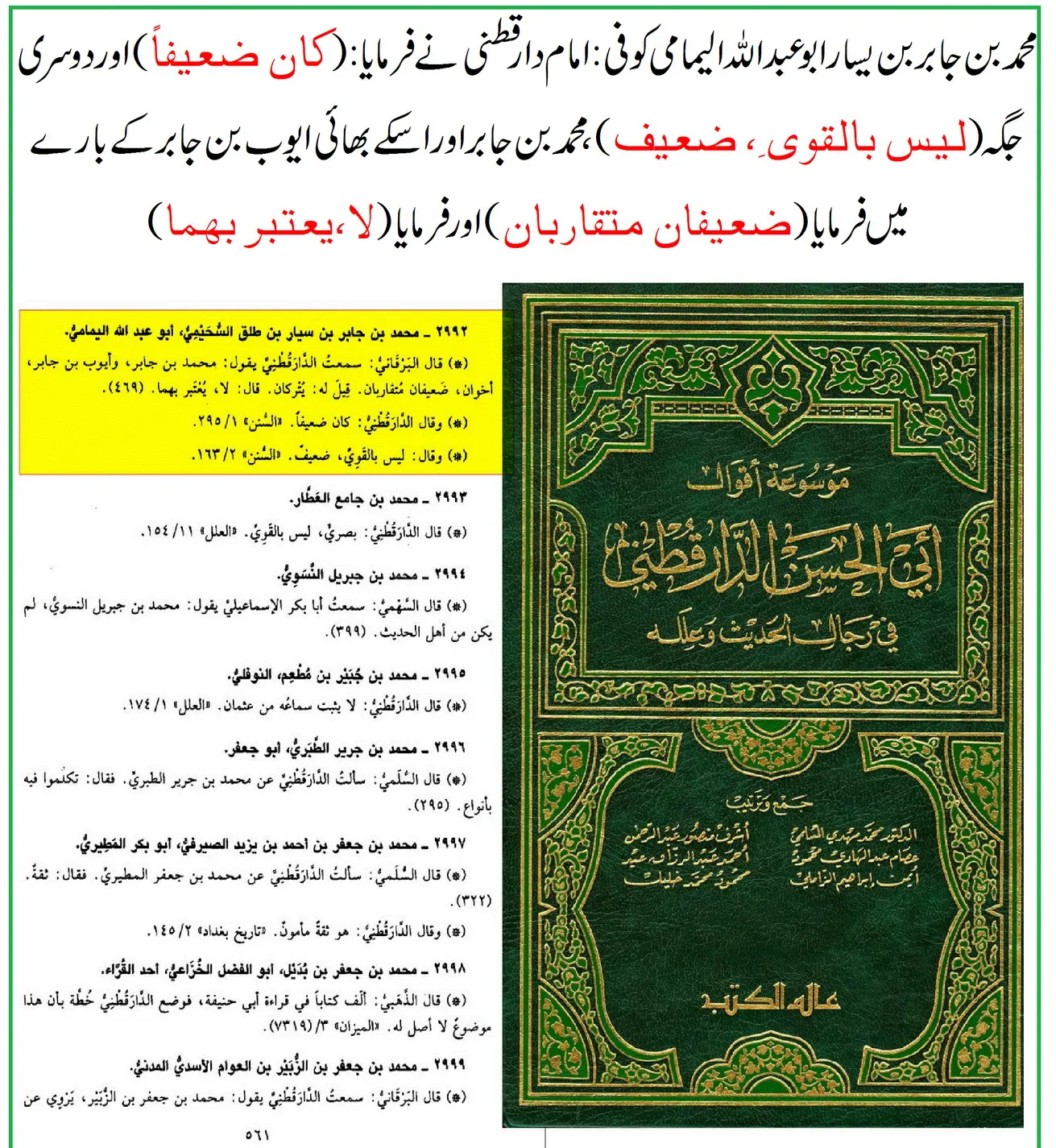
⑬ Imām al-Dāraqutnī
Declared him weak and not to be relied upon.
Reference: سنن الدارقطني، سؤالات البرقاني
⑭ Ibn Ḥammād al-Dawlābī
Declared him weak.
Reference: الكنى والأسماء
⑮ Ibn Abī Khaythamah
His ḥadīth is nothing.
Reference: تاريخ ابن أبي خيثمة 1292
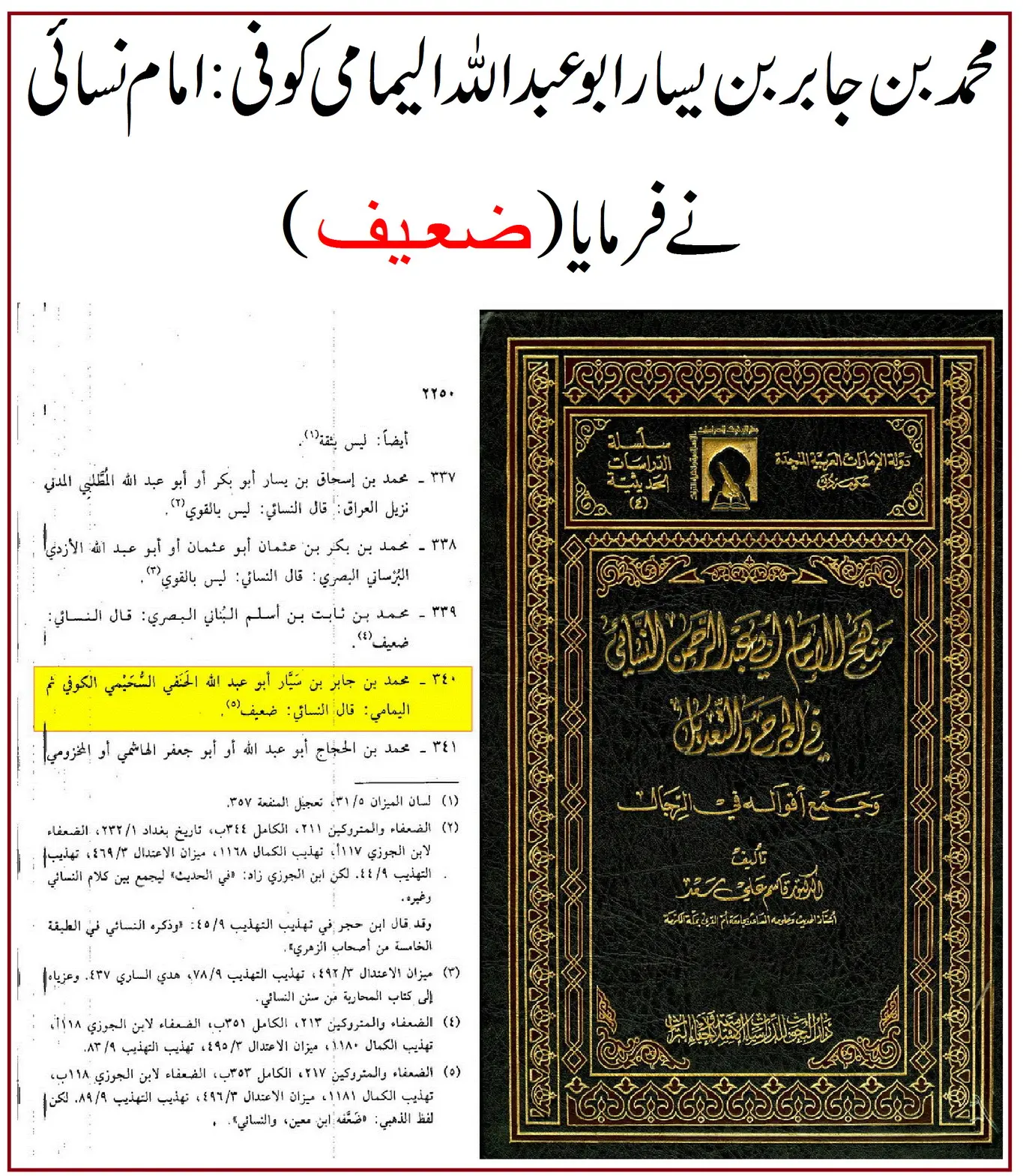
⑯ Imām al-Nasā’ī
Declared him weak.
Reference: الضعفاء والمتروكون 533
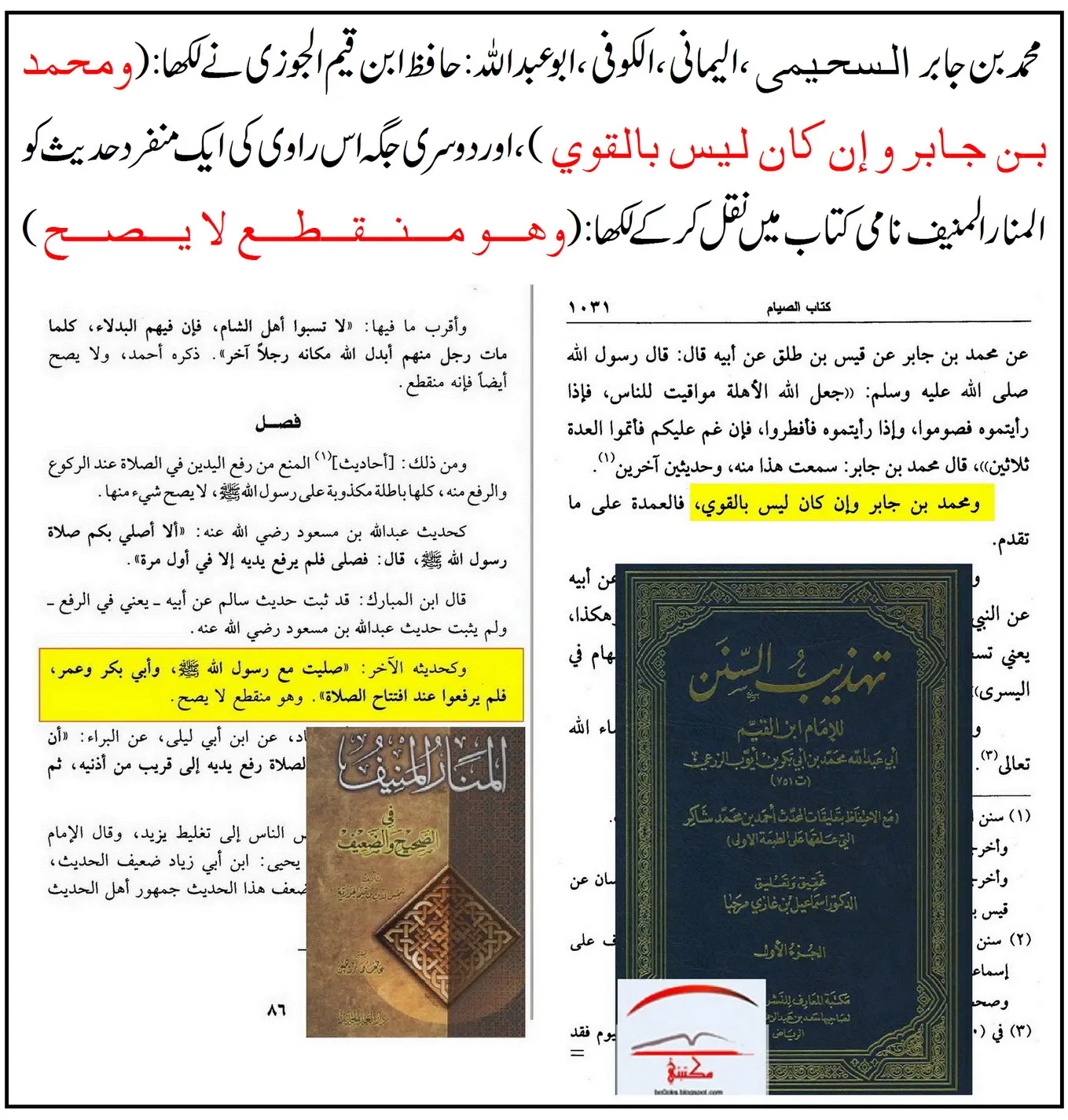
⑰ Ibn al-Qayyim
Declared his narration weak and disconnected.
Reference: تهذيب سنن أبي داود
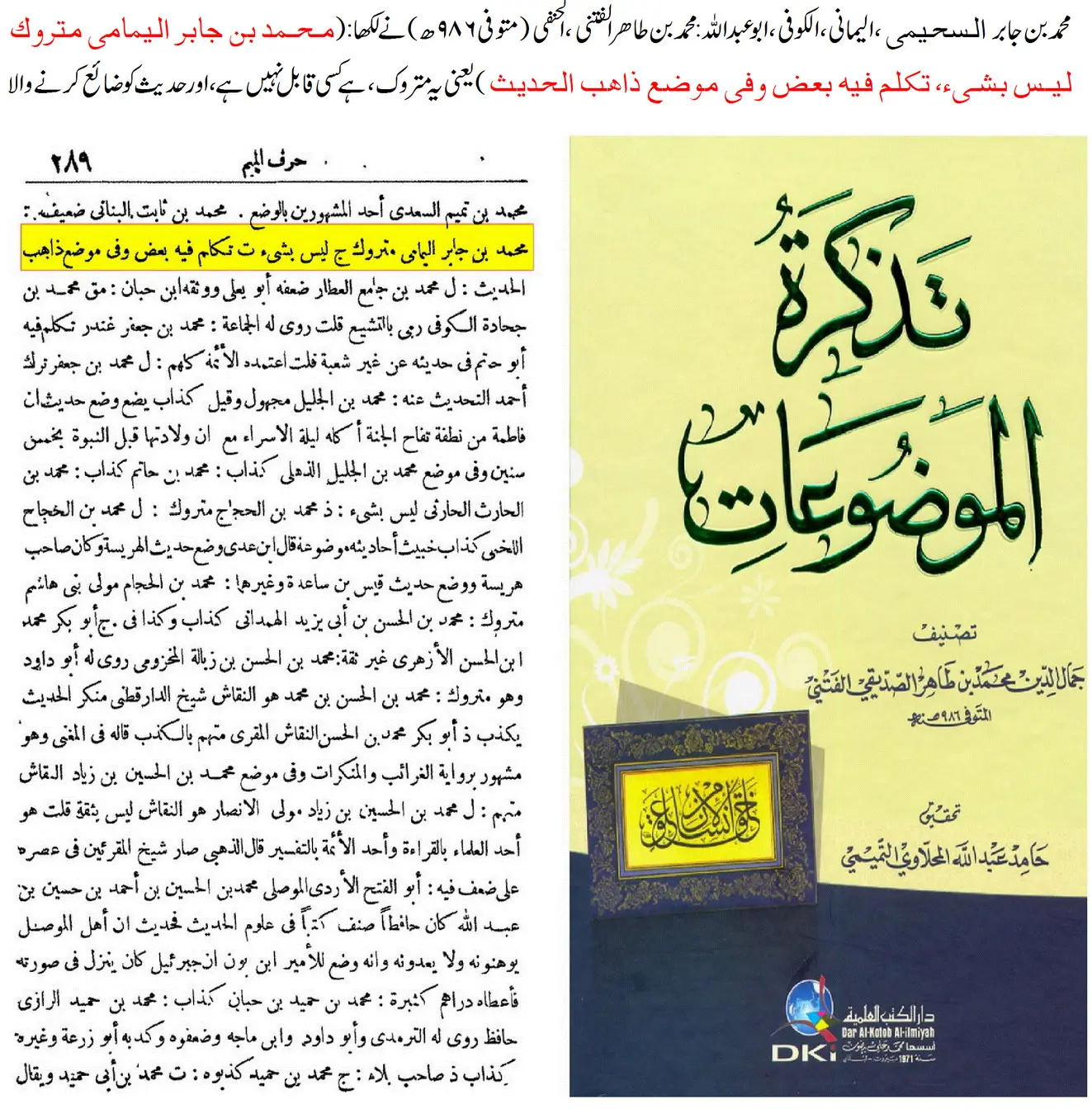
⑱ Muhammad bin Ṭāhir al-Maqdisī
Not reliable in ḥadīth.
Reference: تذكرة الحفاظ
⑲ Imām al-Suyūṭī
Declared his narration fabricated.
Reference: اللآلئ المصنوعة
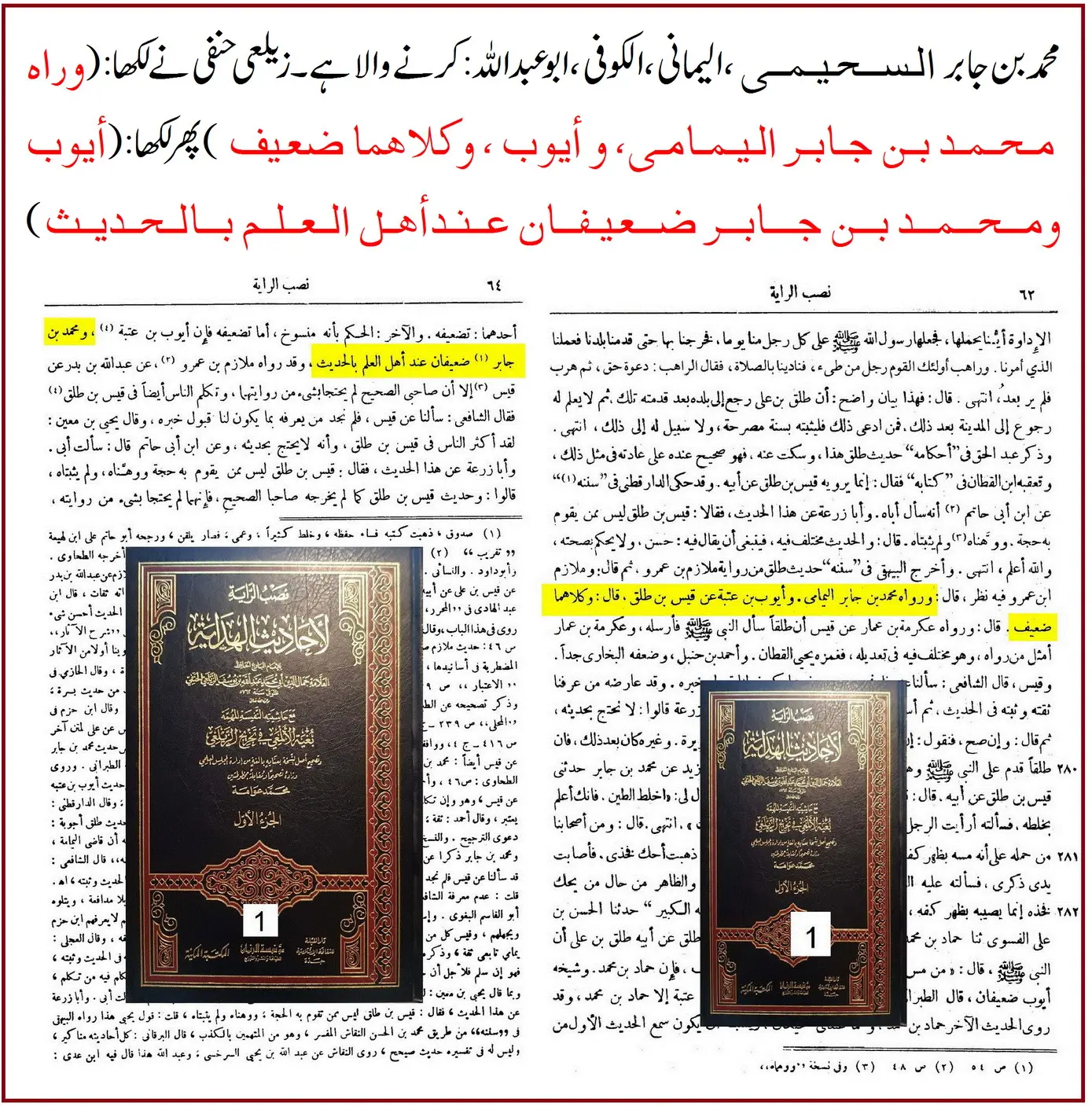
⑳ al-Zaylaʿī al-Ḥanafī
Declared him weak and not suitable for proof.
Reference: نصب الراية
㉑ Imām al-Bayhaqī
Declared him abandoned (matrūk).
Reference: السنن الكبرى
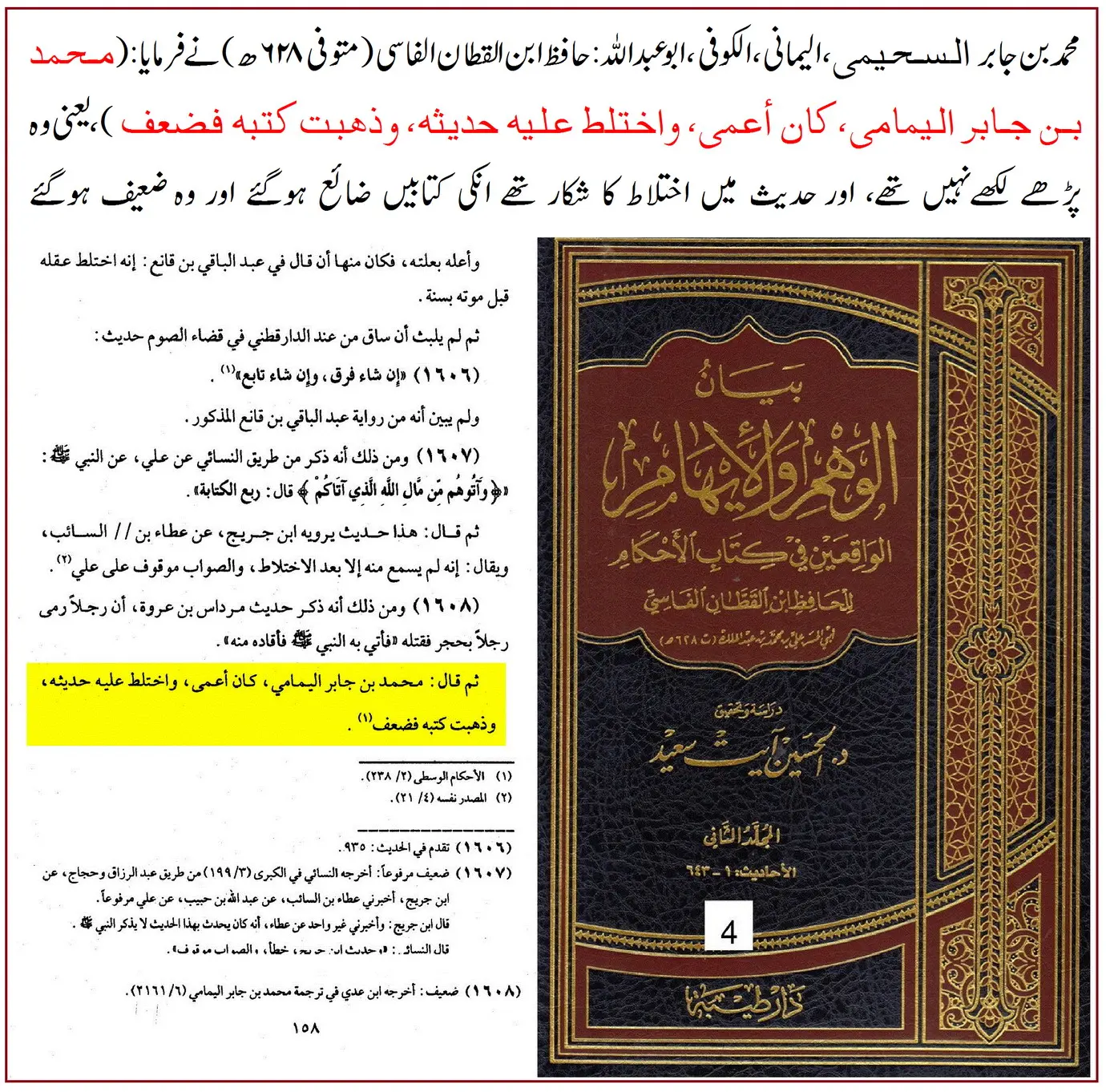
㉒ Ibn al-Qaṭṭān al-Fāsī
Weak due to blindness, loss of books, and confusion.
Reference: بيان الوهم والإيهام
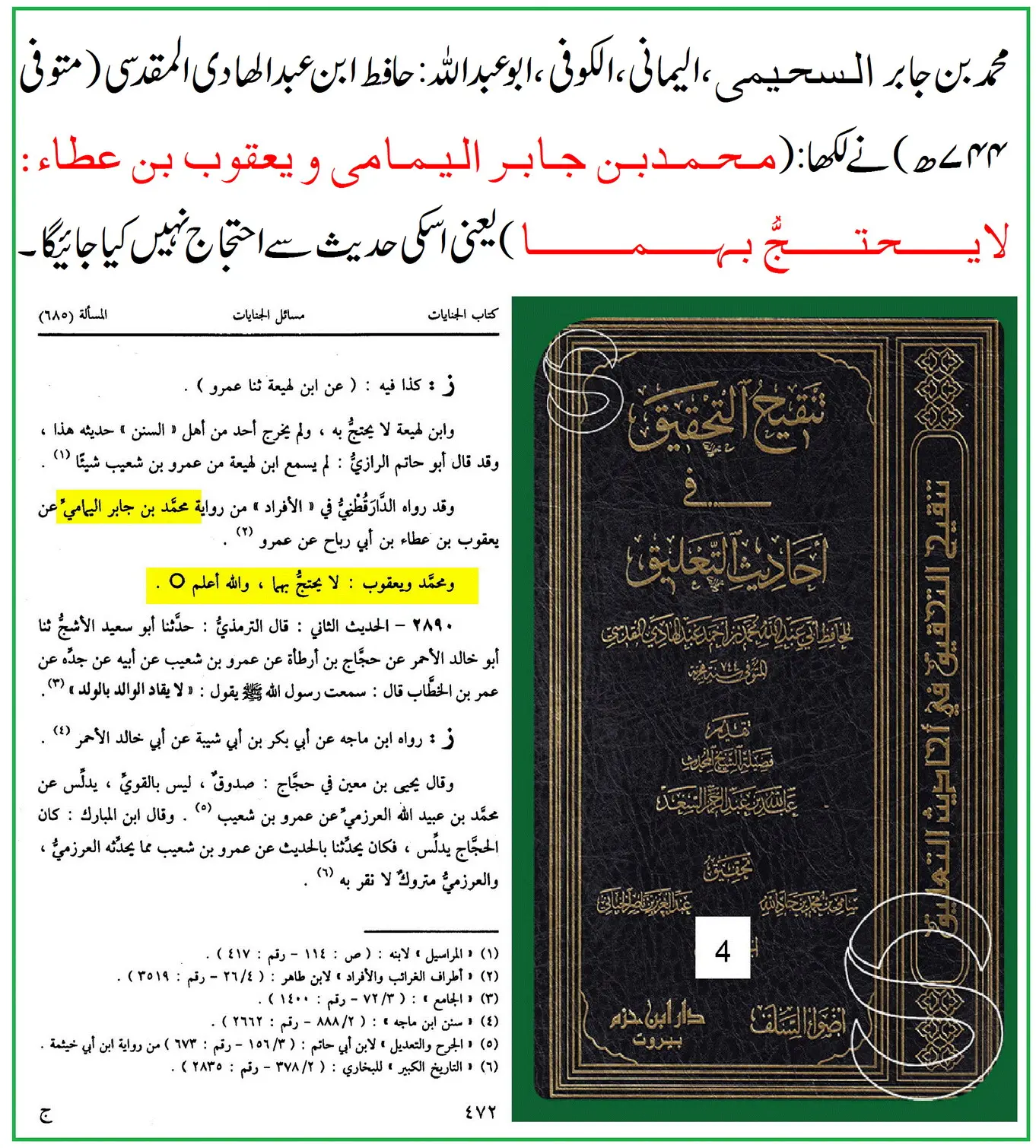
㉓ Ibn ʿAbd al-Hādī
Not relied upon.
Reference: تنقيح التحقيق
㉔ Ibn al-Mulaqqin
Not relied upon.
Reference: البدر المنير
㉕ Ibn Ḥazm
Declared him ruined (hālik).
Reference: المحلى بالآثار
㉖ Ibn Kathīr
Declared his chain weak and text objectionable.
Reference: البداية والنهاية
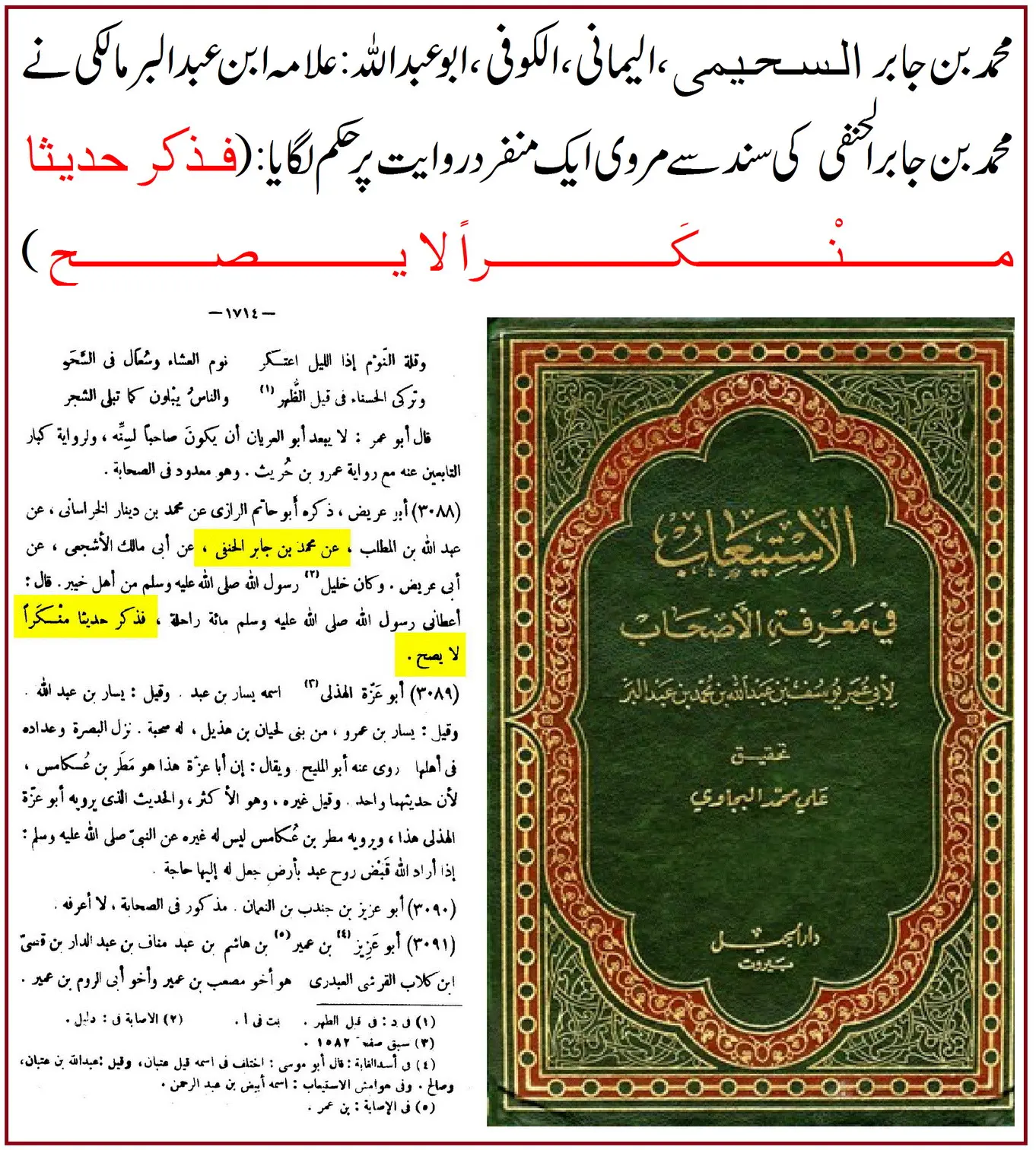
㉗ Ibn ʿAbd al-Barr
Declared his narration munkar and unsound.
Reference: الاستيعاب
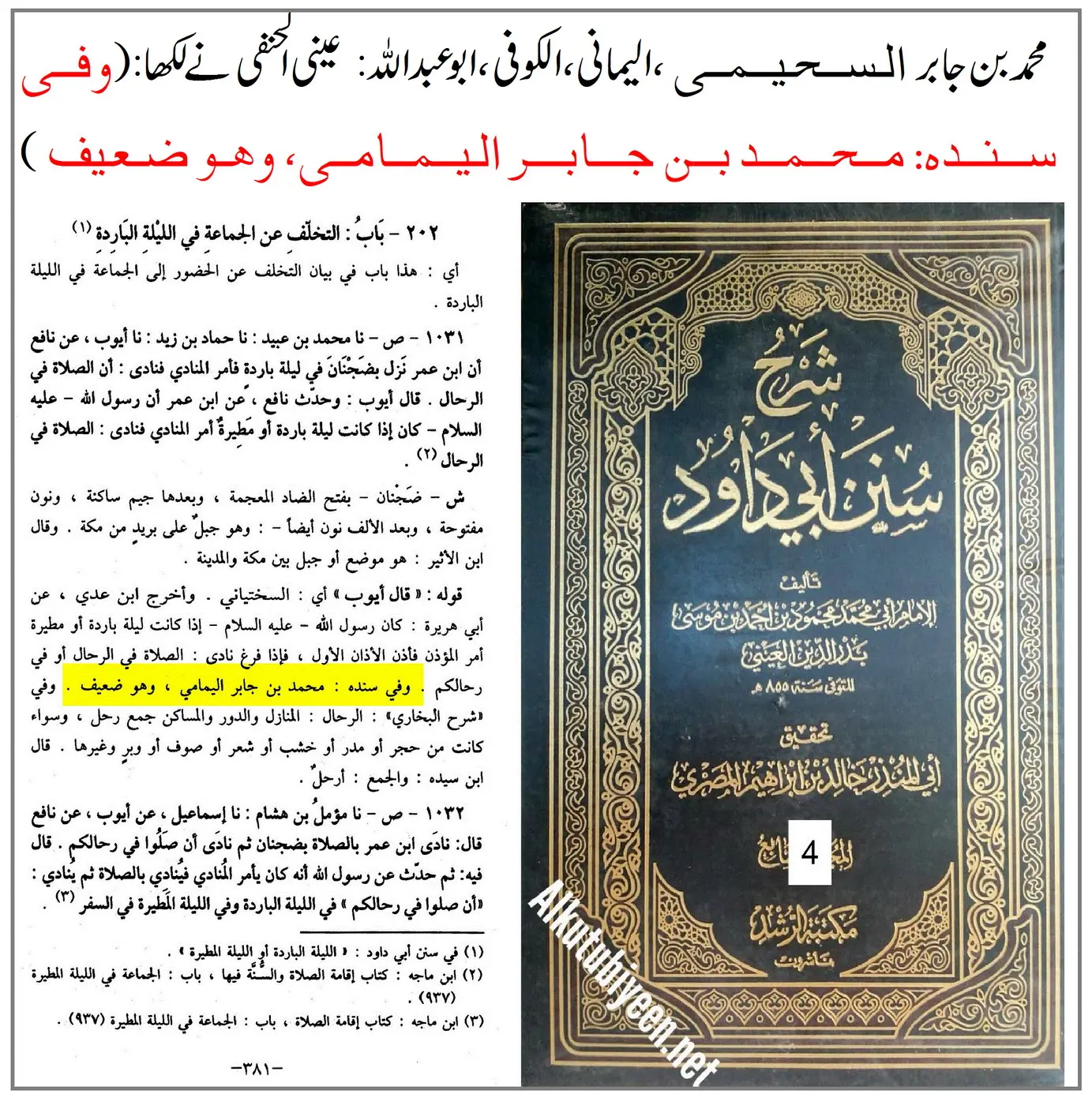
㉘ Badr al-Dīn al-ʿAynī
Declared him weak and abandoned.
Reference: شرح سنن أبي داود
㉙ Abū Isḥāq al-Jawzajānī
Declared him unreliable.
Reference: أحوال الرجال
㉚ Imām al-Nawawī
Declared him severely weak.
Reference: خلاصة الأحكام
㉛ Abū Zurʿah al-Rāzī
Declared him fallen in ḥadīth.
Reference: كتاب الضعفاء
㉜ ʿAbd al-Ḥaqq al-Ishbīlī
Weak due to blindness and confusion.
Reference: الأحكام الوسطى
㉝ Imām al-ʿUqaylī
Most of his narrations have no supporting chains.
Reference: الضعفاء الكبير
㉞ Muhammad bin Ṭāhir al-Fatnī
Not reliable.
Reference: تذكرة الموضوعات
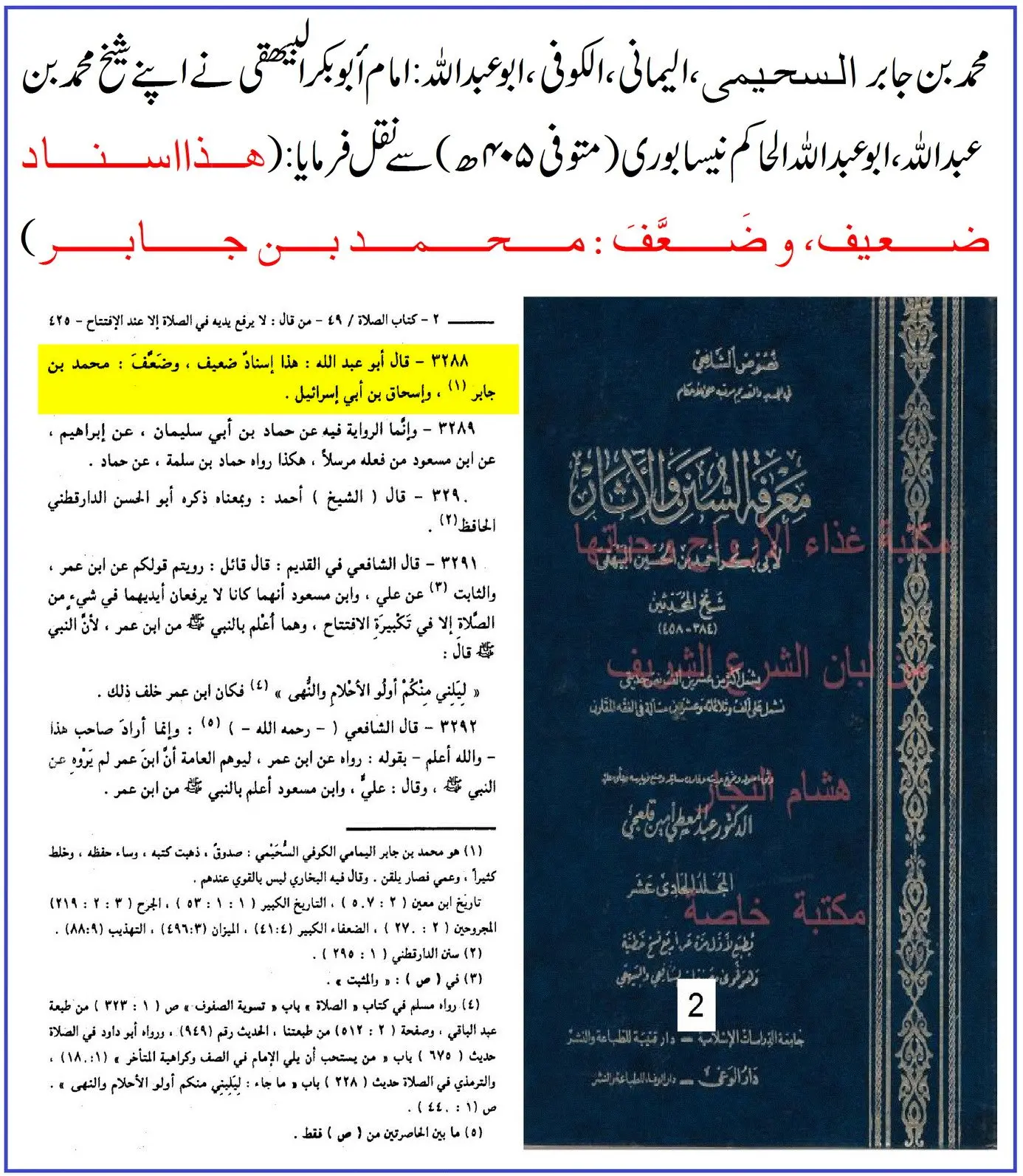
㉟ Imām al-Ḥākim
Declared his chain weak due to him.
Reference: معرفة السنن والآثار 3288
㊱ Ibn Ḥajar al-ʿAsqalānī
Declared him truthful but greatly mistaken after loss of books and blindness.
Reference: تقريب التهذيب 5777
㊲ Ibn Rajab
Declared him weak.
Reference: روائع التفسير
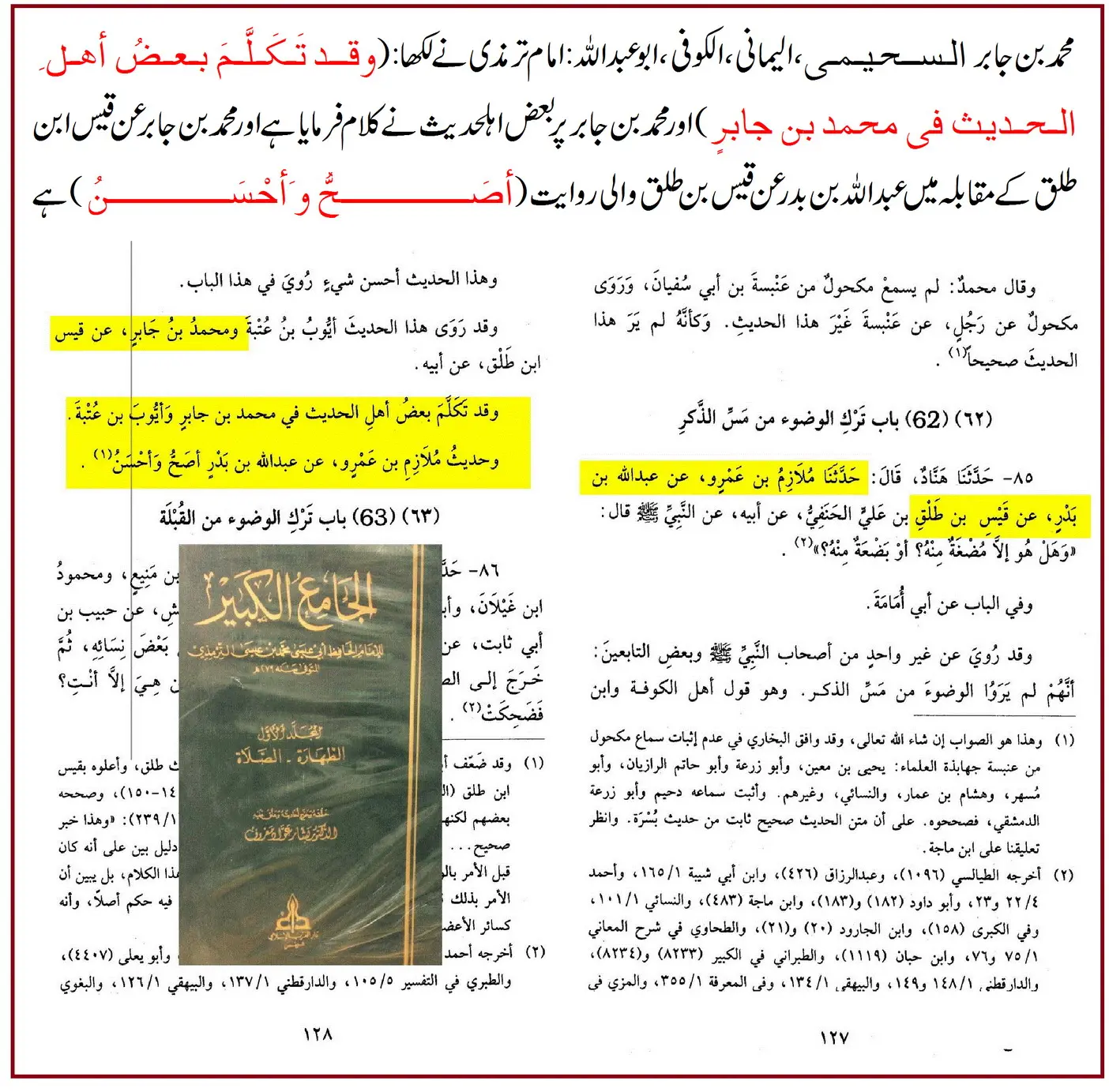
㊳ Imām al-Tirmidhī
Indicated criticism against him.
Reference: سنن الترمذي
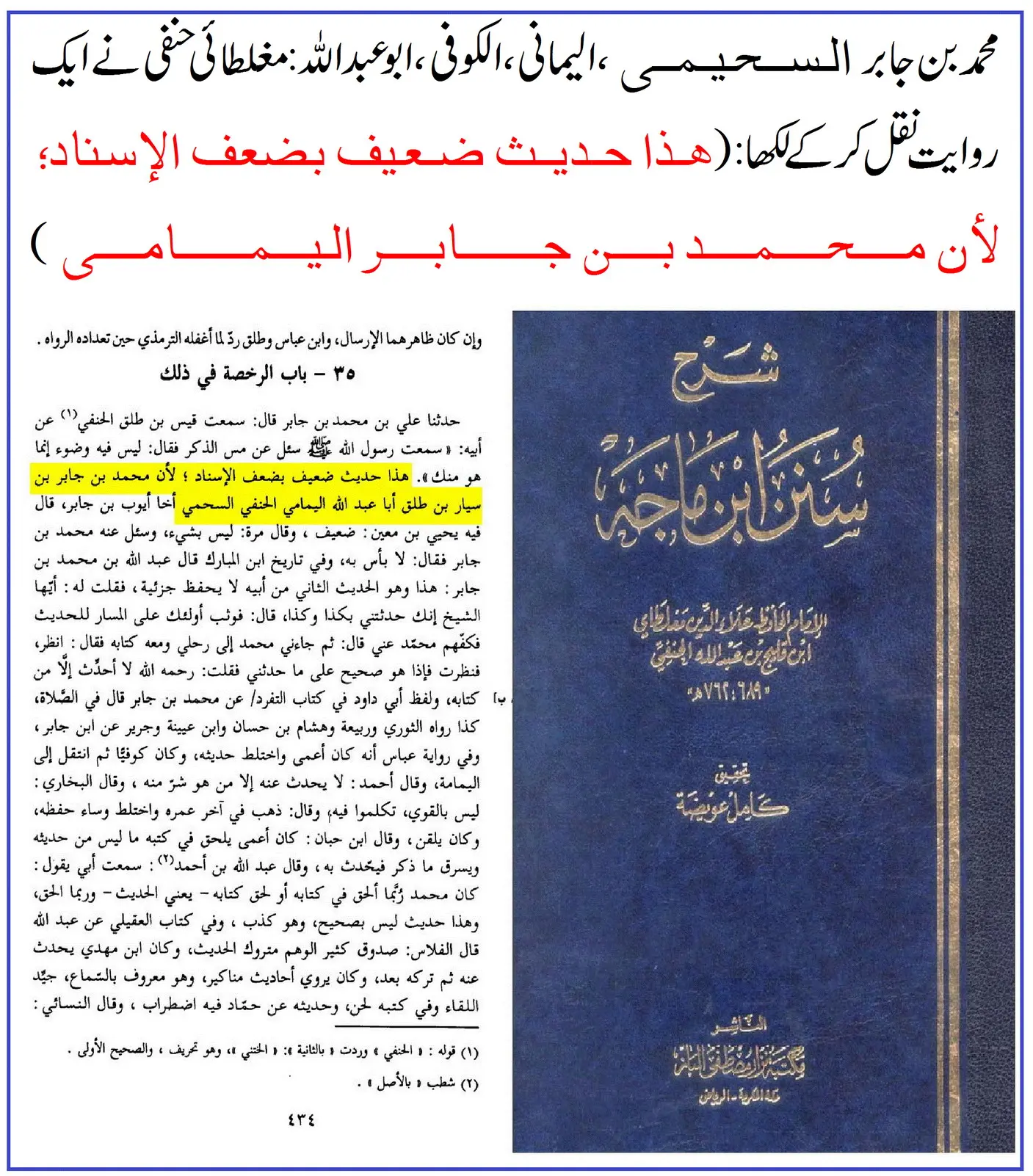
㊴ Mughaltāy al-Ḥanafī
Declared him weak; Abū Dāwūd said: He is nothing.
Reference: شرح سنن ابن ماجه
㊵ Imām Abū Ḥātim
Declared deterioration, confusion, and اضطراب in his narrations.
Reference: الجرح والتعديل
㊶ Imām al-ʿIrāqī
Declared him the defect in the chain.
Reference: تنزيه الشريعة
✦ Comprehensive Summary
From the statements of these 41 scholars, it is established that:◈ Muhammad bin Jābir al-Yamāmī was blind, non-scribe, and after losing his books became severely confused and weak.
◈ The majority declared him weak; several labeled him abandoned (matrūk); some even declared his solitary narrations fabricated.
◈ Though a few described him as “truthful,” they clarified that due to confusion and loss of books he was not reliable.
 Conclusion
The criticisms of the majority of ḥadīth scholars regarding Muhammad bin Jābir al-Yamāmī are decisive and agreed upon. Therefore, none of his narrations are reliable or acceptable as proof.
