Compiled by: Abu Hamzah Salafi
 Objective:
The purpose of this article is to expose the deviation and innovation in labeling the Qur'anic verses regarding the Attributes of Allah ﷻ as mutashābih (ambiguous). This is a Jahmi and heretical approach. In contrast, the Salaf as-Sālihīn (righteous predecessors) and the majority of Hadith scholars considered these verses to be muḥkam (clear and decisive). Believing in them upon their apparent meaning is the way of Ahl al-Sunnah wal-Jamāʿah.
 False Claims Raised by a Deobandi
① He called the verse:
﴿الرَّحْمَـٰنُ عَلَى الْعَرْشِ اسْتَوَى﴾
“The Most Merciful rose over the Throne”
as mutashābih, whereas there is no evidence from the Salaf declaring this verse to be ambiguous.
② He said:
“Taking the apparent meanings of the Qur'anic verses is a fitnah (trial).”
This is an accusation against the Salaf as-Sālihīn, who believed exactly in the apparent meanings.
③ He claimed:
“The real meaning of the mutashābihāt is only known to Allah.”
Whereas the majority of Hadith scholars state that even "those firmly grounded in knowledge (راسخون في العلم)" know their interpretation.
④ He argued:
“Following the mutashābihāt is a sign of deviance in the heart.”
In reality, this description applies to the Khawārij, Jahmiyyah, and Murji’ah, who distort meanings to suit their desires. The Salaf, on the other hand, used to return the mutashābih to the muḥkam.
 Affirmations from the Salaf and Hadith Scholars That These Verses Are Clear and Decisive
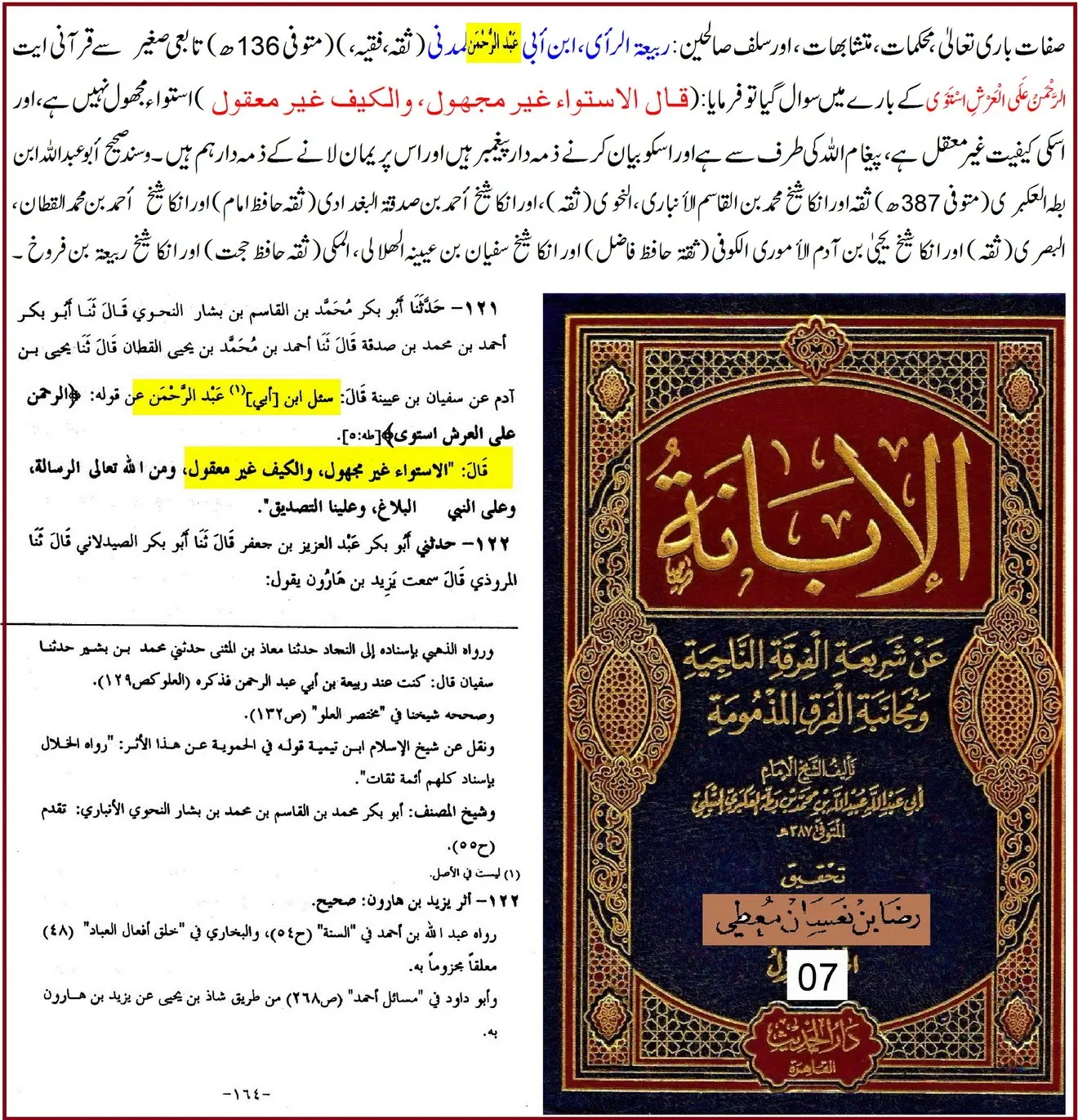
 Rabiʿah al-Rā’ī (Minor Tābiʿī, d. 136 AH)
He said regarding the verse:
﴿الرَّحْمَـٰنُ عَلَى الْعَرْشِ اسْتَوَى﴾
الِاسْتِوَاءُ غَيْرُ مَجْهُولٍ، وَالْكَيْفُ غَيْرُ مَعْقُولٍ، وَمِنَ اللَّهِ تَعَالَى الرِّسَالَةُ، وَعَلَى النَّبِيِّ الْبَلَاغُ، وَعَلَيْنَا التَّصْدِيقُ
(al-Ibānah al-Kubrā by Ibn Baṭṭah)
 Translation:
"‘Istiwa’ (rising above) is not unknown; the ‘how’ is incomprehensible. The message is from Allah, the conveying is upon the Prophet, and affirmation is upon us."
 Chain: Authentic
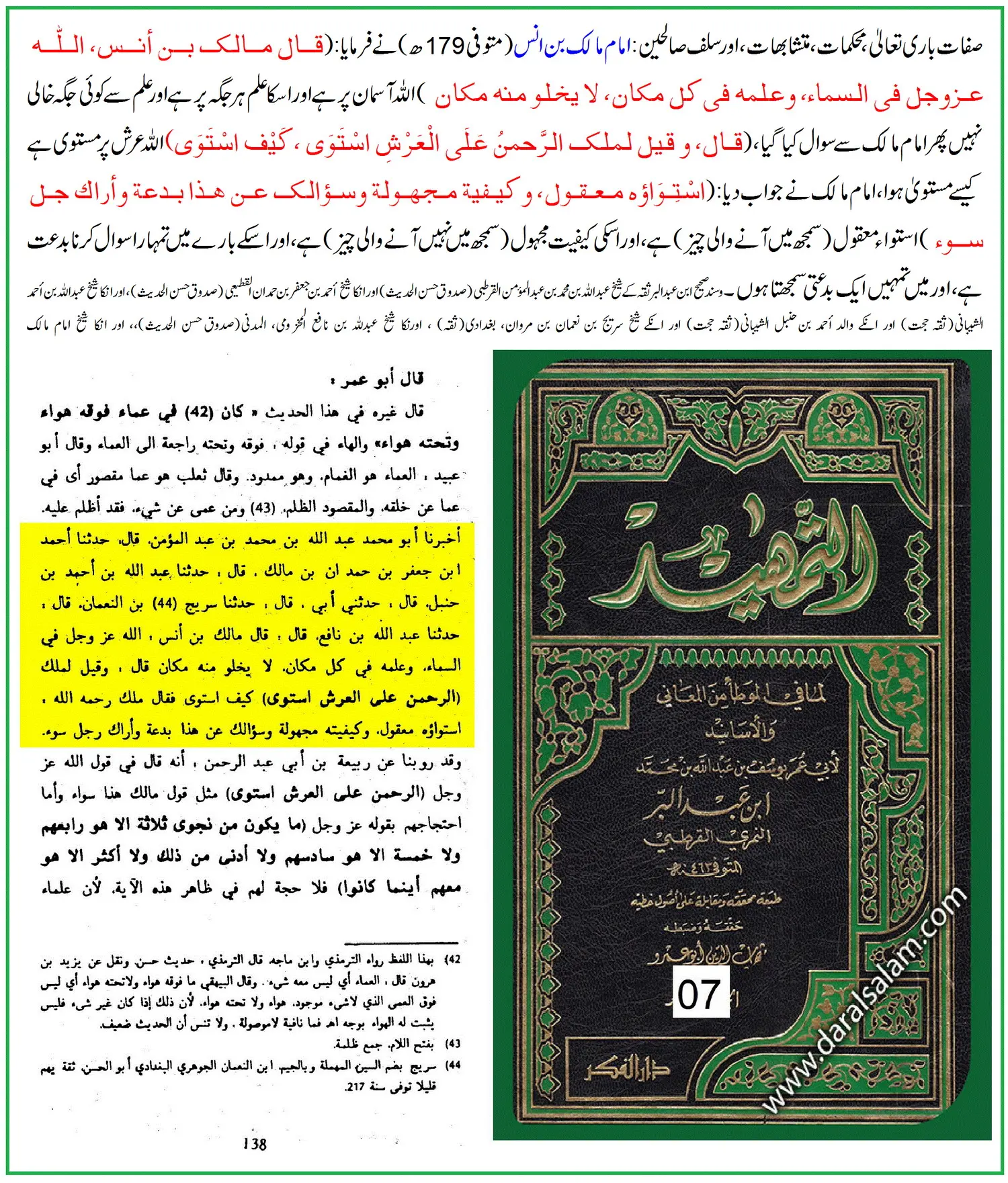
 Imām Mālik bin Anas (d. 179 AH)
When asked about the nature of ﴿الرَّحْمَـٰنُ عَلَى الْعَرْشِ اسْتَوَى﴾, he replied:
الاستواء معلوم، والكيف مجهول، والسؤال عنه بدعة، وأراك رجل سوء
(al-Tamhīd by Ibn ʿAbd al-Barr)
Translation:“Istiwa is known; its manner is unknown; questioning it is an innovation; and I see you as an evil man.”
The Position of the Salaf on
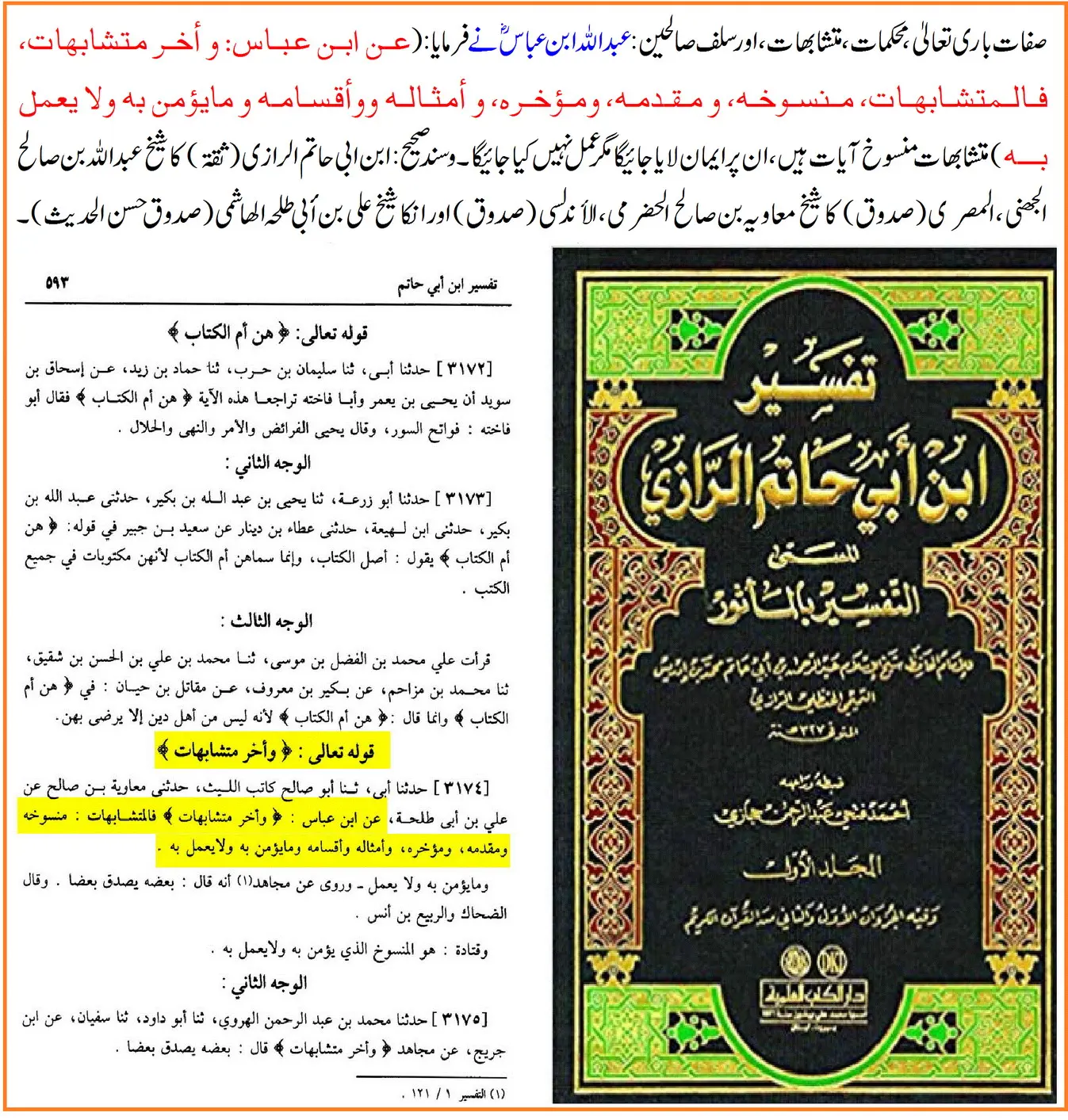
 ʿAbdullāh ibn ʿAbbās رضي الله عنهما
المتشابهات منسوخه ومقدمه ومؤخره وأمثاله وأقسامه، وما يؤمن به ولا يعمل به
(Tafsīr Ibn Abī Ḥātim)
Translation:The mutashābihāt are abrogated verses, those that are advanced or delayed, and their examples and categories. They are to be believed in, but not acted upon.
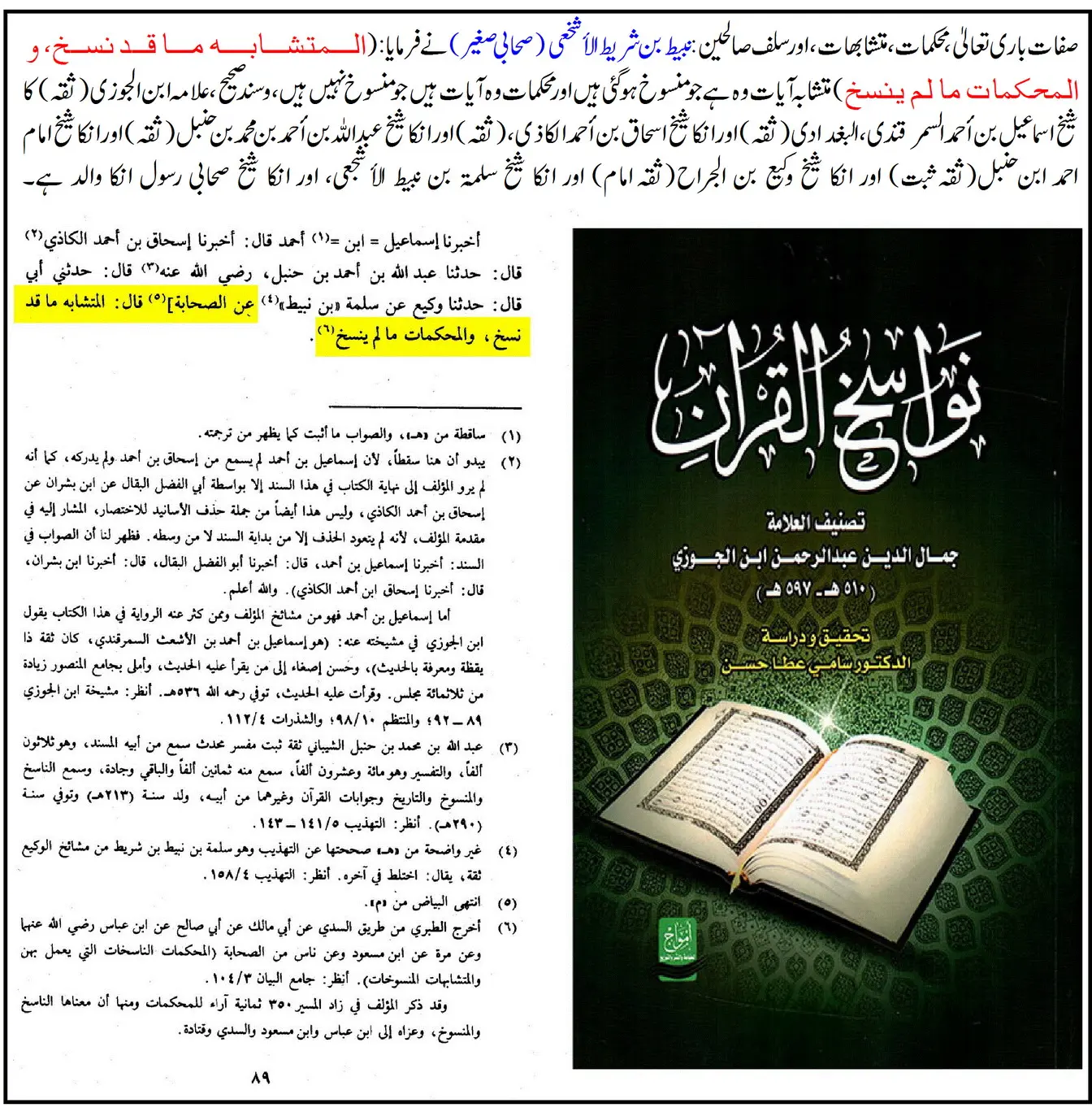
Chain: Authentic Nabīṭ ibn Sharīṭ al-Ashjaʿī (Minor Tābiʿī)
المتشابه ما قد نُسِخ، والمحكم ما لم يُنسخ
(Nawāsikh al-Qur’ān by Ibn al-Jawzī)
Translation:The mutashābih is what has been abrogated, and the muḥkam is what remains unabrogated.
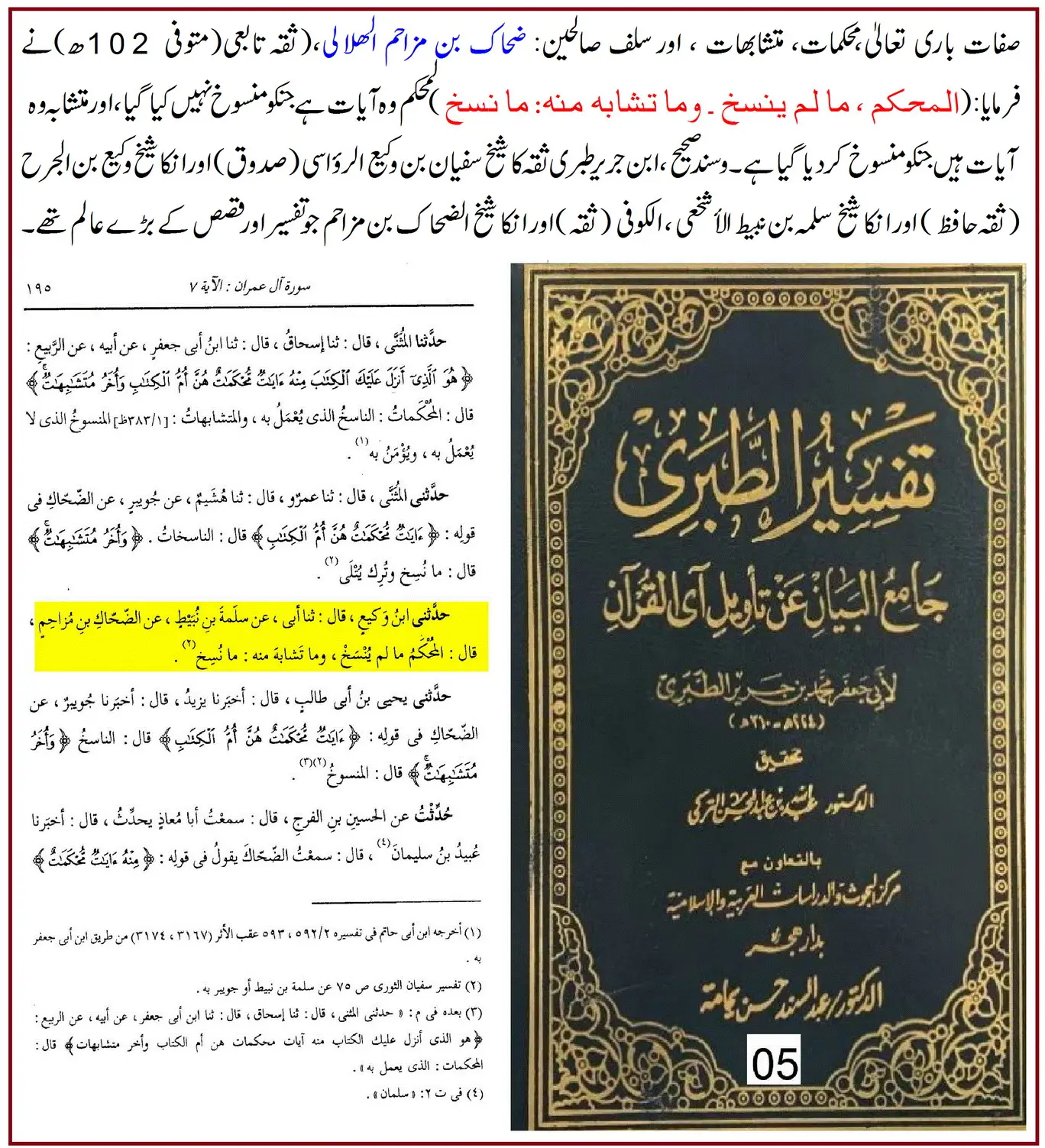
Chain: Authentic al-Ḍaḥḥāk ibn Muzāḥim (Tābiʿī, d. 102 AH)
المحكم ما لم يُنسخ، والمتشابه ما نُسخ
(Tafsīr al-Ṭabarī)
Translation:The muḥkam is that which has not been abrogated, and the mutashābih is that which has been abrogated.
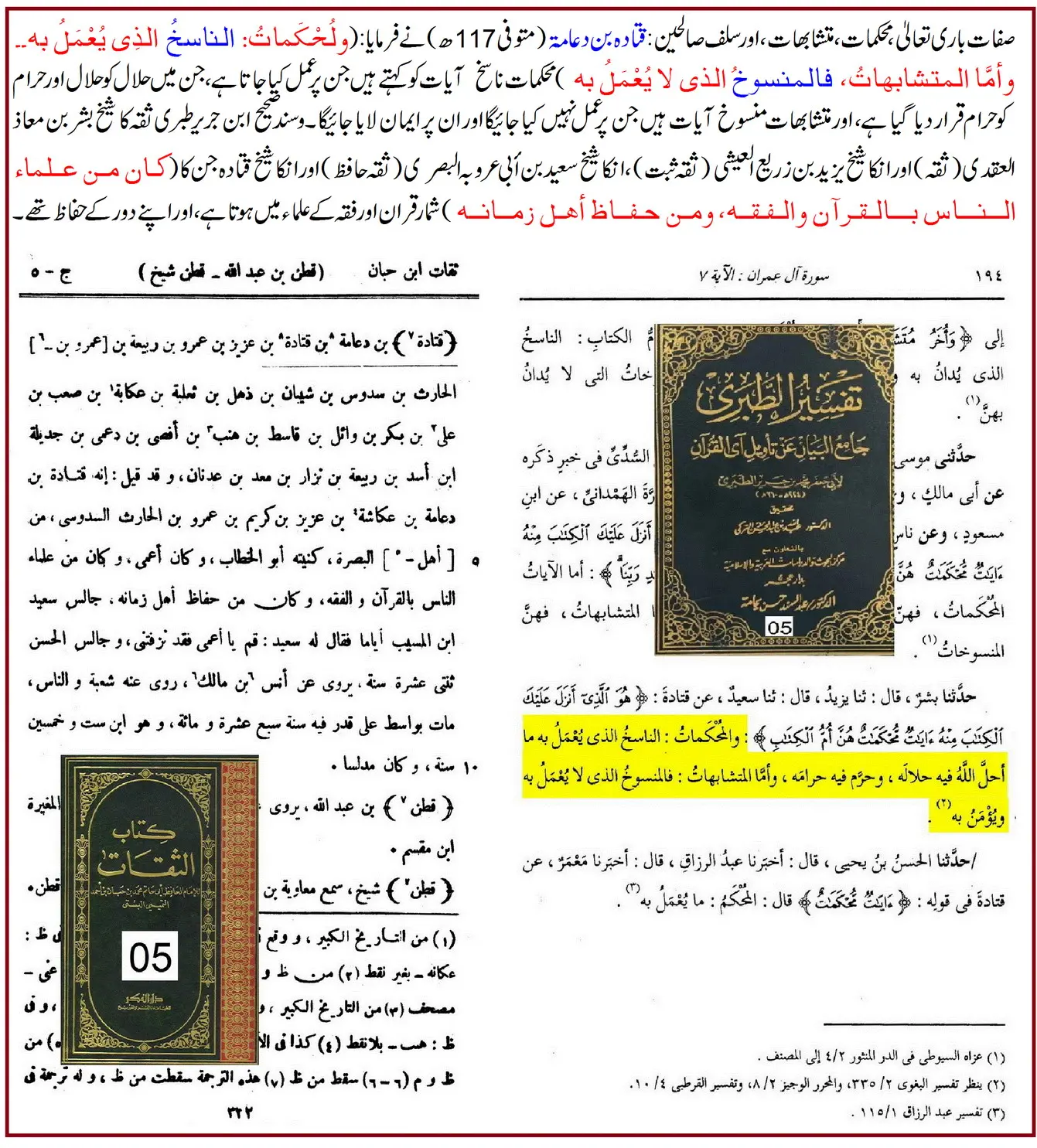
 Qatādah ibn Diʿāmah (Tābiʿī, d. 117 AH)
Regarding the verse:
﴿هُنَّ أُمُّ الْكِتَابِ﴾
المحكمات الناسخ الذي يعمل به، وأما المتشابهات فالمنسوخ الذي لا يعمل به ويؤمن
(Tafsīr al-Ṭabarī)
Translation:The muḥkamāt are those abrogating verses upon which action is based. The mutashābihāt are the abrogated ones—no action is based on them, but belief is maintained.
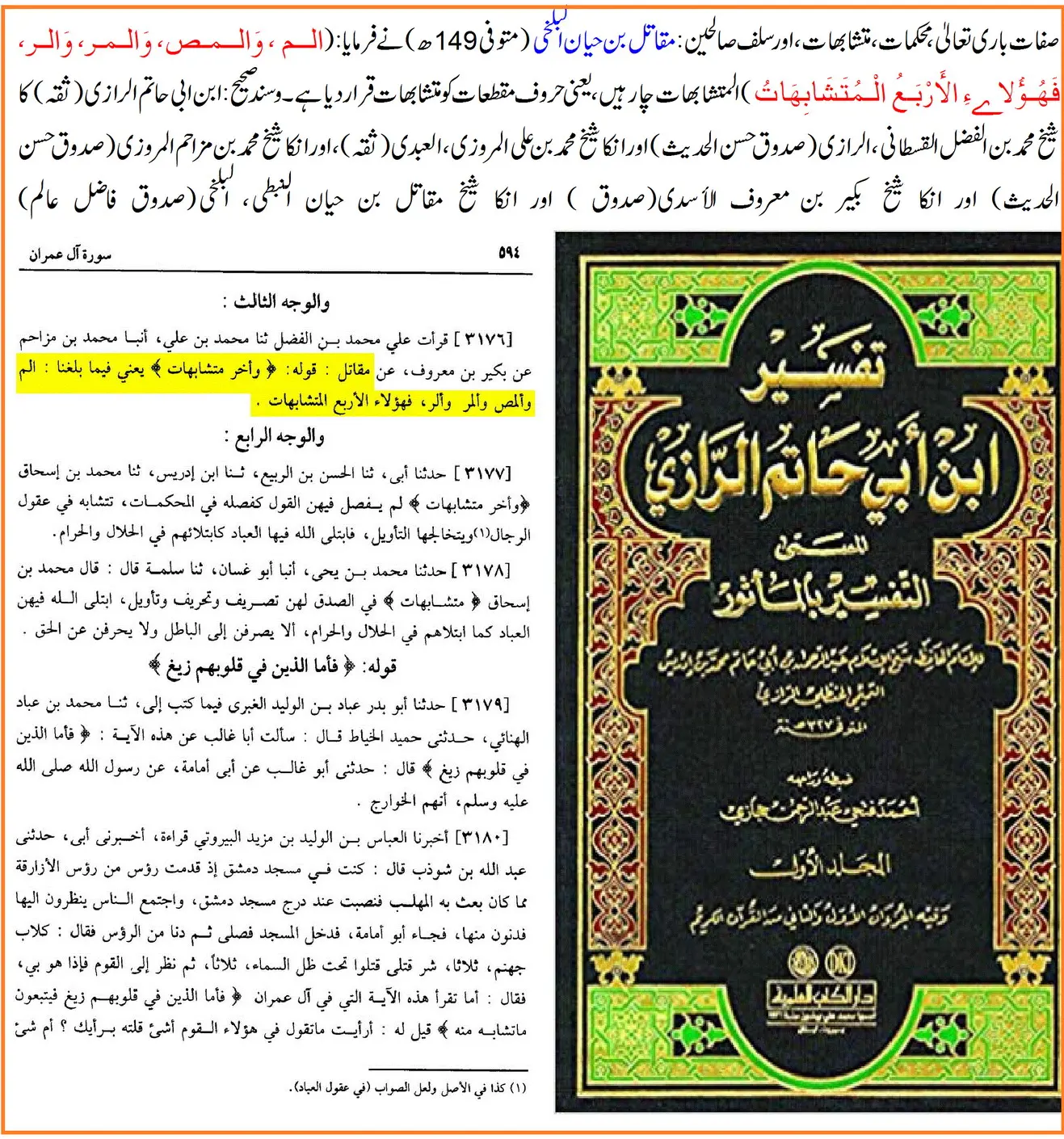
Chain: Authentic Muqātil ibn Ḥayyān al-Balkhī (d. 149 AH)
المتشابهات: الم والمص والمر والر
(Tafsīr Ibn Abī Ḥātim)
Translation:The mutashābihāt are the disjointed letters like: Alif Lām Mīm (الم), Alif Lām Mīm Ṣād (المص), Alif Lām Mīm Rā (المر), Alif Lām Rā (الر)
Chain: AuthenticSalaf’s Methodology on Returning Mutashābih to the Muḥkam
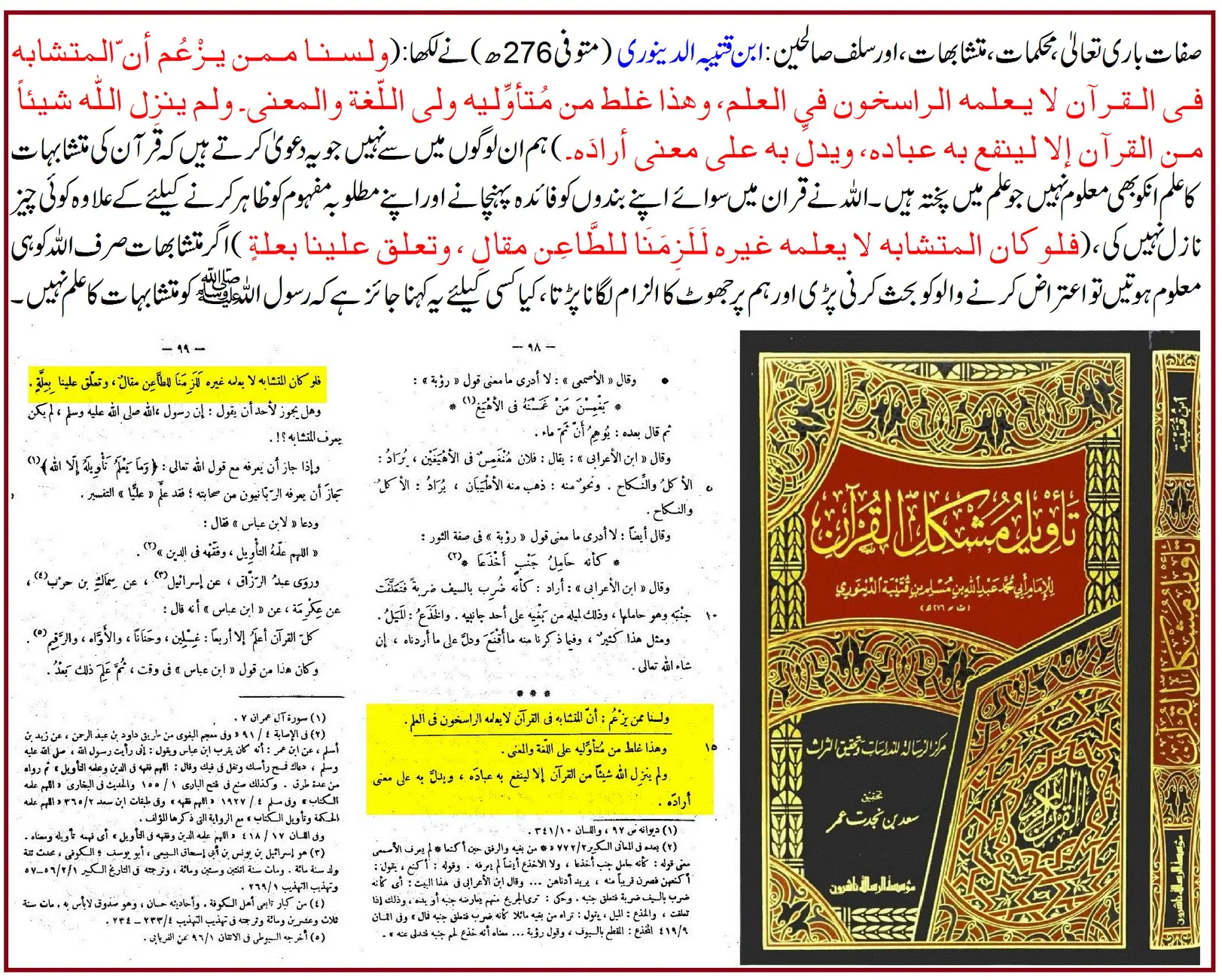
 Ibn Qutaybah al-Dīnawarī (d. 276 AH)
"ولسنا ممن يزعم أن المتشابه في القرآن لا يعلمه الراسخون في العلم"
(Ta’wīl Mushkil al-Qur’ān)
Translation:We are not among those who claim that the mutashābih (ambiguous) verses in the Qur’an are unknown to the firmly grounded in knowledge (al-rāsikhūn fī al-ʿilm). Allah revealed the Qur’an for the benefit of His servants. If the mutashābih were known only to Allah, the skeptics would have reason to label the Qur’an as pointless. Can anyone claim that the Messenger of Allah ﷺ did not understand the mutashābihāt?
 Imām al-Tirmidhī (d. 279 AH)
"مذهب السلف إثباتها وإجراؤها على ظواهرها، ونفي الكيفية والتشبيه عنها"
(Sunan al-Tirmidhī)
Translation:The methodology of the Salaf was to affirm the Divine Attributes, apply them according to their apparent meanings, while negating modality (kayfiyyah) and anthropomorphism (tashbīh).
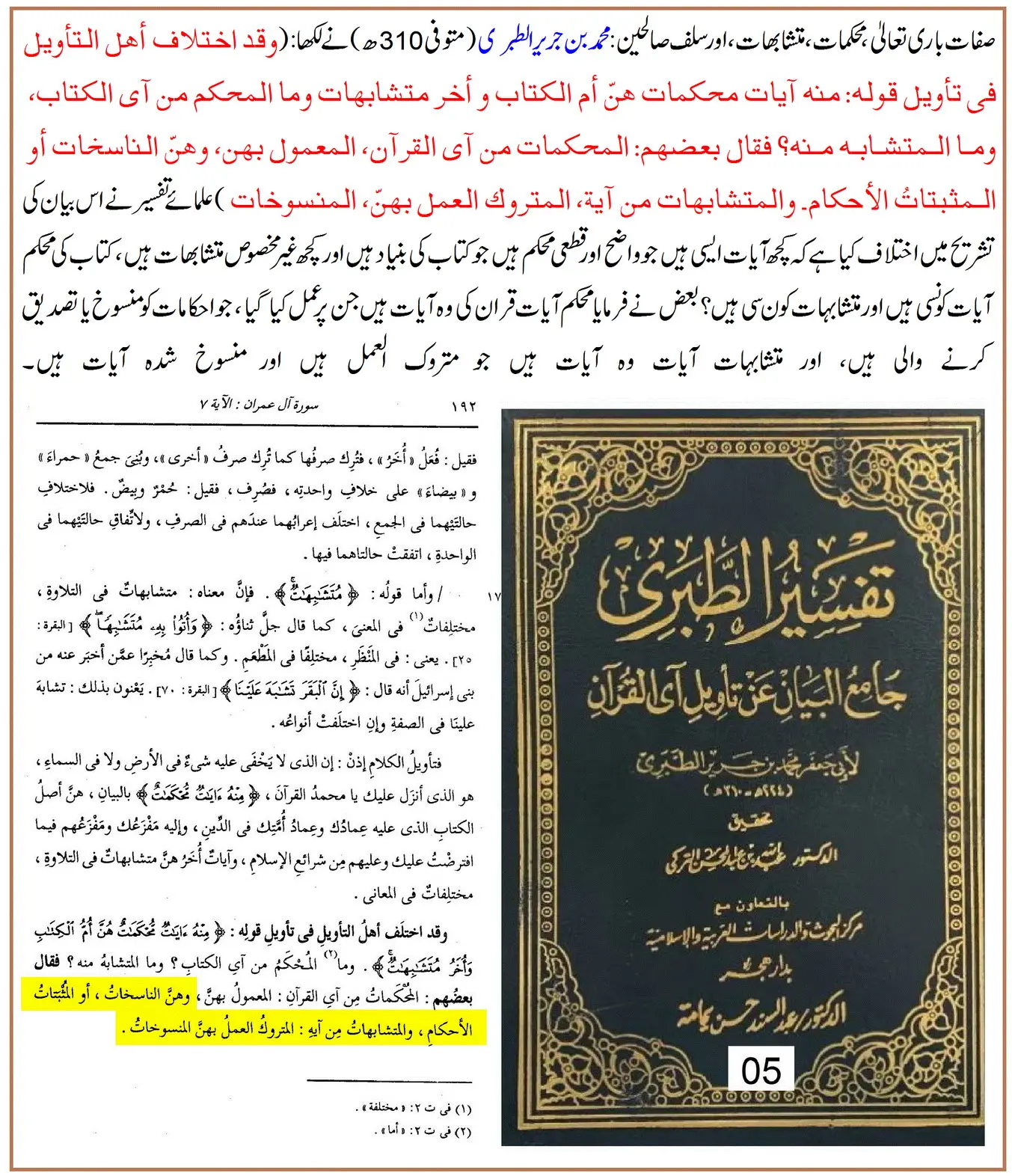
 Imām al-Ṭabarī (d. 310 AH)
"المحكمات: الناسخات أو المثبتات للأحكام. والمتشابهات: المنسوخات"
(Tafsīr al-Ṭabarī)
Translation:Muḥkamāt are verses that abrogate or establish rulings, while mutashābihāt are those that have been abrogated.
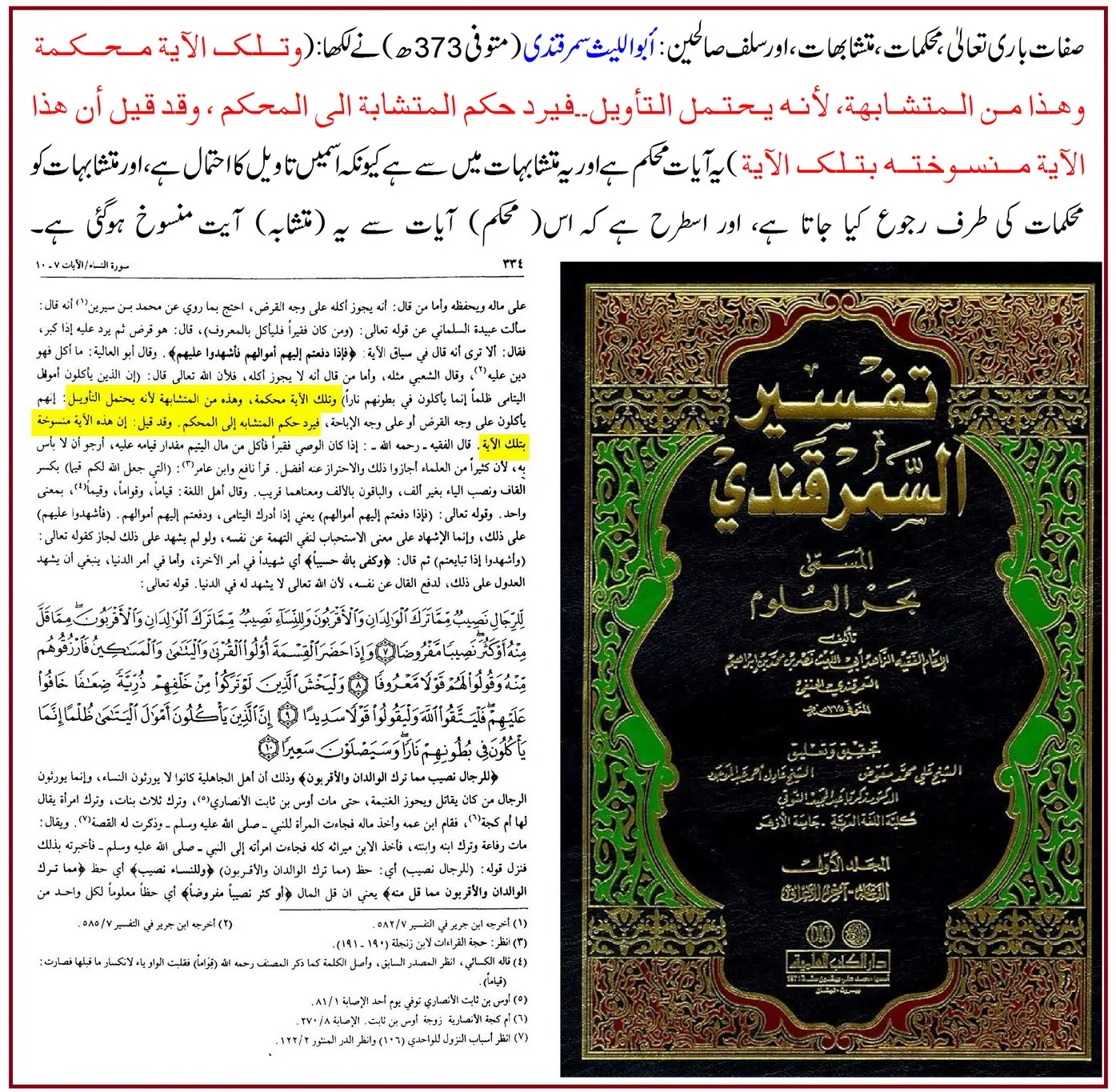
11 Abū al-Layth al-Samarqandī (d. 373 AH)
"ويرد حكم المتشابه إلى المحكم"
(Baḥr al-ʿUlūm)
Translation:The ruling or interpretation of the mutashābih is returned to the muḥkam.
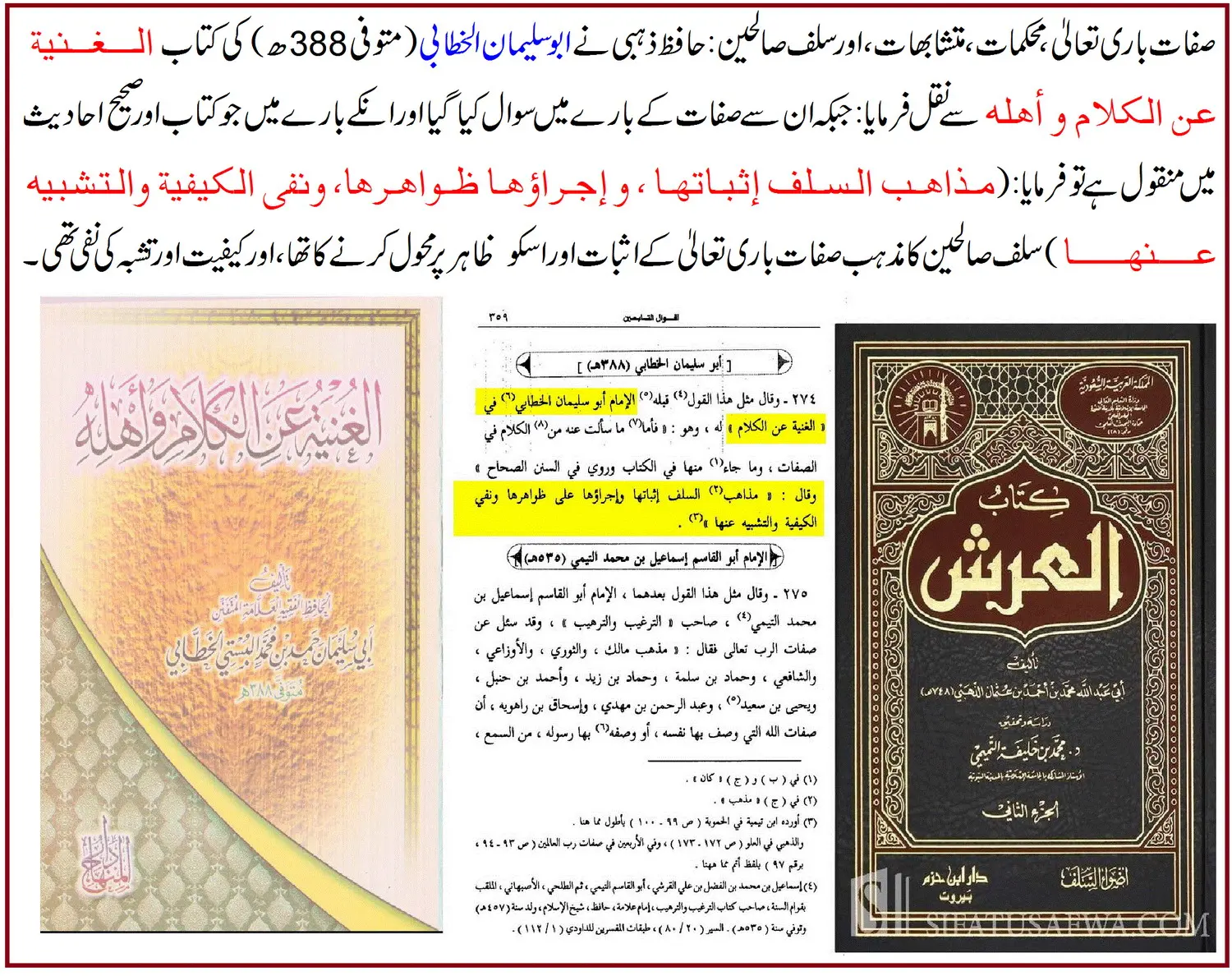
12 Imām Abū Sulaymān al-Khaṭṭābī (d. 388 AH)
"مذاهب السلف إثباتها وإجراؤها على ظواهرها، ونفي الكيفية والتشبيه عنها"
(al-Ghunya ʿan al-Kalām)
Translation:The belief of the Salaf is to affirm the Attributes upon their apparent meanings while denying any modality or resemblance to creation.
 Later Scholars on Divine Attributes and
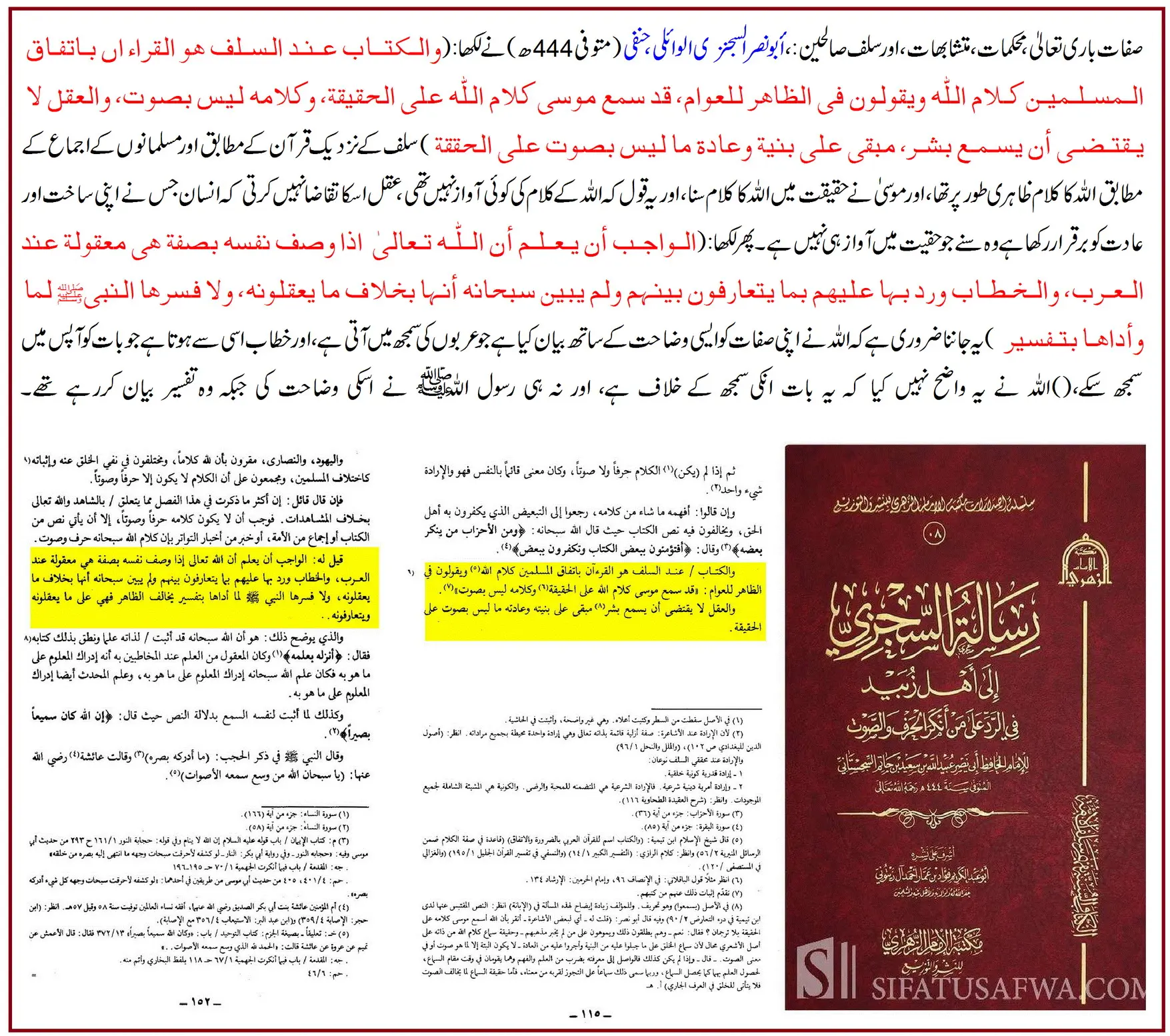
Abū Naṣr al-Sijzī (d. 444 AH)
"إن الله تعالى إذا وصف نفسه بصفة هي معقولة عند العرب… فهي على ما يعقلونه"
(Risālah al-Sijzī ilā Ahl Zubayd)
Translation:When Allah describes Himself with attributes comprehensible to the Arabs, they are to be taken as such. Allah and His Messenger ﷺ never clarified them contrary to their apparent meanings. Thus, they are understood as Arabs understood them — though their modality is known only to Allah.
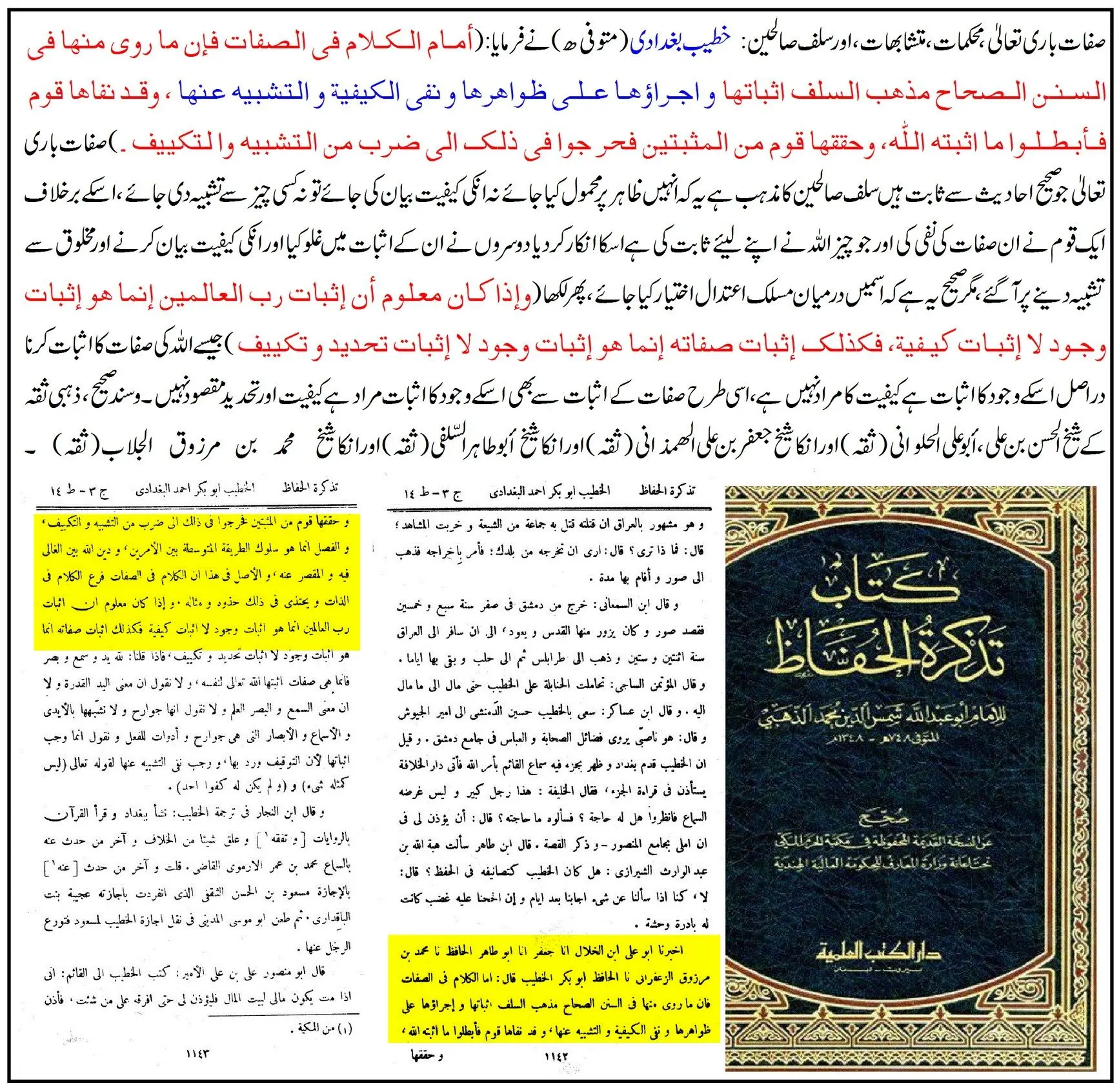
al-Khaṭīb al-Baghdādī (d. 463 AH)
(Tadhkirat al-Ḥuffāẓ by al-Dhahabī)
"مذهب السلف إثباتها وإجراؤها على ظواهرها ونفي الكيفية والتشبيه عنها"
Translation:The Salaf affirmed the Attributes on their apparent meanings, while negating modality and anthropomorphism.
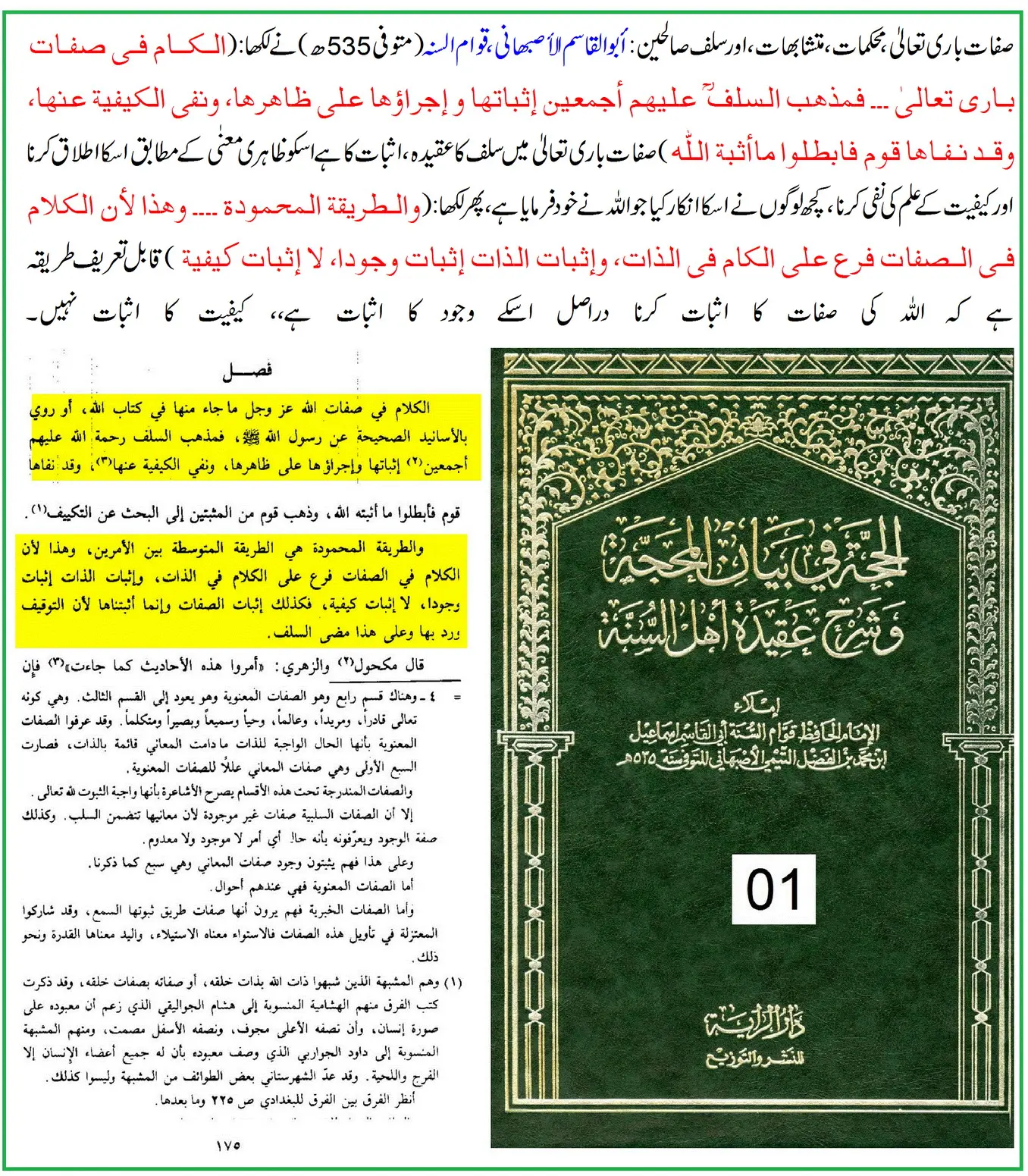
Abū al-Qāsim Qawām al-Sunnah al-Aṣbahānī (d. 535 AH)
(al-Ḥujjah fī Bayān al-Miḥnjah)
"مذهب السلف إثباتها وإجراؤها على ظاهرها، ونفي الكيفية عنها"
Translation:The Salaf's approach was to affirm the Attributes as they appear and to negate their modality.
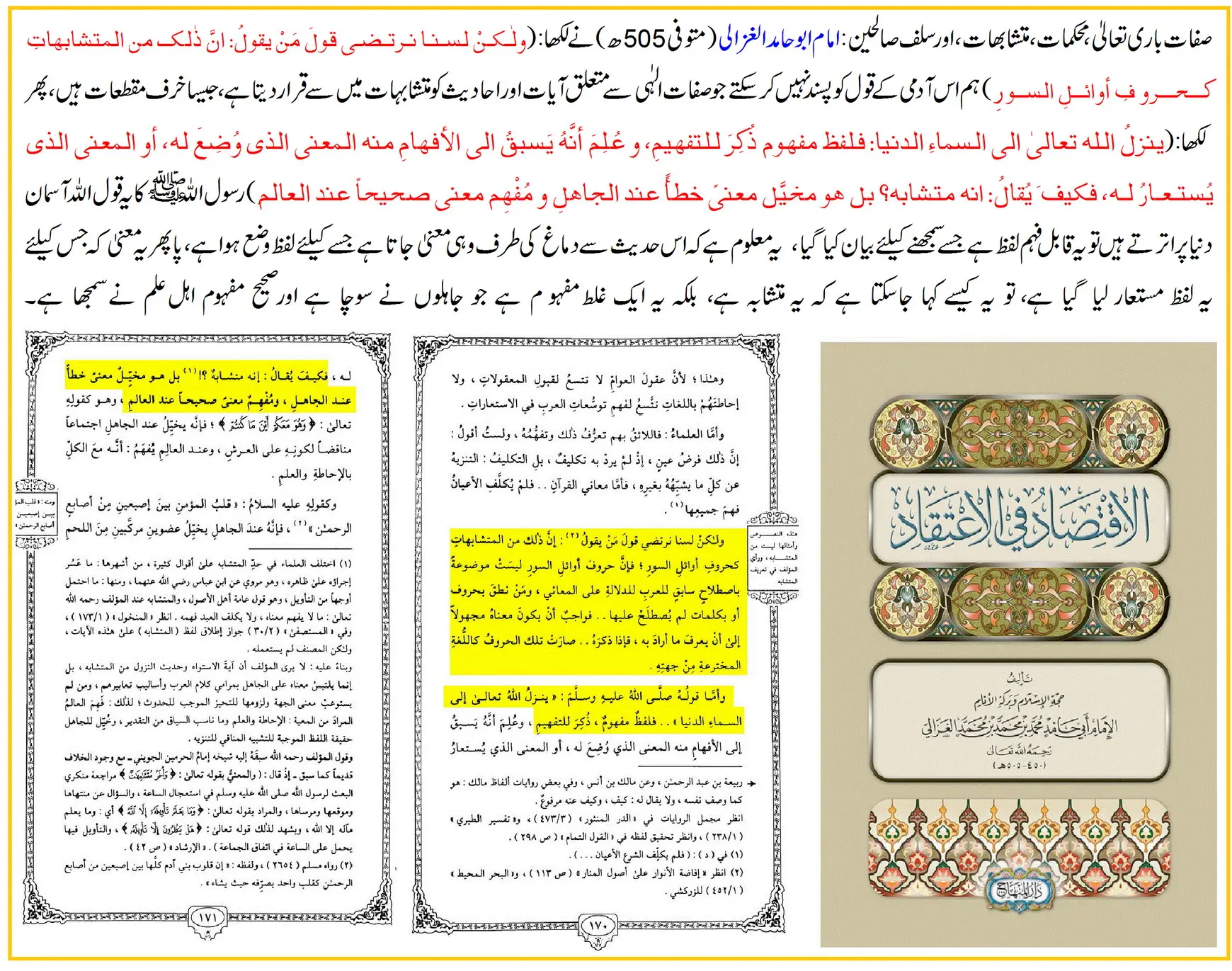
Imām al-Ghazālī (d. 505 AH)
(al-Iqtiṣād fī al-Iʿtiqād)
"لسنا نرتضي قول من يقول: إن ذلك من المتشابهات كحروف أوائل السور…"
Translation:We do not approve of those who label the verses on Divine Attributes as mutashābih like the disjointed letters (ḥurūf muqaṭṭaʿāt). These are understandable words, and scholars derive their meanings correctly.
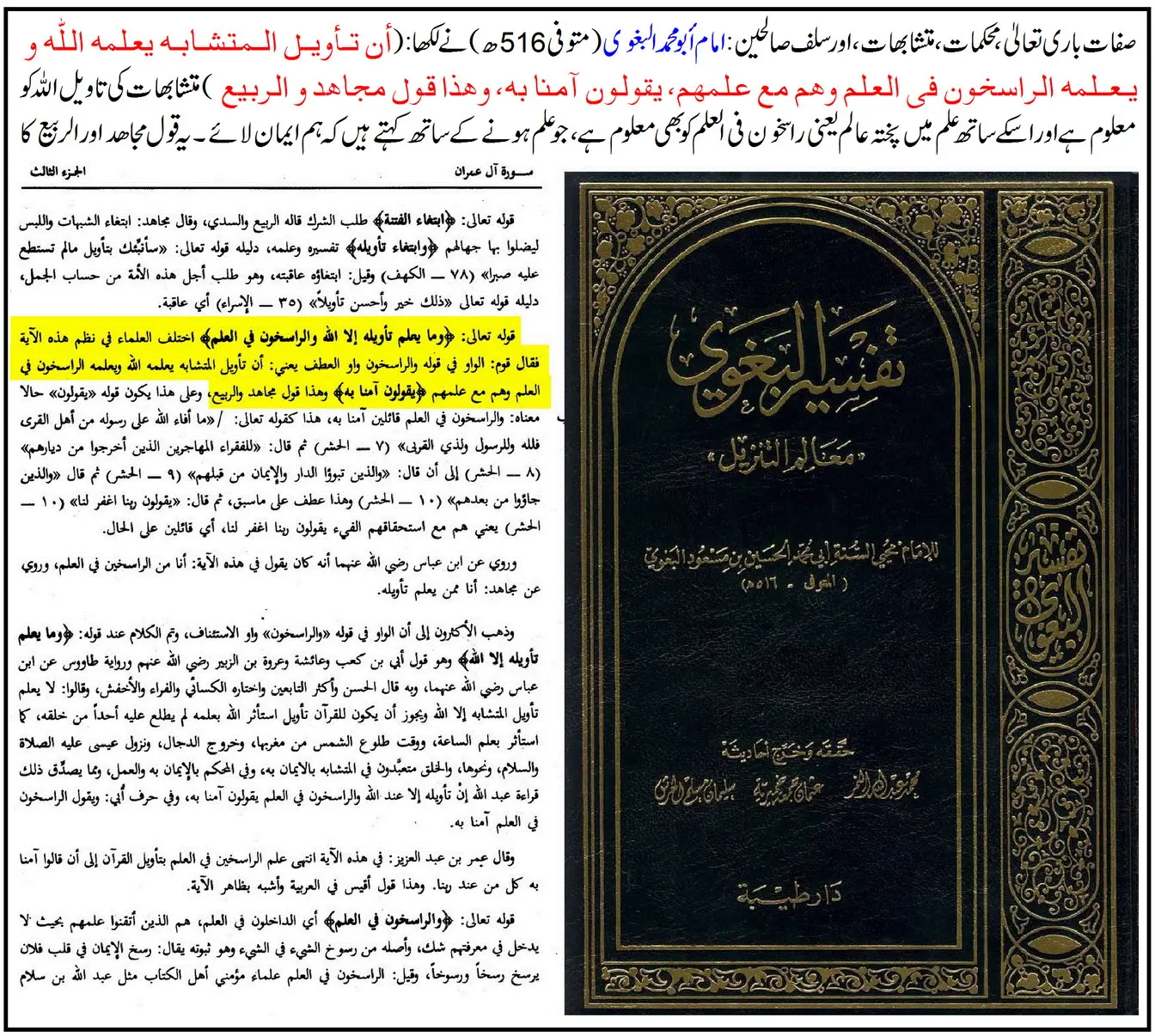
Imām al-Baghawī (d. 516 AH)
(Tafsīr al-Baghawī)
"تأويل المتشابه يعلمه الله والراسخون في العلم."
Translation:The interpretation of mutashābih verses is known by Allah and also by those firmly grounded in knowledge.
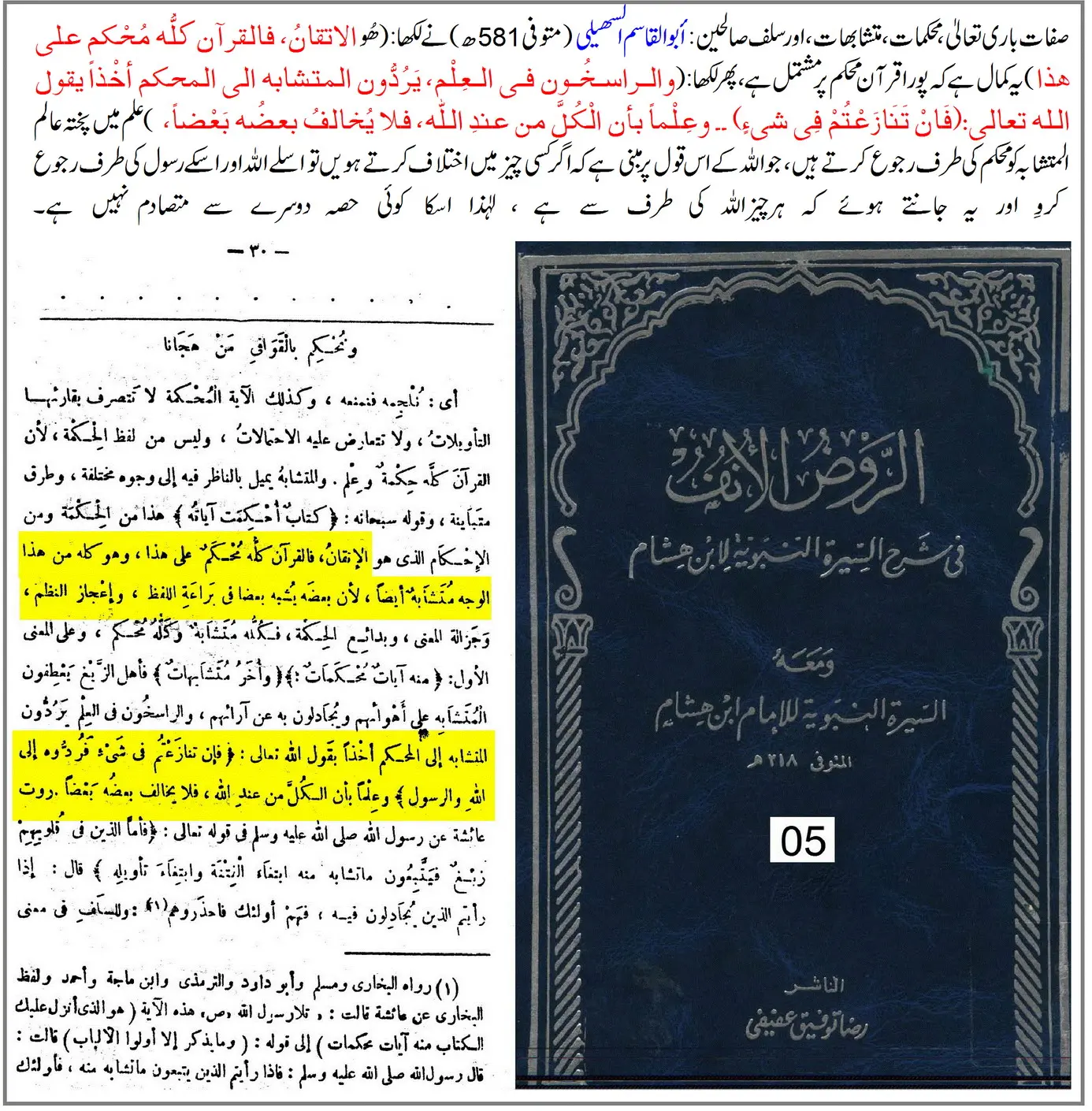
Abū al-Qāsim al-Suhaylī (d. 581 AH)
(al-Rawḍ al-Anf)
"والراسخون في العلم يردون المتشابه إلى المحكم"
Translation:Those grounded in knowledge return the mutashābih verses to the muḥkam.
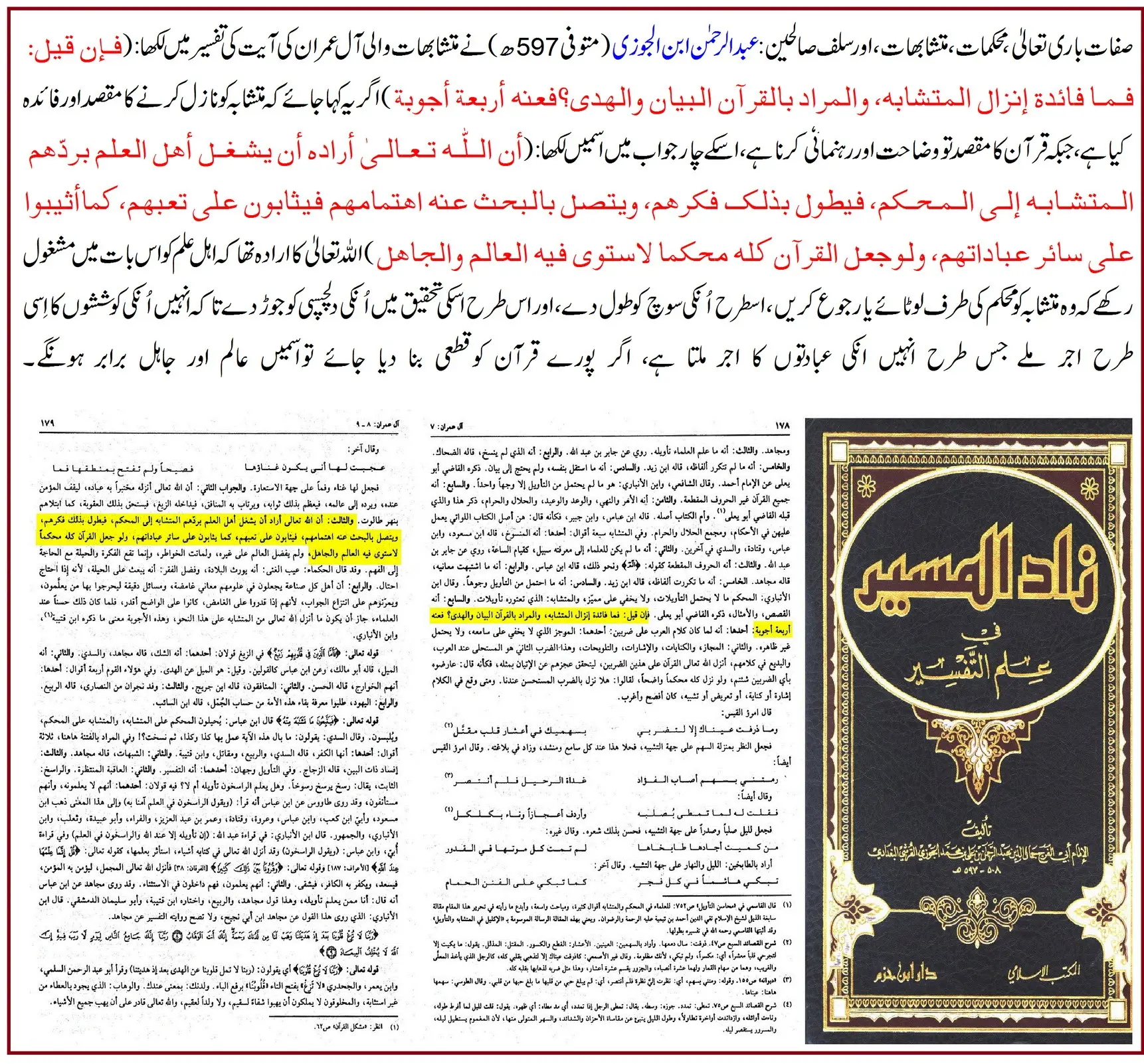
Ibn al-Jawzī (d. 597 AH)
(Zād al-Masīr)
"أن الله تعالى أراد أن يشغل أهل العلم برد المتشابه إلى المحكم… فيثابون على تعبهم"
Translation:Allah willed that scholars be engaged in referring mutashābih to the muḥkam, and thus be rewarded for their diligence.
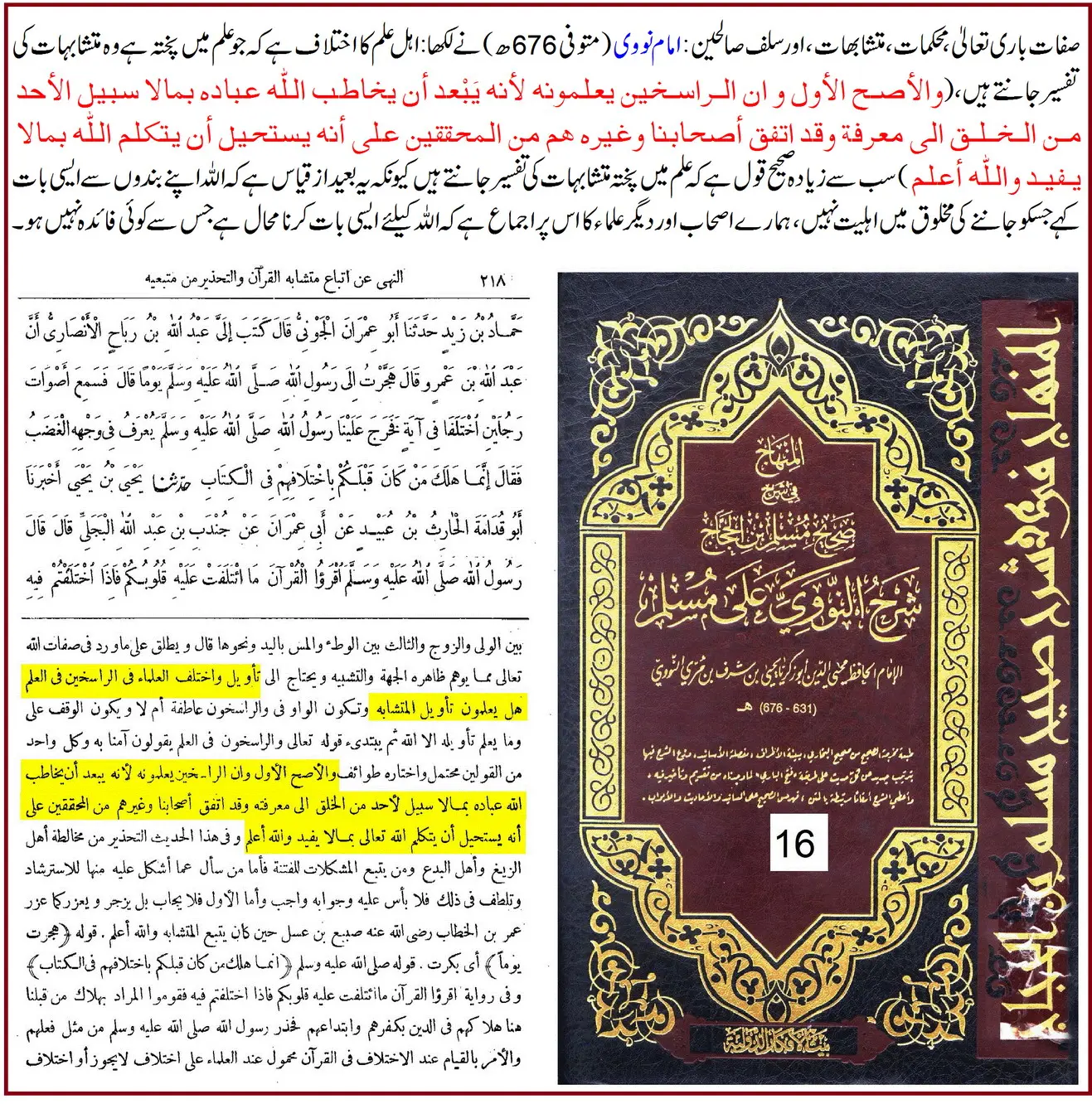
Imām al-Nawawī (d. 676 AH)
(Sharḥ Ṣaḥīḥ Muslim)
"الأصح أن الراسخين في العلم يعلمون تأويل المتشابه."
Translation:The correct view is that those firm in knowledge know the interpretation of the mutashābih.
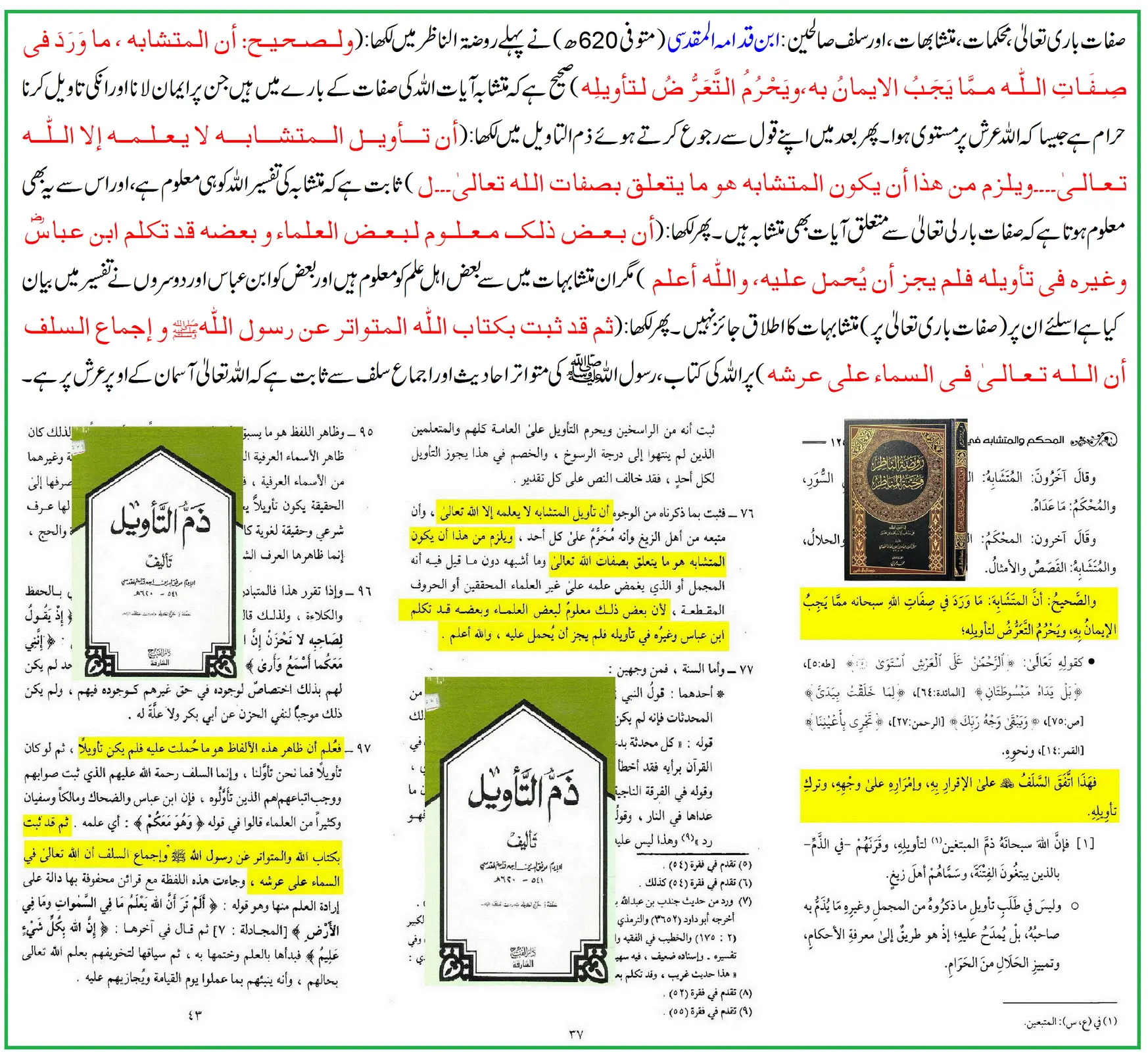
Ibn Qudāmah (d. 620 AH)
(Dhamm al-Ta’wīl)
"قد ثبت بكتاب الله والمتواتر… أن الله تعالى في السماء على عرشه"
Translation:It is established by the Book of Allah, mutawātir hadiths, and the consensus of the Salaf that Allah is above the heavens, upon His Throne.
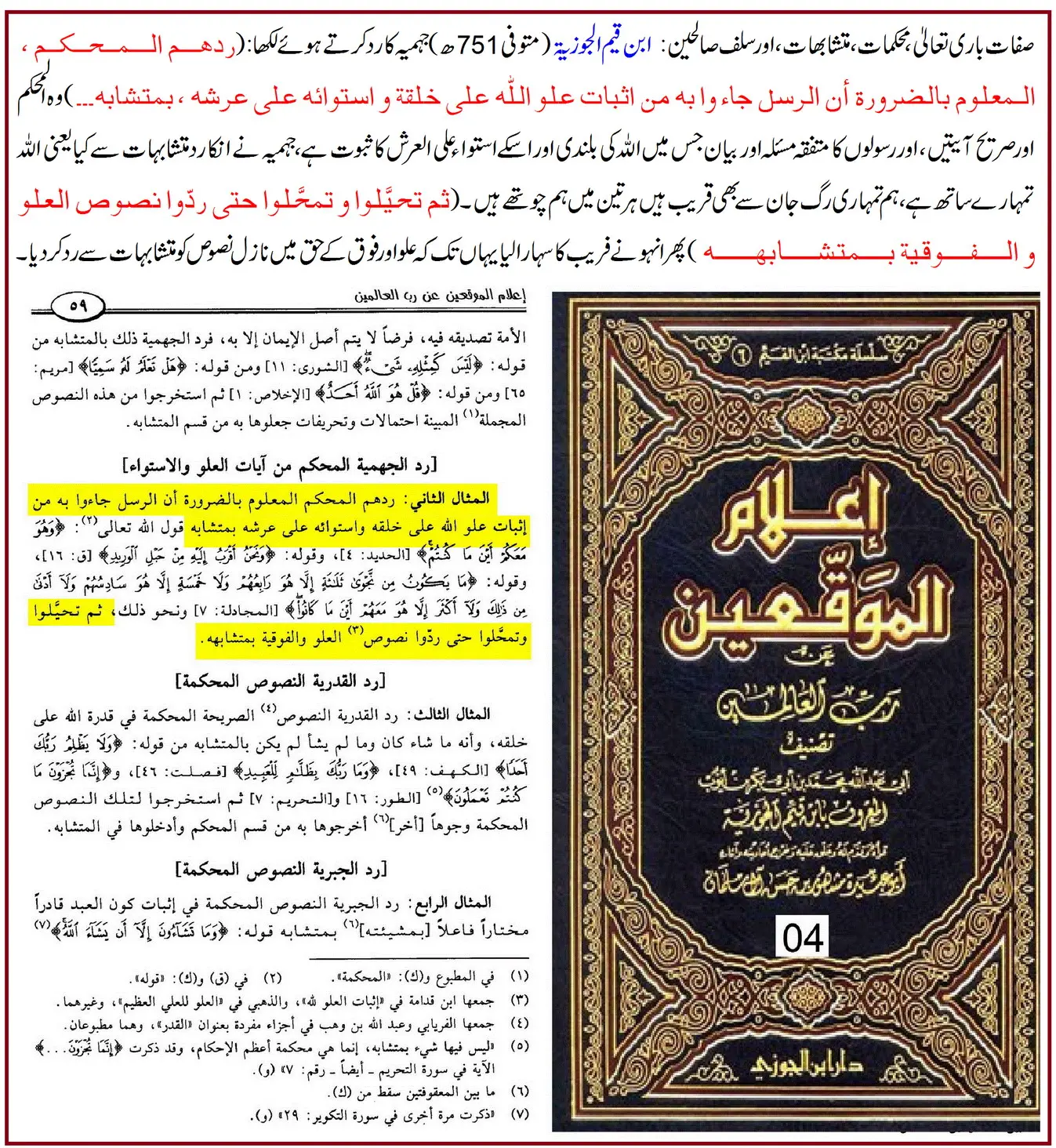
Ibn Qayyim al-Jawziyyah (d. 751 AH)
(Iʿlām al-Muwaqqiʿīn)
"رَدُّهُمْ الْمُحْكَمَ الْمَعْلُومَ … بِمُتَشَابِهِ قَوْلِهِ: {وَهُوَ مَعَكُمْ أَيْنَ مَا كُنْتُمْ}"
Translation:The Jahmiyyah refuted the clear and established verses affirming Allah’s Exaltedness using ambiguous verses such as “He is with you wherever you are”, trying to use them to invalidate the muḥkam texts.
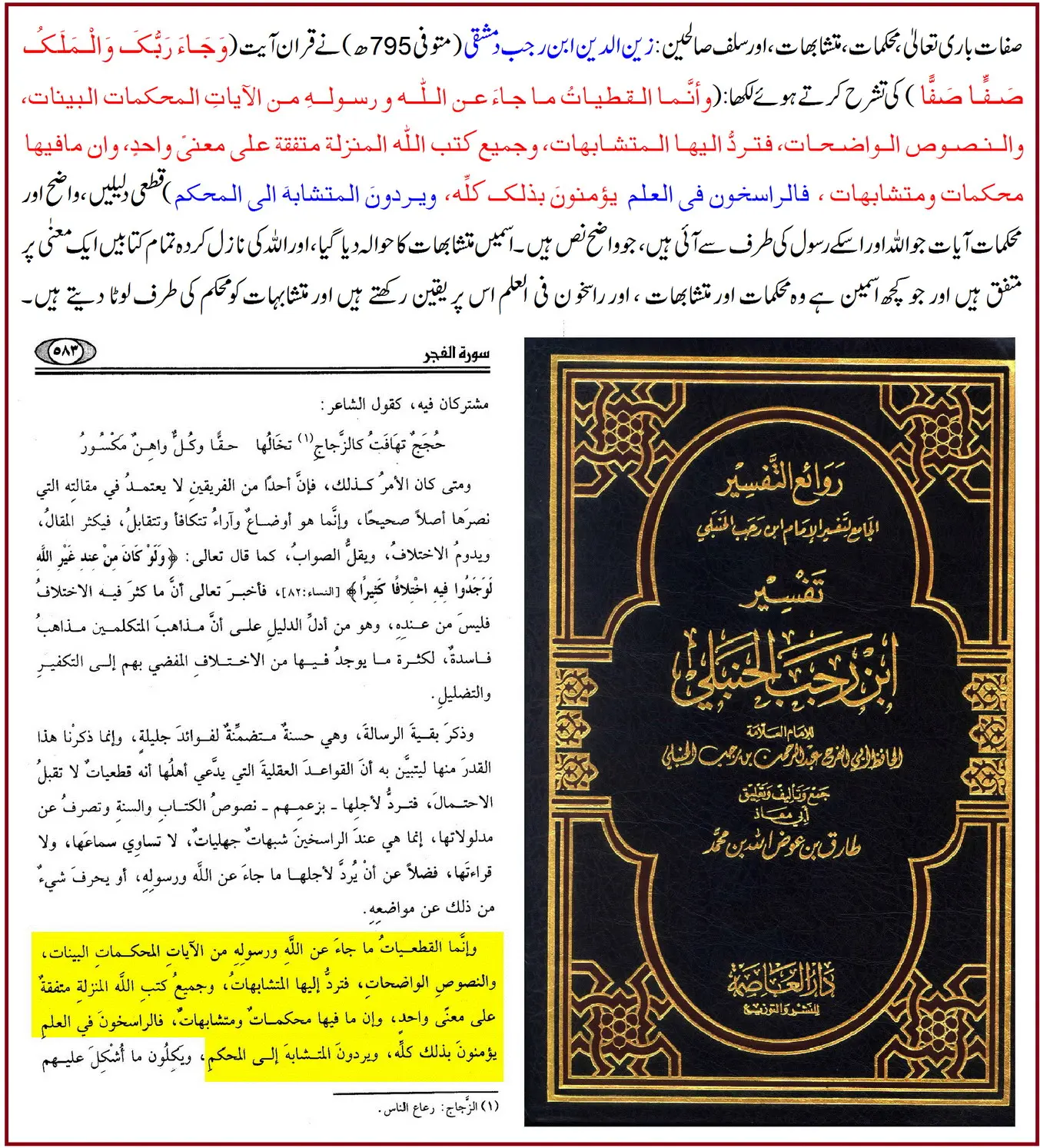
Ibn Rajab al-Ḥanbalī (d. 795 AH)
(Rawāʾiʿ al-Tafsīr)
"إنما القطعيات ما جاء عن الله ورسوله من الآيات المحكمات البينات، فترد إليها المتشابهات."
Translation:The decisive matters are what come in the clear muḥkam verses from Allah and His Messenger. Mutashābihāt are to be referred back to them.
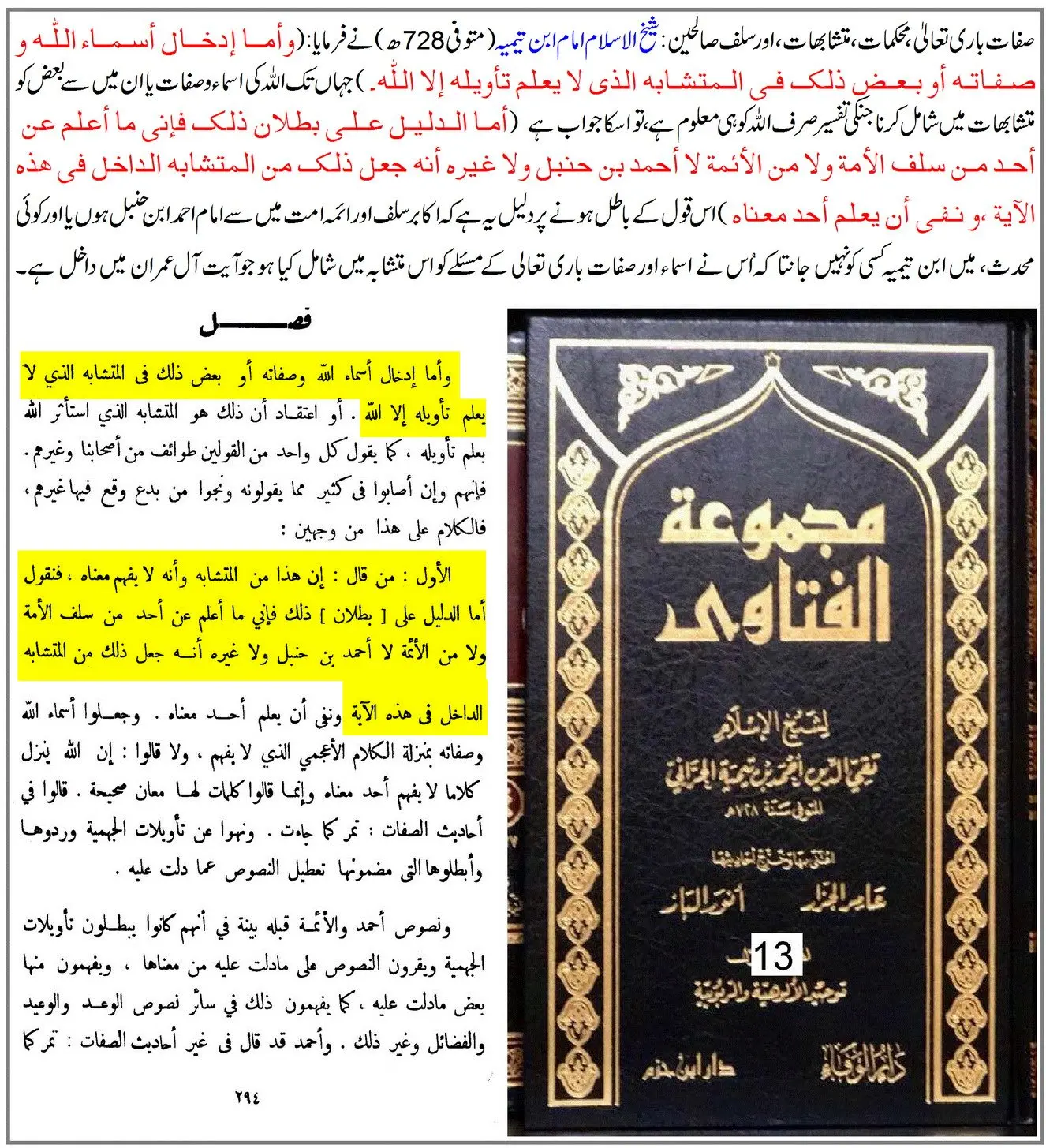
Shaykh al-Islām Ibn Taymiyyah (d. 728 AH)
(Majmūʿ al-Fatāwā)
"أما إدخال أسماء الله وصفاته… في المتشابه… فما أعلم أحدا من السلف جعله من المتشابه"
Translation:Considering Allah’s Names and Attributes as mutashābih is false. I do not know of a single Salaf who regarded them as such.
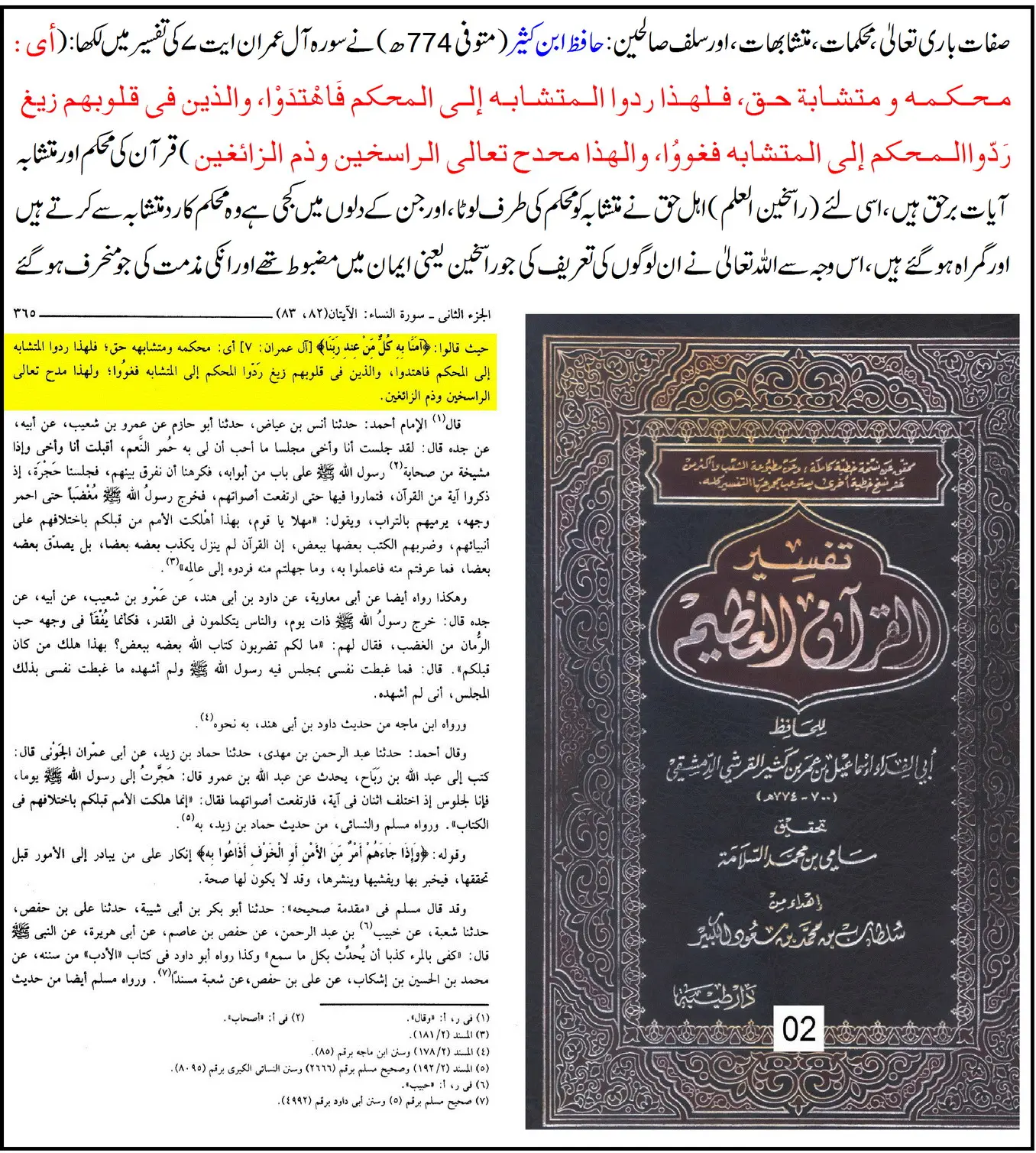
Ḥāfiẓ Ibn Kathīr (d. 774 AH)
(Tafsīr al-Qurʾān al-ʿAẓīm)
"الراسخون في العلم ردوا المتشابه إلى المحكم فاهتدوا، والذين في قلوبهم زيغ ردوا المحكم إلى المتشابه فغووا."
Translation:Those grounded in knowledge refer mutashābih back to the muḥkam and are rightly guided. But those with deviance in their hearts reverse the process and are led astray.
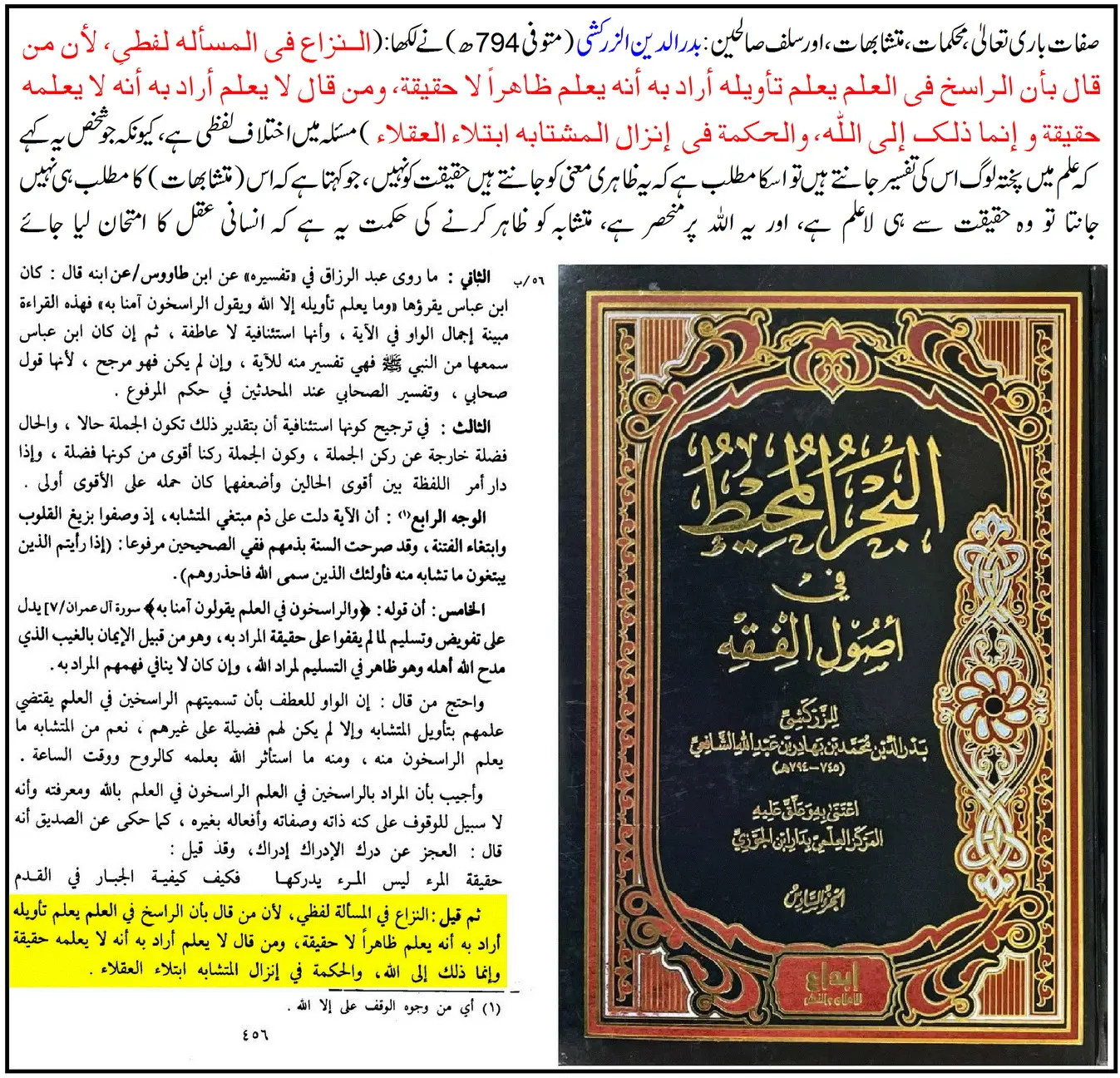
Badr al-Dīn al-Zarkashī (d. 794 AH)
(al-Baḥr al-Muḥīṭ)
"النزاع لفظي… من قال يعلم الراسخون أراد به ظاهرًا لا حقيقةً"
Translation:The dispute is mostly verbal. Those who say the rāsikhūn fī al-ʿilm know the meanings only intend the apparent meaning, not the reality.
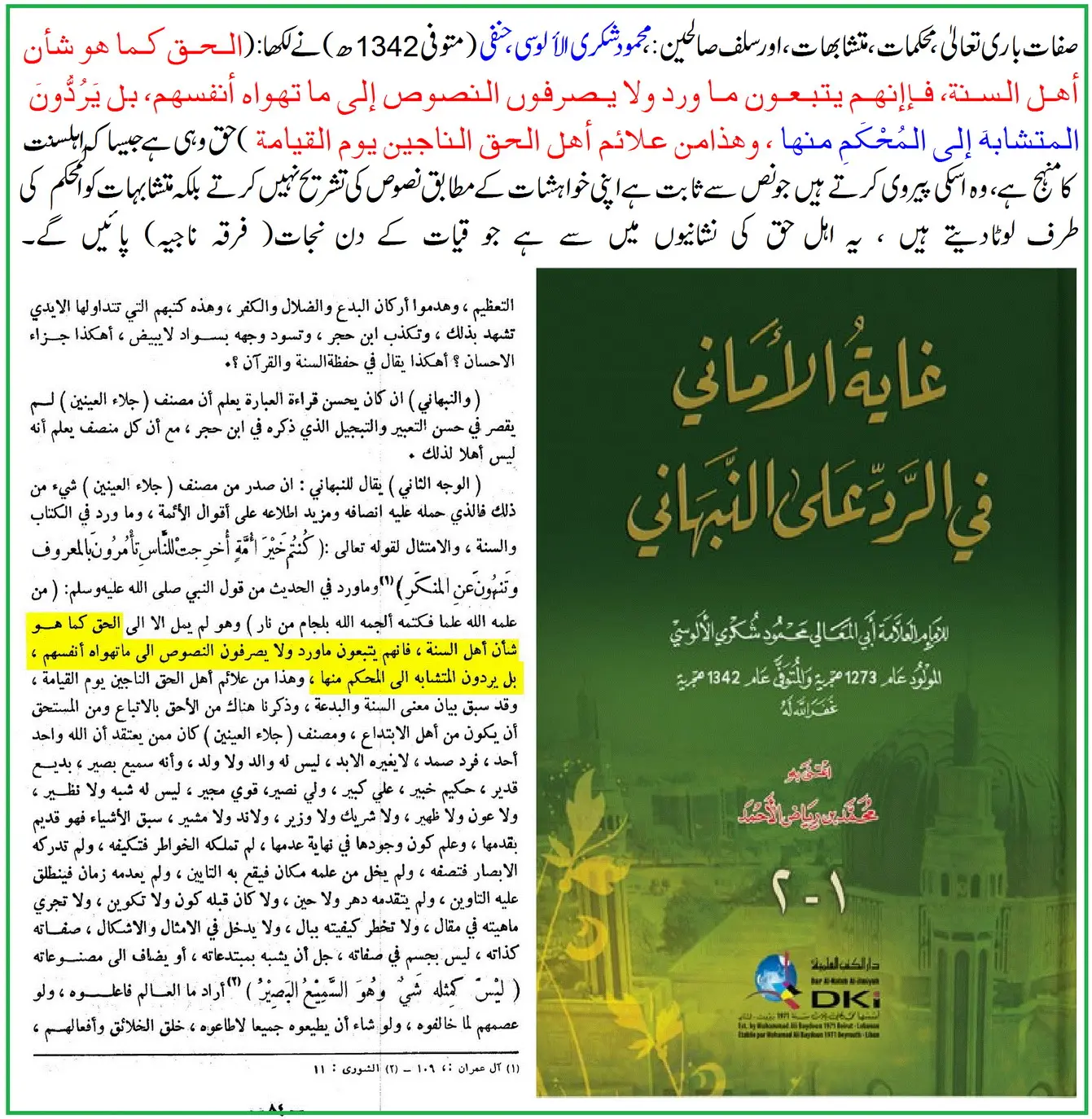
Maḥmūd Shukrī al-Ālūsī al-Ḥanafī (d. 1342 AH)
(Ghāyat al-Amānī)
"يردون المتشابه إلى المحكم… وهذا من علائم أهل الحق الناجين يوم القيامة"
Translation:They return mutashābih to the muḥkam. This is a sign of the people of truth — those who will be saved on the Day of Judgment.
Marʿī bin Yūsuf al-Maqdisī (d. 1033 AH)
(Aqāwīl al-Thiqāt)
"قَالَ ابْنُ عَبَّاسٍ: أَنا مِمَّن يعلم تأويله"
Translation:Ibn ʿAbbās said: “I am among those who know the interpretation of the mutashābih.” This view was endorsed by scholars like al-Ghazālī and al-Qāḍī Abū Bakr.
Shams al-Aʾimmah al-Sarakhsī (d. 483 AH)
(Uṣūl al-Sarakhsī)
"الوجه واليد على ما نص الله تعالى في القرآن معلوم، وكيفية ذلك من المتشابه…"
Translation:The face and hand of Allah are established by the Qur’an. Their meanings are known, but the how is mutashābih. The Muʿtazilah denied the meanings due to the unknown modality and thus became negators (muʿaṭṭilah).
ʿAlā al-Dīn al-Bukhārī (d. 730 AH)
(Kashf al-Asrār Sharḥ Uṣūl al-Bazdawī)
"إثبات اليد والوجه حق عندنا معلوم بأصله متشابه بوصفه"
Translation:Affirming Allah’s hand and face is the truth. Their essence is known, but their modality is ambiguous. Denying them due to ignorance of their description is deviation.
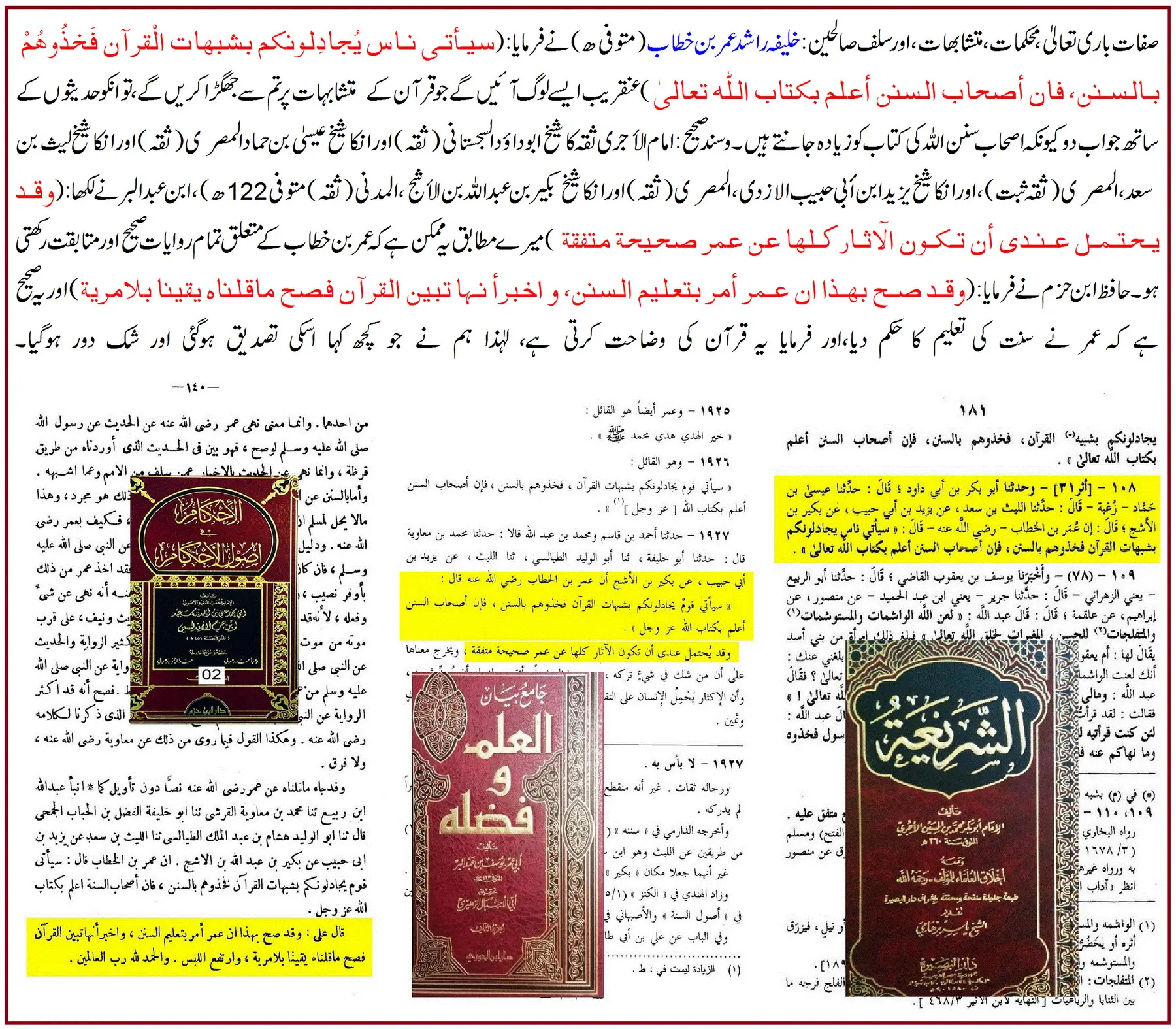
 Sayyidunā ʿUmar ibn al-Khaṭṭāb رضي الله عنه
(al-Sharīʿah by al-Ājurī)
"سيأتي ناس يجادلونكم بشبهات القرآن فخذوهم بالسنن"
Translation:People will come and argue with you using the ambiguous parts of the Qur’an. Confront them with the Sunnah, for the people of Sunnah know the Qur’an best.
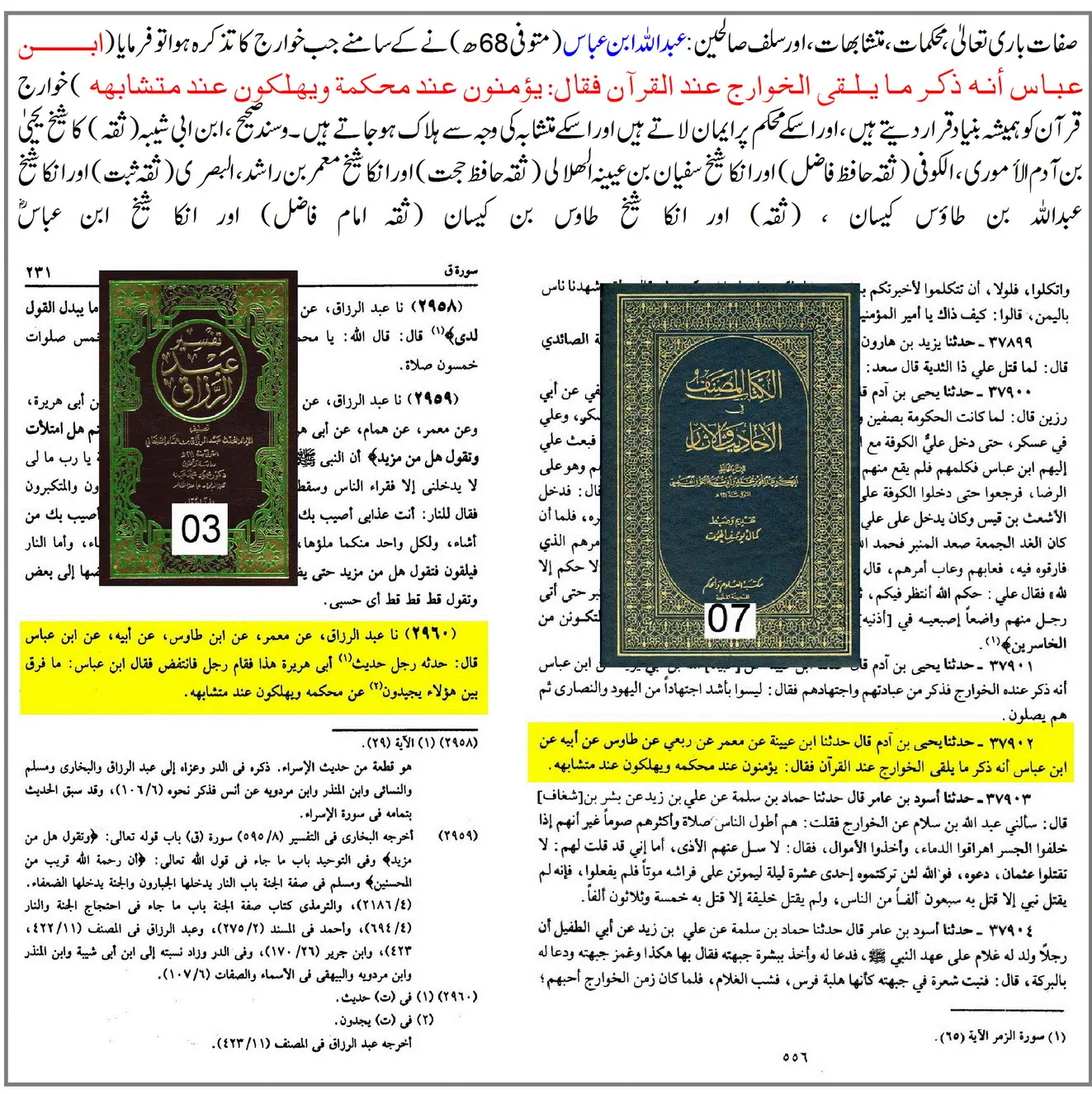
Ibn ʿAbbās رضي الله عنهما
(al-Muṣannaf by Ibn Abī Shaybah; Tafsīr ʿAbd al-Razzāq)
"يؤمنون عند محكمه ويهلكون عند متشابهه"
Translation:The Khawārij believed in the muḥkam, but were destroyed due to their misinterpretation of the mutashābih.
Methodology of Ahl al-Sunnah:
✔ Affirmation of Attributes:
Attributes mentioned in Qur’an and Sunnah (e.g. istiwa’, nuzūl, yad, wajh) are accepted as they are.
✔ Negation of Modality:
The how (kayfiyyah) is unknown and consigned to Allah — this is called tafwīḍ.
✔ Relation of Muḥkam and Mutashābih:
Muḥkam verses are foundational and clear. Mutashābihāt are interpreted in light of the muḥkamāt.
✔ Interpretation Known to Scholars:
Firmly grounded scholars like Ibn ʿAbbās, Mujāhid, and the majority of early Mufassirīn understood and explained them.
 Way of Khawārij, Muʿtazilah, and Jahmiyyah:
 Rejected the meanings of attributes by labeling them as mutashābih. Fabricated distorted interpretations. Opposed the path of the Salaf.
 Summary:
The Jahmiyyah and other innovators claim that the verses on Allah’s Attributes are mutashābih.
But upon investigation, the Salaf and leading scholars declared them muḥkam, affirmed their meanings, and entrusted their modality to Allah.
This was the approach of:
Imām Mālik, Imām Aḥmad, Imām al-Bukhārī, Ibn Taymiyyah, Ibn al-Qayyim, Ibn Kathīr, Ibn Qudāmah, al-Ghazālī, al-Khaṭṭābī, al-Baghawī, al-Sarakhsī, ʿAlā al-Dīn al-Bukhārī, and others.
Returning the mutashābih to the muḥkam is the actual principle of Ahl al-Sunnah. Conclusion:
To label the verses concerning Divine Attributes as mutashābih, reject their meanings, or interpret them away is the method of the Jahmiyyah, Khawārij, and Muʿtazilah.
The correct methodology of Ahl al-Sunnah wal-Jamāʿah is:
✔ Accept the Attributes as they appear.
✔ Believe in the actual meanings.
✔ Entrust the modality to Allah.
This is the way of the Saved Sect (al-Firqah al-Nājiyah) — the People of Hadith and Sunnah.
Scanned Images of Key References: