

✍ Written by: Abu Hamzah Salafi
This article aims to clarify the reality that the book attributed to the Imām of Ahl al-Ḥadīth, Sufyān al-Thawrī (رحمه الله), titled “Jāmiʿ Sufyān”, is in fact a falsely attributed work. The sole narrator of this book is Ghassān bin ʿUbayd al-Mawṣilī, about whom the Imams of ḥadīth have made severe criticism. In the statements of Imām Yaḥyā bin Maʿīn (رحمه الله), there is contradiction regarding Ghassān: at times he declared him trustworthy (thiqah), and at other times weak and unfamiliar with ḥadīth. Likewise, some people misrepresent one statement of Imām Yaḥyā to give the impression that whoever dislikes Jāmiʿ Sufyān is “foolish,” and from this, an implicit criticism—God forbid—is directed toward Imām Aḥmad bin Ḥanbal (رحمه الله).
In this article, the following aspects will be clarified:
① The statement of Imām Yaḥyā bin Maʿīn as narrated by al-Dūrī and its correct context.
② The contradictory statements of Ibn Maʿīn regarding Ghassān bin ʿUbayd al-Mawṣilī and the explanations of the scholars concerning them.
③ The statements of Imām Aḥmad bin Ḥanbal clarifying that Jāmiʿ Sufyān was not actually the book of Sufyān al-Thawrī and that he strongly disliked it.
④ Other criticisms of Ghassān al-Mawṣilī demonstrating that Jāmiʿ Sufyān was an unreliable attribution.
Al-Dūrī said:
I asked Yaḥyā bin Maʿīn about a man who is weak in ḥadīth knowledge, unable to narrate due to old age, yet he wrote Jāmiʿ Sufyān with his own hand and acts upon what is in it.
Yaḥyā bin Maʿīn replied: Sufyān was a great Imām; he may be followed.
I asked: If someone dislikes this book (a reference was implied toward Imām Aḥmad)?
Yaḥyā bin Maʿīn replied: The one who dislikes Jāmiʿ Sufyān does not act wisely.
◈ According to Imām Yaḥyā bin Maʿīn, a common person may act upon the compilation of an Imām.
◈ The rank of Imām Sufyān al-Thawrī allows acting upon his opinions.
◈ Since Imām Aḥmad disliked Jāmiʿ Sufyān, this statement appears to be criticism of him.
◈ Therefore, some conclude that certain Imams allowed taqlīd for the general masses.
◈ The transmission of Jāmiʿ Sufyān is connected to Ghassān bin ʿUbayd al-Mawṣilī, upon whom severe criticism exists. Hence, the attribution itself is questionable.
◈ Imām Aḥmad did not oppose Sufyān al-Thawrī; rather, he rejected the attribution of this book to him. In his view, the attribution was not authentic, and therefore he avoided it.
◈ It is incorrect to claim that Yaḥyā bin Maʿīn criticized Imām Aḥmad. The discussion concerned the authenticity of the book and its transmitter, not the person of Imām Aḥmad.
«غسان الموصلي الذي يروي جامع سفيان ثقة.»
Translation: Ghassān al-Mawṣilī, who narrates Jāmiʿ Sufyān, is trustworthy.
Clarification: This reflects an early favorable assessment.
«قد رأيته … ضعيف الحديث.»
Translation: I saw him… he is weak in ḥadīth.
Clarification: Here Ibn Maʿīn explicitly declared him weak.
«وثقه يحيى في رواية الدُّوري، وقال أيضاً: لم يكن يعرف بالحديث، إلا أنه لم يكن من أهل الكذب، ويروي جامع سفيان.»
Translation: Yaḥyā declared him trustworthy in the narration of al-Dūrī, but also said he was not known for ḥadīth, though he was not a liar, and he narrates Jāmiʿ Sufyān.
Clarification: This demonstrates variance in Ibn Maʿīn’s evaluation.
«قال ابن حبان: فحش خلافه للاثبات فاستحق الترك. وذكره أيضاً في الثقات فتساقط قولاه.»
Translation: Ibn Ḥibbān said: His contradiction of reliable narrators was excessive, so he deserved abandonment. Yet Ibn Ḥibbān also mentioned him among the trustworthy; thus his two statements cancel one another.
«كما يتفق لابن معين وغيره من أئمة النقد، فهذا قد لا يكون تناقضاً، بل نسبياً في أحدهما، أو ناشئاً عن تغير اجتهاد …»
Translation: As sometimes occurs with Ibn Maʿīn and other critics, this may not be an actual contradiction but relative, or due to a change in ijtihād.
◈ Other scholars explained this as relative assessment or change in judgment.
◈ His status remains doubtful and unreliable, especially as the sole narrator of Jāmiʿ Sufyān.
«وعاب وضع الكتب وكرهه كراهية شديدة، وكان أبي يكره جامع سفيان وينكره ويكرهه كراهية شديدة، وقال: من سمع هذا من سفيان؟ ولم أر أبي يصحح لأحد سماعه من سفيان.»
Translation: He strongly disliked the compilation of such books. My father disliked and rejected Jāmiʿ Sufyān, saying: Who heard this from Sufyān? I never saw my father authenticate anyone’s hearing of it from Sufyān.
«سمعت أحمد، وقال له رجل: جامع سفيان نعمل به؟ قال: عليك بالآثار.»
Translation: I heard Aḥmad when a man asked: Should we act upon Jāmiʿ Sufyān? He replied: You must adhere to the narrations (āthār).
«كتبنا عن غسان بن عبيد الموصلي … وسمع من سفيان شيئاً يسيراً، وأنكر أن يكون سمع الجامع من سفيان.»
Translation: We wrote from Ghassān bin ʿUbayd al-Mawṣilī… He heard only a small amount from Sufyān, and Aḥmad denied that he heard al-Jāmiʿ from Sufyān.
◈ He rejected its attribution and emphasized adherence to authentic narrations instead.
Translation: Weakness in his ḥadīth is evident; it is not preserved.
Translation: He practiced alchemy; we did not know him for ḥadīth.
◈ Ibn Maʿīn’s statements about him are contradictory.
◈ Numerous scholars declared him weak and unreliable.
◈ Imām Aḥmad explicitly rejected the attribution of this book to Sufyān al-Thawrī.
Jāmiʿ Sufyān is not established as the book of Sufyān al-Thawrī. Its foundation rests upon an unreliable narrator, Ghassān al-Mawṣilī. The Imams of ḥadīth criticized this narrator, and Imām Aḥmad rejected the attribution entirely. Therefore, attributing this book to Imām Sufyān al-Thawrī is incorrect, and using it to criticize the Imams is contrary to scholarly integrity.




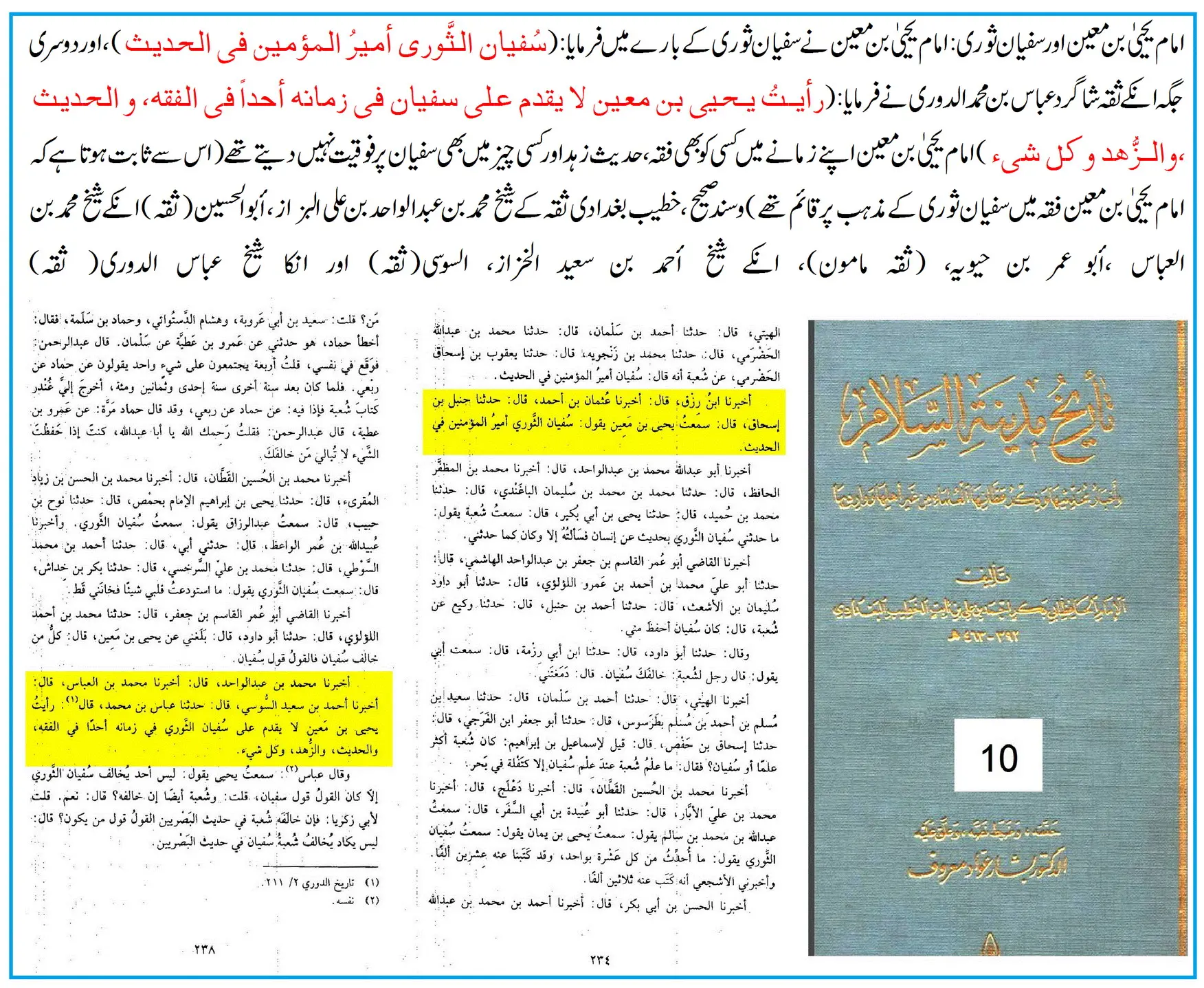
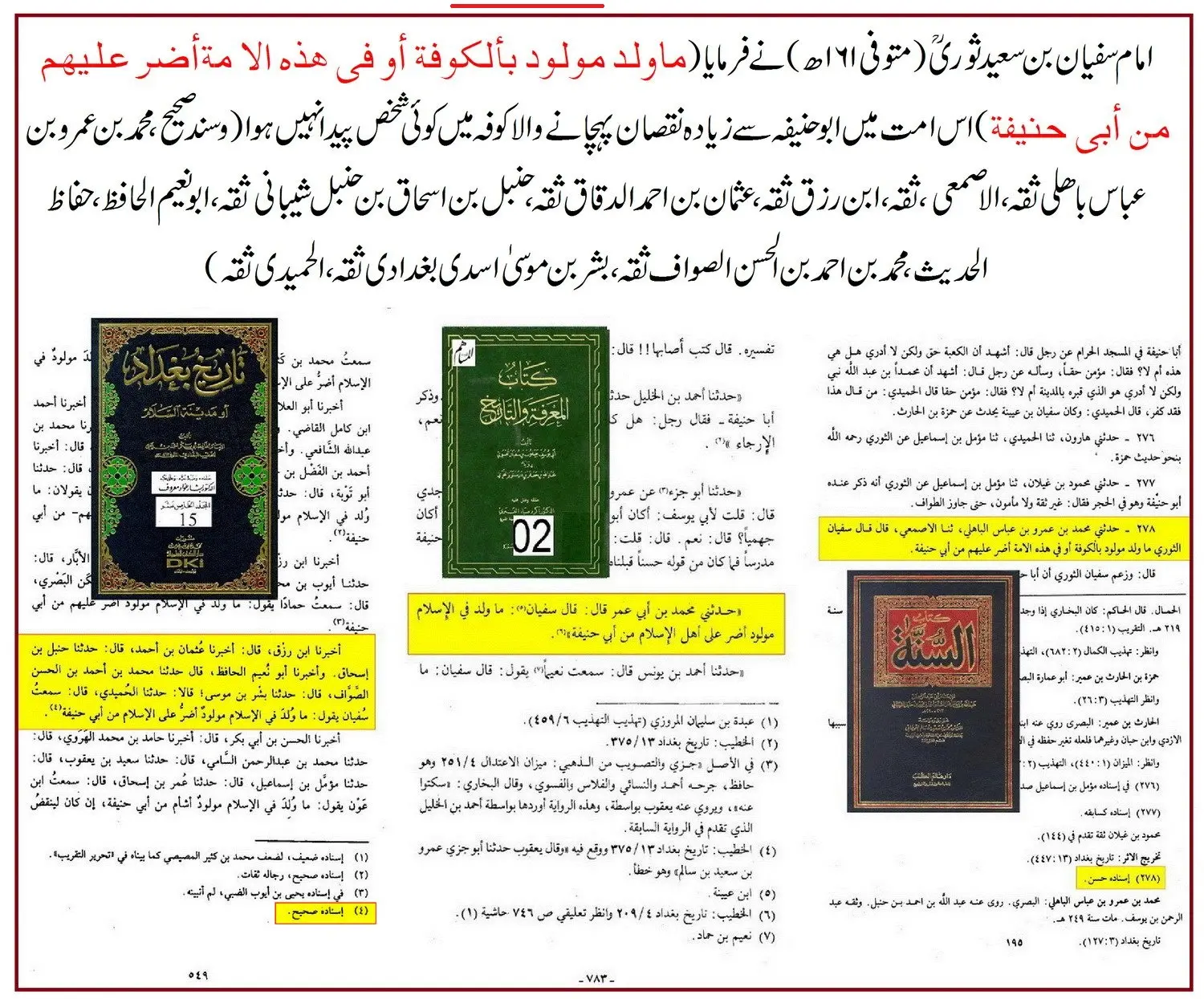
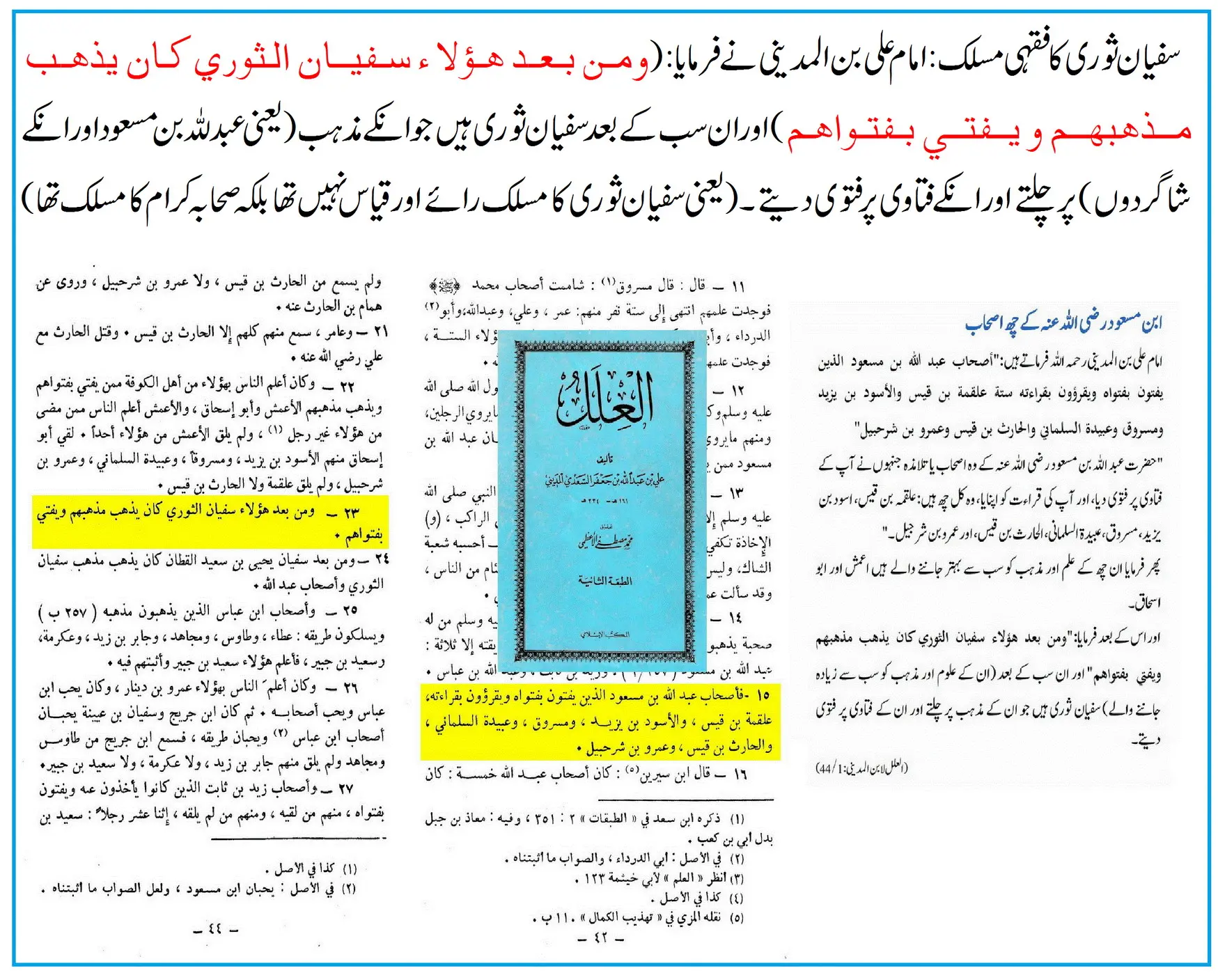
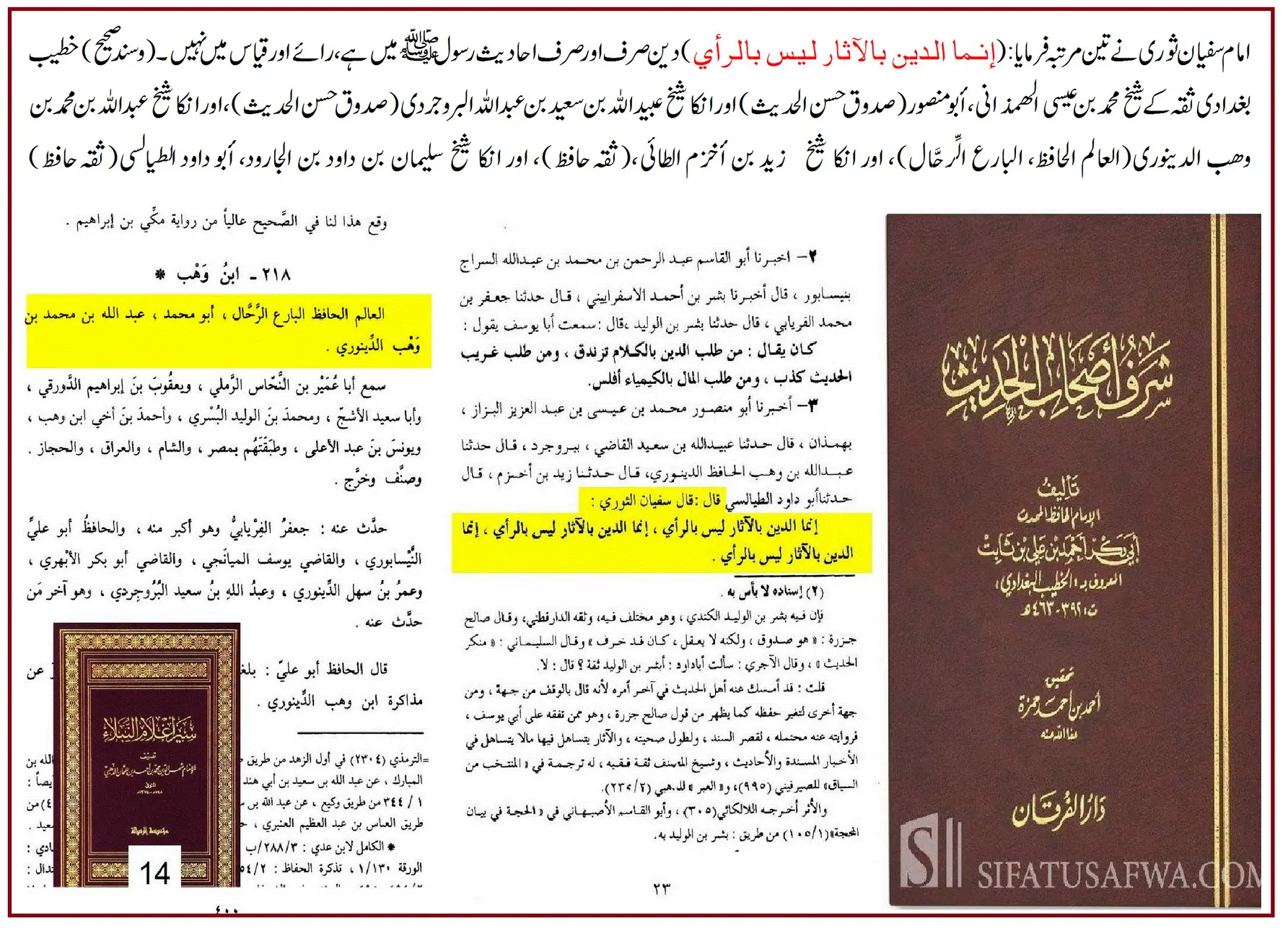

This article aims to clarify the reality that the book attributed to the Imām of Ahl al-Ḥadīth, Sufyān al-Thawrī (رحمه الله), titled “Jāmiʿ Sufyān”, is in fact a falsely attributed work. The sole narrator of this book is Ghassān bin ʿUbayd al-Mawṣilī, about whom the Imams of ḥadīth have made severe criticism. In the statements of Imām Yaḥyā bin Maʿīn (رحمه الله), there is contradiction regarding Ghassān: at times he declared him trustworthy (thiqah), and at other times weak and unfamiliar with ḥadīth. Likewise, some people misrepresent one statement of Imām Yaḥyā to give the impression that whoever dislikes Jāmiʿ Sufyān is “foolish,” and from this, an implicit criticism—God forbid—is directed toward Imām Aḥmad bin Ḥanbal (رحمه الله).
In this article, the following aspects will be clarified:
① The statement of Imām Yaḥyā bin Maʿīn as narrated by al-Dūrī and its correct context.
② The contradictory statements of Ibn Maʿīn regarding Ghassān bin ʿUbayd al-Mawṣilī and the explanations of the scholars concerning them.
③ The statements of Imām Aḥmad bin Ḥanbal clarifying that Jāmiʿ Sufyān was not actually the book of Sufyān al-Thawrī and that he strongly disliked it.
④ Other criticisms of Ghassān al-Mawṣilī demonstrating that Jāmiʿ Sufyān was an unreliable attribution.
The Claimed Objection and Its Correct Understanding
✦ Text of the Objection
(Tārīkh Ibn Maʿīn, narration of al-Dūrī, no. 3109)Al-Dūrī said:
I asked Yaḥyā bin Maʿīn about a man who is weak in ḥadīth knowledge, unable to narrate due to old age, yet he wrote Jāmiʿ Sufyān with his own hand and acts upon what is in it.
Yaḥyā bin Maʿīn replied: Sufyān was a great Imām; he may be followed.
I asked: If someone dislikes this book (a reference was implied toward Imām Aḥmad)?
Yaḥyā bin Maʿīn replied: The one who dislikes Jāmiʿ Sufyān does not act wisely.
✦ Clarification of Those Presenting the Objection
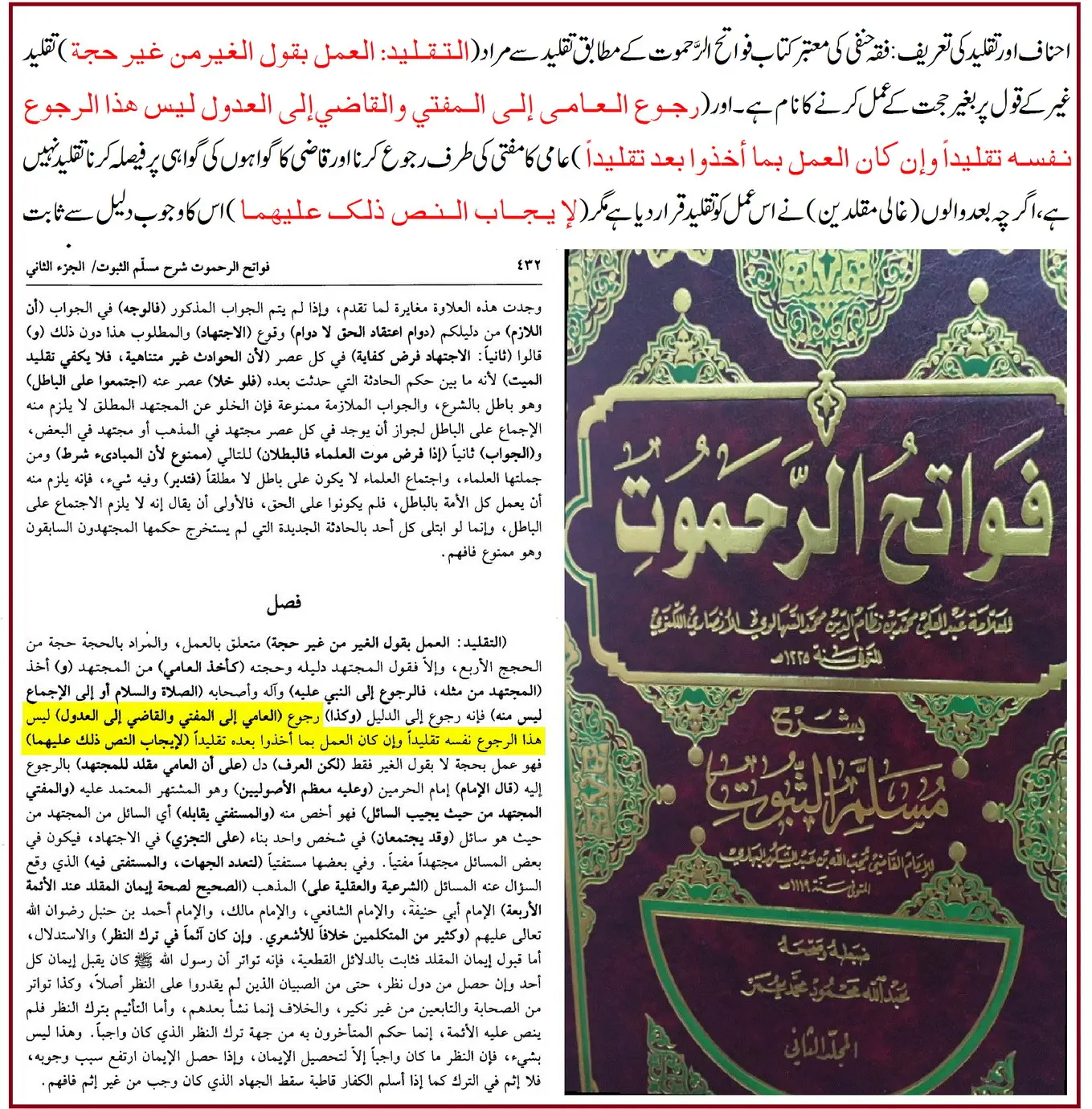
Based on this report, some scholars claim:◈ According to Imām Yaḥyā bin Maʿīn, a common person may act upon the compilation of an Imām.
◈ The rank of Imām Sufyān al-Thawrī allows acting upon his opinions.
◈ Since Imām Aḥmad disliked Jāmiʿ Sufyān, this statement appears to be criticism of him.
◈ Therefore, some conclude that certain Imams allowed taqlīd for the general masses.
The Correct Context
◈ The intent of Yaḥyā bin Maʿīn concerns a person incapable of independent ijtihād who extracts rulings from the book of an Imām. This is referring to a layperson consulting a scholar—not blind adherence in the technical juristic sense of rigidly binding oneself to one Imām without evidence.◈ The transmission of Jāmiʿ Sufyān is connected to Ghassān bin ʿUbayd al-Mawṣilī, upon whom severe criticism exists. Hence, the attribution itself is questionable.
◈ Imām Aḥmad did not oppose Sufyān al-Thawrī; rather, he rejected the attribution of this book to him. In his view, the attribution was not authentic, and therefore he avoided it.
◈ It is incorrect to claim that Yaḥyā bin Maʿīn criticized Imām Aḥmad. The discussion concerned the authenticity of the book and its transmitter, not the person of Imām Aḥmad.
Statements of Yaḥyā bin Maʿīn Regarding Ghassān al-Mawṣilī
① Yaḥyā bin Maʿīn (narration of al-Dūrī)
Arabic:«غسان الموصلي الذي يروي جامع سفيان ثقة.»
Reference: تاريخ ابن معين – رواية الدُّوري، رقم 5289
Translation: Ghassān al-Mawṣilī, who narrates Jāmiʿ Sufyān, is trustworthy.
Clarification: This reflects an early favorable assessment.
② Yaḥyā bin Maʿīn (narration of Ibn al-Junayd)
Arabic:«قد رأيته … ضعيف الحديث.»
Reference: سؤالات ابن الجنيد، ص 221
Translation: I saw him… he is weak in ḥadīth.
Clarification: Here Ibn Maʿīn explicitly declared him weak.
③ Imām al-ʿAynī (Ḥanafī)
Arabic:«وثقه يحيى في رواية الدُّوري، وقال أيضاً: لم يكن يعرف بالحديث، إلا أنه لم يكن من أهل الكذب، ويروي جامع سفيان.»
Reference: مغاني الأخيار في شرح أسامي
Translation: Yaḥyā declared him trustworthy in the narration of al-Dūrī, but also said he was not known for ḥadīth, though he was not a liar, and he narrates Jāmiʿ Sufyān.
Clarification: This demonstrates variance in Ibn Maʿīn’s evaluation.
④ Ḥāfiẓ al-Dhahabī (quoting Ibn Ḥibbān)
Arabic:«قال ابن حبان: فحش خلافه للاثبات فاستحق الترك. وذكره أيضاً في الثقات فتساقط قولاه.»
Reference: ميزان الاعتدال
Translation: Ibn Ḥibbān said: His contradiction of reliable narrators was excessive, so he deserved abandonment. Yet Ibn Ḥibbān also mentioned him among the trustworthy; thus his two statements cancel one another.
⑤ ʿAllāmah al-Sakhāwī
Arabic:«كما يتفق لابن معين وغيره من أئمة النقد، فهذا قد لا يكون تناقضاً، بل نسبياً في أحدهما، أو ناشئاً عن تغير اجتهاد …»
Reference: فتح المغيث بشرح ألفية الحديث
Translation: As sometimes occurs with Ibn Maʿīn and other critics, this may not be an actual contradiction but relative, or due to a change in ijtihād.
✦ Summary of His Status
◈ Ibn Maʿīn’s statements regarding Ghassān are contradictory.◈ Other scholars explained this as relative assessment or change in judgment.
◈ His status remains doubtful and unreliable, especially as the sole narrator of Jāmiʿ Sufyān.
Statements of Imām Aḥmad bin Ḥanbal Regarding Jāmiʿ Sufyān
① Masāʾil ʿAbdullāh bin Aḥmad
Arabic:«وعاب وضع الكتب وكرهه كراهية شديدة، وكان أبي يكره جامع سفيان وينكره ويكرهه كراهية شديدة، وقال: من سمع هذا من سفيان؟ ولم أر أبي يصحح لأحد سماعه من سفيان.»
Reference: مسائل أحمد بن حنبل، رقم 1582
Translation: He strongly disliked the compilation of such books. My father disliked and rejected Jāmiʿ Sufyān, saying: Who heard this from Sufyān? I never saw my father authenticate anyone’s hearing of it from Sufyān.
② Questions of Abū Dāwūd
Arabic:«سمعت أحمد، وقال له رجل: جامع سفيان نعمل به؟ قال: عليك بالآثار.»
Reference: سؤالات أبي داود، رقم 1779
Translation: I heard Aḥmad when a man asked: Should we act upon Jāmiʿ Sufyān? He replied: You must adhere to the narrations (āthār).
③ al-ʿIlal wa Maʿrifat al-Rijāl
Arabic:«كتبنا عن غسان بن عبيد الموصلي … وسمع من سفيان شيئاً يسيراً، وأنكر أن يكون سمع الجامع من سفيان.»
Reference: العلل ومعرفة الرجال، رقم 3605
Translation: We wrote from Ghassān bin ʿUbayd al-Mawṣilī… He heard only a small amount from Sufyān, and Aḥmad denied that he heard al-Jāmiʿ from Sufyān.
✦ Summary of Imām Aḥmad’s Position
◈ Imām Aḥmad repeatedly clarified that Jāmiʿ Sufyān was not the book of Sufyān al-Thawrī.◈ He rejected its attribution and emphasized adherence to authentic narrations instead.
Other Criticisms of Ghassān al-Mawṣilī
◈ Ibn ʿAdī
«والضعف على حديثه بيّن … وهو غير محفوظ.»
Reference: الكامل في ضعفاء الرجال 1555
Translation: Weakness in his ḥadīth is evident; it is not preserved.
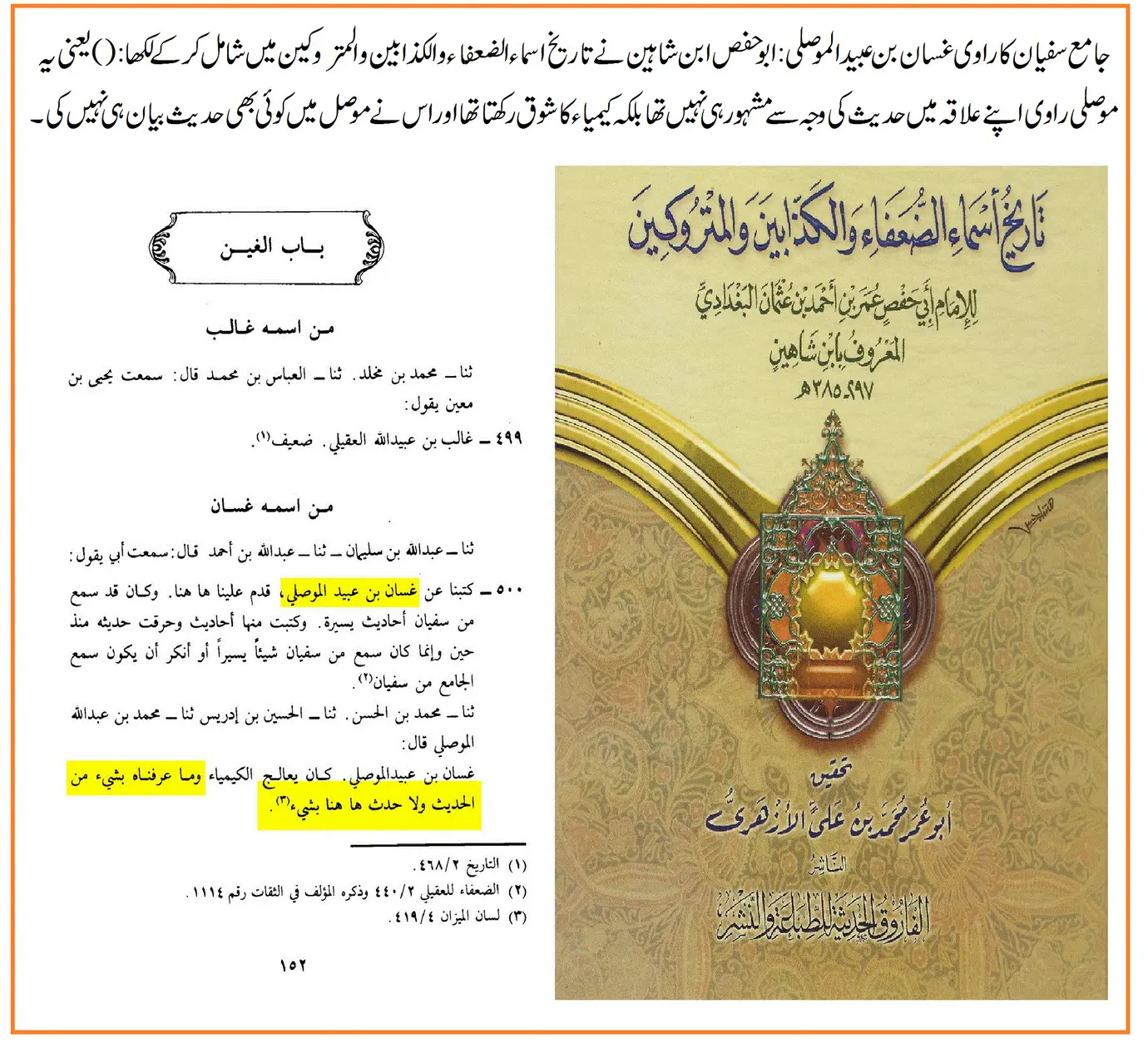
◈ Muhammad bin ʿAbdullāh bin ʿAmmār al-Mawṣilī
«كان يعالج الكيمياء … وما عرفناه بشيء من الحديث.»
Reference: تاريخ بغداد
Translation: He practiced alchemy; we did not know him for ḥadīth.
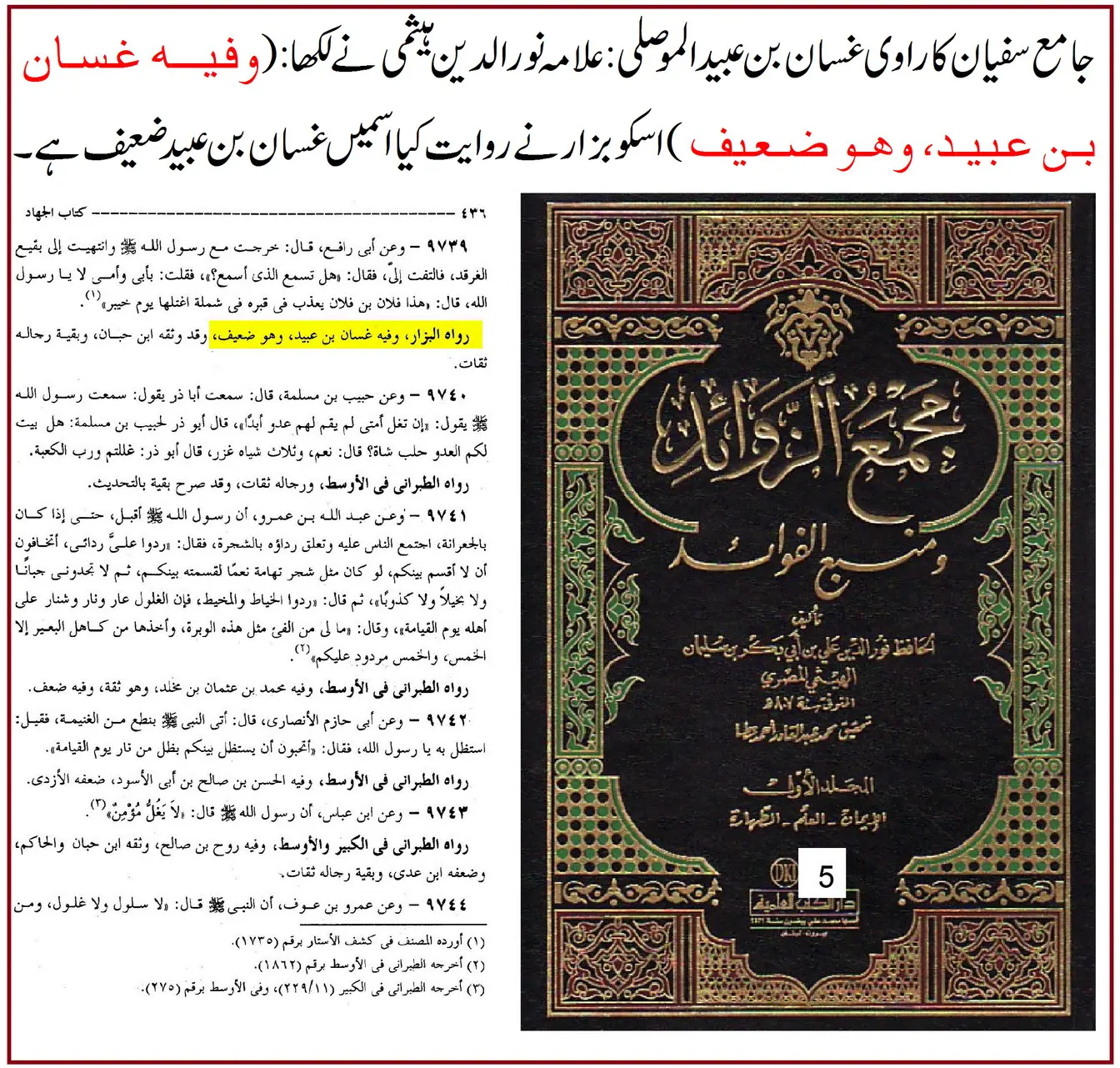
◈ al-Haythamī
«وفيه غسان بن عبيد، وهو ضعيف.»
Reference: مجمع الزوائد
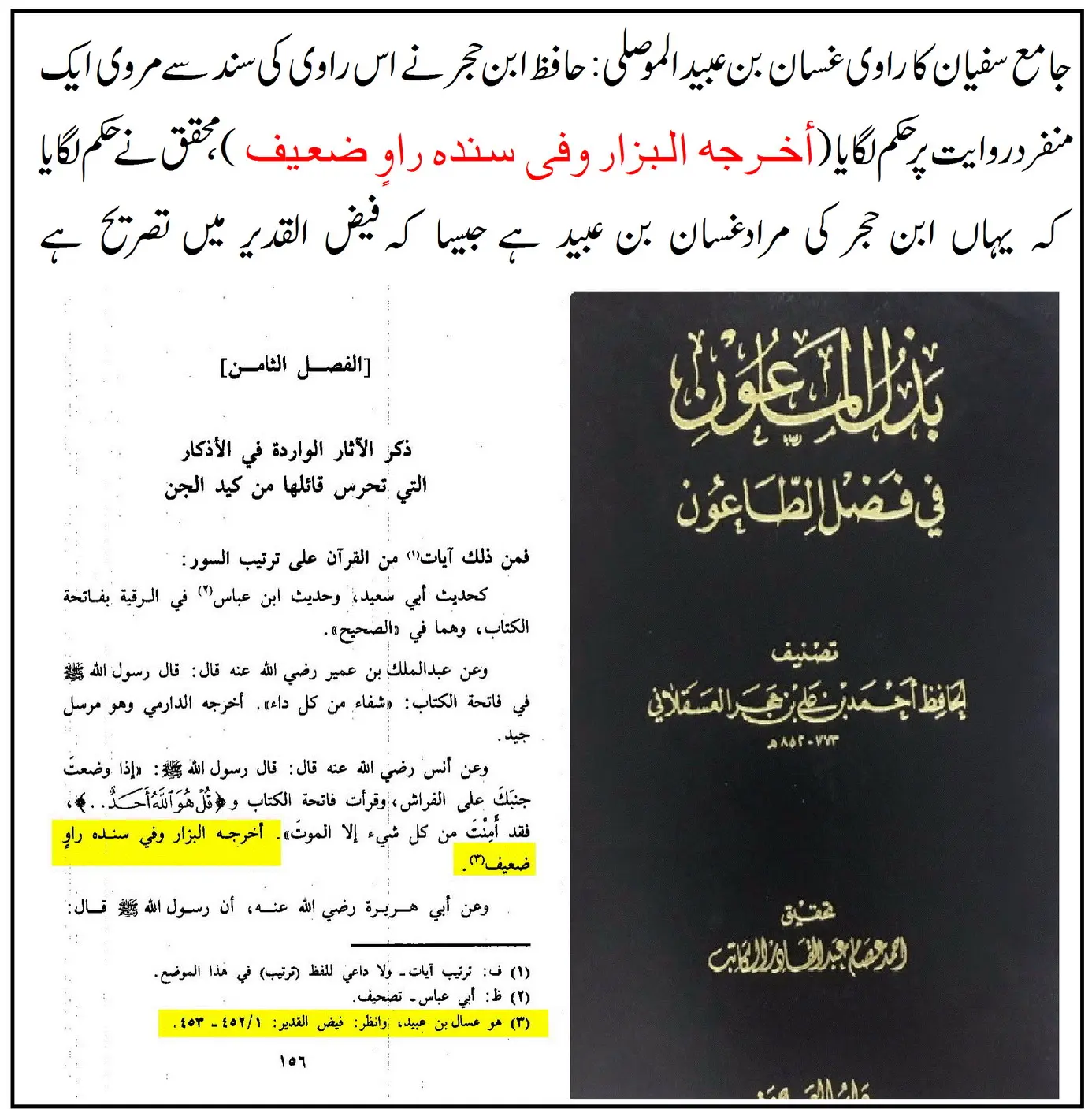
◈ Ibn Ḥajar
Mentioned a weak narrator in its chain (referring to Ghassān).
Reference: بذل الماعون
◈ Ibn al-Jawzī
Listed him among the weak narrators.
Reference: الضعفاء والمتروكون
✦ Comprehensive Summary
◈ Jāmiʿ Sufyān is transmitted solely through Ghassān bin ʿUbayd al-Mawṣilī.◈ Ibn Maʿīn’s statements about him are contradictory.
◈ Numerous scholars declared him weak and unreliable.
◈ Imām Aḥmad explicitly rejected the attribution of this book to Sufyān al-Thawrī.
 Conclusion
Jāmiʿ Sufyān is not established as the book of Sufyān al-Thawrī. Its foundation rests upon an unreliable narrator, Ghassān al-Mawṣilī. The Imams of ḥadīth criticized this narrator, and Imām Aḥmad rejected the attribution entirely. Therefore, attributing this book to Imām Sufyān al-Thawrī is incorrect, and using it to criticize the Imams is contrary to scholarly integrity.
