


Compiled by: Abu Hamza Salafi
Isa bin Jariyah Al-Ansari Al-Madani is a Tabi'i narrator, whose narration is especially transmitted from Jabir bin Abdullah رضي الله عنه, and from him narrate Ya'qub Al-Qummi and others. Some later scholars have claimed harsh terms like "Munkar al-Hadith" or "Matrook" for him, but the statements transmitted by the majority, the usage by the Imams, and the clarifications of many scholars make it clear that this narrator is not "Saqit/Matrook," but at most with the grade of "Fihi Layn" and is "considered reliable," and in many chains his hadith reaches the level of Hasan.
01- Narration in Sahih Ibn Khuzaymah and Imam Ibn Khuzaymah's Introduction
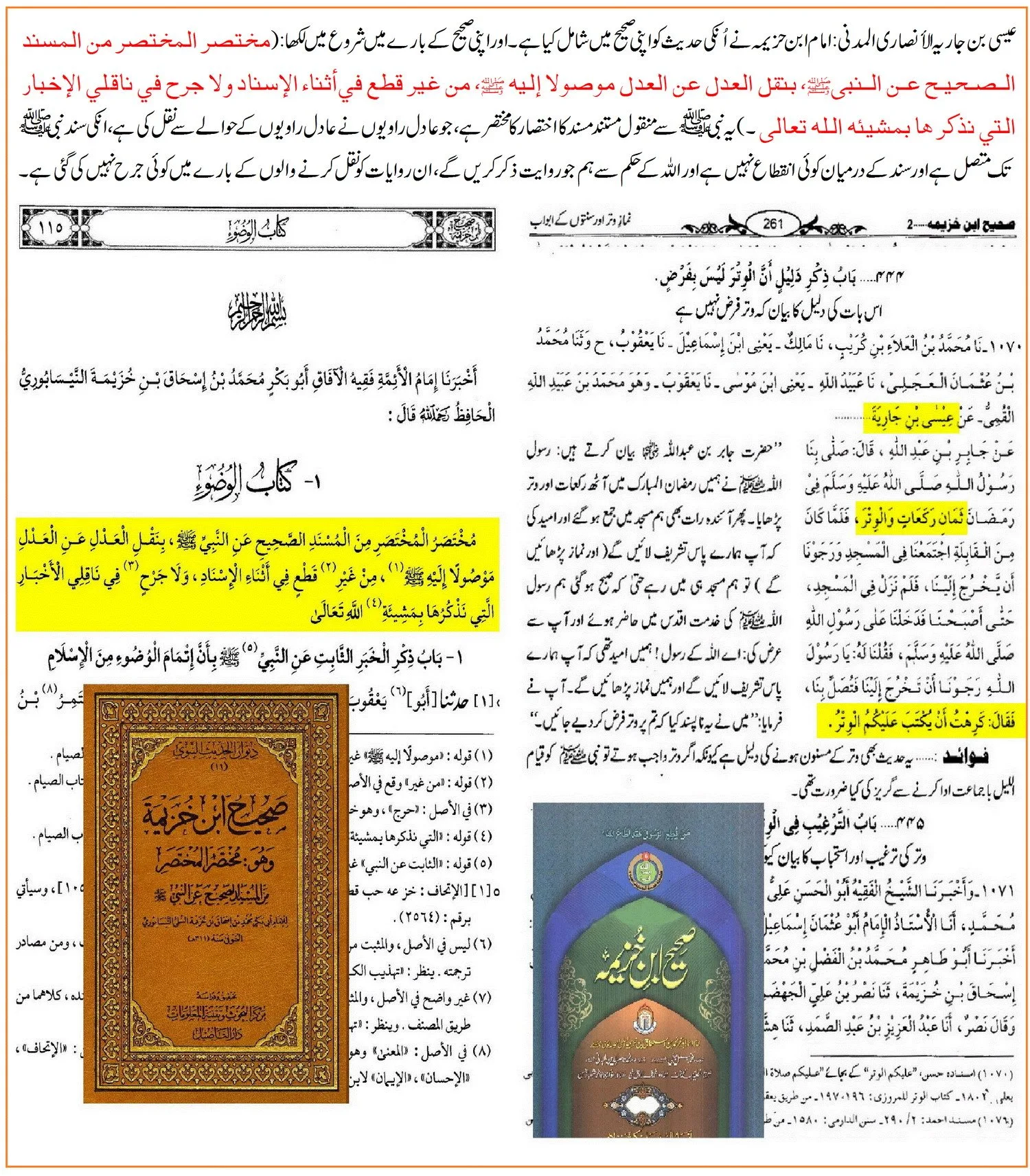
Imam Ibn Khuzaymah (d. 311 AH) narrated the hadith of this narrator in his "Sahih" and established a chapter based on it that Witr is not obligatory:
1070 - ... عَنْ عِيسَى بْنِ جَارِيَةَ، عَنْ جَابِرِ بْنِ عَبْدِ اللَّهِ ... فَقَالَ: «كَرِهْتُ أَنْ يُكْتَبَ عَلَيْكُمُ الْوِتْرُ»
Reference: Sahih Ibn Khuzaymah
And Ibn Khuzaymah stated his methodology at the beginning of his book:
مُخْتَصَرُ الْمُخْتَصَرِ مِنَ الْمُسْنَدِ الصَّحِيحِ ... بِنَقْلِ الْعَدْلِ، عَنِ الْعَدْلِ ... وَلَا جَرْحَ فِي نَاقِلِي الْأَخْبَارِ ...
Reference: Sahih Ibn Khuzaymah (Introduction)
Translation:
“Selected and abridged collection from the authentic Musnad … through the narration of a just narrator from a just narrator … and there is no criticism among the transmitters … Sahih Ibn Khuzaymah (Introduction)”
This is a strong indication of the narrator’s acceptance, especially according to Ibn Khuzaymah’s own methodology.
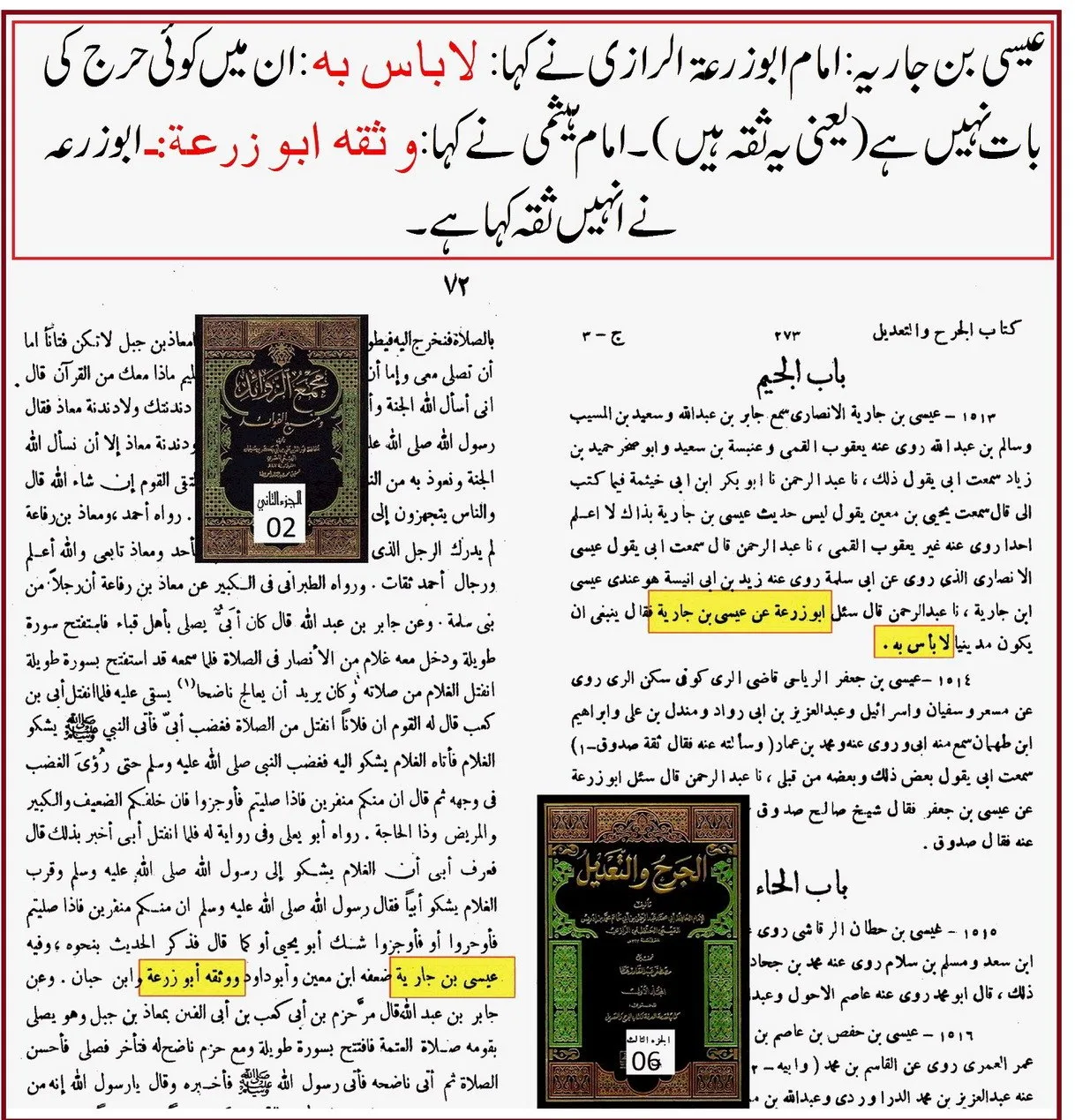
02- Imam Abu Zur‘ah al-Razi’s statement: No harm in him
سُئِلَ أَبُو زُرْعَةَ عَنْ عِيسَى بْنِ جَارِيَةَ فَقَالَ: يَنْبَغِي أَنْ يَكُونَ مَدِينِيًّا، لَا بَأْسَ بِهِ.
Reference: Al-Jarh wa al-Ta‘dil by Ibn Abi Hatim
“No harm in him” is a clear term of authentication or at least acceptance among the Imams.
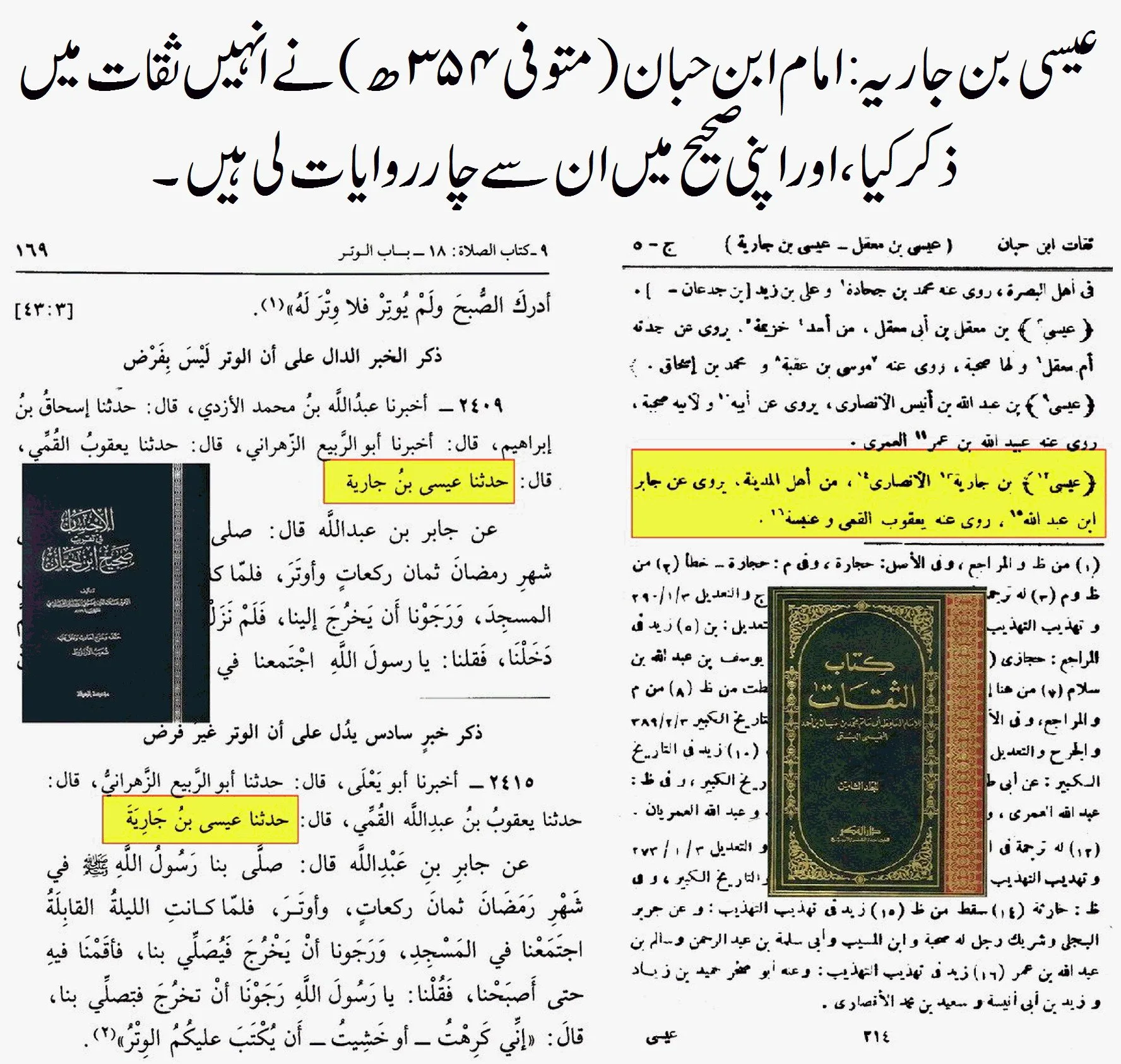
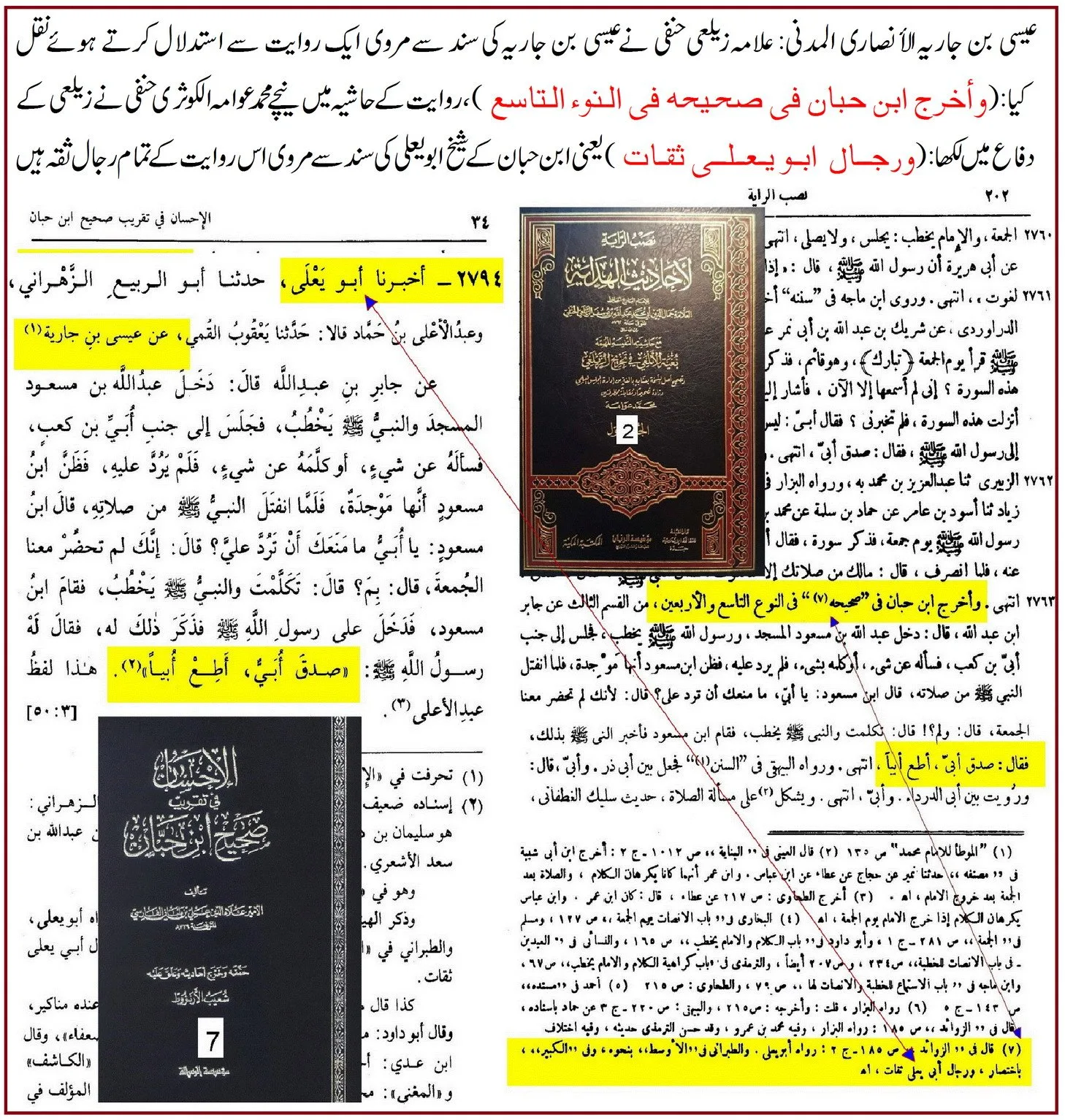
03- Hafiz Ibn Hibban: Mentioned among the trustworthy and relied upon in Sahih
Ibn Hibban mentioned him in “Al-Thiqaat” and relied upon his narration in his “Sahih.” This is also a strong proof of the narrator’s acceptability.
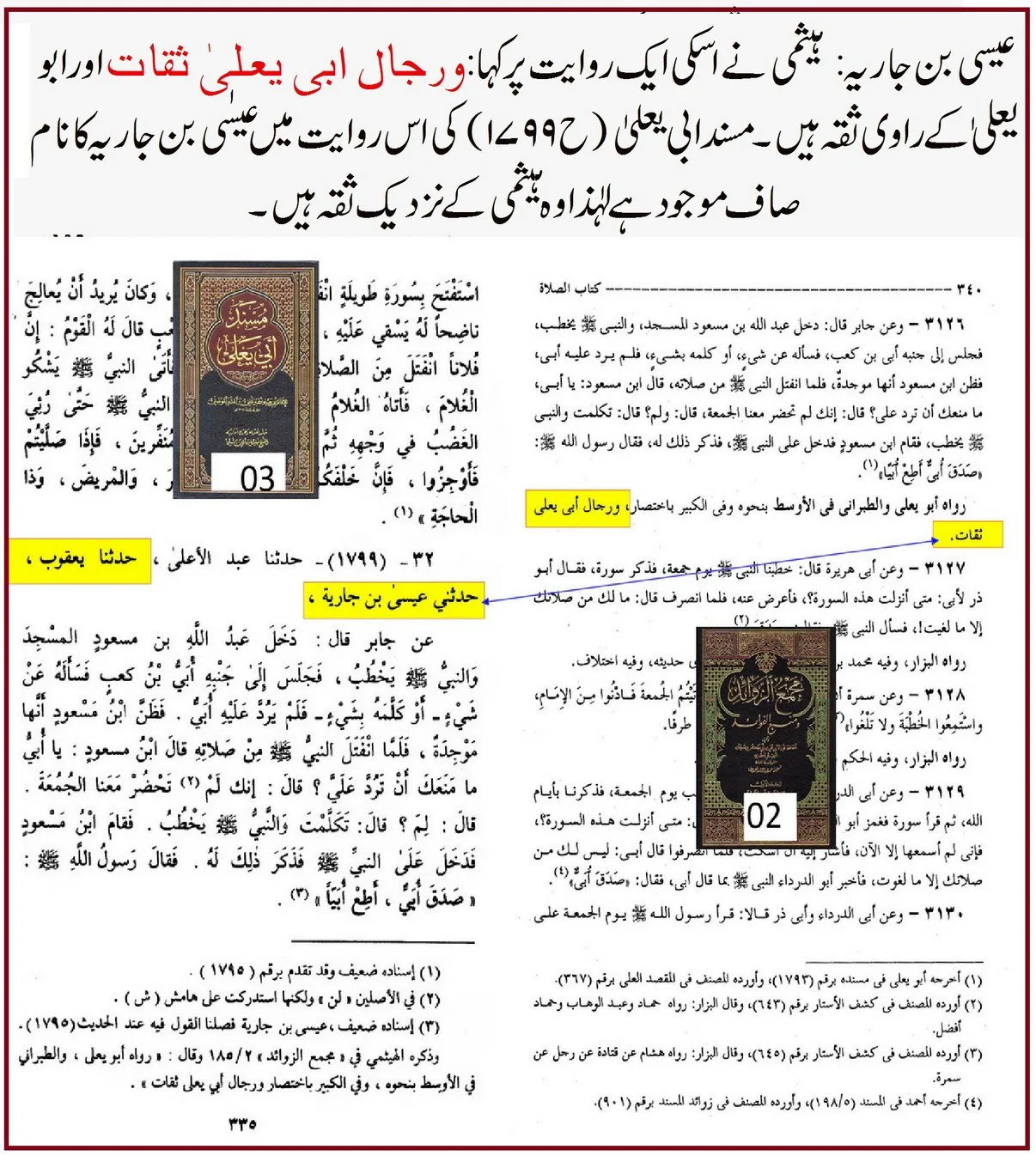
04- Imam Al-Haythami: The narrators of Abu Ya‘la are trustworthy
Regarding the narration transmitted through ‘Isa ibn Jariyah, Imam Nur al-Din al-Haythami said:
رَوَاهُ أَبُو يَعْلَى ... وَرِجَالُ أَبِي يَعْلَى ثِقَاتٌ.
Reference: Majma‘ al-Zawa’id
This ruling points to the overall reliability of the narrators in this chain.
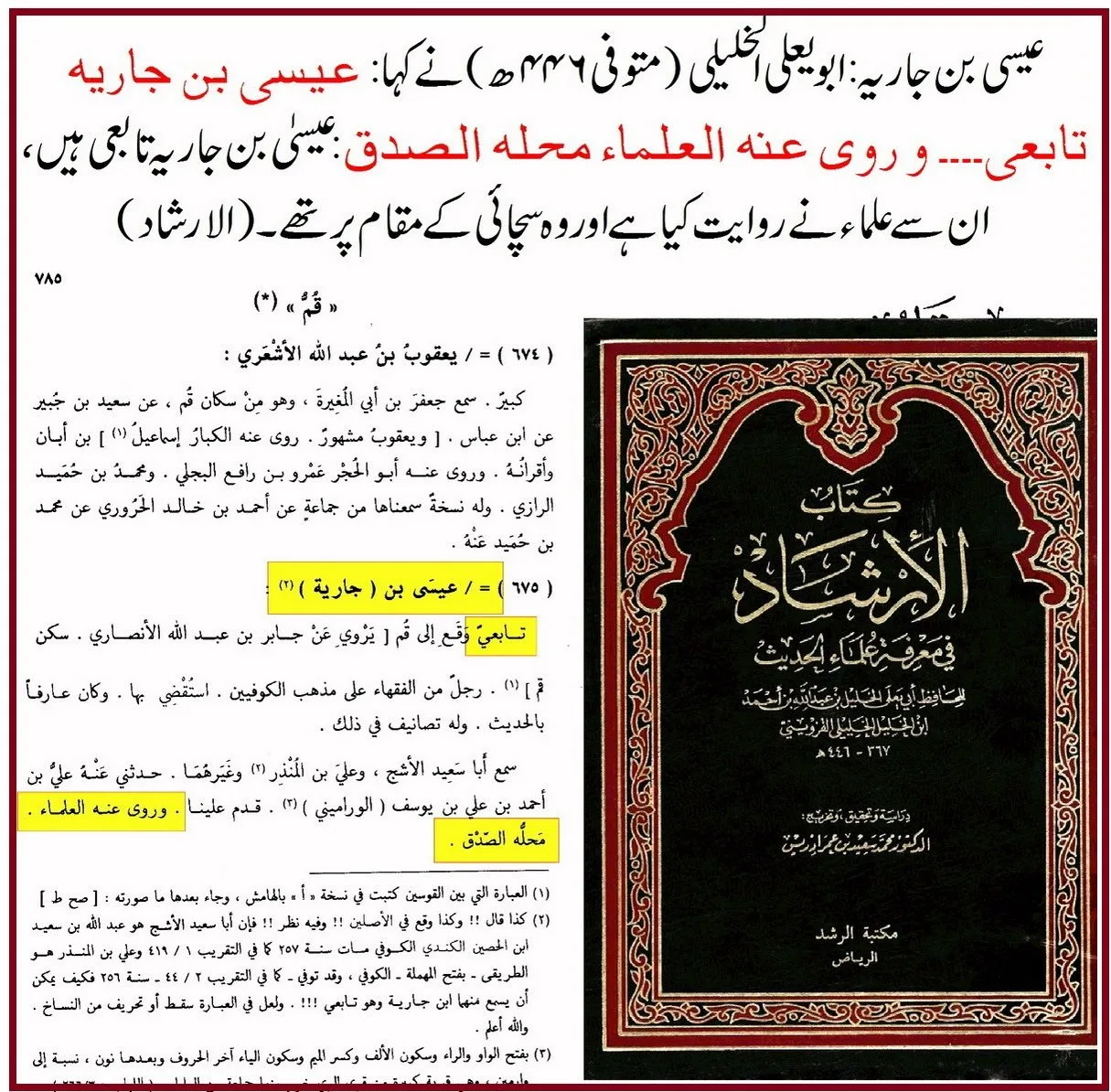
05- Imam Abu Ya‘la al-Khalili: His place is truthfulness
عِيسَى بْنُ جَارِيَةَ ... وَكَانَ عَارِفًا بِالْحَدِيثِ ... وَرَوَى عَنْهُ الْعُلَمَاءُ، مَحِلُّهُ الصِّدْقُ.
Reference: Al-Irshad fi Ma‘rifat ‘Ulama’ al-Hadith by al-Khalili
“His place is truthfulness” is an explicit authentication of acceptance and truthfulness.
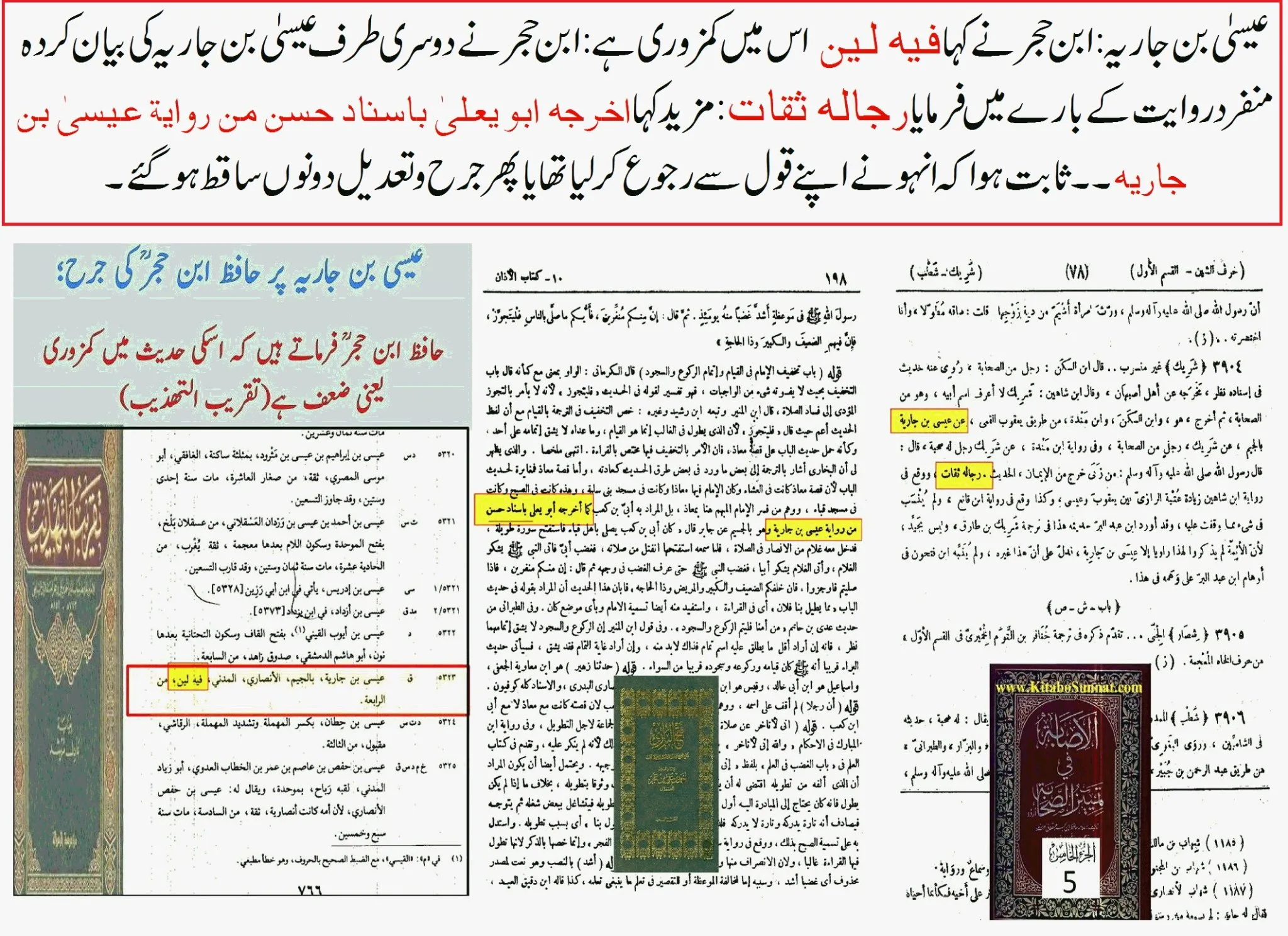
06- Hafiz Ibn Hajar: In Taqreeb "Fihi Layn" and in Fath al-Bari the isnads are Hasan
Hafiz Ibn Hajar's statement in Taqreeb:
عيسى بن جارية الأنصاري المدني: فيه لين، من الرابعة.
Reference: Taqreeb al-Tahdheeb
And in Fath al-Bari a clear ruling on the same narrator's chain:
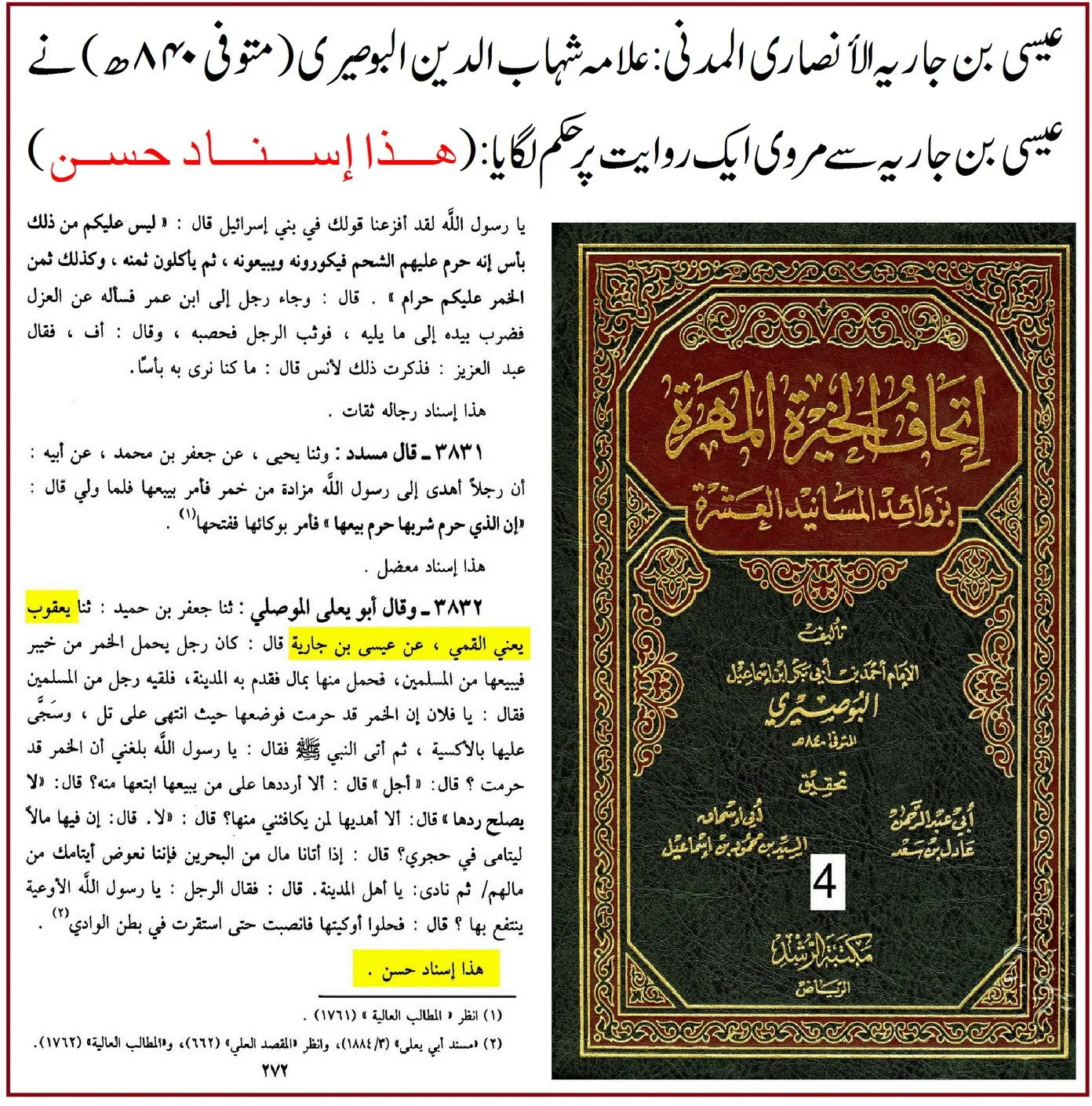
أَبُو يَعْلَى بِإِسْنَادٍ حَسَنٍ مِنْ رِوَايَةِ عِيسَى بْنِ جَارِيَةَ ...
Reference: Fath al-Bari by Ibn Hajar
Here the ruling of "Isnad Hasan" is explicit.
Similarly, in "Al-Isabah" at one place regarding the chain of narration:
رِجَالُهُ ثِقَاتٌ ...
Reference: Al-Isabah fi Tamyiz al-Sahabah
07- Hafiz Al-Dhahabi: His isnad is middle, and in Rijal Ibn Majah he is called "Sheikh"
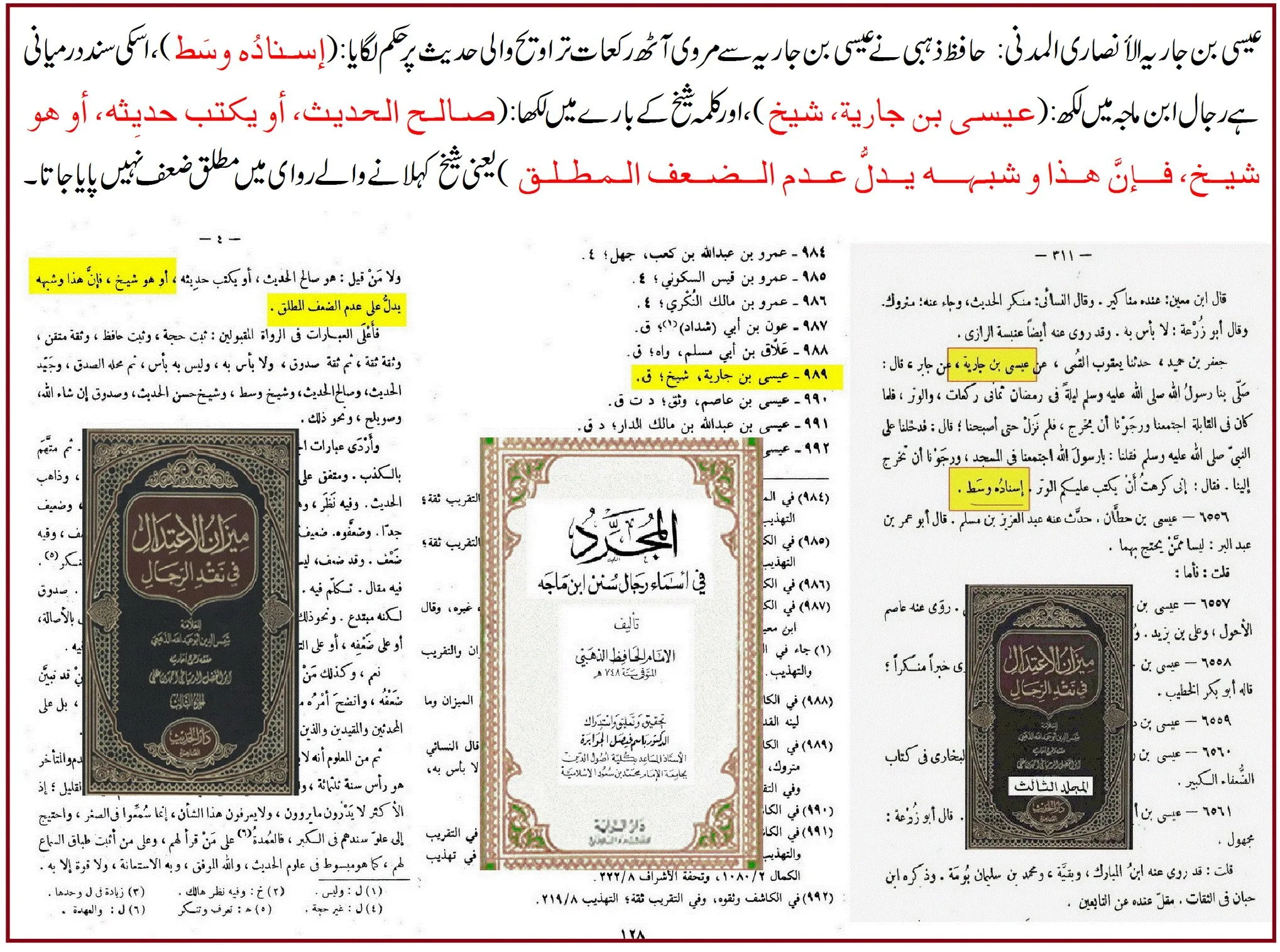
In Mizan al-I'tidal on the Ramadan narration of Isa ibn Jariyah:
إسناده وسط.
Reference: Mizan al-I'tidal by Al-Dhahabi
And in "Al-Mujarrad fi Rijal Ibn Majah":
عيسى بن جارية: شيخ.
Reference: Al-Mujarrad fi Asma' Rijal Sunan Ibn Majah
Hafiz Al-Dhahabi himself explained the indication of "Sheikh" etc., that it does not necessarily imply absolute weakness.
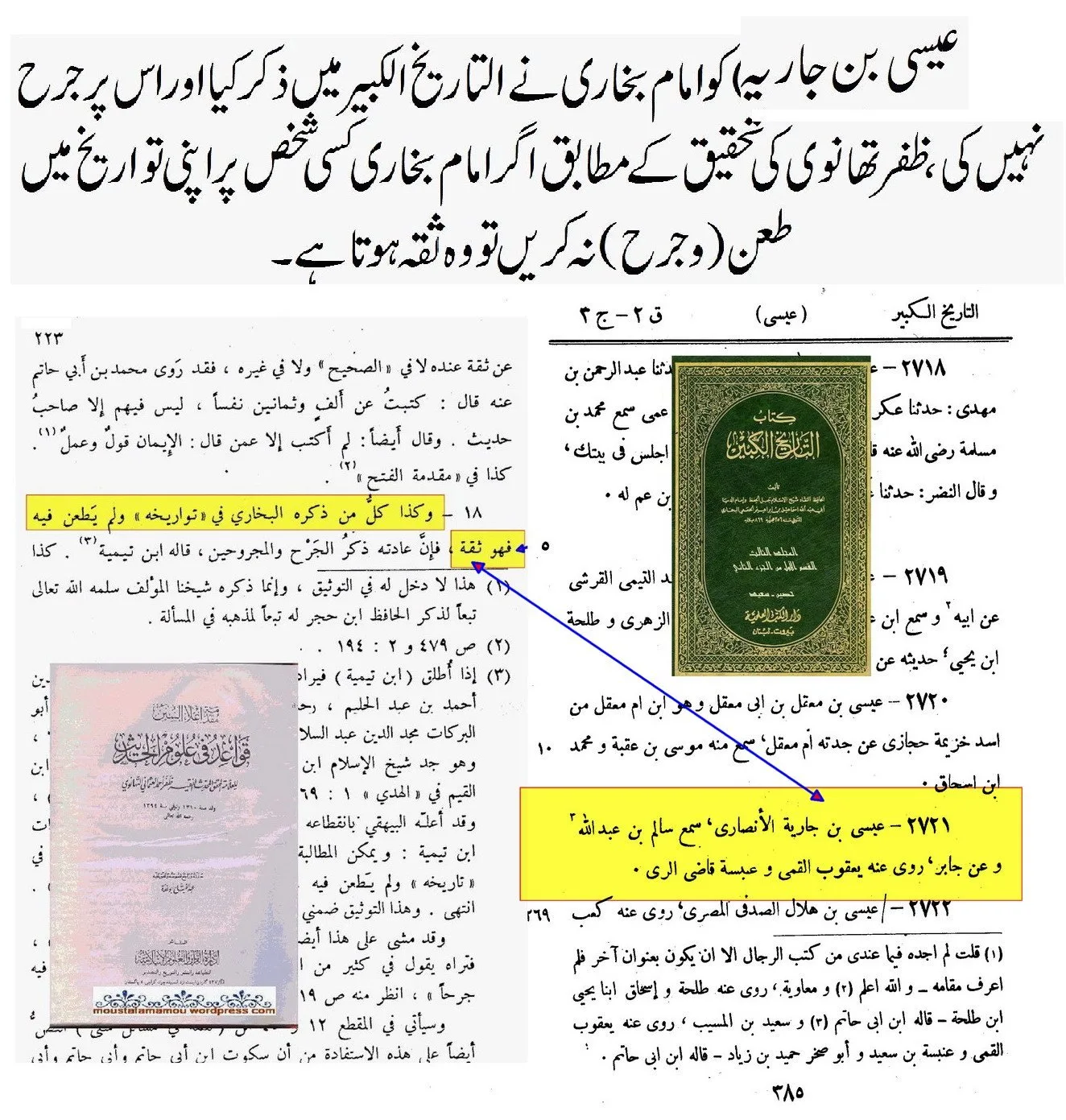
08- Imam Bukhari: Mention in Tarikh al-Kabir without criticism
Imam Bukhari mentioned Isa ibn Jariyah in "Tarikh al-Kabir" and did not transmit any explicit criticism. This at least indicates that the narrator was not known to be of the "Saqit" (defective) grade.
09- Hafiz Mundhiri: Good isnad
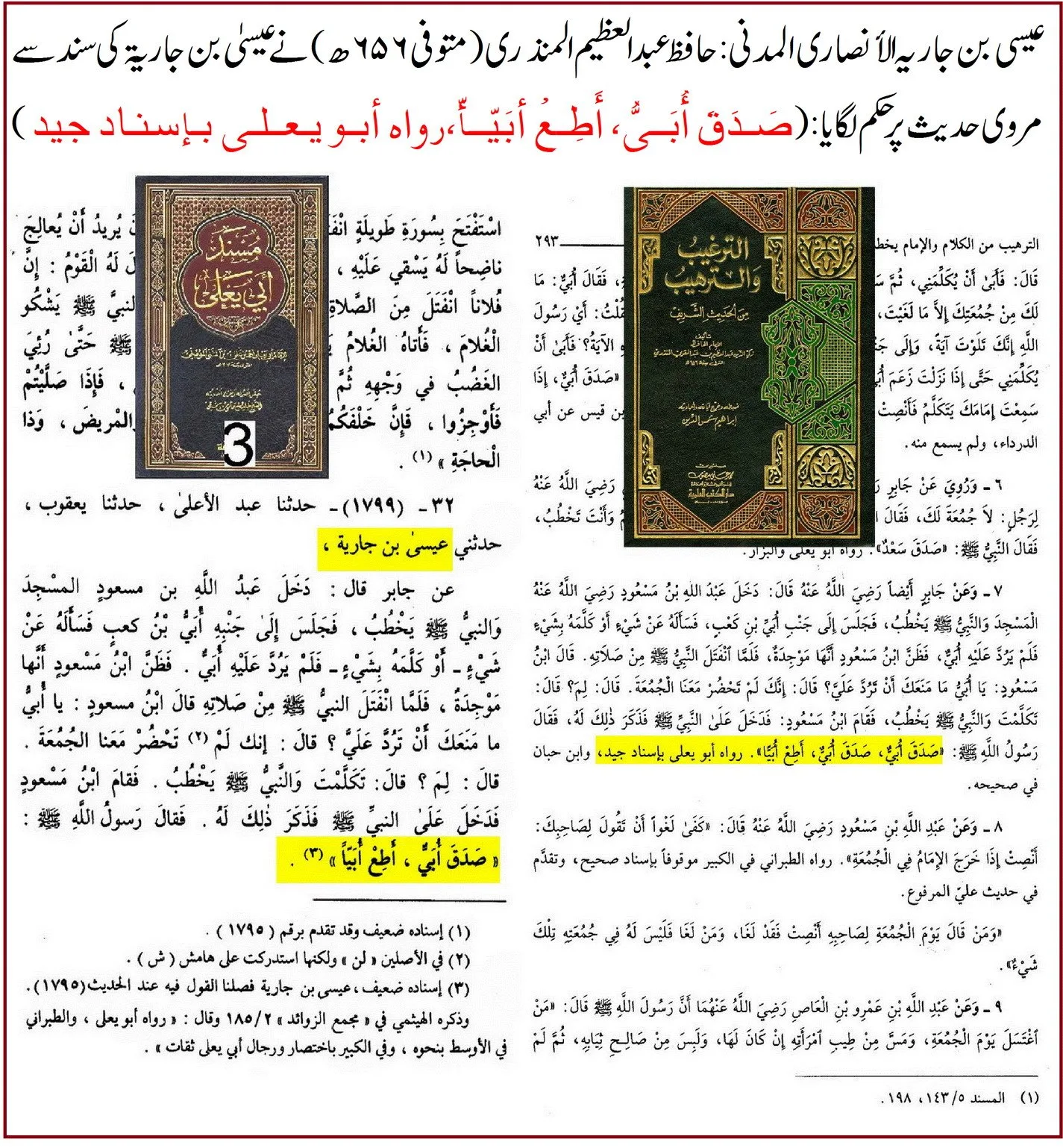
On the narration of Jabir (may Allah be pleased with him) through the route of Isa ibn Jariyah:
رَوَاهُ أَبُو يَعْلَى بِإِسْنَادٍ جَيِّدٍ، وَابْنُ حِبَّانَ فِي صَحِيحِهِ.
Reference: Al-Targhib wa al-Tarhib by Al-Mundhiri
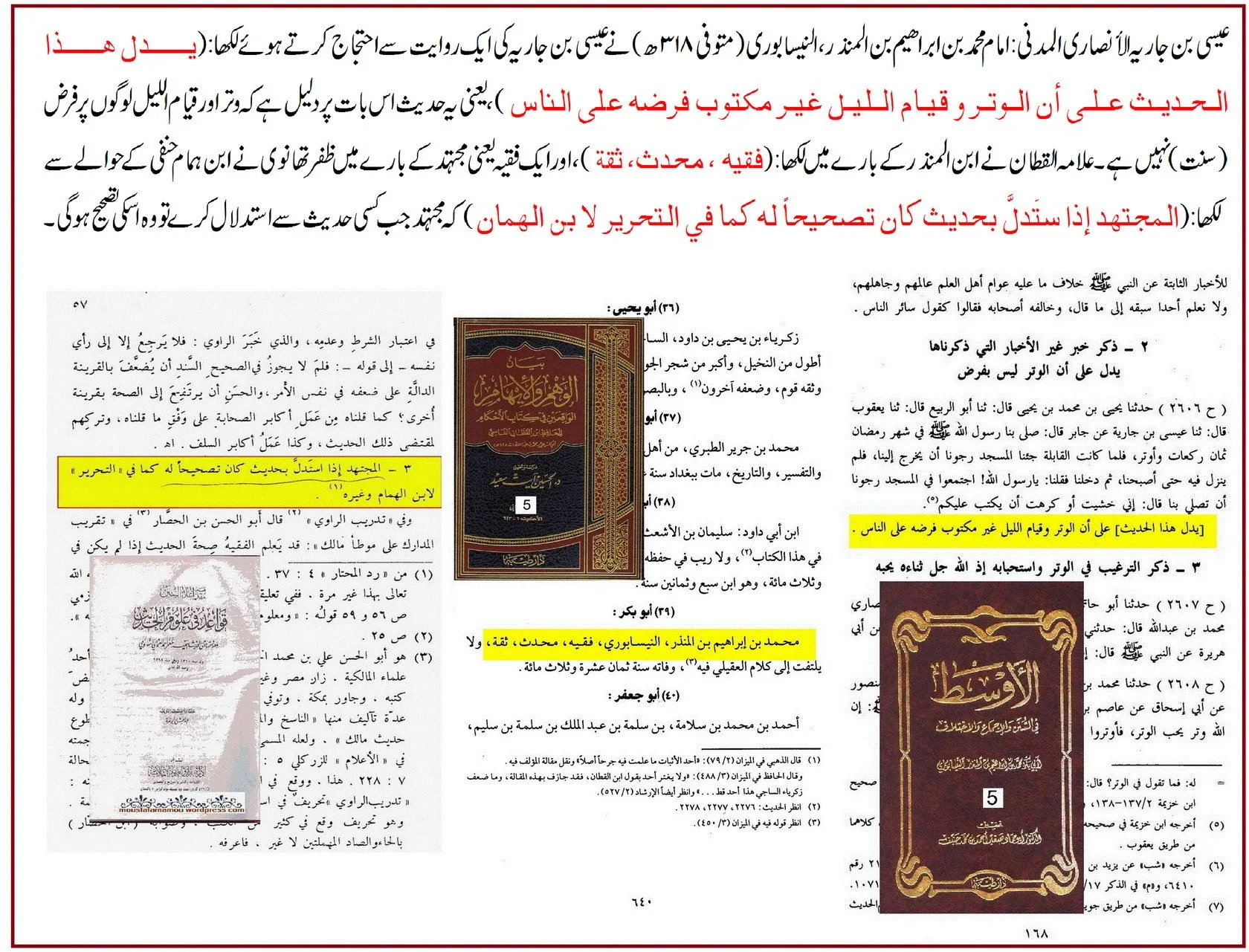
10- Imam Ibn al-Mundhir al-Nisaburi: Evidence and Jurisprudential Authority
Imam Muhammad ibn Ibrahim ibn al-Mundhir (d. 318 AH) used the same narration as evidence and made the non-obligatory nature of Witr a proof:
... ثنا عِيسَى بْنُ جَارِيَةَ، عَنْ جَابِرٍ ... يَدُلُّ هَذَا الْحَدِيثُ عَلَى أَنَّ الْوِتْرَ ... غَيْرُ مَكْتُوبٍ ...
Reference: Al-Awsat fi al-Sunan wal-Ijma' wal-Ikhtilaf by Ibn al-Mundhir
11- Zailai: Transmission of Sahih Ibn Hibban’s Narration and Reference to Authentication of Narrators
Zailai transmitted the narration from Ibn Hibban’s “Sahih” in this chapter, and in this context, references to the authentication of the chains of narrators such as Abu Ya'la and others were also mentioned.
Reference: Nasb al-Rayah
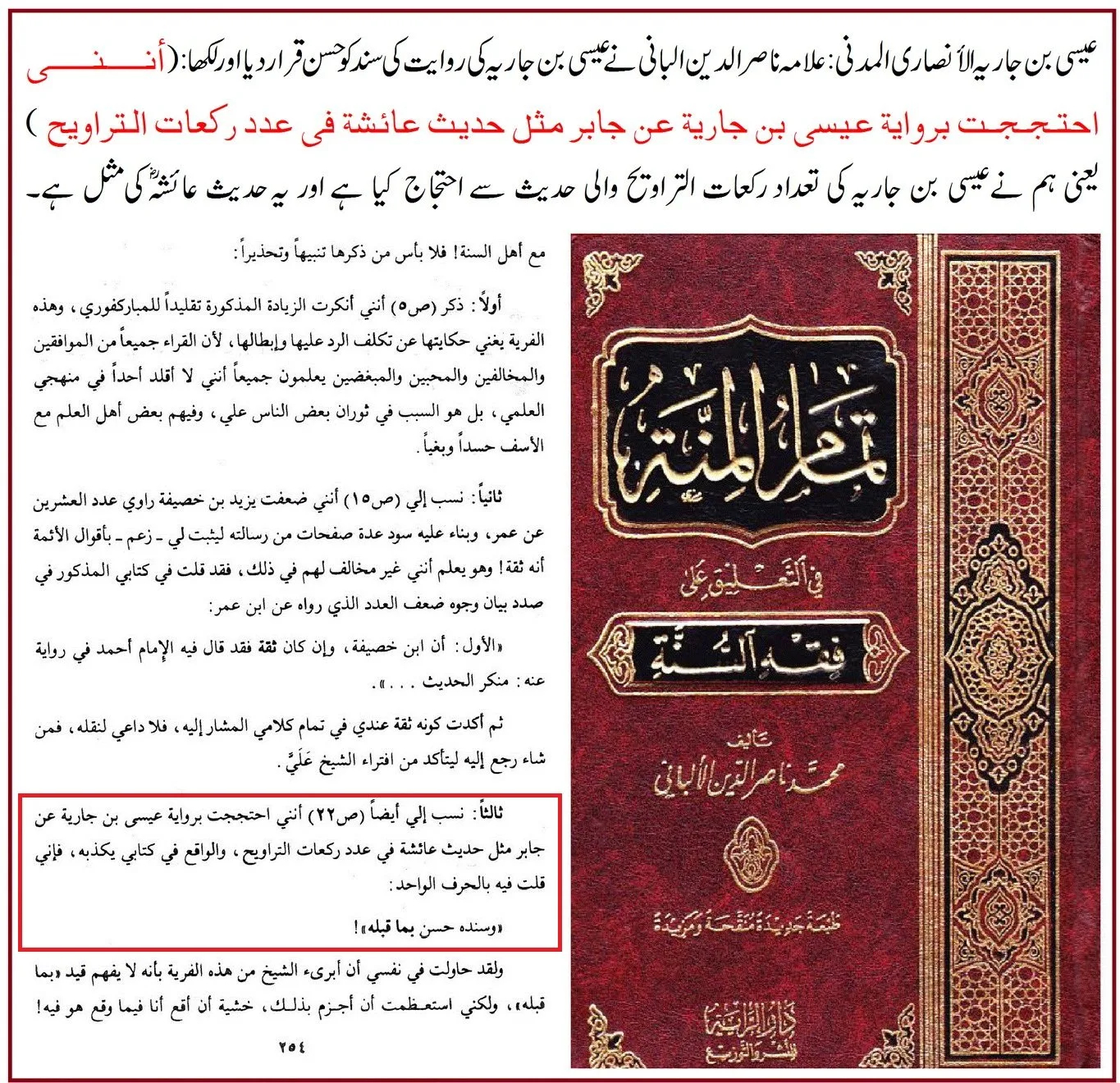
12- Allama Albani: Hasan Chain
Allama Albani considered the narration of Isa ibn Jariyah, along with other evidences, as worthy of being acted upon and explained the meaning of “Hasan chain”:
... فإني قلت فيه بالحرف الواحد: "وسنده حسن بما قبله".
Reference: Tamm al-Minnah
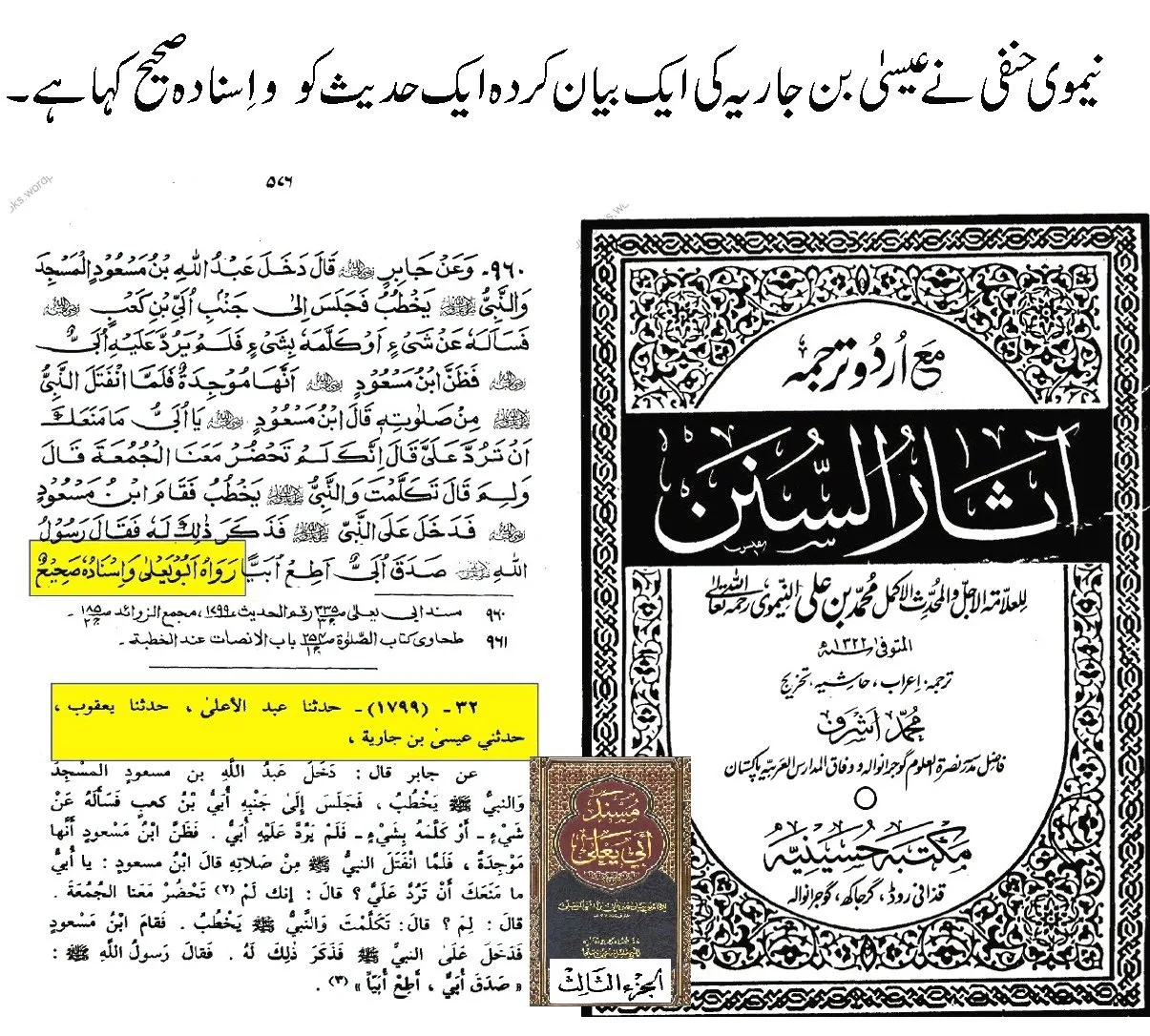
13- Muhammad ibn Ali al-Naimawi al-Hanafi: Verification of Chains
Some later scholars (for example, Muhammad ibn Ali al-Naimawi al-Hanafi) also passed judgment on some narrations of Isa ibn Jariyah’s method in terms of the reliability of the chains. This overall supports that the narrator is not “abandoned/weak.”
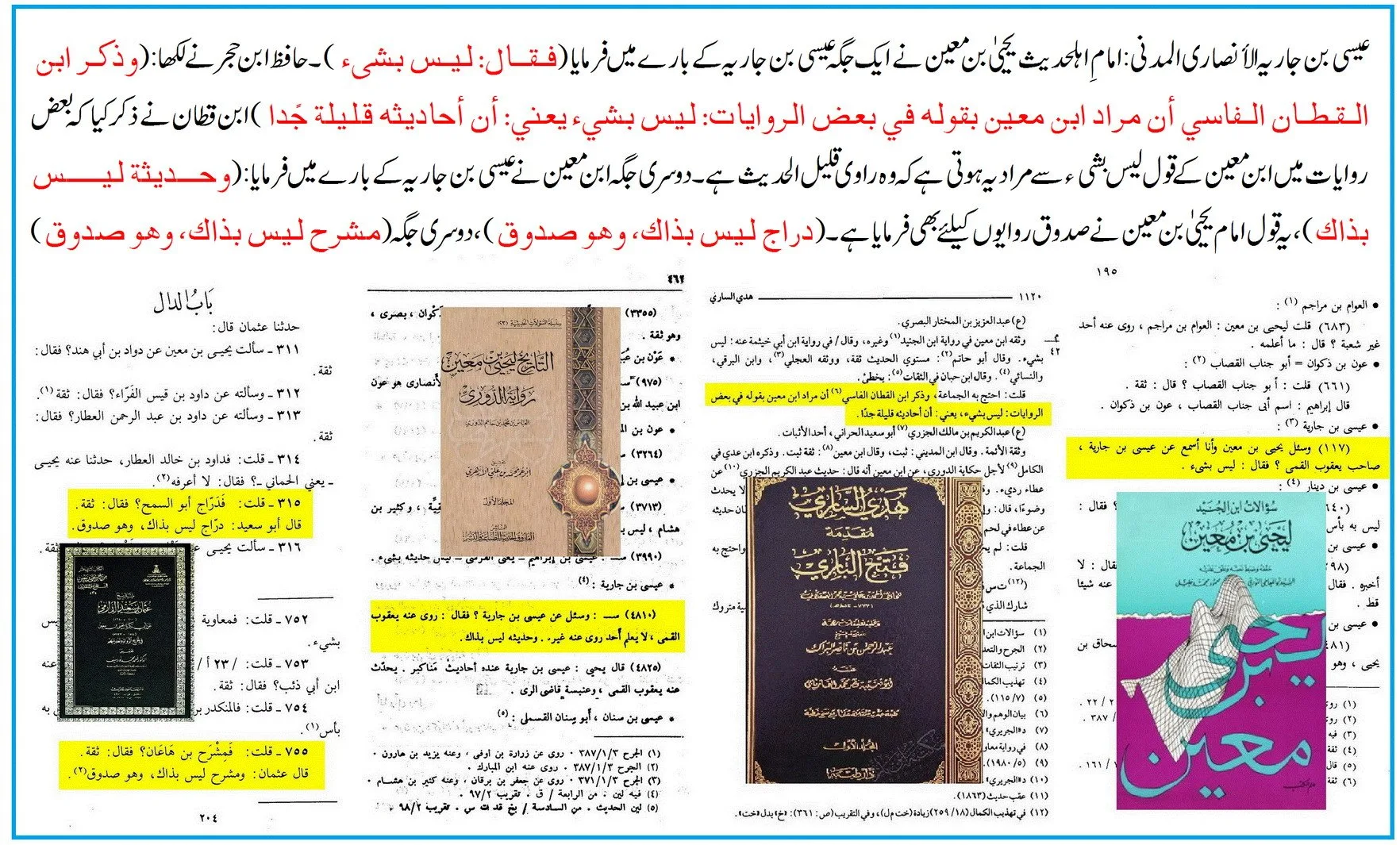
01- Two Statements of Yahya ibn Ma’in: “Laysa Bishay’” and “Laysa Bidhalik”
It is narrated in one place:
... فقيل: حديثه ليس بذاك.
Reference: Tareekh Ibn Ma'een (Narration of Al-Doori)
And in another place:
... فقال: ليس بشيء.
Reference: Su'alat Ibn Al-Junaid
Here, two matters should be kept in mind:
1. The difference in terminology used by the Imams is well-known.
2. Hafiz Ibn Hajar has narrated that on some occasions, Ibn Ma'een's phrase "ليس بشيء" (not significant) was also taken to mean a scarcity of hadith:
ذكر ابن القطان الفاسي أن مراد ابن معين بقوله في بعض الروايات "ليس بشيء" يعني أن أحاديثه قليلة جدا.
Reference: Fath al-Bari
This explanation at least indicates that it is not necessarily correct to prove "abandonment of hadith" based solely on this phrase, especially when the authentications of Abu Zur'ah, Al-Khalili, Ibn Hibban, Ibn Khuzaymah, etc., are available.
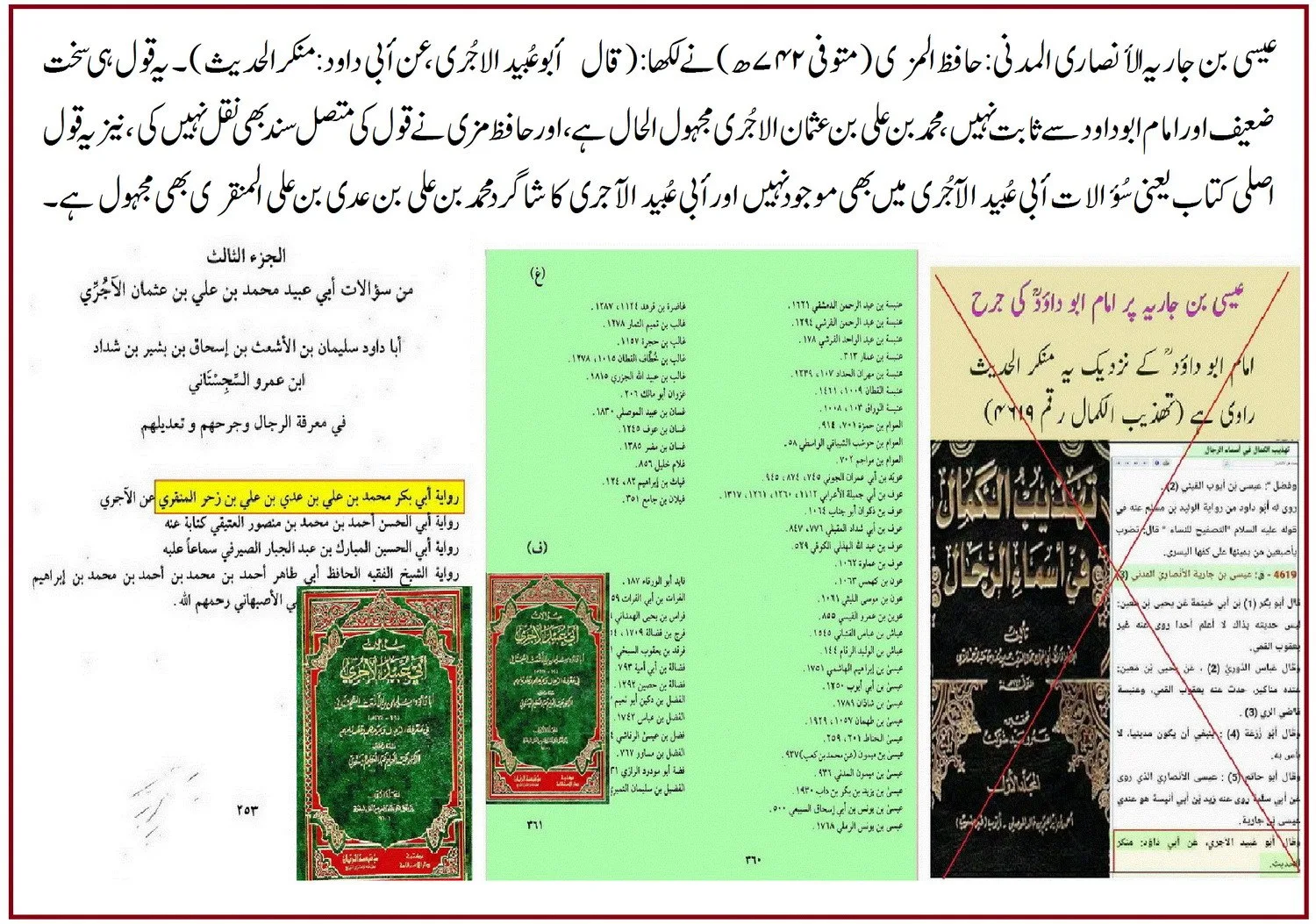
02- Attribution of "Munkir al-Hadith" to Abu Dawood
Hafiz Muzi has narrated that Abu Ubaid Al-Ajri attributed "Munkir al-Hadith" to Abu Dawood. But this attribution will only be valid when its exact context is clearly determined within the questions of Al-Ajri, or a connected narration is presented.
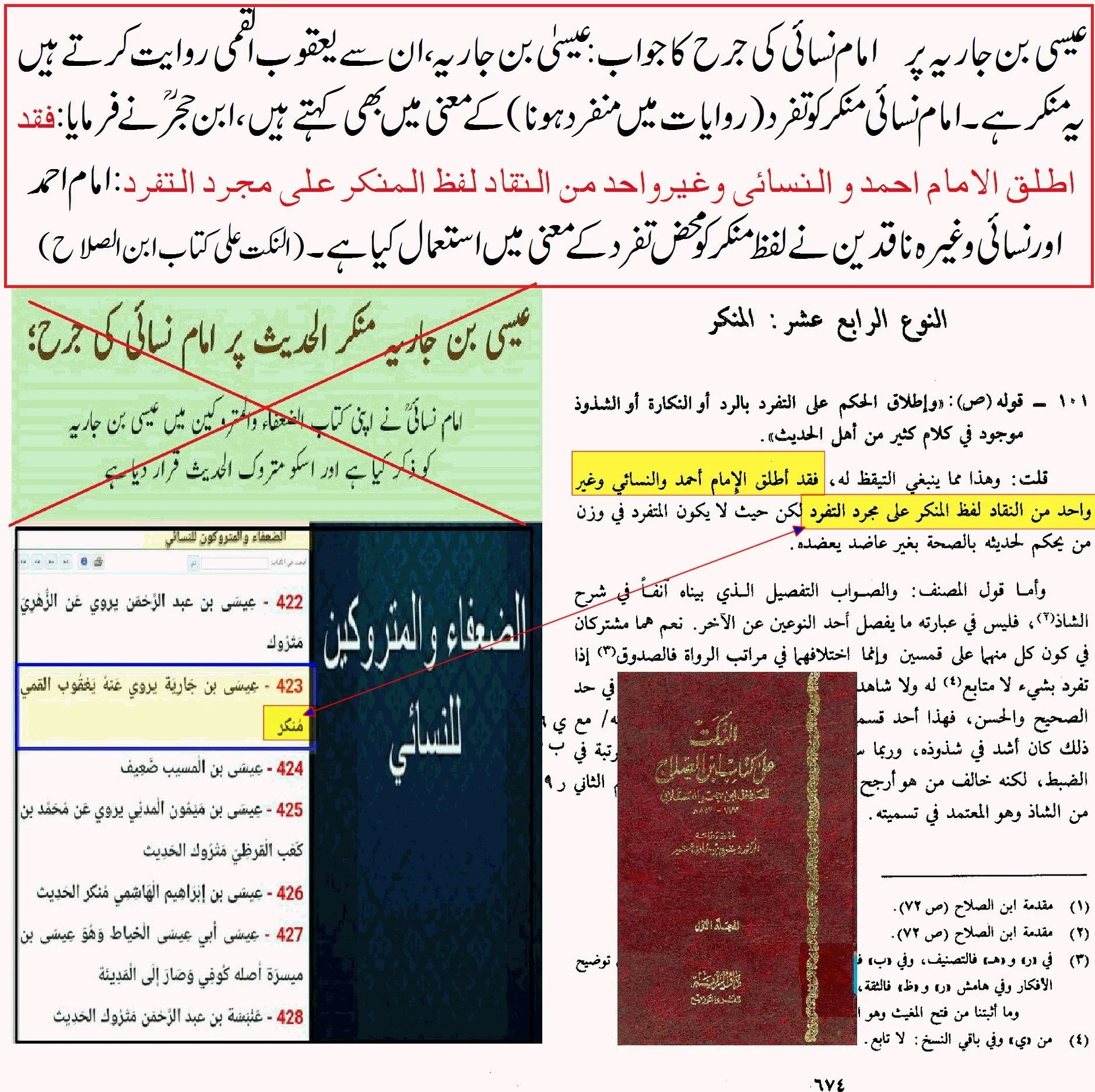
Nevertheless, if "Munkir" or "Munkir al-Hadith" is accepted as established, it should also be kept in mind that critics sometimes apply the term "Munkir" merely for uniqueness. Hafiz Ibn Hajar has clarified this point:
وإطلاق الحكم على التفرد بالرد أو النكارة أو الشذوذ موجود ... وقد أطلق الإمام أحمد والنسائي وغير واحد من النقاد لفظ المنكر على مجرد التفرد.
Reference: Annotations on the Book of Ibn al-Salah by Ibn Hajar
That is, "Munkar" does not always mean "abandoned/rejected," but sometimes it means "lack of support due to uniqueness."
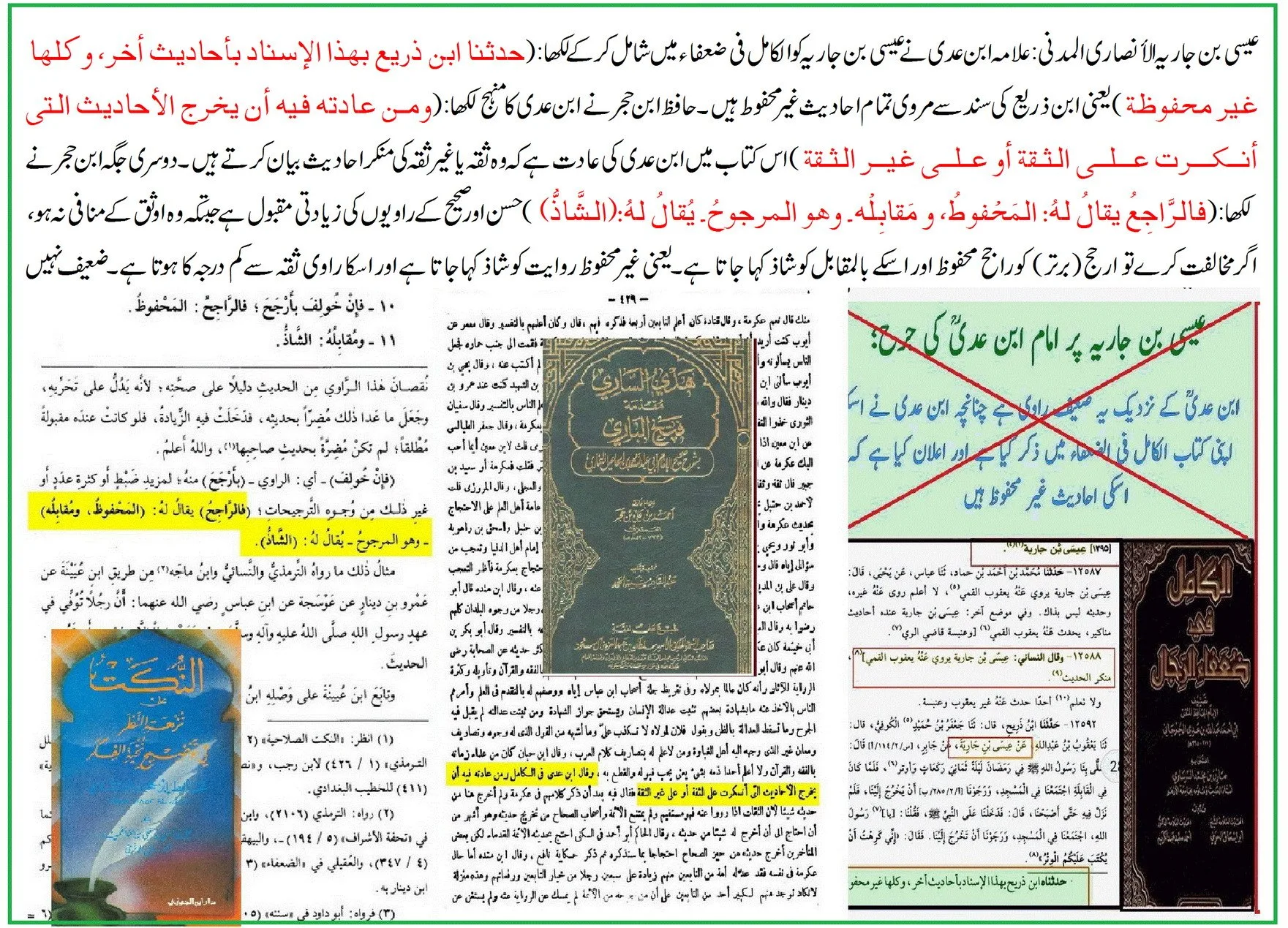
03- Ibn 'Adi: Saying "Not Preserved"
Ibn 'Adi called some narrations of 'Isa ibn Jariyah "not preserved" in Al-Kamil. This indicates that some individuals among the narrators made mistakes or errors, but this does not necessarily imply "abandonment."
Furthermore, Hafiz Ibn Hajar wrote about Ibn 'Adi's methodology:
ومن عادته في الكامل أن يخرج الأحاديث التي أُنكرت على الثقة أو على غير الثقة.
Reference: Fath al-Bari
Therefore, the mere mention of a narrator by Ibn 'Adi does not automatically become conclusive evidence of abandoning the hadith.
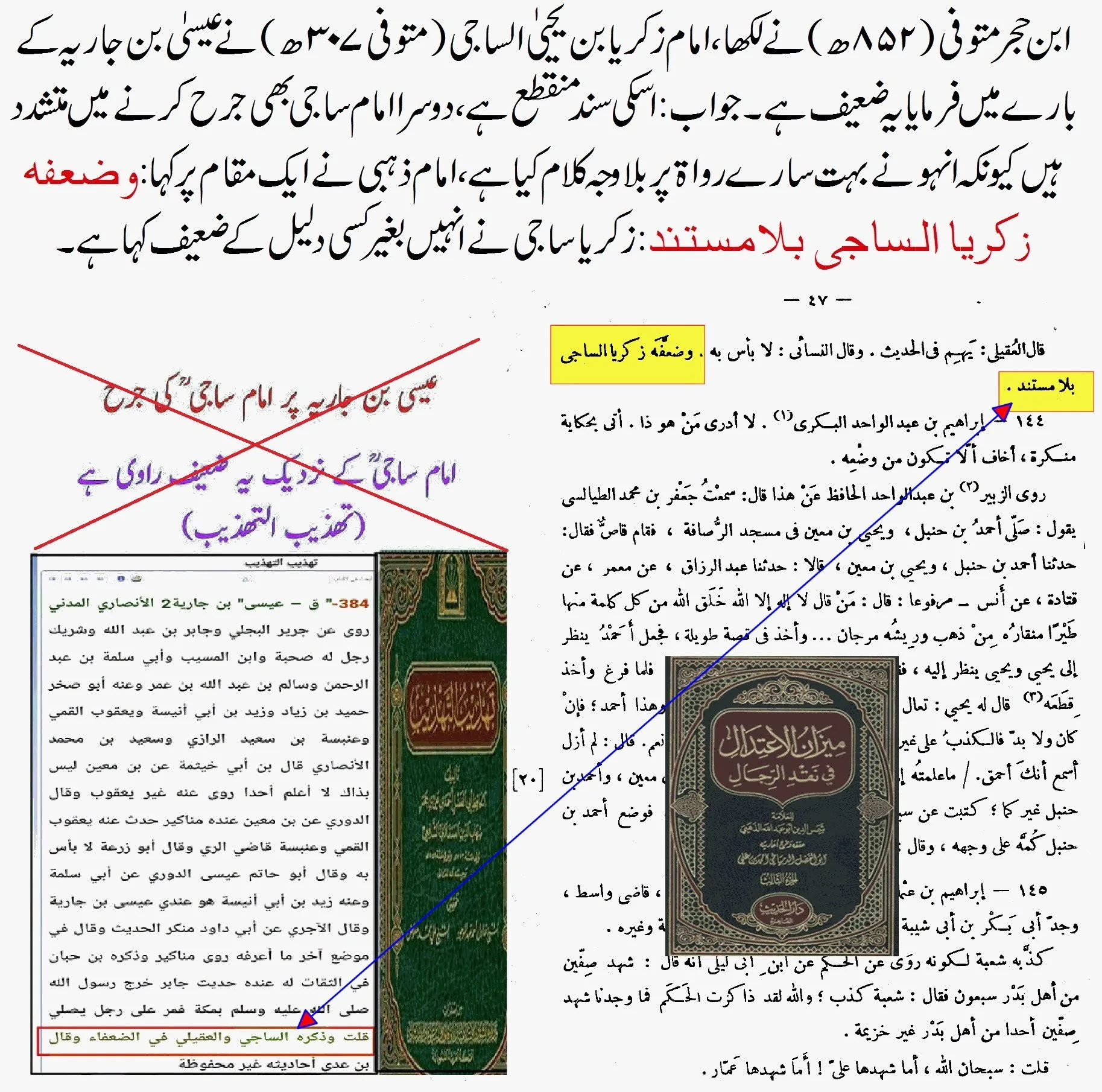
04- "Munkar" in the Book of Al-Nasa'i
In Al-Du'afa wal-Matrukin of Al-Nasa'i, the following phrase appears:
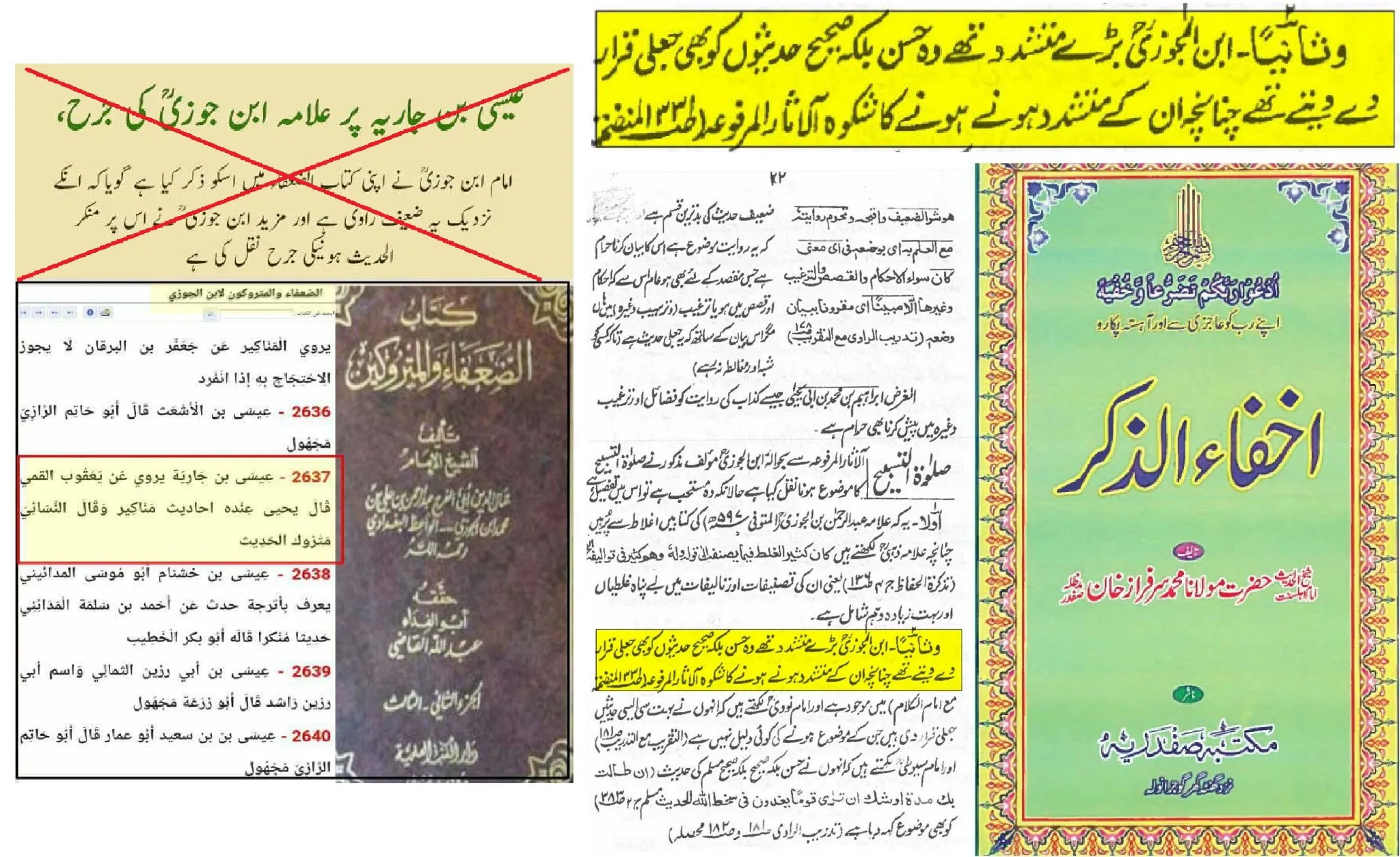
عيسى بن جارية يروي عنه يعقوب القمي: منكر.
Reference: Al-Du'afa wal-Matrukin of Al-Nasa'i
This criticism exists in its place, but its consequence is that the narrator's unique narration will be subject to scrutiny, not that he must necessarily be classified as "abandoned hadith narrator," especially when certifications like "no harm in him" and "his place is truthful" exist, and on some chains, the Imams have also ruled "good/hasan isnad."
05- The Claim of "Matrook al-Hadith"
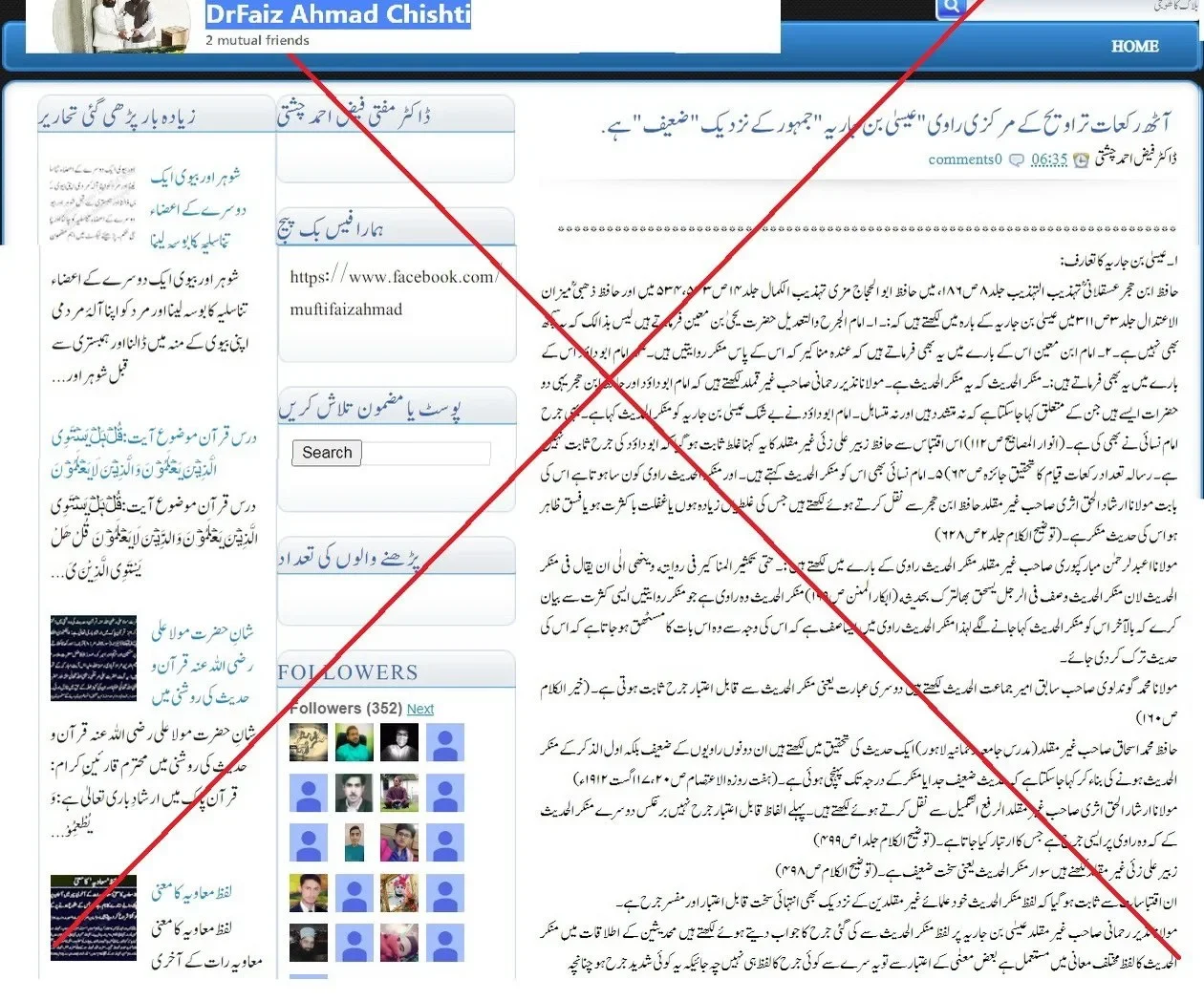
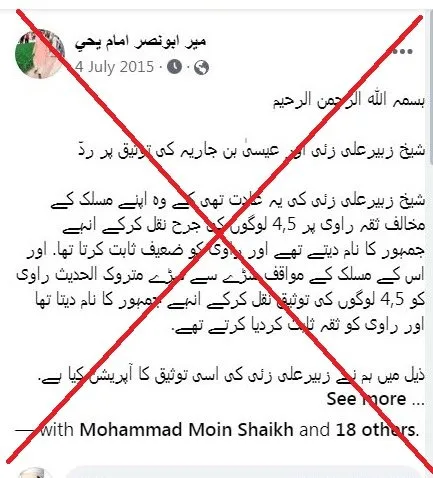
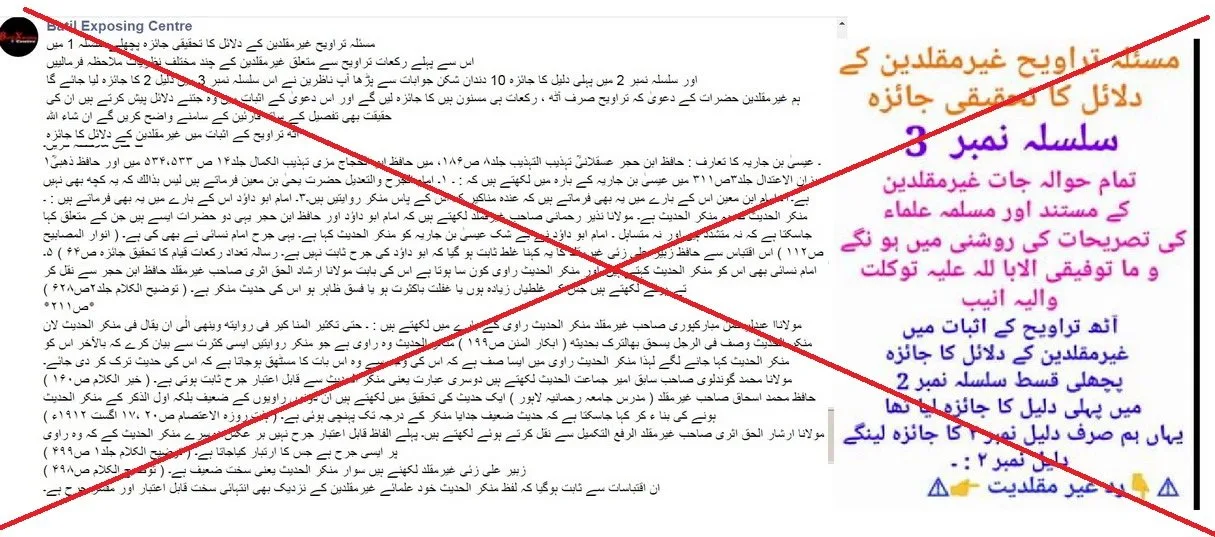
As far as the attribution of "Matrook al-Hadith" is concerned, there are numerous statements by the majority in favor of Isa bin Jariya, and many Imams have expressed "praise/approval" for him. In contrast, very strong and explicit evidence is required for a severe criticism like "Matrook." Therefore, the prevailing view is that it is not correct to establish the most severe ruling against Isa bin Jariya and reject the support of the majority.
Conclusion
1. There are strong evidences in favor of Isa bin Jariya such as Abu Zur'ah's "No harm in him," Al-Khalili's "Trustworthy," Ibn Hibban's mention in "Al-Thiqat" and his use as proof in "Sahih," Ibn Khuzaymah's narration and reasoning in his "Sahih," Al-Mundhiri's "Good chain," and Ibn Hajar's "Good chain" in Fath al-Bari.
2. On the other hand, some criticisms come under the title of "Munkar" (rejected), and these are generally understood in principle as "Isolated/Not to be used alone" rather than necessarily meaning "Abandoning the hadith."
3. Therefore, the stronger view is that Isa bin Jariya is not "abandoned," but rather "has some weakness" and is reliable, and his narration, with evidences and corroborations, reaches the level of Hasan (good), while in cases of isolation, it remains under consideration.
Last edited:

