Compiled by: Abu Hamzah Salafi
Introduction
Some Hanafi followers claim that placing the hands on the chest during Salah is incorrect. They often cite statements attributed to Imām Ibn al-Qayyim رحمه الله and Imām Aḥmad ibn Ḥanbal رحمه الله, which allegedly label this practice as makrūh (disliked).
In this article, we will critically examine such claims and evaluate:
① Whether Ibn al-Qayyim and Imām Aḥmad truly declared placing the hands on the chest as makrūh.
② The actual linguistic meaning of Takfīr and whether it applies to placing hands on the chest in prayer.
③ Authentic evidences from Imāms and Muḥaddithīn affirming the placement of hands on the chest during prayer.
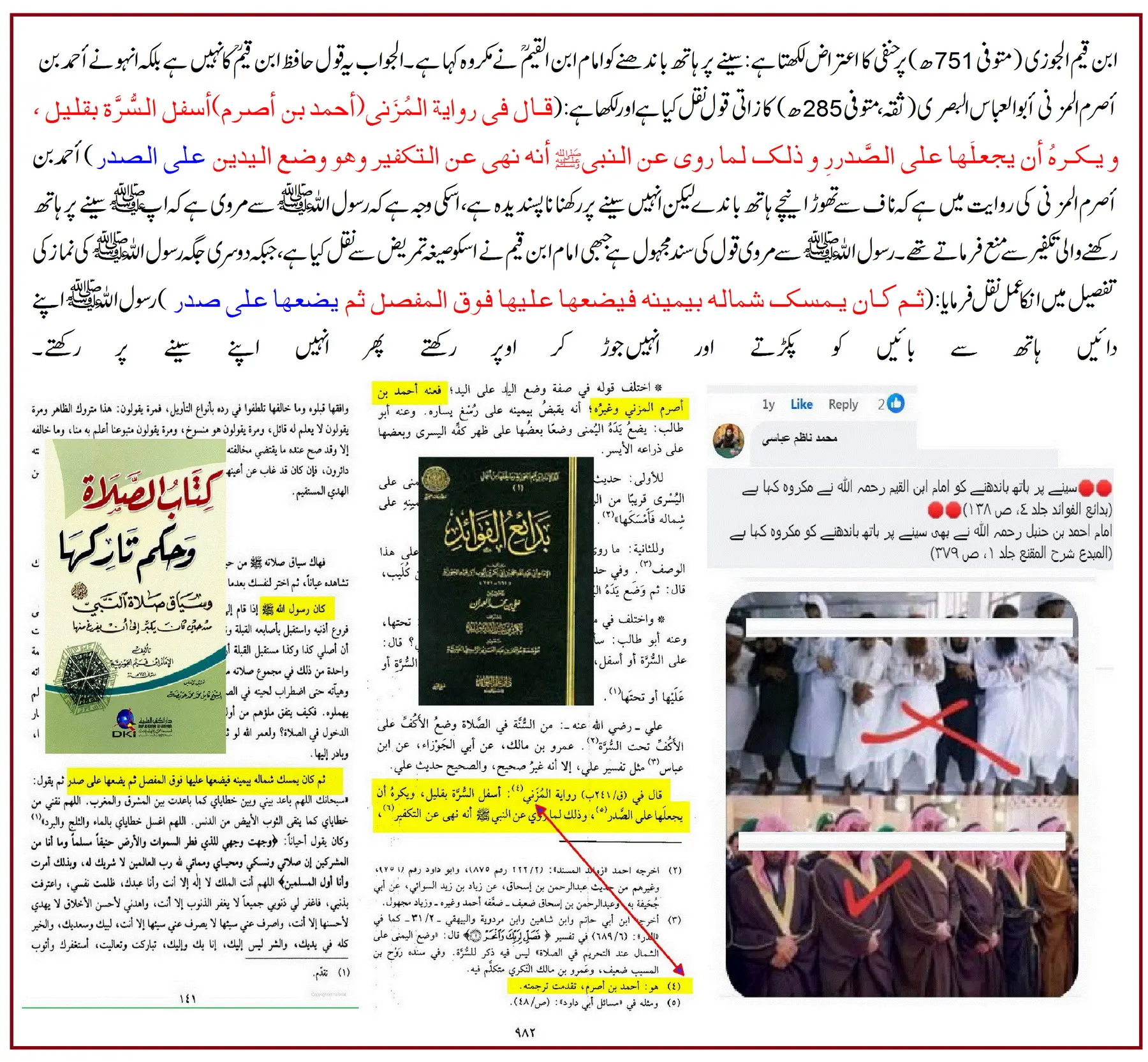
❖ The Truth Behind the Statement Attributed to Ibn al-Qayyim رحمه الله
1. Original Text from Badā’iʿ al-Fawā’id
"اختلف قوله في صفة وضع اليد على اليد، فعنه أحمد بن أصرم المزني وغيره: أنه يقبض بيمينه على رسغ يساره … في رواية المزني: ‘أسفل السرة بقليل ويكره أن يجعلهما على الصدر’، وذلك لما روي عن النبي صلى الله عليه وسلم أنه نهي عن التكفير، وهو وضع اليد على الصدر.”
(Badā’iʿ al-Fawā’id by Ibn al-Qayyim)
Translation:
"There is a difference of opinion regarding the manner of placing one hand over the other. From Aḥmad ibn Aṣram al-Muzanī and others: he would grasp his left wrist with his right hand… In Muzanī’s narration: he placed the hands just below the navel, and it is makrūh to place them on the chest, as it has been reported that the Prophet ﷺ prohibited Takfīr, which is placing the hands on the chest."
 Important Point:
This is not the statement of Ibn al-Qayyim himself, but that of Aḥmad ibn Aṣram al-Muzanī (d. 285 AH).
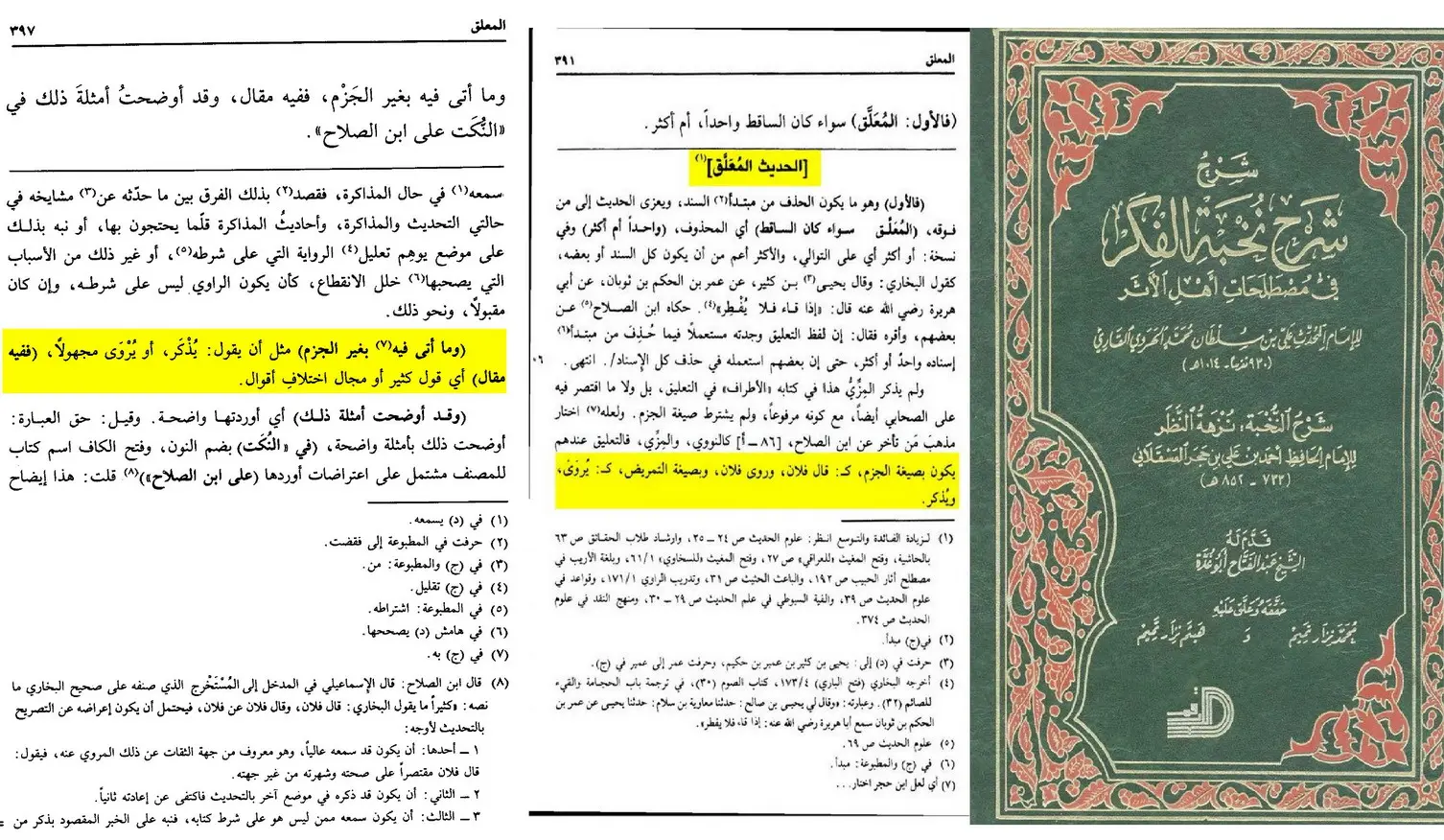
Moreover, the phrase "روِيَ" (it has been reported) is used, which is a ** صيغة تمريض** (form of weakening), indicating a weak or unauthenticated report in the science of ḥadīth.
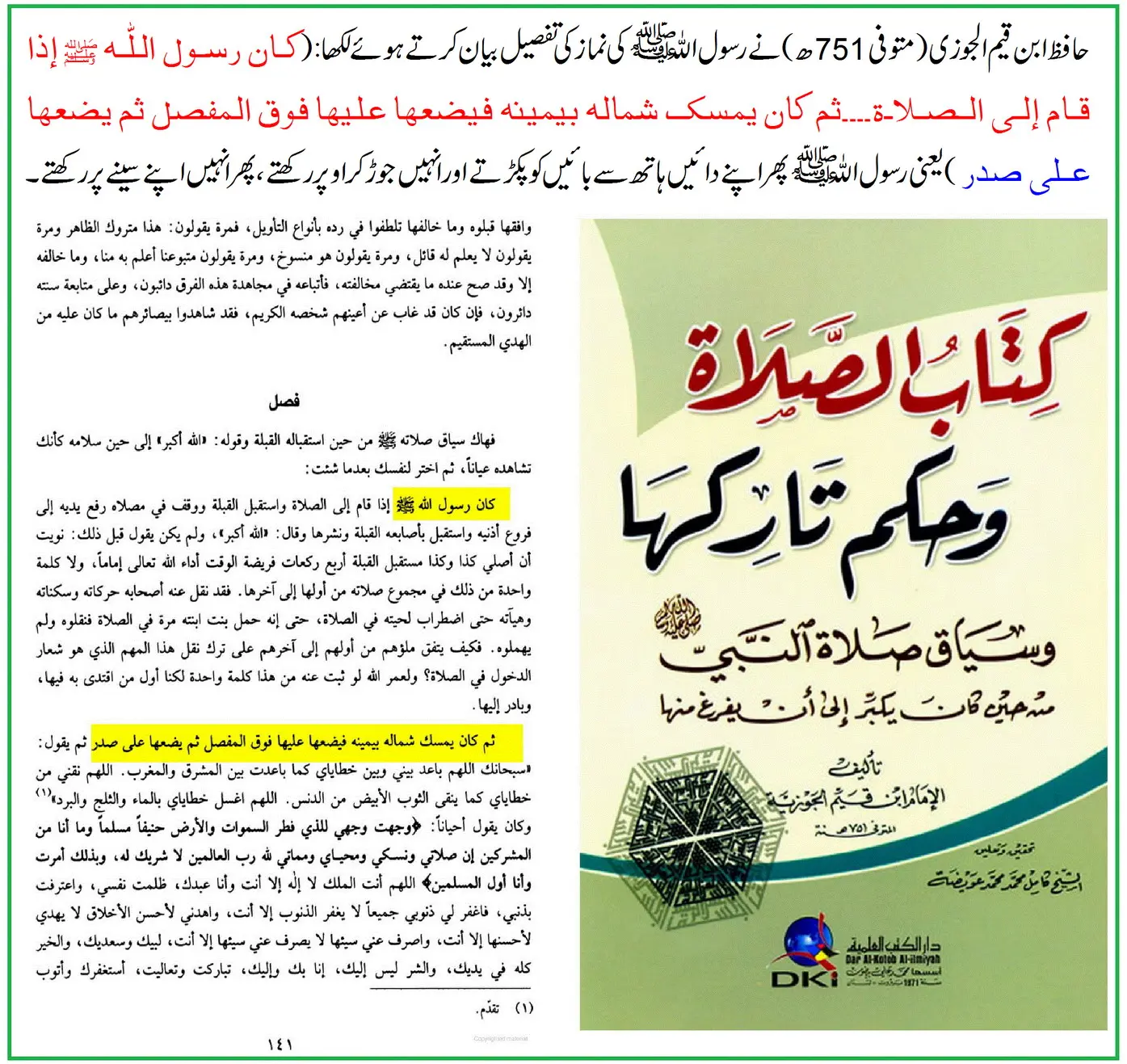
2. Ibn al-Qayyim's Own View on Hand Placement in Prayer
"ثم كان يمسك شماله بيمينه فيضعها عليها فوق المفصل ثم يضعها على صدره"
(al-Ṣalāh wa Aḥkām Tārikiha by Ibn al-Qayyim)
Translation:
"Then the Prophet ﷺ would grasp his left hand with his right hand above the wrist joint, and place them on his chest."
Conclusion:Ibn al-Qayyim himself affirmed that placing hands on the chest is part of the Sunnah. Therefore, the view that it is makrūh is not his own stance.
❖ Investigation into the Statement Attributed to Imām Aḥmad رحمه الله
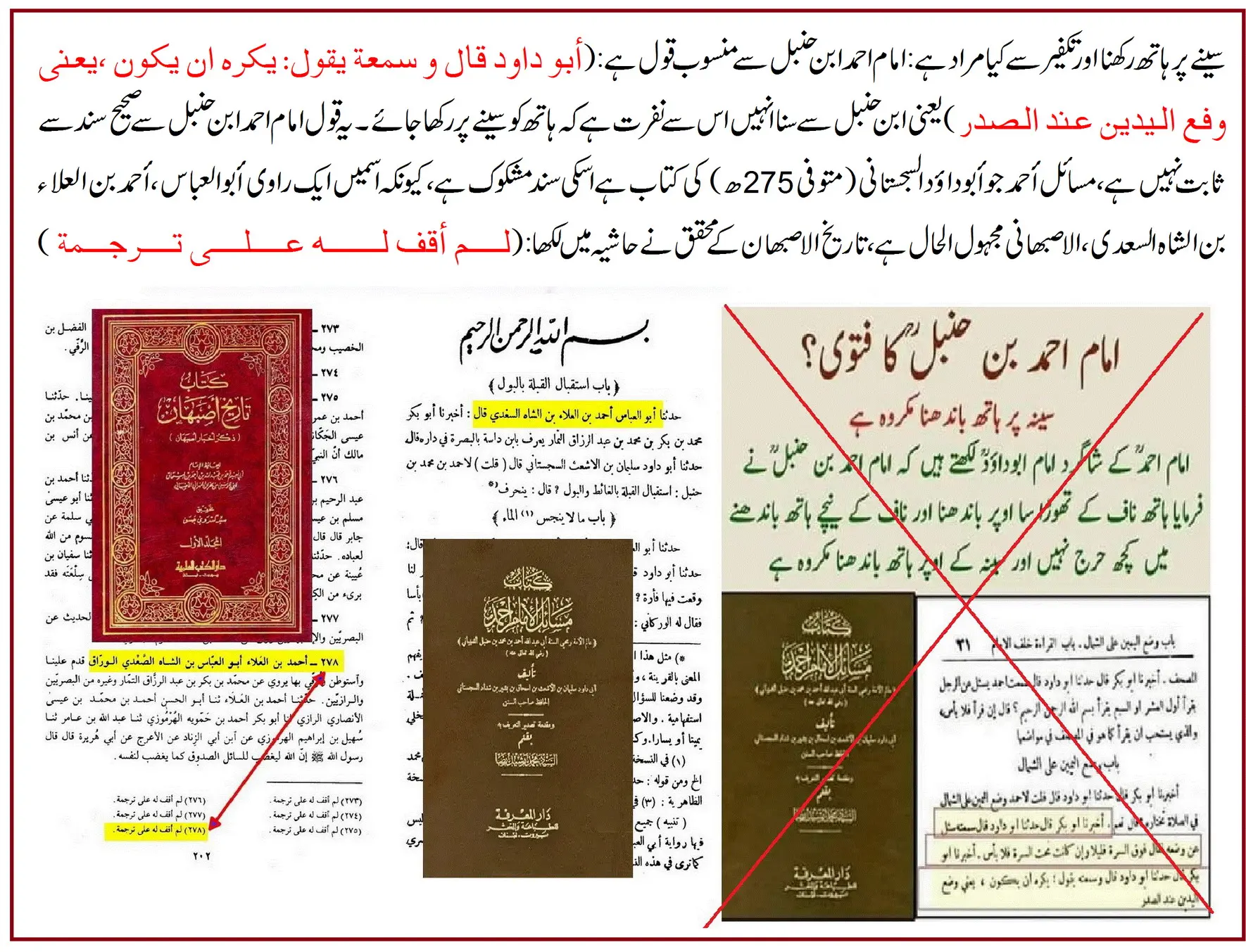
1. Statement in Masā’il Imām Aḥmad - Riwayah Abī Dāwūd
"وَسَمِعْتُهُ، يَقُولُ: يَكْرَهُ أَنْ يَكُونَ، يَعْنِي: وَضْعَ الْيَدَيْنِ عِنْدَ الصَّدْرِ"
(Masā’il Imām Aḥmad by Abū Dāwūd al-Sijistānī)
Translation:
"I heard him (Imām Aḥmad) saying: it is makrūh to place the hands near the chest."
Research Note:This narration is transmitted through Aḥmad ibn al-ʿAlāʾ ibn al-Shāh al-Sughdī, who is unknown (majhūl). Thus, due to the weak chain, this report is not reliable evidence.
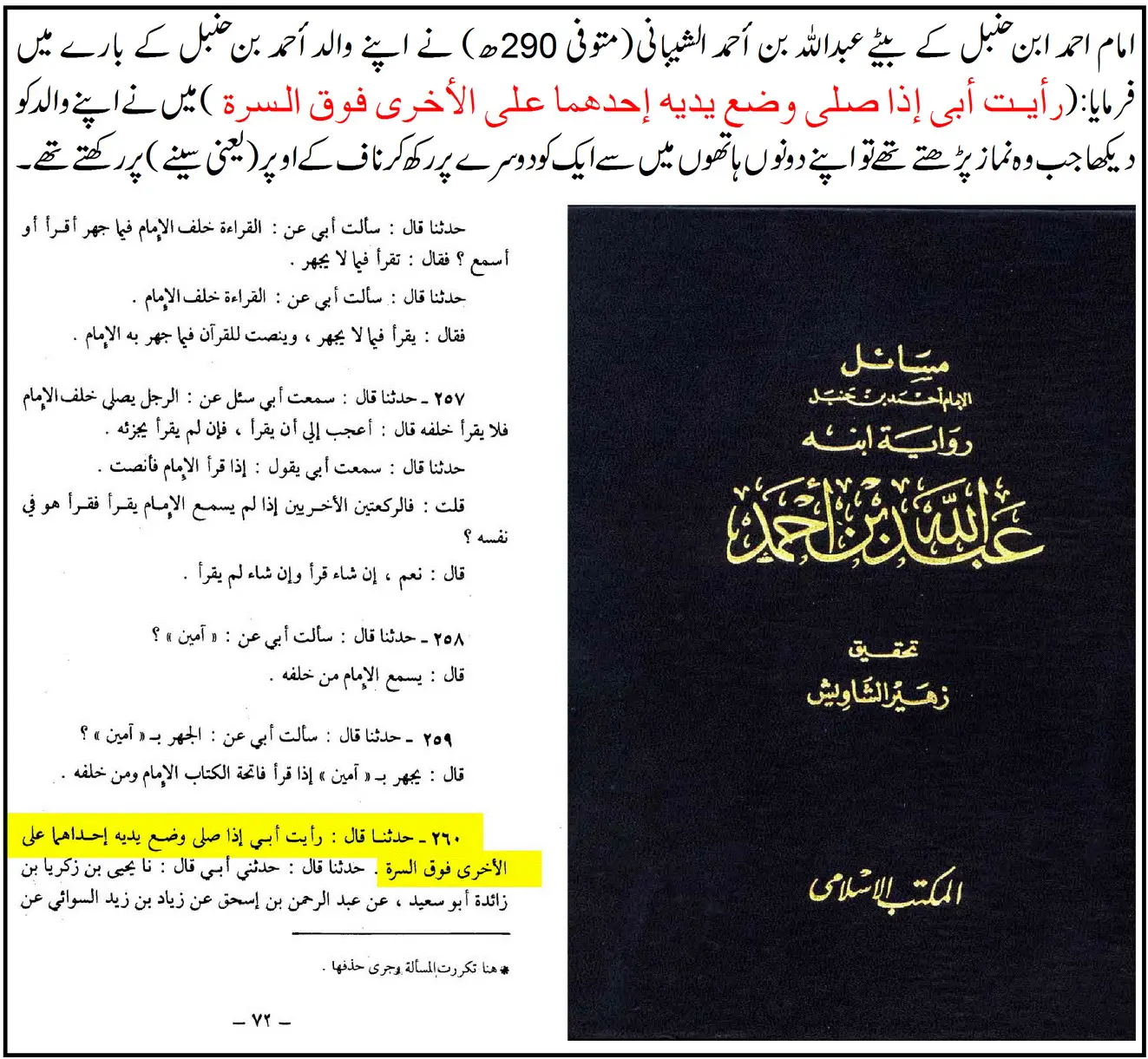
2. Imām Aḥmad’s Practice – Narrated by His Son
"رَأَيْتُ أَبِي إِذَا صَلَّى وَضَعَ يَدَيْهِ إِحْدَاهُمَا عَلَى الْأُخْرَى فَوْقَ السُّرَّةِ"
(Masā’il Aḥmad – Narrated by his son ʿAbdullāh, no. 260)
Translation:
"I saw my father (Imām Aḥmad) when he prayed, placing one of his hands over the other above the navel."
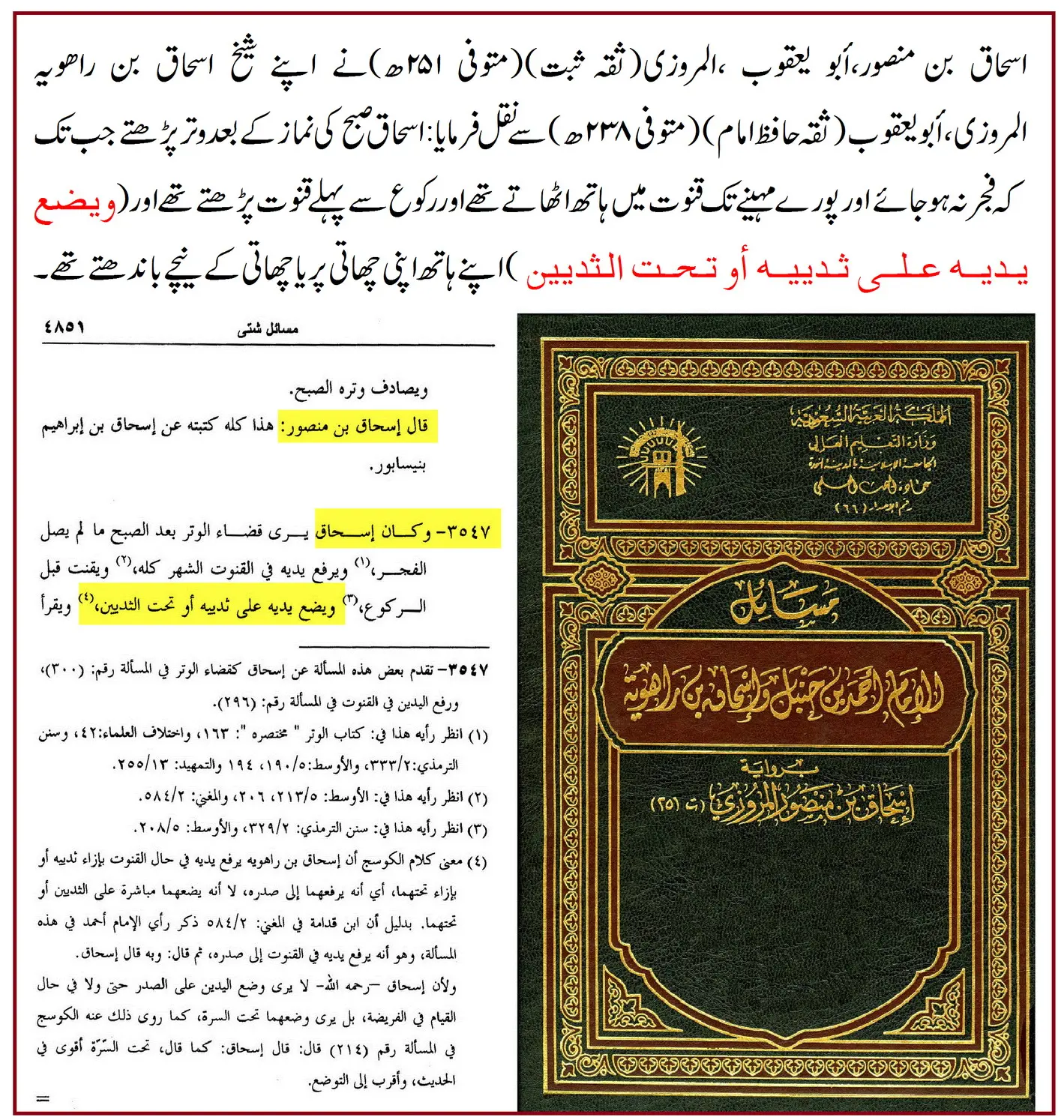
"Above the navel" refers to the area close to the chest, and does not contradict placing hands on the chest—especially when some narrations explicitly mention ‘على صدره’ (on his chest).3. Practice of Imām Isḥāq ibn Rāhūyah – A Contemporary of Imām Aḥmad
"ويضع يديه على ثدييه أو تحت الثديين"
(Masā’il of Imām Aḥmad and Isḥāq ibn Rāhūyah, no. 3547)
Translation:
"He (Imām Isḥāq) would place his hands on his chest or beneath his chest."
Imām Isḥāq's methodology was close to Imām Aḥmad’s, indicating agreement or consistency in practice.4. Imām Aḥmad's Principle on Leaving the Sunnah
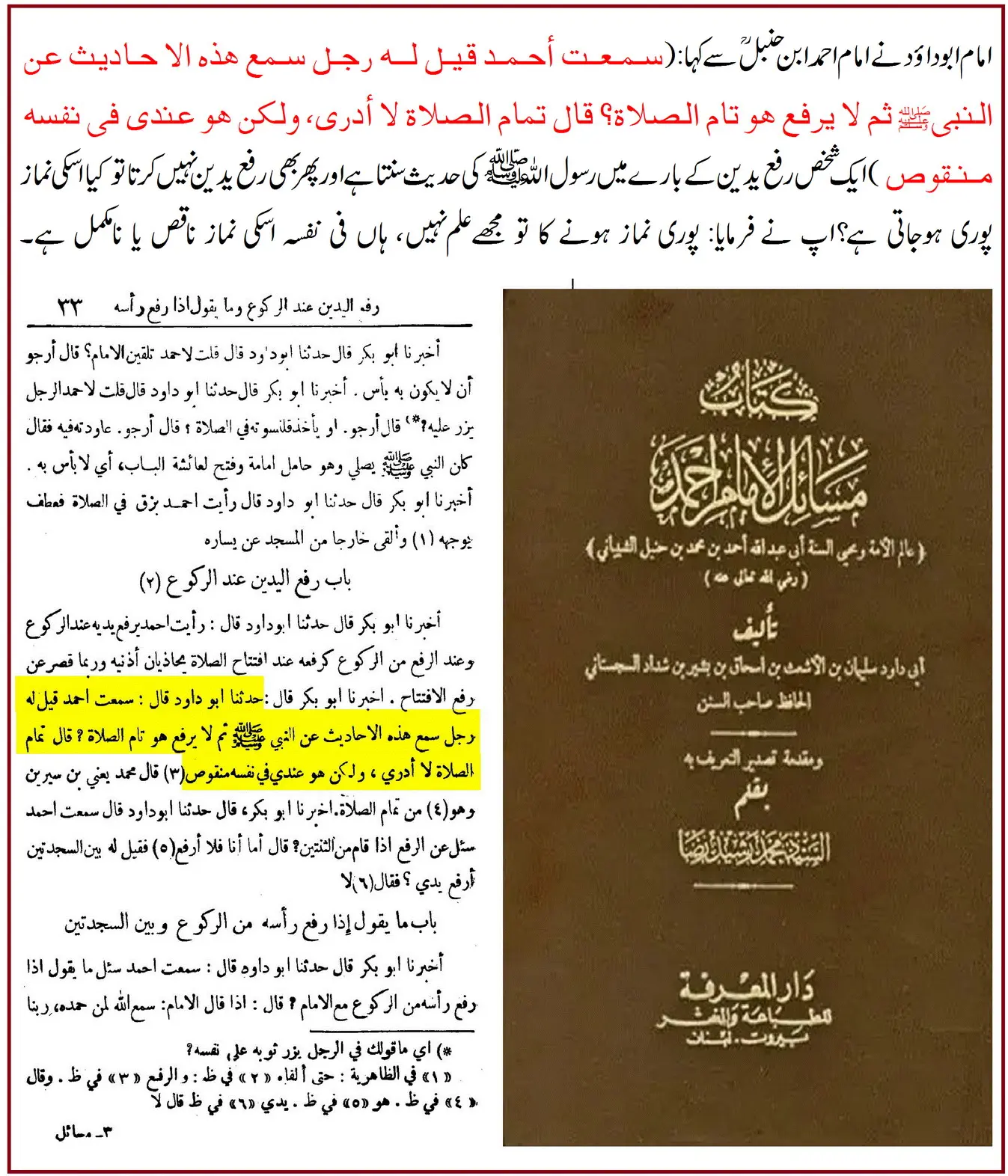
"سَمِعْتُ أَحْمَدَ، قِيلَ لَهُ: رَجُلٌ سَمِعَ هَذِهِ الْأَحَادِيثَ … قَالَ: تَمَامُ الصَّلَاةِ لَا أَدْرِي، وَلَكِنْ هُوَ عِنْدِي فِي نَفْسِهِ مُنْقَصٌ غَرِّضٌ"
(Masā’il Abī Dāwūd)
Translation:
"I heard Aḥmad being asked: A man hears the aḥādīth of the Prophet ﷺ and does not follow them—Is his prayer complete? He replied: I do not know if the prayer is complete, but to me, the person himself is deficient and flawed."
Insight:This shows Imām Aḥmad's general stance on abandoning the Sunnah, which would also apply to placing hands as practiced by the Prophet ﷺ.
❖ The Meaning of Takfīr: Linguistically & Jurisprudentially
Some critics among the Ḥanafīs argue that placing hands on the chest is "Takfīr", and that it is prohibited. Below is a linguistic clarification:
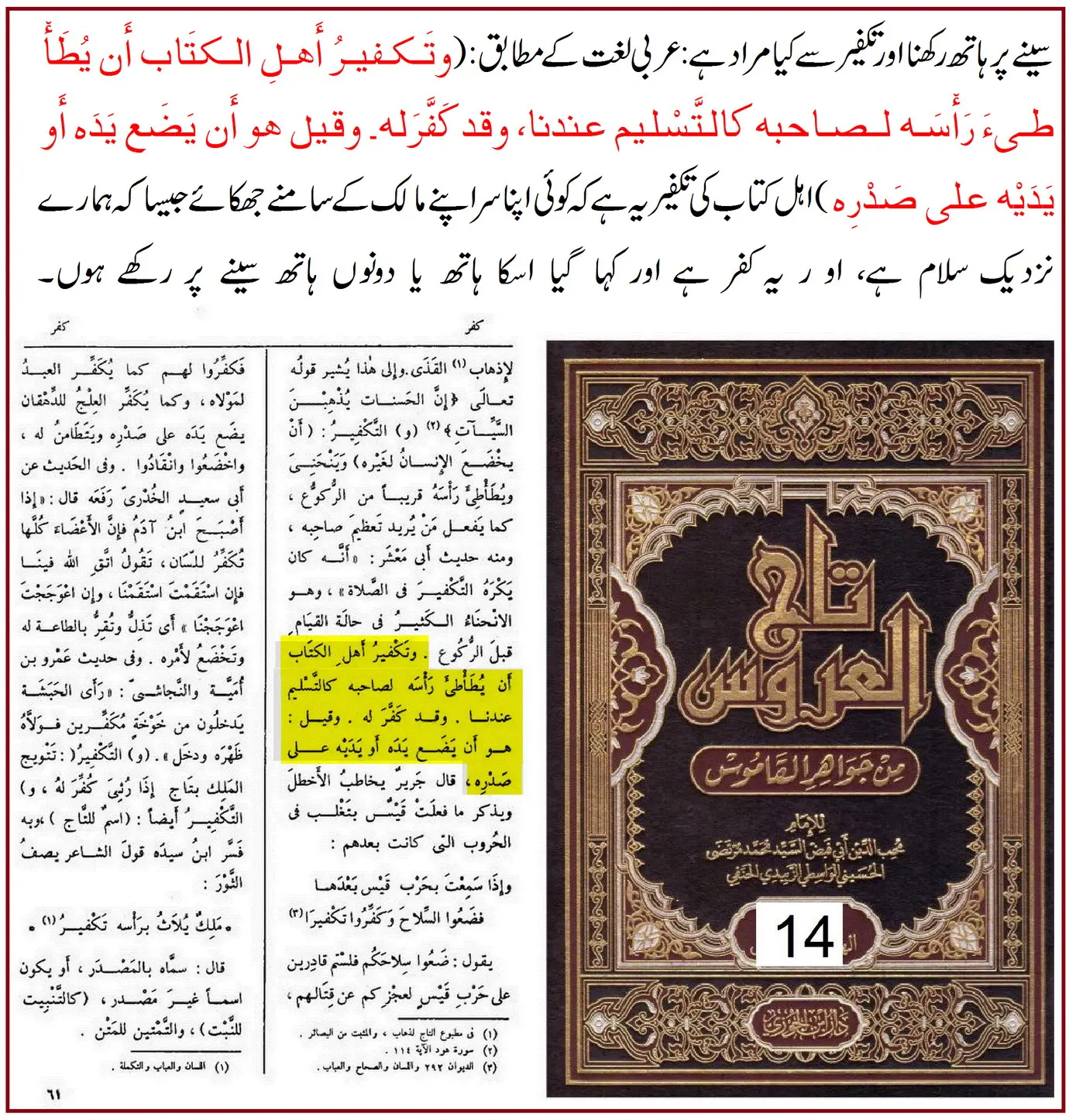
1. Tāj al-ʿArūs – al-Zabīdī
"وقيل: هُوَ أَن يَضَعَ يَدَه أَو يَدَيْه على صَدْرِه"
(Tāj al-ʿArūs by al-Zabīdī)
Translation:
"It is said that Takfīr means to place one's hand or both hands on the chest—in the sense of humility before a master, not in prayer."
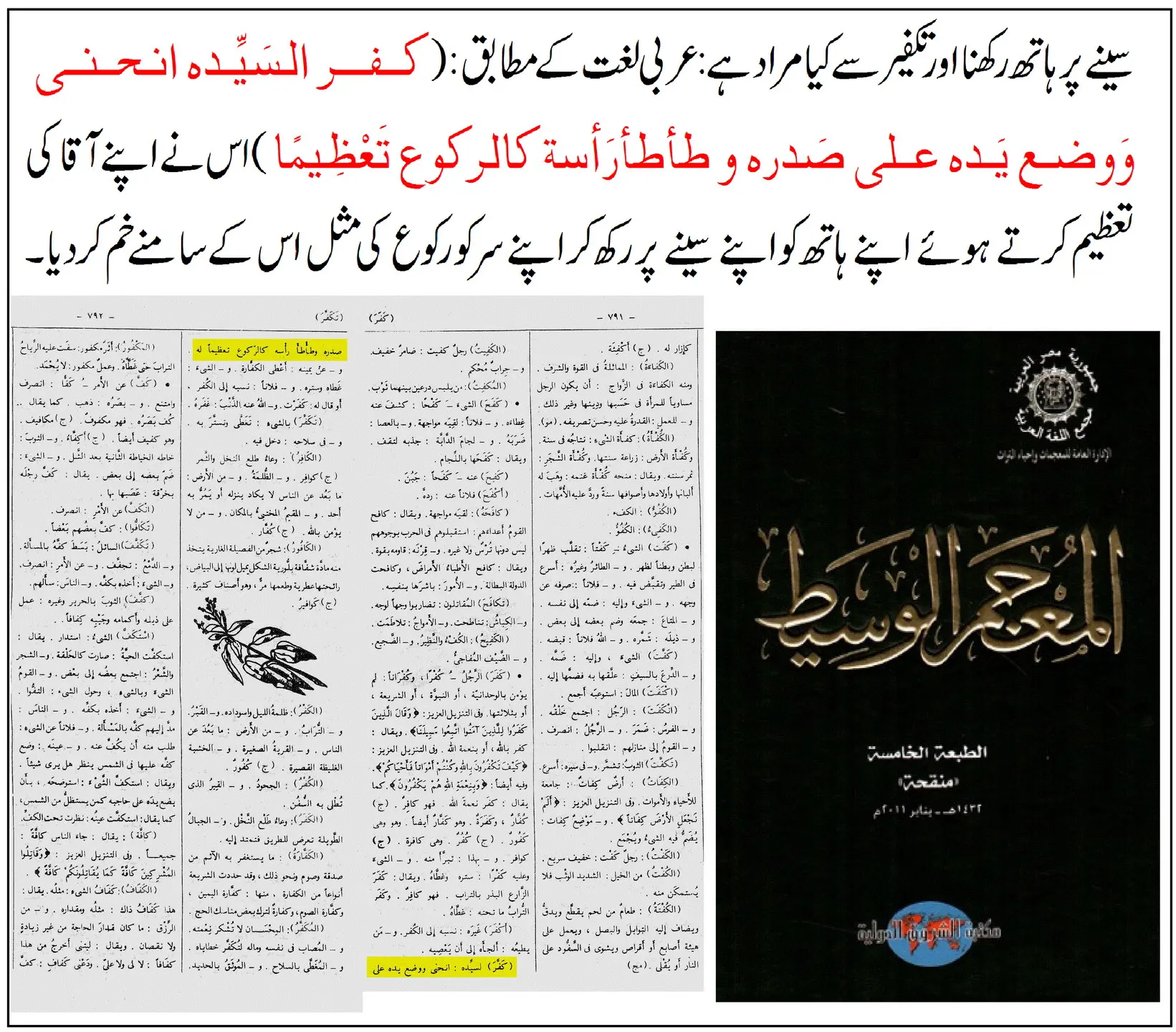
2. al-Muʿjam al-Wasīṭ
"انحنى وَوضع يَده على صَدره وطأطأ رَأسه كالركوع تَعْظِيمًا"
Translation:
"He bowed, placed his hand on his chest, and lowered his head like in rukūʿ — as an act of reverence."
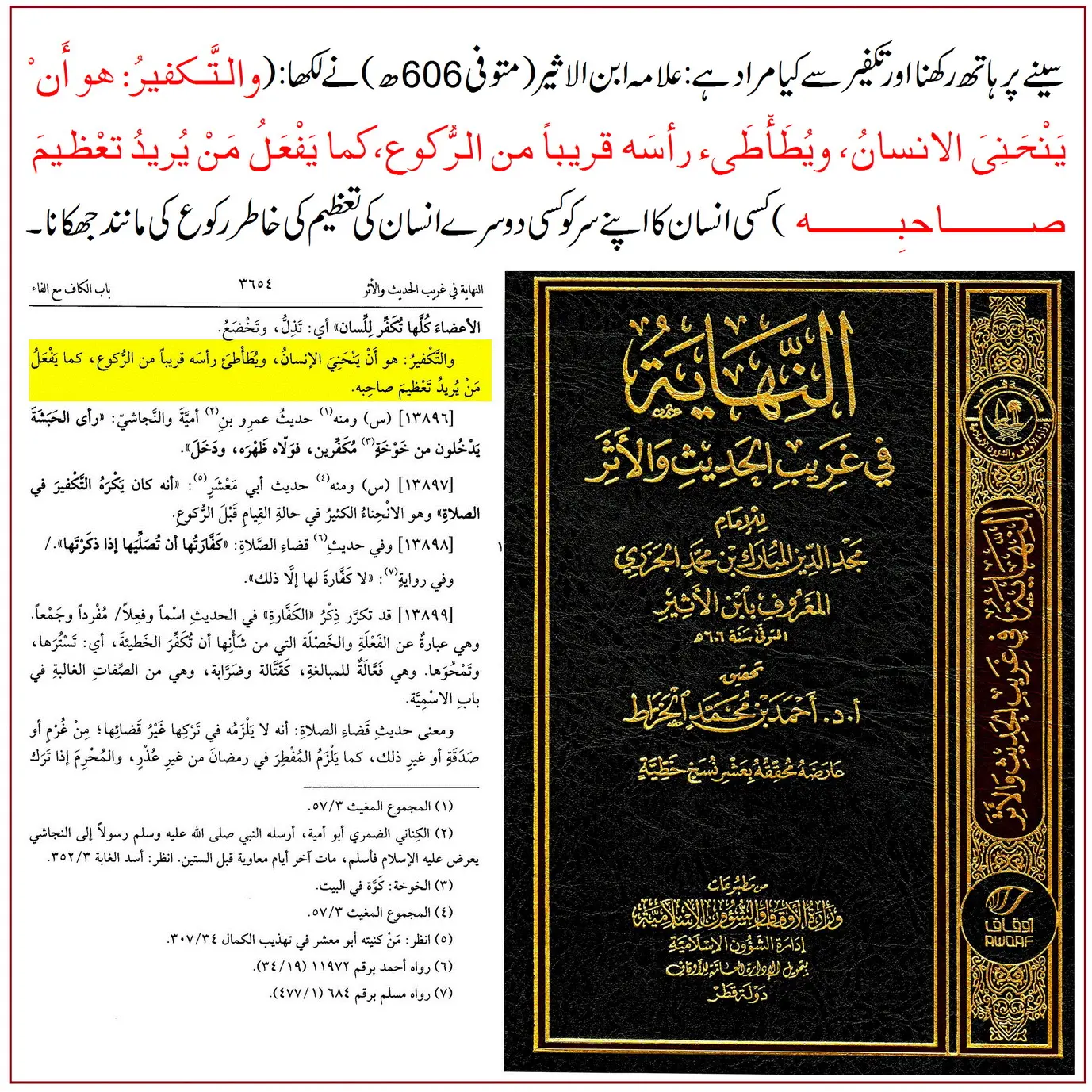
3. al-Nihāyah fī Gharīb al-Ḥadīth – Ibn al-Athīr
"كَمَا يَفعل مَنْ يُريد تَعْظِيم صاحِبه"
Translation:
"As one does to glorify a human being—not for Allah."
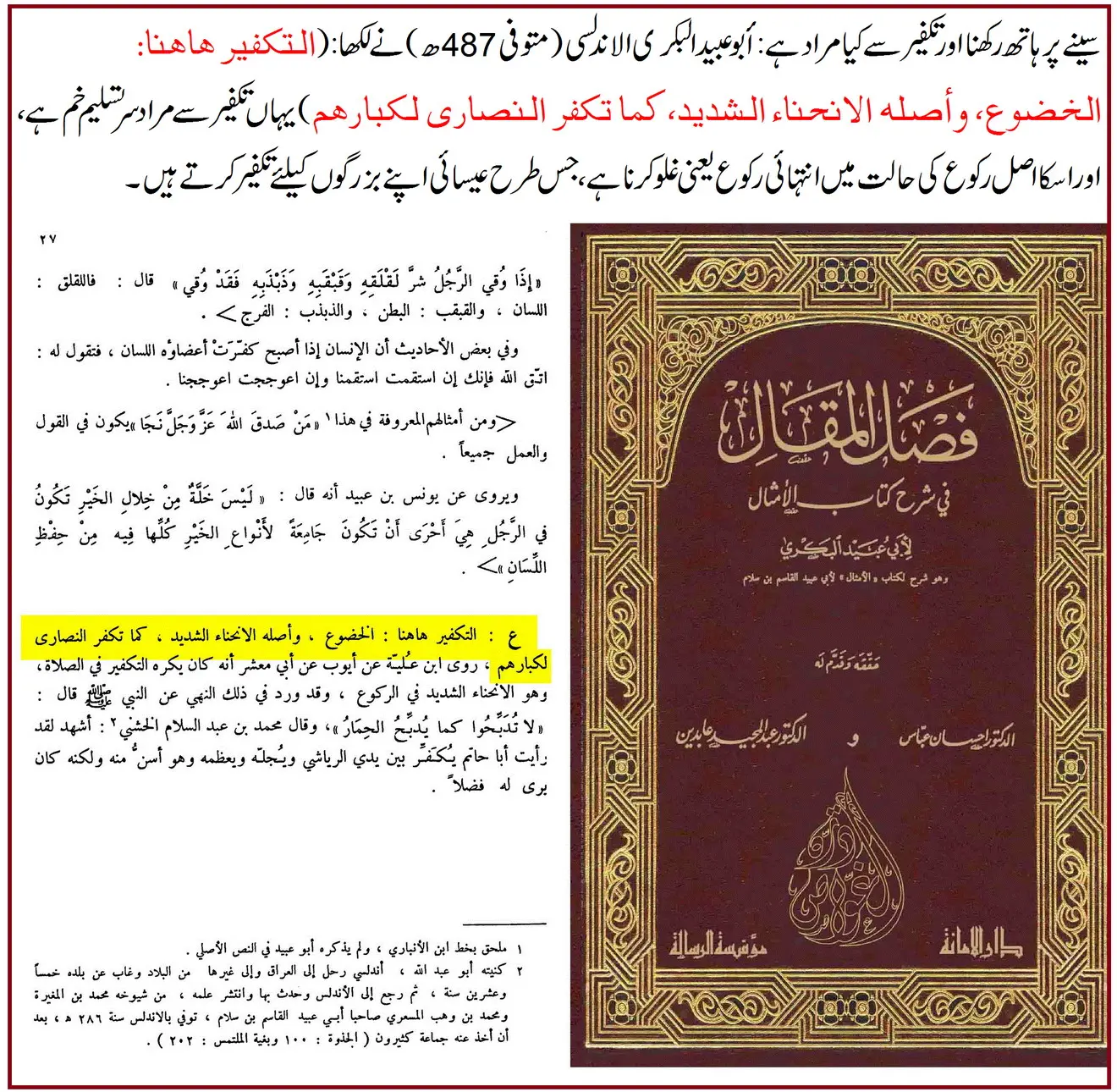
4. Faṣl al-Maqāl – Abū ʿUbayd al-Andalusī
"التكفير هاهنا: الخضوع، وأصله الانحناء الشديد، كما تكفر النصارى لكبارهم"
Translation:
"Takfīr here means submission by severe bowing, just as Christians do to their seniors."
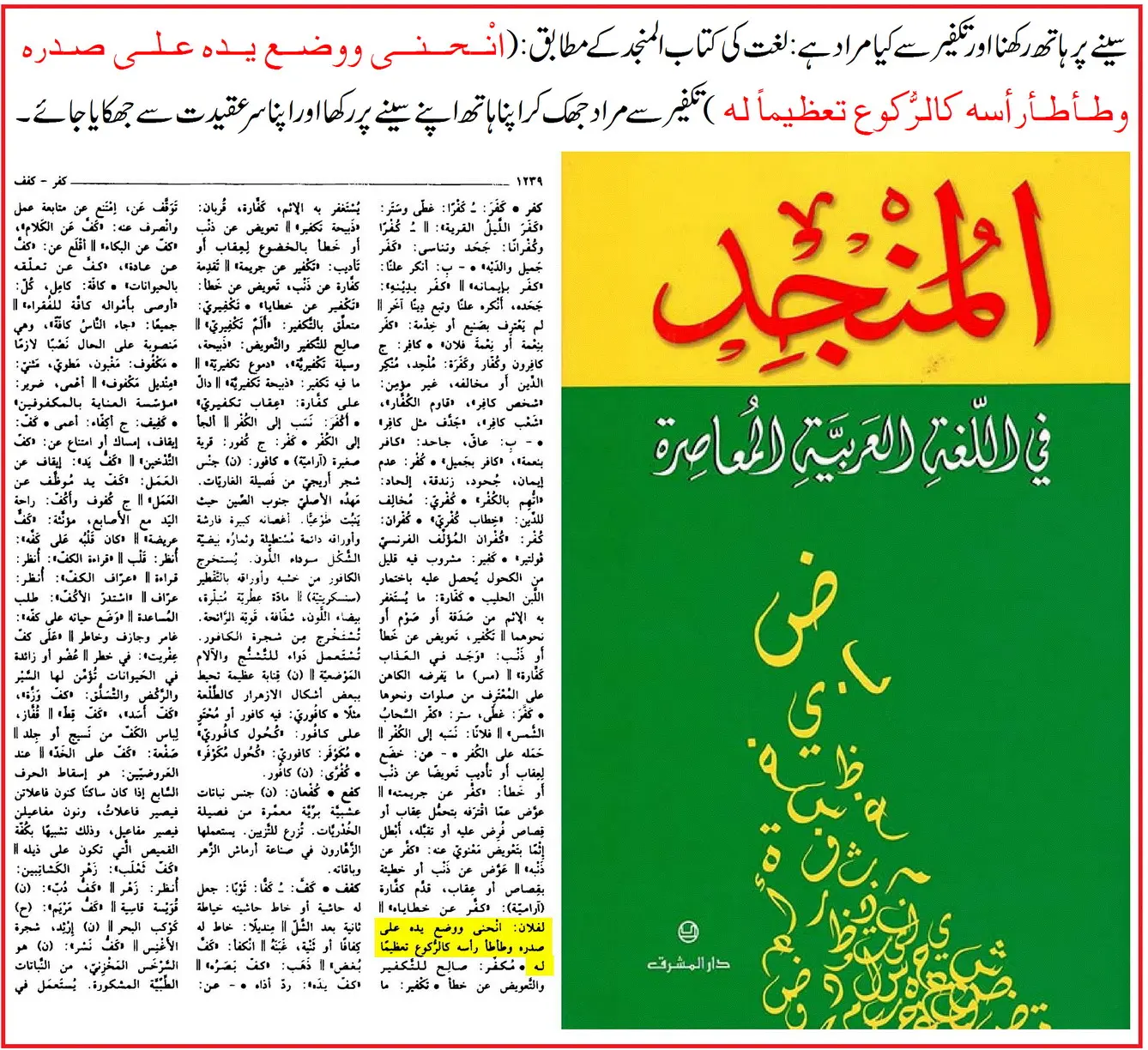
5. al-Munjid fī al-Lughah
"انحنى وَوضع يَده على صَدره وطأطأ رَأسه كالركوع تَعْظِيمًا"
Same meaning repeated – Reverence to other than Allah.
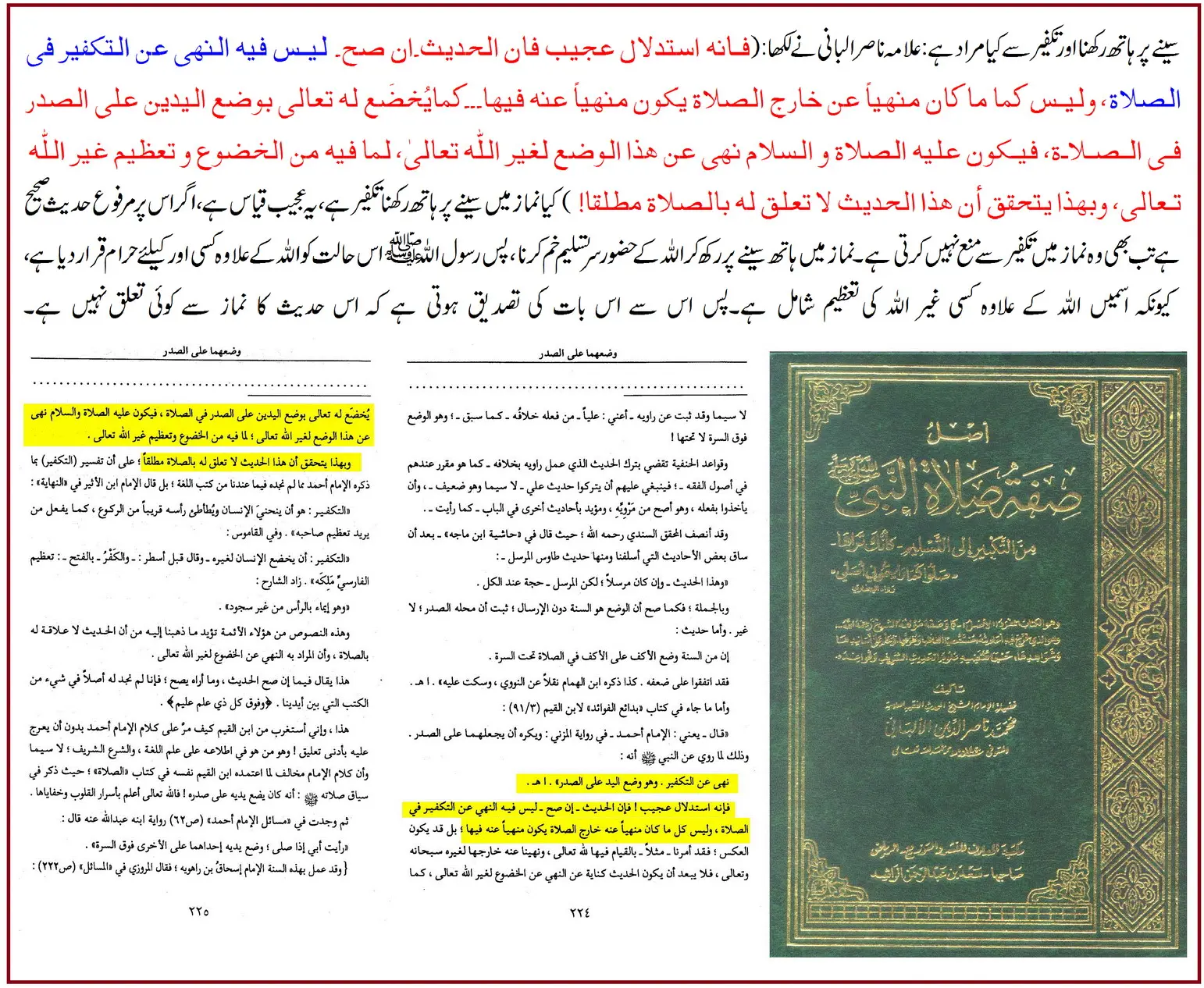
6. Explanation by Shaykh Nāsir al-Dīn al-Albānī رحمه الله
"فإن الحديث – إن صح – ليس فيه النهي عن التكفير في الصلاة … بل قد يكون العكس"
Translation:
"Even if the ḥadīth is authentic, it does not prohibit placing the hands on the chest in prayer, but rather forbids doing so before others out of reverence. Thus, the ḥadīth has no relevance to prayer at all."
Conclusion:The term Takfīr is linguistically linked to bowing in reverence before others, not to placing hands on the chest in Salah for Allah.
❖ Evidence from Ḥanafī Scholars Supporting Placing Hands on the Chest
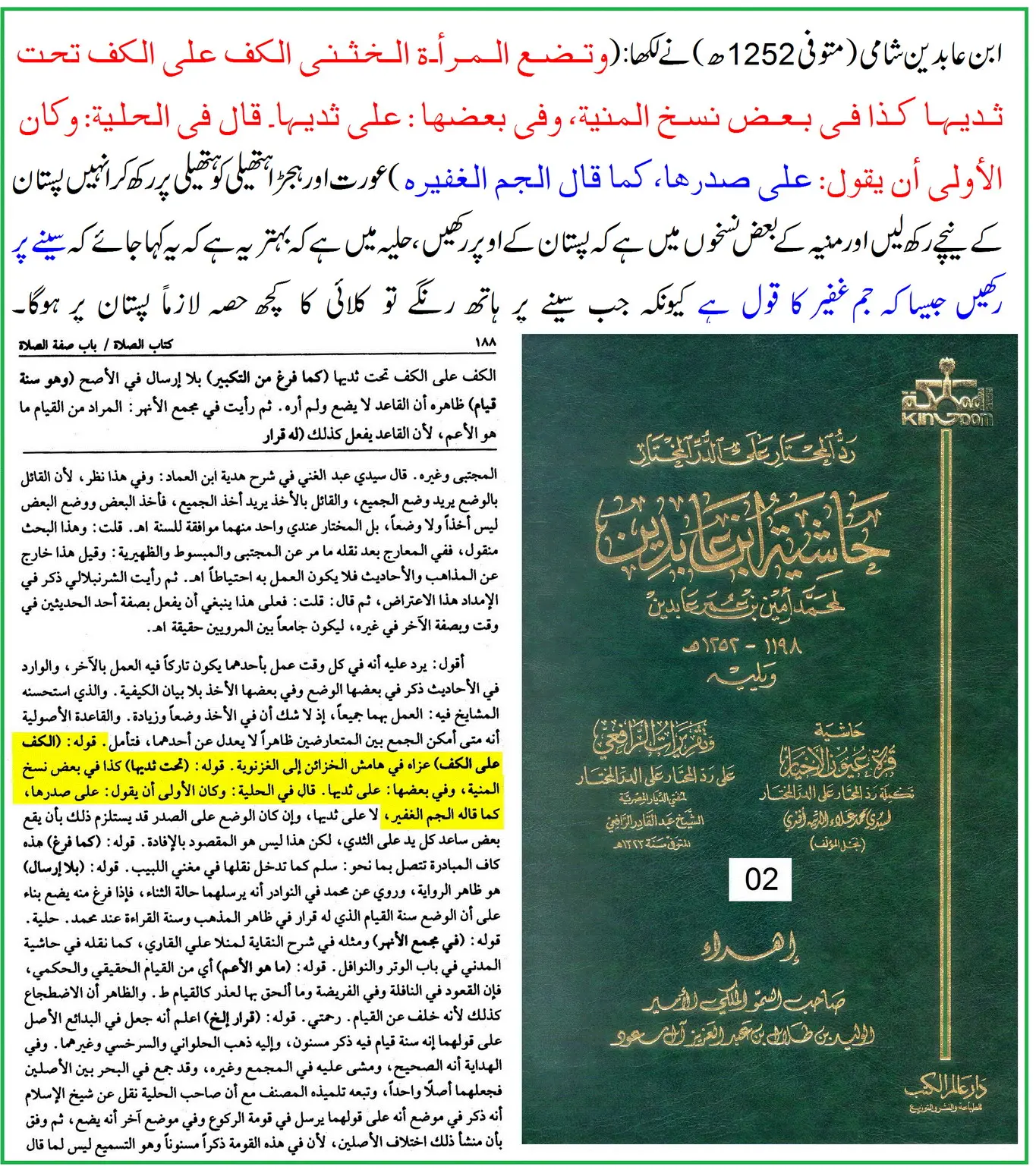
1. Imām Ibn ʿĀbidīn al-Shāmī رحمه الله (d. 1252 AH)
"وكان الأولى أن يقول: على صدرها كما قاله الجم الغفير …"
Translation:
"It would have been better to say 'on her chest' as stated by the majority."
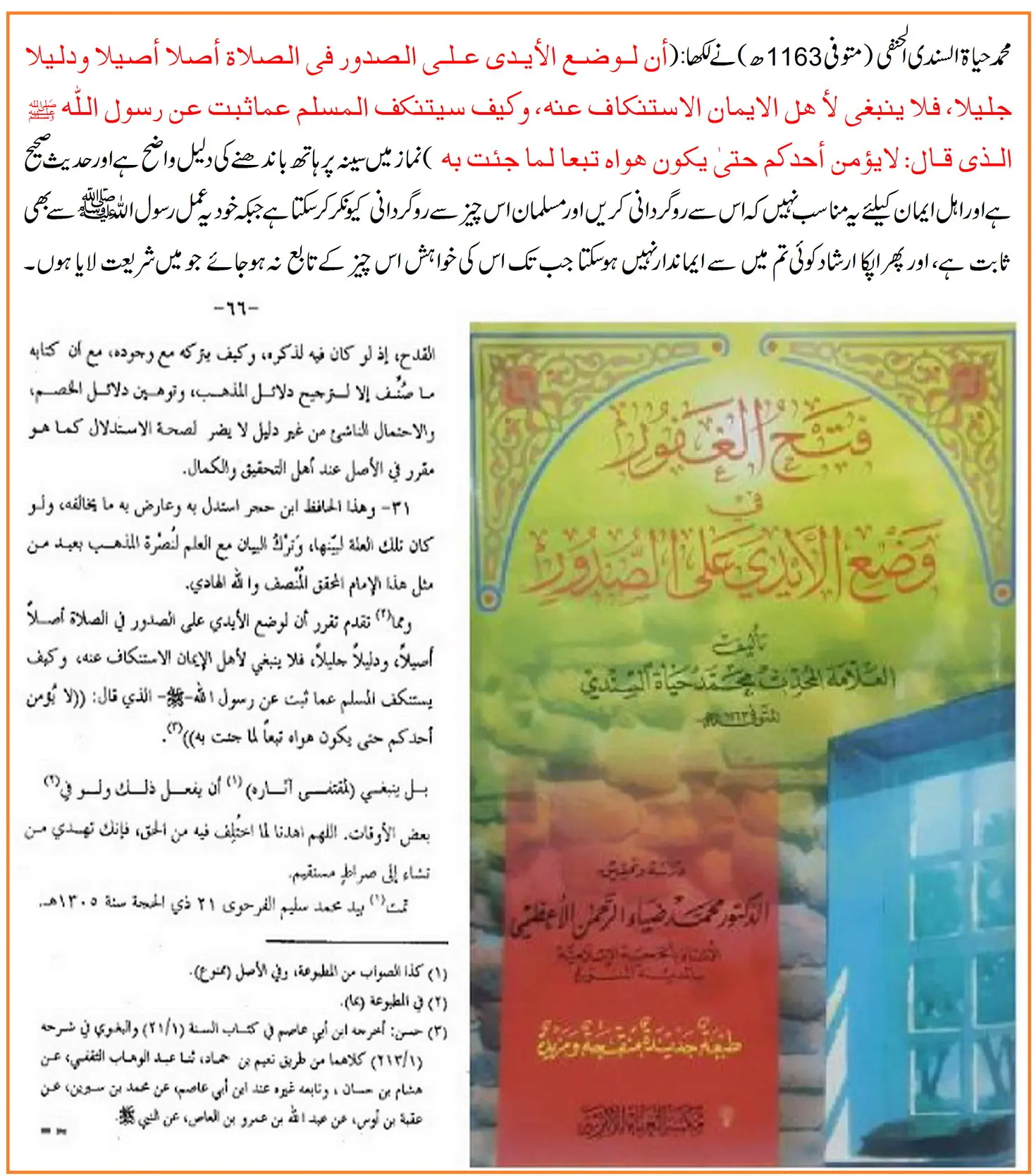
If placing hands on the chest was prohibited, why would Imām Shāmī direct women to do so?2. Imām Muḥammad Ḥayyāt al-Sindhī al-Ḥanafī رحمه الله (d. 1163 AH)
"أن لوضع الأيدى على الصدور في الصلاة أصلا أصيلا ودليلا جليلا"
Translation:
"Placing the hands on the chest in prayer has a firm and clear proof, and believers should not refrain from it, especially when it is proven from the Prophet ﷺ."
 Conclusion & Summary
From the above detailed research, the following truths emerge:
① Ibn al-Qayyim did not say placing the hands on the chest is makrūh. He merely transmitted Aḥmad ibn Aṣram al-Muzanī’s view, based on a weak narration. His own writings confirm placing hands on the chest as Sunnah.
② The makrūh statement attributed to Imām Aḥmad is not authentic due to an unknown narrator. Other narrations from his son and contemporaries support placing hands above the navel, close to the chest.
③ The word "Takfīr" refers to bowing in reverence to others, not to the act of placing hands on the chest in prayer to Allah.
④ Senior Ḥanafī scholars like Ibn ʿĀbidīn Shāmī and Muḥammad Ḥayyāt al-Sindhī endorsed and considered this act established from the Sunnah.
Final Verdict:Claiming that placing hands on the chest during prayer is makrūh is unfounded, not proven from either Ibn al-Qayyim or Imām Aḥmad. The act is authentically established in the Sunnah and its prohibition based on Takfīr is misapplied linguistically and jurisprudentially.