
✍ Written by: Abu Hamzah Salafi
Among the Imams of Jarḥ wa Taʿdīl, Imām Yaḥyā ibn Maʿīn (d. 233 AH) holds an unparalleled position. His statements are given great importance among the scholars of ḥadīth. Numerous statements are also reported from him regarding Imām Abū Ḥanīfah رحمه الله and his students and companions. In some of them, Abū Ḥanīfah is described as weak in ḥadīth, and in others, some of his students are declared liars, zindīqs, or weak. In this article, those very statements are presented from their original sources to clarify why Imām Yaḥyā ibn Maʿīn stated that the scholars of ḥadīth would disregard Abū Ḥanīfah and his companions in matters of narration.
[Note: The authentication (tawthīq) of Imām Abū Ḥanīfah from Imām Yaḥyā ibn Maʿīn is not established. Details are discussed in this article.]
عَبَّاسُ بْنُ مُحَمَّدٍ الدُّورِيُّ قَالَ: سَمِعْتُ يَحْيَى بْنَ مَعِينٍ يَقُولُ:
«أَصْحَابُنَا يُفْرِطُونَ فِي أَبِي حَنِيفَةَ وَأَصْحَابِهِ»
فَقِيلَ لَهُ: أَكَانَ أَبُو حَنِيفَةَ يَكْذِبُ؟
فَقَالَ: «كَانَ أَنْبَلَ مِنْ ذَلِكَ».
Reference:
Translation:
ʿAbbās ibn Muḥammad al-Dūrī said: I heard Yaḥyā ibn Maʿīn saying:
“Our companions (the scholars of ḥadīth) are excessive regarding Abū Ḥanīfah and his companions.”
It was said to him: “Did Abū Ḥanīfah lie?”
He replied: “He was far nobler than that.”
سَمِعْتُ يَحْيَى بْنَ مَعِينٍ، وَسُئِلَ عَنْ أَبِي حَنِيفَةَ، فَقَالَ:
«كَانَ يُضَعَّفُ فِي الحَدِيث».
Reference:
Translation:
Muḥammad ibn ʿUthmān ibn Abī Shaybah said: I asked Yaḥyā ibn Maʿīn about Abū Ḥanīfah, and he said:
“He was considered weak in ḥadīth.”
مُحَمَّدُ بْنُ الْحَسَنِ صَاحِبُ أَبِي حَنِيفَةَ … سَمِعْتُ يَحْيَى بْنَ مَعِينٍ، يَقُولُ:
«مُحَمَّدٌ جَهْمِيٌّ كَذَّابٌ».
Reference:
Translation:
Regarding Muḥammad ibn al-Ḥasan al-Shaybānī (the companion of Abū Ḥanīfah), Yaḥyā ibn Maʿīn said:
“Muḥammad was a Jahmī and a liar.”
«وَحَسَنُ اللُّؤلُؤِي كَذَّابٌ».
Reference:
Translation:
Yaḥyā ibn Maʿīn said:
“Ḥasan al-Luʾluʾī is a liar.”
سَأَلْتُ يَحْيَى عَنْ نُوحِ بْنِ أَبِي مَرْيَمَ الخُرَاسَانِي، فَقَالَ:
«لَيْسَ بِثِقَةٍ».
Reference:
Translation:
I asked Yaḥyā about Nūḥ ibn Abī Maryam al-Khurāsānī, and he said:
“He is not trustworthy.”
سَمِعْتُ يَحْيَى يَقُولُ:
«يُوسُفُ بْنُ خَالِدٍ السَّمْتِي زِنْدِيقٌ كَذَّابٌ، لَا يُكْتَبُ عَنْهُ شَيْءٌ».
Reference:
Translation:
Yaḥyā ibn Maʿīn said:
“Yūsuf ibn Khālid al-Samtī is a zindīq and a liar. Nothing should be written from him.”
قَالَ يَحْيَى:
«أَبُو مُعَاذٍ البَلْخِي ضَعِيفٌ».
Reference:
Translation:
Yaḥyā ibn Maʿīn said:
“Abū Muʿādh al-Balkhī is weak.”
سَمِعْتُ يَحْيَى يَقُولُ:
«مِنْدَلٌ … فِيهِ ضَعْفٌ … لَيْسَ بِذَاكَ القَوِيِّ الشَّدِيد».
Reference:
Translation:
Yaḥyā ibn Maʿīn said:
“Mundil has weakness… he is not strong and firm.”
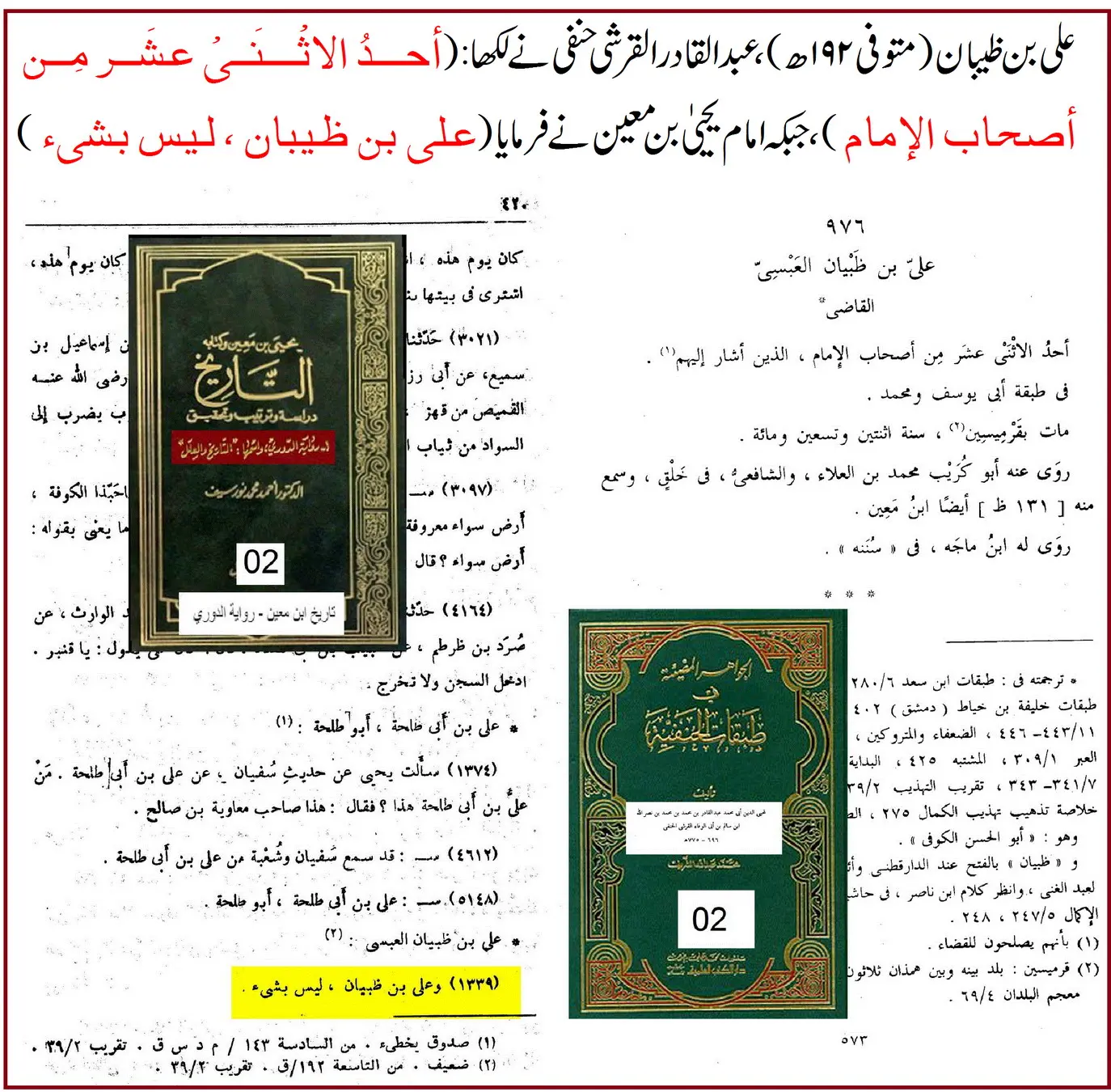
«عَلِيُّ بْنُ ظُبْيَانَ لَيْسَ بِشَيْءٍ».
Reference:
Translation:
Yaḥyā ibn Maʿīn said:
“ʿAlī ibn Ẓubyān is nothing (i.e., unreliable).”
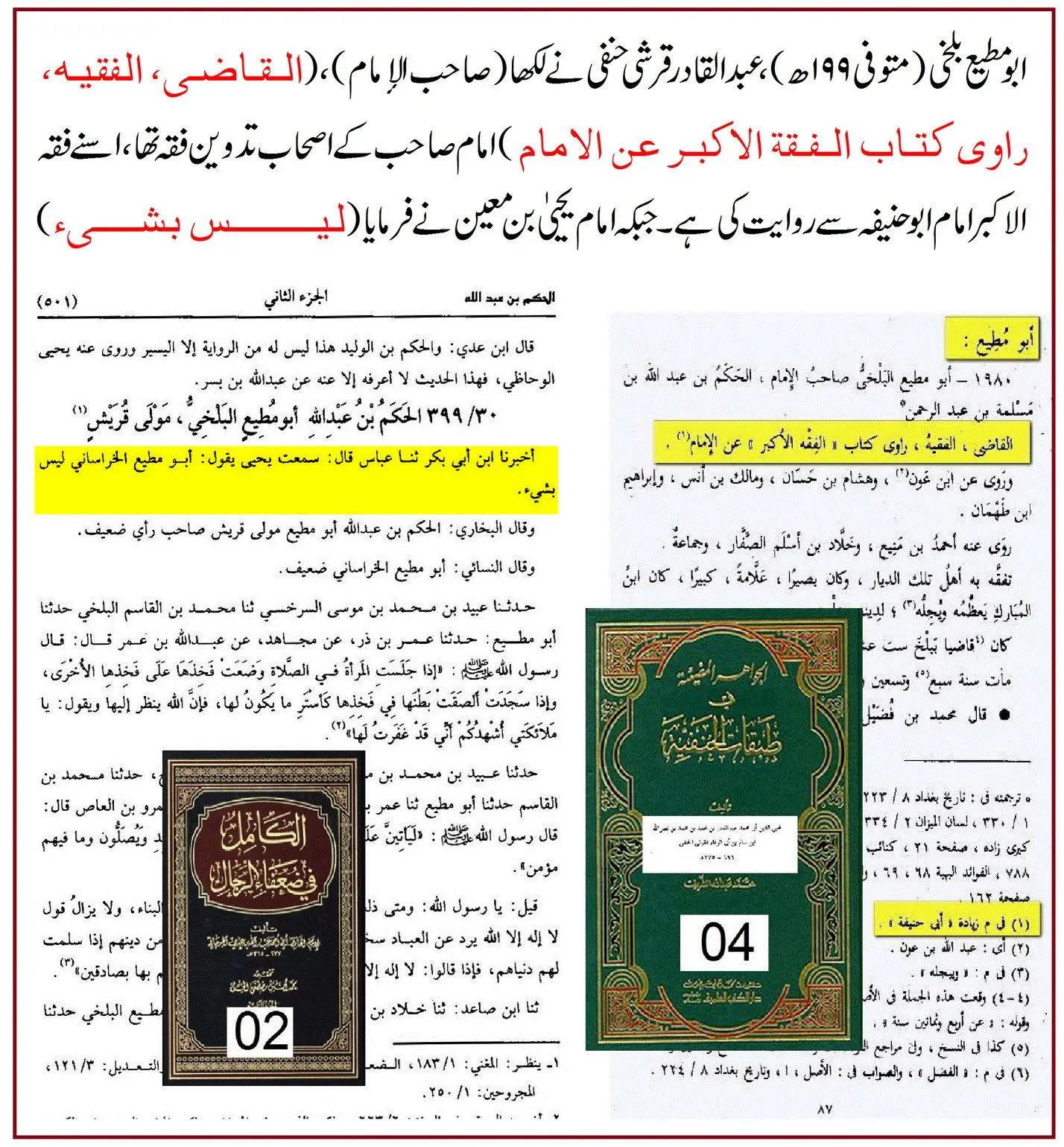
سَمِعْتُ يَحْيَى يَقُولُ:
«أَبُو مُطِيعٍ الخُرَاسَانِي لَيْسَ بِشَيْءٍ».
Reference:
Translation:
Yaḥyā ibn Maʿīn said:
“Abū Muṭīʿ al-Khurāsānī is nothing (i.e., unreliable).”
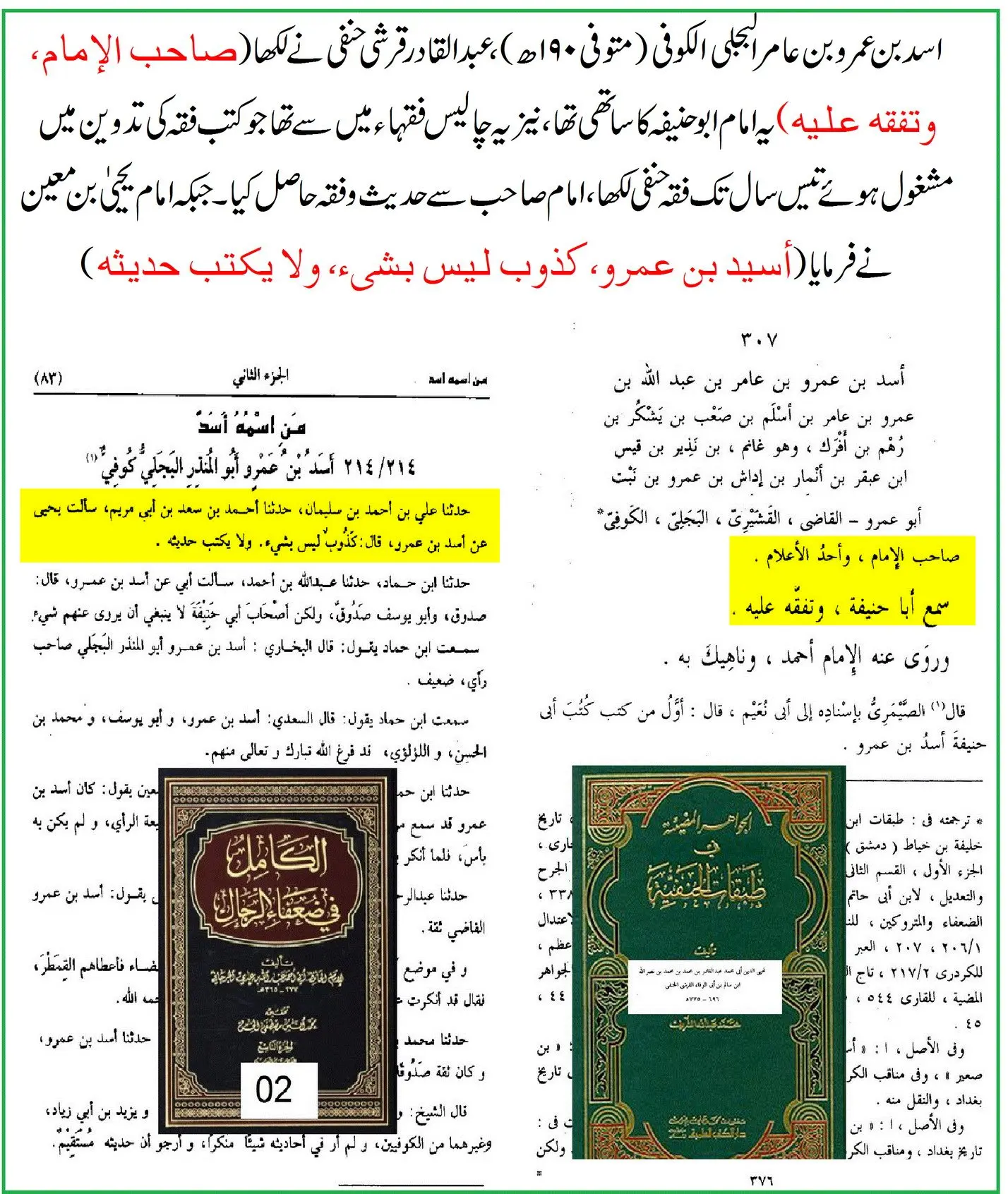
سُئِلَ يَحْيَى عَنْ أَسَدِ بْنِ عَمْرٍو، فَقَالَ:
«كَذُوبٌ، لَيْسَ بِشَيْءٍ، وَلَا يُكْتَبُ حَدِيثُهُ».
Reference:
Translation:
Yaḥyā ibn Maʿīn was asked about Asad ibn ʿAmr, and he said:
“He is very much a liar, nothing (unreliable), and his ḥadīth is not to be written.”
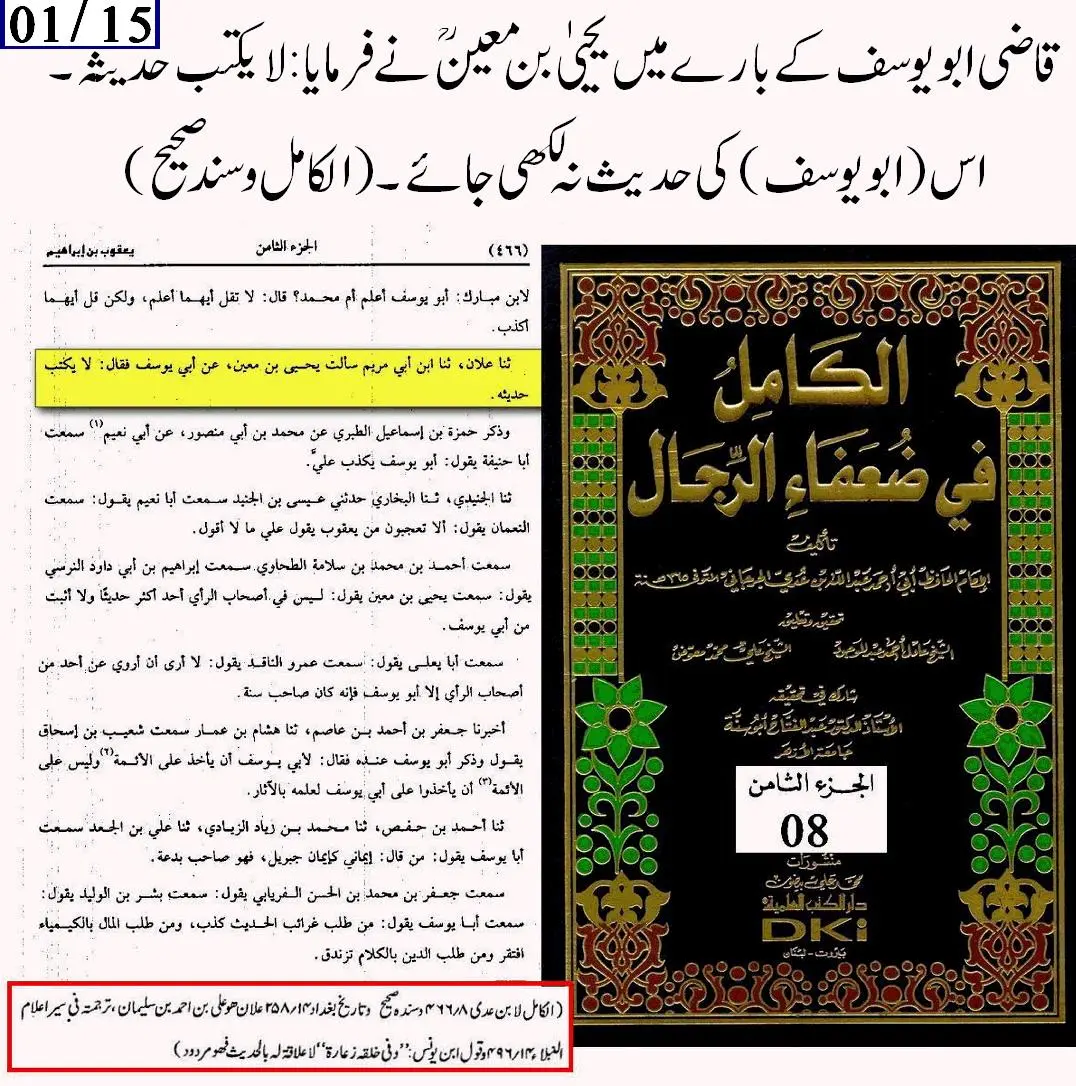
سُئِلَ يَحْيَى بْنُ مَعِينٍ عَنْ أَبِي يُوسُف، فَقَالَ:
«لَا يُكْتَبُ حَدِيثُهُ».
Reference:
Translation:
Yaḥyā ibn Maʿīn was asked about Qāḍī Abū Yūsuf, and he said:
“His ḥadīth is not to be written.”
For this reason, Yaḥyā ibn Maʿīn stated that our companions (the scholars of ḥadīth) would disregard Abū Ḥanīfah and his companions in matters of narration.




Among the Imams of Jarḥ wa Taʿdīl, Imām Yaḥyā ibn Maʿīn (d. 233 AH) holds an unparalleled position. His statements are given great importance among the scholars of ḥadīth. Numerous statements are also reported from him regarding Imām Abū Ḥanīfah رحمه الله and his students and companions. In some of them, Abū Ḥanīfah is described as weak in ḥadīth, and in others, some of his students are declared liars, zindīqs, or weak. In this article, those very statements are presented from their original sources to clarify why Imām Yaḥyā ibn Maʿīn stated that the scholars of ḥadīth would disregard Abū Ḥanīfah and his companions in matters of narration.
[Note: The authentication (tawthīq) of Imām Abū Ḥanīfah from Imām Yaḥyā ibn Maʿīn is not established. Details are discussed in this article.]
Statements Regarding Imām Abū Ḥanīfah
① General Statement
Arabic Text:عَبَّاسُ بْنُ مُحَمَّدٍ الدُّورِيُّ قَالَ: سَمِعْتُ يَحْيَى بْنَ مَعِينٍ يَقُولُ:
«أَصْحَابُنَا يُفْرِطُونَ فِي أَبِي حَنِيفَةَ وَأَصْحَابِهِ»
فَقِيلَ لَهُ: أَكَانَ أَبُو حَنِيفَةَ يَكْذِبُ؟
فَقَالَ: «كَانَ أَنْبَلَ مِنْ ذَلِكَ».
Reference:
Reference: Jāmiʿ Bayān al-ʿIlm wa Faḍlihi
Translation:
ʿAbbās ibn Muḥammad al-Dūrī said: I heard Yaḥyā ibn Maʿīn saying:
“Our companions (the scholars of ḥadīth) are excessive regarding Abū Ḥanīfah and his companions.”
It was said to him: “Did Abū Ḥanīfah lie?”
He replied: “He was far nobler than that.”
◈ Explanation:
Here, Ibn Maʿīn acknowledged that the scholars of ḥadīth would disregard Abū Ḥanīfah and his companions, but he also clarified that Abū Ḥanīfah was free from the accusation of lying.② Statement Criticizing Abū Ḥanīfah
Arabic Text:سَمِعْتُ يَحْيَى بْنَ مَعِينٍ، وَسُئِلَ عَنْ أَبِي حَنِيفَةَ، فَقَالَ:
«كَانَ يُضَعَّفُ فِي الحَدِيث».
Reference:
Reference: Tārīkh Baghdād
Translation:
Muḥammad ibn ʿUthmān ibn Abī Shaybah said: I asked Yaḥyā ibn Maʿīn about Abū Ḥanīfah, and he said:
“He was considered weak in ḥadīth.”
◈ Explanation:
This statement pertains specifically to the field of ḥadīth narration. His status in fiqh is separate, but regarding ḥadīth transmission, he was declared weak.Statements Regarding the Students and Companions of Abū Ḥanīfah
① Muḥammad ibn al-Ḥasan al-Shaybānī
Arabic Text:مُحَمَّدُ بْنُ الْحَسَنِ صَاحِبُ أَبِي حَنِيفَةَ … سَمِعْتُ يَحْيَى بْنَ مَعِينٍ، يَقُولُ:
«مُحَمَّدٌ جَهْمِيٌّ كَذَّابٌ».
Reference:
Reference: al-Ḍuʿafāʾ al-Kabīr by al-ʿUqaylī (1606)
Translation:
Regarding Muḥammad ibn al-Ḥasan al-Shaybānī (the companion of Abū Ḥanīfah), Yaḥyā ibn Maʿīn said:
“Muḥammad was a Jahmī and a liar.”
② Ḥasan ibn Ziyād al-Luʾluʾī
Arabic Text:«وَحَسَنُ اللُّؤلُؤِي كَذَّابٌ».
Reference:
Reference: Tārīkh Ibn Maʿīn, narration of al-Dūrī (1765)
Translation:
Yaḥyā ibn Maʿīn said:
“Ḥasan al-Luʾluʾī is a liar.”
③ Nūḥ ibn Abī Maryam (Abū ʿIṣmah)
Arabic Text:سَأَلْتُ يَحْيَى عَنْ نُوحِ بْنِ أَبِي مَرْيَمَ الخُرَاسَانِي، فَقَالَ:
«لَيْسَ بِثِقَةٍ».
Reference:
Reference: Tārīkh Ibn Maʿīn, narration of Ibn Muḥriz
Translation:
I asked Yaḥyā about Nūḥ ibn Abī Maryam al-Khurāsānī, and he said:
“He is not trustworthy.”
④ Yūsuf ibn Khālid al-Samtī
Arabic Text:سَمِعْتُ يَحْيَى يَقُولُ:
«يُوسُفُ بْنُ خَالِدٍ السَّمْتِي زِنْدِيقٌ كَذَّابٌ، لَا يُكْتَبُ عَنْهُ شَيْءٌ».
Reference:
Reference: Tārīkh Ibn Maʿīn, narration of al-Dūrī (3556)
Translation:
Yaḥyā ibn Maʿīn said:
“Yūsuf ibn Khālid al-Samtī is a zindīq and a liar. Nothing should be written from him.”
⑤ Khālid ibn Sulaymān al-Balkhī (Abū Muʿādh)
Arabic Text:قَالَ يَحْيَى:
«أَبُو مُعَاذٍ البَلْخِي ضَعِيفٌ».
Reference:
Reference: al-Kāmil fī Ḍuʿafāʾ al-Rijāl (603)
Translation:
Yaḥyā ibn Maʿīn said:
“Abū Muʿādh al-Balkhī is weak.”
⑥ Mundil ibn ʿAlī al-ʿIzzī al-Ḥanafī
Arabic Text:سَمِعْتُ يَحْيَى يَقُولُ:
«مِنْدَلٌ … فِيهِ ضَعْفٌ … لَيْسَ بِذَاكَ القَوِيِّ الشَّدِيد».
Reference:
Reference: Tārīkh Ibn Maʿīn, narration of al-Dūrī (3057)
Translation:
Yaḥyā ibn Maʿīn said:
“Mundil has weakness… he is not strong and firm.”
⑦ ʿAlī ibn Ẓubyān
Arabic Text:«عَلِيُّ بْنُ ظُبْيَانَ لَيْسَ بِشَيْءٍ».
Reference:
Reference: Tārīkh Ibn Maʿīn, narration of al-Dūrī (1339)
Translation:
Yaḥyā ibn Maʿīn said:
“ʿAlī ibn Ẓubyān is nothing (i.e., unreliable).”
⑧ Abū Muṭīʿ al-Ḥakam ibn ʿAbdullāh al-Balkhī
Arabic Text:سَمِعْتُ يَحْيَى يَقُولُ:
«أَبُو مُطِيعٍ الخُرَاسَانِي لَيْسَ بِشَيْءٍ».
Reference:
Reference: al-Kāmil fī Ḍuʿafāʾ al-Rijāl (399)
Translation:
Yaḥyā ibn Maʿīn said:
“Abū Muṭīʿ al-Khurāsānī is nothing (i.e., unreliable).”
⑨ Asad ibn ʿAmr al-Bajalī
Arabic Text:سُئِلَ يَحْيَى عَنْ أَسَدِ بْنِ عَمْرٍو، فَقَالَ:
«كَذُوبٌ، لَيْسَ بِشَيْءٍ، وَلَا يُكْتَبُ حَدِيثُهُ».
Reference:
Reference: al-Kāmil fī Ḍuʿafāʾ al-Rijāl (214)
Translation:
Yaḥyā ibn Maʿīn was asked about Asad ibn ʿAmr, and he said:
“He is very much a liar, nothing (unreliable), and his ḥadīth is not to be written.”
⑩ Qāḍī Abū Yūsuf (Yaʿqūb ibn Ibrāhīm al-Anṣārī)
Arabic Text:سُئِلَ يَحْيَى بْنُ مَعِينٍ عَنْ أَبِي يُوسُف، فَقَالَ:
«لَا يُكْتَبُ حَدِيثُهُ».
Reference:
Reference: al-Kāmil fī Ḍuʿafāʾ al-Rijāl
Translation:
Yaḥyā ibn Maʿīn was asked about Qāḍī Abū Yūsuf, and he said:
“His ḥadīth is not to be written.”
Conclusion
Imām Yaḥyā ibn Maʿīn not only described Imām Abū Ḥanīfah as “weak in ḥadīth,” but he also issued severe criticism against his well-known students and companions — declaring some as liars, some as zindīqs, and others as weak or unreliable.For this reason, Yaḥyā ibn Maʿīn stated that our companions (the scholars of ḥadīth) would disregard Abū Ḥanīfah and his companions in matters of narration.

