
Compiled by: Abu Hamzah Salafi
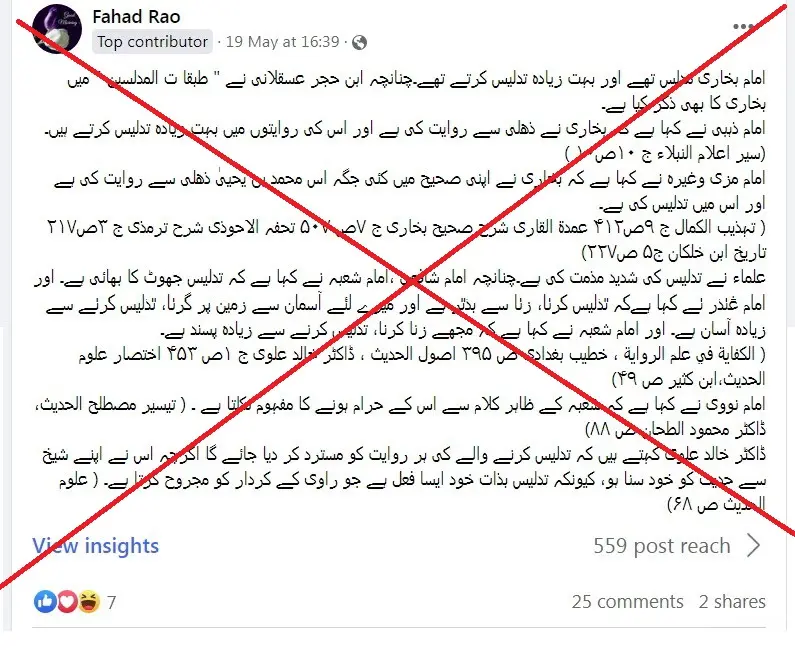
Certain innovators level the following allegation against Imām al-Bukhārī رحمه الله:
They claim that Imām al-Bukhārī was a mudallis and that he frequently practiced tadlīs.
They argue that Ibn Ḥajar mentioned him in Ṭabaqāt al-Mudallisīn.
They state that Imām al-Dhahabī wrote in Siyar Aʿlām al-Nubalāʾ that al-Bukhārī narrated from Muḥammad bin Yaḥyā al-Dhuhlī and committed tadlīs therein.
Imām al-Mizzī, Ibn Khallikān, the commentators of Bukhārī and Tirmidhī, and others have also mentioned that al-Bukhārī narrated from Muḥammad bin Yaḥyā al-Dhuhlī in several places in his Ṣaḥīḥ and practiced tadlīs in doing so.
The condemnation of tadlīs has been reported from Imām Shuʿbah and Imām al-Shāfiʿī, who said: “Tadlīs is the brother of lying,” and “It is worse than fornication.”
░ The Response
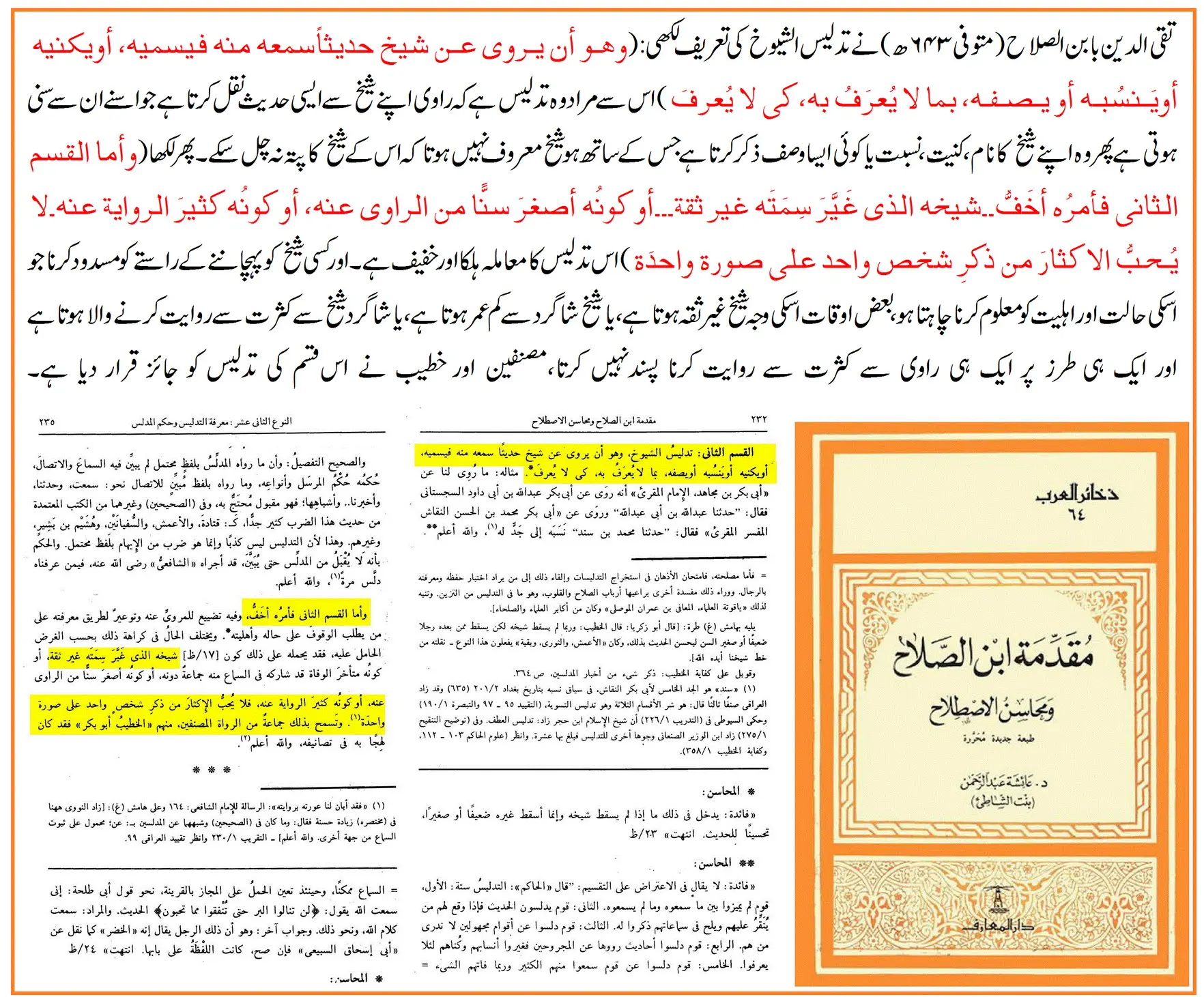
Ibn al-Ṣalāḥ writes:
Arabic Text:
«تَدْلِيسُ الشُّيُوخِ: أَنْ يَرْوِيَ عَنْ شَيْخٍ حَدِيثًا سَمِعَهُ مِنْهُ، فَيُسَمِّيهِ أَوْ يُكَنِّيهِ أَوْ يُنْسِبَهُ أَوْ يَصِفَهُ بِمَا لَا يُعْرَفُ بِهِ، كَيْ لَا يُعْرَفَ.»
(Muqaddimah Ibn al-Ṣalāḥ)
Translation:
“Tadlīs al-Shuyūkh is when a narrator reports a ḥadīth he heard directly from his shaykh but mentions him by a different name, kunyah, lineage, or description such that he is not immediately recognized.”
He further states:
Arabic Text:
«وأما القسم الثاني فأمره أخفّ … وقد تسامح به جماعة من الرواة المصنّفين، منهم الخطيب البغدادي.»
Translation:
“As for the second type, its matter is lighter… and many narrators and compilers have shown leniency in it, including al-Khaṭīb al-Baghdādī.”
This is not a defect.
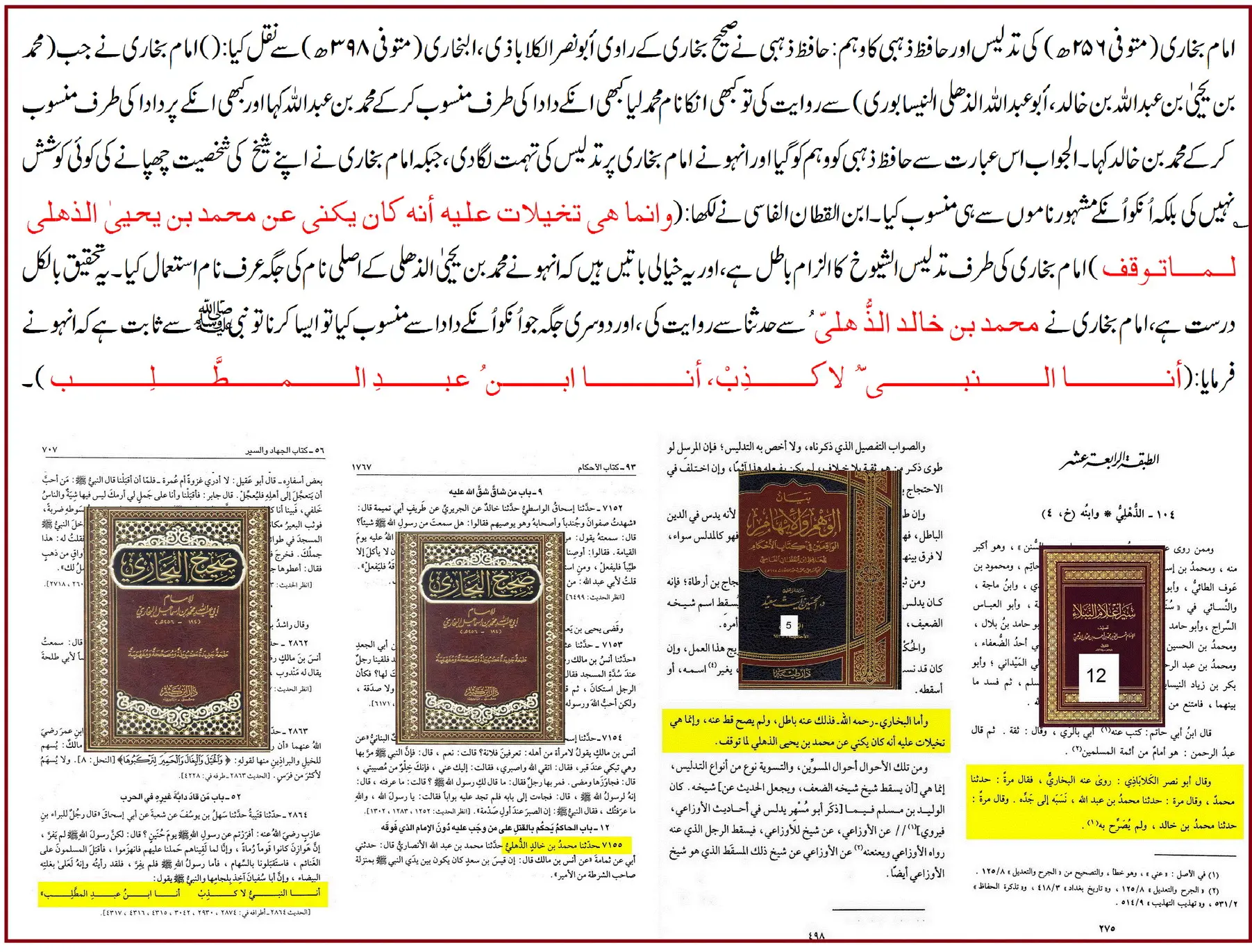
A similar style is found in the Prophetic biography:
Ḥadīth:
«أنا النبي لا كذب، أنا ابن عبد المطلب.»
The Messenger of Allah ﷺ attributed himself to his grandfather.
Therefore, attributing someone to his grandfather or lineage is not tadlīs; rather, it is clarification.
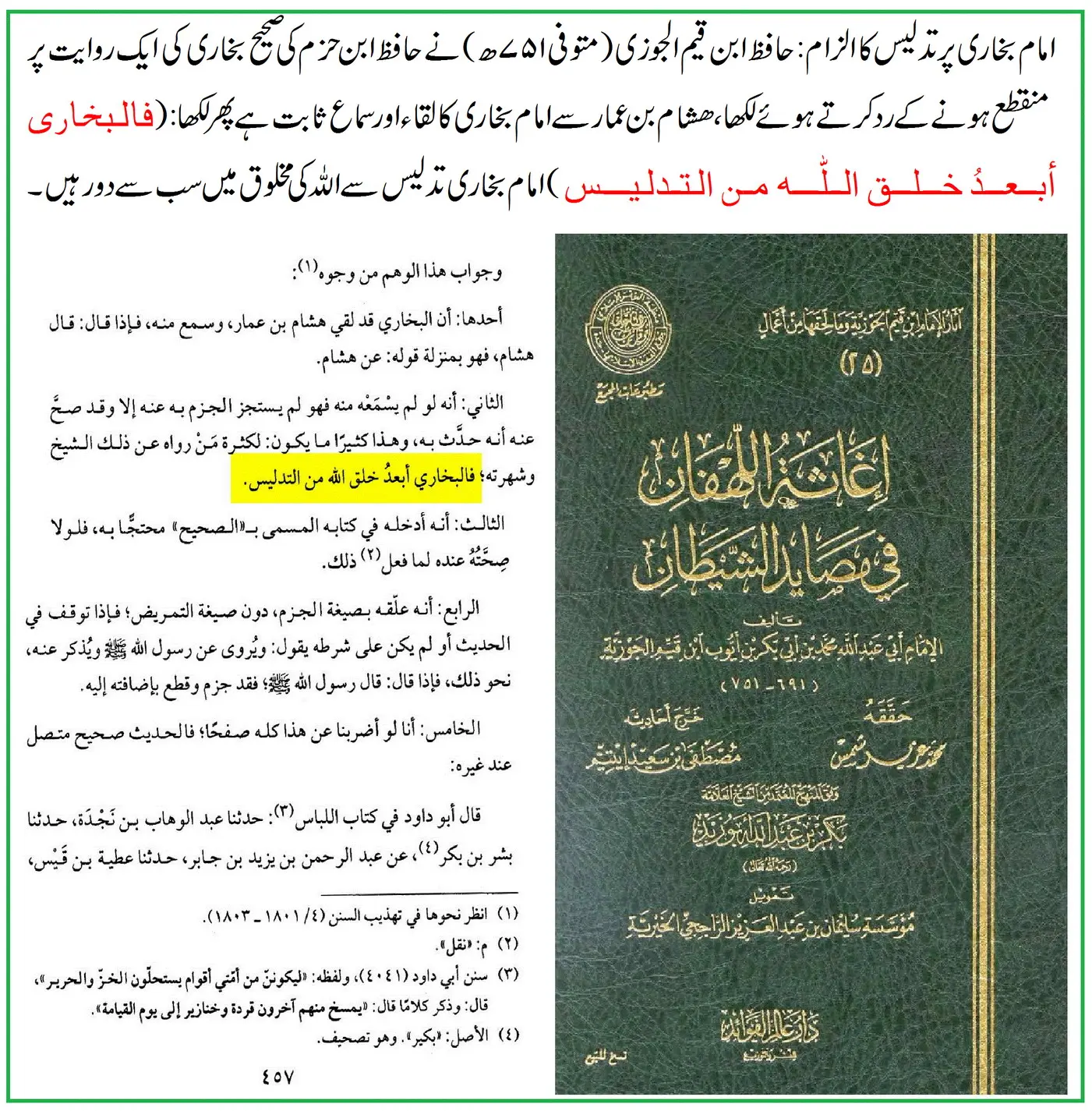
Arabic Text:
«فالبخاري أبعد خلق الله من التدليس.»
(Ighāthat al-Lahfān 1/391)
Translation:
“Al-Bukhārī was the furthest of Allah’s creation from tadlīs.”
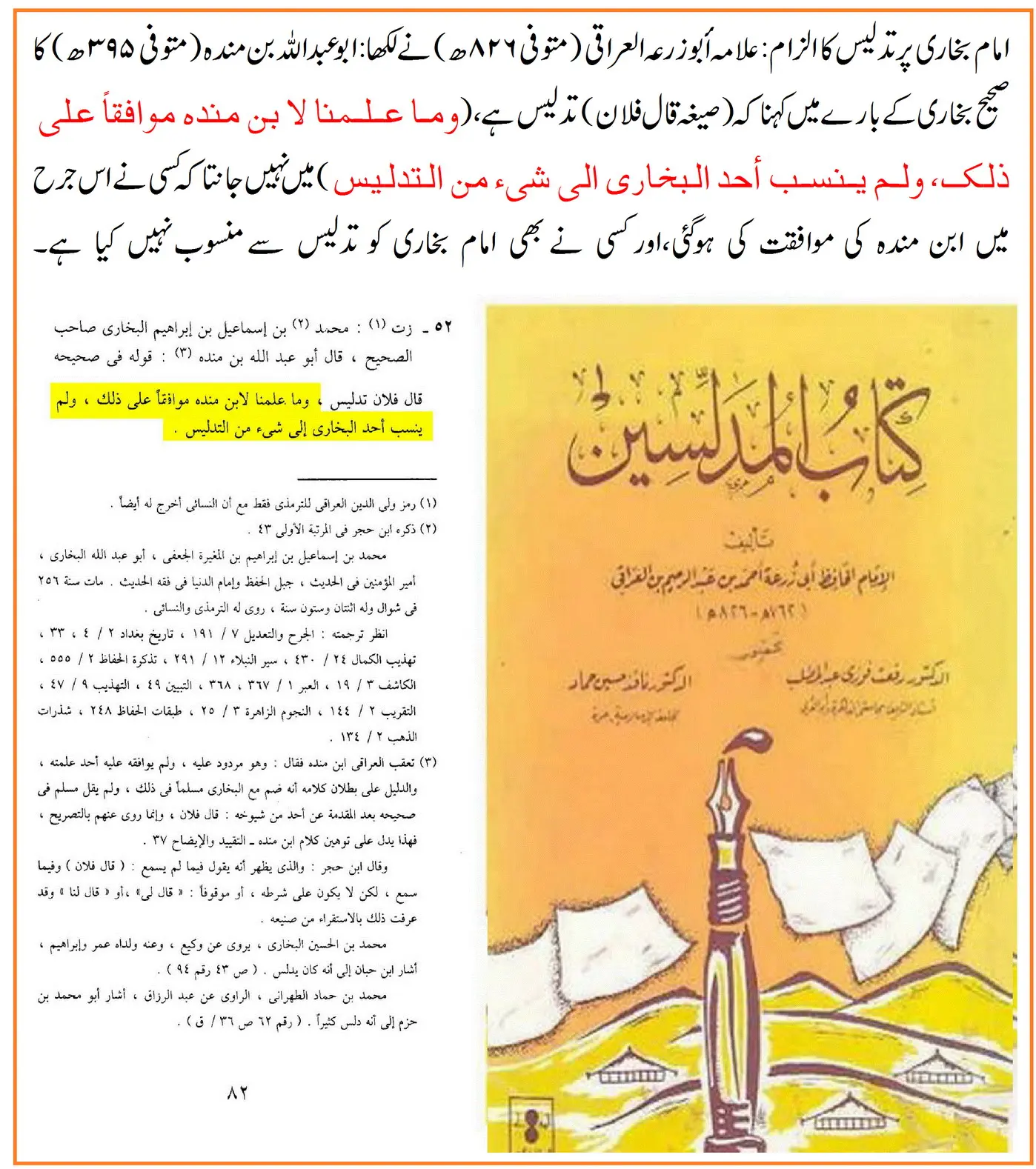
Arabic Text:
«وما علمنا لابن منده موافقًا على ذلك، ولم ينسب أحد البخاري إلى شئ من التدليس.»
(al-Mudallisīn lil-ʿIrāqī, p. 52)
Translation:
“We do not know of anyone who agreed with Ibn Mandah in this matter, nor has anyone attributed any form of tadlīs to al-Bukhārī.”
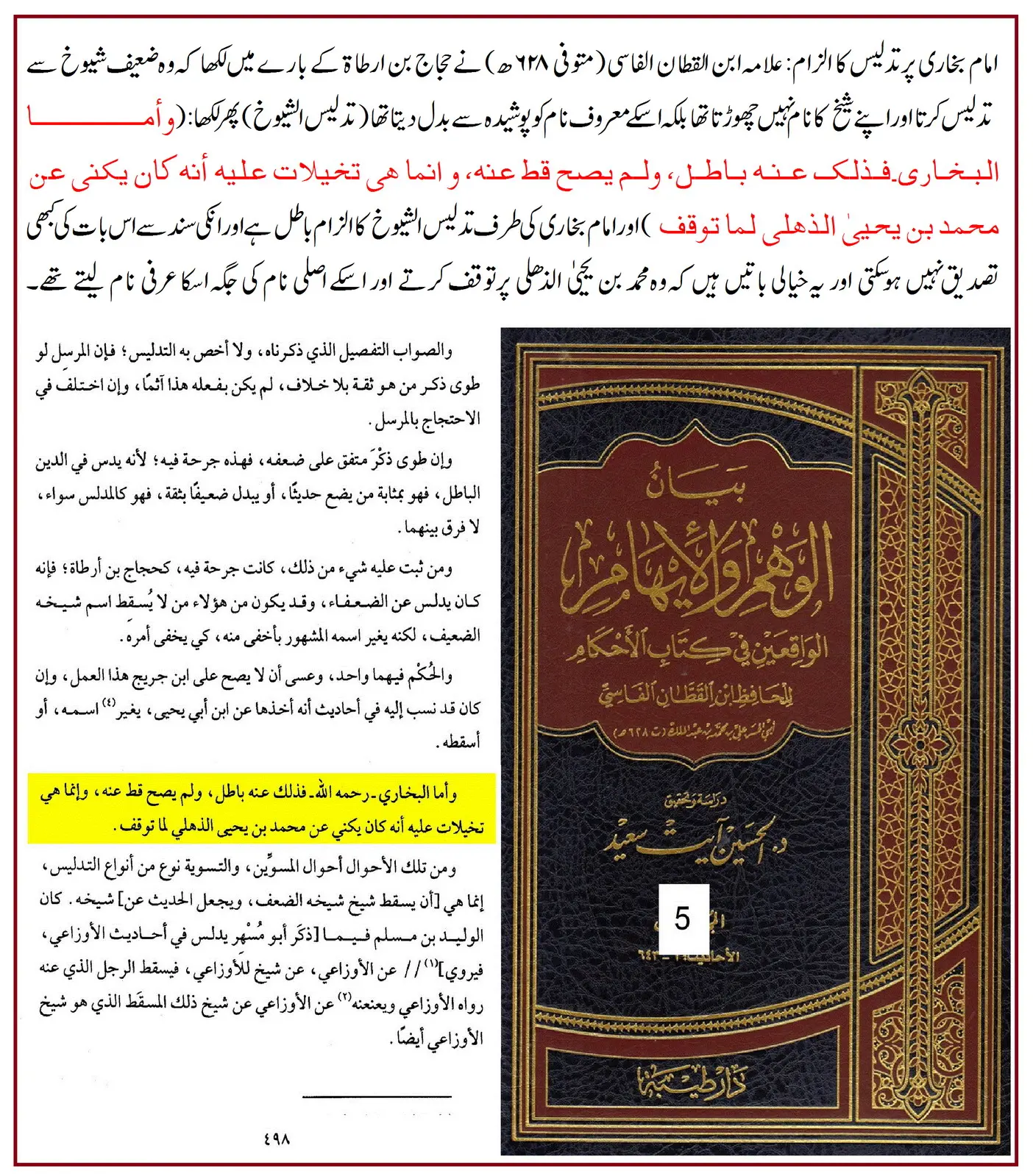
Arabic Text:
«وأما البخاري رحمه الله فذلك عنه باطل، ولم يصح قطّ عنه، وإنما هي تخيّلات عليه أنه كان يكنّي عن محمد بن يحيى الذهلي.»
(Bayān al-Wahm wa al-Īhām 5/227)
Translation:
“As for attributing tadlīs to al-Bukhārī رحمه الله, it is false. It has never been authentically established about him. These are merely imaginations because he would refer to Muḥammad bin Yaḥyā al-Dhuhlī by his kunyah.”
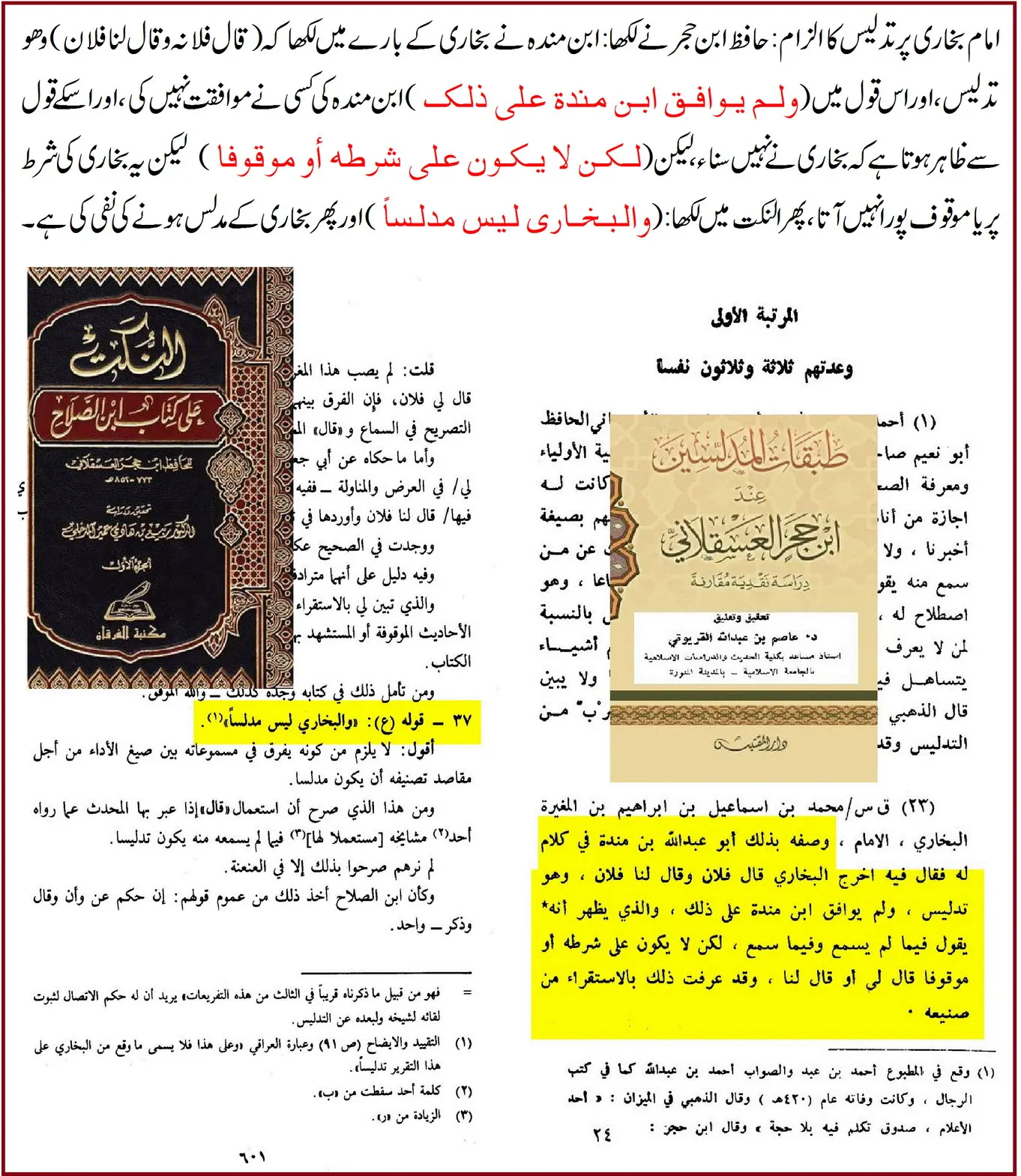
Arabic Text:
«والبخاري ليس مدلسًا.»
(al-Nukat ʿalā Ibn al-Ṣalāḥ 2/631)
Translation:
“Al-Bukhārī is not a mudallis.”
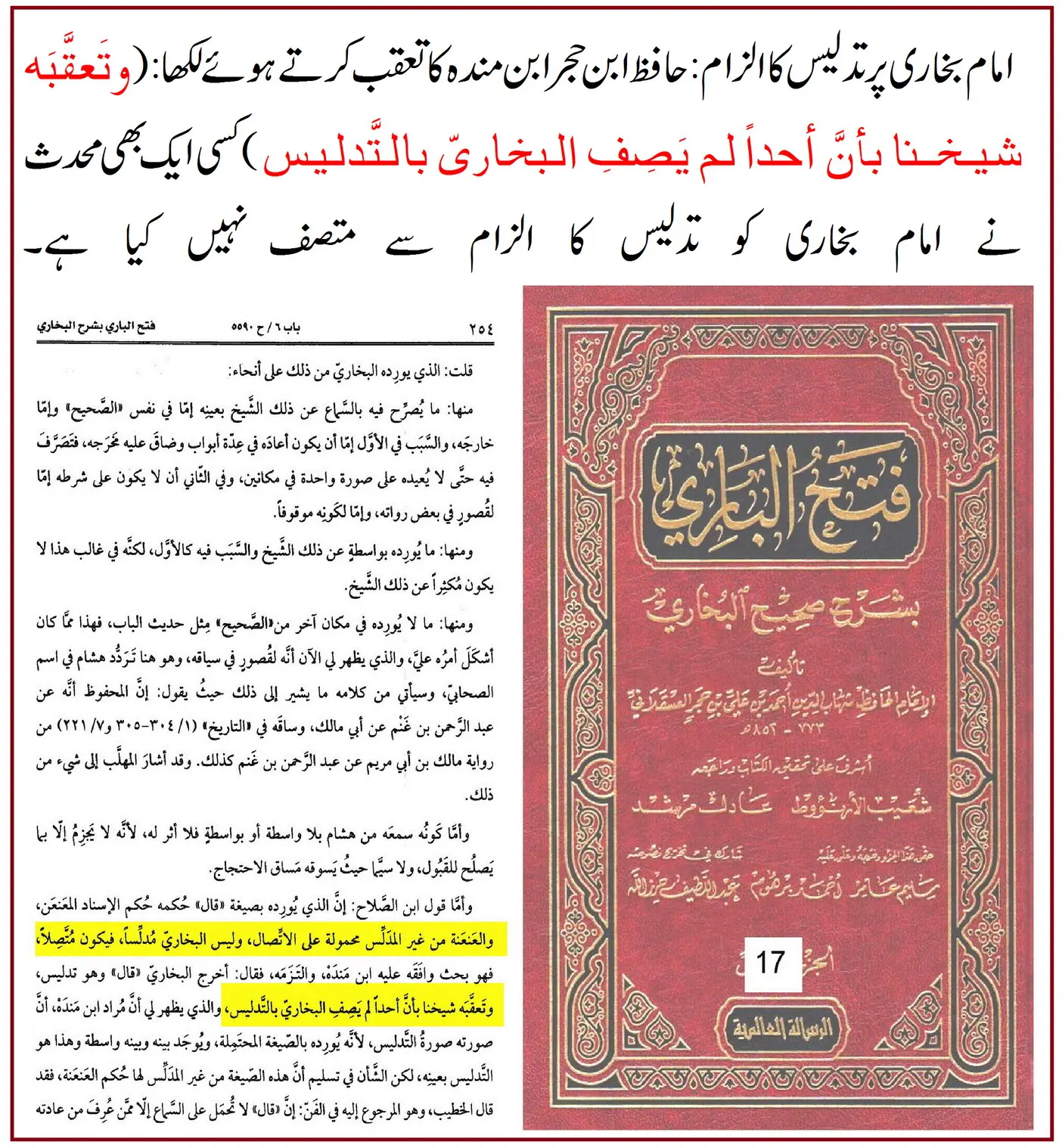
In Fatḥ al-Bārī, he writes:
Arabic Text:
«أحدًا لم يصف البخاري بالتدليس.»
(Fatḥ al-Bārī 1/389)
Translation:
“No one has described al-Bukhārī as practicing tadlīs.”
It is claimed that al-Bukhārī concealed his name.
However, al-Bukhārī mentioned him in numerous places with his full lineage.
Example:
Arabic Text:
«حَدَّثَنَا مُحَمَّدُ بْنُ خَالِدٍ الذُّهْلِيُّ، حَدَّثَنَا الأَنْصَارِيُّ مُحَمَّدُ بْنُ عَبْدِ اللَّهِ، قَالَ: حَدَّثَنِي أَبِي، عَنْ ثُمَامَةَ، عَنْ أَنَسٍ…»
Translation:
“Muḥammad bin Khālid al-Dhuhlī narrated to us; al-Anṣārī Muḥammad bin ʿAbdullāh narrated to us; he said: My father narrated to me, from Thumāmah, from Anas…”
Here, Imām al-Bukhārī mentioned his shaykh with his full lineage and tribal attribution, leaving no ambiguity.
This is not concealment but a common scholarly method.
The Messenger of Allah ﷺ himself said:
Arabic Text:
«أَنَا النَّبِيُّ لاَ كَذِبْ، أَنَا ابْنُ عَبْدِ الْمُطَّلِبْ.»
Translation:
“I am the Prophet; there is no falsehood in this. I am the son of ʿAbd al-Muṭṭalib.”
Thus, identification through a grandfather or lineage is not a flaw but further clarification.
✔ Ibn al-Qaṭṭān: “The attribution of tadlīs to him is false.”
✔ Abū Zurʿah al-ʿIrāqī: “No one has attributed tadlīs to al-Bukhārī.”
✔ Ibn Ḥajar: “Al-Bukhārī is not a mudallis,” and “No one described him as such.”
Imām al-Bukhārī رحمه الله was not a mudallis.
The allegation is based solely on his attribution to a grandfather or lineage, which is not a defect.
Imām al-Bukhārī mentioned his shaykh Muḥammad bin Yaḥyā al-Dhuhlī in numerous places with his full name and lineage.
There is scholarly consensus that the accusation of tadlīs against Imām al-Bukhārī is false.
Certain innovators level the following allegation against Imām al-Bukhārī رحمه الله:
They claim that Imām al-Bukhārī was a mudallis and that he frequently practiced tadlīs.
They argue that Ibn Ḥajar mentioned him in Ṭabaqāt al-Mudallisīn.
They state that Imām al-Dhahabī wrote in Siyar Aʿlām al-Nubalāʾ that al-Bukhārī narrated from Muḥammad bin Yaḥyā al-Dhuhlī and committed tadlīs therein.
Imām al-Mizzī, Ibn Khallikān, the commentators of Bukhārī and Tirmidhī, and others have also mentioned that al-Bukhārī narrated from Muḥammad bin Yaḥyā al-Dhuhlī in several places in his Ṣaḥīḥ and practiced tadlīs in doing so.
The condemnation of tadlīs has been reported from Imām Shuʿbah and Imām al-Shāfiʿī, who said: “Tadlīs is the brother of lying,” and “It is worse than fornication.”
░ The Response
① The Reality and Types of Tadlīs
Ḥāfiẓ Ibn al-Ṣalāḥ رحمه الله divided tadlīs into two categories:➊ Tadlīs al-Isnād
A narrator reports from his shaykh but uses wording that does not clearly indicate direct hearing. This type is severely blameworthy.➋ Tadlīs al-Shuyūkh
A narrator reports a ḥadīth which he directly heard from his shaykh but mentions the shaykh by another name, kunyah, lineage, or description by which he is not immediately recognized.Ibn al-Ṣalāḥ writes:
Arabic Text:
«تَدْلِيسُ الشُّيُوخِ: أَنْ يَرْوِيَ عَنْ شَيْخٍ حَدِيثًا سَمِعَهُ مِنْهُ، فَيُسَمِّيهِ أَوْ يُكَنِّيهِ أَوْ يُنْسِبَهُ أَوْ يَصِفَهُ بِمَا لَا يُعْرَفُ بِهِ، كَيْ لَا يُعْرَفَ.»
(Muqaddimah Ibn al-Ṣalāḥ)
Translation:
“Tadlīs al-Shuyūkh is when a narrator reports a ḥadīth he heard directly from his shaykh but mentions him by a different name, kunyah, lineage, or description such that he is not immediately recognized.”
He further states:
Arabic Text:
«وأما القسم الثاني فأمره أخفّ … وقد تسامح به جماعة من الرواة المصنّفين، منهم الخطيب البغدادي.»
Translation:
“As for the second type, its matter is lighter… and many narrators and compilers have shown leniency in it, including al-Khaṭīb al-Baghdādī.”
② The Allegation of Tadlīs Against Imām al-Bukhārī
The allegation against Imām al-Bukhārī is based solely on the fact that he mentioned his shaykh Muḥammad bin Yaḥyā al-Dhuhlī in certain places by referring to his grandfather or through another lineage.This is not a defect.
A similar style is found in the Prophetic biography:
Ḥadīth:
«أنا النبي لا كذب، أنا ابن عبد المطلب.»
Reference: Ṣaḥīḥ al-Bukhārī: 2864
The Messenger of Allah ﷺ attributed himself to his grandfather.
Therefore, attributing someone to his grandfather or lineage is not tadlīs; rather, it is clarification.
③ Testimonies of the Scholars
➊ Ḥāfiẓ Ibn al-Qayyim (751 AH)
Refuting an objection of Ibn Ḥazm, he writes:Arabic Text:
«فالبخاري أبعد خلق الله من التدليس.»
(Ighāthat al-Lahfān 1/391)
Translation:
“Al-Bukhārī was the furthest of Allah’s creation from tadlīs.”
➋ ʿAllāmah Abū Zurʿah al-ʿIrāqī (826 AH)
Ibn Mandah claimed that al-Bukhārī’s expression “qāla fulān” constituted tadlīs. Abū Zurʿah al-ʿIrāqī states:Arabic Text:
«وما علمنا لابن منده موافقًا على ذلك، ولم ينسب أحد البخاري إلى شئ من التدليس.»
(al-Mudallisīn lil-ʿIrāqī, p. 52)
Translation:
“We do not know of anyone who agreed with Ibn Mandah in this matter, nor has anyone attributed any form of tadlīs to al-Bukhārī.”
➌ Ibn al-Qaṭṭān al-Fāsī (628 AH)
While discussing the tadlīs of Ḥajjāj bin Arṭāh, he writes:Arabic Text:
«وأما البخاري رحمه الله فذلك عنه باطل، ولم يصح قطّ عنه، وإنما هي تخيّلات عليه أنه كان يكنّي عن محمد بن يحيى الذهلي.»
(Bayān al-Wahm wa al-Īhām 5/227)
Translation:
“As for attributing tadlīs to al-Bukhārī رحمه الله, it is false. It has never been authentically established about him. These are merely imaginations because he would refer to Muḥammad bin Yaḥyā al-Dhuhlī by his kunyah.”
➍ Ḥāfiẓ Ibn Ḥajar (852 AH)
In Taʿrīf Ahl al-Taqdīs, he states:Arabic Text:
«والبخاري ليس مدلسًا.»
(al-Nukat ʿalā Ibn al-Ṣalāḥ 2/631)
Translation:
“Al-Bukhārī is not a mudallis.”
In Fatḥ al-Bārī, he writes:
Arabic Text:
«أحدًا لم يصف البخاري بالتدليس.»
(Fatḥ al-Bārī 1/389)
Translation:
“No one has described al-Bukhārī as practicing tadlīs.”
④ Imām al-Bukhārī Did Not Conceal His Shaykh
The allegation revolves around Muḥammad bin Yaḥyā al-Dhuhlī.It is claimed that al-Bukhārī concealed his name.
However, al-Bukhārī mentioned him in numerous places with his full lineage.
Example:
Arabic Text:
«حَدَّثَنَا مُحَمَّدُ بْنُ خَالِدٍ الذُّهْلِيُّ، حَدَّثَنَا الأَنْصَارِيُّ مُحَمَّدُ بْنُ عَبْدِ اللَّهِ، قَالَ: حَدَّثَنِي أَبِي، عَنْ ثُمَامَةَ، عَنْ أَنَسٍ…»
Reference: Ṣaḥīḥ al-Bukhārī: 7155
Translation:
“Muḥammad bin Khālid al-Dhuhlī narrated to us; al-Anṣārī Muḥammad bin ʿAbdullāh narrated to us; he said: My father narrated to me, from Thumāmah, from Anas…”
Here, Imām al-Bukhārī mentioned his shaykh with his full lineage and tribal attribution, leaving no ambiguity.
⑤ Attribution to a Grandfather or Lineage Is Not a Defect
Imām al-Bukhārī sometimes attributed Muḥammad bin Yaḥyā al-Dhuhlī to his grandfather or lineage.This is not concealment but a common scholarly method.
The Messenger of Allah ﷺ himself said:
Arabic Text:
«أَنَا النَّبِيُّ لاَ كَذِبْ، أَنَا ابْنُ عَبْدِ الْمُطَّلِبْ.»
Reference: Ṣaḥīḥ al-Bukhārī: 2864
Translation:
“I am the Prophet; there is no falsehood in this. I am the son of ʿAbd al-Muṭṭalib.”
Thus, identification through a grandfather or lineage is not a flaw but further clarification.
⑥ The Collective Position of the Scholars
✔ Ibn al-Qayyim: “Al-Bukhārī was the furthest of Allah’s creation from tadlīs.”✔ Ibn al-Qaṭṭān: “The attribution of tadlīs to him is false.”
✔ Abū Zurʿah al-ʿIrāqī: “No one has attributed tadlīs to al-Bukhārī.”
✔ Ibn Ḥajar: “Al-Bukhārī is not a mudallis,” and “No one described him as such.”
 Conclusion
Imām al-Bukhārī رحمه الله was not a mudallis.The allegation is based solely on his attribution to a grandfather or lineage, which is not a defect.
Imām al-Bukhārī mentioned his shaykh Muḥammad bin Yaḥyā al-Dhuhlī in numerous places with his full name and lineage.
There is scholarly consensus that the accusation of tadlīs against Imām al-Bukhārī is false.

