

Compiled by: Abu Hamzah Salafi
This article is a scholarly examination of a false allegation in which it is attributed to Imam Ahmad ibn Hanbal رحمه الله that he permitted touching or kissing the grave of the Prophet ﷺ or his pulpit.
The evidences are as follows:
1340 – … وَلَا يَمَسُّ الْحَائِطَ وَيَضَعُ يَدَهُ عَلَى الرُّمَّانَةِ وَمَوْضِعِ الَّذِي جَلَسَ فِيهِ النَّبِيُّ ﷺ وَلَا يُقَبِّلُ الْحَائِطَ۔
قال: لا، إلا اليماني والحجر. قال إسحاق: هكذا هو۔
He replied: “No, only the Yemeni corner and the Black Stone.”
Isḥāq said: “That is the ruling.”
فقال: ما أعرفُ هذا. قلتُ: فالمنبر؟ قال: أما المنبر فنعم قد جاء فيه.
قيل له: إنهم يُلصِقون بطونَهم بجدار القبر.
وقيل له: رأيتُ من أهل العلم من أهل المدينة لا يَمَسُّون ويقومون ناحيةً فيُسلِّمون.
قال أبو عبد الله رحمه الله: نعم، وهكذا كان ابن عمر يفعل.
He acknowledged reports concerning the pulpit.
He mentioned that the people of Madinah would not touch the grave but stand at a distance and offer salām, and that this was the practice of Ibn ʿUmar رضي الله عنهما.
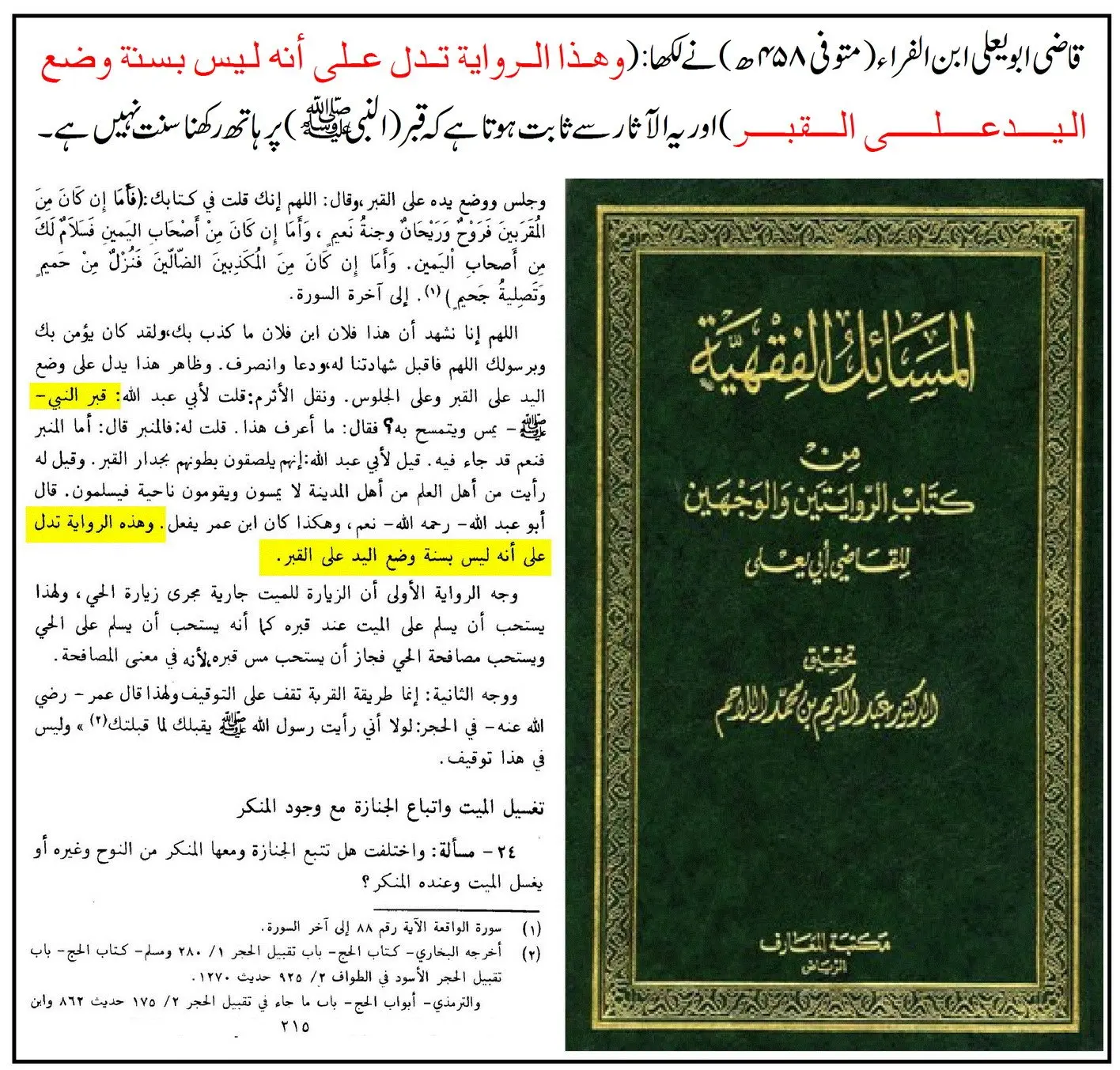
Qāḍī Abū Yaʿlā stated:
وهذه الرواية تدل على أنه ليس بسنة وضع اليد على القبر۔
“These narrations indicate that placing the hand upon the grave is not Sunnah.”
① Touching the grave
② Kissing it
③ Pressing one’s chest against it
— are innovations (bidʿah).
❖ The Sunnah is only to offer salām while standing respectfully.
❖ The established and relied-upon position of the Ḥanbalī scholars is prohibition.
❖ Even Ḥanafī and Barelwī sources affirm that kissing graves is impermissible and liken it to Christian practice.
Therefore, the agreed methodology of Ahl al-Sunnah wa al-Jamāʿah is:
✔ Touching graves
✔ Kissing them
✔ Pressing the chest against them
— are innovations and impermissible acts.
The Sunnah is only to stand before the grave and offer salām, as transmitted from the Companions and the Salaf.
This article is a scholarly examination of a false allegation in which it is attributed to Imam Ahmad ibn Hanbal رحمه الله that he permitted touching or kissing the grave of the Prophet ﷺ or his pulpit.
Original Narration (Attributed Statement)
① Arabic Text (النقل)
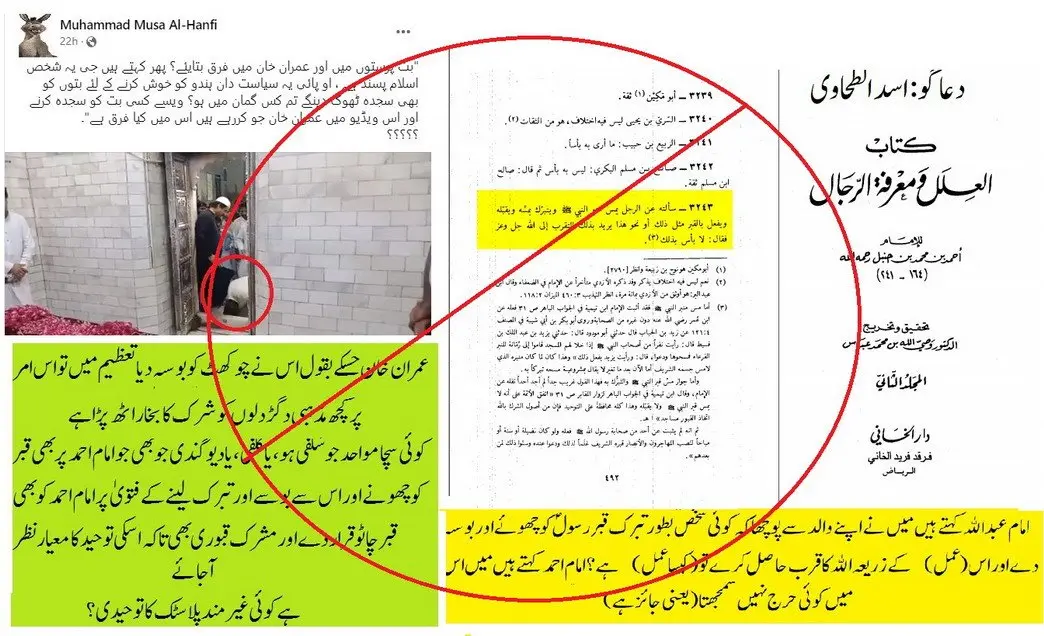
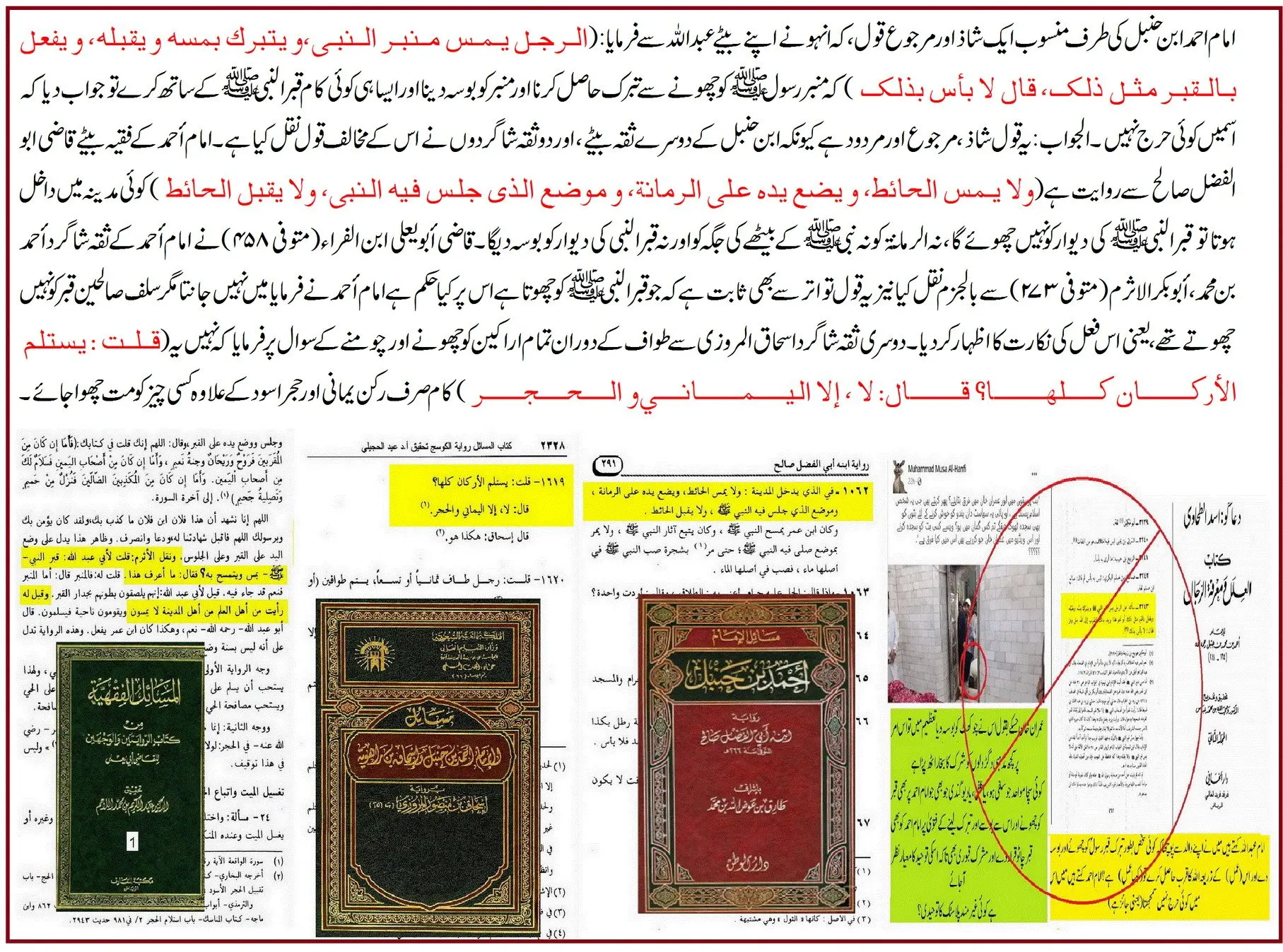
3243 – سَأَلْتُهُ عَنِ الرَّجُلِ يَمَسُّ مِنْبَرَ النَّبِيِّ صَلَّى اللَّهُ عَلَيْهِ وَسَلَّمَ وَيَتَبَرَّكُ بِمَسِّهِ وَيُقَبِّلُهُ وَيَفْعَلُ بِالْقَبْرِ مِثْلَ ذَلِكَ أَوْ نَحْوَ هَذَا يُرِيدُ بِذَلِكَ التَّقَرُّبَ إِلَى اللَّهِ جَلَّ وَعَزَّ فَقَالَ: لَا بَأْسَ بِذَلِكَ۔
Reference: العلل ومعرفة الرجال
② Translated Text
Imam ʿAbdullāh ibn Aḥmad ibn Ḥanbal رحمه الله said: I asked my father about a man who touches the pulpit of the Prophet ﷺ seeking blessing through touching it, kisses it, and does the same with the grave—intending thereby to draw closer to Allah, the Mighty and Majestic. He replied: “There is no harm in that.”
Reference: العلل ومعرفة الرجال 2/294، رقم 3243
Comprehensive Research Response (Assessment of Attribution)
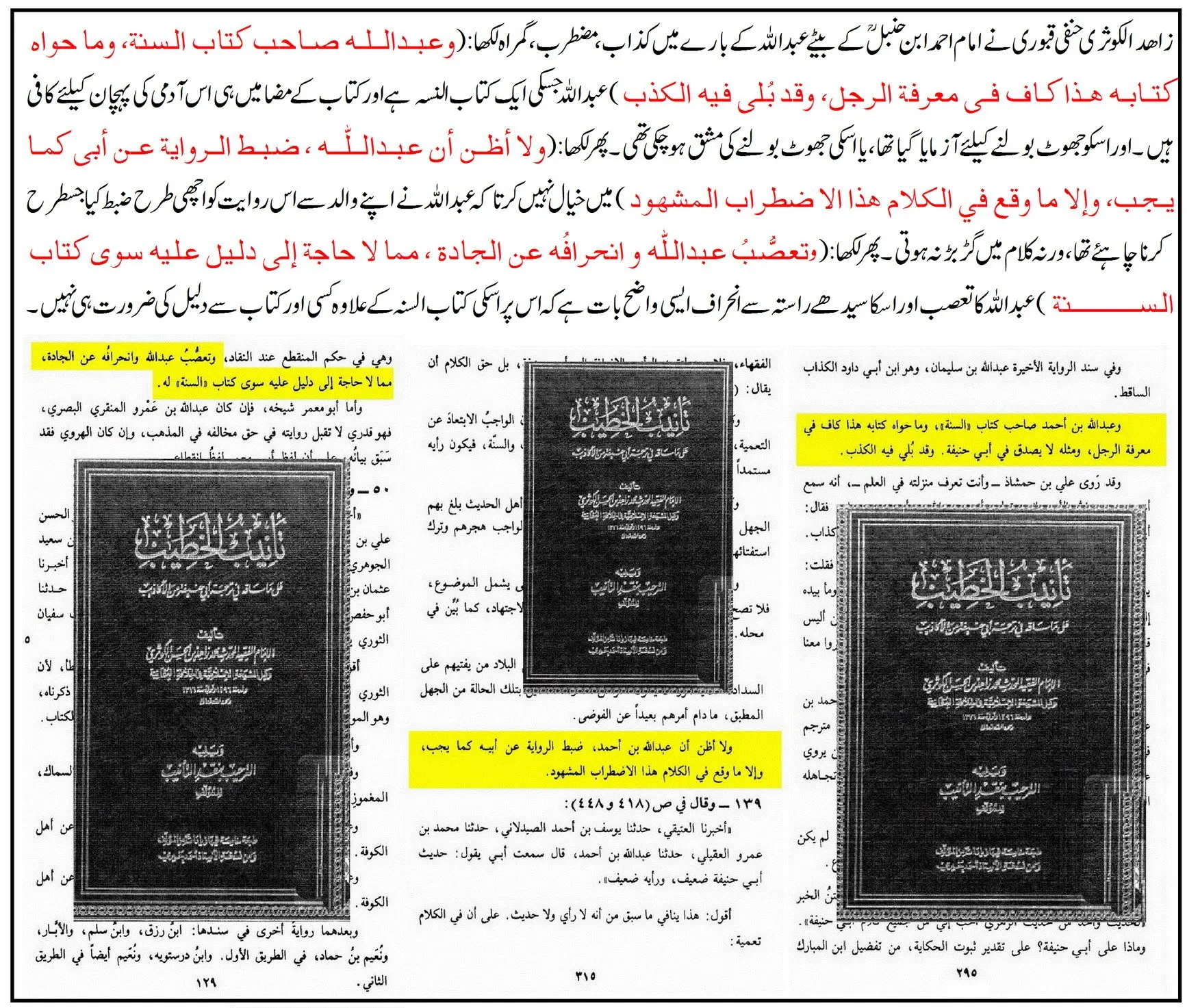
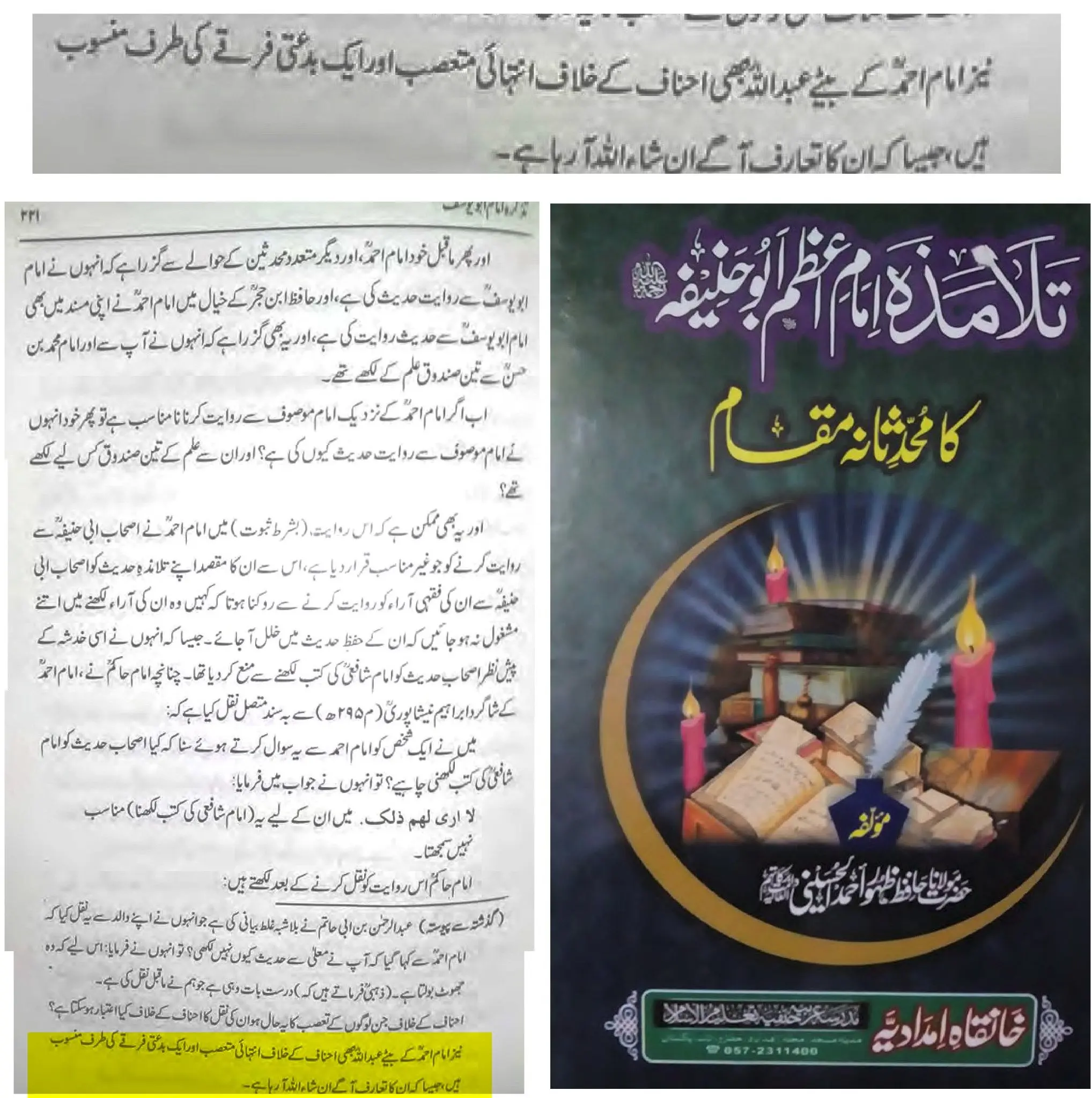
❖ This attribution is anomalous (shādh), rejected (marjūʿ), and not relied upon for fatwā, because more reliable transmitters from Imam Aḥmad—his elder son Ṣāliḥ and two trustworthy students (Abū Bakr al-Athram and Isḥāq ibn Manṣūr al-Marwazī)—have transmitted clear statements contrary to it. Later Ḥanbalī scholars also declared touching and kissing the grave to be an innovation and negated this attribution.The evidences are as follows:
Explicit Texts of Negation (From Ḥanbalī Authorities)
① Narration of Ṣāliḥ ibn Aḥmad (His Most Reliable Son)
Arabic Text
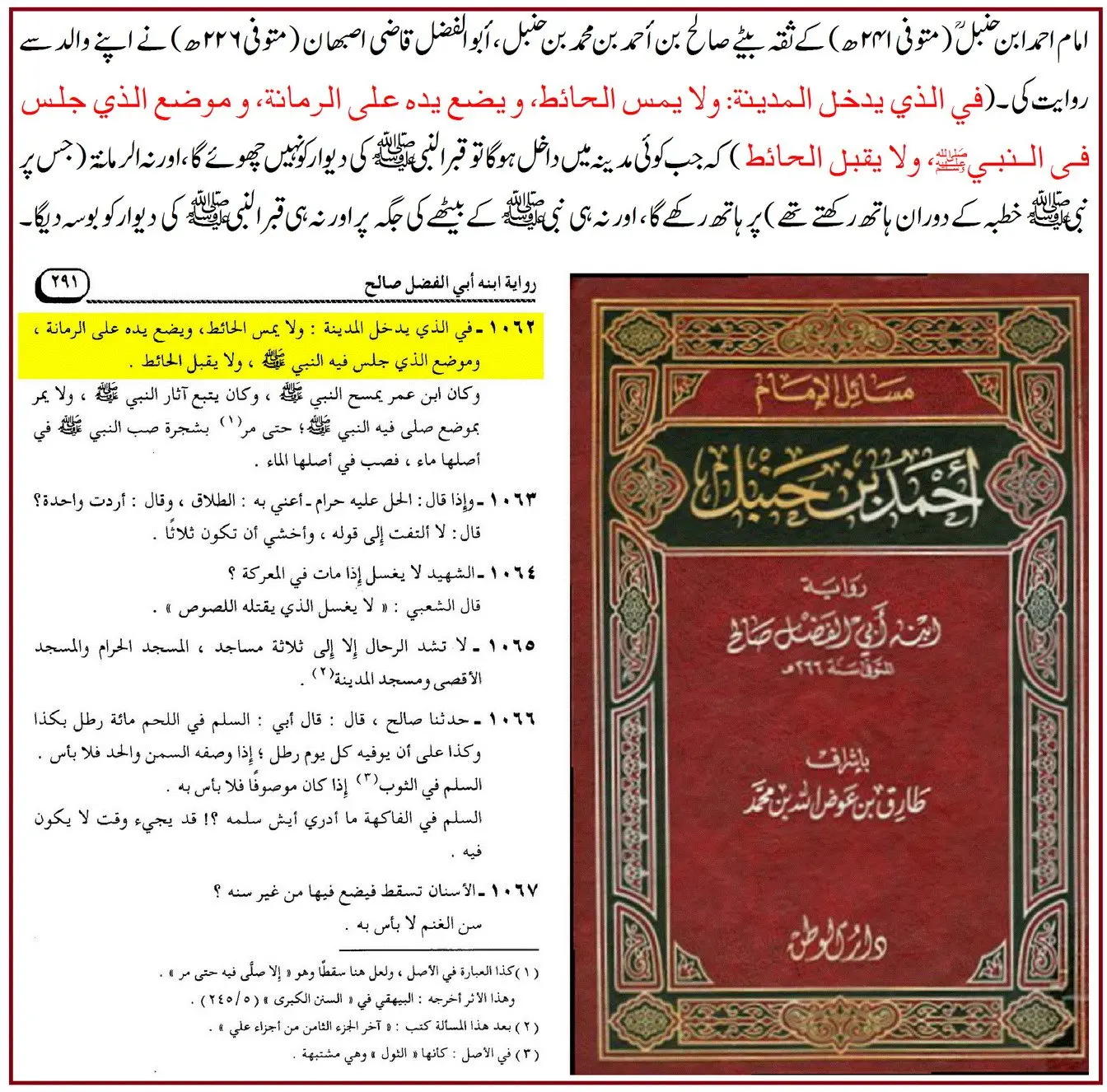
مسائل فی الزیارة1340 – … وَلَا يَمَسُّ الْحَائِطَ وَيَضَعُ يَدَهُ عَلَى الرُّمَّانَةِ وَمَوْضِعِ الَّذِي جَلَسَ فِيهِ النَّبِيُّ ﷺ وَلَا يُقَبِّلُ الْحَائِطَ۔
Reference: مسائل الإمام أحمد، روایة صالح
Translation
The one entering Madinah should not touch the wall of the grave, nor place his hand upon the rounded knob (rummānah) of the pulpit where the Prophet ﷺ would place his hand, nor on the place where he ﷺ sat, and he should not kiss the wall.Assessment
This is an explicit prohibition transmitted by Imam Aḥmad’s most reliable son. Therefore, the attributed permissibility is deemed weak and rejected.② Narration of Isḥāq ibn Manṣūr al-Marwazī (Trustworthy Student)
Arabic Text
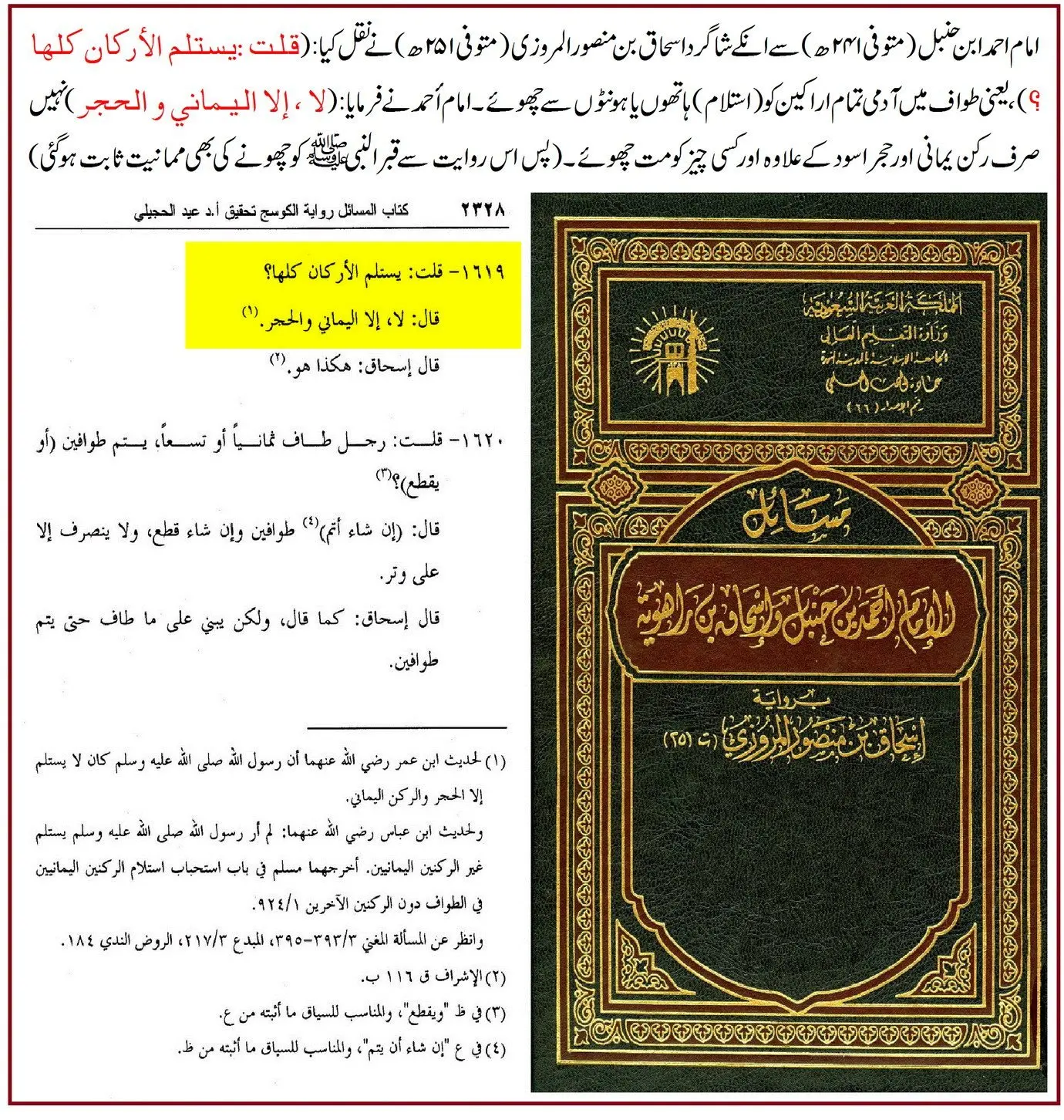
[1619] قلتُ: يَسْتَلِمُ الأركانَ كُلَّهَا؟قال: لا، إلا اليماني والحجر. قال إسحاق: هكذا هو۔
Reference: مسائل الإمام أحمد وإسحاق بن راهویہ
Translation
I asked: Should all corners (of the Kaʿbah) be touched during ṭawāf?He replied: “No, only the Yemeni corner and the Black Stone.”
Isḥāq said: “That is the ruling.”
Assessment
Touching and kissing are restricted to the two legislated symbols only. By implication, graves, pulpits, and other places are excluded.③ Narration of Abū Bakr al-Athram (Trustworthy Student)
Arabic Text
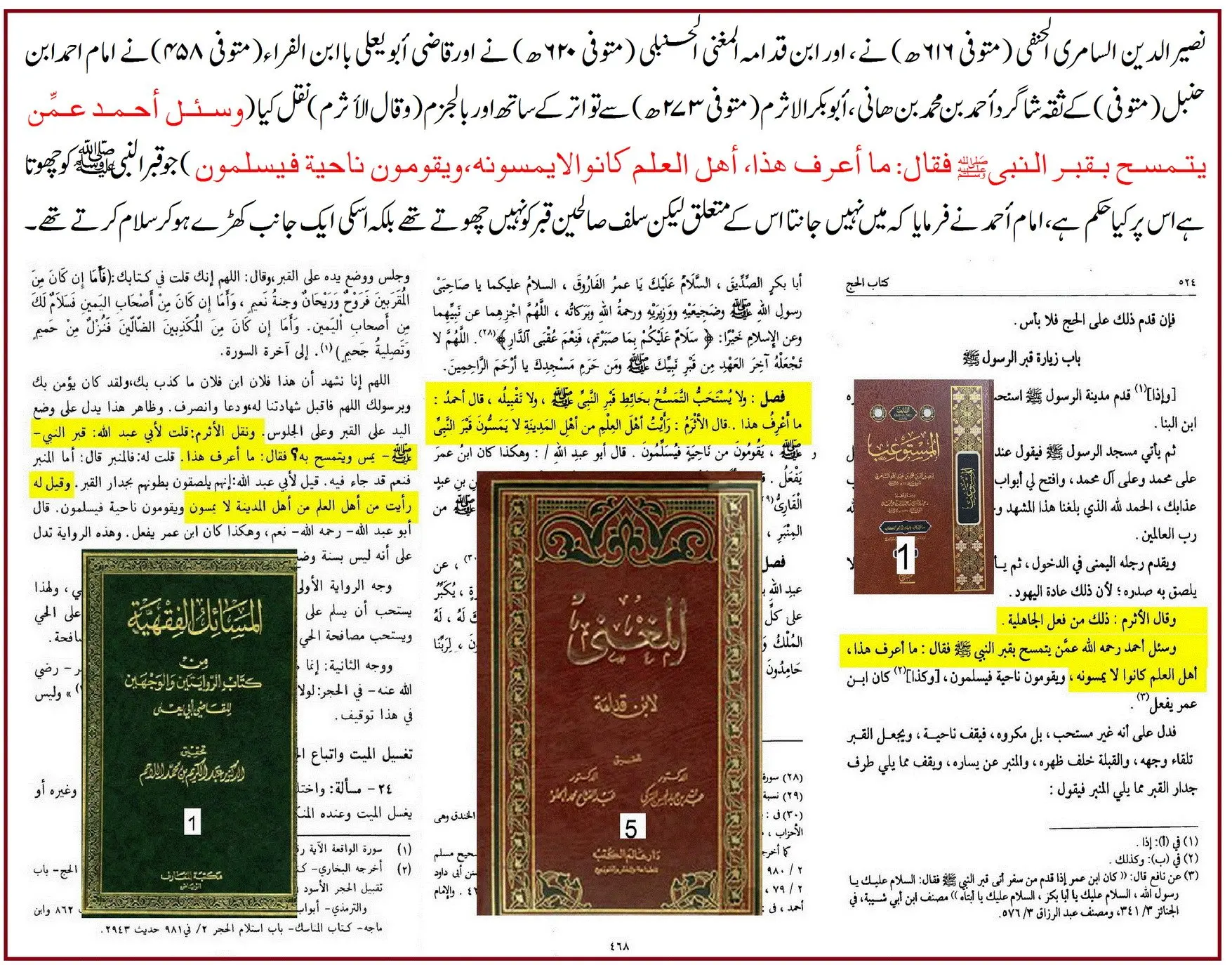
ونقل الأثرم: قلتُ لأبي عبد الله: قبرُ النبي ﷺ يُمَسُّ ويُتَمَسَّحُ به؟فقال: ما أعرفُ هذا. قلتُ: فالمنبر؟ قال: أما المنبر فنعم قد جاء فيه.
قيل له: إنهم يُلصِقون بطونَهم بجدار القبر.
وقيل له: رأيتُ من أهل العلم من أهل المدينة لا يَمَسُّون ويقومون ناحيةً فيُسلِّمون.
قال أبو عبد الله رحمه الله: نعم، وهكذا كان ابن عمر يفعل.
Reference: المسائل الفقهية للقاضي أبي يعلى
Translation & Point
Regarding touching or rubbing against the grave, he said: “I do not know this” (meaning: it is not from the Sunnah).He acknowledged reports concerning the pulpit.
He mentioned that the people of Madinah would not touch the grave but stand at a distance and offer salām, and that this was the practice of Ibn ʿUmar رضي الله عنهما.
Qāḍī Abū Yaʿlā stated:
وهذه الرواية تدل على أنه ليس بسنة وضع اليد على القبر۔
“These narrations indicate that placing the hand upon the grave is not Sunnah.”
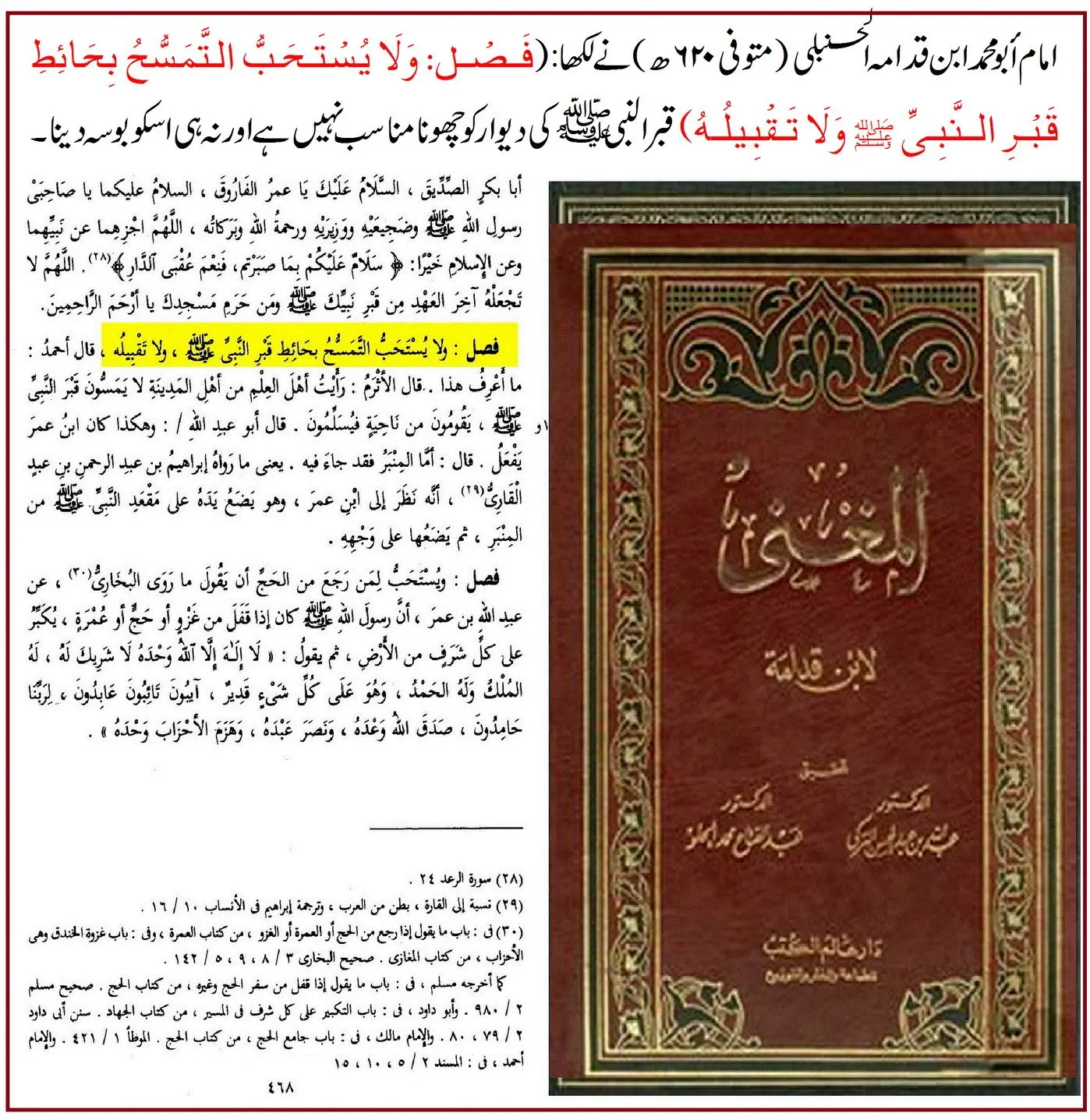
④ Ibn Qudāmah al-Ḥanbalī
Arabic Text
(2749) ولا يُستحبُّ التمسحُ بحائطِ قبر النبي ﷺ ولا تقبيله۔
Reference: المغني لابن قدامة
Translation
It is not recommended to rub against or kiss the wall of the Prophet’s ﷺ grave.⑤ ʿAlā’ al-Dīn al-Mardāwī
Arabic Text
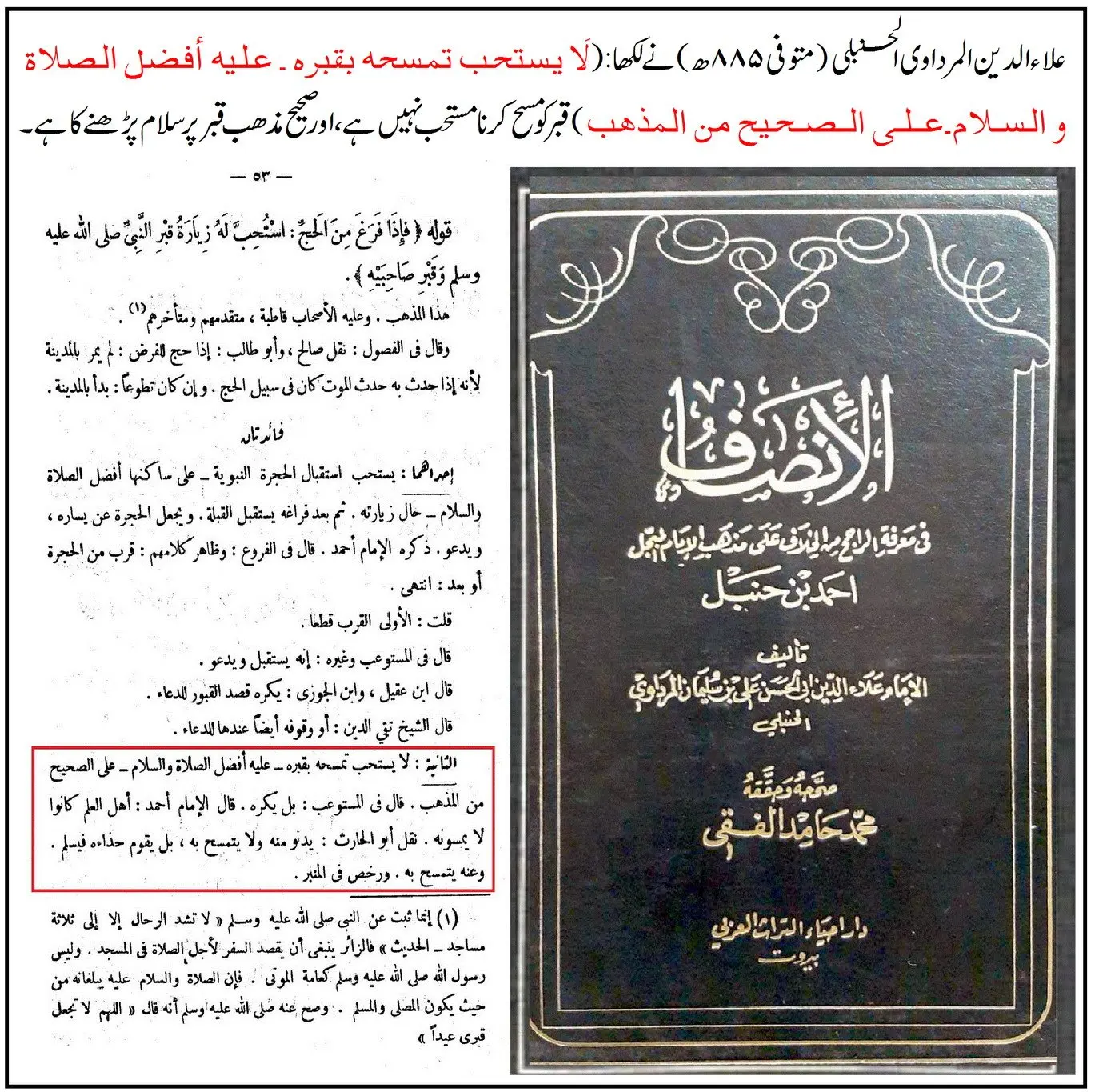
لا يُستحبُّ تمسُّحُهُ بقبره ﷺ على الصحيح من المذهب۔
Reference: الإنصاف
Translation
According to the correct position of the madhhab, rubbing against the Prophet’s ﷺ grave is not recommended.⑥ Sharaf al-Dīn al-Ḥajjāwī
Arabic Text
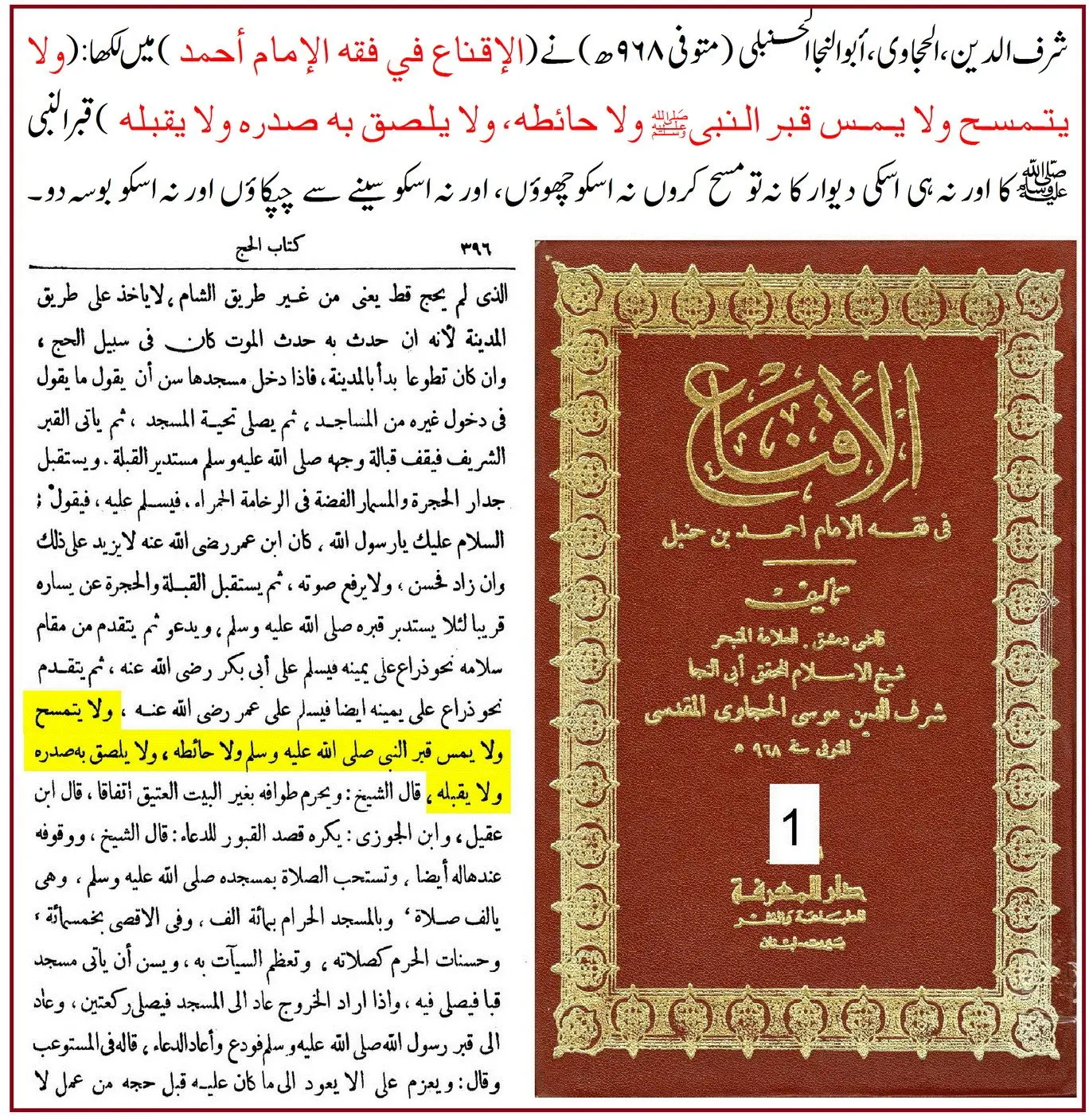
ولا يتمسح ولا يمسُّ قبرَ النبي ﷺ ولا حائطَه، ولا يُلصِقُ به صدرَه، ولا يقبِّلُه۔
Reference: الإقناع
Translation
One should not rub against, touch, press one’s chest to, or kiss the Prophet’s ﷺ grave or its wall.⑦ Manṣūr al-Buhūtī
Arabic Text
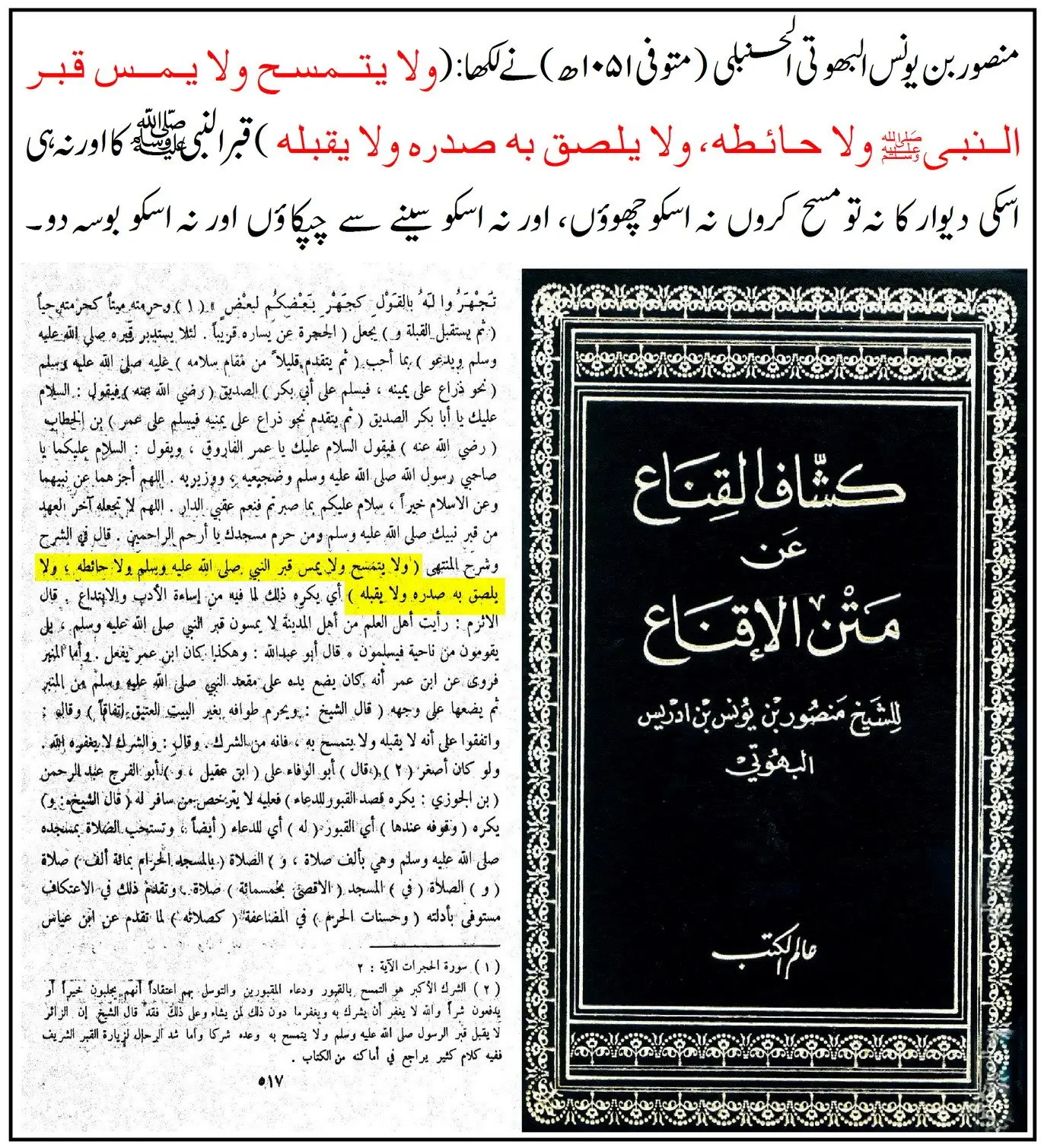
يُكره ذلك لِما فيه من إساءة الأدب والابتداع۔
Reference: كشاف القناع
Translation
This is disliked due to containing disrespect and innovation.⑧ Marʿī ibn Yūsuf al-Karmī
Arabic Text
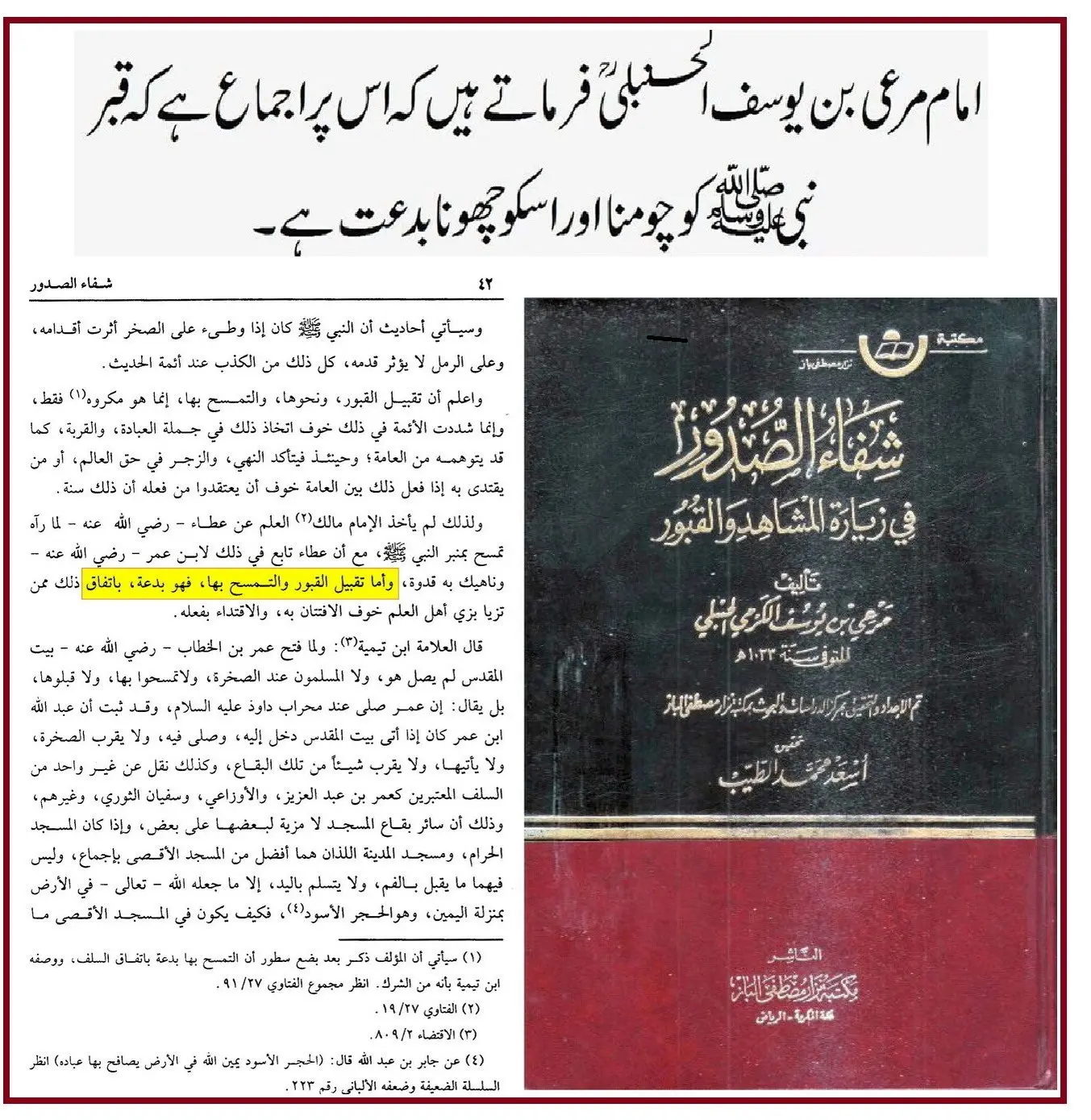
وأما تقبيلُ القبور والتمسُّحُ بها فهو بدعةٌ باتفاق۔
Reference: شفاء الصدور
Translation
As for kissing graves and rubbing against them, it is unanimously an innovation.Supporting Responses
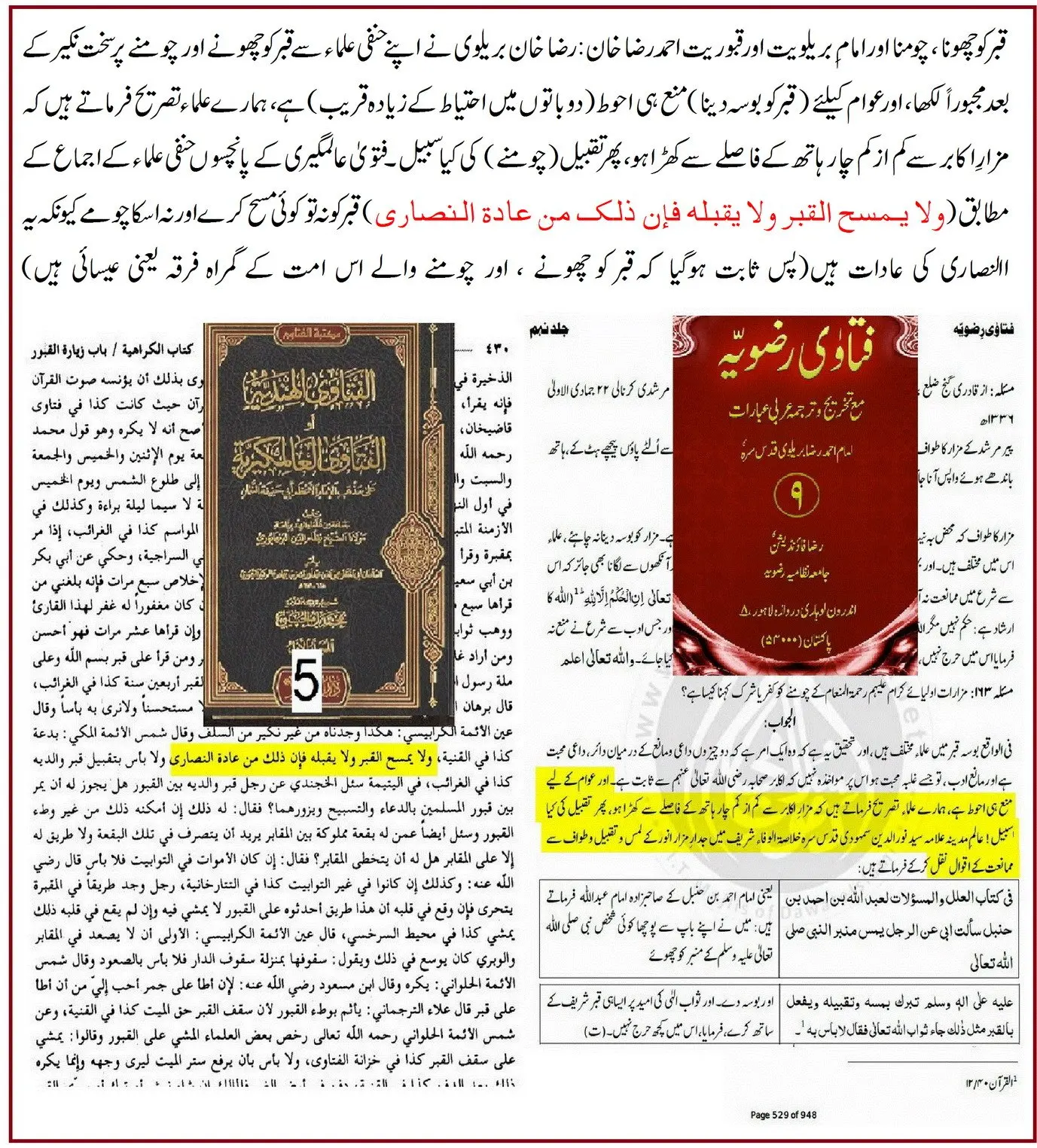
① Fatāwā al-Hindiyyah (Ḥanafī Consensus)
Arabic Text
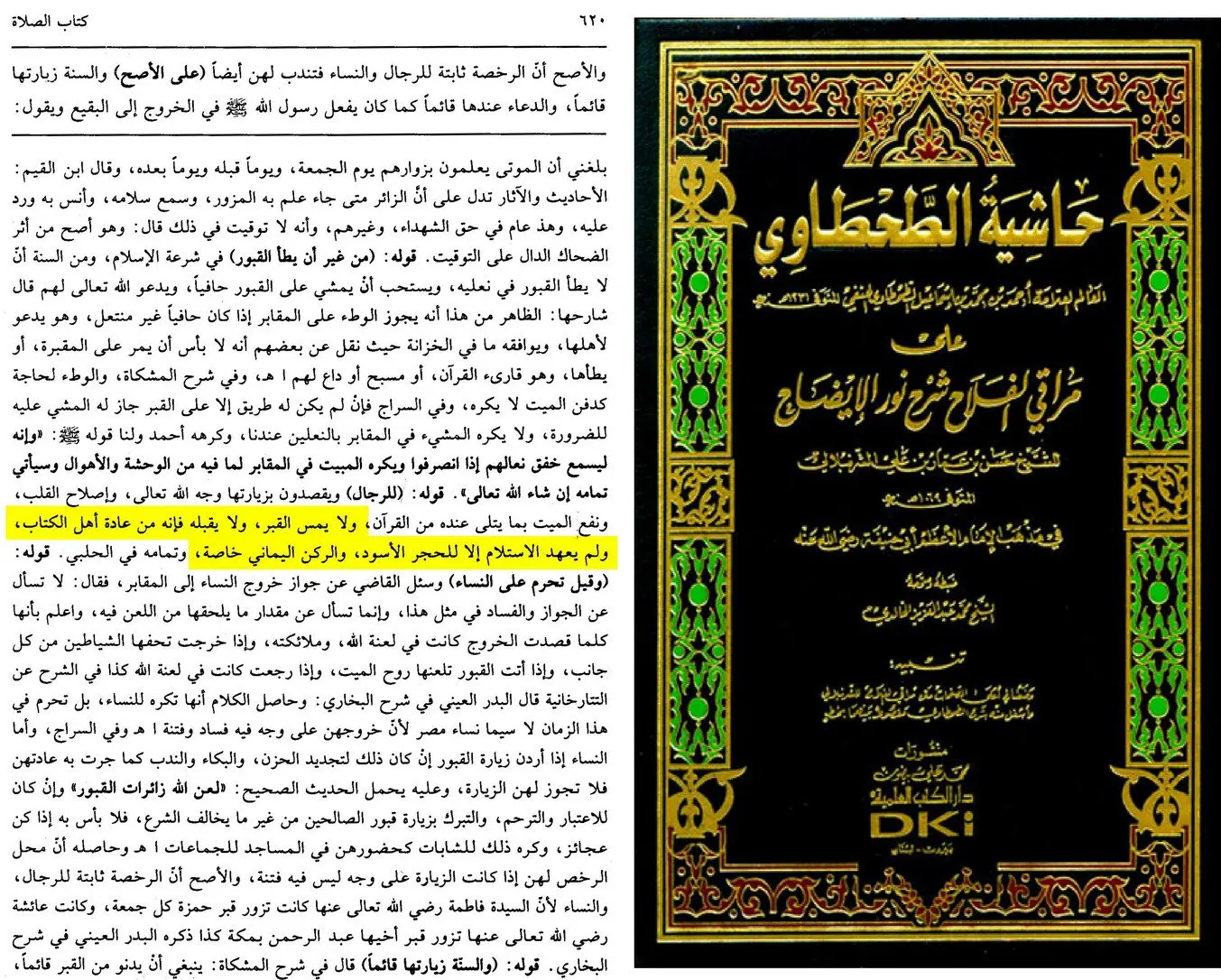
ولا يمسح القبر ولا يقبله فإن ذلك من عادة النصارى۔
Reference: الفتاوى الهندية
Translation
The grave should neither be touched nor kissed, for this is from the customs of the Christians.② Statement of Aḥmad Riḍā Khān Barelwī
“It is more precautionary to prohibit the masses from kissing graves. Our scholars have stated that one should stand at least four hand-lengths away from the shrine of the pious. So how can kissing be allowed?”
Reference: فتاوی رضویہ 9/529
Agreed Position of the Ḥanbalī Scholars
❖ The son of Imam Aḥmad (Ṣāliḥ), his trustworthy students (al-Athram and al-Marwazī), and later Ḥanbalī authorities (Ibn Qudāmah, al-Mardāwī, al-Buhūtī, al-Ḥajjāwī, al-Karmī, etc.) all affirm:① Touching the grave
② Kissing it
③ Pressing one’s chest against it
— are innovations (bidʿah).
❖ The Sunnah is only to offer salām while standing respectfully.
Conclusion
❖ The attribution to Imam Aḥmad permitting kissing or touching the grave or pulpit is anomalous and rejected.❖ The established and relied-upon position of the Ḥanbalī scholars is prohibition.
❖ Even Ḥanafī and Barelwī sources affirm that kissing graves is impermissible and liken it to Christian practice.
Therefore, the agreed methodology of Ahl al-Sunnah wa al-Jamāʿah is:
✔ Touching graves
✔ Kissing them
✔ Pressing the chest against them
— are innovations and impermissible acts.
The Sunnah is only to stand before the grave and offer salām, as transmitted from the Companions and the Salaf.

