Imam Abu Ḥanīfah’s Statement: “That Is the Statement of Shayṭān” – A Research Analysis
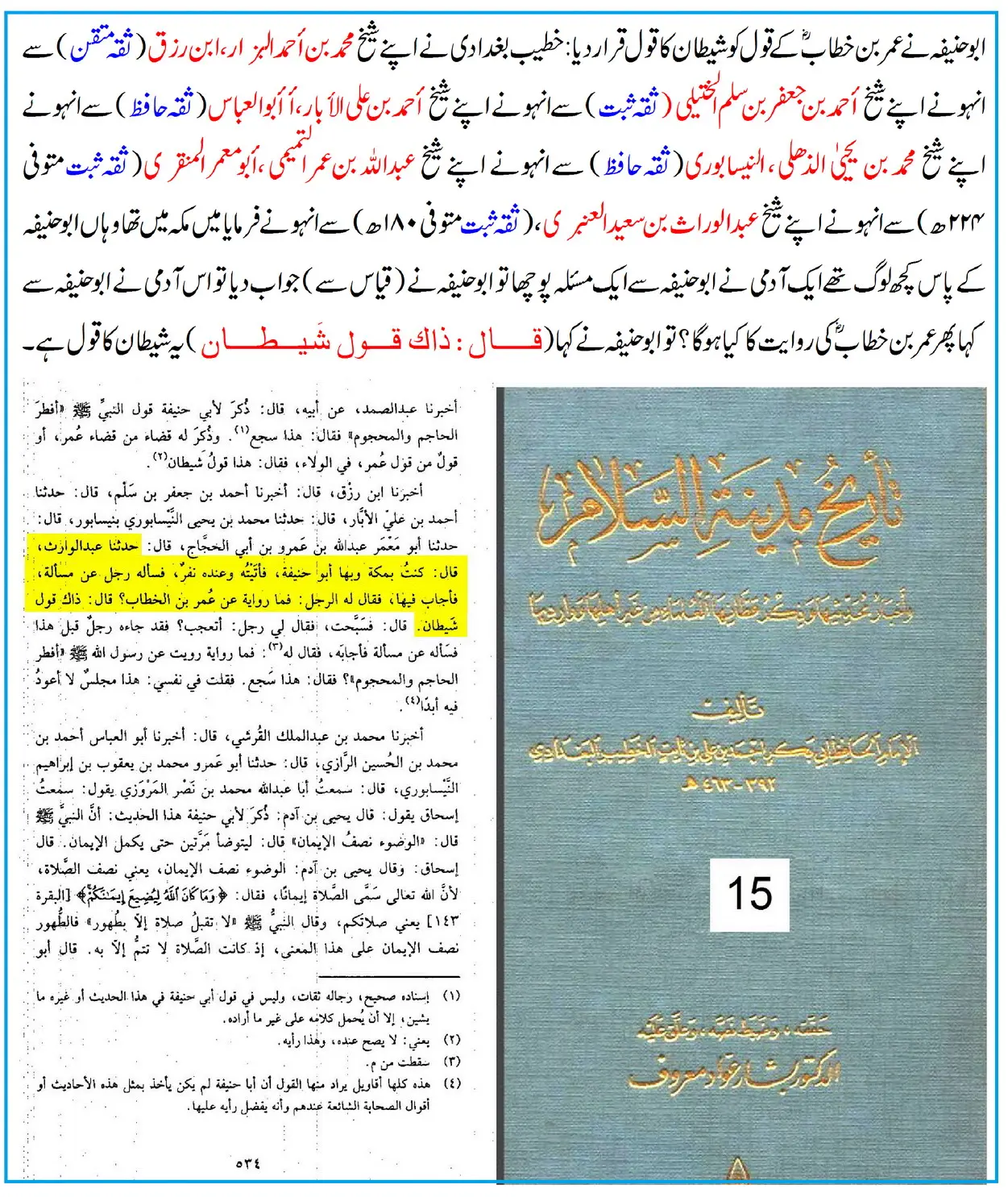
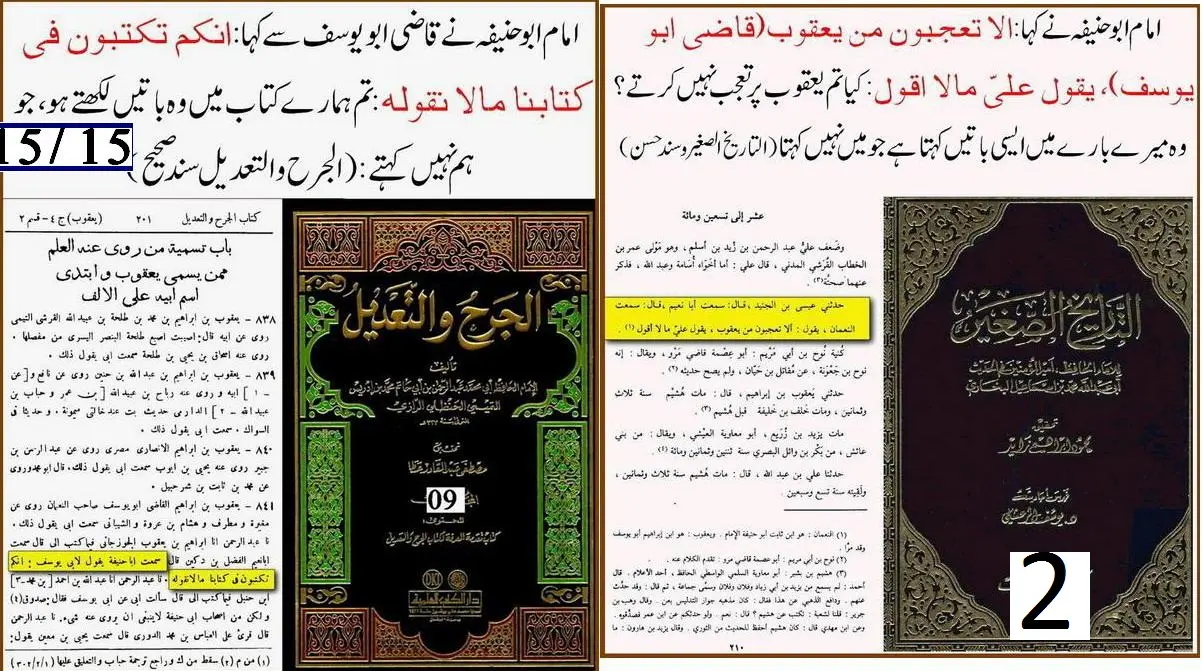
✍ Written by: Abu Ḥamzah SalafiImam al-Khaṭīb al-Baghdādī has narrated a report in his book Tārīkh Baghdād concerning Imam Aʿẓam Abū Ḥanīfah رحمه الله, wherein it is mentioned that he said regarding a statement attributed to Sayyidunā ʿUmar ibn al-Khaṭṭāb رضي الله عنه:
“ذَاكَ قَوْلُ شَيْطَانٍ”
“That is the statement of Shayṭān.”
This narration is authentic in its chain (ṣaḥīḥ isnādan) and established. The majority of ḥadīth scholars have declared its narrators trustworthy and reliable. The objections raised against it are merely based on interpretations and conjecture.
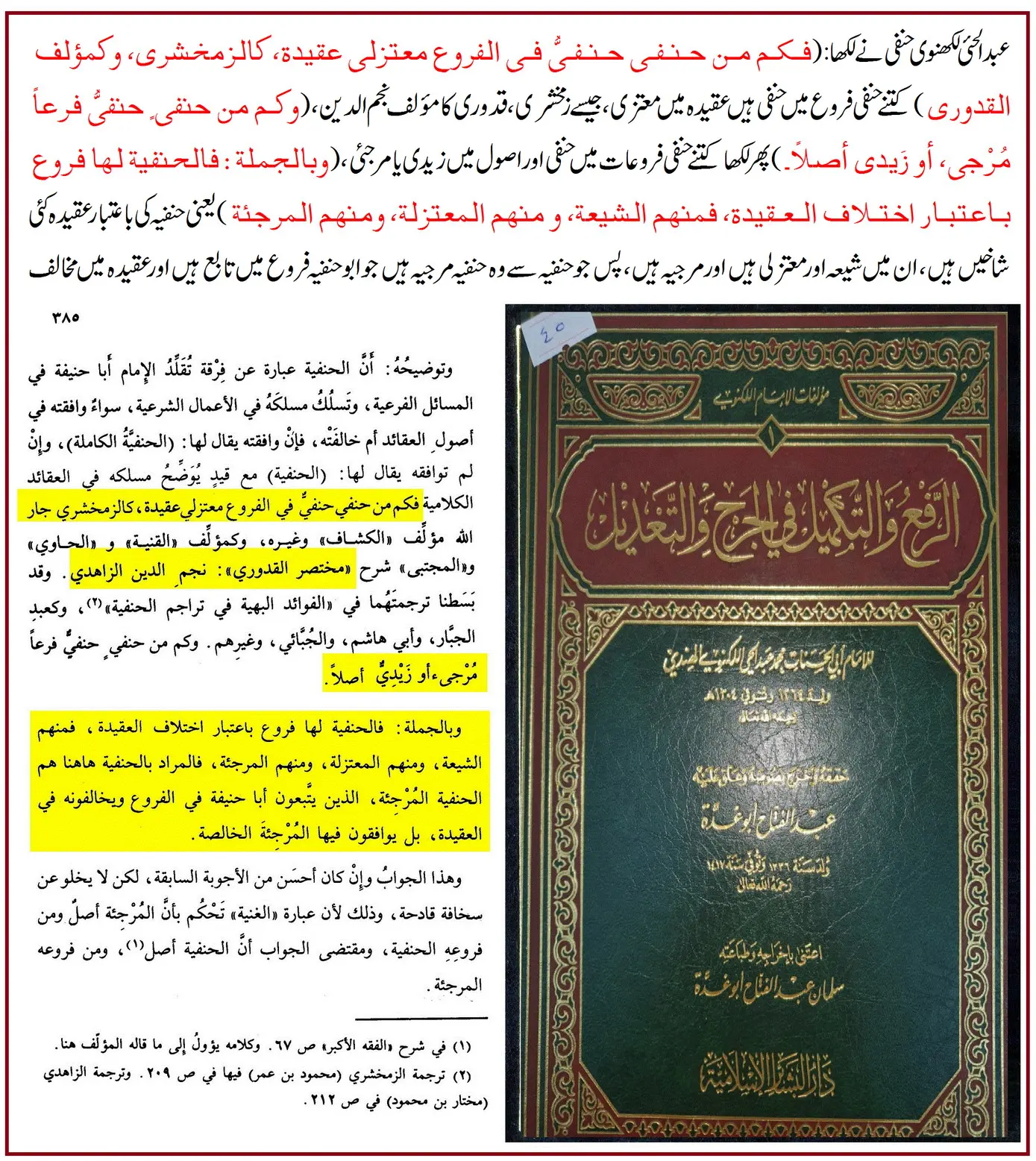
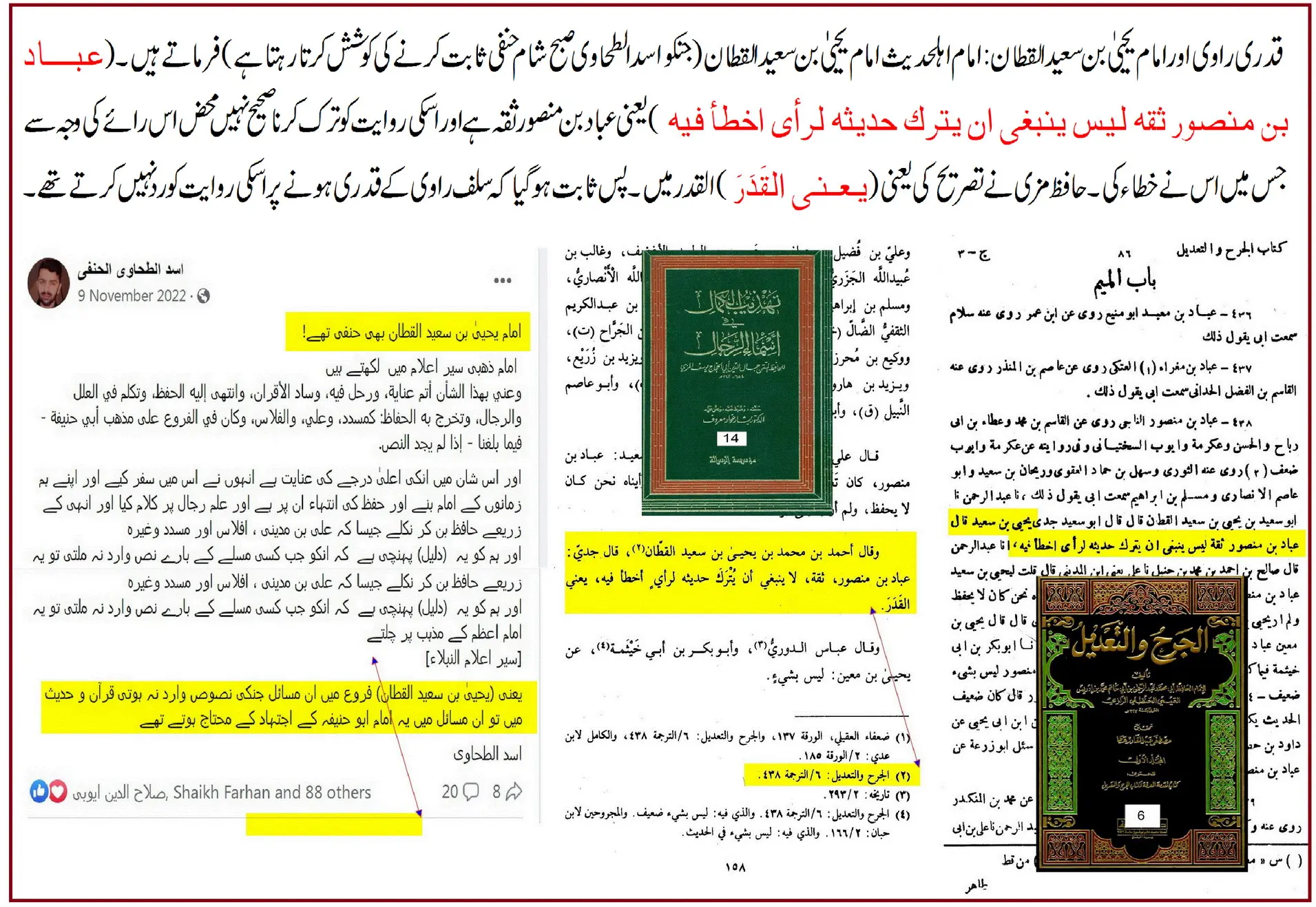
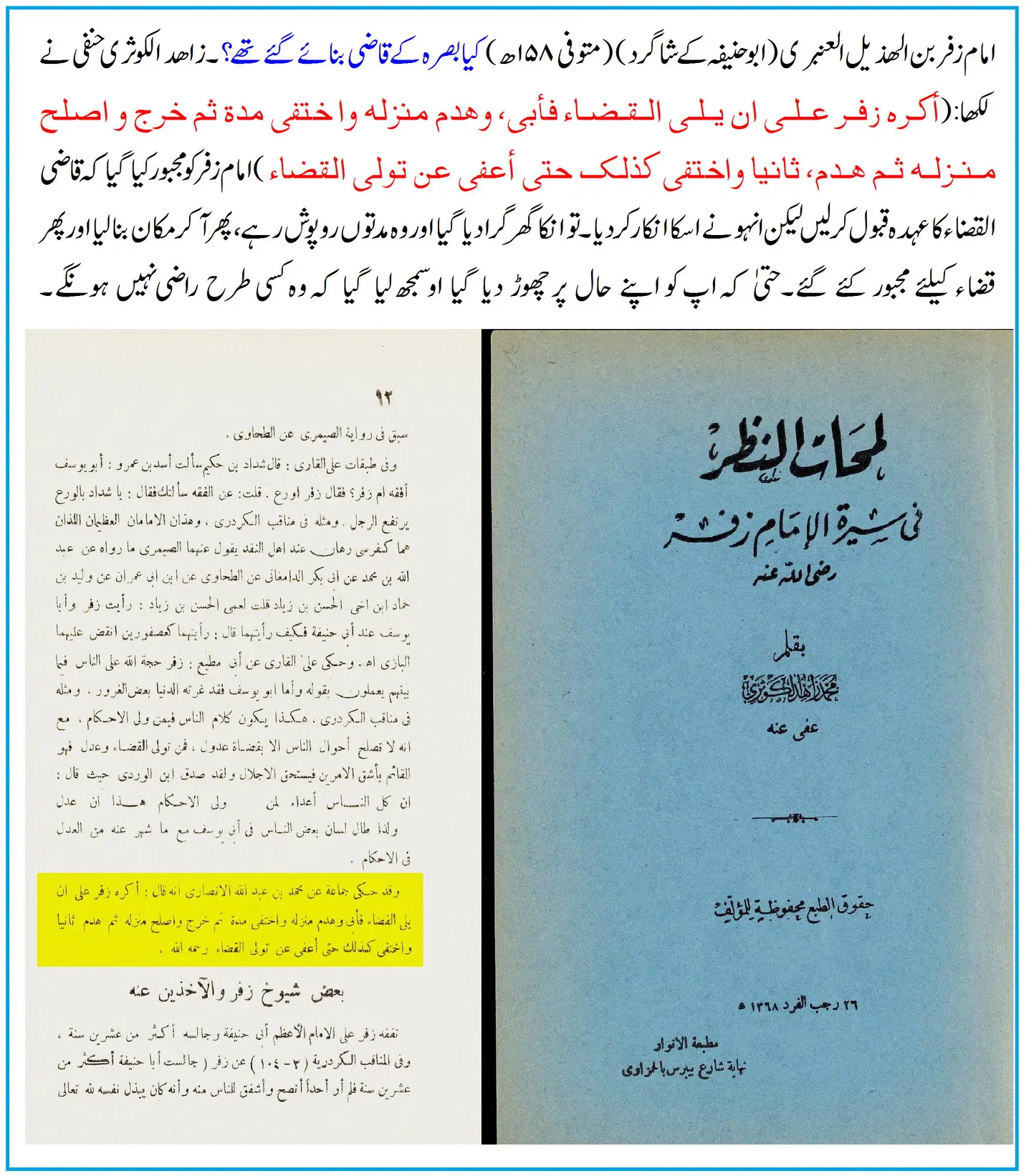
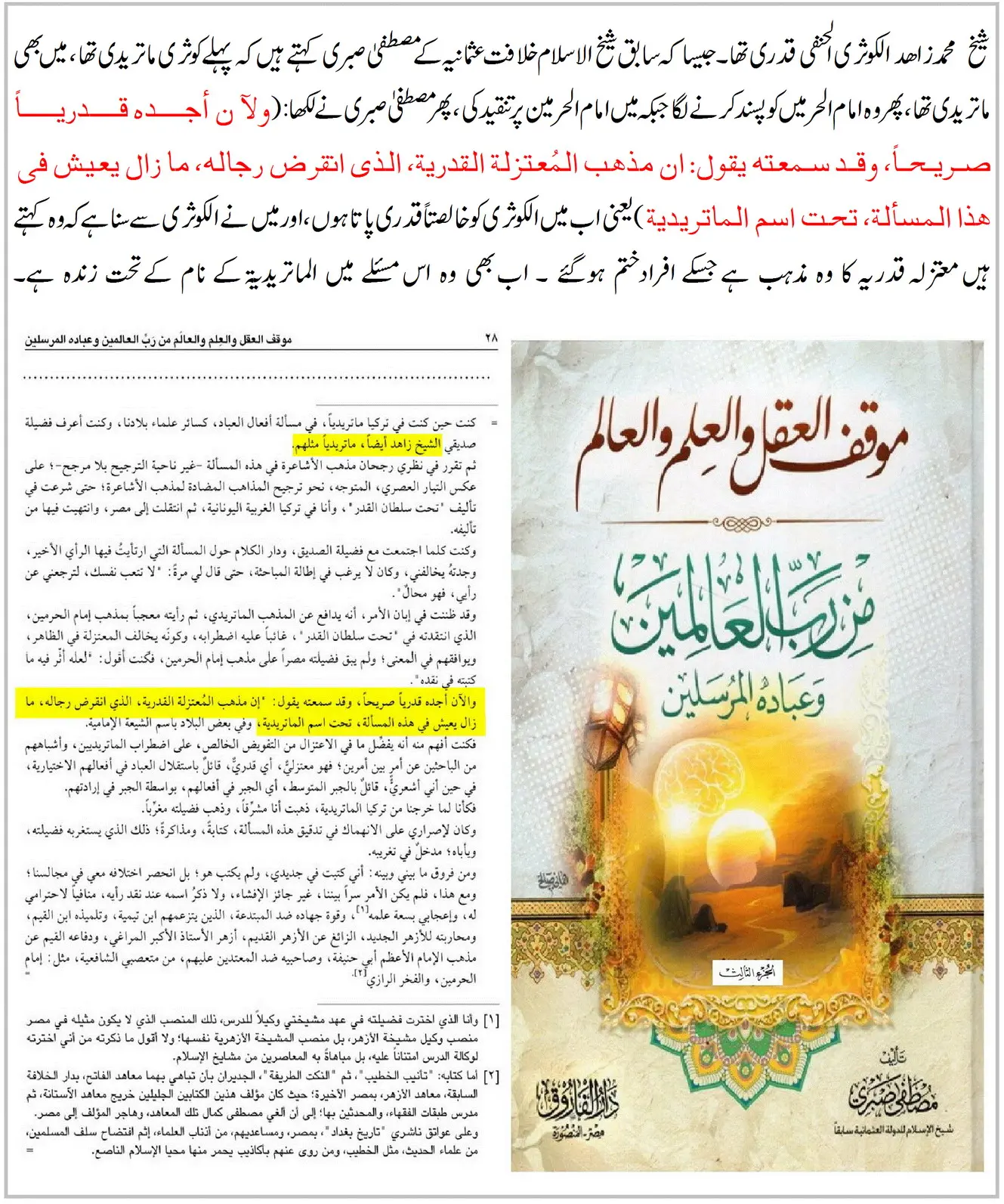
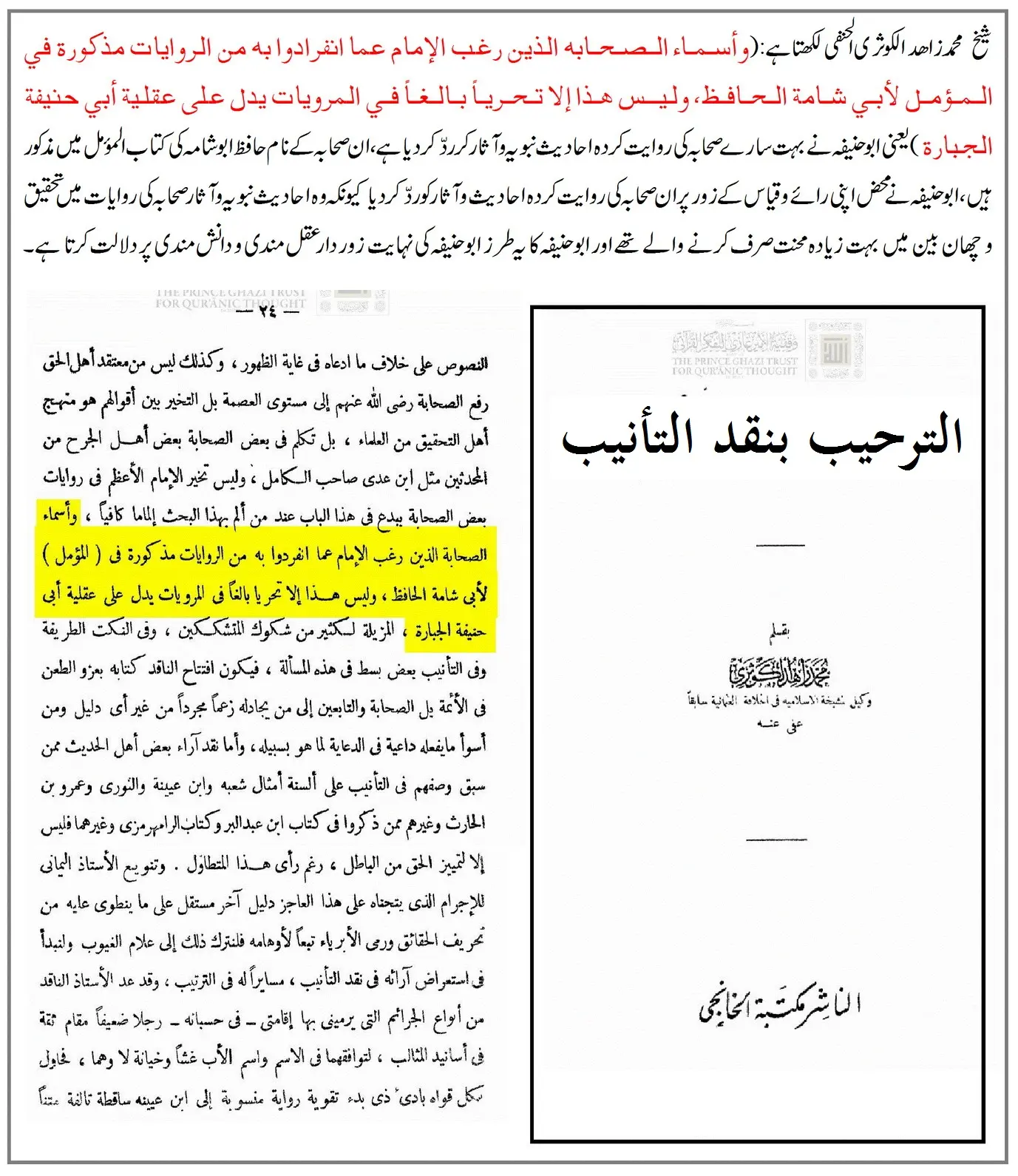
Some individuals from the Barelvi school of thought, particularly Asad al-Ṭaḥāwī (innovator), deny this narration and raise various doubts, such as:
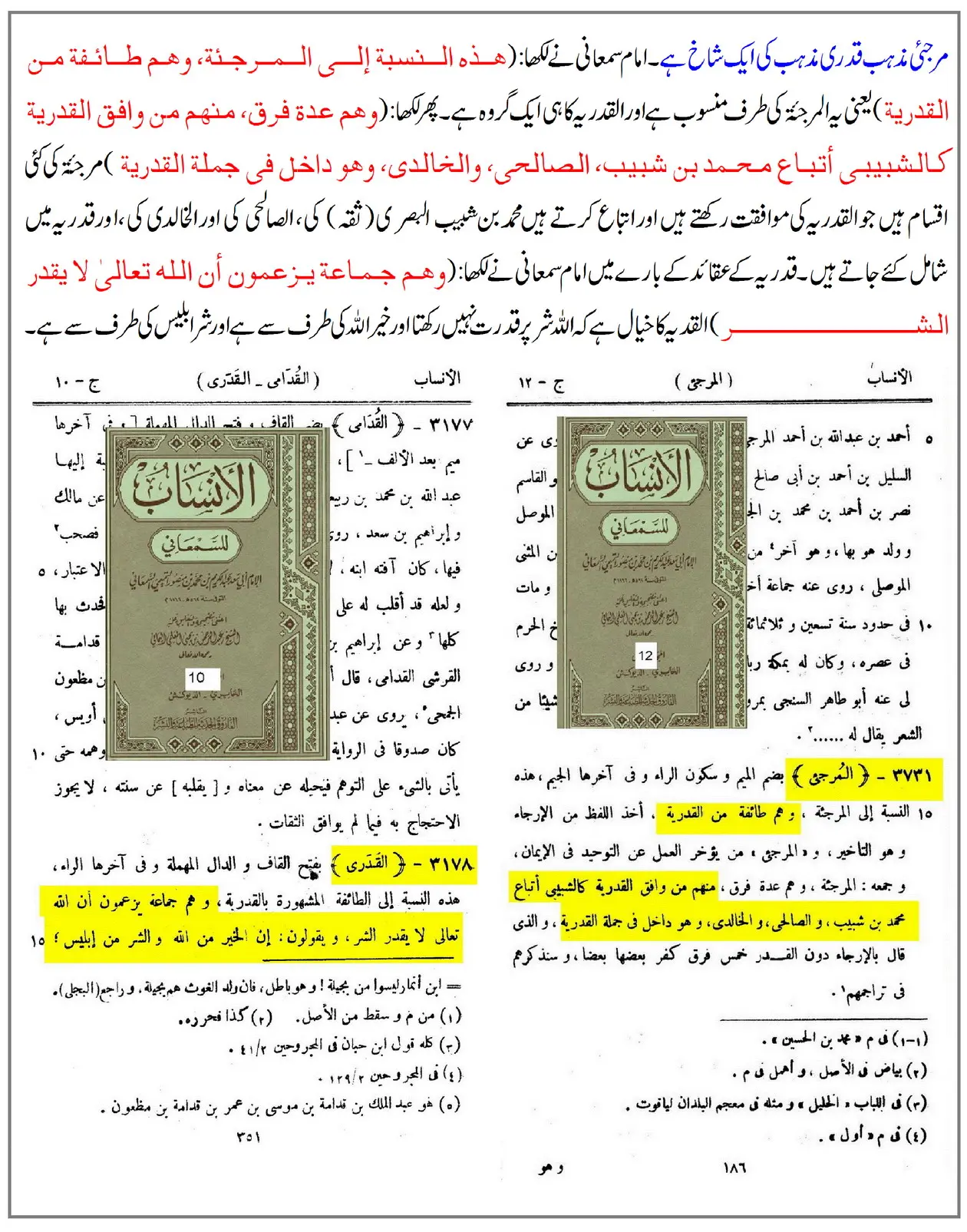
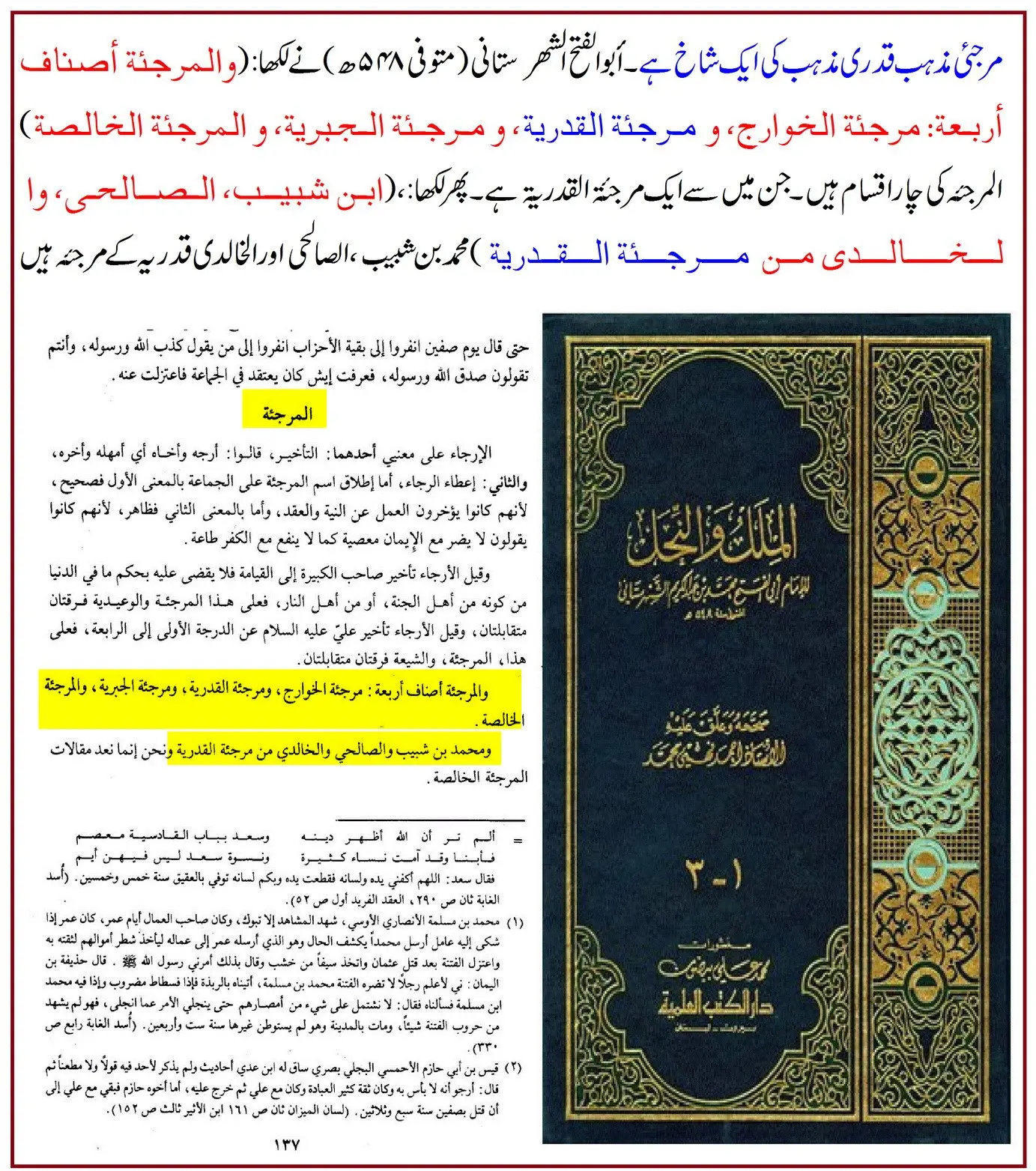
① Claiming that some narrators in the chain were accused of being “Qadari,” thus rendering it unacceptable.
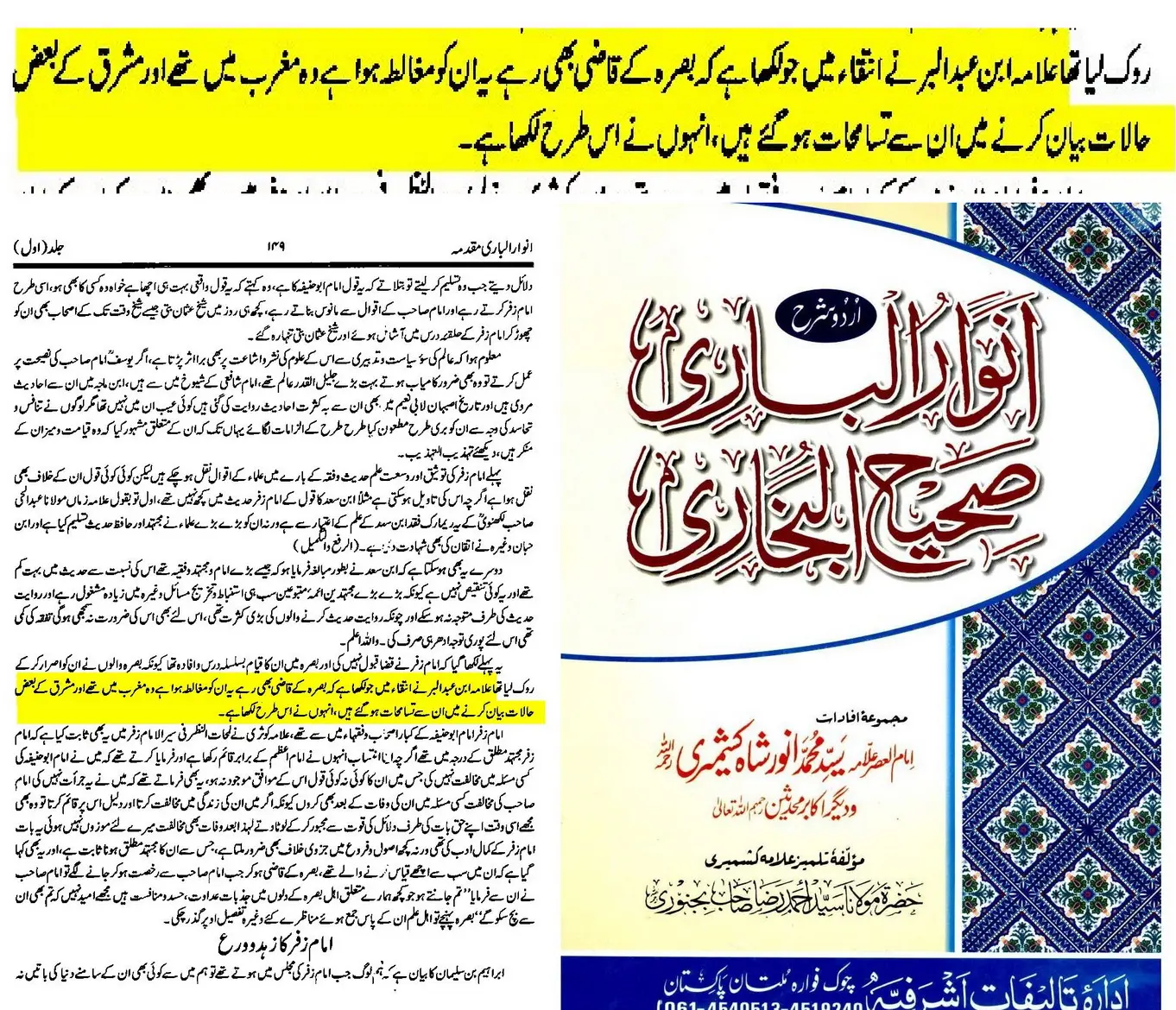
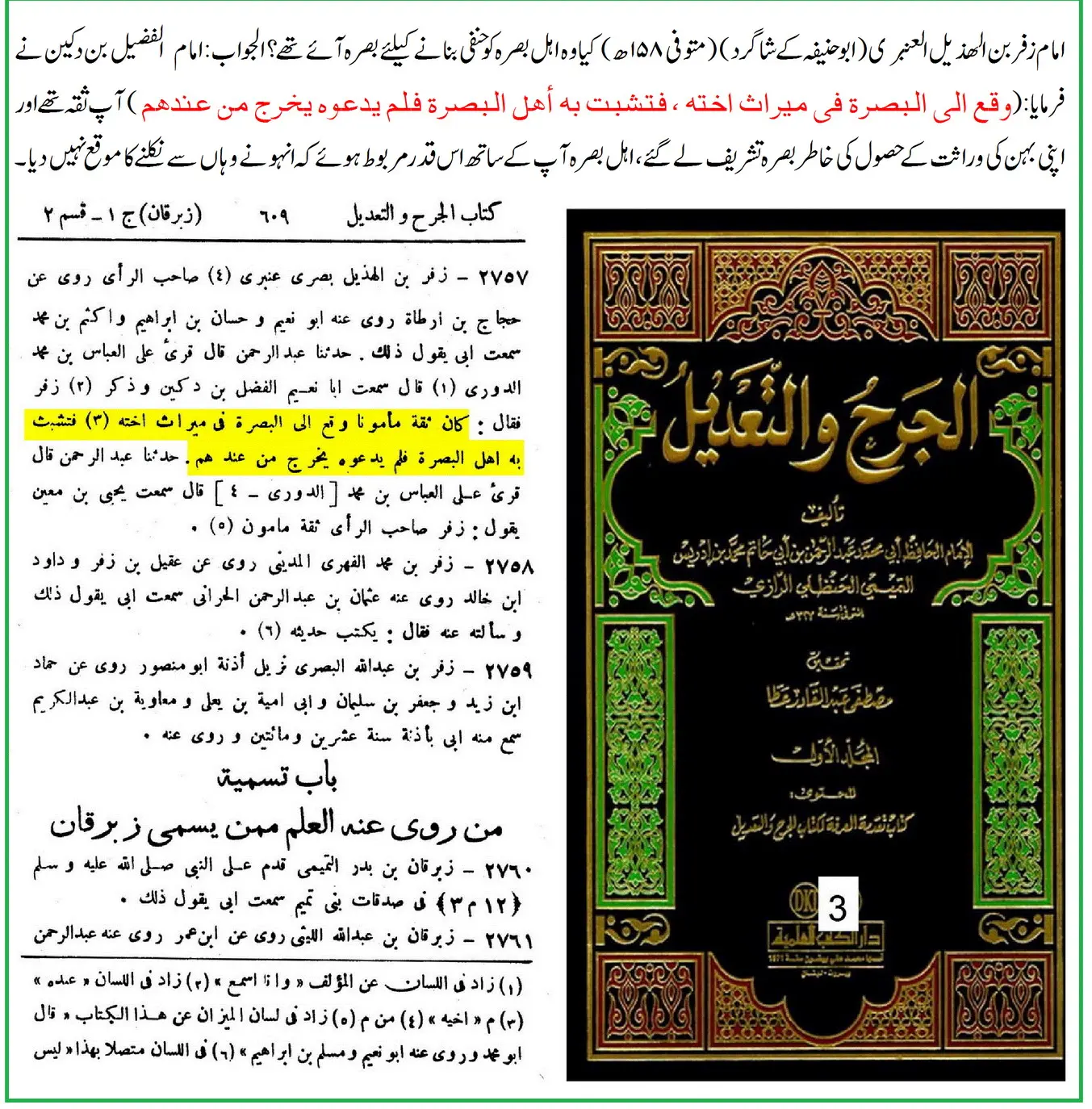
② Alleging that the people of Baṣrah fabricated this narration due to bias.
③ Asserting that such a statement cannot be attributed to Imam Abū Ḥanīfah رحمه الله at all.
The purpose of this article is to respond to these objections and establish that this narration is authentically proven from Imam Abū Ḥanīfah رحمه الله. Each objection will be cited and then answered with scholarly analysis.
The Original Text and Chain of the Narration in Tārīkh Baghdād
أَخْبَرَنَا ابْنُ رِزْقٍ، قَالَ: أَخْبَرَنَا أَحْمَدُ بْنُ جَعْفَرِ بْنِ سَلْمٍ، قَالَ: حَدَّثَنَا أَحْمَدُ بْنُ عَلِيٍّ الأَبَّارُ، قَالَ: حَدَّثَنَا مُحَمَّدُ بْنُ يَحْيَى النَّيْسَابُورِيُّ، بِنَيْسَابُورَ، قَالَ: حَدَّثَنَا أَبُو مَعْمَرِ عَبْدُ اللَّهِ بْنُ عَمْرِو بْنِ أَبِي الْحَجَّاجِ، قَالَ: حَدَّثَنَا عَبْدُ الْوَارِثِ، قَالَ: كُنْتُ بِمَكَّةَ وَبِهَا أَبُو حَنِيفَةَ، فَأَتَيْتُهُ وَعِنْدَهُ نَفَرٌ، فَسَأَلَهُ رَجُلٌ عَنْ مَسْأَلَةٍ فَأَجَابَ فِيهَا، فَقَالَ لَهُ الرَّجُلُ: فَمَا رِوَايَةٌ عَنْ عُمَرَ بْنِ الْخَطَّابِ؟ قَالَ: ذَاكَ قَوْلُ شَيْطَانٍ،قَالَ: فَسَبَّحْتُ، فَقَالَ لِي رَجُلٌ: أَتَعْجَبُ؟ فَقَدْ جَاءَهُ رَجُلٌ قَبْلَ هَذَا فَسَأَلَهُ عَنْ مَسْأَلَةٍ، فَأَجَابَهُ، فَقَالَ لَهُ: فَمَا رِوَايَةٌ رُوِيَتْ عَنْ رَسُولِ اللَّهِ صَلَّى اللَّهُ عَلَيْهِ وَسَلَّمَ: «أَفْطَرَ الْحَاجِمُ وَالْمَحْجُومُ»؟ فَقَالَ: هَذَا سَجْعٌ، فَقُلْتُ فِي نَفْسِي: هَذَا مَجْلِسٌ لَا أَعُودُ فِيهِ أَبَدًا.

Reference: Tārīkh Baghdād, 13/387
Translation
ʿAbd al-Wārith said: I was in Makkah, and Abū Ḥanīfah was there. I went to him while a group of people were seated with him. A man asked him about an issue, and he answered it. The man then said: “What about a narration from ʿUmar ibn al-Khaṭṭāb?” He replied:“That is the statement of Shayṭān.”
The narrator said: I said Subḥān Allāh! A man said to me: “Are you surprised? A man came earlier and asked him about an issue. After he answered, the man said: ‘What about the narration from the Messenger of Allah ﷺ: “أفطر الحاجم والمحجوم” (The cupper and the one cupped have broken their fast)?’ He replied: ‘This is rhymed speech.’”
I said to myself: This is a gathering I will never return to.
Status of the Narrators
◈ Al-Khaṭīb al-Baghdādī — Trustworthy, authoritative scholar.◈ Muḥammad ibn Aḥmad al-Bazzār — Trustworthy and precise.
◈ Aḥmad ibn Jaʿfar al-Khaṭlī — Trustworthy and firm.
◈ Aḥmad ibn ʿAlī al-Abrār — Trustworthy ḥāfiẓ.
◈ Muḥammad ibn Yaḥyā al-Dhuhlī — Trustworthy, eminent ḥāfiẓ.
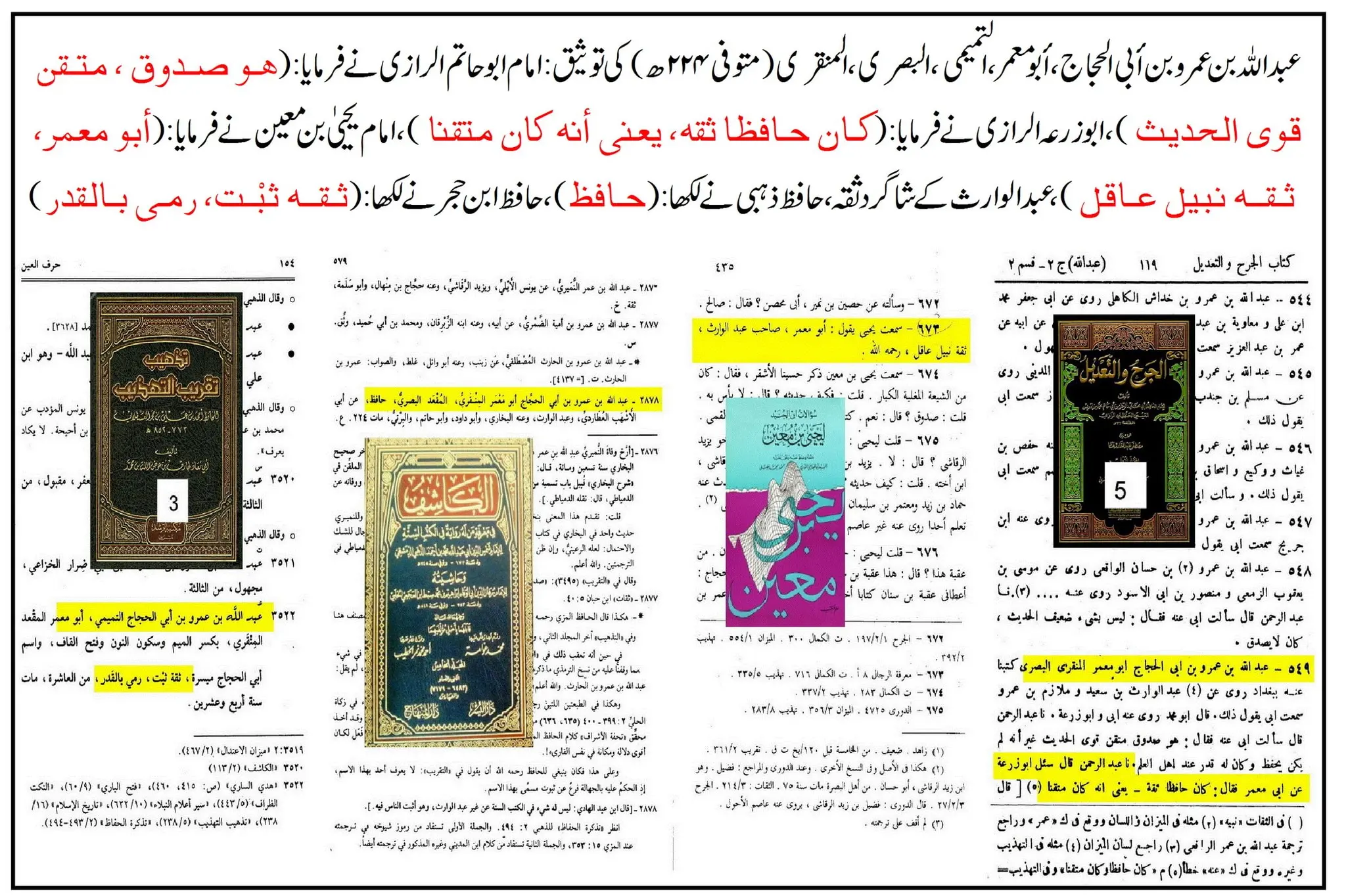
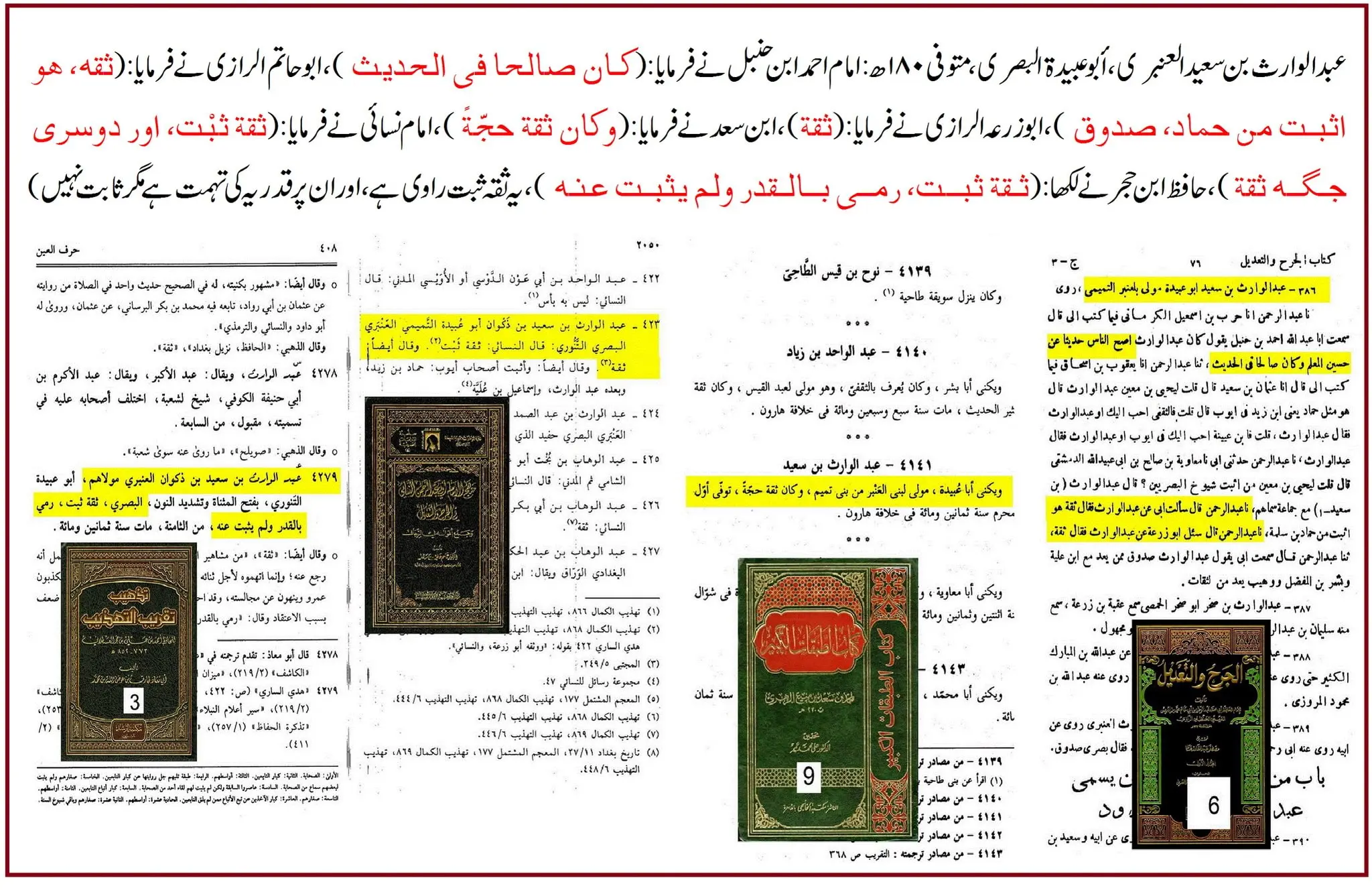
◈ Abū Maʿmar ʿAbdullāh ibn ʿAmr — Trustworthy and firm (though accused of Qadari inclination).
◈ ʿAbd al-Wārith ibn Saʿīd — Trustworthy and firm (accused of Qadari belief, not established).
First Objection — Presence of “Qadari” Narrators
❖ Objection
It is claimed that since two narrators were accused of Qadari beliefs, their narration is rejected.❖ Response
① ʿAbd al-Wārith ibn Saʿīd
Ibn Ḥajar said:«ثقة ثبت رمي بالقدر ولم يثبت عنه»
“He is trustworthy and firm; he was accused of Qadari belief, but it was not established.”
Reference: Taqrīb al-Tahdhīb: 3888
Al-Dhahabī said:
«قد كان عبد الوارث إمامًا حجّة متعبدًا»
“He was an Imam, an authority, and devout.”
Reference: Tārīkh al-Islām, 10/672
② Abū Maʿmar
Abū Zurʿah said:«كان حافظًا – ثقة»
“He was a ḥāfiẓ and trustworthy.”
Reference: Al-Jarḥ wa al-Taʿdīl, 5/66
Ibn Ḥajar:
«ثقة ثبت»
“Trustworthy and firm.”
Reference: Taqrīb al-Tahdhīb: 3498
③ Principle of Ḥadīth
Yaḥyā ibn Saʿīd al-Qaṭṭān said:«لا ينبغي أن يترك حديثه لرأي أخطأ فيه»
“One should not abandon his ḥadīth merely due to an erroneous opinion he held.”
Reference: Al-Jarḥ wa al-Taʿdīl, 6/23
✔ A trustworthy narrator who holds a bidʿah but does not propagate it is accepted.
 Conclusion
The accusation of Qadari belief is either unproven or non-damaging. Thus, the objection is baseless.Second Objection — Alleged Bias of the People of Baṣrah
❖ Response
① Authenticity depends on chain reliability, not regional allegations.② All narrators are explicitly declared trustworthy.
③ Historical stories of bias have no evidentiary chain.
④ Even some Ḥanafī scholars acknowledge that strong expressions from Imam Abū Ḥanīfah are established.
Conclusion
The “bias” argument is not a scholarly proof. The narration remains authentic.Third Objection — Criticism by al-Dāraquṭnī and Ibn Ḥajar
Al-Dāraquṭnī:«في حفظه شيء»
“There is something concerning his memory.”
Reference: Suʾālāt al-Barqānī: 338
Ibn Ḥajar:
«صدوق له أوهام»
“Truthful, though he has some errors.”
Reference: Taqrīb al-Tahdhīb: 3054
Major scholars such as Aḥmad ibn Ḥanbal, Yaḥyā ibn Maʿīn, and Abū Zurʿah declared him trustworthy.
✔ Partial criticism does not override overwhelming authentication.
Fourth Objection — Denial or Interpretation
The narration is transmitted with a complete authentic chain.No textual disturbance exists.
Denial without evidence contradicts the methodology of ḥadīth scholars.
The statement reflects Imam Abū Ḥanīfah’s strict debating style and does not imply disrespect toward Sayyidunā ʿUmar رضي الله عنه, but rather a rejection of a specific attributed report.
 Comprehensive Summary
The narration recorded by al-Khaṭīb al-Baghdādī in Tārīkh Baghdād states that Imam Abū Ḥanīfah رحمه الله said regarding a statement attributed to ʿUmar رضي الله عنه:“ذَاكَ قَوْلُ شَيْطَانٍ”
Four objections were raised:
① Presence of Qadari narrators
② Alleged bias of Baṣrah
③ Partial criticism by al-Dāraquṭnī and Ibn Ḥajar
④ Denial or reinterpretation
After detailed analysis:
✔ All narrators are trustworthy.
✔ Accusations of Qadari belief are either unproven or non-damaging.
✔ Regional bias claims lack evidence.
✔ Partial criticism does not nullify established reliability.
✔ Denial contradicts ḥadīth principles.
Final Conclusion
This narration is authentically established from Imam Abū Ḥanīfah رحمه الله, and there is no scholarly basis to reject it.