

✍ Compiled by: Abu Hamzah Salafi
This article is an academic examination of the claim that Imām Yaḥyā bin Maʿīn (رحمه الله) explicitly declared Imām Abū Ḥanīfah (رحمه الله) reliable (taوثيق). We will analyze—both in chain (sanad) and text (matn)—the references commonly presented on this topic (reports of Ibn ʿAbd al-Barr, Tārīkh Ibn Maʿīn via Ibn Maḥraz, narrations of al-Khaṭīb, al-Kāmil by Ibn ʿAdī, etc.): assessing narrators’ integrity/precision, continuity or disconnection, identifying unknown or rejected reports, and clarifying the precise meanings of technical terms such as «ثِقَة», «لا بأس به», and «أوثق»—especially the difference between relative versus absolute authentication. Alongside this, we will quote the objections of Ḥanafī scholars one by one and provide a reasoned response with their proofs, translation, and explanation, so that the reader can personally see the conclusion according to the standards of Ḥadīth methodology.
[Note: Also read this article: The criticism of Imām Yaḥyā bin Maʿīn regarding Abū Ḥanīfah and his companions—along with “Sakīn”]
قَالَ سُئِلَ يَحْيَى بْنُ مَعِينٍ وَأَنَا أَسْمَعُ عَنْ أَبِي حَنِيفَةَ فَقَالَ: ثِقَةٌ، مَا سَمِعْتُ أَحَدًا ضَعَّفَهُ، هَذَا شُعْبَةُ بْنُ الْحَجَّاجِ يَكْتُبُ إِلَيْهِ أَنْ يُحَدِّثَ وَيَأْمُرُهُ، وَشُعْبَةُ شُعْبَةُ.
Translation:
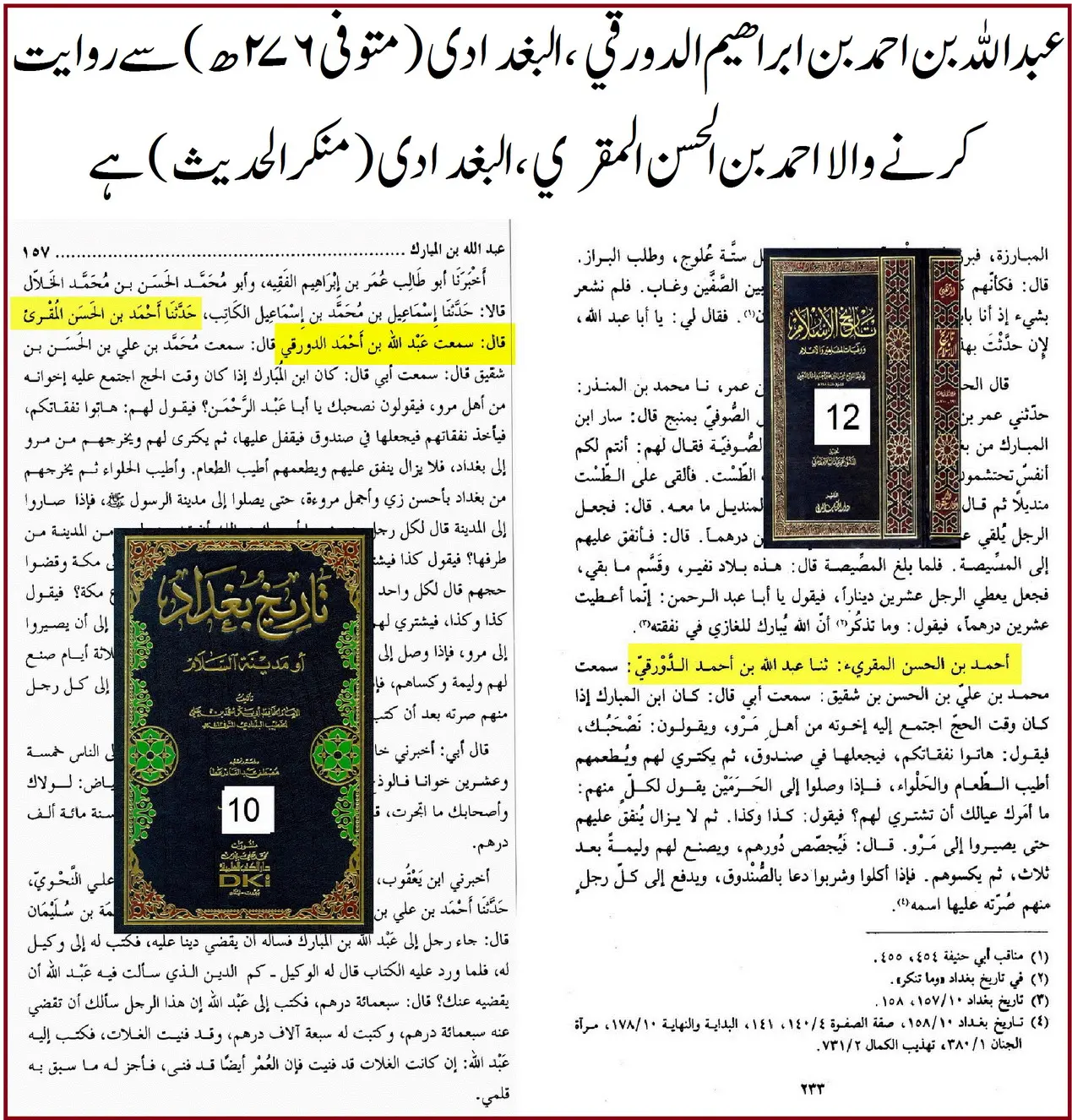
Ibn Dūrqī said: I personally heard that Yaḥyā bin Maʿīn was asked about Abū Ḥanīfah, so he said: “He is trustworthy (thiqah). I have not heard anyone weakening Abū Ḥanīfah. This is Shuʿbah ibn al-Ḥajjāj who used to write to him asking him to narrate ḥadīth and instructing him—and Shuʿbah is (indeed) Shuʿbah!”
Reference:
 al-Intiqāʾ by Ibn ʿAbd al-Barr, and Siyar Aʿlām al-Nubalāʾ by al-Dhahabī (12/467)
Ḥakam bin Mundhir → Abū Yaʿqūb Yūsuf bin Aḥmad bin Yūsuf bin al-Dakhīl → Aḥmad bin al-Ḥasan al-Muqriʾ → ʿAbdullāh bin Aḥmad al-Dūrqī → Yaḥyā bin Maʿīn
لم أجد له ترجمة في كتب الرجال ولا في الطبقات.
Meaning: “I did not find his biography in the books of rijāl nor in the books of ṭabaqāt.”
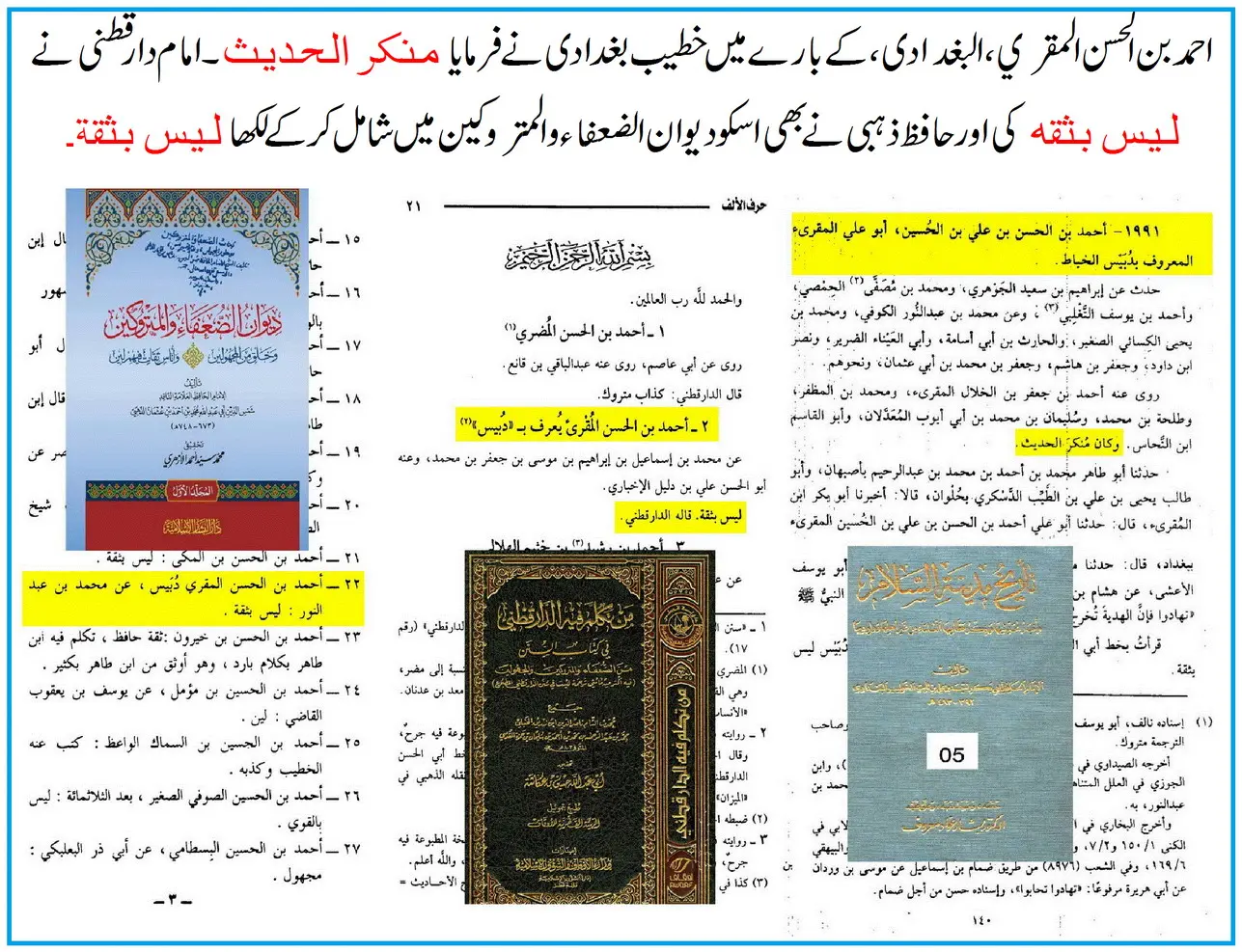
◈ al-Khaṭīb al-Baghdādī: منكر الحديث (rejected in ḥadīth)
◈ al-Dāraquṭnī: ليس بثقة (not trustworthy)
◈ al-Dhahabī: counted him among the weak and abandoned narrators.
① The first narrator (Ḥakam bin Mundhir) is majhūl al-ʿayn.
② The second narrator (Ibn al-Dakhīl) is majhūl al-ḥāl.
③ The third narrator (Aḥmad bin al-Ḥasan) is munkar al-ḥadīth and not trustworthy.
To label such a chain “ṣaḥīḥ” or “proof” in the eyes of ḥadīth scholars is an academic betrayal. Therefore, this narration does not establish an authentication of Abū Ḥanīfah from Imām Ibn Maʿīn.
 Conclusion:
The report transmitted through Ibn ʿAbd al-Barr is weak in chain and unfit for evidence. Hence, using it to prove an absolute authentication of Abū Ḥanīfah from Yaḥyā bin Maʿīn is incorrect.
سَمِعْتُ يَحْيَى بْنَ مَعِينٍ يَقُولُ: كَانَ أَبُو حَنِيفَةَ لَا بَأْسَ بِهِ، وَكَانَ لَا يَكْذِبُ.
وَسَمِعْتُهُ يَقُولُ مَرَّةً أُخْرَى: أَبُو حَنِيفَةَ عِنْدَنَا مِنْ أَهْلِ الصِّدْقِ، وَلَمْ يُتَّهَمْ بِالْكَذِبِ.
Translation:
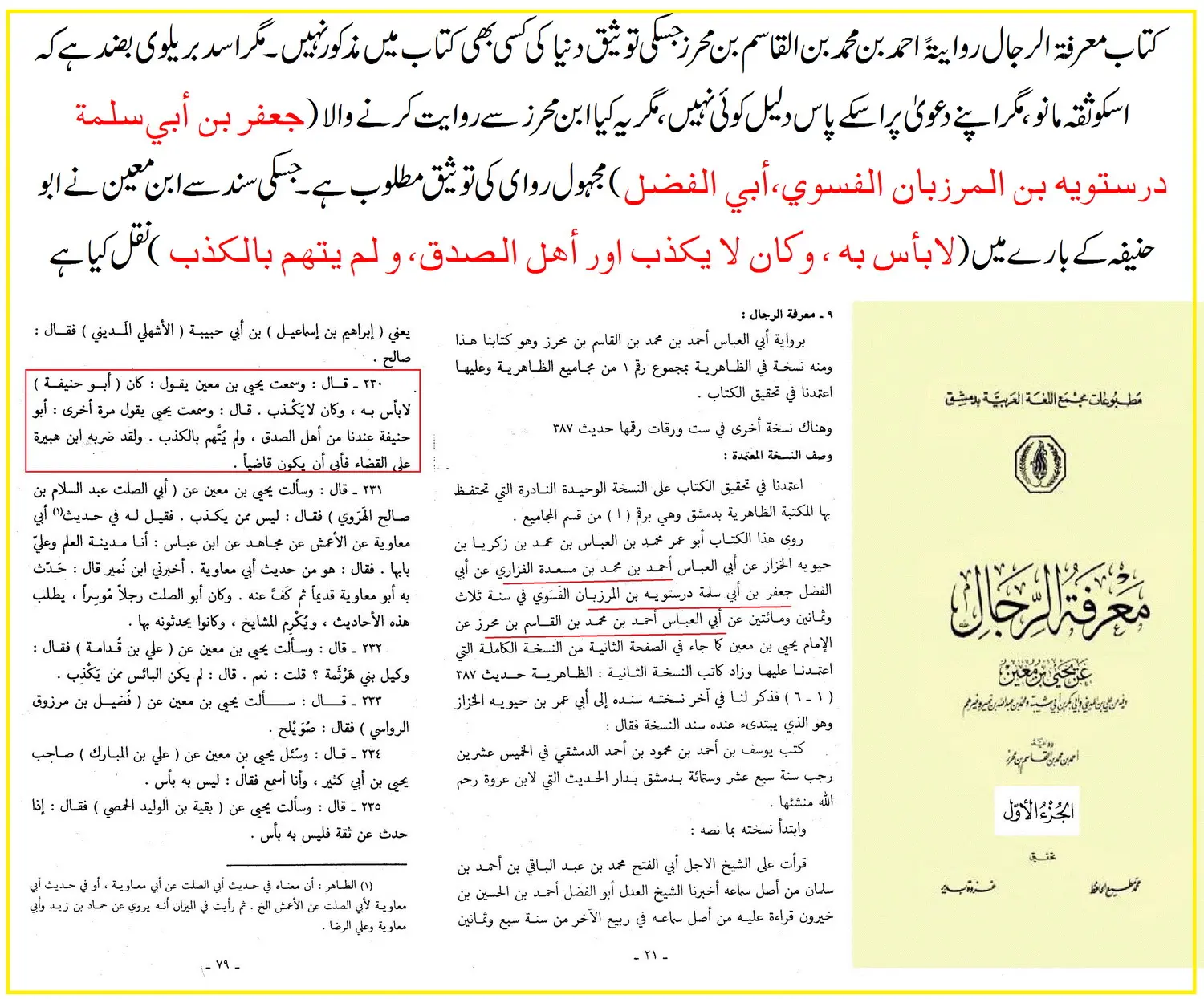
Abū al-ʿAbbās Ibn Maḥraz said: I heard Yaḥyā bin Maʿīn say: “Abū Ḥanīfah—there is no harm in him (lā baʾs bih), and he did not lie.”
And I heard him say on another occasion: “Abū Ḥanīfah, in our view, is from the people of truthfulness, and he was not accused of lying.”
Reference:
Maʿrifat al-Rijāl of Ibn Maʿīn (narration of Ibn Maḥraz)
Abū ʿUmar Muḥammad bin ʿAbbās bin Muḥammad al-Khazzāz → Abū al-ʿAbbās Aḥmad bin Muḥammad al-Fazārī → Abū al-Faḍl Jaʿfar bin Dastūriyyah al-Fasawī → Abū al-ʿAbbās Aḥmad bin Muḥammad bin al-Qāsim bin Maḥraz → Yaḥyā bin Maʿīn
Some have said “thiqah,” but the majority regard him as not well-known (mastūr).
And although it is transmitted from Imām Abū Ḥātim al-Rāzī that he narrates only from trustworthy narrators, Abū Ḥātim’s own principle was:
إذا كتبت فقمّش، وإذا حدثت ففتش
“When you write, gather (from everyone), but when you narrate, verify.”
So merely Abū Ḥātim narrating from him is not enough to establish Ibn Maḥraz’s reliability.
Also:
◈ The term “لا بأس به” in ḥadīth terminology is a lower level of commendation; at times it simply means “not weak,” and does not reach the rank of “thiqah thabt.”
◈ The phrase “أهل الصدق” only negates the accusation of lying, but it does not become an explicit authentication of his ḥadīth-strength or precision (ḍabṭ).
Conclusion:
The narration via Ibn Maḥraz is weak in chain, and its wording is not an explicit high-level authentication. Using it to claim that Ibn Maʿīn regarded Abū Ḥanīfah as a top-level ḥadīth authority is against scholarly principles.
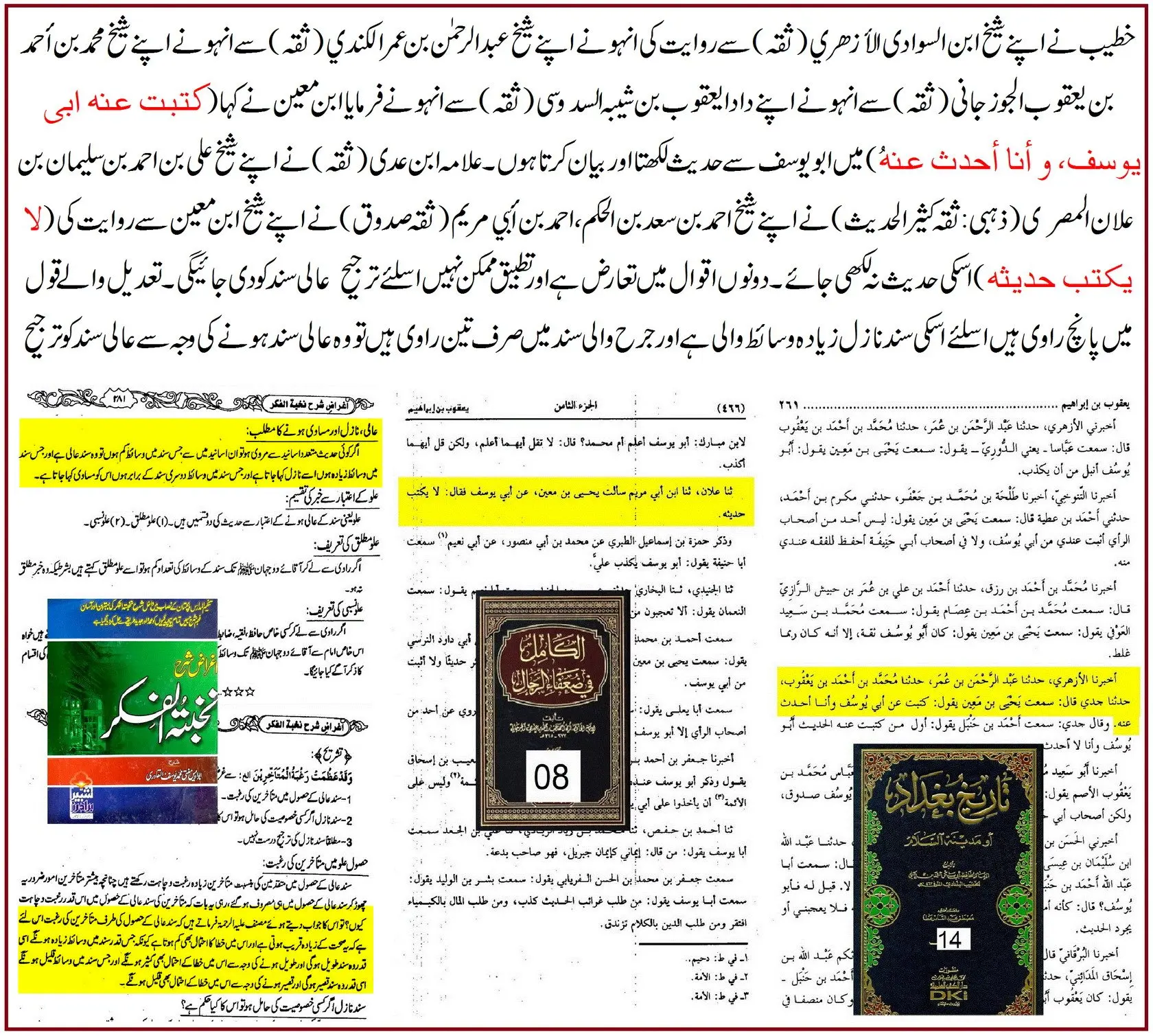
وَسَأَلْتُ يَحْيَى بْنَ مَعِينٍ عَنْ أَبِي يُوسُفَ وَأَبِي حَنِيفَةَ فَقَالَ: كَانَ أَبُو يُوسُفَ أَوْثَقَ مِنْهُ فِي الْحَدِيثِ.
(تاریخ بغداد 13/449)
Translation:
Jaʿfar ibn Abī ʿUthmān said: I asked Yaḥyā bin Maʿīn about Abū Yūsuf and Abū Ḥanīfah. He said: “In ḥadīth, Abū Yūsuf was more ‘awthaq’ than him.”
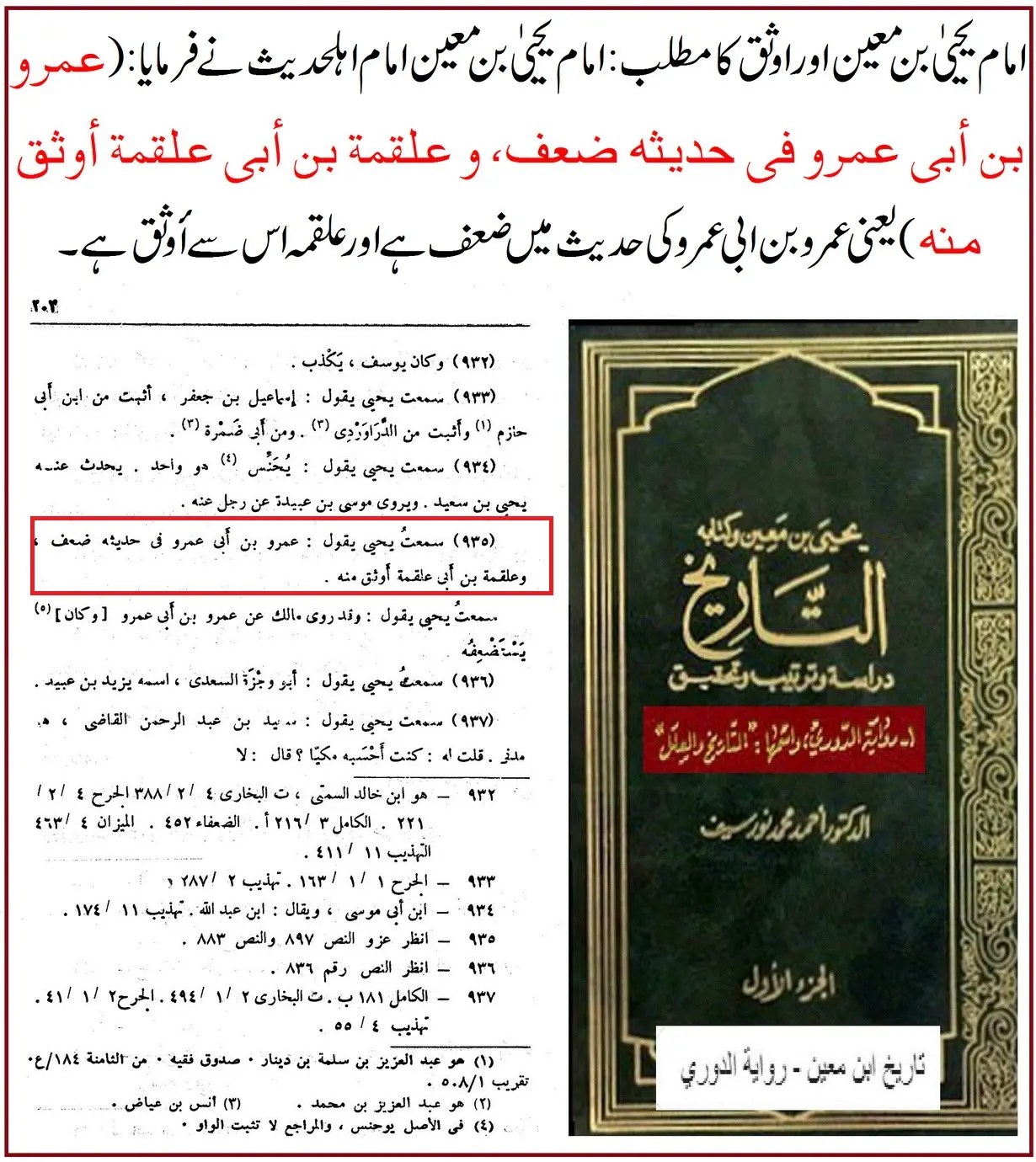
From the imāms’ usage, “أوثق” sometimes means “less weak”, especially when criticism exists about both narrators.
Examples:
◈ Yaḥyā bin Maʿīn said:
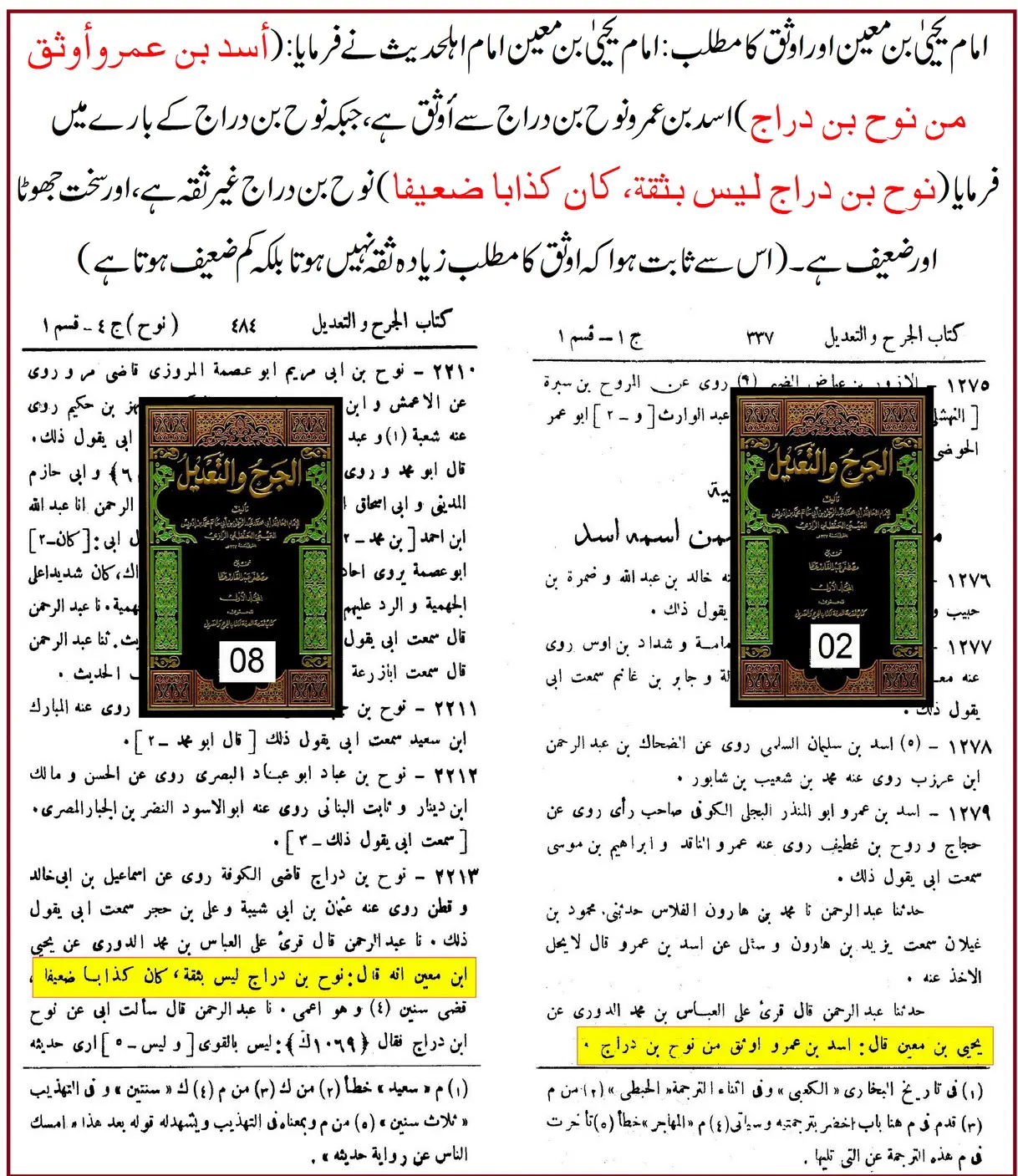
أسد بن عمرو أوثق من نوح بن دراج
“Asad bin ʿAmr is awthaq than Nūḥ bin Darrāj.”
Yet Ibn Maʿīn himself called Nūḥ bin Darrāj “kadhdhāb” (liar):
So here “awthaq” means less weak / less problematic, not that both are trustworthy.
Another place:
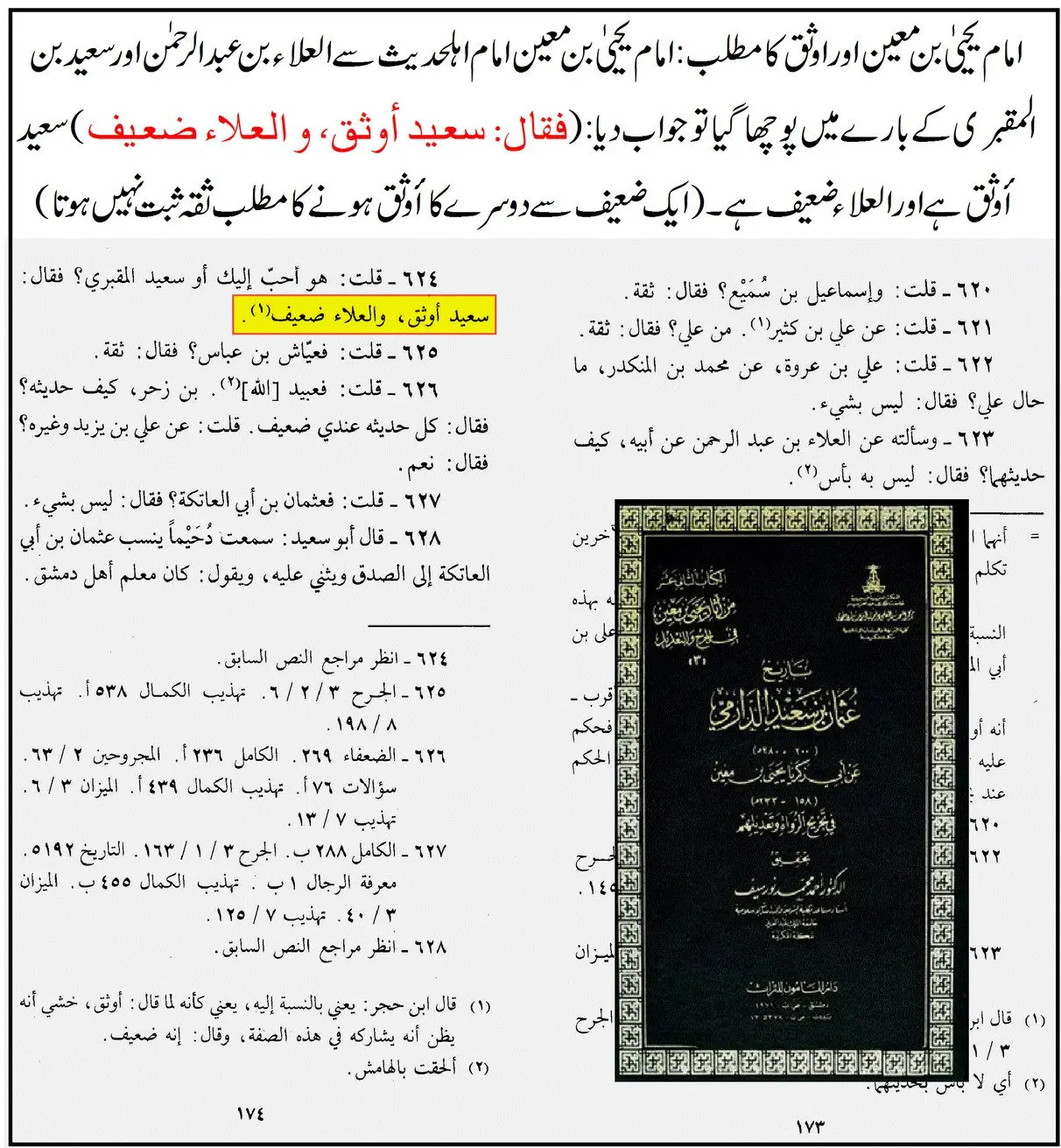
سعيد أوثق والعلاء ضعيف
“Saʿīd is awthaq, and al-ʿAlāʾ is weak.”
Again, “awthaq” is not equal to “thiqah”; it is comparative.
✔ (2) Ibn Maʿīn’s statements about the people of raʾy
Ibn Maʿīn strongly criticized many among the people of raʾy (the circle associated with Abū Ḥanīfah), such as:
◈ Muḥammad bin al-Ḥasan al-Shaybānī: jahmī kadhdhāb
◈ Ḥasan bin Ziyād al-Luʾluʾī: kadhdhāb
◈ Yūsuf bin Khālid al-Samtī: zindīq, kadhdhāb
◈ Nūḥ bin Abī Maryam: not trustworthy
◈ Abū Muṭīʿ al-Balkhī: “laysa bishayʾ”
◈ Asad bin ʿAmr: kadhdhūb
(Details: Tārīkh Ibn Maʿīn and others)
So when he says Abū Yūsuf is “awthaq,” it may mean: better than others in that group, not absolute reliability.
✔ (3) The implication for Abū Ḥanīfah
Since Ibn Maʿīn also criticized Abū Yūsuf elsewhere, then Abū Yūsuf being “awthaq” can mean only: less weak than Abū Ḥanīfah, not that Abū Ḥanīfah is thiqah.
Conclusion:
This statement does not prove Abū Ḥanīfah’s absolute authentication—rather, it only indicates that Abū Yūsuf was less weak than Abū Ḥanīfah in ḥadīth, according to Ibn Maʿīn. Treating “awthaq” as absolute authentication is a methodological error.
لَيْسَ فِي أَصْحَابِ الرَّأْيِ أَحَدٌ أَكْثَرُ حَدِيثًا وَلَا أَثْبَتُ مِنْ أَبِي يُوسُفَ.
(الکامل لابن عدی 8/466)
Translation:
Ibn ʿAdī narrates: I heard Ibrāhīm bin Abī Dāwūd say: I heard Yaḥyā bin Maʿīn say: “Among the people of raʾy, there was no one who narrated more ḥadīth, nor one more firm, than Abū Yūsuf.”
And Ibn Maʿīn’s other statements explain the broader context, such as:
◈ Abū Ḥanīfah: “كان يضعف في الحديث” (weak in ḥadīth)
(etc.)
So “more firm” here is comparative, not absolute.
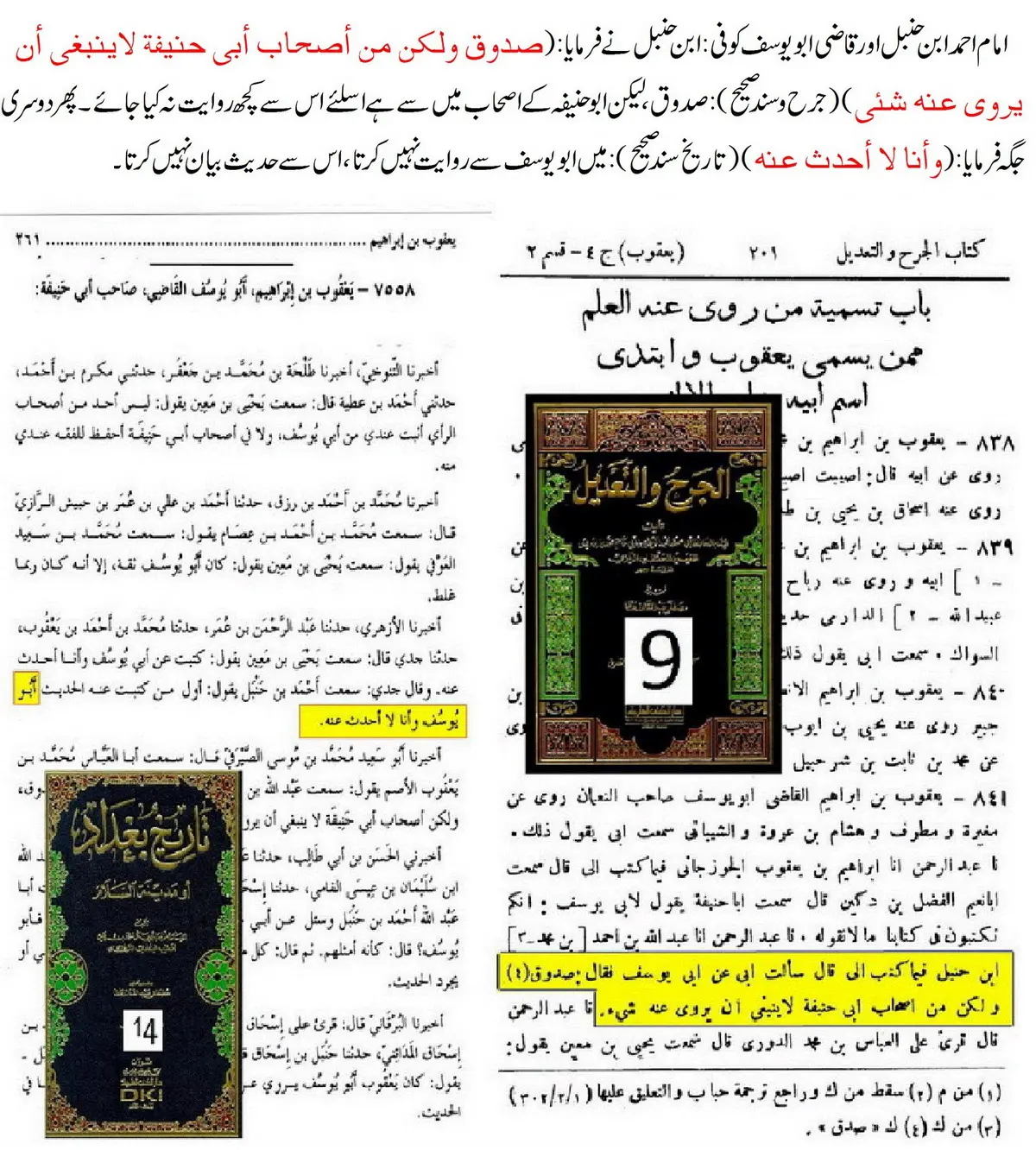
سَأَلْتُ أَبِي عَنْ أَبِي يُوسُفَ فَقَالَ: صَدُوقٌ، وَلَكِنْ مِنْ أَصْحَابِ أَبِي حَنِيفَةَ، لَا يُنْبَغِي أَنْ يُرْوَى عَنْهُ شَيْءٌ.
(الجرح والتعدیل لابن أبی حاتم 9/170)
Translation:
ʿAbdullāh bin Aḥmad said: I asked my father (Imām Aḥmad) about Abū Yūsuf, and he said: “He is truthful (ṣadūq), but he is from the companions of Abū Ḥanīfah; it is not appropriate that anything be narrated from him.”
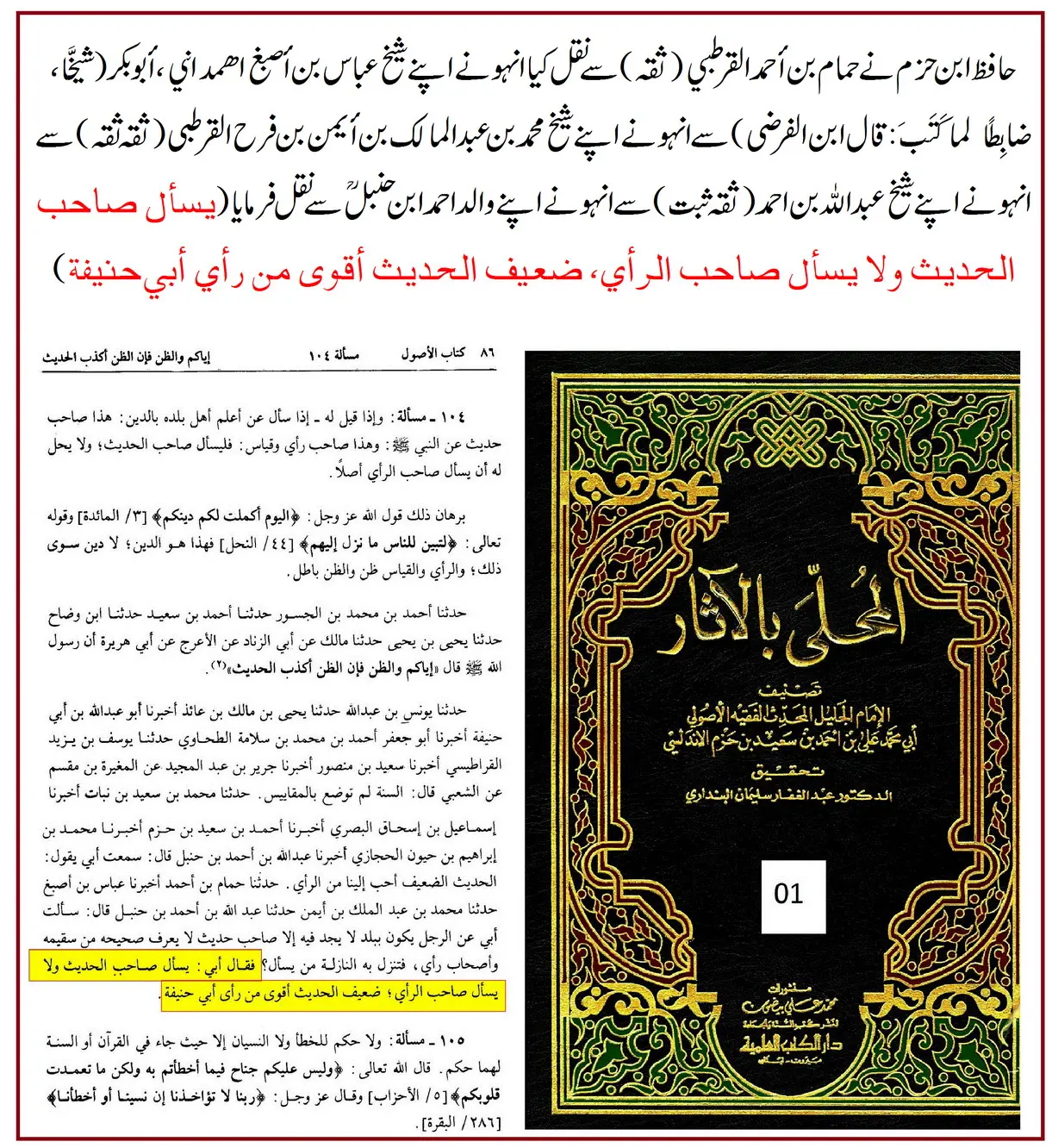
He also clearly stated:
ضعیف الحدیث أقوی من رأی أبی حنیفہ
(المحلی بالآثار 1/31)
Translation: “A weak ḥadīth is stronger than the opinion of Abū Ḥanīfah.”
Conclusion:
Ibn Maʿīn viewed Abū Yūsuf as comparatively better among the people of raʾy, not absolutely authentic.
Imām Aḥmad called him ṣadūq but still discouraged narrating from him.
This does not prove Abū Ḥanīfah’s authentication; rather, it shows that Ahl al-Ḥadīth did not regard the narrations of Abū Yūsuf and Abū Ḥanīfah as dependable proofs.
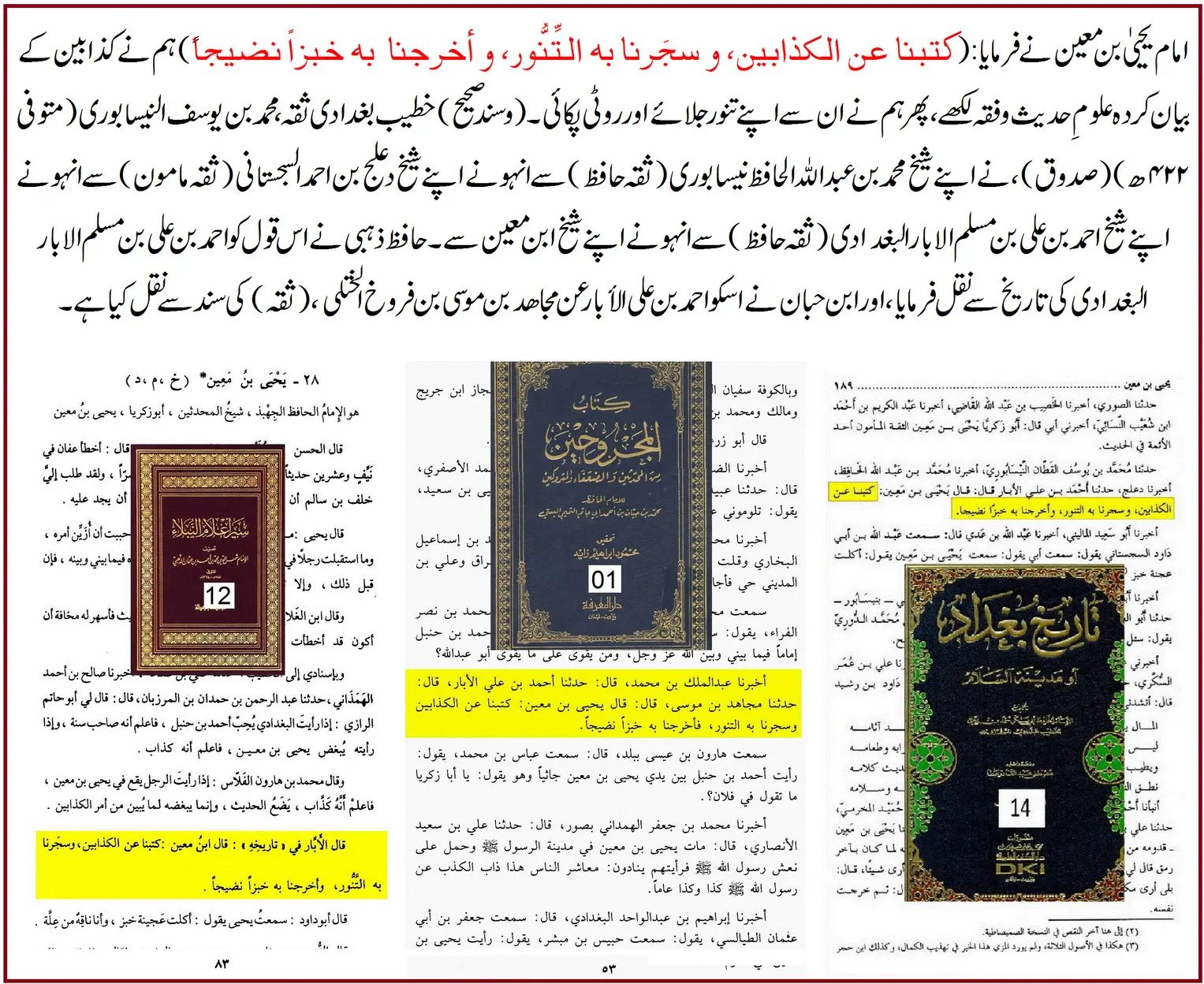
قَالَ يَحْيَى بْنُ مَعِينٍ: كَانَ أَبُو حَنِيفَةَ يُضَعَّفُ فِي الْحَدِيثِ.
(تاریخ ابن معین، روایة الدوری)
Translation:
Yaḥyā bin Maʿīn said: “Abū Ḥanīfah was weakened in ḥadīth.”
Clarification:
This is explicit criticism, indicating his general weakness in ḥadīth. Therefore, claiming that Ibn Maʿīn always authenticated him is incorrect.
قَالَ يَحْيَى بْنُ مَعِينٍ: أَبُو يُوسُفَ لَا يُكْتَبُ حَدِيثُهُ.
(الکامل لابن عدی)
Translation:
Yaḥyā bin Maʿīn said: “The ḥadīth of Abū Yūsuf is not to be written.”
Clarification:
This is criticism. When combined with comparative phrases (“awthaq”), it shows: he may be relatively better among his group, yet still not حجّة by Ahl al-Ḥadīth standards.
قِيلَ لِيَحْيَى بْنِ مَعِينٍ: أَيَرَى الرَّجُلُ أَنْ يَنْظُرَ فِي شَيْءٍ مِنَ الرَّأْيِ؟ فَقَالَ: أَيُّ رَأْيٍ؟ قِيلَ: رَأْيُ الشَّافِعِيِّ وَأَبِي حَنِيفَةَ. فَقَالَ: مَا أَرَى لِمُسْلِمٍ أَنْ يَنْظُرَ فِي رَأْيِ الشَّافِعِيِّ.
(سؤالات ابن الجنید، ص 92)
Translation:
Ibn Junayd said: I asked Yaḥyā bin Maʿīn: Should a man look into anything of raʾy (opinion)? He said: “Which raʾy?” I said: “The raʾy of al-Shāfiʿī and Abū Ḥanīfah.” He said: “I do not see it appropriate for a Muslim to look into the raʾy of al-Shāfiʿī.”
Clarification:
This criticism is about juristic opinion, not about Imām al-Shāfiʿī’s honesty or reliability as a narrator.
قَالَ يَحْيَى بْنُ مَعِينٍ: الشَّافِعِيُّ صَدُوقٌ لَا بَأْسَ بِهِ.
(الکامل لابن عدی)
Translation:
Yaḥyā bin Maʿīn said: “Al-Shāfiʿī is truthful (ṣadūq); there is no harm in him (lā baʾs bih).”
Clarification:
This is explicit commendation, proving that the earlier criticism was about raʾy, not about his integrity.
✔ Regarding Abū Yūsuf, he also stated explicitly: “لا يكتب حديثه”.
✔ Regarding Imām al-Shāfiʿī, his criticism was about raʾy, but his integrity was affirmed: “صدوق لا بأس به.”
Conclusion:
Ibn Maʿīn’s statements do not establish Abū Ḥanīfah’s absolute authentication at all. Rather, in most places, he describes his ḥadīth standing as weak.
② Where words like “awthaq” or “lā baʾs bih” appear, they do not necessarily indicate absolute reliability; rather, they often indicate relative strength or mere negation of lying.
③ In explicit statements, Ibn Maʿīn called Abū Ḥanīfah weak in ḥadīth, and he also issued strong criticism of Abū Yūsuf.
 Final Point:
Imām Yaḥyā bin Maʿīn (رحمه الله) was a leading imām of Ahl al-Ḥadīth and a pillar of jarḥ and taʿdīl. The claim that he authenticated Abū Ḥanīfah is a major misunderstanding promoted by some Ḥanafīs—built upon weak chains and unknown narrators. The reality is that, according to Ibn Maʿīn, Abū Ḥanīfah was weak in ḥadīth, and this aligns with what the majority of ḥadīth critics held.
This article is an academic examination of the claim that Imām Yaḥyā bin Maʿīn (رحمه الله) explicitly declared Imām Abū Ḥanīfah (رحمه الله) reliable (taوثيق). We will analyze—both in chain (sanad) and text (matn)—the references commonly presented on this topic (reports of Ibn ʿAbd al-Barr, Tārīkh Ibn Maʿīn via Ibn Maḥraz, narrations of al-Khaṭīb, al-Kāmil by Ibn ʿAdī, etc.): assessing narrators’ integrity/precision, continuity or disconnection, identifying unknown or rejected reports, and clarifying the precise meanings of technical terms such as «ثِقَة», «لا بأس به», and «أوثق»—especially the difference between relative versus absolute authentication. Alongside this, we will quote the objections of Ḥanafī scholars one by one and provide a reasoned response with their proofs, translation, and explanation, so that the reader can personally see the conclusion according to the standards of Ḥadīth methodology.
[Note: Also read this article: The criticism of Imām Yaḥyā bin Maʿīn regarding Abū Ḥanīfah and his companions—along with “Sakīn”]
① Ibn ʿAbd al-Barr’s Report and Its Reality
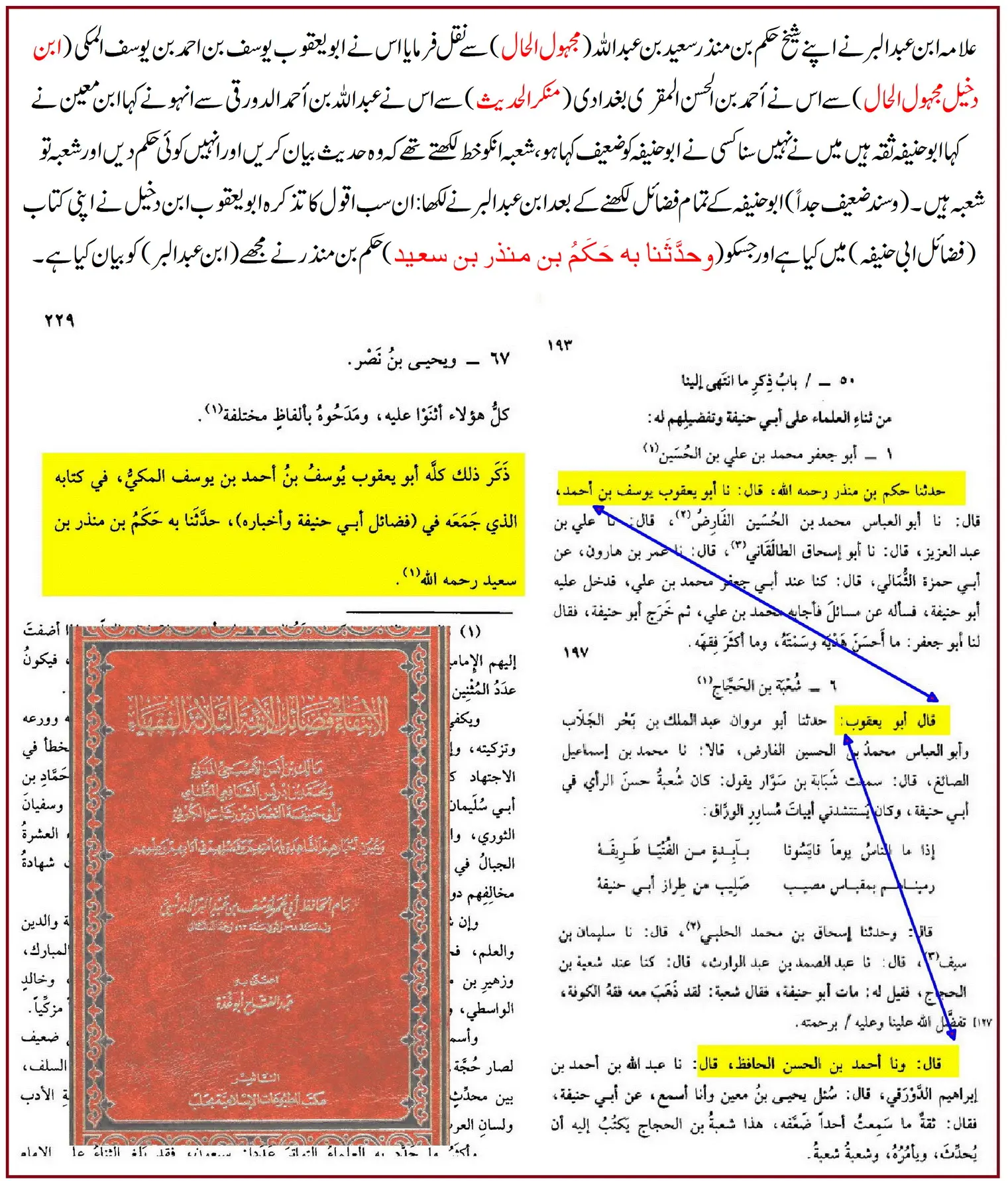
The first proof presented by Ḥanafī scholars is that Imām Ibn ʿAbd al-Barr (رحمه الله), in al-Intiqāʾ and elsewhere, نقل (transmitted) an authentication of Abū Ḥanīfah from Imām Yaḥyā bin Maʿīn with a “ṣaḥīḥ chain.” According to them, Ibn Maʿīn said in this narration:Original Report
Arabic text:قَالَ سُئِلَ يَحْيَى بْنُ مَعِينٍ وَأَنَا أَسْمَعُ عَنْ أَبِي حَنِيفَةَ فَقَالَ: ثِقَةٌ، مَا سَمِعْتُ أَحَدًا ضَعَّفَهُ، هَذَا شُعْبَةُ بْنُ الْحَجَّاجِ يَكْتُبُ إِلَيْهِ أَنْ يُحَدِّثَ وَيَأْمُرُهُ، وَشُعْبَةُ شُعْبَةُ.
Translation:
Ibn Dūrqī said: I personally heard that Yaḥyā bin Maʿīn was asked about Abū Ḥanīfah, so he said: “He is trustworthy (thiqah). I have not heard anyone weakening Abū Ḥanīfah. This is Shuʿbah ibn al-Ḥajjāj who used to write to him asking him to narrate ḥadīth and instructing him—and Shuʿbah is (indeed) Shuʿbah!”
Reference:
al-Intiqāʾ by Ibn ʿAbd al-Barr, and Siyar Aʿlām al-Nubalāʾ by al-Dhahabī (12/467)Chain Analysis
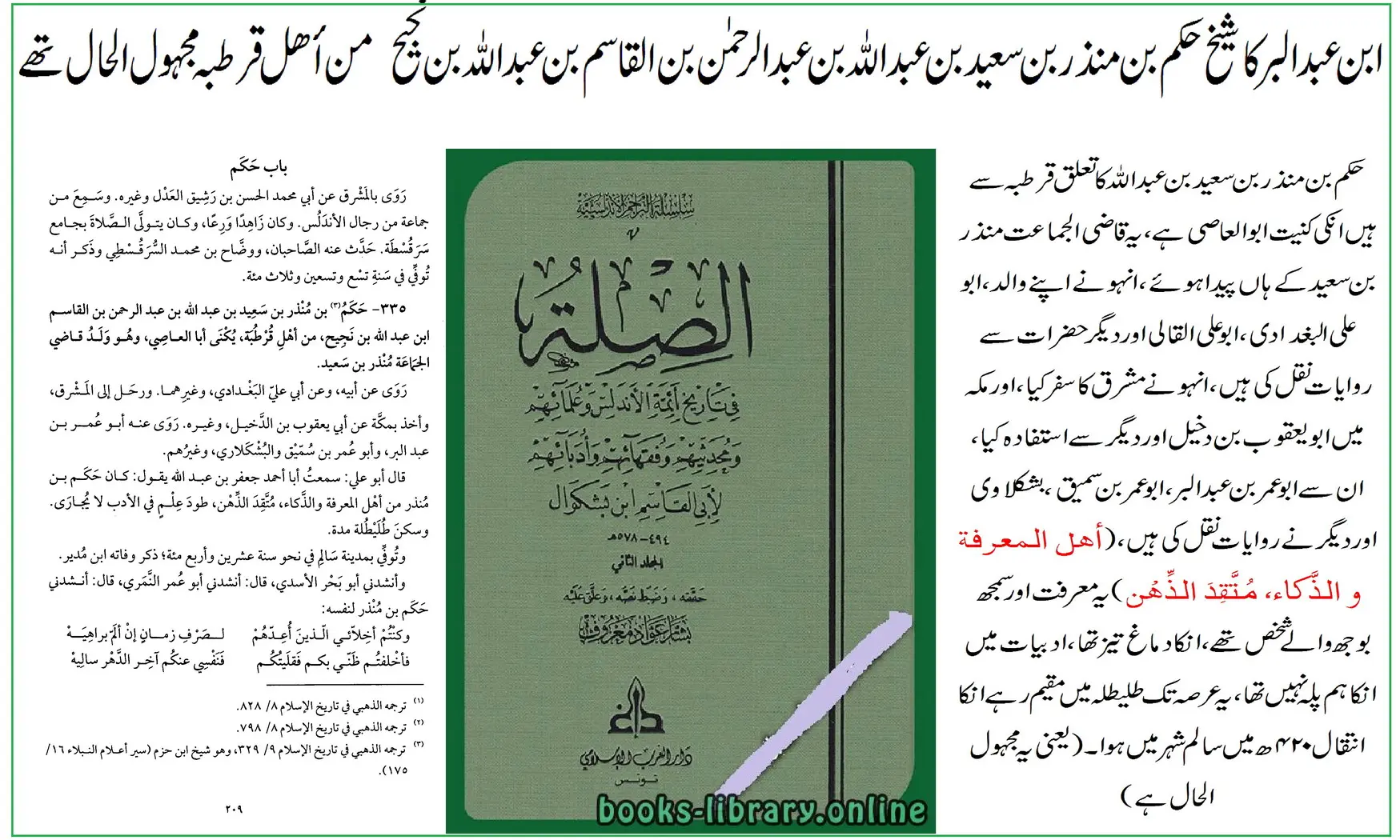
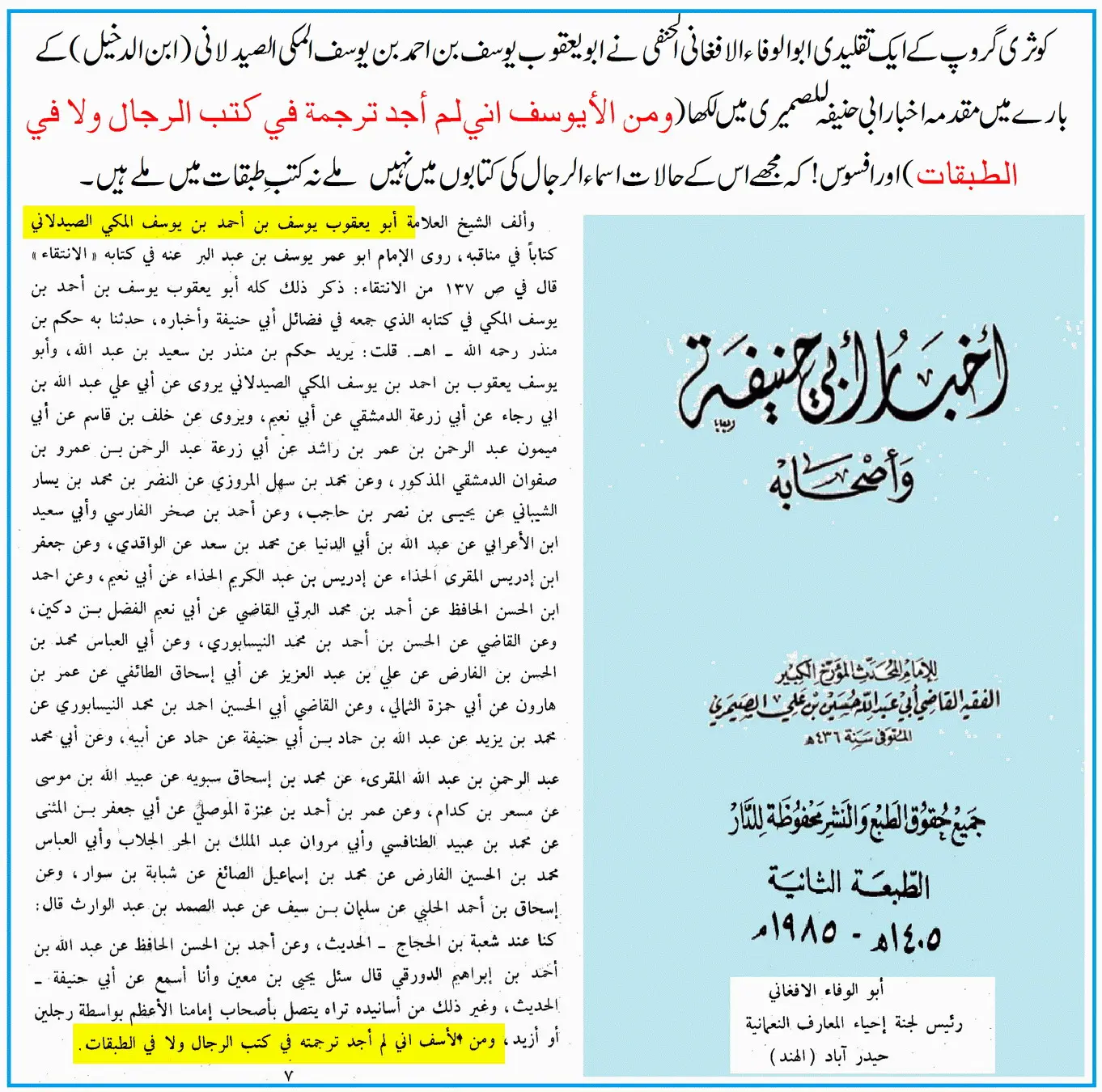
This report is transmitted through the following chain:Ḥakam bin Mundhir → Abū Yaʿqūb Yūsuf bin Aḥmad bin Yūsuf bin al-Dakhīl → Aḥmad bin al-Ḥasan al-Muqriʾ → ʿAbdullāh bin Aḥmad al-Dūrqī → Yaḥyā bin Maʿīn
1) Ḥakam bin Mundhir al-Qurṭubī
This narrator is majhūl al-ʿayn (unknown by identity). Only Ibn ʿAbd al-Barr narrates from him. According to the principles, to remove “unknown identity,” at least two trustworthy ḥadīth scholars must narrate from a person.2) Yūsuf bin Aḥmad bin Yūsuf bin al-Dakhīl (Abū Yaʿqūb al-Makkī)
He is majhūl al-ḥāl (unknown status). Neither a reliable commendation nor a criticism is found in the books of narrators’ biographies. Abū al-Wafāʾ al-Afghānī searched hard for his details but eventually admitted:لم أجد له ترجمة في كتب الرجال ولا في الطبقات.
Meaning: “I did not find his biography in the books of rijāl nor in the books of ṭabaqāt.”
3) Aḥmad bin al-Ḥasan al-Muqriʾ
The imāms issued severe criticism against him:◈ al-Khaṭīb al-Baghdādī: منكر الحديث (rejected in ḥadīth)
◈ al-Dāraquṭnī: ليس بثقة (not trustworthy)
◈ al-Dhahabī: counted him among the weak and abandoned narrators.
Clarification
There are three weaknesses here:① The first narrator (Ḥakam bin Mundhir) is majhūl al-ʿayn.
② The second narrator (Ibn al-Dakhīl) is majhūl al-ḥāl.
③ The third narrator (Aḥmad bin al-Ḥasan) is munkar al-ḥadīth and not trustworthy.
To label such a chain “ṣaḥīḥ” or “proof” in the eyes of ḥadīth scholars is an academic betrayal. Therefore, this narration does not establish an authentication of Abū Ḥanīfah from Imām Ibn Maʿīn.
Conclusion:The report transmitted through Ibn ʿAbd al-Barr is weak in chain and unfit for evidence. Hence, using it to prove an absolute authentication of Abū Ḥanīfah from Yaḥyā bin Maʿīn is incorrect.
② Statements Transmitted via Ibn Maḥraz and Their Status
The second major proof presented is that the student of Ibn Maʿīn—Abū al-ʿAbbās Aḥmad bin Muḥammad bin al-Qāsim bin Maḥraz—transmitted a clear authentication of Abū Ḥanīfah in his Maʿrifat al-Rijāl. They claim the wording is explicit:Original Report
Arabic text:سَمِعْتُ يَحْيَى بْنَ مَعِينٍ يَقُولُ: كَانَ أَبُو حَنِيفَةَ لَا بَأْسَ بِهِ، وَكَانَ لَا يَكْذِبُ.
وَسَمِعْتُهُ يَقُولُ مَرَّةً أُخْرَى: أَبُو حَنِيفَةَ عِنْدَنَا مِنْ أَهْلِ الصِّدْقِ، وَلَمْ يُتَّهَمْ بِالْكَذِبِ.
Translation:
Abū al-ʿAbbās Ibn Maḥraz said: I heard Yaḥyā bin Maʿīn say: “Abū Ḥanīfah—there is no harm in him (lā baʾs bih), and he did not lie.”
And I heard him say on another occasion: “Abū Ḥanīfah, in our view, is from the people of truthfulness, and he was not accused of lying.”
Reference:
Maʿrifat al-Rijāl of Ibn Maʿīn (narration of Ibn Maḥraz)Chain Analysis
The full chain of Tārīkh Ibn Maʿīn via Ibn Maḥraz is:Abū ʿUmar Muḥammad bin ʿAbbās bin Muḥammad al-Khazzāz → Abū al-ʿAbbās Aḥmad bin Muḥammad al-Fazārī → Abū al-Faḍl Jaʿfar bin Dastūriyyah al-Fasawī → Abū al-ʿAbbās Aḥmad bin Muḥammad bin al-Qāsim bin Maḥraz → Yaḥyā bin Maʿīn
1) Abū al-Faḍl Jaʿfar bin Dastūriyyah al-Fasawī
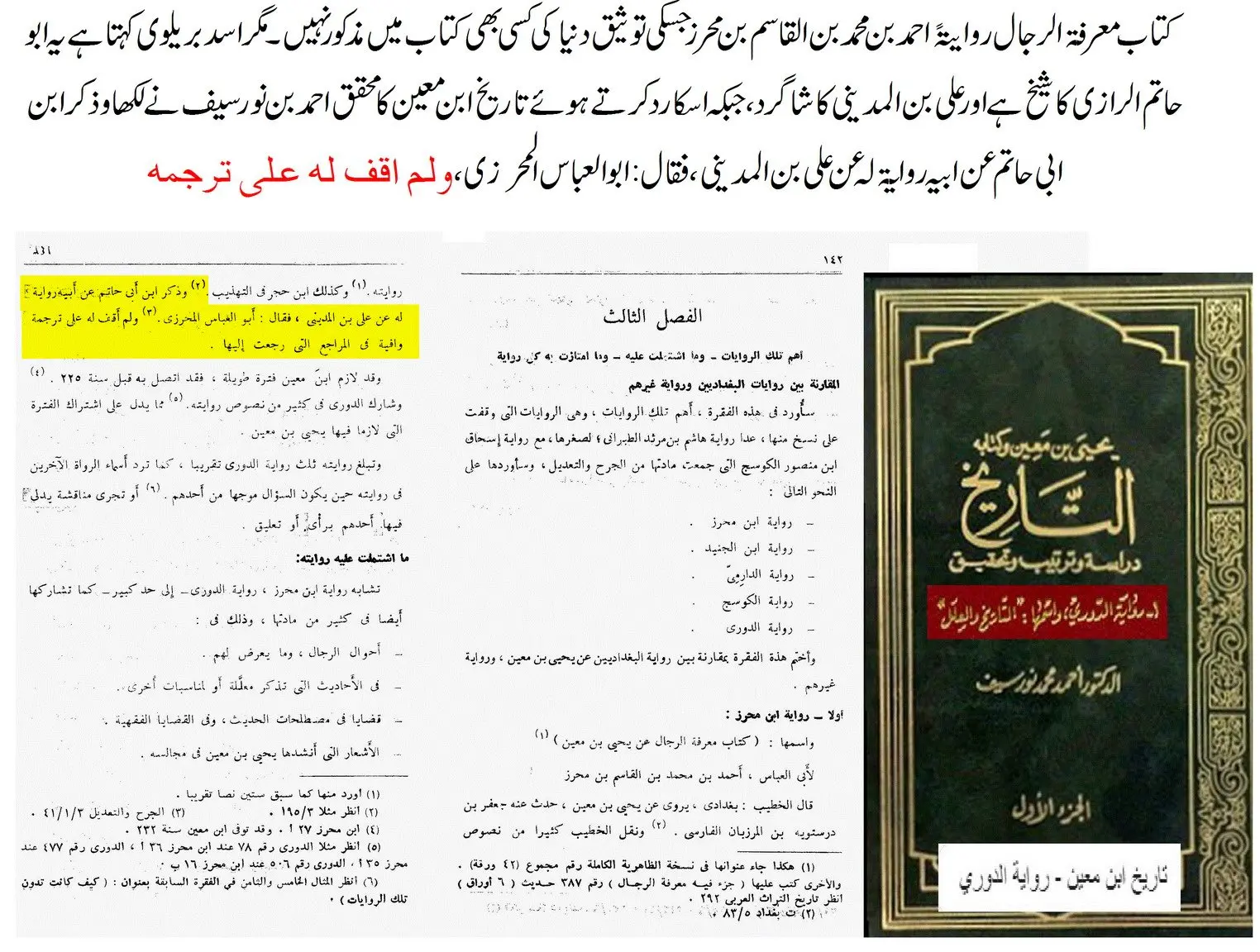
His reliable authentication is not found in the recognized rijāl works; therefore he is majhūl al-ḥāl.2) Abū al-ʿAbbās Ibn Maḥraz
He is a student of Ibn Maʿīn, but the imāms did not explicitly authenticate him in a decisive manner.Some have said “thiqah,” but the majority regard him as not well-known (mastūr).
And although it is transmitted from Imām Abū Ḥātim al-Rāzī that he narrates only from trustworthy narrators, Abū Ḥātim’s own principle was:
إذا كتبت فقمّش، وإذا حدثت ففتش
“When you write, gather (from everyone), but when you narrate, verify.”
So merely Abū Ḥātim narrating from him is not enough to establish Ibn Maḥraz’s reliability.
Clarification
This Ibn Maḥraz report is weak in chain because it includes Jaʿfar bin Dastūriyyah al-Fasawī, who is unknown.Also:
◈ The term “لا بأس به” in ḥadīth terminology is a lower level of commendation; at times it simply means “not weak,” and does not reach the rank of “thiqah thabt.”
◈ The phrase “أهل الصدق” only negates the accusation of lying, but it does not become an explicit authentication of his ḥadīth-strength or precision (ḍabṭ).
Conclusion:The narration via Ibn Maḥraz is weak in chain, and its wording is not an explicit high-level authentication. Using it to claim that Ibn Maʿīn regarded Abū Ḥanīfah as a top-level ḥadīth authority is against scholarly principles.
③ Ibn Maʿīn’s Statements Comparing Abū Yūsuf and Abū Ḥanīfah
The third proof: they cite that Ibn Maʿīn compared Abū Ḥanīfah with his student, Qāḍī Abū Yūsuf, and used the word “أوثق” for Abū Yūsuf—implying Abū Ḥanīfah is also thiqah.Original Report
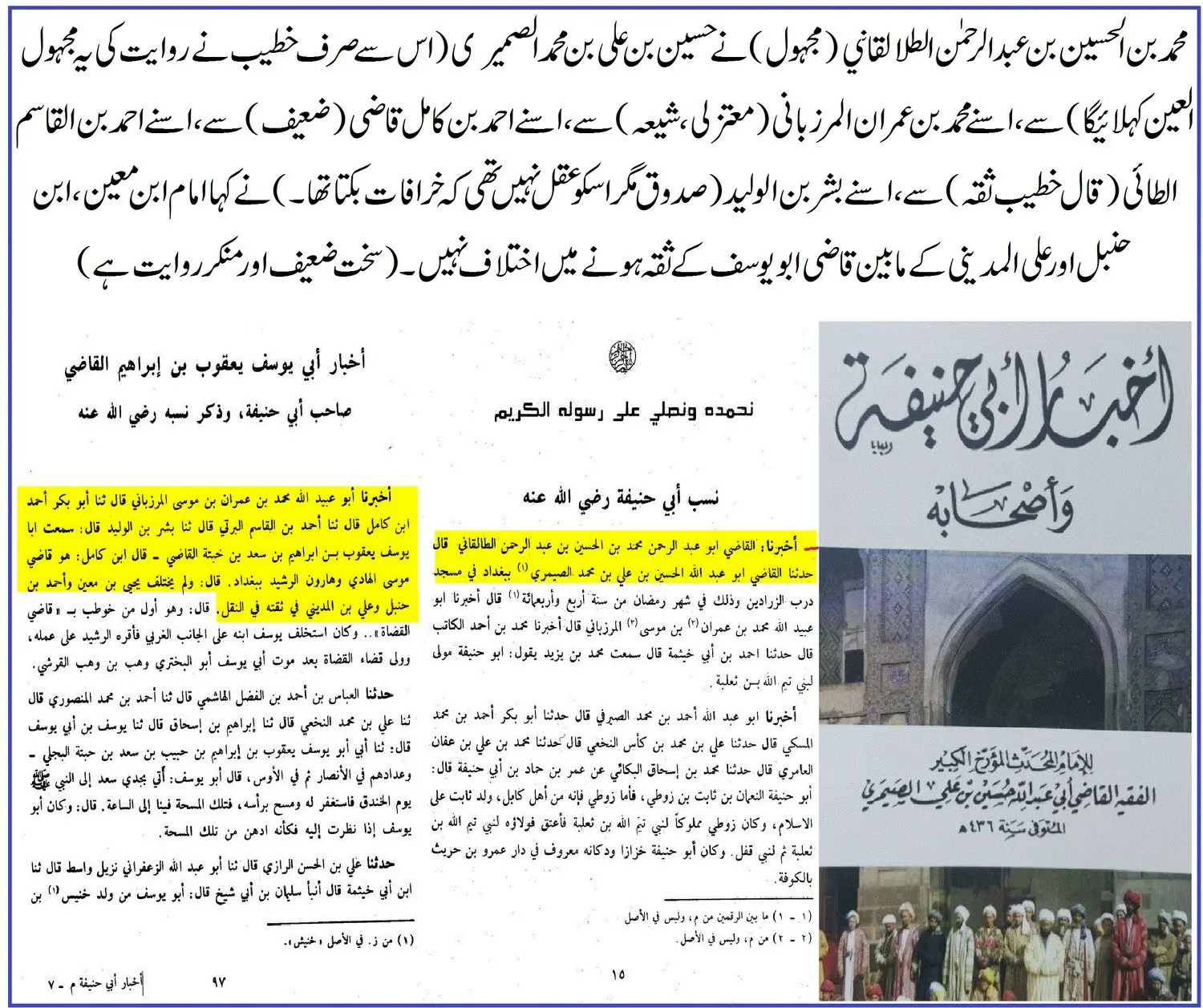
Arabic text:وَسَأَلْتُ يَحْيَى بْنَ مَعِينٍ عَنْ أَبِي يُوسُفَ وَأَبِي حَنِيفَةَ فَقَالَ: كَانَ أَبُو يُوسُفَ أَوْثَقَ مِنْهُ فِي الْحَدِيثِ.
(تاریخ بغداد 13/449)Translation:
Jaʿfar ibn Abī ʿUthmān said: I asked Yaḥyā bin Maʿīn about Abū Yūsuf and Abū Ḥanīfah. He said: “In ḥadīth, Abū Yūsuf was more ‘awthaq’ than him.”
Ḥanafī Objection
They argue: since “أوثق” means “more trustworthy,” it indicates both are trustworthy, but Abū Yūsuf is higher in rank.Answer & Clarification
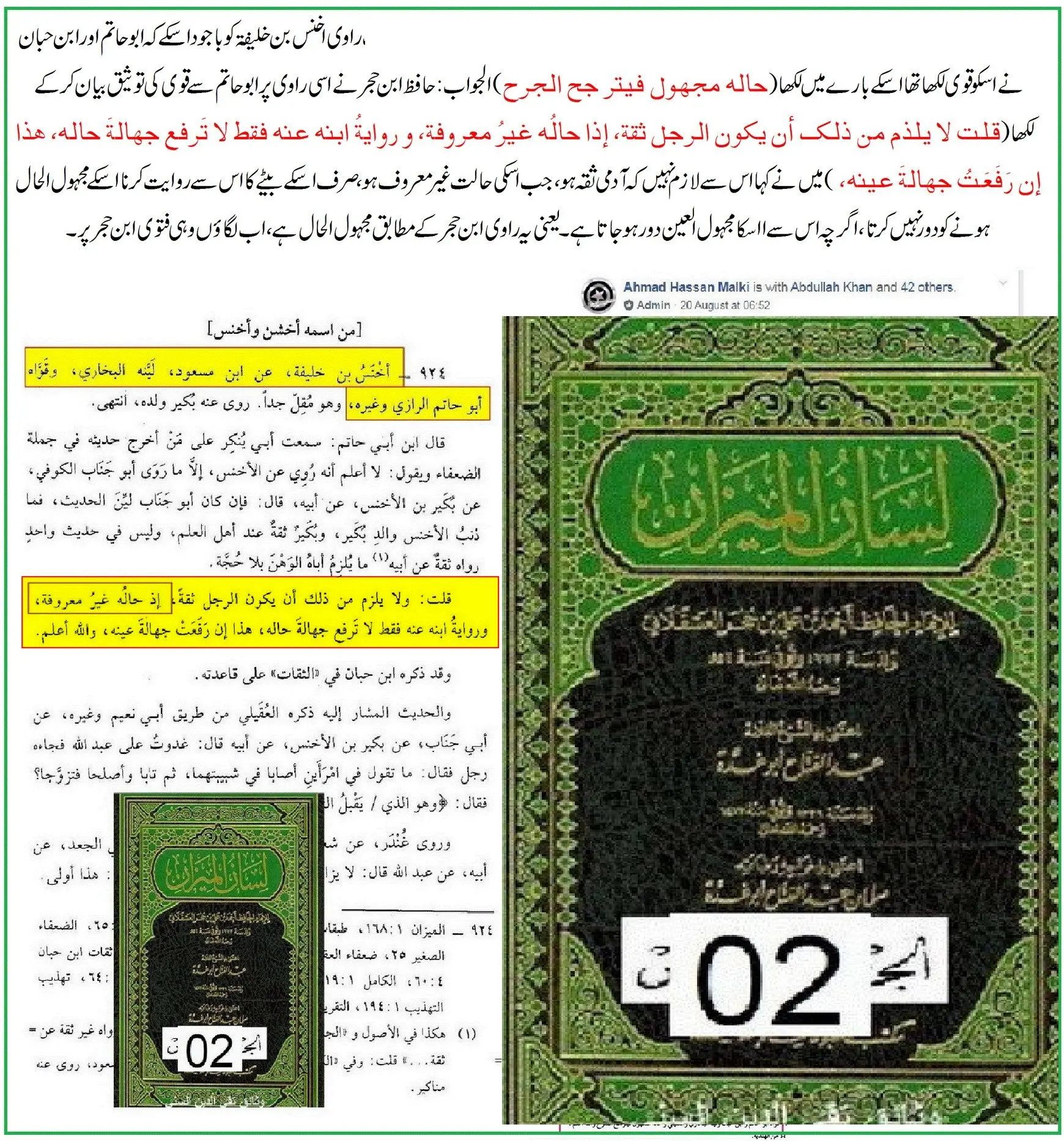
✔ (1) “أوثق” does not always mean “more trustworthy”From the imāms’ usage, “أوثق” sometimes means “less weak”, especially when criticism exists about both narrators.
Examples:
◈ Yaḥyā bin Maʿīn said:
أسد بن عمرو أوثق من نوح بن دراج
“Asad bin ʿAmr is awthaq than Nūḥ bin Darrāj.”
Reference: al-Jarḥ wa al-Taʿdīl 2/337
Yet Ibn Maʿīn himself called Nūḥ bin Darrāj “kadhdhāb” (liar):
Reference: al-Jarḥ wa al-Taʿdīl 8/484
So here “awthaq” means less weak / less problematic, not that both are trustworthy.
Another place:
سعيد أوثق والعلاء ضعيف
“Saʿīd is awthaq, and al-ʿAlāʾ is weak.”
Reference: Tārīkh Ibn Maʿīn (riwāyat ʿUthmān al-Dārimī), no. 624
Again, “awthaq” is not equal to “thiqah”; it is comparative.
✔ (2) Ibn Maʿīn’s statements about the people of raʾy
Ibn Maʿīn strongly criticized many among the people of raʾy (the circle associated with Abū Ḥanīfah), such as:
◈ Muḥammad bin al-Ḥasan al-Shaybānī: jahmī kadhdhāb
◈ Ḥasan bin Ziyād al-Luʾluʾī: kadhdhāb
◈ Yūsuf bin Khālid al-Samtī: zindīq, kadhdhāb
◈ Nūḥ bin Abī Maryam: not trustworthy
◈ Abū Muṭīʿ al-Balkhī: “laysa bishayʾ”
◈ Asad bin ʿAmr: kadhdhūb
(Details: Tārīkh Ibn Maʿīn and others)
So when he says Abū Yūsuf is “awthaq,” it may mean: better than others in that group, not absolute reliability.
✔ (3) The implication for Abū Ḥanīfah
Since Ibn Maʿīn also criticized Abū Yūsuf elsewhere, then Abū Yūsuf being “awthaq” can mean only: less weak than Abū Ḥanīfah, not that Abū Ḥanīfah is thiqah.
Conclusion:This statement does not prove Abū Ḥanīfah’s absolute authentication—rather, it only indicates that Abū Yūsuf was less weak than Abū Ḥanīfah in ḥadīth, according to Ibn Maʿīn. Treating “awthaq” as absolute authentication is a methodological error.
④ Statements of Ibn Maʿīn and Imām Aḥmad about Abū Yūsuf
Ḥanafīs also cite words from Ibn Maʿīn and Imām Aḥmad about Abū Yūsuf’s reliability, arguing that since he is Abū Ḥanīfah’s student, that necessitates the authentication of Abū Ḥanīfah too.From Ibn Maʿīn
Arabic text:لَيْسَ فِي أَصْحَابِ الرَّأْيِ أَحَدٌ أَكْثَرُ حَدِيثًا وَلَا أَثْبَتُ مِنْ أَبِي يُوسُفَ.
(الکامل لابن عدی 8/466)Translation:
Ibn ʿAdī narrates: I heard Ibrāhīm bin Abī Dāwūd say: I heard Yaḥyā bin Maʿīn say: “Among the people of raʾy, there was no one who narrated more ḥadīth, nor one more firm, than Abū Yūsuf.”
Clarification
This is a comparison within the people of raʾy, not a comparison with Ahl al-Ḥadīth. Meaning: among the Kūfan juristic circle, Abū Yūsuf was relatively stronger.And Ibn Maʿīn’s other statements explain the broader context, such as:
◈ Abū Ḥanīfah: “كان يضعف في الحديث” (weak in ḥadīth)
(etc.)
So “more firm” here is comparative, not absolute.
From Imām Aḥmad
Arabic text:سَأَلْتُ أَبِي عَنْ أَبِي يُوسُفَ فَقَالَ: صَدُوقٌ، وَلَكِنْ مِنْ أَصْحَابِ أَبِي حَنِيفَةَ، لَا يُنْبَغِي أَنْ يُرْوَى عَنْهُ شَيْءٌ.
(الجرح والتعدیل لابن أبی حاتم 9/170)Translation:
ʿAbdullāh bin Aḥmad said: I asked my father (Imām Aḥmad) about Abū Yūsuf, and he said: “He is truthful (ṣadūq), but he is from the companions of Abū Ḥanīfah; it is not appropriate that anything be narrated from him.”
Clarification
Imām Aḥmad described him as personally truthful, but still warned against taking narrations from him—meaning: not accused of lying, yet not a proof according to Ahl al-Ḥadīth standards.He also clearly stated:
ضعیف الحدیث أقوی من رأی أبی حنیفہ
(المحلی بالآثار 1/31)Translation: “A weak ḥadīth is stronger than the opinion of Abū Ḥanīfah.”
Conclusion:Ibn Maʿīn viewed Abū Yūsuf as comparatively better among the people of raʾy, not absolutely authentic.
Imām Aḥmad called him ṣadūq but still discouraged narrating from him.
This does not prove Abū Ḥanīfah’s authentication; rather, it shows that Ahl al-Ḥadīth did not regard the narrations of Abū Yūsuf and Abū Ḥanīfah as dependable proofs.
⑤ Other Narrations from Ibn Maʿīn: About Abū Ḥanīfah and Imām al-Shāfiʿī
Ḥanafīs also argue that various statements exist from Yaḥyā bin Maʿīn regarding Abū Ḥanīfah and Imām al-Shāfiʿī, and that some contain praise and authentication. But when examined with chain and context, the reality is very different.1) Statement about Abū Ḥanīfah
Arabic text:قَالَ يَحْيَى بْنُ مَعِينٍ: كَانَ أَبُو حَنِيفَةَ يُضَعَّفُ فِي الْحَدِيثِ.
(تاریخ ابن معین، روایة الدوری)Translation:
Yaḥyā bin Maʿīn said: “Abū Ḥanīfah was weakened in ḥadīth.”
Clarification:
This is explicit criticism, indicating his general weakness in ḥadīth. Therefore, claiming that Ibn Maʿīn always authenticated him is incorrect.
2) Statement about Abū Yūsuf
Arabic text:قَالَ يَحْيَى بْنُ مَعِينٍ: أَبُو يُوسُفَ لَا يُكْتَبُ حَدِيثُهُ.
(الکامل لابن عدی)Translation:
Yaḥyā bin Maʿīn said: “The ḥadīth of Abū Yūsuf is not to be written.”
Clarification:
This is criticism. When combined with comparative phrases (“awthaq”), it shows: he may be relatively better among his group, yet still not حجّة by Ahl al-Ḥadīth standards.
3) Statement about Imām al-Shāfiʿī (criticism)
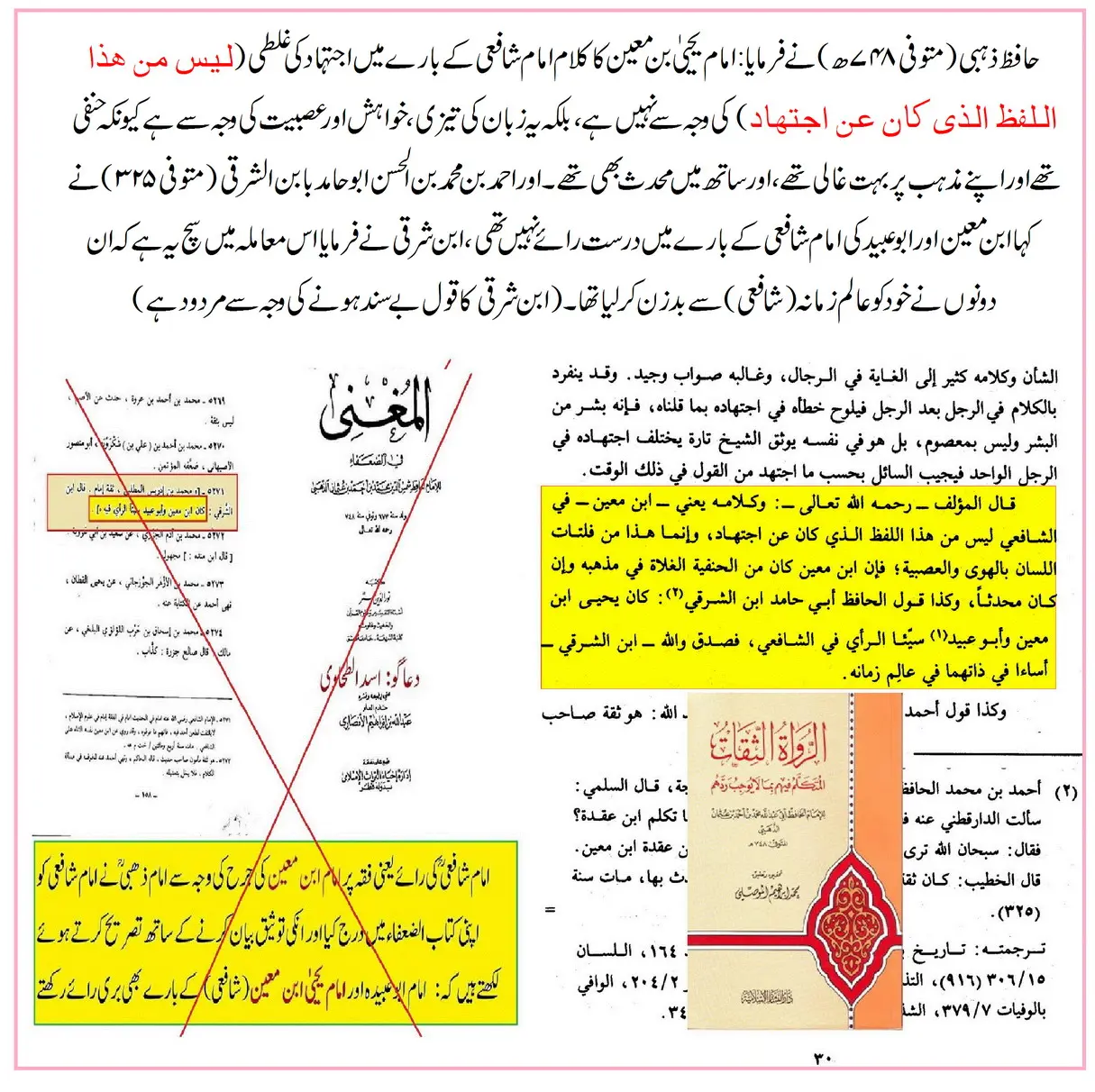
Arabic text:قِيلَ لِيَحْيَى بْنِ مَعِينٍ: أَيَرَى الرَّجُلُ أَنْ يَنْظُرَ فِي شَيْءٍ مِنَ الرَّأْيِ؟ فَقَالَ: أَيُّ رَأْيٍ؟ قِيلَ: رَأْيُ الشَّافِعِيِّ وَأَبِي حَنِيفَةَ. فَقَالَ: مَا أَرَى لِمُسْلِمٍ أَنْ يَنْظُرَ فِي رَأْيِ الشَّافِعِيِّ.
(سؤالات ابن الجنید، ص 92)Translation:
Ibn Junayd said: I asked Yaḥyā bin Maʿīn: Should a man look into anything of raʾy (opinion)? He said: “Which raʾy?” I said: “The raʾy of al-Shāfiʿī and Abū Ḥanīfah.” He said: “I do not see it appropriate for a Muslim to look into the raʾy of al-Shāfiʿī.”
Clarification:
This criticism is about juristic opinion, not about Imām al-Shāfiʿī’s honesty or reliability as a narrator.
4) Statement about Imām al-Shāfiʿī (commendation)
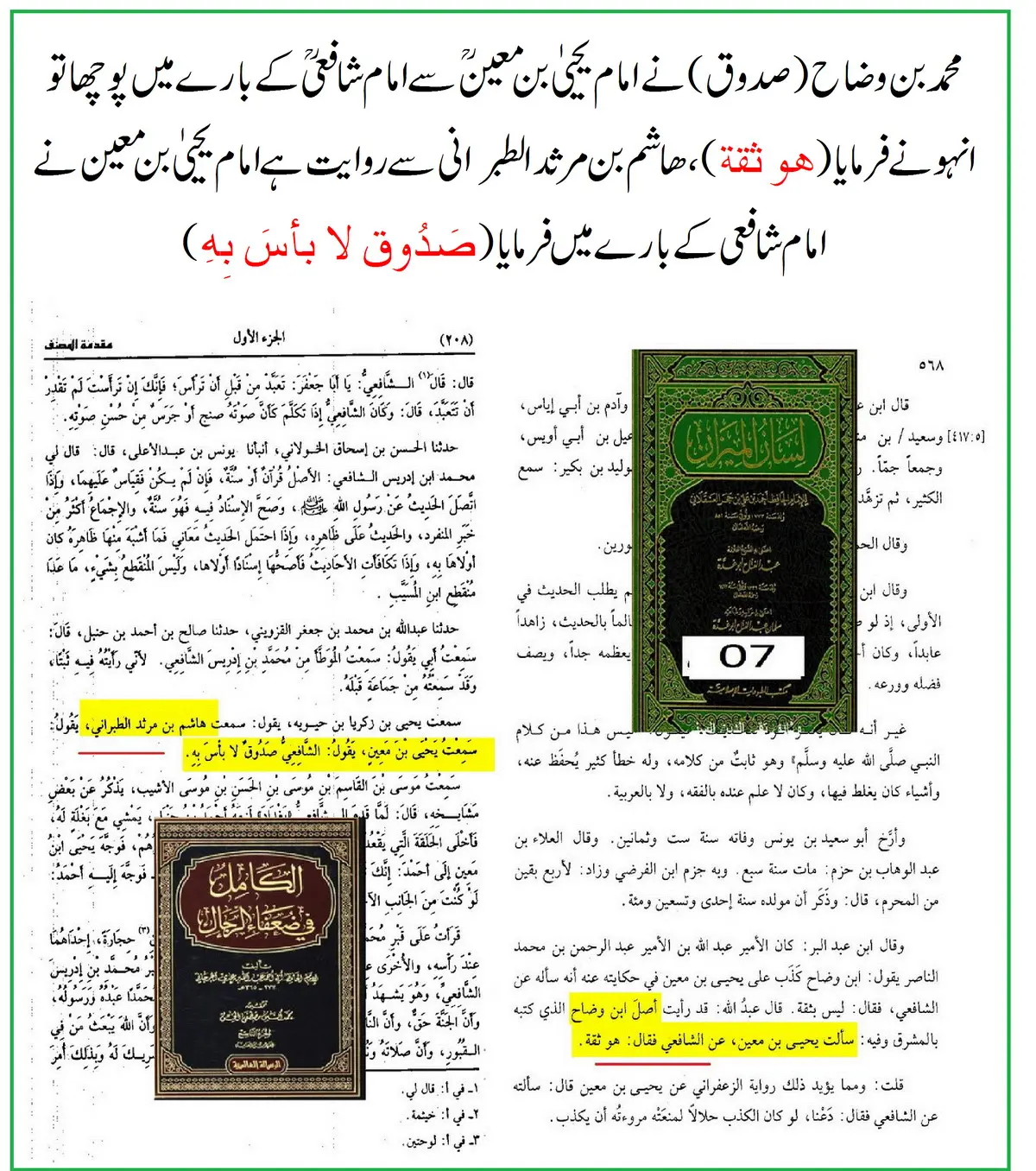
Arabic text:قَالَ يَحْيَى بْنُ مَعِينٍ: الشَّافِعِيُّ صَدُوقٌ لَا بَأْسَ بِهِ.
(الکامل لابن عدی)Translation:
Yaḥyā bin Maʿīn said: “Al-Shāfiʿī is truthful (ṣadūq); there is no harm in him (lā baʾs bih).”
Clarification:
This is explicit commendation, proving that the earlier criticism was about raʾy, not about his integrity.
Summary
✔ Regarding Abū Ḥanīfah, Ibn Maʿīn’s statements include explicit criticism: “يضعف في الحديث”.✔ Regarding Abū Yūsuf, he also stated explicitly: “لا يكتب حديثه”.
✔ Regarding Imām al-Shāfiʿī, his criticism was about raʾy, but his integrity was affirmed: “صدوق لا بأس به.”
Conclusion:Ibn Maʿīn’s statements do not establish Abū Ḥanīfah’s absolute authentication at all. Rather, in most places, he describes his ḥadīth standing as weak.
Overall Summary of the Article
① The evidences presented for Ibn Maʿīn authenticating Abū Ḥanīfah are weak in their chains.② Where words like “awthaq” or “lā baʾs bih” appear, they do not necessarily indicate absolute reliability; rather, they often indicate relative strength or mere negation of lying.
③ In explicit statements, Ibn Maʿīn called Abū Ḥanīfah weak in ḥadīth, and he also issued strong criticism of Abū Yūsuf.
Final Point:Imām Yaḥyā bin Maʿīn (رحمه الله) was a leading imām of Ahl al-Ḥadīth and a pillar of jarḥ and taʿdīl. The claim that he authenticated Abū Ḥanīfah is a major misunderstanding promoted by some Ḥanafīs—built upon weak chains and unknown narrators. The reality is that, according to Ibn Maʿīn, Abū Ḥanīfah was weak in ḥadīth, and this aligns with what the majority of ḥadīth critics held.

