Imam Ibn Ḥazm and the False Allegation of Jahmiyyah
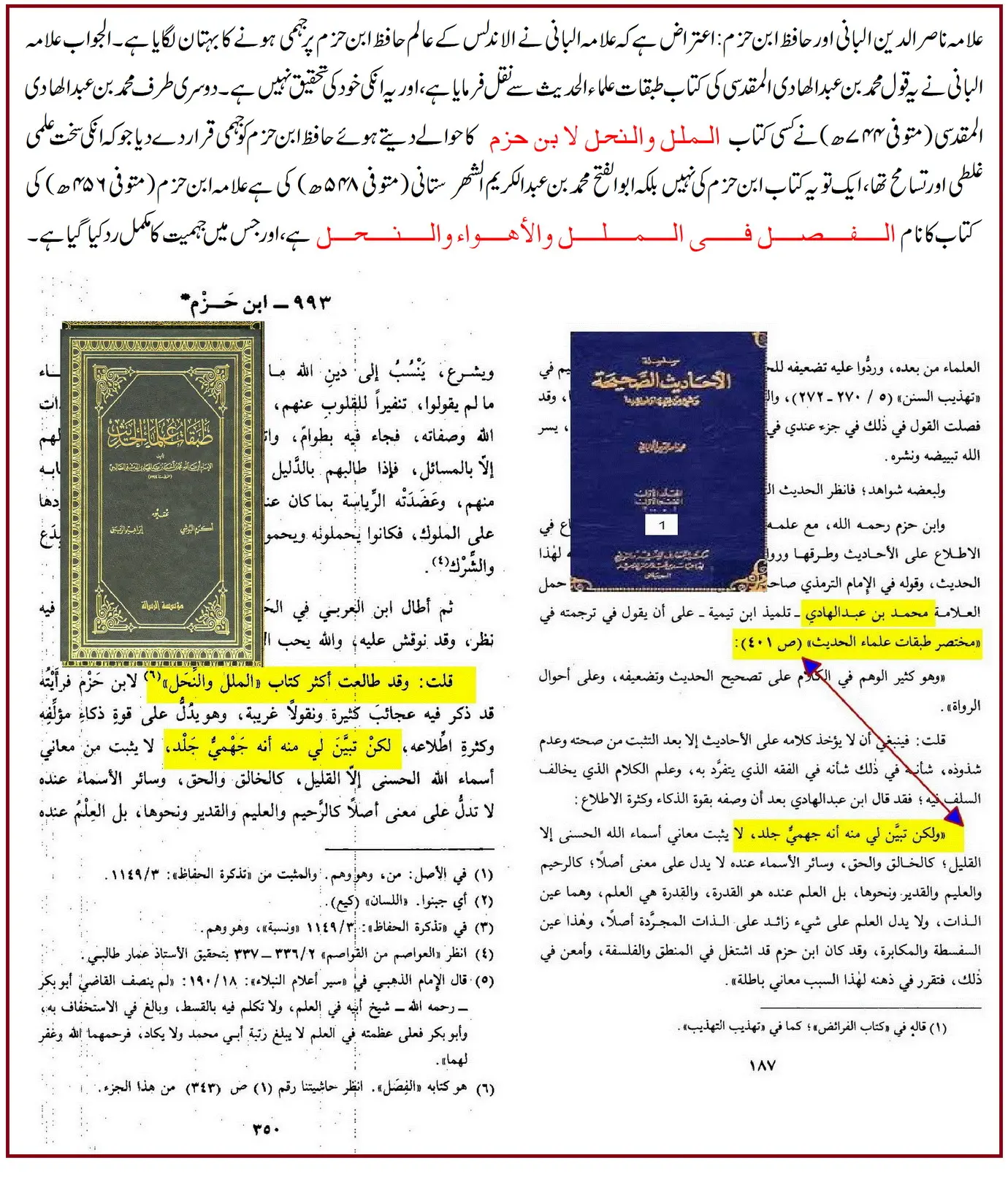
✍ Written by: Abu Hamzah SalafiSome individuals accuse Ḥāfiẓ Ibn Ḥazm al-Andalusi رحمه الله of being a “strict Jahmi.” ʿAllāmah Nāṣir al-Dīn al-Albānī also نقل in Silsilat al-Aḥādīth al-Ṣaḥīḥah a statement from Muḥammad bin ʿAbd al-Hādī al-Maqdisī (d. 744 AH) from Ṭabaqāt ʿUlamāʾ al-Ḥadīth in which this claim was mentioned. The reality is that this is a scholarly oversight which some Barelvi and Deobandi individuals exploit to support their false doctrines.
Imām Ibn ʿAbd al-Hādī referenced al-Milal wa al-Niḥal li Ibn Ḥazm, whereas this book is not authored by Ibn Ḥazm but by Imām al-Shahrastānī (d. 548 AH), written nearly a century after Ibn Ḥazm’s death. Ibn Ḥazm’s own work is titled الفصل في الملل والأهواء والنحل. In this book, he repeatedly refuted the beliefs of the Jahmiyyah, declared them disbelievers in certain matters, and elaborated in detail the creed of the righteous predecessors (Salaf al-Ṣāliḥīn).
Objective of This Article
✔ To establish that the accusation of Jahmiyyah against Ibn Ḥazm is entirely false.✔ To present proofs from his own books that he was among the sternest refuters of the Jahmiyyah.
✔ To clarify through his statements that he adhered to the creed of Ahl al-Sunnah wa al-Jamāʿah, not that of Jahm bin Ṣafwān and his followers.
We shall see that Ibn Ḥazm affirmed:
① Allah’s rising over the Throne
② Allah’s Hands and Eyes
③ The rejection of ḥulūl and ittiḥād
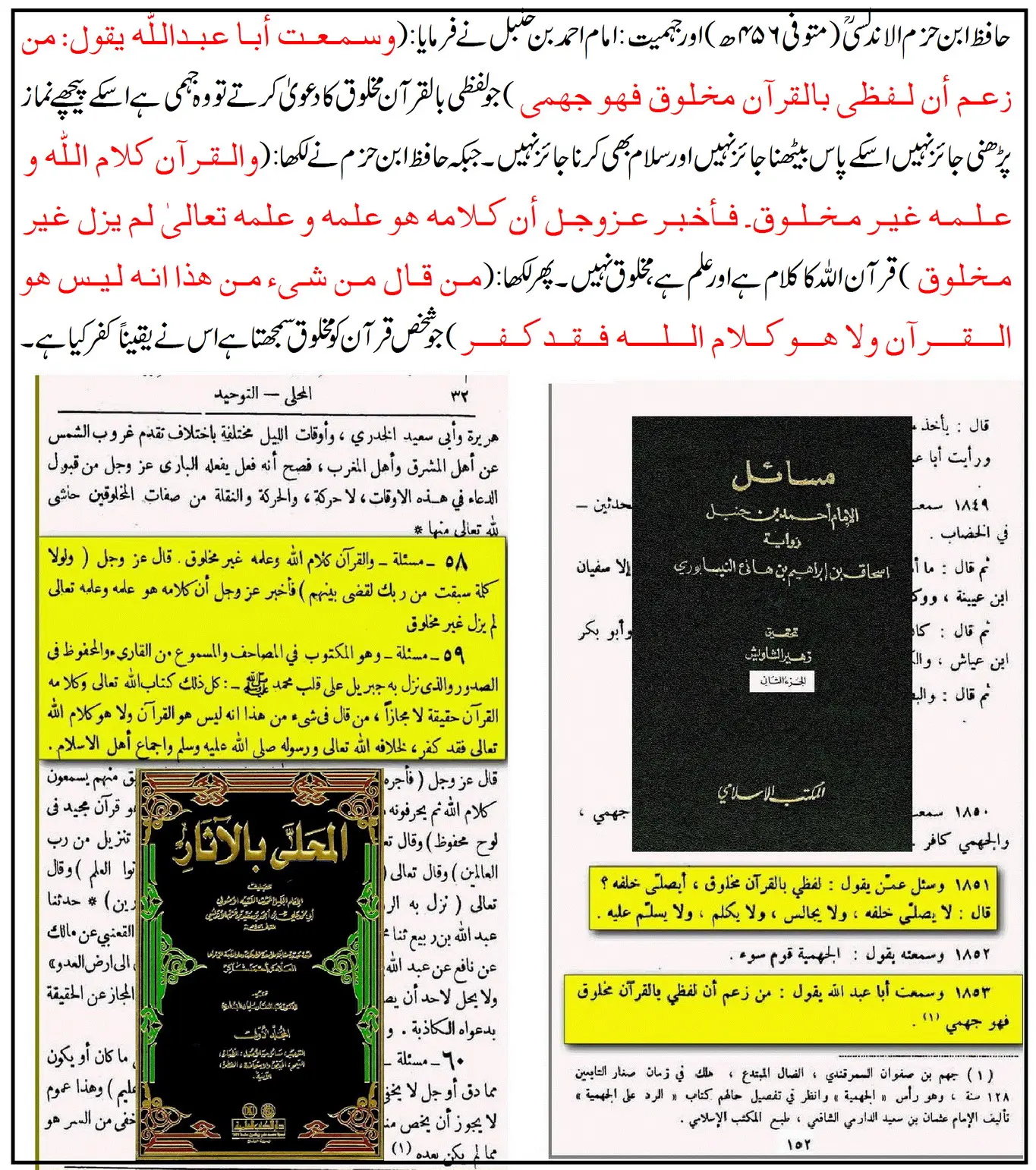
④ That Allah’s Speech is uncreated
⑤ The falsehood of the belief that Allah is everywhere
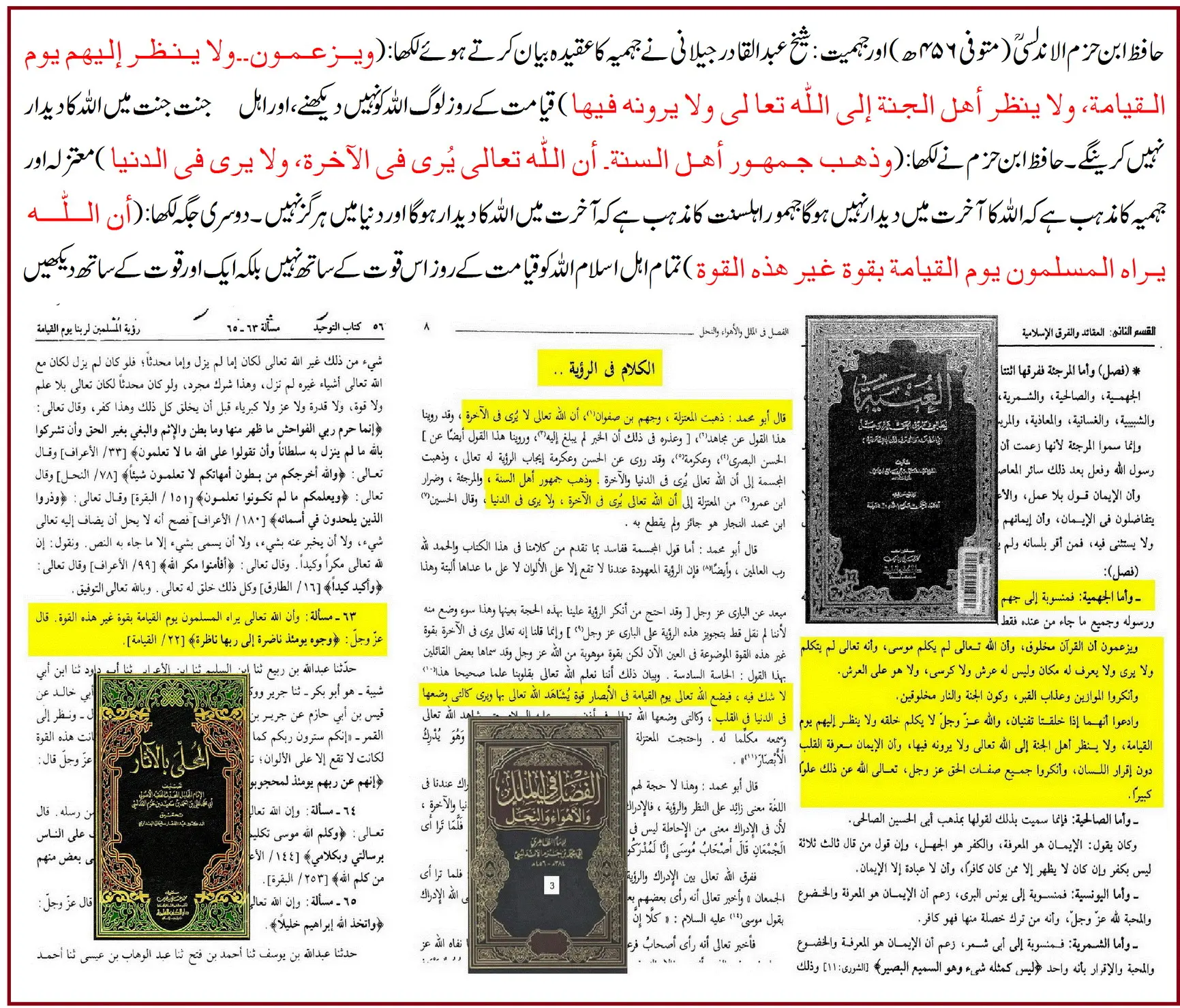
⑥ The believers’ seeing Allah in the Hereafter
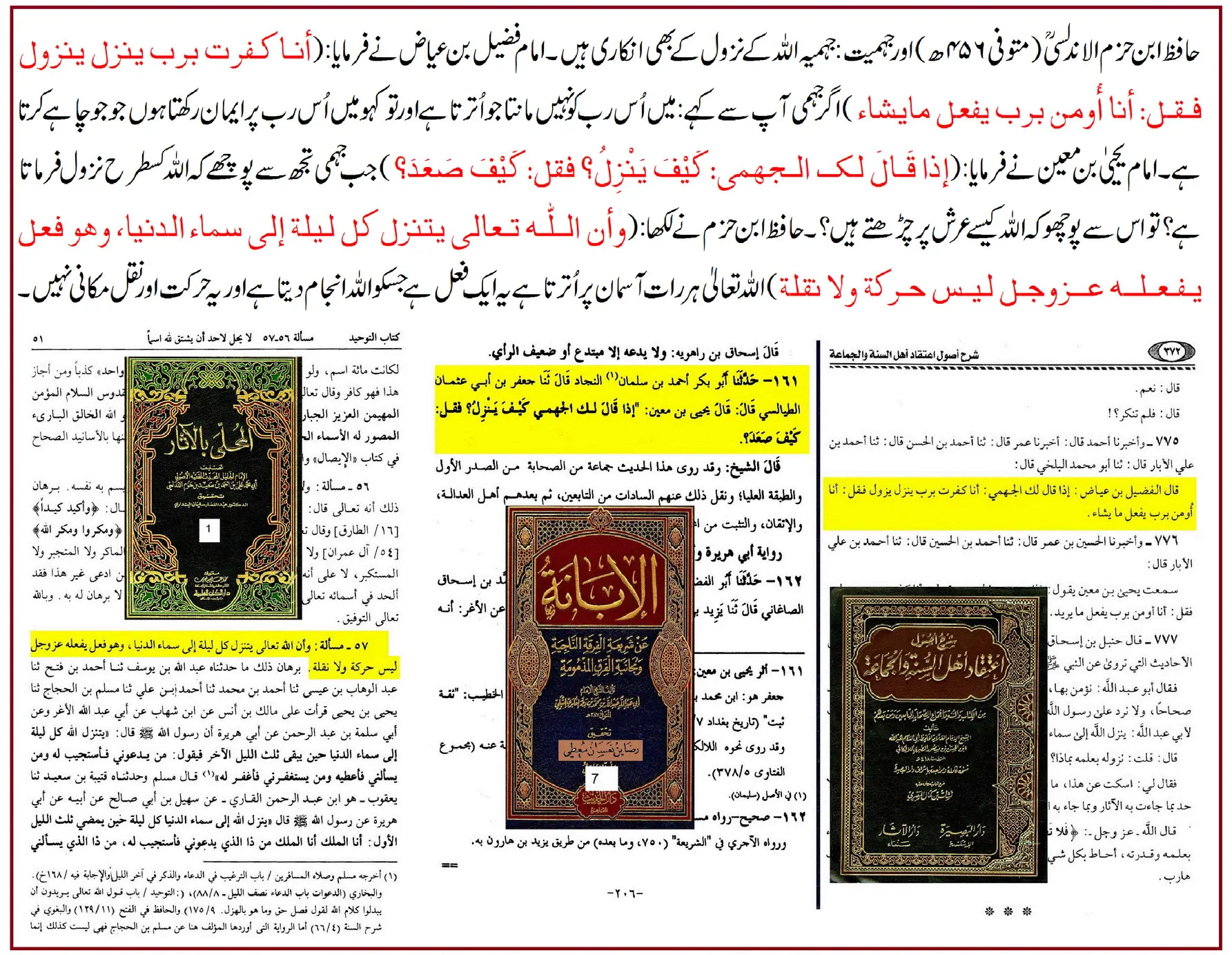
⑦ Allah’s descent
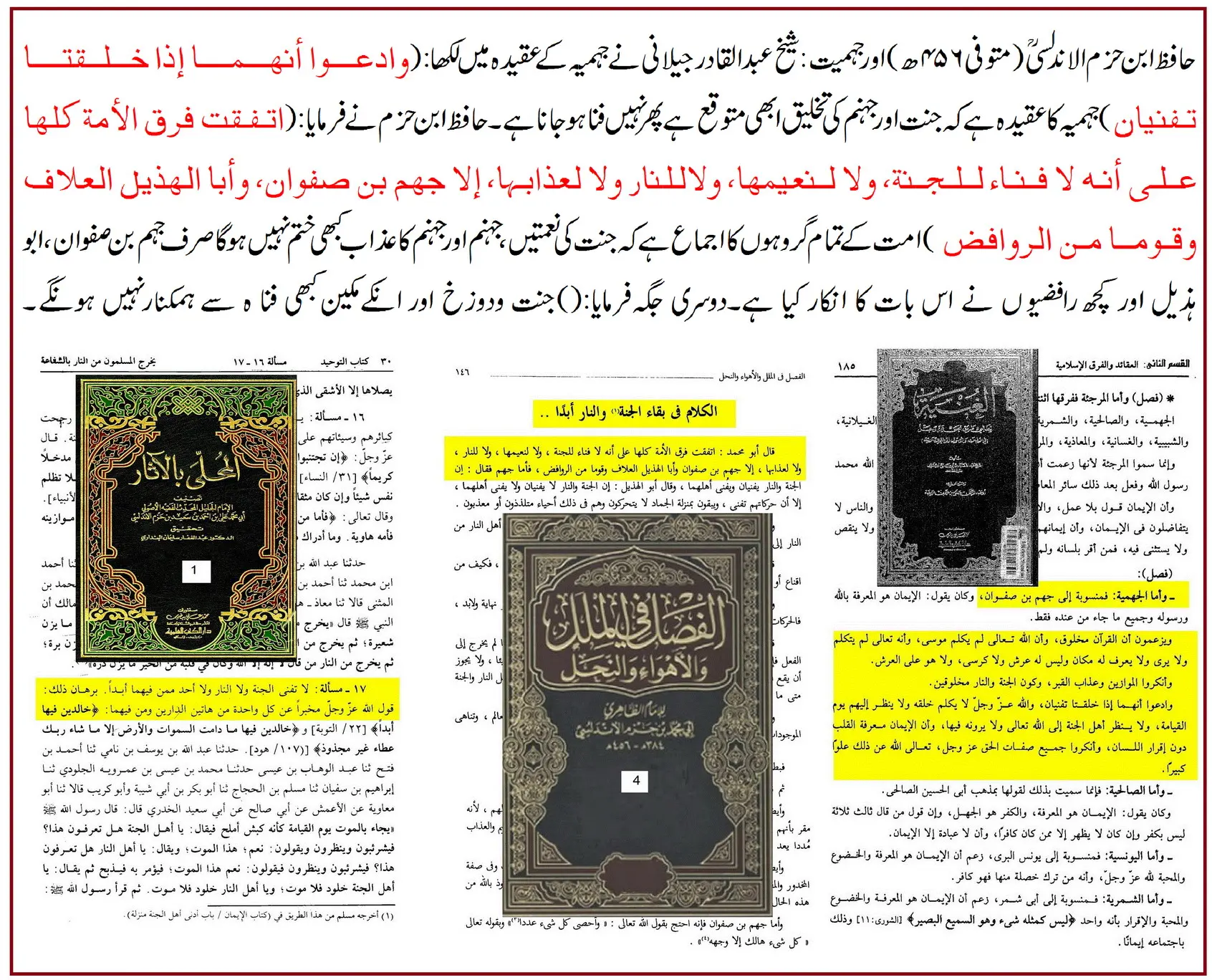
⑧ The eternity of Paradise and Hell
⑨ Verbal testimony as a condition of īmān
All of this will be proven from his own words and texts.
Statements of Ḥāfiẓ Ibn Ḥazm in Refutation of the Jahmiyyah
➊ Affirmation of Allah’s Rising Over the Throne
Imām Ibn Khuzaymah said:
فَنَحْنُ نُؤْمِنُ بِخَبَرِ اللَّهِ جَلَّ وَعَلَا أَنَّ خَالِقَنَا مُسْتَوٍ عَلَى عَرْشِهِ … كَمَا قَالَتِ الْمُعَطِّلَةُ الْجَهْمِيَّةُ: إِنَّهُ اسْتَوْلَى عَلَى عَرْشِهِ، لَا اسْتَوَى …(Kitāb al-Tawḥīd wa Ithbāt Ṣifāt al-Rabb ʿAzza wa Jall)
Translation:
“We believe in the report of Allah, the Most High, that our Creator rose over His Throne… contrary to what the negating Jahmiyyah say: that He conquered the Throne, not that He rose over it.”
Ḥāfiẓ Ibn Ḥazm said:
… وَالِاسْتِوَاء فِي اللُّغَةِ يَقَعُ عَلَى الِانْتِهَاءِ … وَهَذَا هُوَ الْحَقُّ وَبِهِ نَقُولُ لِصِحَّةِ الْبُرْهَانِ …(al-Fiṣal fi al-Milal wa al-Ahwāʾ wa al-Niḥal)
Translation:
“In the Arabic language, istiʾwā refers to elevation and rising. This is the truth, and we hold this view due to the correctness of the proof.”
◈ The Jahmiyyah distorted the verse of istiʾwā by interpreting it as “istawlà (conquered),” whereas Ibn Ḥazm clearly affirmed that Allah truly rose over the Throne.
➋ Affirmation of Allah’s Hands and Eyes
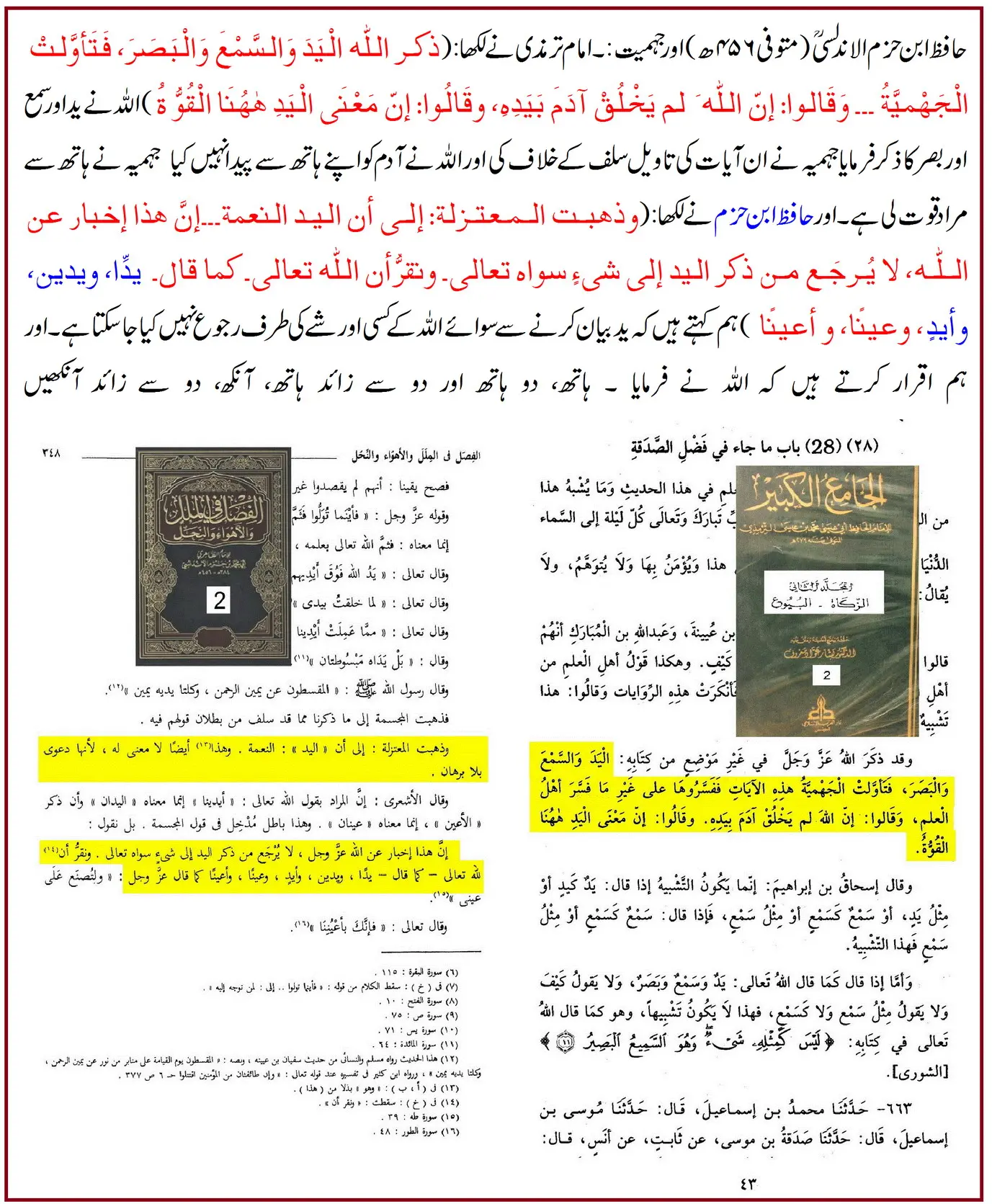
Imām al-Tirmidhī said:
… فَتَأَوَّلَتِ الْجَهْمِيَّةُ هَذِهِ الْآيَاتِ … وَقَالُوا: إِنَّ اللَّهَ لَمْ يَخْلُقْ آدَمَ بِيَدِهِ …(Sunan al-Tirmidhī)
Translation:
“The Jahmiyyah interpreted these verses and said that Allah did not create Adam with His Hand; rather, ‘hand’ means power.”
Ḥāfiẓ Ibn Ḥazm said:
… وَنُقِرُّ إِنَّ لِلَّهِ تَعَالَى كَمَا قَالَ: يَدًا وَيَدَيْنِ وَأَيْدِي … وَعَيْنًا وَأَعْيُنًا كَمَا قَالَ: {وَلِتُصْنَعَ عَلَى عَيْنِي} …(al-Fiṣal)
Translation:
“We affirm that Allah has a Hand, two Hands, and Hands as He stated; and an Eye and Eyes as He stated: ‘That you may be brought up under My Eye.’”
◈ The Jahmiyyah denied these attributes through interpretation, while Ibn Ḥazm affirmed them as they are, following the methodology of the Salaf.
➌ Refutation of Ḥulūl (Indwelling)
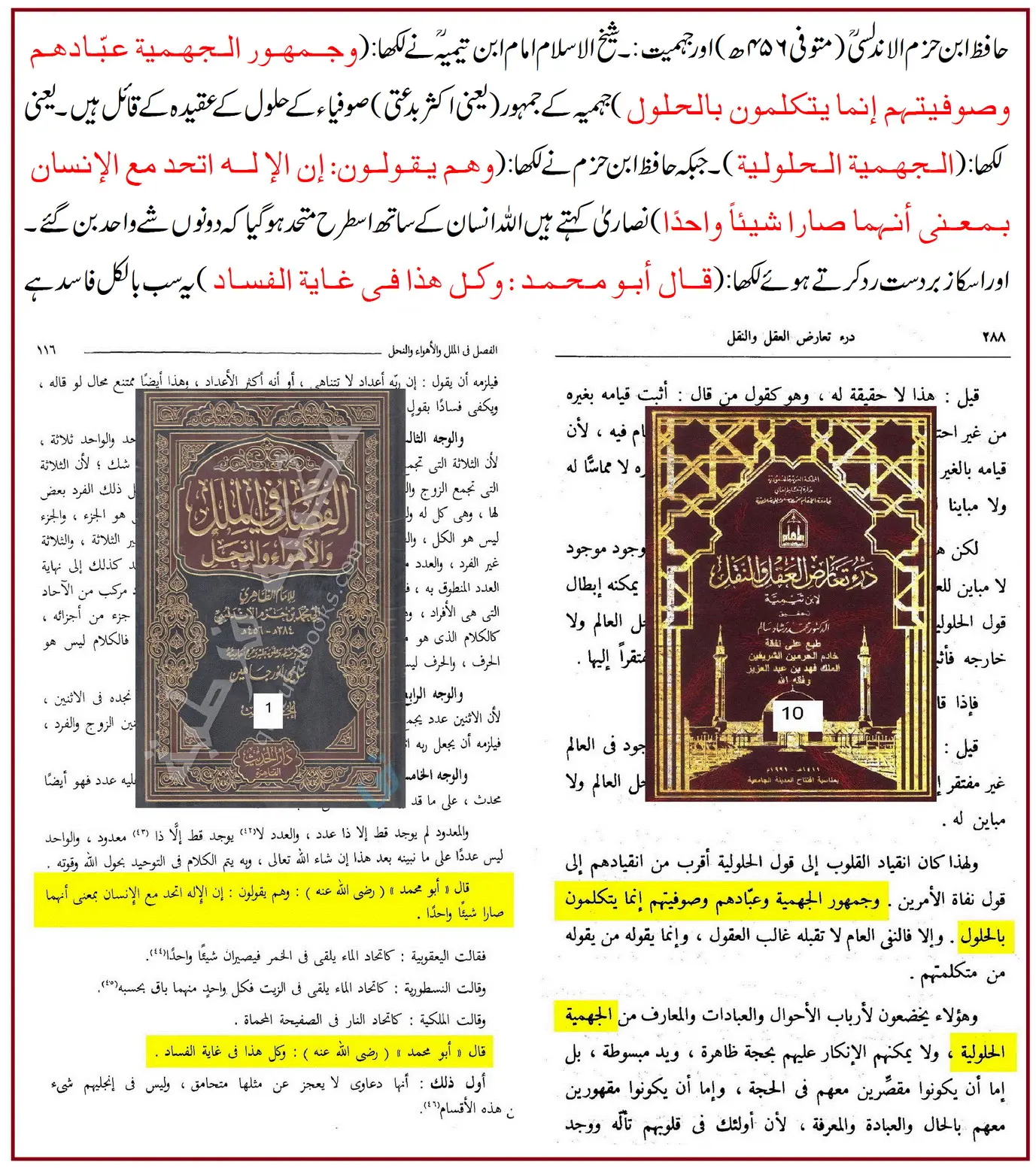
Ibn Taymiyyah said:
وَجُمْهُورُ الْجَهْمِيَّةِ … إِنَّمَا يَتَكَلَّمُونَ بِالْحُلُولِ …(Darʾ Taʿāruḍ al-ʿAql wa al-Naql)
Translation:
“The majority of the Jahmiyyah speak of indwelling (ḥulūl).”
Ḥāfiẓ Ibn Ḥazm said:
… يَقُولُونَ: إِنَّ الْإِلَهَ اتَّحَدَ مَعَ الْإِنْسَانِ … وَكُلُّ هَذَا فِي غَايَةِ الْفَسَادِ …(al-Fiṣal)
Translation:
“They say that the Deity united with man… and all of this is the utmost corruption and falsehood.”
➍ Affirmation that Allah’s Speech is Uncreated
Shaykh ʿAbd al-Qādir al-Jīlānī said:
… وَأَنَّ اللَّهَ تَعَالَى لَمْ يَتَكَلَّمْ …(al-Ghunyah li Ṭālibī Ṭarīq al-Ḥaqq)
Translation:
“The Jahmiyyah held that Allah did not speak.”
Ḥāfiẓ Ibn Ḥazm said:
… أَجْمَعَ أَهْلُ الْإِسْلَامِ أَنَّ لِلَّهِ تَعَالَى كَلَامًا … وَهُوَ غَيْرُ مَخْلُوقٍ …(al-Fiṣal)
Translation:
“The people of Islam are unanimously agreed that Allah has Speech, and it is uncreated.”
➎ Refutation of the Belief that Allah is Everywhere
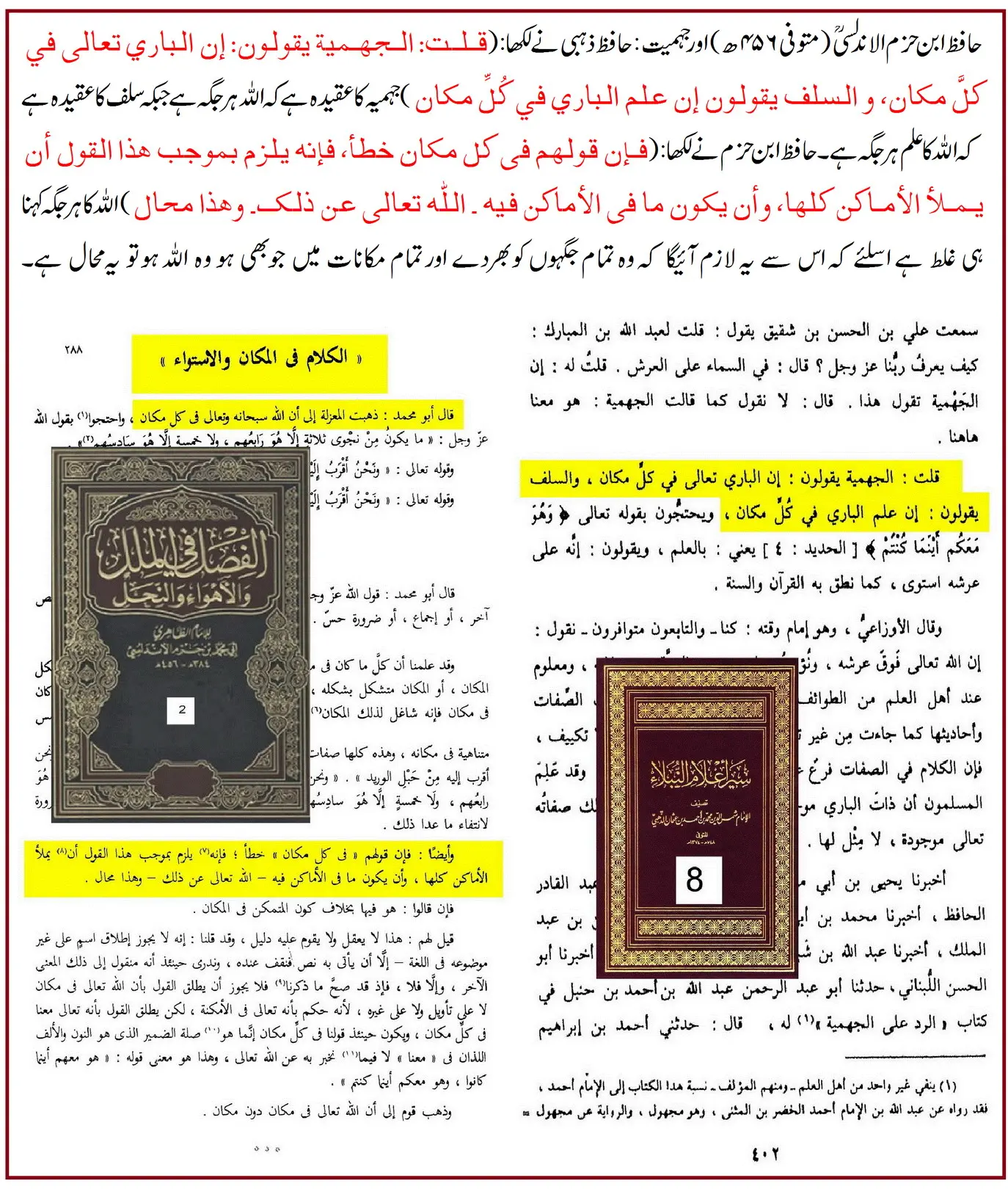
Ḥāfiẓ al-Dhahabī said:
… الجَهْمِيَّةُ يَقُوْلُوْنَ: إِنَّ اللَّهَ فِي كُلِّ مَكَانٍ …(Siyar Aʿlām al-Nubalāʾ)
Translation:
“The Jahmiyyah say that Allah is in every place.”
Ḥāfiẓ Ibn Ḥazm said:
… فَقَوْلُهُمْ: فِي كُلِّ مَكَانٍ خَطَأٌ … يَلْزَمُ أَنْ يَمْلَأَ الْأَمَاكِنَ … وَهَذَا مُحَالٌ.(al-Fiṣal)
Translation:
“Their statement that Allah is in every place is false, because it would necessitate that He fills all places, and this is impossible.”
➏ The Qur’an is Uncreated
Imām Aḥmad said:
… وَمَنْ قَالَ: لَفْظِي بِالْقُرْآنِ مَخْلُوقٌ، فَهُوَ جَهْمِيٌّ.(Masāʾil al-Imām Aḥmad)
Translation:
“Whoever says, ‘My recitation of the Qur’an is created,’ then he is a Jahmi.”
Ḥāfiẓ Ibn Ḥazm said:
[مَسْأَلَةٌ: الْقُرْآنُ كَلَامُ اللَّهِ غَيْرُ مَخْلُوقٍ] … فَمَنْ قَالَ إِنَّهُ مَخْلُوقٌ فَقَدْ كَفَرَ …(al-Muḥallā bil-Āthār)
Translation:
“The Qur’an is the Speech of Allah, uncreated. Whoever says it is created has committed disbelief.”
➐ Affirmation of Seeing Allah in the Hereafter
Ḥāfiẓ Ibn Ḥazm said:
… ذَهَبَتِ الْمُعْتَزِلَةُ وَجَهْمُ بْنُ صَفْوَانَ إِلَى أَنَّ اللَّهَ لَا يُرَى فِي الْآخِرَةِ، وَذَهَبَ جُمْهُورُ أَهْلِ السُّنَّةِ إِلَى أَنَّهُ يُرَى فِي الْآخِرَةِ …(al-Fiṣal)
Translation:
“The Muʿtazilah and Jahm bin Ṣafwān held that Allah will not be seen in the Hereafter, while the majority of Ahl al-Sunnah hold that He will indeed be seen in the Hereafter.”
➑ Affirmation of Allah’s Descent
[مَسْأَلَةٌ: اللَّهُ يَتَنَزَّلُ كُلَّ لَيْلَةٍ إِلَى سَمَاءِ الدُّنْيَا] … وَهُوَ فِعْلٌ يَفْعَلُهُ عَزَّ وَجَلَّ لَيْسَ حَرَكَةً وَلَا نَقْلَةً.(al-Muḥallā)
Translation:
“Allah descends every night to the lowest heaven. It is an action He performs, not movement nor انتقال.”
➒ Eternity of Paradise and Hell
… اتَّفَقَتْ فِرَقُ الْأُمَّةِ كُلُّهَا عَلَى أَنَّهُ لَا فَنَاءَ لِلْجَنَّةِ … إِلَّا جَهْمٌ …(al-Fiṣal)
Translation:
“All the sects of the Ummah have agreed that there is no annihilation for Paradise nor its bliss, nor for Hell nor its punishment—except Jahm…”
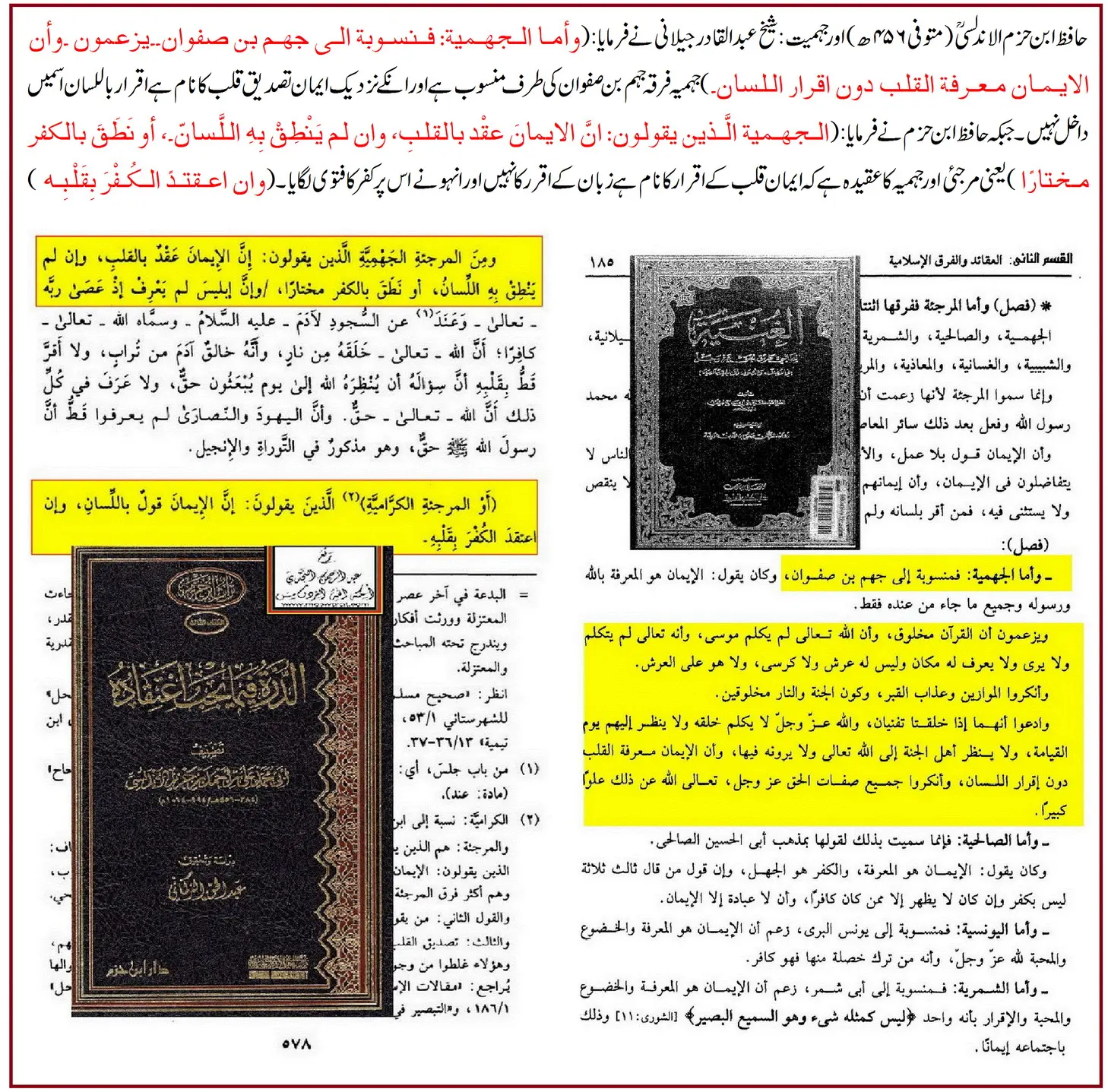
➓ Verbal Testimony as a Condition of Īmān
Ibn Ḥazm refuted the Jahmiyyah’s claim that īmān is mere inner recognition and declared such a view disbelief.(al-Durrah fīmā Yajibu Iʿtiqāduh)
✦ Summary
All of these texts clearly prove that Ḥāfiẓ Ibn Ḥazm al-Andalusi رحمه الله was not a Jahmi. Rather, he was among the strongest critics and refuters of the Jahmiyyah.✔ He affirmed the Divine Attributes.
✔ He declared disbelief upon Jahmi doctrines.
✔ He explicitly supported the foundational beliefs of Ahl al-Sunnah wa al-Jamāʿah.