
✍ Compiled by: Abu Hamzah Salafi
This academic research aims to clarify the trustworthiness and scholarly rank of Imām Muḥammad ibn Ḥibbān al-Bustī رحمه الله and to present a detailed refutation of the allegations raised against him.
This article will address the following:
① The overwhelming endorsement of Ibn Ḥibbān by the majority of scholars.
② A scholarly response to the unsubstantiated criticisms by biased or deviant groups.
③ A clarification that Ibn Ḥibbān’s criticism of Imām Abū Ḥanīfah رحمه الله is not an isolated view, but one echoed by other hadith critics.
④ All content is referenced from primary sources, along with Arabic texts, translations, and authenticated citations.
Arabic:
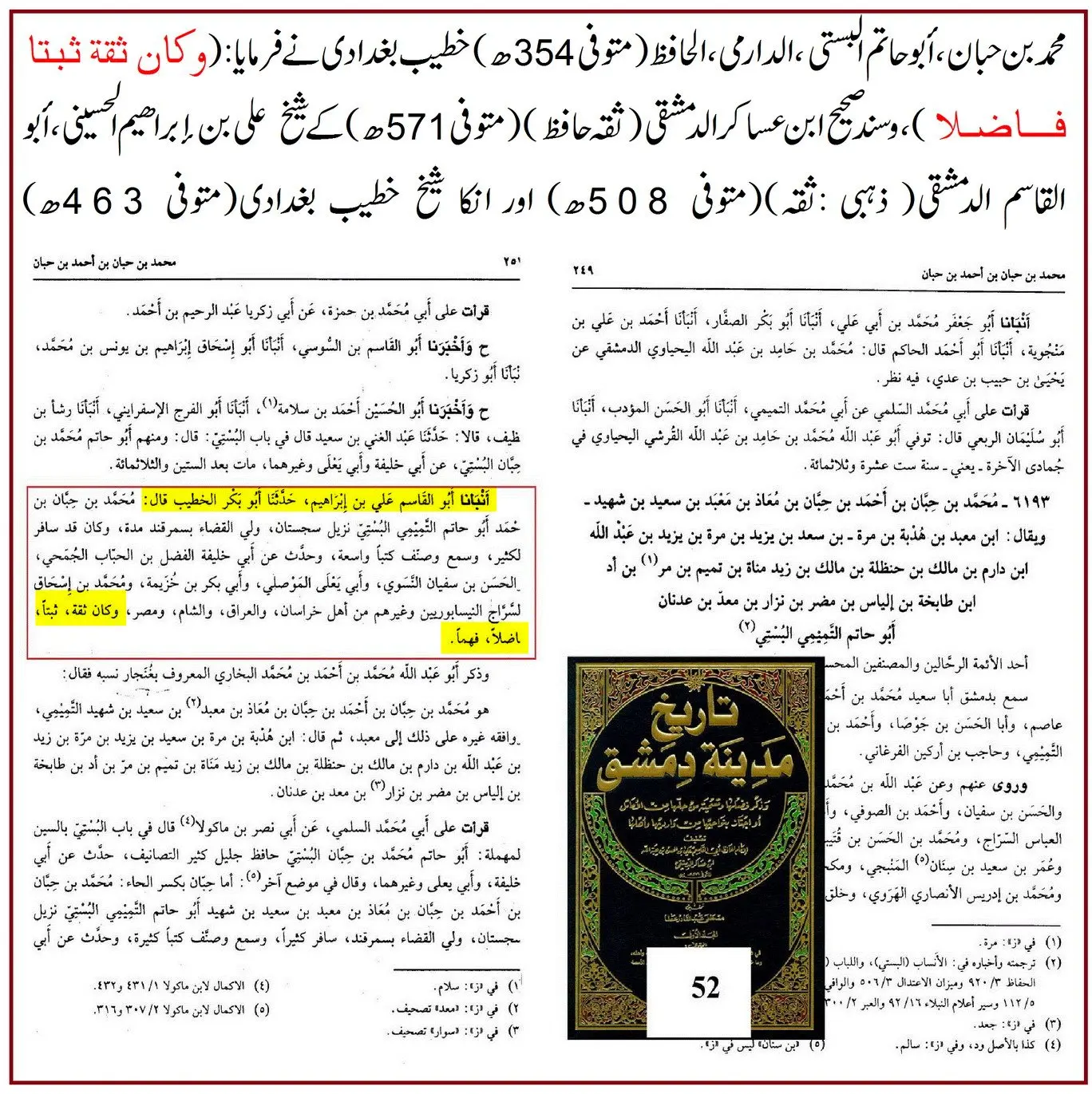
وكان ثقة ثبتا فاضلا
Translation:
He was trustworthy (thiqqah), firm in narration (thabt), and virtuous.
 Tārīkh Dimashq by Ibn ʿAsākir
Narrators: Ibn ʿAsākir (thiqqah), ʿAlī ibn Ibrāhīm al-Ḥusaynī (thiqqah), al-Khaṭīb al-Baghdādī (ḥujjah)
Arabic:
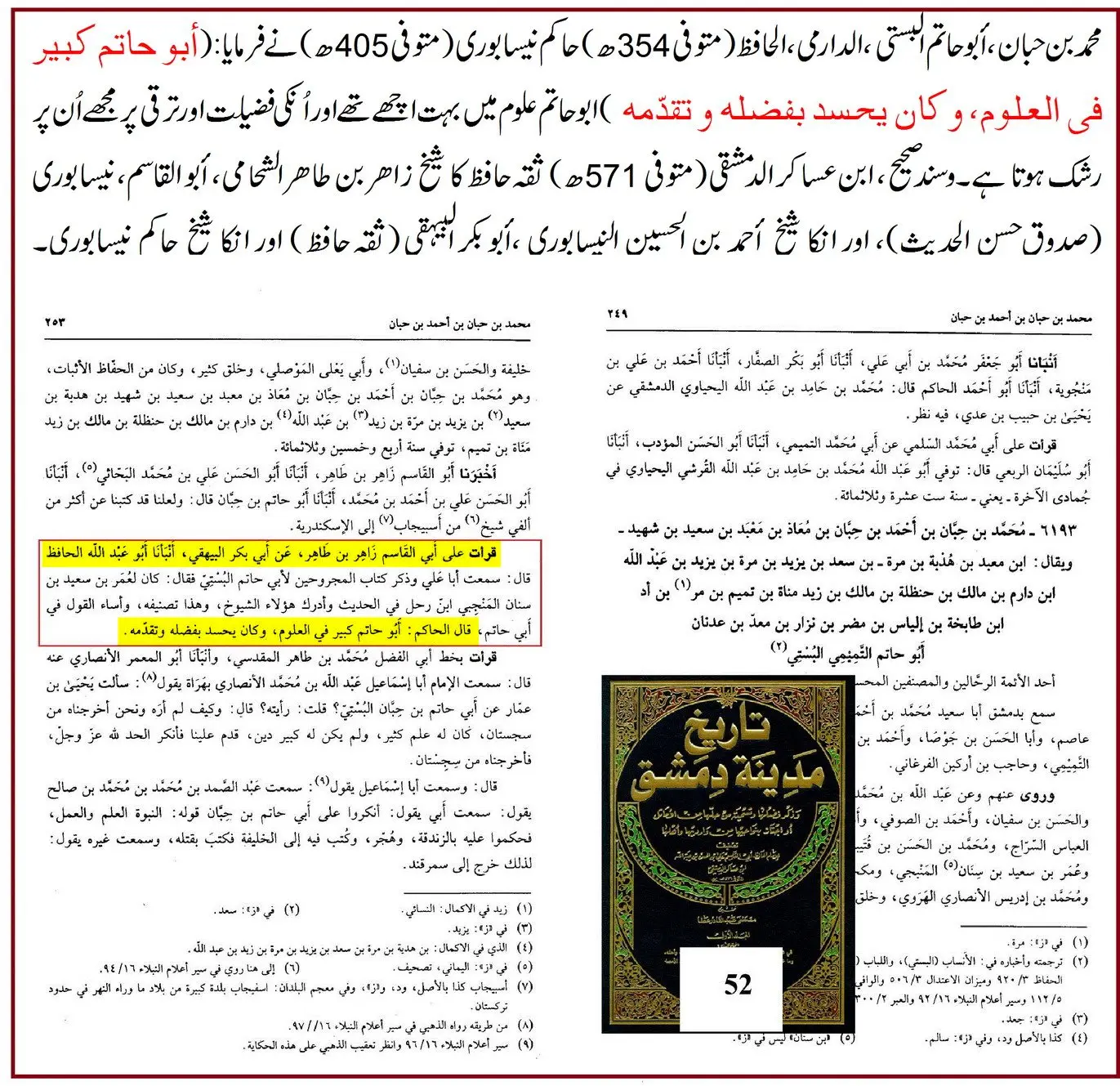
أبو حاتم كبير في العلوم وكان يحسد بفضله وتقدمه
Translation:
Abū Ḥātim (Ibn Ḥibbān) was great in knowledge, and his excellence and rank were envied.
Tārīkh Dimashq
Arabic:
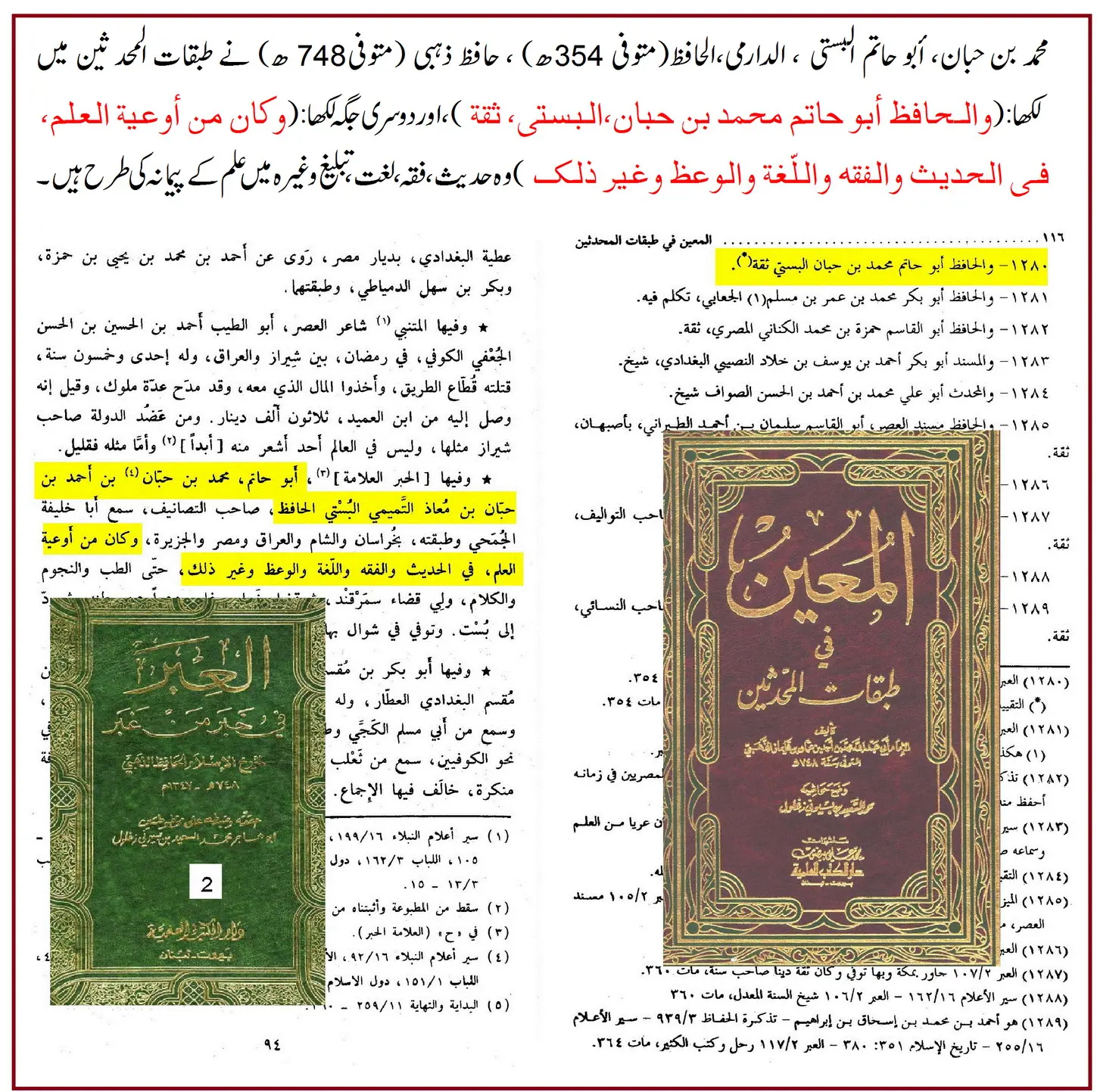
والحافظ أَبُو حَاتِم مُحَمَّد بن حِبَّان البُسْتي ثِقَة
Translation:
The ḥadīth master, Abū Ḥātim Muḥammad ibn Ḥibbān al-Bustī, was trustworthy.
al-Muʿīn fī Ṭabaqāt al-Muḥaddithīn
Arabic:
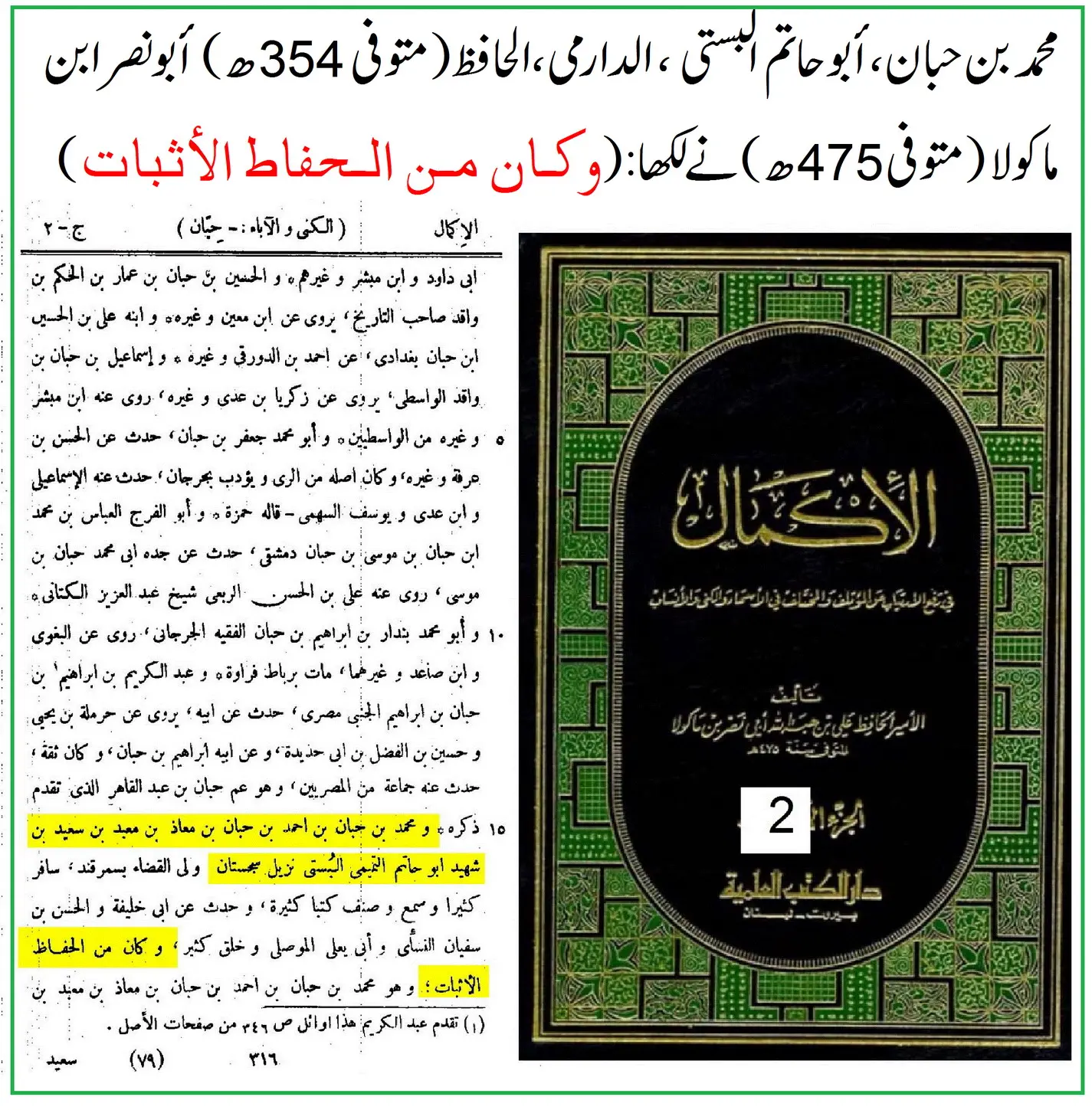
وكان من الحفاظ الأثبات
Translation:
He was among the firm and reliable preservers of ḥadīth.
al-Ikmāl fī Rafʿ al-Irtiyāb
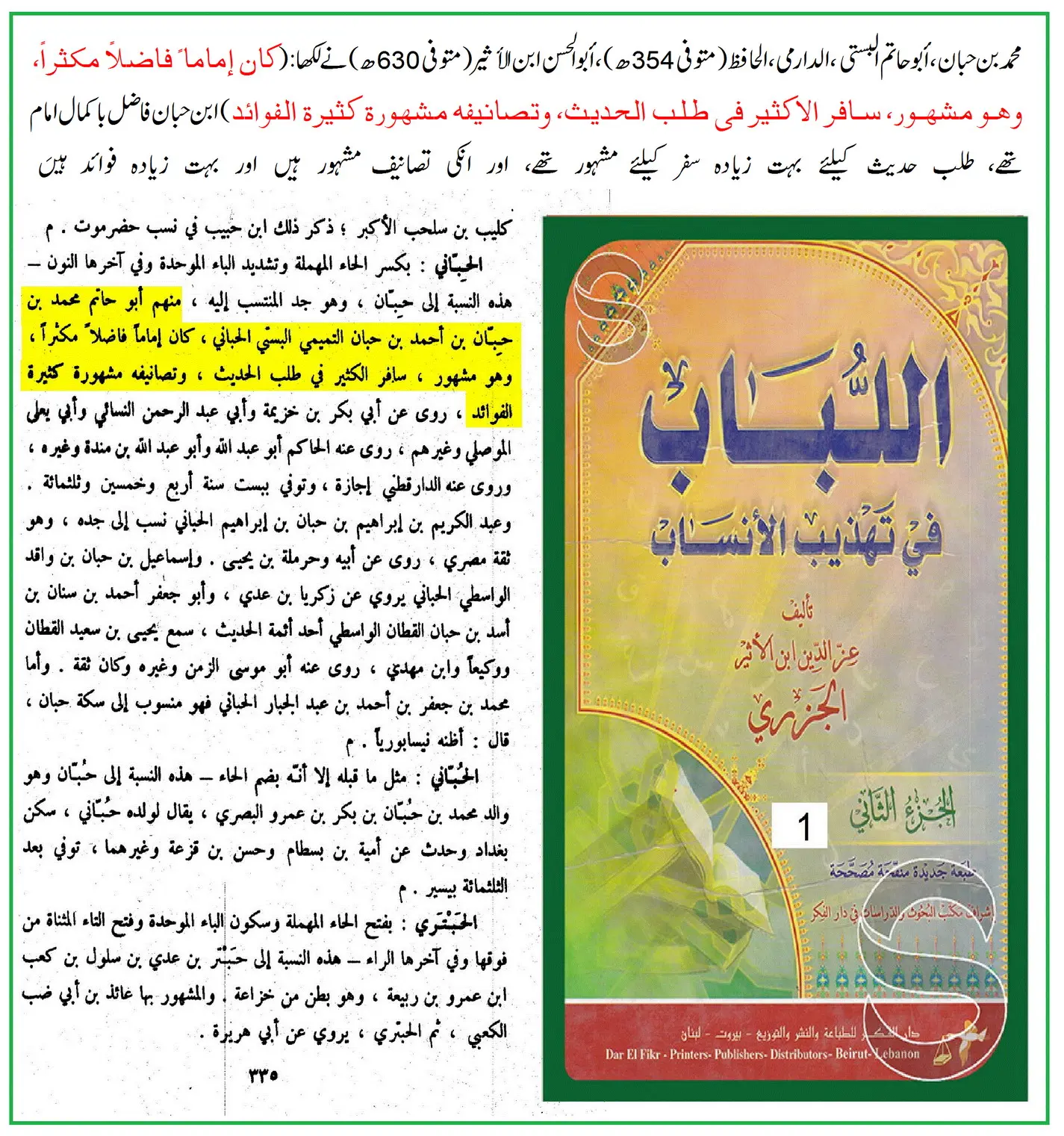
Arabic:
كَانَ إِمَامًا فَاضلا مكثرا… وتصانيفه مشهورة كثيرة الفوائد
Translation:
He was a virtuous imām, prolific in ḥadīth, widely traveled in search of it, and his books are well-known and full of benefits.
al-Lubāb fī Tahdhīb al-Ansāb
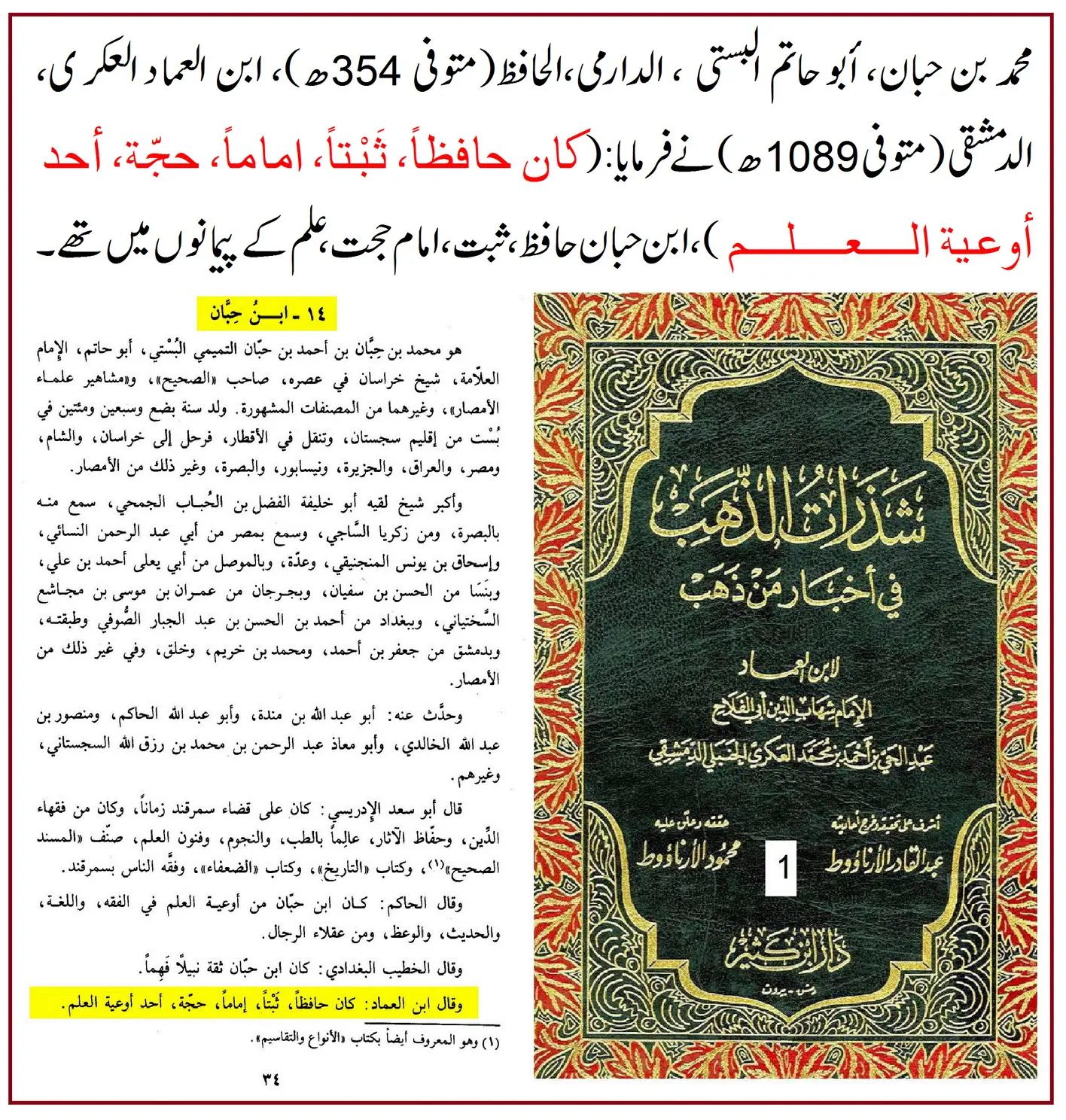
Arabic:
كان حافظا، ثبتا، إماما، حجّة، أحد أوعية العلم
Translation:
He was a ḥadīth master, firm, imām, proof (ḥujjah), and a vessel of knowledge.
Shadharāt al-Dhahab
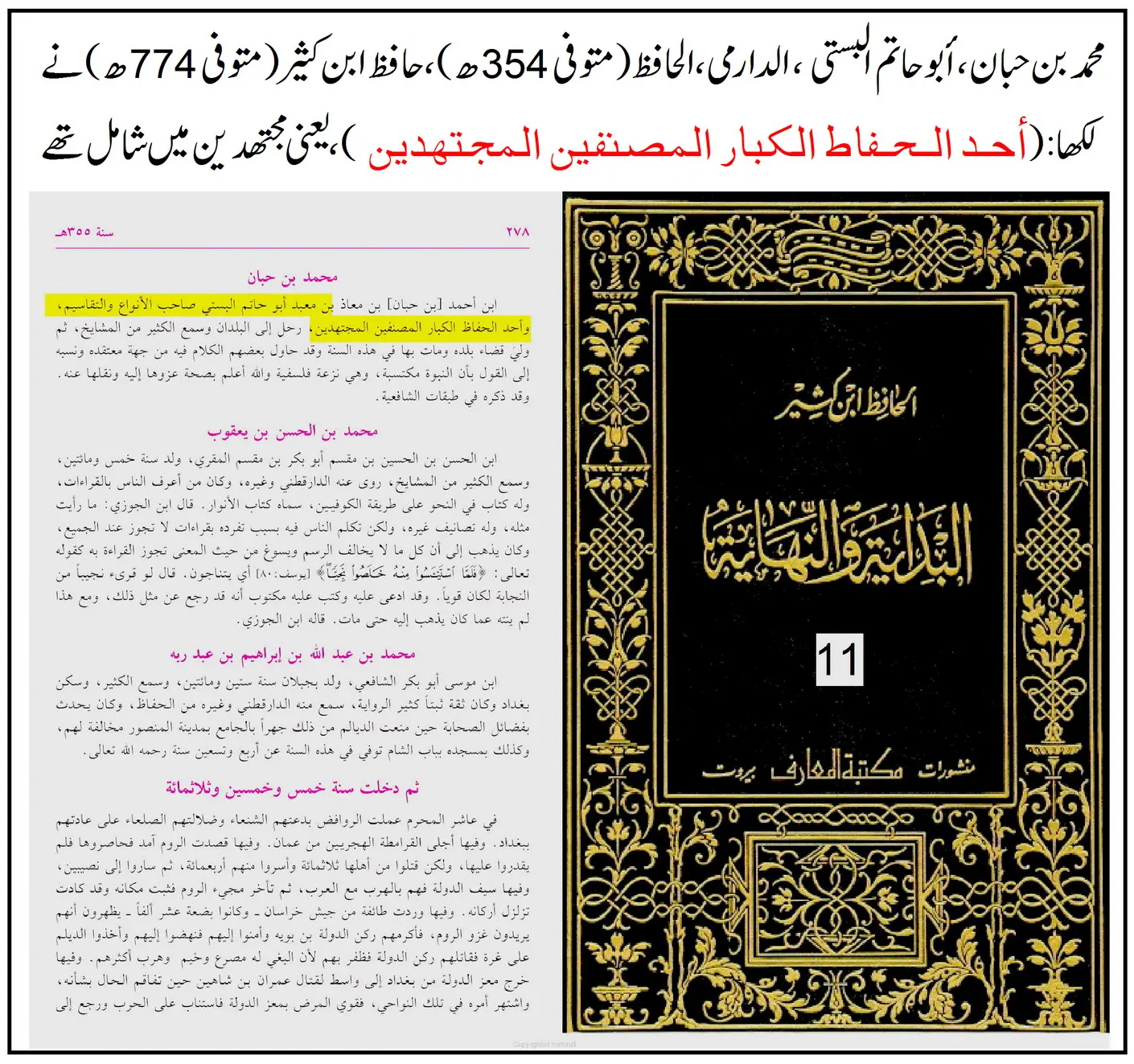
Arabic:
أحد الحفاظ الكبار المصنفين المجتهدين
Translation:
He was one of the great ḥadīth masters, authors, and mujtahid scholars.
al-Bidāyah wa al-Nihāyah
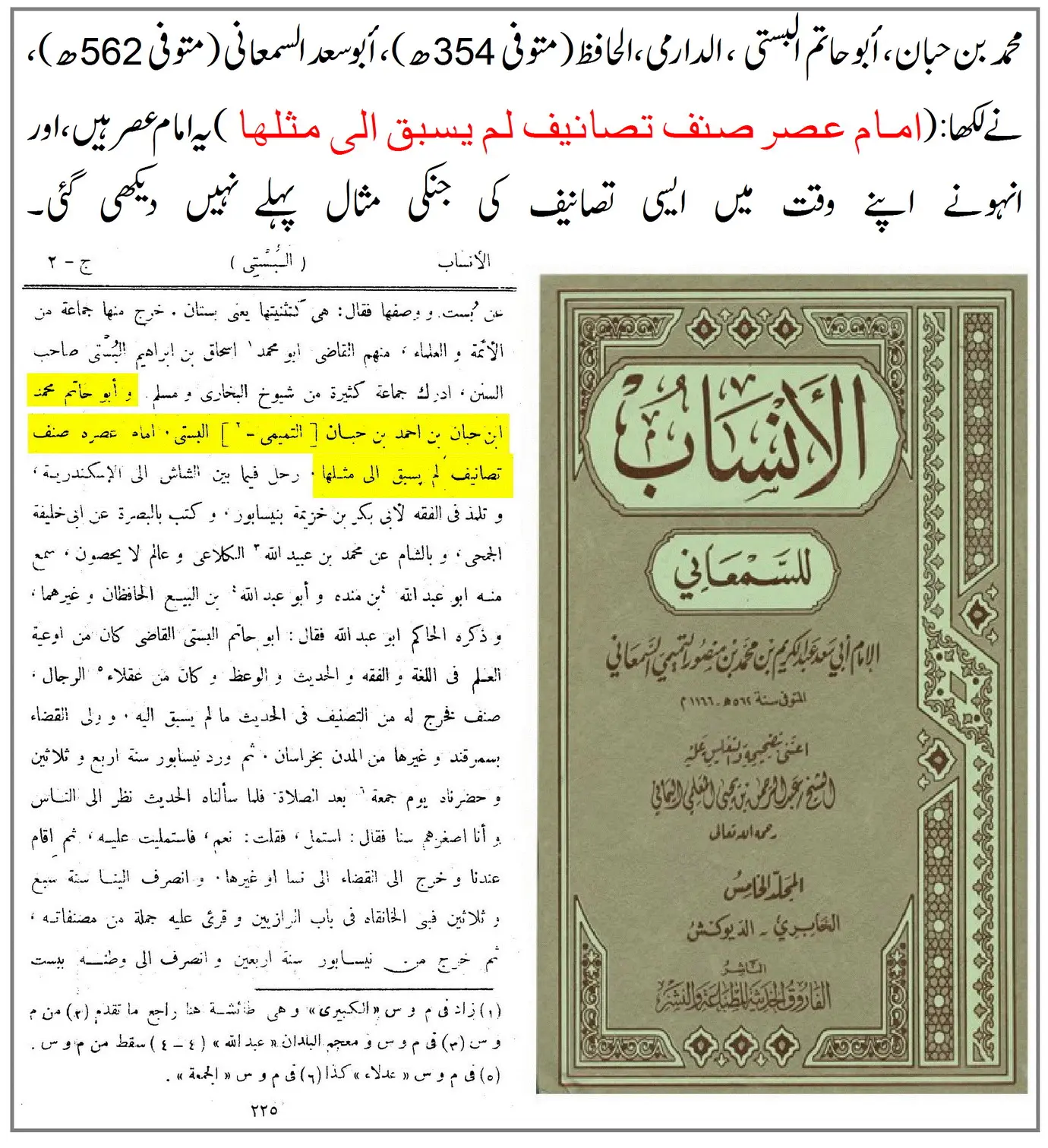
Arabic:
إمام عصره صنف تصانيف لم يسبق إلى مثلها
Translation:
He was the imām of his time, who authored works unmatched before.
al-Ansāb
Arabic:
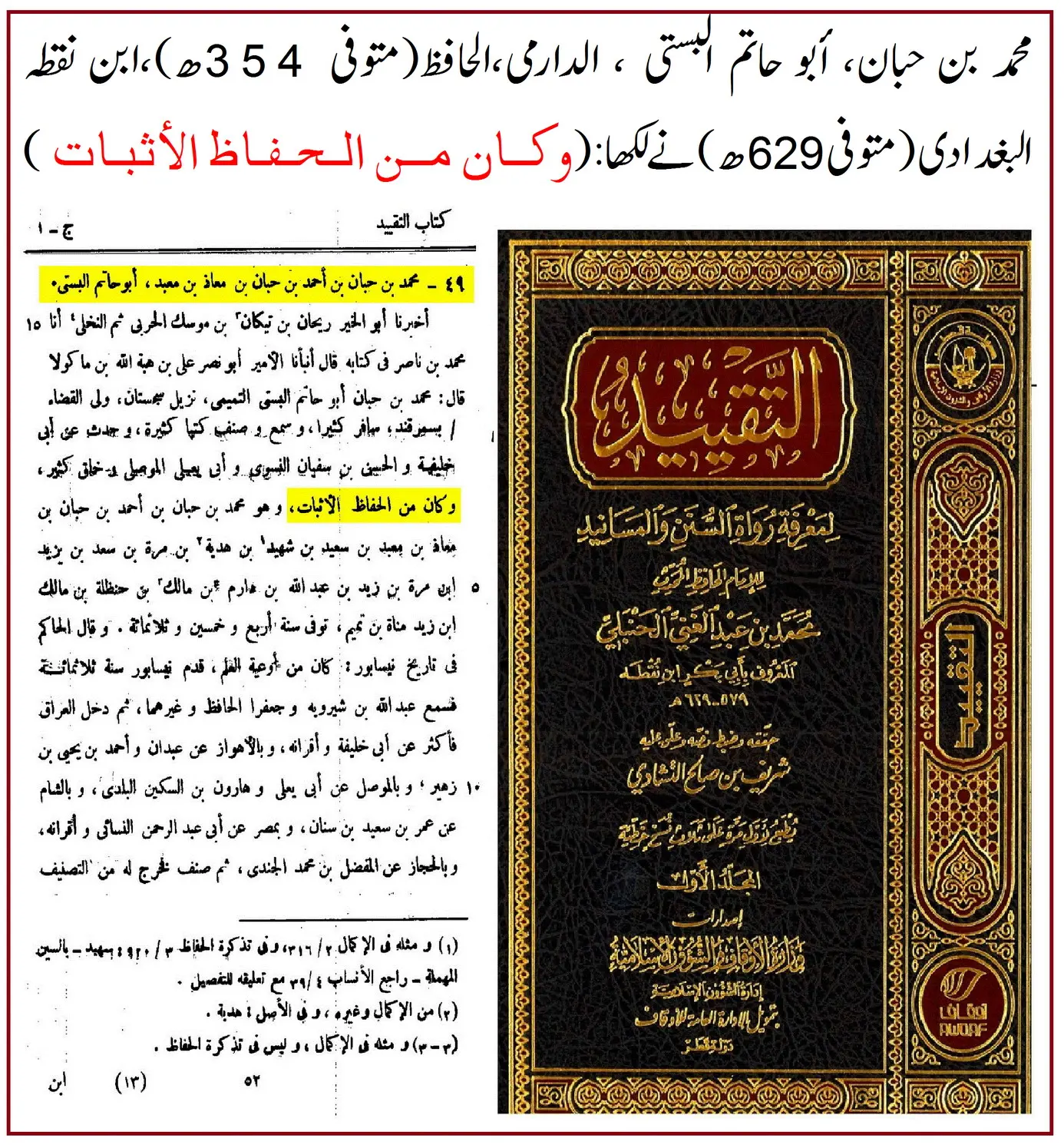
وكان من الحفاظ الأثبات
Translation:
He was among the reliable and firm preservers of ḥadīth.
al-Taqyīd
Arabic:
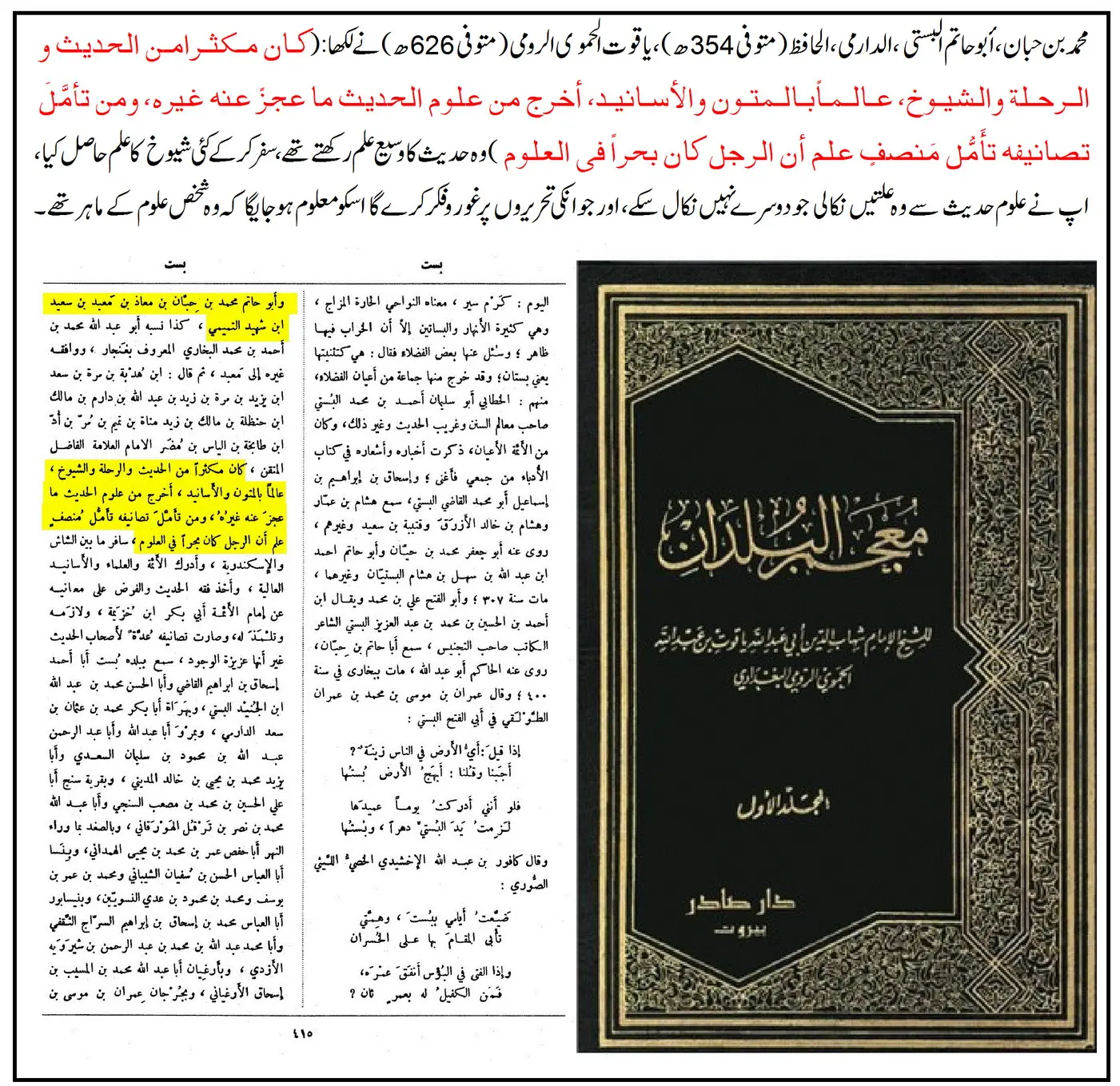
عالما بالمتون والأسانيد…
Translation:
A scholar of both texts and chains of ḥadīth, extracting insights others could not.
Muʿjam al-Buldān
Arabic (from al-Dhahabī):
وكان عارفا بالطب والنجوم، والكلام والفقه
Translation:
He was well-versed in medicine, astronomy (stars), kalām, fiqh, and a master of hadith.
Mīzān al-Iʿtidāl
Scholarly Response:
The "knowledge of stars (nujūm)" here refers to permissible knowledge like navigation and seasons, not prohibited astrology.
Shaykh Ibn ʿUthaymīn رحمه الله affirmed this type is permissible.
As for Kalām, unless critics can prove what heretical statement he made, the objection is invalid.
Arabic:
قدم علينا فأنكر الحد لله فأخرجناه
Translation:
He came to us and denied that Allah has a limit, so we expelled him.
Tārīkh Dimashq
Response:
The central narrator Yaḥyā ibn ʿAmmār is unknown (majhūl).
Al-Dhahabī himself said:
Denial or affirmation of ḥadd is speculative talk; remaining silent is preferred.
Arabic:
أنكروا عليه قوله: النبوة العلم والعمل، وحكموا عليه بالزندقة
Translation:
They objected to his statement "Prophethood is knowledge and action" and declared him a heretic.
Mīzān al-Iʿtidāl
Response:
The narrators: ʿAbd al-Ṣamad and his father are unknown.
Hence, this report is unreliable.
Arabic:
لا تكتب عنه فإنه كذاب
Translation:
Do not write from him—he is a liar.
Muʿjam al-Buldān
Response:
This report lacks a connected chain of transmission.
Even al-Dhahabī rejected such odd criticisms:
"Shādh (isolated) criticisms should not be accepted."
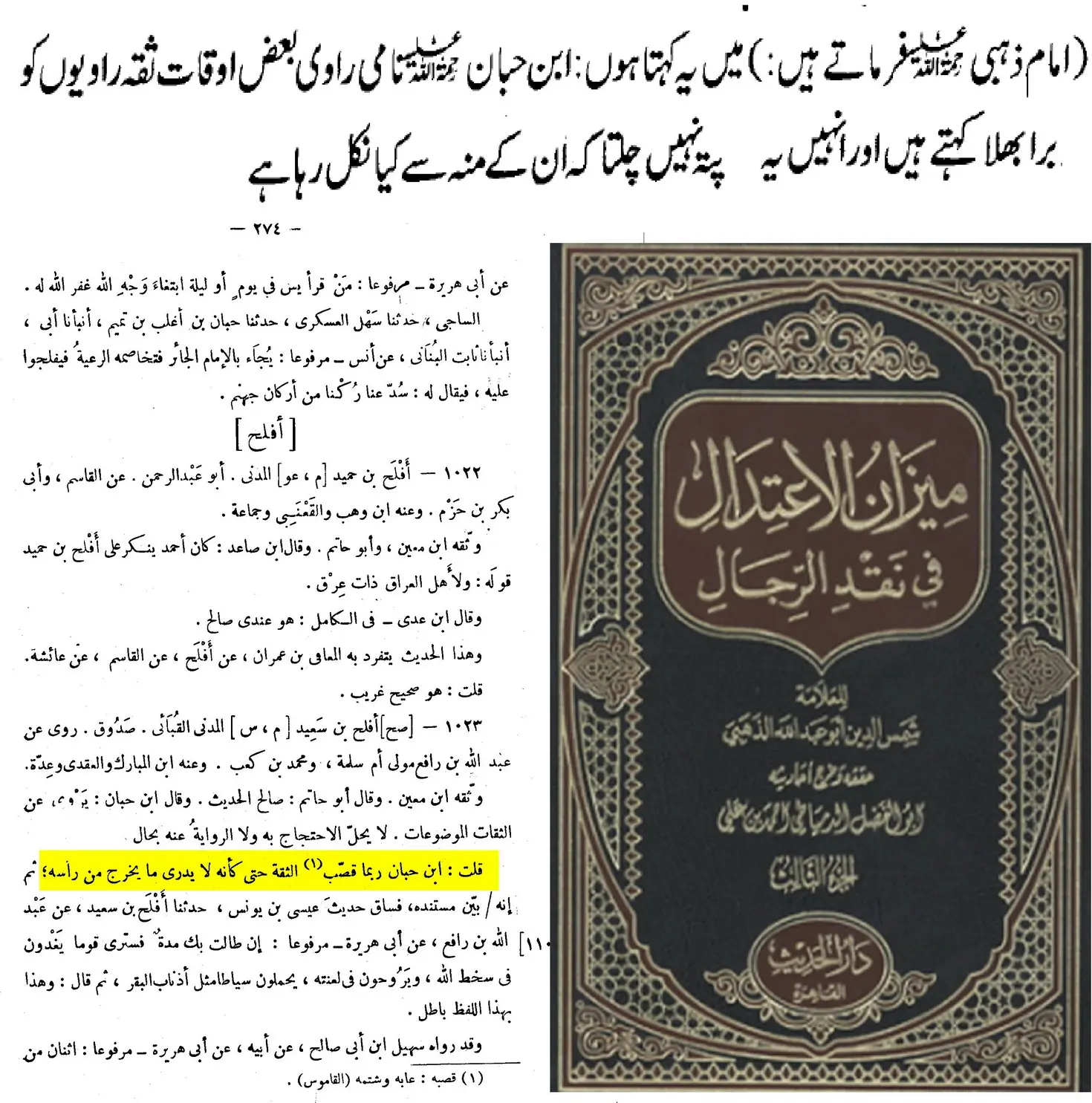
Arabic:
ربما جرح الثقة…
Translation:
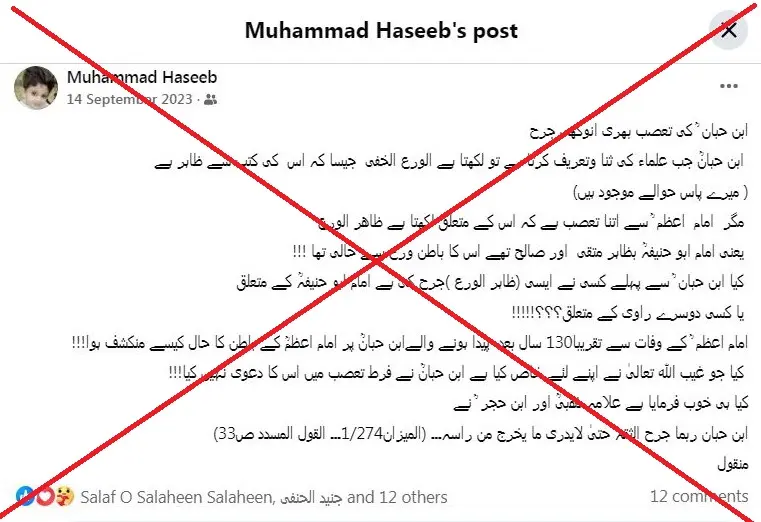
He sometimes criticized trustworthy narrators, as if unaware of what he was saying.
Mīzān al-Iʿtidāl
Response:
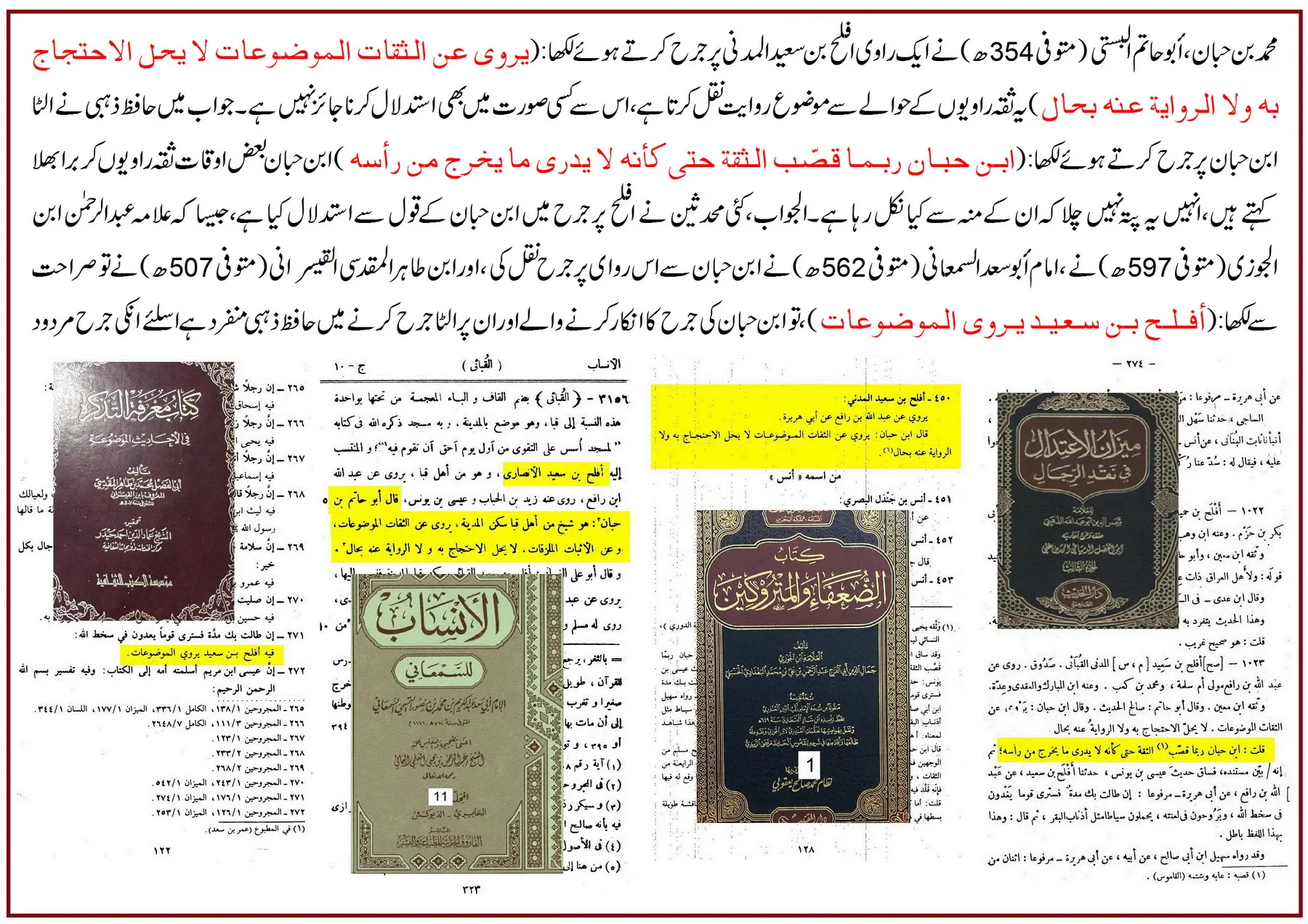
This relates to his criticism of Aflah ibn Saʿīd al-Madanī—but others like al-Ḥākim, Ibn al-Jawzī, al-Samʿānī, and al-Maqdisī also criticized him, so Ibn Ḥibbān is not alone.
Conclusion: Ibn Ḥibbān’s criticism of Aflah is supported, not isolated.
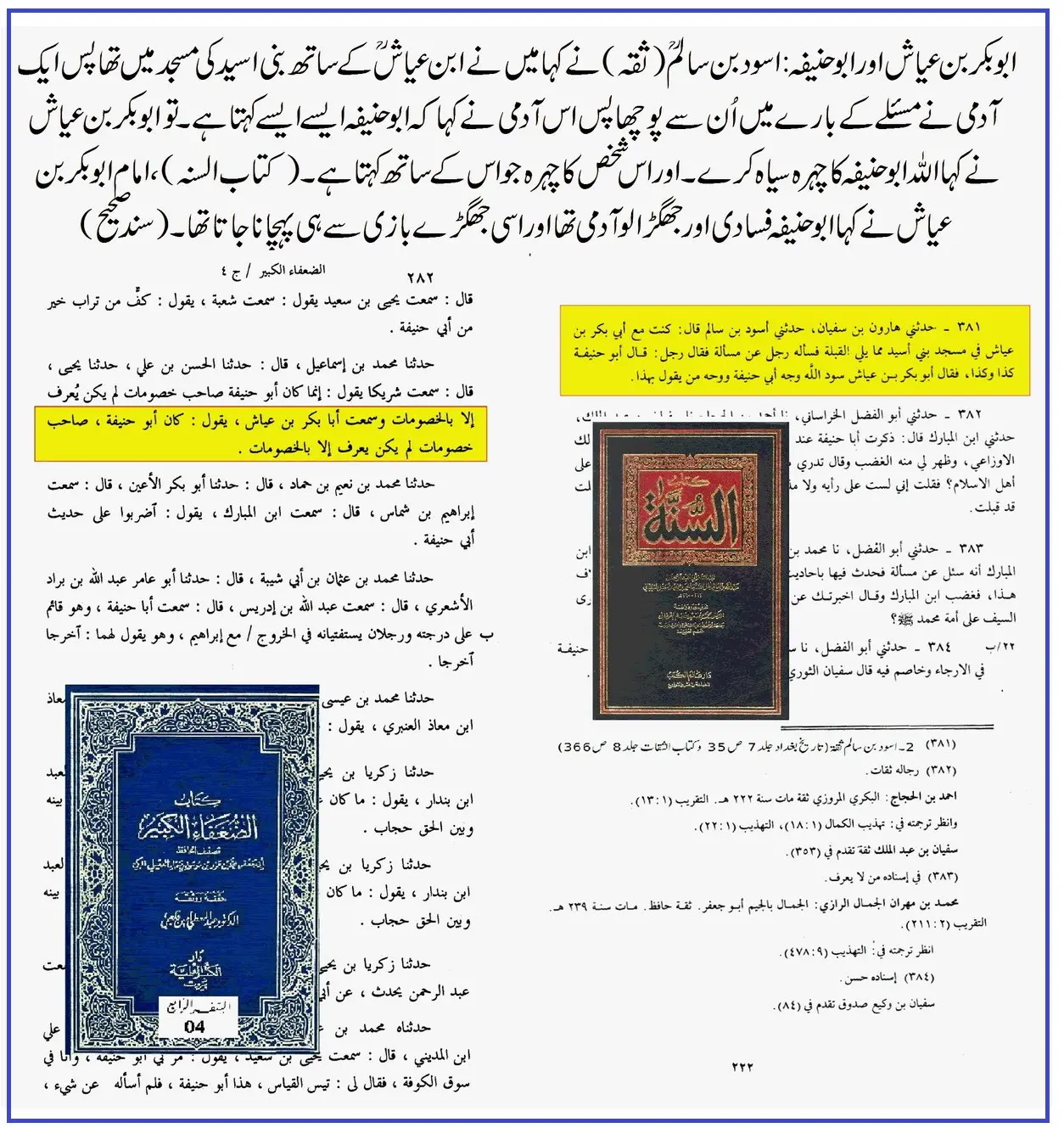
Arabic:
إنما كان أبو حنيفة صاحب خصومات
Translation:
Abū Ḥanīfah was known for being argumentative.
al-Ḍuʿafāʾ al-Kabīr by al-ʿUqaylī
Chain includes: Ibn Saʿīd al-Qaṭṭān, Shurayk, al-ʿUqaylī — all trustworthy.
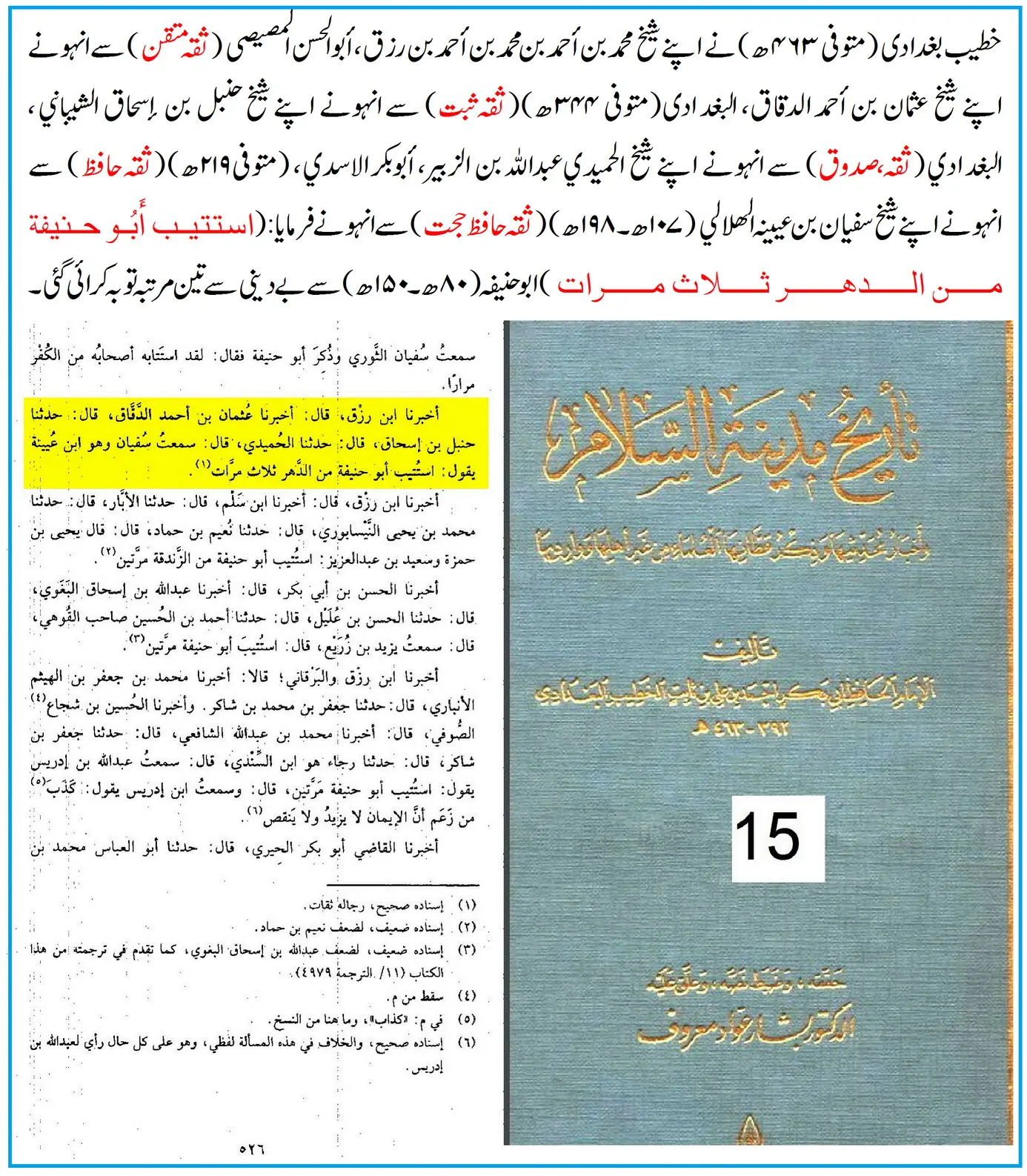
Arabic:
استتيب أبو حنيفة من الكفر ثلاث مرات
Translation:
He was made to repent from disbelief three times.
Tārīkh Baghdād
Chain includes: al-Khaṭīb, Ibn Ruzqawayh, Ibn al-Ḥumaydī — all reliable.
Arabic:
أخطأ منها في مائة وعشرين
Translation:
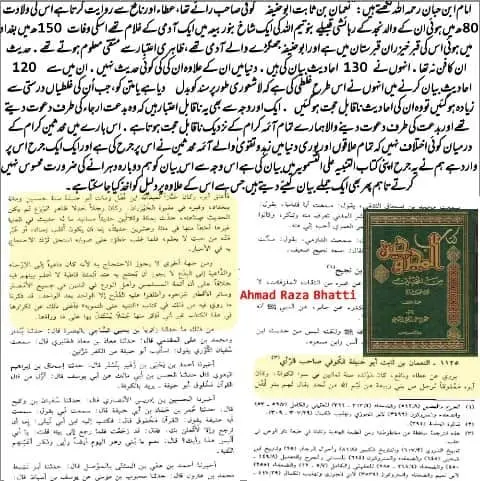
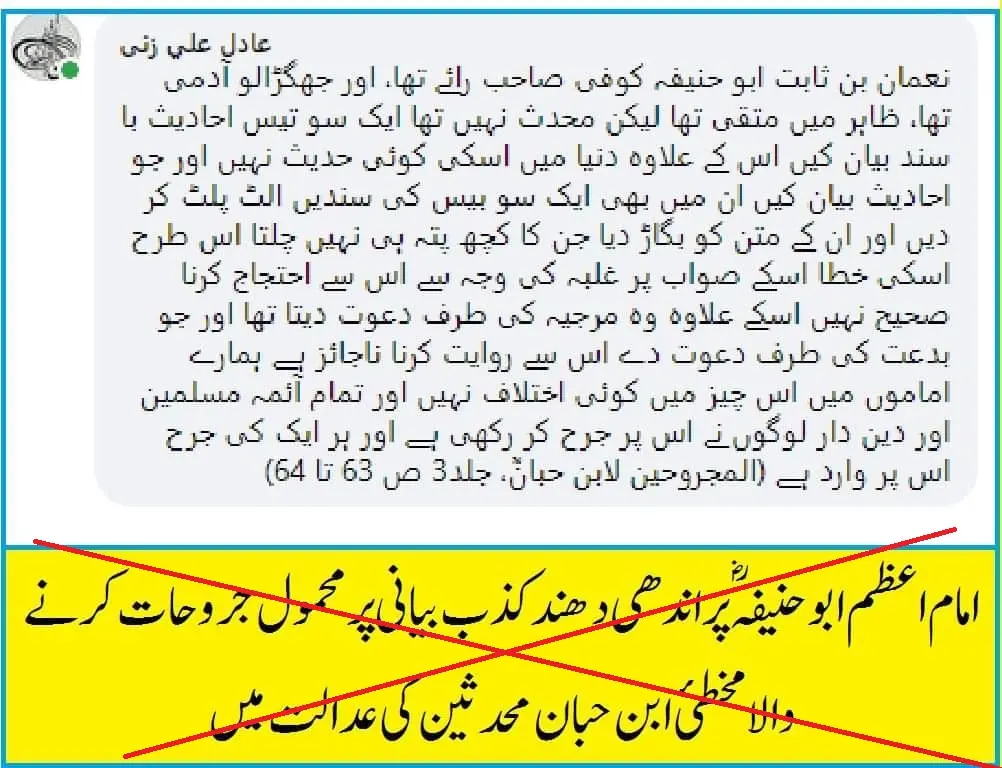
Out of 130 ḥadīths, he made mistakes in 120.
al-Majrūḥīn by Ibn Ḥibbān
Note:
This was a scholarly assessment. To challenge it, authentic isnād must be provided, not personal attacks.
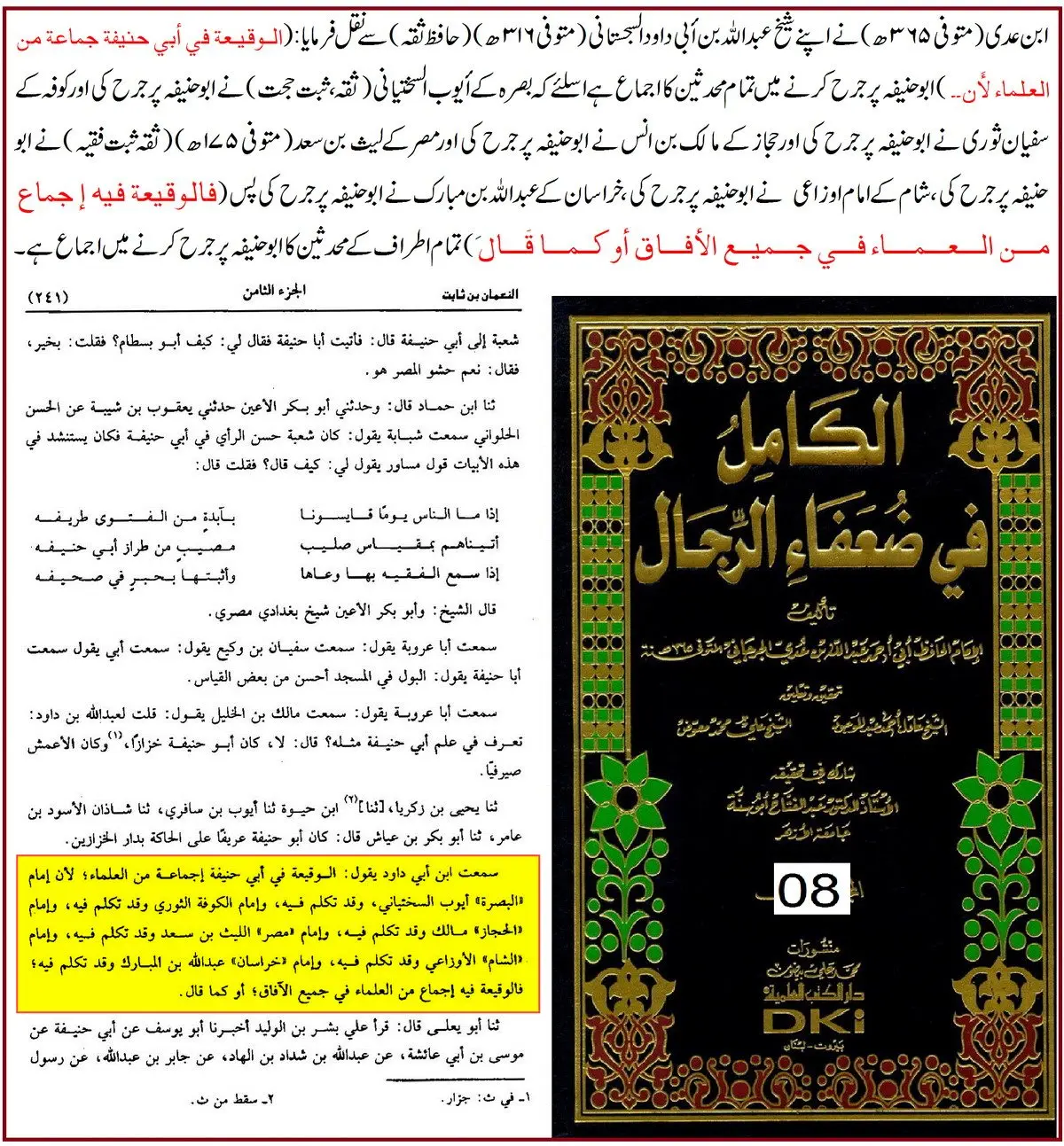
Arabic:
الوقيعة في أبي حنيفة إجماع من العلماء
Translation:
Criticism of Abū Ḥanīfah is agreed upon by scholars across regions.
al-Kāmil fī Ḍuʿafāʾ al-Rijāl by Ibn ʿAdī
✔ Imām Ibn Ḥibbān رحمه الله was a trustworthy, well-established ḥadīth master. The majority of hadith scholars praised his depth, scholarship, and writings.
✔ All accusations—be it astrology, kalām, denial of ḥadd, zandaqah, or lying—are either based on unknown narrators or misunderstood phrases.
✔ His criticism of Aflah ibn Saʿīd is supported by other scholars, showing it is not a lone opinion.
✔ His criticism of Abū Ḥanīfah is shared by other senior imams, such as Ayyūb al-Sakhtiyānī, Sufyān al-Thawrī, Imām Mālik, al-Awzāʿī, and ʿAbdullāh ibn al-Mubārak.
✔ Attacking Imām Ibn Ḥibbān is a sign of bias, not scholarship.
The severe accusations against Imām Ibn Ḥibbān رحمه الله do not withstand scrutiny. Either they are not authentically reported, or they are based on distortions and misreadings.
The consensus of hadith authorities affirms his reliability and contribution. His criticism of Abū Ḥanīfah is rooted in scholarly reasoning and supported by others—not personal animosity.
Turning scholarly disagreement into slander and insult is not the way of the scholars, but a hallmark of partisanship and innovation.
❖ Objective of the Article
This academic research aims to clarify the trustworthiness and scholarly rank of Imām Muḥammad ibn Ḥibbān al-Bustī رحمه الله and to present a detailed refutation of the allegations raised against him.
This article will address the following:
① The overwhelming endorsement of Ibn Ḥibbān by the majority of scholars.
② A scholarly response to the unsubstantiated criticisms by biased or deviant groups.
③ A clarification that Ibn Ḥibbān’s criticism of Imām Abū Ḥanīfah رحمه الله is not an isolated view, but one echoed by other hadith critics.
④ All content is referenced from primary sources, along with Arabic texts, translations, and authenticated citations.
 Ibn Ḥibbān’s Endorsement by Leading Hadith Scholars
 al-Khaṭīb al-Baghdādī’s Testimony
Arabic:
وكان ثقة ثبتا فاضلا
Translation:
He was trustworthy (thiqqah), firm in narration (thabt), and virtuous.
Tārīkh Dimashq by Ibn ʿAsākirNarrators: Ibn ʿAsākir (thiqqah), ʿAlī ibn Ibrāhīm al-Ḥusaynī (thiqqah), al-Khaṭīb al-Baghdādī (ḥujjah)
 Imām al-Ḥākim al-Naysābūrī رحمه الله
Arabic:
أبو حاتم كبير في العلوم وكان يحسد بفضله وتقدمه
Translation:
Abū Ḥātim (Ibn Ḥibbān) was great in knowledge, and his excellence and rank were envied.
Tārīkh Dimashq Ḥāfiẓ al-Dhahabī رحمه الله
Arabic:
والحافظ أَبُو حَاتِم مُحَمَّد بن حِبَّان البُسْتي ثِقَة
Translation:
The ḥadīth master, Abū Ḥātim Muḥammad ibn Ḥibbān al-Bustī, was trustworthy.
al-Muʿīn fī Ṭabaqāt al-Muḥaddithīn Abū Naṣr Ibn Mākūlā رحمه الله
Arabic:
وكان من الحفاظ الأثبات
Translation:
He was among the firm and reliable preservers of ḥadīth.
al-Ikmāl fī Rafʿ al-Irtiyāb Ibn al-Athīr رحمه الله
Arabic:
كَانَ إِمَامًا فَاضلا مكثرا… وتصانيفه مشهورة كثيرة الفوائد
Translation:
He was a virtuous imām, prolific in ḥadīth, widely traveled in search of it, and his books are well-known and full of benefits.
al-Lubāb fī Tahdhīb al-Ansāb Ibn al-ʿImād al-Ḥanbalī رحمه الله
Arabic:
كان حافظا، ثبتا، إماما، حجّة، أحد أوعية العلم
Translation:
He was a ḥadīth master, firm, imām, proof (ḥujjah), and a vessel of knowledge.
Shadharāt al-Dhahab Ibn Kathīr رحمه الله
Arabic:
أحد الحفاظ الكبار المصنفين المجتهدين
Translation:
He was one of the great ḥadīth masters, authors, and mujtahid scholars.
al-Bidāyah wa al-Nihāyah Abū Saʿd al-Samʿānī رحمه الله
Arabic:
إمام عصره صنف تصانيف لم يسبق إلى مثلها
Translation:
He was the imām of his time, who authored works unmatched before.
al-Ansāb Ibn Nuqṭah al-Baghdādī رحمه الله
Arabic:
وكان من الحفاظ الأثبات
Translation:
He was among the reliable and firm preservers of ḥadīth.
al-Taqyīd Yāqūt al-Rūmī al-Ḥamawī رحمه الله
Arabic:
عالما بالمتون والأسانيد…
Translation:
A scholar of both texts and chains of ḥadīth, extracting insights others could not.
Muʿjam al-Buldān Refuting Allegations Against Imām Ibn Ḥibbān رحمه الله
Objection 1: Expertise in Astrology and Kalām
Arabic (from al-Dhahabī):
وكان عارفا بالطب والنجوم، والكلام والفقه
Translation:
He was well-versed in medicine, astronomy (stars), kalām, fiqh, and a master of hadith.
Mīzān al-IʿtidālScholarly Response:
The "knowledge of stars (nujūm)" here refers to permissible knowledge like navigation and seasons, not prohibited astrology.
Shaykh Ibn ʿUthaymīn رحمه الله affirmed this type is permissible.
As for Kalām, unless critics can prove what heretical statement he made, the objection is invalid.
Objection 2: Denial of "ḥadd" (limit) for Allah
Arabic:
قدم علينا فأنكر الحد لله فأخرجناه
Translation:
He came to us and denied that Allah has a limit, so we expelled him.
Tārīkh DimashqResponse:
The central narrator Yaḥyā ibn ʿAmmār is unknown (majhūl).
Al-Dhahabī himself said:
Denial or affirmation of ḥadd is speculative talk; remaining silent is preferred.
Objection 3: Accusation of Zandaqah (heresy)
Arabic:
أنكروا عليه قوله: النبوة العلم والعمل، وحكموا عليه بالزندقة
Translation:
They objected to his statement "Prophethood is knowledge and action" and declared him a heretic.
Mīzān al-IʿtidālResponse:
The narrators: ʿAbd al-Ṣamad and his father are unknown.
Hence, this report is unreliable.
Objection 4: Accusation of Lying (kadhdhāb)
Arabic:
لا تكتب عنه فإنه كذاب
Translation:
Do not write from him—he is a liar.
Muʿjam al-BuldānResponse:
This report lacks a connected chain of transmission.
Even al-Dhahabī rejected such odd criticisms:
"Shādh (isolated) criticisms should not be accepted."
Objection 5: Criticizing Trustworthy Narrators
Arabic:
ربما جرح الثقة…
Translation:
He sometimes criticized trustworthy narrators, as if unaware of what he was saying.
Mīzān al-IʿtidālResponse:
This relates to his criticism of Aflah ibn Saʿīd al-Madanī—but others like al-Ḥākim, Ibn al-Jawzī, al-Samʿānī, and al-Maqdisī also criticized him, so Ibn Ḥibbān is not alone.
Multiple Scholars Criticizing Aflah ibn Saʿīd:
- Ibn al-Jawzī: Narrated fabrications from trustworthy sources.
- al-Samʿānī: Narrated fabrications and fabrications from strong narrators.
- al-Maqdisī: Narrates forgeries.
- al-Ḥākim: Narrates forgeries from ʿAbdullāh ibn Rāfiʿ and others.
Conclusion: Ibn Ḥibbān’s criticism of Aflah is supported, not isolated.
 Ibn Ḥibbān’s Criticism of Imām Abū Ḥanīfah رحمه الله
Criticism 1: Argumentative Behavior
Arabic:
إنما كان أبو حنيفة صاحب خصومات
Translation:
Abū Ḥanīfah was known for being argumentative.
al-Ḍuʿafāʾ al-Kabīr by al-ʿUqaylīChain includes: Ibn Saʿīd al-Qaṭṭān, Shurayk, al-ʿUqaylī — all trustworthy.
Criticism 2: Accusation of Kufr (Disbelief)
Arabic:
استتيب أبو حنيفة من الكفر ثلاث مرات
Translation:
He was made to repent from disbelief three times.
Tārīkh BaghdādChain includes: al-Khaṭīb, Ibn Ruzqawayh, Ibn al-Ḥumaydī — all reliable.
Criticism 3: Errors in Narrations
Arabic:
أخطأ منها في مائة وعشرين
Translation:
Out of 130 ḥadīths, he made mistakes in 120.
al-Majrūḥīn by Ibn ḤibbānNote:
This was a scholarly assessment. To challenge it, authentic isnād must be provided, not personal attacks.
Criticism 4: Scholarly Consensus on Abandoning His Narrations
Arabic:
الوقيعة في أبي حنيفة إجماع من العلماء
Translation:
Criticism of Abū Ḥanīfah is agreed upon by scholars across regions.
al-Kāmil fī Ḍuʿafāʾ al-Rijāl by Ibn ʿAdī Summary of the Article
✔ Imām Ibn Ḥibbān رحمه الله was a trustworthy, well-established ḥadīth master. The majority of hadith scholars praised his depth, scholarship, and writings.
✔ All accusations—be it astrology, kalām, denial of ḥadd, zandaqah, or lying—are either based on unknown narrators or misunderstood phrases.
✔ His criticism of Aflah ibn Saʿīd is supported by other scholars, showing it is not a lone opinion.
✔ His criticism of Abū Ḥanīfah is shared by other senior imams, such as Ayyūb al-Sakhtiyānī, Sufyān al-Thawrī, Imām Mālik, al-Awzāʿī, and ʿAbdullāh ibn al-Mubārak.
✔ Attacking Imām Ibn Ḥibbān is a sign of bias, not scholarship.
 Conclusion
The severe accusations against Imām Ibn Ḥibbān رحمه الله do not withstand scrutiny. Either they are not authentically reported, or they are based on distortions and misreadings.
The consensus of hadith authorities affirms his reliability and contribution. His criticism of Abū Ḥanīfah is rooted in scholarly reasoning and supported by others—not personal animosity.
Turning scholarly disagreement into slander and insult is not the way of the scholars, but a hallmark of partisanship and innovation.
