Refutation of the Rafidi’s Fabrication Regarding Harīz bin ʿUthmān
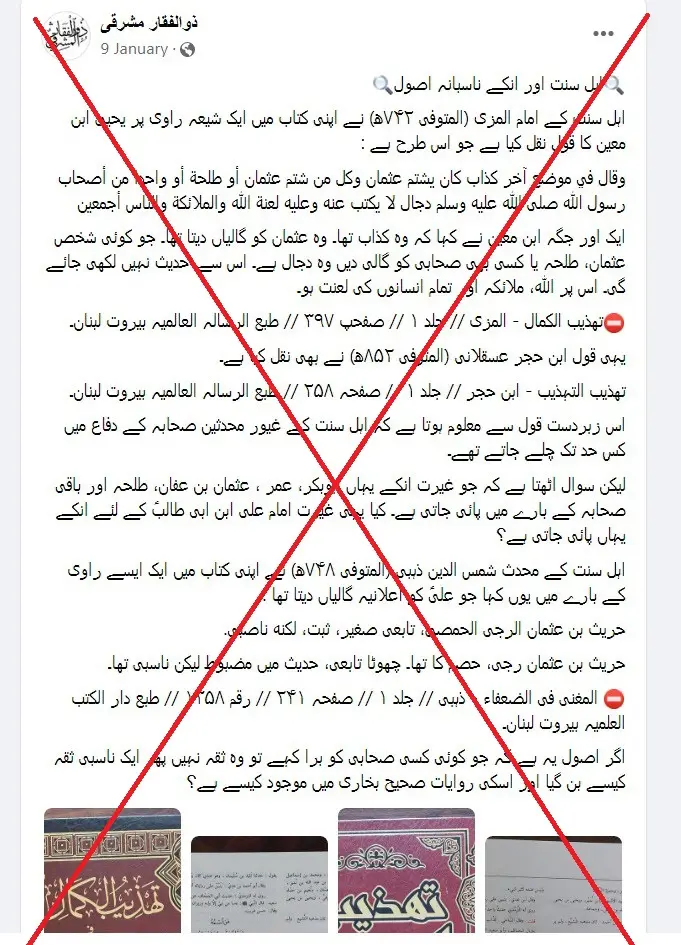
Compiled by: Abu Hamzah SalafiA Rafidi writes that Harīz bin ʿUthmān al-Raḥabī al-Shāmī used to abuse Ḥaḍrat ʿAlī رضي الله عنه. He cites al-Dhahabī’s al-Mughnī and some other books, stating:
He then objects that when a person who abuses a Companion is declared a liar and impostor, how can a “Nāṣibī” like Harīz be considered trustworthy (thiqah) and reliable (thabt), and why are his narrations included in Ṣaḥīḥ al-Bukhārī and Ṣaḥīḥ Muslim?"حريز بن عثمان رجی، تابعی صغیر، ثبت، لكنه ناصبي."
Answer: The Invalidation of the Rafidi’s Clear Falsehood
① The Original Statement in Mīzān al-Iʿtidāl
Ḥāfiẓ al-Dhahabī wrote regarding Harīz:Translation:«كان متقناً ثبتاً… وقال الفلاس: كان ينال من علي، وكان حافظاً لحديثه.»
Reference: Mīzān al-Iʿtidāl, no. 1792
“He (Harīz) was precise and reliable… Al-Fallās said: He used to disparage ʿAlī, yet he was a memorizer of his ḥadīth.”
❖ Nowhere in this statement are the words found that “he used to abuse ʿAlī.” This is a fabrication invented by the Rafidi himself.
② The Statement of al-Fallās and Its Chain
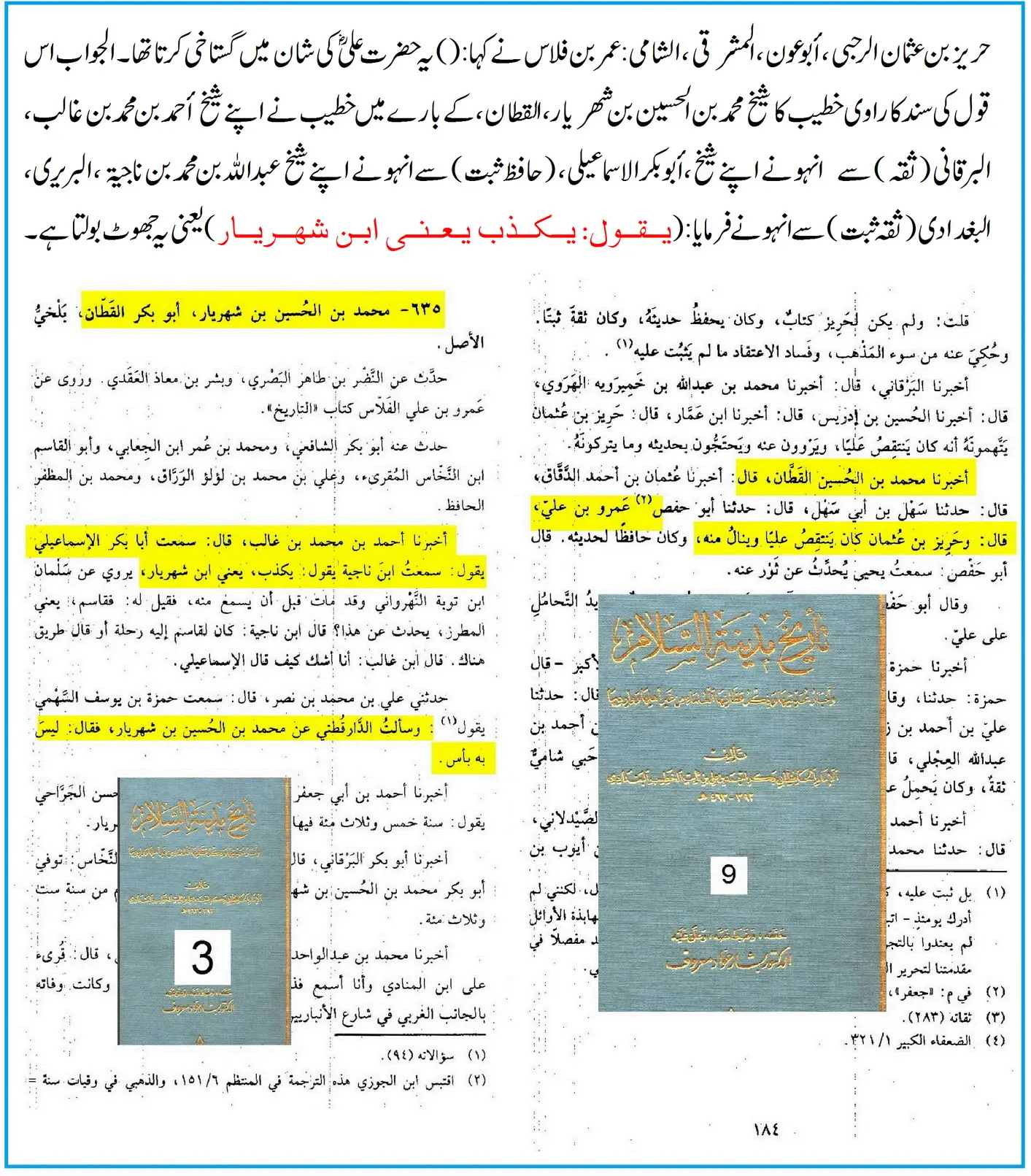
Al-Khaṭīb al-Baghdādī transmitted in Tārīkh Baghdād from ʿAmr bin ʿAlī al-Fallās:However, in its chain is Muḥammad bin al-Ḥusayn al-Qaṭṭān, concerning whom the scholars of ḥadīth have made criticism.«وكان ينتقص علياً وينال منه، وكان حافظاً لحديثه.»
Ibn Nājiya said:
Therefore, a report transmitted through a narrator who is declared a liar is not acceptable as proof.«يكذب»
“He lies.”
Reference: Tārīkh Baghdād, 635
③ Harīz’s Own Denial with an Authentic Chain
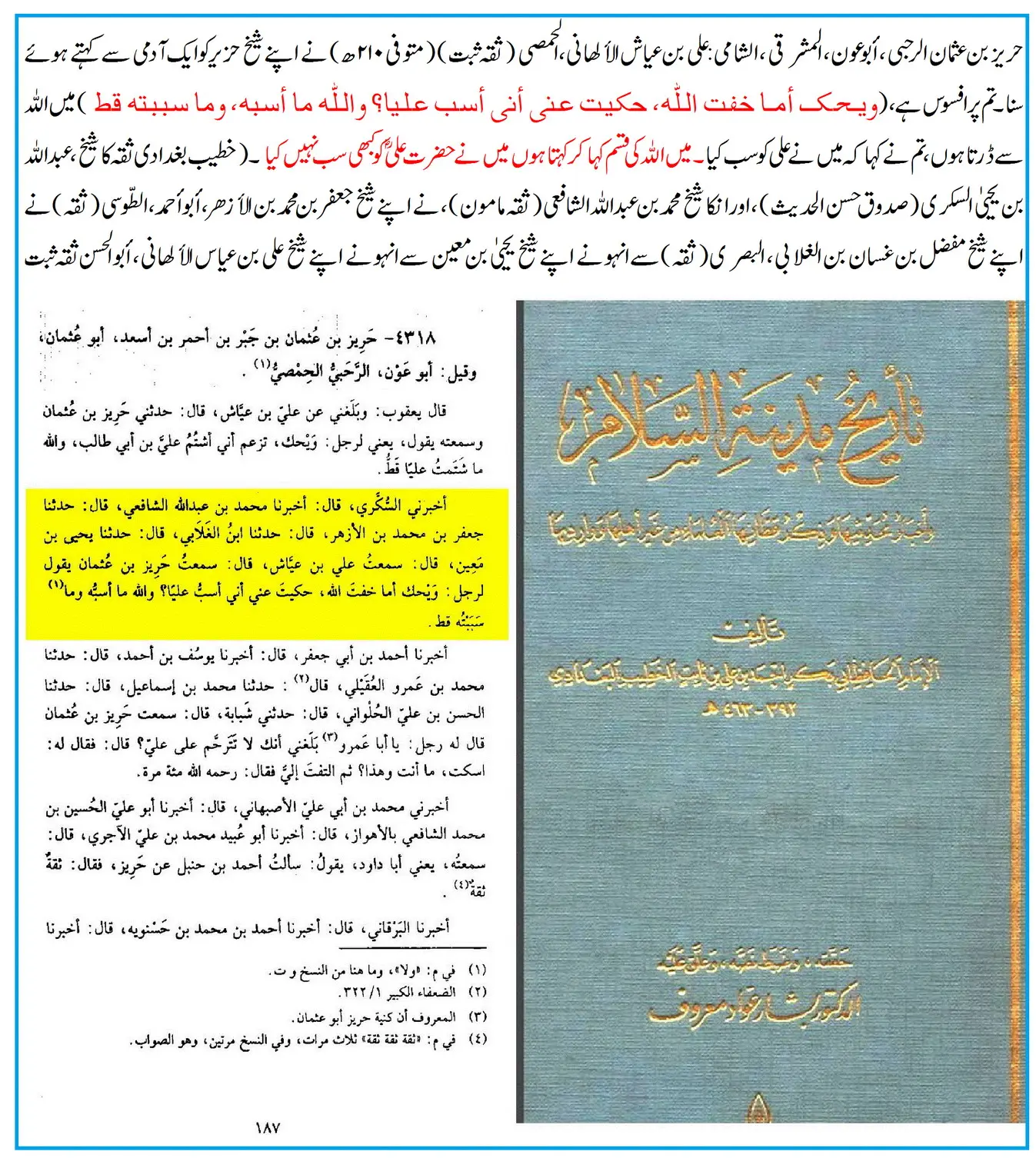
In the same Tārīkh Baghdād, there is a narration with a trustworthy chain:ʿAlī bin ʿAyyāsh (thiqah, thabt) said:
Translation:I heard Harīz bin ʿUthmān say to a man:
«ويحك أما خفت الله حكيت عني أني أسب علياً؟ والله ما أسبه، وما سببته قط.»
Reference: Tārīkh Baghdād, 8/268
“Woe to you! Do you not fear Allah that you narrate from me that I abuse ʿAlī? By Allah! I do not abuse him, nor have I ever abused him.”
This narration comes through Imām Yaḥyā bin Maʿīn and all its narrators are trustworthy.
④ Supplication of Mercy for ʿAlī رضي الله عنه
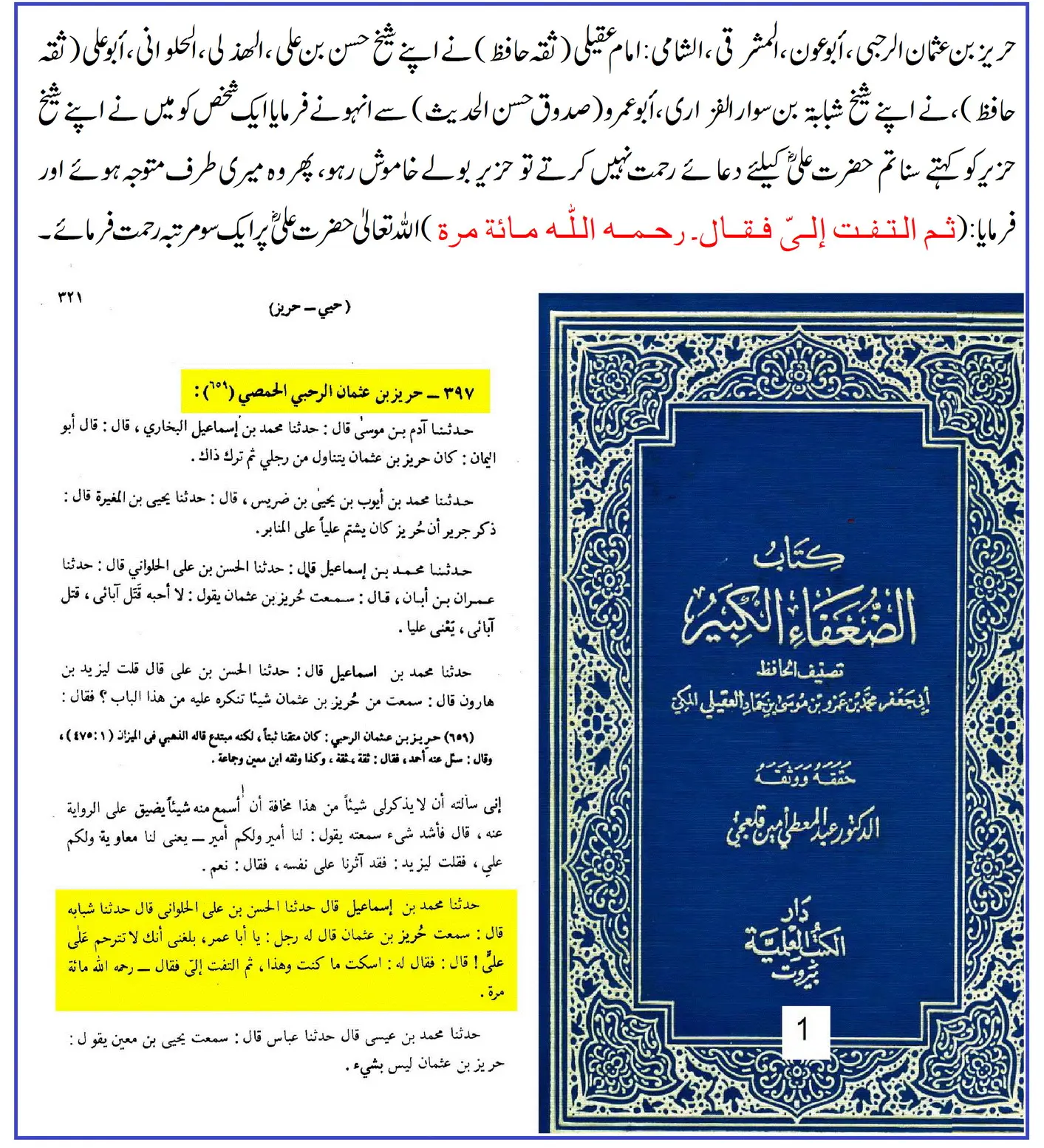
Shabābah bin Sawwār (ṣadūq) said:A man said to Harīz: “We have heard that you do not send mercy upon ʿAlī.”
Harīz replied:
Then turning toward me, he said:«اسكت، ما أنت وهذا.»
Translation:«رحمه الله مئة مرة.»
Reference: al-Ḍuʿafā’ al-Kabīr by al-ʿUqaylī
“May Allah have mercy upon him one hundred times.”
This narration is also established with trustworthy narrators.
Conclusion
✔ The Rafidi fabricated the allegation that Harīz “used to abuse” Ḥaḍrat ʿAlī رضي الله عنه, whereas no such wording exists in the books of rijāl.✔ The statement mentioning “disparagement” is transmitted through a narrator declared a liar, and thus is not suitable for evidence.
✔ With an authentic chain, Harīz himself swore an oath denying this accusation.
✔ It is also authentically established that he supplicated for Allah’s mercy upon Ḥaḍrat ʿAlī رضي الله عنه.
Therefore, the scholars of Ahl al-Sunnah regarded Harīz as thiqah (trustworthy) and thabt (reliable), and his narrations were accepted in Ṣaḥīḥ al-Bukhārī and Ṣaḥīḥ Muslim.