
Compiled by: Abu Hamzah Salafi
This article presents a research-based analytical review of the rulings on intoxicants (alcohol) in Ḥanafī jurisprudence, examining narrated texts, juristic verdicts, and practical trends regarding the permissibility or prohibition of various types of alcoholic drinks. It includes the statements of Imām Abū Ḥanīfah and his students, excerpts from authoritative works such as al-Jāmiʿ al-Ṣaghīr and al-Hidāyah, and the opinions of leading Ḥanafī scholars, cited with original Arabic texts and reliable references.
The article compares the Ḥanafī positions on:
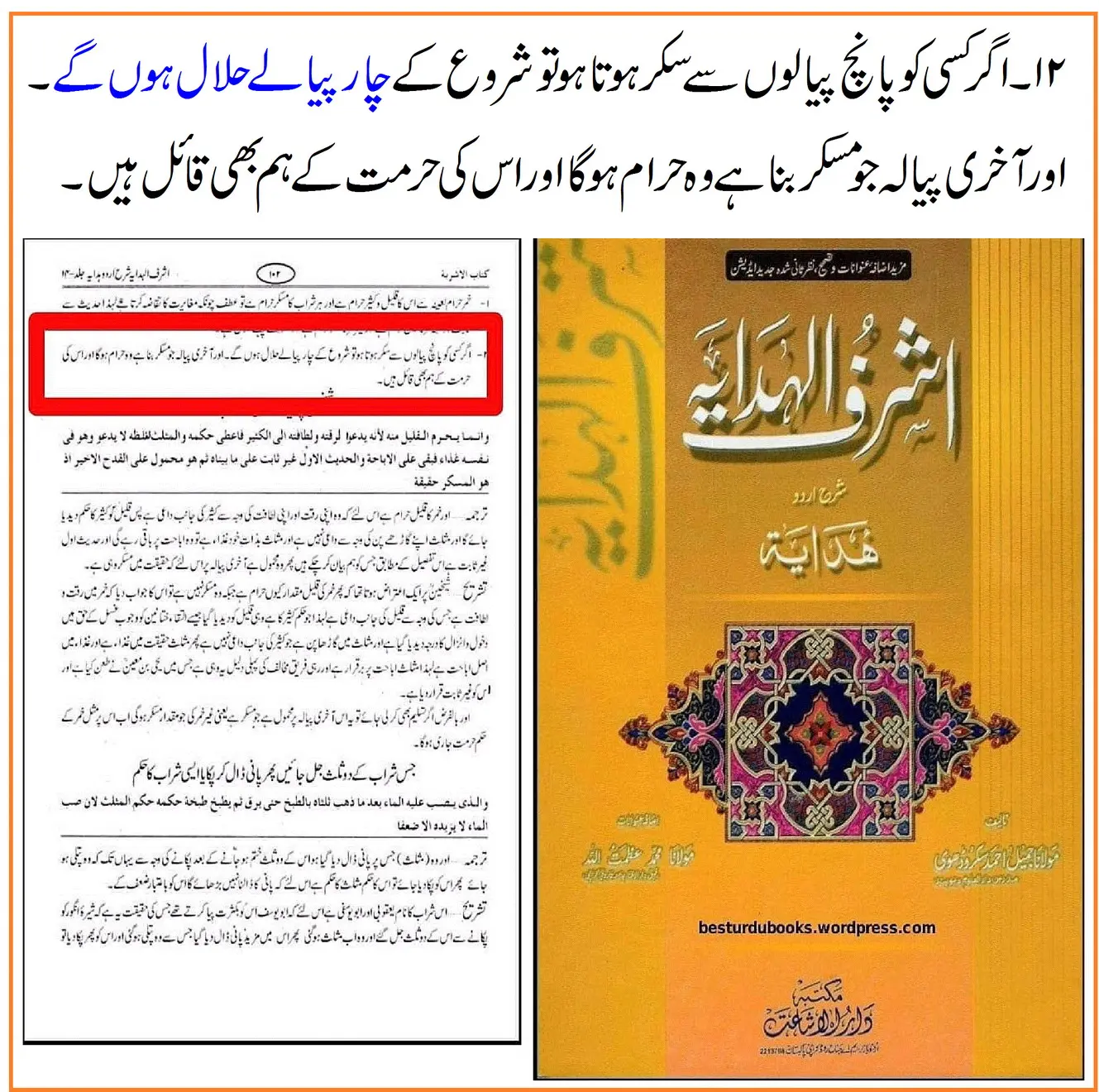
◈ The permissibility of consuming alcohol for strength or medical treatment
◈ Converting wine into vinegar
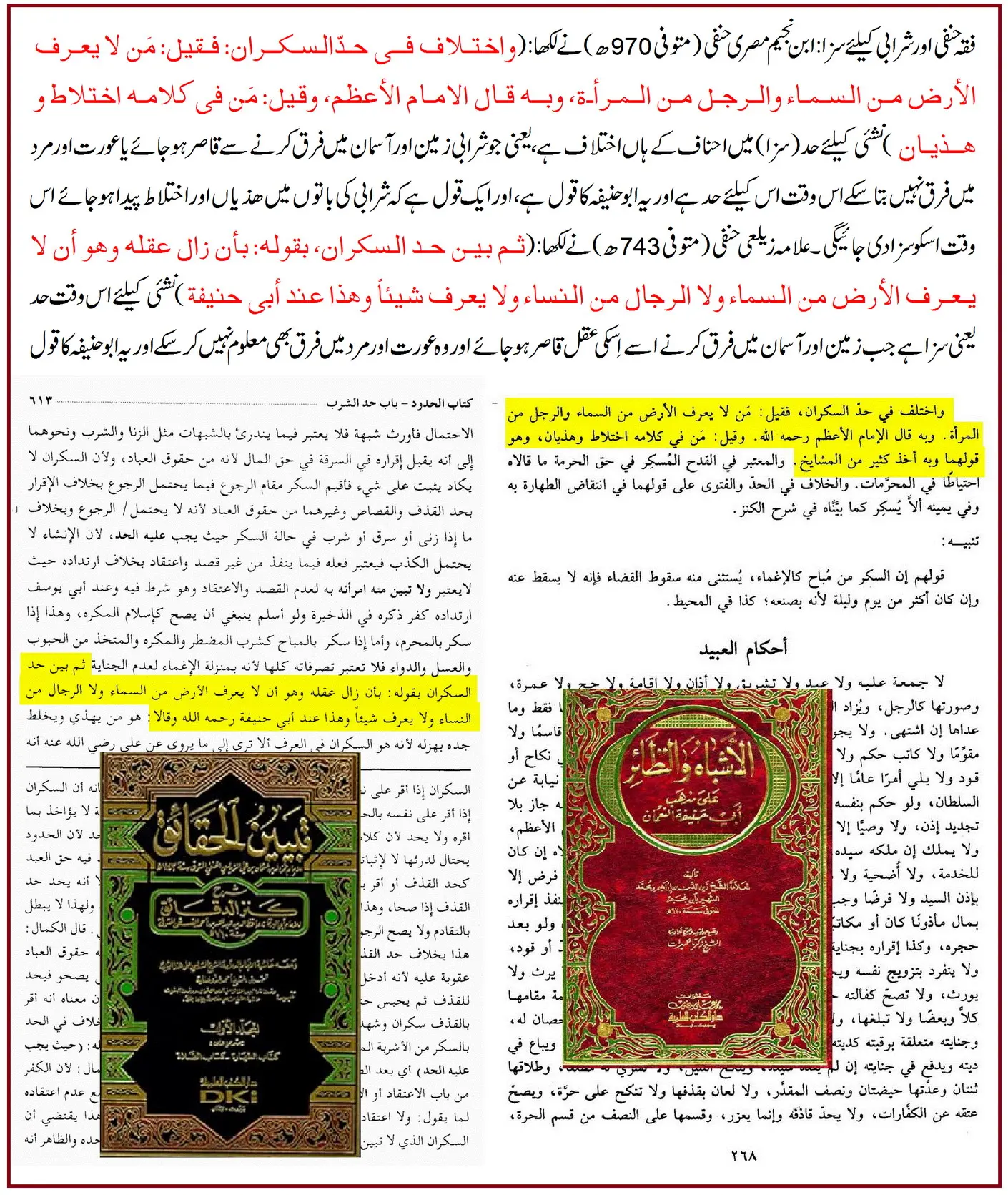
◈ The application of legal punishment (ḥadd) for drinking alcohol
—against authentic Prophetic ḥadīth.
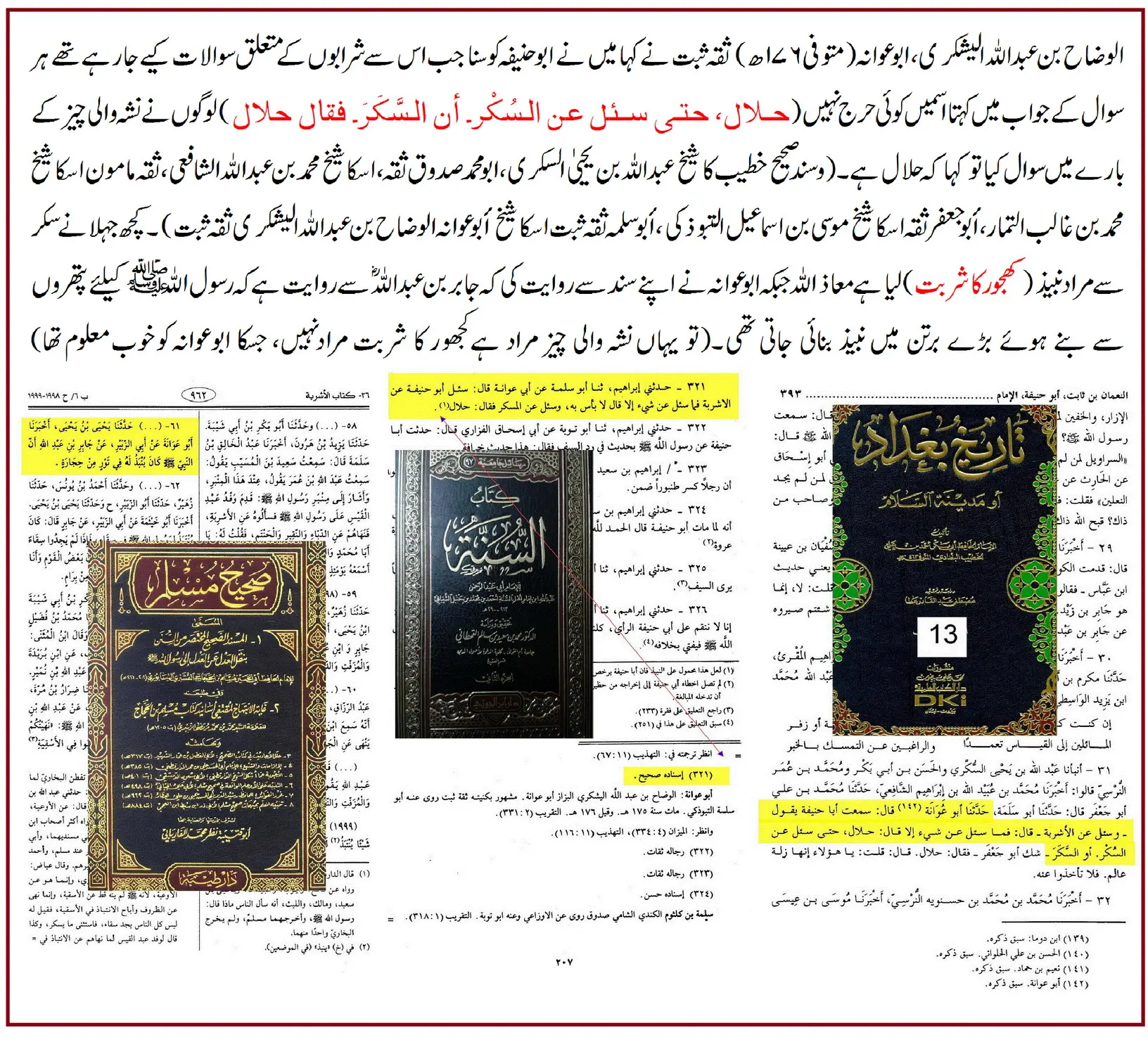
It also includes the testimony of Imām Abū ʿAwānah and evidences concerning the permissibility of non-grape intoxicants in Ḥanafī fiqh, in order to present a complete and unbiased picture of the issue.
Original Text:
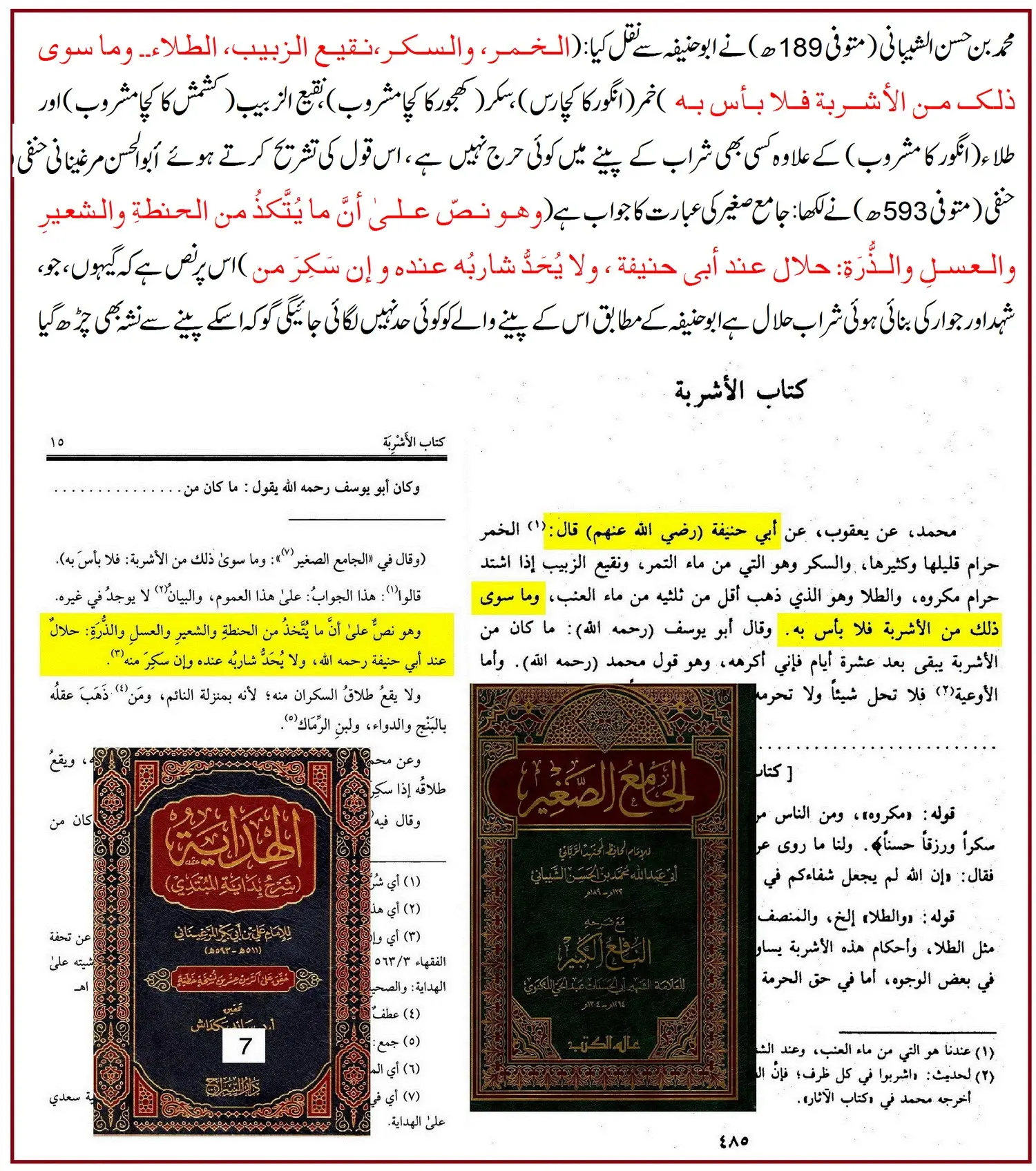
مُحَمَّد عَن يَعْقُوب عَن أبي حنيفة (رَضِي الله عَنْهُم) قَالَ: الْخمر حرَام قليلها وكثيرها وَالسكر وَهُوَ الَّتِي من مَاء التَّمْر ونقيع الزَّبِيب إِذا اشْتَدَّ حرَام مَكْرُوه والطلا وَهُوَ الَّذِي ذهب أقل من ثُلثَيْهِ من مَاء الْعِنَب وَمَا سوى ذَلِك من الْأَشْرِبَة فَلَا بَأْس بِهِ
(الجامع الصغير وشرحه النافع الكبير لمحمد بن الحسن الشيباني، المتوفى 189ھ)
Translation:
Muḥammad ibn al-Ḥasan al-Shaybānī narrates from his shaykh, Imām Abū Ḥanīfah: Wine (raw grape juice) is prohibited in both small and large amounts. Sukr (a raw drink made from dates) and Naqīʿ al-Zabīb (a raw drink made from raisins), when they become strong (i.e., intoxicating), are prohibited and disliked. Likewise, Ṭilāʾ (a grape drink from which less than two-thirds has evaporated) falls under this ruling. As for all other drinks besides these, there is no harm in them.
 Point: According to Abū Ḥanīfah, apart from wine, sukr, naqīʿ al-zabīb, and ṭilāʾ, all other intoxicating drinks carry no prohibition, even if they are intoxicating in small amounts.
Original Text:
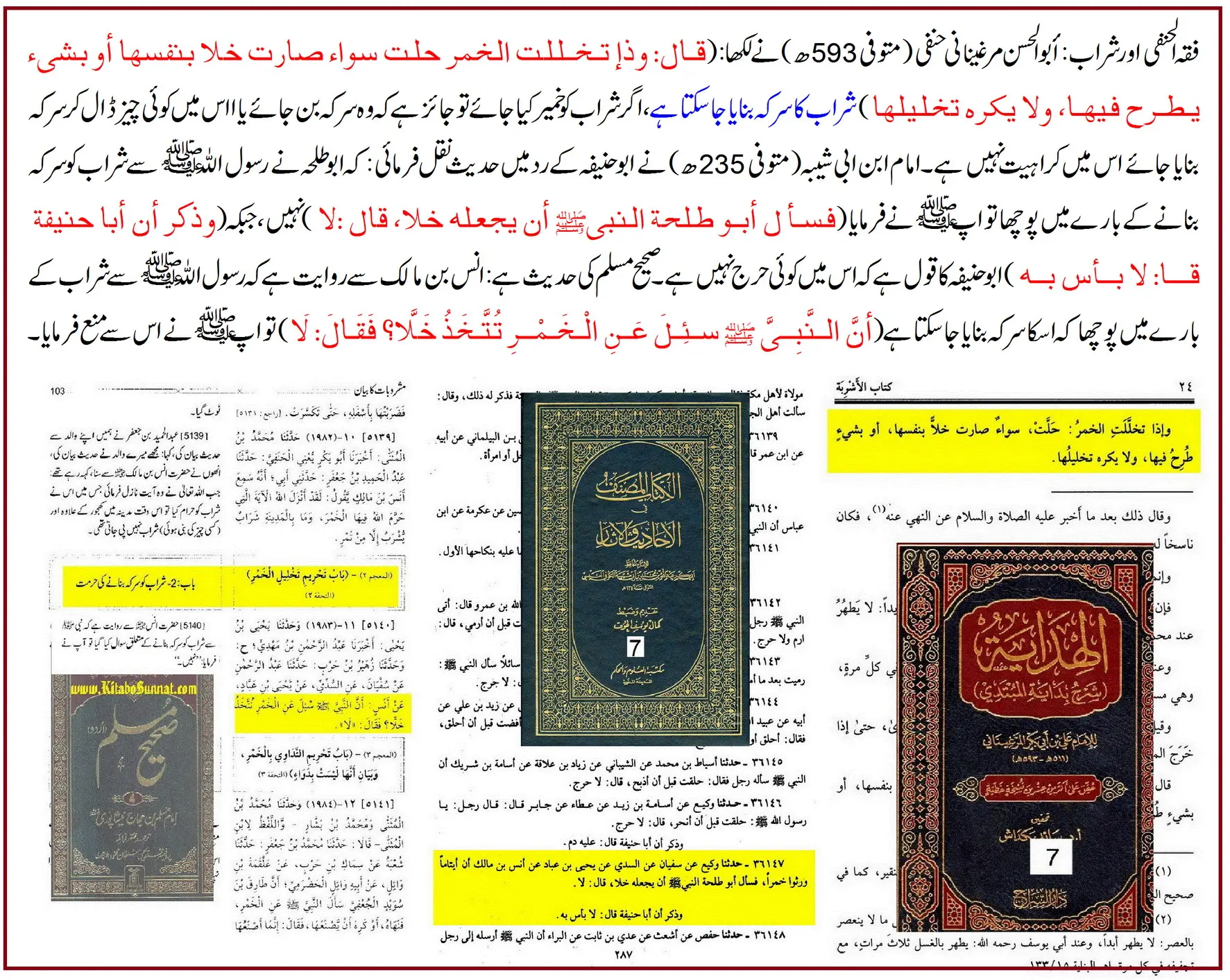
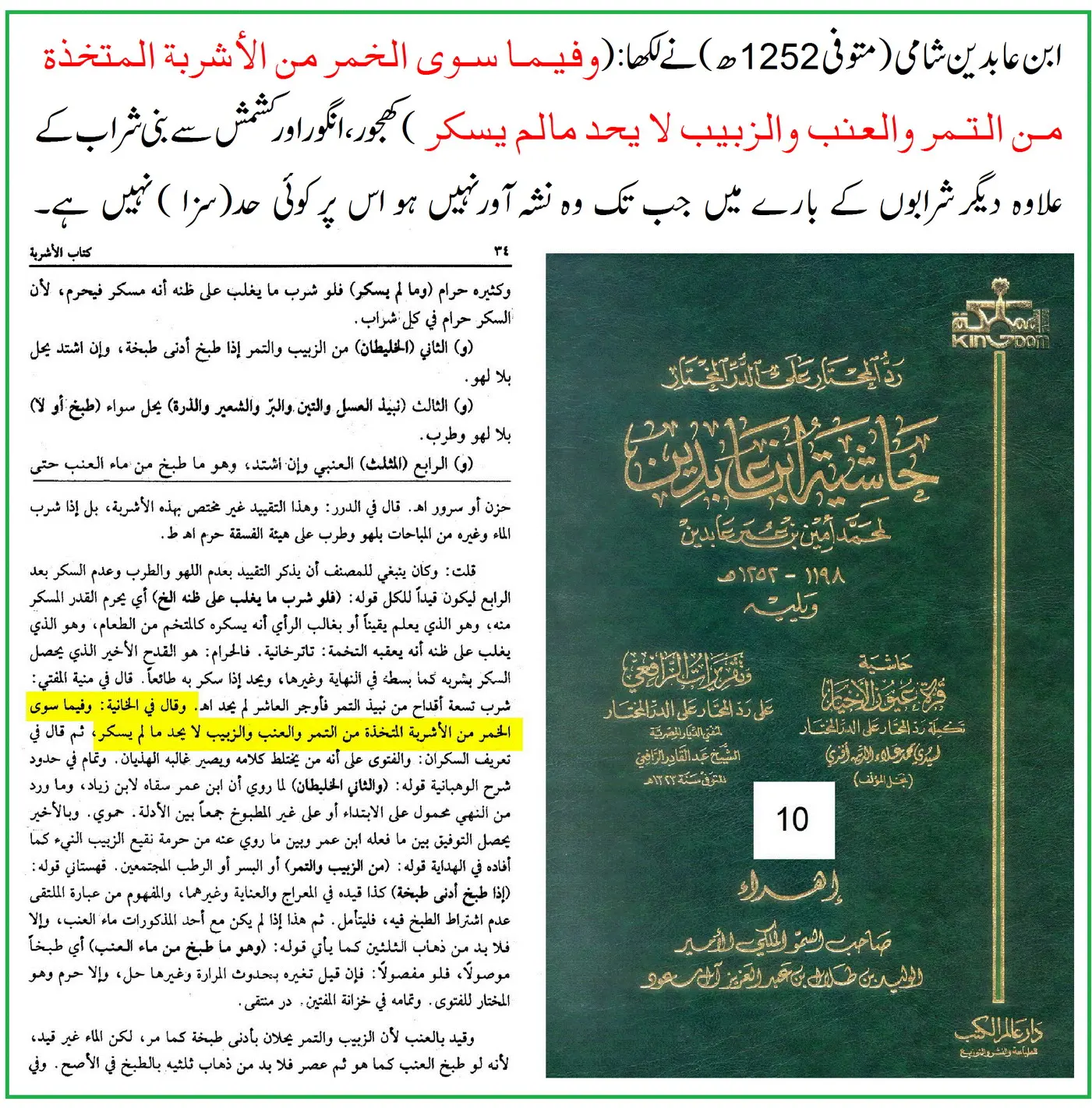
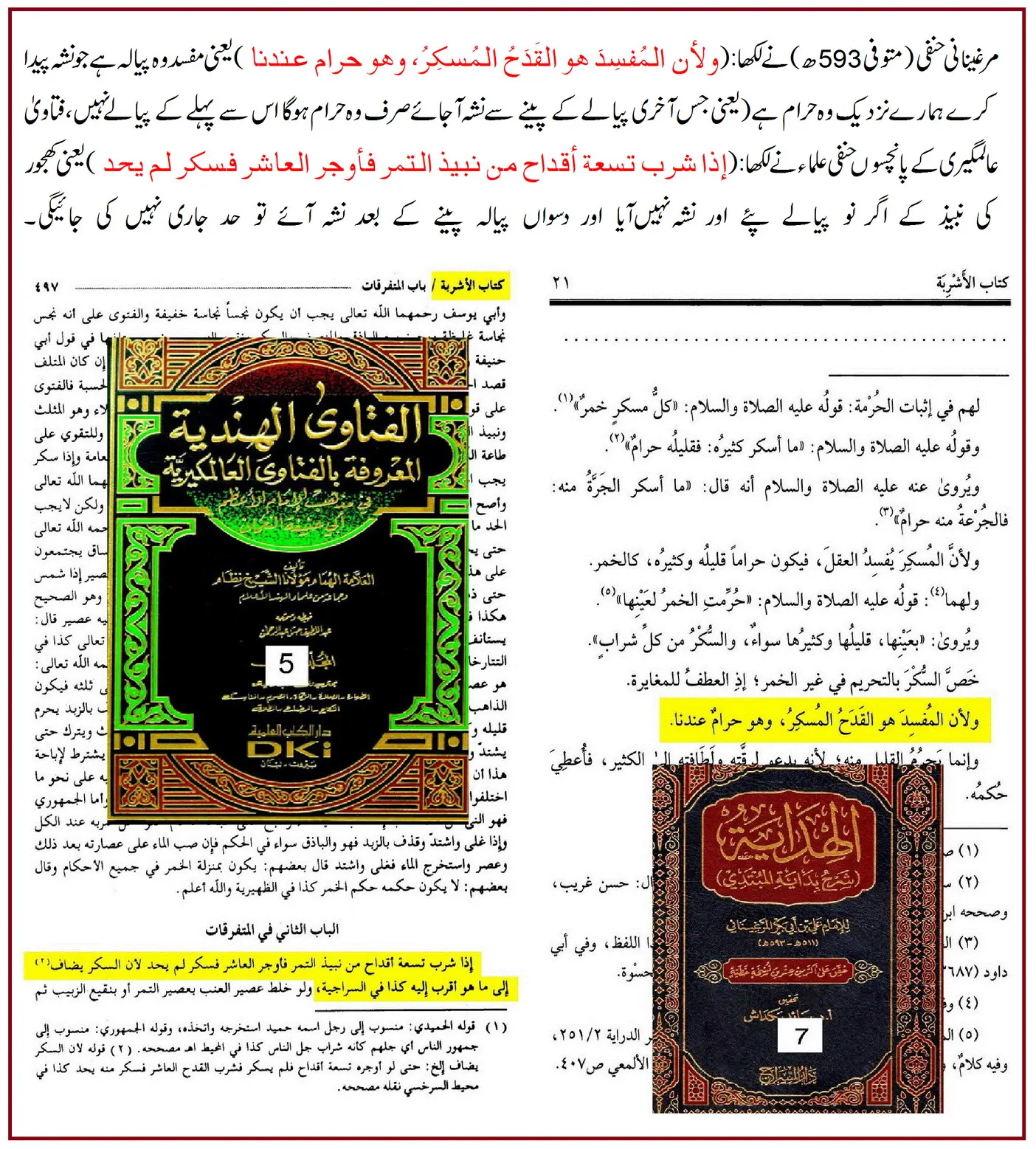
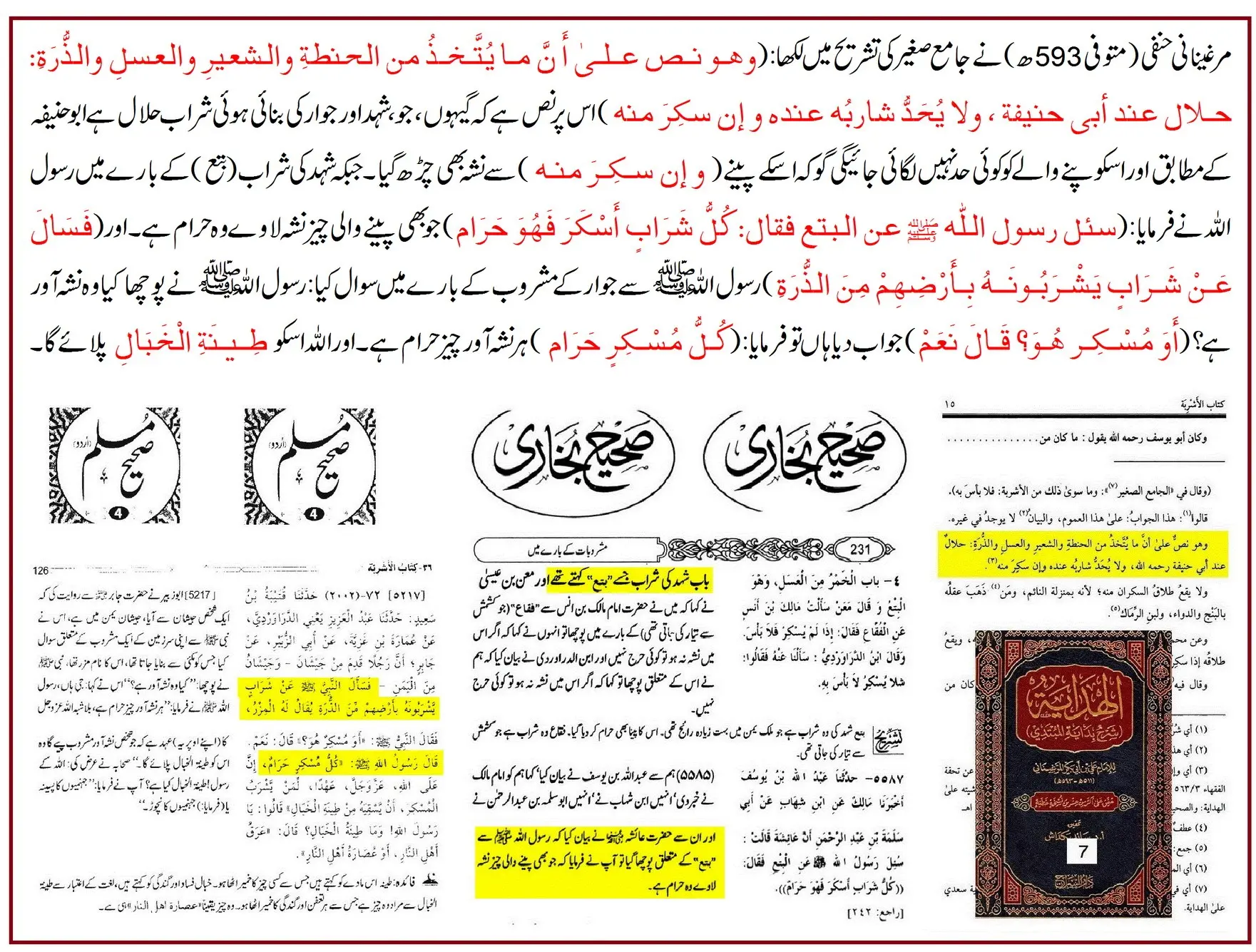
"وقال في الجامع الصغير: وما سوى ذلك من الأشربة فلا بأس به” قالوا: هذا الجواب على هذا العموم والبيان لا يوجد في غيره، وهو نص على أن ما يتخذ من الحنطة والشعير والعسل والذرة حلال عند أبي حنيفة، ولا يحد شاربه عنده وإن سكر منه.
(الهداية في شرح بداية المبتدي، برهان الدين المرغيناني، المتوفى 593ھ)
Translation:
It is stated in al-Jāmiʿ al-Ṣaghīr: “As for all other drinks besides these, there is no harm in them.” The scholars say: This response is general in its wording, and such clarification is not found elsewhere. It is an explicit text proving that drinks made from wheat, barley, honey, and corn are lawful according to Abū Ḥanīfah, and the one who drinks them is not subjected to the legal punishment, even if he becomes intoxicated.
Point: Al-Marghīnānī clearly states the Ḥanafī position that alcohol made from wheat, barley, honey, and corn is permissible, and no ḥadd is applied even if intoxication occurs.
In the Ḥanafī school, al-Hidāyah fī Sharḥ Bidāyat al-Mubtadī holds extraordinary significance. Certain individuals from the Deobandi school object to it when its verdicts cause embarrassment—such as the permissibility of some forms of alcohol—by dismissing them as “errors” of al-Marghīnānī. However, leading Ḥanafī scholars themselves accord al-Hidāyah an unparalleled rank.
Original Text:
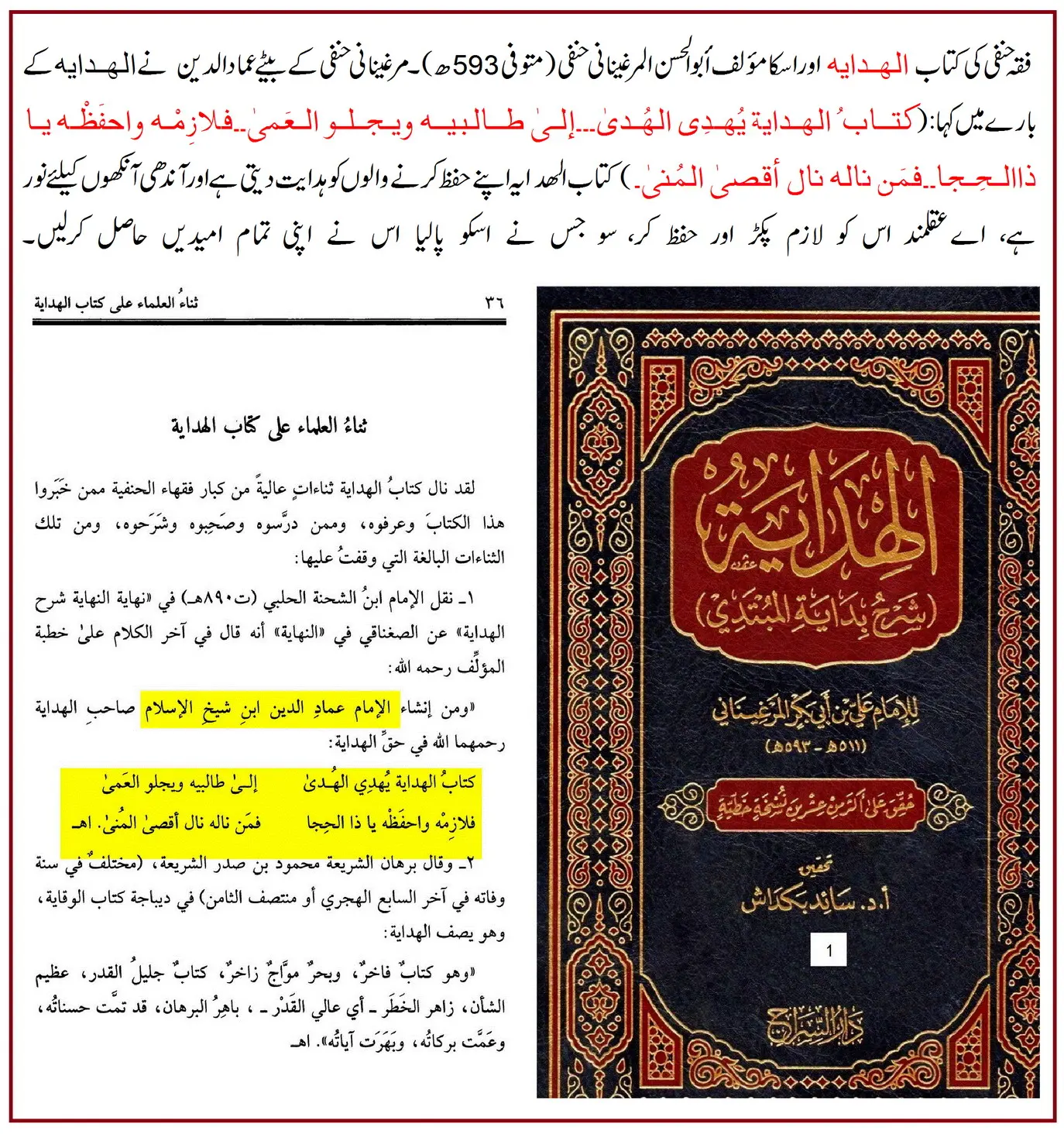
كتاب الهداية يهدي الهدى .. إلى حافظيه ويجلو العمى .. فلازمه واحفظه ياذا الحجى .. فمن ناله نال أقصى المنى
Translation:
The book al-Hidāyah guides its memorizers to guidance and removes blindness. O intelligent one! Adhere to it and memorize it; whoever attains it has achieved the highest aspirations.
Original Text:
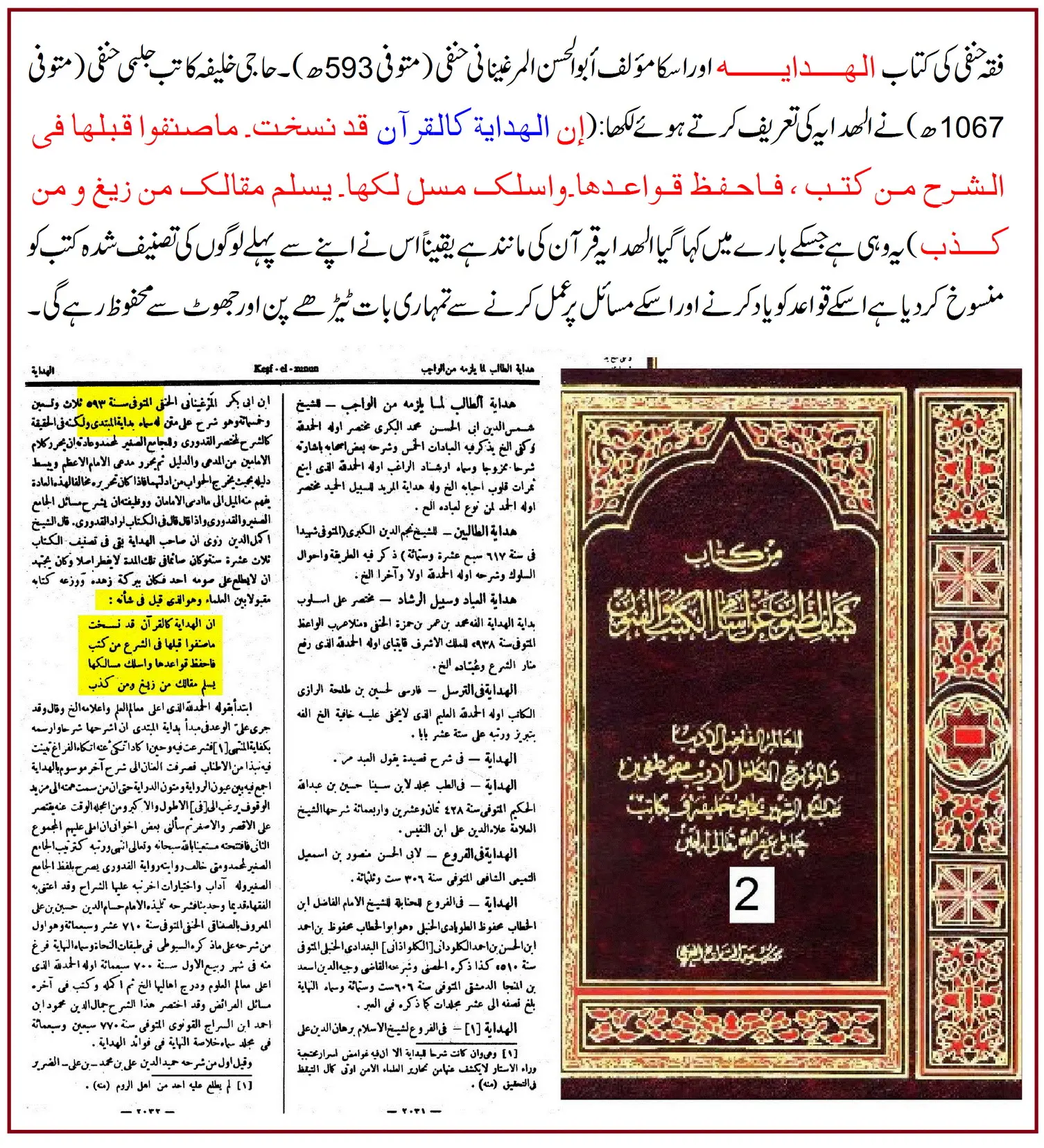
إن (الهداية) كالقرآن قد نسخت * ما صنفوا قبلها في الشرع من كتب
(كشف الظنون)
Translation:
Al-Hidāyah is like the Qur’an, having abrogated the juristic works written before it. Memorize its principles and follow its paths so that your speech remains free from deviation and falsehood.
Original Text:
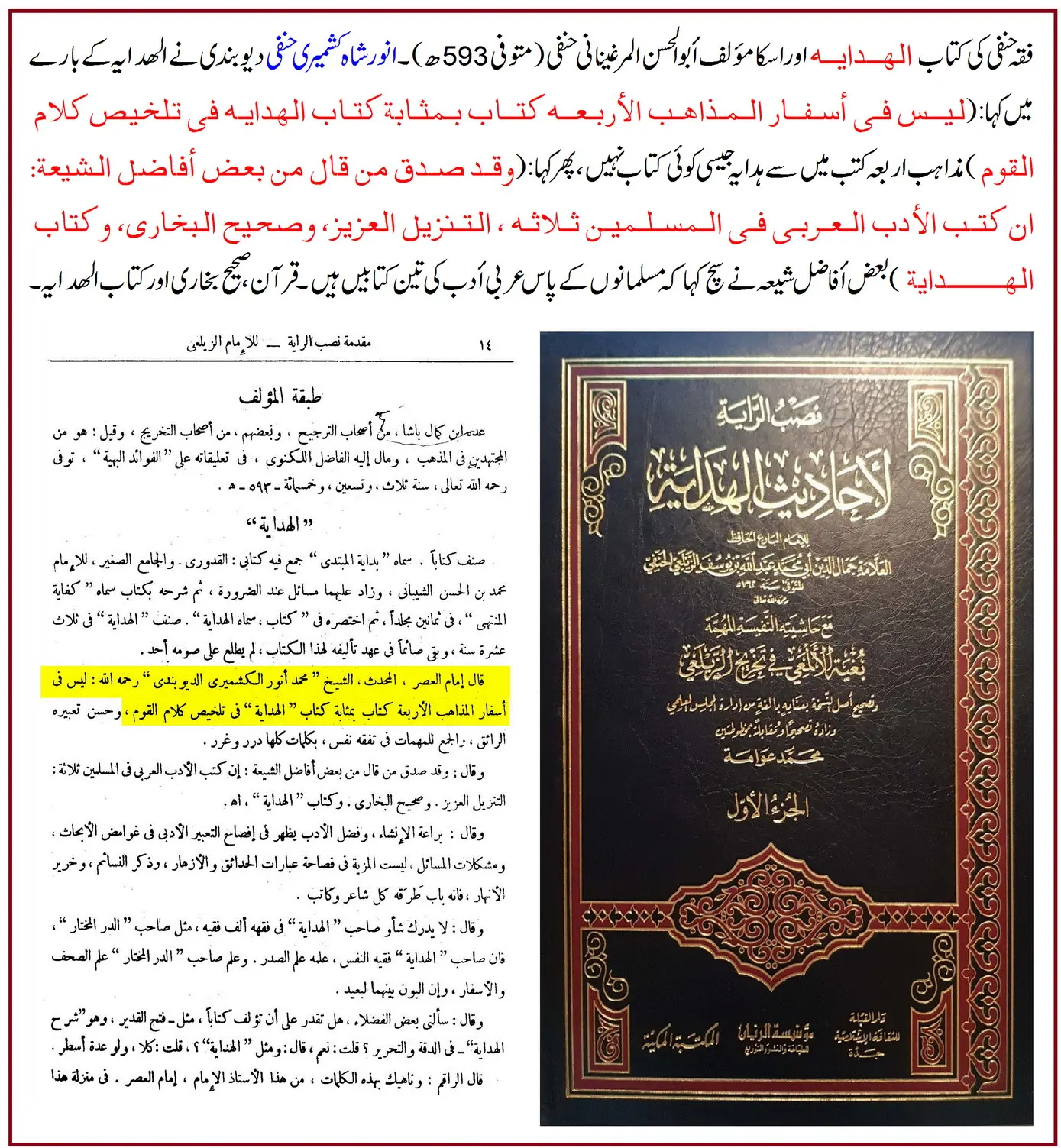
ليس في أسفار المذاهب الأربعة كتاب بمثابة كتاب الهداية...
Translation:
Among the books of the four schools, there is no book like al-Hidāyah in summarizing scholarly discourse, excellence of expression, and depth of jurisprudence. Some distinguished Shīʿī scholars spoke truthfully when they said that among Muslims, there are three great Arabic works: the Noble Qur’an, Ṣaḥīḥ al-Bukhārī, and al-Hidāyah.
Original Text:
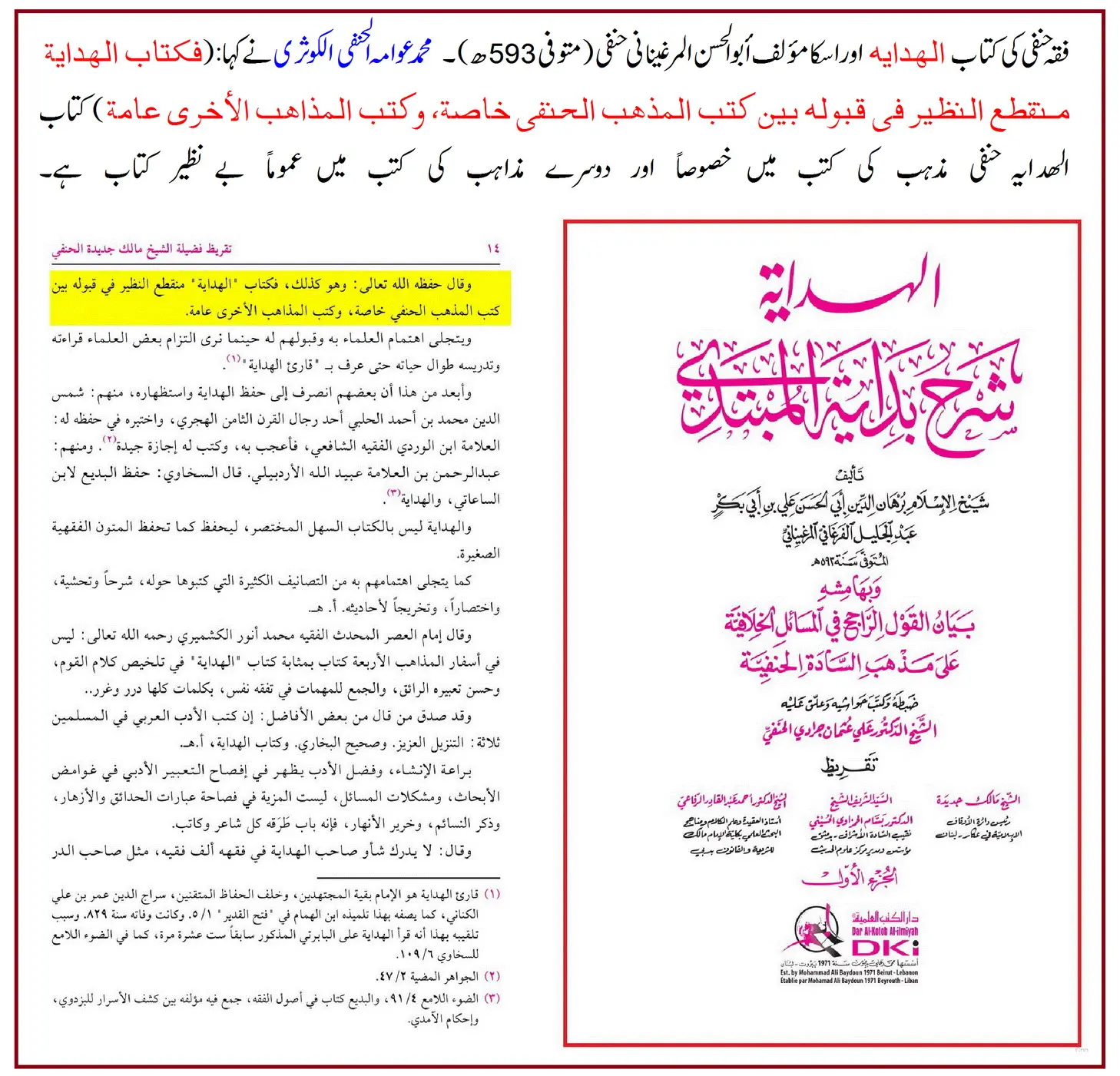
فكتاب "الهداية” منقطع النظير في قبوله...
Translation:
The book al-Hidāyah is unparalleled in its acceptance within the Ḥanafī school specifically, and among the books of other schools generally.
Conclusion: Rejecting a ruling of al-Hidāyah by labeling it “delusion” is, in reality, an attack on the very foundations of the Ḥanafī school itself.
Original Text:
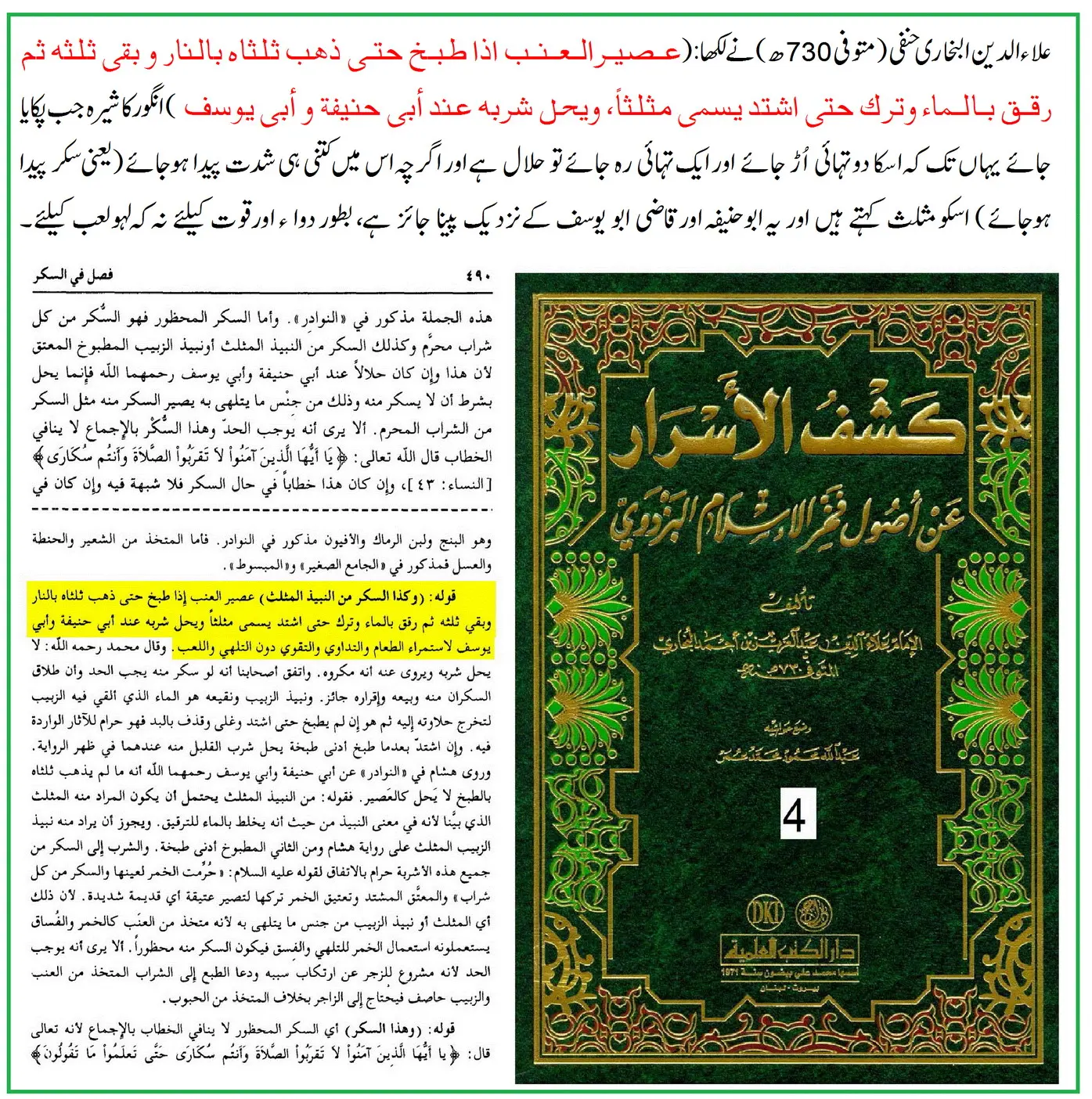
...ويحل شربه عند أبي حنيفة وأبي يوسف لاستمراء الطعام والتداوي والتقوي دون التلهي واللعب
(كشف الأسرار)
Translation:
When grape juice is cooked until two-thirds evaporate and one-third remains, then diluted with water and left to ferment, it is called muthallath. According to Abū Ḥanīfah and Qāḍī Abū Yūsuf, it is permissible to drink it for digestion, medical treatment, and gaining strength—but not for amusement.
Original Text:
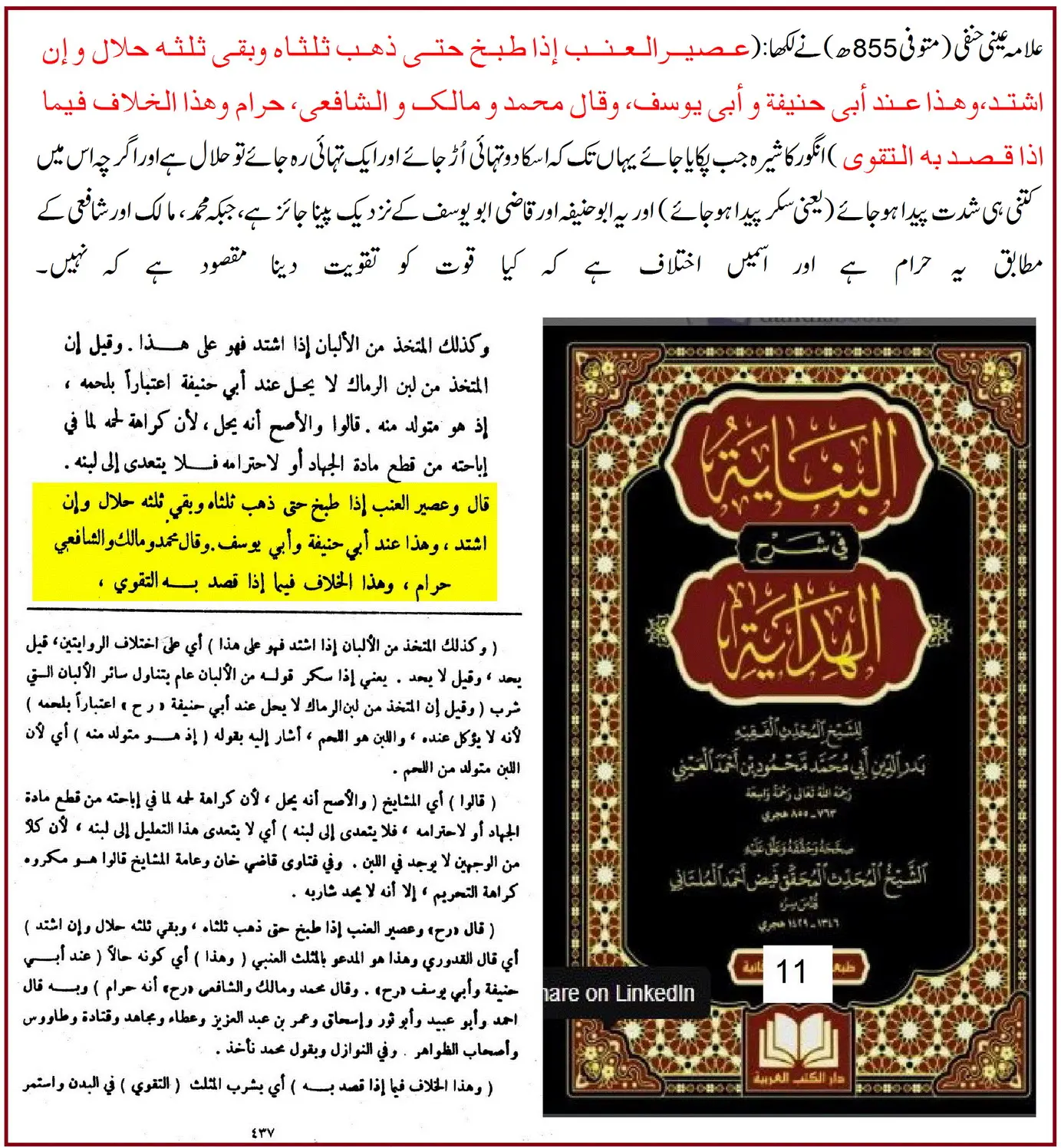
...حلال وإن اشتد... وهذا عند أبي حنيفة وأبي يوسف
(البناية)
Translation:
Cooked grape juice from which two-thirds have evaporated is lawful, even if it becomes intoxicating, according to Abū Ḥanīfah and Abū Yūsuf. Imām Muḥammad, Mālik, and al-Shāfiʿī consider it unlawful. This disagreement applies when the purpose is to gain strength.
Citation:
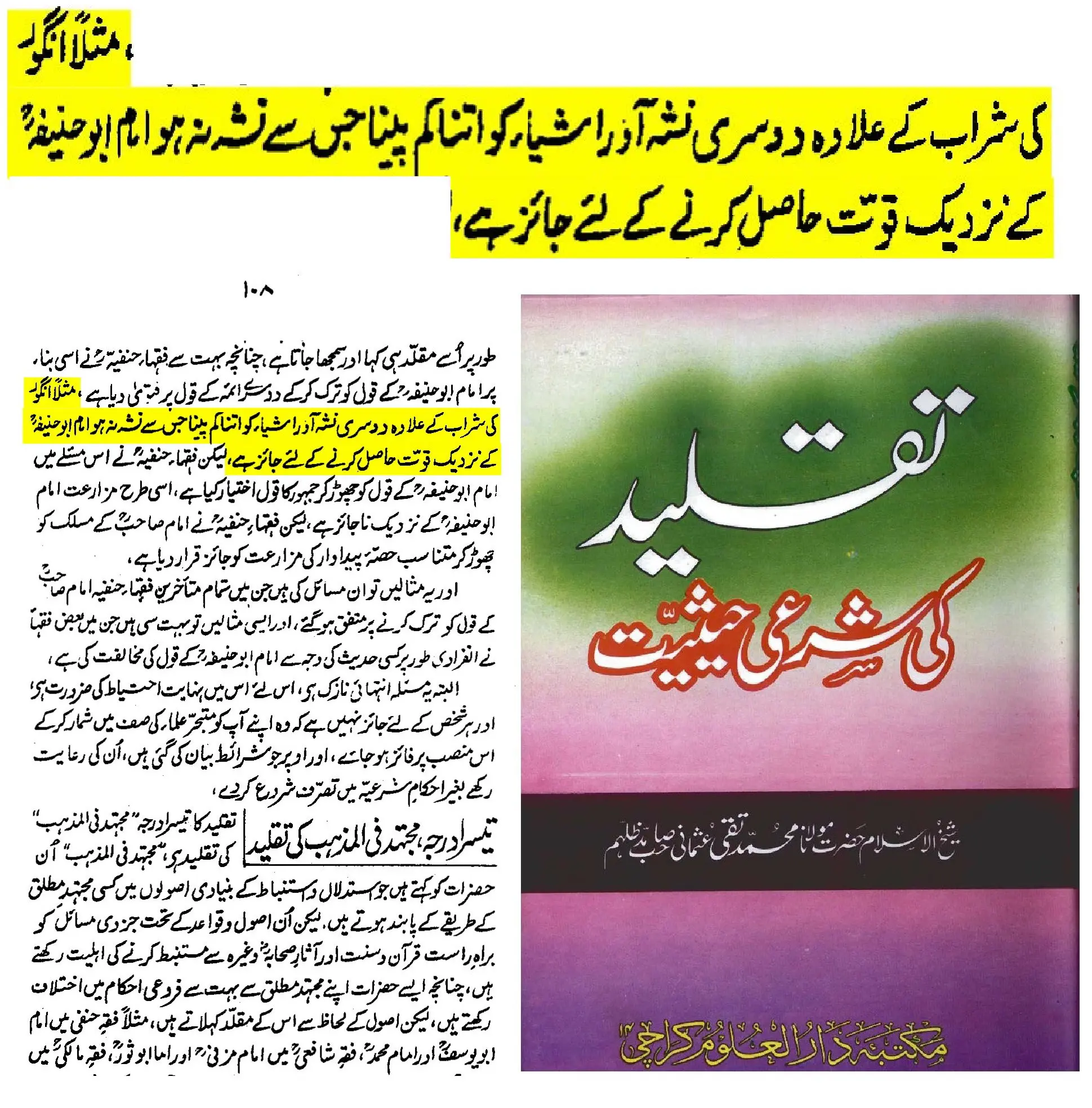
“According to Abū Ḥanīfah, drinking a small amount of intoxicants other than grape wine, so long as intoxication does not occur, is permissible for gaining strength.”
(Taqlīd kī Sharʿī Ḥaythiyyat)
Original Text:
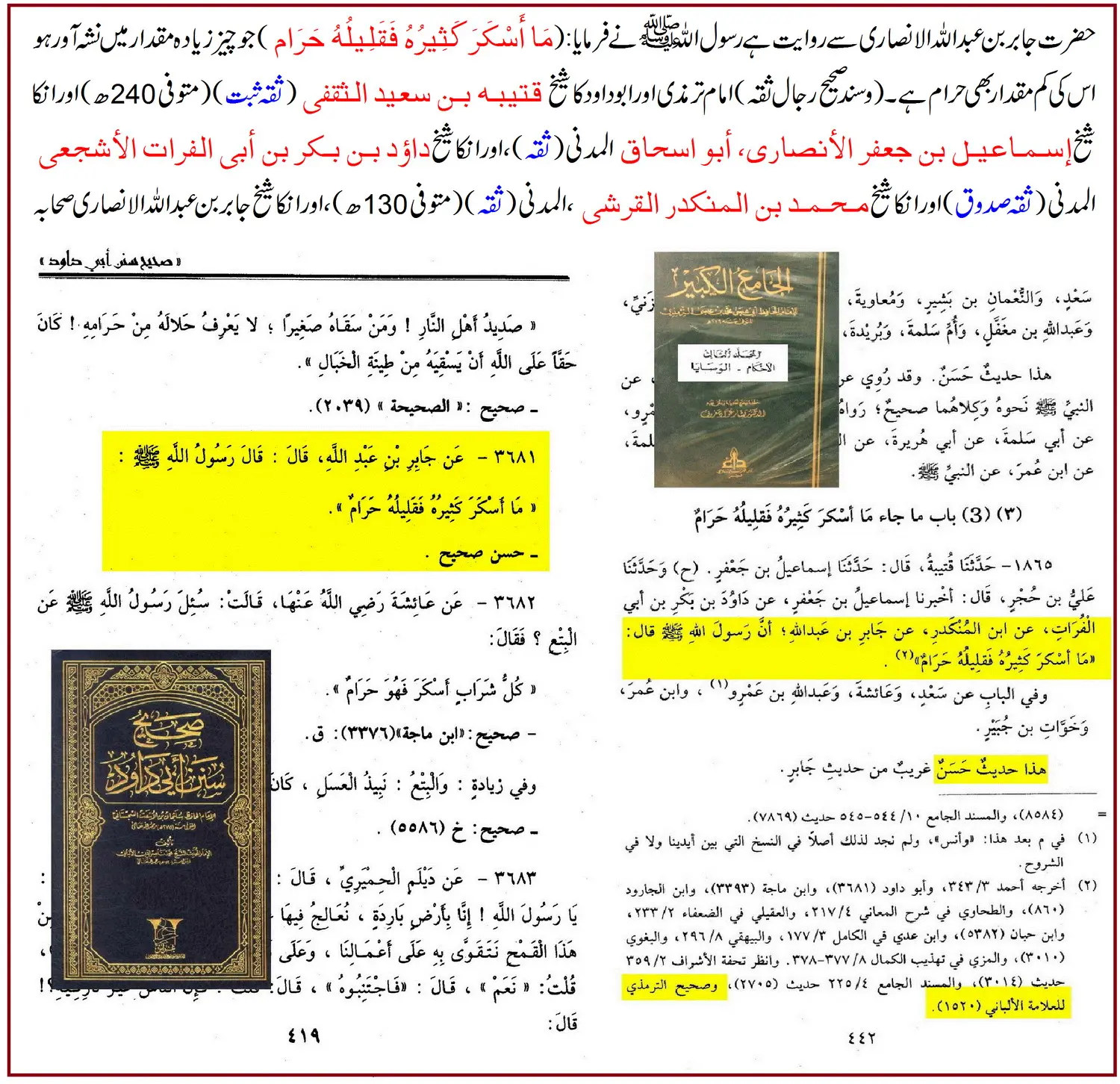
«مَا أَسْكَرَ كَثِيرُهُ فَقَلِيلُهُ حَرَامٌ»
Translation:
The Messenger of Allah ﷺ said: “Whatever intoxicates in large amounts, its small amount is also unlawful.”
Comparison:
◈ Ḥadīth: Any intoxicant is prohibited in all quantities.
◈ Ḥanafī Fiqh: Some intoxicants may be consumed in small amounts for strength or treatment.
⚖ Final Conclusion (Translation):
In Ḥanafī jurisprudence, certain non-grape intoxicants are deemed permissible, and in some cases, even intoxication does not necessitate legal punishment. This lenient stance stands in opposition to the clear standard set by authentic Prophetic narrations, which declare every intoxicant unlawful—regardless of quantity. The critical evaluations of the ḥadīth scholars and the internal inconsistencies within Ḥanafī rulings demonstrate that, in these matters, the juristic verdicts do not conform to the explicit Prophetic texts.
This article presents a research-based analytical review of the rulings on intoxicants (alcohol) in Ḥanafī jurisprudence, examining narrated texts, juristic verdicts, and practical trends regarding the permissibility or prohibition of various types of alcoholic drinks. It includes the statements of Imām Abū Ḥanīfah and his students, excerpts from authoritative works such as al-Jāmiʿ al-Ṣaghīr and al-Hidāyah, and the opinions of leading Ḥanafī scholars, cited with original Arabic texts and reliable references.
The article compares the Ḥanafī positions on:
◈ The permissibility of consuming alcohol for strength or medical treatment
◈ Converting wine into vinegar
◈ The application of legal punishment (ḥadd) for drinking alcohol
—against authentic Prophetic ḥadīth.
It also includes the testimony of Imām Abū ʿAwānah and evidences concerning the permissibility of non-grape intoxicants in Ḥanafī fiqh, in order to present a complete and unbiased picture of the issue.
Statements of Muḥammad ibn al-Ḥasan al-Shaybānī and al-Marghīnānī
① Statement of Muḥammad ibn al-Ḥasan al-Shaybānī
Original Text:
مُحَمَّد عَن يَعْقُوب عَن أبي حنيفة (رَضِي الله عَنْهُم) قَالَ: الْخمر حرَام قليلها وكثيرها وَالسكر وَهُوَ الَّتِي من مَاء التَّمْر ونقيع الزَّبِيب إِذا اشْتَدَّ حرَام مَكْرُوه والطلا وَهُوَ الَّذِي ذهب أقل من ثُلثَيْهِ من مَاء الْعِنَب وَمَا سوى ذَلِك من الْأَشْرِبَة فَلَا بَأْس بِهِ
(الجامع الصغير وشرحه النافع الكبير لمحمد بن الحسن الشيباني، المتوفى 189ھ)
Translation:
Muḥammad ibn al-Ḥasan al-Shaybānī narrates from his shaykh, Imām Abū Ḥanīfah: Wine (raw grape juice) is prohibited in both small and large amounts. Sukr (a raw drink made from dates) and Naqīʿ al-Zabīb (a raw drink made from raisins), when they become strong (i.e., intoxicating), are prohibited and disliked. Likewise, Ṭilāʾ (a grape drink from which less than two-thirds has evaporated) falls under this ruling. As for all other drinks besides these, there is no harm in them.
Point: According to Abū Ḥanīfah, apart from wine, sukr, naqīʿ al-zabīb, and ṭilāʾ, all other intoxicating drinks carry no prohibition, even if they are intoxicating in small amounts.② Explanation of al-Marghīnānī (Ḥanafī)
Original Text:
"وقال في الجامع الصغير: وما سوى ذلك من الأشربة فلا بأس به” قالوا: هذا الجواب على هذا العموم والبيان لا يوجد في غيره، وهو نص على أن ما يتخذ من الحنطة والشعير والعسل والذرة حلال عند أبي حنيفة، ولا يحد شاربه عنده وإن سكر منه.
(الهداية في شرح بداية المبتدي، برهان الدين المرغيناني، المتوفى 593ھ)
Translation:
It is stated in al-Jāmiʿ al-Ṣaghīr: “As for all other drinks besides these, there is no harm in them.” The scholars say: This response is general in its wording, and such clarification is not found elsewhere. It is an explicit text proving that drinks made from wheat, barley, honey, and corn are lawful according to Abū Ḥanīfah, and the one who drinks them is not subjected to the legal punishment, even if he becomes intoxicated.
Point: Al-Marghīnānī clearly states the Ḥanafī position that alcohol made from wheat, barley, honey, and corn is permissible, and no ḥadd is applied even if intoxication occurs.The Status of al-Hidāyah and the Response to Deobandi Objections
In the Ḥanafī school, al-Hidāyah fī Sharḥ Bidāyat al-Mubtadī holds extraordinary significance. Certain individuals from the Deobandi school object to it when its verdicts cause embarrassment—such as the permissibility of some forms of alcohol—by dismissing them as “errors” of al-Marghīnānī. However, leading Ḥanafī scholars themselves accord al-Hidāyah an unparalleled rank.
① Praise by ʿImād al-Dīn (Son of al-Marghīnānī)
Original Text:
كتاب الهداية يهدي الهدى .. إلى حافظيه ويجلو العمى .. فلازمه واحفظه ياذا الحجى .. فمن ناله نال أقصى المنى
Translation:
The book al-Hidāyah guides its memorizers to guidance and removes blindness. O intelligent one! Adhere to it and memorize it; whoever attains it has achieved the highest aspirations.
② Praise by Ḥājī Khalīfah (Kātib Çelebi, Ḥanafī)
Original Text:
إن (الهداية) كالقرآن قد نسخت * ما صنفوا قبلها في الشرع من كتب
(كشف الظنون)
Translation:
Al-Hidāyah is like the Qur’an, having abrogated the juristic works written before it. Memorize its principles and follow its paths so that your speech remains free from deviation and falsehood.
③ Opinion of Anwar Shāh Kāshmīrī (Deobandi)
Original Text:
ليس في أسفار المذاهب الأربعة كتاب بمثابة كتاب الهداية...
Translation:
Among the books of the four schools, there is no book like al-Hidāyah in summarizing scholarly discourse, excellence of expression, and depth of jurisprudence. Some distinguished Shīʿī scholars spoke truthfully when they said that among Muslims, there are three great Arabic works: the Noble Qur’an, Ṣaḥīḥ al-Bukhārī, and al-Hidāyah.
④ Opinion of Muḥammad ʿAwwāmah (Ḥanafī)
Original Text:
فكتاب "الهداية” منقطع النظير في قبوله...
Translation:
The book al-Hidāyah is unparalleled in its acceptance within the Ḥanafī school specifically, and among the books of other schools generally.
Conclusion: Rejecting a ruling of al-Hidāyah by labeling it “delusion” is, in reality, an attack on the very foundations of the Ḥanafī school itself.Permissibility of Drinking Alcohol for Strength – Ḥanafī Verdicts vs. Ḥadīth
① ʿAlāʾ al-Dīn al-Bukhārī (730 AH)
Original Text:
...ويحل شربه عند أبي حنيفة وأبي يوسف لاستمراء الطعام والتداوي والتقوي دون التلهي واللعب
(كشف الأسرار)
Translation:
When grape juice is cooked until two-thirds evaporate and one-third remains, then diluted with water and left to ferment, it is called muthallath. According to Abū Ḥanīfah and Qāḍī Abū Yūsuf, it is permissible to drink it for digestion, medical treatment, and gaining strength—but not for amusement.
② Badr al-Dīn al-ʿAynī (855 AH)
Original Text:
...حلال وإن اشتد... وهذا عند أبي حنيفة وأبي يوسف
(البناية)
Translation:
Cooked grape juice from which two-thirds have evaporated is lawful, even if it becomes intoxicating, according to Abū Ḥanīfah and Abū Yūsuf. Imām Muḥammad, Mālik, and al-Shāfiʿī consider it unlawful. This disagreement applies when the purpose is to gain strength.
③ Muftī Taqī ʿUthmānī (Ḥanafī)
Citation:
“According to Abū Ḥanīfah, drinking a small amount of intoxicants other than grape wine, so long as intoxication does not occur, is permissible for gaining strength.”
(Taqlīd kī Sharʿī Ḥaythiyyat)
④ Prophetic Ḥadīth ﷺ
Original Text:
«مَا أَسْكَرَ كَثِيرُهُ فَقَلِيلُهُ حَرَامٌ»
Reference: Sunan al-Tirmidhī: 1865
Translation:
The Messenger of Allah ﷺ said: “Whatever intoxicates in large amounts, its small amount is also unlawful.”
Comparison:◈ Ḥadīth: Any intoxicant is prohibited in all quantities.
◈ Ḥanafī Fiqh: Some intoxicants may be consumed in small amounts for strength or treatment.
⚖ Final Conclusion (Translation):
In Ḥanafī jurisprudence, certain non-grape intoxicants are deemed permissible, and in some cases, even intoxication does not necessitate legal punishment. This lenient stance stands in opposition to the clear standard set by authentic Prophetic narrations, which declare every intoxicant unlawful—regardless of quantity. The critical evaluations of the ḥadīth scholars and the internal inconsistencies within Ḥanafī rulings demonstrate that, in these matters, the juristic verdicts do not conform to the explicit Prophetic texts.
