

Compiled by: Abu Hamzah Salafi
In this research article, we present the statements of the scholars of Jarḥ wa Taʿdīl regarding the well-known narrator Fudayl ibn Marzūq al-Aghar al-Ru’āsī al-Kūfī Abū ʿAbd al-Raḥmān (d. after 150 AH).
He was a Kūfan narrator about whom errors, frequent mistakes, and attribution of Shiʿism were reported. Some scholars declared him ṣadūq (truthful), but the majority did not consider him suitable for independent proof (iḥtijāj).
❀ In this article, the statements of twenty (20) hadith scholars are presented with the original Arabic text, English translation, and references.
❀ At the end, clarification is also given regarding where Imām Muslim mentioned his narrations and at what level.

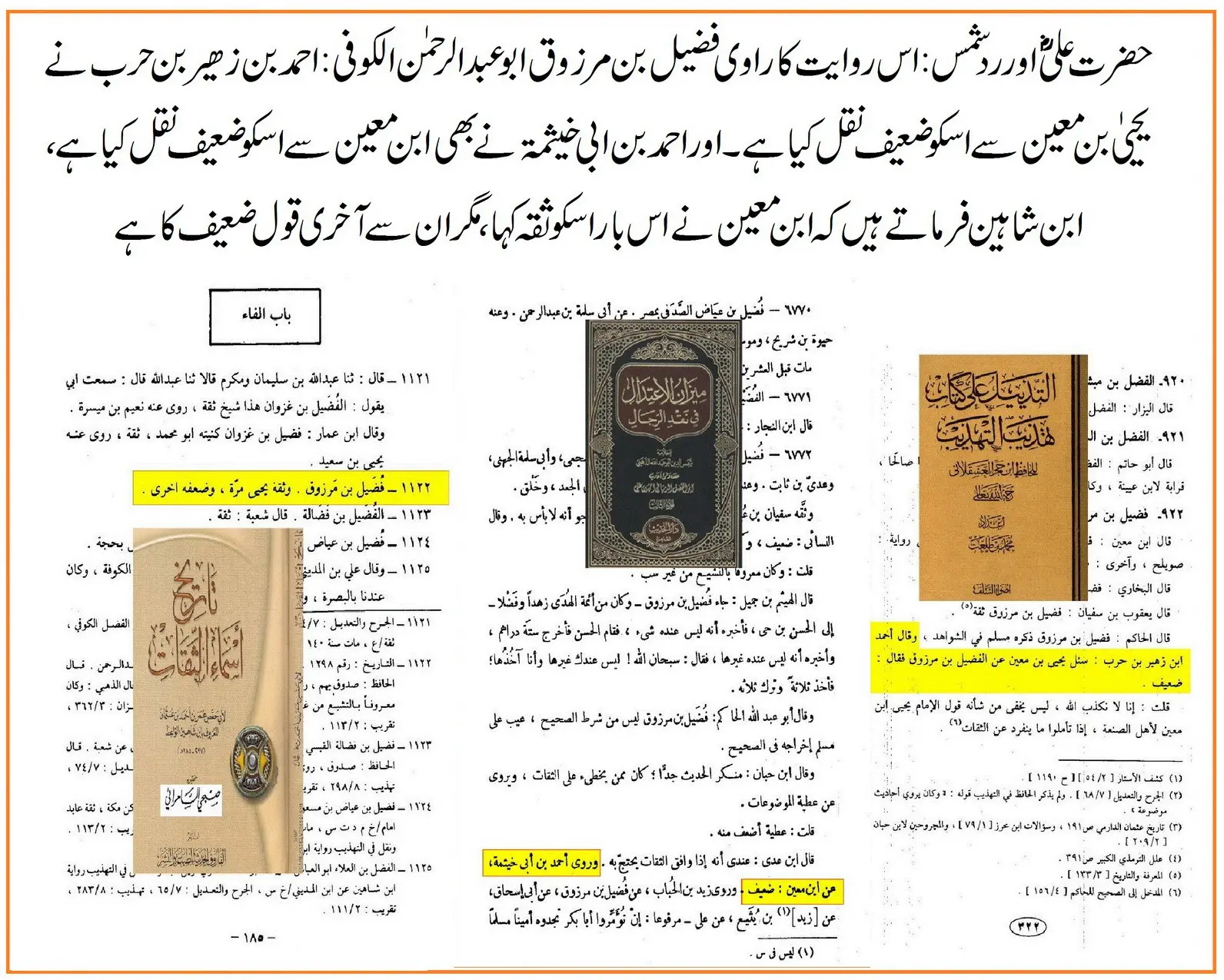
❖ Ibn Shāhīn clarified:
«وَثَّقَهُ مَرَّةً، وَضَعَّفَهُ أُخْرَى، وَالأَخِيرُ هُوَ الْمُعْتَمَدُ.»
He declared him trustworthy once and weak another time; the latter opinion is relied upon.
❖ al-Dhahabī commented:
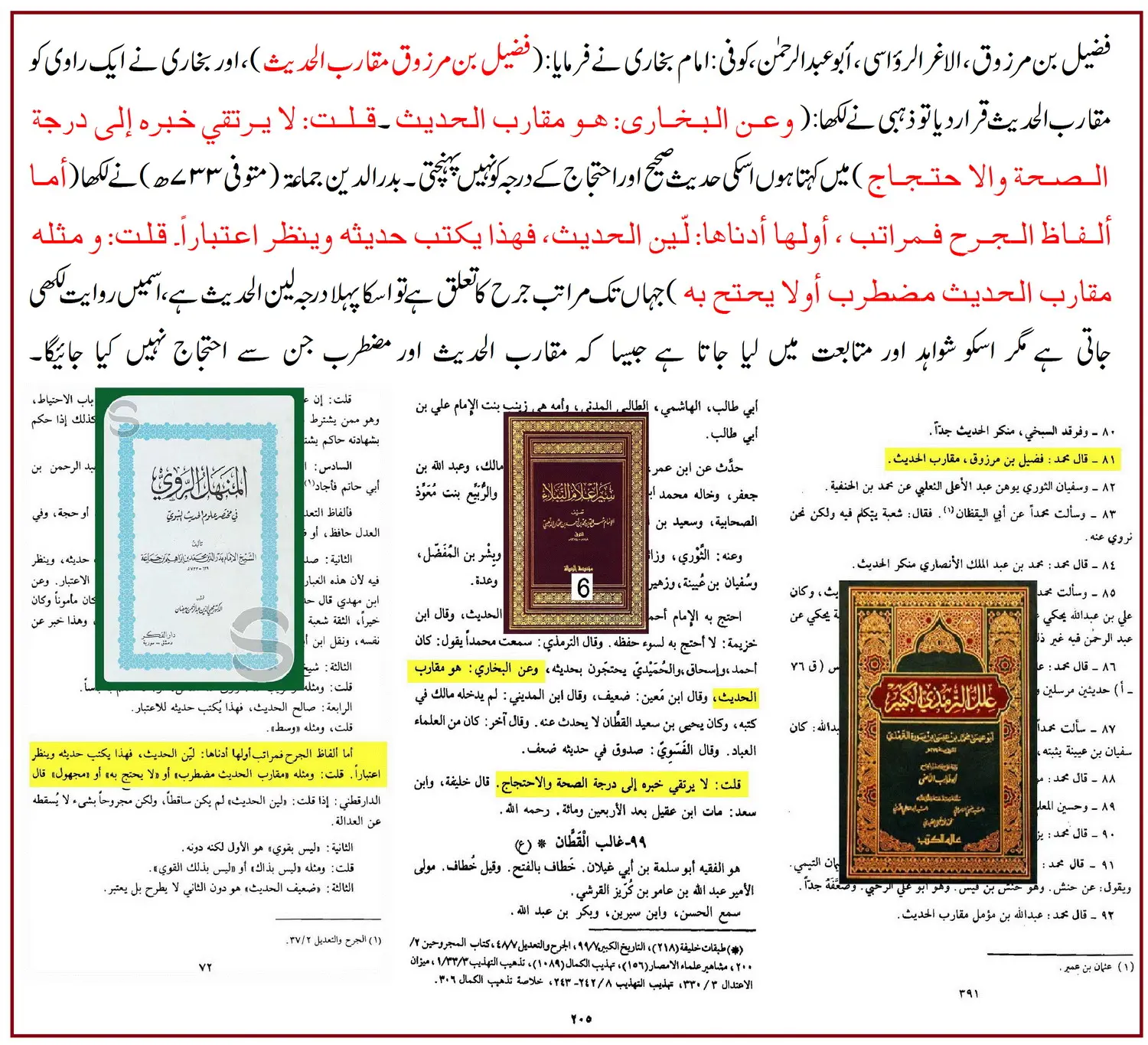
«لا يَرْتَقِي خَبَرُهُ إِلَى دَرَجَةِ الصِّحَّةِ وَالِاحْتِجَاجِ.»
His reports do not reach the level of authenticity and proof.
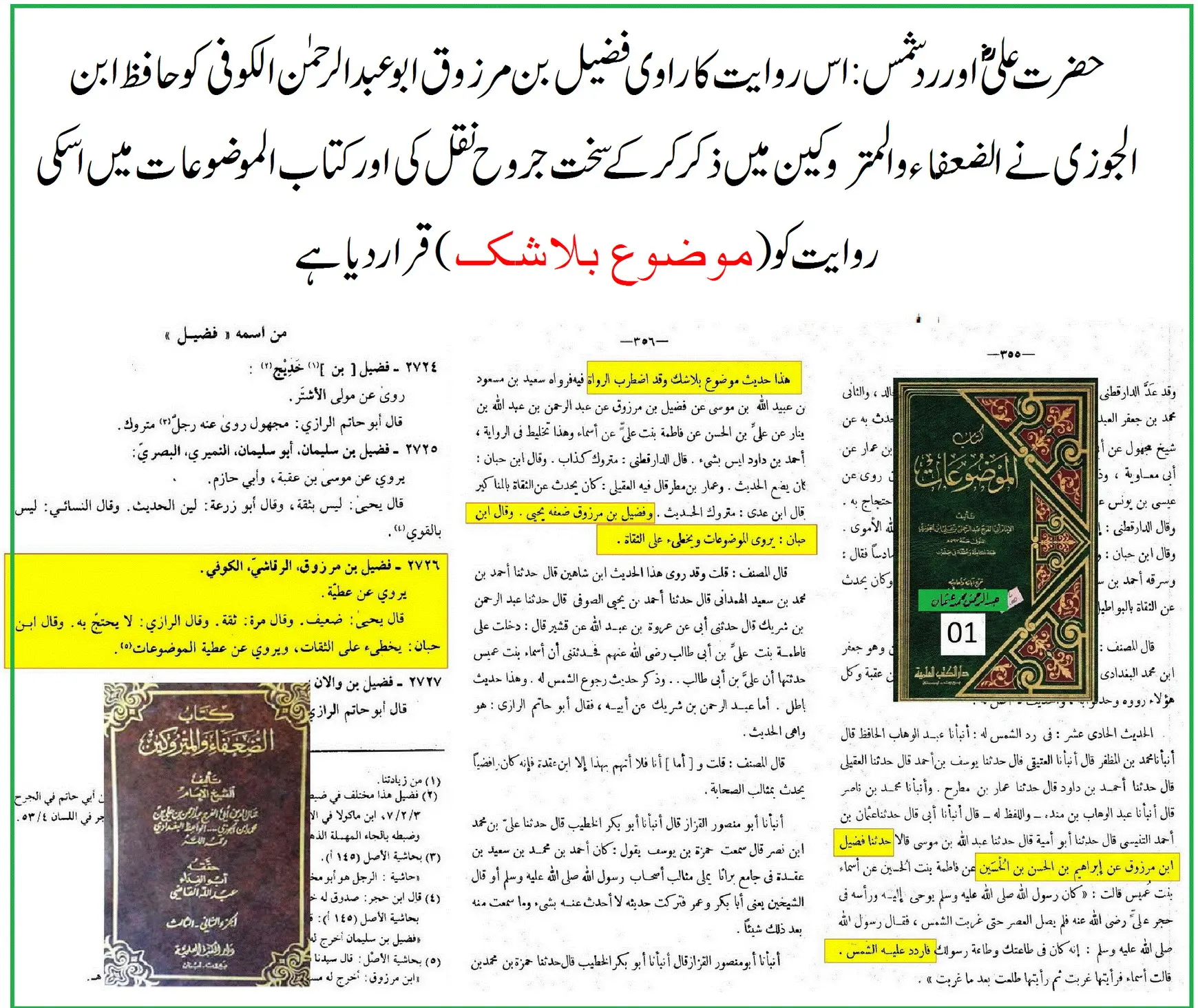
He also declared the narration of the sun returning for ʿAlī رضي الله عنه to be fabricated.
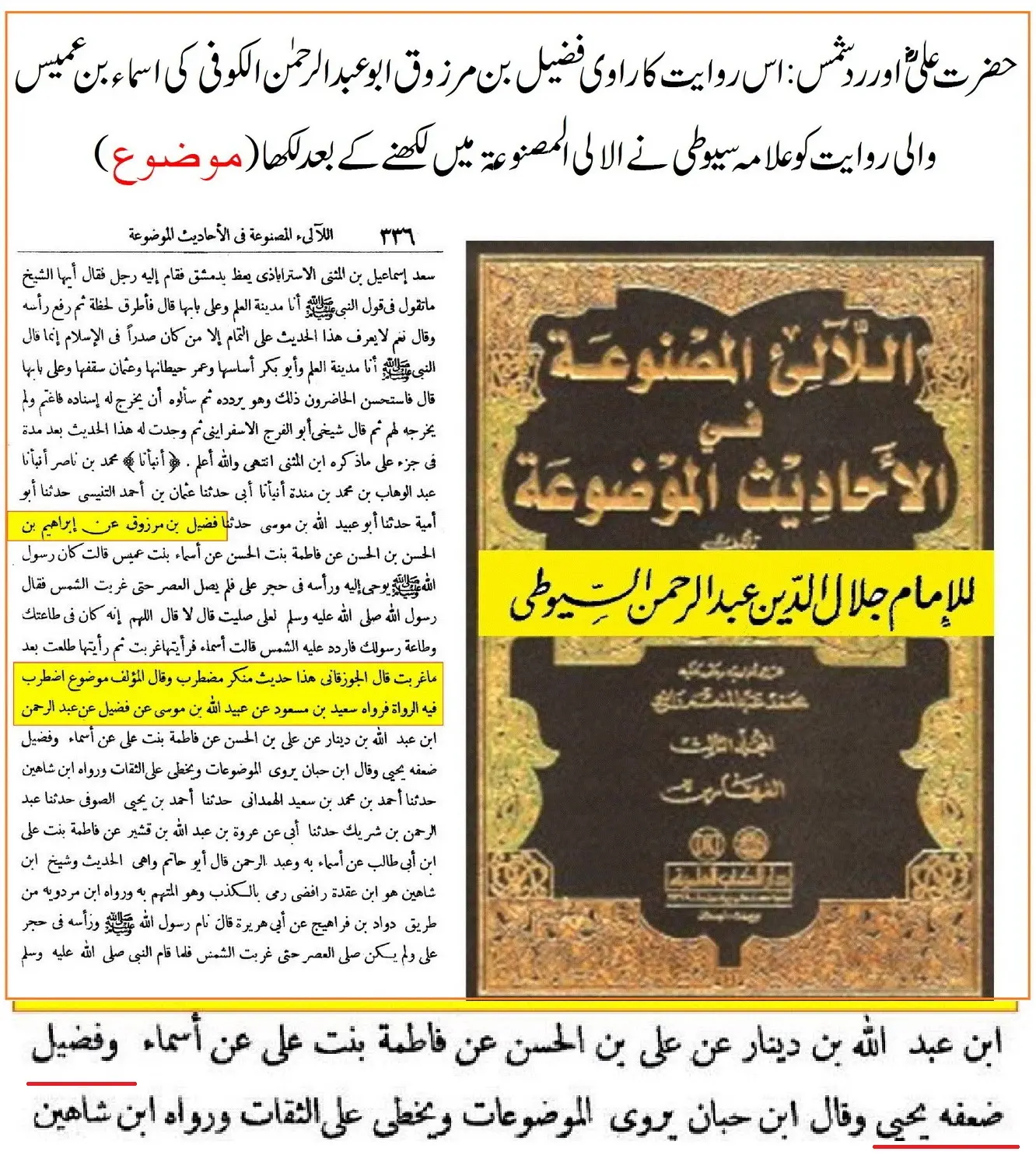
Al-Suyūṭī said: It is fabricated and inconsistent.
✖ The majority declared him weak, prone to error, objectionable in hadith, and accused of Shiʿism (Ibn Ḥibbān, al-Nasā’ī, Ibn Maʿīn, al-Jawzaqānī, Ibn al-Jawzī, etc.).
② When he narrates independently, his report is not relied upon, as clarified by the majority of hadith scholars.
Scholars declared it fabricated or objectionable (Ibn al-Jawzī, Ibn al-Qayyim, al-Suyūṭī, Ibn Kathīr, Ibn Taymiyyah, etc.).
❖ His narrations may be used in follow-ups and supporting chains, but his independent reports are not suitable for proof.
❖ Even in Ṣaḥīḥ Muslim, his narrations appear only as supporting evidence, demonstrating that the scholars did not rely upon him independently.
In this research article, we present the statements of the scholars of Jarḥ wa Taʿdīl regarding the well-known narrator Fudayl ibn Marzūq al-Aghar al-Ru’āsī al-Kūfī Abū ʿAbd al-Raḥmān (d. after 150 AH).
He was a Kūfan narrator about whom errors, frequent mistakes, and attribution of Shiʿism were reported. Some scholars declared him ṣadūq (truthful), but the majority did not consider him suitable for independent proof (iḥtijāj).
❀ In this article, the statements of twenty (20) hadith scholars are presented with the original Arabic text, English translation, and references.
❀ At the end, clarification is also given regarding where Imām Muslim mentioned his narrations and at what level.
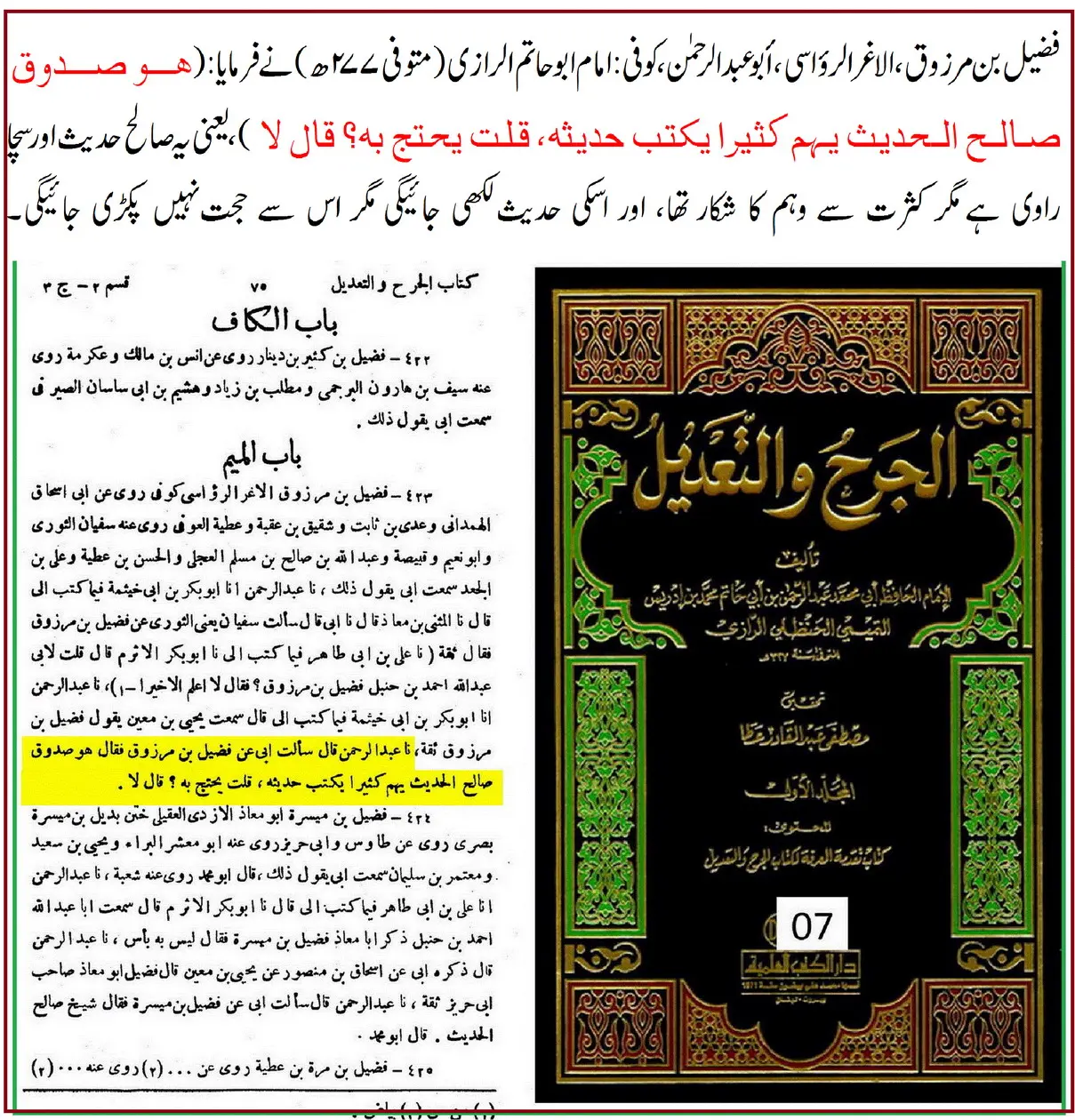
① Imām Abū Ḥātim al-Rāzī رحمه الله
Arabic Text:
«فُضَيْلُ بْنُ مَرْزُوقٍ الأَغَرُّ الرُّؤَاسِيُّ كُوفِيٌّ… سَأَلْتُ أَبِي عَنْهُ فَقَالَ: هُوَ صَدُوقٌ صَالِحُ الحَدِيثِ، يَهِمُ كَثِيرًا، يُكْتَبُ حَدِيثُهُ. قُلْتُ: يُحْتَجُّ بِهِ؟ قَالَ: لَا.»
Reference: Ibn Abī Ḥātim, al-Jarḥ wa al-Taʿdīl 7/75, no. 423
Translation:
He is ṣadūq and sound in hadith, but he makes many mistakes. His hadith is recorded, but it is not used as proof.② Imām al-Ḥākim al-Naysābūrī رحمه الله
(From the Questions of al-Sijzī) + Clarification of Ibn Ḥajar
Arabic Text (al-Ḥākim):
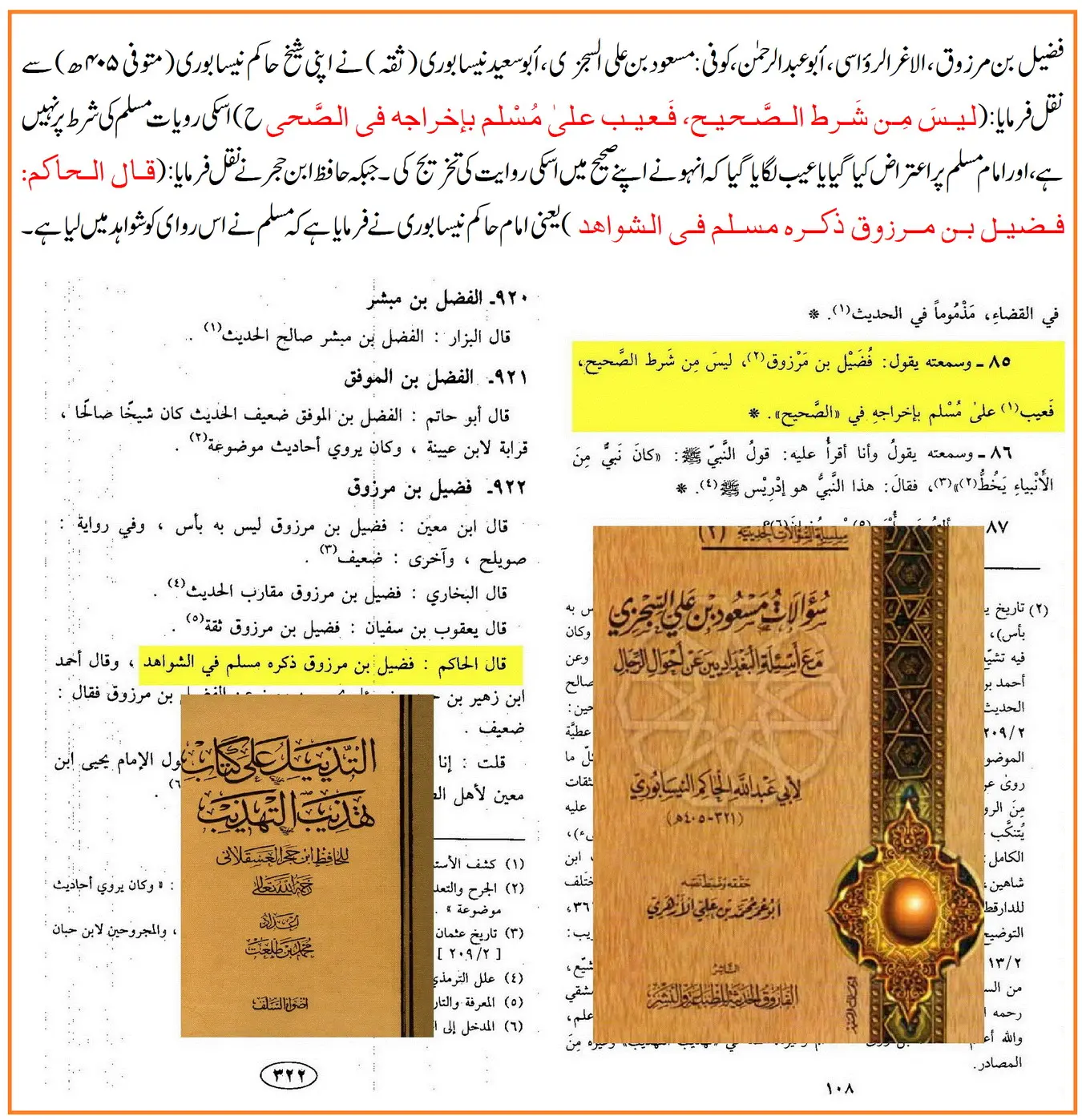
«وسَمِعْتُهُ يَقُولُ: فُضَيْلُ بْنُ مَرْزُوقٍ لَيْسَ مِنْ شَرْطِ الصَّحِيحِ، فَعِيبَ عَلَى مُسْلِمٍ بِإِخْرَاجِهِ فِي الصَّحِيحِ.»
Reference: Su’ālāt Masʿūd ibn ʿAlī al-Sijzī li’l-Ḥākim, p. 85
Translation:
Fudayl ibn Marzūq does not meet the conditions of Ṣaḥīḥ, and for this reason Imām Muslim was criticized for including him in his Ṣaḥīḥ.Clarification of Ibn Ḥajar رحمه الله:
«قال الحاكم: ذَكَرَهُ مُسْلِمٌ فِي الشَّوَاهِدِ.»
Reference: Ibn Ḥajar, al-Tadhyīl ʿalā Tahdhīb al-Tahdhīb, no. 922
Translation:
Al-Ḥākim clarified that Imām Muslim mentioned him only in supporting narrations (shawāhid).③ Imām Ibn Ḥibbān رحمه الله
Arabic Text:
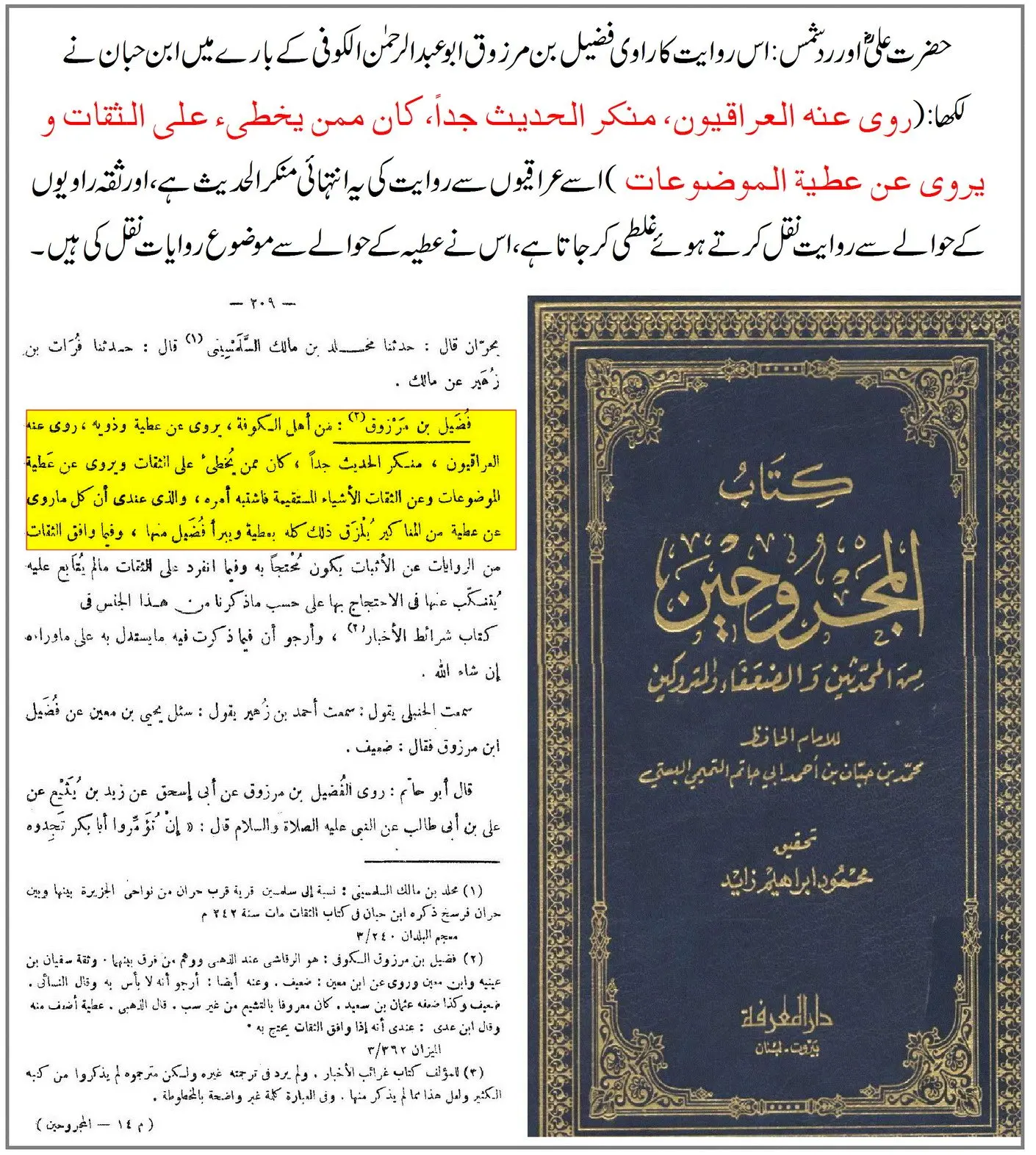
«… روى عنه العراقيون مُنْكَرَ الحَدِيثِ جِدًّا، كَانَ يَخْطَأُ عَلَى الثِّقَاتِ، ويَرْوِي عَن عَطِيَّةَ المَوْضُوعَات… فَمَا وَافَقَ الثِّقَاتِ يُحْتَجُّ بِهِ، وَمَا انْفَرَدَ لا يُحْتَجُّ بِهِ.»
Reference: Ibn Ḥibbān, al-Majrūḥīn 2/212, no. 870
Translation:
He narrates very objectionable hadith from the Iraqis, makes mistakes regarding reliable narrators, and narrates fabricated reports from ʿAṭiyyah. Whatever agrees with reliable narrators may be used as support, but whatever he narrates independently is not used as proof.④ Imām al-Nasā’ī رحمه الله
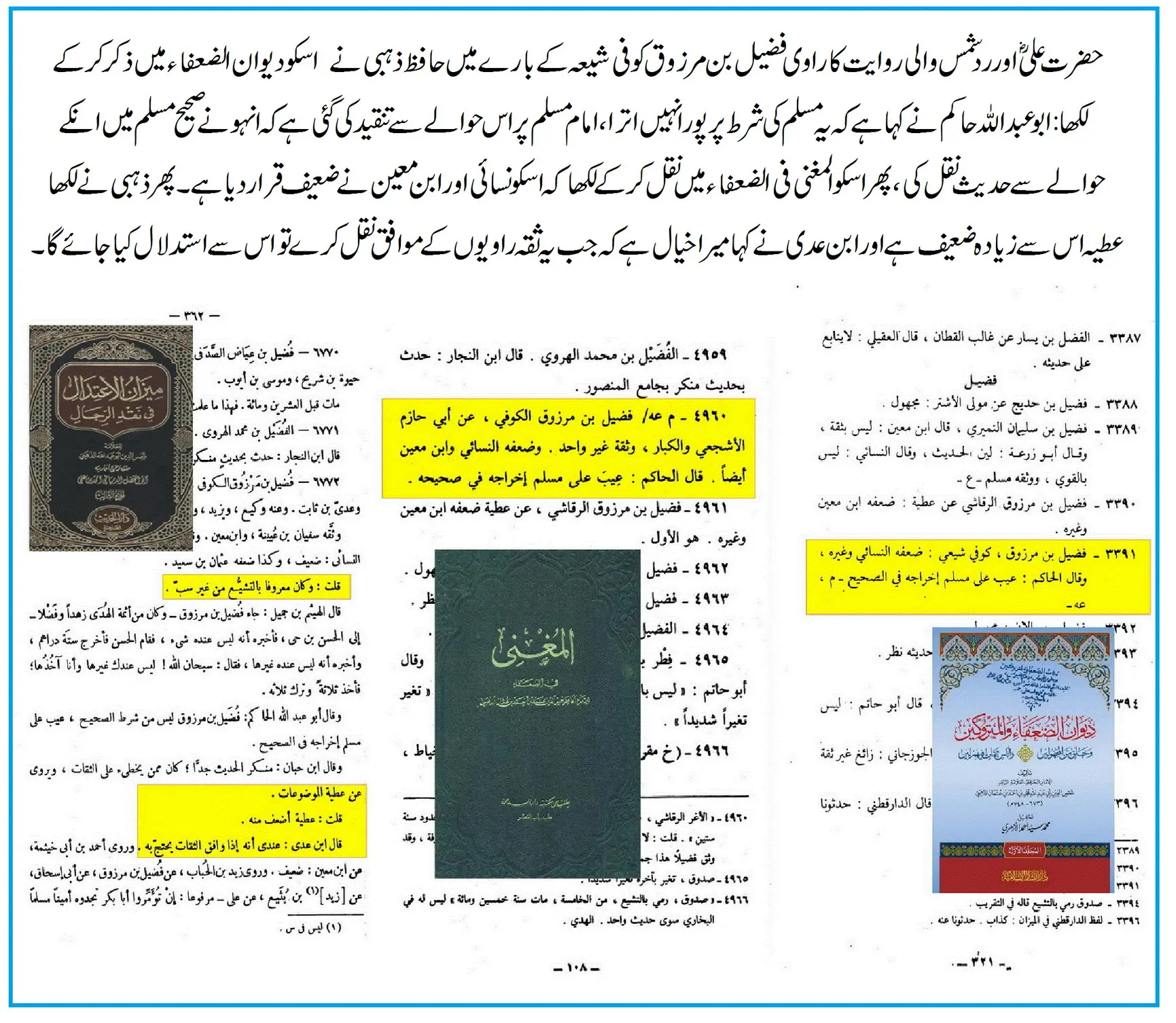
Arabic Text (reported):
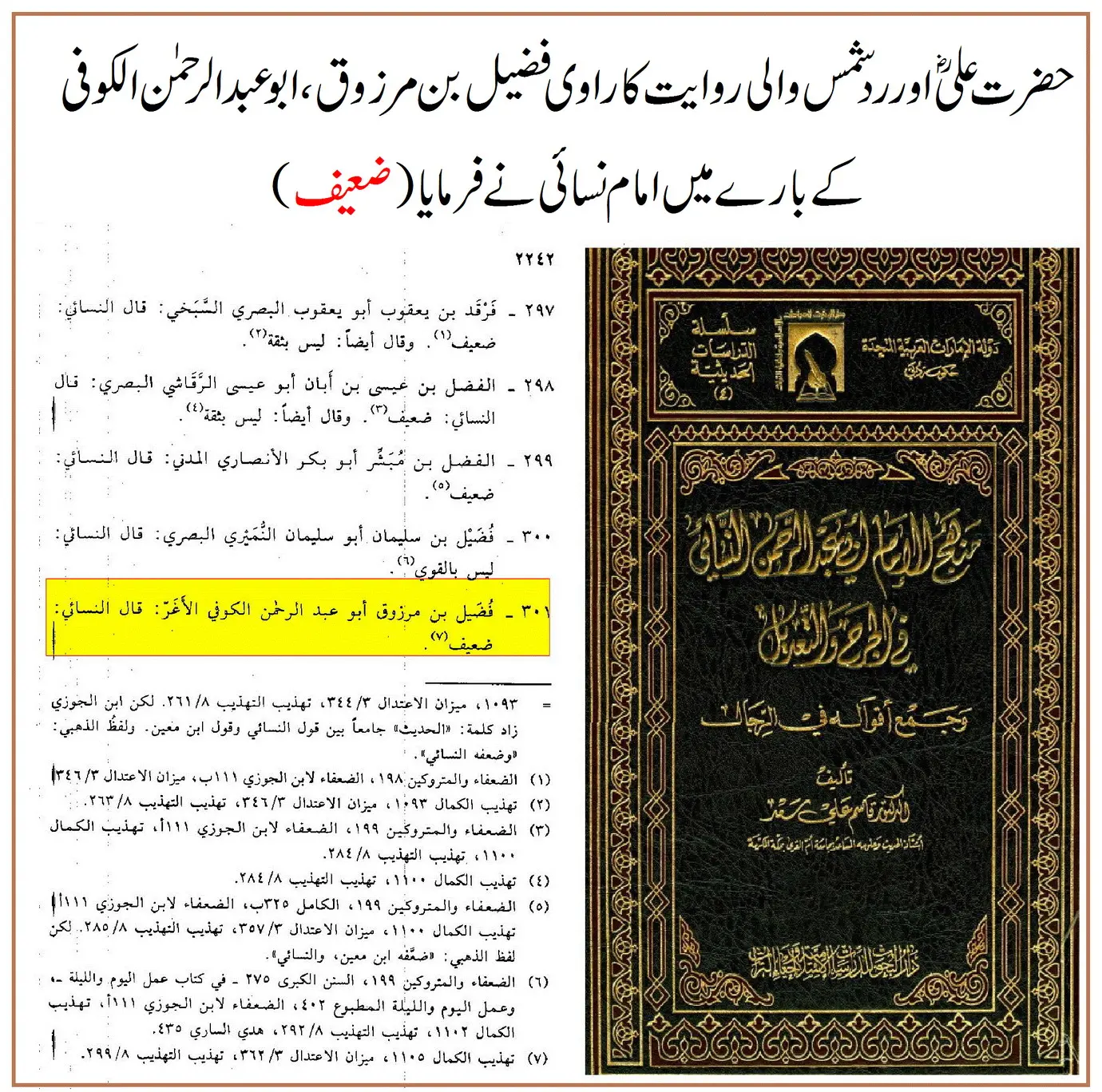
«ضَعَّفَهُ النَّسَائِيُّ وَابْنُ مَعِينٍ.»
Reference: al-Dhahabī, al-Mughnī fī al-Ḍuʿafāʾ 2/4960
Translation:
Al-Nasā’ī and Yaḥyā ibn Maʿīn declared him weak.⑤ Imām Ibn ʿAdī رحمه الله (with clarification by al-Dhahabī)
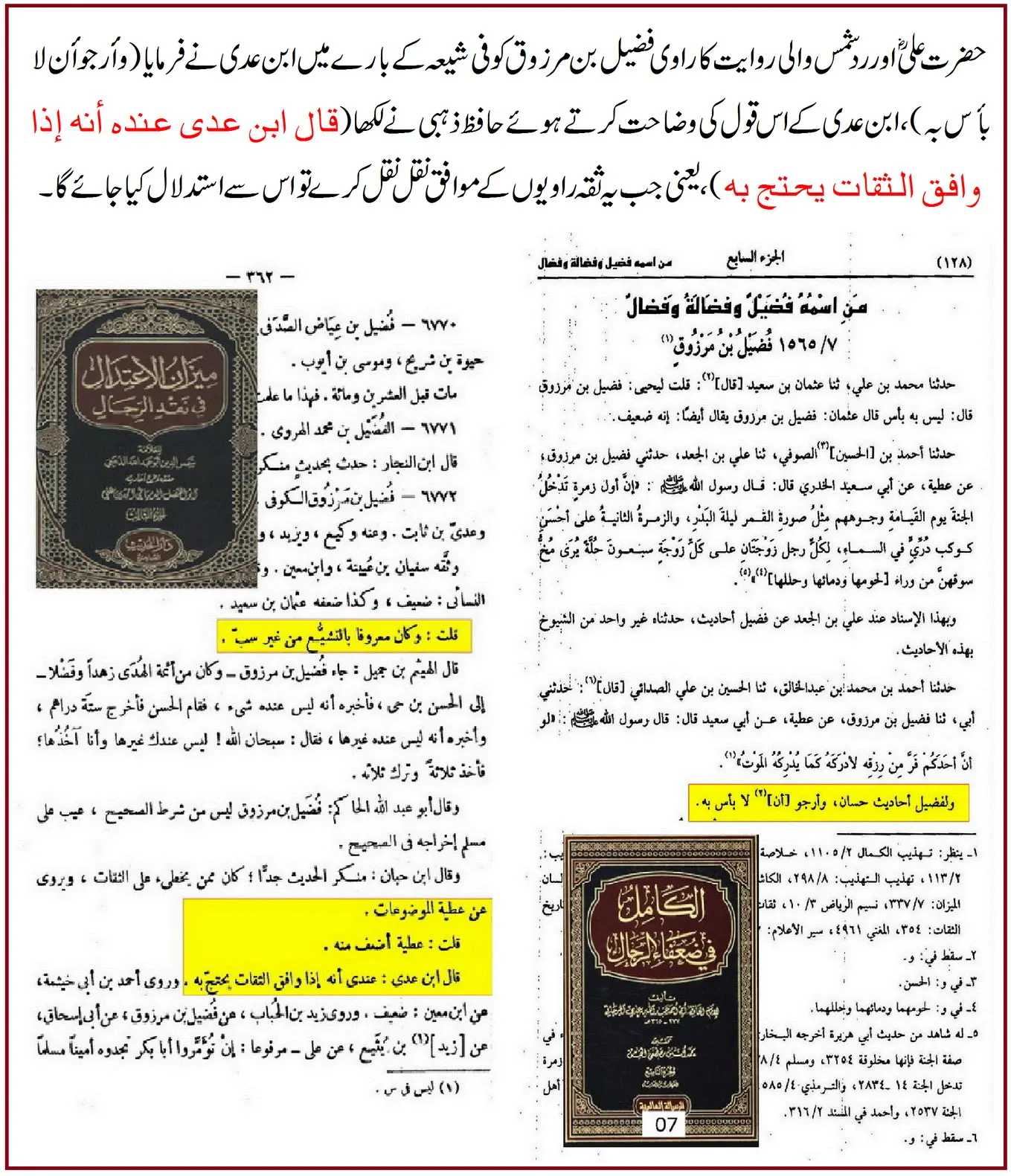
Arabic Text (Ibn ʿAdī):
«وَلِفُضَيْلٍ أَحَادِيثُ حِسَانٌ، وَأَرْجُو أَنَّهُ لَا بَأْسَ بِهِ.»
Reference: Ibn ʿAdī, al-Kāmil 7/88, no. 1565
Translation:
Fudayl has some good hadith, and I hope there is no harm in him.Clarification (al-Dhahabī):
«قال ابن عدي: عندي أنّه إذا وافق الثقات يُحْتَجُّ به.»
Reference: al-Dhahabī, Mīzān al-Iʿtidāl 3/361, no. 6772
Translation:
According to Ibn ʿAdī, if he agrees with reliable narrators, then his narration may be used as proof.⑥ Muḥammad ibn Ṭāhir al-Maqdisī / Ibn al-Qaysarānī رحمه الله
Arabic Text:
«رَوَاهُ فُضَيْلُ بْنُ مَرْزُوقٍ… وَفُضَيْلٌ ضَعِيفٌ.»
Reference: Ibn al-Qaysarānī, Dhakhīrat al-Ḥuffāẓ 1/842
Translation:
This narration is reported by Fudayl ibn Marzūq… and Fudayl is weak.⑦ Imām ʿUthmān ibn Saʿīd al-Dārimī رحمه الله
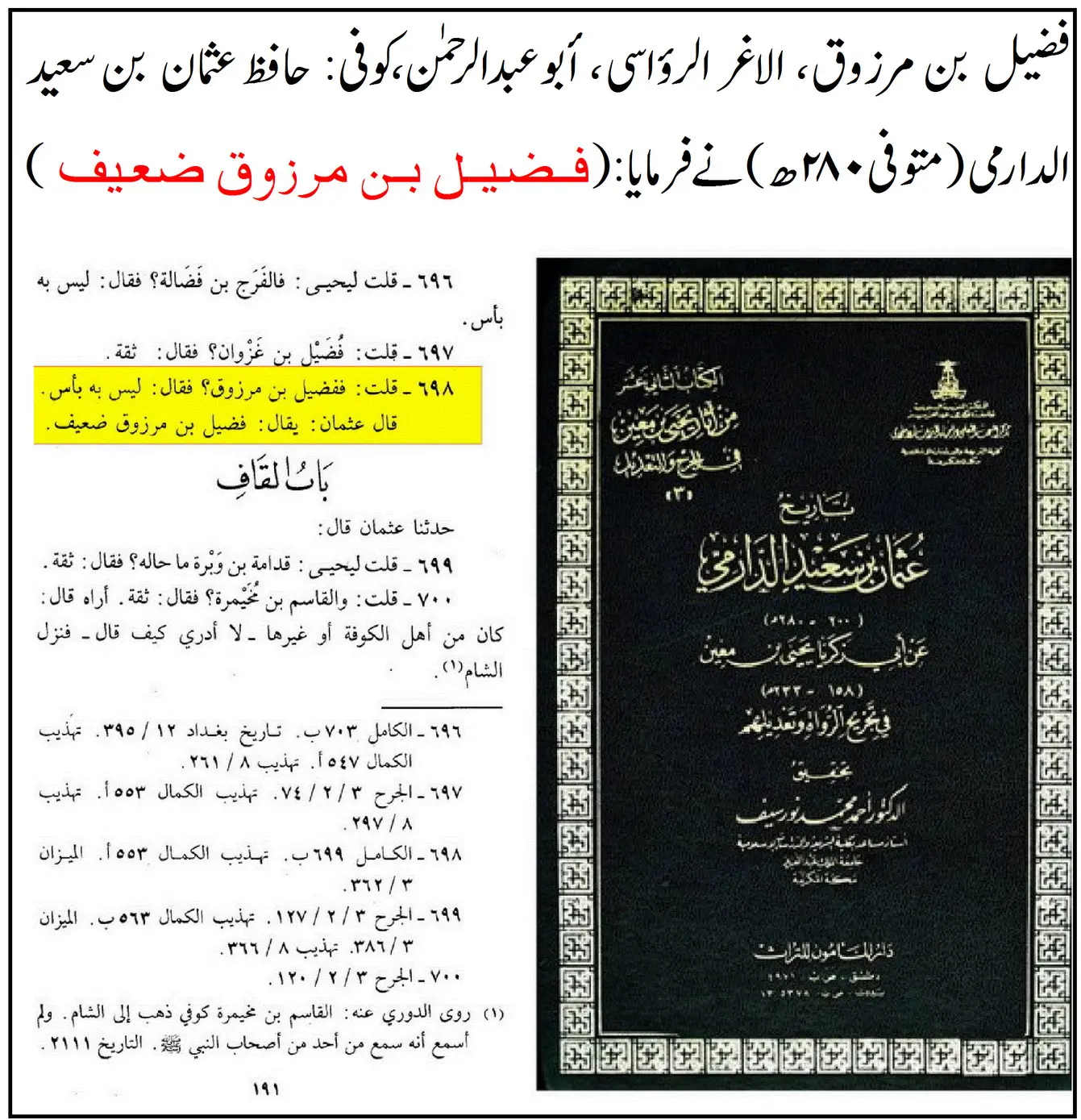
Arabic Text:
«… لَيْسَ بِهِ بَأْسٌ… يُقَالُ فُضَيْلُ بْنُ مَرْزُوقٍ ضَعِيفٌ.»
Reference: Tārīkh Ibn Maʿīn (riwāyat al-Dārimī), no. 698
Translation:
He said: There is no harm in him. But it is said that Fudayl ibn Marzūq is weak.⑧ Imām Yaḥyā ibn Maʿīn رحمه الله
Arabic Text:
«فُضَيْلُ بْنُ مَرْزُوقٍ ضَعِيفٌ.»
Reference: Ibn Shāhīn, Dhikr man Ikhtalafa al-ʿUlamāʾ fīhi, p. 112
Translation:
Fudayl ibn Marzūq is weak.❖ Ibn Shāhīn clarified:
«وَثَّقَهُ مَرَّةً، وَضَعَّفَهُ أُخْرَى، وَالأَخِيرُ هُوَ الْمُعْتَمَدُ.»
He declared him trustworthy once and weak another time; the latter opinion is relied upon.
⑨ Imām al-Bukhārī رحمه الله
Arabic Text:
«فُضَيْلُ بْنُ مَرْزُوقٍ مُقَارِبُ الحَدِيثِ.»
Reference: al-Tirmidhī, al-ʿIlal al-Kabīr, no. 648
Translation:
Fudayl ibn Marzūq is muqārib al-ḥadīth (his hadith is close, but not fully reliable).❖ al-Dhahabī commented:
«لا يَرْتَقِي خَبَرُهُ إِلَى دَرَجَةِ الصِّحَّةِ وَالِاحْتِجَاجِ.»
Reference: al-Dhahabī, Siyar Aʿlām al-Nubalāʾ 7/304
His reports do not reach the level of authenticity and proof.
⑩ Imām Ibn al-Jawzī رحمه الله
Arabic Text:
«… يَخْطِئُ عَلَى الثِّقَاتِ وَيَرْوِي عَن عَطِيَّةَ المَوْضُوعَاتِ.»
Reference: Ibn al-Jawzī, al-Ḍuʿafāʾ wa al-Matrūkūn 2/2726
Translation:
He makes mistakes regarding reliable narrators and narrates fabricated reports from ʿAṭiyyah.He also declared the narration of the sun returning for ʿAlī رضي الله عنه to be fabricated.
Reference: Ibn al-Jawzī, al-Mawḍūʿāt 3/252
⑪ Imām al-Suyūṭī رحمه الله
Arabic Text:
«قَالَ الجَوْزَقَانِي: هَذَا حَدِيثٌ مُنْكَرٌ مُضْطَرِبٌ… مَوْضُوعٌ.»
Reference: al-Suyūṭī, al-Laʾālī al-Maṣnūʿah 2/360
Translation:
Al-Jawzaqānī said: This hadith is objectionable and inconsistent.Al-Suyūṭī said: It is fabricated and inconsistent.
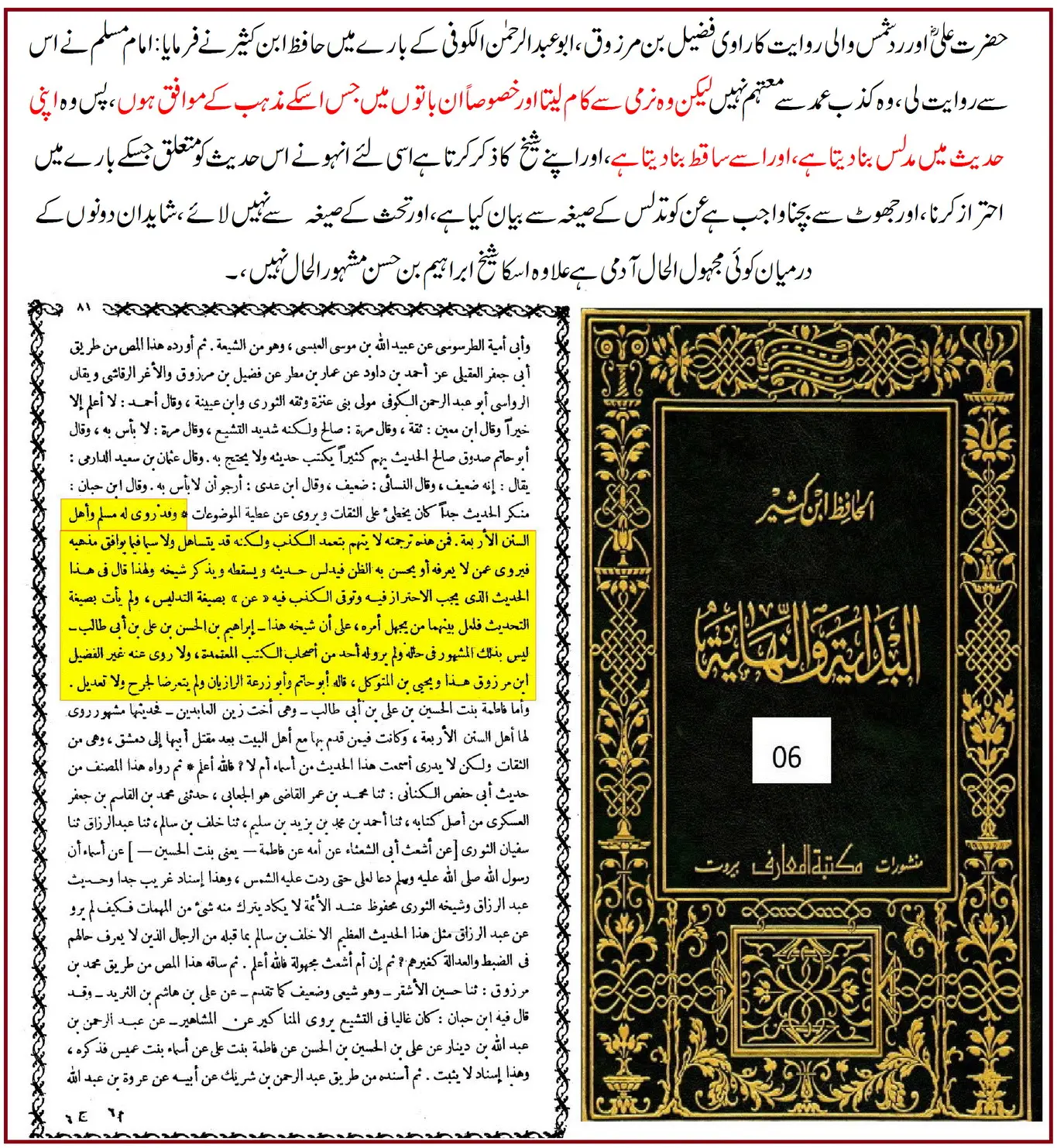
⑫ Imām Ibn Kathīr رحمه الله
Arabic Text:
«… فَإِنَّهُ قَدْ يَتَسَاهَلُ… فَيُدَلِّسُ حَدِيثَهُ…»
Reference: Ibn Kathīr, al-Bidāyah wa al-Nihāyah 6/84
Translation:
He would sometimes be lenient, especially in matters supporting his views. He narrated from unknown individuals and practiced tadlīs.⑬ Imām al-Bayhaqī رحمه الله
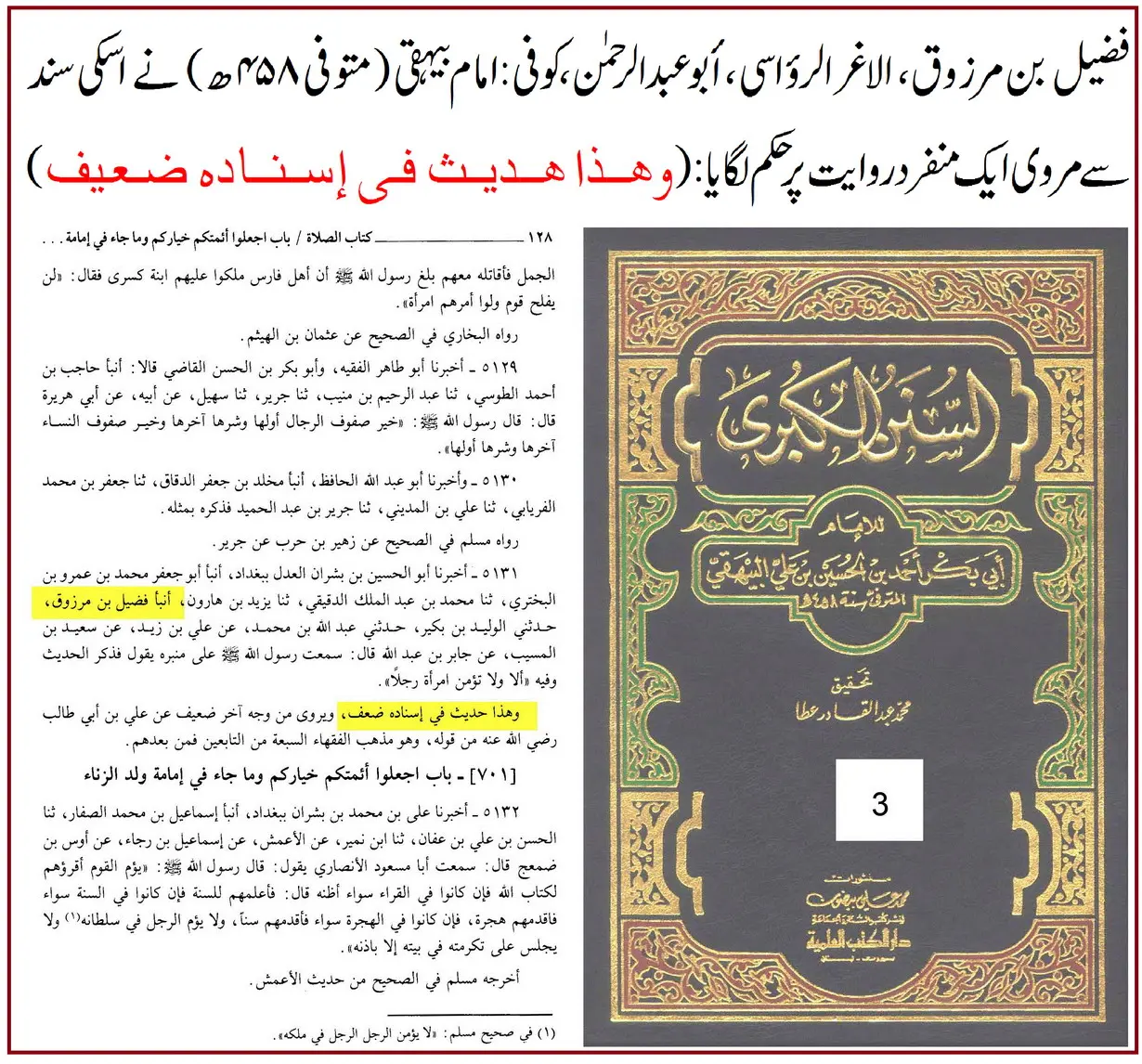
Arabic Text:
«… وَهَذَا حَدِيثٌ فِي إِسْنَادِهِ ضَعْفٌ.»
Reference: al-Bayhaqī, al-Sunan al-Kubrā 5/5131
Translation:
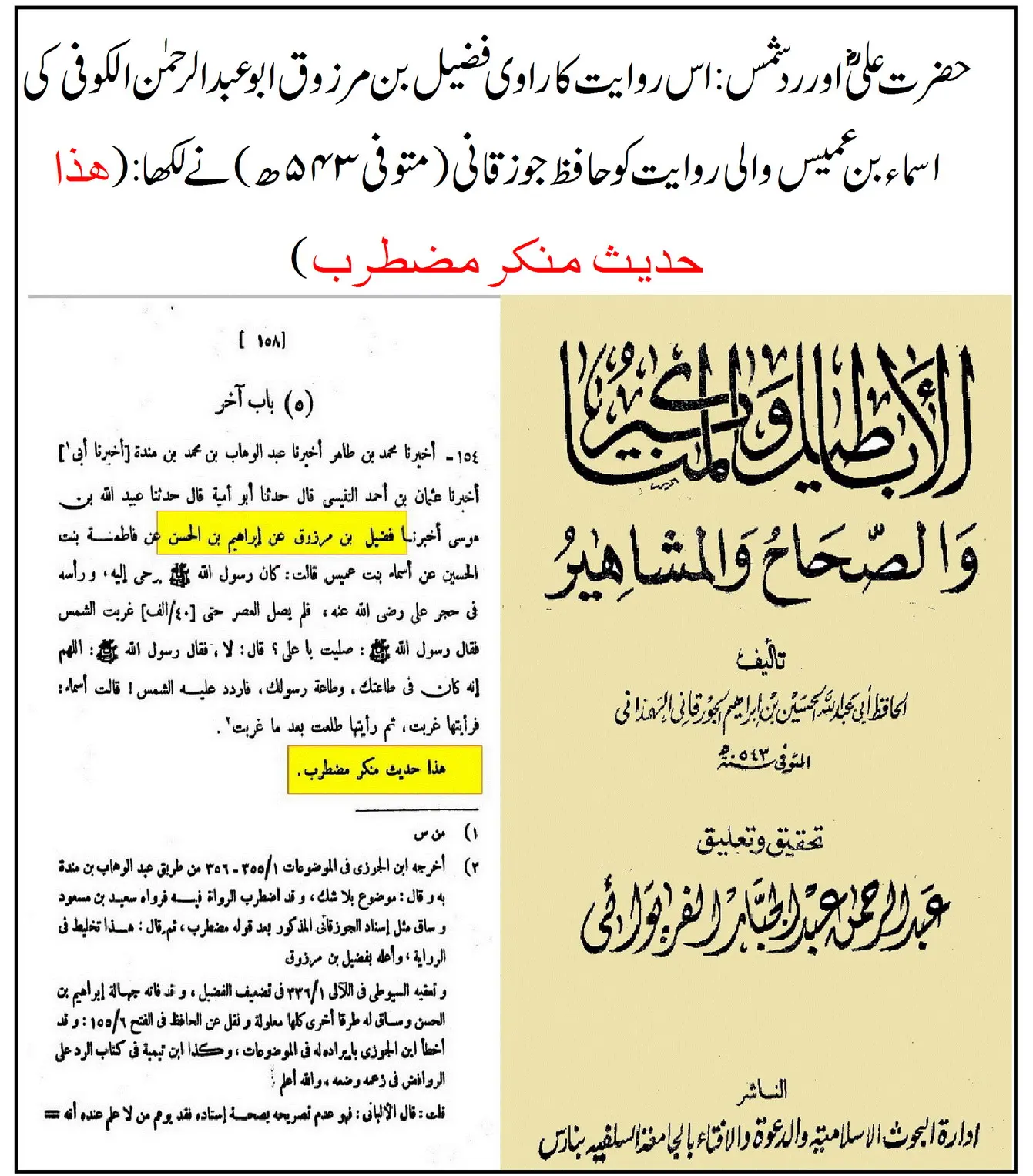
This hadith contains weakness in its chain.⑭ Imām al-Jawzaqānī رحمه الله
Arabic Text:
«هَذَا حَدِيثٌ مُنْكَرٌ مُضْطَرِبٌ.»
Reference: al-Jawzaqānī, al-Abāṭīl wa al-Manākīr, p. 154
Translation:
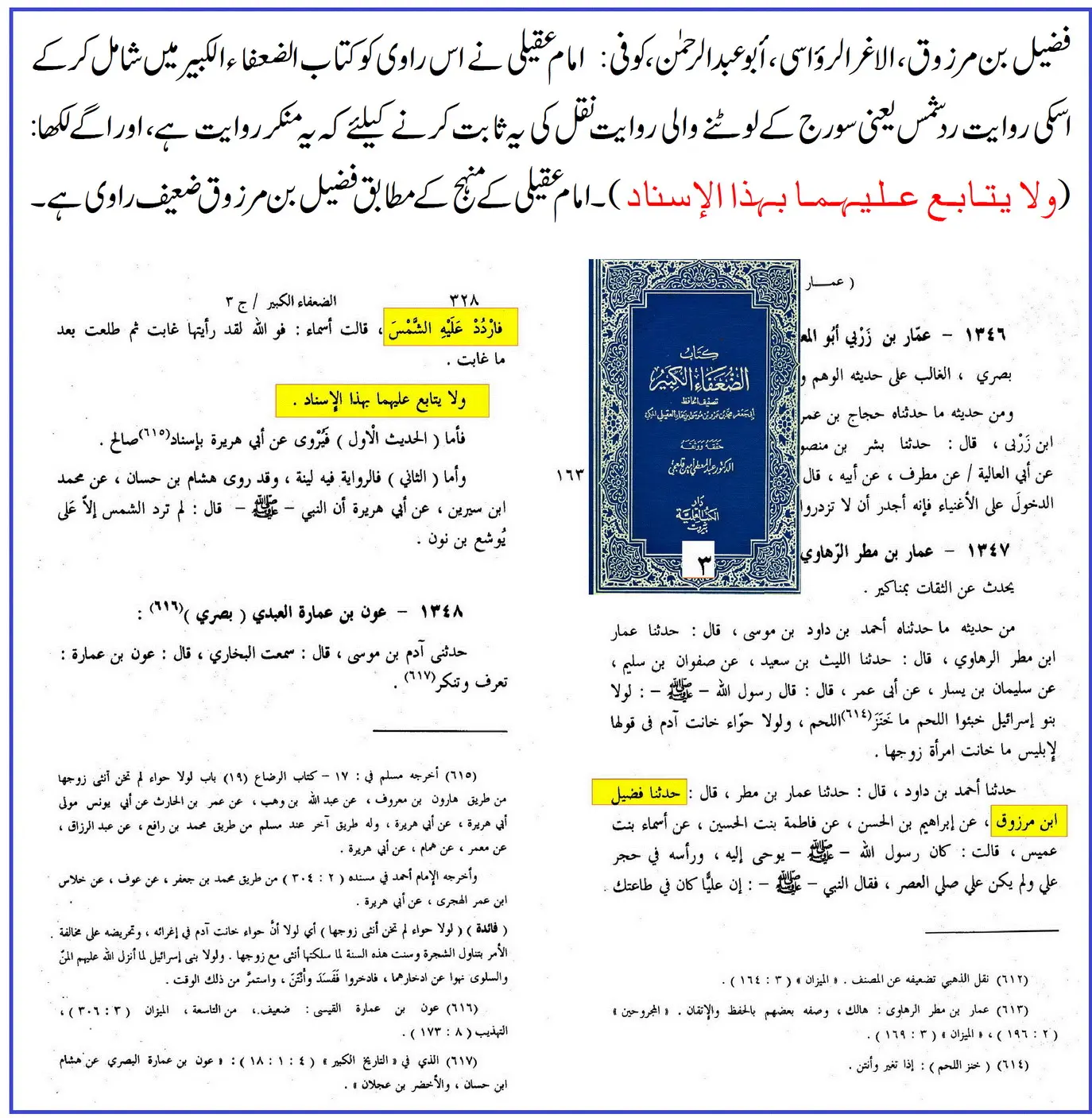
This hadith is objectionable and inconsistent.⑮ Imām al-ʿUqaylī رحمه الله
Arabic Text:
«… وَلَا يُتَابَعُ عَلَيْهِمَا بِهَذَا الْإِسْنَادِ… وَالرِّوَايَةُ فِيهِ لَيِّنَةٌ.»
Reference: al-ʿUqaylī, al-Ḍuʿafāʾ al-Kabīr 3/182
Translation:
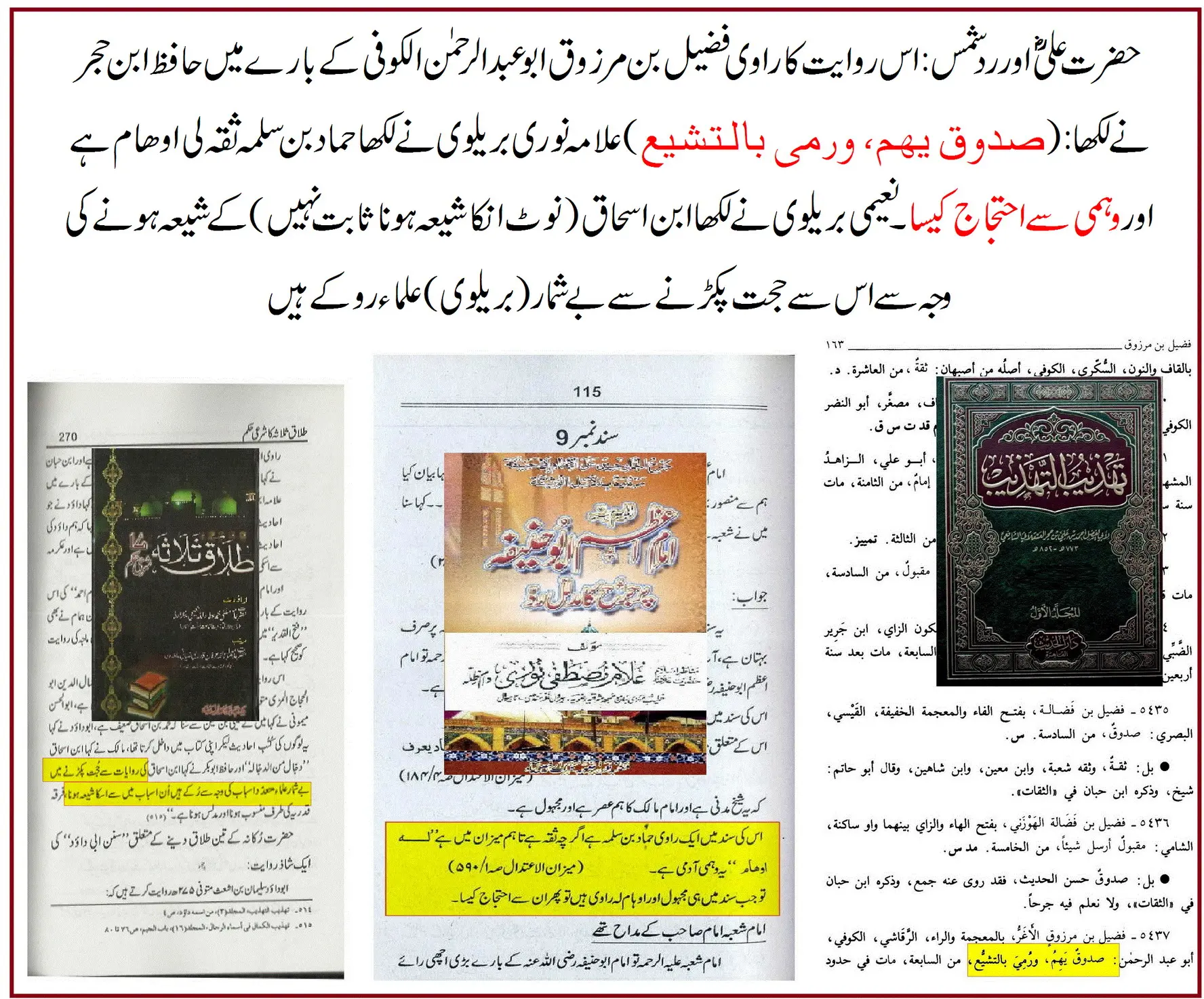
They are not supported in this chain, and the narration is weak.⑯ Ḥāfiẓ Ibn Ḥajar رحمه الله
Arabic Text:
«صَدُوقٌ يَهِمُ، ورُمِيَ بِالتَّشَيُّعِ.»
Reference: Ibn Ḥajar, Taqrīb al-Tahdhīb, no. 5437
Translation:
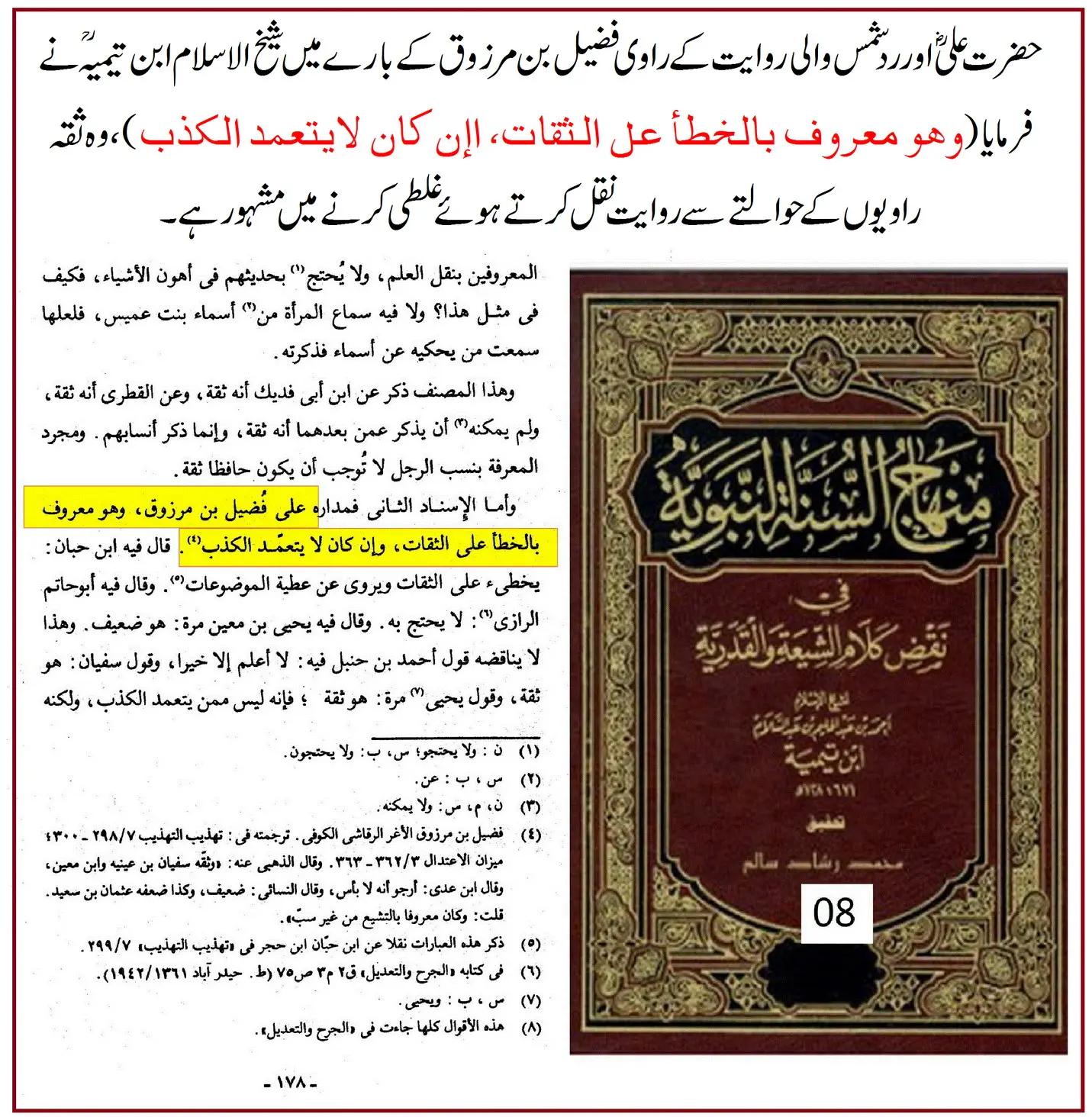
Truthful, but makes mistakes, and was accused of Shiʿism.⑰ Imām Ibn Taymiyyah رحمه الله
Arabic Text:
«… وَهُوَ مَعْرُوفٌ بِالْخَطَأِ عَلَى الثِّقَاتِ…»
Reference: Ibn Taymiyyah, Minhāj al-Sunnah 4/184
Translation:
He is known for making mistakes regarding reliable narrators, though he did not deliberately lie.⑱ Ḥāfiẓ al-Dhahabī رحمه الله
Arabic Text:
«ضَعَّفَهُ ابْنُ مَعِينٍ وَغَيْرُهُ.»
Reference: al-Dhahabī, Dīwān al-Ḍuʿafāʾ, no. 3390
Translation:
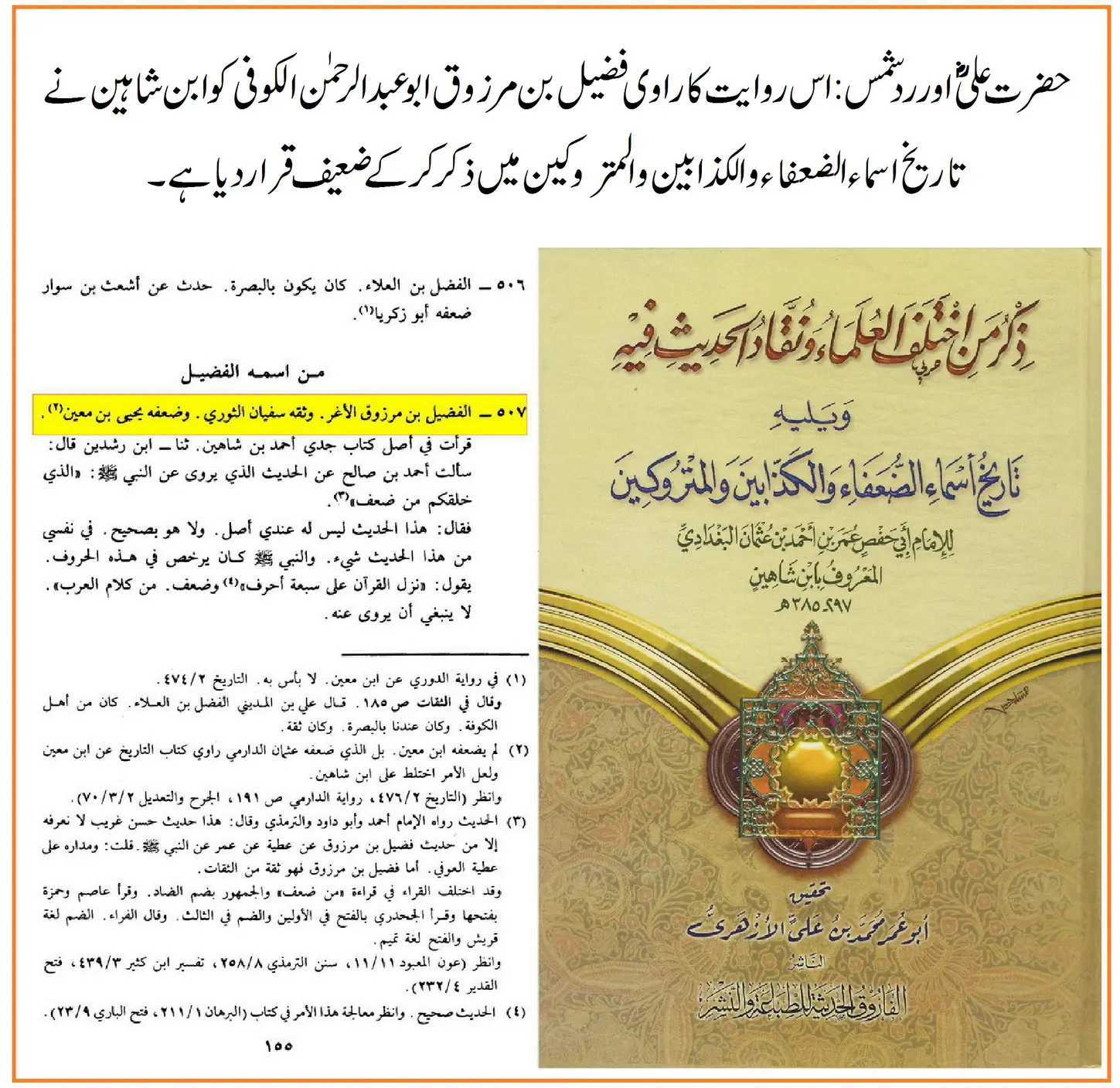
Ibn Maʿīn and others declared him weak.⑲ Imām Ibn Shāhīn رحمه الله
Arabic Text:
«وَثَّقَهُ سُفْيَانُ الثَّوْرِيُّ، وَضَعَّفَهُ يَحْيَى بْنُ مَعِينٍ.»
Reference: Ibn Shāhīn, Tārīkh Asmāʾ al-Ḍuʿafāʾ, no. 507
Translation:
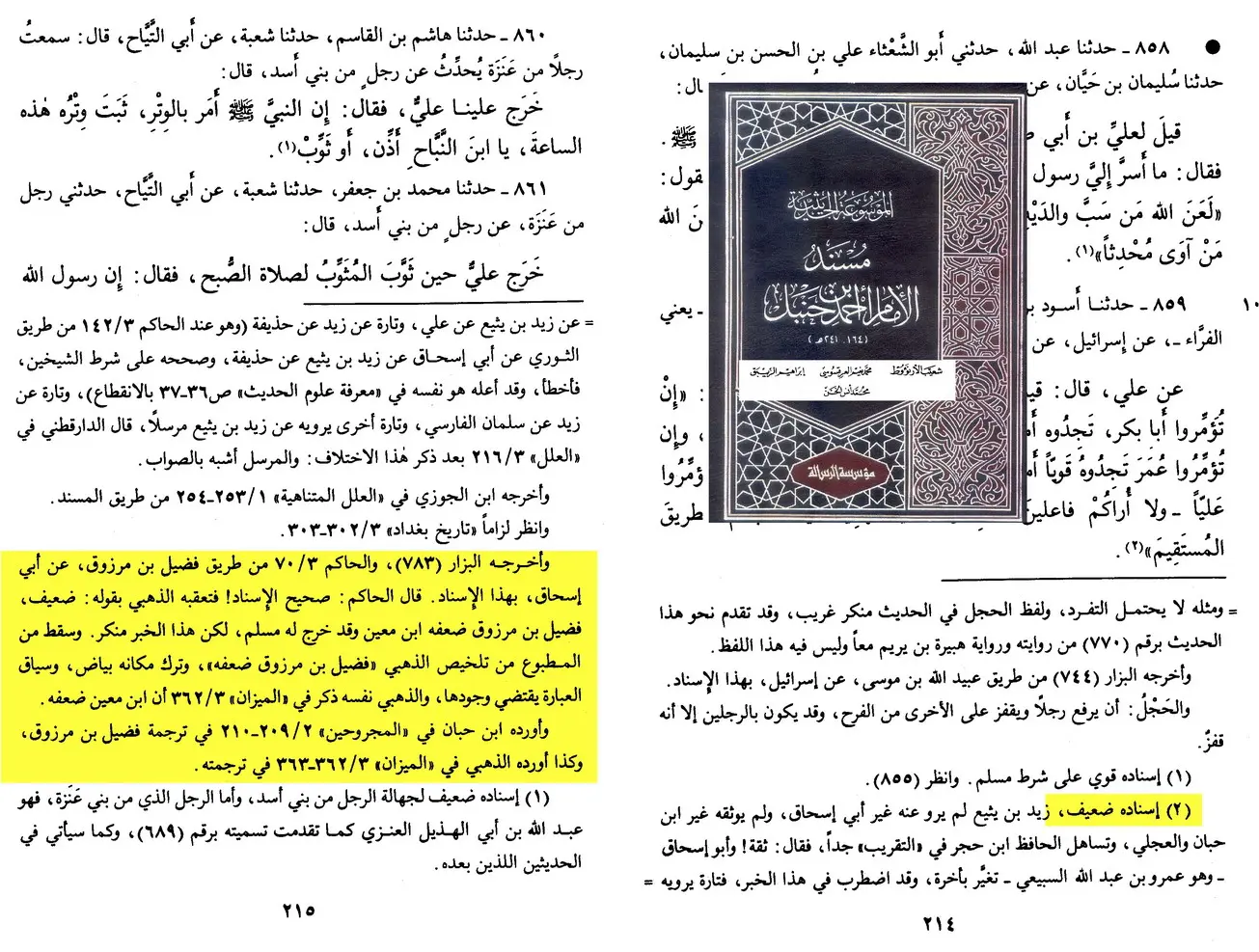
Sufyān al-Thawrī declared him trustworthy, but Yaḥyā ibn Maʿīn declared him weak.⑳ Shaykh Shuʿayb al-Arnaʾūṭ رحمه الله
Statement:
In his verification of Musnad Aḥmad, he declared Fudayl ibn Marzūq’s independent narrations weak.Translation:
The contemporary scholar Shaykh Shuʿayb al-Arnaʾūṭ clarified that when Fudayl narrates independently, his narration is weak and not relied upon.✦ His Status in Ṣaḥīḥ Muslim
❖ Imām Muslim mentioned only two narrations of Fudayl ibn Marzūq (in the Book of Zakāh), and only as supporting narrations.Statement of al-Ḥākim:
«فضيل بن مرزوق ذكره مسلم في الشواهد.»
Reference: Ibn Ḥajar, al-Tadhyīl, no. 922
Translation:
Imām Muslim mentioned him only in supporting narrations, not as an original proof.✦ Summary
Balance of Criticism and Praise
✔ Some scholars declared him ṣadūq or “no harm in him” (Abū Ḥātim, Ibn ʿAdī, etc.).✖ The majority declared him weak, prone to error, objectionable in hadith, and accused of Shiʿism (Ibn Ḥibbān, al-Nasā’ī, Ibn Maʿīn, al-Jawzaqānī, Ibn al-Jawzī, etc.).
Principled Conclusion
① When Fudayl ibn Marzūq agrees with reliable narrators, his narration may be accepted as support.② When he narrates independently, his report is not relied upon, as clarified by the majority of hadith scholars.
Specific Example — The Return of the Sun
The narration of the sun returning for ʿAlī رضي الله عنه is primarily transmitted through him.Scholars declared it fabricated or objectionable (Ibn al-Jawzī, Ibn al-Qayyim, al-Suyūṭī, Ibn Kathīr, Ibn Taymiyyah, etc.).
His Position in Ṣaḥīḥ Muslim
Imām Muslim mentioned his narrations only twice (Book of Zakāh), and solely as supporting evidence — not as foundational proof.✦ Final Conclusion
❖ Fudayl ibn Marzūq was a ṣadūq narrator who made frequent mistakes and was associated with Shiʿism.❖ His narrations may be used in follow-ups and supporting chains, but his independent reports are not suitable for proof.
❖ Even in Ṣaḥīḥ Muslim, his narrations appear only as supporting evidence, demonstrating that the scholars did not rely upon him independently.
Last edited:

