

Compiled by: Abu Hamzah Salafi
الحمد لله وحده، والصلوٰة والسلام على من لا نبي بعده۔
All praise is for Allah alone, and peace and blessings be upon the one after whom there is no prophet.
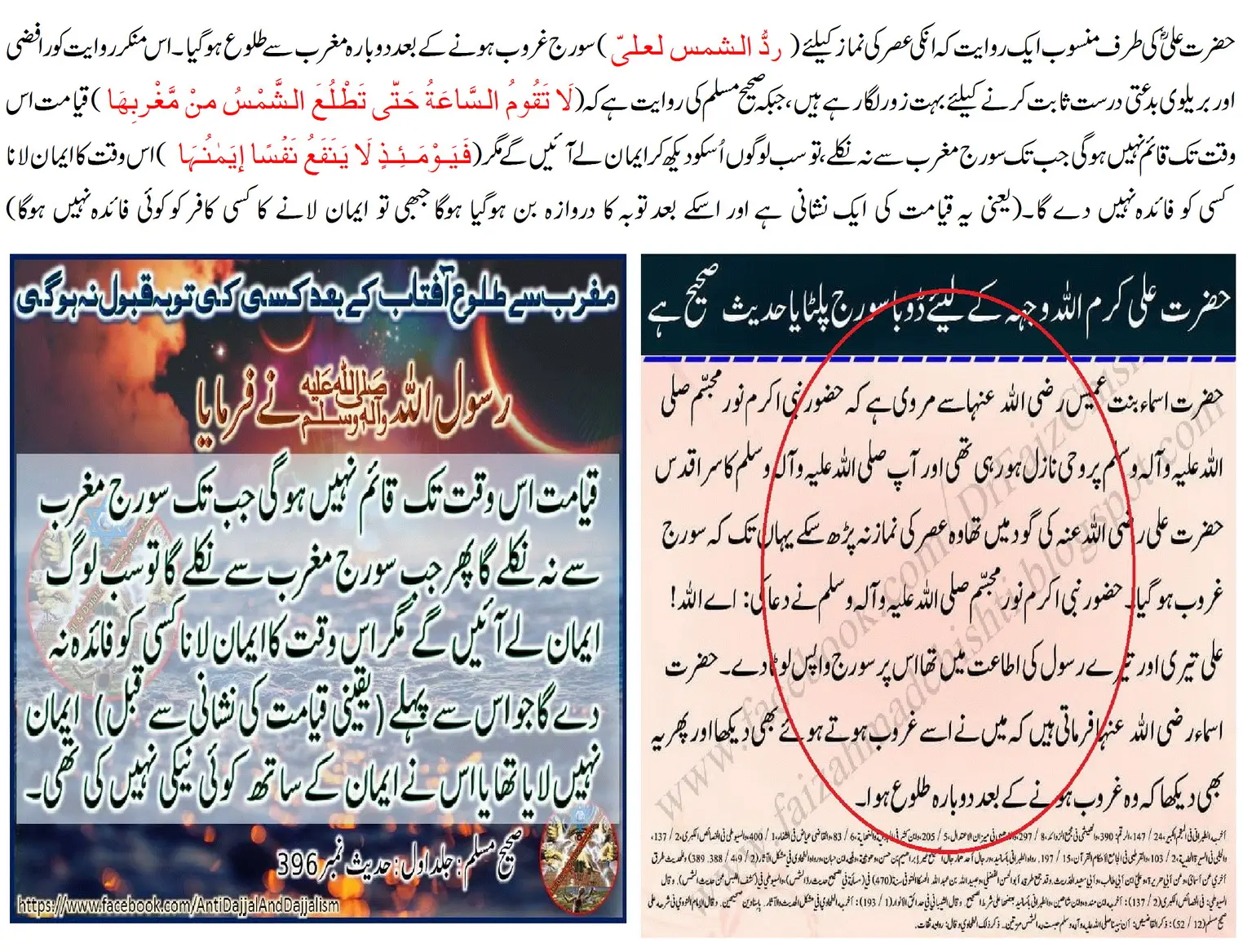
There are certain narrations that were fabricated out of exaggeration in order to demonstrate extraordinary virtue for particular personalities. Among them is the well-known narration claiming that the sun was returned for Ḥaḍrat ʿAlī رضي الله عنه.
❀ In this article, we shall present a critical analysis of all the major chains of this narration.
❀ The statements of criticism (jarḥ) of the scholars regarding each narrator will be cited.
❀ Thereafter, the collective verdict of the scholars of ḥadīth concerning this narration will be mentioned.

“O Allah! He was in obedience to You and Your Messenger, so return the sun for him.”
Asmāʾ said: I saw the sun set, then I saw it rise again after having set.
✿ His shaykh, Ibrāhīm ibn al-Ḥasan, is unknown (majhūl).
Such a solitary narration from narrators of this condition is not accepted as proof.
«وَهَذَا الْإِسْنَادُ فِيهِ مَنْ يَجْهَلُ حَالَهُ…»
“This chain contains individuals whose condition is unknown…”
❖ Ibn Ḥajar رحمه الله
«مقبولة من الثالثة»
Meaning: Accepted only when supported (otherwise majhūl).
❖ al-Dhahabī رحمه الله
«وَلَا يُحْتَجُّ بِحَدِيثِهِمَا»
“Their narration cannot be used as proof.”
✿ Scholars declared this narration munkar and muḍṭarib.
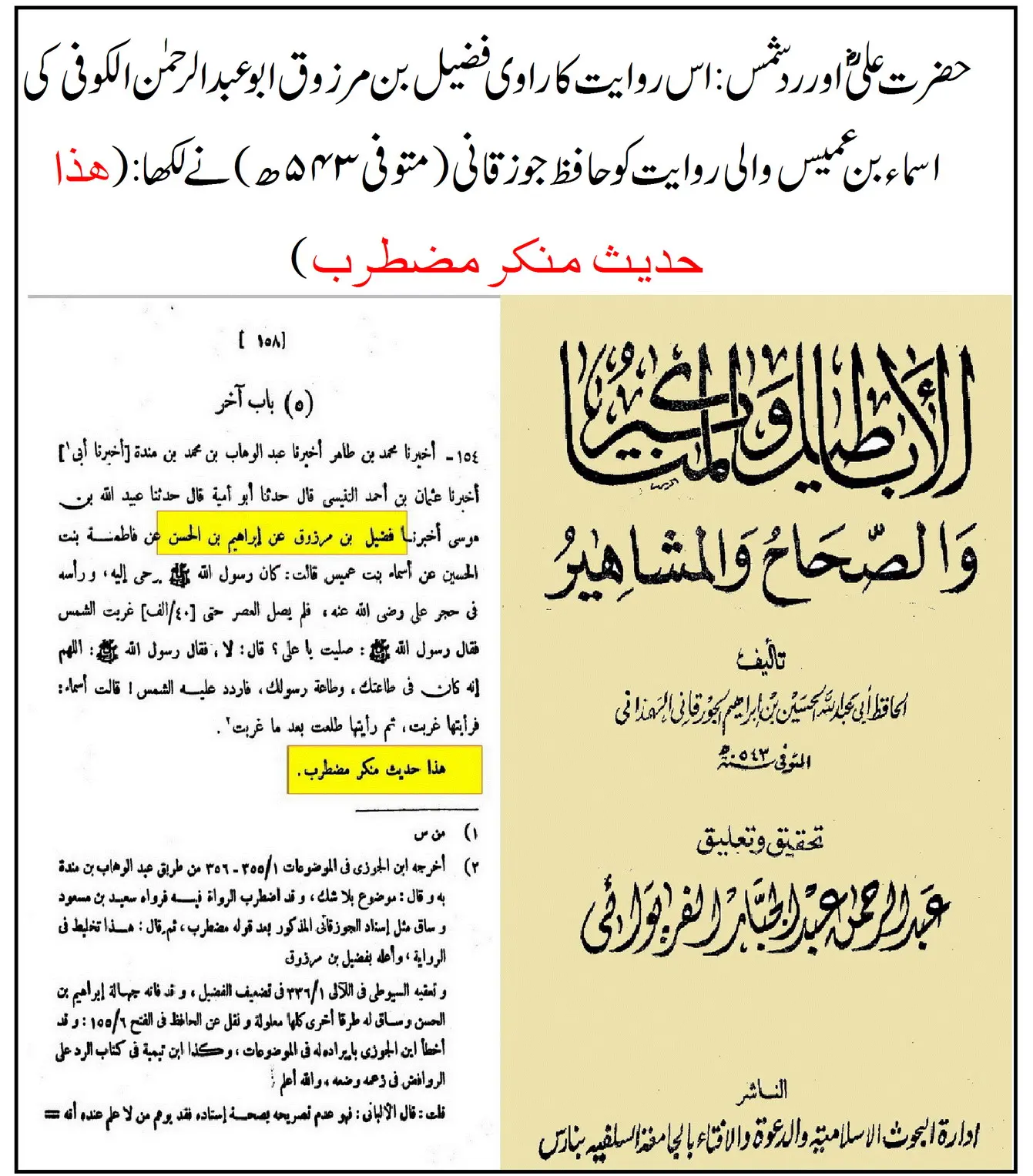
❖ al-Jawzaqānī:
«هَذَا حَدِيثٌ مُنْكَرٌ مُضْطَرِبٌ»
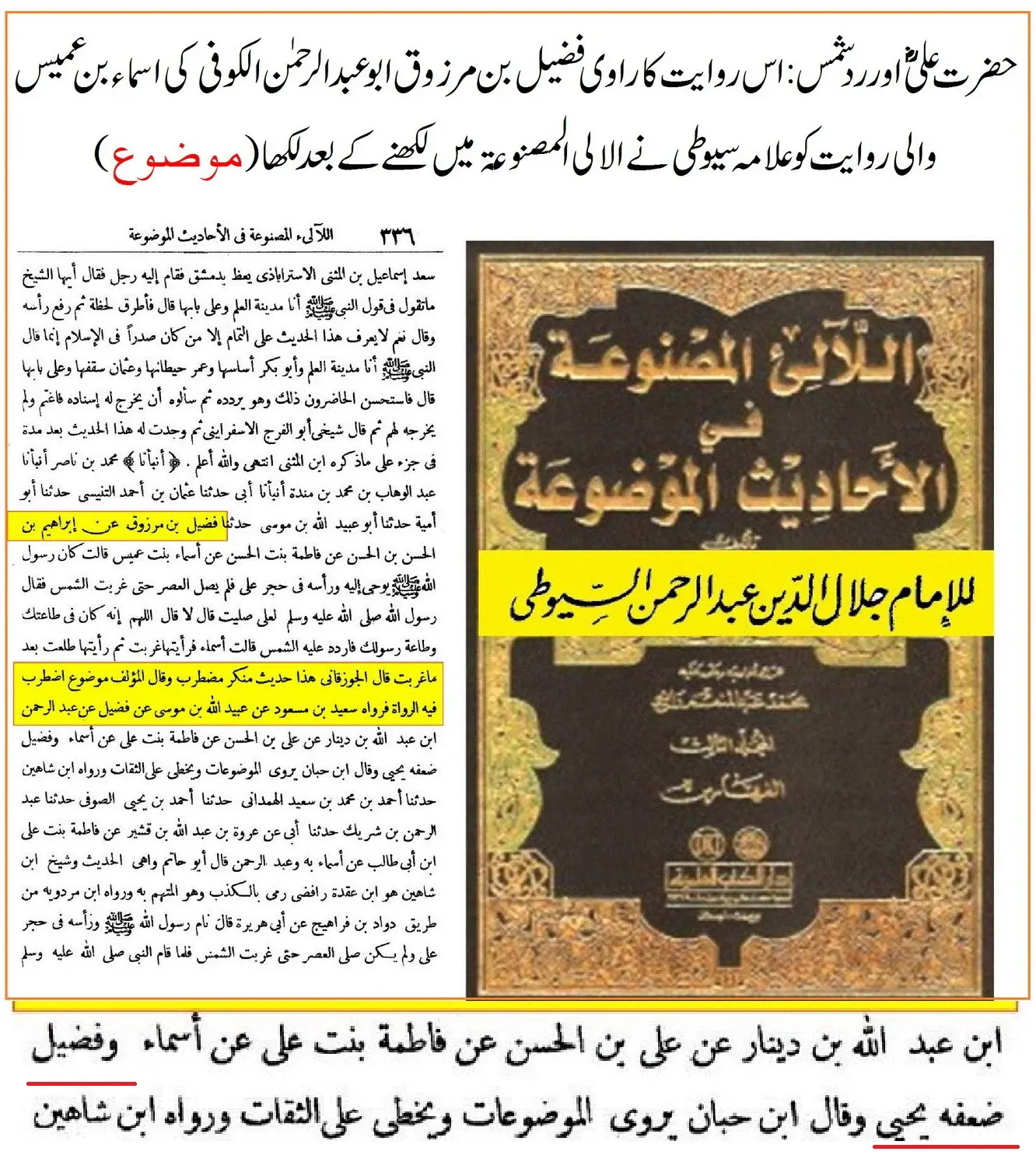
❖ al-Suyūṭī:
«مَوْضُوعٌ اضْطَرَبَ»
«هَذَا حَدِيثٌ مُنْكَرٌ…»
“This is a rejected narration.”
❖ Ibn Taymiyyah:
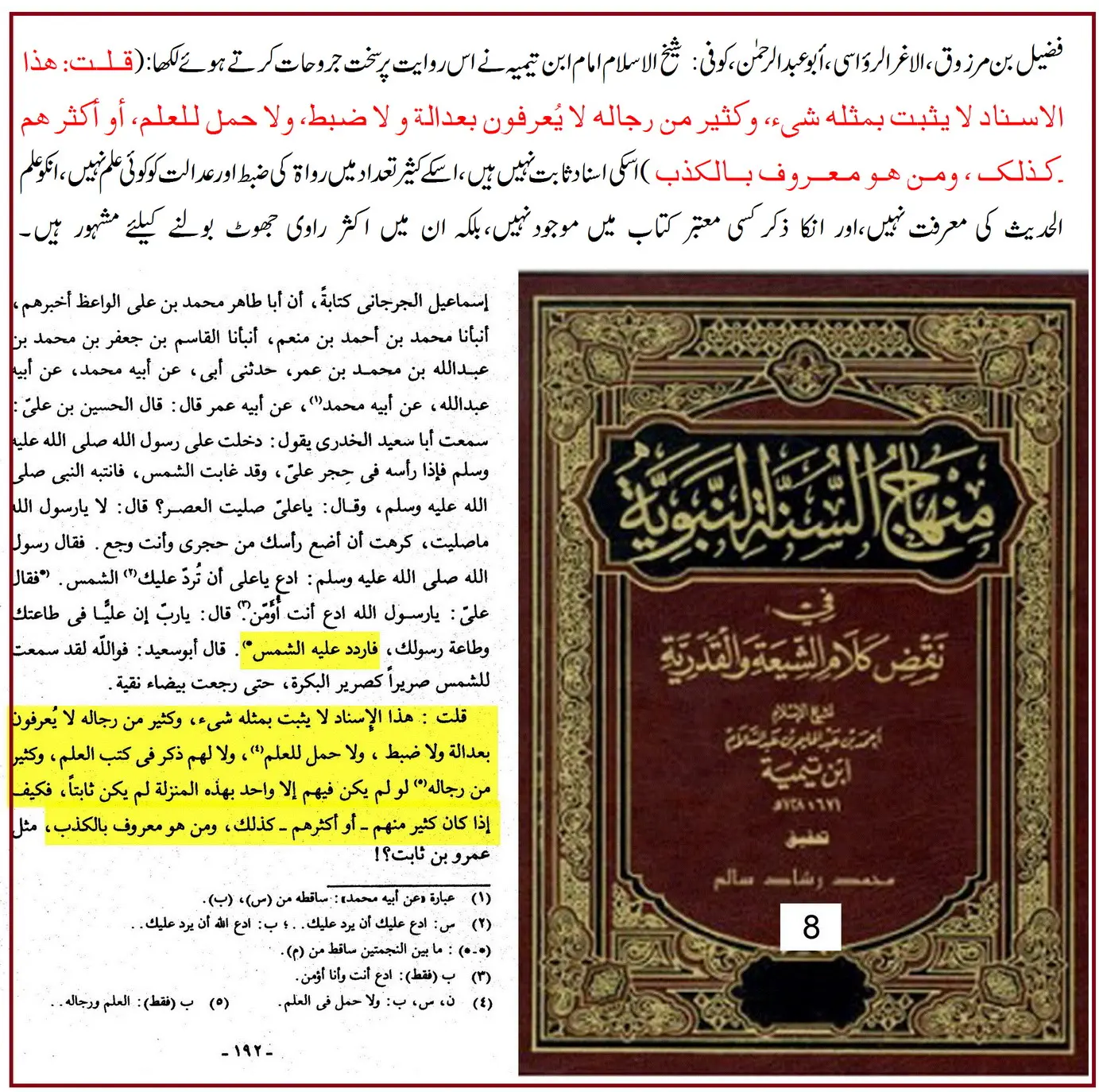
«لَا يَثْبُتُ بِمِثْلِهِ شَيْءٌ…»
“Nothing can be established with such a chain…”
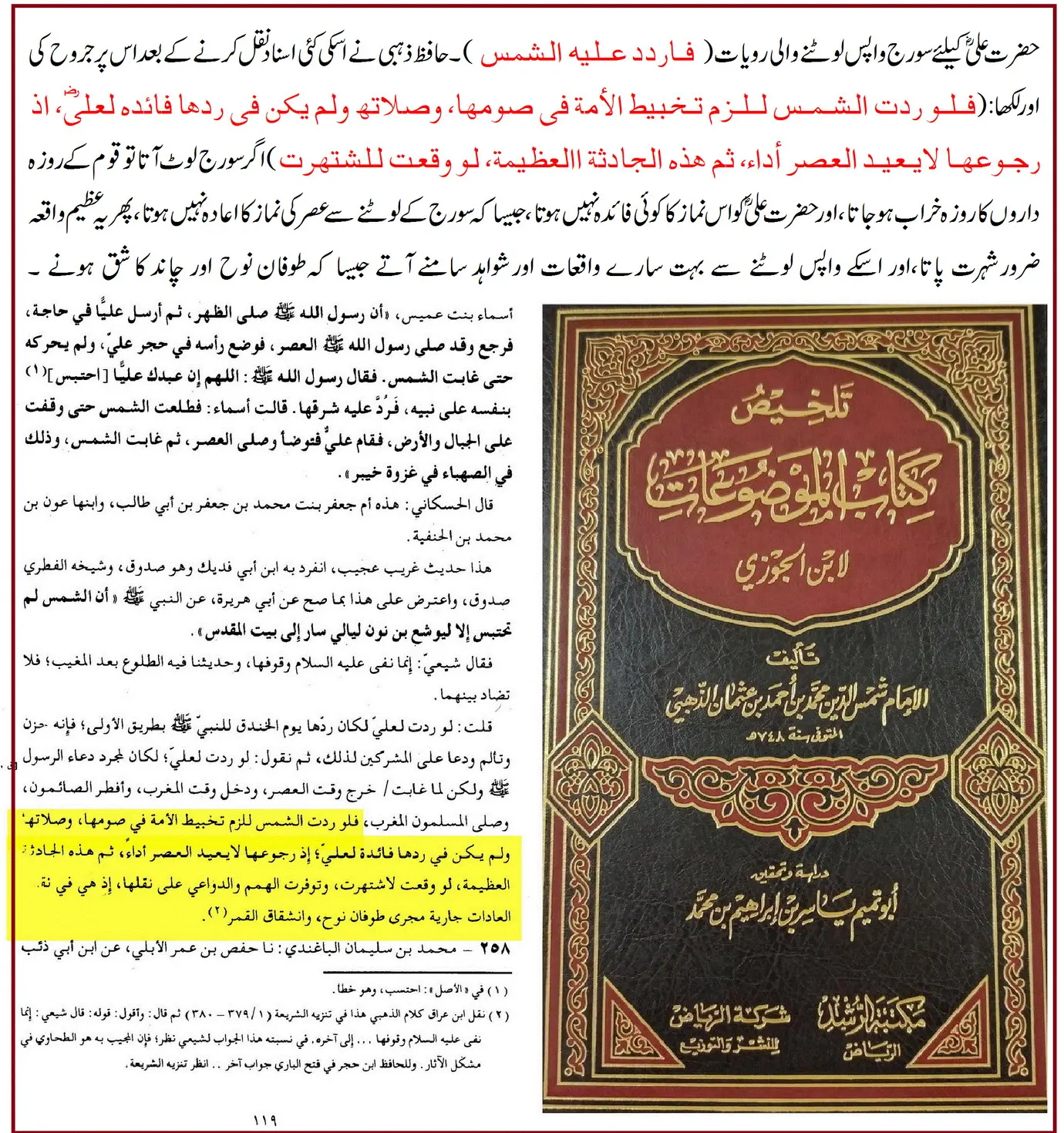
❖ al-Dhahabī:
“If this had truly occurred, it would have been widely transmitted…”
«يَرْوِي أَحَادِيثَ مَوْضُوعَةً… مَتْرُوكٌ»
“He narrates fabricated reports… abandoned.”
❖ Abū Zurʿah:
«مَجْهُولٌ»
“Unknown.”
❖ al-Khaṭīb:
“In the category of unknown narrators.”
① Ibn al-Jawzī — «هَذَا حَدِيثٌ مَوْضُوعٌ بِلَا شَكٍّ»
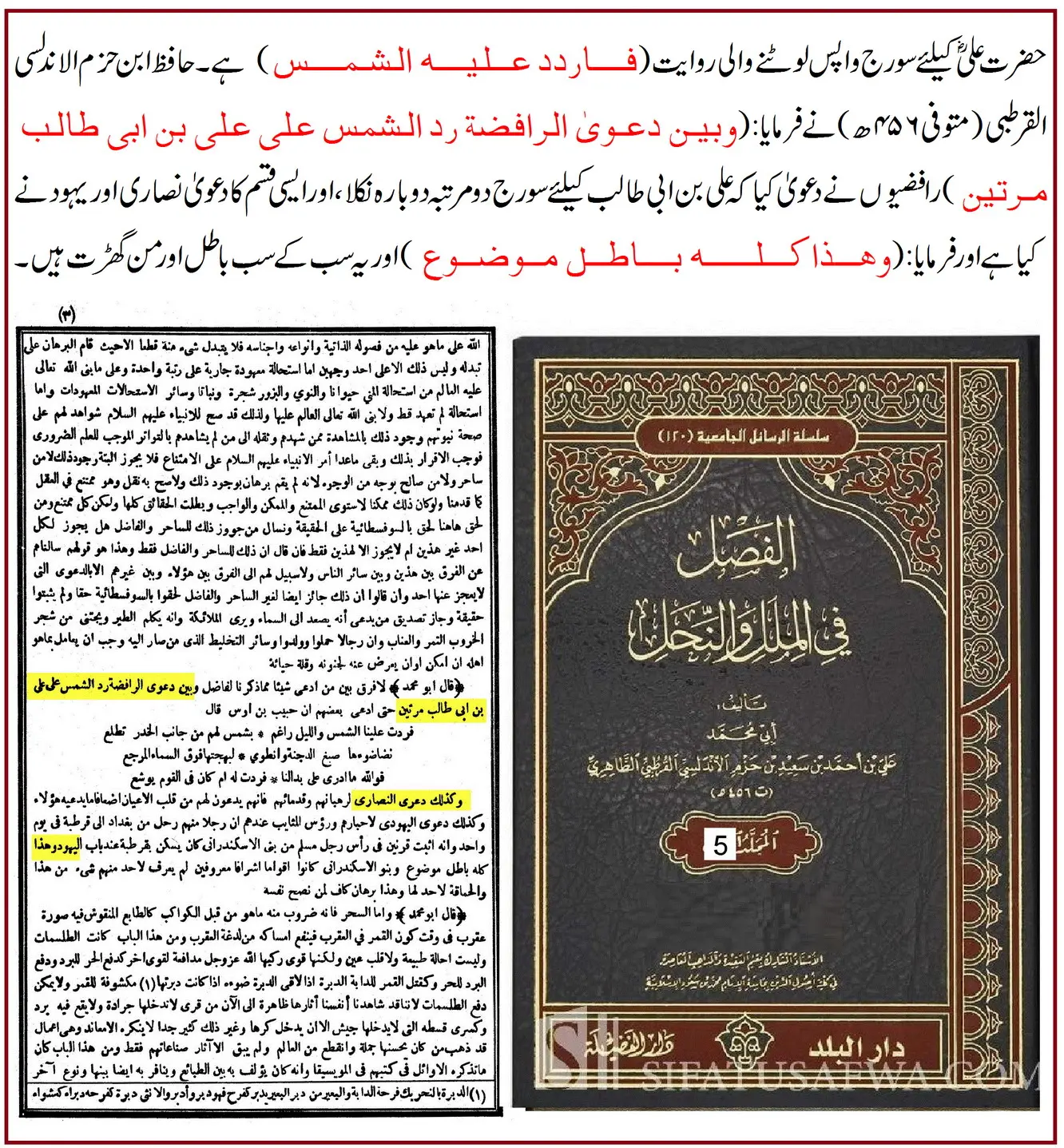
② Ibn Ḥazm — «بَاطِلٌ مَوْضُوعٌ»
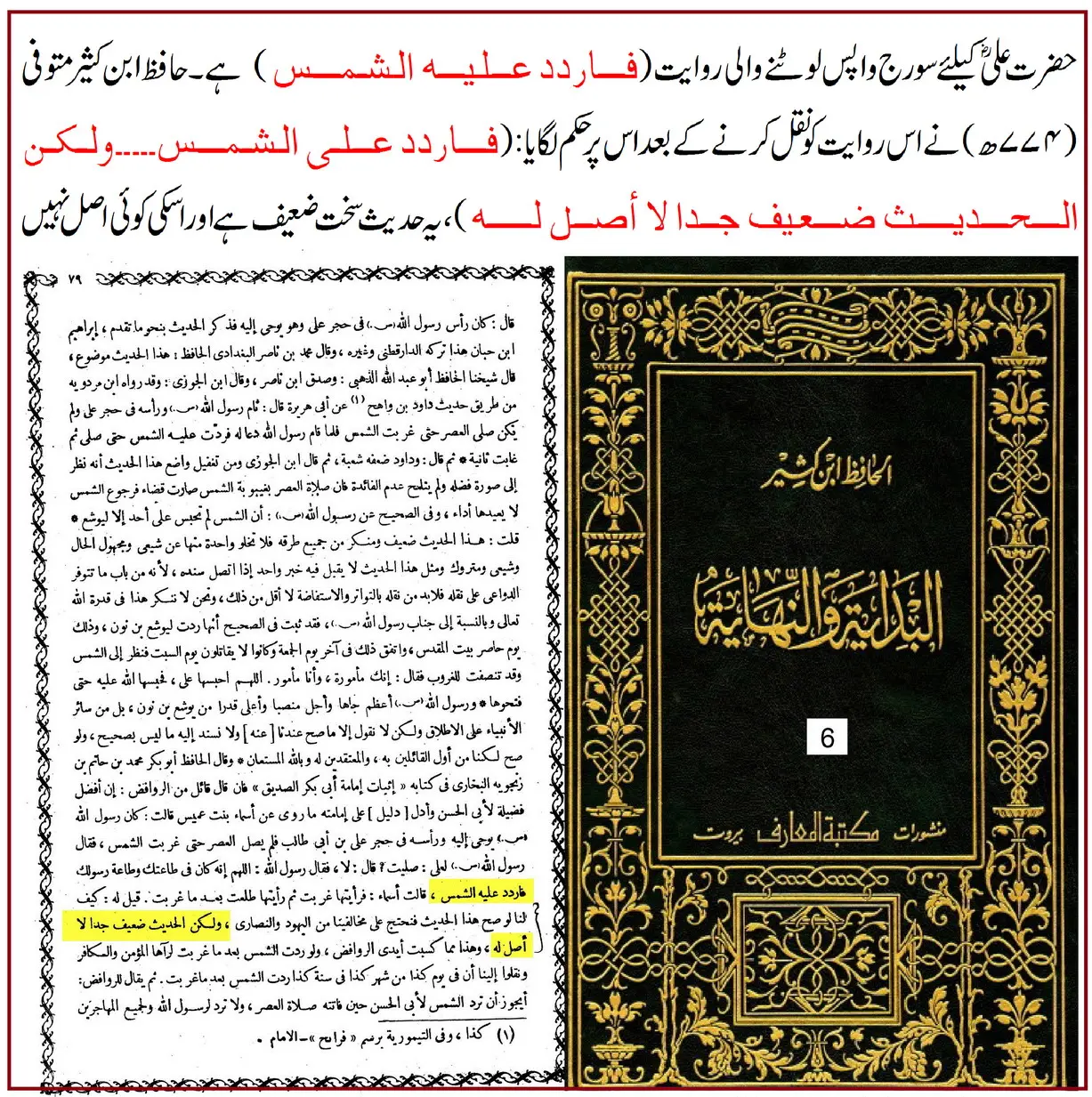
③ Ibn Kathīr — “Extremely weak, no basis.”
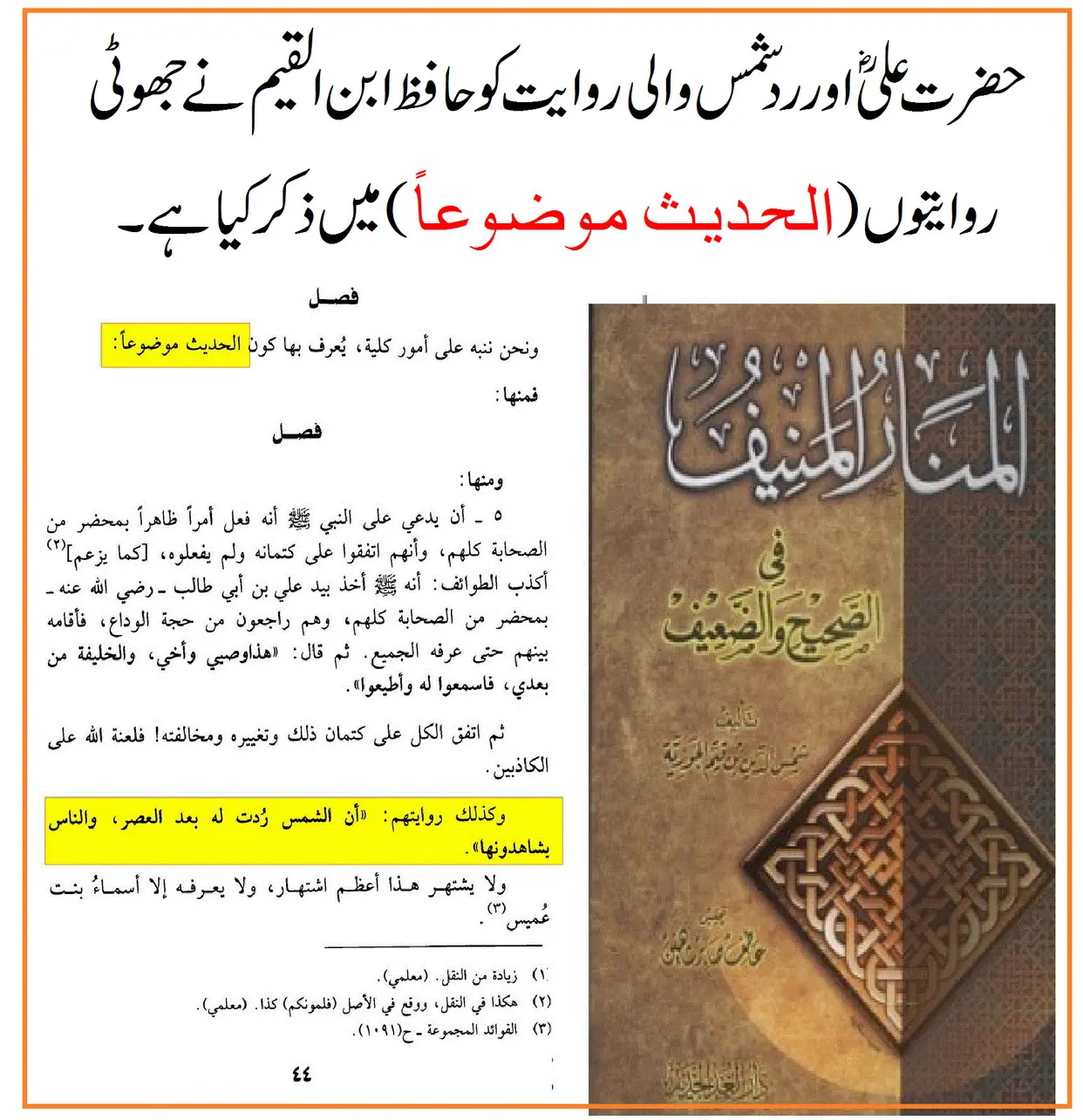
④ Ibn al-Qayyim — «فَهُوَ مَوْضُوعٌ»
⑤ Ibn Taymiyyah — Chain invalid.
⑥ al-Jawzaqānī — «مُنْكَرٌ مُضْطَرِبٌ»
⑦ al-Suyūṭī — «مَوْضُوعٌ»
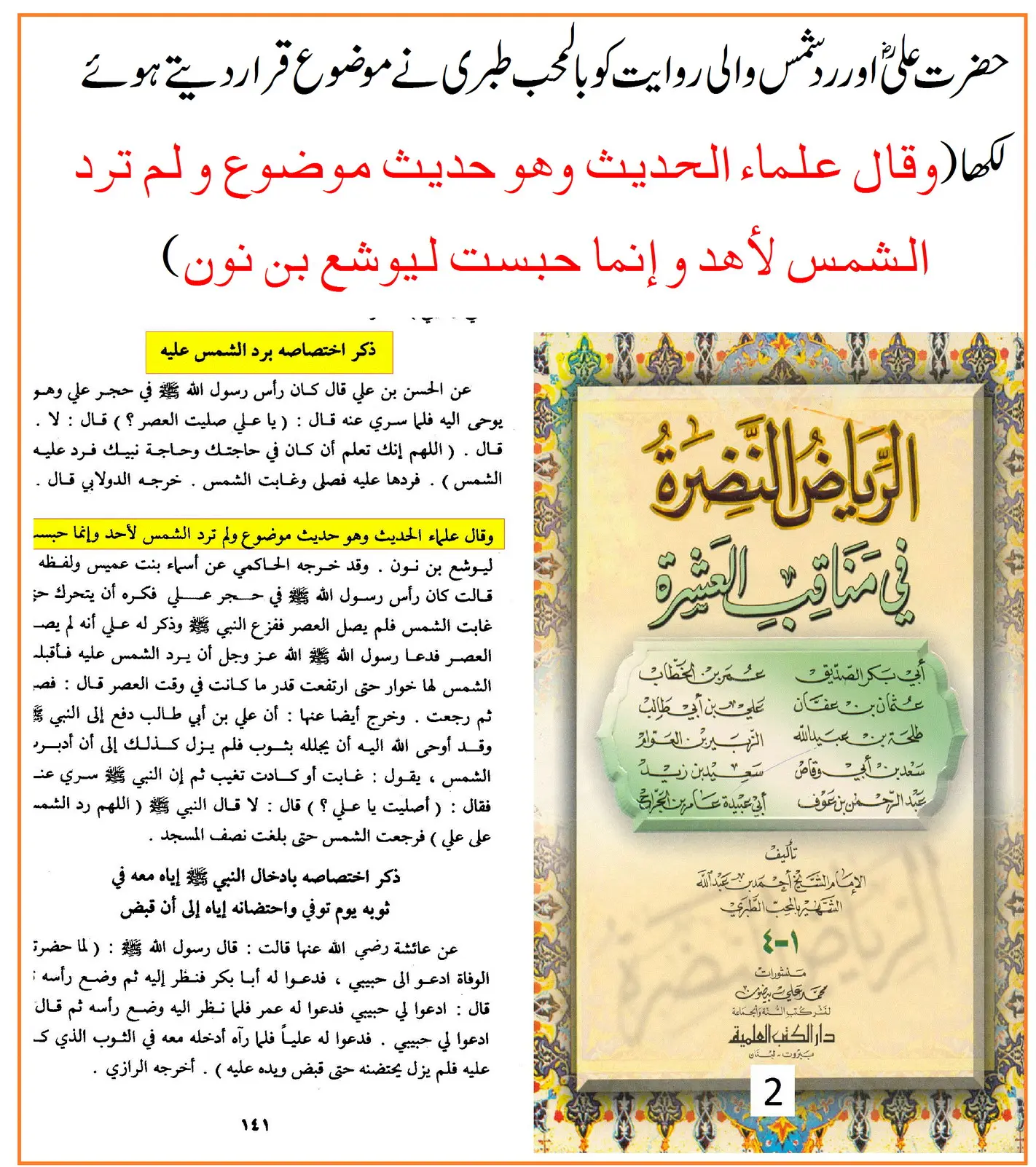
⑧ Muḥibb al-Dīn al-Ṭabarī — Scholars declared it fabricated.
⑨ al-Dhahabī — “Among the falsehoods of the Rāfiḍah.”
⑩ Ibn ʿAsākir — «مُنْكَرٌ»
⑪ al-ʿUqaylī — Weak chain.
⑫ Ibn Ḥajar al-Haytamī — Majority declared it fabricated.
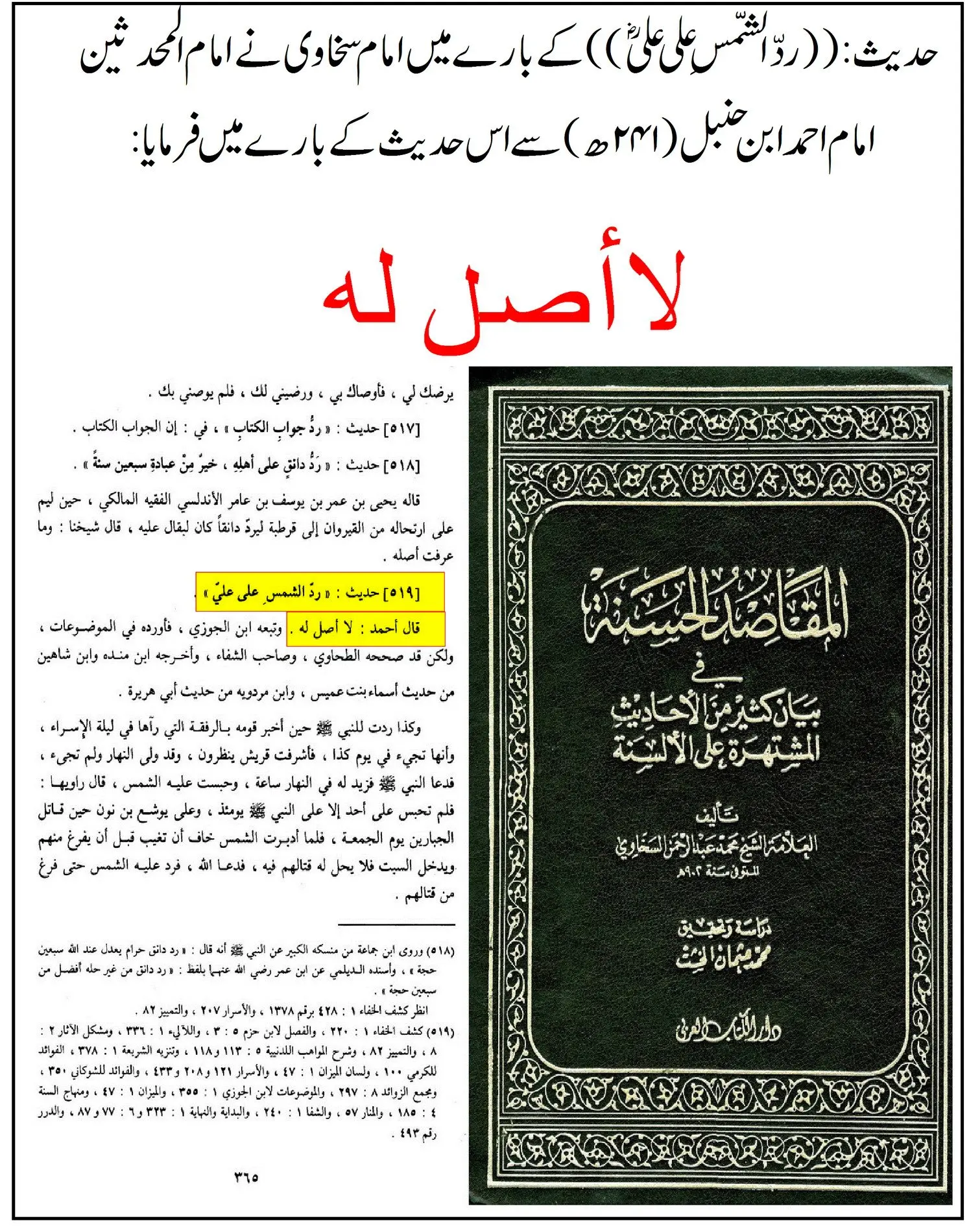
⑬ Imām Aḥmad (as reported) — «لَا أَصْلَ لَهُ»
◈ The time of ʿAṣr ends at sunset; returning the sun afterward has no legal benefit.
◈ The only authentic incident concerning the sun being withheld is for Yūshaʿ ibn Nūn (Joshua), as established in Ṣaḥīḥ al-Bukhārī and Ṣaḥīḥ Muslim.
❖ The leading scholars of ḥadīth declared it fabricated or baseless.
❖ The virtues of ʿAlī رضي الله عنه are firmly established in authentic Qurʾān and Sunnah, and there is no need for fabricated reports to prove his excellence.
الحمد لله وحده، والصلوٰة والسلام على من لا نبي بعده۔
All praise is for Allah alone, and peace and blessings be upon the one after whom there is no prophet.
Fundamental Principle Regarding Narrations
Among the scholars, it is an established principle that no narration is considered reliable until its chain of transmission is authentic and its narrators are trustworthy (thiqqah).There are certain narrations that were fabricated out of exaggeration in order to demonstrate extraordinary virtue for particular personalities. Among them is the well-known narration claiming that the sun was returned for Ḥaḍrat ʿAlī رضي الله عنه.
❀ In this article, we shall present a critical analysis of all the major chains of this narration.
❀ The statements of criticism (jarḥ) of the scholars regarding each narrator will be cited.
❀ Thereafter, the collective verdict of the scholars of ḥadīth concerning this narration will be mentioned.
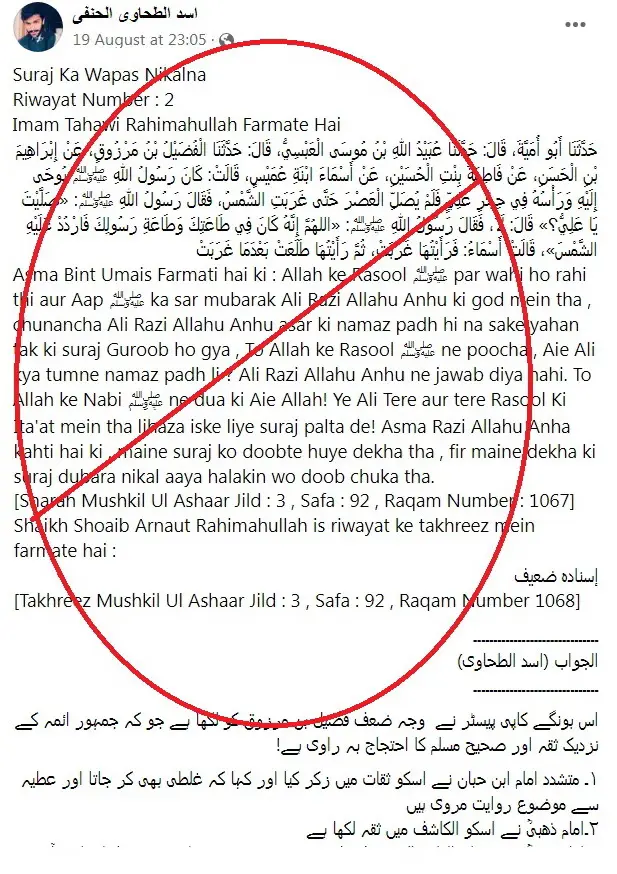
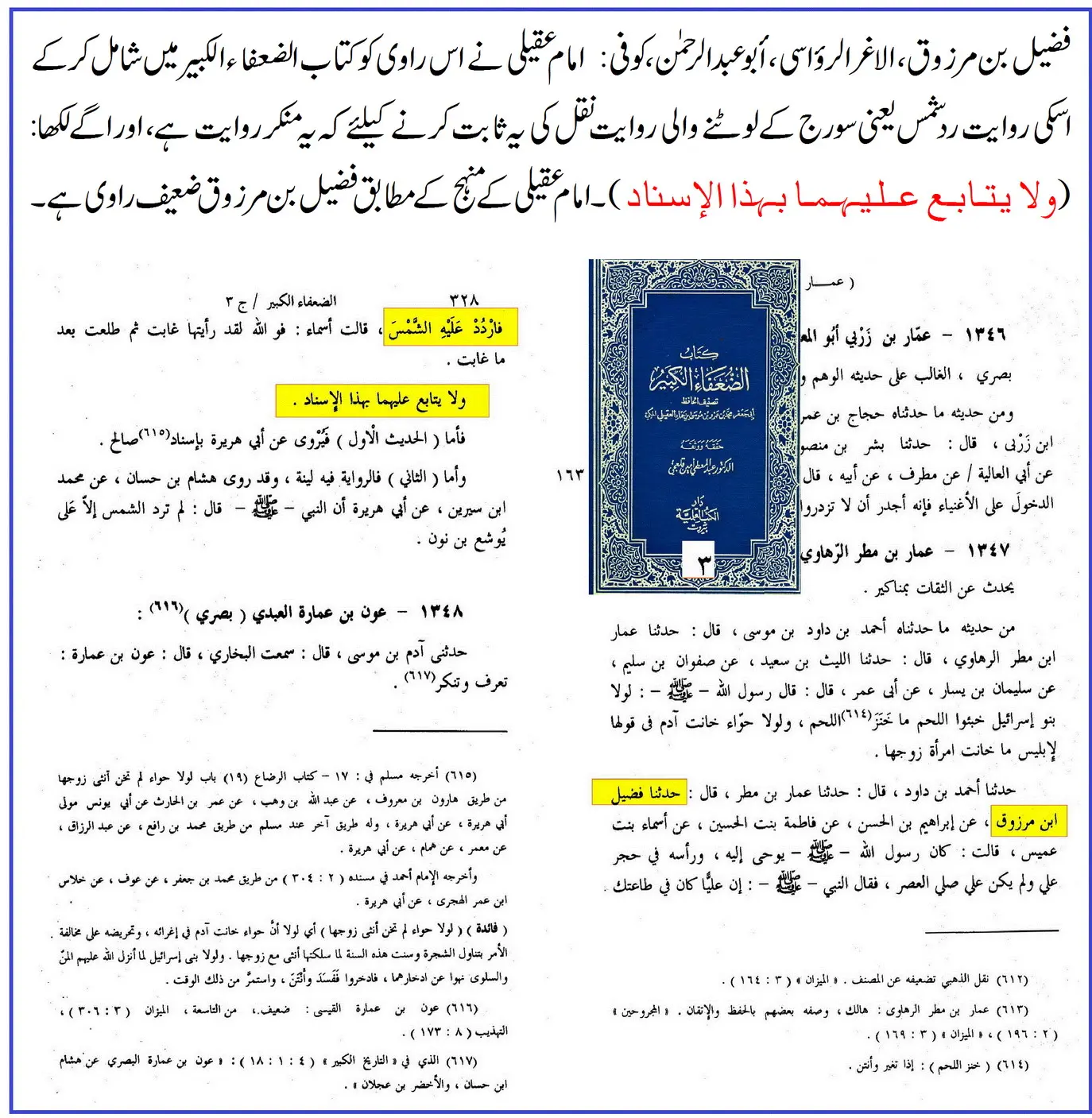
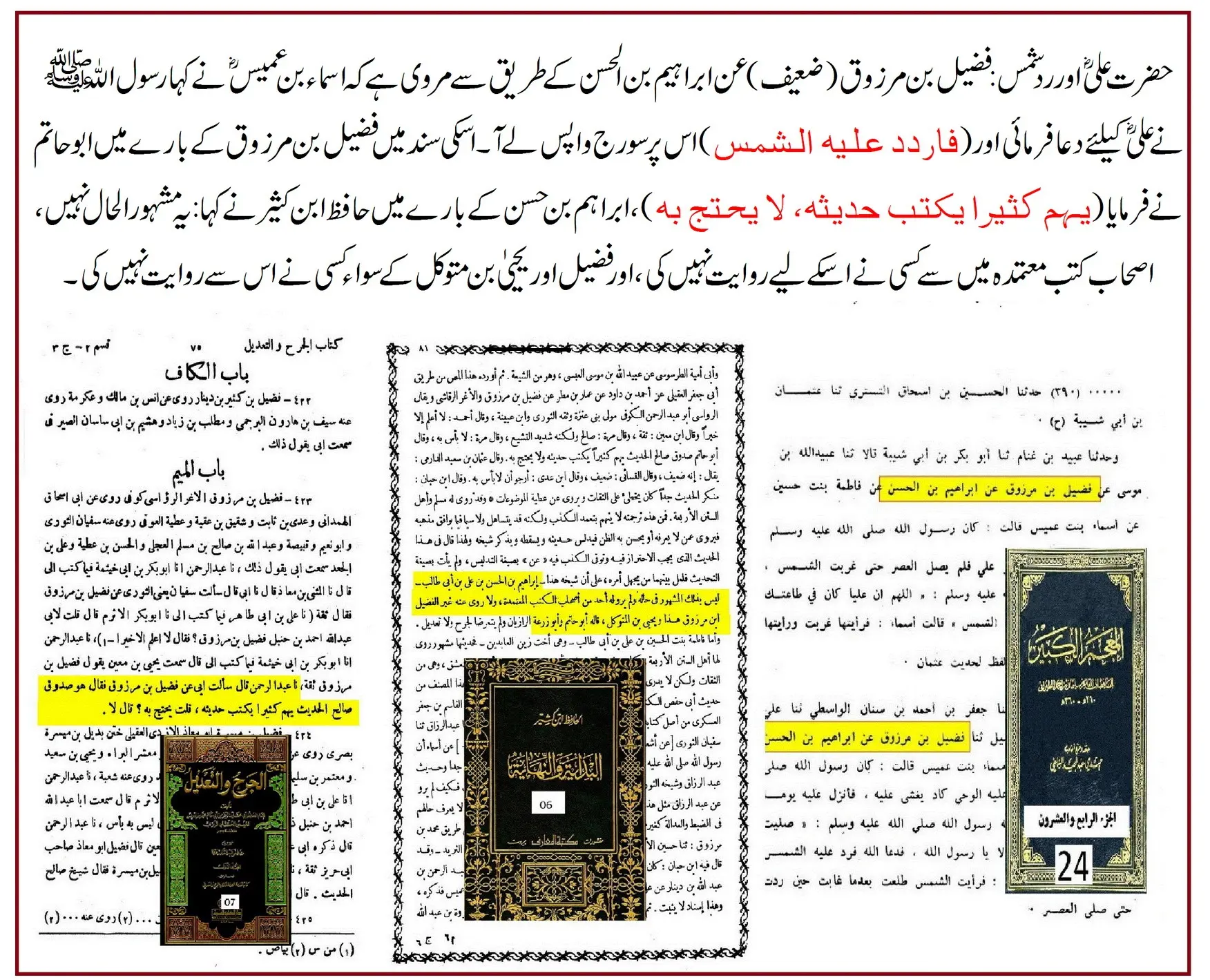
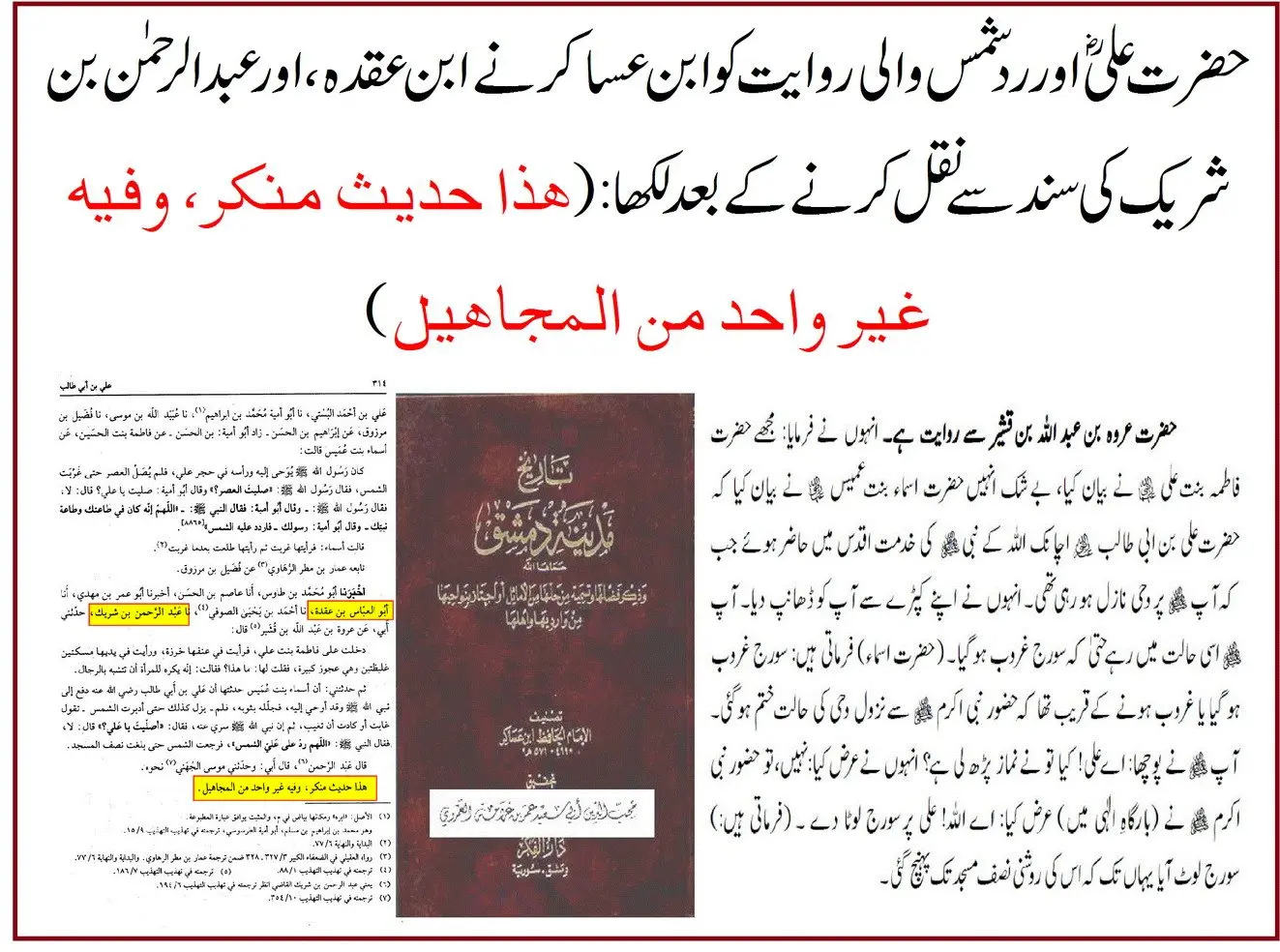
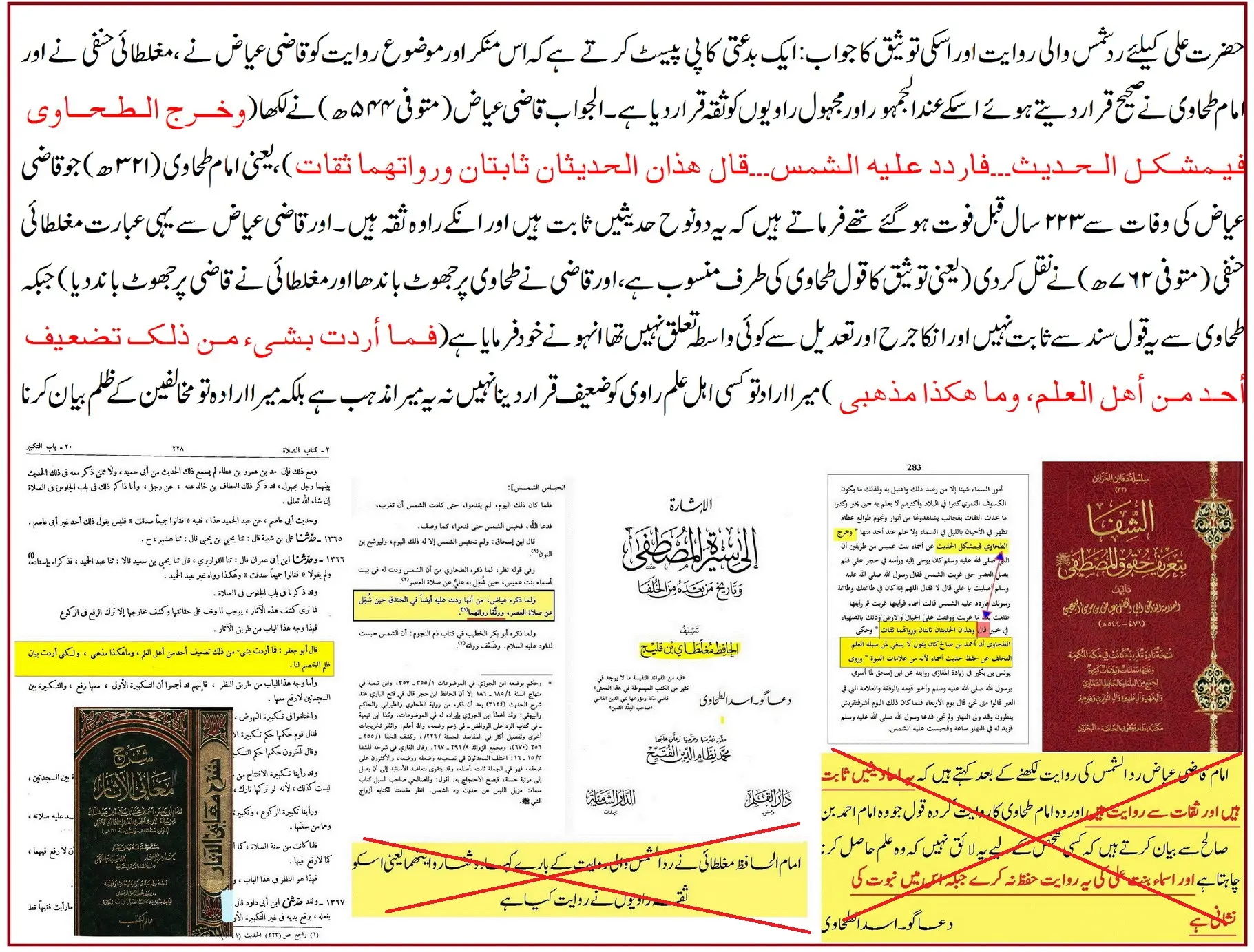
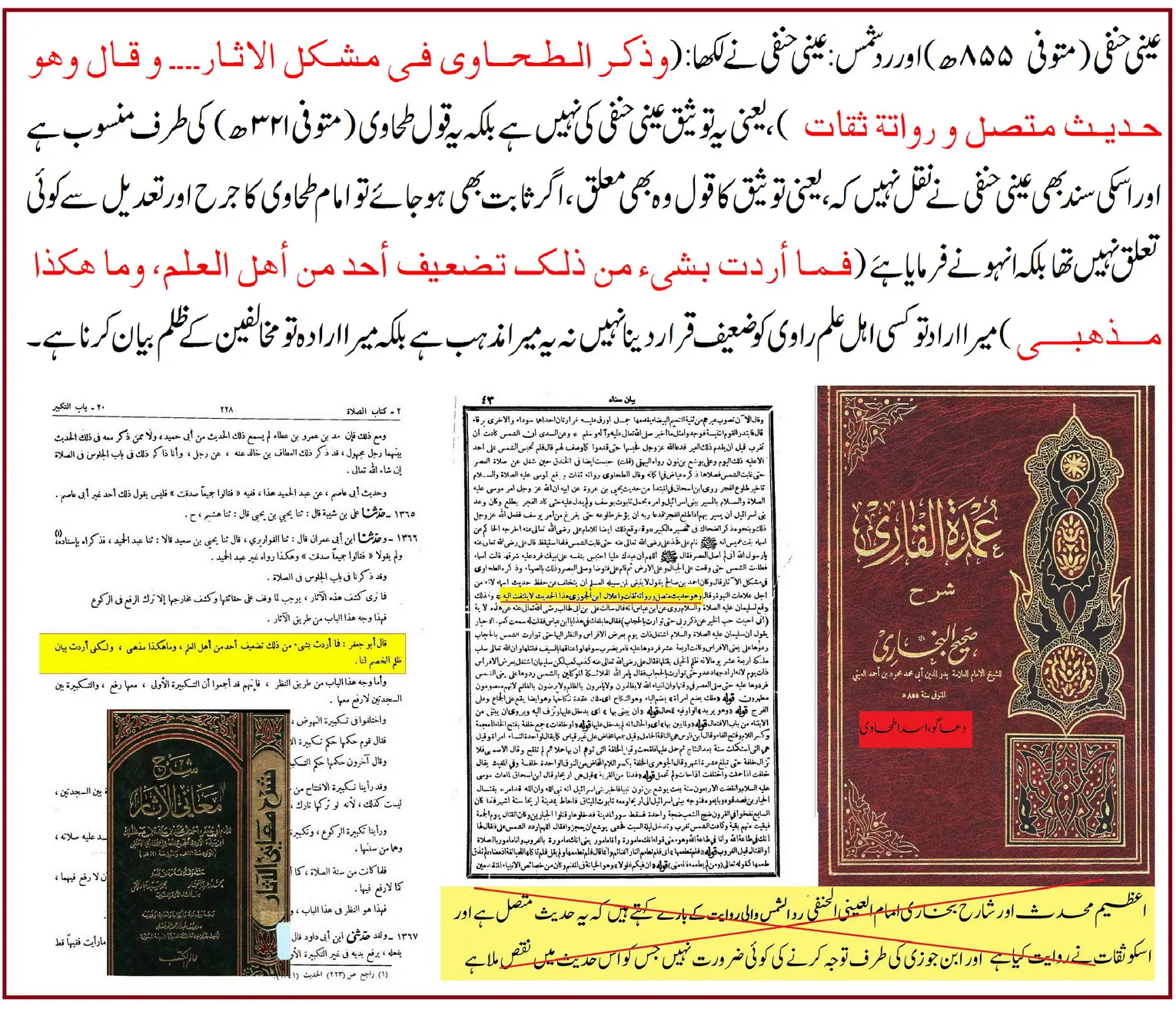
① First Chain: The Narration of Imām al-Ṭaḥāwī (via Fuḍayl ibn Marzūq)
Arabic Text
«1067 – حَدَّثَنَا أَبُو أُمَيَّةَ، قَالَ: حَدَّثَنَا عُبَيْدُ اللهِ بْنُ مُوسَى الْعَبْسِيُّ، قَالَ: حَدَّثَنَا الْفُضَيْلُ بْنُ مَرْزُوقٍ، عَنْ إِبْرَاهِيمَ بْنِ الْحَسَنِ، عَنْ فَاطِمَةَ بِنْتِ الْحُسَيْنِ، عَنْ أَسْمَاءَ ابْنَةِ عُمَيْسٍ، قَالَتْ: ... اللَّهُمَّ إِنَّهُ كَانَ فِي طَاعَتِكَ وَطَاعَةِ رَسُولِكَ فَارْدُدْ عَلَيْهِ الشَّمْسَ ...»
Reference: Sharḥ Mushkil al-Āthār by al-Ṭaḥāwī
Translation
Asmāʾ bint ʿUmays رضي الله عنها narrated that revelation was descending upon the Messenger of Allah ﷺ while his head was in the lap of ʿAlī رضي الله عنه. During this time, ʿAlī did not pray ʿAṣr until the sun had set. The Messenger of Allah ﷺ supplicated:“O Allah! He was in obedience to You and Your Messenger, so return the sun for him.”
Asmāʾ said: I saw the sun set, then I saw it rise again after having set.
Chain Analysis (Summary)
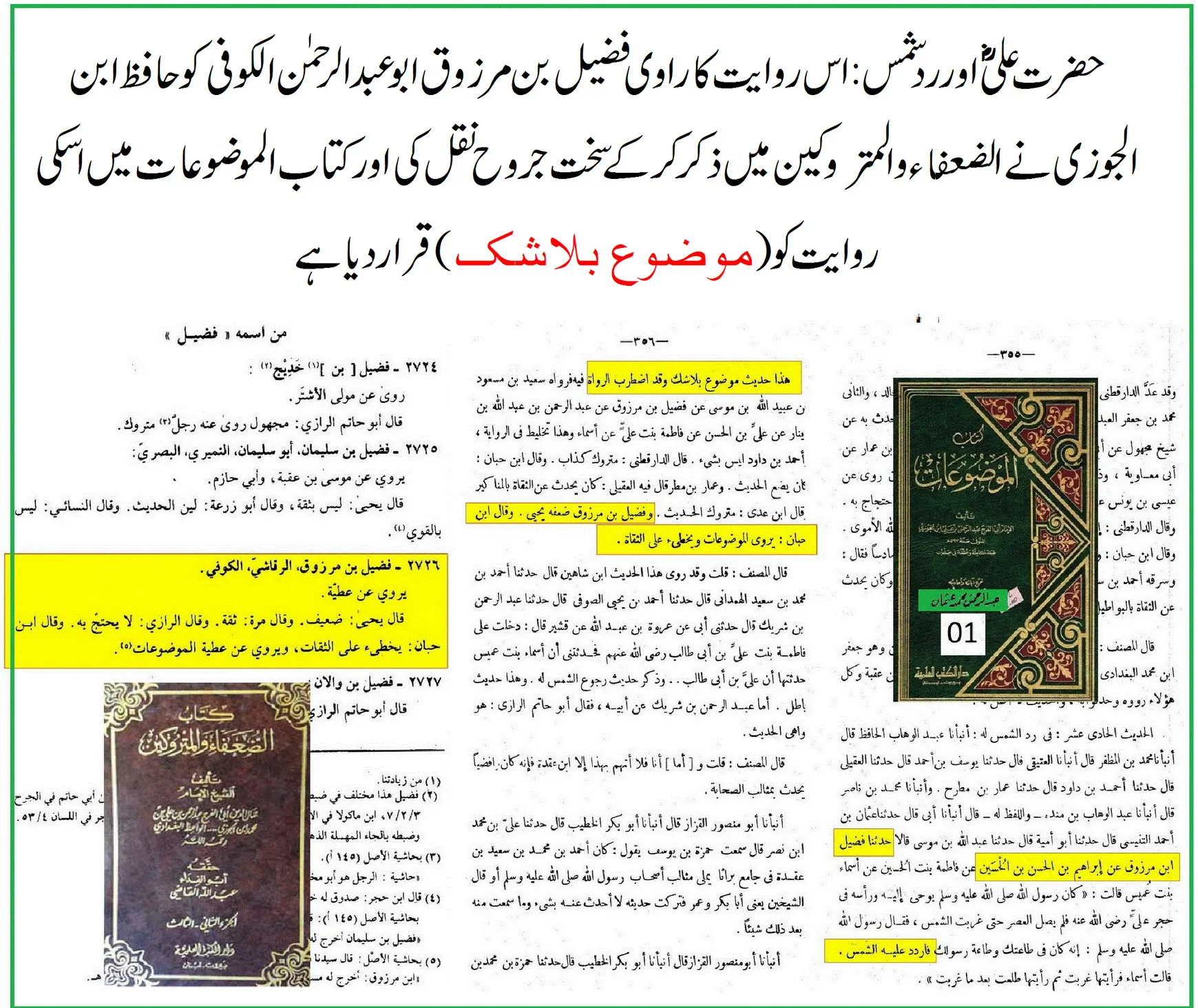
✿ In this chain, Fuḍayl ibn Marzūq has been criticized.✿ His shaykh, Ibrāhīm ibn al-Ḥasan, is unknown (majhūl).
Such a solitary narration from narrators of this condition is not accepted as proof.
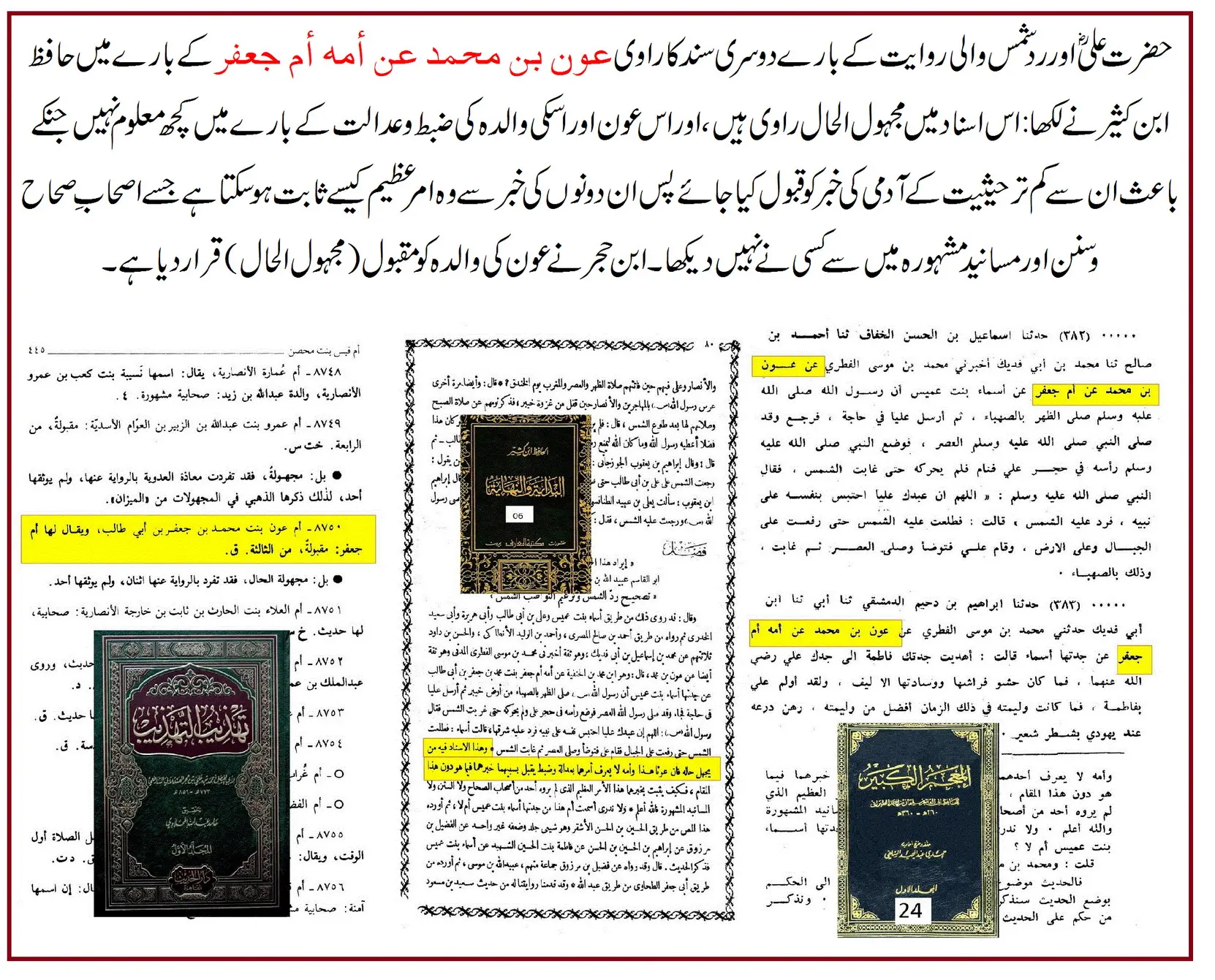
② Second Chain: Narration of al-Ṭabarānī (via ʿAwn ibn Muḥammad and Umm Jaʿfar)
Reference: al-Muʿjam al-Kabīr 24/144
Translation
Asmāʾ bint ʿUmays رضي الله عنها reported that the Prophet ﷺ supplicated, whereupon the sun rose again until it became elevated over the mountains and land. ʿAlī performed wuḍūʾ and prayed ʿAṣr, then the sun set again. This occurred at Ṣahbāʾ.Scholarly Criticism
❖ Ibn Kathīr رحمه الله«وَهَذَا الْإِسْنَادُ فِيهِ مَنْ يَجْهَلُ حَالَهُ…»
“This chain contains individuals whose condition is unknown…”
Reference: al-Bidāyah wa al-Nihāyah
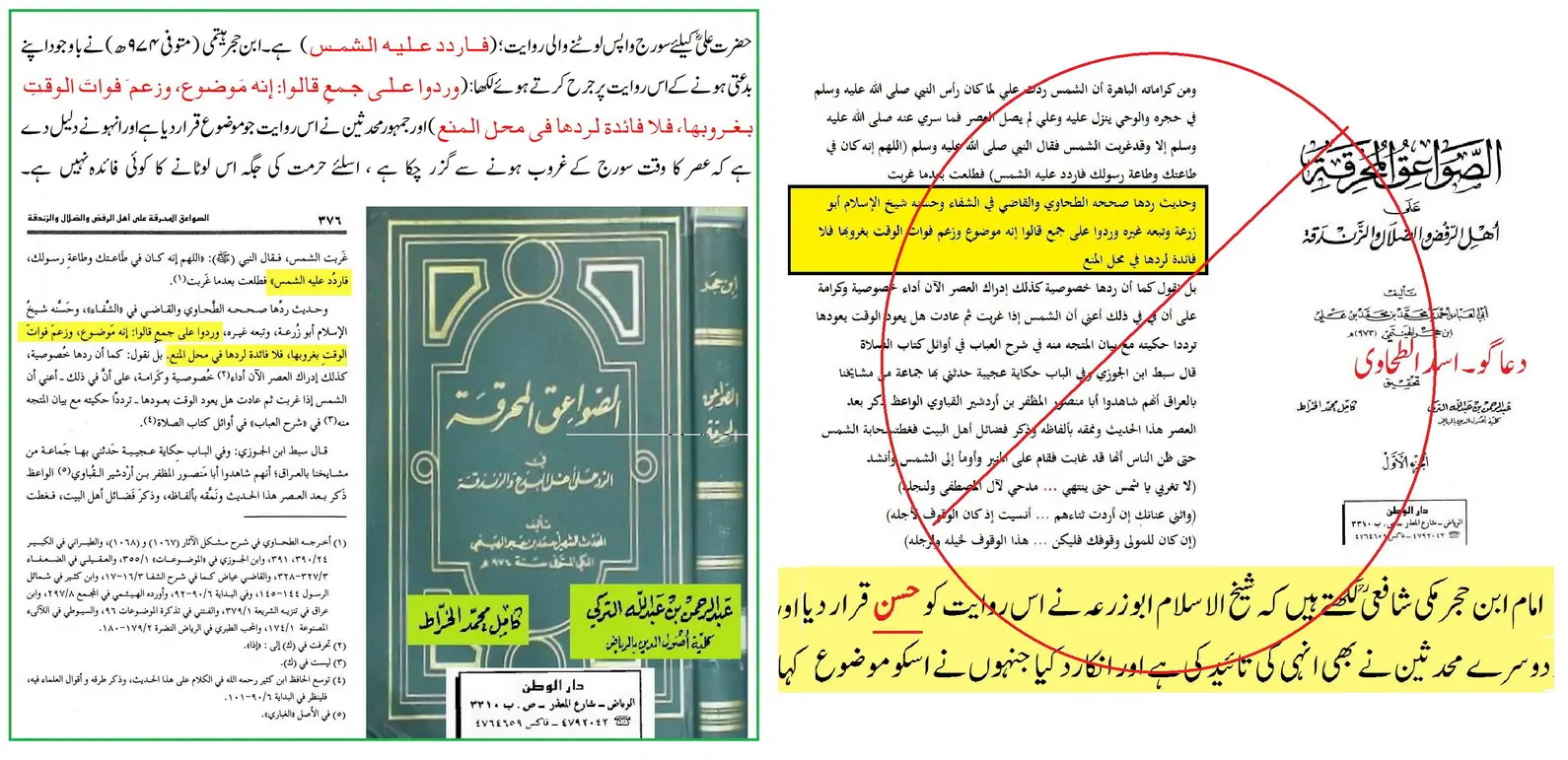
❖ Ibn Ḥajar رحمه الله
«مقبولة من الثالثة»
Meaning: Accepted only when supported (otherwise majhūl).
Reference: Taqrīb al-Tahdhīb
❖ al-Dhahabī رحمه الله
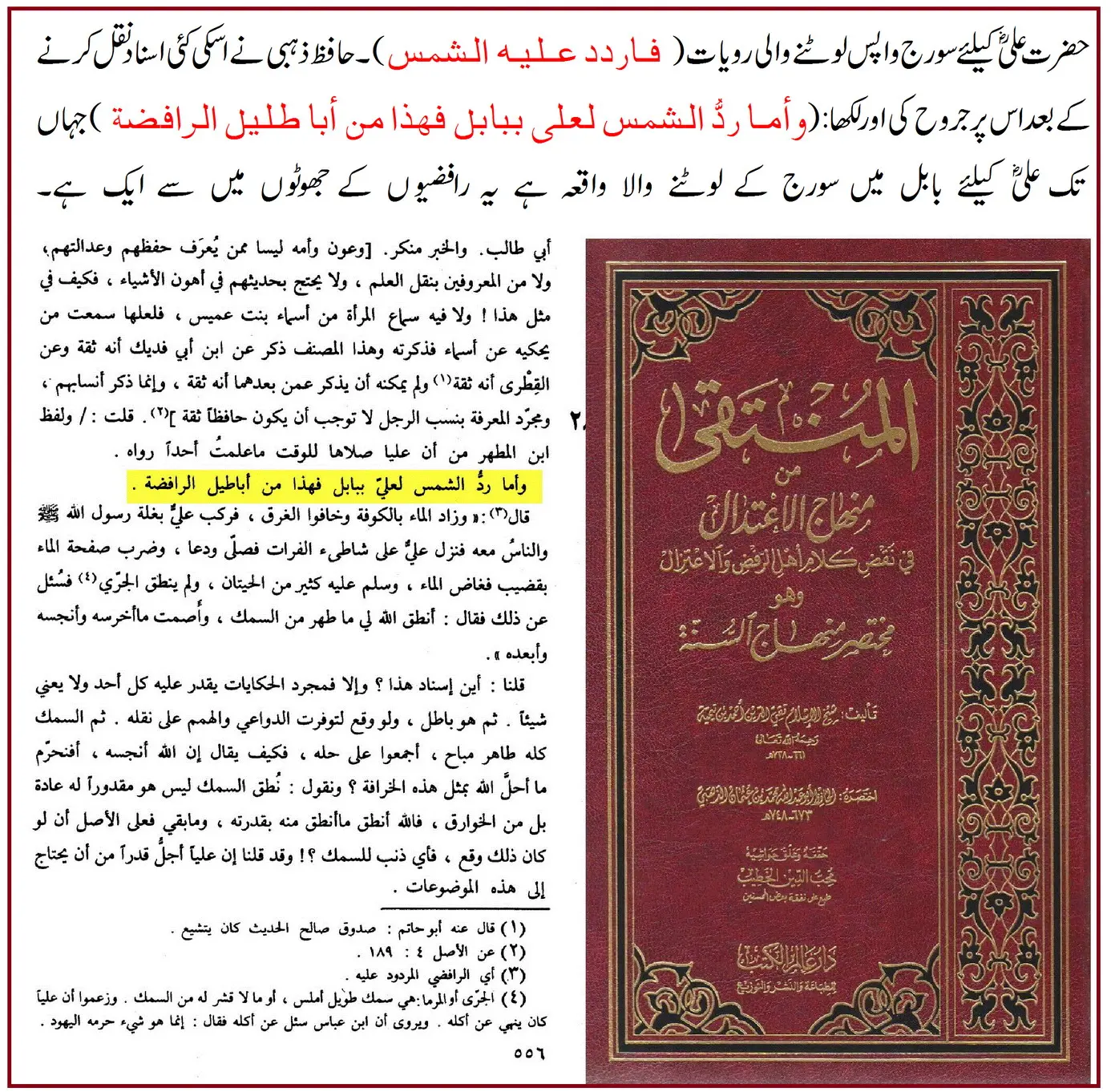
«وَلَا يُحْتَجُّ بِحَدِيثِهِمَا»
“Their narration cannot be used as proof.”
Reference: al-Muntaqā min Minhāj al-Iʿtidāl
Conclusion (Chain ②)
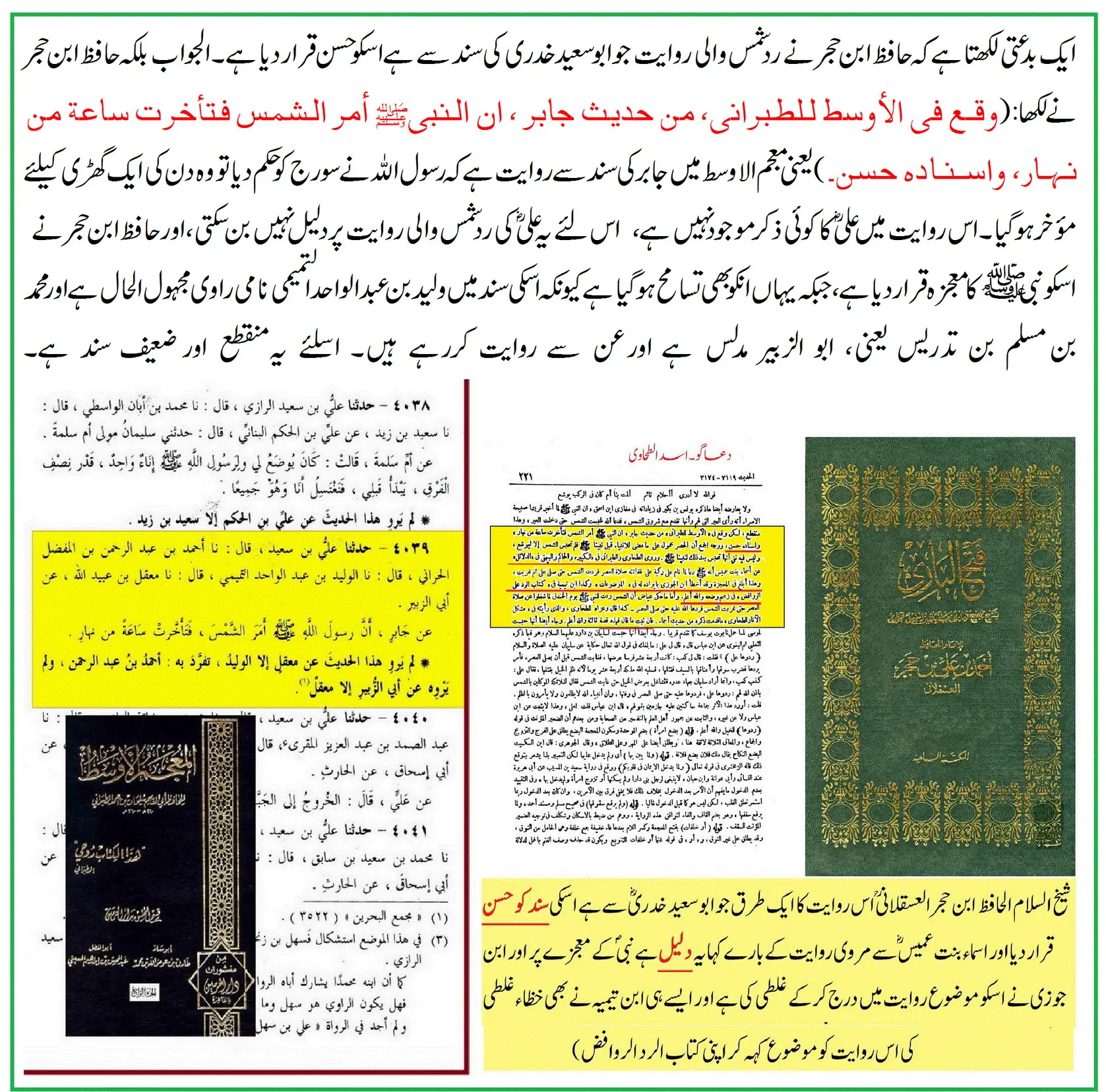
◈ The chain contains two unknown narrators (ʿAwn ibn Muḥammad and his mother). Therefore, it is not reliable.③ Third Chain: al-Muʿjam al-Awsaṭ (via Maʿqil ibn ʿUbaydullāh → Abū al-Zubayr → Jābir)
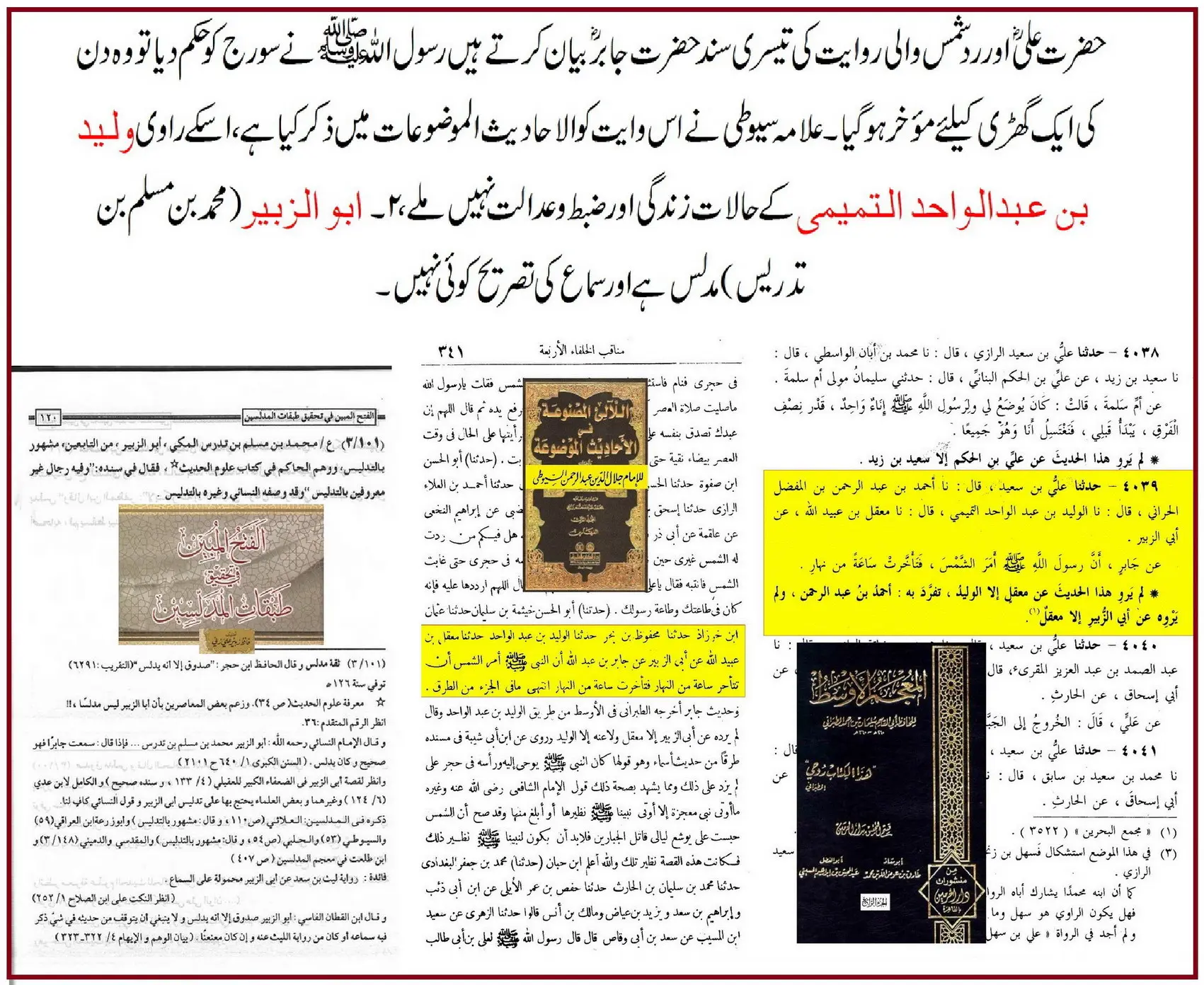
Reference: al-Muʿjam al-Awsaṭ (4039)
Translation
Jābir رضي الله عنه reported that the Messenger of Allah ﷺ commanded the sun, and it was delayed for a portion of the day.Chain Analysis
✿ Abū al-Zubayr was a mudallis and narrated with ʿanʿanah.✿ Scholars declared this narration munkar and muḍṭarib.
❖ al-Jawzaqānī:
«هَذَا حَدِيثٌ مُنْكَرٌ مُضْطَرِبٌ»
Reference: al-Abāṭīl wa al-Manākīr (154)
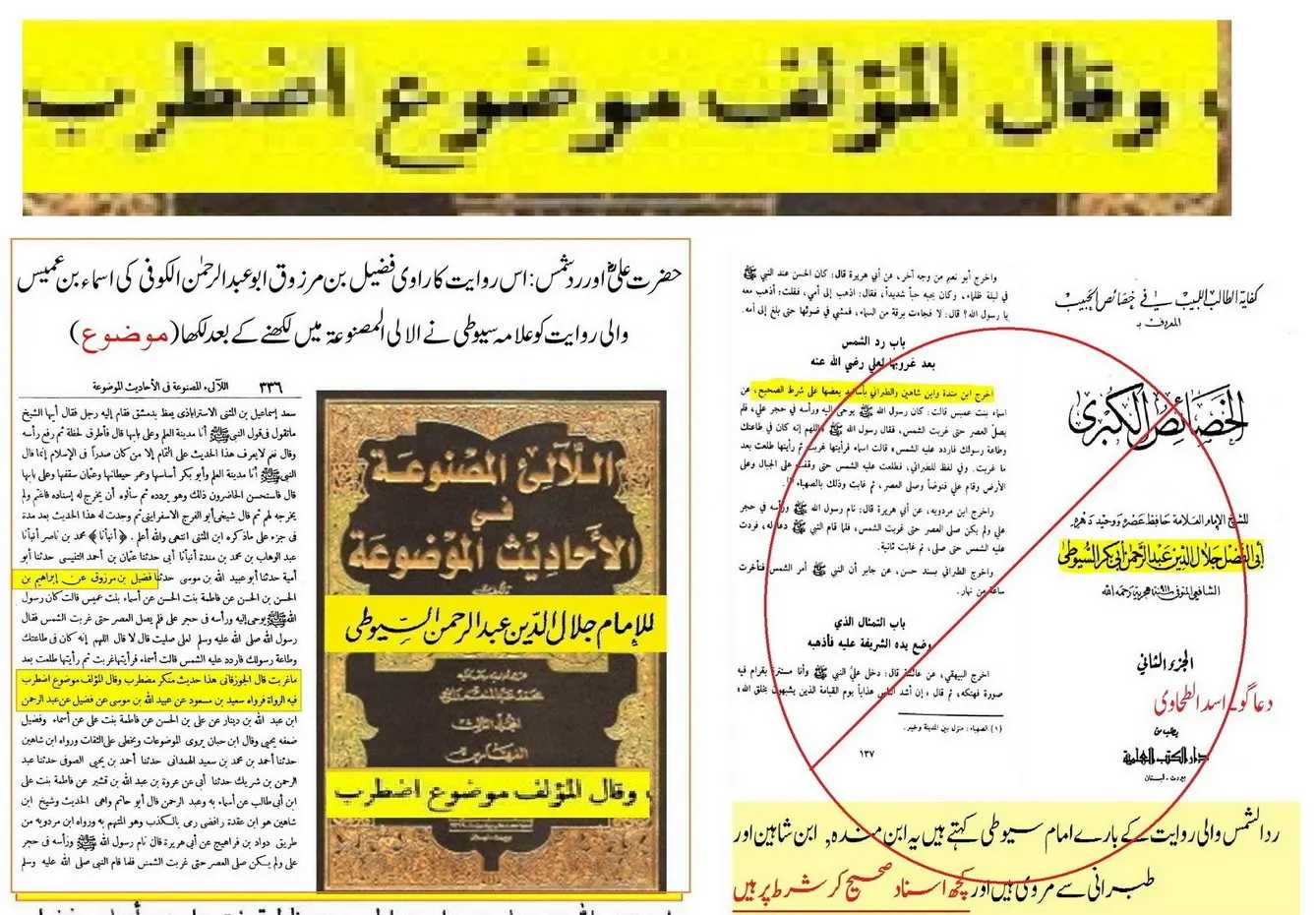
❖ al-Suyūṭī:
«مَوْضُوعٌ اضْطَرَبَ»
Reference: al-Laʾālī al-Maṣnūʿah
Conclusion (Chain ③)
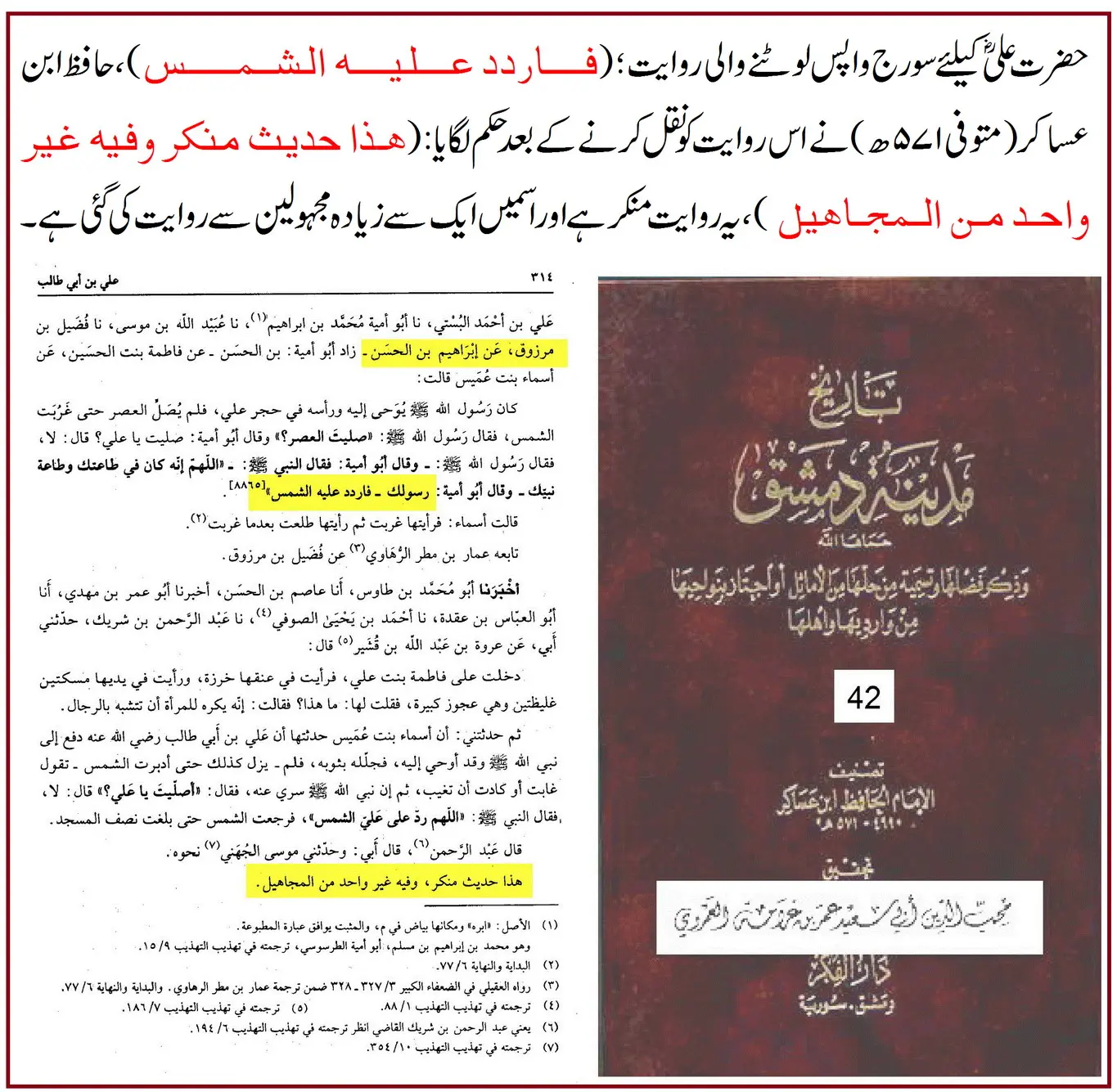
Due to tadlīs, ʿanʿanah, and severe irregularity, the narration is not acceptable.④ Fourth Chain: Tārīkh Dimashq (via Ibn ʿUqdah)
Reference: Tārīkh Dimashq
Scholarly Verdicts
❖ Ibn ʿAsākir:«هَذَا حَدِيثٌ مُنْكَرٌ…»
“This is a rejected narration.”
❖ Ibn Taymiyyah:
«لَا يَثْبُتُ بِمِثْلِهِ شَيْءٌ…»
“Nothing can be established with such a chain…”
❖ al-Dhahabī:
“If this had truly occurred, it would have been widely transmitted…”
Conclusion (Chain ④)
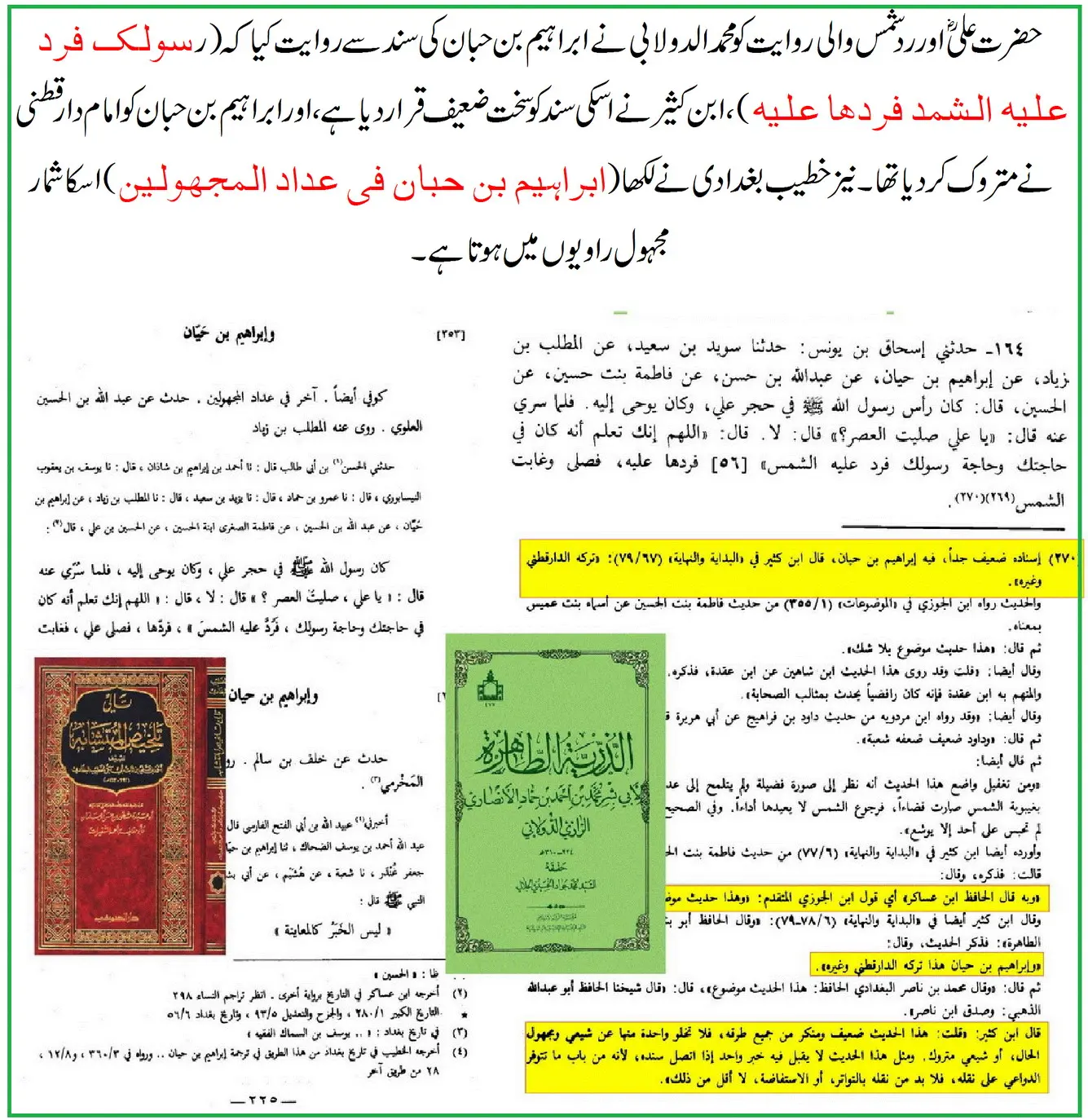
Contains unknown narrators and severely criticized transmitters. Rejected.⑤ Fifth Chain: al-Dūlābī (via Ibrāhīm ibn Ḥayyān)
Reference: al-Dhurriyyah al-Ṭāhirah, p.92
Scholarly Judgments
❖ Ibn al-Jawzī:«يَرْوِي أَحَادِيثَ مَوْضُوعَةً… مَتْرُوكٌ»
“He narrates fabricated reports… abandoned.”
❖ Abū Zurʿah:
«مَجْهُولٌ»
“Unknown.”
❖ al-Khaṭīb:
“In the category of unknown narrators.”
Conclusion (Chain ⑤)
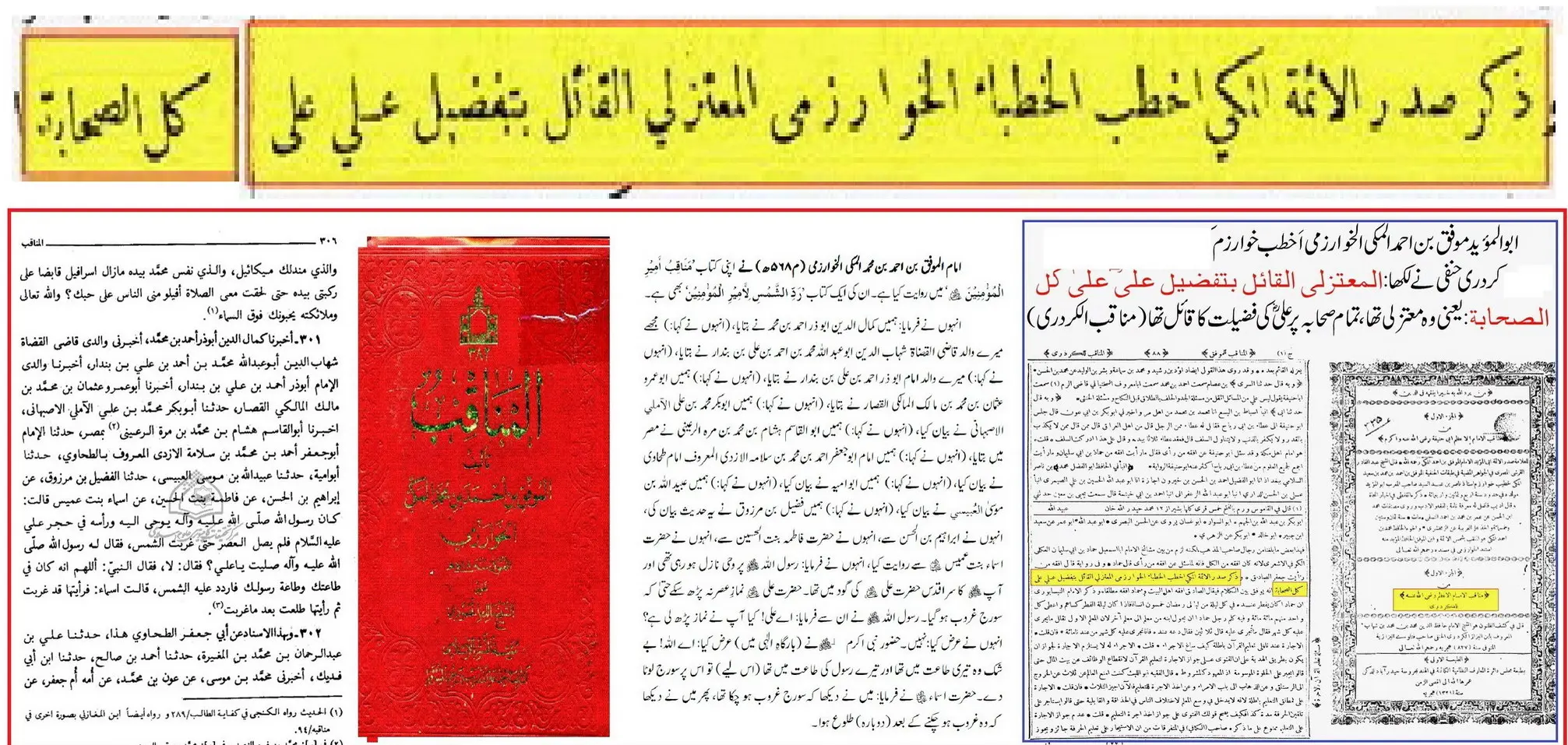
Contains a severely weak and unknown narrator. Not acceptable.⑥ Narration Attributed to al-Khawārizmī
This source is associated with known doctrinal bias, and its chains contain numerous unknown or abandoned narrators.Conclusion (Chain ⑥)
Not a reliable basis for evidence.Collective Verdict of the Scholars
Below are the final rulings of the major scholars:① Ibn al-Jawzī — «هَذَا حَدِيثٌ مَوْضُوعٌ بِلَا شَكٍّ»
Reference: al-Mawḍūʿāt 3/252
② Ibn Ḥazm — «بَاطِلٌ مَوْضُوعٌ»
Reference: al-Fiṣal 5/45
③ Ibn Kathīr — “Extremely weak, no basis.”
Reference: al-Bidāyah 6/84
④ Ibn al-Qayyim — «فَهُوَ مَوْضُوعٌ»
Reference: al-Manār al-Munīf p.82
⑤ Ibn Taymiyyah — Chain invalid.
Reference: Minhāj al-Sunnah 4/184
⑥ al-Jawzaqānī — «مُنْكَرٌ مُضْطَرِبٌ»
⑦ al-Suyūṭī — «مَوْضُوعٌ»
⑧ Muḥibb al-Dīn al-Ṭabarī — Scholars declared it fabricated.
⑨ al-Dhahabī — “Among the falsehoods of the Rāfiḍah.”
⑩ Ibn ʿAsākir — «مُنْكَرٌ»
⑪ al-ʿUqaylī — Weak chain.
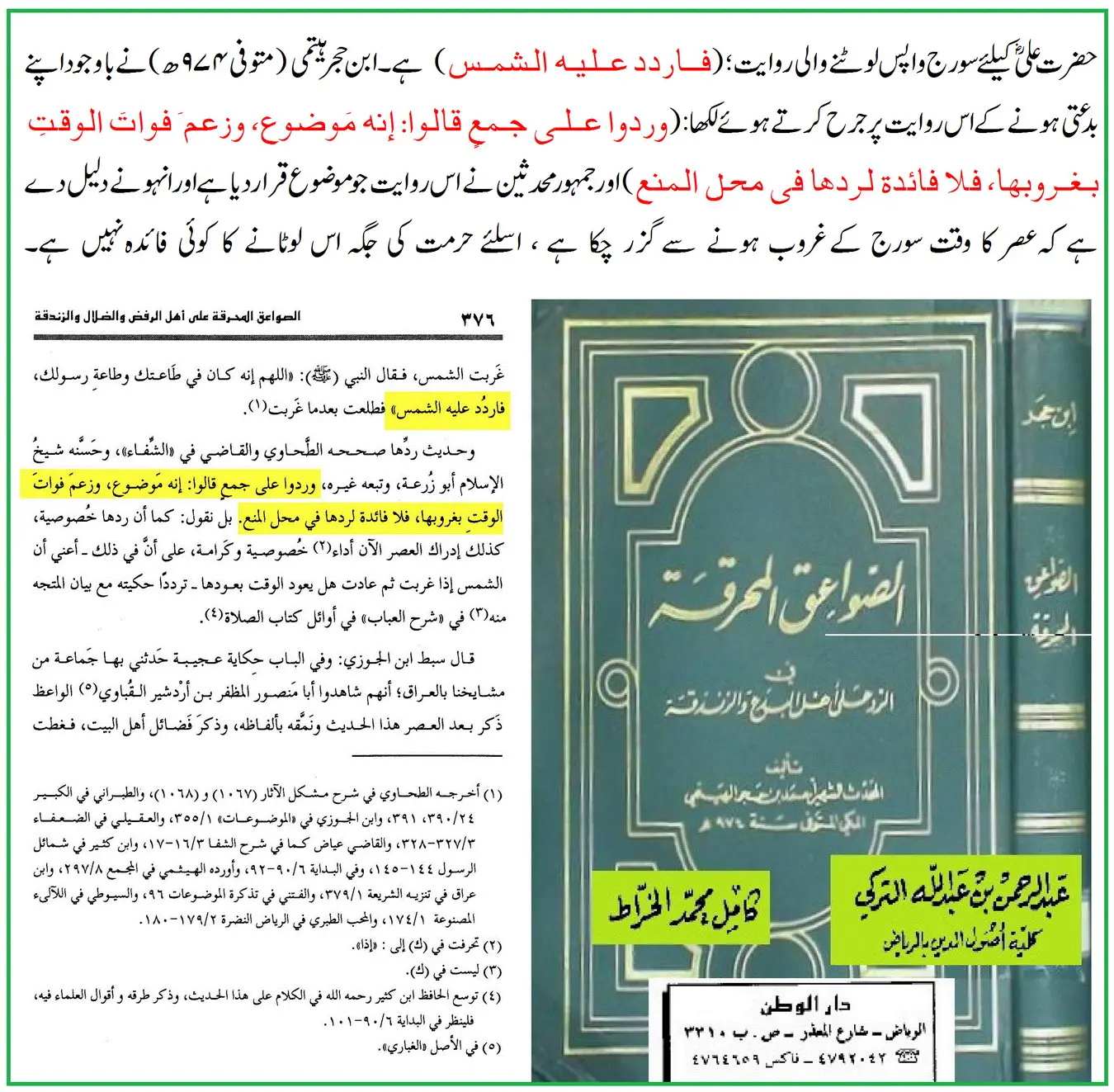
⑫ Ibn Ḥajar al-Haytamī — Majority declared it fabricated.
⑬ Imām Aḥmad (as reported) — «لَا أَصْلَ لَهُ»
Rational and Sharʿī Considerations
◈ If the sun had truly been returned, it would have been widely transmitted like the splitting of the moon.◈ The time of ʿAṣr ends at sunset; returning the sun afterward has no legal benefit.
◈ The only authentic incident concerning the sun being withheld is for Yūshaʿ ibn Nūn (Joshua), as established in Ṣaḥīḥ al-Bukhārī and Ṣaḥīḥ Muslim.
Final Conclusion
❖ All chains of the narration of the sun returning for ʿAlī رضي الله عنه are weak, rejected, or fabricated.❖ The leading scholars of ḥadīth declared it fabricated or baseless.
❖ The virtues of ʿAlī رضي الله عنه are firmly established in authentic Qurʾān and Sunnah, and there is no need for fabricated reports to prove his excellence.
Last edited:

