
✍ Compiled by: Abū Ḥamzah Salafī
Ḥanafī followers claim that there is no need for the follower (muqtadī) to recite Sūrah al-Fātiḥah behind the imām, asserting that the imām’s recitation suffices for the entire congregation. They cite some narrations attributed to Sayyidunā ʿAbdullāh ibn ʿUmar رضي الله عنهما in support of their view, attempting to portray him as one who opposed reciting al-Fātiḥah behind the imām under all circumstances.
Below, we present the core narration used by the Ḥanafīs, followed by clarifications from the early scholars and imāms of Ahl al-Sunnah regarding its true context and meaning.
الْمُصَنَّف لعبد الرزاق
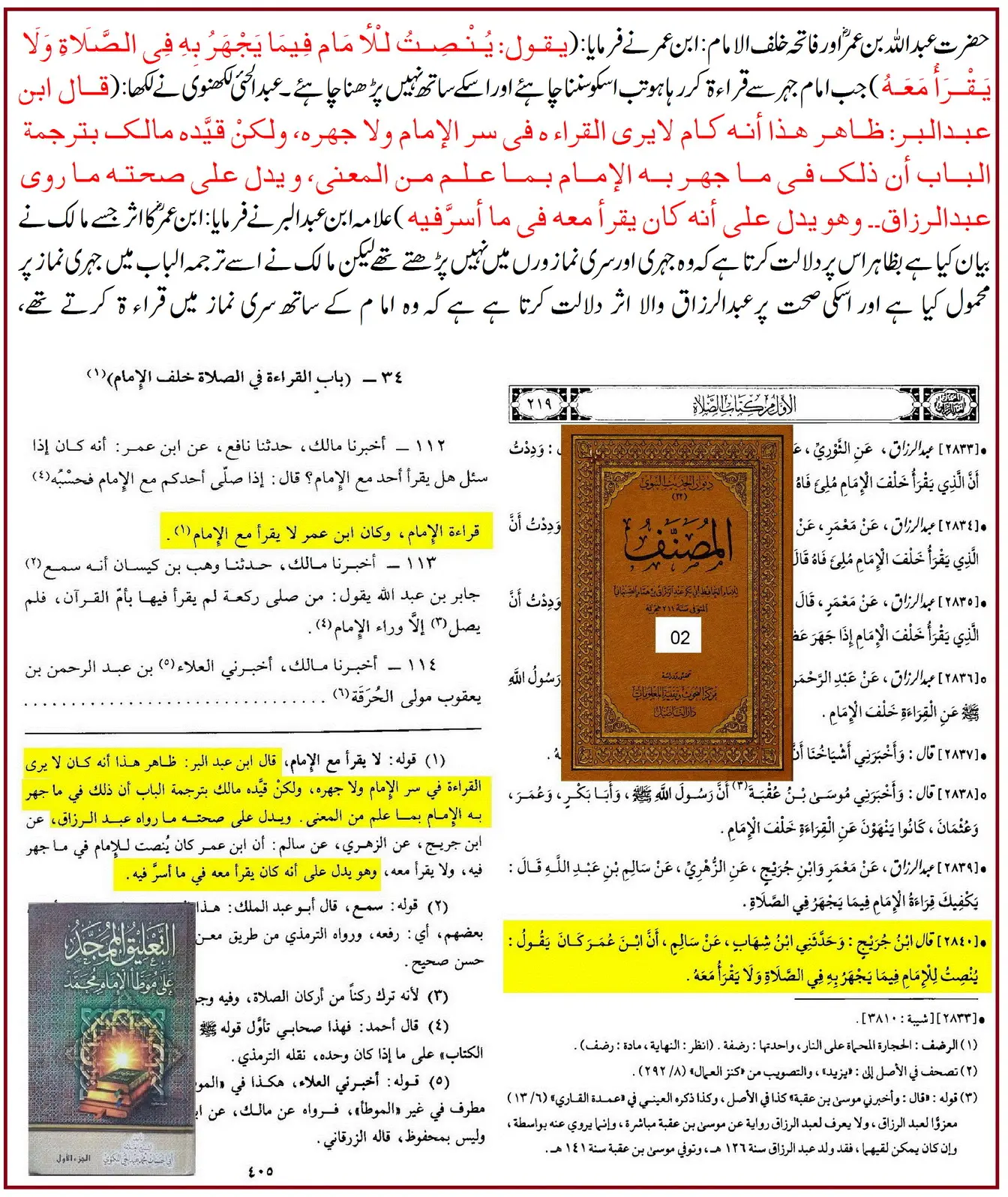
قَالَ ابْنُ جُرَيْجٍ: وَحَدَّثَنِي ابْنُ شِهَابٍ، عَنْ سَالِمٍ، أَنَّ ابْنَ عُمَرَ كَانَ يَقُولُ: "يُنْصَتُ لِلْإِمَامِ فِيمَا يَجْهَرُ بِهِ فِي الصَّلَاةِ وَلَا يَقْرَأُ مَعَهُ"
Translation:
Ibn ʿUmar رضي الله عنه used to say: “One should remain silent behind the imām when he recites aloud in prayer, and should not recite along with him.”
[Ref: al-Muṣannaf by ʿAbd al-Razzāq]
 This narration specifically applies to loud (jahrī) prayers and instructs silence during the imām’s recitation. However, it does not negate recitation in silent (sirrī) prayers or during pauses (saktāt) in loud prayers.
The apparent meaning of Ibn ʿUmar’s statement is that he did not recite in either loud or silent prayers. However, Imām Mālik limited this opinion to loud prayers only, based on the chapter heading. Supporting this is another narration from ʿAbd al-Razzāq: Ibn ʿUmar used to remain silent during loud recitation but would recite when the imām was silent.
[Ref: al-Taʿlīq al-Mumajjad ʿalā al-Muwaṭṭaʾ Muḥammad]
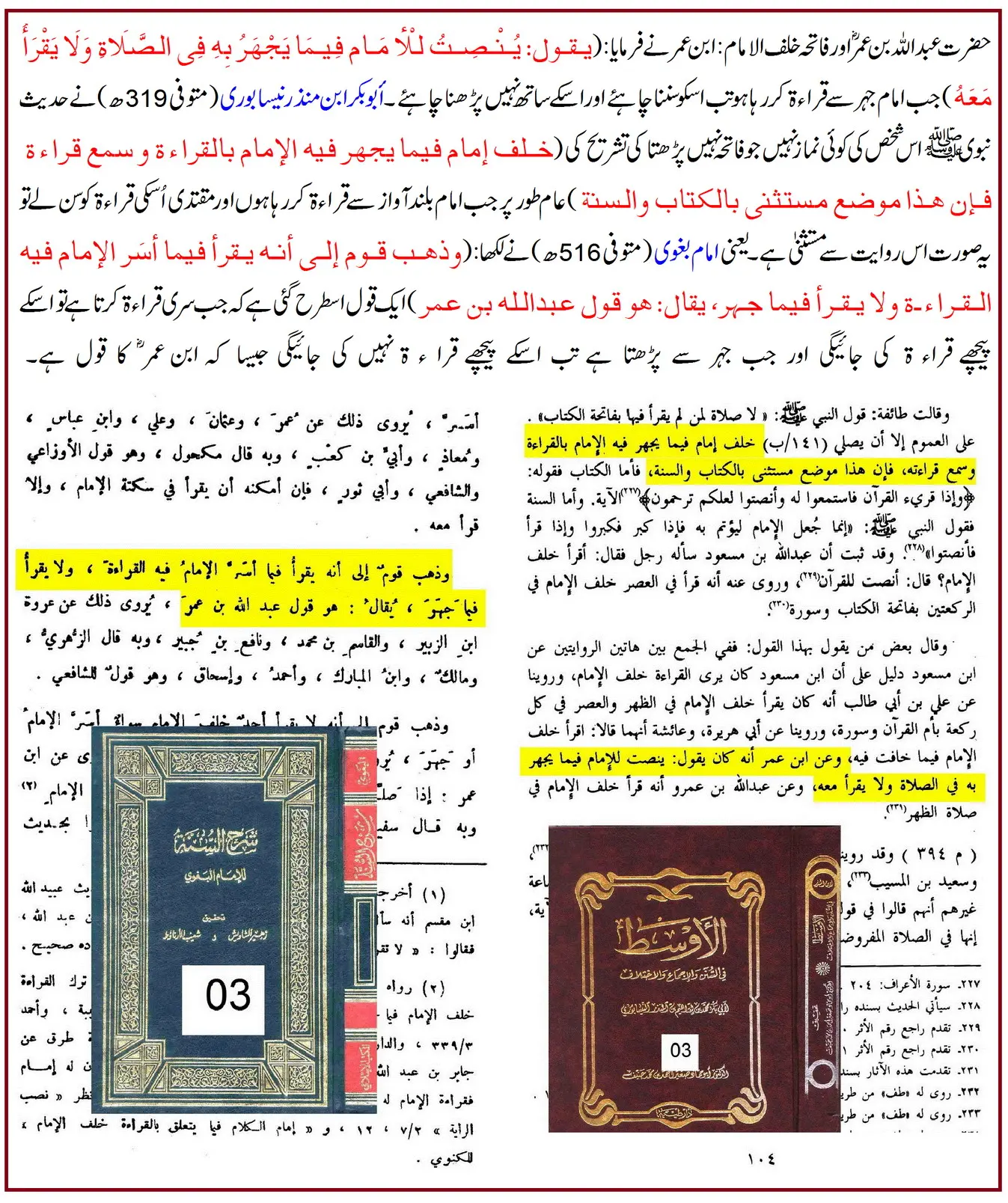
“The ḥadīth ‘There is no prayer for one who does not recite al-Fātiḥah’ is general, except when one hears the imām’s recitation in a loud prayer—this is an exception proven by the Qurʾān and Sunnah.”
[Ref: al-Awsaṭ fī al-Sunan wa al-Ijmāʿ wa al-Ikhtilāf]
“Some scholars opine that the follower should recite in silent prayers but not in loud prayers. This is the opinion of ʿAbdullāh ibn ʿUmar, al-Zuhrī, Mālik, Ibn al-Mubārak, Aḥmad, Isḥāq, and one narration from Imām al-Shāfiʿī.”
[Ref: Sharḥ al-Sunnah]
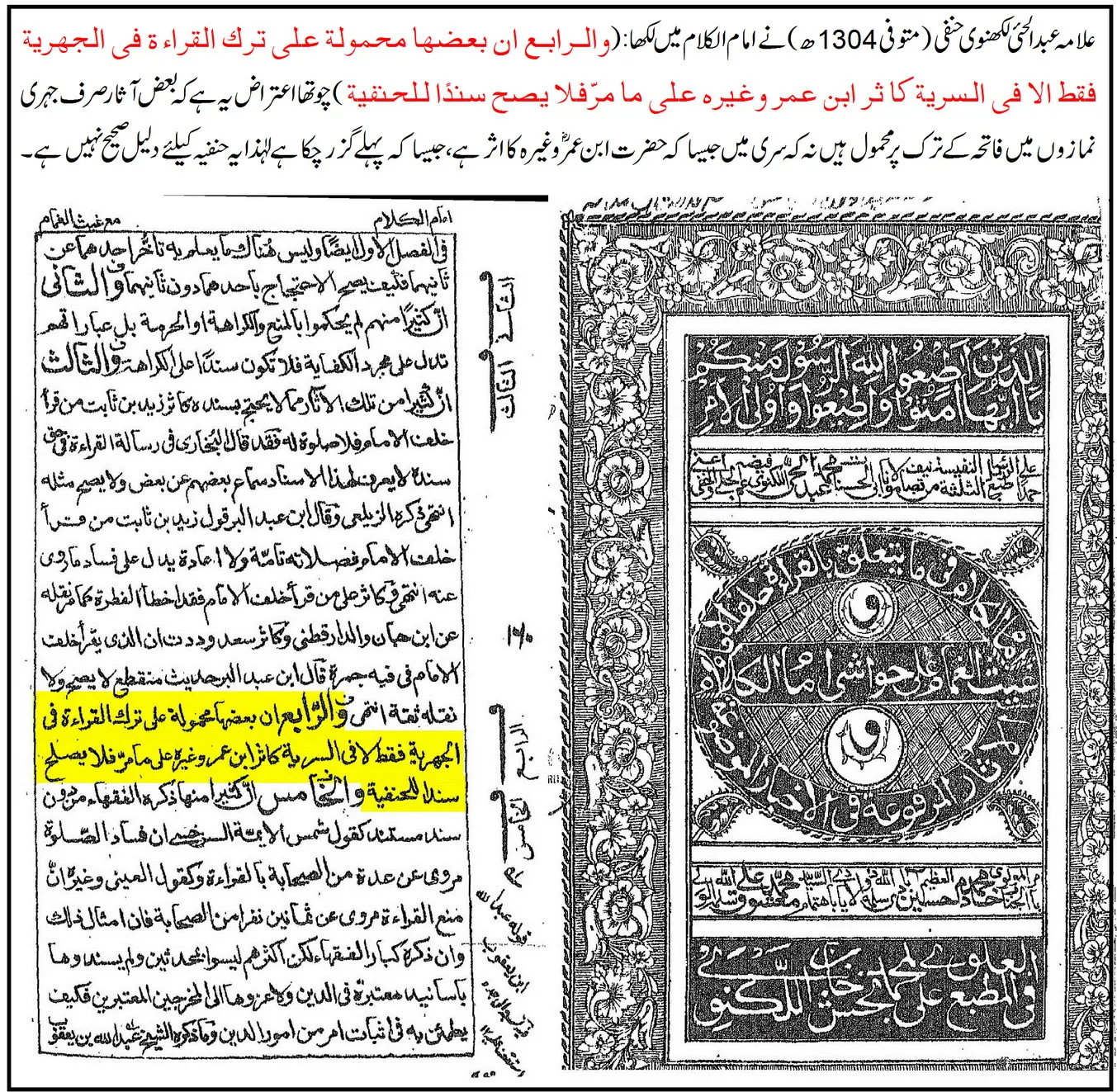
“Some narrations merely apply to the omission of al-Fātiḥah in loud prayers, not silent ones. Such as the narration of Ibn ʿUmar, hence this cannot be used as conclusive proof for the Ḥanafīs.”
[Ref: Ghayth al-Ghamām ʿalā Ḥawāshī Imām al-Kalām]
Conclusion:
These statements confirm that Ibn ʿUmar رضي الله عنه only advised silence during the imām’s loud recitation—not against reciting al-Fātiḥah in every case.
While some narrations suggest silence during loud recitation, other authentic reports affirm Ibn ʿUmar’s recitation in silent prayers and even during pauses in loud prayers.
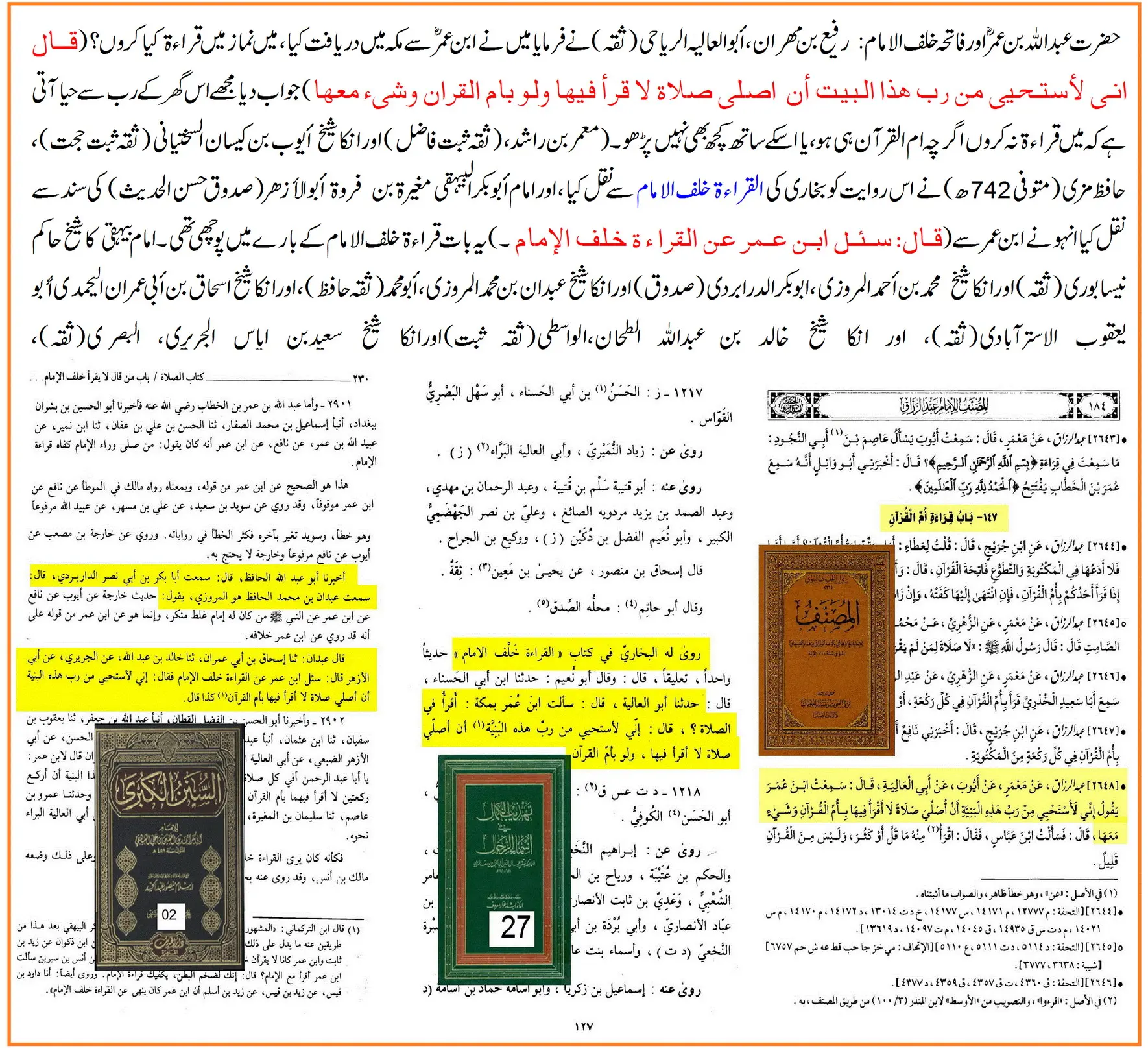
إِنِّي لَأَسْتَحْيِي مِنْ رَبِّ هَذِهِ الْبَنِيَّةِ أَنْ أُصَلِّيَ صَلَاةً لَا أَقْرَأُ فِيهَا بِأُمِّ الْقُرْآنِ وَشَيْءٍ مَعَهَا
“I feel ashamed before the Lord of this House (Kaʿbah) to pray a prayer in which I do not recite Sūrah al-Fātiḥah and something along with it.”
[Ref: al-Muṣannaf of ʿAbd al-Razzāq – Authentic Chain]
This is a clear declaration of always reciting al-Fātiḥah.
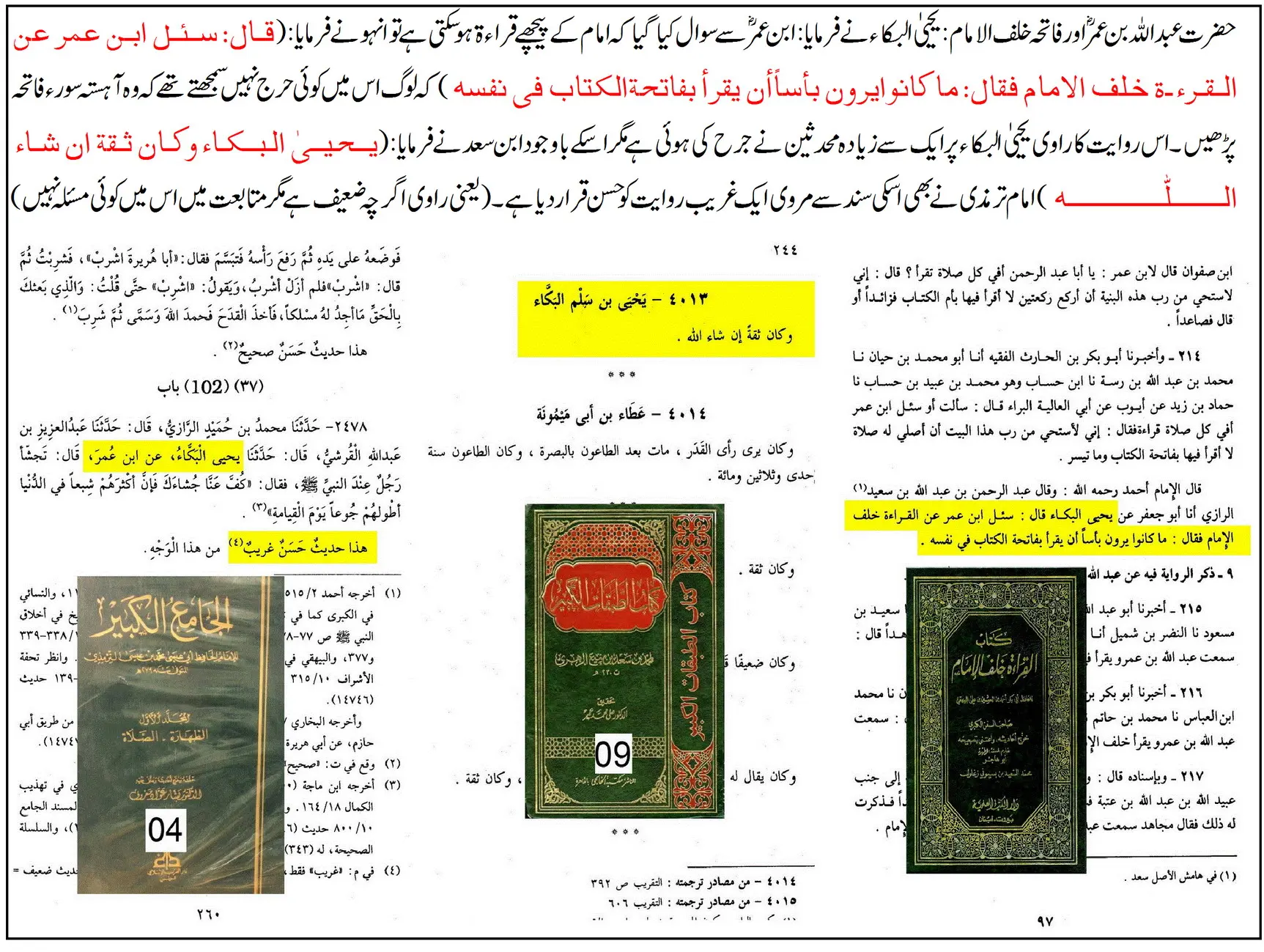
“When asked about reciting behind the imām, Ibn ʿUmar replied: ‘They did not see any harm in silently reciting Sūrah al-Fātiḥah behind the imām.’”
[Ref: al-Qirāʾah Khalfa al-Imām by al-Bayhaqī]
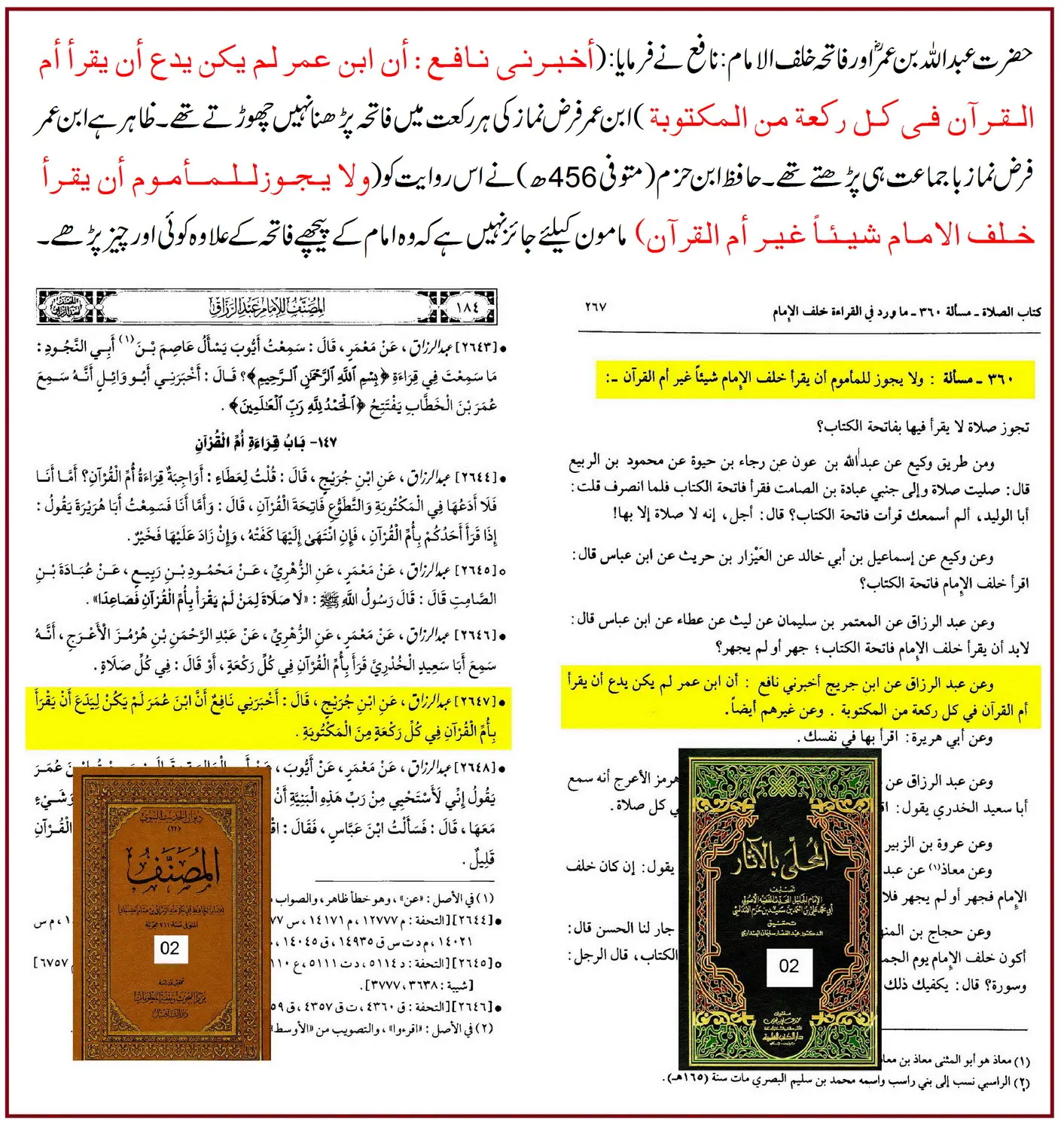
“Ibn ʿUmar would not leave reciting Sūrah al-Fātiḥah in every rakʿah of an obligatory prayer.”
[Ref: al-Muṣannaf of ʿAbd al-Razzāq – Authentic Chain]
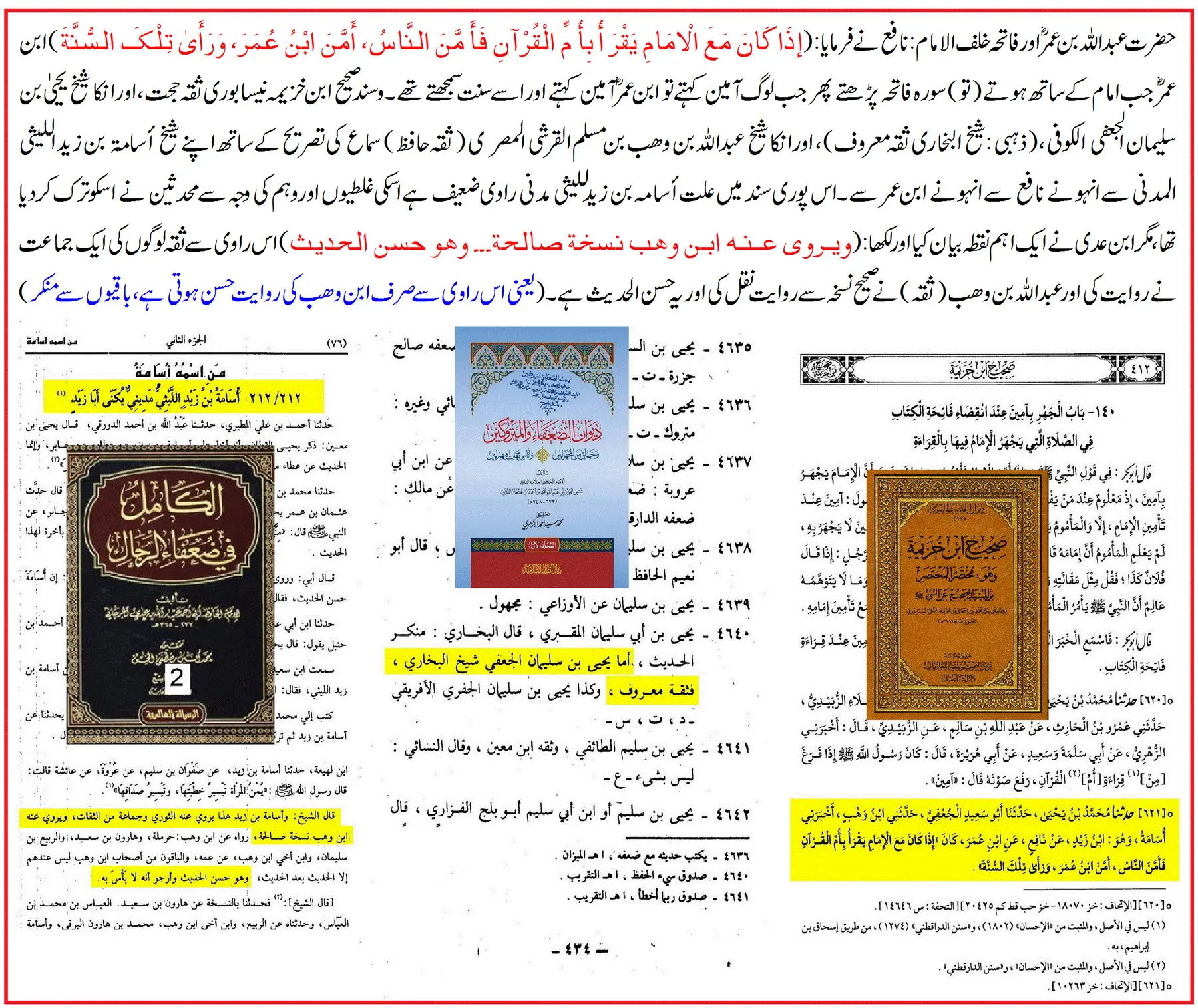
“When Ibn ʿUmar prayed with the imām and the people said ‘Āmīn’ after reciting al-Fātiḥah, he also said Āmīn, and considered it a Sunnah.”
[Ref: Ṣaḥīḥ Ibn Khuzaymah – Hasan Chain]
These reports confirm that Ibn ʿUmar used to recite al-Fātiḥah in every rakʿah, whether praying behind the imām or alone.
It is proven from Ibn ʿUmar and other companions that the imām would pause at two places during loud prayers. These pauses are recommended opportunities for the muqtadī to recite al-Fātiḥah.
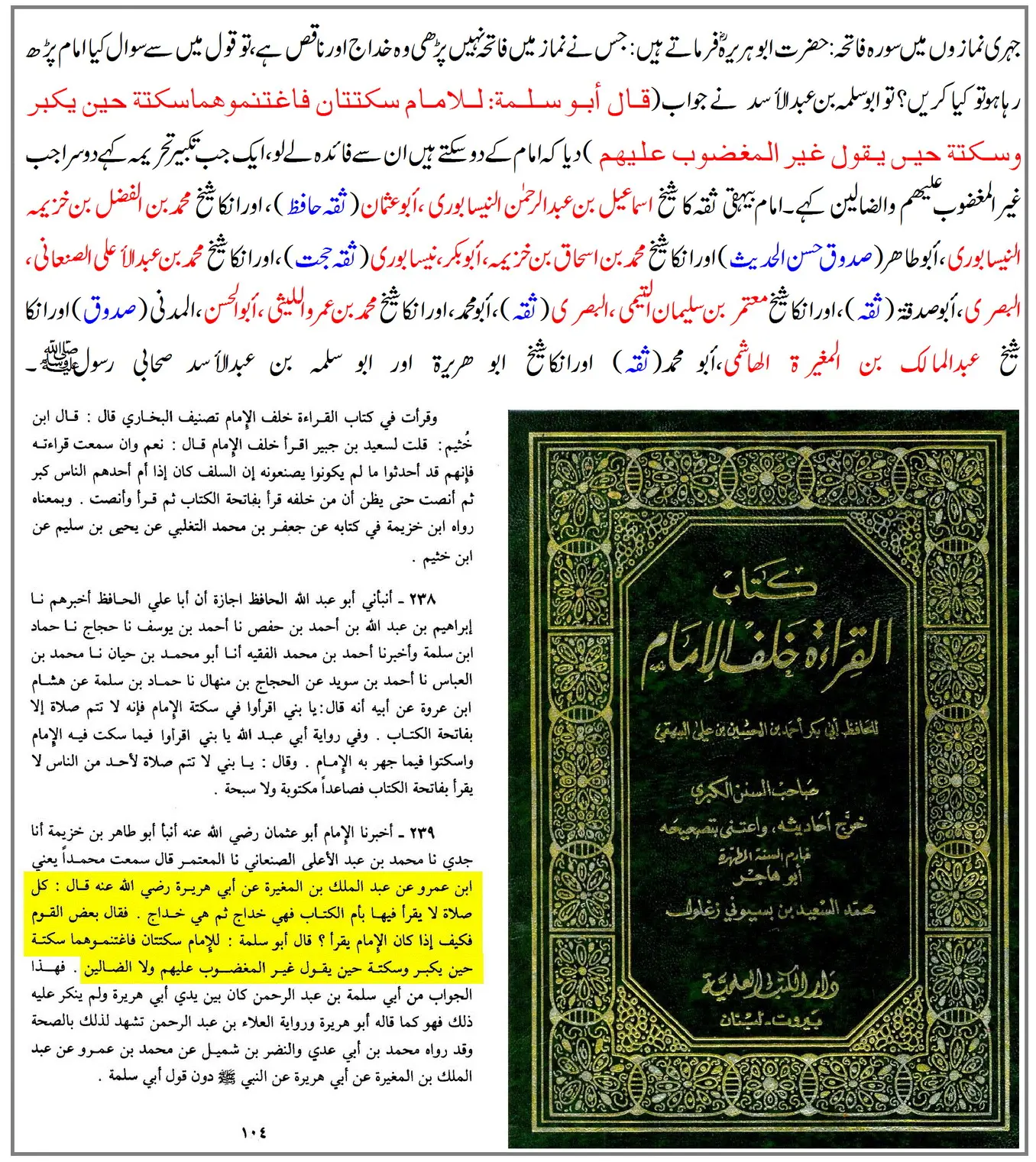
لِلْإِمَامِ سَكْتَتَانِ فَاغْتَنِمُوهُمَا…
“The imām has two pauses—one after saying takbīr (opening), and another after {غَيْرِ الْمَغْضُوبِ عَلَيْهِمْ وَلَا الضَّالِّينَ} —so make use of them.”
[Ref: al-Qirāʾah Khalfa al-Imām by al-Bayhaqī – Authentic Chain]
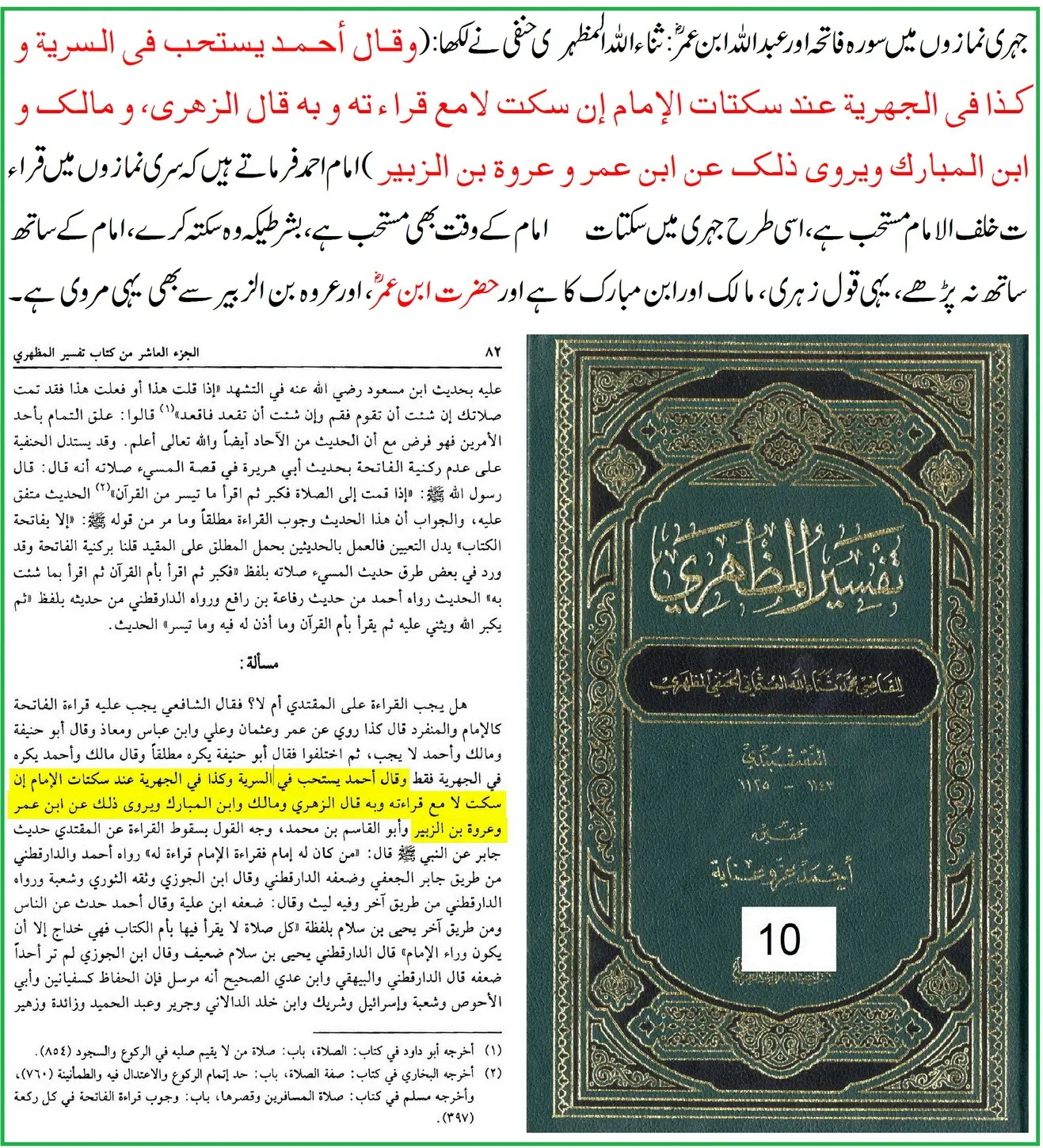
“It is recommended to recite in silent prayers, and also in loud prayers during the pauses—if the imām pauses. Not while the imām is reciting.”
[Ref: Tafsīr al-Maẓharī]
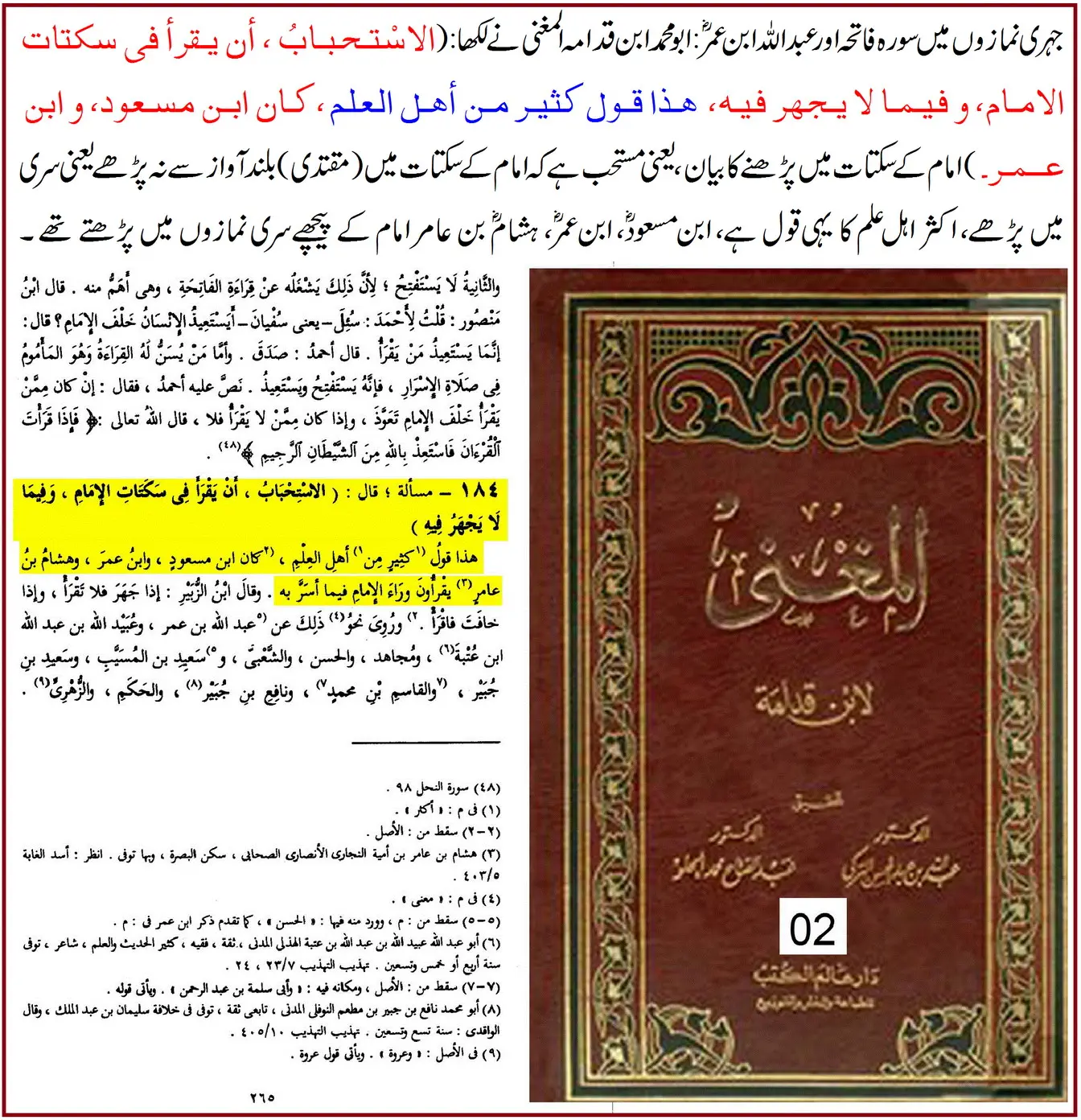
“Reciting during the pauses of the imām or in silent prayers is recommended. This was the practice of Ibn Masʿūd, Ibn ʿUmar, and Hishām bin ʿĀmir.”
[Ref: al-Mughnī]
Conclusion:
✔ Two pauses in loud prayers are confirmed.
✔ It is recommended to recite al-Fātiḥah during these pauses.
✔ Ibn ʿUmar used to do so.
This ruling is not restricted to the early scholars alone; even great Ḥanafī authorities considered it preferable or obligatory to recite al-Fātiḥah in specific contexts.
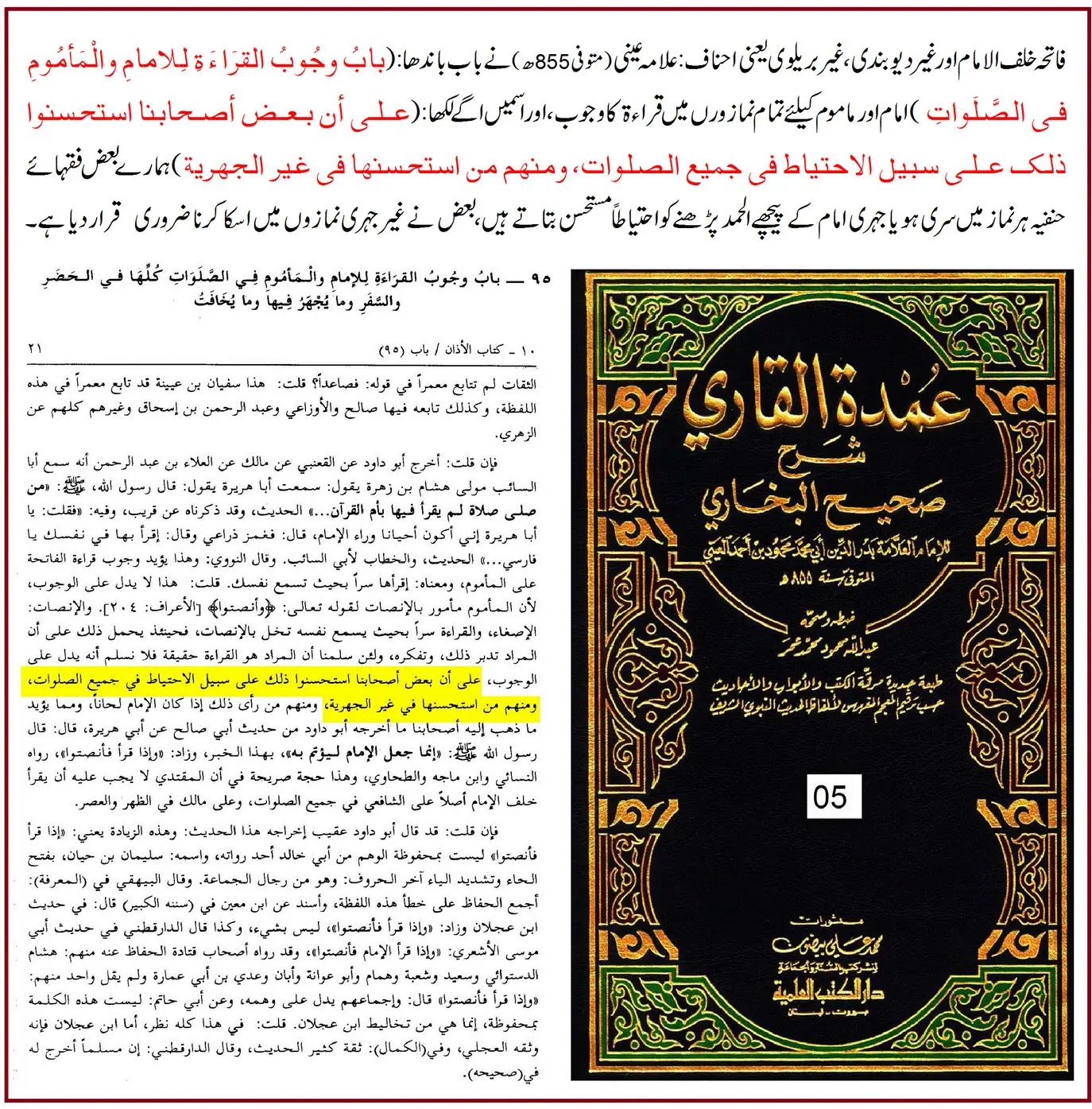
“Some of our scholars regarded it as preferable (iḥtiyāṭan) to recite in all prayers, and others in non-loud prayers only.”
[Ref: ʿUmdat al-Qārī]
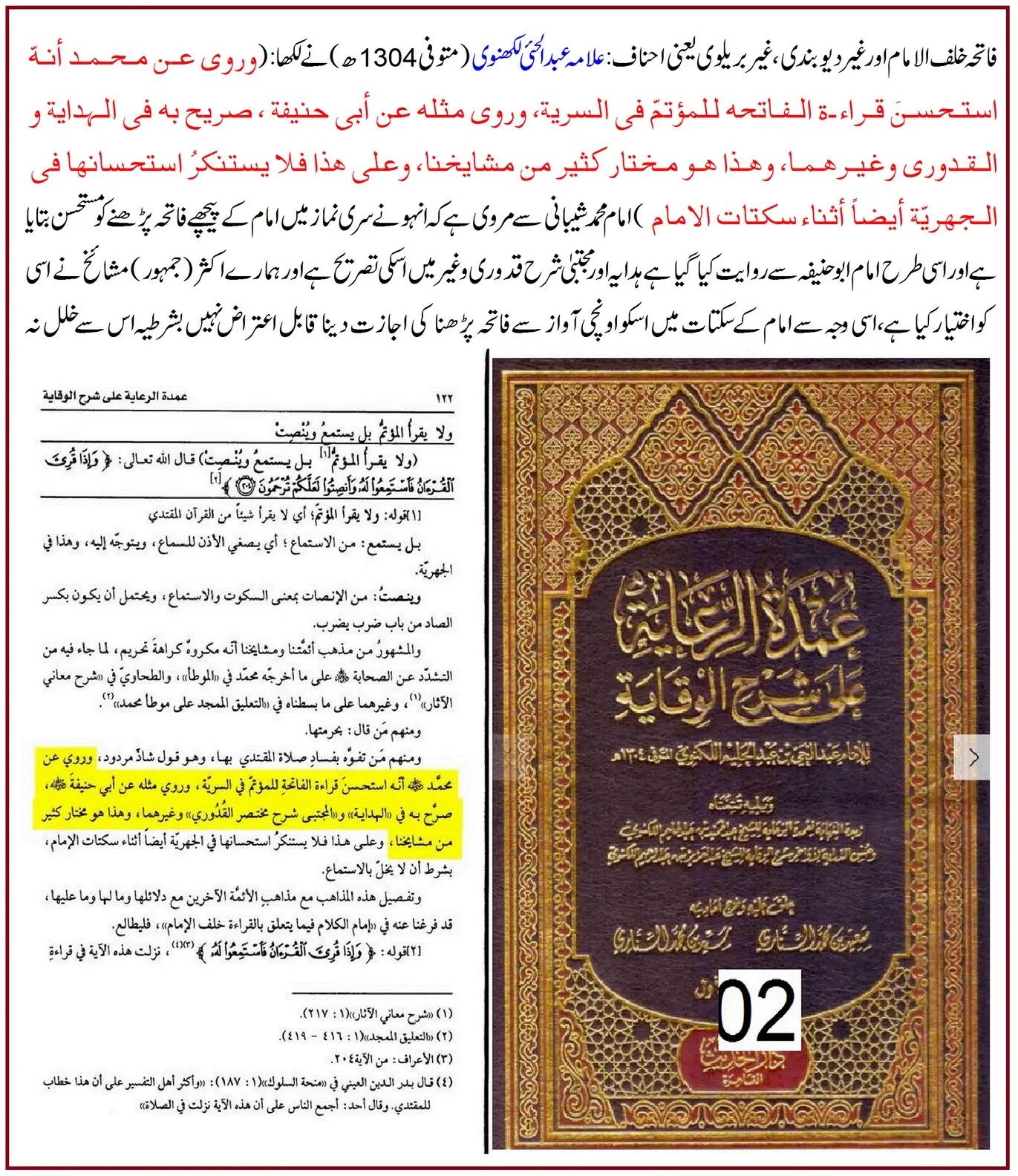
“Imām Muḥammad and Imām Abū Ḥanīfah both considered recitation in silent prayers preferable. This is also the chosen opinion of many of our mashāyikh.”
[Ref: ʿUmdat al-Riʿāyah]
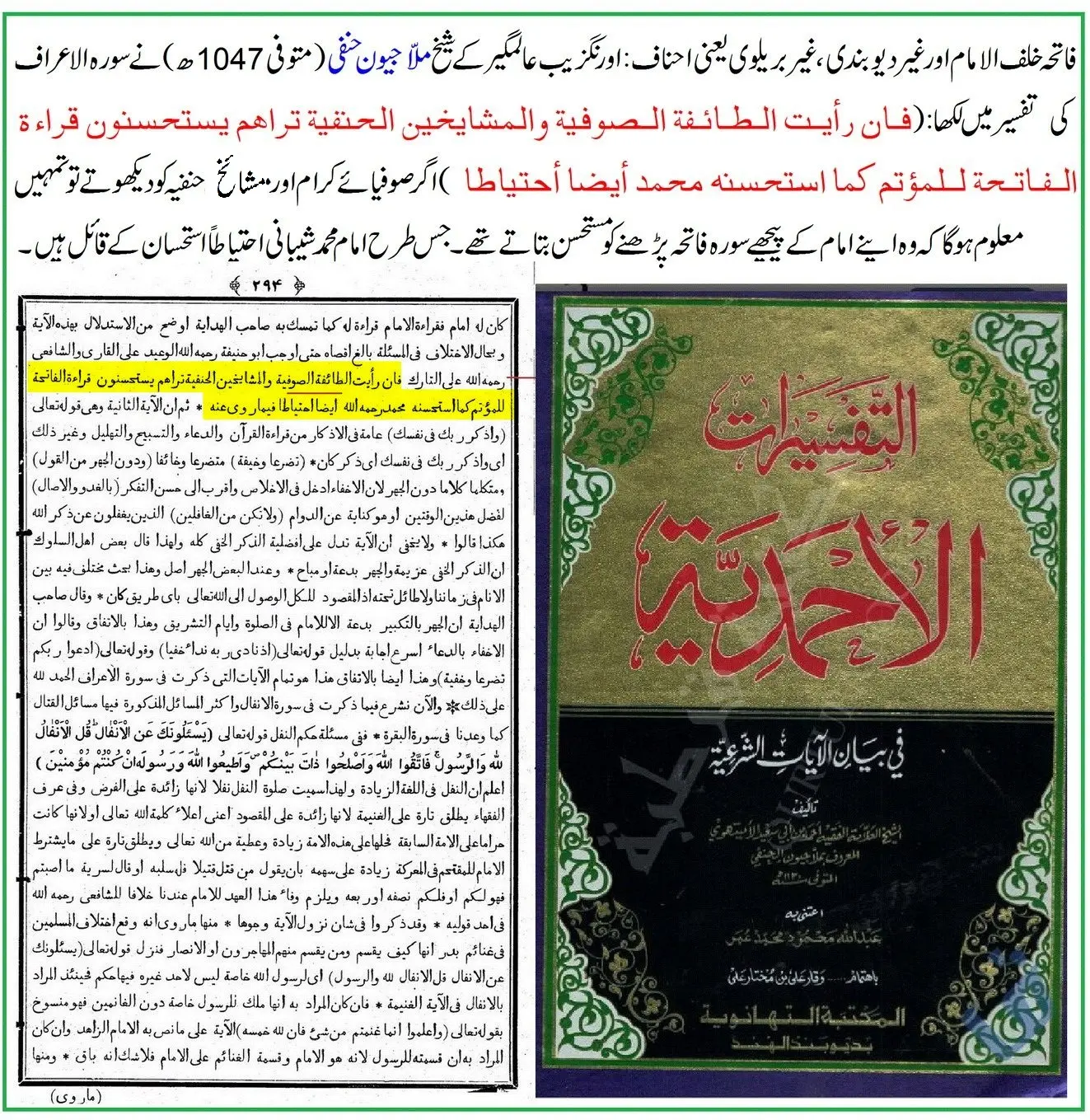
“Sufis and many Ḥanafī mashāyikh considered it preferable for the follower to recite al-Fātiḥah.”
[Ref: al-Tafsīrāt al-Aḥmadiyyah]
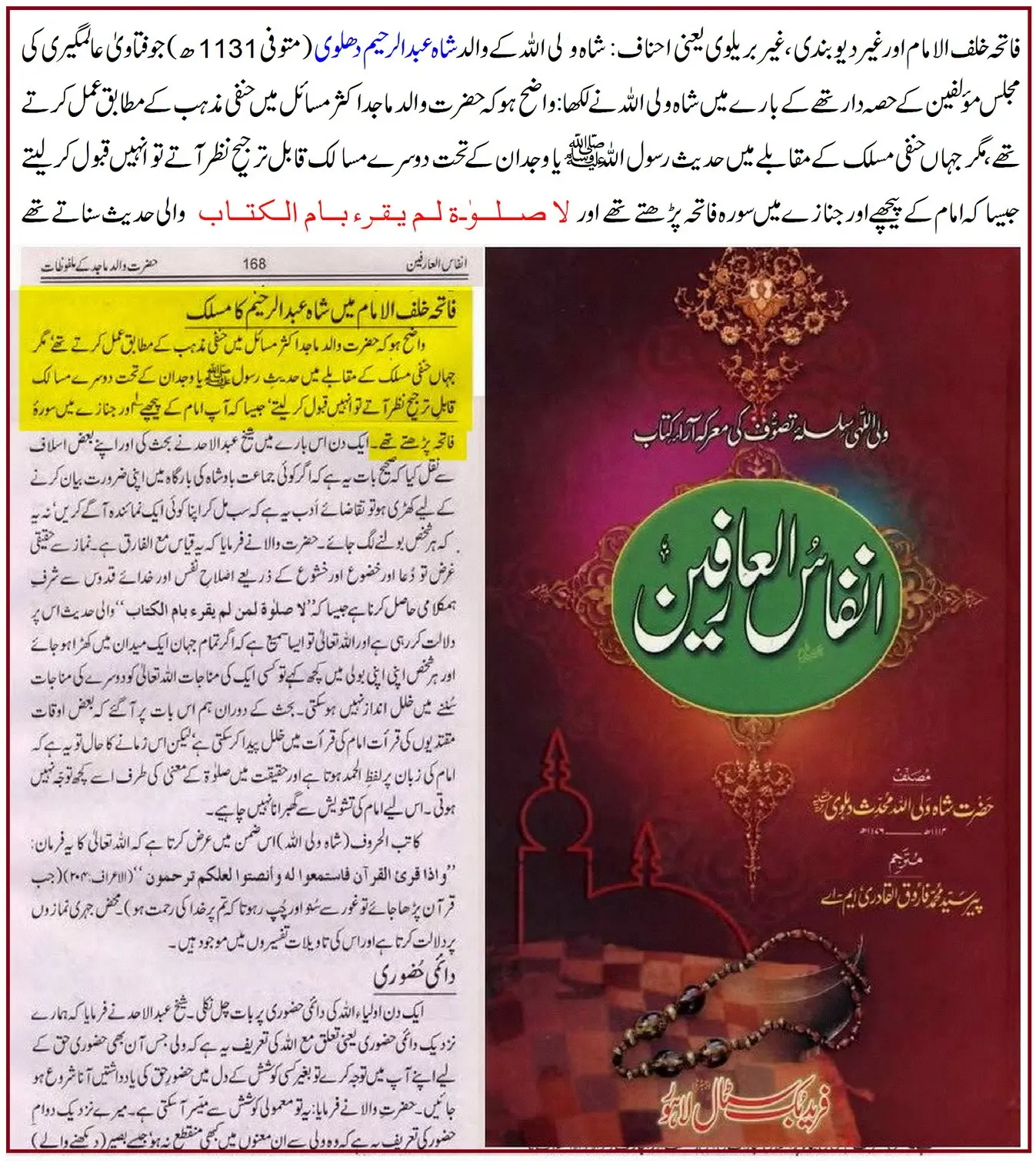
He would recite al-Fātiḥah behind the imām and in funeral prayers, citing the ḥadīth: “No prayer without al-Fātiḥah.”
[Ref: Anfās al-ʿĀrifīn]
“If the imām recites loudly, the follower should recite during the pause. If silently, he has the option to recite, without disturbing the imām. This is the best opinion according to me.”
[Ref: Ḥujjat Allāh al-Bālighah]
✔ Ibn ʿUmar’s instruction was limited to silence during loud recitation, not a blanket prohibition on reciting al-Fātiḥah.
✔ Multiple authentic narrations show that Ibn ʿUmar recited al-Fātiḥah in every rakʿah, even behind the imām.
✔ Pauses (saktāt) of the imām in loud prayers are well-documented, and reciting during them is recommended by companions, tābiʿīn, and early imāms.
✔ Even senior Ḥanafī scholars and mashāyikh have allowed or recommended recitation in silent prayers and during pauses in loud prayers.
Therefore, the claim that "the imām’s recitation suffices in all cases" is not supported by Ibn ʿUmar nor by the majority of scholars of Ahl al-Sunnah.

❖ Introduction
Ḥanafī followers claim that there is no need for the follower (muqtadī) to recite Sūrah al-Fātiḥah behind the imām, asserting that the imām’s recitation suffices for the entire congregation. They cite some narrations attributed to Sayyidunā ʿAbdullāh ibn ʿUmar رضي الله عنهما in support of their view, attempting to portray him as one who opposed reciting al-Fātiḥah behind the imām under all circumstances.
Below, we present the core narration used by the Ḥanafīs, followed by clarifications from the early scholars and imāms of Ahl al-Sunnah regarding its true context and meaning.
◈ The Narration from Ibn ʿUmar رضي الله عنه
الْمُصَنَّف لعبد الرزاق
قَالَ ابْنُ جُرَيْجٍ: وَحَدَّثَنِي ابْنُ شِهَابٍ، عَنْ سَالِمٍ، أَنَّ ابْنَ عُمَرَ كَانَ يَقُولُ: "يُنْصَتُ لِلْإِمَامِ فِيمَا يَجْهَرُ بِهِ فِي الصَّلَاةِ وَلَا يَقْرَأُ مَعَهُ"
Translation:
Ibn ʿUmar رضي الله عنه used to say: “One should remain silent behind the imām when he recites aloud in prayer, and should not recite along with him.”
[Ref: al-Muṣannaf by ʿAbd al-Razzāq]
This narration specifically applies to loud (jahrī) prayers and instructs silence during the imām’s recitation. However, it does not negate recitation in silent (sirrī) prayers or during pauses (saktāt) in loud prayers.❖ Scholarly Clarifications on the Narration
① Imām Ibn ʿAbd al-Barr – Commentary by ʿAllāmah ʿAbd al-Ḥayy Lakhnawī
The apparent meaning of Ibn ʿUmar’s statement is that he did not recite in either loud or silent prayers. However, Imām Mālik limited this opinion to loud prayers only, based on the chapter heading. Supporting this is another narration from ʿAbd al-Razzāq: Ibn ʿUmar used to remain silent during loud recitation but would recite when the imām was silent.
[Ref: al-Taʿlīq al-Mumajjad ʿalā al-Muwaṭṭaʾ Muḥammad]
② Imām Ibn al-Mundhir al-Nīsābūrī رحمه الله
“The ḥadīth ‘There is no prayer for one who does not recite al-Fātiḥah’ is general, except when one hears the imām’s recitation in a loud prayer—this is an exception proven by the Qurʾān and Sunnah.”
[Ref: al-Awsaṭ fī al-Sunan wa al-Ijmāʿ wa al-Ikhtilāf]
③ Imām al-Baghawī رحمه الله
“Some scholars opine that the follower should recite in silent prayers but not in loud prayers. This is the opinion of ʿAbdullāh ibn ʿUmar, al-Zuhrī, Mālik, Ibn al-Mubārak, Aḥmad, Isḥāq, and one narration from Imām al-Shāfiʿī.”
[Ref: Sharḥ al-Sunnah]
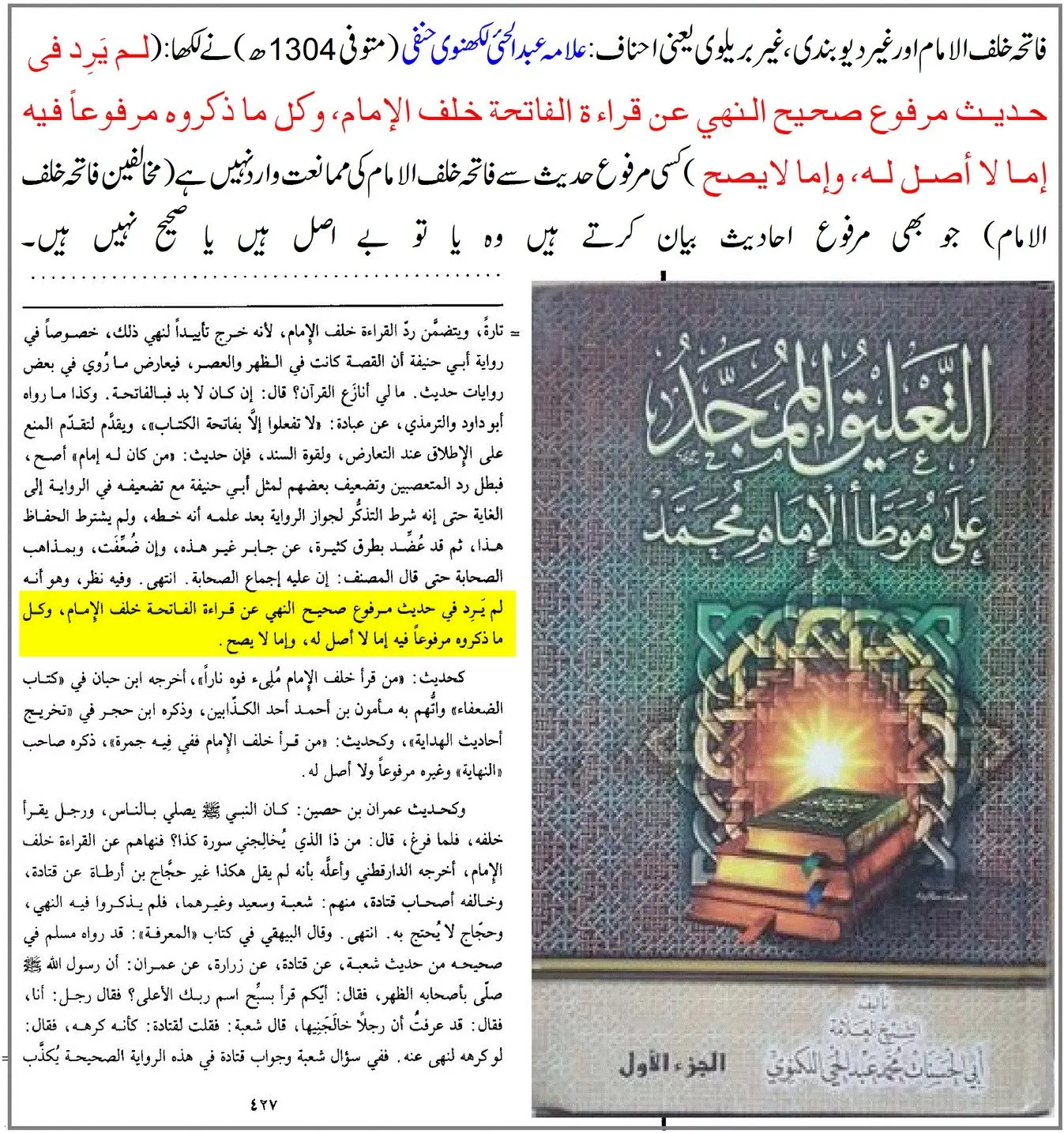
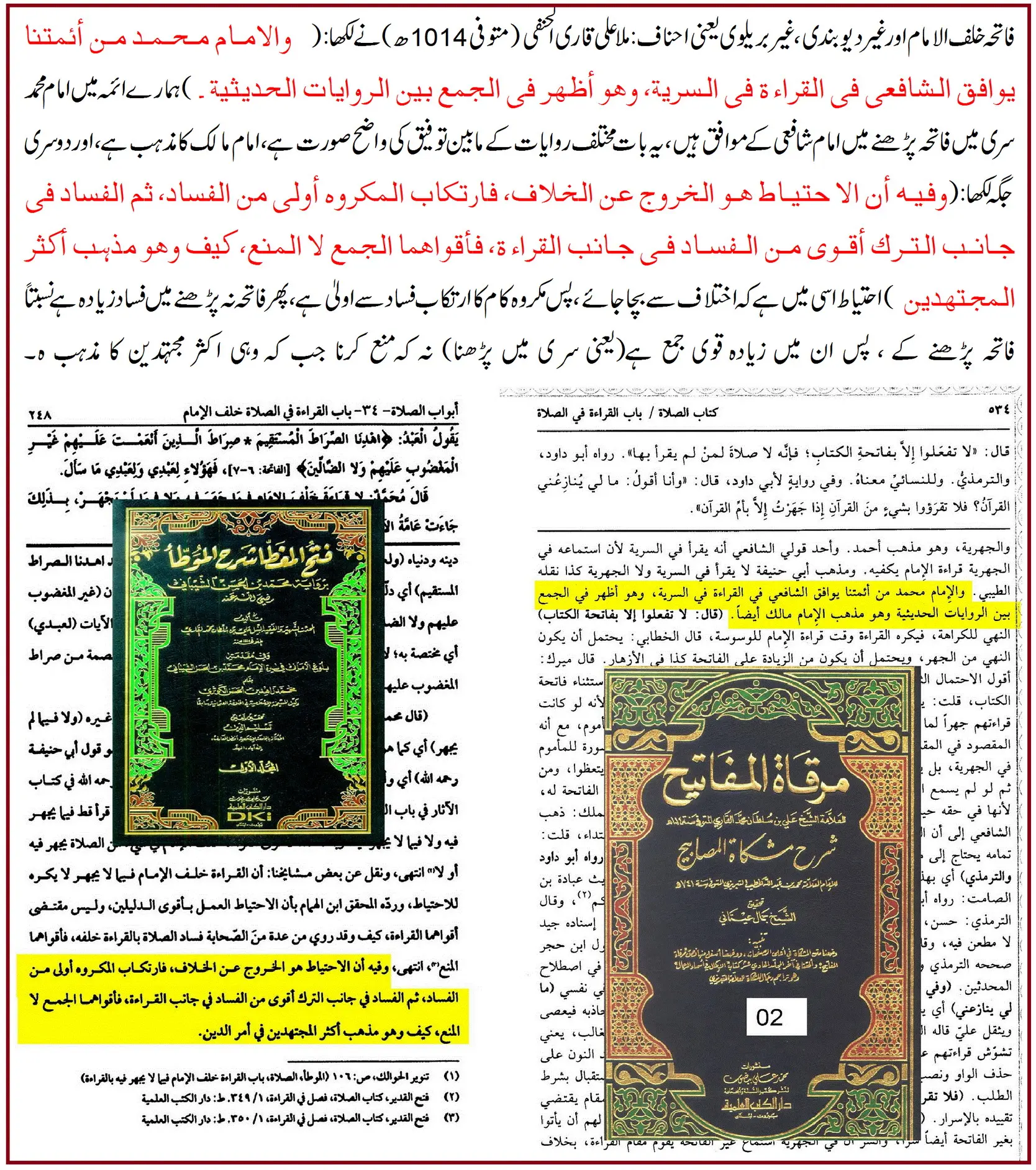
④ ʿAllāmah ʿAbd al-Ḥayy Lakhnawī رحمه الله
“Some narrations merely apply to the omission of al-Fātiḥah in loud prayers, not silent ones. Such as the narration of Ibn ʿUmar, hence this cannot be used as conclusive proof for the Ḥanafīs.”
[Ref: Ghayth al-Ghamām ʿalā Ḥawāshī Imām al-Kalām]
Conclusion:These statements confirm that Ibn ʿUmar رضي الله عنه only advised silence during the imām’s loud recitation—not against reciting al-Fātiḥah in every case.
❖ Ibn ʿUmar’s Own Practice of Reciting Behind the Imām
While some narrations suggest silence during loud recitation, other authentic reports affirm Ibn ʿUmar’s recitation in silent prayers and even during pauses in loud prayers.
1. Abū al-ʿĀliyah’s Report: Reciting in Every Prayer
إِنِّي لَأَسْتَحْيِي مِنْ رَبِّ هَذِهِ الْبَنِيَّةِ أَنْ أُصَلِّيَ صَلَاةً لَا أَقْرَأُ فِيهَا بِأُمِّ الْقُرْآنِ وَشَيْءٍ مَعَهَا
“I feel ashamed before the Lord of this House (Kaʿbah) to pray a prayer in which I do not recite Sūrah al-Fātiḥah and something along with it.”
[Ref: al-Muṣannaf of ʿAbd al-Razzāq – Authentic Chain]
This is a clear declaration of always reciting al-Fātiḥah.2. Yahyā al-Bakkāʾ’s Report: Silent Recitation in Loud Prayers
“When asked about reciting behind the imām, Ibn ʿUmar replied: ‘They did not see any harm in silently reciting Sūrah al-Fātiḥah behind the imām.’”
[Ref: al-Qirāʾah Khalfa al-Imām by al-Bayhaqī]
3. Nāfiʿ’s Report: Al-Fātiḥah in Every Rakʿah
“Ibn ʿUmar would not leave reciting Sūrah al-Fātiḥah in every rakʿah of an obligatory prayer.”
[Ref: al-Muṣannaf of ʿAbd al-Razzāq – Authentic Chain]
4. Ṣaḥīḥ Ibn Khuzaymah: Saying Āmīn with the Imām
“When Ibn ʿUmar prayed with the imām and the people said ‘Āmīn’ after reciting al-Fātiḥah, he also said Āmīn, and considered it a Sunnah.”
[Ref: Ṣaḥīḥ Ibn Khuzaymah – Hasan Chain]
These reports confirm that Ibn ʿUmar used to recite al-Fātiḥah in every rakʿah, whether praying behind the imām or alone.❖ The Pauses (Saktāt) of the Imām and Their Rulings
It is proven from Ibn ʿUmar and other companions that the imām would pause at two places during loud prayers. These pauses are recommended opportunities for the muqtadī to recite al-Fātiḥah.
1. Abū Hurayrah’s Statement and Clarification by Abū Salamah
لِلْإِمَامِ سَكْتَتَانِ فَاغْتَنِمُوهُمَا…
“The imām has two pauses—one after saying takbīr (opening), and another after {غَيْرِ الْمَغْضُوبِ عَلَيْهِمْ وَلَا الضَّالِّينَ} —so make use of them.”
[Ref: al-Qirāʾah Khalfa al-Imām by al-Bayhaqī – Authentic Chain]
2. Statement of Imām Aḥmad رحمه الله
“It is recommended to recite in silent prayers, and also in loud prayers during the pauses—if the imām pauses. Not while the imām is reciting.”
[Ref: Tafsīr al-Maẓharī]
3. Imām Ibn Qudāmah Ḥanbalī رحمه الله
“Reciting during the pauses of the imām or in silent prayers is recommended. This was the practice of Ibn Masʿūd, Ibn ʿUmar, and Hishām bin ʿĀmir.”
[Ref: al-Mughnī]
Conclusion:✔ Two pauses in loud prayers are confirmed.
✔ It is recommended to recite al-Fātiḥah during these pauses.
✔ Ibn ʿUmar used to do so.
❖ Proof from Leading Ḥanafī Scholars for Reciting Behind the Imām
This ruling is not restricted to the early scholars alone; even great Ḥanafī authorities considered it preferable or obligatory to recite al-Fātiḥah in specific contexts.
1. ʿAllāmah Badr al-Dīn al-ʿAynī Ḥanafī رحمه الله
“Some of our scholars regarded it as preferable (iḥtiyāṭan) to recite in all prayers, and others in non-loud prayers only.”
[Ref: ʿUmdat al-Qārī]
2. ʿAllāmah ʿAbd al-Ḥayy Lakhnawī رحمه الله
“Imām Muḥammad and Imām Abū Ḥanīfah both considered recitation in silent prayers preferable. This is also the chosen opinion of many of our mashāyikh.”
[Ref: ʿUmdat al-Riʿāyah]
3. Mullā Jīwan Ḥanafī رحمه الله
“Sufis and many Ḥanafī mashāyikh considered it preferable for the follower to recite al-Fātiḥah.”
[Ref: al-Tafsīrāt al-Aḥmadiyyah]
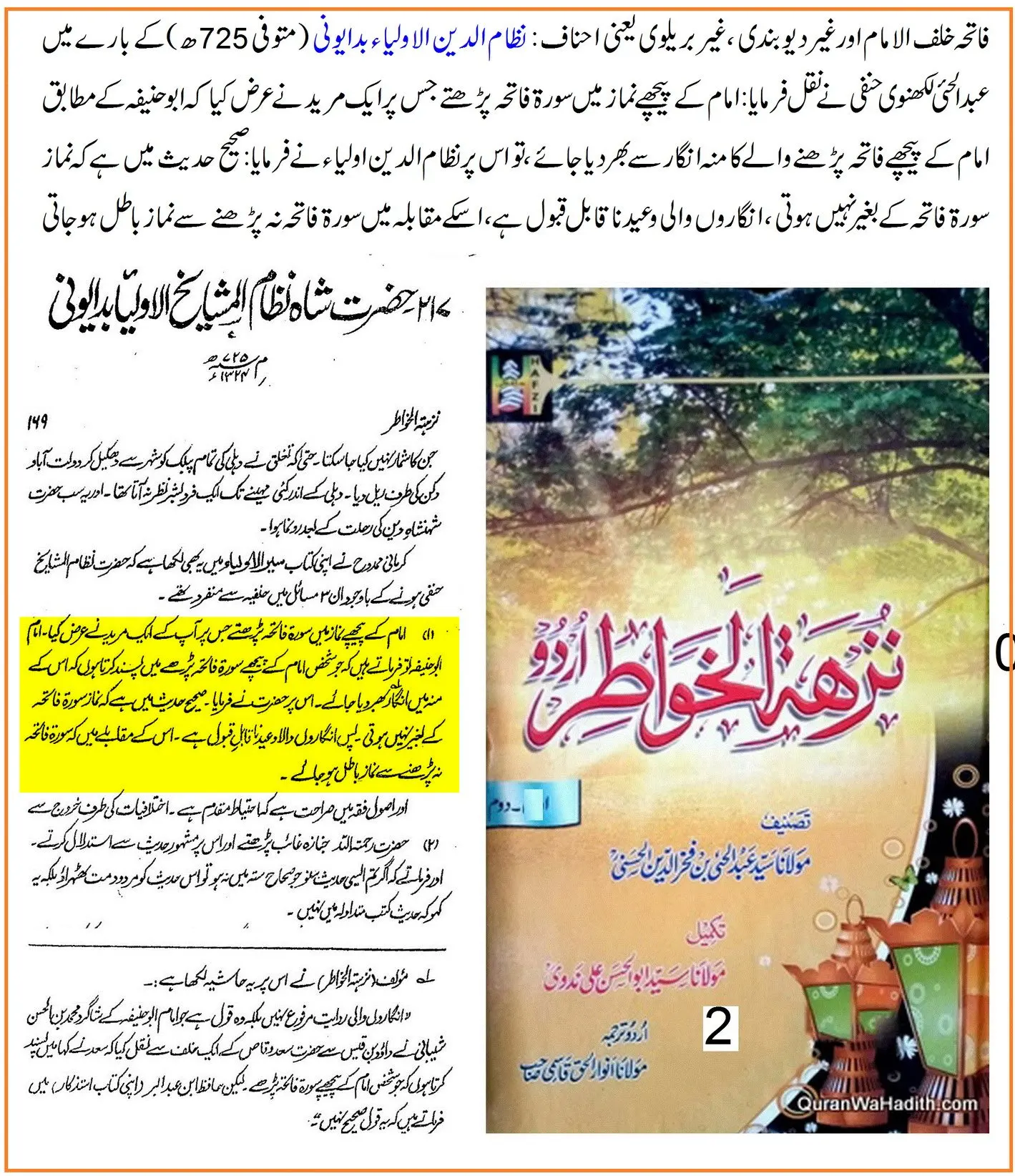
4. Shāh ʿAbd al-Raḥīm Dehlawī رحمه الله
He would recite al-Fātiḥah behind the imām and in funeral prayers, citing the ḥadīth: “No prayer without al-Fātiḥah.”
[Ref: Anfās al-ʿĀrifīn]
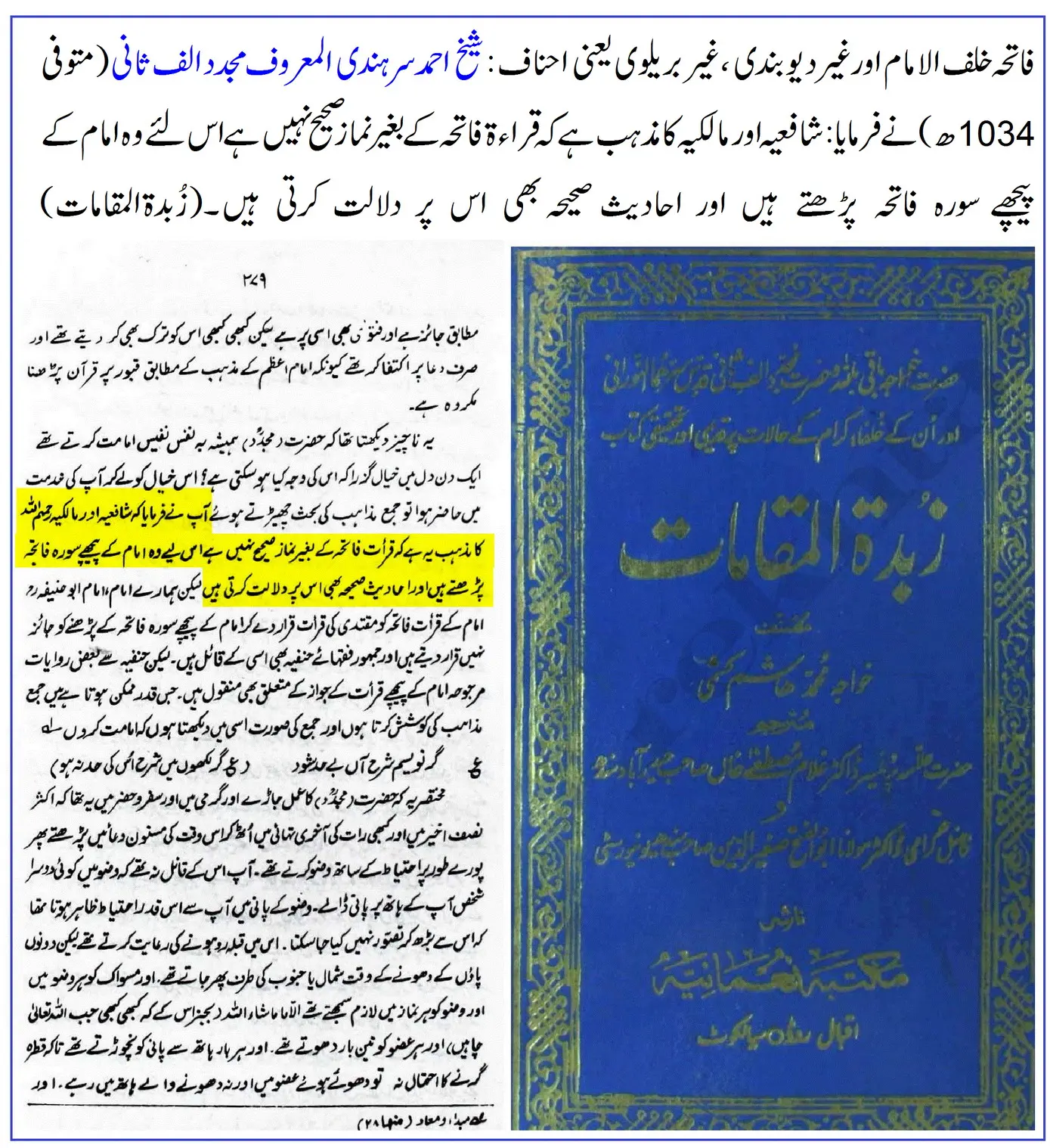
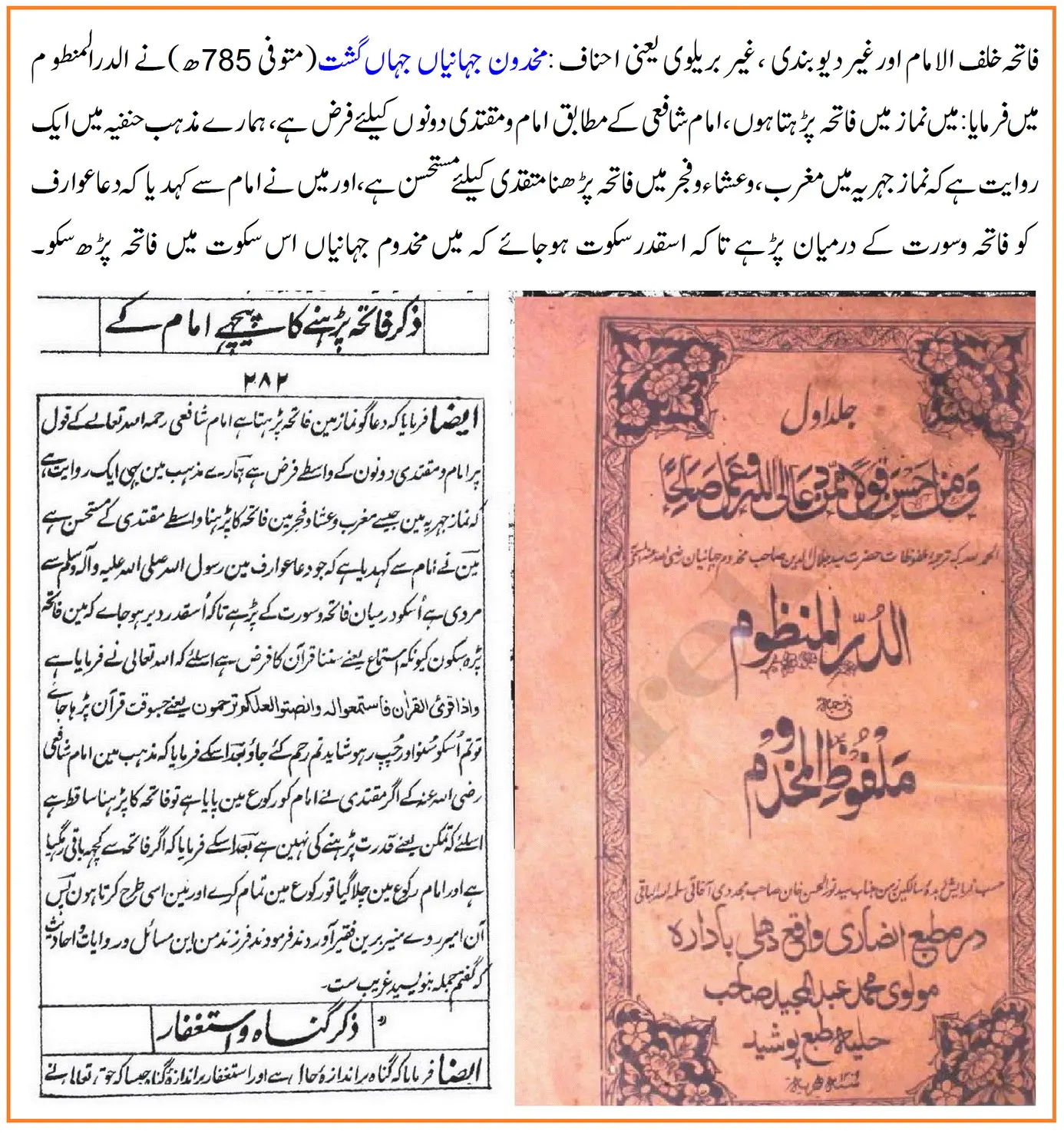
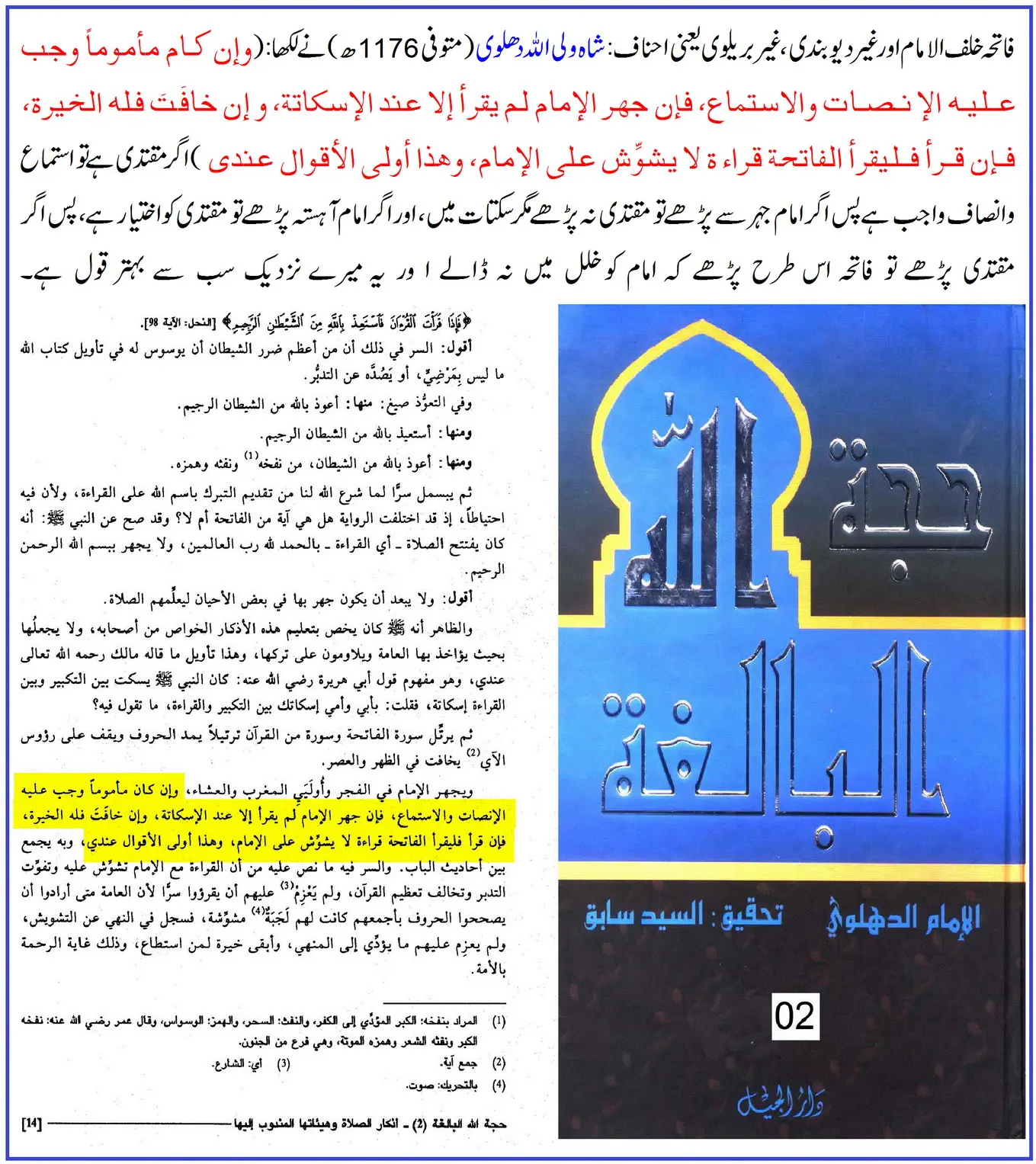
5. Shāh Walīullāh Dehlawī رحمه الله
“If the imām recites loudly, the follower should recite during the pause. If silently, he has the option to recite, without disturbing the imām. This is the best opinion according to me.”
[Ref: Ḥujjat Allāh al-Bālighah]
 Final Summary and Conclusions
✔ Ibn ʿUmar’s instruction was limited to silence during loud recitation, not a blanket prohibition on reciting al-Fātiḥah.
✔ Multiple authentic narrations show that Ibn ʿUmar recited al-Fātiḥah in every rakʿah, even behind the imām.
✔ Pauses (saktāt) of the imām in loud prayers are well-documented, and reciting during them is recommended by companions, tābiʿīn, and early imāms.
✔ Even senior Ḥanafī scholars and mashāyikh have allowed or recommended recitation in silent prayers and during pauses in loud prayers.
Therefore, the claim that "the imām’s recitation suffices in all cases" is not supported by Ibn ʿUmar nor by the majority of scholars of Ahl al-Sunnah.