
Compiled by: Abu Hamzah Salafi
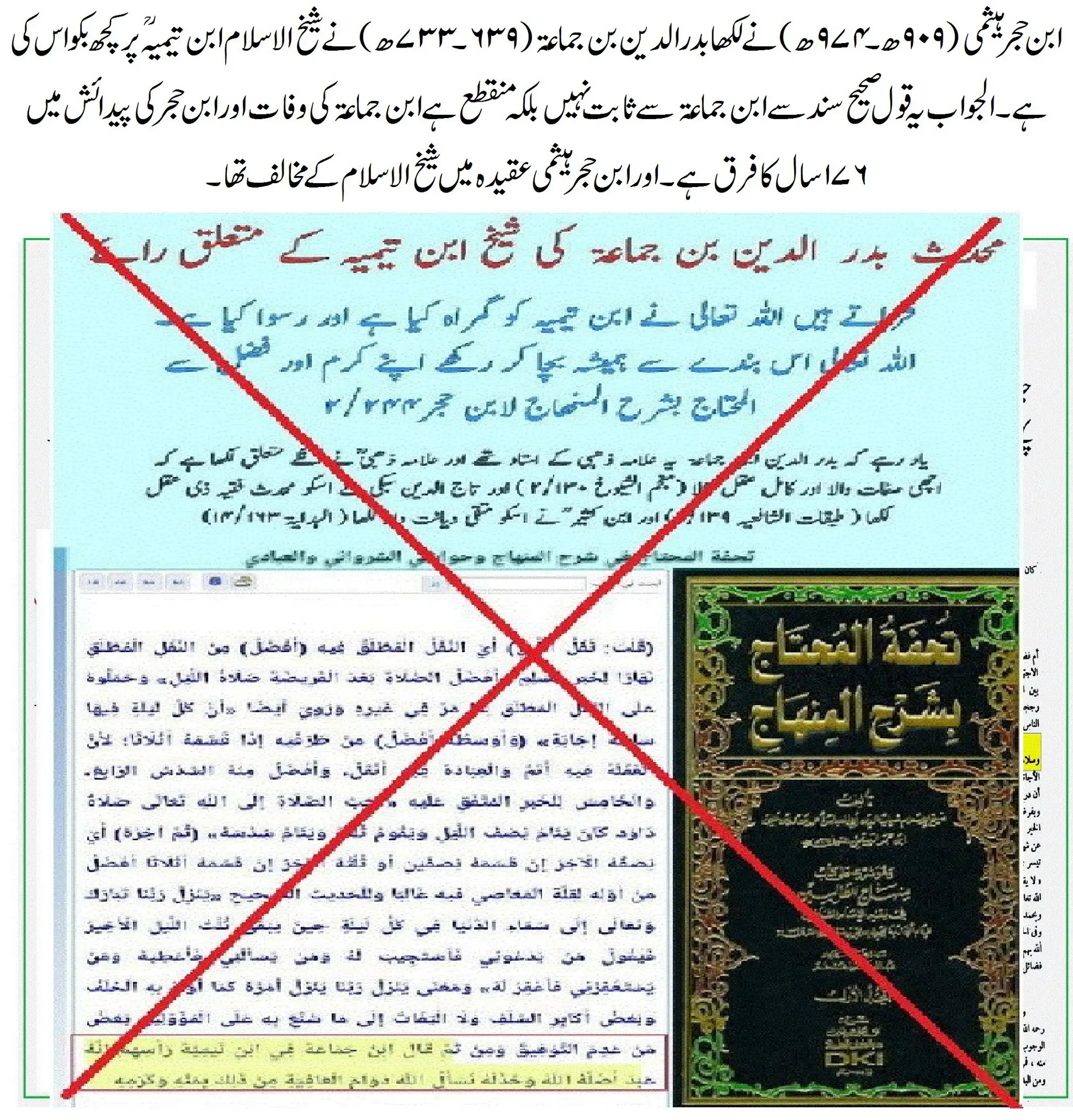
This article is, in reality, a scholarly response to the doubt presented by a person named Ibn Ḥajar al-Haytamī (d. 974 AH) in his book Tuḥfat al-Muḥtāj.
He:
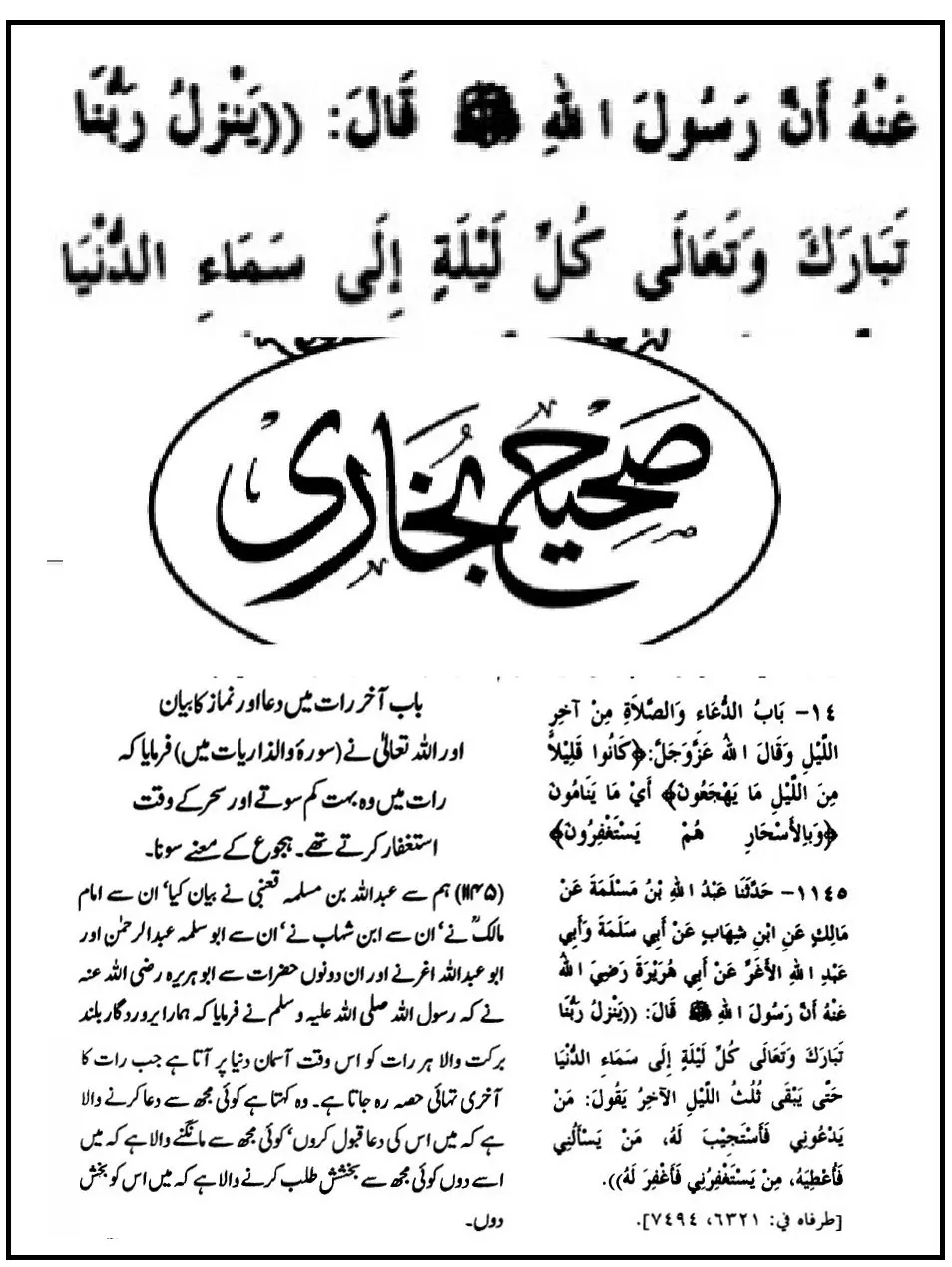
✔ Interpreted the authentic and well-known ḥadīths regarding the Divine Descent (Nuzūl),
✔ Interpreted it as “the descent of Allah’s command”,
✔ And on this basis, quoted the statement of Ibn Jamāʿah in order to criticize Shaykh al-Islām Ibn Taymiyyah رحمه الله.
The methodology of Ahl al-Sunnah wa al-Jamāʿah regarding this issue is clear:
◈ Allah’s descent every night is firmly established,
◈ Belief in it is obligatory,
◈ Its how (kayfiyyah) is entrusted to Allah,
◈ And its denial is only committed by misguided sects such as the Muʿtazilah and Jahmiyyah.
«ومعنى ينزل ربنا ينزل أمره كما أوله به الخلف وبعض أكابر السلف، ولا التفات إلى ما شنّع به على المؤوّلين بعض من عدم التوفيق، ومن ثم قال ابن جماعة في ابن تيمية رأسهم إنه عبد أضله الله وخذله.»
 Translation:
“The meaning of ‘Our Lord descends’ is that His command descends, as interpreted by some of the later scholars and some of the senior Salaf. No attention should be paid to the accusations made against those who interpret by some unsuccessful individuals. Hence, Ibn Jamāʿah said about Ibn Taymiyyah that he is a servant whom Allah has misguided and forsaken.”
① Ibn Jamāʿah died in 733 AH,
② Ibn Ḥajar al-Haytamī was born in 905 AH,
③ There is a gap of 172 years between them.
Therefore, this is merely a baseless quotation with no chain.
Ibn Ḥajar al-Haytamī’s claim that “only Ibn Taymiyyah takes the ḥadīths of descent upon their apparent meaning” is completely false.
The reality is that there is consensus among the Salaf upon affirming the Divine Descent.
Imām Mālik, Imām Sufyān ibn ʿUyaynah, Imām ʿAbdullāh ibn al-Mubārak, Imām al-Tirmidhī, Imām Ibn Khuzaymah, Imām al-Dārimī, Imām Isḥāq ibn Rāhawayh and others all held this belief.
Ibn Taymiyyah رحمه الله did not introduce a new creed; rather, he followed the same methodology as the Companions and the Salaf:
“Affirming the descent without describing its modality.”
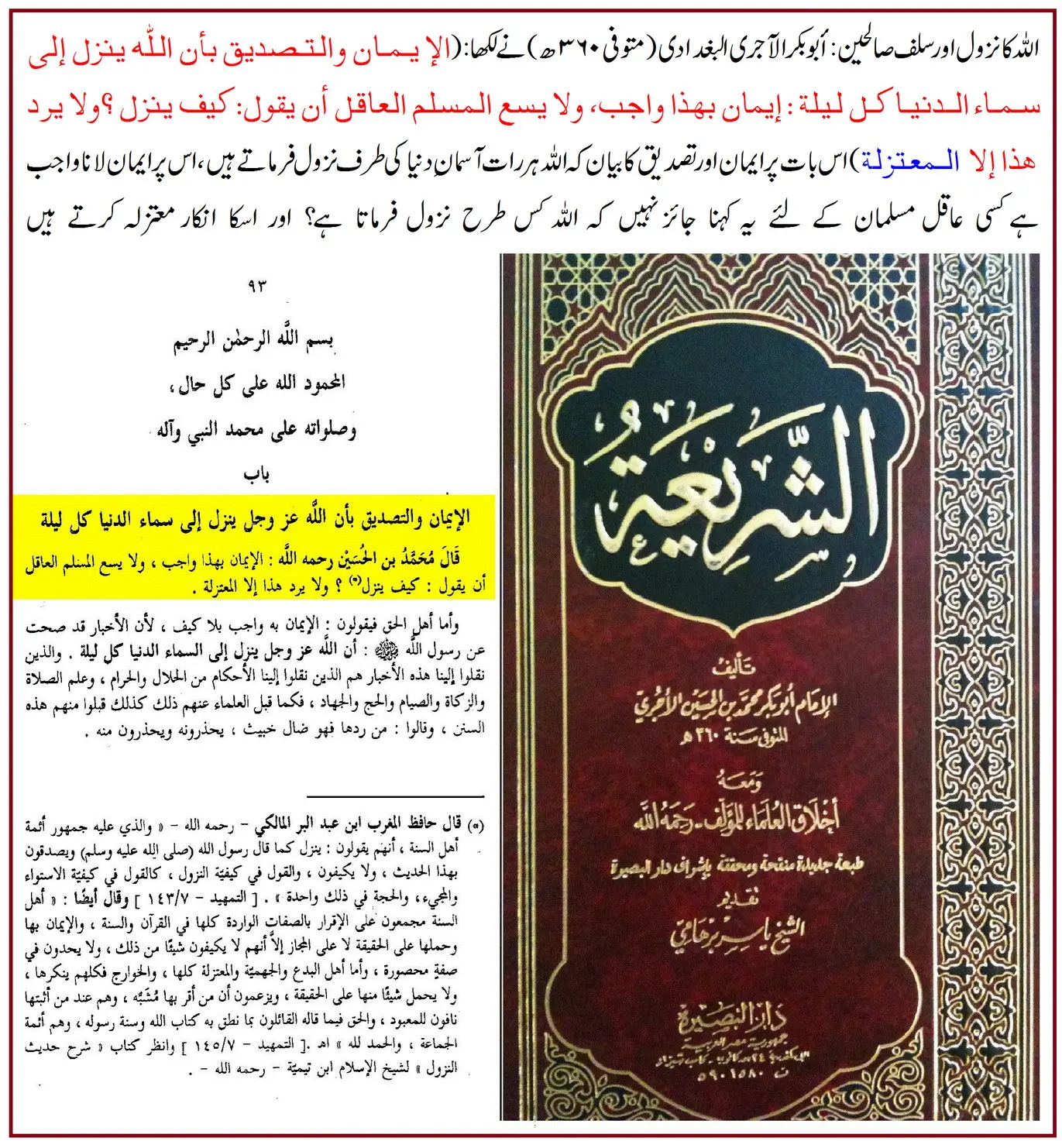
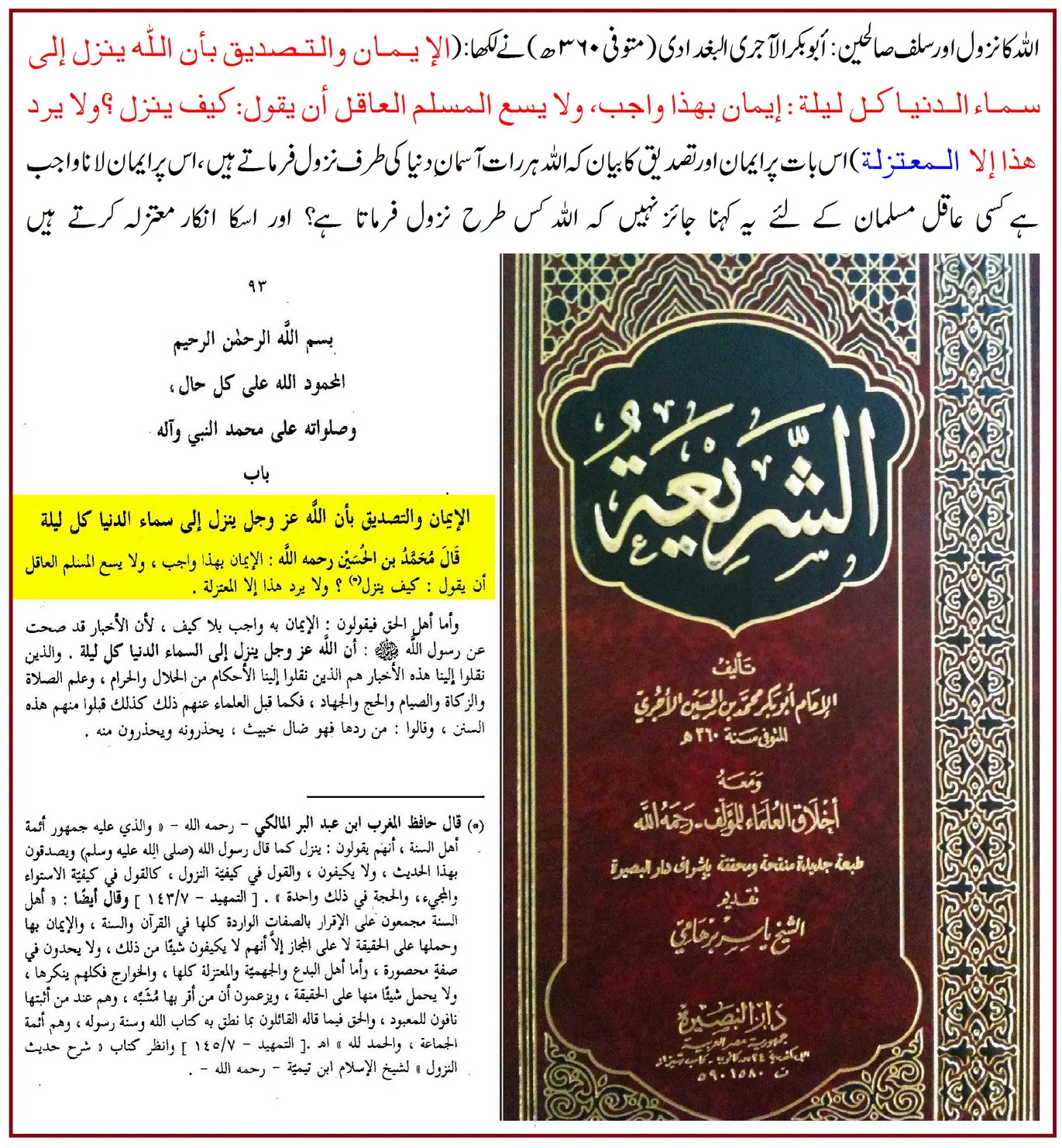
بَابُ الْإِيمَانِ وَالتَّصْدِيقِ بِأَنَّ اللَّهَ عَزَّ وَجَلَّ يَنْزِلُ إِلَى سَمَاءِ الدُّنْيَا كُلَّ لَيْلَةٍ … وَلا يَرُدُّ هَذَا إِلَّا الْمُعْتَزِلَةُ، وَأَمَّا أَهْلُ الْحَقِّ فَيَقُولُونَ: الْإِيمَانُ بِهِ وَاجِبٌ بِلَا كَيْفٍ.
Translation:
Al-Ājurrī says: “Belief and affirmation are obligatory that Allah descends every night to the lowest heaven. It is not permissible for a Muslim to ask how He descends. Only the Muʿtazilah reject this. The people of truth say: belief in it is obligatory without asking how.”
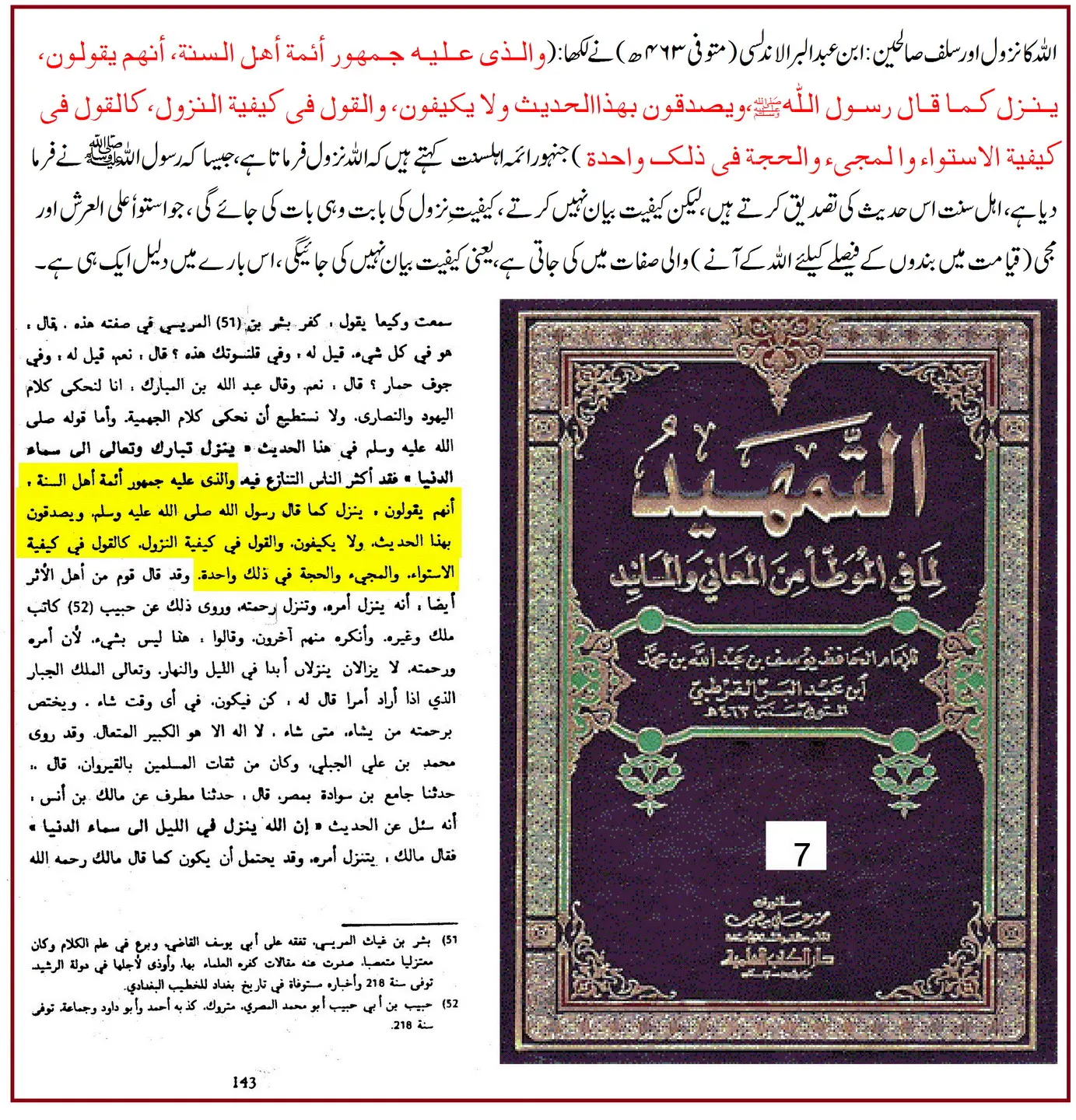
والذي عليه جمهور أئمة أهل السنة أنهم يقولون: ينزل كما قال رسول الله ﷺ، ويصدقون بهذا الحديث ولا يكيفون…
Translation:
“The majority of the Imams of Ahl al-Sunnah believe that Allah descends as the Messenger of Allah ﷺ stated. They affirm this ḥadīth without describing its modality. The ruling regarding the modality of descent is the same as that of istiwāʾ and coming. The proof for all of them is one.”
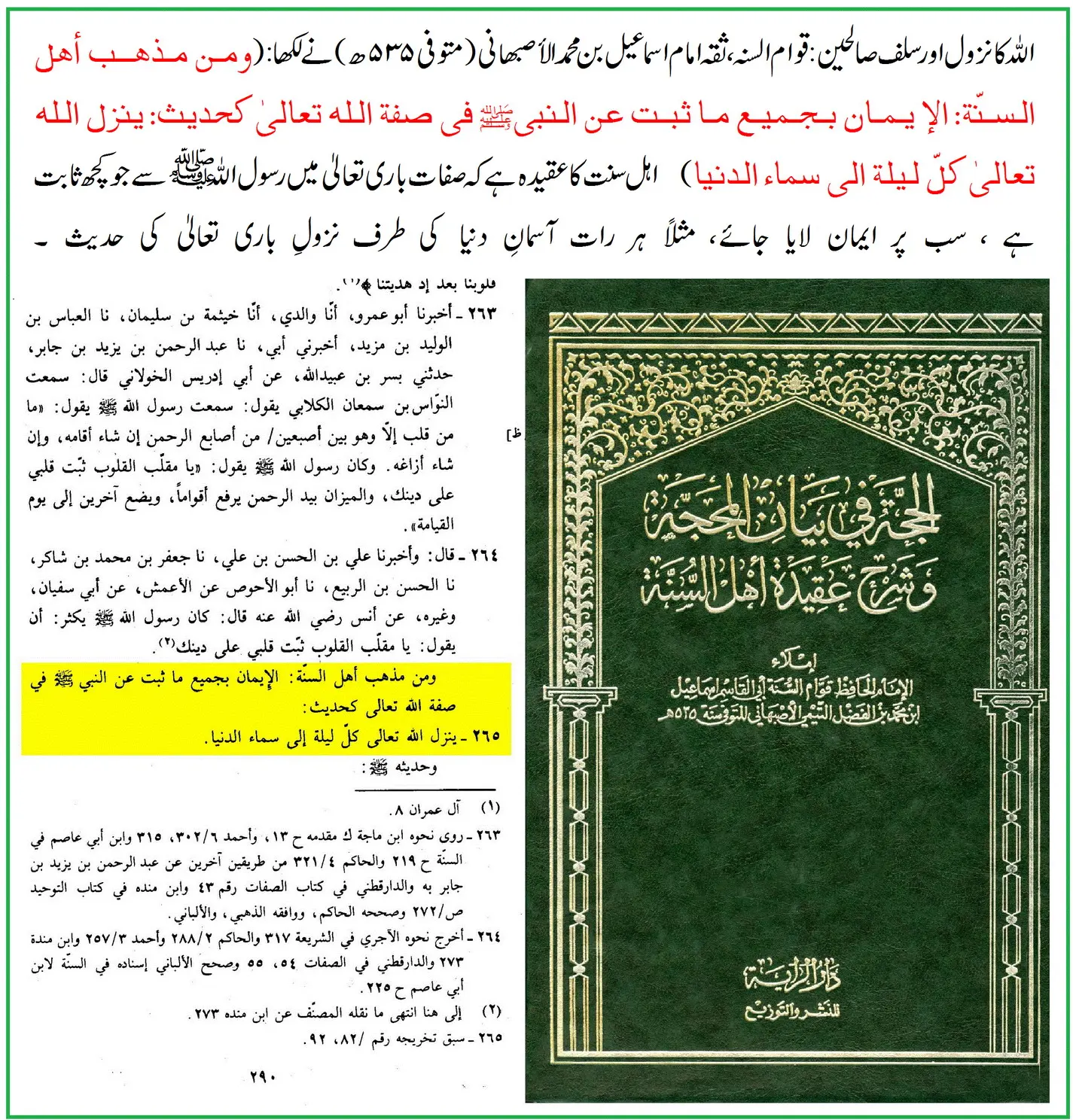
ومن مذهب أهل السنة: الإيمان بجميع ما ثبت عن النبي ﷺ في صفة الله تعالى…
Translation:
“From the creed of Ahl al-Sunnah is belief in everything authentically reported from the Prophet ﷺ regarding the attributes of Allah, such as the ḥadīth: ‘Allah descends every night to the lowest heaven.’”
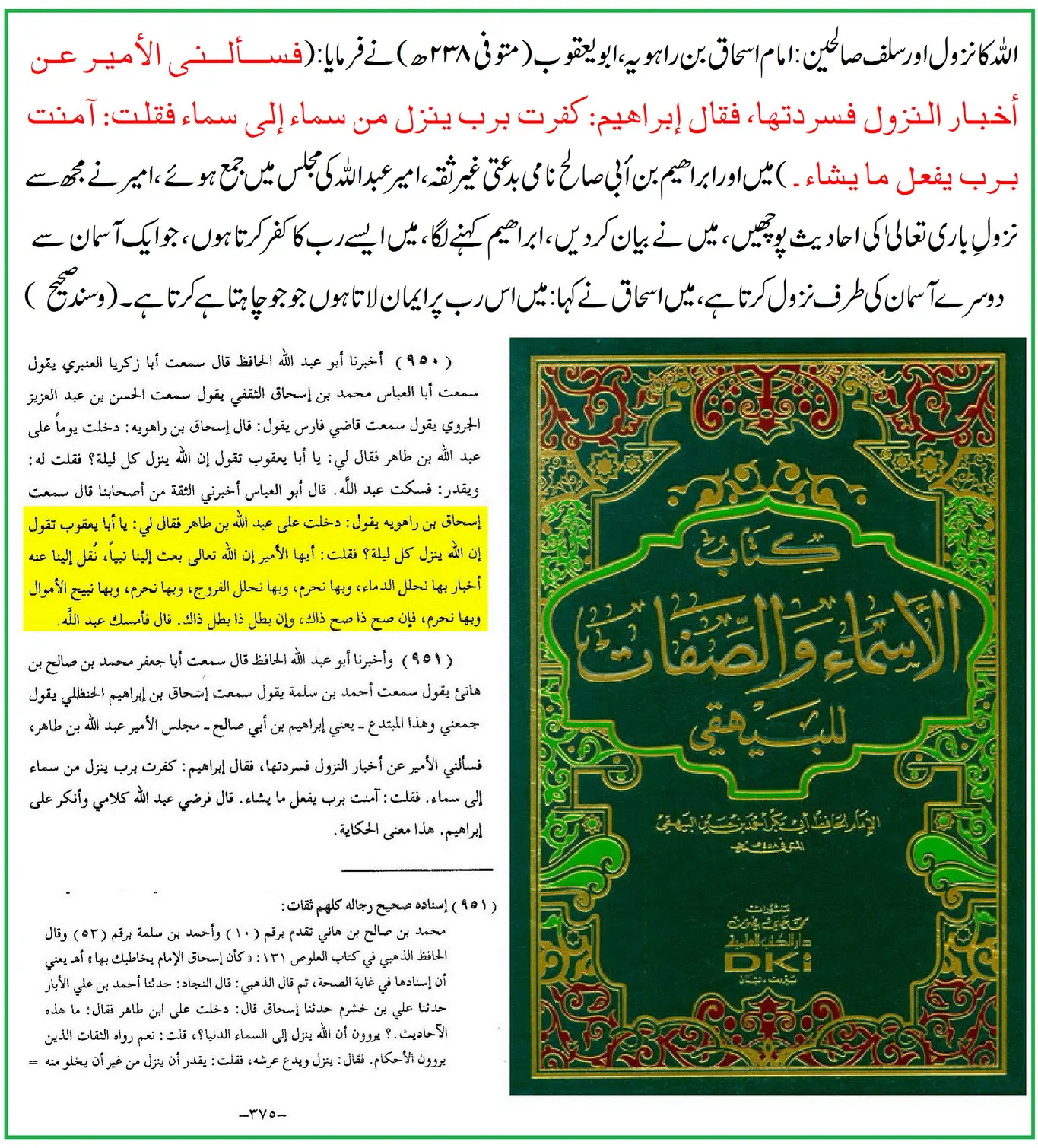
… فَقَالَ (المبتدع): كَفَرْتُ بِرَبٍّ يَنْزِلُ… فَقُلْتُ: آمَنْتُ بِرَبٍّ يَفْعَلُ مَا يَشَاءُ.
Translation:
Imām Isḥāq said: “A heretic said: ‘I disbelieve in a Lord who descends.’ I replied: ‘I believe in a Lord who does whatever He wills.’”
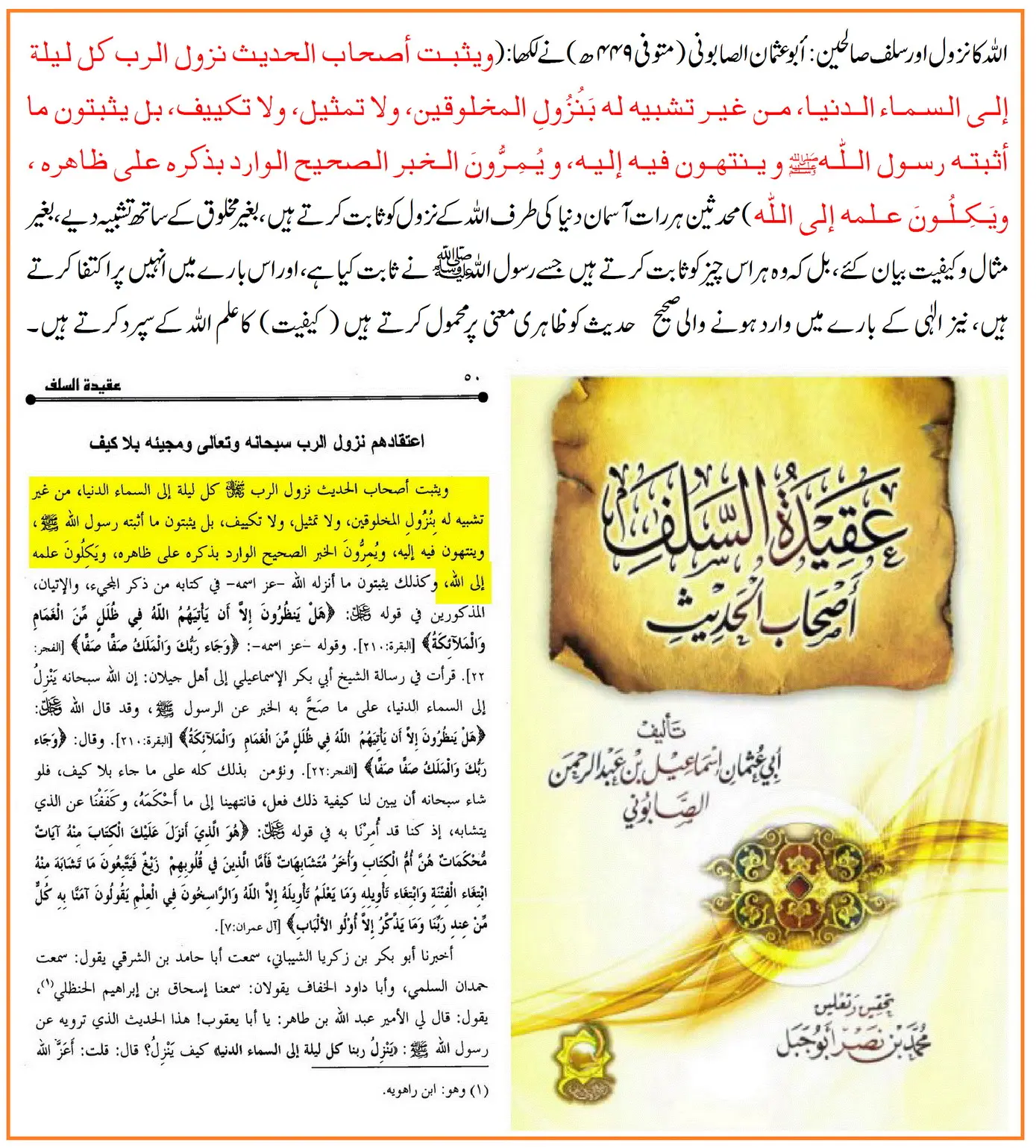
… فنحن قائلون مصدقون… غير متكلفين القول بصفته أو بكيفيته…
Translation:
“We affirm and believe in all the authentic reports regarding the descent of Allah every night, without delving into its description or modality, because the Prophet ﷺ did not describe it.”
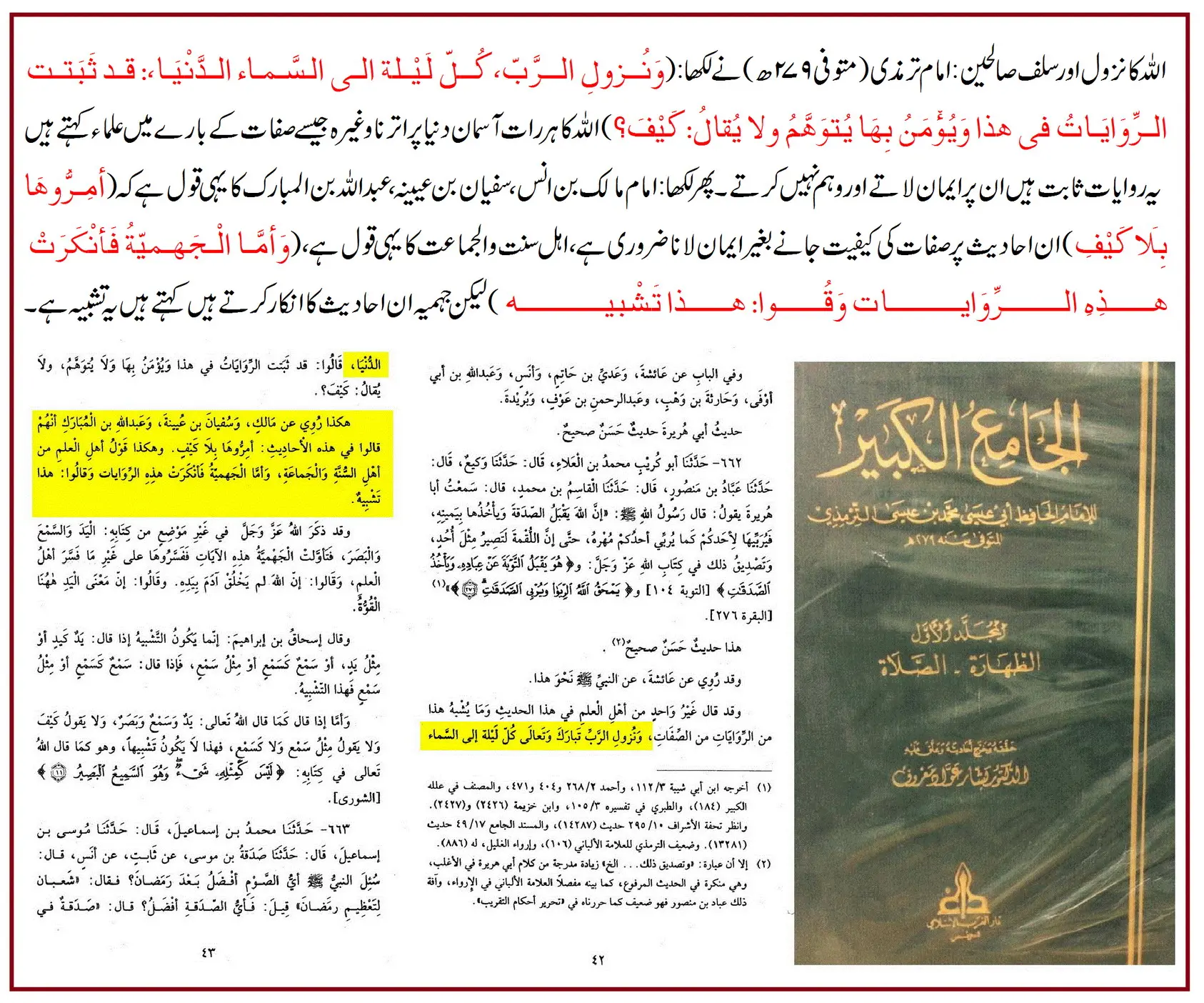
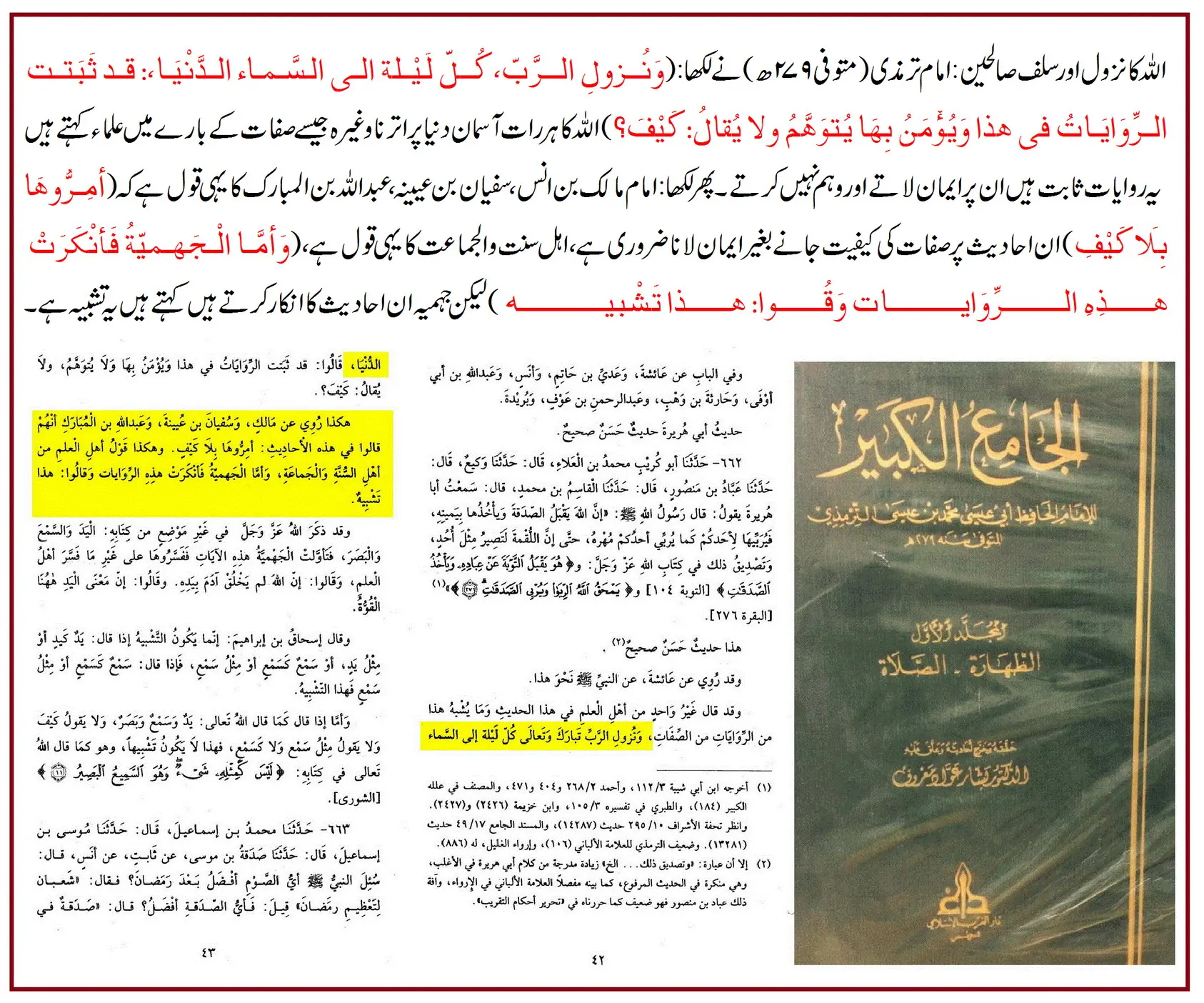
… قالوا: قد تثبت الروايات في هذا ويؤمن بها ولا يقال: كيف…
Translation:
“Many scholars said regarding these narrations of attributes: they are authentic and belief in them is obligatory, but one must not ask how. This was reported from Mālik, Sufyān ibn ʿUyaynah, and ʿAbdullāh ibn al-Mubārak.”
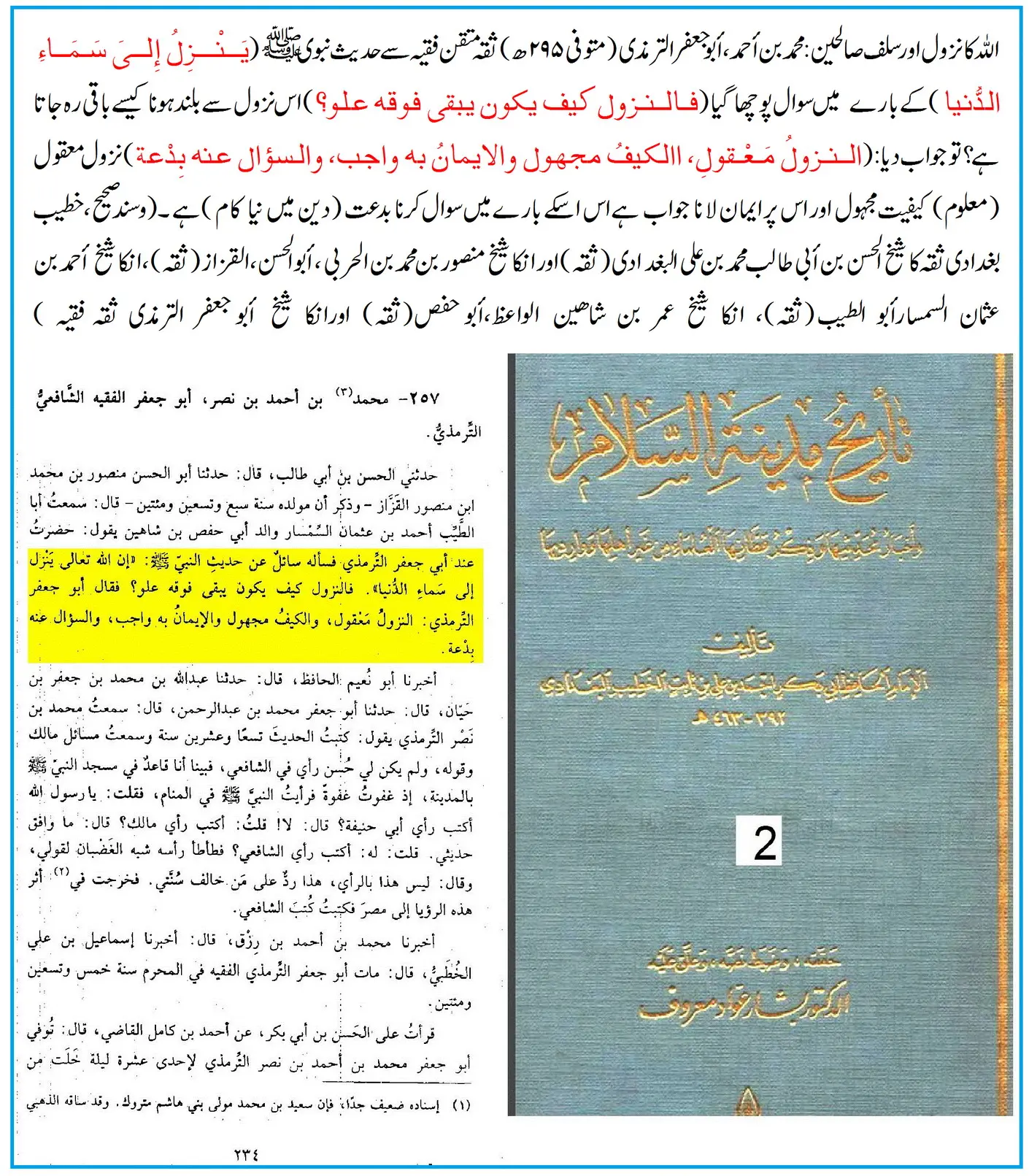
النزول معقول، والكيف مجهول، والإيمان به واجب، والسؤال عنه بدعة.
Translation:
“Descent is understood, its modality is unknown, belief in it is obligatory, and questioning about it is an innovation.”
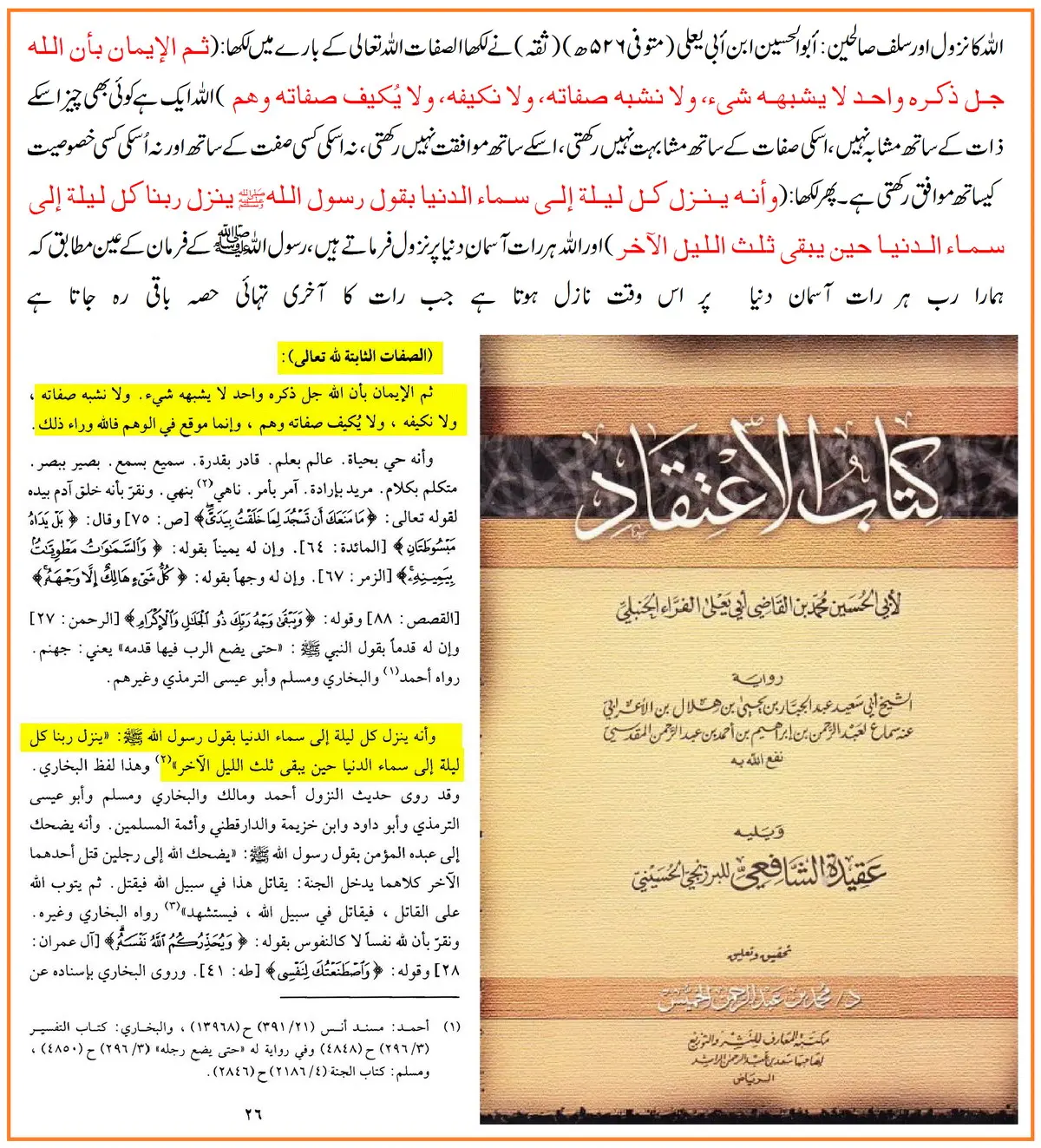
… وأنه ينزل كل ليلة إلى سماء الدنيا…
Translation:
“Allah descends every night to the lowest heaven, as stated by the Messenger of Allah ﷺ.”
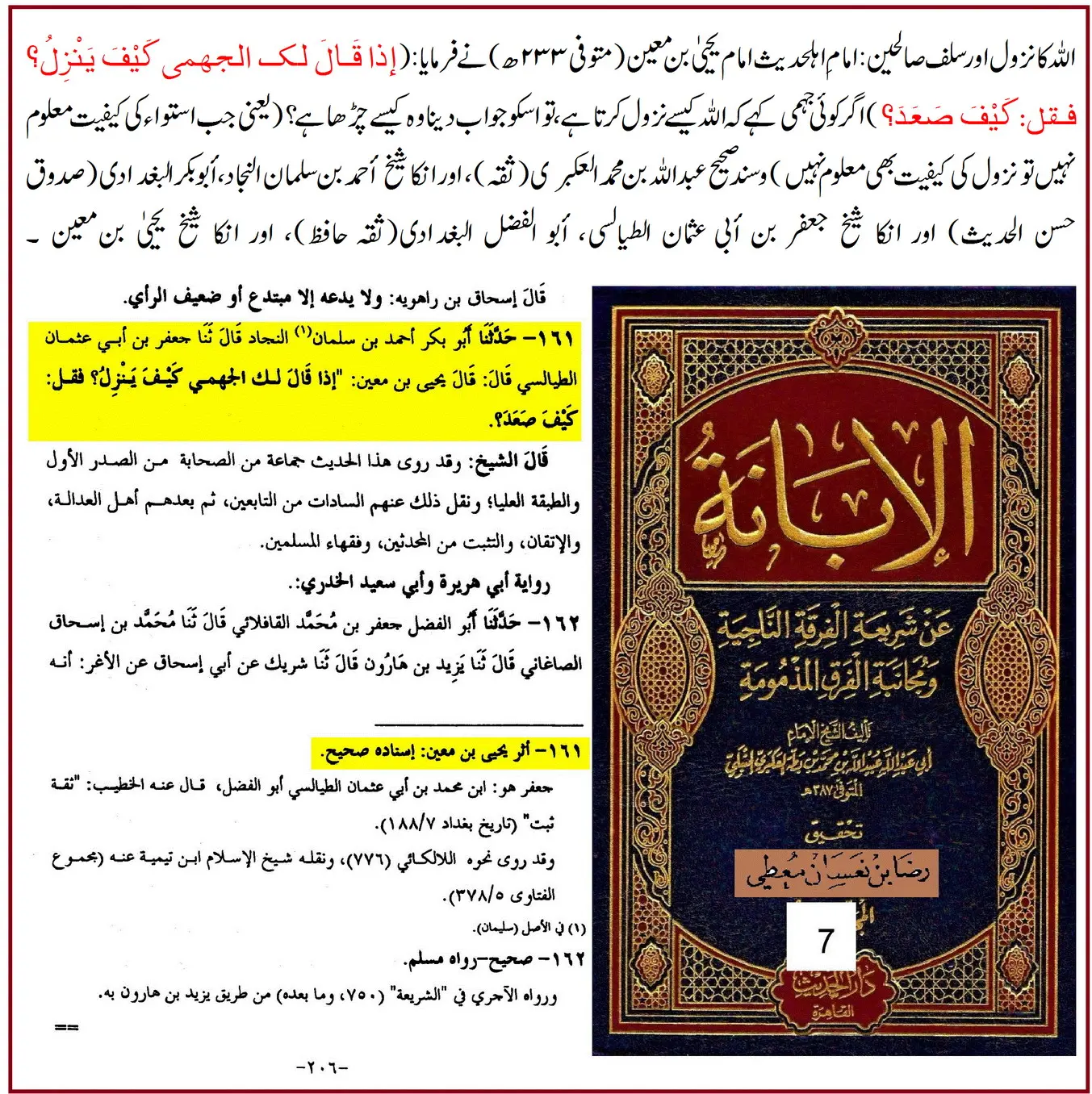
إذا قال لك الجهمي: كيف ينزل؟ فقل: كيف صعد؟
Translation:
“If a Jahmī asks you how Allah descends, ask him how He ascended.”
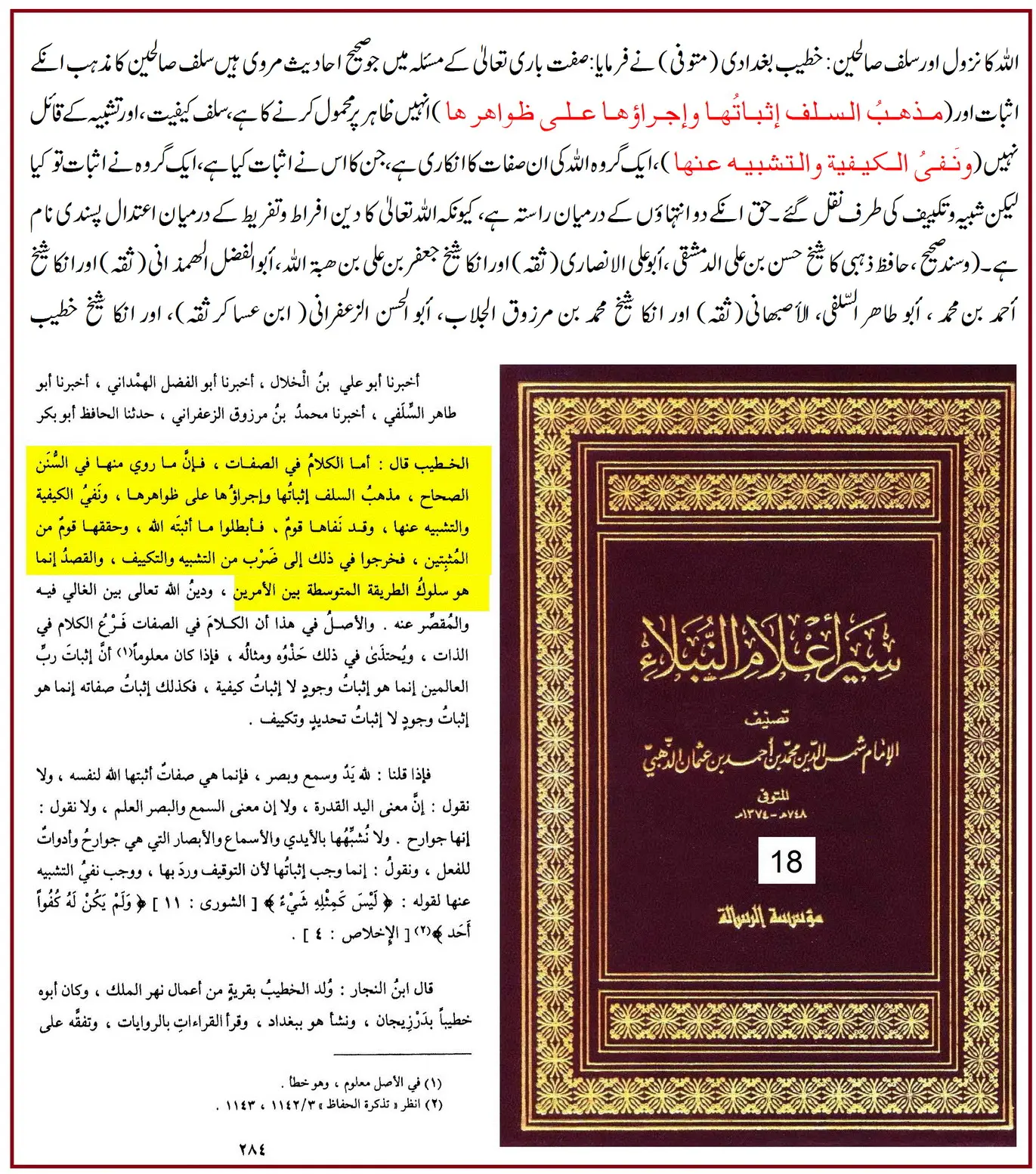
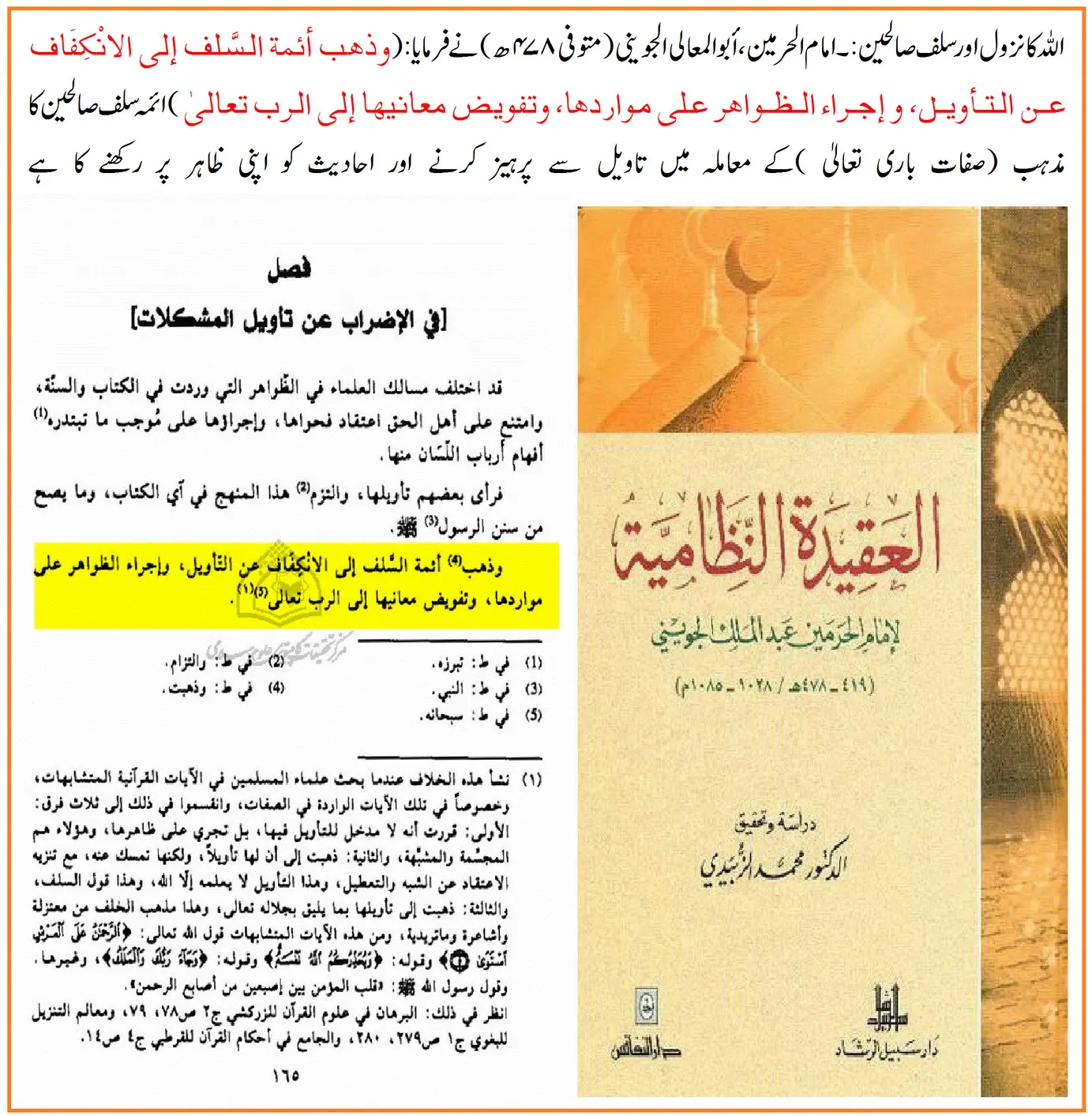
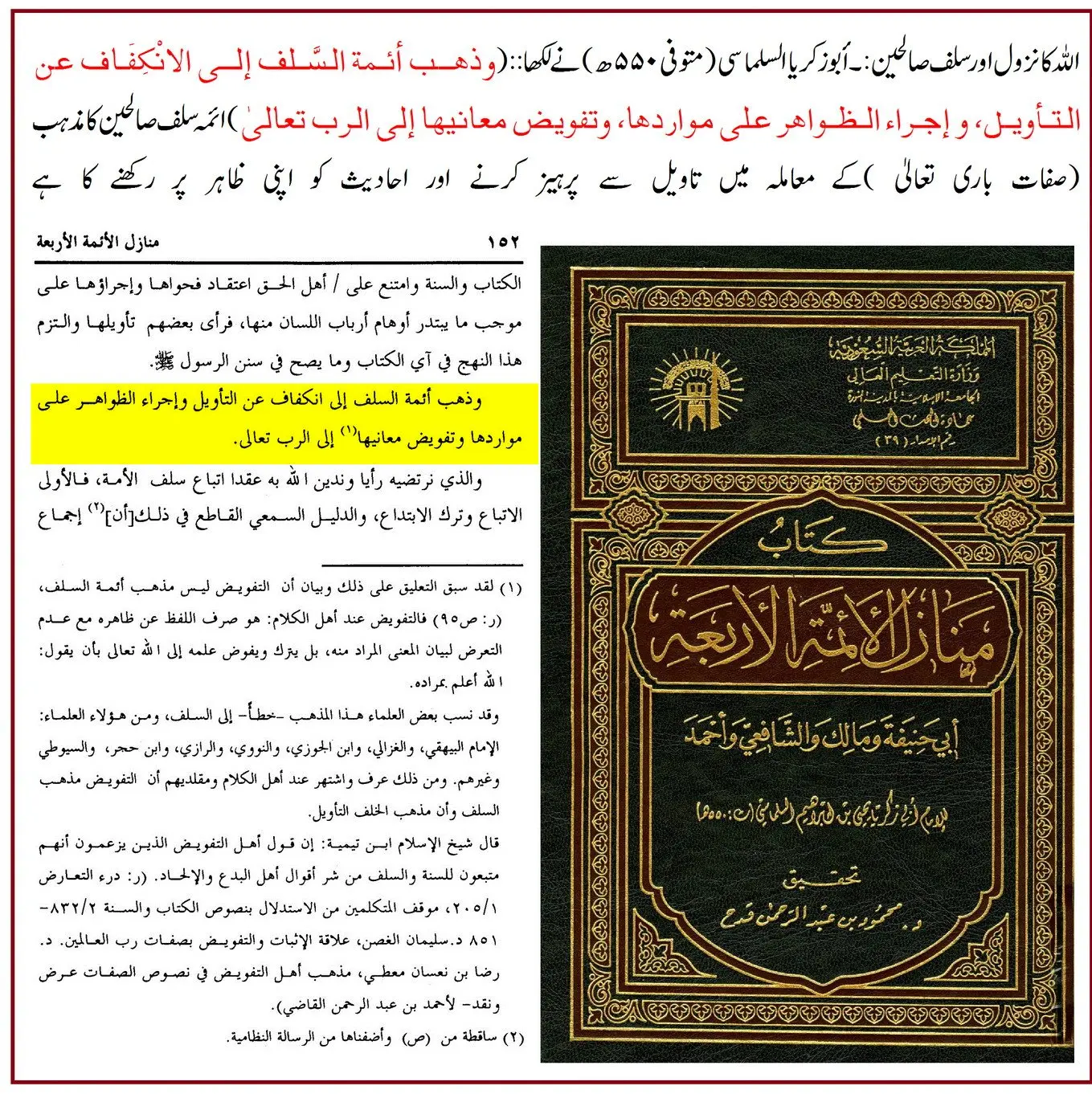
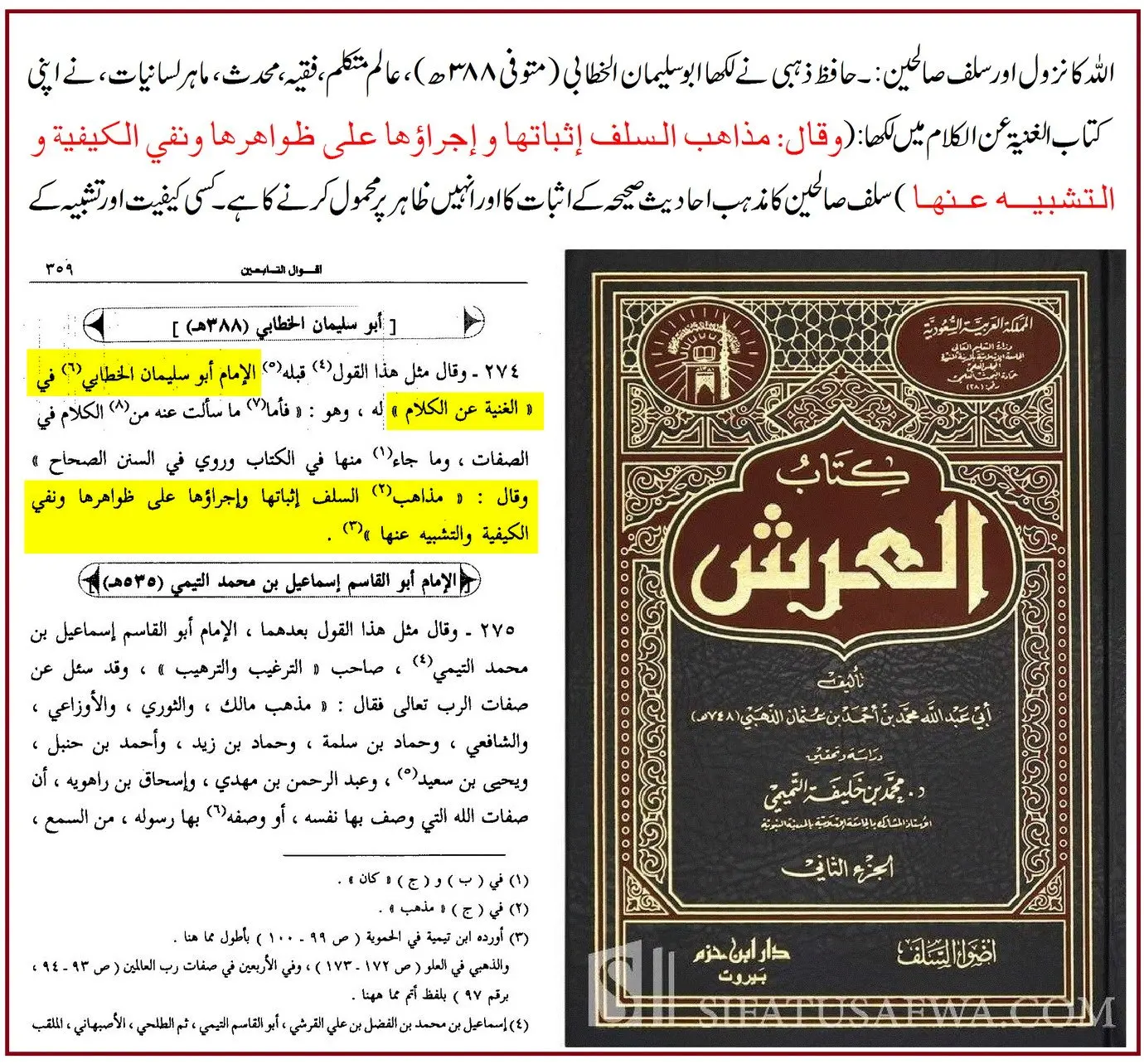
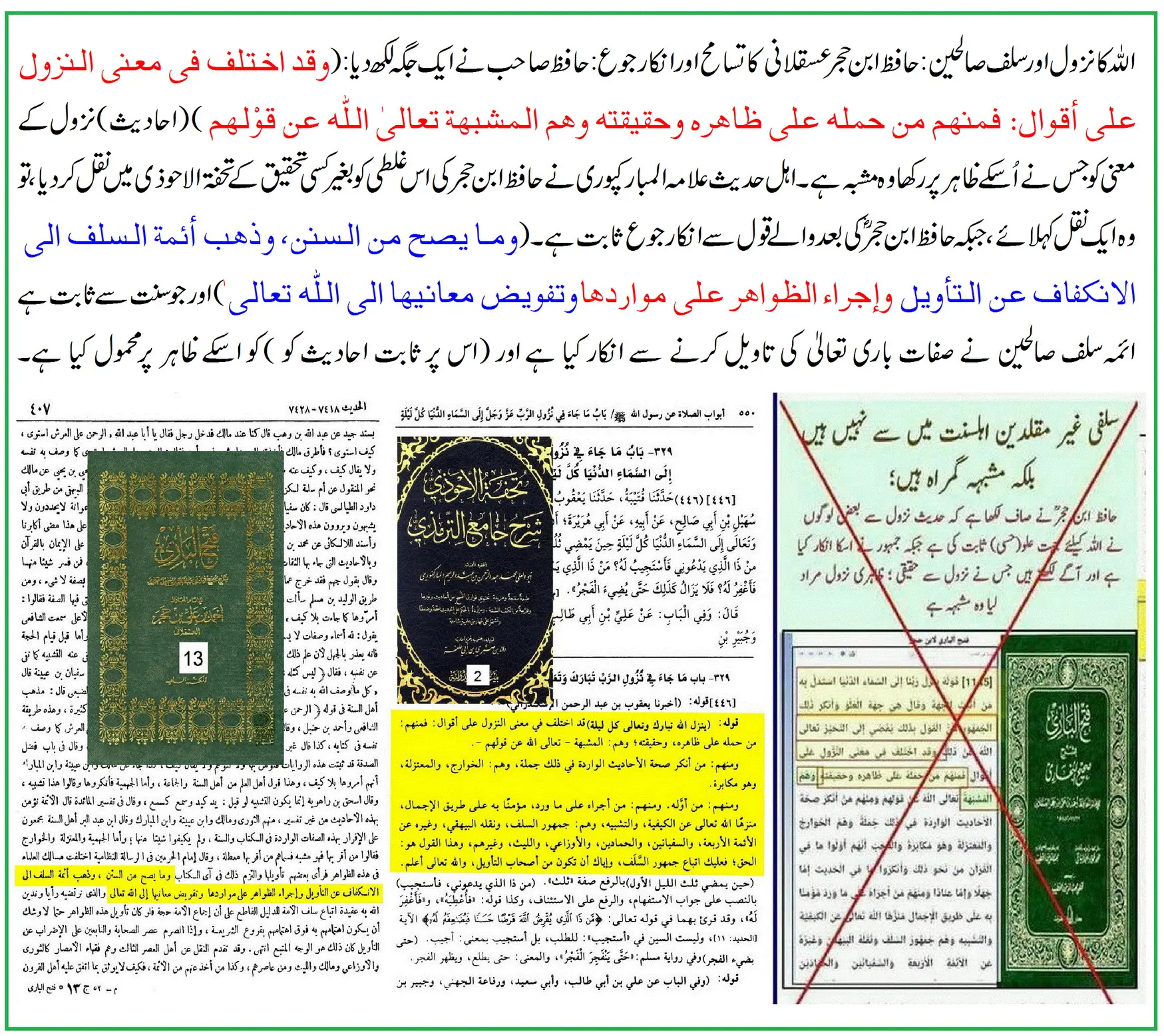
مذهب السلف إثباتها، وإجراؤها على ظاهرها، ونفي الكيفية والتشبيه عنها.
Translation:
“The methodology of the Salaf is to affirm the attributes, apply them upon their apparent meaning, and negate modality and resemblance.”
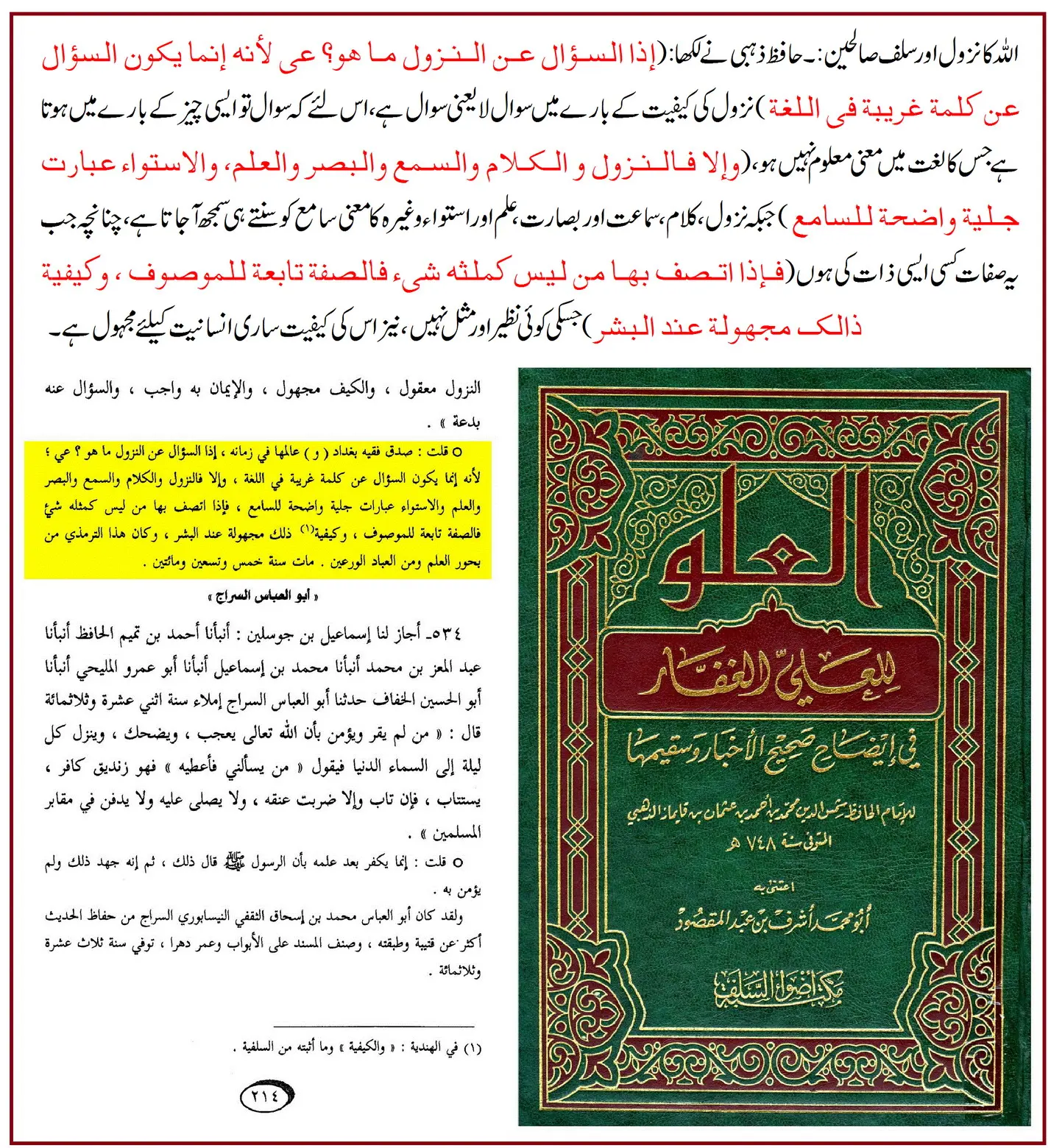
… وكيفية ذلك مجهولة عند البشر.
Translation:
“These attributes are clear in wording, but their modality is unknown to mankind.”
Translation:
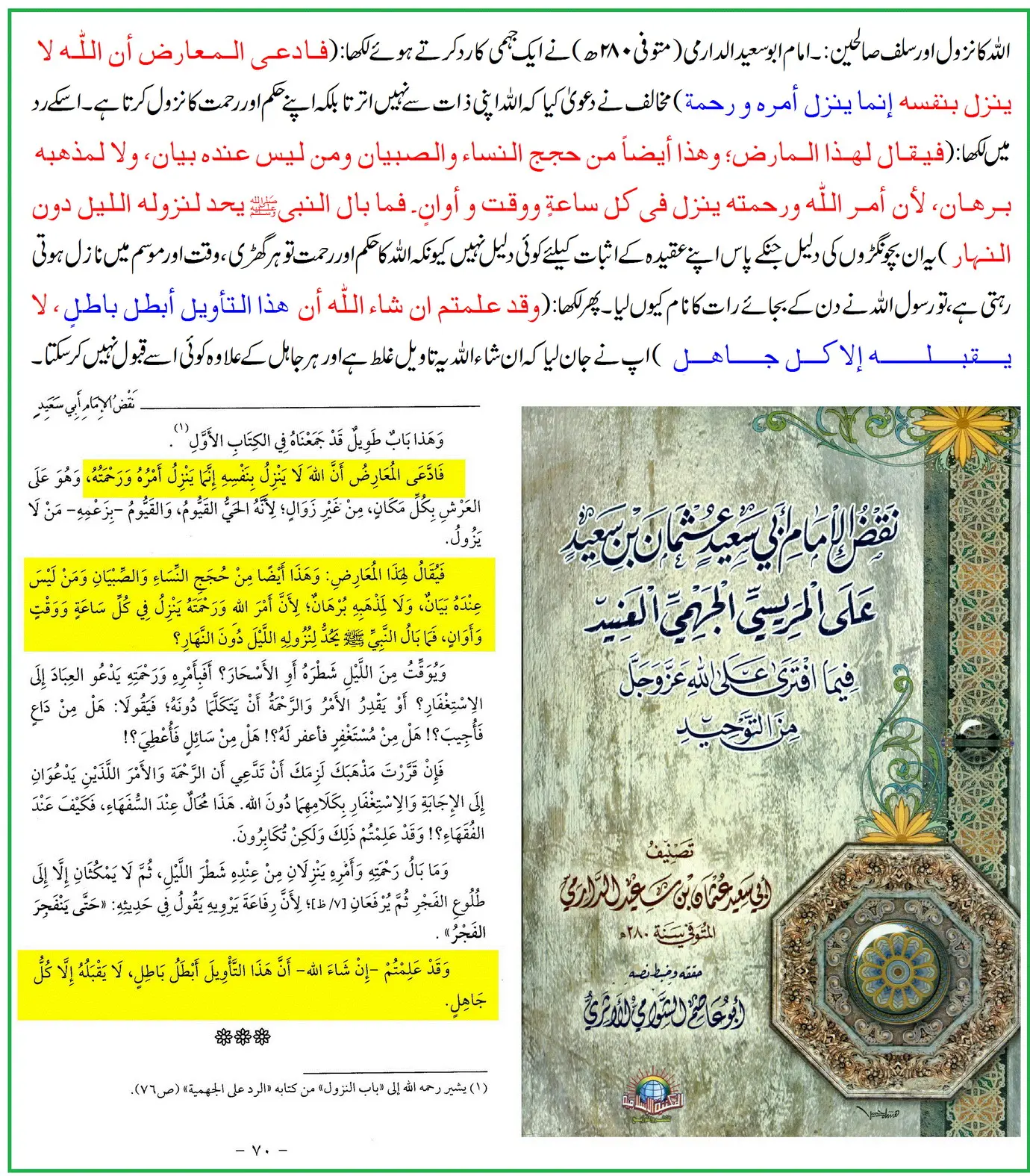
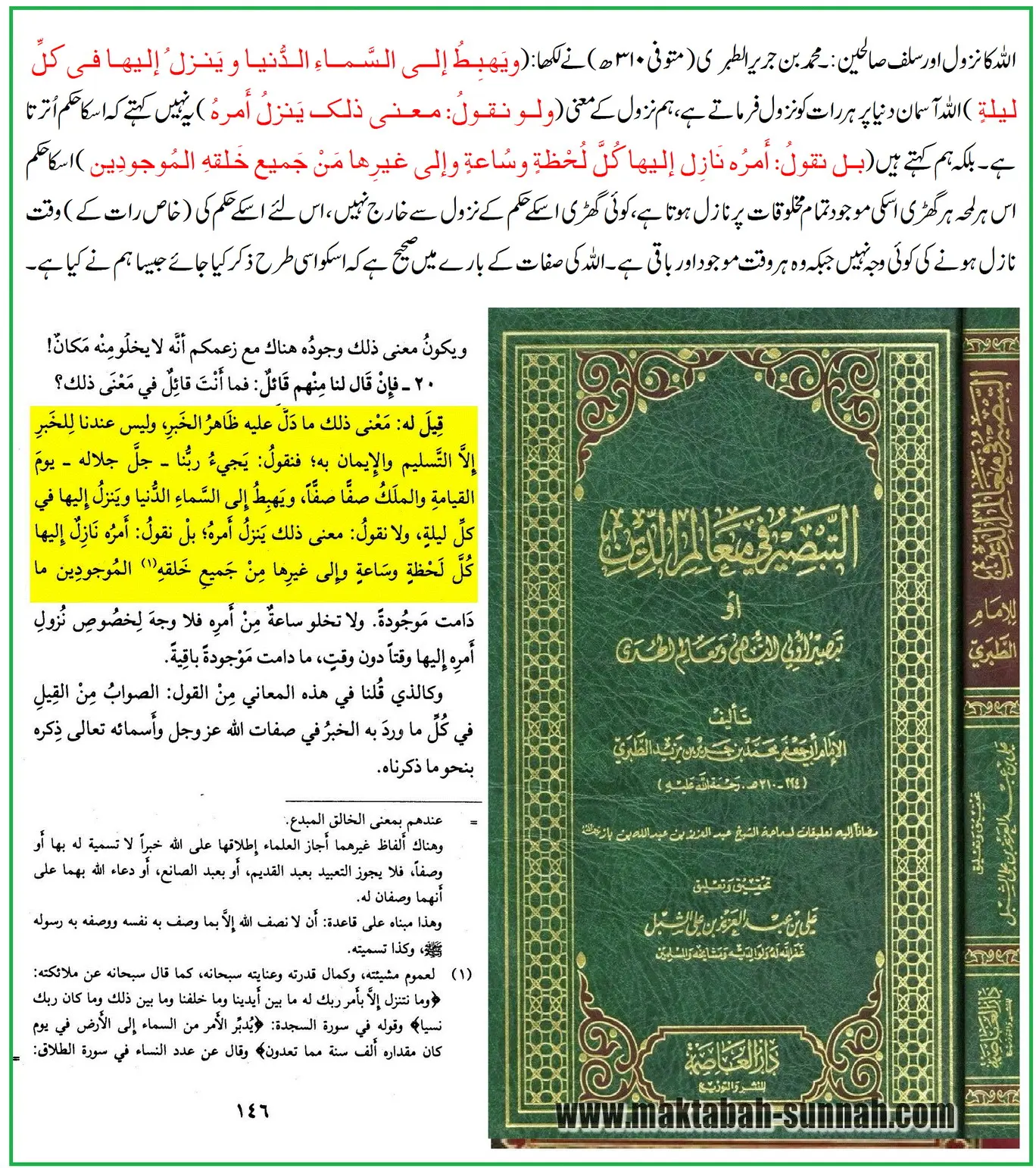
“If descent meant the descent of Allah’s command or mercy, then these descend at all times. Why then did the Prophet ﷺ specify the last part of the night? This interpretation is among the most false.”
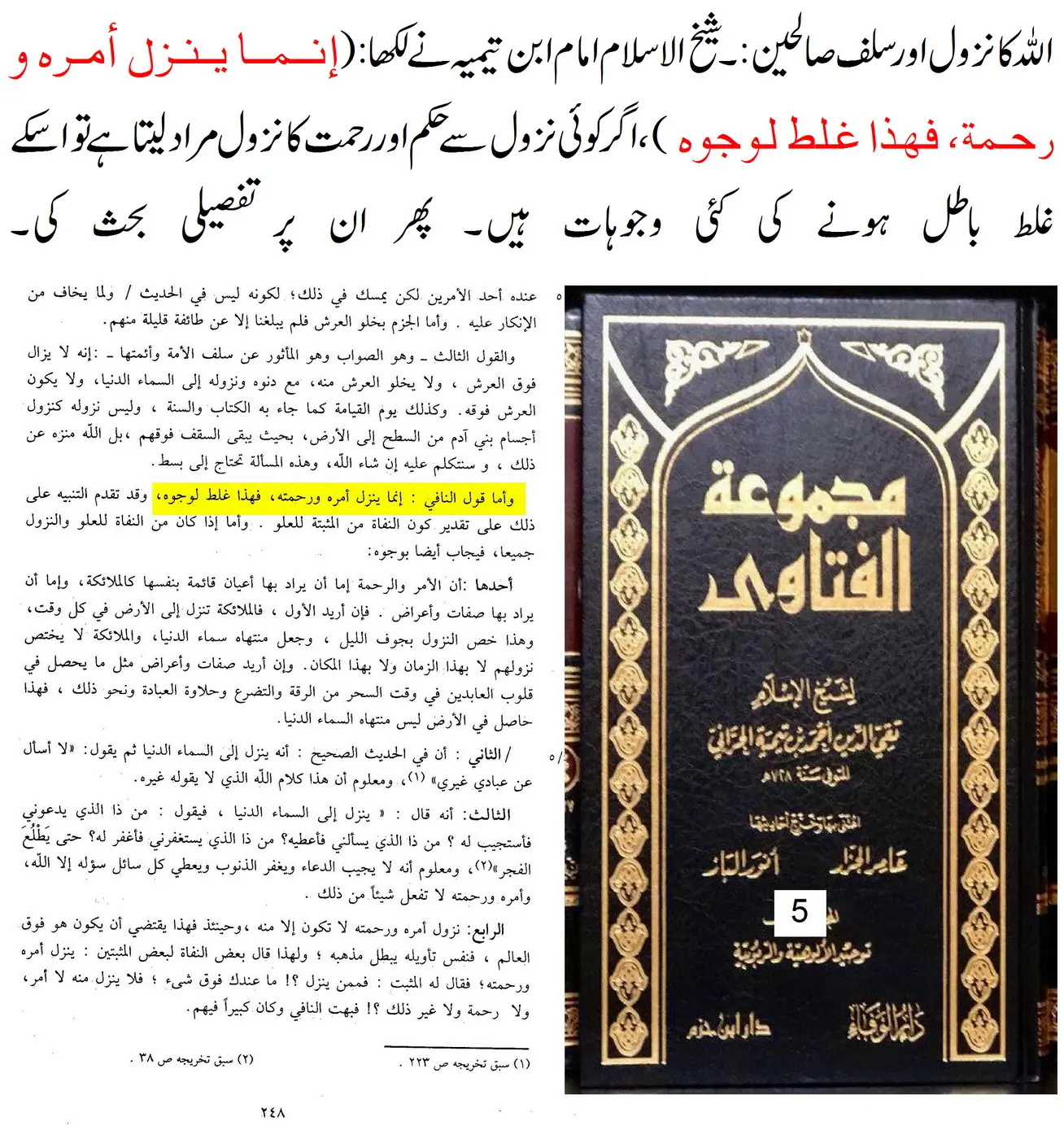
Translation:
“To say that what descends is only Allah’s command or mercy is incorrect.”
Translation:
“We do not say that what descends is His command, because His command descends at every moment.”
◈ Interpreting descent as command or mercy is the methodology of the Jahmiyyah, Muʿtazilah, and Rāfiḍah, which the Salaf unanimously rejected.
◈ The consensus of the Salaf is:
✔ Belief in the Divine Descent is obligatory,
✔ Its modality is unknown,
✔ Its denial is exclusive to misguided sects.
◈ Ibn Taymiyyah did not introduce a new belief but merely conveyed the agreed methodology of the Salaf.
◈ The consensus of Ahl al-Sunnah is that Allah descends every night to the lowest heaven as authentically reported.
◈ The modality is not discussed, as the Prophet ﷺ did not describe it.
◈ This belief has always been upheld by Ahl al-Sunnah and rejected only by Jahmiyyah and Muʿtazilah.
Final Word:
The creed of Shaykh al-Islām Ibn Taymiyyah رحمه الله was not a new ideology but the same agreed-upon methodology of the righteous predecessors. The later interpretations of figures such as Ibn Ḥajar al-Haytamī are rejected and unreliable.
This article is, in reality, a scholarly response to the doubt presented by a person named Ibn Ḥajar al-Haytamī (d. 974 AH) in his book Tuḥfat al-Muḥtāj.
He:
✔ Interpreted the authentic and well-known ḥadīths regarding the Divine Descent (Nuzūl),
✔ Interpreted it as “the descent of Allah’s command”,
✔ And on this basis, quoted the statement of Ibn Jamāʿah in order to criticize Shaykh al-Islām Ibn Taymiyyah رحمه الله.
The methodology of Ahl al-Sunnah wa al-Jamāʿah regarding this issue is clear:
◈ Allah’s descent every night is firmly established,
◈ Belief in it is obligatory,
◈ Its how (kayfiyyah) is entrusted to Allah,
◈ And its denial is only committed by misguided sects such as the Muʿtazilah and Jahmiyyah.
✿ The Opposing Claim: Ibn Ḥajar al-Haytamī
Ibn Ḥajar al-Haytamī said:«ومعنى ينزل ربنا ينزل أمره كما أوله به الخلف وبعض أكابر السلف، ولا التفات إلى ما شنّع به على المؤوّلين بعض من عدم التوفيق، ومن ثم قال ابن جماعة في ابن تيمية رأسهم إنه عبد أضله الله وخذله.»
Reference: Tuḥfat al-Muḥtāj
Translation:“The meaning of ‘Our Lord descends’ is that His command descends, as interpreted by some of the later scholars and some of the senior Salaf. No attention should be paid to the accusations made against those who interpret by some unsuccessful individuals. Hence, Ibn Jamāʿah said about Ibn Taymiyyah that he is a servant whom Allah has misguided and forsaken.”
◈ The Response
This statement is disconnected and without any chain, because:① Ibn Jamāʿah died in 733 AH,
② Ibn Ḥajar al-Haytamī was born in 905 AH,
③ There is a gap of 172 years between them.
Therefore, this is merely a baseless quotation with no chain.
Ibn Ḥajar al-Haytamī’s claim that “only Ibn Taymiyyah takes the ḥadīths of descent upon their apparent meaning” is completely false.
The reality is that there is consensus among the Salaf upon affirming the Divine Descent.
Imām Mālik, Imām Sufyān ibn ʿUyaynah, Imām ʿAbdullāh ibn al-Mubārak, Imām al-Tirmidhī, Imām Ibn Khuzaymah, Imām al-Dārimī, Imām Isḥāq ibn Rāhawayh and others all held this belief.
Ibn Taymiyyah رحمه الله did not introduce a new creed; rather, he followed the same methodology as the Companions and the Salaf:
“Affirming the descent without describing its modality.”
✿ The Methodology of the Salaf Regarding the Divine Descent
Below are clear statements from the righteous predecessors proving that belief in the Divine Descent is obligatory, and that its denial is limited to misguided sects such as the Muʿtazilah and Jahmiyyah.① Imām Abū Bakr al-Ājurrī al-Baghdādī (d. 360 AH)
Arabic Text:بَابُ الْإِيمَانِ وَالتَّصْدِيقِ بِأَنَّ اللَّهَ عَزَّ وَجَلَّ يَنْزِلُ إِلَى سَمَاءِ الدُّنْيَا كُلَّ لَيْلَةٍ … وَلا يَرُدُّ هَذَا إِلَّا الْمُعْتَزِلَةُ، وَأَمَّا أَهْلُ الْحَقِّ فَيَقُولُونَ: الْإِيمَانُ بِهِ وَاجِبٌ بِلَا كَيْفٍ.
Reference: al-Sharīʿah – al-Ājurrī
Translation:Al-Ājurrī says: “Belief and affirmation are obligatory that Allah descends every night to the lowest heaven. It is not permissible for a Muslim to ask how He descends. Only the Muʿtazilah reject this. The people of truth say: belief in it is obligatory without asking how.”
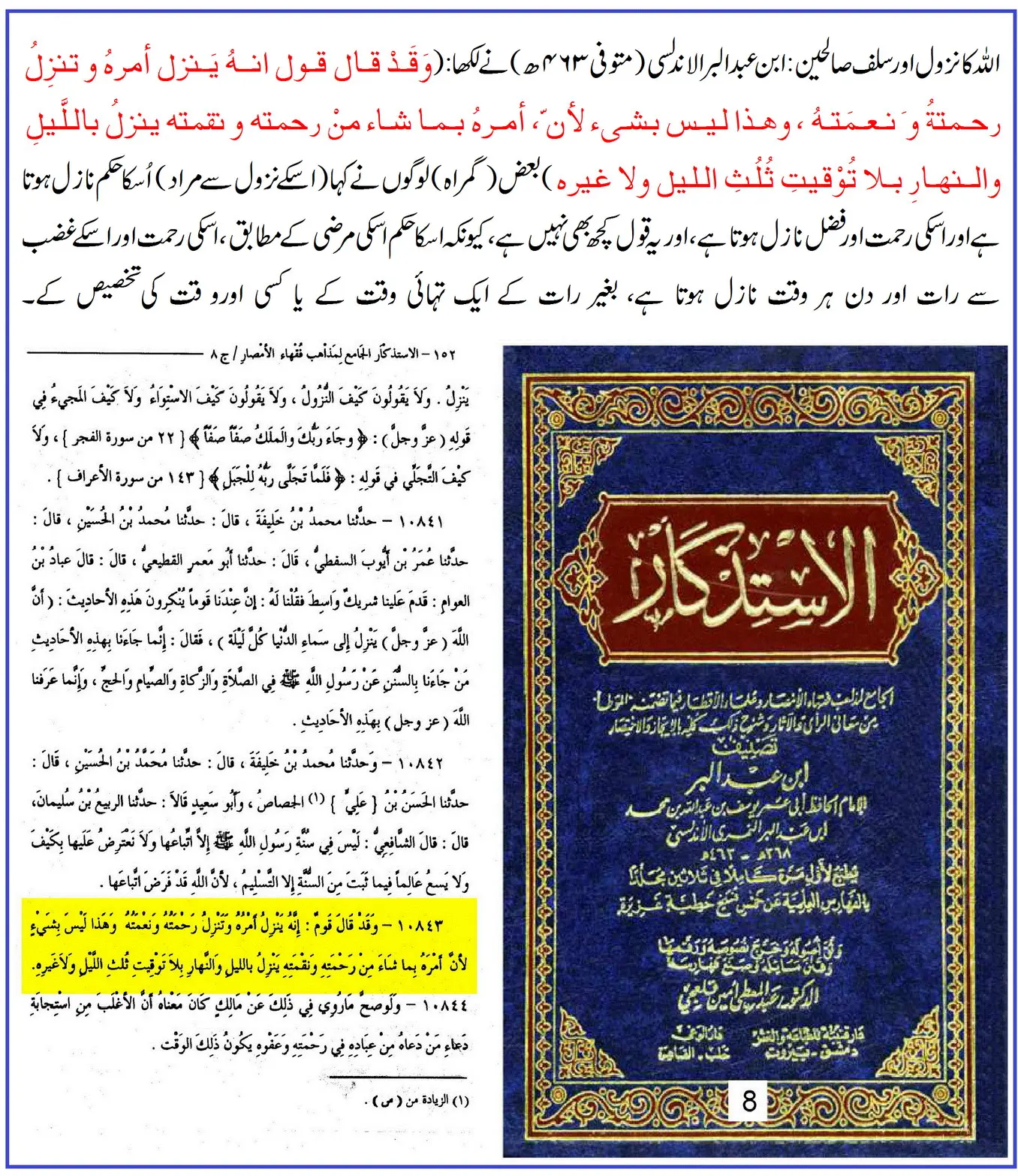
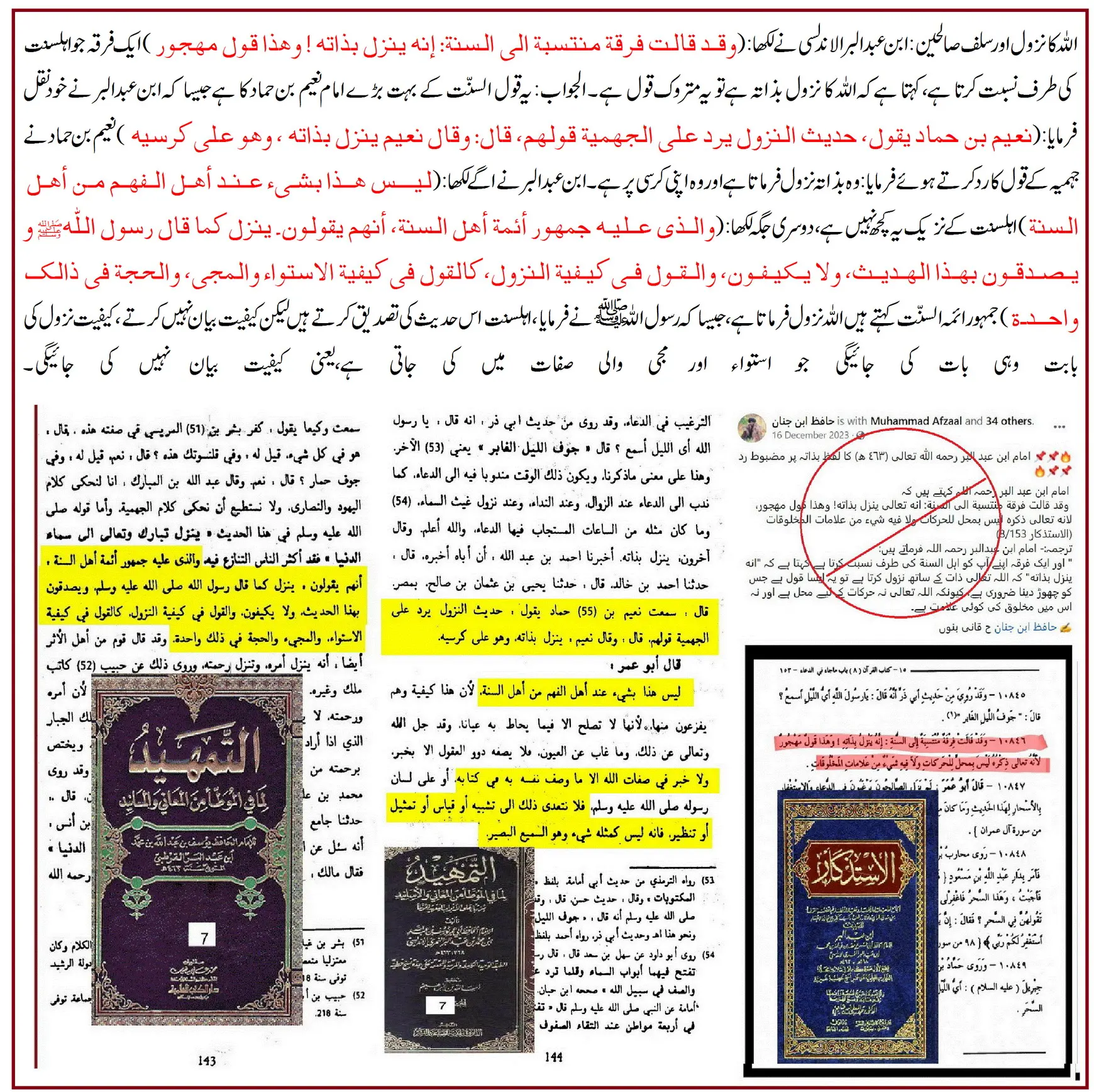
② Imām Ibn ʿAbd al-Barr al-Andalusī (d. 463 AH)
Arabic Text:والذي عليه جمهور أئمة أهل السنة أنهم يقولون: ينزل كما قال رسول الله ﷺ، ويصدقون بهذا الحديث ولا يكيفون…
Reference: al-Tamhīd
Translation:“The majority of the Imams of Ahl al-Sunnah believe that Allah descends as the Messenger of Allah ﷺ stated. They affirm this ḥadīth without describing its modality. The ruling regarding the modality of descent is the same as that of istiwāʾ and coming. The proof for all of them is one.”
③ Imām Ismāʿīl ibn Muḥammad al-Aṣbahānī (d. 535 AH)
Arabic Text:ومن مذهب أهل السنة: الإيمان بجميع ما ثبت عن النبي ﷺ في صفة الله تعالى…
Reference: al-Ḥujjah fī Bayān al-Maḥajjah
Translation:“From the creed of Ahl al-Sunnah is belief in everything authentically reported from the Prophet ﷺ regarding the attributes of Allah, such as the ḥadīth: ‘Allah descends every night to the lowest heaven.’”
④ Imām Isḥāq ibn Rāhawayh (d. 238 AH)
Arabic Text:… فَقَالَ (المبتدع): كَفَرْتُ بِرَبٍّ يَنْزِلُ… فَقُلْتُ: آمَنْتُ بِرَبٍّ يَفْعَلُ مَا يَشَاءُ.
Reference: al-Asmāʾ wa al-Ṣifāt – al-Bayhaqī
Translation:Imām Isḥāq said: “A heretic said: ‘I disbelieve in a Lord who descends.’ I replied: ‘I believe in a Lord who does whatever He wills.’”
⑤ Imām Ibn Khuzaymah (d. 311 AH)
Arabic Text:… فنحن قائلون مصدقون… غير متكلفين القول بصفته أو بكيفيته…
Reference: Kitāb al-Tawḥīd – Ibn Khuzaymah
Translation:“We affirm and believe in all the authentic reports regarding the descent of Allah every night, without delving into its description or modality, because the Prophet ﷺ did not describe it.”
⑥ Imām al-Tirmidhī (d. 279 AH)
Arabic Text:… قالوا: قد تثبت الروايات في هذا ويؤمن بها ولا يقال: كيف…
Reference: Sunan al-Tirmidhī
Translation:“Many scholars said regarding these narrations of attributes: they are authentic and belief in them is obligatory, but one must not ask how. This was reported from Mālik, Sufyān ibn ʿUyaynah, and ʿAbdullāh ibn al-Mubārak.”
⑦ Imām Abū Jaʿfar al-Tirmidhī (d. 295 AH)
Arabic Text:النزول معقول، والكيف مجهول، والإيمان به واجب، والسؤال عنه بدعة.
Reference: Tārīkh Baghdād
Translation:“Descent is understood, its modality is unknown, belief in it is obligatory, and questioning about it is an innovation.”
⑧ Imām Ibn Abī Yaʿlā (d. 526 AH)
Arabic Text:… وأنه ينزل كل ليلة إلى سماء الدنيا…
Reference: al-Iʿtiqād – Ibn Abī Yaʿlā
Translation:“Allah descends every night to the lowest heaven, as stated by the Messenger of Allah ﷺ.”
⑨ Imām Yaḥyā ibn Maʿīn (d. 233 AH)
Arabic Text:إذا قال لك الجهمي: كيف ينزل؟ فقل: كيف صعد؟
Reference: al-Ibānah al-Kubrā – Ibn Baṭṭah
Translation:“If a Jahmī asks you how Allah descends, ask him how He ascended.”
⑩ al-Khaṭīb al-Baghdādī (d. 463 AH)
Arabic Text:مذهب السلف إثباتها، وإجراؤها على ظاهرها، ونفي الكيفية والتشبيه عنها.
Reference: Siyar Aʿlām al-Nubalāʾ
Translation:“The methodology of the Salaf is to affirm the attributes, apply them upon their apparent meaning, and negate modality and resemblance.”
⑪ Ḥāfiẓ al-Dhahabī (d. 748 AH)
Arabic Text:… وكيفية ذلك مجهولة عند البشر.
Reference: al-ʿUluww
Translation:“These attributes are clear in wording, but their modality is unknown to mankind.”
✿ Refutation of the False Interpretation of the Jahmiyyah and Muʿtazilah
◈ Imām al-Dārimī (d. 280 AH)
Translation:“If descent meant the descent of Allah’s command or mercy, then these descend at all times. Why then did the Prophet ﷺ specify the last part of the night? This interpretation is among the most false.”
◈ Shaykh al-Islām Ibn Taymiyyah (d. 728 AH)
Translation:“To say that what descends is only Allah’s command or mercy is incorrect.”
Reference: Majmūʿ al-Fatāwā
◈ Imām al-Ṭabarī (d. 310 AH)
Translation:“We do not say that what descends is His command, because His command descends at every moment.”
Reference: al-Tabṣīr fī Maʿālim al-Dīn
✿ Summary of Research
◈ Ibn Ḥajar al-Haytamī interpreted the descent as the descent of Allah’s command and quoted Ibn Jamāʿah to criticize Ibn Taymiyyah, but this narration is disconnected and baseless.◈ Interpreting descent as command or mercy is the methodology of the Jahmiyyah, Muʿtazilah, and Rāfiḍah, which the Salaf unanimously rejected.
◈ The consensus of the Salaf is:
✔ Belief in the Divine Descent is obligatory,
✔ Its modality is unknown,
✔ Its denial is exclusive to misguided sects.
◈ Ibn Taymiyyah did not introduce a new belief but merely conveyed the agreed methodology of the Salaf.
✿ Final Conclusion
◈ The position of Ibn Ḥajar al-Haytamī is false and contrary to the Salaf.◈ The consensus of Ahl al-Sunnah is that Allah descends every night to the lowest heaven as authentically reported.
◈ The modality is not discussed, as the Prophet ﷺ did not describe it.
◈ This belief has always been upheld by Ahl al-Sunnah and rejected only by Jahmiyyah and Muʿtazilah.
Final Word:The creed of Shaykh al-Islām Ibn Taymiyyah رحمه الله was not a new ideology but the same agreed-upon methodology of the righteous predecessors. The later interpretations of figures such as Ibn Ḥajar al-Haytamī are rejected and unreliable.
