✍ Compiled by: Abū Ḥamzah Salafī
❖ The Scholarly Duty of Academic Integrity
It is a requirement of ʿilmī amānah (academic integrity) that theological differences be analyzed in their historical context and the evidences for each view presented with honesty and accuracy. In this detailed and research-based article, we examine the attribution of Irjāʾ (Murjiʾī doctrine) to Imām Abū Ḥanīfah رحمه الله. The analysis includes references from early and later scholars, ḥadīth experts, jurists, and classical creed works.
 The Murjiʾah Sect and the Association with Imām Abū Ḥanīfah رحمه الله
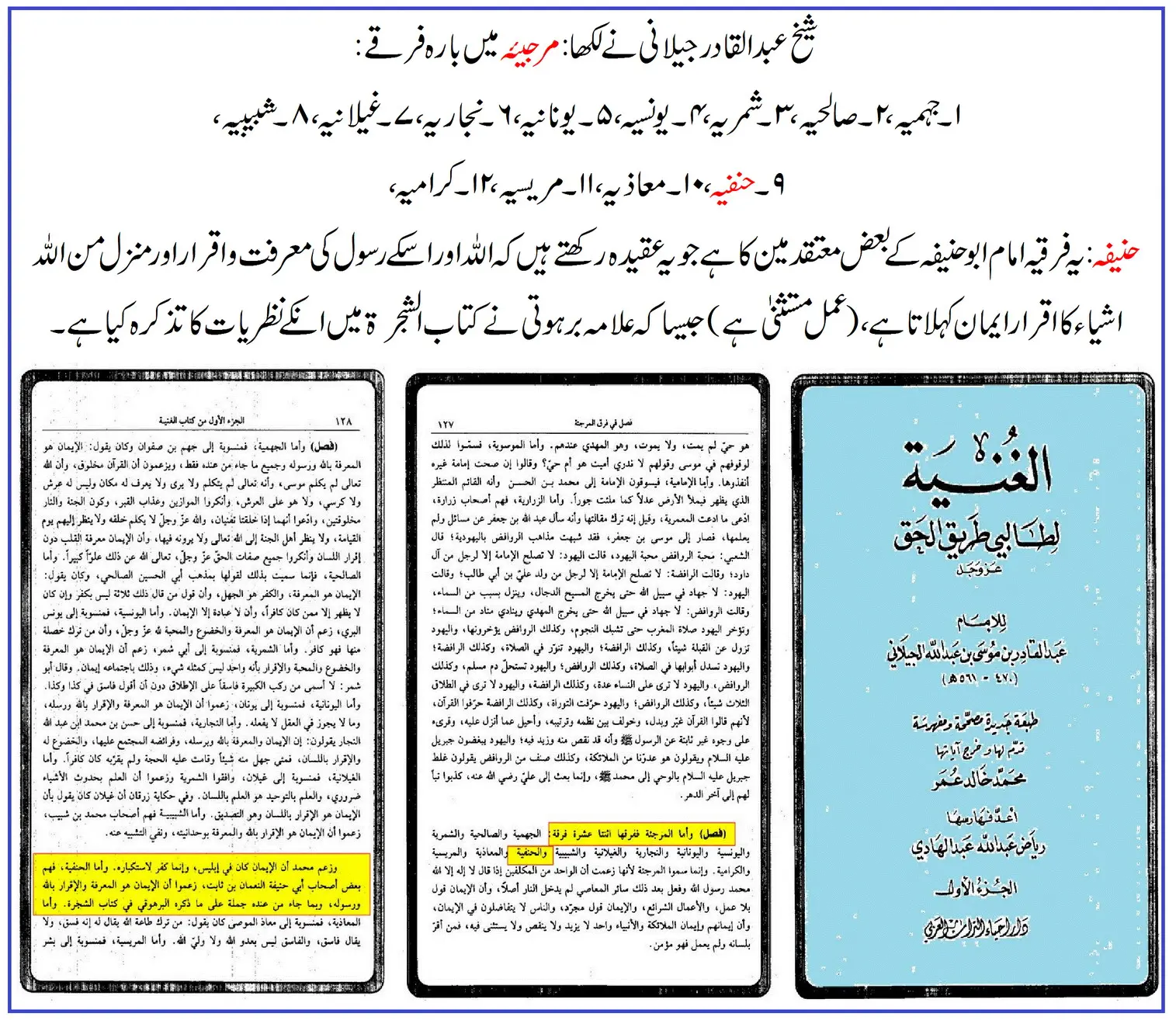
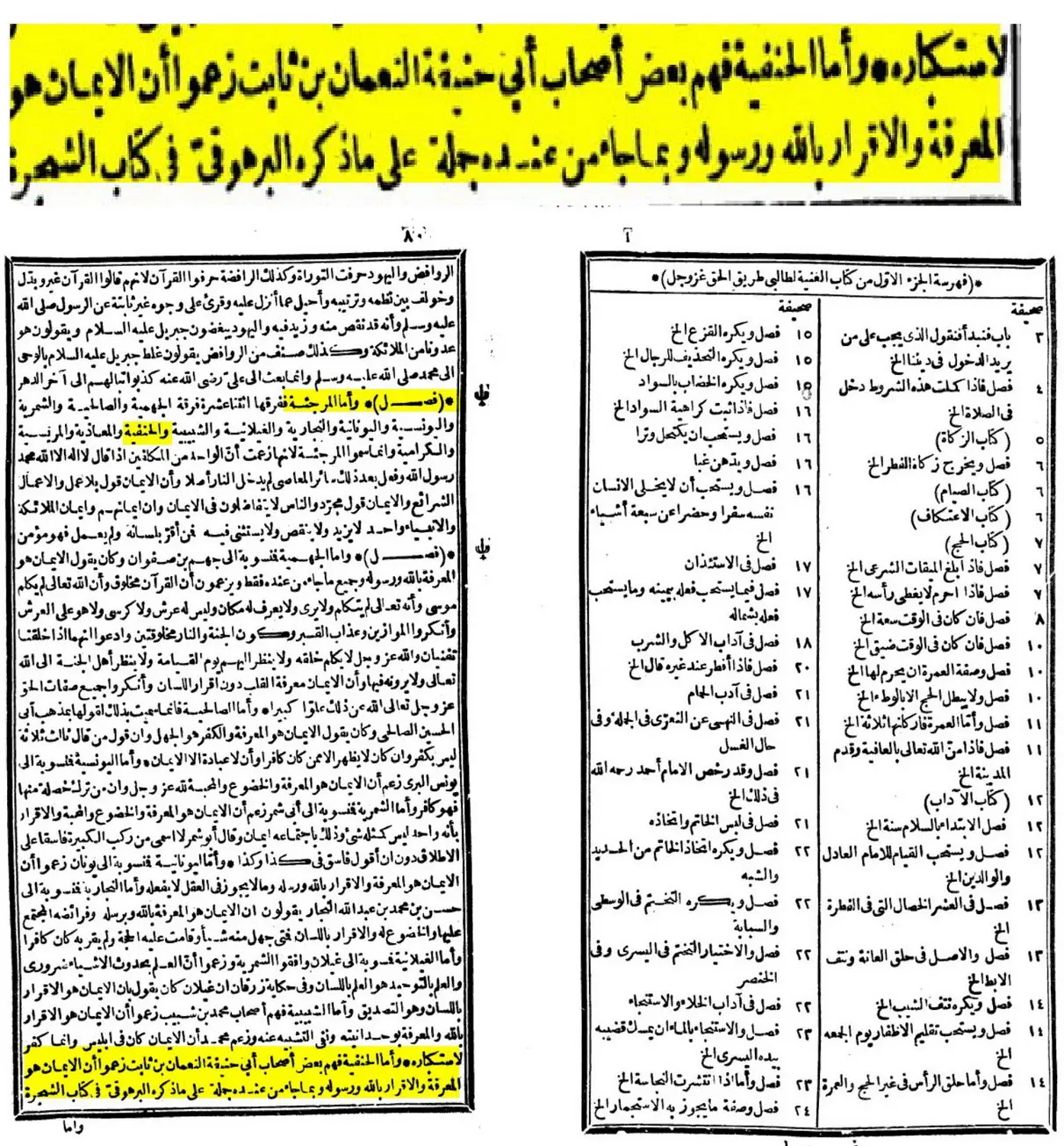
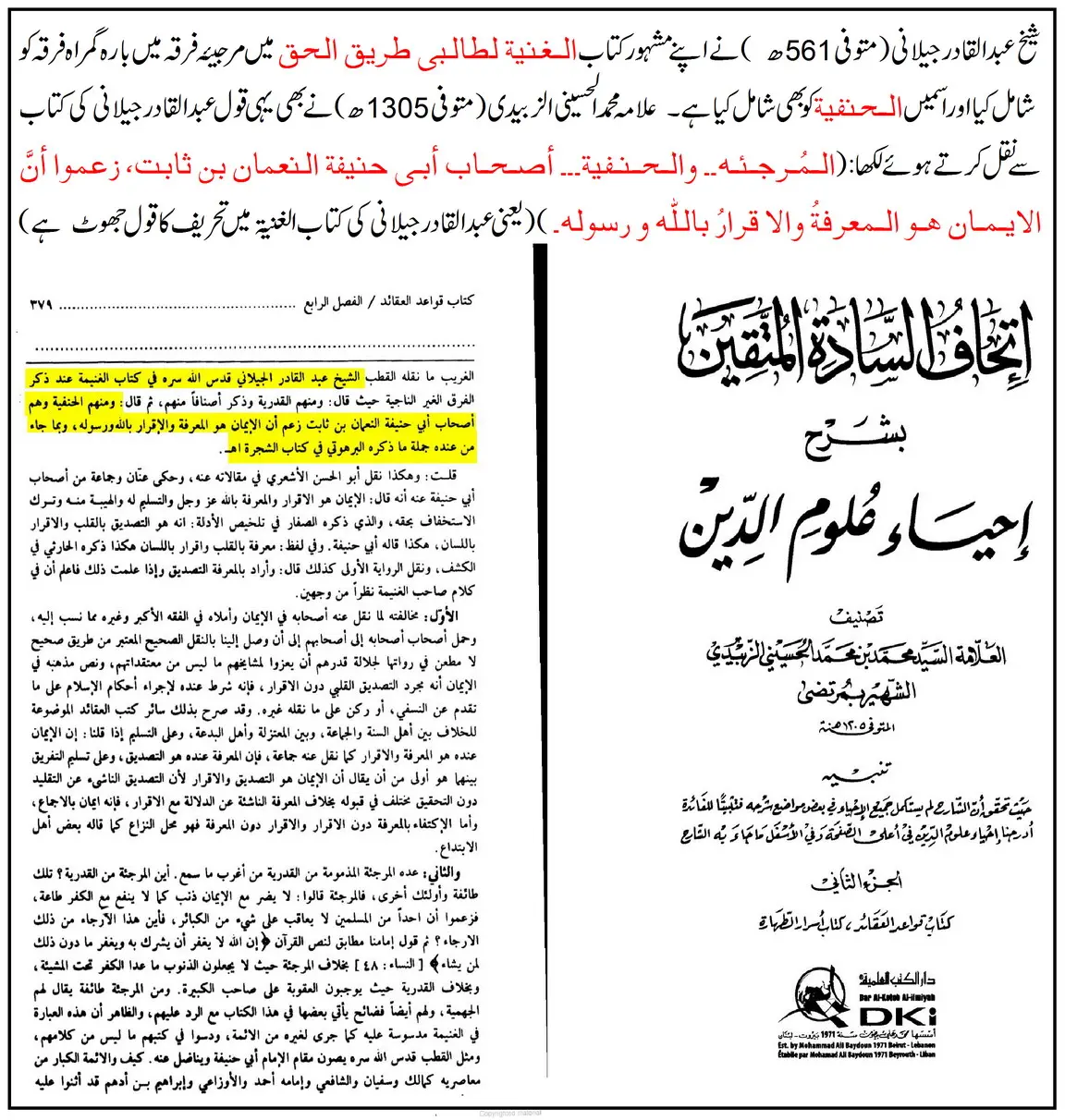
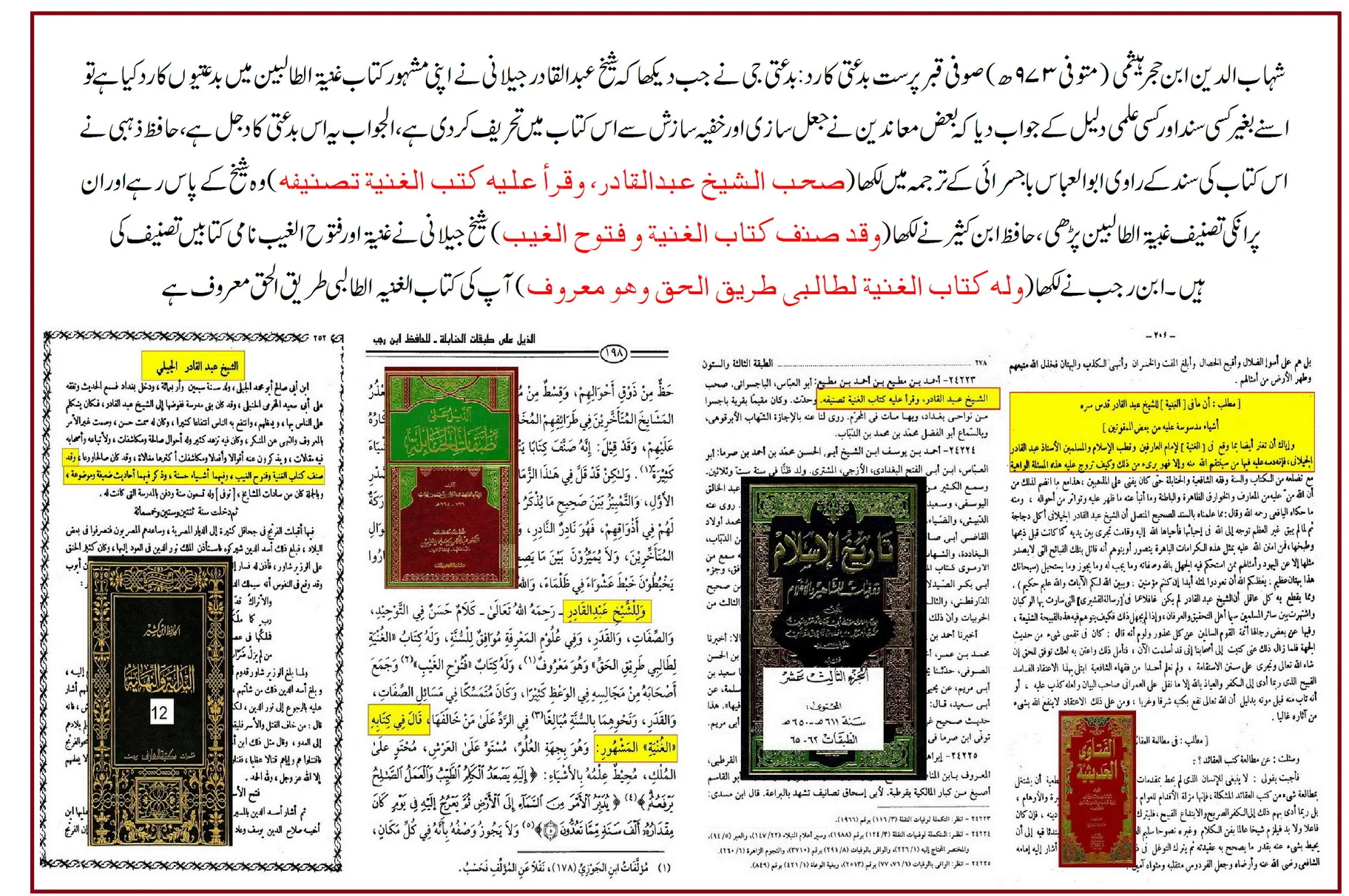
 Shaykh ʿAbd al-Qādir al-Jīlānī رحمه الله in
وأما المرجئة ففرقها اثنتا عشرة فرقة:
الجهمية، الصالحية، الشمرية، اليونسية، اليونانية، النجارية، الغيلانية، الشبيبية، الحنفية، المعاذية، المريسية، الكرامية.
وأما الحنفية: فهم أصحاب أبي حنيفة النعمان بن ثابت، زعم أن الإيمان هو المعرفة والإقرار بالله ورسوله وبما جاء من عنده جملة.
Translation:As for the Murjiʾah, they comprise twelve sects:
① Jahmiyyah
② Ṣāliḥiyyah
③ Shamariyyah
④ Yūnasiyyah
⑤ Yūnāniyyah
⑥ Najjāriyyah
⑦ Ghaylāniyyah
⑧ Shabībiyyah
⑨ Ḥanafiyyah
⑩ Muʿādhiyyah
⑪ Marīsiyyah
⑫ Karrāmiyyah
As for the Ḥanafiyyah (a branch of the Murjiʾah), they are the followers of Abū Ḥanīfah Nuʿmān ibn Thābit, who held that faith (īmān) is simply recognition and general affirmation of Allah, His Messenger, and what was revealed — as noted by al-Barhūtī in al-Shajarah.
 This reference is not an isolated claim, but one that has been reproduced by other scholars as well.
 Verification of al-Ghuniyah’s Citation by Other Scholars
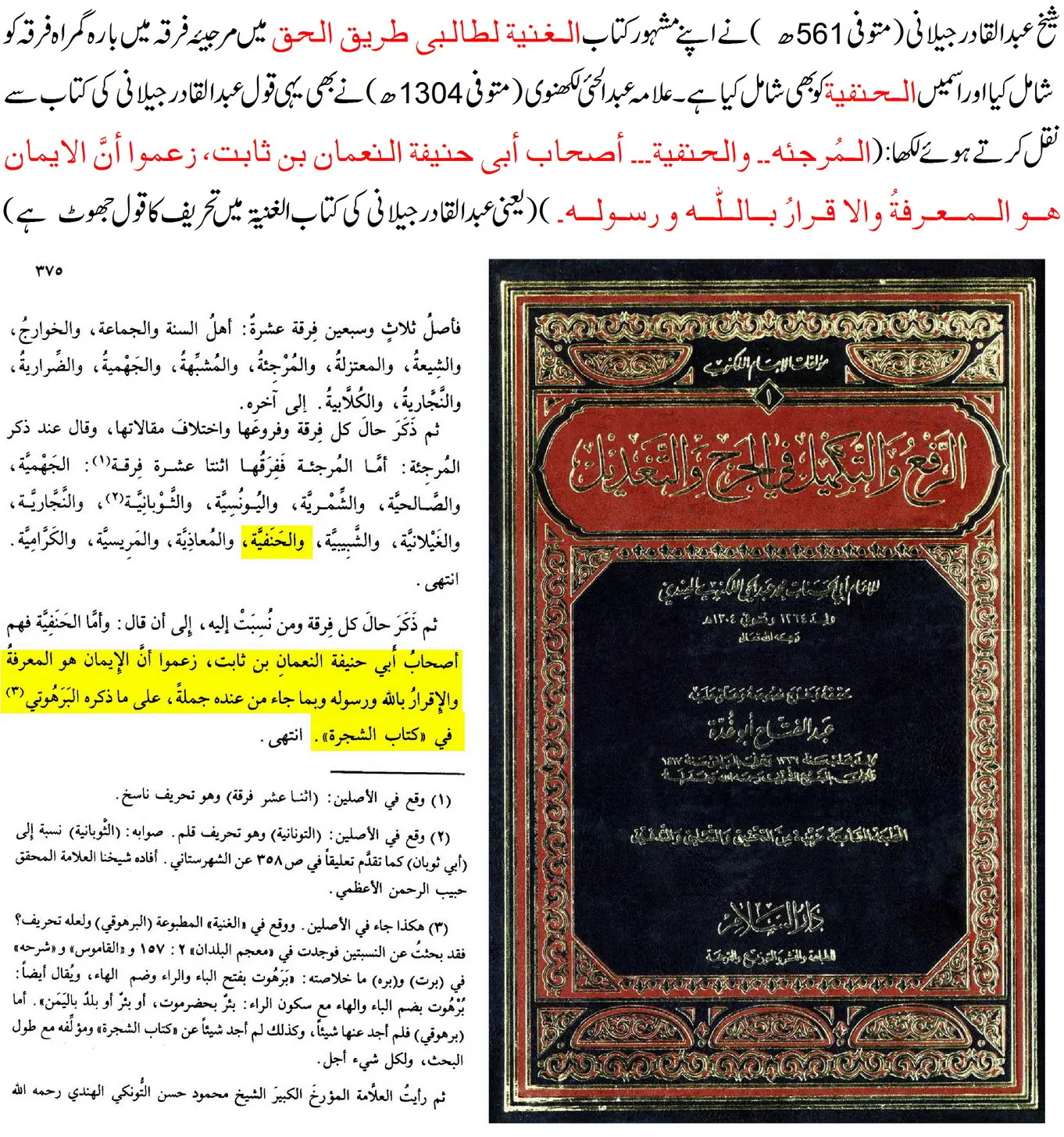
 ʿAbd al-Ḥayy Lakhnawī Ḥanafī (d. 1304H) in al-Rafʿ wa al-Takmīl fī al-Jarḥ wa al-Taʿdīl quotes this passage verbatim:
وأما الحنفية فهم أصحاب أبي حنيفة...
[al-Rafʿ wa al-Takmīl, p. 135]
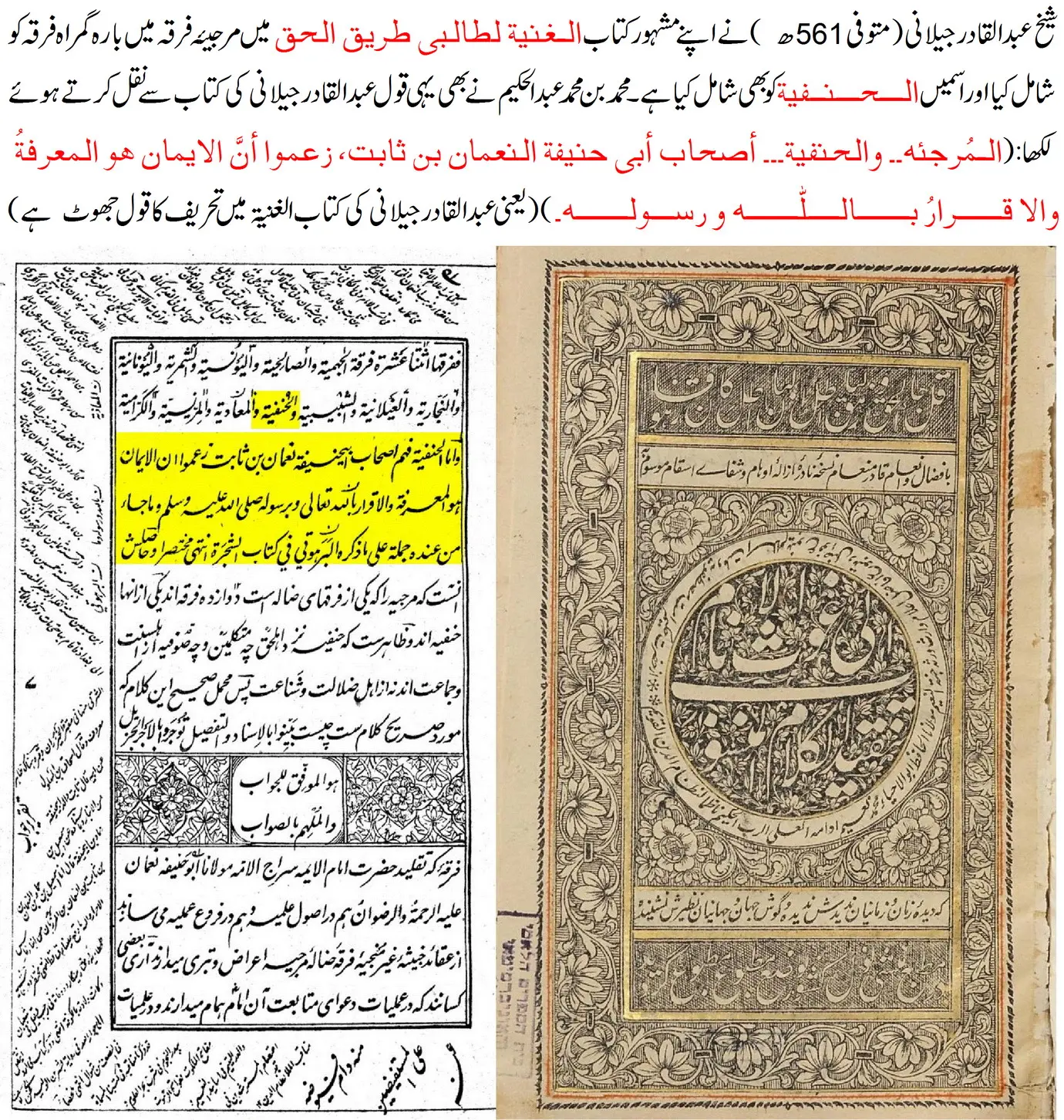
Similarly, Muḥammad bin Muḥammad ʿAbd al-Ḥakīm al-Ḥanafī and ʿAllāmah Muḥammad al-Ḥusaynī al-Zabīdī (d. 1305H) also reproduce the same passage. Clear Statement from Imām Abū al-Ḥasan al-Ashʿarī رحمه الله in
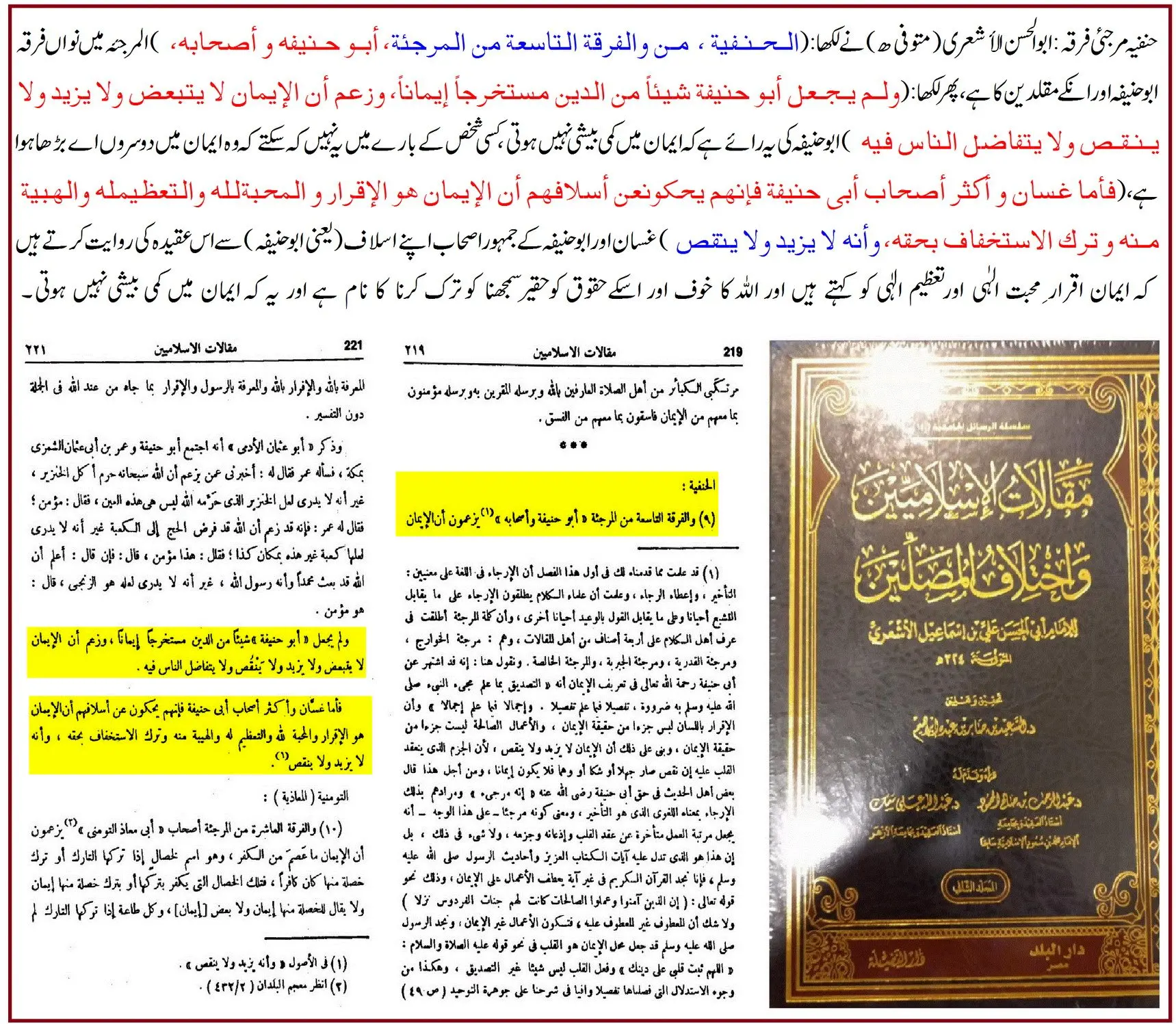
والفرقة التاسعة من المرجئة أبو حنيفة وأصحابه، يزعمون أن الإيمان المعرفة بالله، والإقرار بما جاء من عند الله في الجملة دون التفسير...
Translation:The ninth group of the Murjiʾah is Abū Ḥanīfah and his companions. They held that faith is the recognition of Allah and general affirmation of what has been revealed, without the need for detailed understanding. According to them, faith neither increases nor decreases, and there is no superiority among believers in terms of faith.
Summary: These statements clearly show that some views of Imām Abū Ḥanīfah رحمه الله and his followers were linked to the Murjiʾah sect — a connection made not only by ʿAbd al-Qādir al-Jīlānī but also by other authoritative scholars. Ghassān ibn Abān, the Ghassāniyyah Sect, and Background of Irjāʾ
Overview of Ghassāniyyah
Some have tried to dismiss Shaykh ʿAbd al-Qādir al-Jīlānī's claims by attributing them solely to Ghassānī thought. However, upon historical and doctrinal analysis, one finds a remarkable similarity between the methodology of Ghassān ibn Abān and some views of Imām Abū Ḥanīfah رحمه الله.
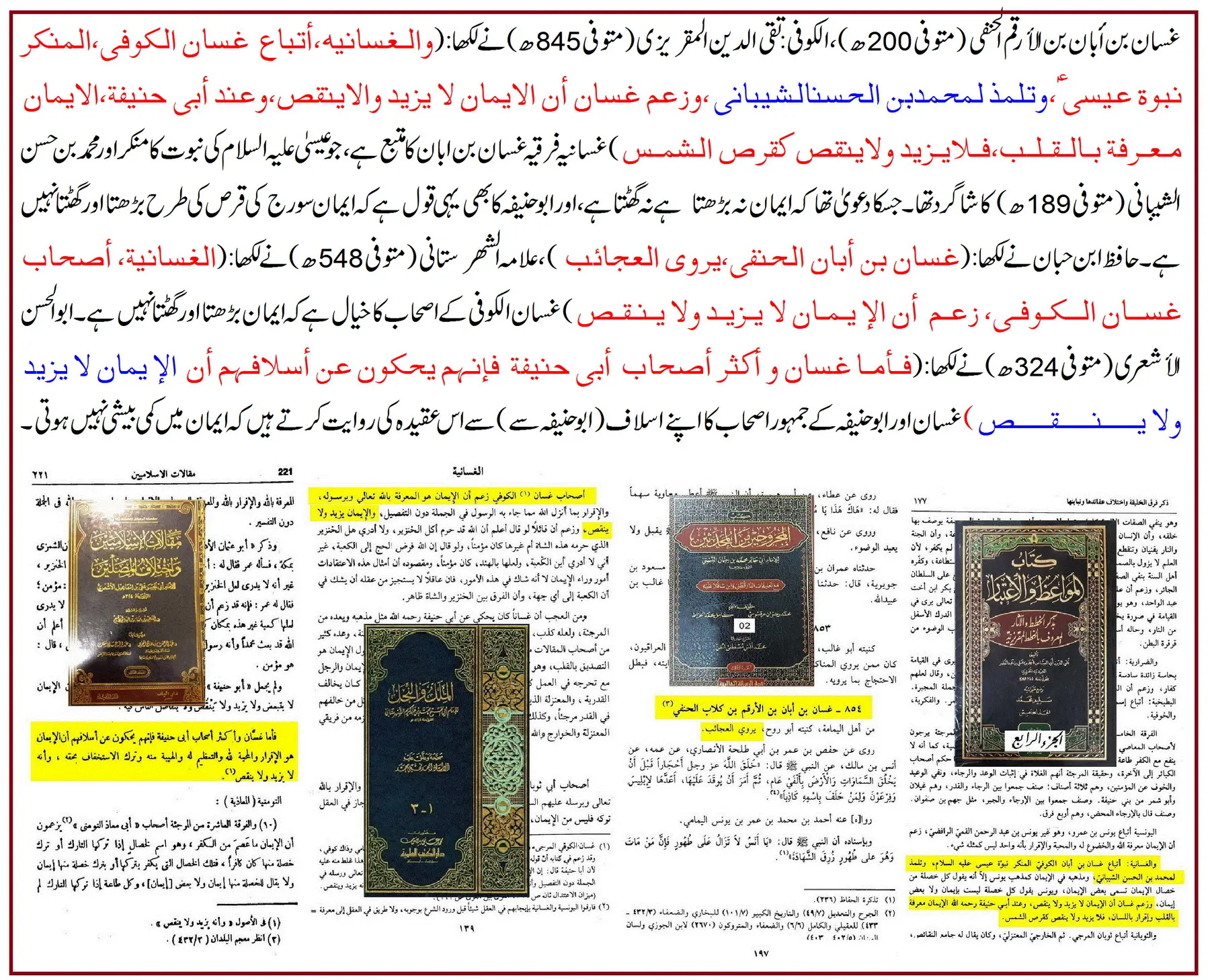
Statement of Taqī al-Dīn al-Maqrīzī (d. 845H)
والغسانية: أتباع غسان بن أبان الكوفي، المنكر نبوّة عيسى عليه السّلام... وزعم أن الإيمان لا يزيد ولا ينقص، وعند أبي حنيفة الإيمان معرفة بالقلب وإقرار باللسان...
Translation:The Ghassāniyyah were followers of Ghassān ibn Abān al-Kūfī, a student of Muḥammad ibn al-Ḥasan al-Shaybānī, who denied the prophethood of ʿĪsā (ʿalayhis-salām). He claimed that faith neither increases nor decreases, a view also held by Abū Ḥanīfah, who defined faith as recognition in the heart and verbal affirmation — like the disc of the sun: it neither increases nor diminishes.
 [al-Mawāʿiẓ wa al-Iʿtibār, al-Maqrīzī, Vol. 1, p. 231]
 Further Clarification by Imām Abū al-Ḥasan al-Ashʿarī:
فَأَمَّا غسان وأكثر أصحاب أبي حنيفة فإنهم... قالوا الإيمان لا يزيد ولا ينقص...
Translation:Ghassān and the majority of Abū Ḥanīfah’s followers narrated from their predecessors that faith is verbal affirmation, love, reverence, and fear of Allah, and that faith neither increases nor decreases.
[Maqālāt al-Islāmiyyīn, p. 142] Statement of Imām al-Shahrastānī (d. 548H):
الغسانية: أصحاب غسان الكوفي. زعم أن الإيمان هو المعرفة بالله تعالى وبرسوله... والإيمان لا يزيد ولا ينقص.
[al-Milal wa al-Niḥal, Vol. 1, p. 152] Conclusion
① The beliefs of Ghassāniyyah bear striking resemblance to some of Imām Abū Ḥanīfah’s reported views.
② Ghassān was a student of Imām Muḥammad al-Shaybānī.
③ Scholars like al-Ashʿarī, al-Maqrīzī, and al-Shahrastānī have clearly linked such beliefs to Abū Ḥanīfah and his school.
Hence, the attribution of Irjāʾ to Imām Abū Ḥanīfah رحمه الله is not a fabrication or based on sectarian bias, but is supported by reliable historical and theological sources. Clarifications by Classical Scholars on Imām Abū Ḥanīfah’s Belief on Īmān
Imām ʿAbd al-Qāhir al-Baghdādī (d. 429H)
In his book al-Farq bayn al-Firaq, he highlights:
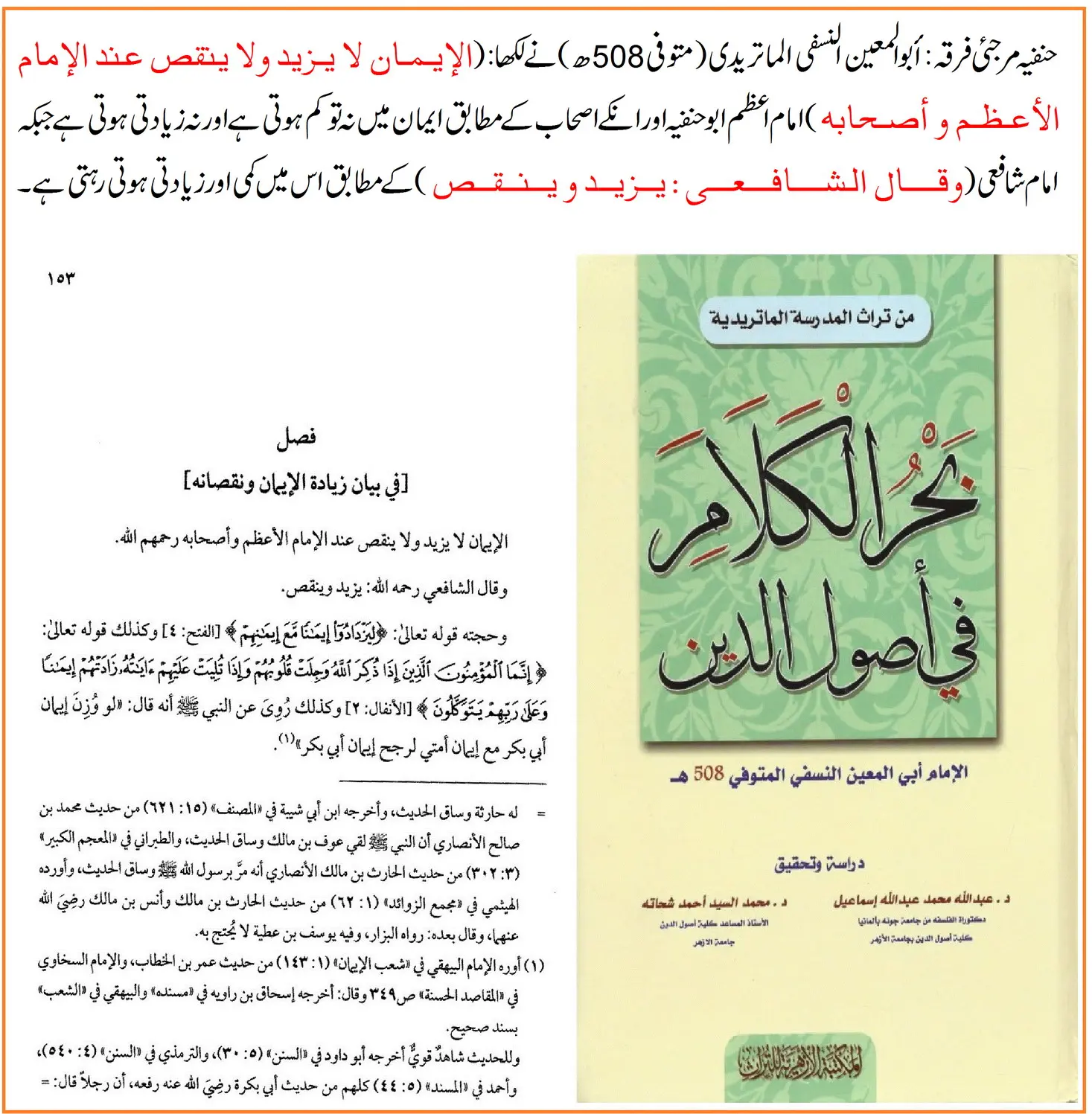
غسان المرجئ قال: الإيمان يزيد ولا ينقص. وأبو حنيفة قال: الإيمان هو المعرفة، لا يزيد ولا ينقص، ولا يتفاضل الناس فيه.
Translation:Ghassān, the Murjiʾī, claimed that faith increases but does not decrease. In contrast, Abū Ḥanīfah said: faith is simply recognition. It does not increase or decrease, and people do not vary in it.
[al-Farq bayn al-Firaq, p. 202] Note: Despite trying to differentiate between Ghassān and Abū Ḥanīfah, al-Baghdādī still confirms that Abū Ḥanīfah did not believe in the increase or decrease of faith. Imām Ibn ʿAbd al-Barr al-Andalusī (d. 463H)
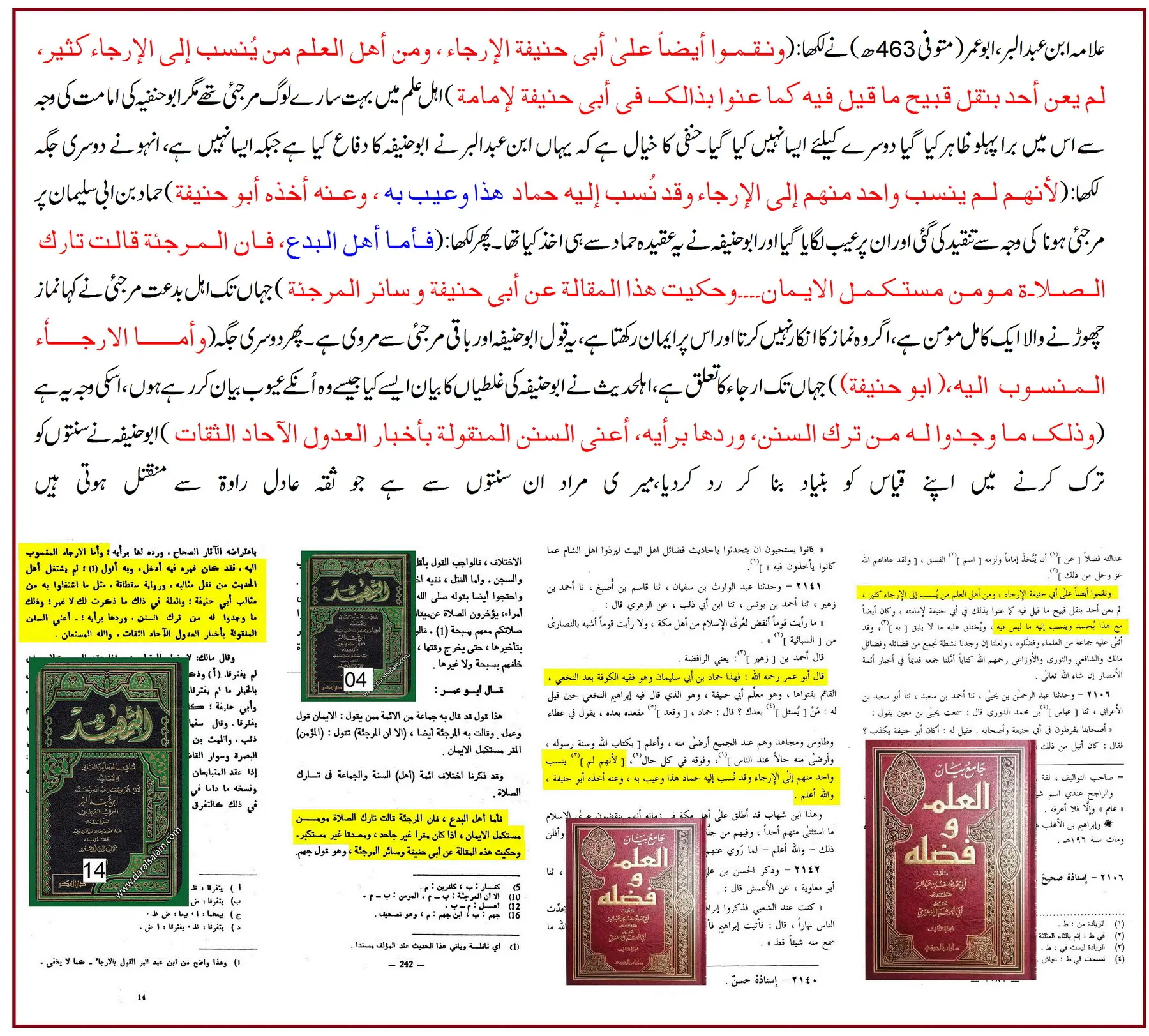
In Jāmiʿ Bayān al-ʿIlm and al-Tamhīd, he wrote:
وَنُسِبَ إِلَى أَبِي حَنِيفَةَ الْإِرْجَاءُ، وَقَدْ أَخَذَهُ عَنْ حَمَّادٍ، وَحَمَّادٌ عُيِّبَ بِهِ.
Translation:Irjāʾ (Murjiʾī doctrine) was attributed to Abū Ḥanīfah, and he took this from his teacher Ḥammād ibn Abī Sulaymān, who was himself criticized for it.
[Jāmiʿ Bayān al-ʿIlm, Vol. 2, p. 163]And in al-Tamhīd:
أن تارك الصلاة مؤمن مستكمل الإيمان إذا كان مقراً غير جاحد.
Translation:It is narrated from Abū Ḥanīfah and the Murjiʾah that one who abandons prayer but affirms it (without denial) is still a complete believer.
[al-Tamhīd, Vol. 9, p. 245] This is a distinct Murjiʾī view — that actions are not part of īmān. Imām Ibn Ḥibbān’s Criticism
He mentioned a Murjiʾī narrator:
غسان بن الأرقم بن كلاب الحنفي من أهل اليمامة... يروي العجائب.
[al-Majrūḥīn, Vol. 2, p. 80] Ibn Ḥibbān labeled this narrator weak due to his Murjiʾī beliefs, noting that he belonged to the Ḥanafī school. Verdicts of Renowned Ḥadīth Scholars on Abū Ḥanīfah’s Irjāʾ
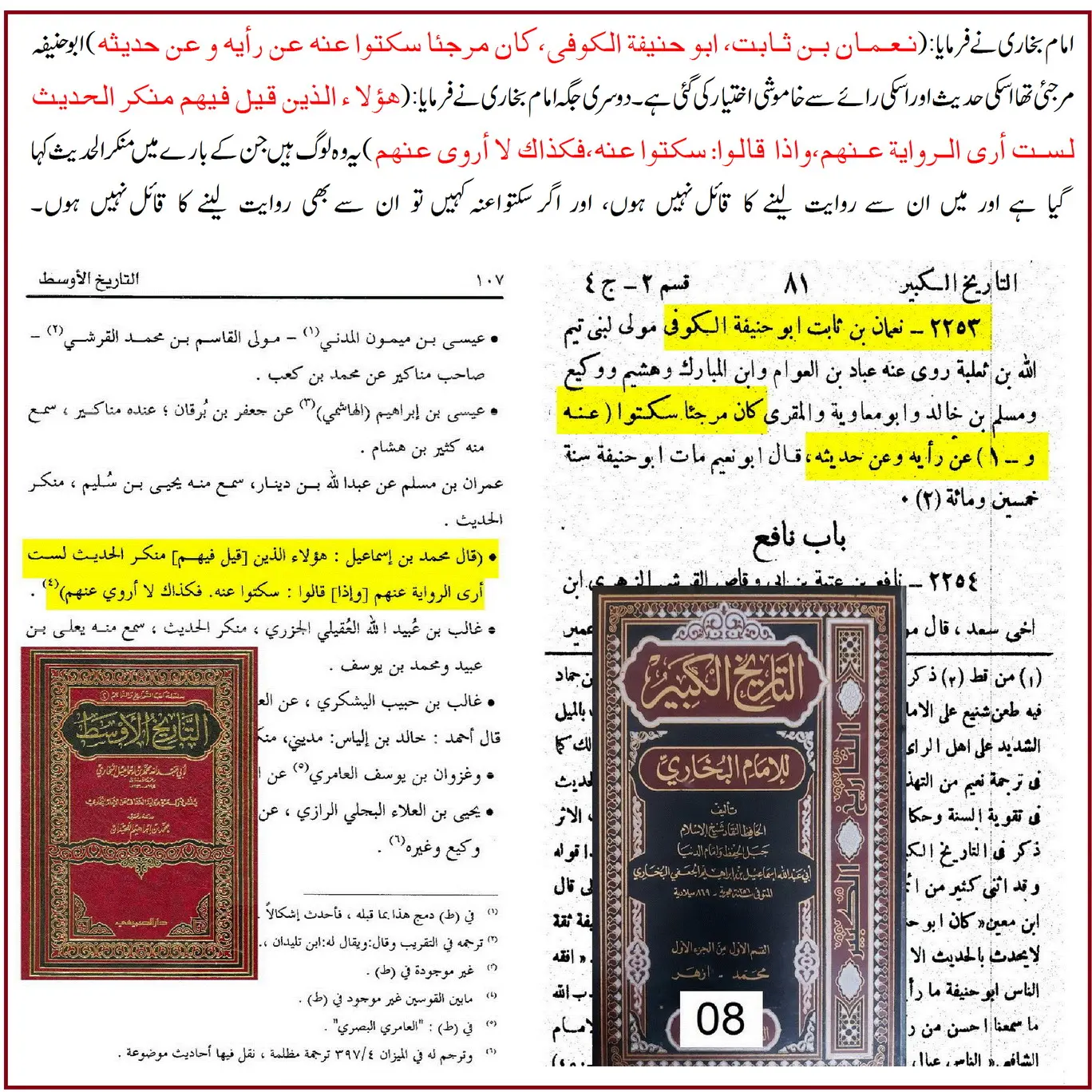
Imām al-Bukhārī رحمه الله
نعمان بن ثابت أبو حنيفة الكوفي... كان مرجئًا، سكتوا عن رأيه وحديثه.
[al-Tārīkh al-Kabīr, Vol. 8, p. 81] Al-Bukhārī states clearly that Abū Ḥanīfah was a Murjiʾī, and the scholars abstained from narrating from him due to this. Imām Aḥmad ibn Ḥanbal رحمه الله
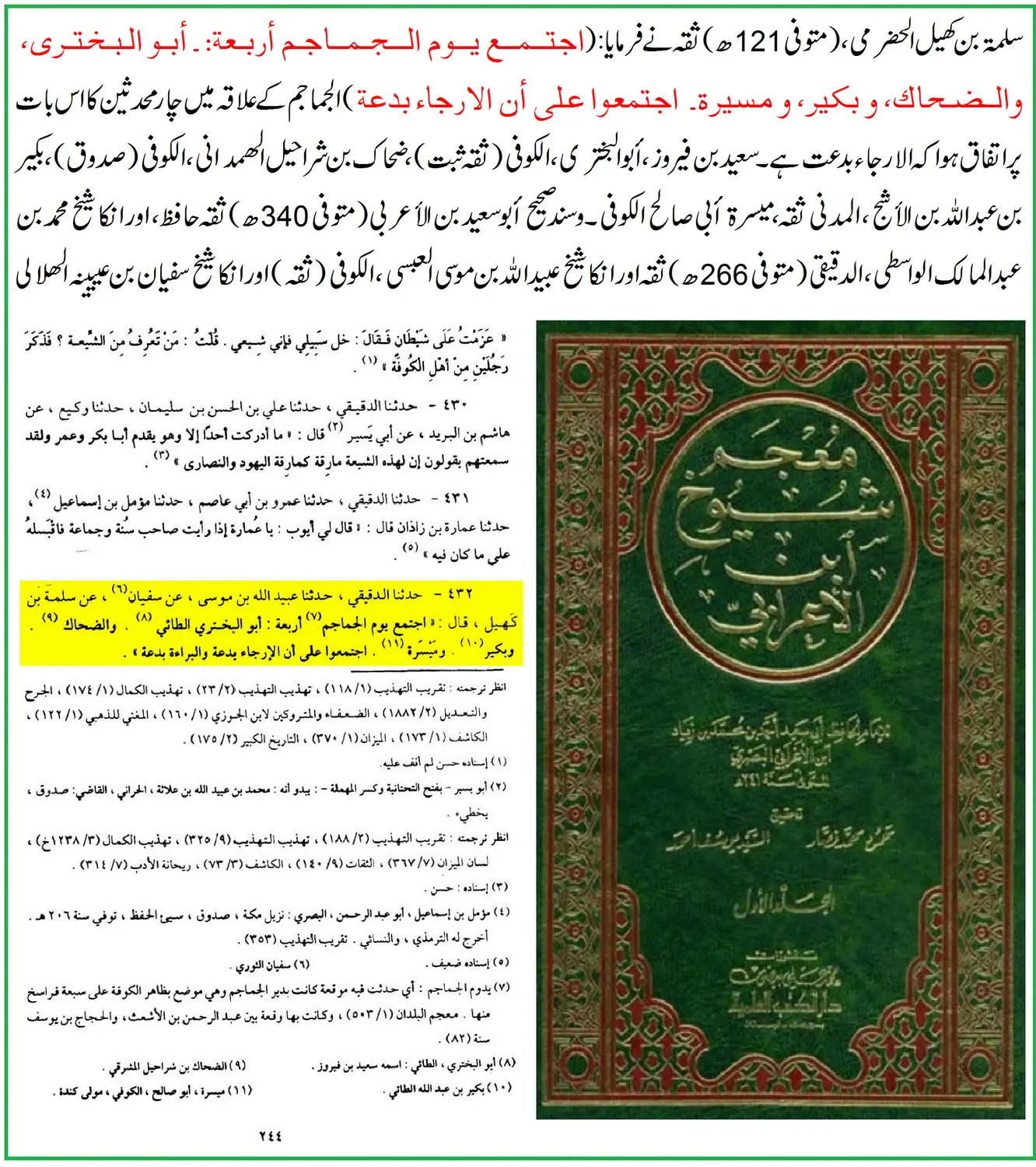
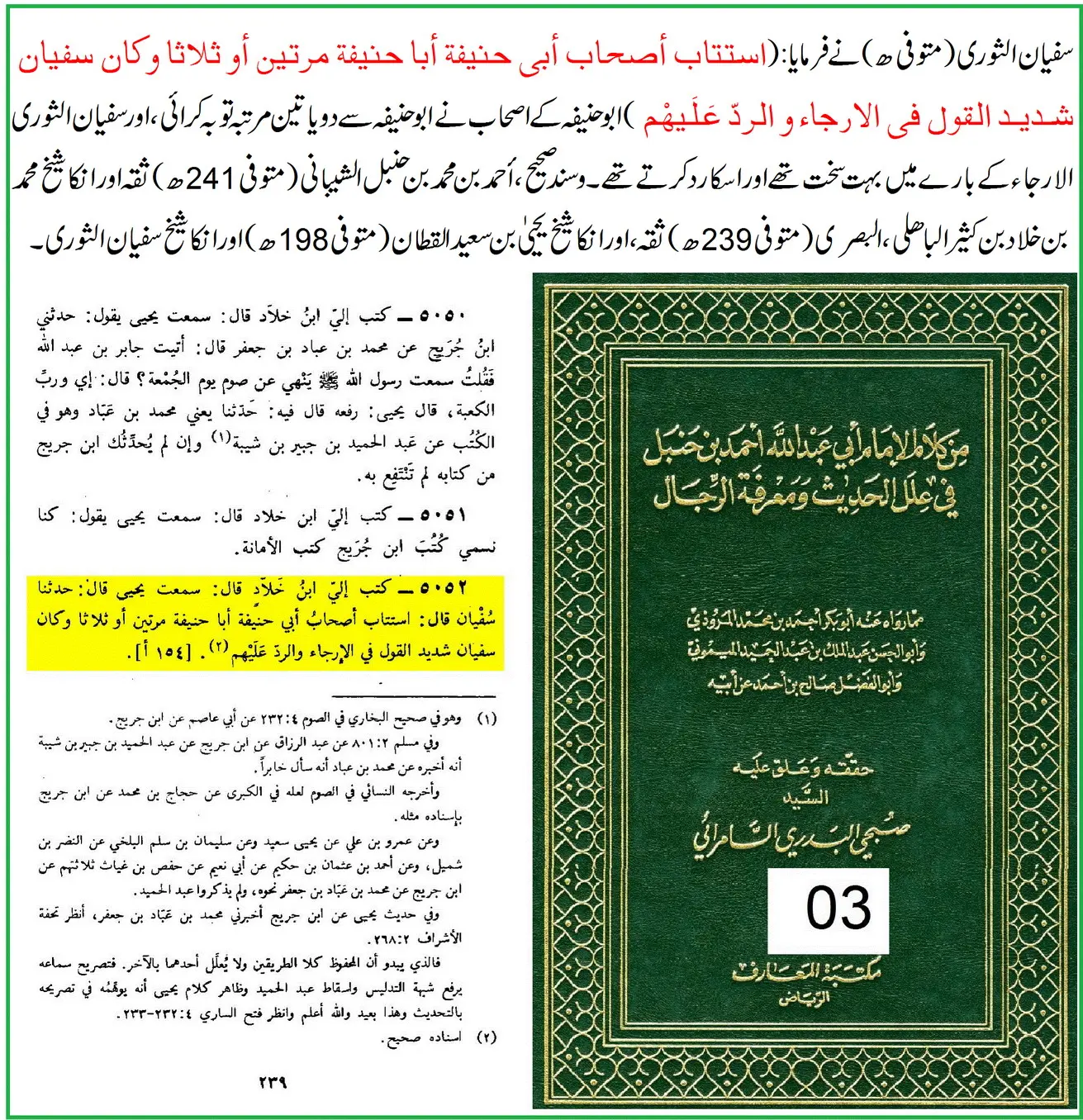
استتاب أصحاب أبي حنيفة أبا حنيفة مرتين أو ثلاثًا، وكان سفيان شديد القول في الإرجاء والرد عليهم.
[al-ʿIlal wa Maʿrifat al-Rijāl, Vol. 2, p. 5052] His companions made him repent twice or thrice, and Sufyān al-Thawrī was extremely strict in refuting the Murjiʾah. Imām Yaḥyá ibn Maʿīn رحمه الله
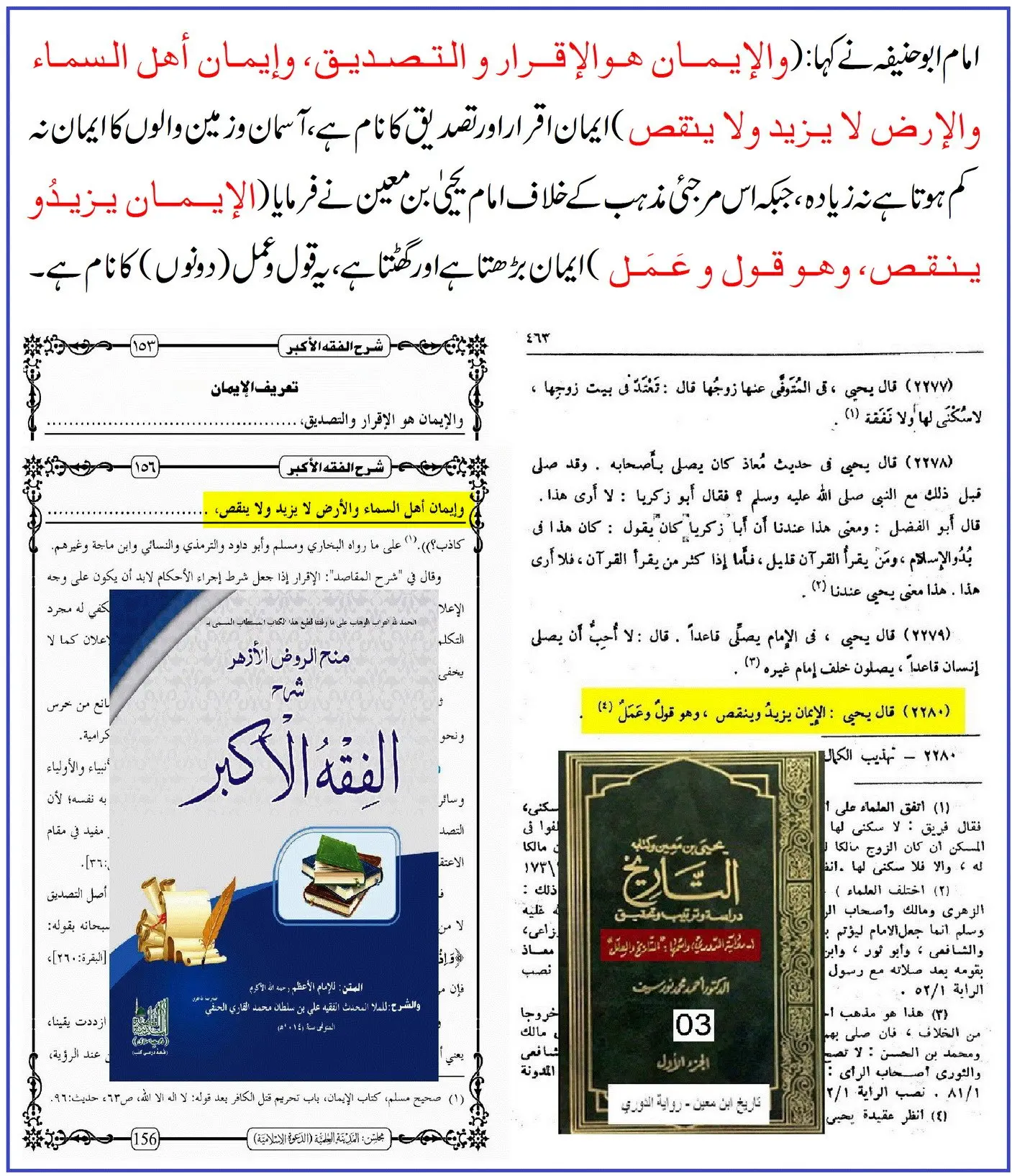
الإيمان قول وعمل، يزيد وينقص...
[Tārīkh Ibn Maʿīn, Vol. 2, Hadith 2280 & 4937] Contrary to Abū Ḥanīfah, Ibn Maʿīn defined faith as belief and action, subject to increase and decrease. Imām Yaḥyá ibn Saʿīd al-Qaṭṭān رحمه الله
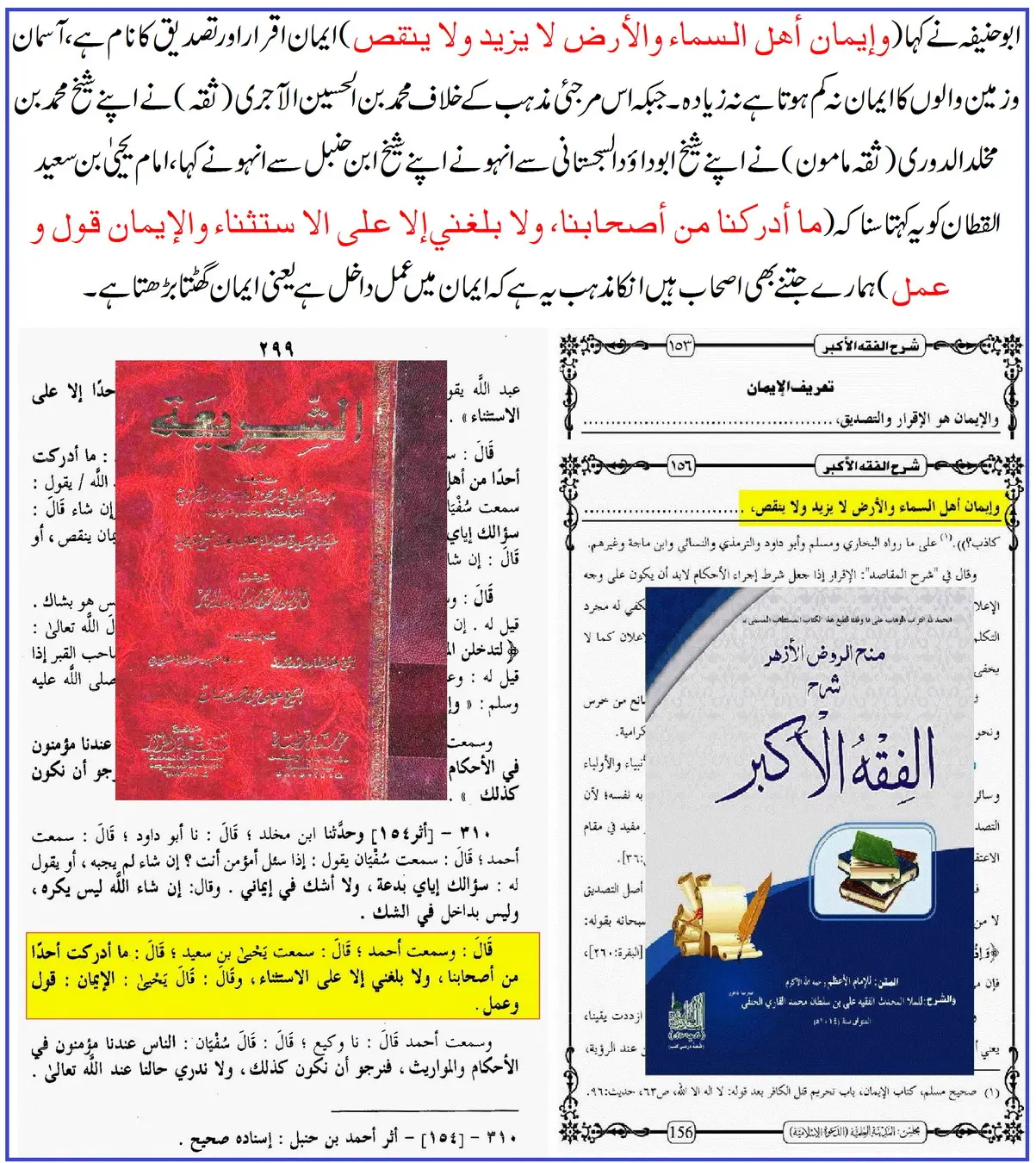
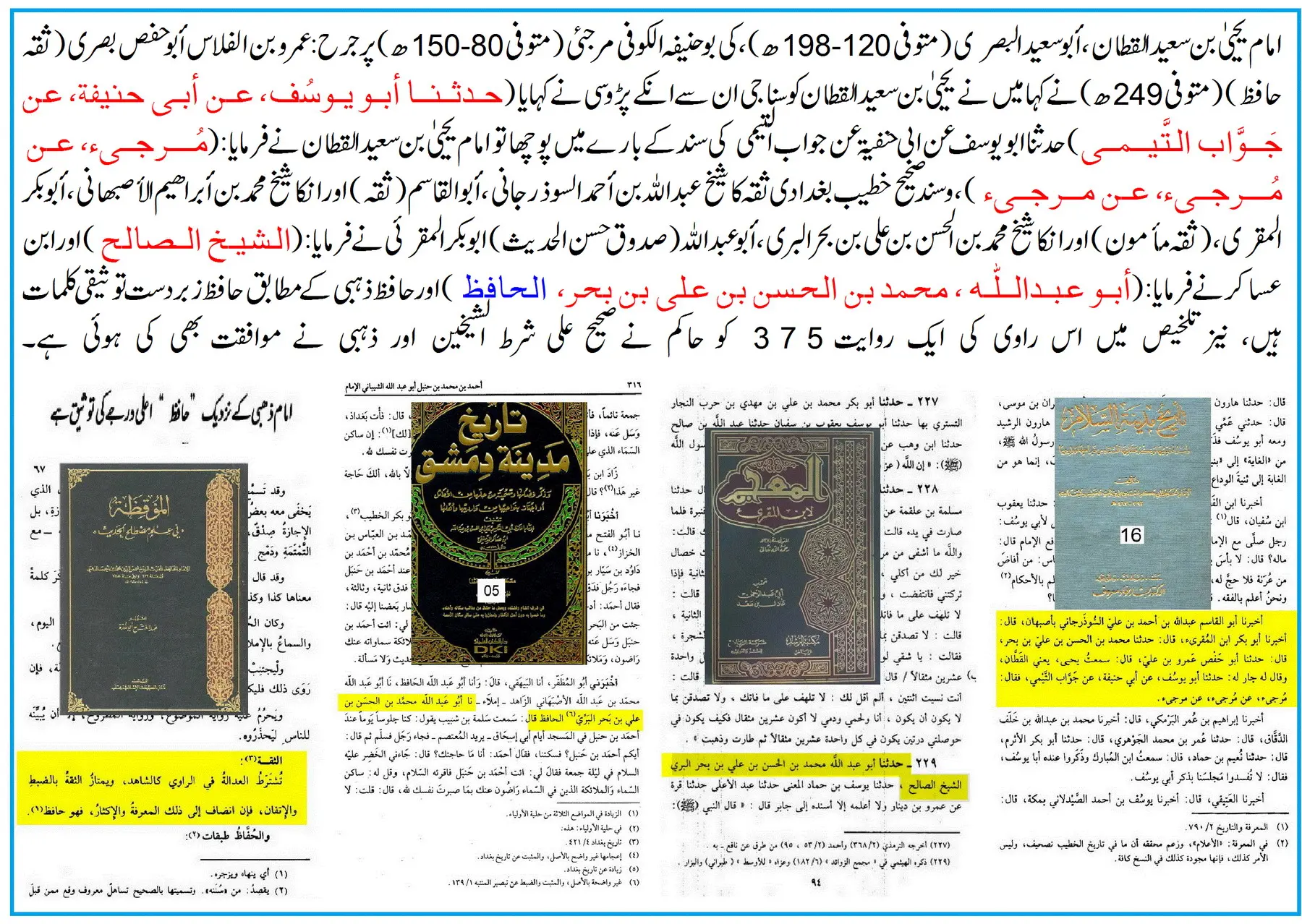
ما أدركتُ أحدًا من أصحابنا إلا على الاستثناء، وقال: الإيمان قول وعمل.
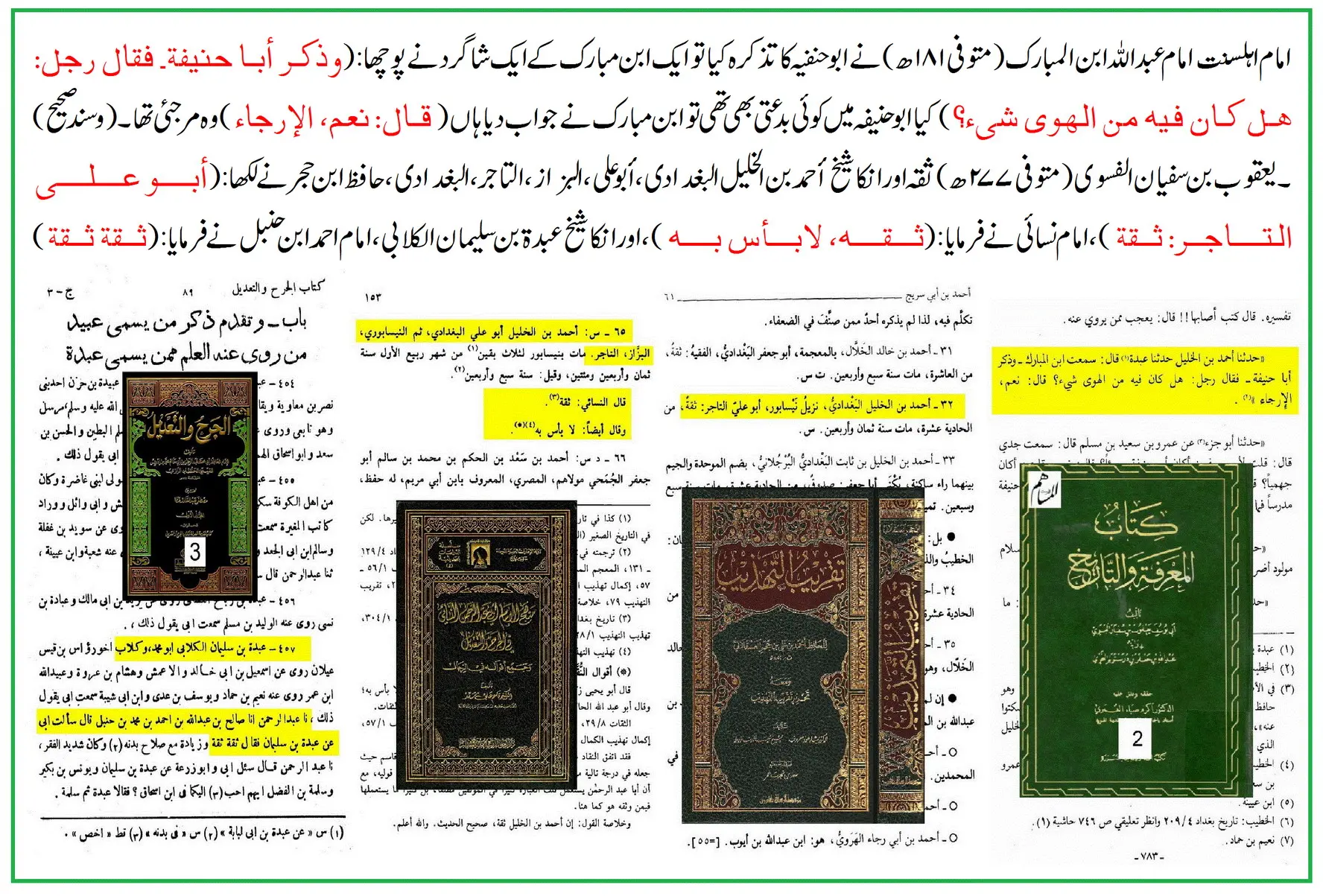
[al-Sharīʿah, al-Ājurrī, Vol. 2, p. 280] All scholars of his time believed īmān is both belief and action and fluctuates. Imām ʿAbdullāh ibn al-Mubārak رحمه الله
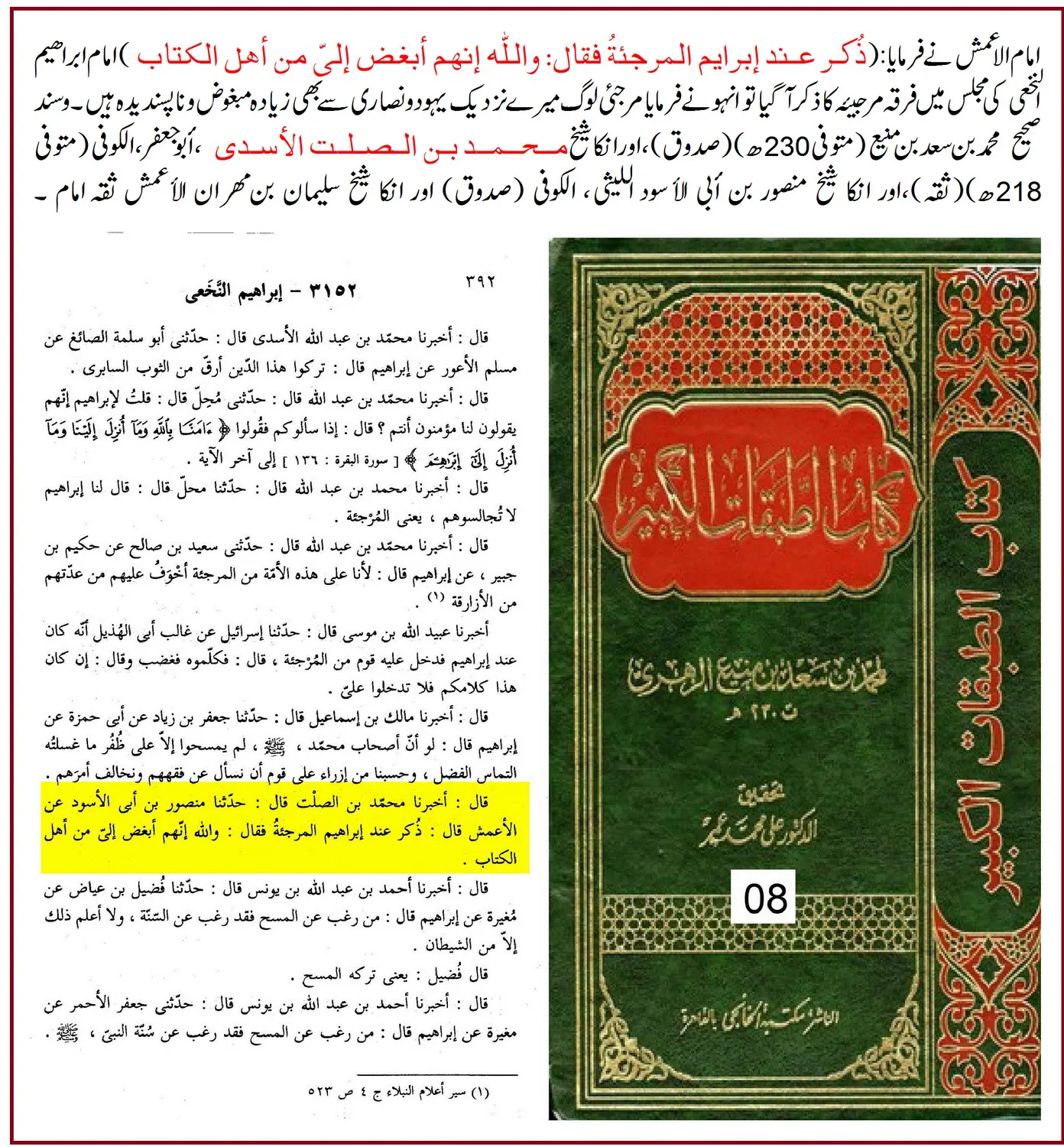
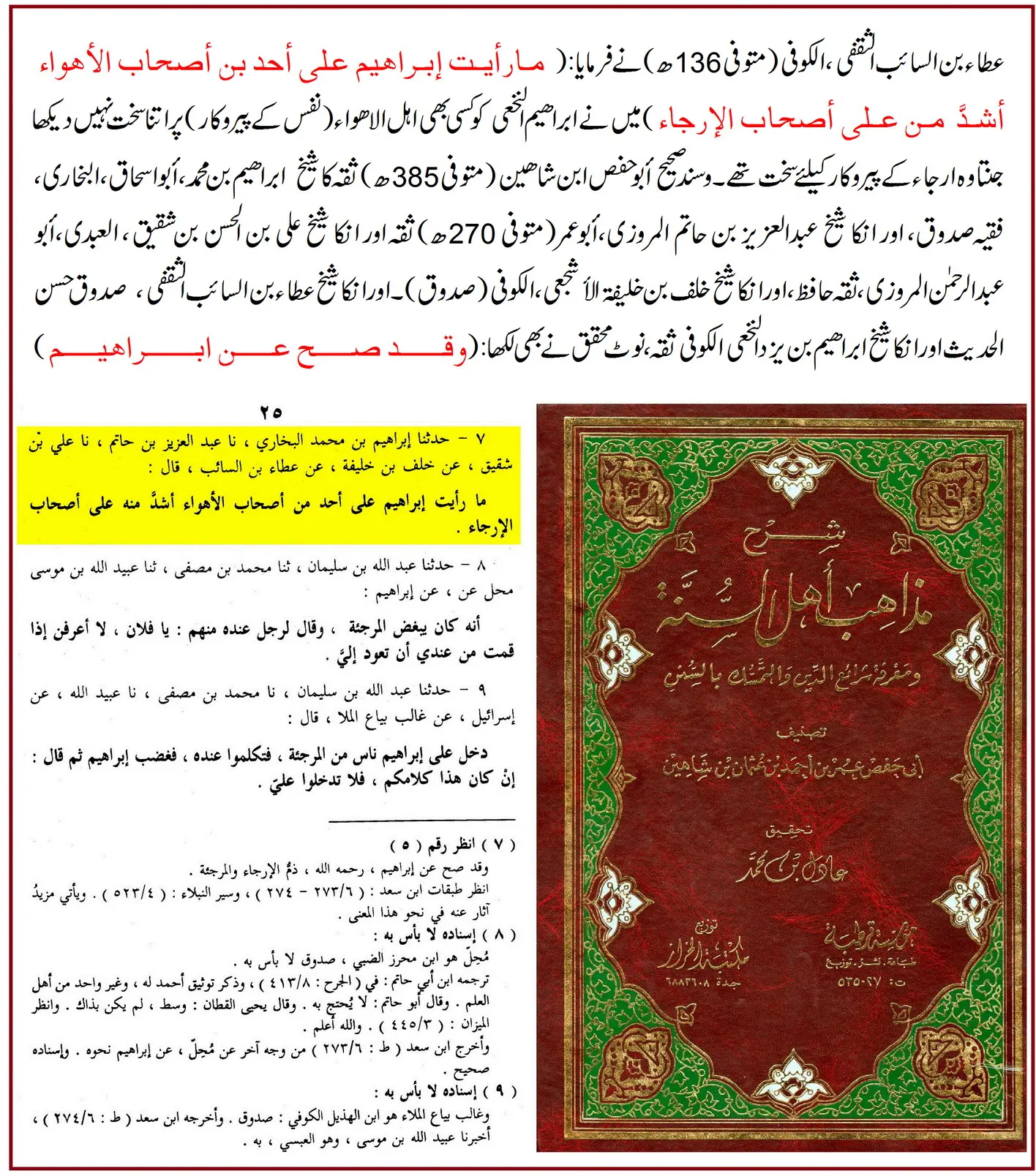
هل كان في أبي حنيفة من الهوى شيء؟ قال: نعم، الإرجاء.
[al-Maʿrifah wa al-Tārīkh, al-Fasawī, Vol. 1, p. 398] He openly stated that Abū Ḥanīfah held the innovation of Irjāʾ. Sufyān al-Thawrī رحمه الله
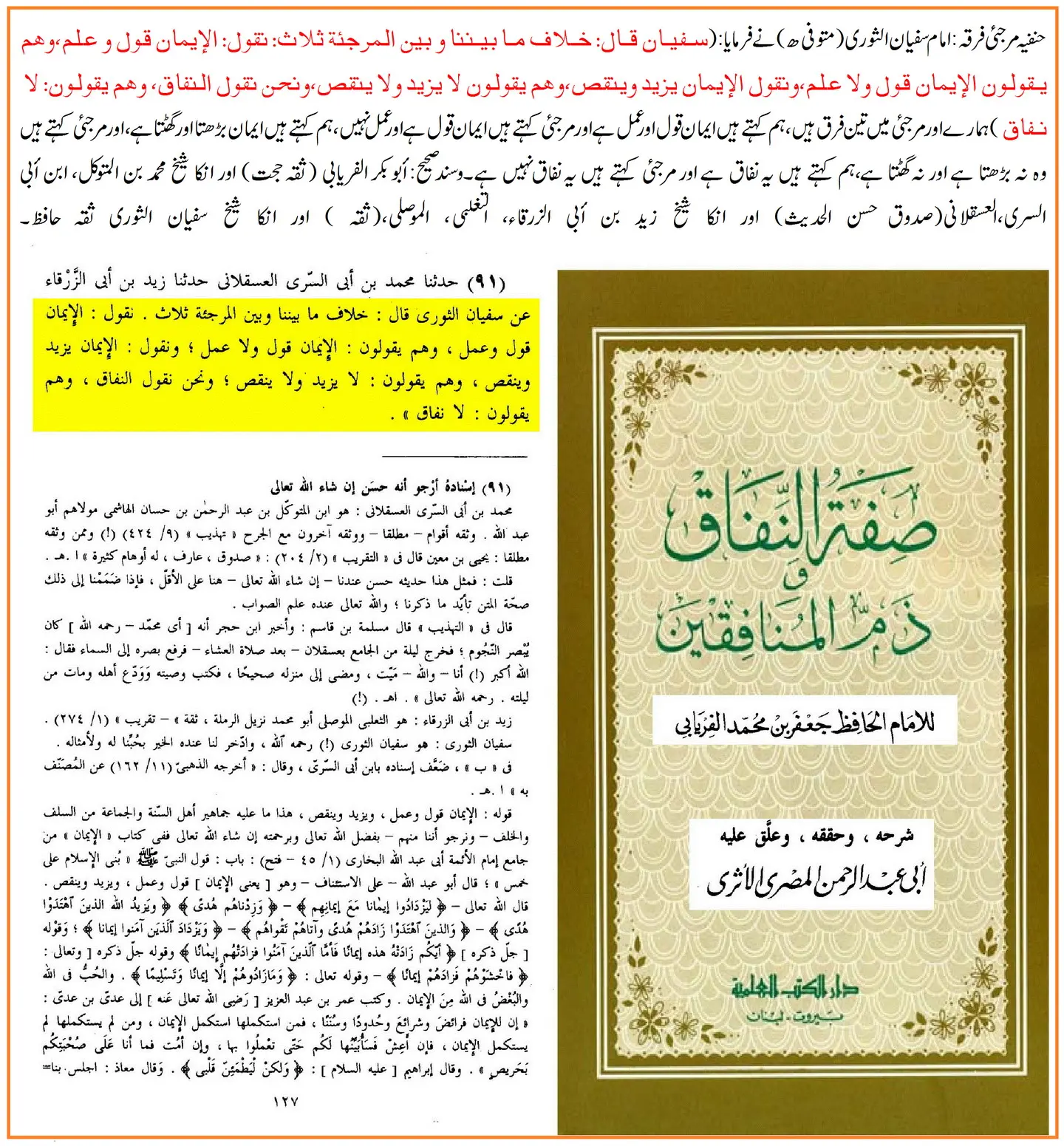
نقول: الإيمان قول وعمل، وهم يقولون: الإيمان قول ولا عمل.
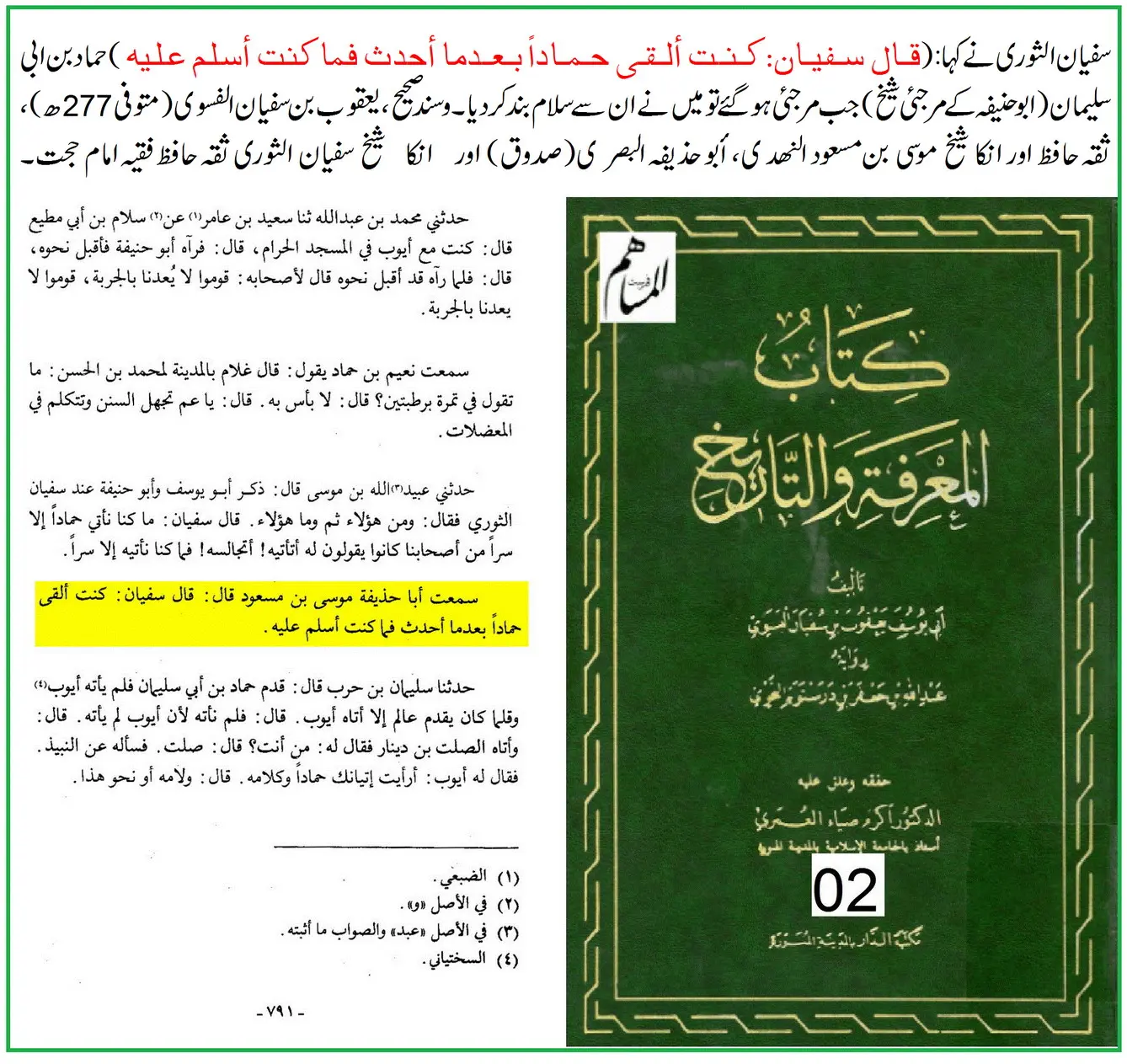
[Ṣifat al-Nifāq, al-Firyābī, p. 87] He abandoned salām (greeting) to those who adopted Irjāʾ, including Ḥammād ibn Abī Sulaymān. [al-Maʿrifah wa al-Tārīkh, Vol. 2, p. 177] Statements from Later Scholars & Consensus of Ahl al-Sunnah
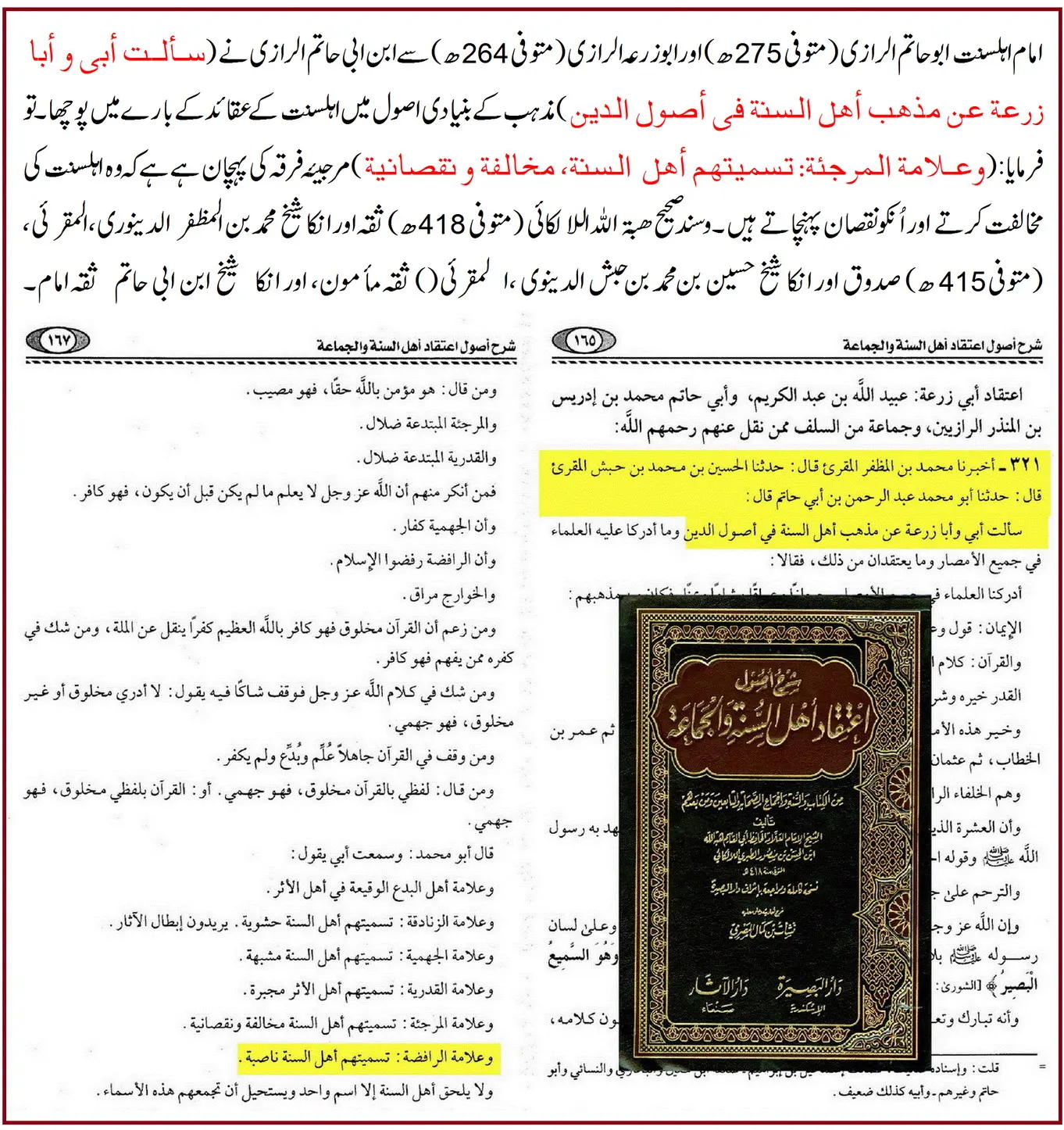
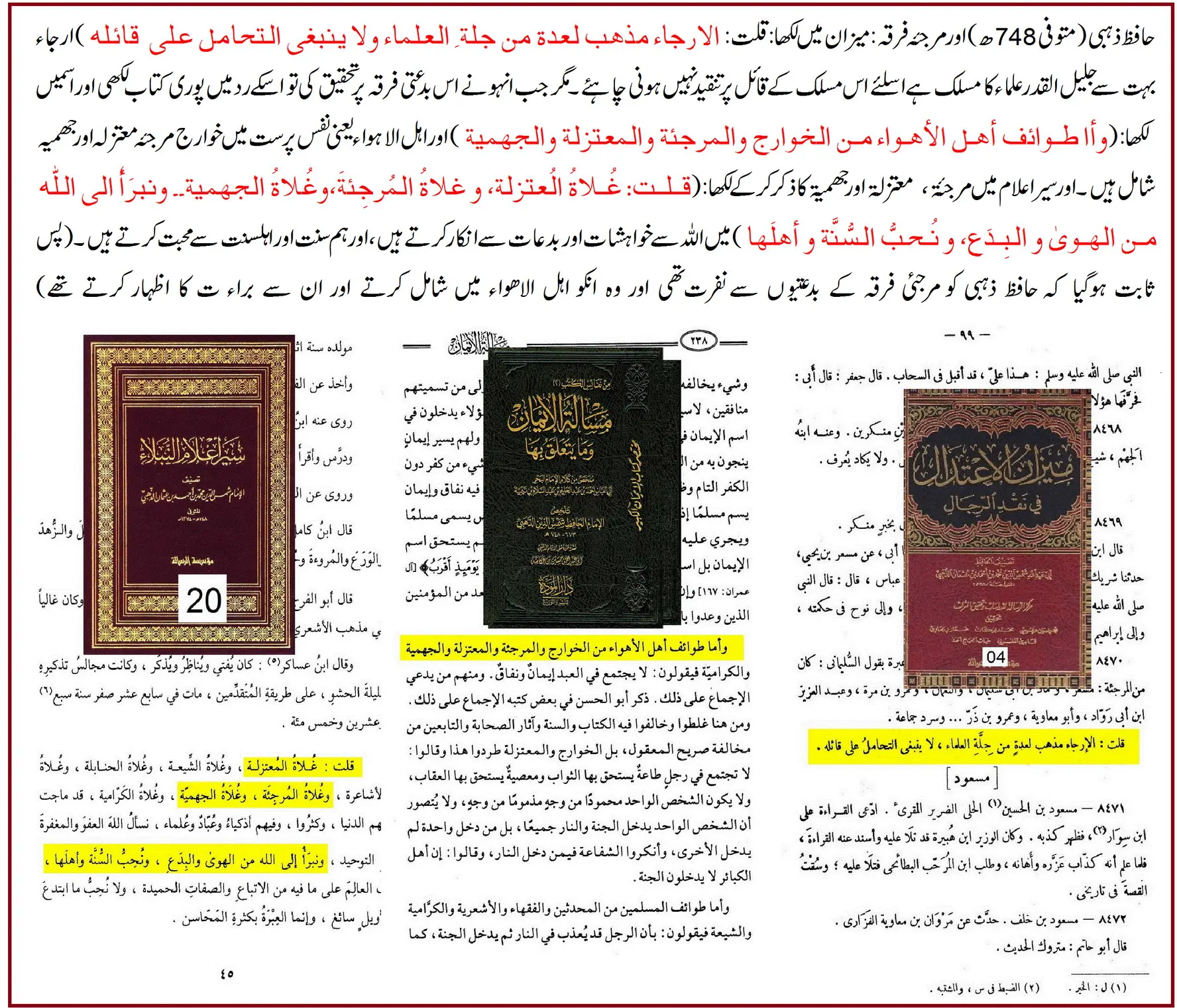
Ahl al-Sunnah’s View of Īmān
الإيمان قول وعمل، يزيد بالطاعة، وينقص بالمعصية.
Faith is a combination of belief and action; it increases with obedience and decreases with sin.
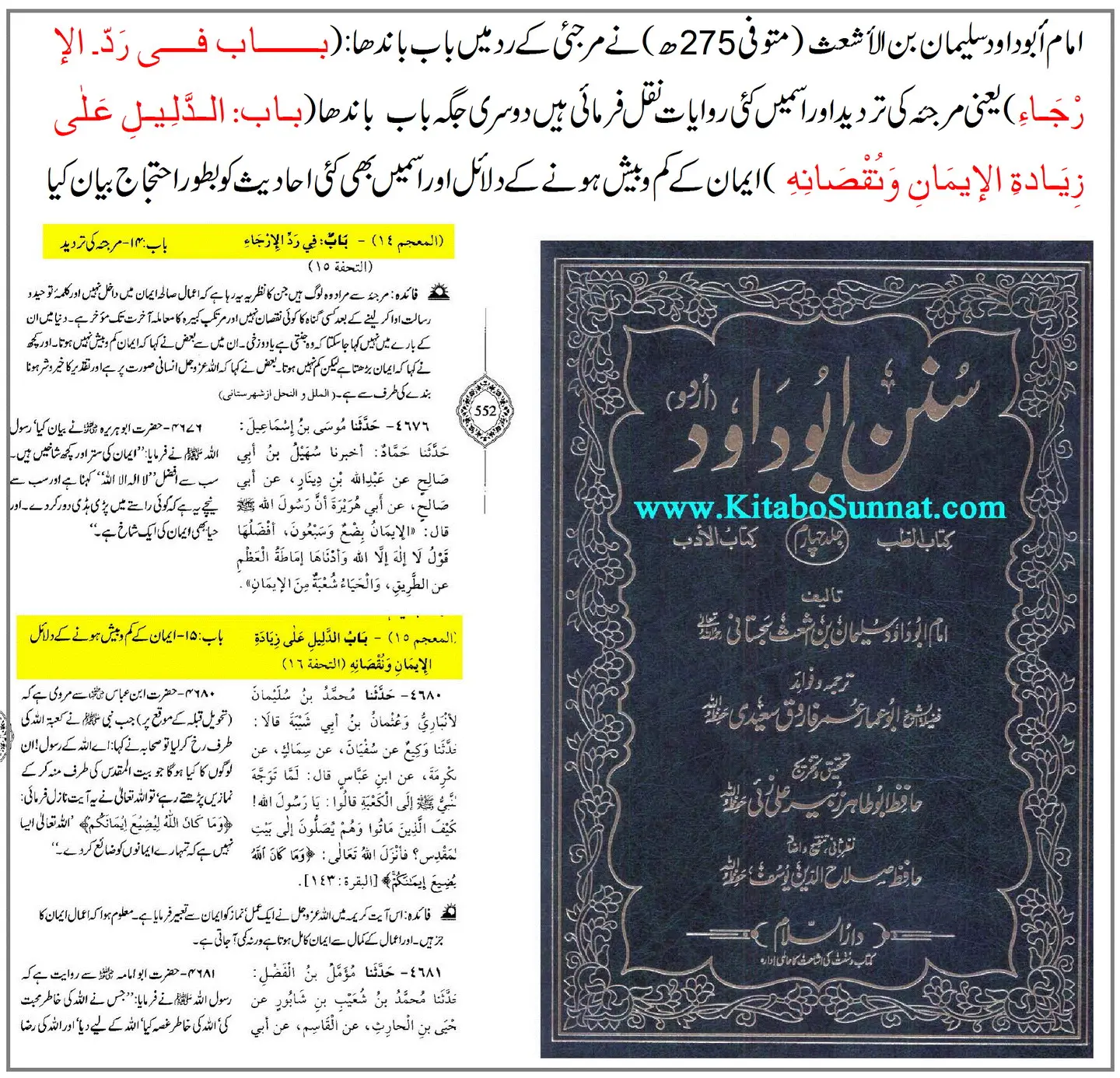
Imām Abū Dāwūd رحمه الله
He created specific chapters in his Sunan:
- باب في رد الإرجاء
- Citing the ḥadīth:
“Īmān has over seventy branches...”
[Sunan Abī Dāwūd, Hadith 4676]
- Citing the ḥadīth:
- باب الدليل على زيادة الإيمان ونقصانه
- Supporting narration:
“I have not seen anyone more deficient in religion than women...”
[Sunan Abī Dāwūd, Hadith 4679–4680]
- Supporting narration:
These are direct refutations of Murjiʾī beliefs. Imām Abū ʿUbayd al-Qāsim ibn Sallām رحمه الله
ما ابتُدِعت في الإسلام بدعة أعزّ على أهلها من هذا الإرجاء.
[Kitāb al-Īmān, p. 117] He labeled Irjāʾ the most beloved innovation among its followers. Imām Abū Ḥayyān al-Andalusī رحمه الله
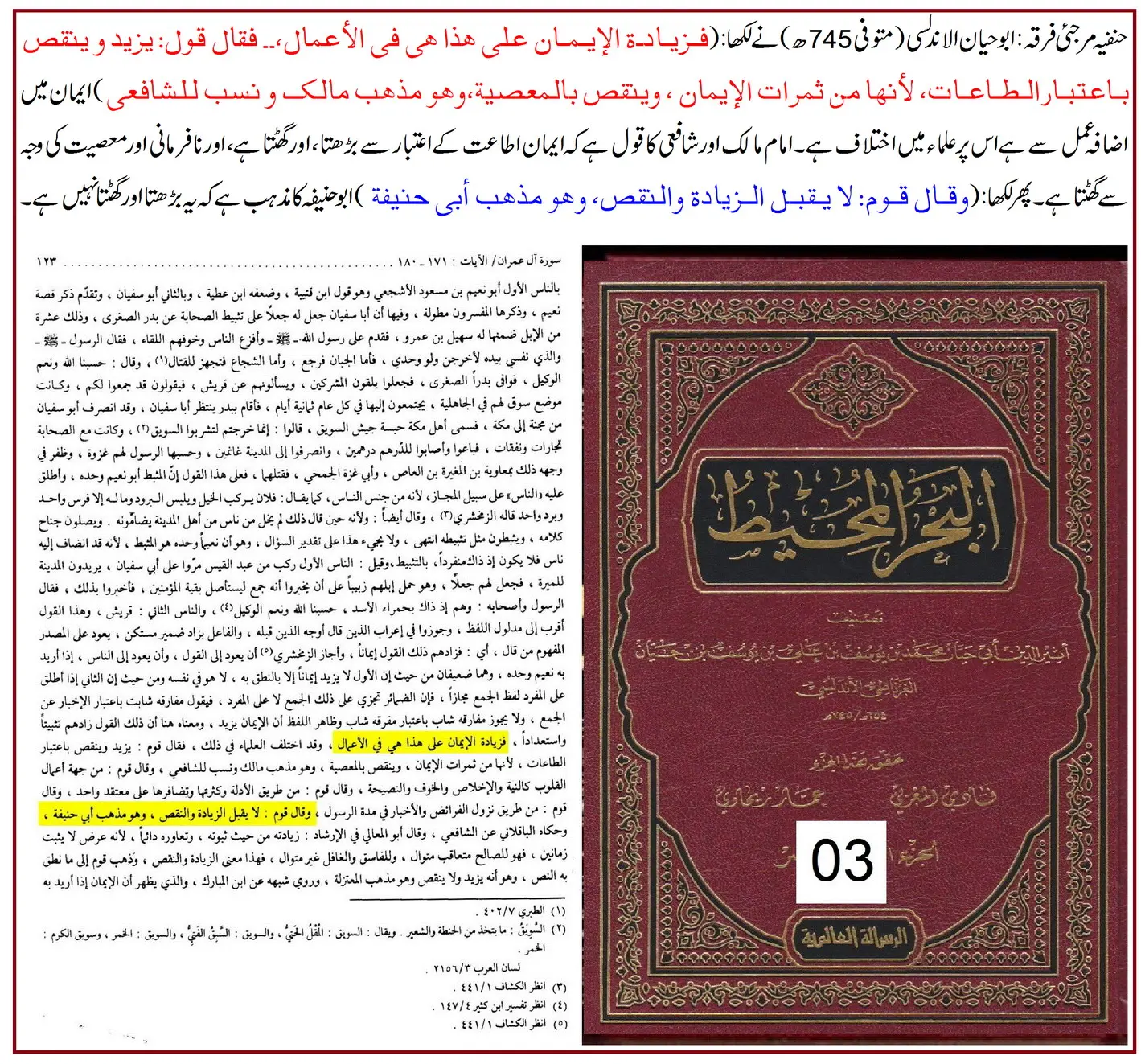
مالك والشافعي: الإيمان يزيد وينقص. أبو حنيفة: لا يزيد ولا ينقص.
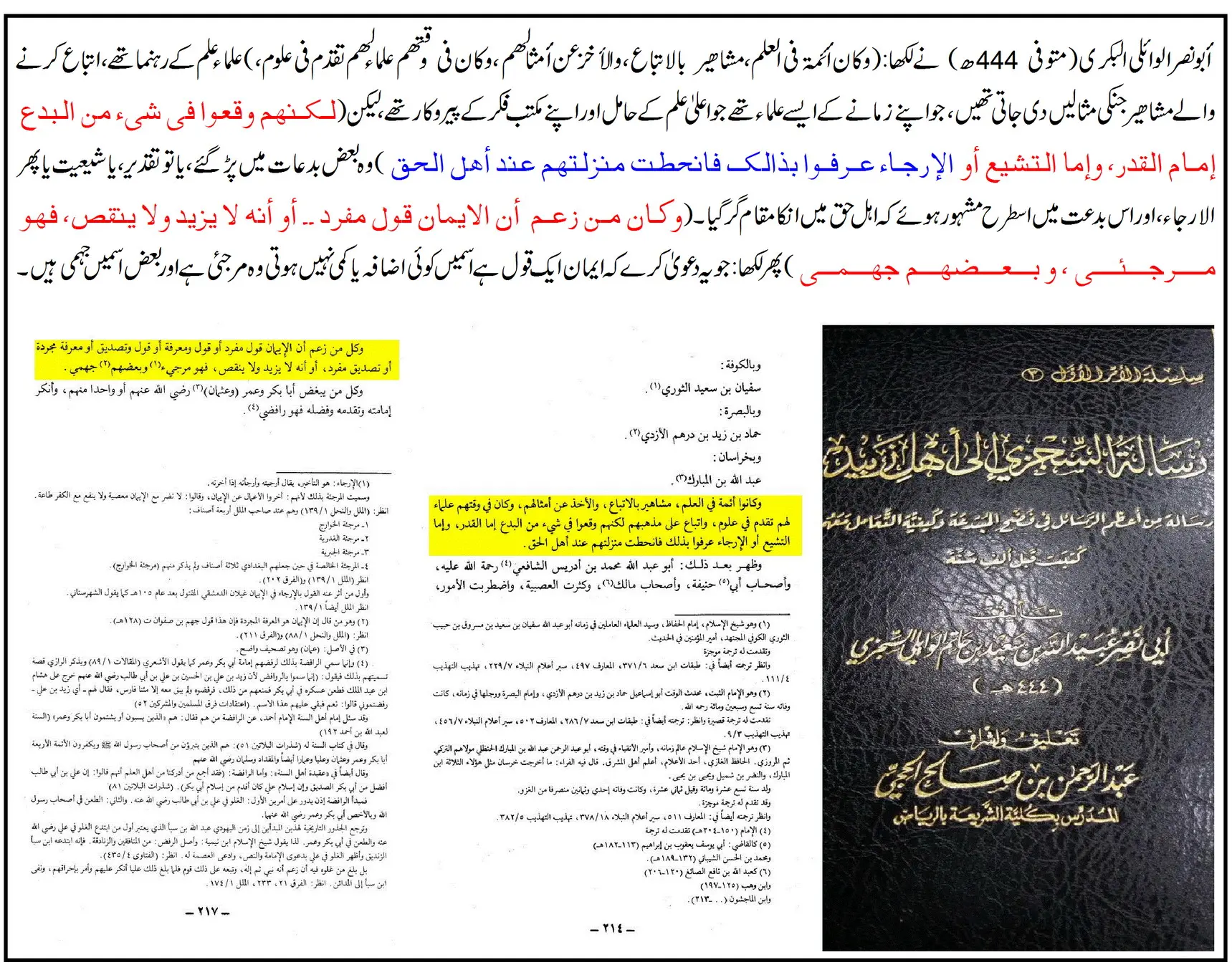
[al-Baḥr al-Muḥīṭ, Vol. 1, p. 276] Imām Abū Naṣr al-Sijzī رحمه الله
كل من زعم أن الإيمان لا يزيد ولا ينقص، فهو مرجئ، وبعضهم جهمي.
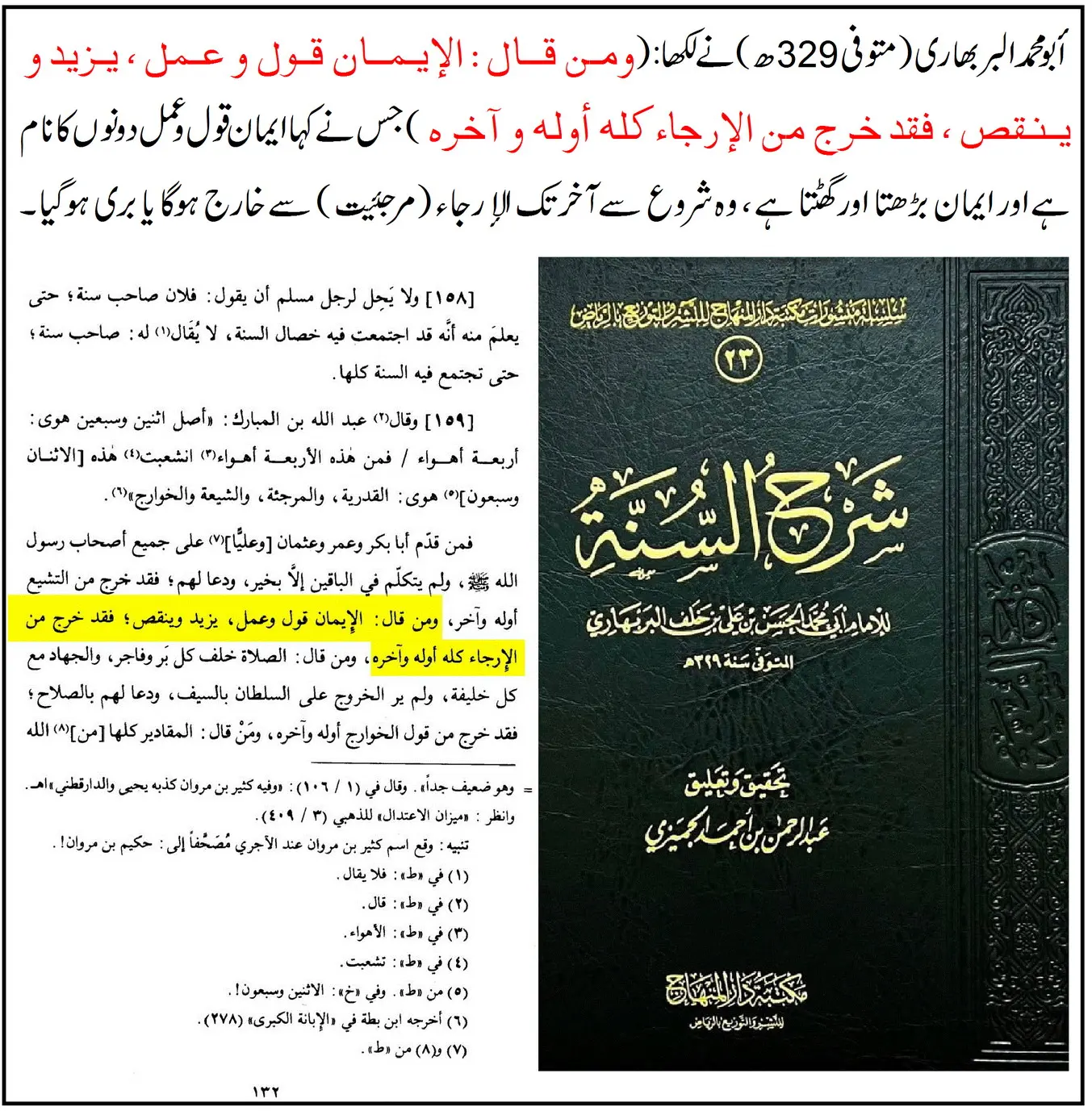
[Risālah al-Sijzī, p. 104] Imām Barbahārī رحمه الله
من قال: الإيمان قول وعمل، يزيد وينقص، فقد خرج من الإرجاء كله أوله وآخره.
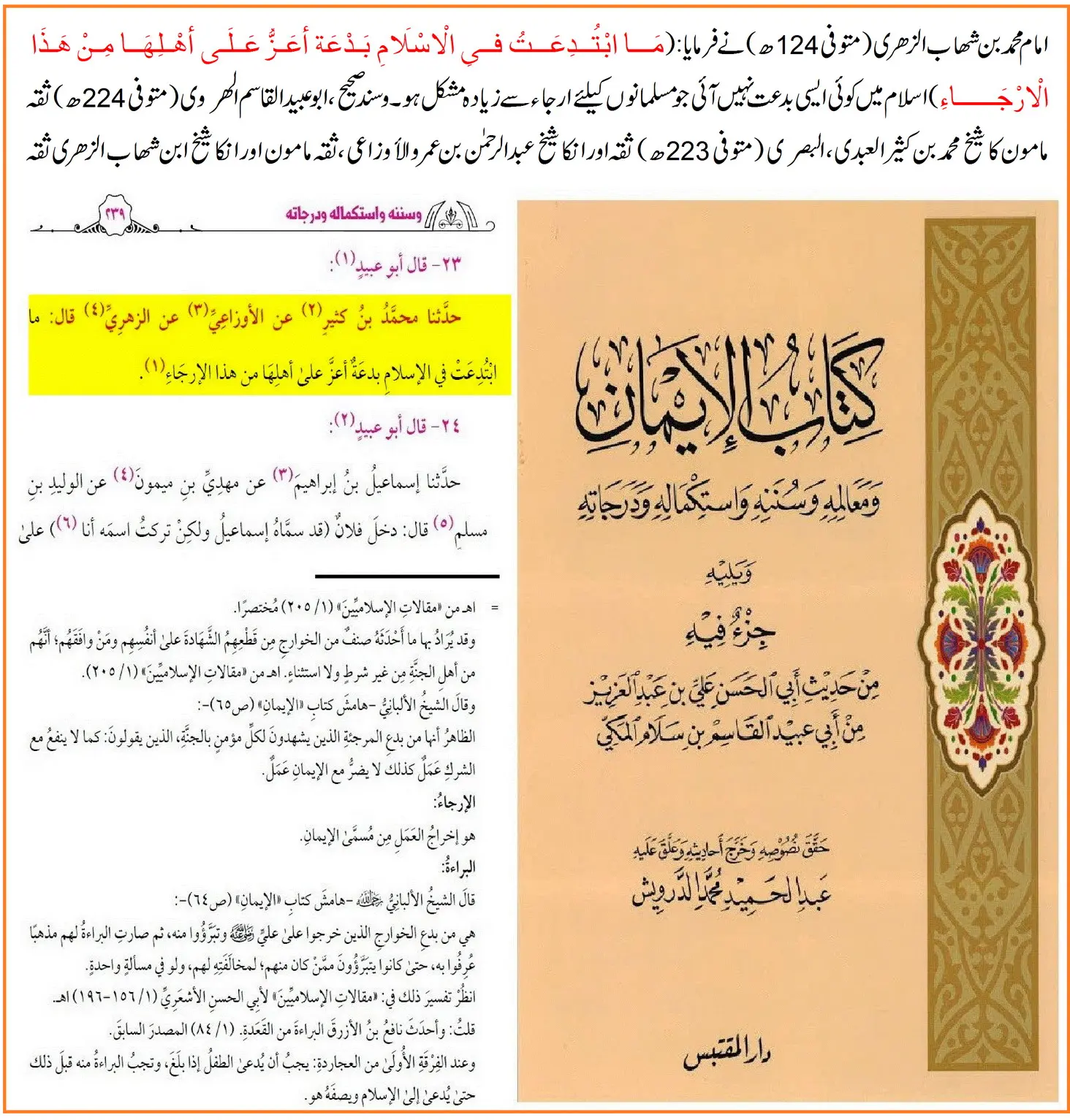
[Sharḥ al-Sunnah, p. 64] Imām al-Zuhrī رحمه الله
ما ابتُدِعت في الإسلام بدعة أعزّ على أهلها من هذا الإرجاء.
[Kitāb al-Īmān, Abū ʿUbayd] Students of Imām Abū Ḥanīfah and the Spread of Irjāʾ
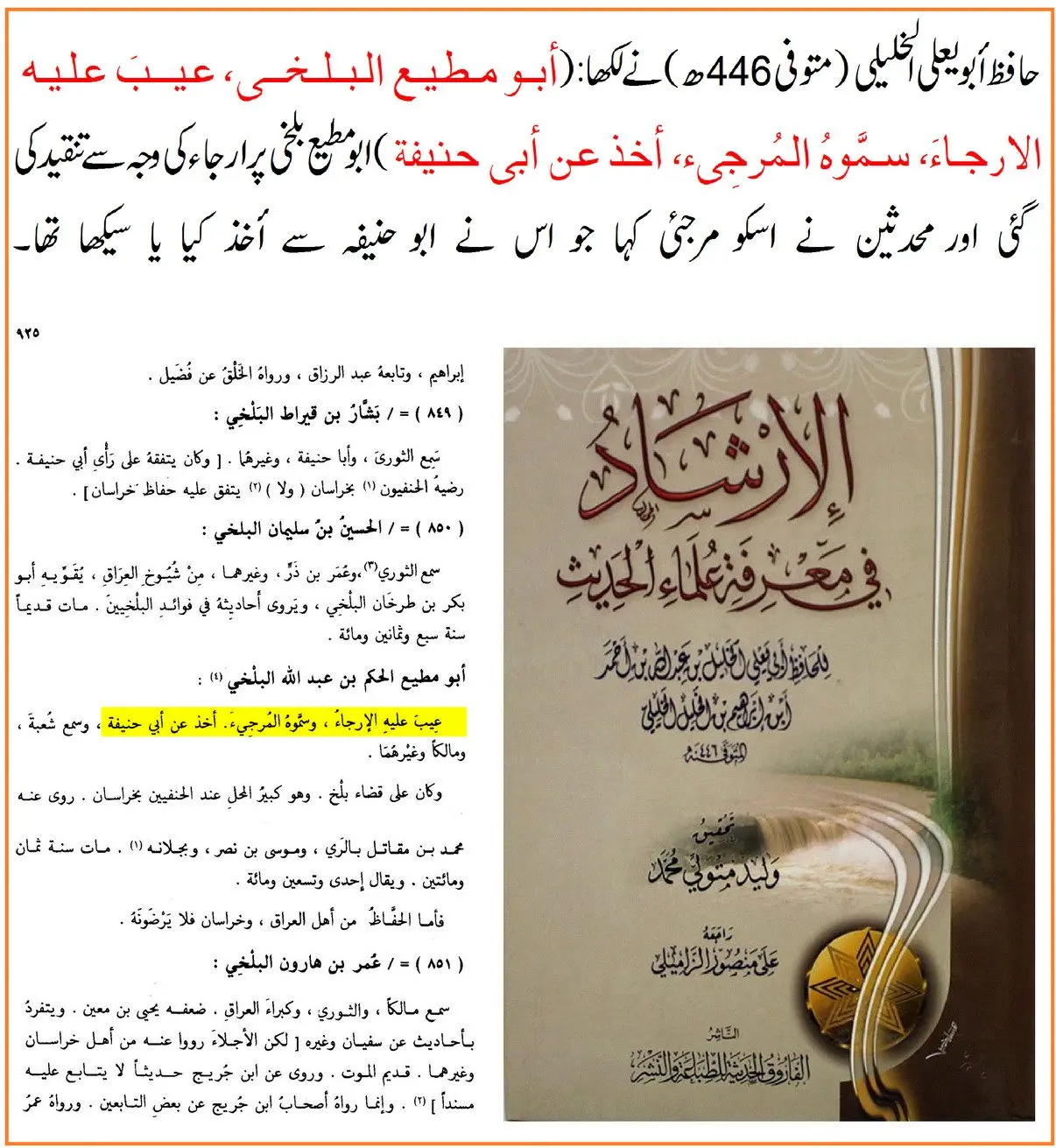
Abū Muṭīʿ al-Balkhī
عيب عليه الإرجاء، وسموه المرجئ، أخذ عن أبي حنيفة.
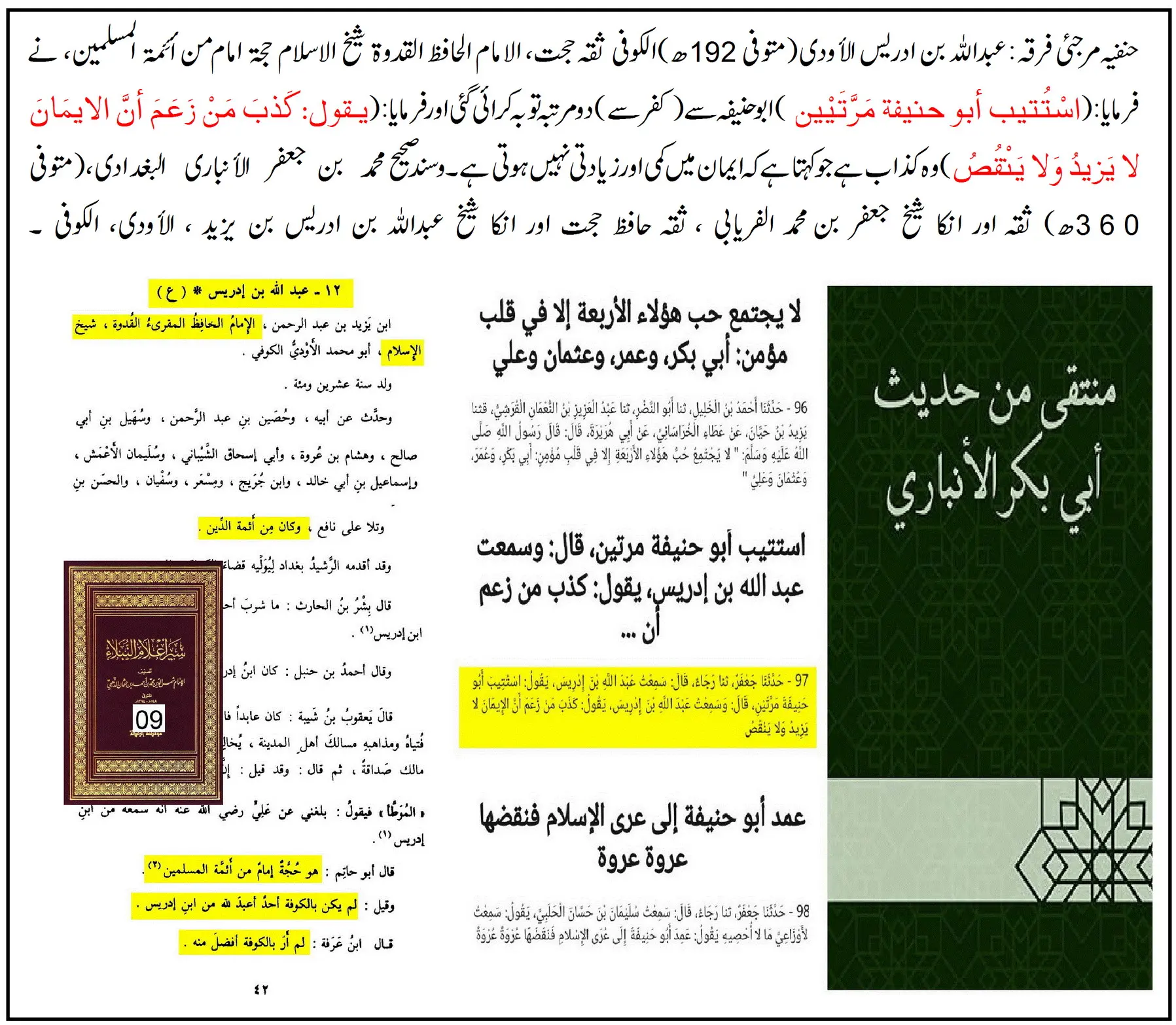
[al-Irshād, Abū Yaʿlá al-Khalīlī, p. 255] Imām Ibn Idrīs al-Awdī رحمه الله
استتيب أبو حنيفة مرتين، وقال: كذب من زعم أن الإيمان لا يزيد ولا ينقص.
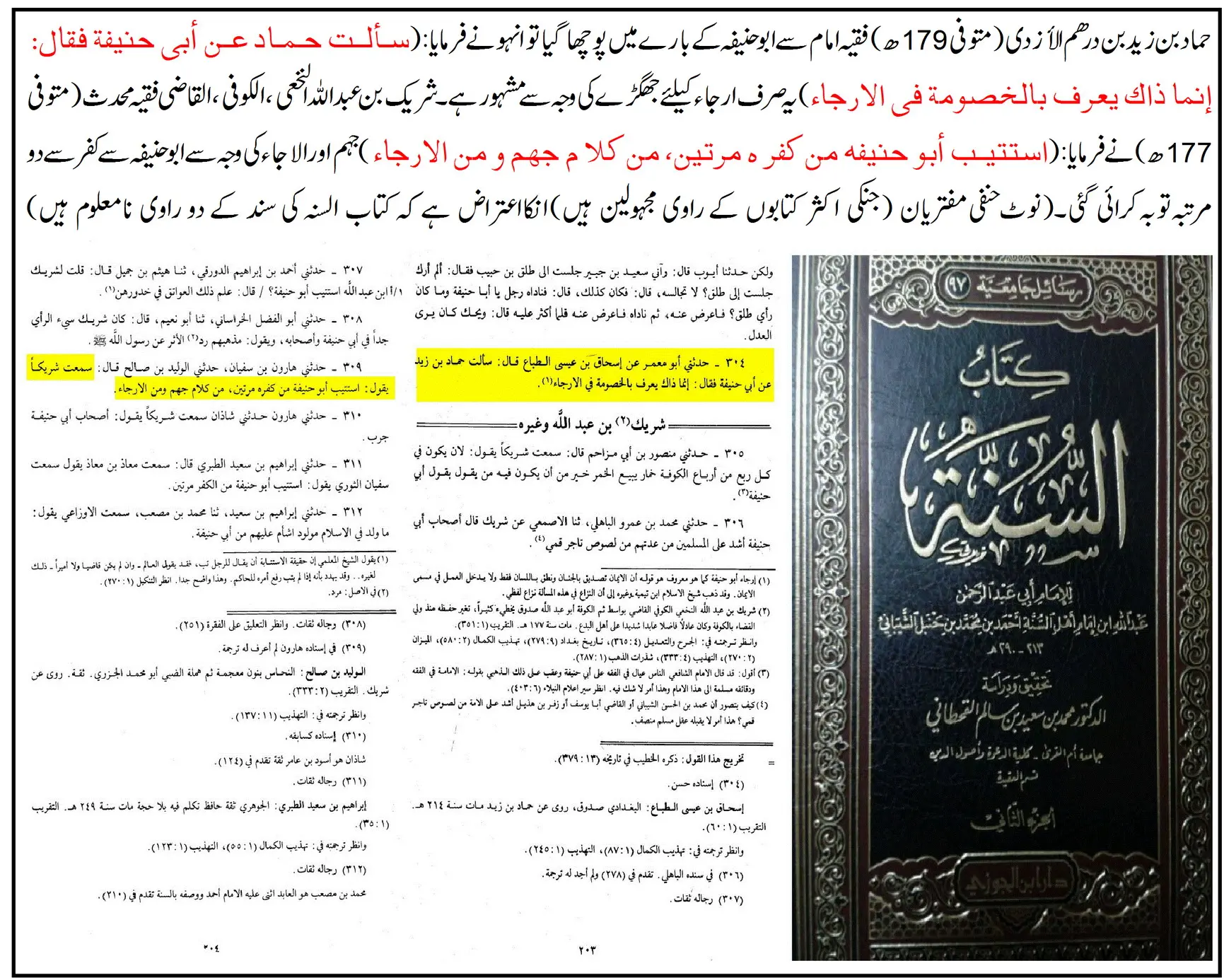
[al-Muntaqā, Abū Bakr al-Anbārī, p. 97] Shurayk ibn ʿAbd Allāh al-Nakhaʿī رحمه الله
استتيب أبو حنيفة من كفره مرتين، من كلام جهم ومن الإرجاء.
[al-Sunnah, ʿAbd Allāh ibn Aḥmad, Hadith 309] Ḥammād ibn Zayd رحمه الله
إنما ذاك يُعرف بالخصومة في الإرجاء.
[al-Sunnah, ʿAbd Allāh ibn Aḥmad, Hadith 304] Imām Yazīd ibn Hārūn رحمه الله
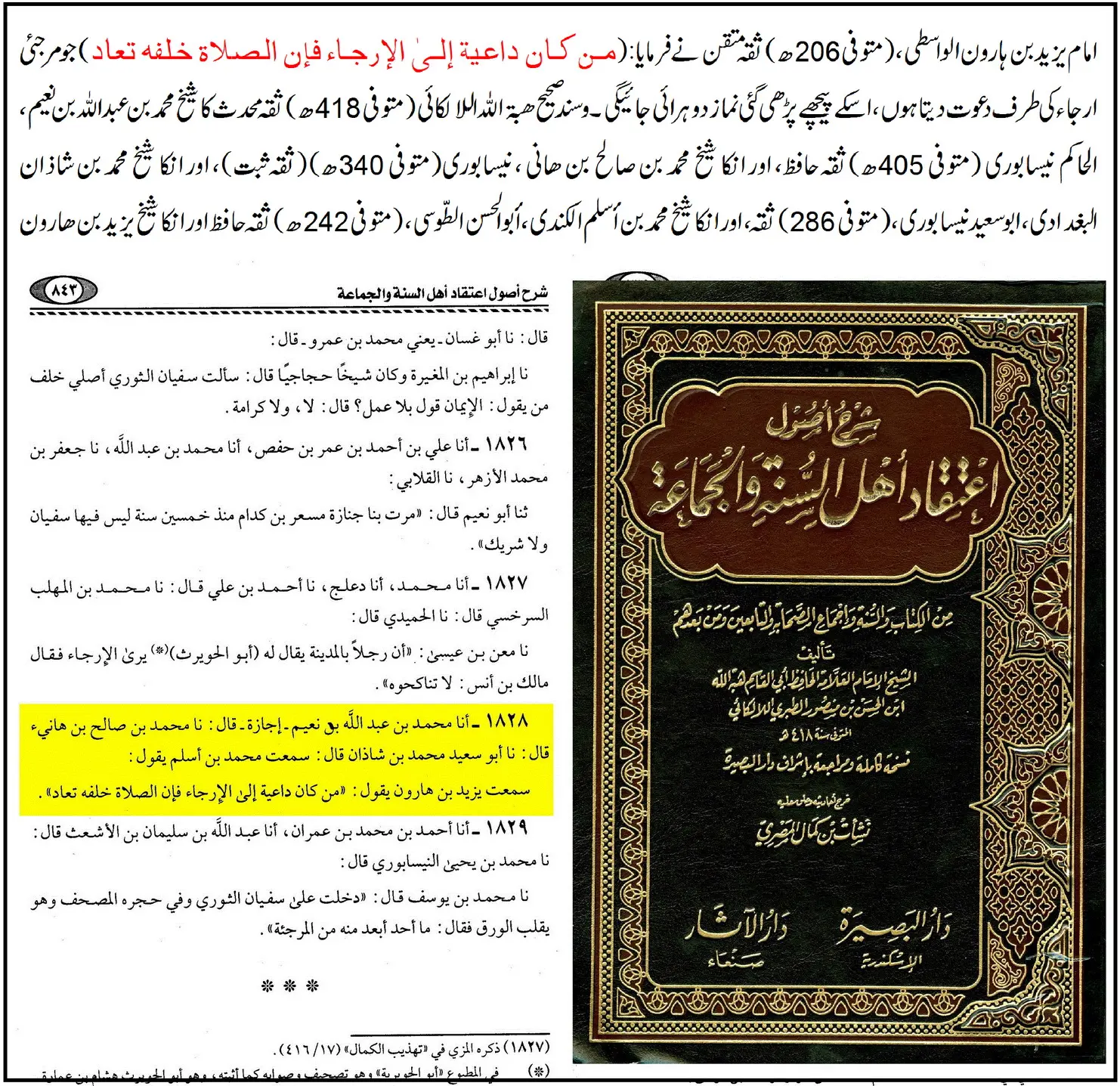
من كان داعية إلى الإرجاء فإن الصلاة خلفه تُعاد.
[Sharḥ Uṣūl Iʿtiqād Ahl al-Sunnah, al-Lālikāʾī, Vol. 5, p. 912] Clarifications by Classical Scholars on Imām Abū Ḥanīfah’s Belief on Īmān
Imām ʿAbd al-Qāhir al-Baghdādī (d. 429H)
In his book al-Farq bayn al-Firaq, he highlights:
غسان المرجئ قال: الإيمان يزيد ولا ينقص. وأبو حنيفة قال: الإيمان هو المعرفة، لا يزيد ولا ينقص، ولا يتفاضل الناس فيه.
Translation:Ghassān, the Murjiʾī, claimed that faith increases but does not decrease. In contrast, Abū Ḥanīfah said: faith is simply recognition. It does not increase or decrease, and people do not vary in it.
[al-Farq bayn al-Firaq, p. 202] Note: Despite trying to differentiate between Ghassān and Abū Ḥanīfah, al-Baghdādī still confirms that Abū Ḥanīfah did not believe in the increase or decrease of faith. Imām Ibn ʿAbd al-Barr al-Andalusī (d. 463H)
In Jāmiʿ Bayān al-ʿIlm and al-Tamhīd, he wrote:
وَنُسِبَ إِلَى أَبِي حَنِيفَةَ الْإِرْجَاءُ، وَقَدْ أَخَذَهُ عَنْ حَمَّادٍ، وَحَمَّادٌ عُيِّبَ بِهِ.
Translation:Irjāʾ (Murjiʾī doctrine) was attributed to Abū Ḥanīfah, and he took this from his teacher Ḥammād ibn Abī Sulaymān, who was himself criticized for it.
[Jāmiʿ Bayān al-ʿIlm, Vol. 2, p. 163]And in al-Tamhīd:
أن تارك الصلاة مؤمن مستكمل الإيمان إذا كان مقراً غير جاحد.
Translation:It is narrated from Abū Ḥanīfah and the Murjiʾah that one who abandons prayer but affirms it (without denial) is still a complete believer.
[al-Tamhīd, Vol. 9, p. 245] This is a distinct Murjiʾī view — that actions are not part of īmān. Imām Ibn Ḥibbān’s Criticism
He mentioned a Murjiʾī narrator:
غسان بن الأرقم بن كلاب الحنفي من أهل اليمامة... يروي العجائب.
[al-Majrūḥīn, Vol. 2, p. 80] Ibn Ḥibbān labeled this narrator weak due to his Murjiʾī beliefs, noting that he belonged to the Ḥanafī school. Verdicts of Renowned Ḥadīth Scholars on Abū Ḥanīfah’s Irjāʾ
Imām al-Bukhārī رحمه الله
نعمان بن ثابت أبو حنيفة الكوفي... كان مرجئًا، سكتوا عن رأيه وحديثه.
[al-Tārīkh al-Kabīr, Vol. 8, p. 81] Al-Bukhārī states clearly that Abū Ḥanīfah was a Murjiʾī, and the scholars abstained from narrating from him due to this. Imām Aḥmad ibn Ḥanbal رحمه الله
استتاب أصحاب أبي حنيفة أبا حنيفة مرتين أو ثلاثًا، وكان سفيان شديد القول في الإرجاء والرد عليهم.
[al-ʿIlal wa Maʿrifat al-Rijāl, Vol. 2, p. 5052] His companions made him repent twice or thrice, and Sufyān al-Thawrī was extremely strict in refuting the Murjiʾah. Imām Yaḥyá ibn Maʿīn رحمه الله
الإيمان قول وعمل، يزيد وينقص...
[Tārīkh Ibn Maʿīn, Vol. 2, Hadith 2280 & 4937] Contrary to Abū Ḥanīfah, Ibn Maʿīn defined faith as belief and action, subject to increase and decrease. Imām Yaḥyá ibn Saʿīd al-Qaṭṭān رحمه الله
ما أدركتُ أحدًا من أصحابنا إلا على الاستثناء، وقال: الإيمان قول وعمل.
[al-Sharīʿah, al-Ājurrī, Vol. 2, p. 280] All scholars of his time believed īmān is both belief and action and fluctuates. Imām ʿAbdullāh ibn al-Mubārak رحمه الله
هل كان في أبي حنيفة من الهوى شيء؟ قال: نعم، الإرجاء.
[al-Maʿrifah wa al-Tārīkh, al-Fasawī, Vol. 1, p. 398] He openly stated that Abū Ḥanīfah held the innovation of Irjāʾ. Sufyān al-Thawrī رحمه الله
نقول: الإيمان قول وعمل، وهم يقولون: الإيمان قول ولا عمل.
[Ṣifat al-Nifāq, al-Firyābī, p. 87] He abandoned salām (greeting) to those who adopted Irjāʾ, including Ḥammād ibn Abī Sulaymān. [al-Maʿrifah wa al-Tārīkh, Vol. 2, p. 177] Statements from Later Scholars & Consensus of Ahl al-Sunnah
Ahl al-Sunnah’s View of Īmān
الإيمان قول وعمل، يزيد بالطاعة، وينقص بالمعصية.
Faith is a combination of belief and action; it increases with obedience and decreases with sin.
Imām Abū Dāwūd رحمه الله
He created specific chapters in his Sunan:
- باب في رد الإرجاء
- Citing the ḥadīth:
“Īmān has over seventy branches...”
[Sunan Abī Dāwūd, Hadith 4676]
- Citing the ḥadīth:
- باب الدليل على زيادة الإيمان ونقصانه
- Supporting narration:
“I have not seen anyone more deficient in religion than women...”
[Sunan Abī Dāwūd, Hadith 4679–4680]
- Supporting narration:
These are direct refutations of Murjiʾī beliefs. Imām Abū ʿUbayd al-Qāsim ibn Sallām رحمه الله
ما ابتُدِعت في الإسلام بدعة أعزّ على أهلها من هذا الإرجاء.
[Kitāb al-Īmān, p. 117] He labeled Irjāʾ the most beloved innovation among its followers. Imām Abū Ḥayyān al-Andalusī رحمه الله
مالك والشافعي: الإيمان يزيد وينقص. أبو حنيفة: لا يزيد ولا ينقص.
[al-Baḥr al-Muḥīṭ, Vol. 1, p. 276] Imām Abū Naṣr al-Sijzī رحمه الله
كل من زعم أن الإيمان لا يزيد ولا ينقص، فهو مرجئ، وبعضهم جهمي.
[Risālah al-Sijzī, p. 104] Imām Barbahārī رحمه الله
من قال: الإيمان قول وعمل، يزيد وينقص، فقد خرج من الإرجاء كله أوله وآخره.
[Sharḥ al-Sunnah, p. 64] Imām al-Zuhrī رحمه الله
ما ابتُدِعت في الإسلام بدعة أعزّ على أهلها من هذا الإرجاء.
[Kitāb al-Īmān, Abū ʿUbayd] Students of Imām Abū Ḥanīfah and the Spread of Irjāʾ
Abū Muṭīʿ al-Balkhī
عيب عليه الإرجاء، وسموه المرجئ، أخذ عن أبي حنيفة.
[al-Irshād, Abū Yaʿlá al-Khalīlī, p. 255] Imām Ibn Idrīs al-Awdī رحمه الله
استتيب أبو حنيفة مرتين، وقال: كذب من زعم أن الإيمان لا يزيد ولا ينقص.
[al-Muntaqā, Abū Bakr al-Anbārī, p. 97] Shurayk ibn ʿAbd Allāh al-Nakhaʿī رحمه الله
استتيب أبو حنيفة من كفره مرتين، من كلام جهم ومن الإرجاء.
[al-Sunnah, ʿAbd Allāh ibn Aḥmad, Hadith 309] Ḥammād ibn Zayd رحمه الله
إنما ذاك يُعرف بالخصومة في الإرجاء.
[al-Sunnah, ʿAbd Allāh ibn Aḥmad, Hadith 304] Imām Yazīd ibn Hārūn رحمه الله
من كان داعية إلى الإرجاء فإن الصلاة خلفه تُعاد.
[Sharḥ Uṣūl Iʿtiqād Ahl al-Sunnah, al-Lālikāʾī, Vol. 5, p. 912]