
✍ Compiled by: Abū Ḥamzah Salafī
This article addresses a highly significant and foundational question:
Did Imām al-Ḥasan al-Baṣrī (born 21 AH – died 110 AH) directly hear from ʿAlī ibn Abī Ṭālib (died 41 AH)?
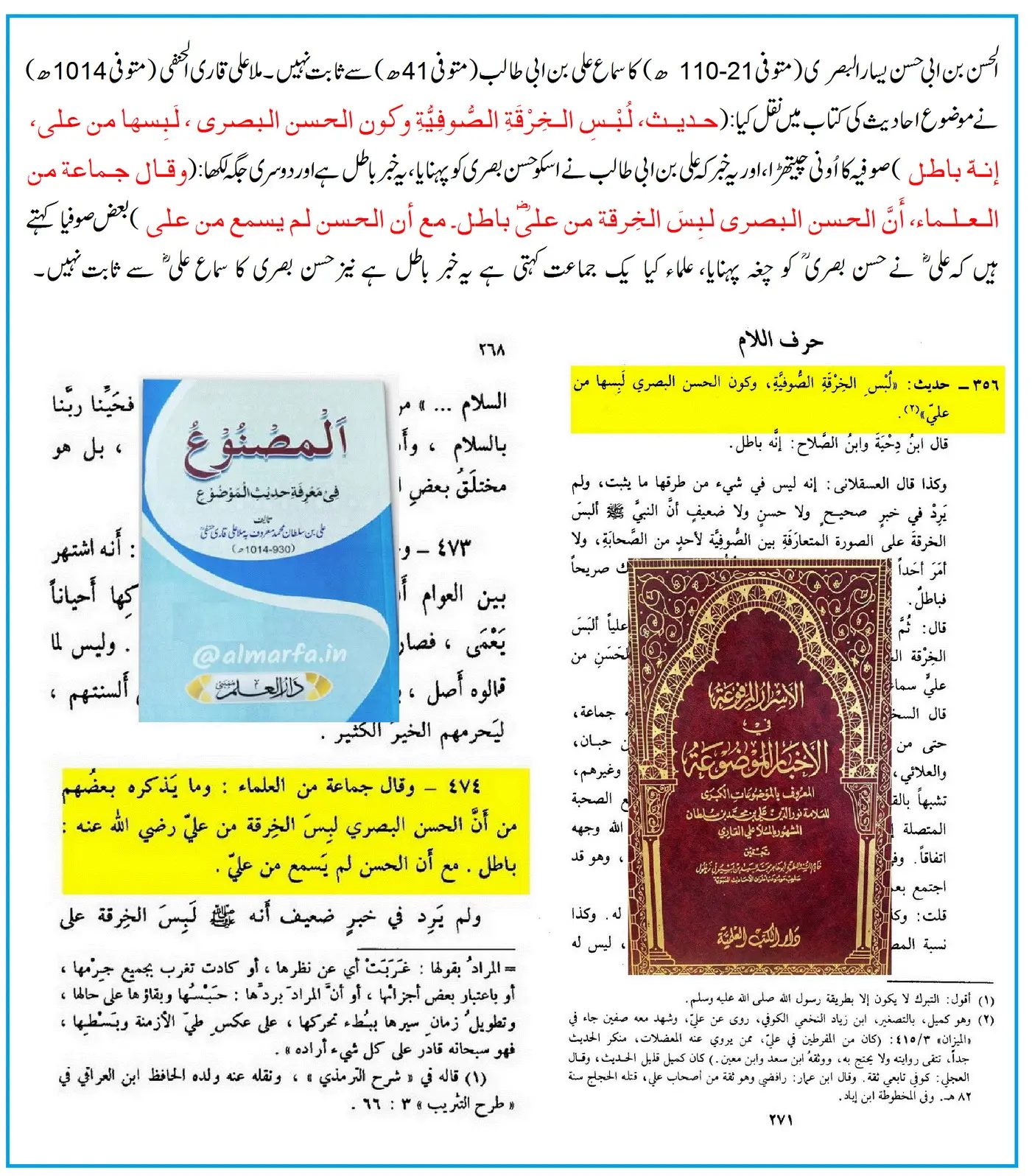
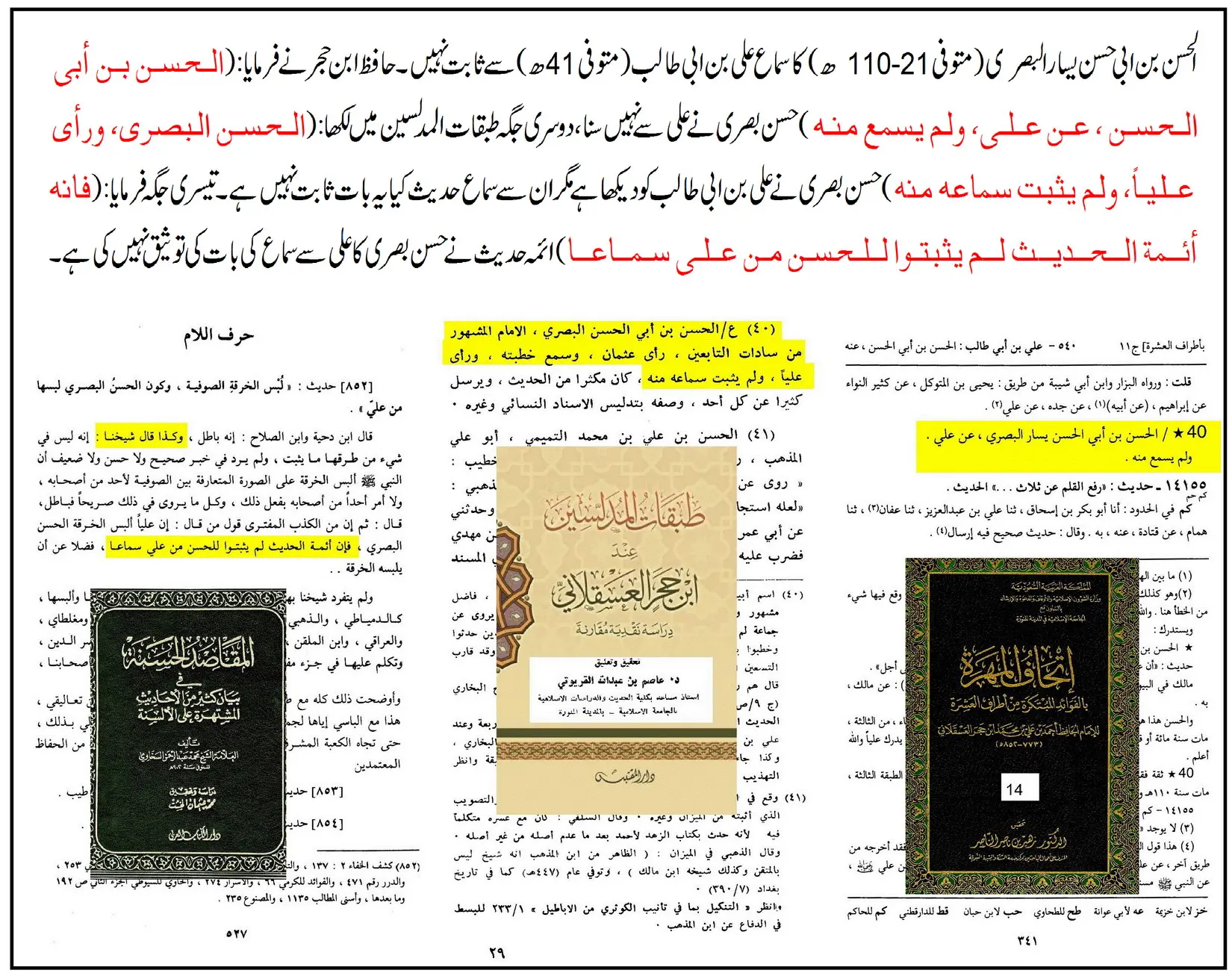
And is there any authentic basis for the claim that ʿAlī رضي الله عنه clothed al-Ḥasan al-Baṣrī with a woollen cloak (خرقة) — a narrative some Ṣūfīs consider the root of taṣawwuf?
This issue has been clarified by a consensus of the scholars of ḥadīth, through more than twenty explicit statements from the Imāms, including al-Ḥasan al-Baṣrī's own confession. The article presents these evidences systematically.
① Arabic:
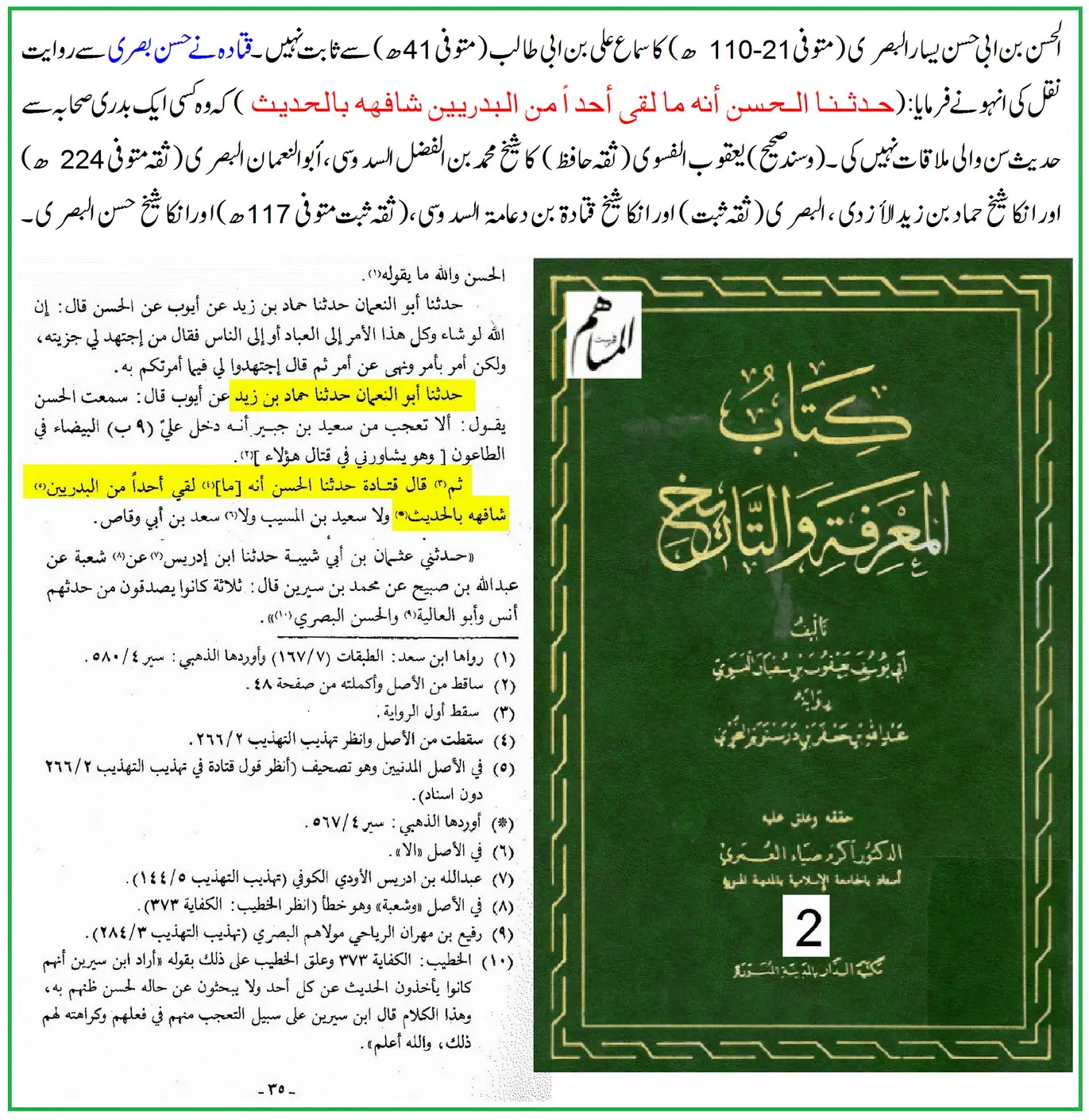
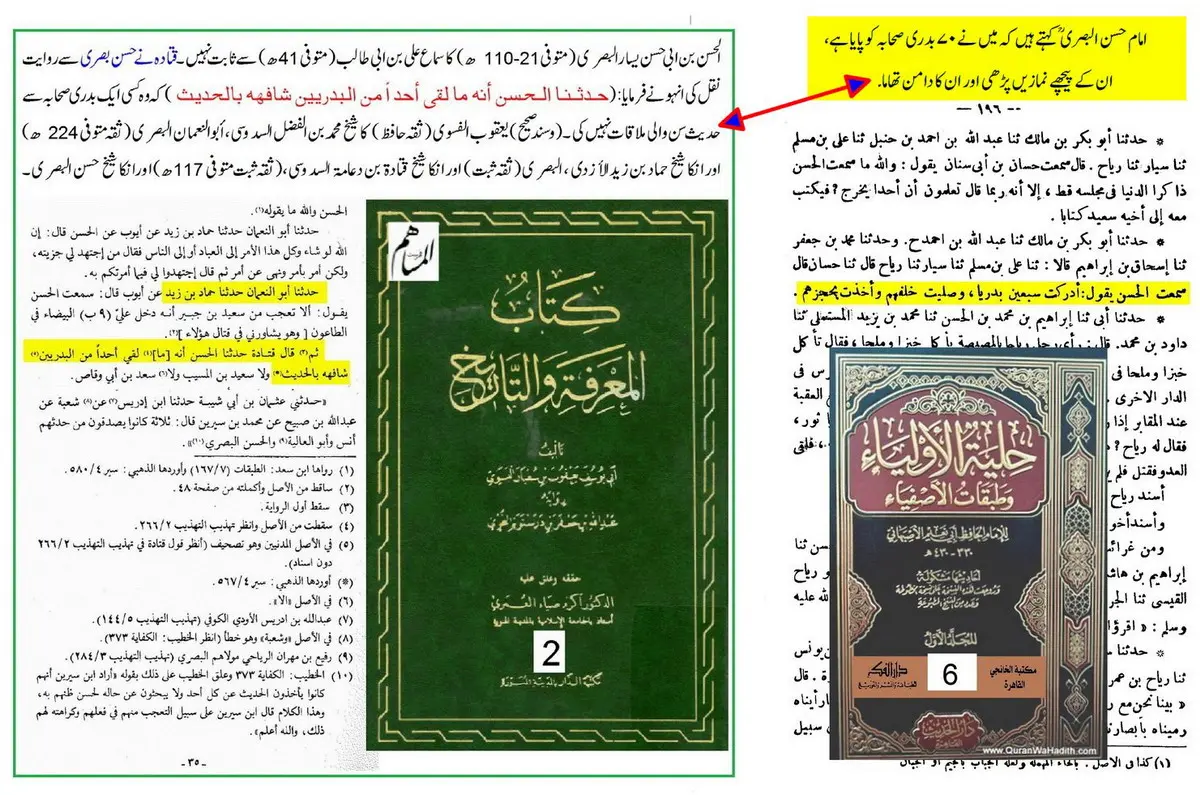
قال قتادة: حدّثنا الحسن أنه ما لقي أحداً من البدريين شافهه بالحديث.
Translation:
Qatādah said: al-Ḥasan al-Baṣrī stated, “I did not directly hear any narration from a single participant of Badr.”
 Reference: al-Maʿrifah wa al-Tārīkh
② Ibn Ḥazm رحمه الله
Arabic:
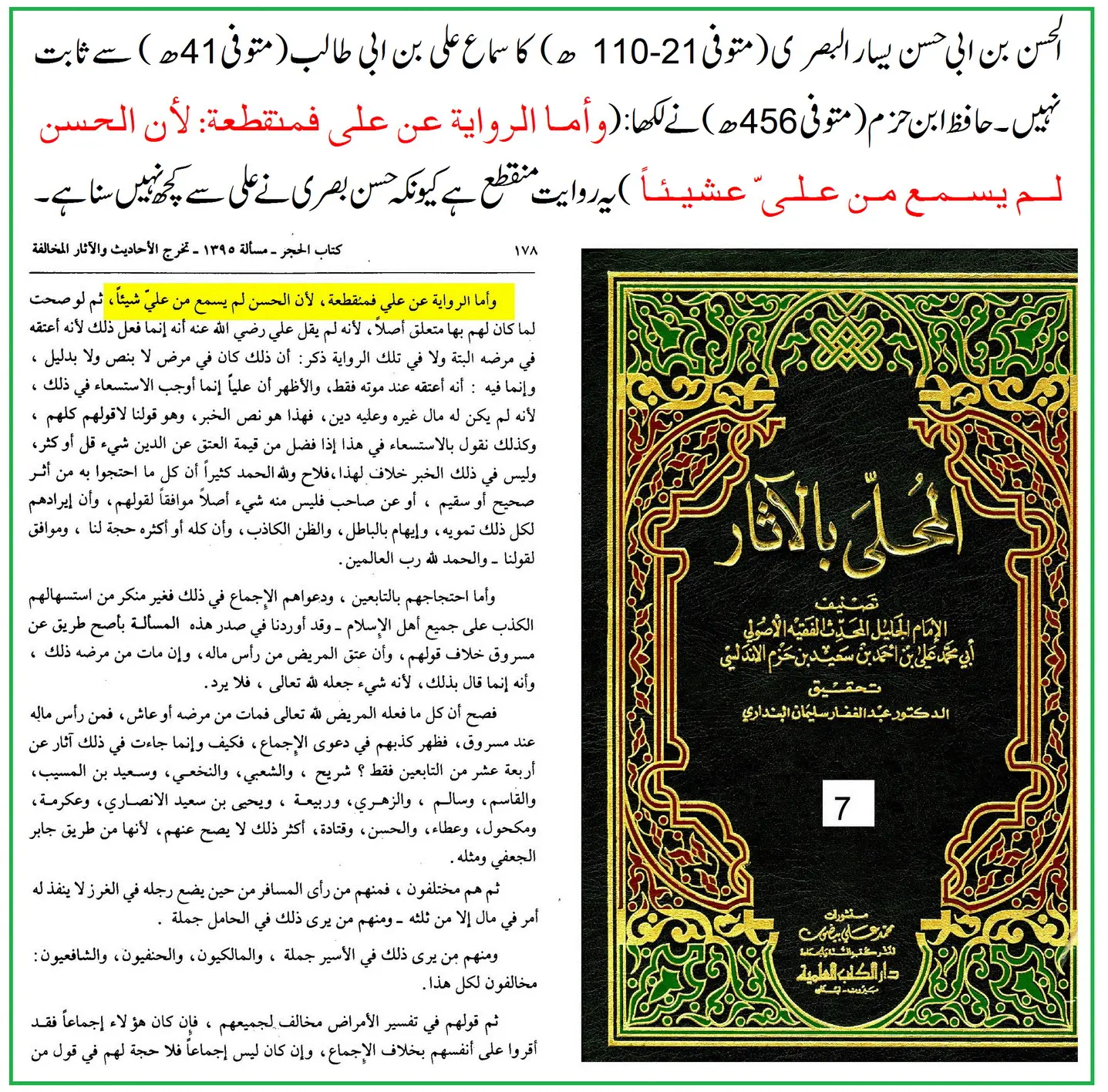
وأما الرواية عن عليّ فمنقطعة؛ لأن الحسن لم يسمع من علي شيئاً.
Translation:
Narration from ʿAlī is disconnected, because al-Ḥasan al-Baṣrī did not hear anything from him.
al-Muḥallā bil Āthār
③ Imām ʿAlī ibn al-Madīnī رحمه الله
Arabic:
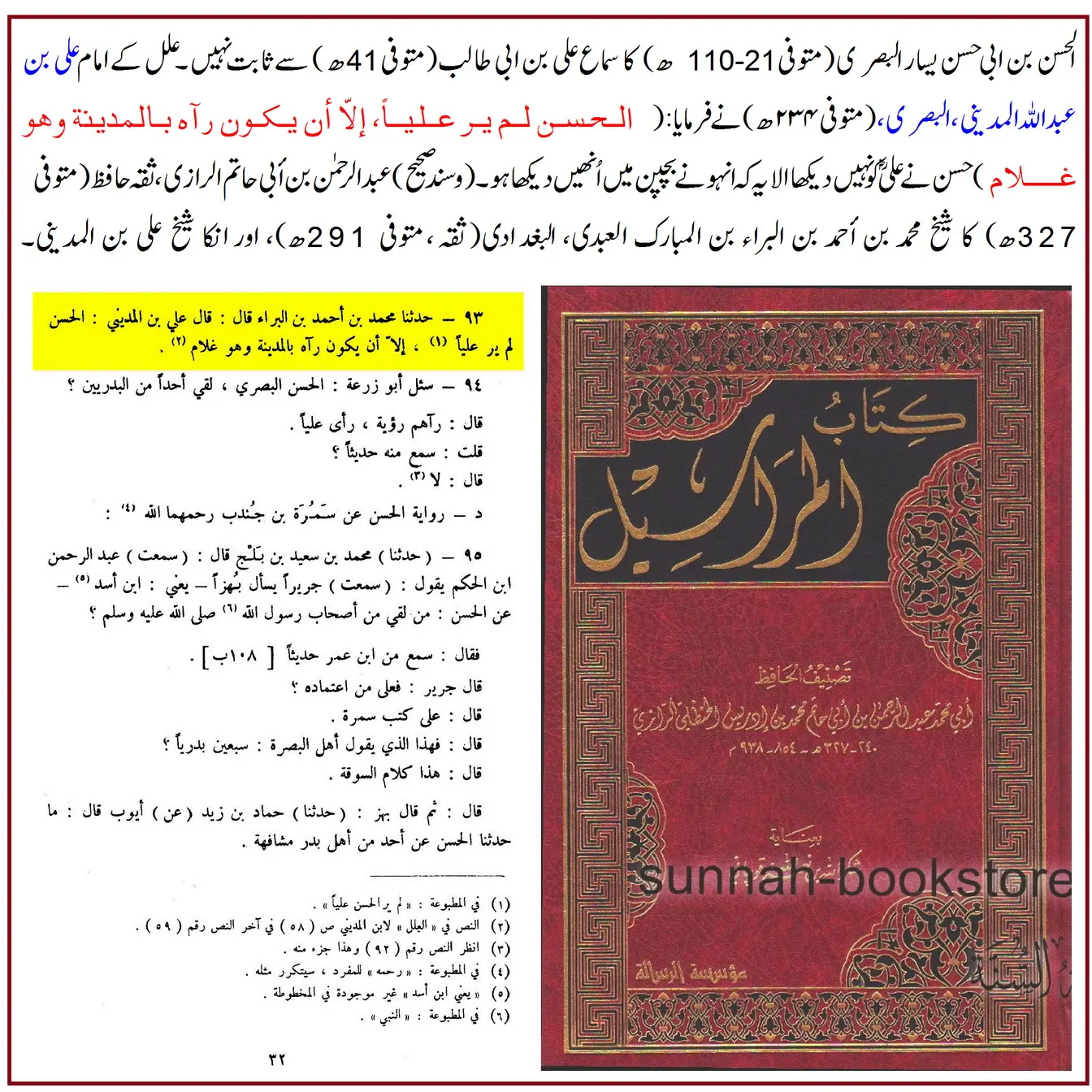
الحسن لم ير علياً إلا أن يكون رآه بالمدينة وهو غلام.
Translation:
al-Ḥasan al-Baṣrī never saw ʿAlī—unless he might have glimpsed him in Madīnah during childhood.
Kitāb al-Marāsīl – Ibn Abī Ḥātim
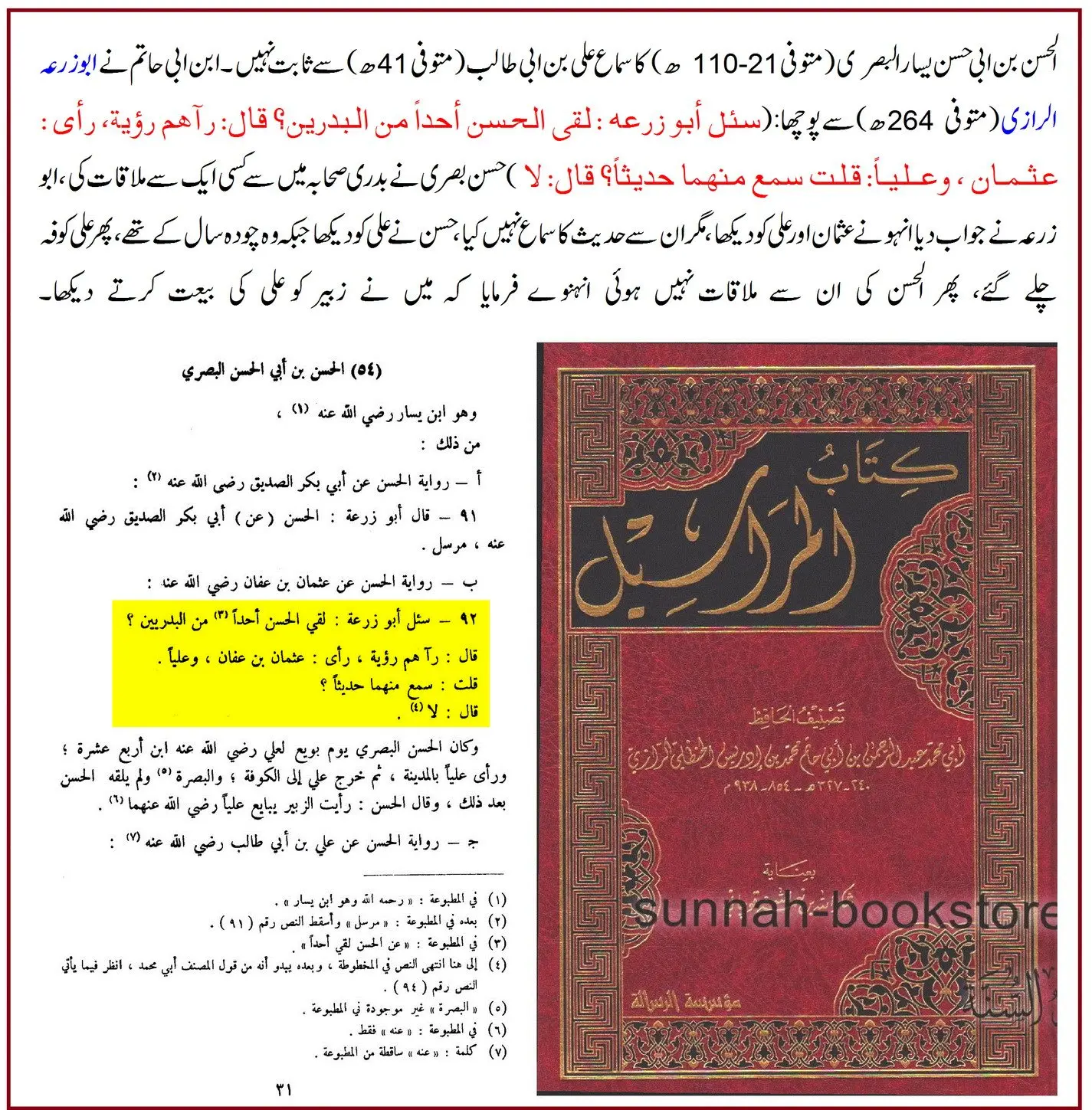
④ Abū Zurʿah al-Rāzī رحمه الله
Arabic:
سُئِلَ أبو زرعة: لقي الحسن أحداً من البدريين؟ قال: رآهم رؤية، رأى عثمان بن عفان وعلياً. قيل: سمع منهم حديثاً؟ قال: لا.
Translation:
He was asked: Did al-Ḥasan meet any from the People of Badr? He said: He saw ʿUthmān and ʿAlī, but did not hear anything from them.
Kitāb al-Marāsīl – Ibn Abī Ḥātim
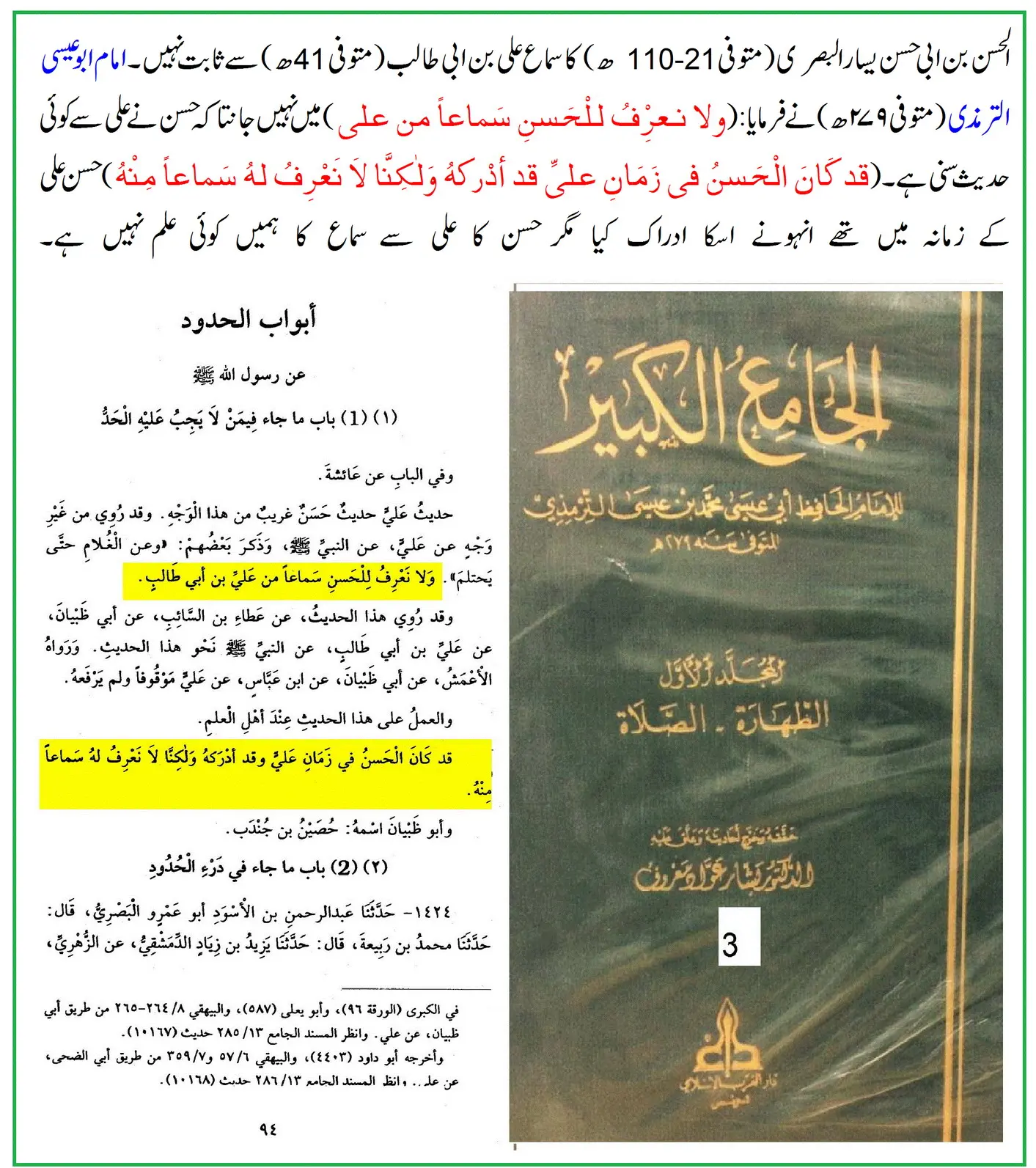
⑤ Imām al-Tirmidhī رحمه الله
Arabic:
ولا نعرف للحسن سماعاً من علي بن أبي طالب…
Translation:
We do not know of any narration al-Ḥasan heard from ʿAlī ibn Abī Ṭālib.
Sunan al-Tirmidhī, Ḥadīth 1423
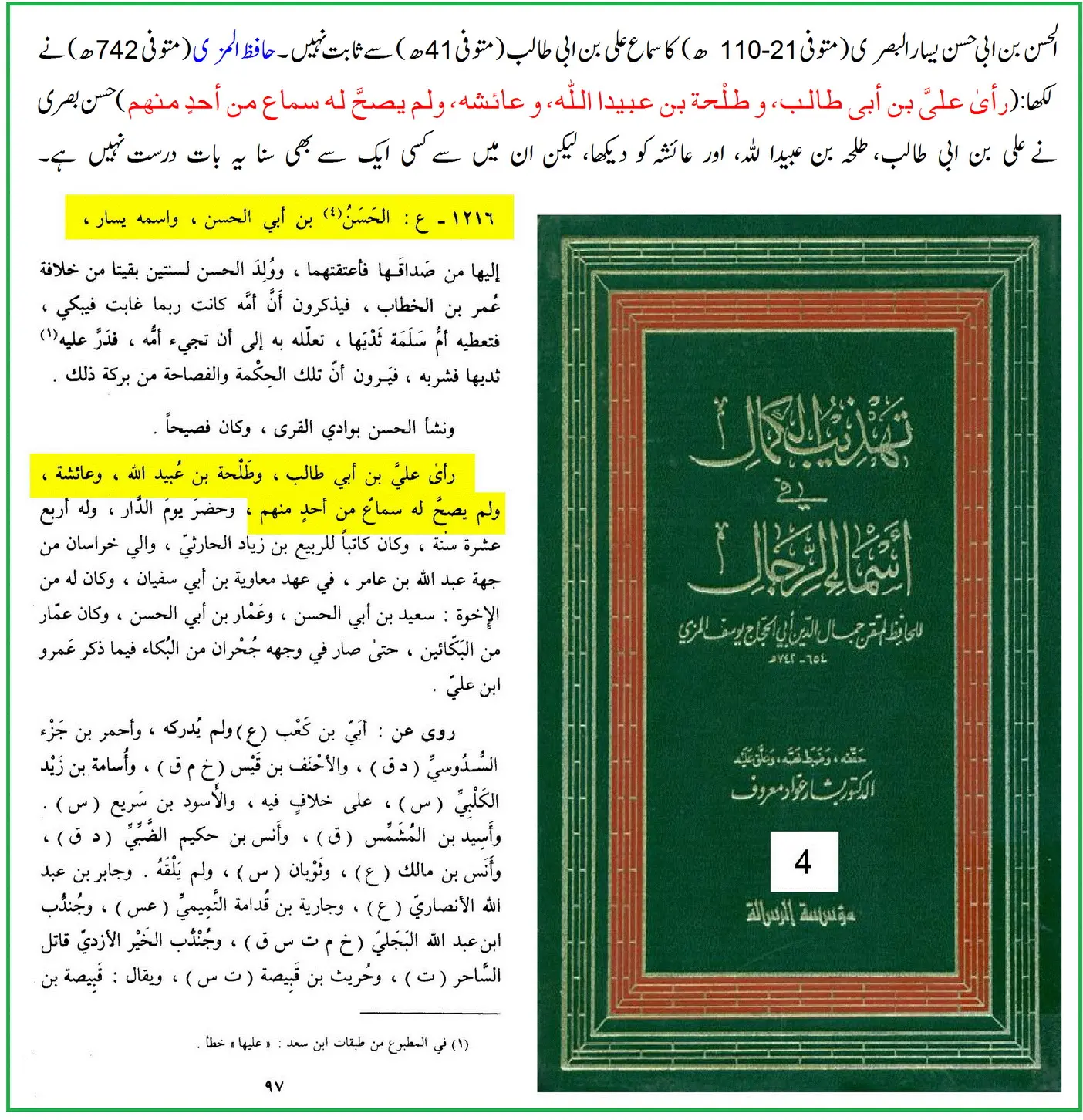
⑥ Ḥāfiẓ al-Mizzī رحمه الله
Arabic:
رأى علي بن أبي طالب وطلحة وعائشة، ولم يصح له سماع من أحد منهم.
Translation:
He saw ʿAlī, Ṭalḥah, and ʿĀ’ishah, but it is not authentically established that he heard from any of them.
Tahdhīb al-Kamāl
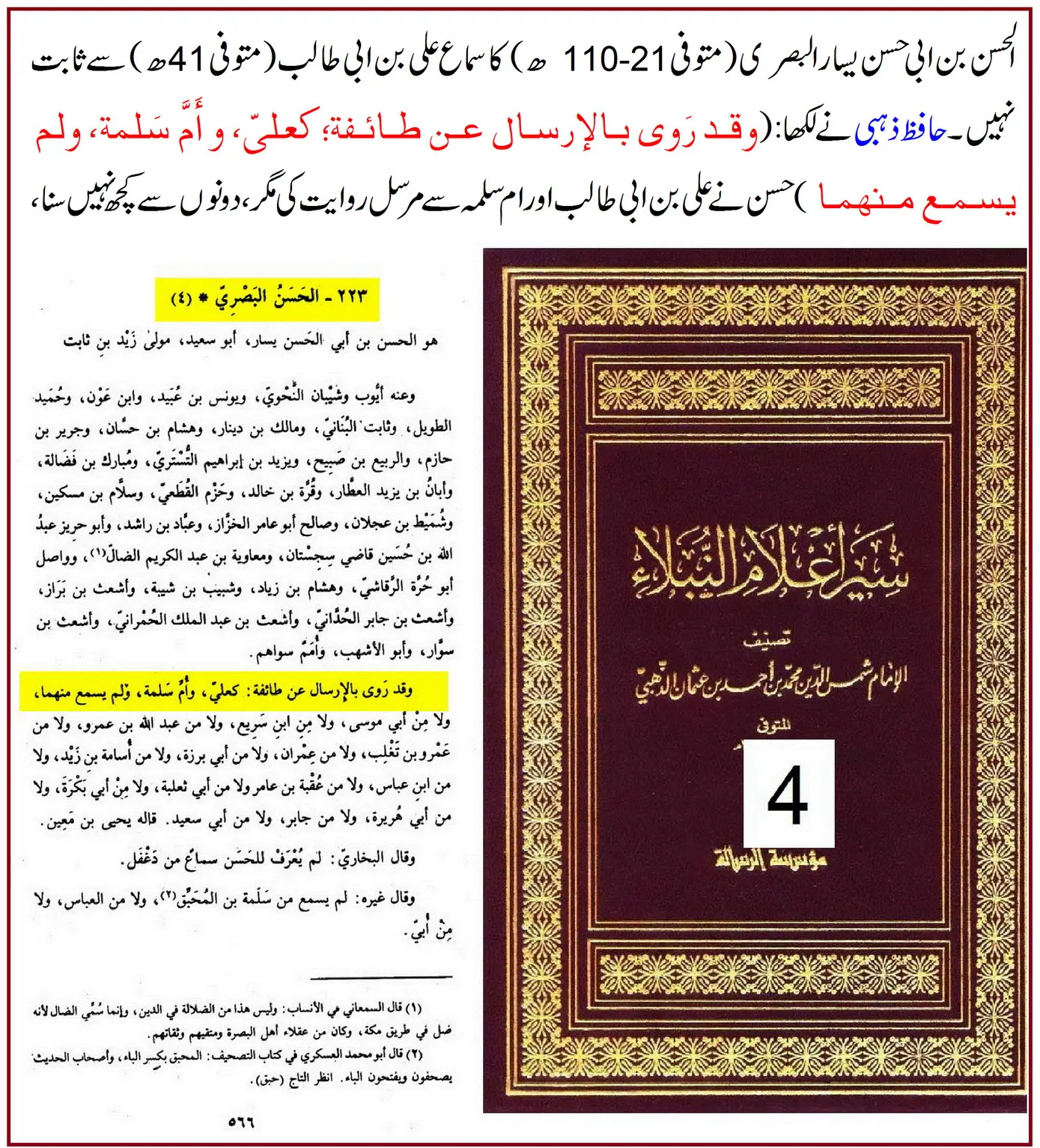
⑦ Ḥāfiẓ al-Dhahabī رحمه الله
Arabic:
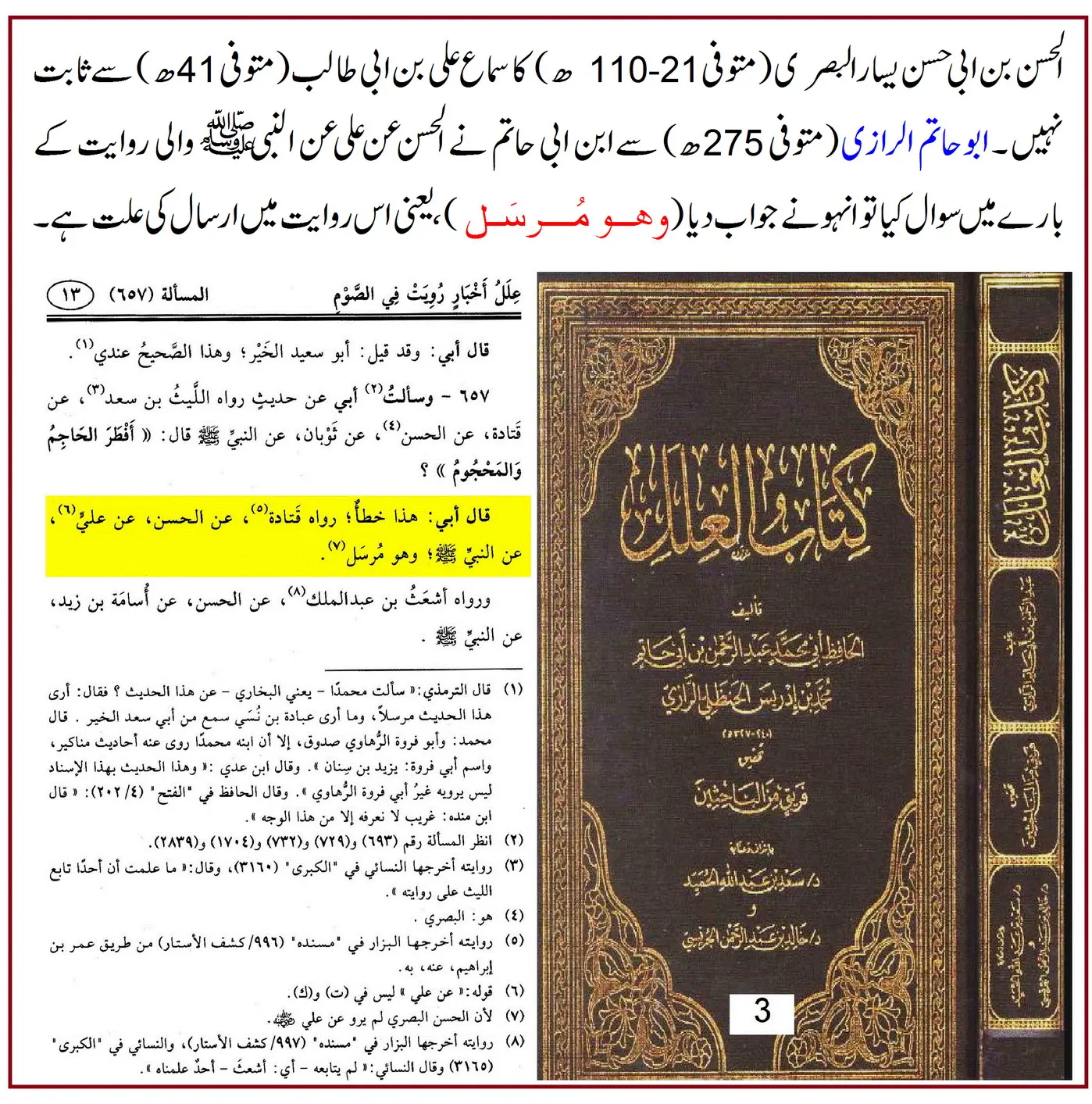
روى بالإرسال عن طائفة: كعلي وأم سلمة، ولم يسمع منه ما.
Translation:
He transmitted mursal narrations from several (like ʿAlī and Umm Salamah), but did not hear from them directly.
Siyar Aʿlām al-Nubalāʾ
⑧ Imām Yaḥyá ibn Maʿīn رحمه الله
Arabic:
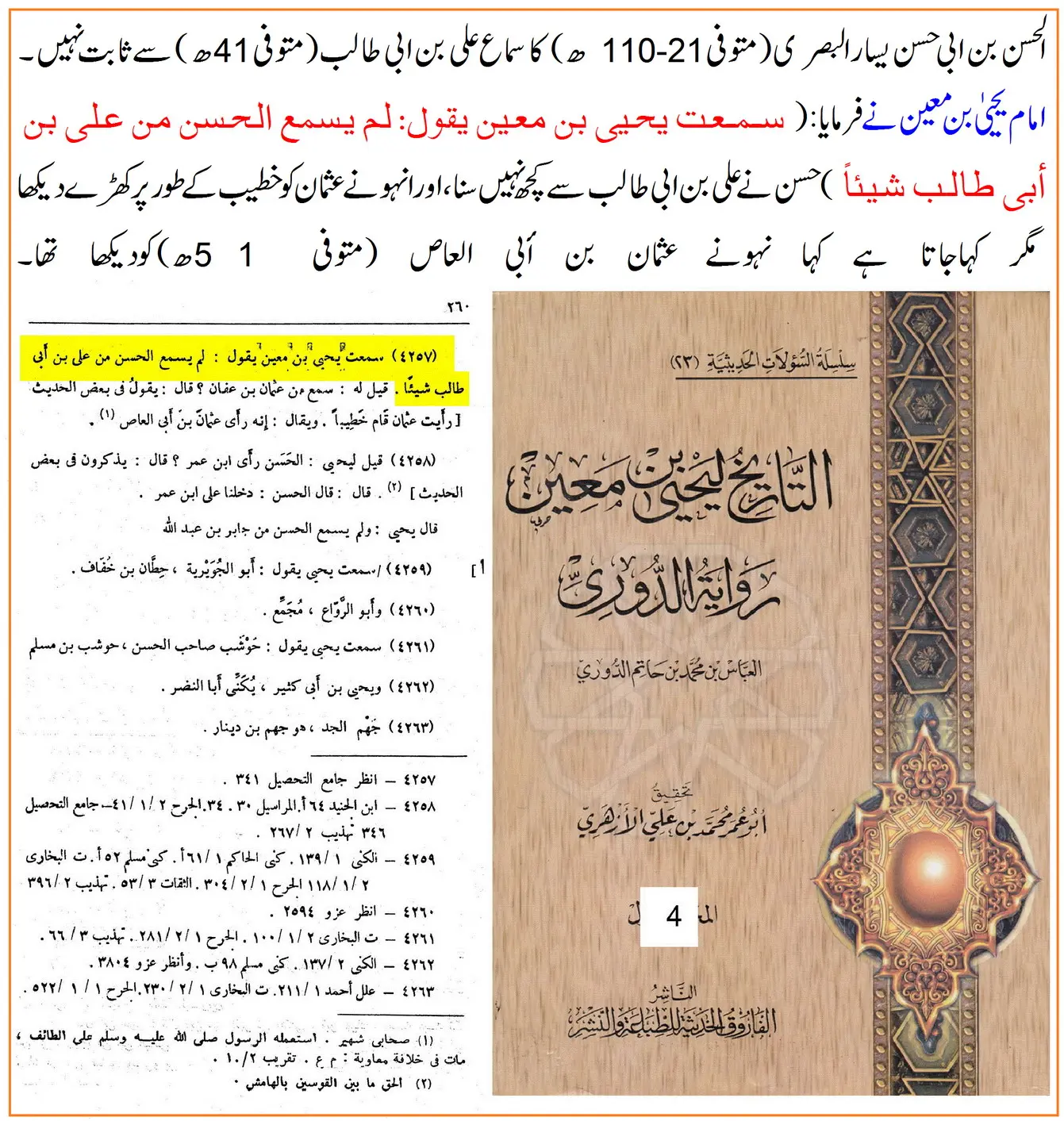
لم يسمع الحسن من علي بن أبي طالب شيئاً.
Translation:
al-Ḥasan did not hear anything from ʿAlī ibn Abī Ṭālib.
Tārīkh Ibn Maʿīn (Narration of al-Dūrī)
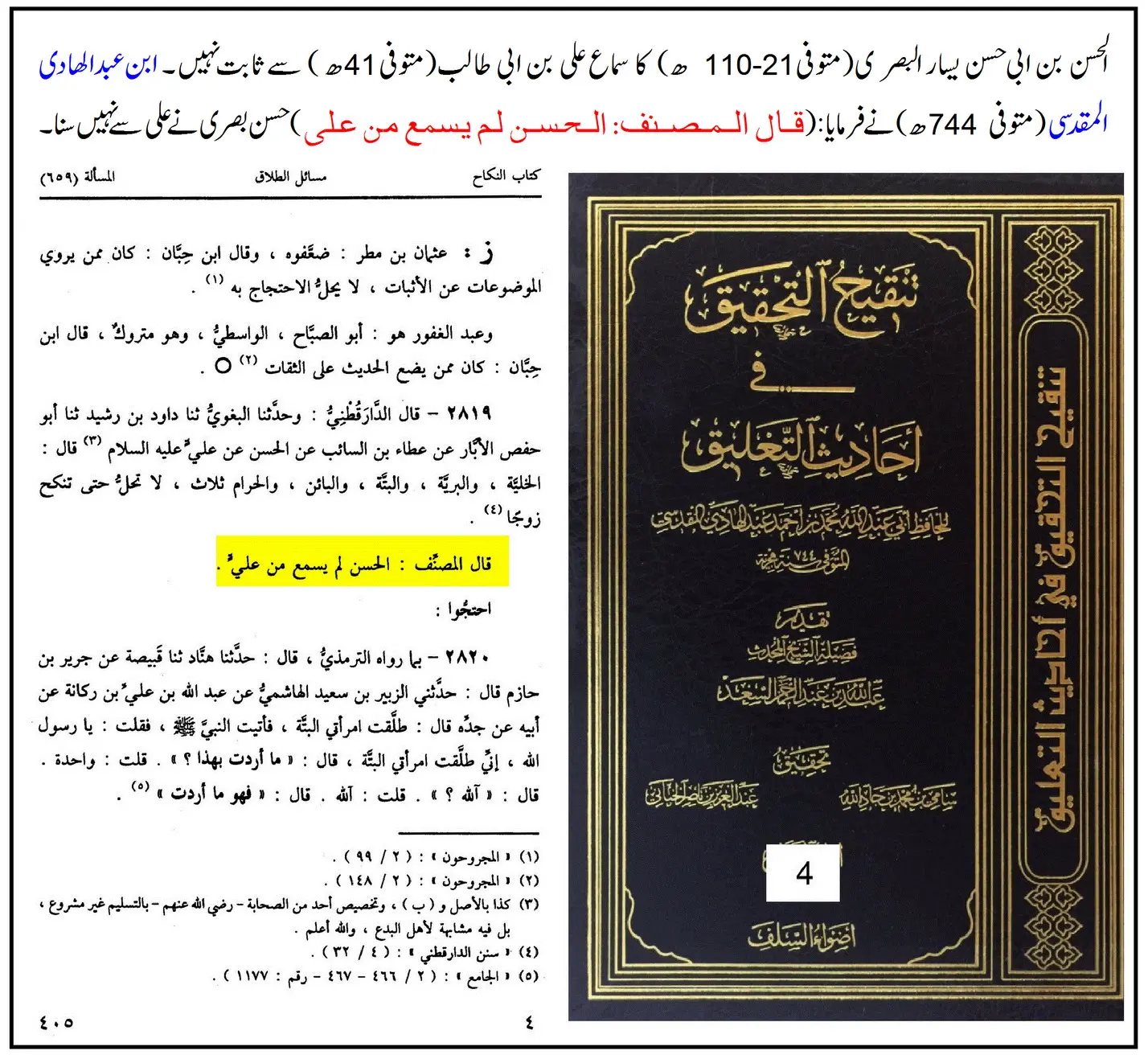
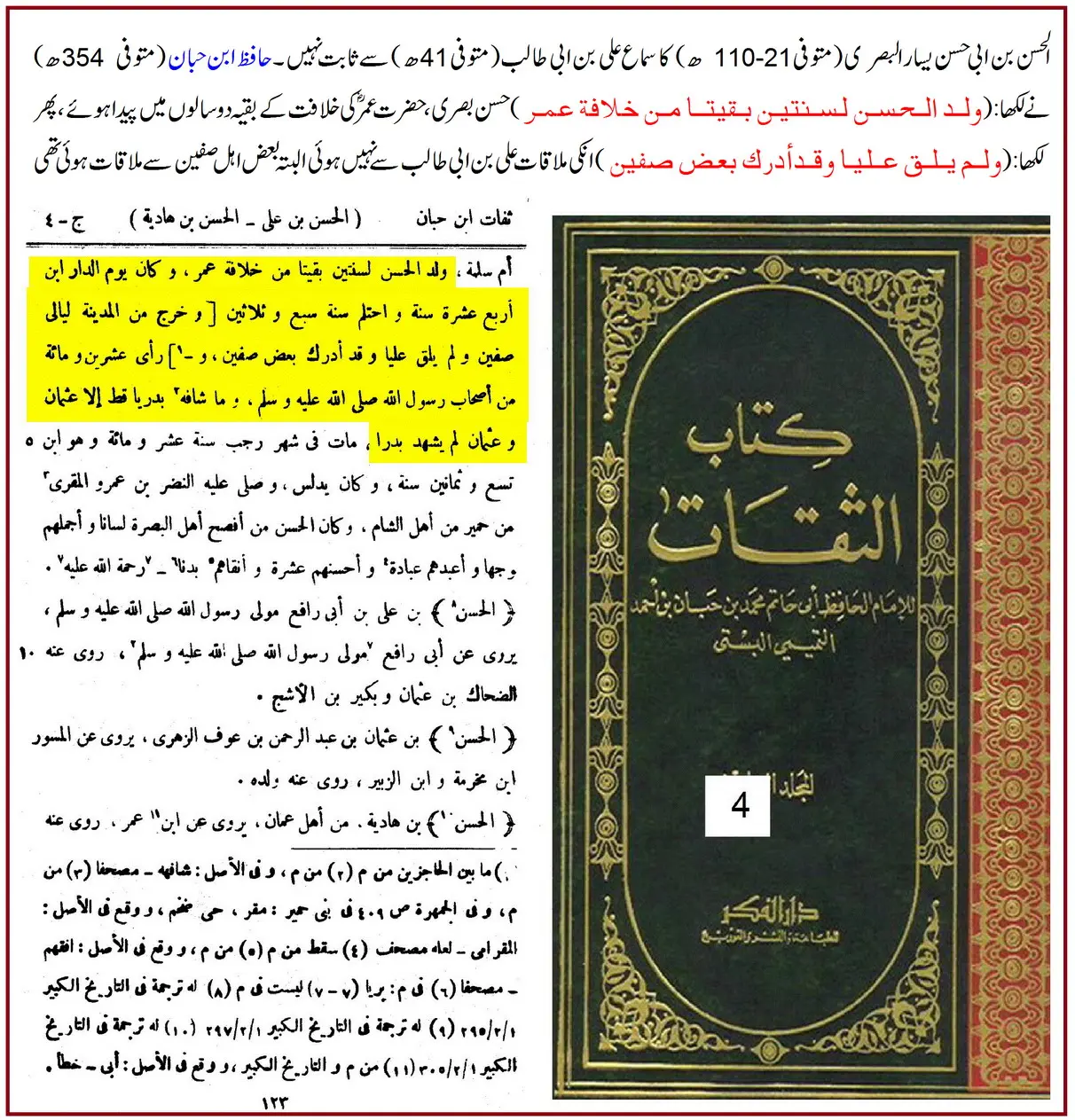
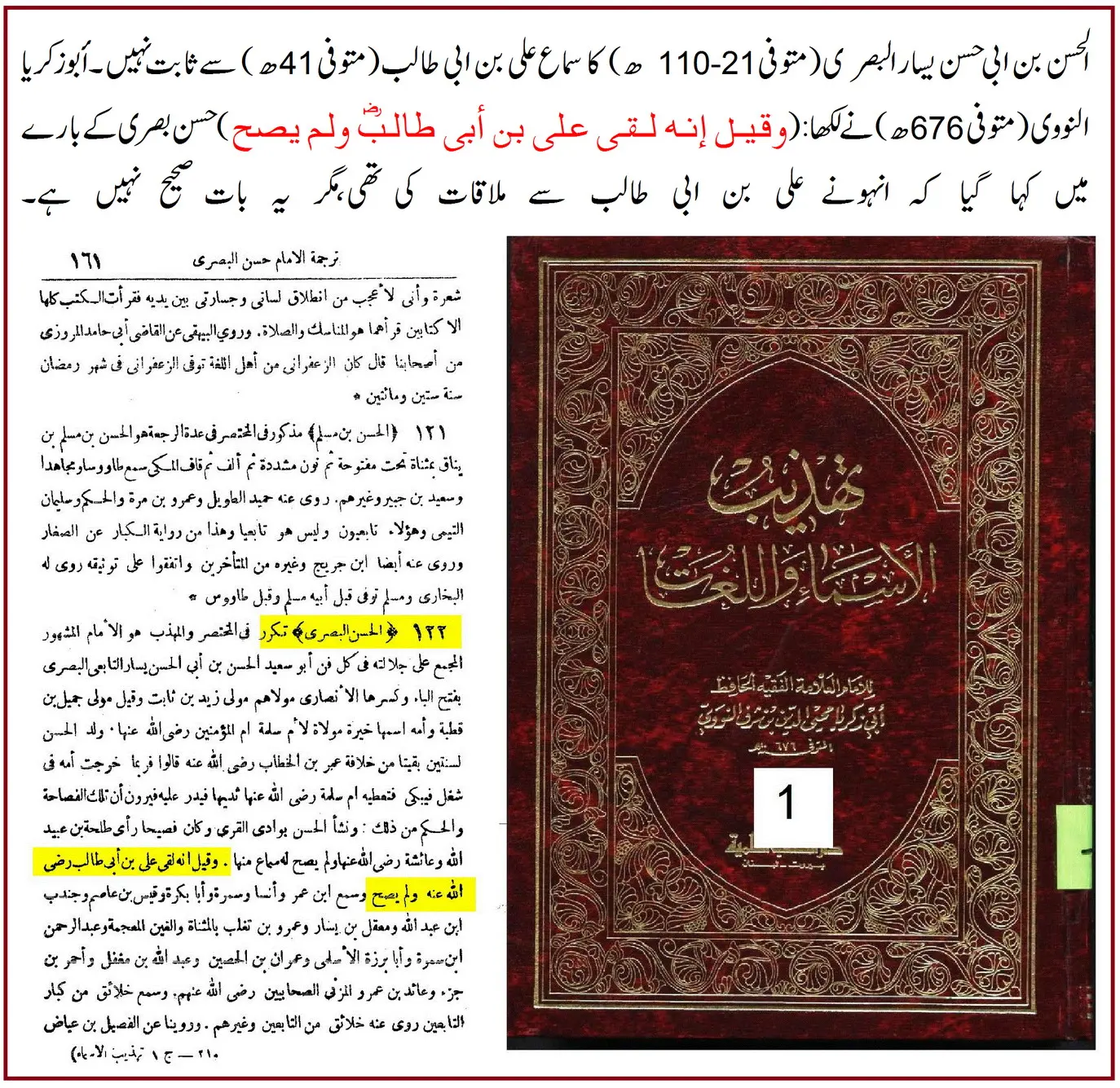
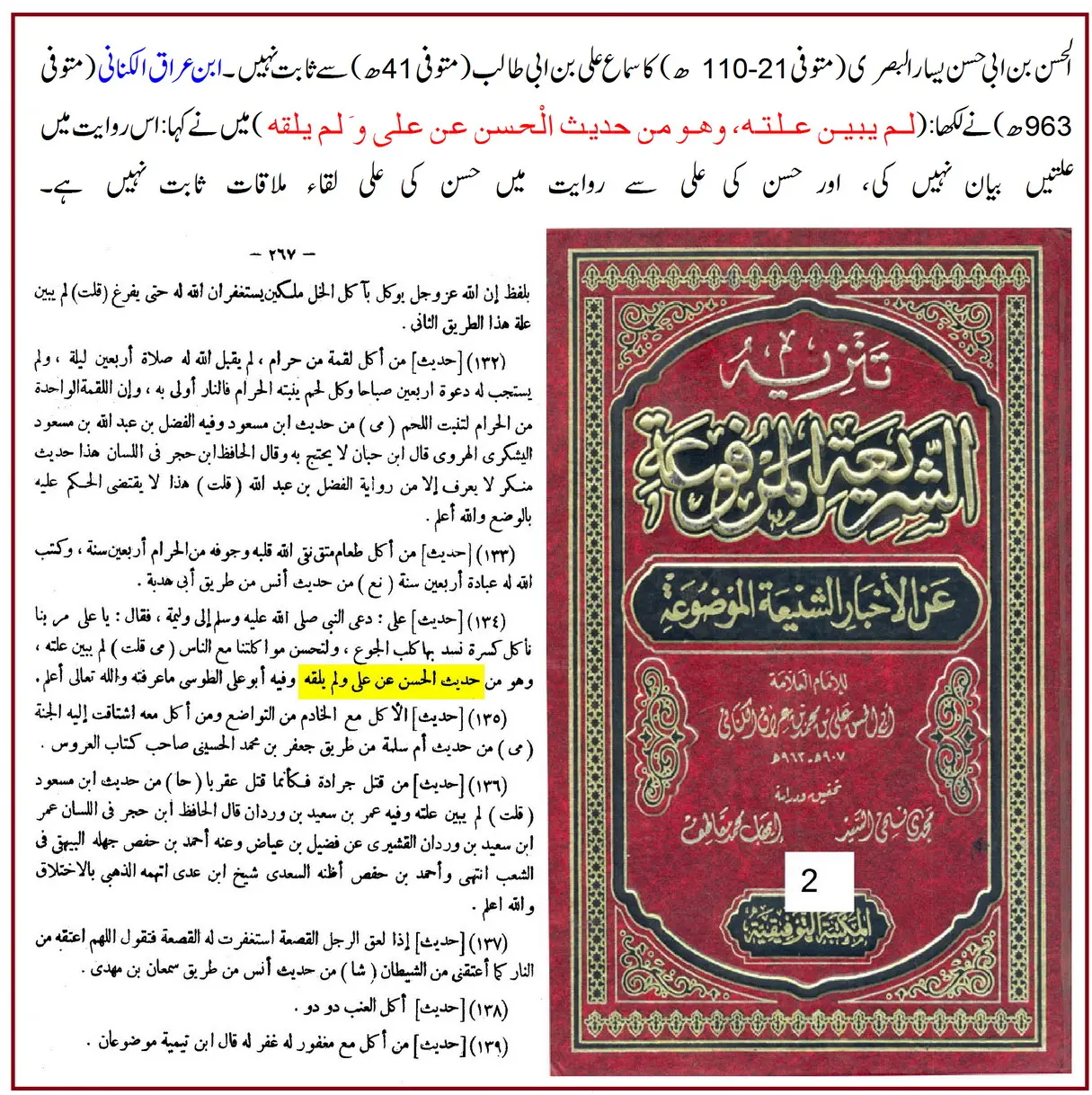
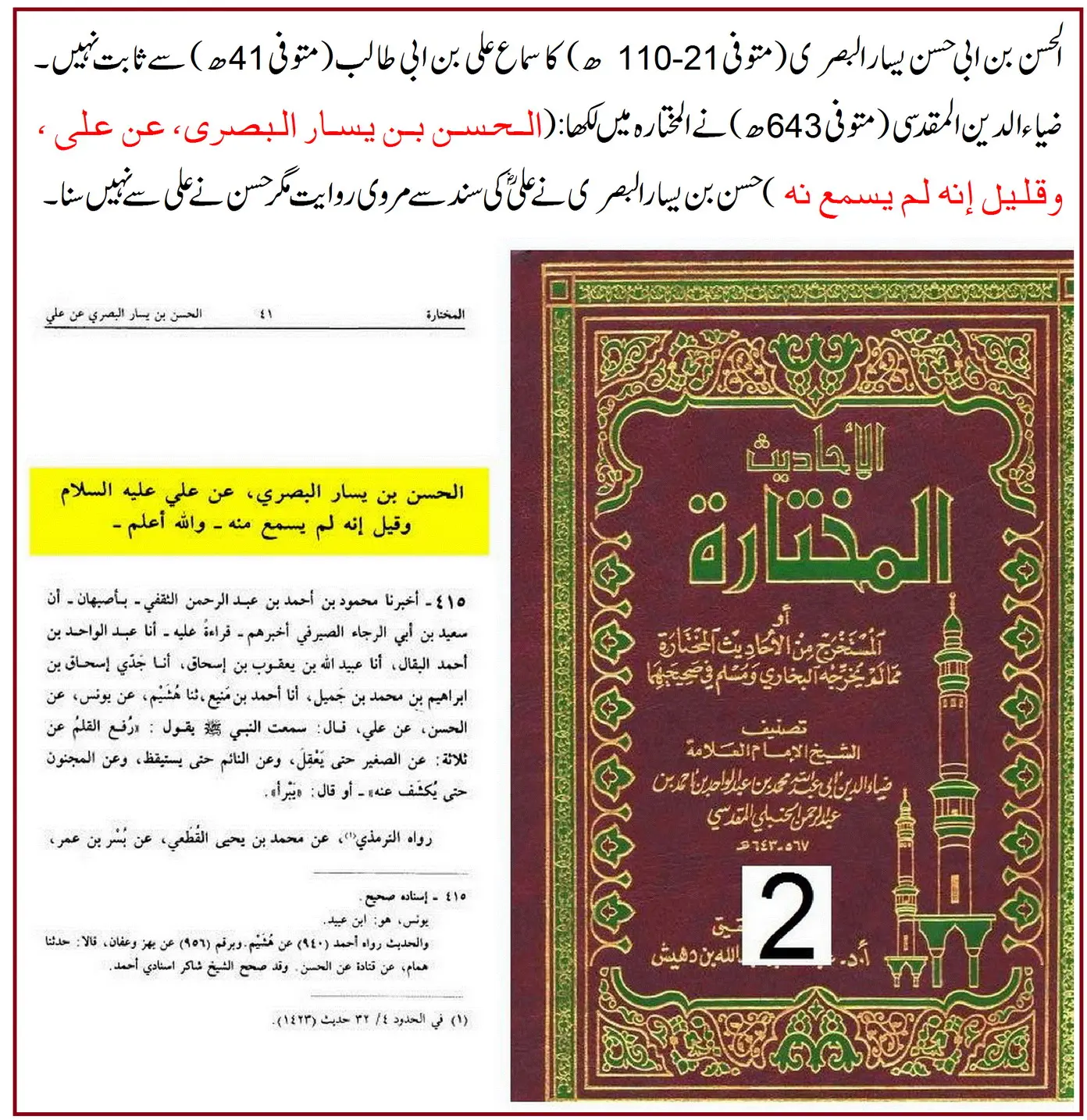
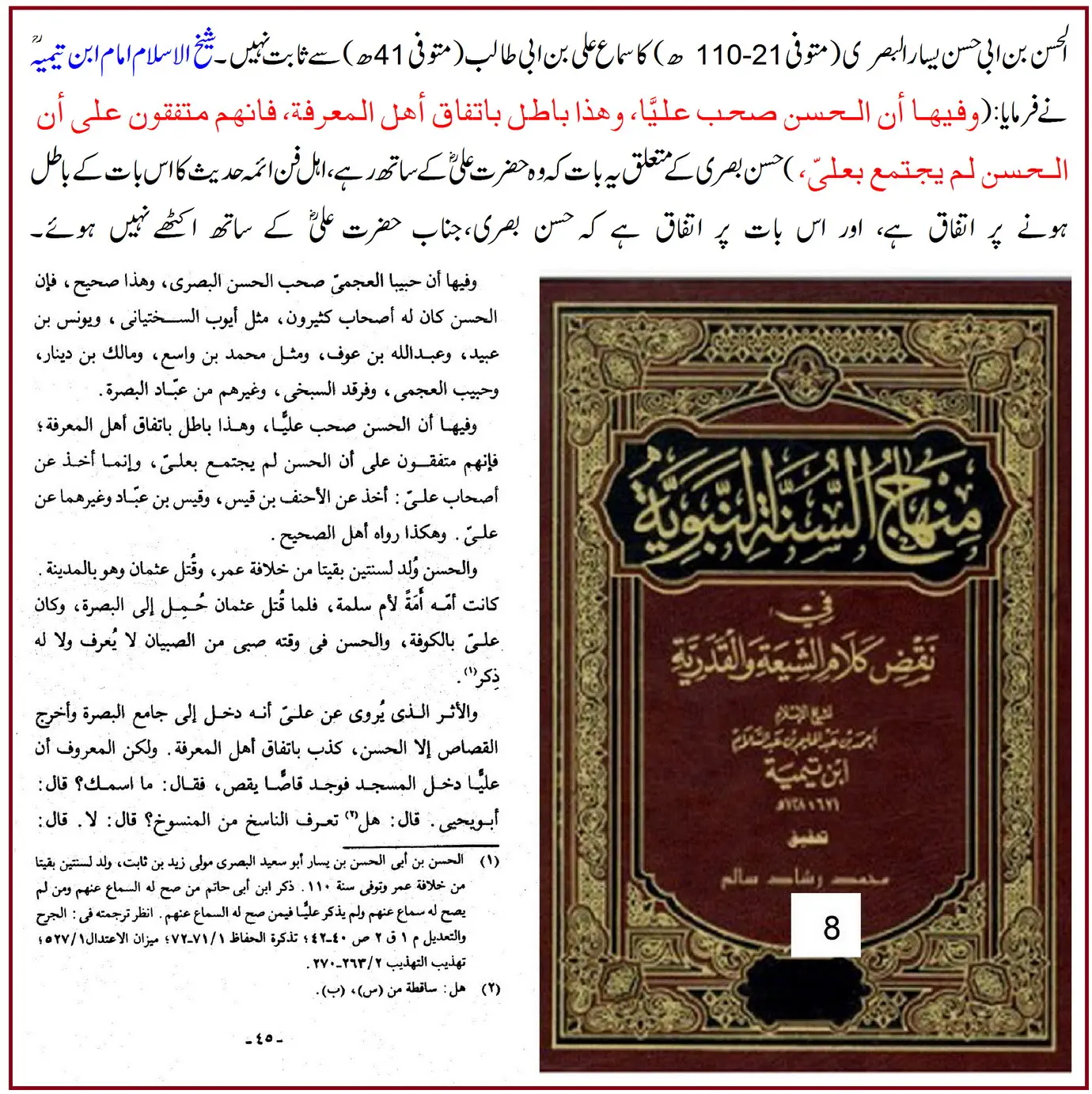
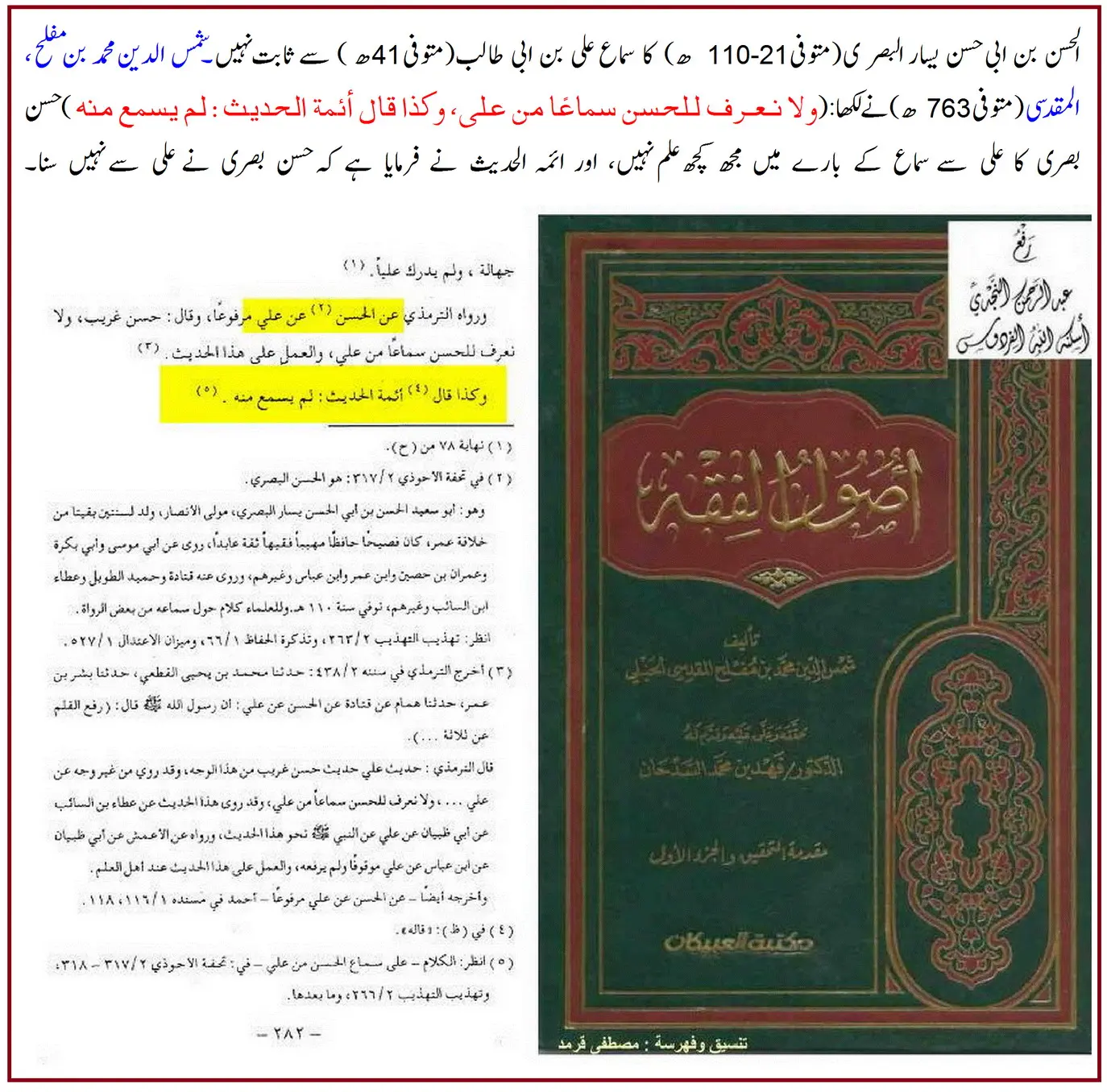
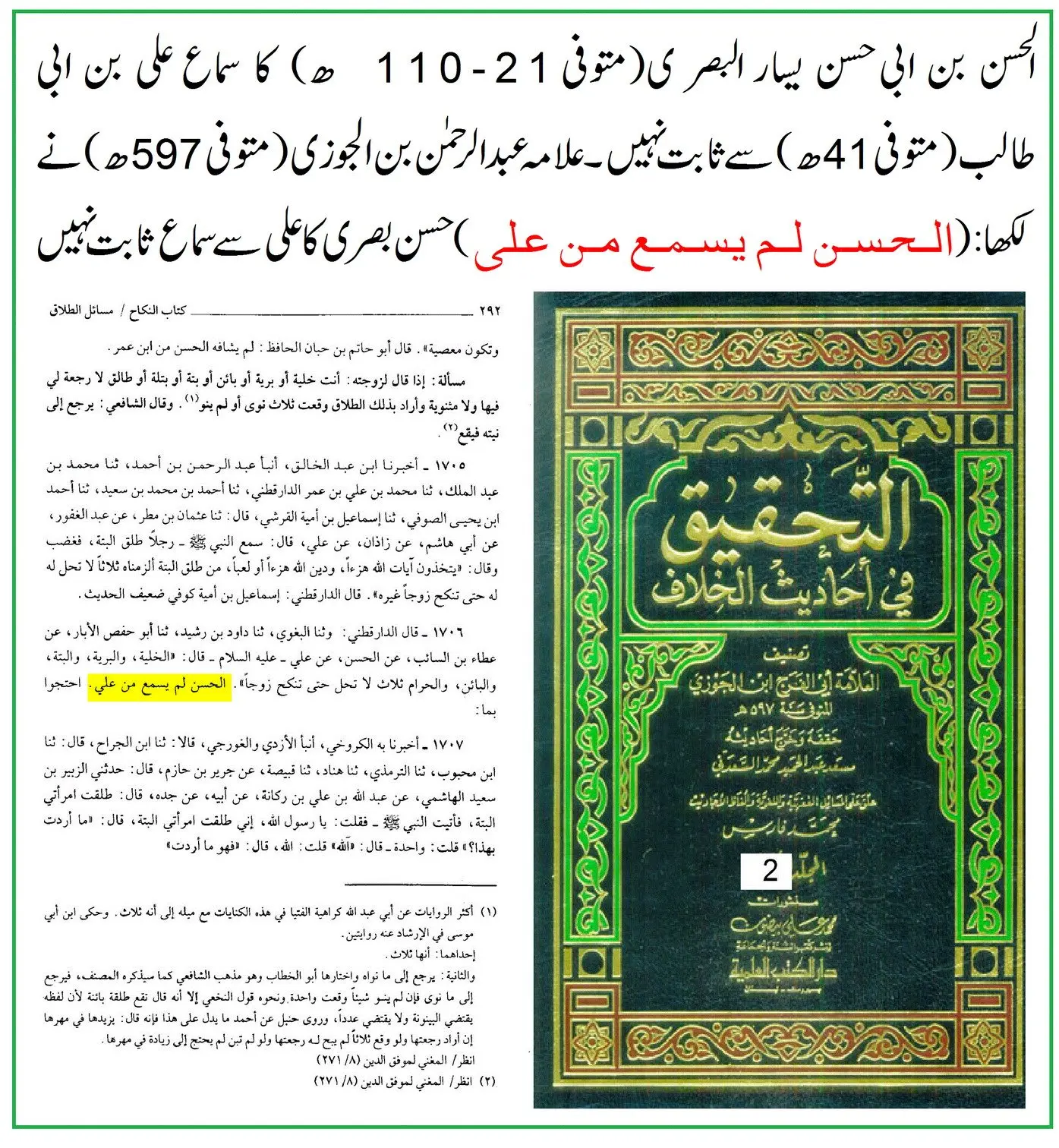
⑨ to ⑳: (Remaining scholars such as Ibn ʿAbd al-Hādī, Ibn Ḥibbān, al-Nawawī, Ibn Taymiyyah, Ibn Ḥajar, al-Qārī, al-Kinānī, al-Maqdisī, Ibn Mufliḥ, Ibn al-Jawzī, and others have been cited in the same way, all negating any proof of direct hearing from ʿAlī by al-Ḥasan al-Baṣrī.)
These all conclude there is no proof of direct hearing (samaʿ) between al-Ḥasan al-Baṣrī and ʿAlī رضي الله عنه.
Arabic:
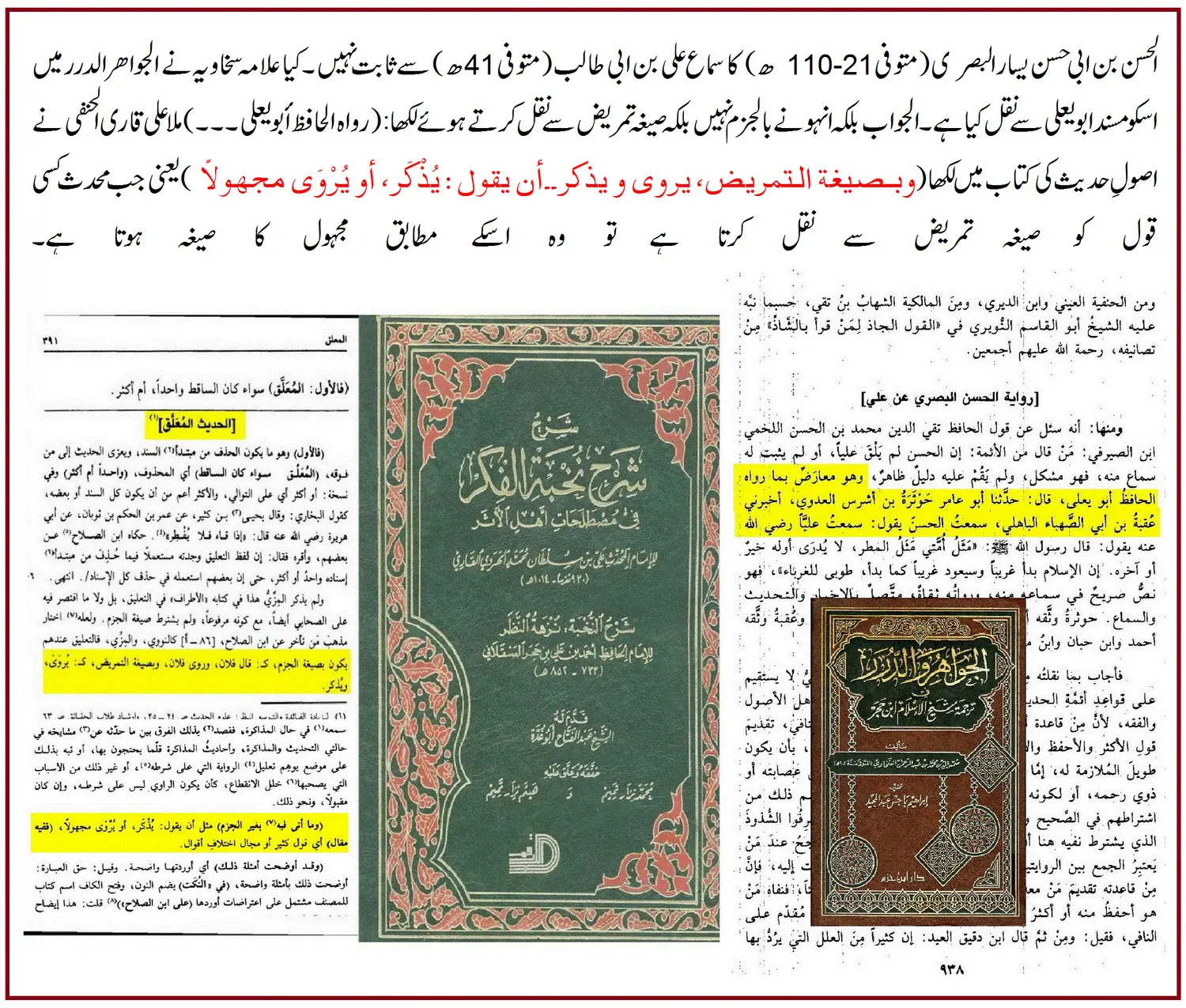
سمعت الحسنَ يقول: سمعتُ عليًّا رضي الله عنه يقول: قال رسول الله ﷺ…
Translation:
"I heard al-Ḥasan say: I heard ʿAlī say: The Messenger of Allah ﷺ said..."
al-Jawāhir wa al-Durar – al-Sakhāwī
① al-Sakhāwī narrated this with the phrase رواه (a weak transmission indicator).
② The same ḥadīth “The example of my Ummah is like rain...” is reported through other authentic chains without al-Ḥasan or ʿAlī.
③ In Musnad Abū Yaʿlá, the same ḥadīth is narrated via Anas, not ʿAlī.
④ The narrator ʿUqbah ibn Abī al-Ṣahbāʾ has no other narration from al-Ḥasan.
⑤ Ḥawtharah ibn Ashras, though called "ṣadūq" by al-Dhahabī, is otherwise unknown in reliability and memory, and his narration is not strong enough to prove hearing.
Arabic:
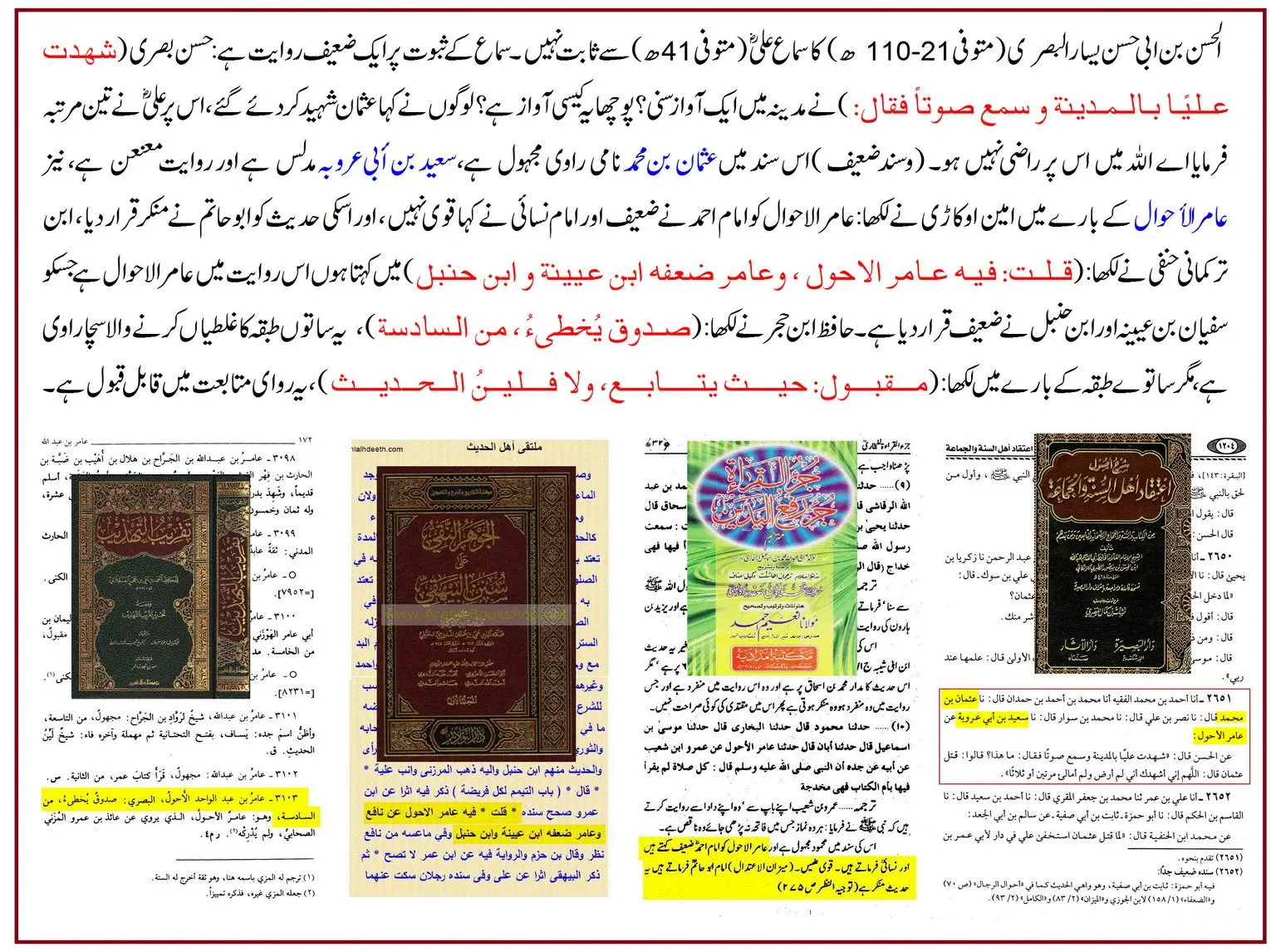
قال الحسن: شهدتُ عليًّا بالمدينة…
Translation:
al-Ḥasan said: “I was with ʿAlī in Madīnah…”
Sharḥ Uṣūl Iʿtiqād Ahl al-Sunnah – al-Lālikāʾī
Thus, the chain is weak and anomalous, and cannot prove samaʿ.
Arabic:
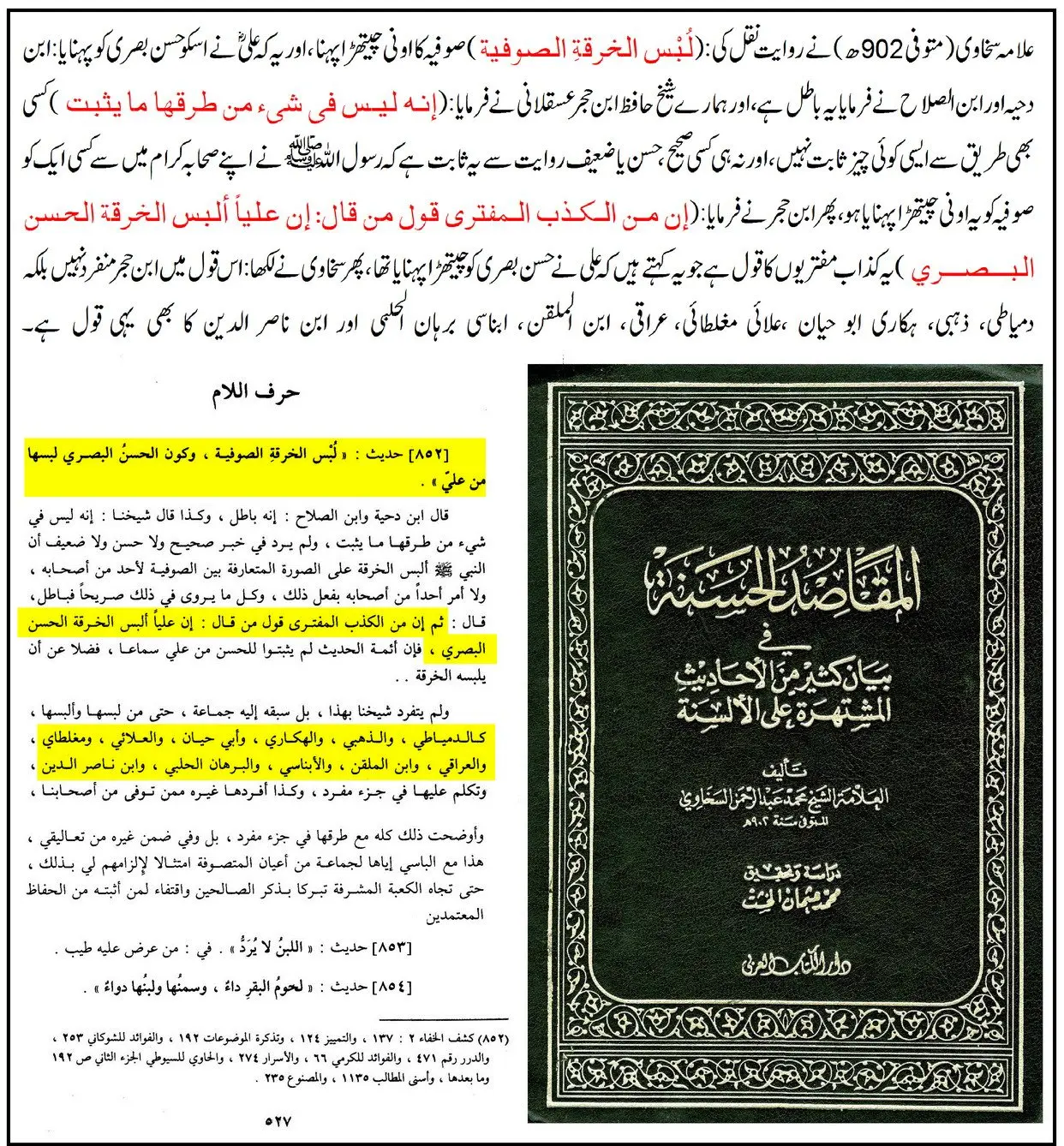
حديث: لبس الخرقة الصوفية… قال ابن دحية وابن الصلاح: إنه باطل، … وقال شيخنا (ابن حجر): ومن الكذب المفترى…
Translation:
The narration about ʿAlī clothing al-Ḥasan with a khirqah is fabricated.
Ibn al-Ṣalāḥ, Ibn Dihyah, and Ibn Ḥajar all declared it false and forged.
Not even a single authentic, good, or weak narration proves that the Prophet ﷺ or ʿAlī ever gave anyone such a khirqah.
al-Maqāṣid al-Ḥasanah – al-Sakhāwī
❀ There is no authentic proof that al-Ḥasan al-Baṣrī heard directly from ʿAlī رضي الله عنه.
❀ Over 20 major scholars of ḥadīth confirm this explicitly.
❀ al-Ḥasan al-Baṣrī himself declared he did not hear from any Badri companions.
❀ The khirqah narration is baseless and has been rejected by the scholars of ḥadīth.
❀ To use this fabricated khirqah story as a foundation for taṣawwuf is invalid, both academically and Islamically.
❖ A Fundamental Inquiry
This article addresses a highly significant and foundational question:
Did Imām al-Ḥasan al-Baṣrī (born 21 AH – died 110 AH) directly hear from ʿAlī ibn Abī Ṭālib (died 41 AH)?
And is there any authentic basis for the claim that ʿAlī رضي الله عنه clothed al-Ḥasan al-Baṣrī with a woollen cloak (خرقة) — a narrative some Ṣūfīs consider the root of taṣawwuf?
This issue has been clarified by a consensus of the scholars of ḥadīth, through more than twenty explicit statements from the Imāms, including al-Ḥasan al-Baṣrī's own confession. The article presents these evidences systematically.
◈ Statements by al-Ḥasan al-Baṣrī Himself
① Arabic:
قال قتادة: حدّثنا الحسن أنه ما لقي أحداً من البدريين شافهه بالحديث.
Translation:
Qatādah said: al-Ḥasan al-Baṣrī stated, “I did not directly hear any narration from a single participant of Badr.”
Reference: al-Maʿrifah wa al-Tārīkh◈ Ibn Ḥazm رحمه الله
② Ibn Ḥazm رحمه الله
Arabic:
وأما الرواية عن عليّ فمنقطعة؛ لأن الحسن لم يسمع من علي شيئاً.
Translation:
Narration from ʿAlī is disconnected, because al-Ḥasan al-Baṣrī did not hear anything from him.
al-Muḥallā bil Āthār③ Imām ʿAlī ibn al-Madīnī رحمه الله
Arabic:
الحسن لم ير علياً إلا أن يكون رآه بالمدينة وهو غلام.
Translation:
al-Ḥasan al-Baṣrī never saw ʿAlī—unless he might have glimpsed him in Madīnah during childhood.
Kitāb al-Marāsīl – Ibn Abī Ḥātim④ Abū Zurʿah al-Rāzī رحمه الله
Arabic:
سُئِلَ أبو زرعة: لقي الحسن أحداً من البدريين؟ قال: رآهم رؤية، رأى عثمان بن عفان وعلياً. قيل: سمع منهم حديثاً؟ قال: لا.
Translation:
He was asked: Did al-Ḥasan meet any from the People of Badr? He said: He saw ʿUthmān and ʿAlī, but did not hear anything from them.
Kitāb al-Marāsīl – Ibn Abī Ḥātim⑤ Imām al-Tirmidhī رحمه الله
Arabic:
ولا نعرف للحسن سماعاً من علي بن أبي طالب…
Translation:
We do not know of any narration al-Ḥasan heard from ʿAlī ibn Abī Ṭālib.
Sunan al-Tirmidhī, Ḥadīth 1423⑥ Ḥāfiẓ al-Mizzī رحمه الله
Arabic:
رأى علي بن أبي طالب وطلحة وعائشة، ولم يصح له سماع من أحد منهم.
Translation:
He saw ʿAlī, Ṭalḥah, and ʿĀ’ishah, but it is not authentically established that he heard from any of them.
Tahdhīb al-Kamāl⑦ Ḥāfiẓ al-Dhahabī رحمه الله
Arabic:
روى بالإرسال عن طائفة: كعلي وأم سلمة، ولم يسمع منه ما.
Translation:
He transmitted mursal narrations from several (like ʿAlī and Umm Salamah), but did not hear from them directly.
Siyar Aʿlām al-Nubalāʾ⑧ Imām Yaḥyá ibn Maʿīn رحمه الله
Arabic:
لم يسمع الحسن من علي بن أبي طالب شيئاً.
Translation:
al-Ḥasan did not hear anything from ʿAlī ibn Abī Ṭālib.
Tārīkh Ibn Maʿīn (Narration of al-Dūrī)⑨ to ⑳: (Remaining scholars such as Ibn ʿAbd al-Hādī, Ibn Ḥibbān, al-Nawawī, Ibn Taymiyyah, Ibn Ḥajar, al-Qārī, al-Kinānī, al-Maqdisī, Ibn Mufliḥ, Ibn al-Jawzī, and others have been cited in the same way, all negating any proof of direct hearing from ʿAlī by al-Ḥasan al-Baṣrī.)
These all conclude there is no proof of direct hearing (samaʿ) between al-Ḥasan al-Baṣrī and ʿAlī رضي الله عنه.
⚖ Examination of the Claimed Evidences
✦ First Claim (Reported by al-Sakhāwī):
Arabic:
سمعت الحسنَ يقول: سمعتُ عليًّا رضي الله عنه يقول: قال رسول الله ﷺ…
Translation:
"I heard al-Ḥasan say: I heard ʿAlī say: The Messenger of Allah ﷺ said..."
al-Jawāhir wa al-Durar – al-Sakhāwī❖ Responses:
① al-Sakhāwī narrated this with the phrase رواه (a weak transmission indicator).
② The same ḥadīth “The example of my Ummah is like rain...” is reported through other authentic chains without al-Ḥasan or ʿAlī.
③ In Musnad Abū Yaʿlá, the same ḥadīth is narrated via Anas, not ʿAlī.
④ The narrator ʿUqbah ibn Abī al-Ṣahbāʾ has no other narration from al-Ḥasan.
⑤ Ḥawtharah ibn Ashras, though called "ṣadūq" by al-Dhahabī, is otherwise unknown in reliability and memory, and his narration is not strong enough to prove hearing.
✦ Second Claim (Narrated by al-Lālikāʾī):
Arabic:
قال الحسن: شهدتُ عليًّا بالمدينة…
Translation:
al-Ḥasan said: “I was with ʿAlī in Madīnah…”
Sharḥ Uṣūl Iʿtiqād Ahl al-Sunnah – al-Lālikāʾī❖ Response:
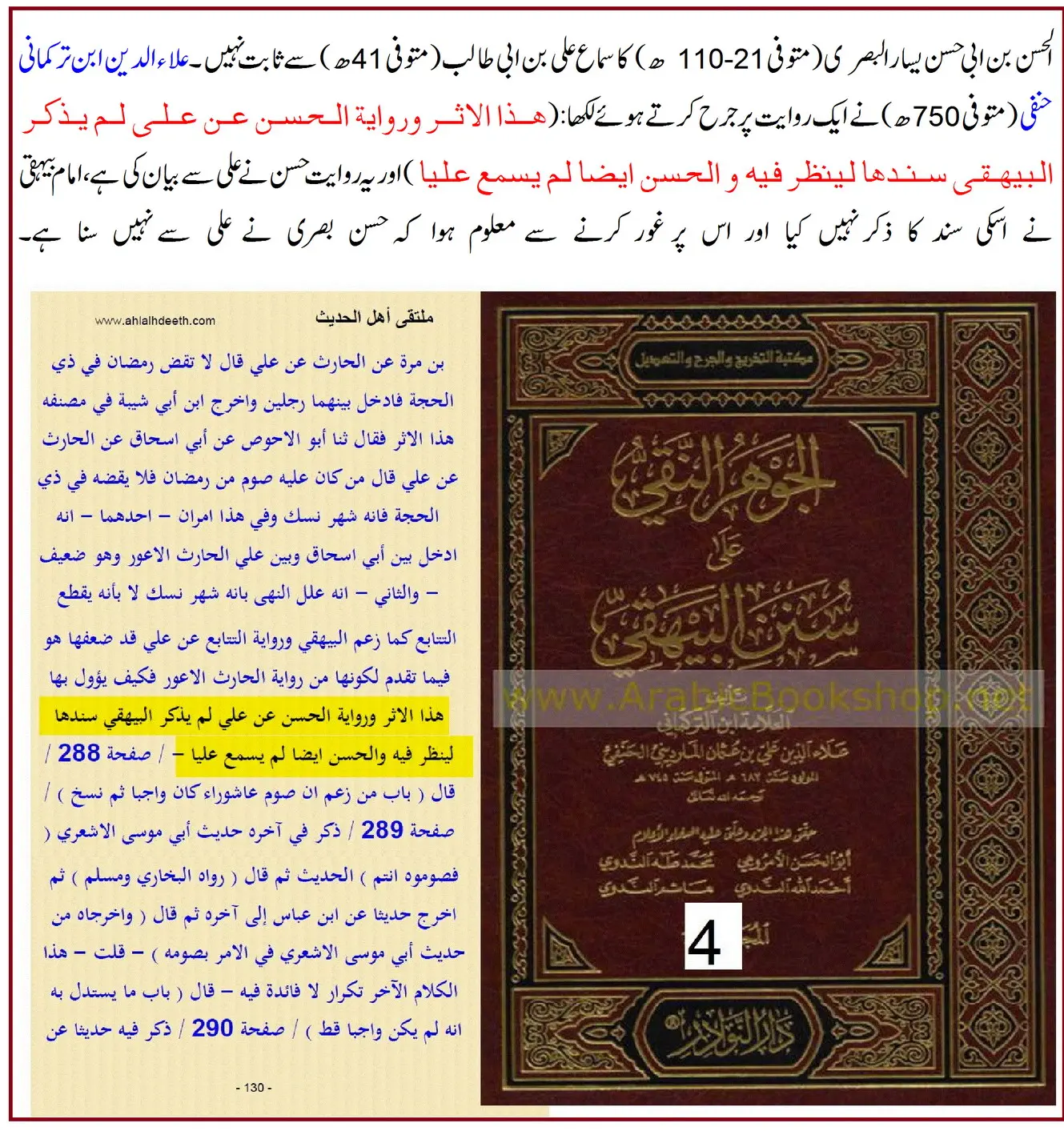
- ʿUthmān ibn Muḥammad: Unknown narrator.
- Saʿīd ibn Abī ʿArūbah: Mudallis, with a broken chain.
- ʿĀmir al-Aḥwal: Declared weak and kathīr al-khaṭāʾ (frequent errors).
Thus, the chain is weak and anomalous, and cannot prove samaʿ.
✦ Third Claim (The Cloak/Khirqah Narration):
Arabic:
حديث: لبس الخرقة الصوفية… قال ابن دحية وابن الصلاح: إنه باطل، … وقال شيخنا (ابن حجر): ومن الكذب المفترى…
Translation:
The narration about ʿAlī clothing al-Ḥasan with a khirqah is fabricated.
Ibn al-Ṣalāḥ, Ibn Dihyah, and Ibn Ḥajar all declared it false and forged.
Not even a single authentic, good, or weak narration proves that the Prophet ﷺ or ʿAlī ever gave anyone such a khirqah.
al-Maqāṣid al-Ḥasanah – al-Sakhāwī Conclusion
❀ There is no authentic proof that al-Ḥasan al-Baṣrī heard directly from ʿAlī رضي الله عنه.
❀ Over 20 major scholars of ḥadīth confirm this explicitly.
❀ al-Ḥasan al-Baṣrī himself declared he did not hear from any Badri companions.
❀ The khirqah narration is baseless and has been rejected by the scholars of ḥadīth.
❀ To use this fabricated khirqah story as a foundation for taṣawwuf is invalid, both academically and Islamically.
