
Compiled by: Abu Hamzah Salafi
This research examines the narrations concerning “Ṭalāq al-Battah” transmitted through the chain of Imām al-Shāfiʿī (along with a parallel chain through al-Zubayr ibn Saʿīd al-Nawfalī). From these reports, it is inferred that when a husband pronounces divorce using the word “al-battah”, his intention (if meant as one divorce) is taken as the basis, allowing revocation or counting it as a single divorce.
We shall demonstrate that:
① These narrations are weak, disconnected, and contradictory, containing unknown and criticized narrators.
② Numerous ḥadīth scholars (al-Bukhārī, Aḥmad, al-Bayhaqī, Ibn al-ʿArabī, Ibn Ḥazm, al-Mundhirī, Ibn al-Qayyim, al-Ṭaḥāwī, al-Zaylaʿī, al-Ishbīlī, al-Shawkānī, and others) have explicitly declared them weak or even fabricated.
③ Therefore, it is incorrect in juristic reasoning to give them preference over authentic and stronger narrations (such as the sound reports of Ibn ʿAbbās رضي الله عنهما).
At every point, the Arabic text will be presented first, followed by its English translation, along with references, and then a concise yet clear critical analysis of the chain.
In Arab custom, if a man said to his wife:
The point of disagreement is:
① Does pronouncing “Ṭalāq al-Battah” result in three divorces?
② Or does it count as a single divorce, with the husband’s intention being considered?
A narration regarding Rukānah رضي الله عنه is often cited, stating that he divorced his wife with “al-battah,” and the Prophet ﷺ asked about his intention. When he said he intended only one divorce, the Prophet ﷺ returned his wife to him.
Reference:
Reference:
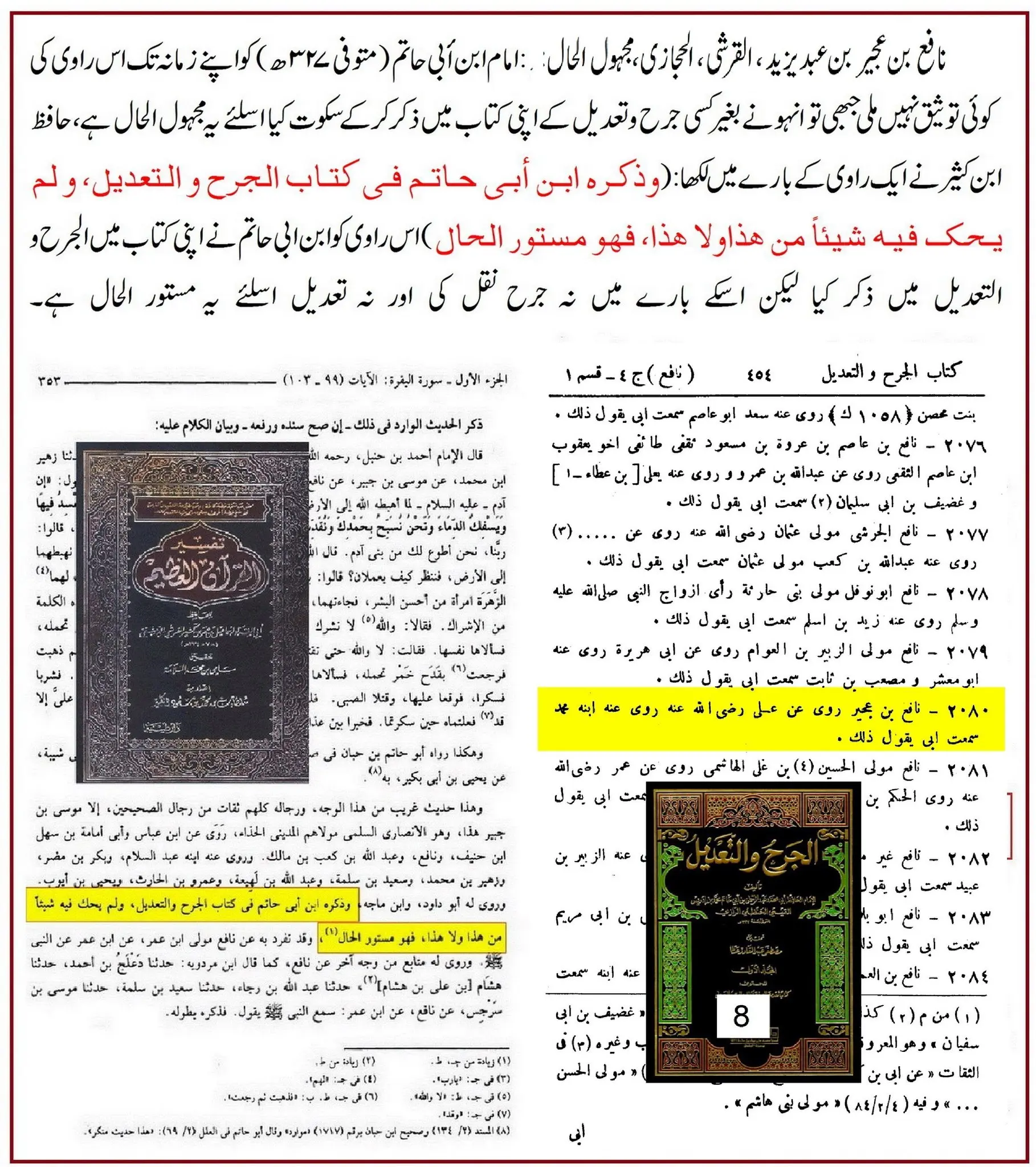
Status: Majhūl (Unknown)
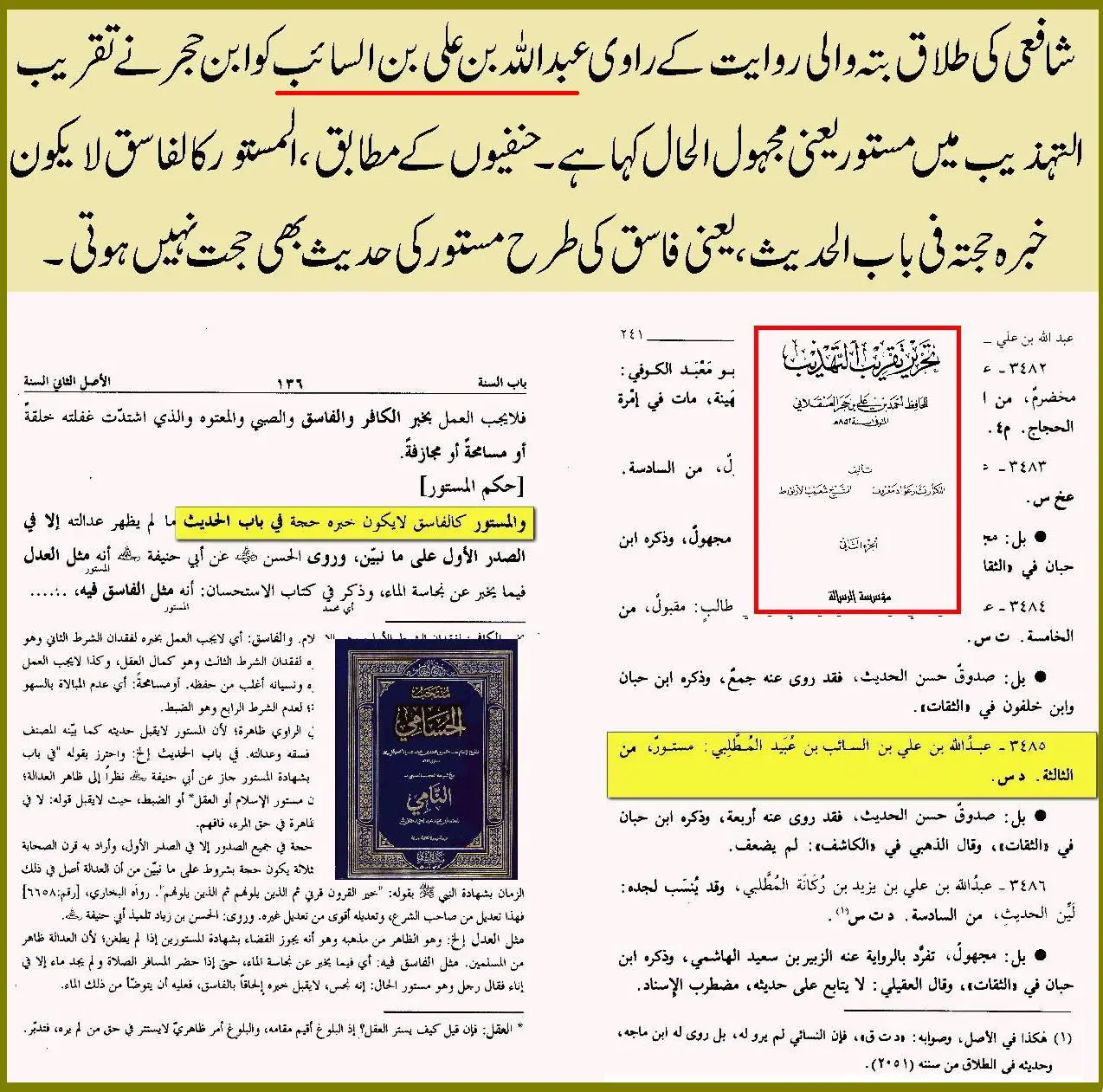
Ibn Ḥajar classified him as mastūr (unknown condition).
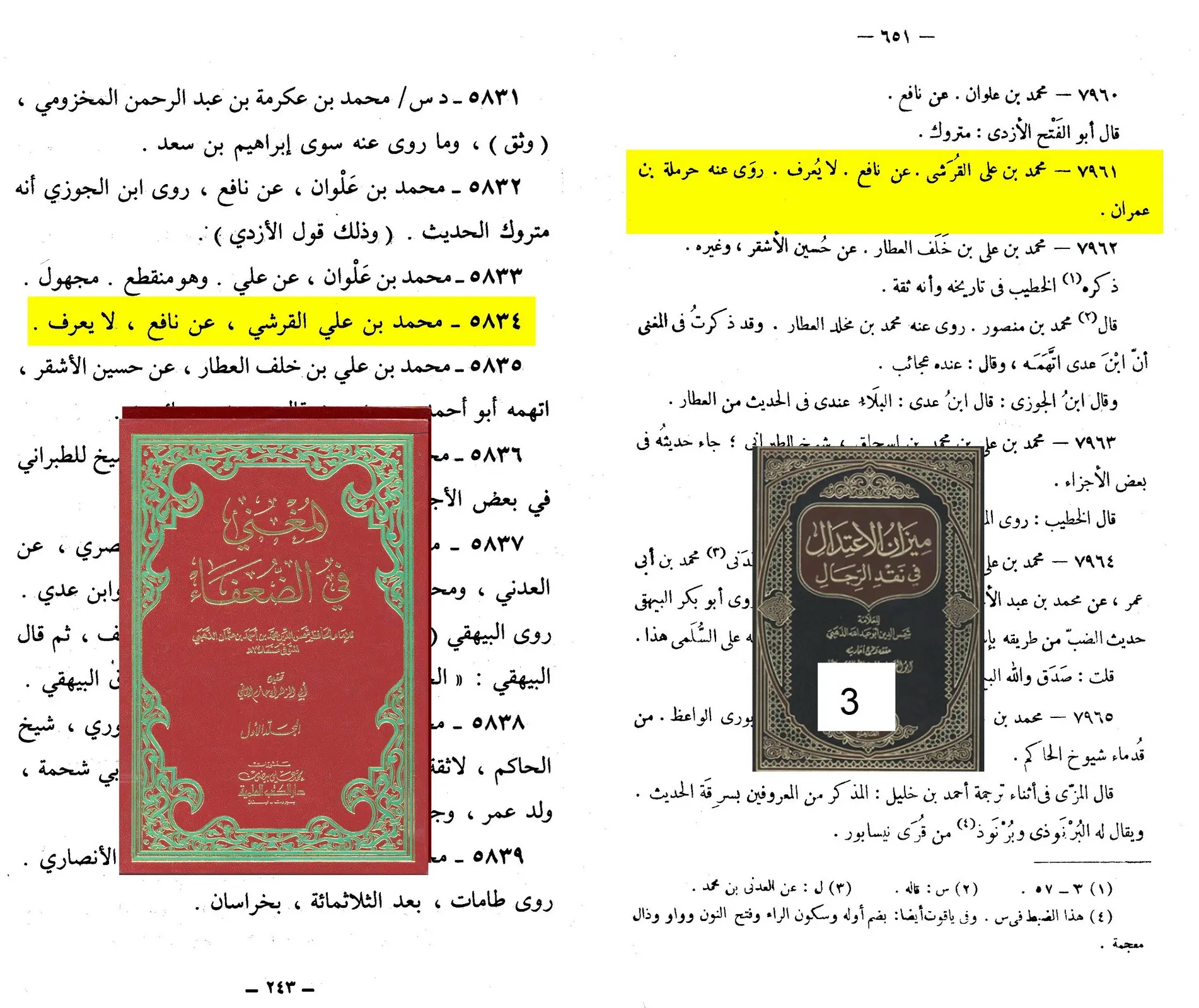
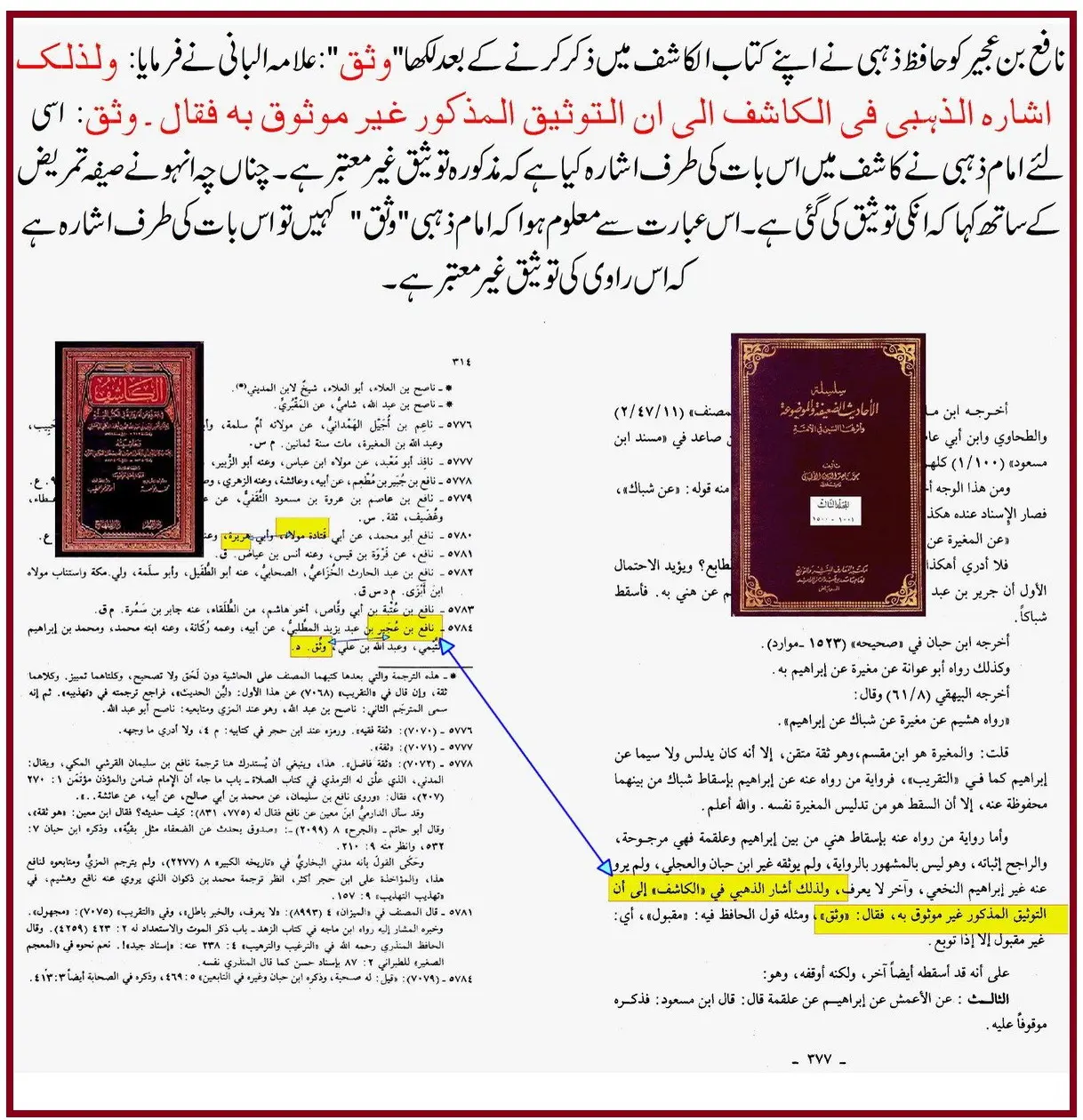
Al-Dhahabī said: “He is not known.”
Declared weak or unknown by multiple scholars.
Declared unknown.
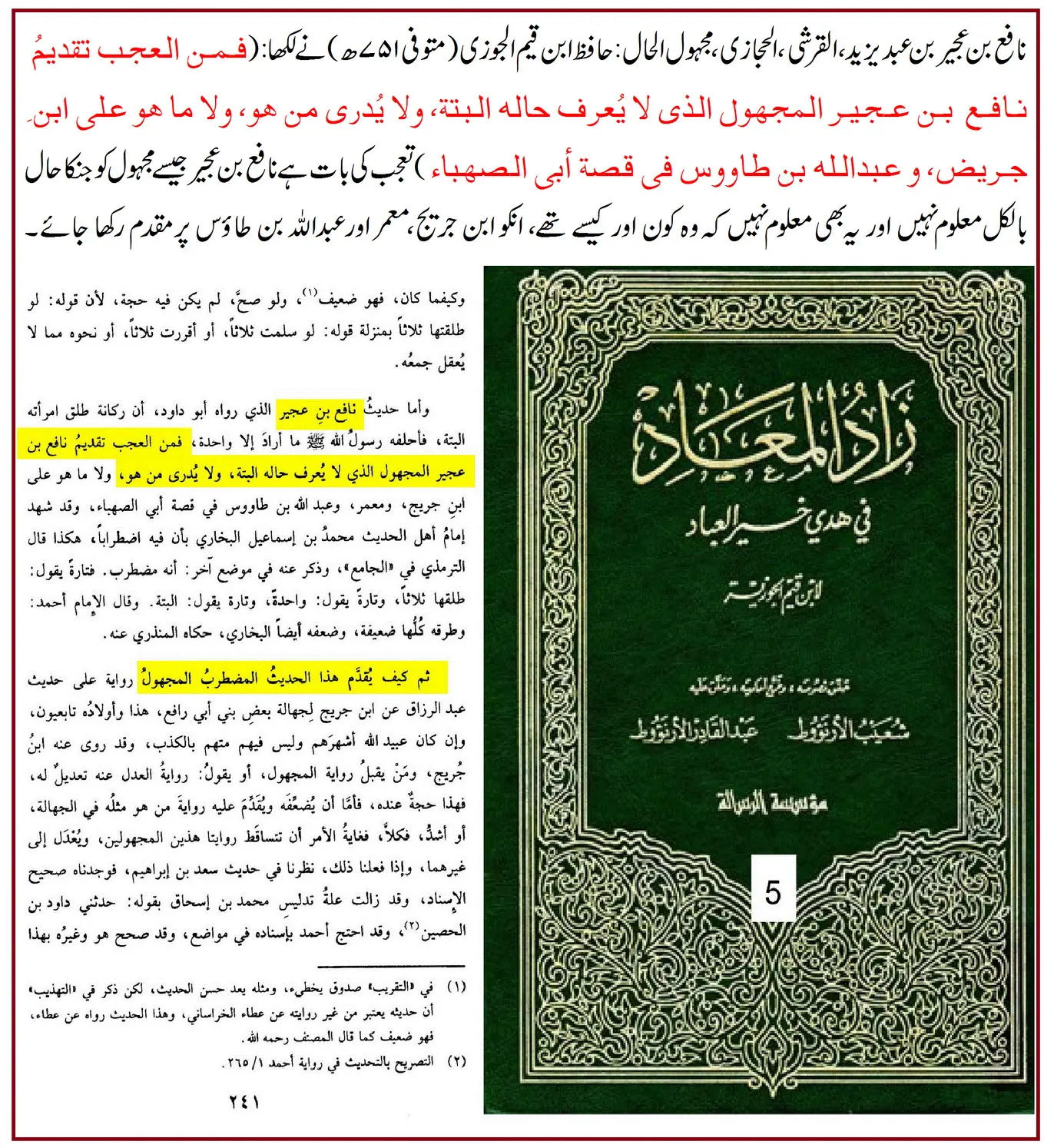
Ibn al-Qayyim stated:
«… المجهول الذي لا يُعرف حاله البتّة…»
“He is unknown; his condition is not known at all.”
② Other routes are also severely weak and inconsistent.
③ The narration suffers from disconnection and contradiction.
② The majority of ḥadīth scholars declared it weak.
③ Some even labeled it fabricated.
The narration of Rukānah regarding Ṭalāq al-Battah is:
◈ Severely weak
◈ Inconsistent
◈ Reported through unknown narrators
Deriving the principle that “three divorces will count as one based on intention” from this narration is incorrect.
It cannot, under any circumstance, be given precedence over authentic narrations — such as the sound report in Musnad Aḥmad through Ibn ʿAbbās رضي الله عنهما stating that Rukānah divorced his wife thrice and separation was enforced.
From a juristic standpoint, the issue of Ṭalāq al-Battah must be based upon clear and authentic narrations, not upon weak and inconsistent reports.
Therefore, the narration transmitted through the chain of Imām al-Shāfiʿī is not suitable as proof (ḥujjah).
This research examines the narrations concerning “Ṭalāq al-Battah” transmitted through the chain of Imām al-Shāfiʿī (along with a parallel chain through al-Zubayr ibn Saʿīd al-Nawfalī). From these reports, it is inferred that when a husband pronounces divorce using the word “al-battah”, his intention (if meant as one divorce) is taken as the basis, allowing revocation or counting it as a single divorce.
We shall demonstrate that:
① These narrations are weak, disconnected, and contradictory, containing unknown and criticized narrators.
② Numerous ḥadīth scholars (al-Bukhārī, Aḥmad, al-Bayhaqī, Ibn al-ʿArabī, Ibn Ḥazm, al-Mundhirī, Ibn al-Qayyim, al-Ṭaḥāwī, al-Zaylaʿī, al-Ishbīlī, al-Shawkānī, and others) have explicitly declared them weak or even fabricated.
③ Therefore, it is incorrect in juristic reasoning to give them preference over authentic and stronger narrations (such as the sound reports of Ibn ʿAbbās رضي الله عنهما).
At every point, the Arabic text will be presented first, followed by its English translation, along with references, and then a concise yet clear critical analysis of the chain.
What is Ṭalāq al-Battah?
The word “battah” in Arabic means to cut off completely or to terminate decisively.In Arab custom, if a man said to his wife:
it was understood that he intended a final and decisive separation.“أنتِ طالق البتّة”
“You are divorced, completely and finally,”
The point of disagreement is:
① Does pronouncing “Ṭalāq al-Battah” result in three divorces?
② Or does it count as a single divorce, with the husband’s intention being considered?
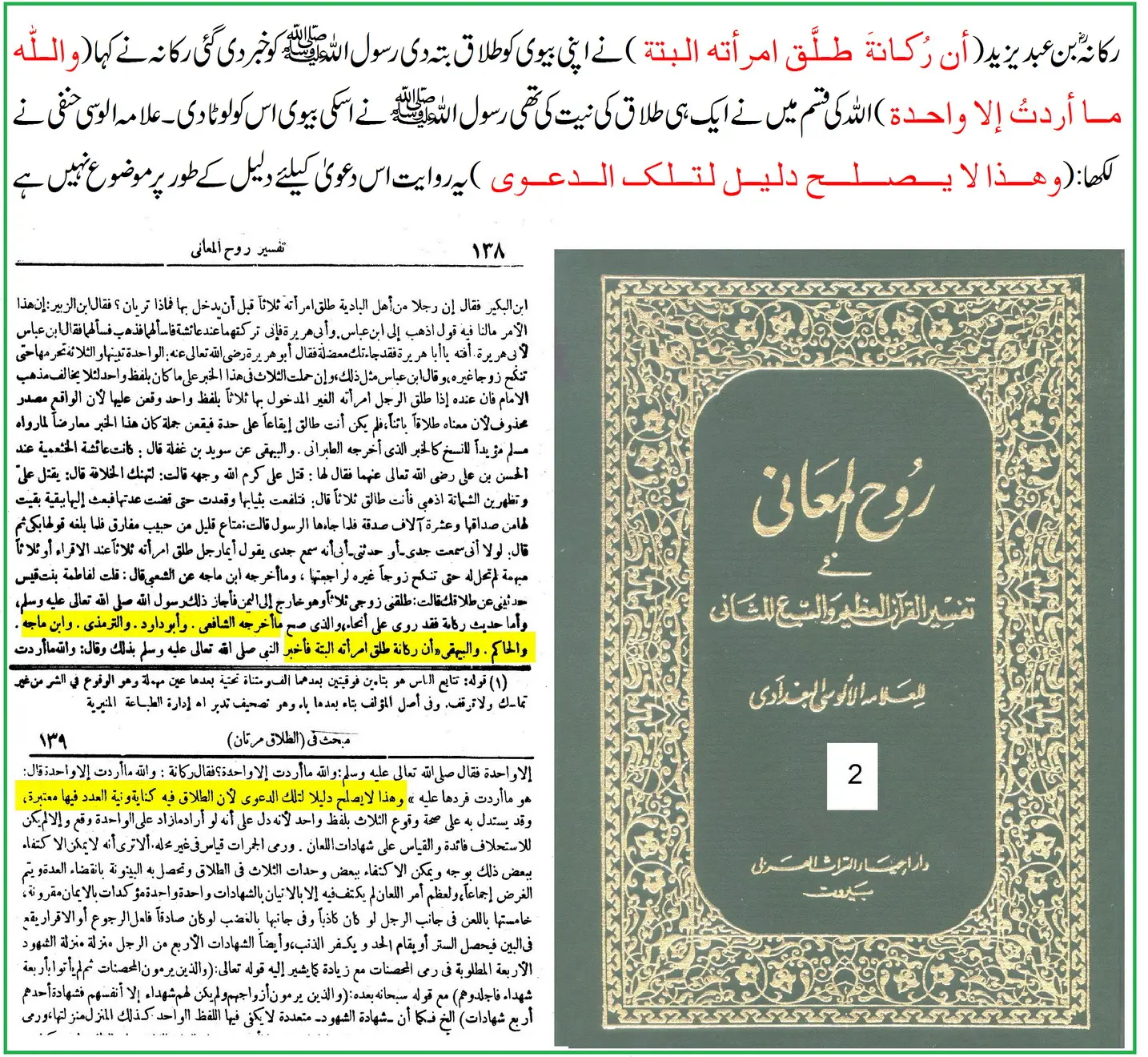
A narration regarding Rukānah رضي الله عنه is often cited, stating that he divorced his wife with “al-battah,” and the Prophet ﷺ asked about his intention. When he said he intended only one divorce, the Prophet ﷺ returned his wife to him.
Evidence Presented by the Opposing View
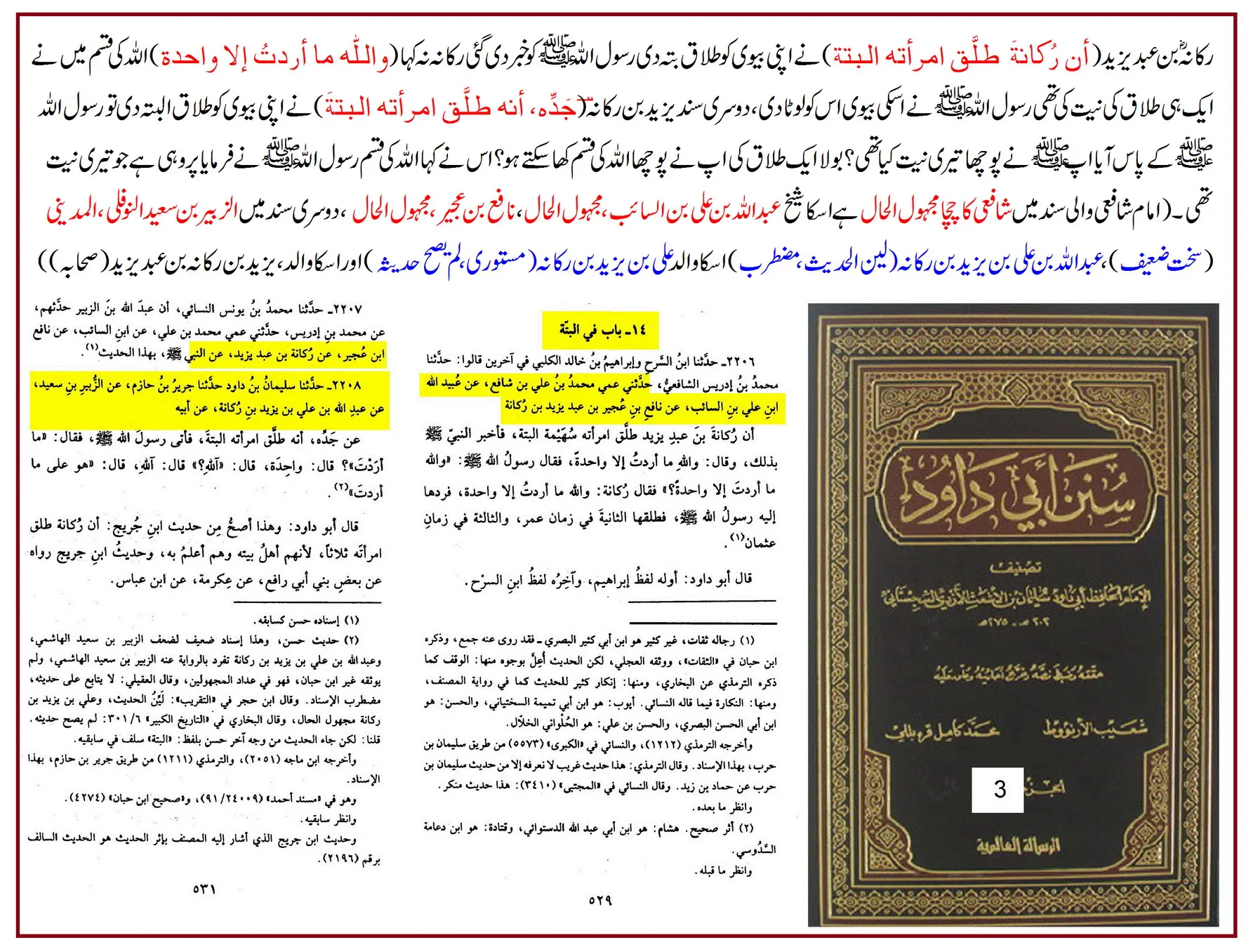
Narration 1: Through the Chain of al-Shāfiʿī
Arabic Text:
2206 – حَدَّثَنَا ابْنُ السَّرْحِ ... فَرَدَّهَا إِلَيْهِ رَسُولُ اللَّهِ صَلَّى اللهُ عَلَيْهِ وَسَلَّمَ.Translation:
Rukānah ibn ʿAbd Yazīd رضي الله عنه divorced his wife Suhaymah with the words “al-battah.” He informed the Prophet ﷺ and said: “By Allah, I intended only one (divorce).” The Prophet ﷺ asked: “By Allah, did you intend only one?” He replied: “By Allah, I intended only one.” So the Messenger of Allah ﷺ returned her to him.Reference:
Reference: Sunan Abī Dāwūd: 2206
Reference: al-Sunan al-Kubrā by al-Bayhaqī
Narration 2: Parallel Chain (al-Zubayr ibn Saʿīd)
Arabic Text:
2208 – حَدَّثَنَا سُلَيْمَانُ بْنُ دَاوُدَ ... «هُوَ عَلَى مَا أَرَدْتَ».Translation:
Rukānah divorced his wife with “al-battah.” He came to the Messenger of Allah ﷺ. The Prophet ﷺ asked: “What did you intend?” He replied: “One (divorce).” The Prophet ﷺ said: “By Allah?” He said: “By Allah.” The Prophet ﷺ said: “It is according to what you intended.”Reference:
Reference: Sunan Abī Dāwūd: 2208
Scholarly Criticism of the Narration
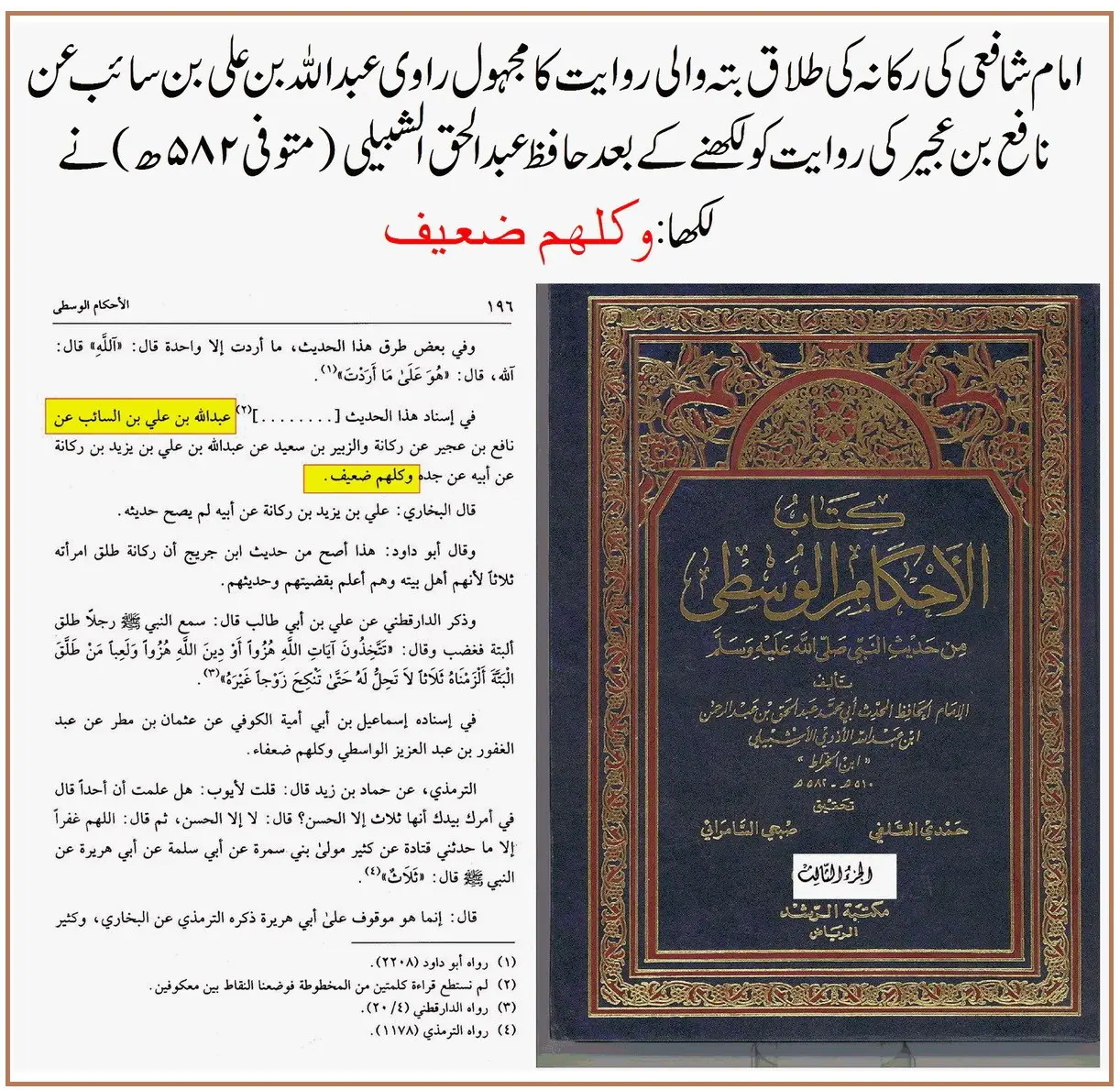
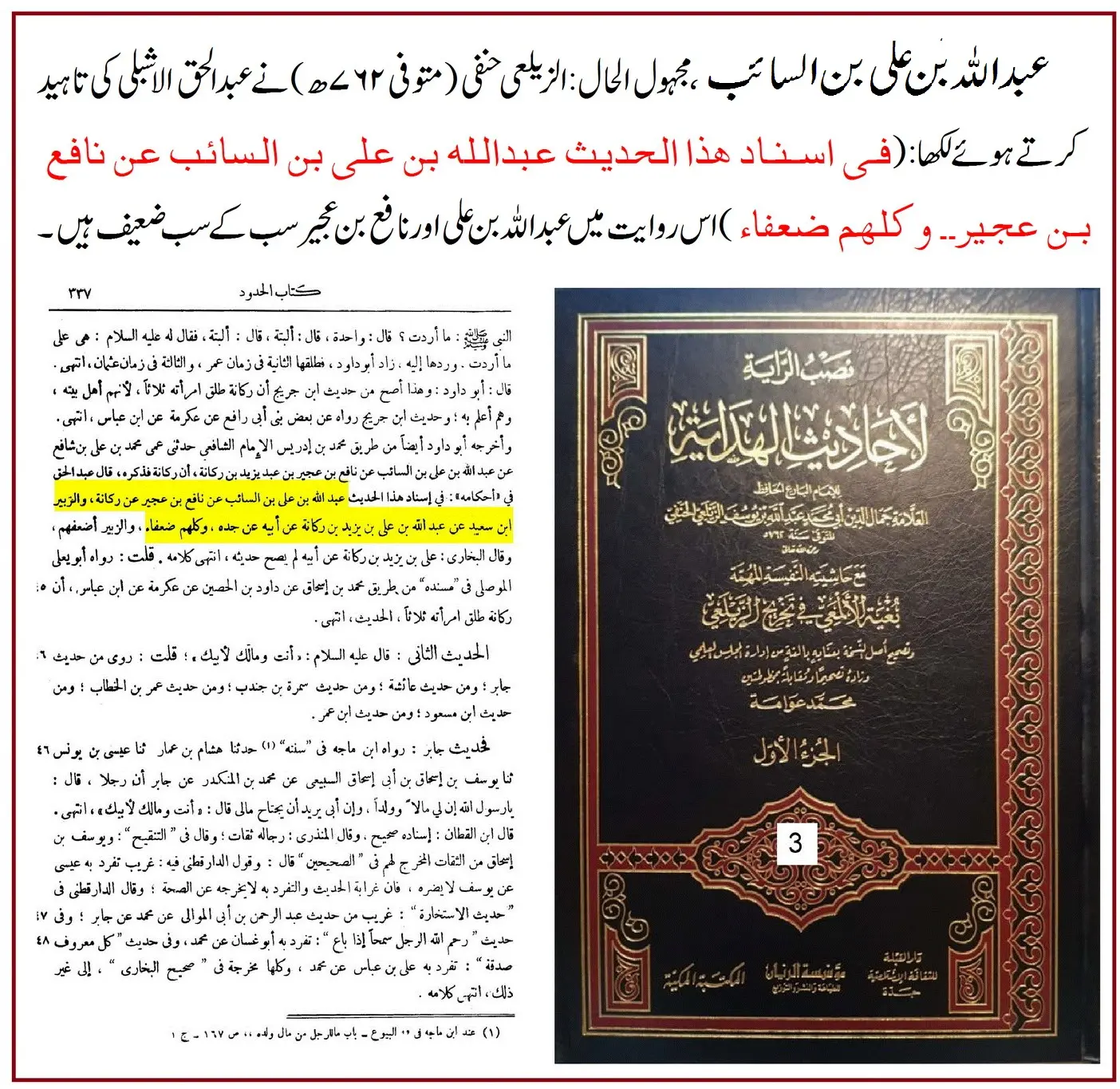
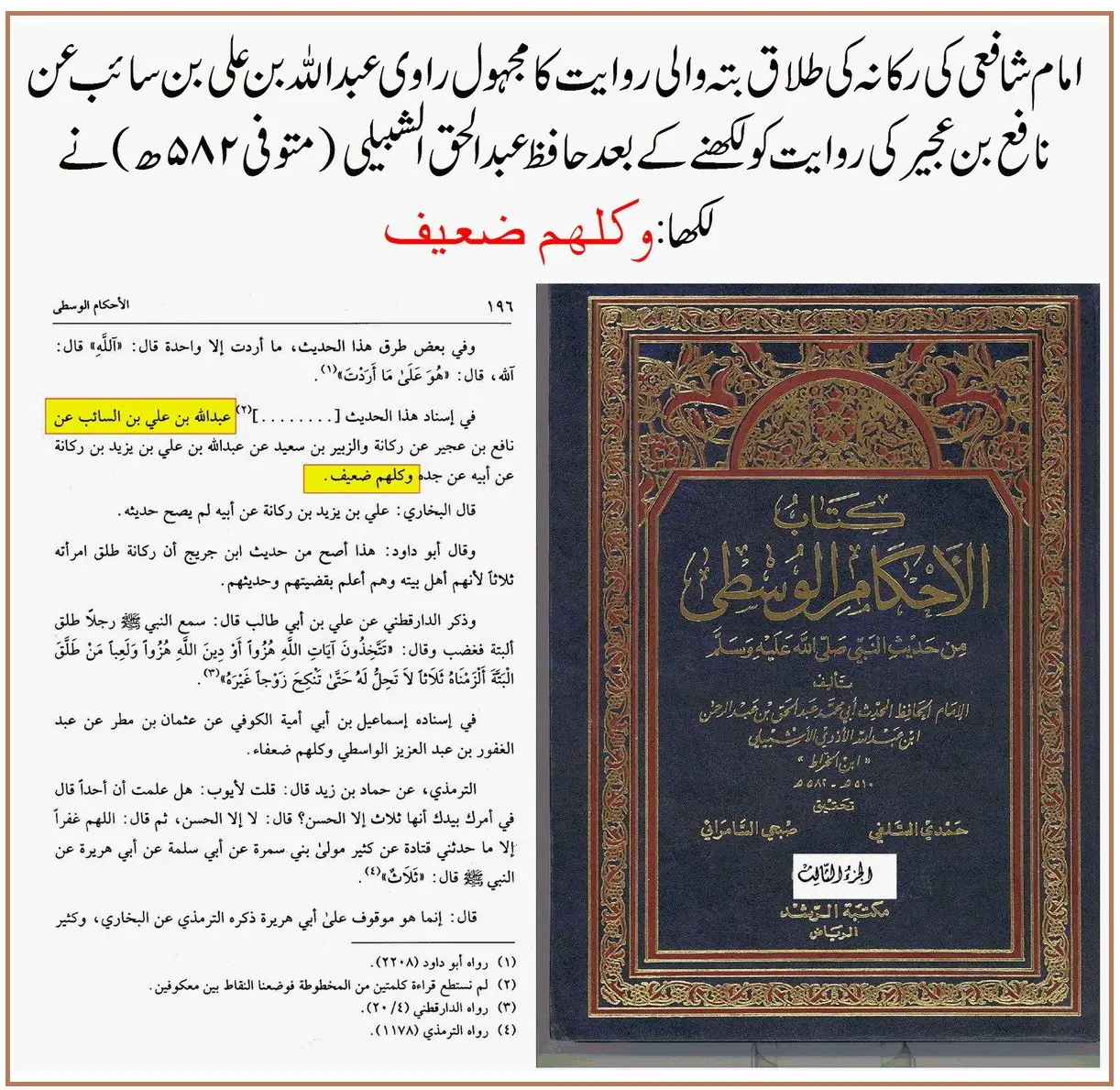
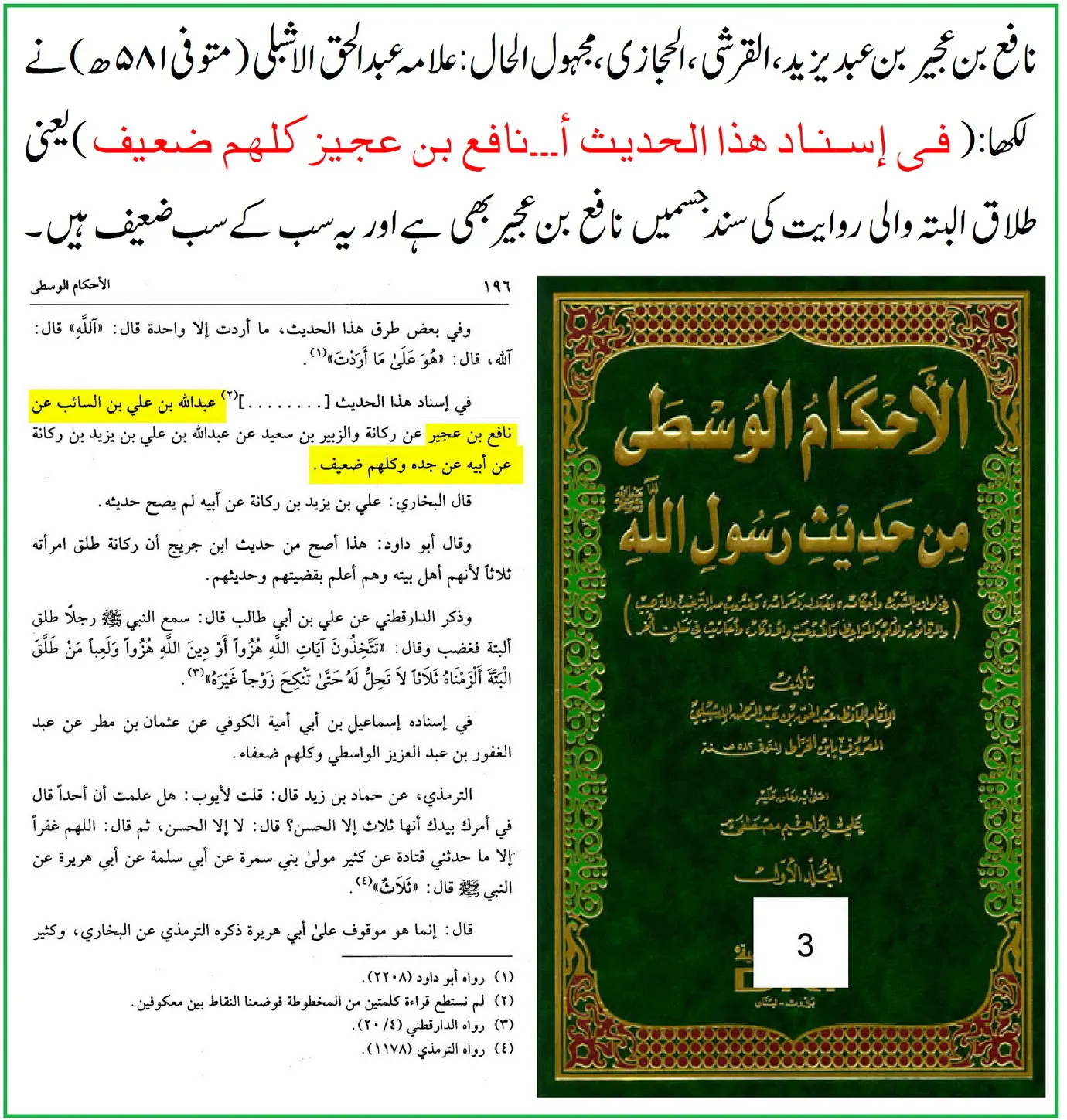
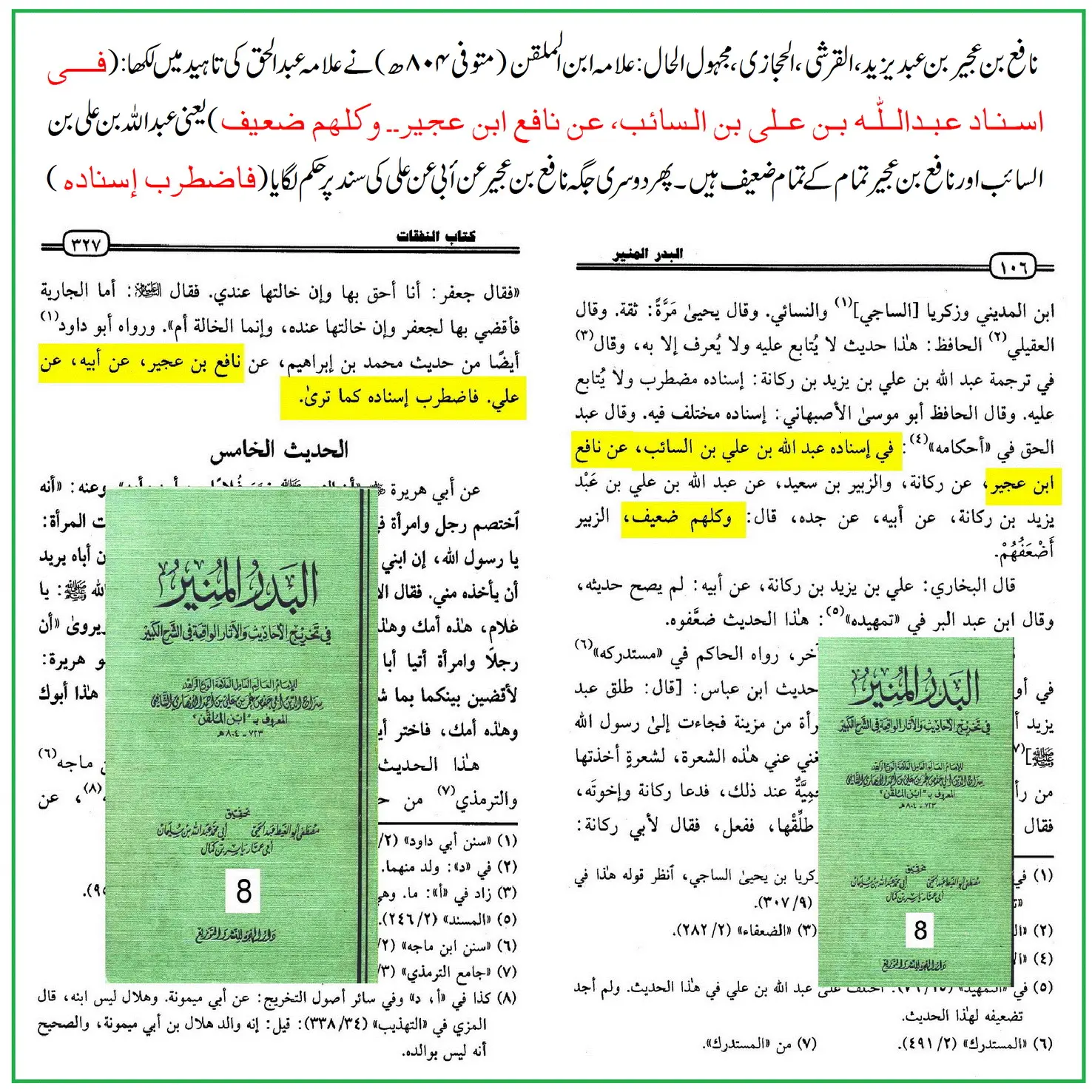
① ʿAbd al-Ḥaqq al-Ishbīlī (d. 582H)
Arabic:
«… وكلهم ضعيف.»Translation:
“All of them (the narrators in this chain) are weak.”
Reference: al-Aḥkām al-Wusṭā
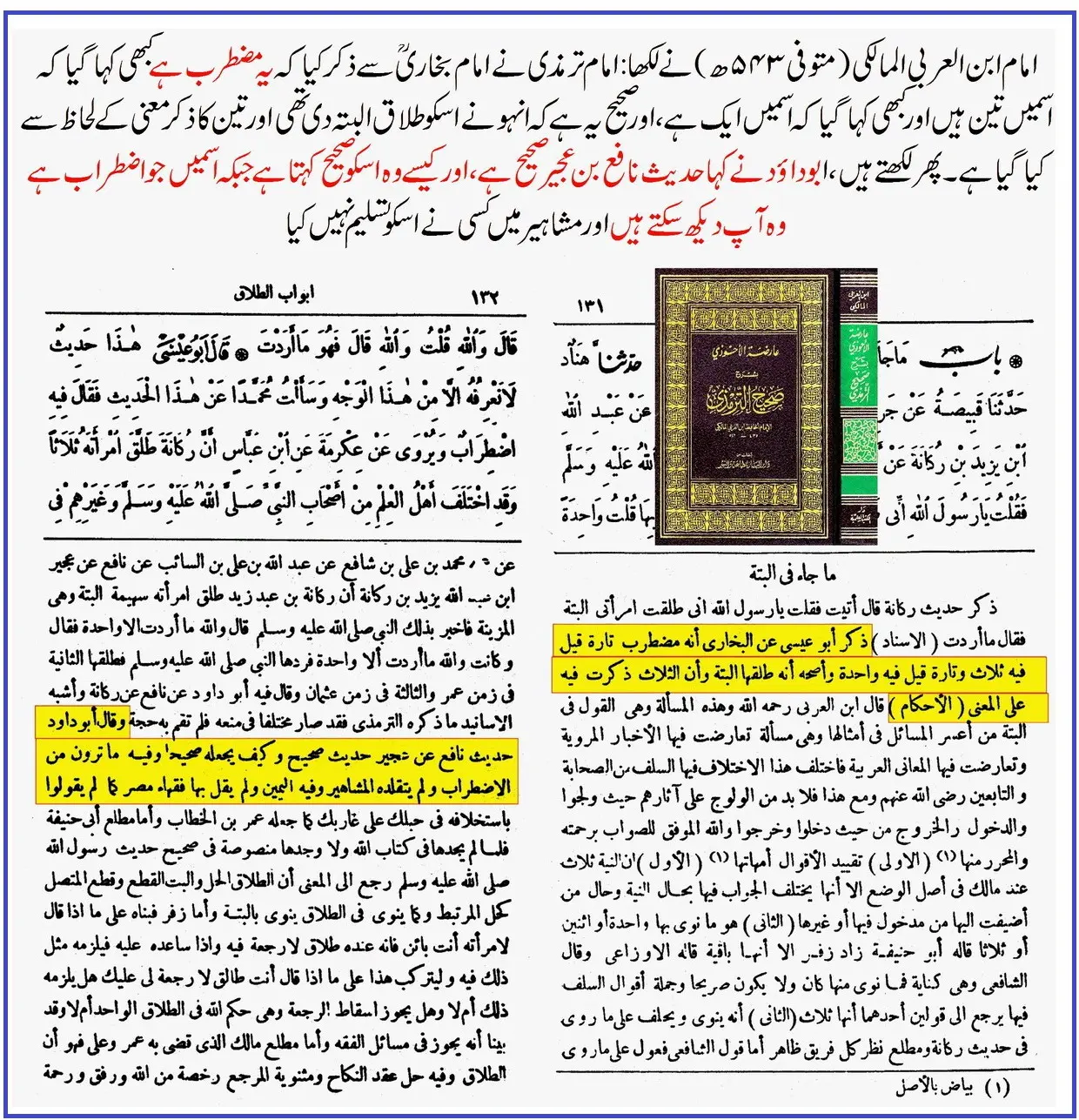
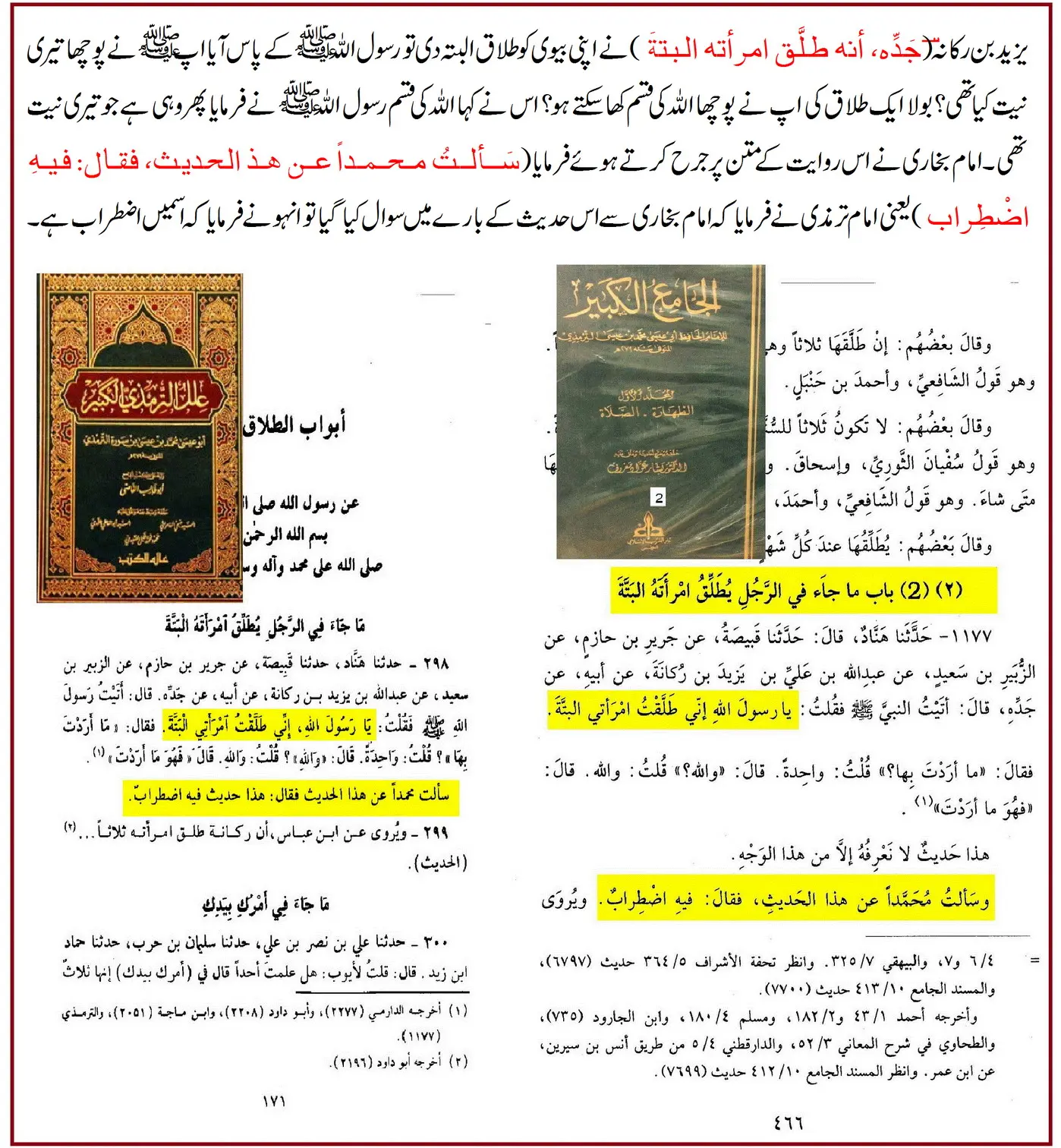
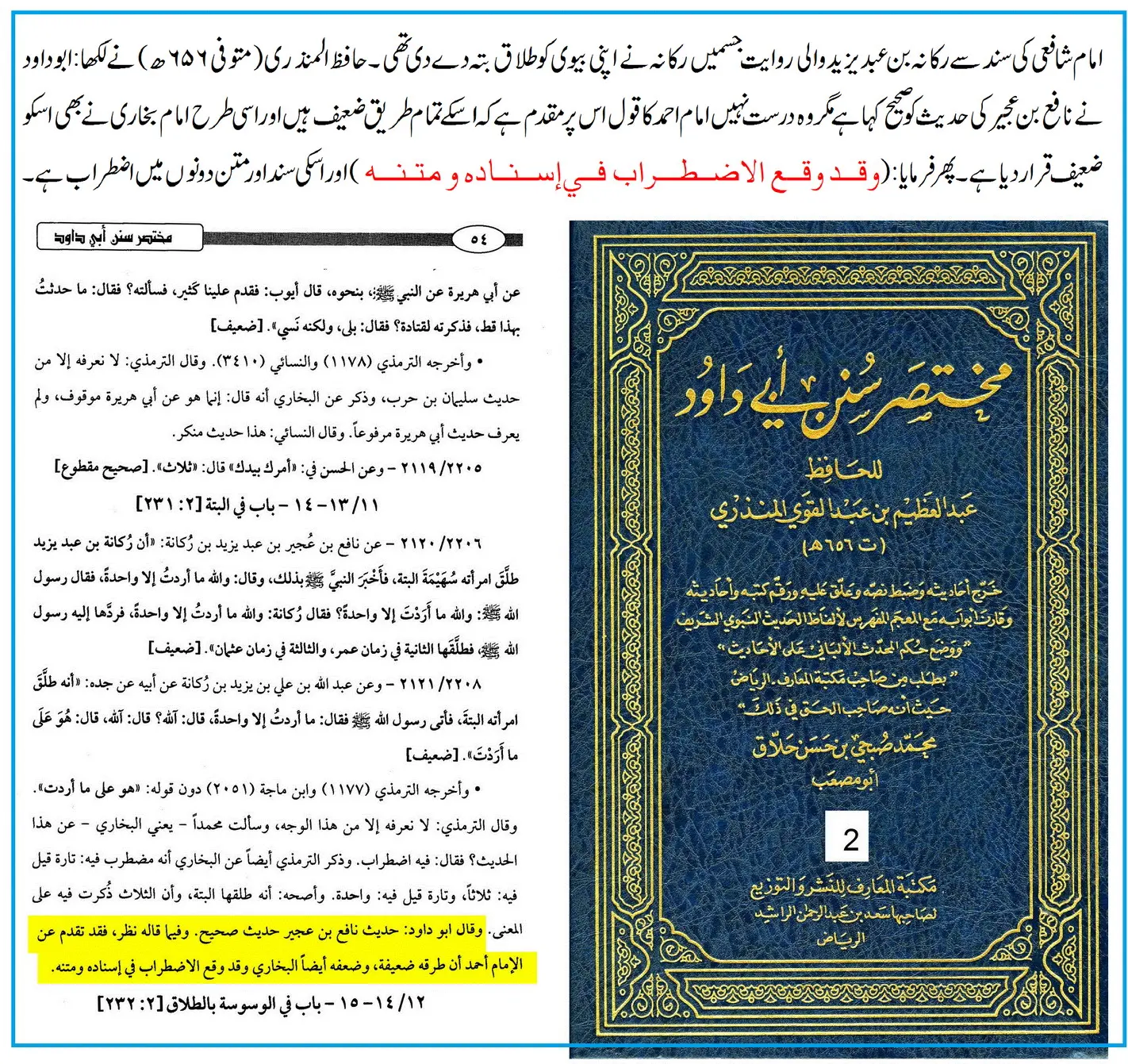
② Imām al-Bukhārī (d. 256H)
Arabic:
«فيه اضطراب.»Translation:
“There is inconsistency (iḍṭirāb) in it.”
Reference: ʿIlal al-Tirmidhī al-Kabīr: 1177
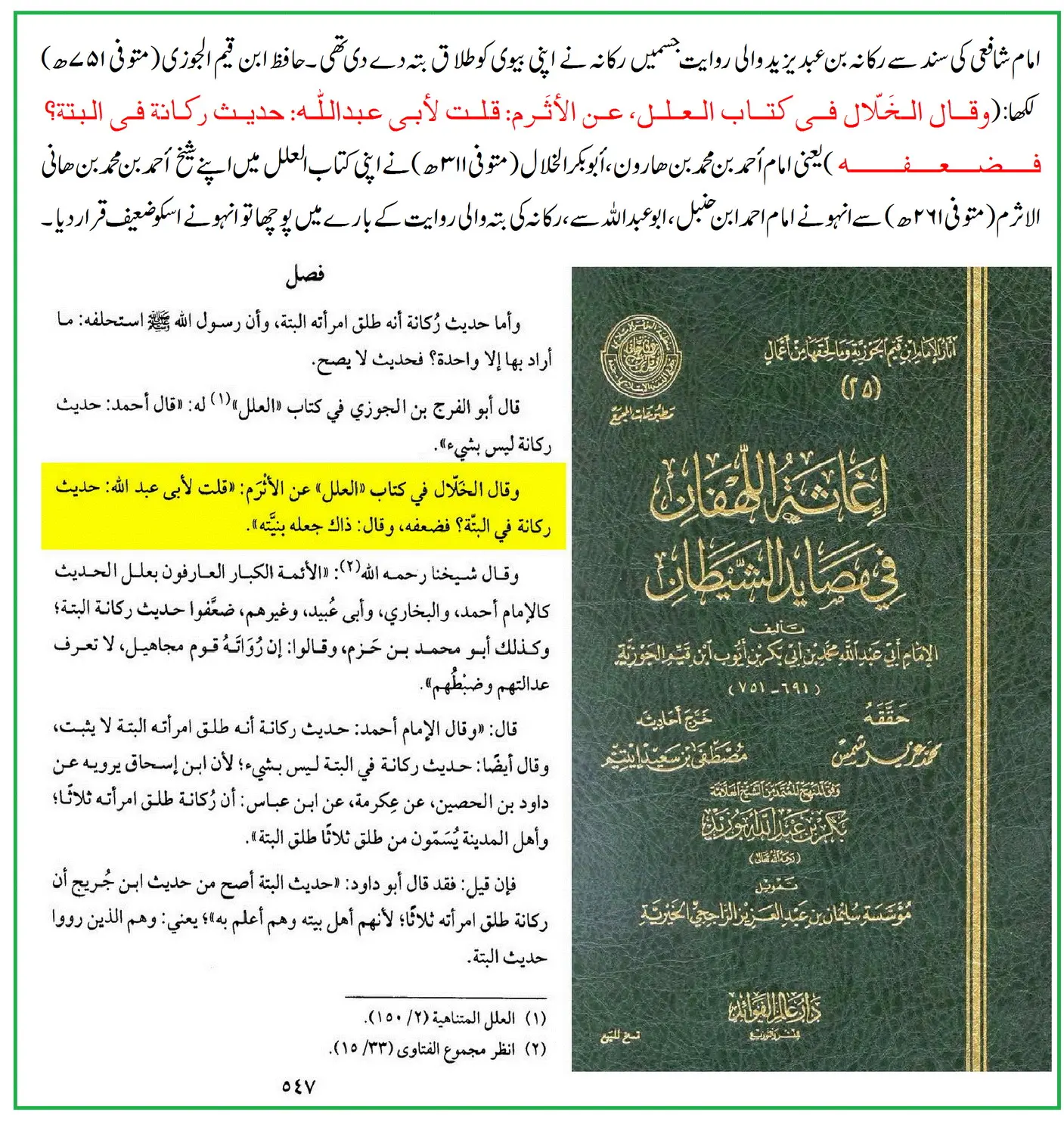
③ Imām Aḥmad ibn Ḥanbal (d. 241H)
Arabic:
«فضعّفه…»Translation:
He declared it weak.
Reference: Kitāb al-ʿIlal by al-Khallāl; Ibn al-Qayyim, Ighāthat al-Lahfān
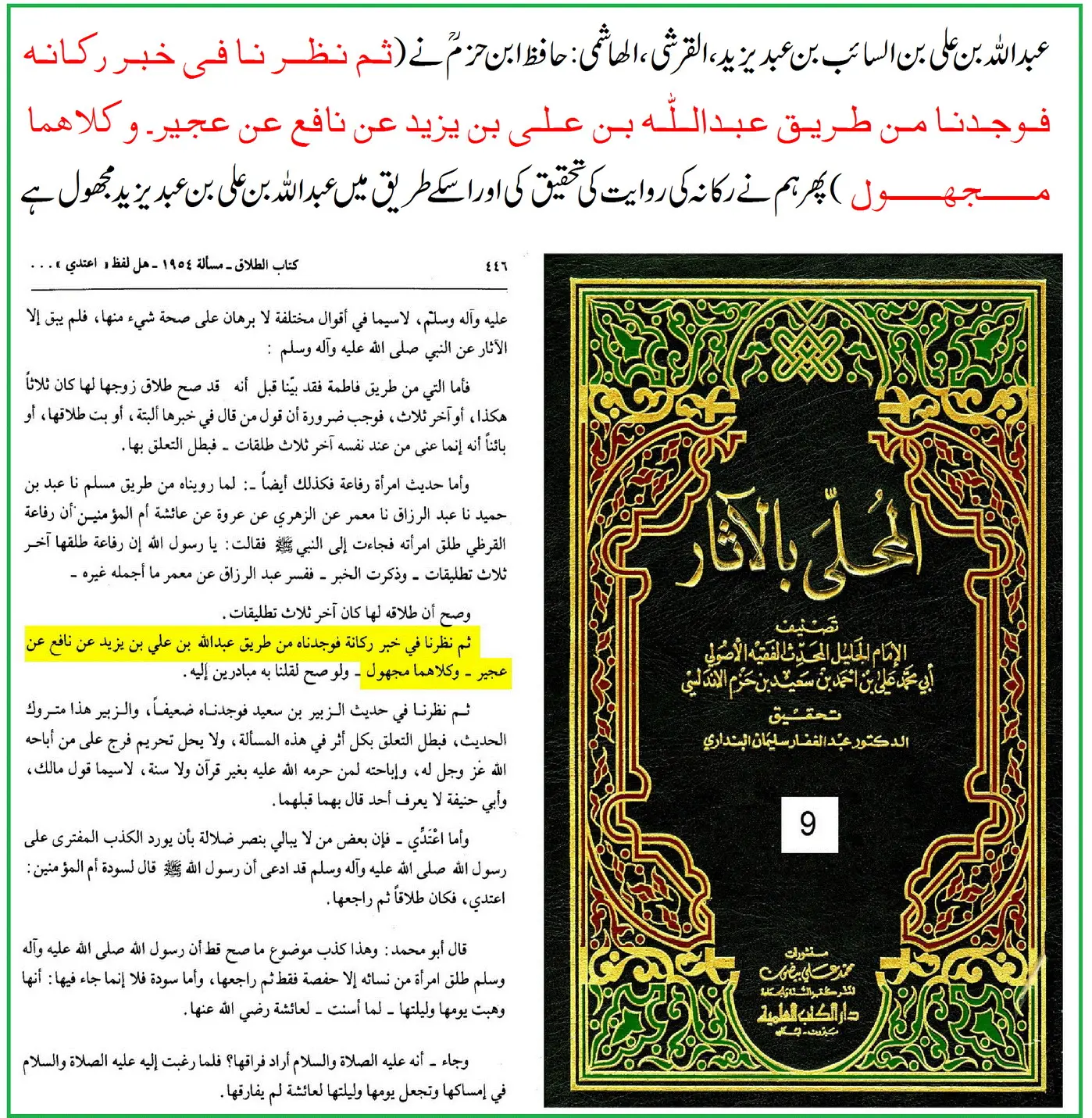
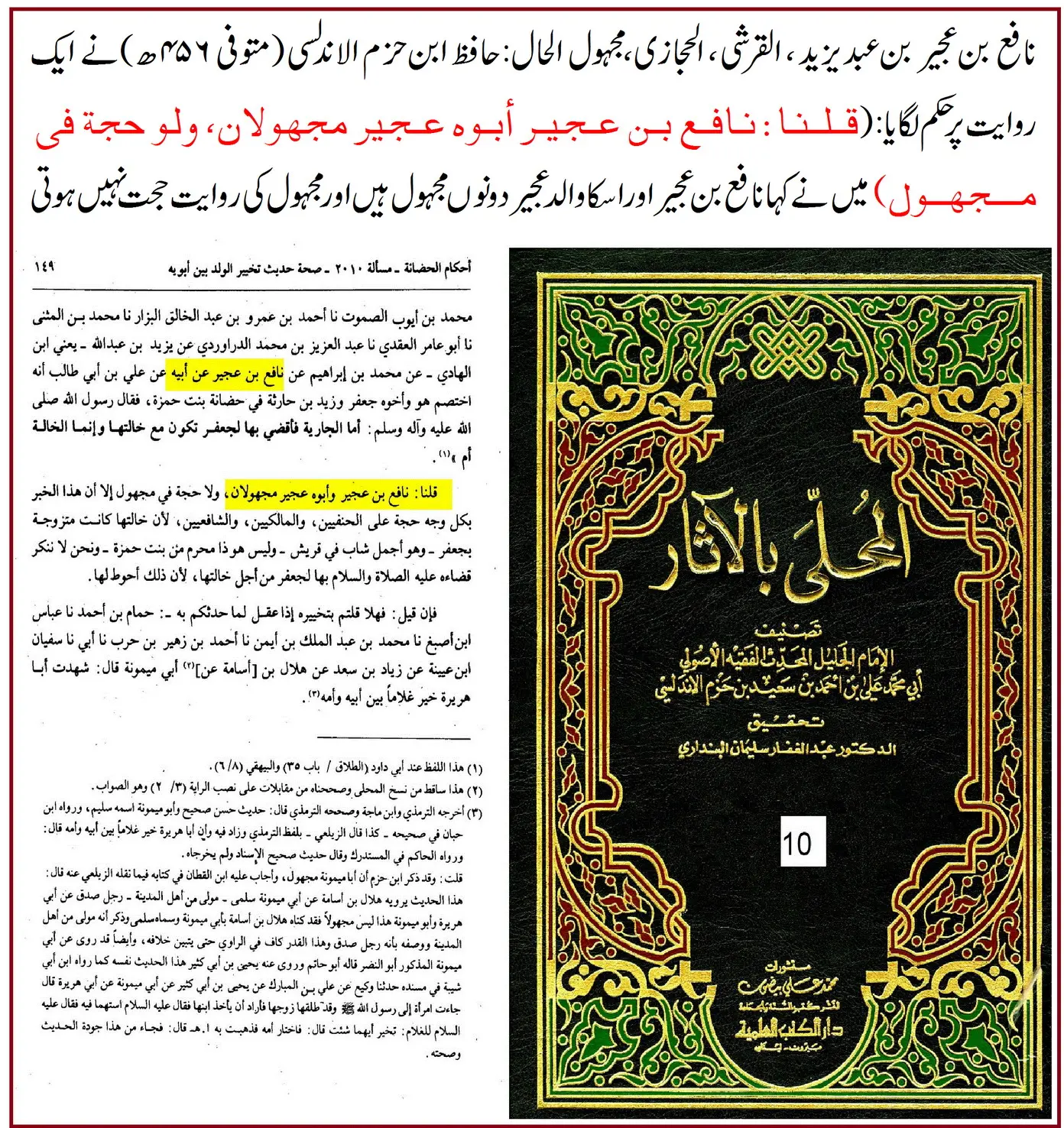
④ Ibn Ḥazm (d. 456H)
Arabic:
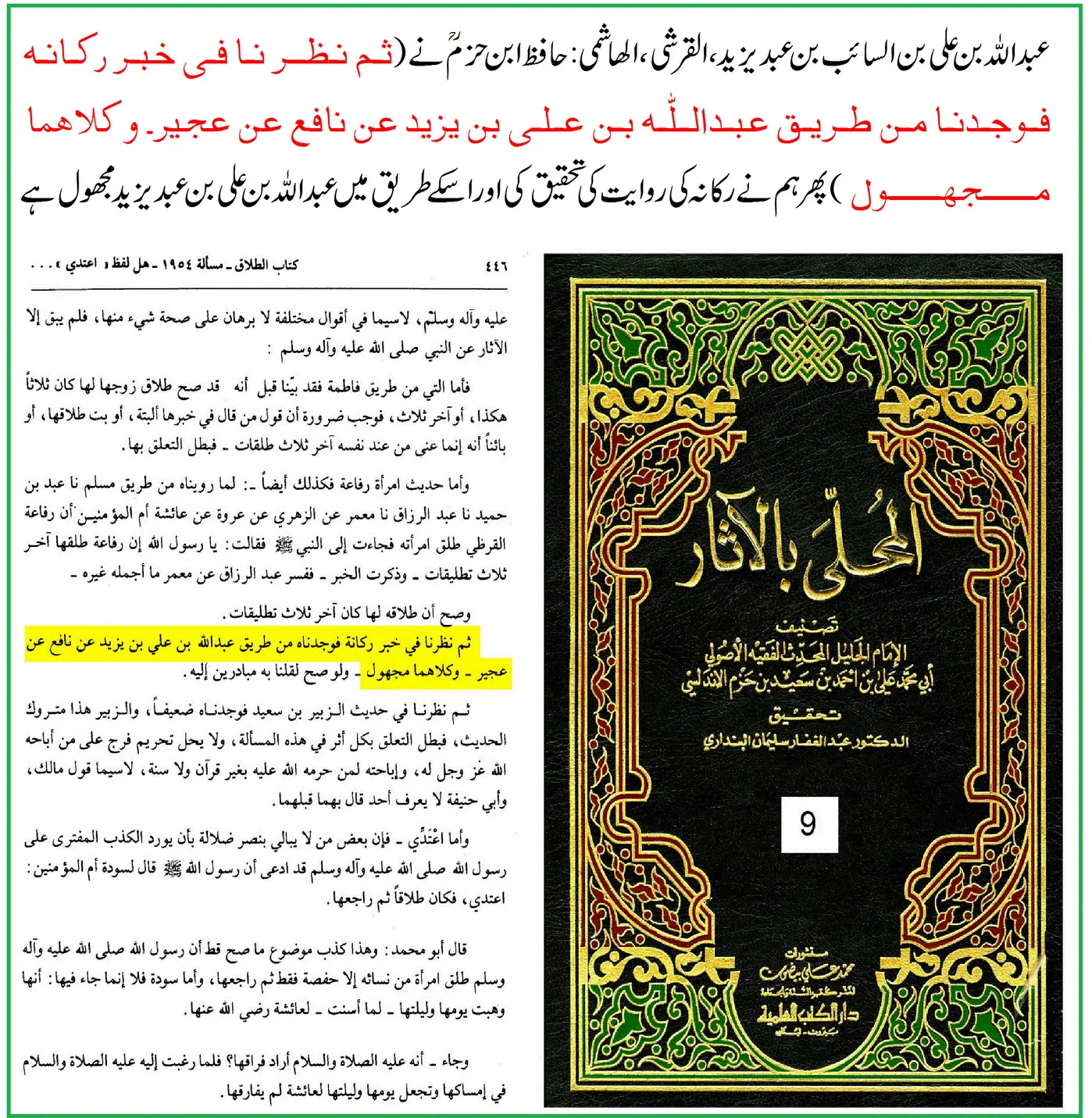
«… وكلاهما مجهول…»Translation:
“Both of them are unknown (majhūl). If it had been authentic, we would have adopted it immediately.”
Reference: al-Muḥallā bil-Āthār
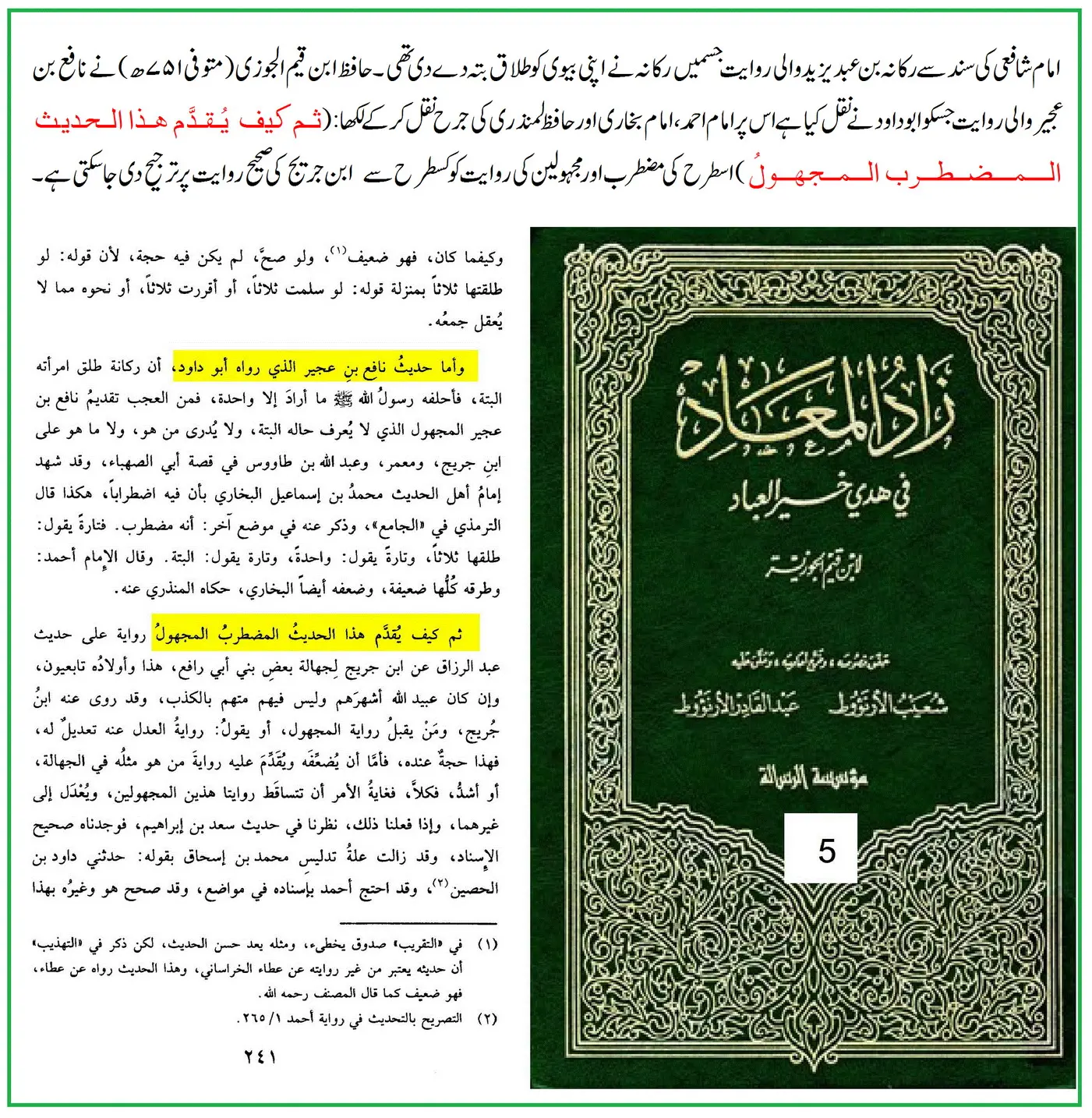
⑤ Ibn al-Qayyim (d. 751H)
Arabic:
«فكيف يقدَّم هذا الحديث المضطرب المجهول روايةً على الأحاديث الصحيحة؟»Translation:
“How can this inconsistent and unknown narration be given precedence over authentic ḥadīths?”
Reference: Zād al-Maʿād
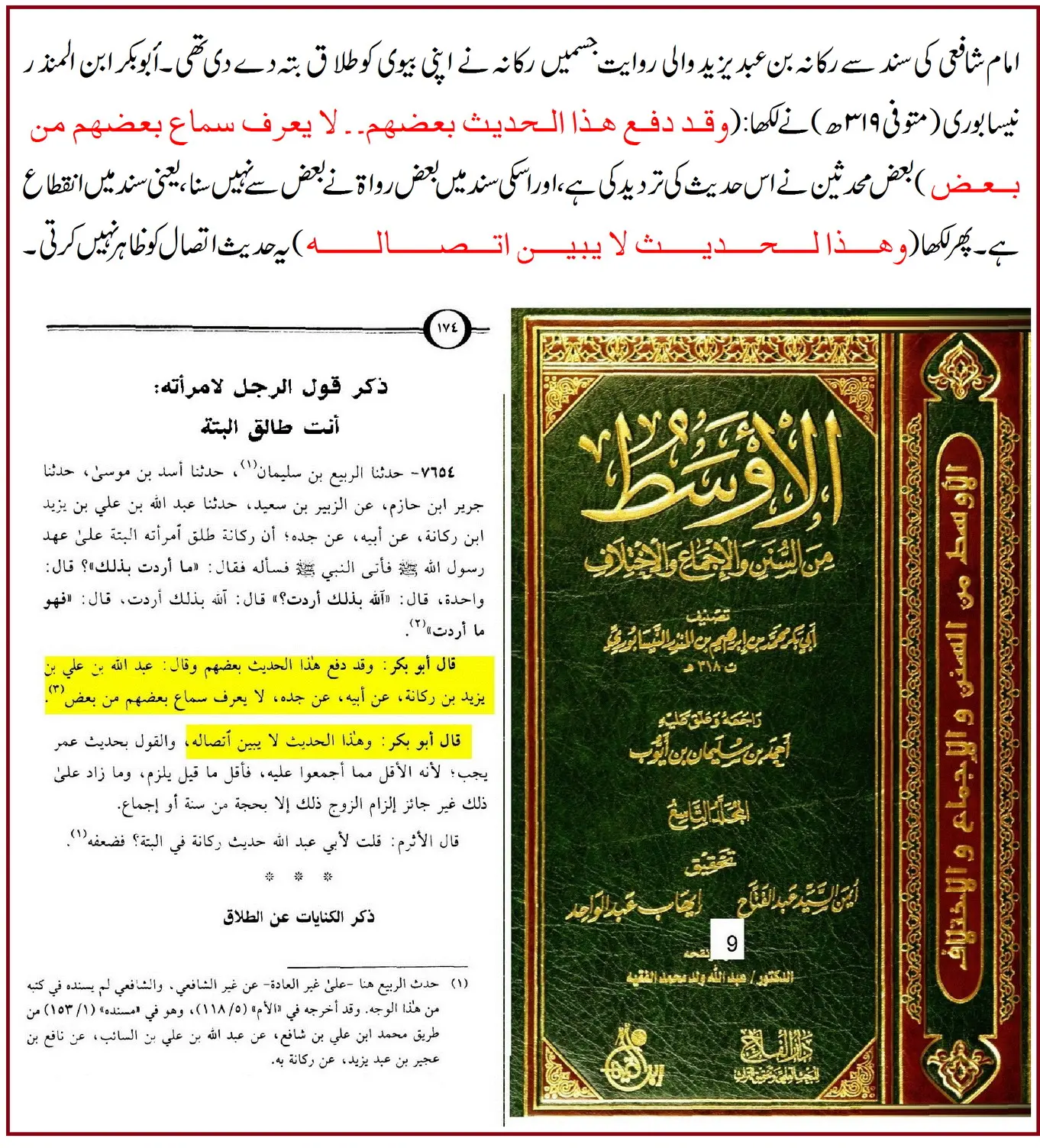
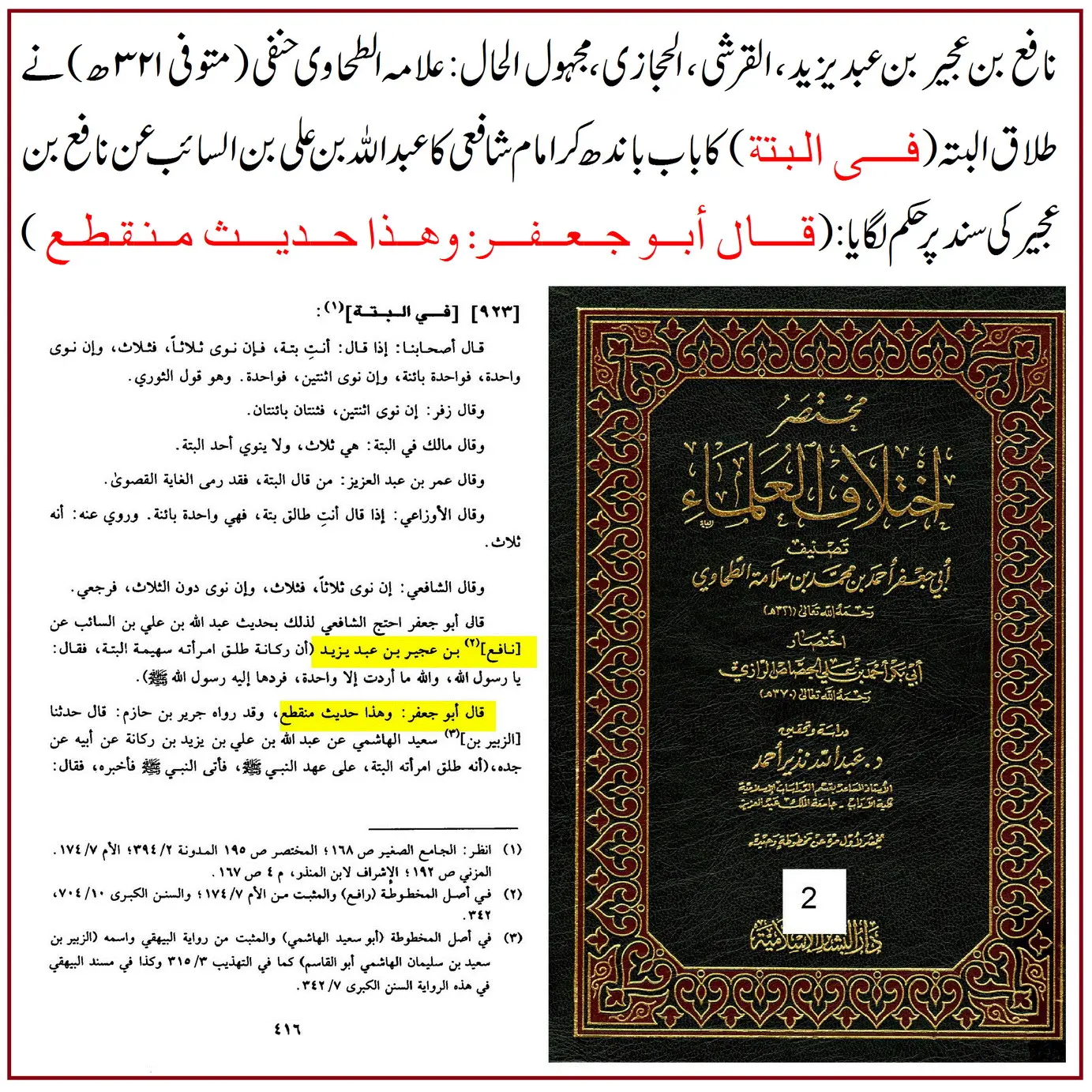
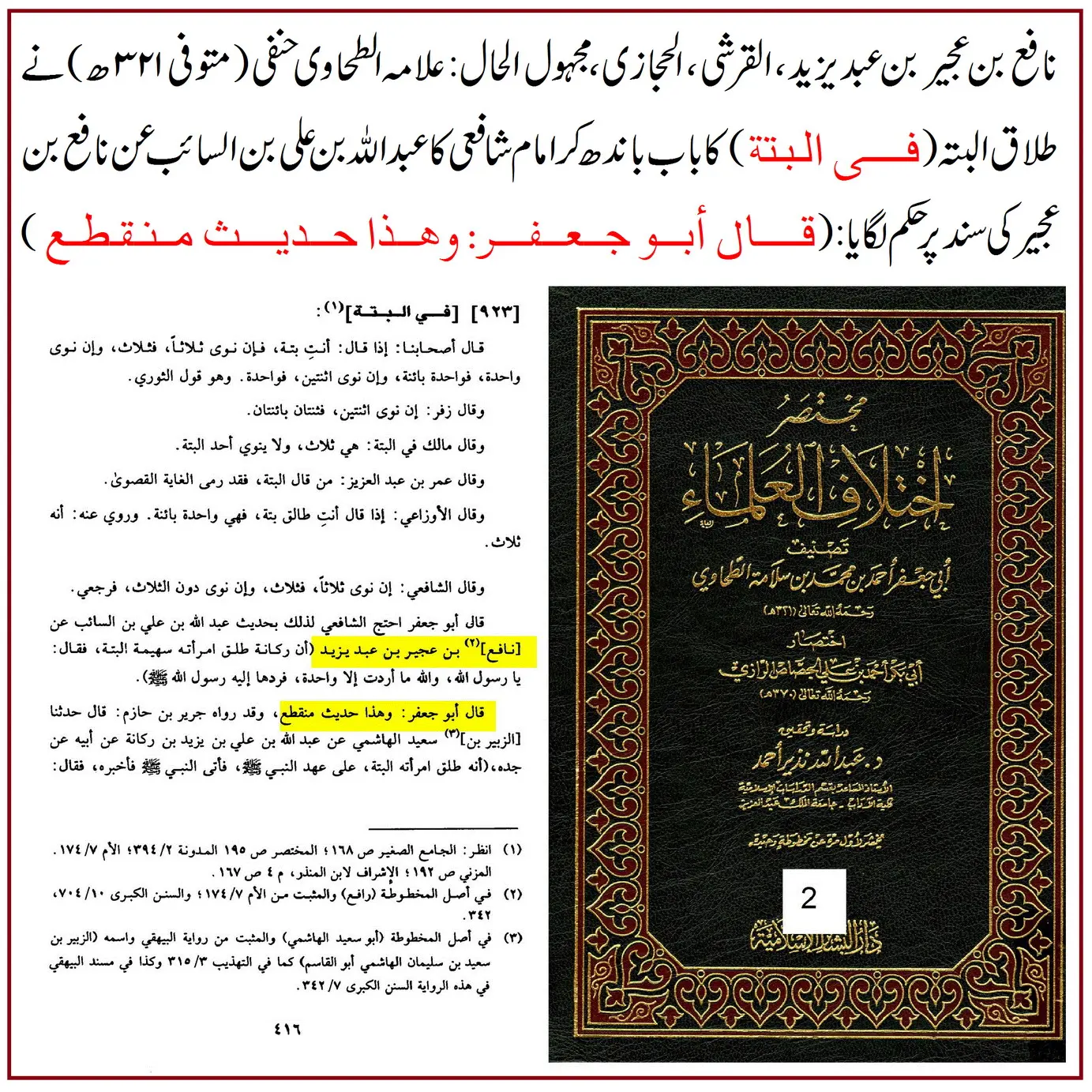
⑥ al-Ṭaḥāwī (d. 321H)
Arabic:
«وهذا حديث منقطع.»Translation:
“This ḥadīth is disconnected.”
Reference: Mukhtaṣar Ikhtilāf al-ʿUlamāʾ
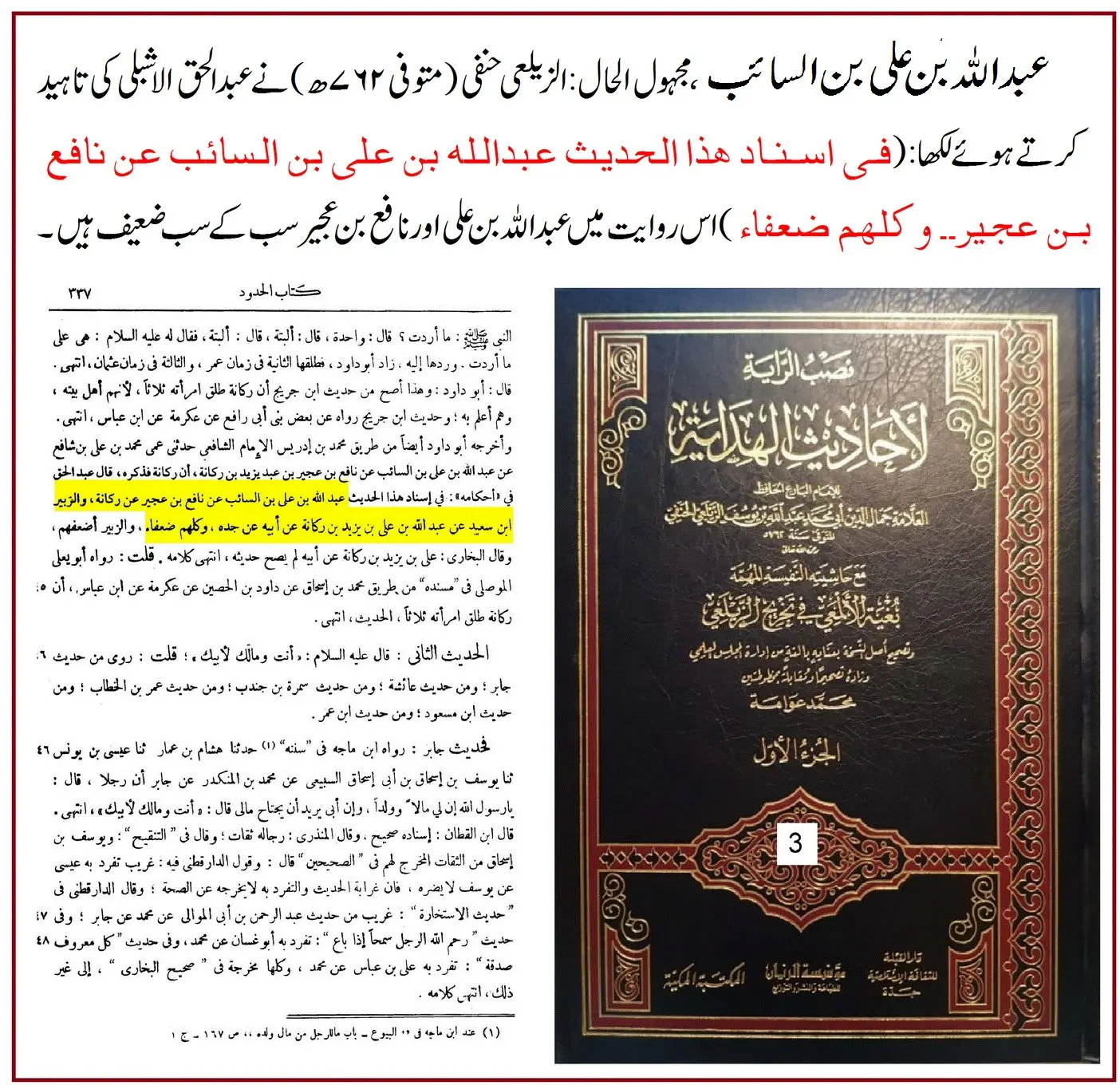
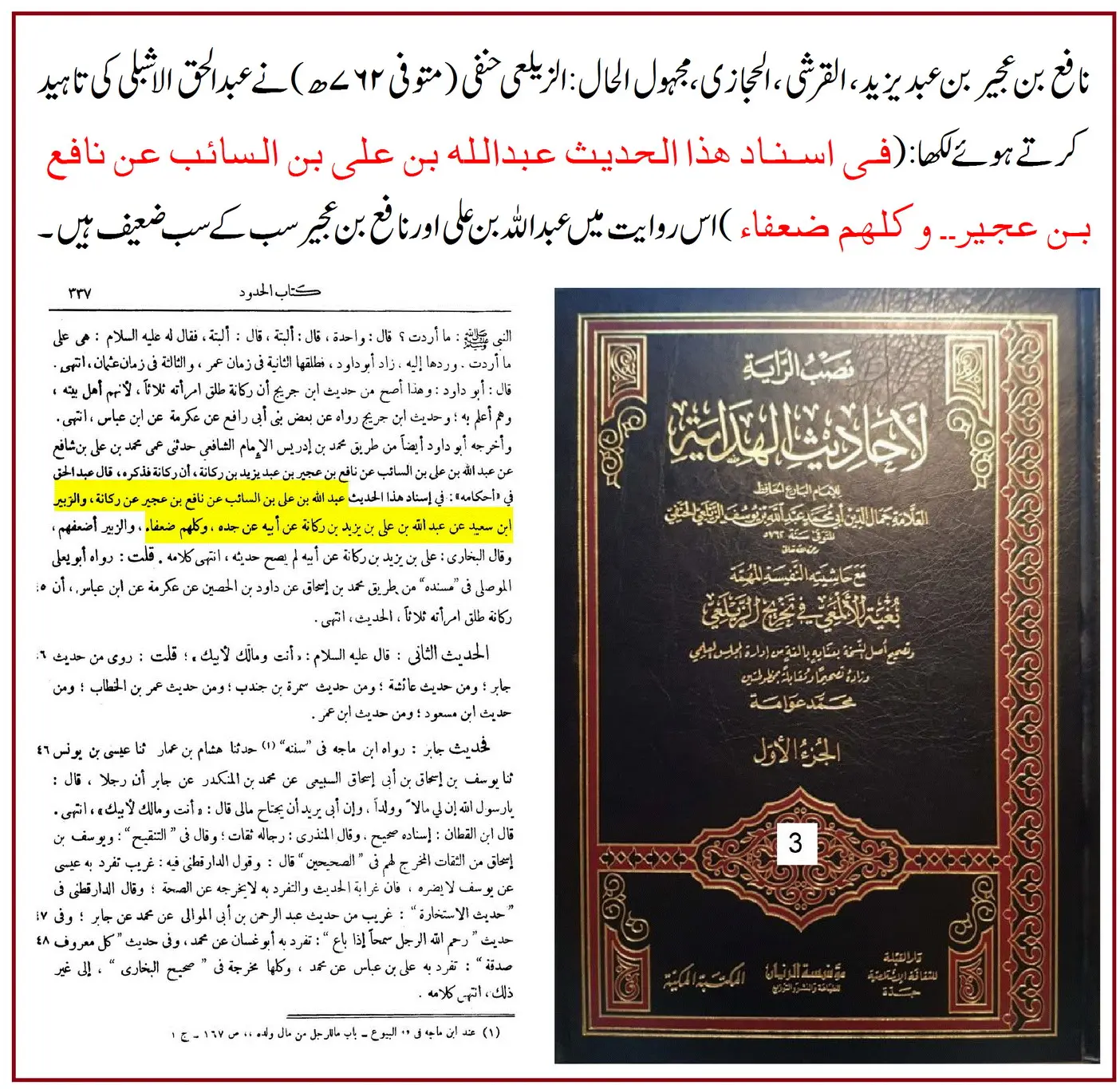
⑦ al-Zaylaʿī (d. 726H)
Arabic:
«… وكلّهم ضعفاء، والزبير أضعفهم.»Translation:
“All of them are weak, and al-Zubayr is the weakest among them.”
Reference: Naṣb al-Rāyah
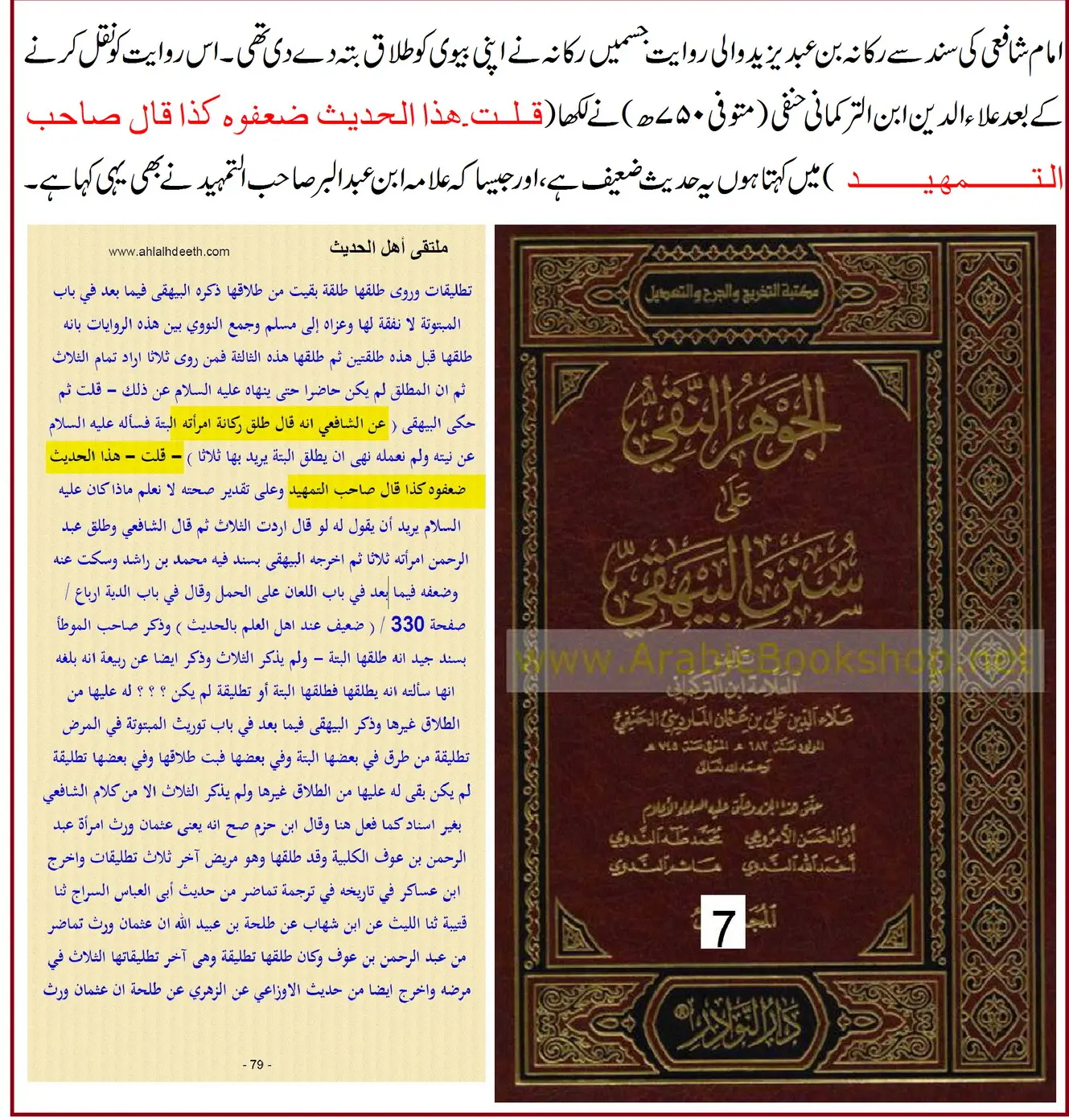
Unknown Narrators in Imām al-Shāfiʿī’s Chain
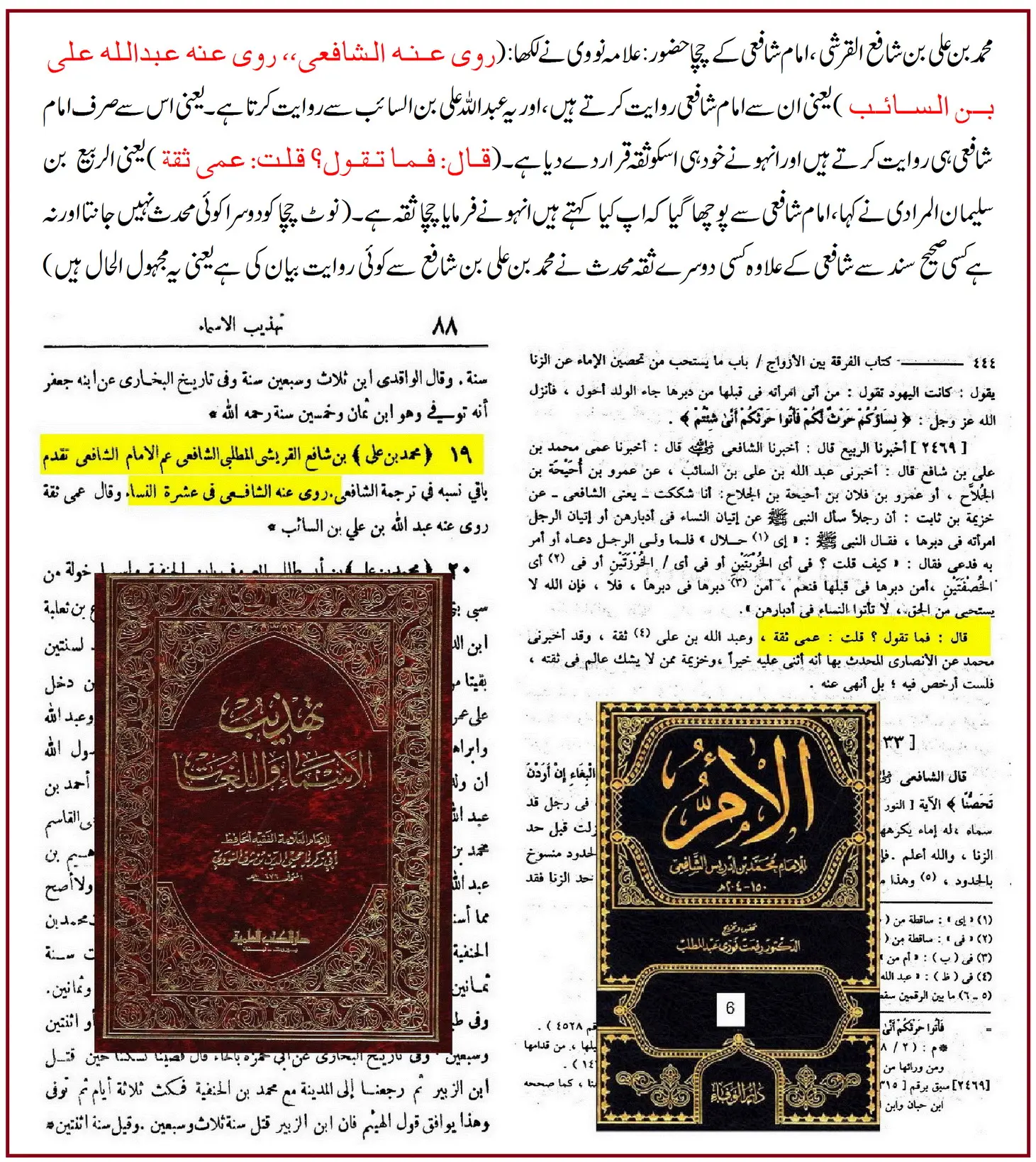
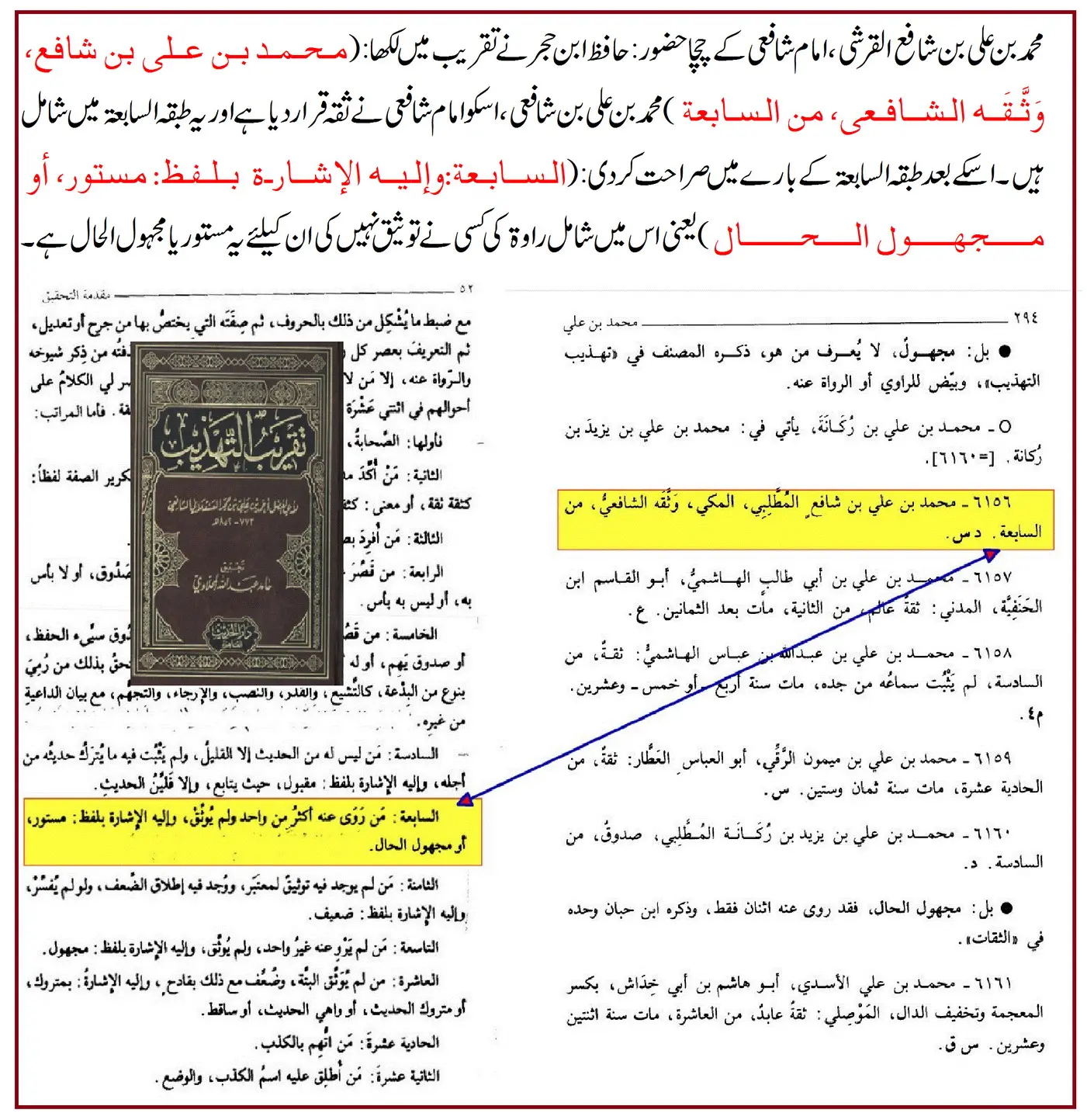
 ① Muḥammad ibn ʿAlī ibn Shāfiʿ (Uncle of al-Shāfiʿī)
Status: Majhūl (Unknown)Ibn Ḥajar classified him as mastūr (unknown condition).
Al-Dhahabī said: “He is not known.”
Reference: Taqrīb al-Tahdhīb
Reference: Mīzān al-Iʿtidāl
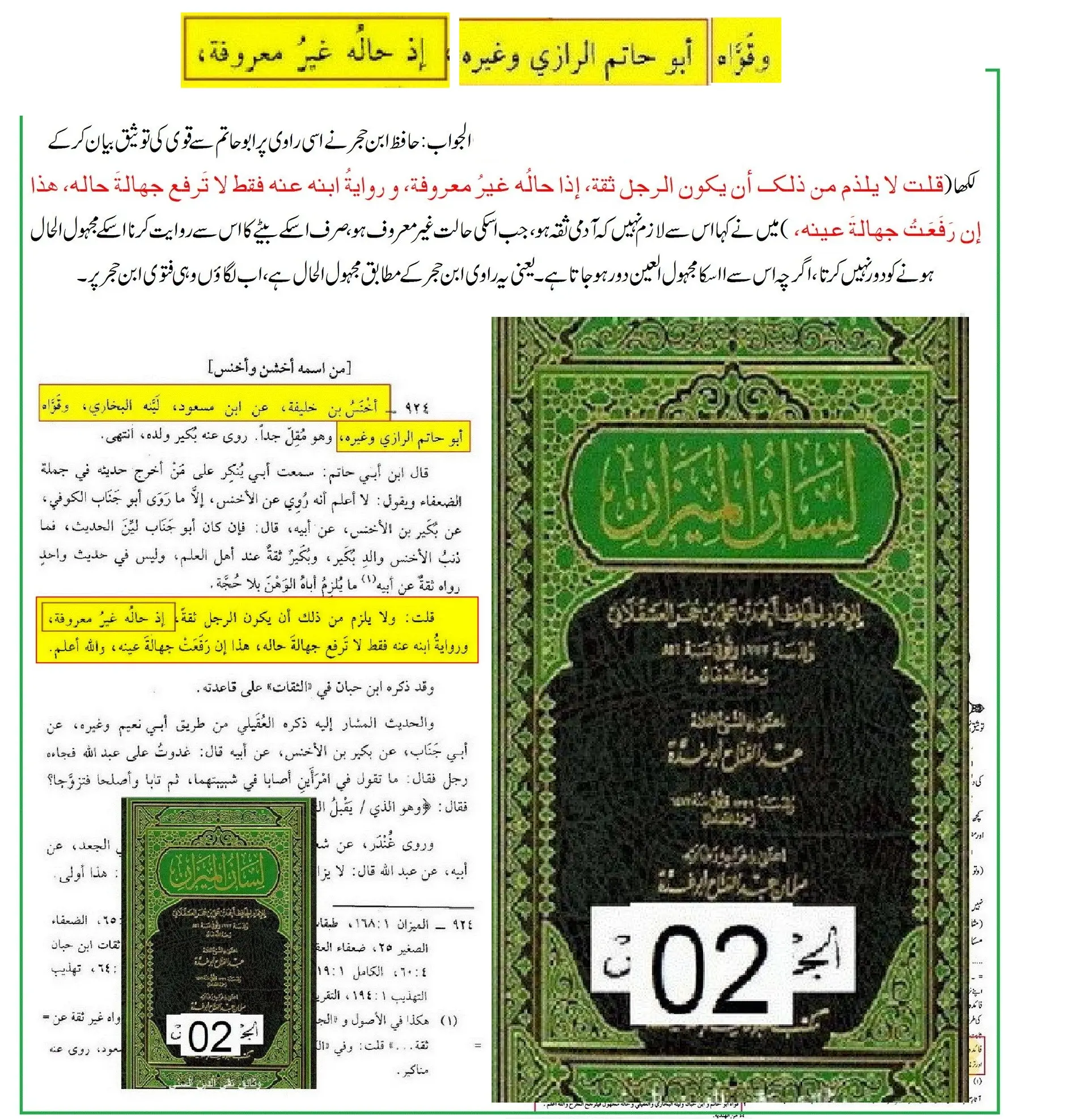
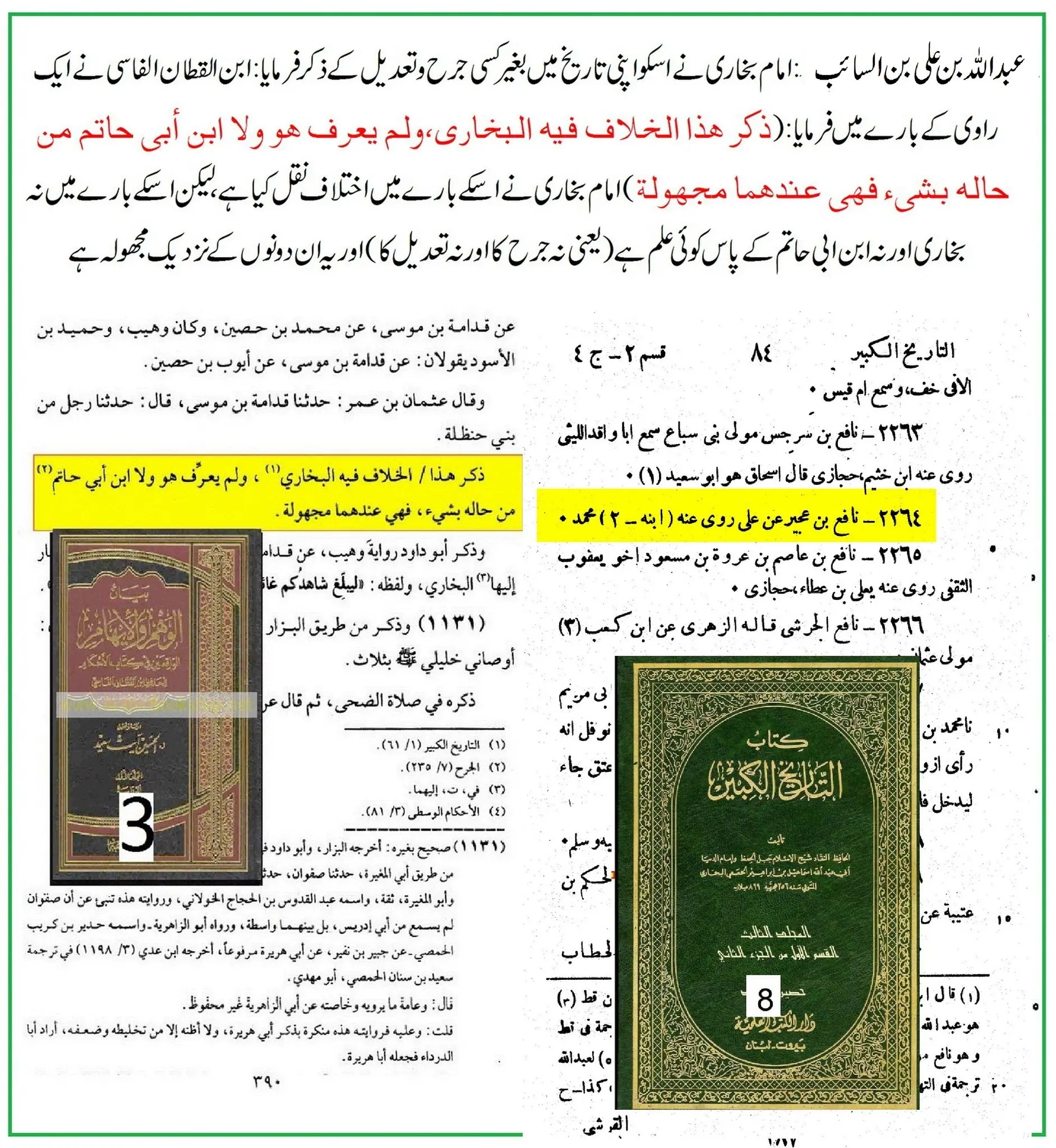
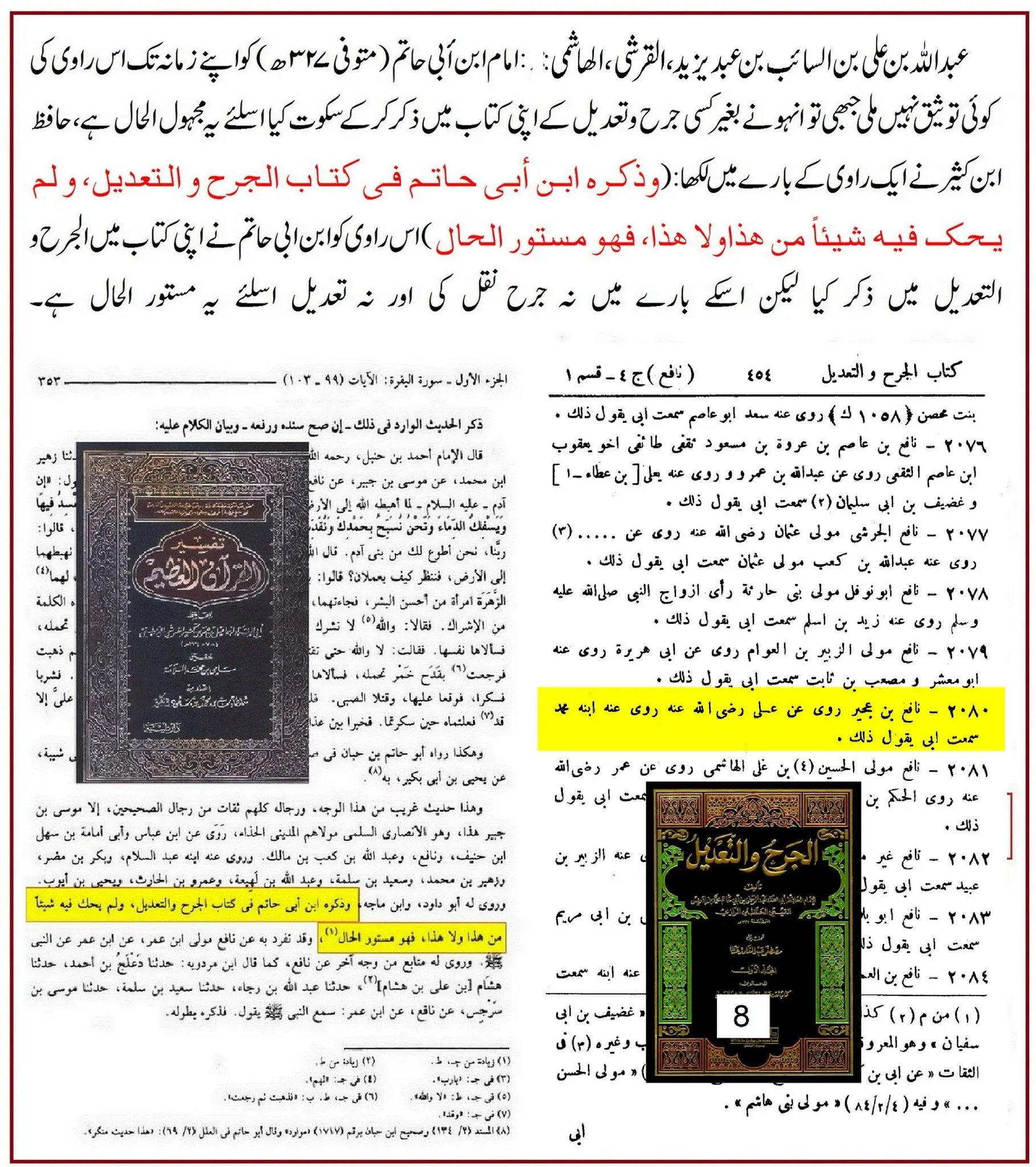
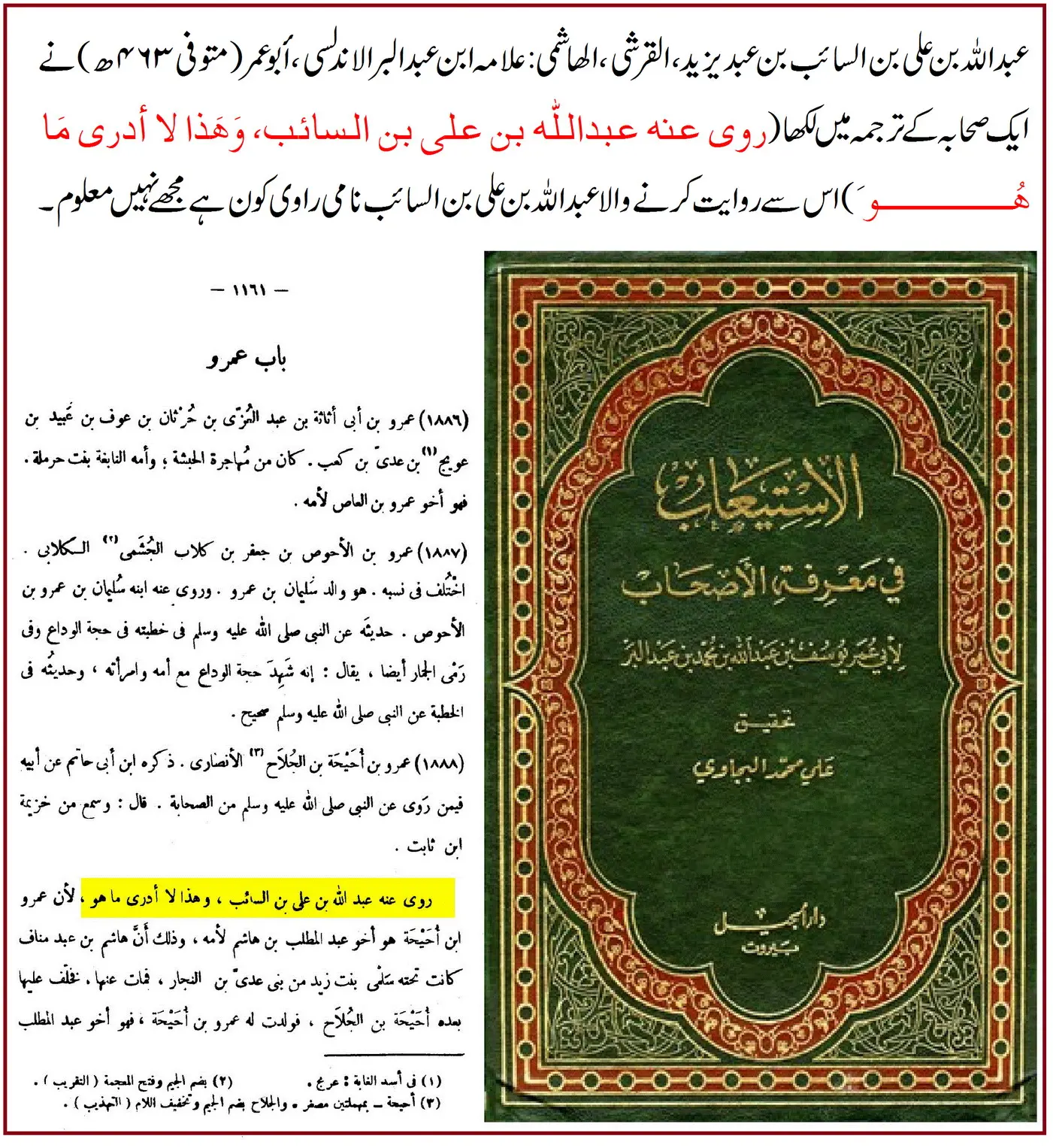
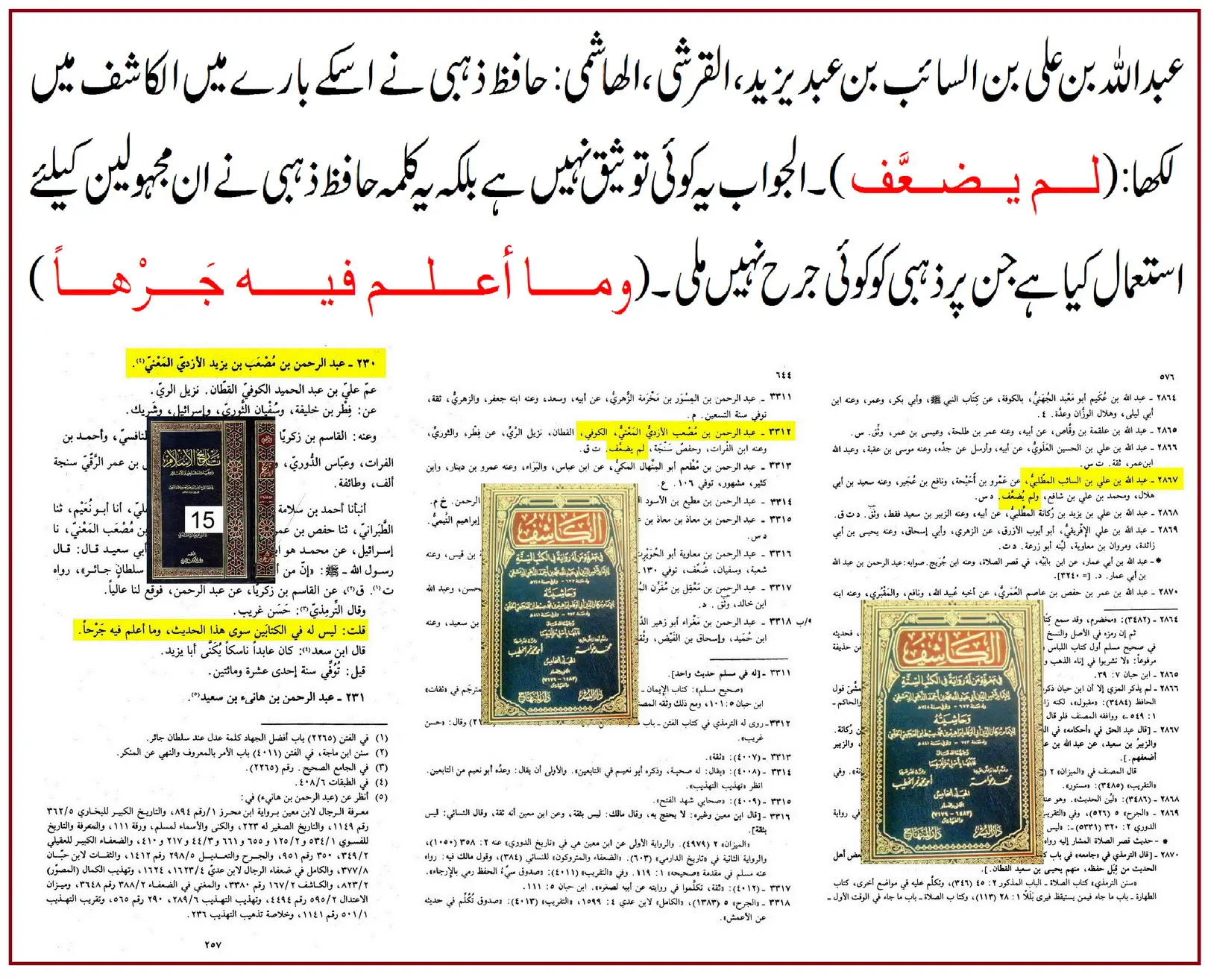
② ʿAbdullāh ibn ʿAlī ibn al-Sāʾib
Declared weak or unknown by multiple scholars.
Reference: al-Aḥkām al-Wusṭā
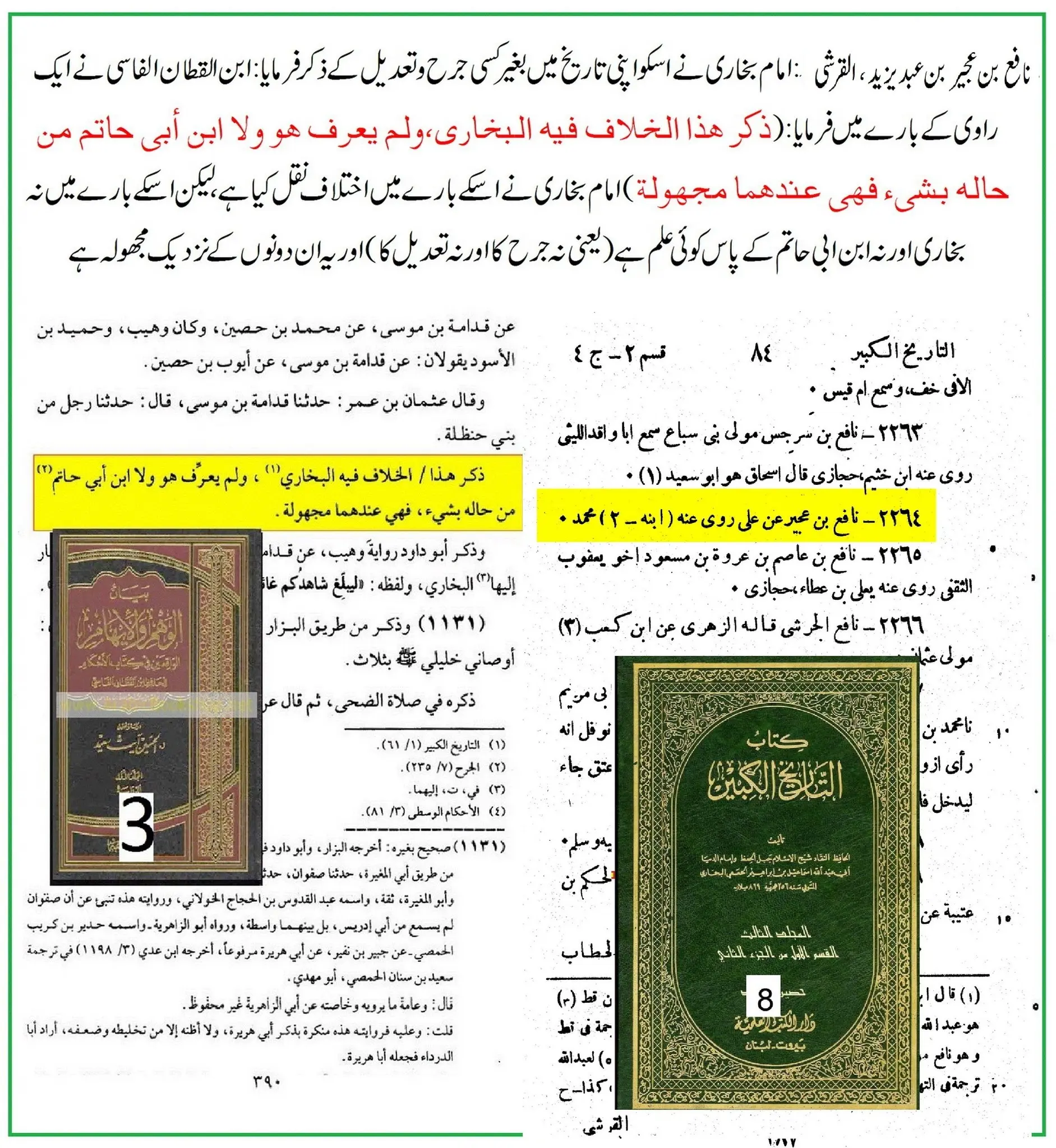
Reference: al-Jarḥ wa al-Taʿdīl
③ Nāfiʿ ibn ʿUjayr
Declared unknown.Ibn al-Qayyim stated:
«… المجهول الذي لا يُعرف حاله البتّة…»
“He is unknown; his condition is not known at all.”
Reference: Zād al-Maʿād
Summary of the Research
From the Perspective of Chain (Isnād):
① The chain contains three major unknown narrators.② Other routes are also severely weak and inconsistent.
③ The narration suffers from disconnection and contradiction.
From the Perspective of Text (Matn):
① Severe inconsistency: sometimes mentioning three divorces, sometimes one, sometimes “al-battah.”② The majority of ḥadīth scholars declared it weak.
③ Some even labeled it fabricated.
Opinions of the Scholars
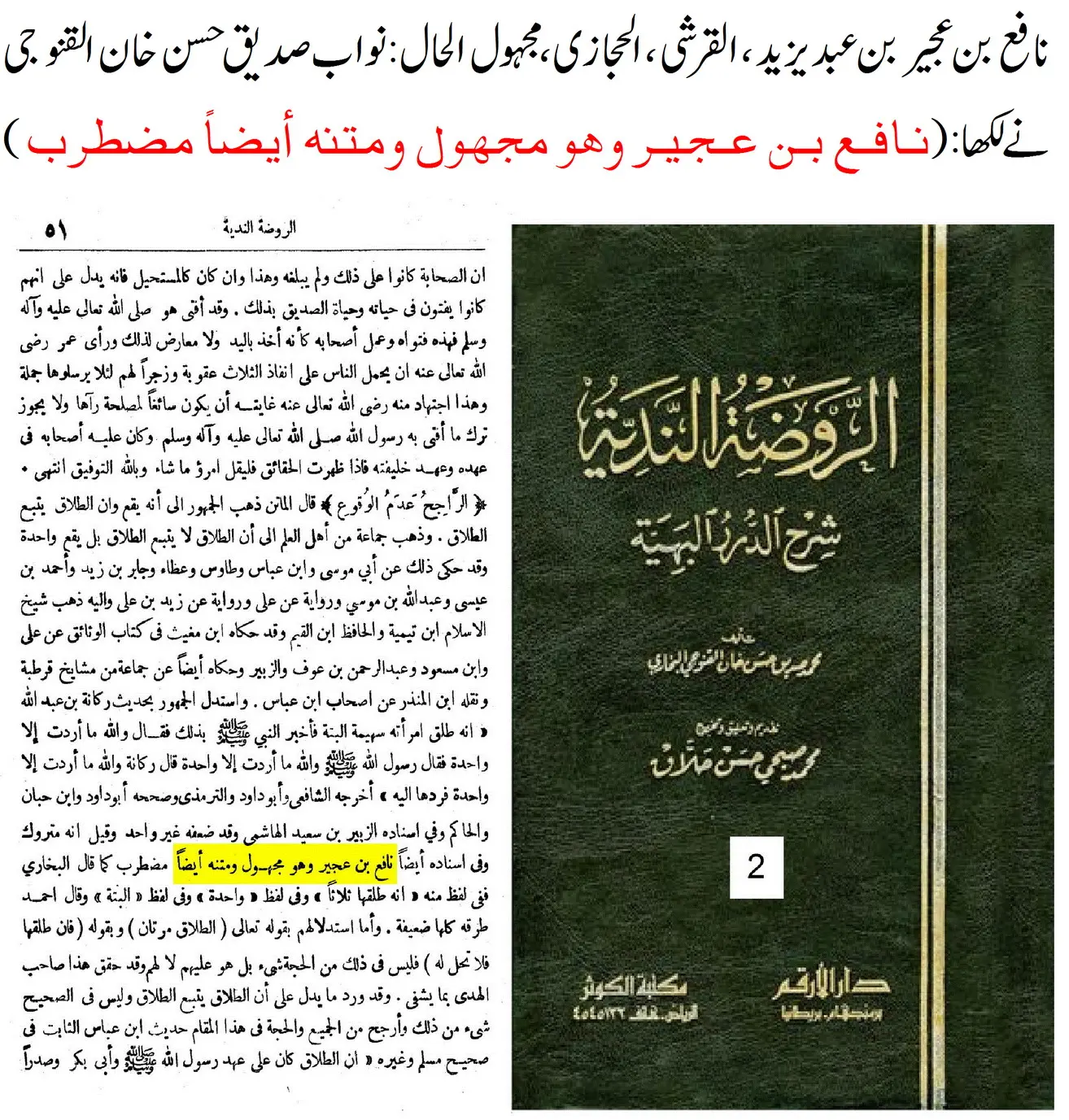
Imām Aḥmad, Imām al-Bukhārī, al-Dāraquṭnī, al-Bayhaqī, ʿAbd al-Ḥaqq al-Ishbīlī, Ibn al-ʿArabī, Ibn al-Qayyim, al-Ṭaḥāwī, al-Zaylaʿī, Ibn al-Turkumanī, al-Mundhirī, Ibn Ḥazm, Nawwāb Ṣiddīq Ḥasan Khān, and others — all criticized the narration and spoke about the weakness and unknown status of its narrators. Final Conclusion
The narration of Rukānah regarding Ṭalāq al-Battah is:◈ Severely weak
◈ Inconsistent
◈ Reported through unknown narrators
Deriving the principle that “three divorces will count as one based on intention” from this narration is incorrect.
It cannot, under any circumstance, be given precedence over authentic narrations — such as the sound report in Musnad Aḥmad through Ibn ʿAbbās رضي الله عنهما stating that Rukānah divorced his wife thrice and separation was enforced.
From a juristic standpoint, the issue of Ṭalāq al-Battah must be based upon clear and authentic narrations, not upon weak and inconsistent reports.
Therefore, the narration transmitted through the chain of Imām al-Shāfiʿī is not suitable as proof (ḥujjah).

