
Compiled by: Abu Hamzah Salafi
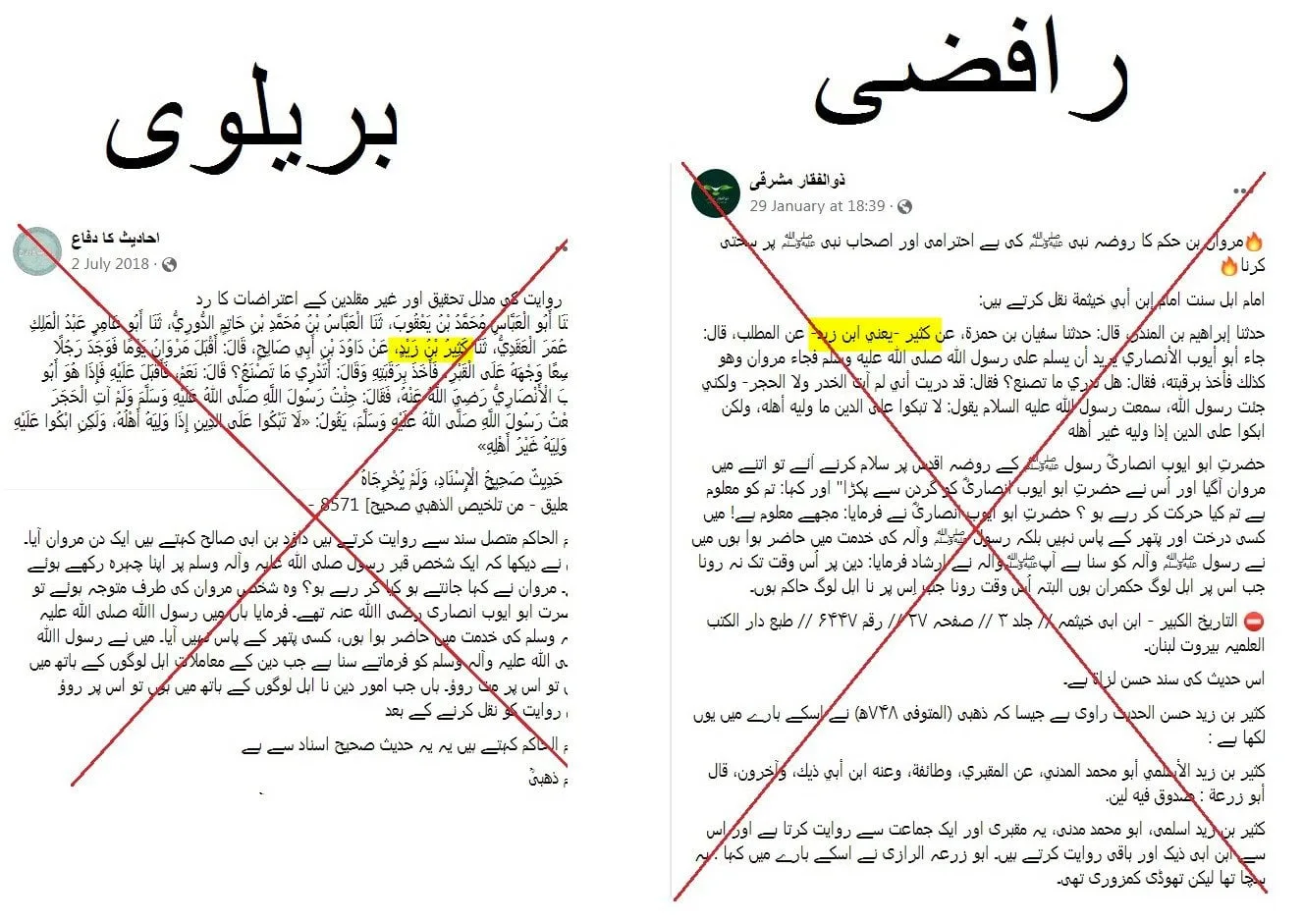
This article presents a critical investigation of the claim that Sayyidunā Abū Ayyūb al-Anṣārī رضي الله عنه was allegedly (God forbid) seen placing his face/forehead on the grave of the Prophet ﷺ, and that Marwān bin al-Ḥakam seized him by the neck and lifted him up.
Our objective is to clarify that the narrations forming the basis of this story are neither strong in chain (sanadan) nor in implication (dalālatan):
① The narration presented as the “original” source does not even mention placing the face/forehead on the grave.
② In its chain, Kathīr bin Zayd is considered weak / possessing leniency by the majority.
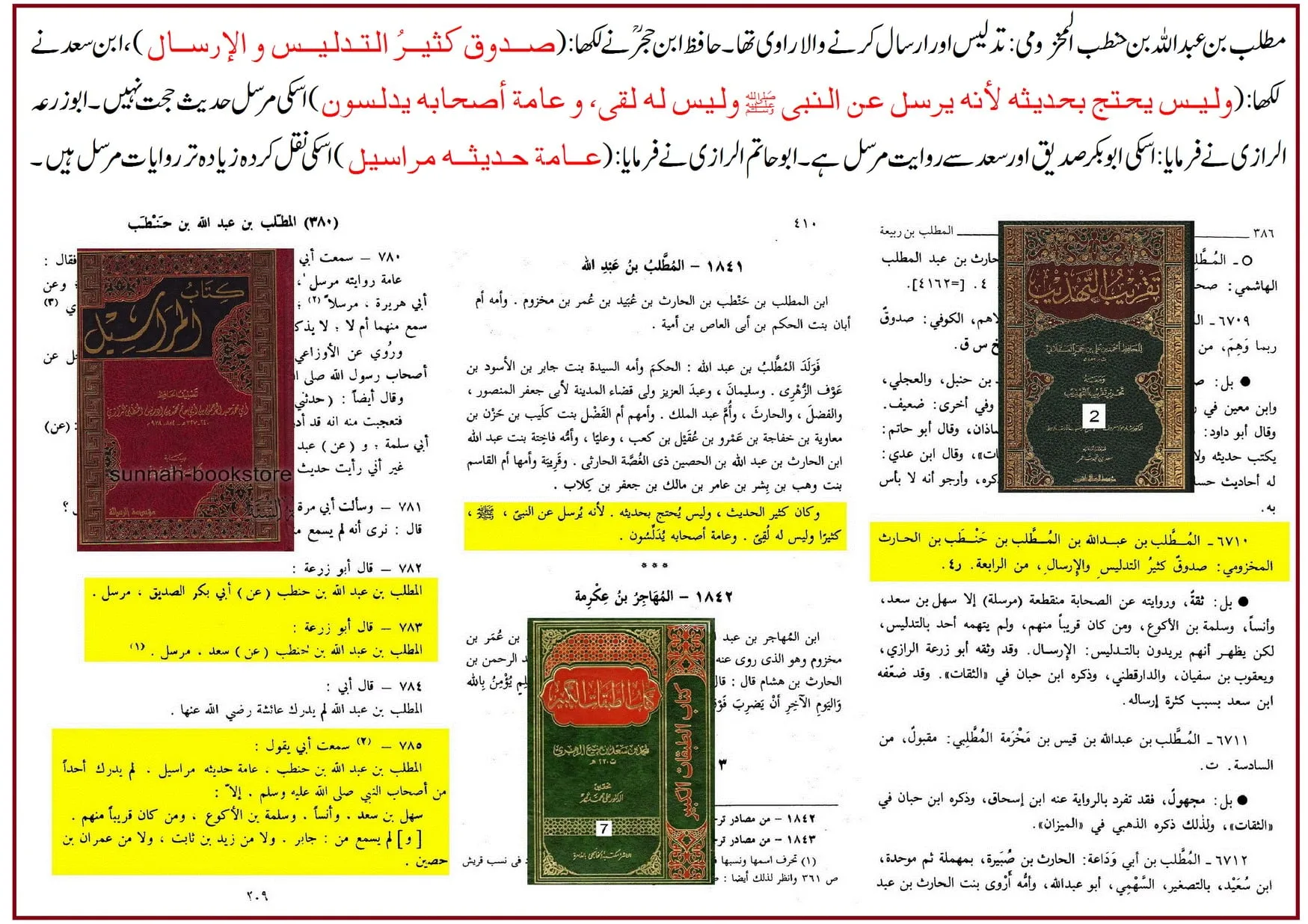
③ Regarding his shaykh al-Muṭṭalib bin ʿAbdullāh, there is discussion about frequent irsāl (missing links) / tadlīs, and without establishing his direct connection to a Companion, deriving proof from him remains problematic.
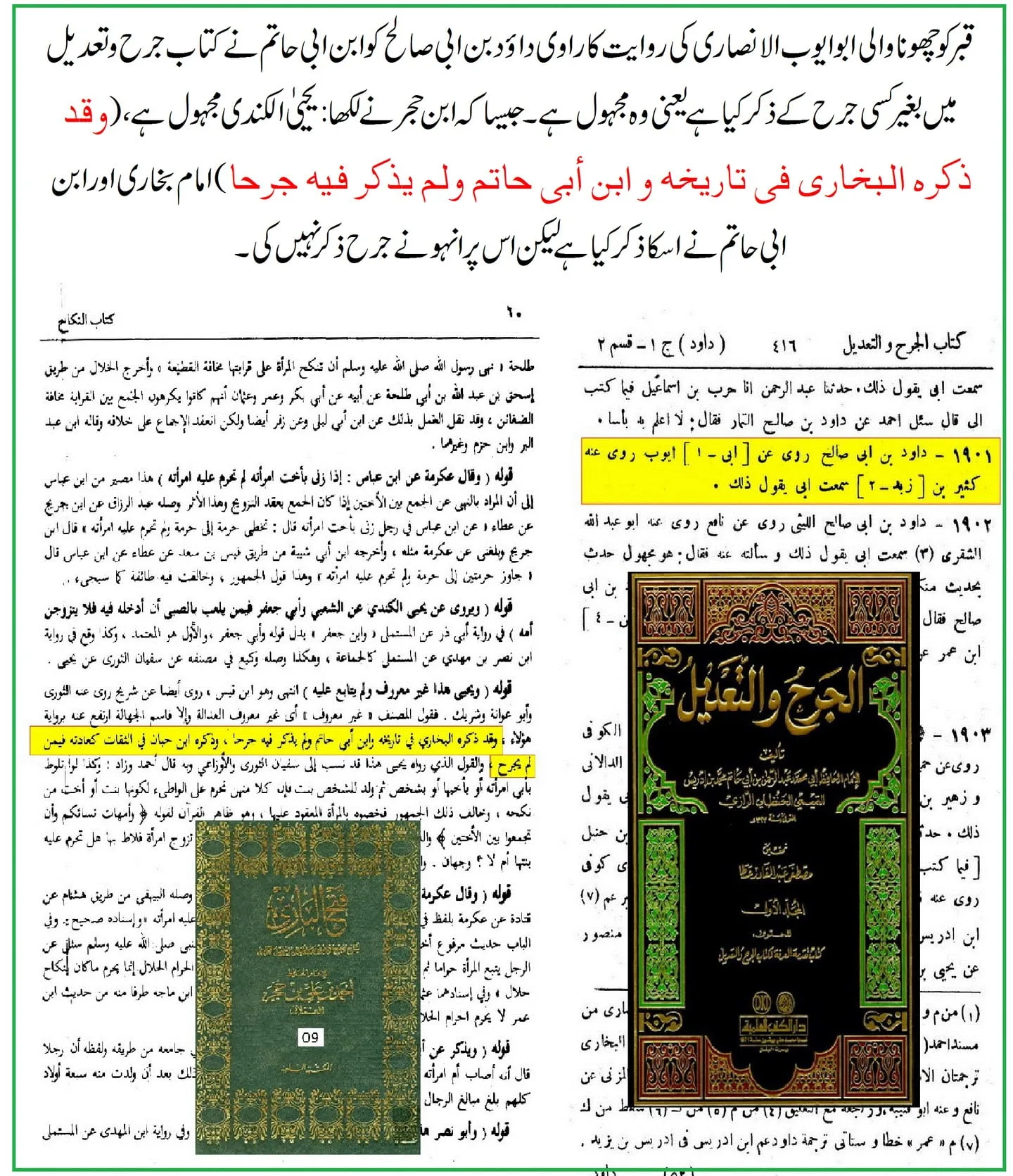
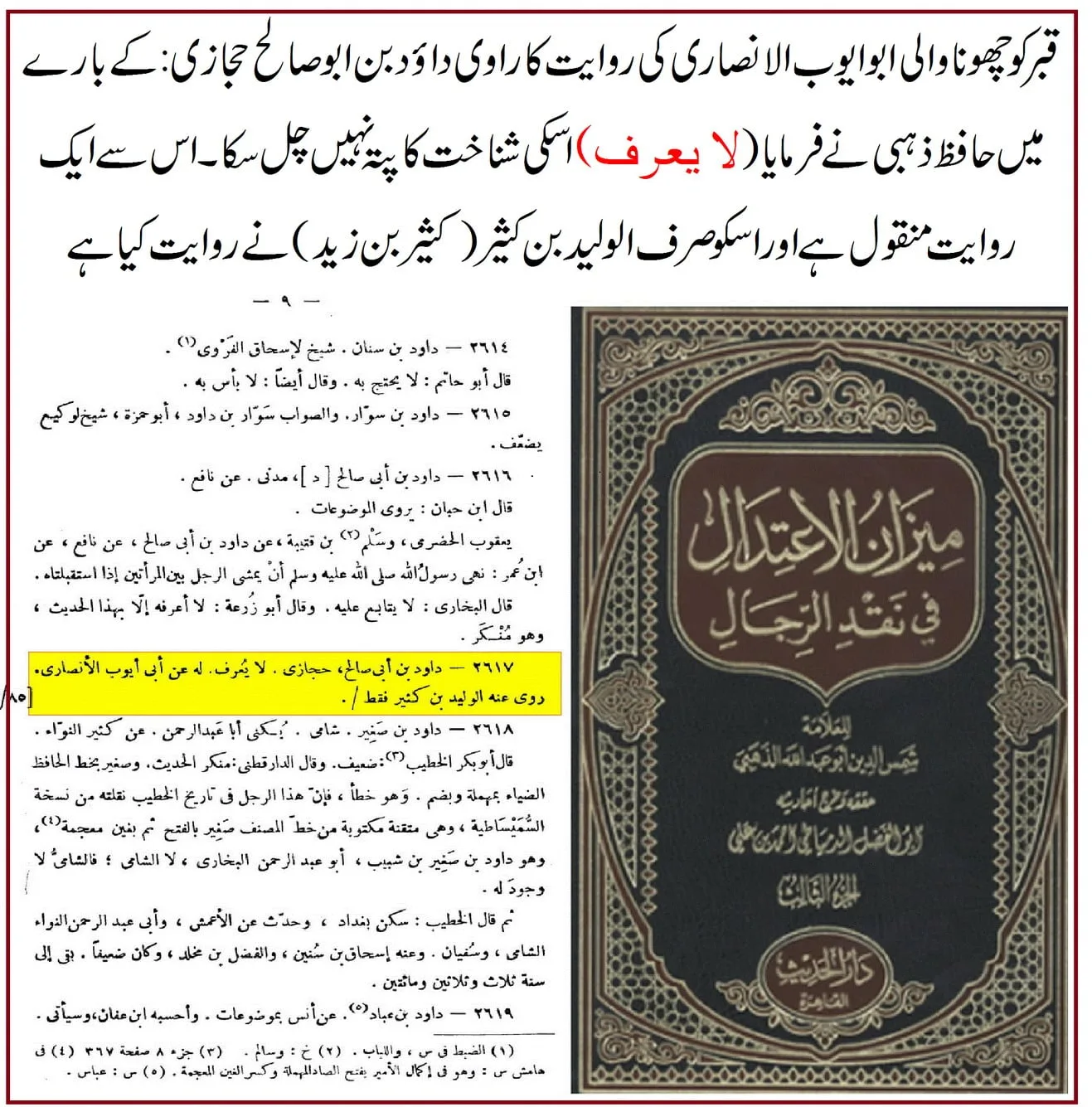
④ In the second chain where the addition of “placing the face on the grave” appears, Dāwūd bin Abī Ṣāliḥ is unknown / not well-recognized.
⑤ The authentication of al-Ḥākim and the concurrence of al-Dhahabī cannot be taken as decisive proof in light of the majority’s criticism and the critiques of some Imams in other contexts.
As a result, neither is the act of “placing the face on the grave” established from this incident, nor is the accusation of “disrespect toward the Prophet’s ﷺ chamber” against Marwān proven with an authentic chain.
Ibrāhīm bin al-Mundhir narrated, saying: Sufyān bin Ḥamzah narrated to us, from Kathīr (i.e., Ibn Zayd), from al-Muṭṭalib, who said: Abū Ayyūb al-Anṣārī رضي الله عنه came intending to send salutations upon the Messenger of Allah ﷺ. Marwān came while he was in that state and seized him by the neck, saying: “Do you know what you are doing?”
He replied: “I know well that I did not come to a curtain nor to a stone; rather, I came to the Messenger of Allah ﷺ. I heard the Messenger of Allah ﷺ say: Do not weep over the religion as long as it is governed by its rightful people, but weep over the religion when it is governed by those unfit for it.”
 al-Tārīkh al-Kabīr – Ibn Abī Khaythamah, Vol. 3, p. 27, no. 6447.
Brief Clarification:
This is the text presented as evidence; however, it is noteworthy that there is no explicit mention of placing the face or forehead on the grave. It merely mentions “coming to send salutations” and Marwān seizing and questioning him.
 The claim is that Abū Ayyūb رضي الله عنه was seen placing his forehead on the Prophet’s ﷺ grave.
However, in the narration of Ibn Abī Khaythamah, there is no wording such as waḍaʿa wajhah, waḍaʿa jabhatuh, sajada, or any explicit attachment to the grave.
 Therefore, this narration does not prove the act of placing the face/forehead on the grave. At most, such a claim would depend on later additions or other routes requiring separate investigation.
Kathīr bin Zayd al-Aslamī, Abū Muḥammad al-Madanī… Abū Zurʿah said: He is truthful, but has leniency (weakness).
al-Kāshif – al-Dhahabī, Vol. 2, p. 203, no. 4631.
Clarification:
The description “ṣadūq fīhi layn” itself indicates that the narrator is not of strong reliability.
Hence, declaring this report ḥasan li-dhātih contradicts the majority’s criticism, especially when further defects are present.
Al-Muṭṭalib bin ʿAbdullāh bin al-Muṭṭalib… is truthful, but frequently practices tadlīs and irsāl.
Taqrīb al-Tahdhīb – Ibn Ḥajar, p. 563, no. 6710.
Key Points:
✔ Even if the classification of tadlīs is debated, frequent irsāl is explicitly stated.
✔ Since al-Muṭṭalib narrates directly from Abū Ayyūb رضي الله عنه, establishing hearing/connection is essential; otherwise, the report remains disconnected.
Clarification:
In books of ʿilal, “more preserved” does not necessarily mean authentic. Existing defects are not removed merely by such a description.
al-Muʿjam al-Kabīr – al-Ṭabarānī, Vol. 3, p. 51, no. 3901.
Multiple sources do not guarantee authenticity when core defects remain unresolved.
al-Mustadrak – al-Ḥākim, Vol. 4, p. 560, no. 8571.
However, al-Dhahabī said elsewhere:
Mīzān al-Iʿtidāl – al-Dhahabī, Vol. 3, p. 14, no. 2620.
Thus, the addition relies on an unknown narrator, rendering it weak and non-authoritative.
Musnad Aḥmad, Vol. 38, p. 558, no. 23585.
Shaykh Shuʿayb al-Arnāʾūṭ declared it weak due to the unknown status of Dāwūd bin Abī Ṣāliḥ and criticism of Kathīr bin Zayd.
“I know that I did not come to a curtain nor to a stone; rather, I came to the Messenger of Allah ﷺ.”
This indicates intention of salutation, not physical prostration or placing the face on the grave.
✔ Kathīr bin Zayd is weak/lenient according to the majority.
✔ al-Muṭṭalib’s narration suffers from irsāl and lack of proven connection.
✔ The addition of “placing the face” comes through an unknown narrator.
✔ al-Ḥākim’s authentication does not outweigh the majority’s criticism.
At most, what may be inferred is presence and salutation, while building beliefs or accusations on weak additions and flawed routes contradicts sound scholarly methodology.
This article presents a critical investigation of the claim that Sayyidunā Abū Ayyūb al-Anṣārī رضي الله عنه was allegedly (God forbid) seen placing his face/forehead on the grave of the Prophet ﷺ, and that Marwān bin al-Ḥakam seized him by the neck and lifted him up.
Our objective is to clarify that the narrations forming the basis of this story are neither strong in chain (sanadan) nor in implication (dalālatan):
① The narration presented as the “original” source does not even mention placing the face/forehead on the grave.
② In its chain, Kathīr bin Zayd is considered weak / possessing leniency by the majority.
③ Regarding his shaykh al-Muṭṭalib bin ʿAbdullāh, there is discussion about frequent irsāl (missing links) / tadlīs, and without establishing his direct connection to a Companion, deriving proof from him remains problematic.
④ In the second chain where the addition of “placing the face on the grave” appears, Dāwūd bin Abī Ṣāliḥ is unknown / not well-recognized.
⑤ The authentication of al-Ḥākim and the concurrence of al-Dhahabī cannot be taken as decisive proof in light of the majority’s criticism and the critiques of some Imams in other contexts.
As a result, neither is the act of “placing the face on the grave” established from this incident, nor is the accusation of “disrespect toward the Prophet’s ﷺ chamber” against Marwān proven with an authentic chain.
The Claim and the Presented Narration
① The Narration of Ibn Abī Khaythamah (Presented as Evidence)
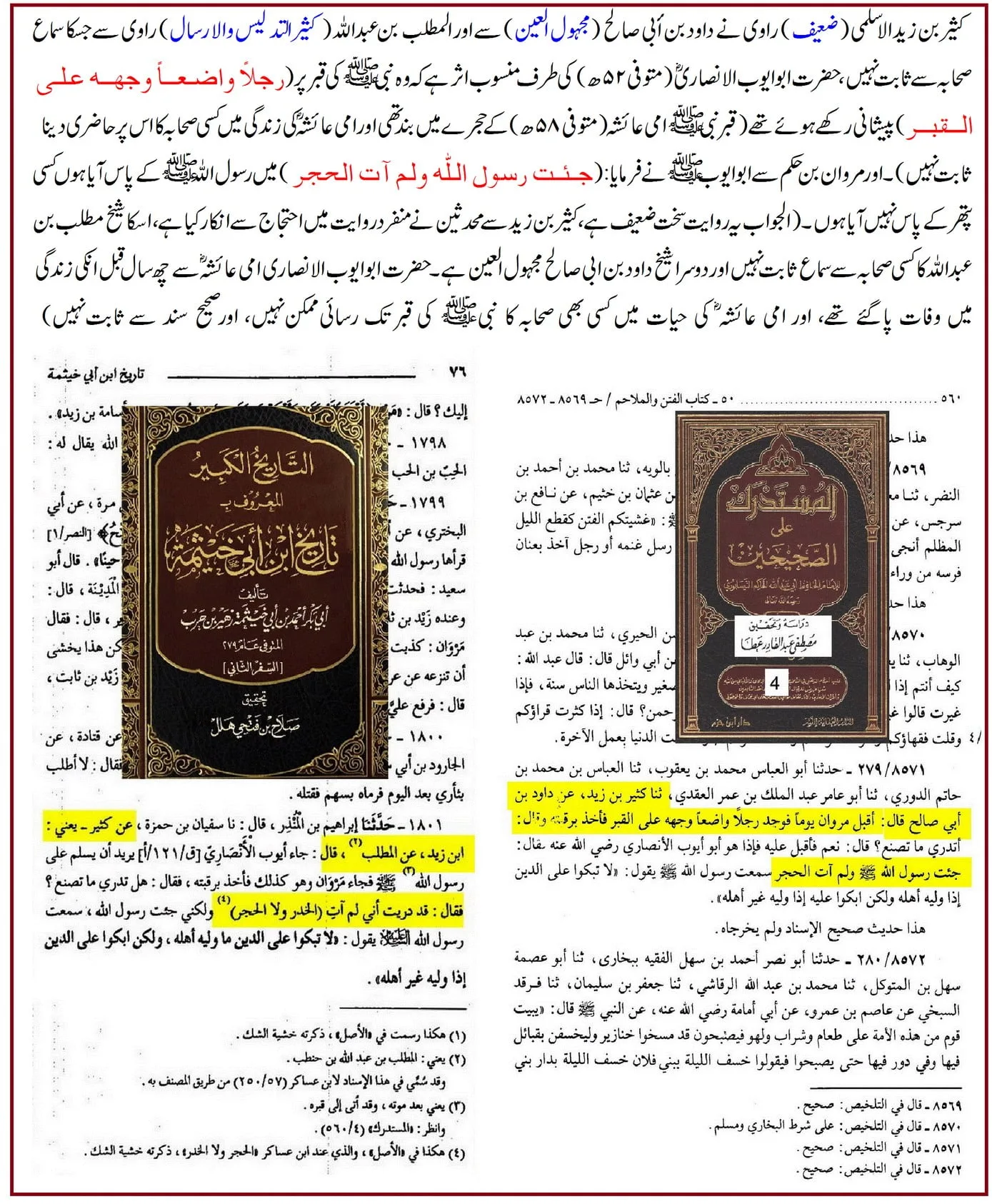
Arabic Text:English Translation:حدثنا إبراهيم بن المنذر، قال: حدثنا سفيان بن حمزة، عن كثير -يعني ابن زيد- عن المطلب، قال: جاء أبو أيوب الأنصاري يريد أن يسلم على رسول الله صلى الله عليه وسلم فجاء مروان وهو كذلك فأخذ برقبته، فقال: هل تدري ما تصنع؟ فقال: قد دريت أني لم آت الخدر ولا الحجر- ولكني جئت رسول الله، سمعت رسول الله عليه السلام يقول: لا تبكوا على الدين ما وليه أهله، ولكن ابكوا على الدين إذا وليه غير أهله
Ibrāhīm bin al-Mundhir narrated, saying: Sufyān bin Ḥamzah narrated to us, from Kathīr (i.e., Ibn Zayd), from al-Muṭṭalib, who said: Abū Ayyūb al-Anṣārī رضي الله عنه came intending to send salutations upon the Messenger of Allah ﷺ. Marwān came while he was in that state and seized him by the neck, saying: “Do you know what you are doing?”
He replied: “I know well that I did not come to a curtain nor to a stone; rather, I came to the Messenger of Allah ﷺ. I heard the Messenger of Allah ﷺ say: Do not weep over the religion as long as it is governed by its rightful people, but weep over the religion when it is governed by those unfit for it.”
al-Tārīkh al-Kabīr – Ibn Abī Khaythamah, Vol. 3, p. 27, no. 6447.Brief Clarification:
This is the text presented as evidence; however, it is noteworthy that there is no explicit mention of placing the face or forehead on the grave. It merely mentions “coming to send salutations” and Marwān seizing and questioning him.
Scholarly Analysis: Step-by-Step Arguments
② First Reality from the Text: No Mention of “Face/Forehead on the Grave”
The claim is that Abū Ayyūb رضي الله عنه was seen placing his forehead on the Prophet’s ﷺ grave.However, in the narration of Ibn Abī Khaythamah, there is no wording such as waḍaʿa wajhah, waḍaʿa jabhatuh, sajada, or any explicit attachment to the grave.
Therefore, this narration does not prove the act of placing the face/forehead on the grave. At most, such a claim would depend on later additions or other routes requiring separate investigation.③ Central Narrator: Kathīr bin Zayd (Weakness/Leniency According to the Majority)
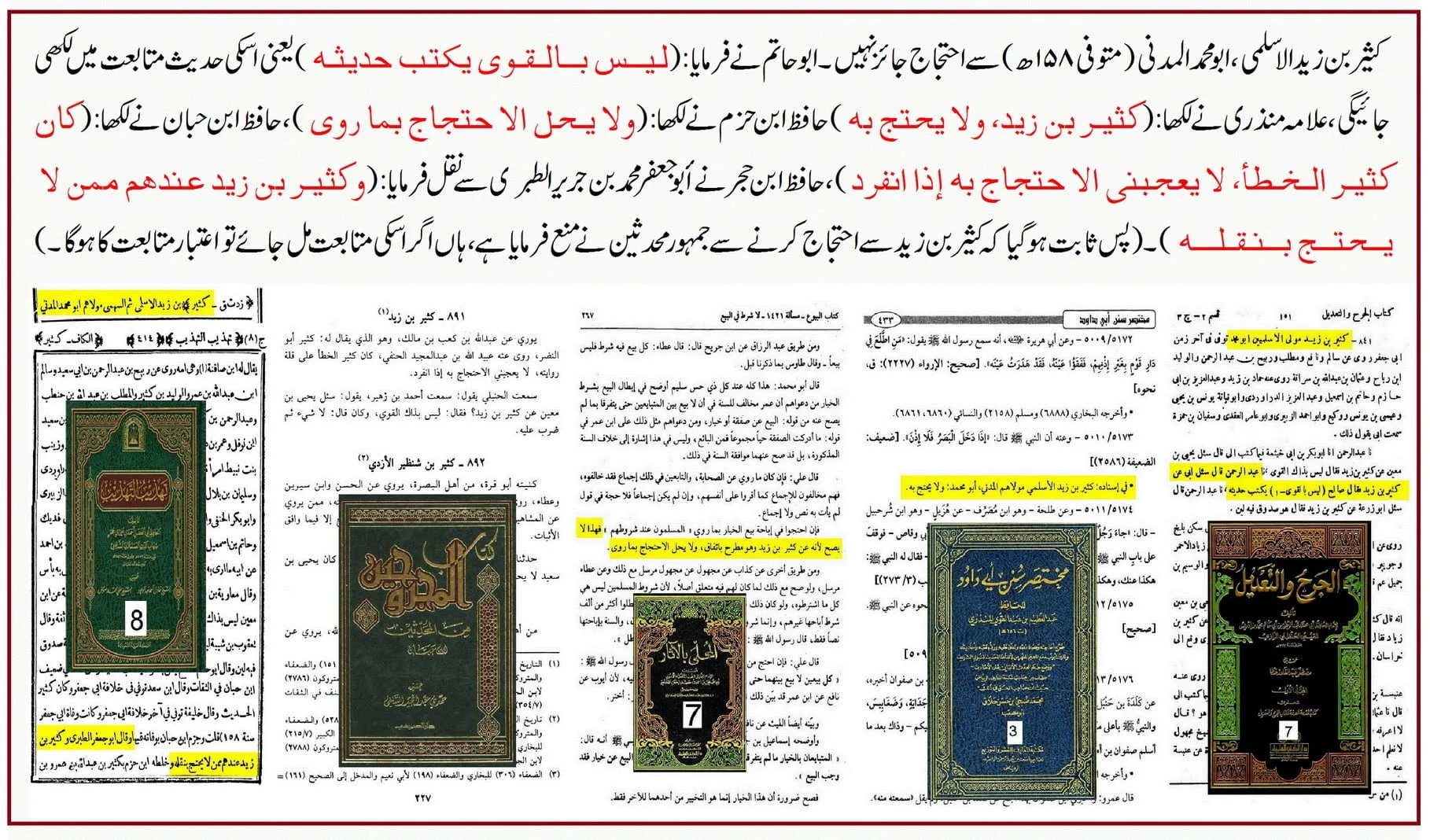
The main narrator in the chain is Kathīr bin Zayd al-Aslamī, about whom it is stated:English Translation:كثير بن زيد الأسلمي أبو محمد المدني … قال أبو زرعة: صدوق فيه لين
Kathīr bin Zayd al-Aslamī, Abū Muḥammad al-Madanī… Abū Zurʿah said: He is truthful, but has leniency (weakness).
al-Kāshif – al-Dhahabī, Vol. 2, p. 203, no. 4631.Clarification:
The description “ṣadūq fīhi layn” itself indicates that the narrator is not of strong reliability.
Hence, declaring this report ḥasan li-dhātih contradicts the majority’s criticism, especially when further defects are present.④ Second Pivot of the Chain: al-Muṭṭalib bin ʿAbdullāh and the Issue of Connection
From Taqrīb al-Tahdhīb:English Translation:المطلب بن عبد الله بن المطلب … صدوق كثير التدليس والإرسال
Al-Muṭṭalib bin ʿAbdullāh bin al-Muṭṭalib… is truthful, but frequently practices tadlīs and irsāl.
Taqrīb al-Tahdhīb – Ibn Ḥajar, p. 563, no. 6710.Key Points:
✔ Even if the classification of tadlīs is debated, frequent irsāl is explicitly stated.
✔ Since al-Muṭṭalib narrates directly from Abū Ayyūb رضي الله عنه, establishing hearing/connection is essential; otherwise, the report remains disconnected.
⑤ Claim of Preservation of “Kathīr from al-Muṭṭalib”
Reference: Kitāb al-ʿIlal – Ibn Abī Ḥātim, Vol. 1, p. 309, no. 1029.Clarification:
In books of ʿilal, “more preserved” does not necessarily mean authentic. Existing defects are not removed merely by such a description.
⑥ al-Ṭabarānī’s Narration: Additional Transmission, Same Defect
al-Muʿjam al-Kabīr – al-Ṭabarānī, Vol. 3, p. 51, no. 3901.Multiple sources do not guarantee authenticity when core defects remain unresolved.
⑦ Addition of “Placing the Face on the Grave” and Dāwūd bin Abī Ṣāliḥ
al-Mustadrak – al-Ḥākim, Vol. 4, p. 560, no. 8571.However, al-Dhahabī said elsewhere:
“I do not know him.”لا أعرفه
Mīzān al-Iʿtidāl – al-Dhahabī, Vol. 3, p. 14, no. 2620. Thus, the addition relies on an unknown narrator, rendering it weak and non-authoritative.⑧ Musnad Aḥmad and the Ruling of Shaykh Shuʿayb al-Arnāʾūṭ
Musnad Aḥmad, Vol. 38, p. 558, no. 23585.Shaykh Shuʿayb al-Arnāʾūṭ declared it weak due to the unknown status of Dāwūd bin Abī Ṣāliḥ and criticism of Kathīr bin Zayd.
⑨ Historical and Contextual Consideration
Abū Ayyūb رضي الله عنه passed away in 52 AH, before ʿĀʾishah رضي الله عنها (58 AH). The Prophet’s ﷺ grave was inside her chamber, not a public walkway—making public visibility claims problematic without strong evidence.⑩ Implication: At Most, “Salutation,” Not “Placing the Face on the Grave”
From the wording:English Translation:قد دريت أني لم آت الخدر ولا الحجر ولكن جئت رسول الله
“I know that I did not come to a curtain nor to a stone; rather, I came to the Messenger of Allah ﷺ.”
This indicates intention of salutation, not physical prostration or placing the face on the grave.
Final Summary
✔ The narration of Ibn Abī Khaythamah does not mention placing the face/forehead on the grave.✔ Kathīr bin Zayd is weak/lenient according to the majority.
✔ al-Muṭṭalib’s narration suffers from irsāl and lack of proven connection.
✔ The addition of “placing the face” comes through an unknown narrator.
✔ al-Ḥākim’s authentication does not outweigh the majority’s criticism.
Conclusion
Basing claims on this incident to assert that Abū Ayyūb رضي الله عنه placed his face/forehead on the Prophet’s ﷺ grave, or that Marwān committed disrespect toward the Prophet’s ﷺ chamber, is not established by authentic chains.At most, what may be inferred is presence and salutation, while building beliefs or accusations on weak additions and flawed routes contradicts sound scholarly methodology.
