


This excerpt is taken from the book Masnoon Hajj o Umrah published by Maktaba Darussalam Research Center.
Wearing Ihram
◈ Afaaqi: (coming from outside the Miqat) will wear Ihram at the Miqat.
◈ Those residing between the Miqat and the Haram will wear Ihram from their home.
◈ Those residing in Makkah should come from "Hil" and wear Ihram.
◈ After wearing Ihram, say the words اَللَّهُمَّ لَبَّيْكَ عُمْرَةً.
◈ If performing Umrah on behalf of someone else, at the end of these words say "An" and mention their name.
◈ On the way, frequently and loudly recite Talbiyah of Tawheed.
◈ Women will recite Talbiyah in a low voice.
◈ After entering Masjid al-Haram, stop reciting Talbiyah.
Entering Masjid al-Haram:
Wear Ihram from the Miqat and enter Masjid al-Haram while reciting Talbiyah. Masjid al-Haram has many gates. Each gate has its name written on it. There is no Shariah restriction to enter from any specific gate. Like other mosques, when entering Masjid al-Haram, first place the right foot and recite this supplication:
بِسْمِ اللَّهِ، وَالسَّلَامُ عَلَى رَسُولِ اللَّهِ، اللَّهُمَّ اغْفِرْ لِي ذُنُوبِي، وَافْتَحْ لِي أَبْوَابَ رَحْمَتِكَ
In the name of Allah (when entering the mosque) and may Allah's mercy and peace be upon the Messenger of Allah ﷺ. O Allah! Open the doors of Your mercy for me.
Reference: Sunan Ibn Majah, Prayer, Hadith: 771], [Jami` at-Tirmidhi, Prayer, Hadith: 314], [Sahih Muslim, Traveler's Prayer, Hadith: 713]
◈ Before entering Masjid al-Haram, perform ablution at your residence or at the ablution places outside the mosque.
Important Clarification:
Many people do not consider passing in front of worshippers in Masjid al-Haram as a sin. Remember! Passing in front of a worshipper is a grave sin and should be avoided as much as possible. This should also be observed in Masjid an-Nabawi. However, when there is a congregation, it is permissible to pass in front of the rows due to the imam's covering (satr) for a necessary reason.
Similarly, it is widely believed that the supplication made upon first sight of the Kaaba is always accepted by Allah Almighty; this is without evidence.
Ruling on Tawaf and Prayer during Prohibited Times:
Performing Tawaf of the Kaaba, offering two Rak'ahs of Tawaf prayer, or other Nawafil during the prohibited times of prayer (from Fajr prayer until sunrise, at the time of Zawal, and from Asr prayer until sunset) is permissible. That is, unlike ordinary mosques, there are no prohibited times for prayer in Masjid al-Haram.
Reference: Sunan Abi Dawood, Al-Manasik, Hadith: 1894
Note:
Among the etiquettes of entering mosques is that before sitting down, two Rak'ahs of prayer تَحِيَّةُ الْمَسْجِد should be offered, whether as part of the obligatory prayers, Sunnah prayers, or separate Nawafil; in short, one should not sit without praying. However, a person performing Hajj or Umrah should, when entering Masjid al-Haram with the intention of Hajj or Umrah, perform Tawaf first. The pilgrim will perform Tawaf al-Qudum, and the one performing Umrah will perform the Tawaf of their Umrah, unless it is time for an obligatory prayer, in which case they should first offer the congregational prayer, and if it is not time for an obligatory prayer, then they should begin their Umrah with Tawaf. This Tawaf is called Tawaf al-Qudum.
Issue:
It is recommended, not obligatory or mandatory, for those who have donned the Ihram for Hajj to perform Tawaf before Hajj. If a person arrives in Makkah late on the 8th or 9th of Dhu al-Hijjah, he should proceed directly to Mina or Arafat.
It is preferable for the one performing Tawaf to be in a state of wudu (ablution), as the Prophet ﷺ performed wudu first on this occasion.
Reference: Sahih al-Bukhari, Hajj, Hadith: 1614
If wudu breaks during Tawaf, it is recommended to perform wudu again, but it is not obligatory or a condition.
Reference: For details, see: Fatawa Ibn Taymiyyah, may Allah have mercy on him: 126,123/26
And complete the remaining circuits. However, it is permissible to continue Tawaf without wudu, and after completing the Tawaf, perform wudu and offer two rak'ahs of prayer.
Idtiba' (exposing the right shoulder):
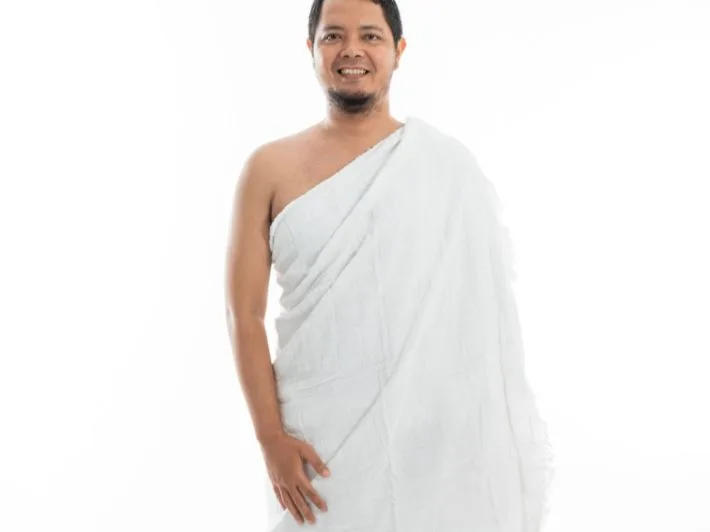
Men should, before starting Tawaf, take the Ihram cloth from under the right shoulder and place it over the left shoulder in such a way that the right shoulder is exposed. This state is called Idtiba'.
Reference: Sunan Abi Dawood, Manasik, Hadith: 1884
This istibra' should be maintained up to seven circuits, no more than that.
Issue:
For a muhrim man, adopting the state of istibra' is only Sunnah during the Tawaf of Umrah, and for a pilgrim, only during the Tawaf al-Qudum.
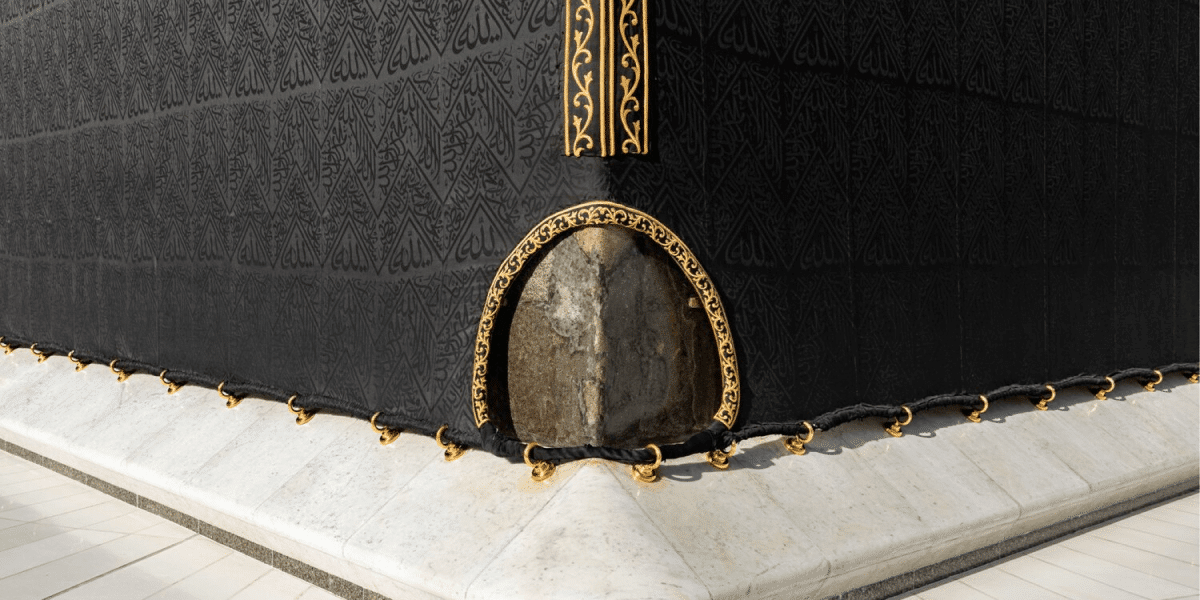
The beginning of Tawaf should be by kissing the Hajr al-Aswad, or touching it and then kissing the hand, or simply pointing towards it with the hand.
Reference: Sahih al-Bukhari, Hajj, Hadith: 1603], [Sunan Abi Dawood, Manasik, Hadith: 1872
If it is not possible to kiss or touch the Hajr al-Aswad, then start the Tawaf from in front of the Hajr al-Aswad. To identify this spot, there is a green tube light lit on the wall directly opposite it, which indicates the exact position of the Hajr al-Aswad. Begin and end the Tawaf at this green light. Also, in crowds and congestion, one should avoid pushing to kiss or touch the Hajr al-Aswad; in such cases, simply pointing with the hand from a distance is sufficient. Remember, in such situations, kissing the hand is not correct.
Reference: Kitab al-Umm by al-Shafi'i, from Ibn Abbas, Mawqufan: 10/3
However, if the hand, stick, or cloth, etc., touches the Black Stone, it is Sunnah to kiss it.
Supplication to start Tawaf:
While kissing, touching, or pointing to the Black Stone with the right hand, one should say:
بِسْمِ اللهِ وَاللَّهُ أَكْبَر
In the name of Allah (I begin), and Allah is the Greatest.
Reference: Musnad Ahmad with Al-Fath Al-Rabbani: 67/12
◈ The one performing Tawaf should walk on the right side and keep the Kaaba on the left side.
Reference: Jami` at-Tirmidhi, Hajj, Hadith: 856
◈ One Tawaf consists of seven circuits, and one circuit starts from the Black Stone and completes at the Black Stone.
Reference: Sahih Muslim, Hajj, Hadith: 1263,1262
◈ At the beginning of each circuit, it is Sunnah to kiss the Black Stone or touch it with the hand or something else and kiss that thing, or simply point towards it. But this should be done with the intention that it is Sunnah, as in the famous saying of Hazrat Umar (RA): [إني أعلم أنك حجر لا تضر ولا تنفع ، ولولا أني رأيت النبي صلى الله عليه وسلم يقبلك ما قبلتك]
Certainly, I know that you are a stone, neither causing harm nor benefit. If I had not seen the Messenger of Allah ﷺ kissing you, I would not have kissed you.
Reference: Sahih al-Bukhari, Hajj, Hadith: 1597
◈ Perform all seven circuits of Tawaf from outside the Hatim.
Reference: Al-Sunan al-Kubra by Al-Bayhaqi: 90/5, Sahih Ibn Khuzaymah, Al-Manasik, Hadith: 2740
Touching the Yemeni Corner:
In every circuit of Tawaf, it is Sunnah to pass by the Yemeni Corner and touch it.
Reference: Sunan Abi Dawood, Al-Manasik, Hadith: 1876
If due to the crowd it is difficult to touch the Yemeni Corner, then pass without touching it. But stopping there to point towards the Yemeni Corner or pointing and kissing the hand towards it are all non-Sunnah acts. Besides this, touching any corner of the Kaaba or rubbing the hands on the body thinking it as the Kaaba itself are all non-Shariah actions.
Raml (Brisk Walking) in Tawaf:
The one performing Umrah should do Raml (brisk walking) during the first three circuits of Tawaf of Umrah, and the pilgrim should do Raml during the first three circuits of Tawaf al-Qudum by moving the shoulders with small steps slowly (running).
Reference: Sahih al-Bukhari, Hajj, Hadith: 1604
◈ Women will not perform Raml.
Reference: Al-Sunan al-Kubra by Al-Bayhaqi: 84/5
Remembrance and Supplication during Tawaf:
It is Sunnah to recite this supplication between the Yemeni Corner and the Black Stone:
اَللَّهُمَّ رَبَّنَاۤ اٰتِنَا فِی الدُّنۡیَا حَسَنَۃً وَّ فِی الۡاٰخِرَۃِ حَسَنَۃً وَّ قِنَا عَذَابَ النَّارِ
O our Lord! Grant us good in this world and good in the Hereafter, and save us from the punishment of the Fire.
Reference: Al-Baqarah:201, Sunan Abi Dawood, Manasik, Hadith: 1892
Also, the hadith states: The Tawaf of the House of Allah is for the establishment of the remembrance of Allah.
Reference: Sahih Ibn Khuzaymah, Manasik, Hadith: 2738, Sunan Abi Dawood, Manasik, Hadith: 1888
In light of this hadith, during Tawaf one should engage in the remembrance of Allah, Tasbih, Tahmeed, Takbeer, Tahleel, sending blessings on the Prophet, recitation of the Quran, and general Sunnah supplications; one may also supplicate in their own language.
Admonition:
It is commonly observed that people hold books of Hajj and Umrah and recite different supplications at each circuit; all these supplications are fabricated and have no connection to the Sunnah. Similarly, making people recite supplications collectively in groups is also not correct; it is better not to supplicate in this manner at all. Rather, besides the Tasbih and Tahmeed of Allah, you should supplicate what you find good and what you need.
If a Shariah excuse arises during Tawaf:
If the time for prayer arrives during Tawaf or any other Shariah excuse arises, the Tawaf should be stopped. Afterwards, count the completed rounds and start the Tawaf again from where it was left off.
Reference: Fiqh al-Sunnah, Al-Manasik, Conditions of Tawaf
Confusion in counting the rounds of Tawaf:
If during Tawaf one forgets how many rounds have been completed, then believe in the lesser number and complete the remaining rounds. For example, if there is doubt whether four or five rounds have been completed, believe in four and complete the remaining three rounds.
If Wudu breaks during Tawaf?:
Performing Tawaf with Wudu is Sunnah.
Reference: Sahih al-Bukhari, Hajj, Hadith: 1615,1614
However, if Wudu breaks during Tawaf, it is better to perform Wudu again, but it is not obligatory or a condition.
Reference: Fatawa Ibn Taymiyyah, may Allah have mercy on him: 126,123/26
However, Wudu will be necessary before performing the two Rak'ahs of Tawaf, as explained earlier.
Issue:
During Tawaf, conversation can be held as much as necessary.
Reference: Fiqh al-Sunnah, Al-Manasik, Conditions of Tawaf
Performing Tawaf on a vehicle:
It is permissible to perform Tawaf on a vehicle if necessary.
Reference: Sahih al-Bukhari, Hajj, Hadith: 1612
Explanation:
Wheelchairs are available for rent in Masjid al-Haram. The sick, disabled, and very weak individuals can benefit from them.
Tawaf for Women:
It is appropriate for women to perform Tawaf on one side rather than mingling among the men.
Reference: Sahih al-Bukhari, Hajj, Hadith: 1619,1618
Although this is difficult nowadays, one should try as much as possible to avoid mingling with men.
Ruling on Tawaf for a Menstruating Woman:
If a woman’s menstrual period begins, she should not enter Masjid al-Haram, because a menstruating woman cannot perform Tawaf of the House of Allah until she becomes pure.
Reference: Sahih al-Bukhari, Hajj, Hadith: 1650
If a woman faces this difficulty during Tawaf, she should immediately stop Tawaf and leave Masjid al-Haram. Nowadays, medicines are available to temporarily stop menstruation, and there is no harm in using them.
Performing Two Rak'ahs After Tawaf:
When the one performing Tawaf completes seven circuits, he should offer two Rak'ahs of Tawaf near Maqam Ibrahim. It is preferable to recite Surah [قُلۡ یٰۤاَیُّہَا الۡکٰفِرُوۡنَ] in the first Rak'ah and [قُلْ هُوَ اللهُ اَحَدٌ] in the second. The Prophet ﷺ did the same during Hajj al-Wada.
Reference: Sahih Muslim, Al-Hajj, Hadith: 1218
If there is no space near Maqam Ibrahim, then one can step back from there or offer the two Rak'ahs of Tawaf anywhere inside Masjid al-Haram. It is established from the practice of Sayyiduna Umar رضي الله عنه that he offered the two Rak'ahs of Tawaf outside Masjid al-Haram in the valley of Dhi Tuwa.
Reference: Al-Sunan al-Kubra by Al-Bayhaqi: 90/5
Note:
Voluntary Tawaf can be performed as many times as one wishes, but Sa’i cannot be voluntary. Similarly, it is not established from the Messenger of Allah ﷺ that one can forgive someone by performing Tawaf.
Drinking Zamzam Water:
After completing the two Rak'ahs of Tawaf, it is Sunnah to drink Zamzam water abundantly and sprinkle it on the head.
Reference: Musnad Ahmad with Al-Fath al-Rabbani: 72/12
Virtue of Zamzam Water:
The Prophet ﷺ said: [ماء زمزم لما شرب له] Whatever (good) purpose Zamzam water is drunk for, it is fulfilled.
Reference: Musnad Ahmad: 357/3, Irwa’ al-Ghalil, Hadith: 1123
Numerous hadiths are found regarding the virtue of Zamzam. Some scholars of hadith have even written entire books on this subject. [For example: Izalat ad-Dahsh wal-Walah 'an al-Mutahayyir fi Sahih Hadith Ma' Zamzam lima Sharib Lahu, authored by Muhammad ibn Idris al-Qadri, authenticated by Allama Nasiruddin al-Albani, may Allah have mercy on him]
The summary is that Zamzam water is a cure for every disease and a means to fulfill every good purpose.
Issue:
After completing the Tawaf of the House of Allah and praying two rak'ahs, and drinking Zamzam (if possible, then for Sa'i), one should again touch the Black Stone (Hajr al-Aswad).
Reference: Sahih Muslim, Hajj, Hadith: 1218
That is, kiss it or touch it and then kiss the hand. If this is not possible, then there is no need to gesture towards it.Safa and Marwah are two hills. Walking seven circuits between them is called Sa'i. This Sa'i is a pillar of Hajj and Umrah. Without it, Umrah and Hajj are not valid. The Prophet ﷺ said: [كتب عليكم السعي فاسعوا]Sa'i has been made obligatory upon you, so perform Sa'i.
Reference: Sahih Ibn Khuzaymah: 233/4, Hadith: 2765
Issue:
For Sa'i of Safa and Marwah, it is Sunnah to start from the gate of Safa towards the hill of Safa.
Reference: Sahih Muslim, Hajj, Hadith: 1218
Near Safa, these words should be recited:
[إِنَّ الصَّفَا وَالْمَرْوَةَ مِنْ شَعَائِرِ اللَّهِ أَبْدَأُ بِمَا بَدَأَ اللَّهُ بِهِ] Indeed, Safa and Marwah are among the signs of Allah. I begin with that with which Allah began.
Reference: Sahih Muslim, Hajj, Hadith: 1218
That is, Allah Almighty mentioned Safa first in the Holy Quran, so I also start my Sa’i from Safa.
After reaching Safa:
Climb Safa and try to see the Kaaba. Facing the Kaaba, say Allahu Akbar three times and repeat these words three times:
لَا إِلَهَ إِلَّا اللَّهُ وَحْدَهُ لَا شَرِيكَ لَهُ ، لَهُ الْمُلْكُ وَلَهُ الْحَمْدُ ، وَهُوَ عَلَى كُلِّ شَيْءٍ قَدِيرٌ ، لَا إِلَهَ إِلَّا اللَّهُ وَحْدَهُ ، أَنْجَزَ وَعْدَهُ ، وَنَصَرَ عَبْدَهُ ، وَهَزَمَ الْأَحْزَابَ وَحْدَهُ
There is no deity except Allah, He is alone, He has no partner. Sovereignty and praise belong to Him alone, and He is capable of all things. There is no god but Allah, He is alone, He fulfilled His promise, helped His servant, and He alone defeated many armies.
Reference: Sahih Muslim, Hajj, Hadith: 1218
Note:
At this moment, raise your hands and make additional supplications.
From Safa towards Marwah:
After making dhikr and dua at Safa, proceed towards the dead end from the right path and run lightly between the green markers [tubes]. For those who are elderly, sick, or heavy-bodied, there is no harm in not running at this place.
Reference: Sahih Ibn Khuzaymah: 236/4, Hadith: 2770
The command to run is specifically for men:
Running between the two green tube lights (markers also called ميلين أخضرين) between Safa and Marwah is not only specific to men. It is not for women. In this regard, there are narrations from Sayyiduna Ibn Umar رضي الله عنهما and Sayyida Aisha رضي الله عنها.
Reference: Al-Sunan al-Kubra by Al-Bayhaqi: 84/5
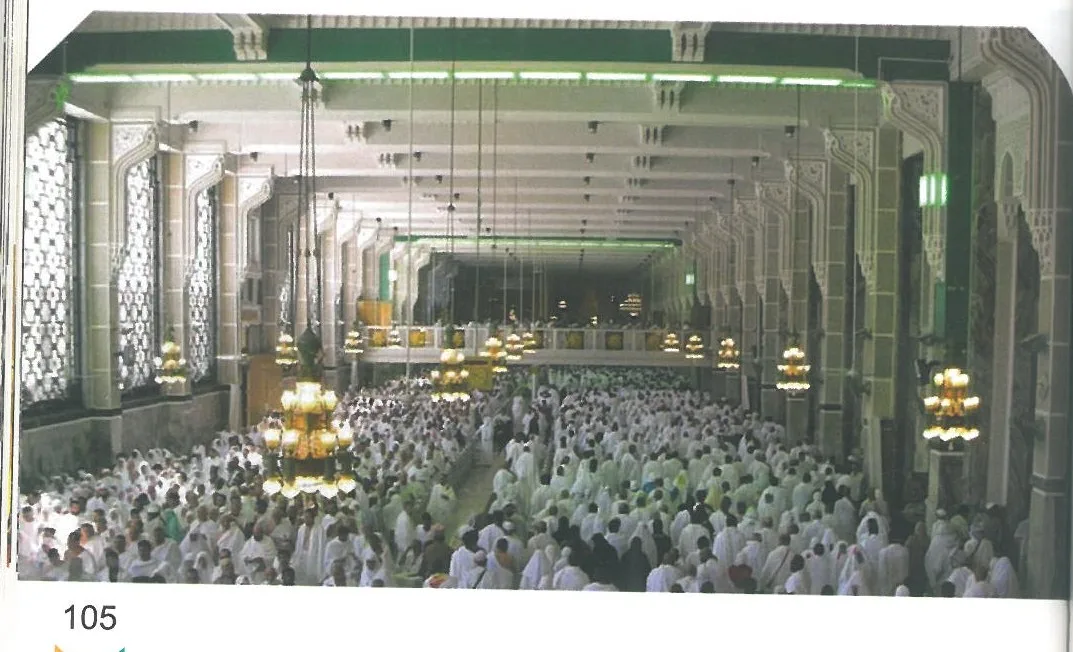
Dhikr during Sa’i:
During Sa’i between Safa and Marwah, only one dua narrated from Abdullah bin Umar and Abdullah bin Mas’ud رضي الله عنهم is authentically established. Its authenticity has been accepted by Allama Al-Albani in Hujjatun Nabi. The words of the dua are as follows:
رَبِّ اغْفِرْ وَارْحَمْ وَأَنْتَ الْأَعَزُّ الْأَكْرَمُ
O my Lord! Forgive me and have mercy on me, for You are the Most Honorable, the Most Great.
Reference: Musannif Ibn Abi Shaybah, Hadith: 15567
And see:
Reference: Hujjat al-Nabi ﷺ, authored by Allama Muhammad Nasiruddin al-Albani, may Allah have mercy on him
Besides this supplication, during Sa’i, evidence is found for other supplications and remembrances based on the following hadith. The Prophet ﷺ said: Sa’i between Safa and Marwah is appointed for the remembrance of Allah.
Reference: Sahih Ibn Khuzaymah: 222/4, Hadith: 2738
In light of this hadith, during Sa’i one should recite Takbeer, Tasbeeh, Tahmeed, Tahleel, Quranic recitation, Durood Sharif, or other commonly prescribed supplications, and one may also supplicate in their own language.Upon reaching Marwah:
One complete circuit is completed from Safa to Marwah. Here also perform the same acts that were done at Safa.
From Marwah towards Safa:
After praying at Marwah, return towards Safa from the right side. Men should also lightly run between the two green markers on this side and recite the same prayers on ascending Safa that were recited at the beginning of Sa'i on Safa. Upon reaching Safa, the second circuit will be complete. Similarly, complete five more circuits. Thus, the seventh and final circuit will end at Marwah.
Notes:
① One circuit will be counted from Safa to Marwah and the second circuit from Marwah to Safa.
② After the expansion of Masjid al-Haram, Safa and Marwah have been included within Masjid al-Haram, therefore it is not permissible for women in menstruation or postnatal bleeding to perform Sa'i. Another reason is that Sa'i is performed after Tawaf, and since such a woman will not perform Tawaf, she will also not perform Sa'i.
③ Wudu (ablution) is not a condition for Sa'i, but it is better to perform Sa'i with wudu. If wudu breaks during Sa'i, it is not necessary to perform wudu again.
④ If due to some excuse it is difficult to perform Sa'i while walking, then Sa'i can also be performed on a vehicle.
Reference: Sharh al-Sunnah by al-Baghawi: 142/7, Hadith: 1922
⑤ A wheelchair is available for rent for Sa'i, so Sa'i can be performed on it.
⑥ Except for the Millin Akhdarin [the area between the two green tube lights where one has to run], the rest of the Sa'i should be done at a normal walking pace, not running.
Interruption of Sa'i:
If due to some excuse the Sa'i has to be stopped, then after the excuse is over, continue the remaining Sa'i from the same place where it was interrupted.
Delay in Sa'i:
If there is a delay in Sa'i after Tawaf due to some excuse, there is no harm.
Reference: Fiqh al-Sunnah: 1/743, this is the ruling of Ata and Hasan Basri
Issue:
If there is doubt about the number of circuits in Sa'i: If during Sa'i there is doubt about the number of circuits, then like Tawaf, believe in the lesser number and complete the remaining circuits. For example: if a person doubts whether it is the third or fourth circuit, he should consider it the third and perform four more circuits.
Cupping (Hijamah):
One performing Hajj Tamattu should shave or cut the hair of the head after completing the Sa’i of Umrah.
Reference: Sahih al-Bukhari, Hajj, Hadith: 1729
But shaving is preferable.
Reference: Sahih al-Bukhari, Hajj, Hadith: 1727
Issue:
If a Mahram shaves himself or two people shave each other, both ways are permissible.
Issue:
Those performing Hajj Ifrad or Hajj Qiran, if they complete Sa’i before going to Mina, should not shave their hair after Sa’i. Because only one Sa’i is obligatory for them; they should shave or cut their hair on the 10th of Dhu al-Hijjah, and if they have not done Sa’i before, then they should perform Sa’i on that day.
The entire head hair should be shaved:
One performing Umrah or Hajj should shave or cut the entire hair of the head. This is the Sunnah of the Prophet ﷺ.
For women to cut hair:
Women should cut some hair after completing Sa’i. It is not permissible for them to shave their heads.
Reference: Sunan Abi Dawood, Manasik, Hadith, 1985
Removing Ihram:
Those performing Umrah and Hajj Tamattu should remove their Ihram after cupping (Hijamah); their Umrah is complete.
Reference: Sahih al-Bukhari, Umrah, Hadith: 1795
Warning:
Some pilgrims and Hajjis, at the end of Sa’i, stand on Marwah and lightly strike their heads from right to left, thinking that they have become lawful. This act is completely against the Sunnah. A person does not become lawful until the hair is completely shaved off.
① It is also well-known that a person performing Hajj or Umrah for the first time should shave their head with a razor, and thereafter it is up to them whether they cut their hair short or shave it with a machine; both are equal for them. However, whether it is the first or the tenth Hajj or Umrah, shaving with a razor is preferable and cutting hair short is permissible.
② There is no evidence for offering two rak‘ahs of Nafl prayer after the completion of Sa’i.
③ There is no Tawaf al-Wida‘ (Farewell Tawaf) after Umrah.
④ One should not avoid looking at the Ka‘bah during Tawaf; this is also completely fabricated. Therefore, there is no harm in looking at the Ka‘bah during Tawaf.
Explanation:
Those performing Hajj al-Ifraad or Hajj al-Qiraan will remain in Ihram continuously, and those who have already exited Ihram should engage in voluntary prayers, Tawaf, and frequent recitation of the Quran during their free time to maximize the benefits of performing good deeds at this blessed place.
Remember that performing one Umrah in a single journey is best. Pilgrims who go to Madinah before Hajj, that is, those who visit Madinah after performing Umrah and before performing Hajj, should keep in mind that if they wish to perform another Umrah, they should enter Ihram from Miqat Dhu al-Hulayfah (Bir Ali) on their return from Madinah and perform Umrah upon reaching Makkah. If performing Hajj Tamattu’, after Umrah, they should shave their hair and exit Ihram. If intending Hajj Qiraan, they should shave their hair but not exit Ihram.
Performing Umrah from Taneem (Masjid Aisha, may Allah be pleased with her):
Performing Umrah from Taneem is permissible.
Reference: Nadhrah al-Naeem fi Hukm al-Umrah min al-Taneem, Author: Abu Abdullah Muhammad bin Muhammad Mustafa

