

Compiled by: Abu Hamzah Salafi
This article addresses an important issue: Can a person speak after death?
Some Barelvi innovators have based a false belief on this claim and alleged that the Noble Prophet ﷺ personally attends and performs the funeral prayer of individuals after their death. This is not only false but amounts to fabricating a lie against the Messenger of Allah ﷺ.
In this article, the following matters will be clarified:
❀ The ruling on the dead speaking in light of the Qur’an, Sunnah, and statements of the Imams
❀ A critical analysis of the chain and text of the fabricated narration
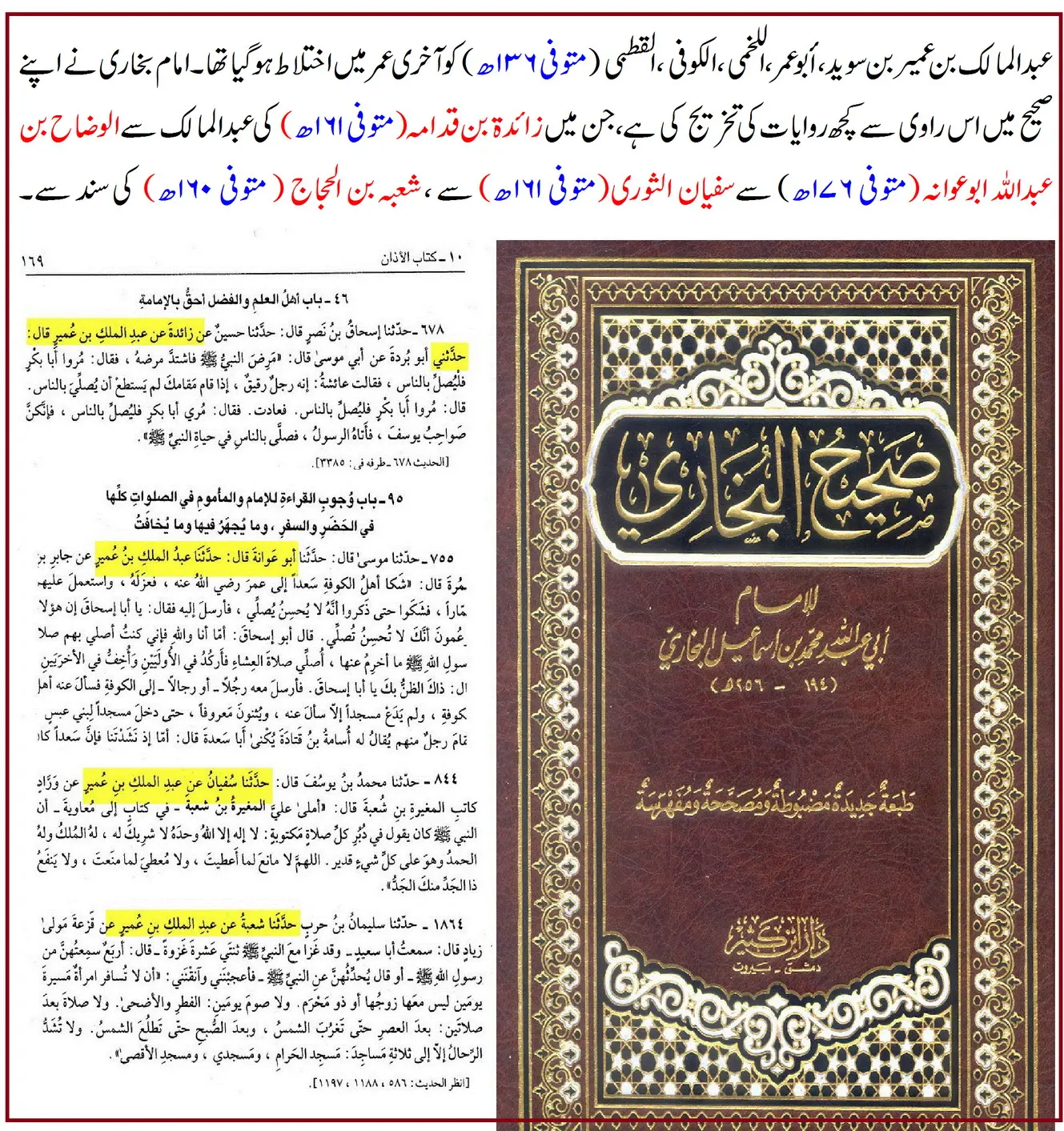
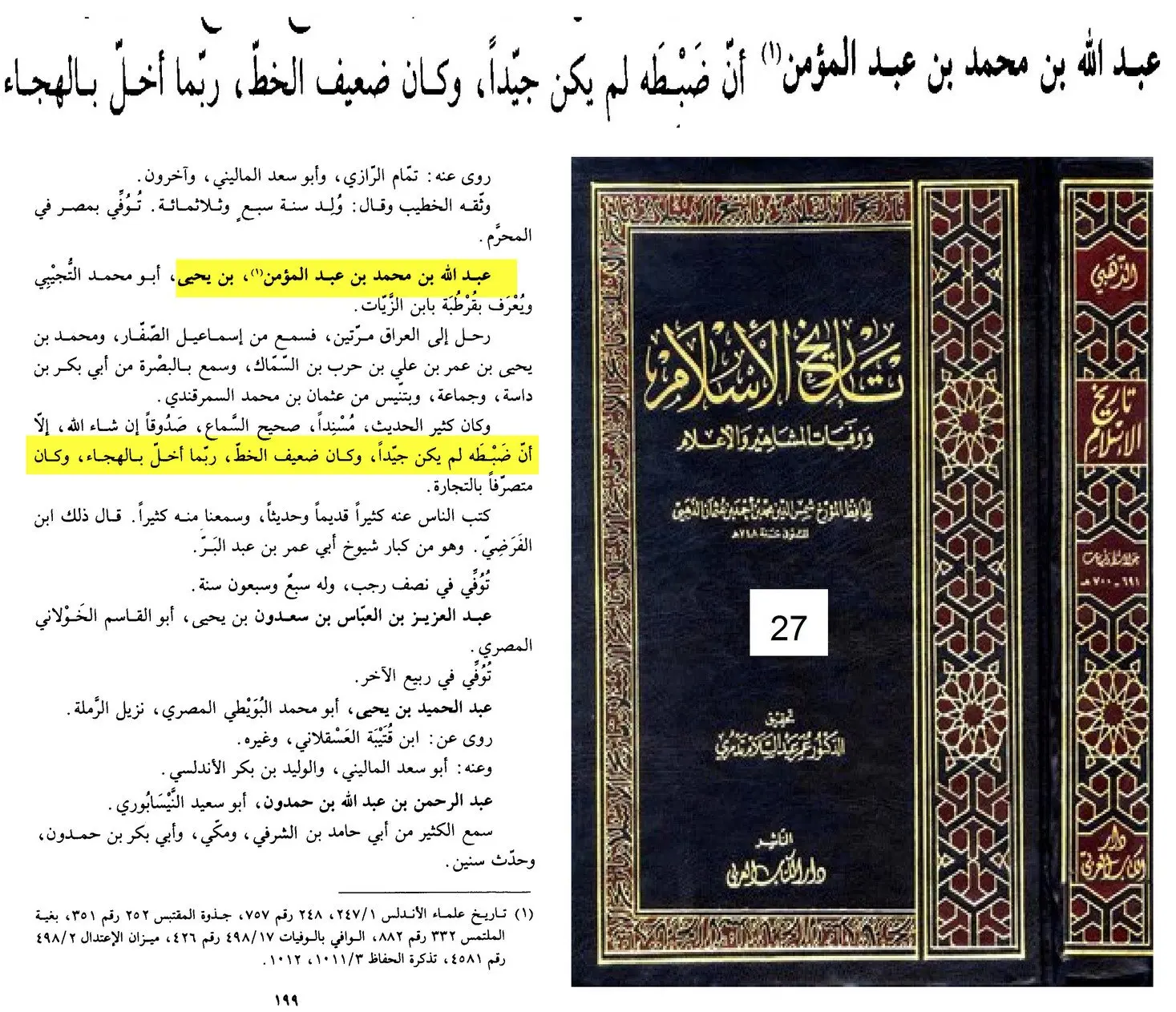
❀ The reality of the narrator ʿAbd al-Malik ibn ʿUmayr and the detailed criticism against him
❀ The ruling regarding his narrations in Ṣaḥīḥ al-Bukhārī
❀ The severe warning against fabricating lies upon the Prophet ﷺ
Through this research, it will become clear — like the brightness of daylight — that:
① The narration about the dead speaking is rejected both in chain and text.
② The belief that the Prophet ﷺ comes to perform someone’s funeral prayer is a clear slander.
③ ʿAbd al-Malik ibn ʿUmayr is criticized with detailed jarḥ and is also a mudallis.
(Full chain and text as cited)
① A person can speak after death.
② The Prophet ﷺ attends to perform funeral prayers.
③ Since al-Dhahabī mentioned it in Siyar Aʿlām al-Nubalā’, it must be authentic.
① Jaʿfar ibn Muḥammad ibn Riyāḥ al-Ashjaʿī – Unknown (Majhūl al-Ḥāl)
② His father – Also unknown
➤ Therefore, the chain is severely weak.
Translation:
“The chain is not authentic because Jaʿfar ibn Muḥammad ibn Riyāḥ al-Ashjaʿī and his father are both unknown.”
Translation:
“The narrators are trustworthy, but it is mawqūf, not marfūʿ. The correct view is that it stops at ʿAbd al-Malik ibn ʿUmayr.”
➤ Therefore, attributing it to the Prophet ﷺ is incorrect.
① Yaḥyā ibn Maʿīn
«عبد الملك بن عمير مخلط»
“He was confused (mukhlit).”
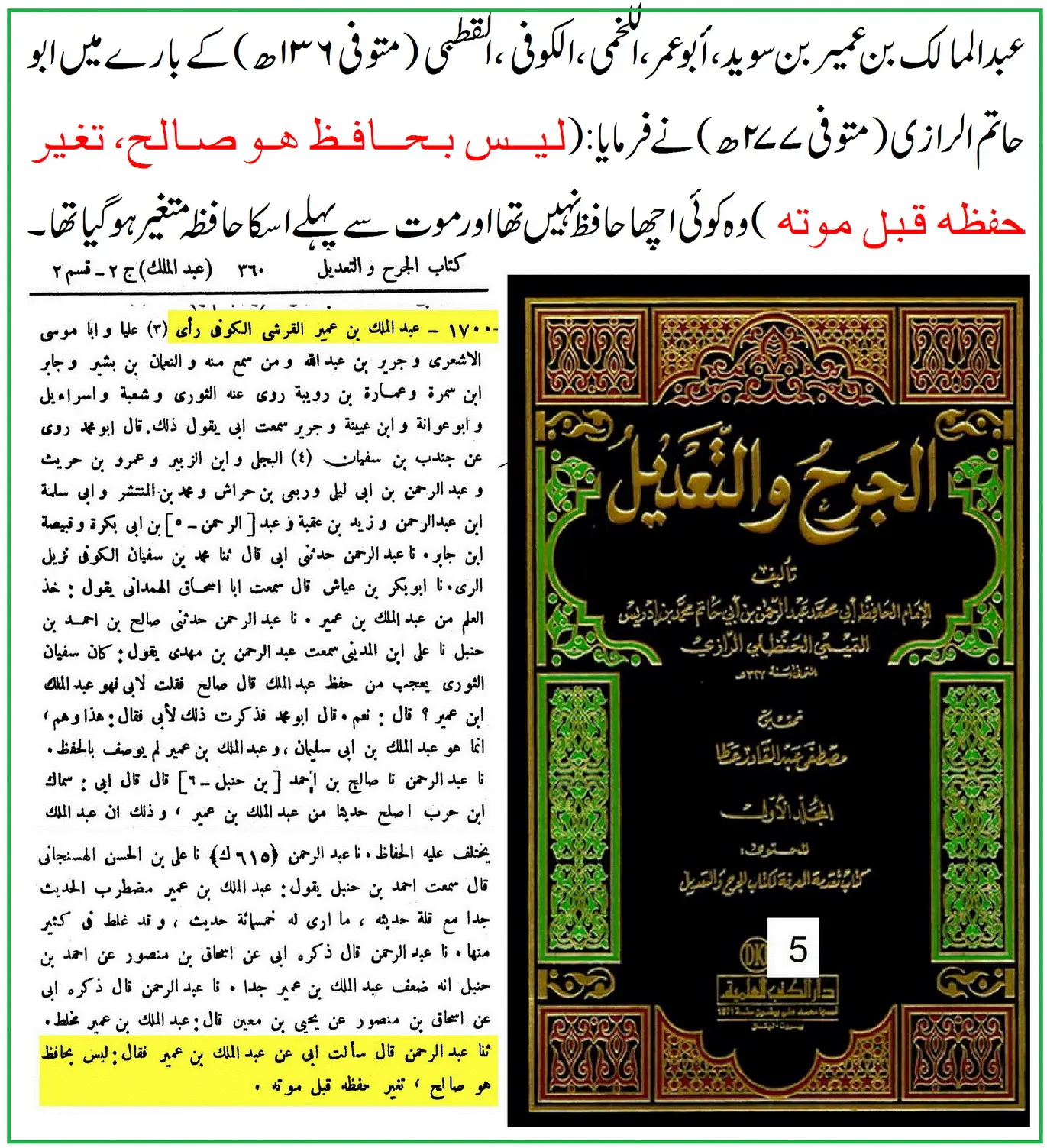
② Abū Ḥātim al-Rāzī
«ليس بحافظ… تغير حفظه قبل موته»
“He was not strong in memory and it deteriorated before his death.”
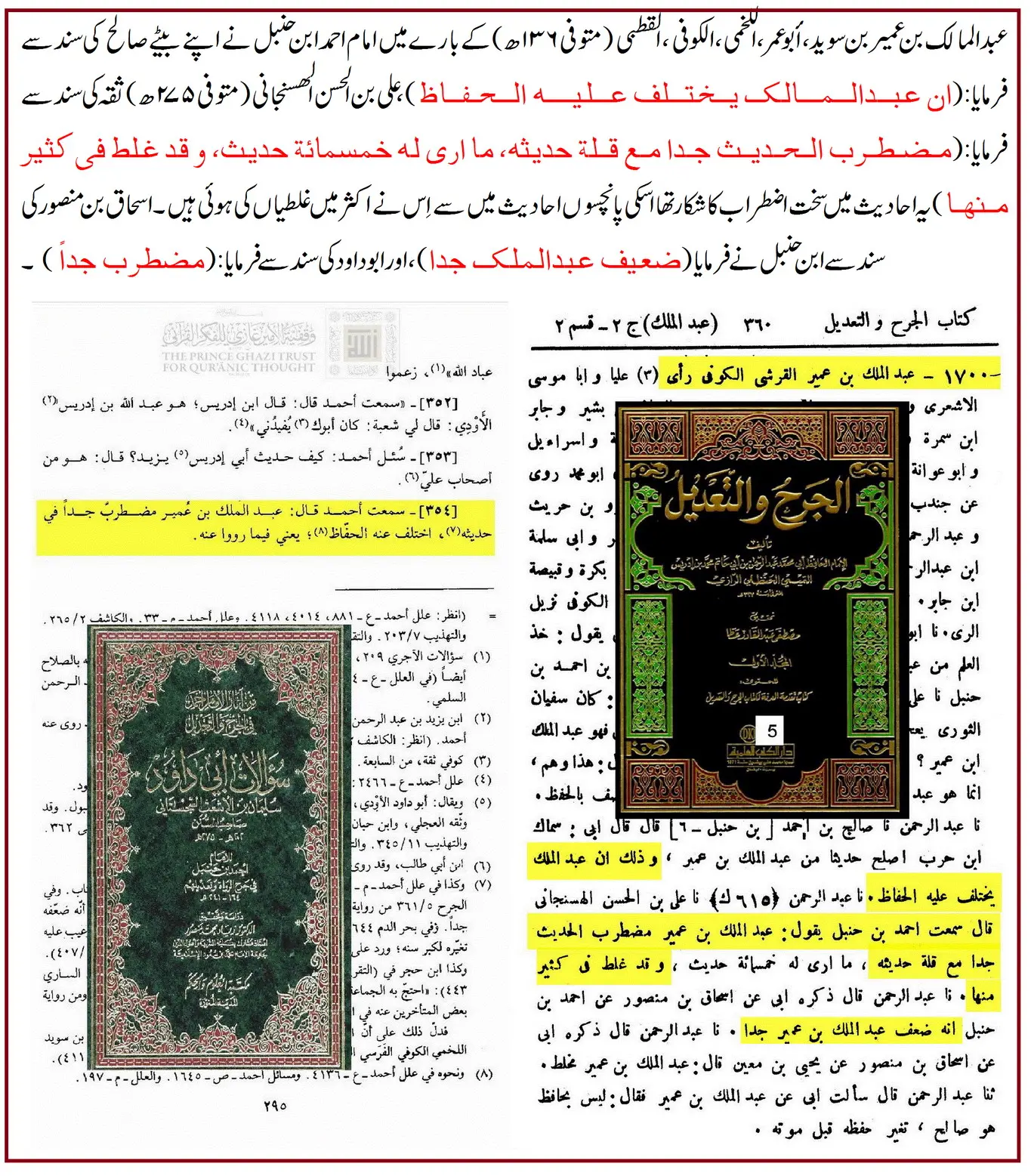
③ Imām Aḥmad
«مضطرب الحديث جداً… وقد غلط في كثير منها»
“He was extremely inconsistent in ḥadīth and made many mistakes.”
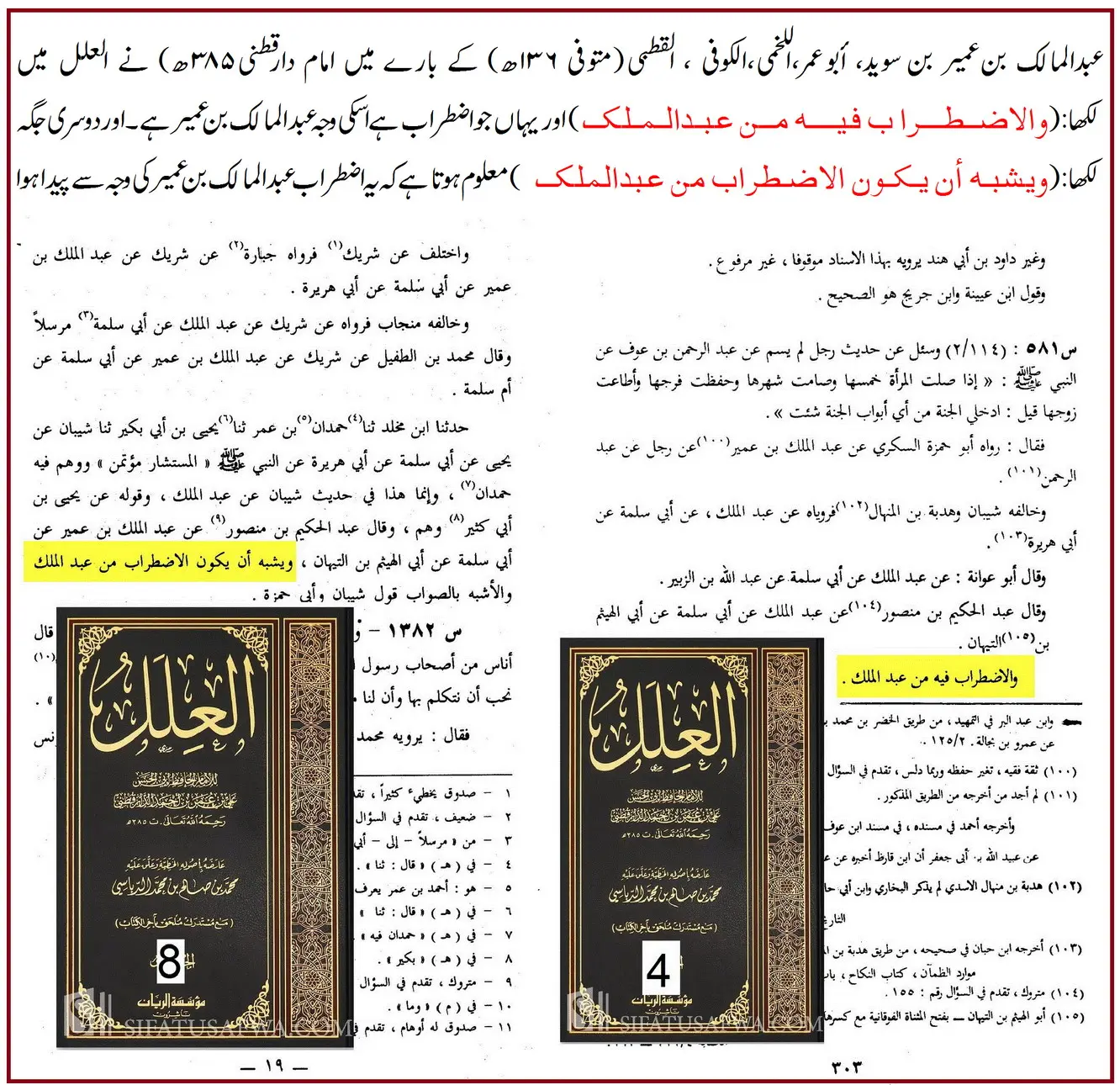
④ Al-Dāraquṭnī
«الاضطراب فيه من عبد الملك بن عمير»
“The inconsistency comes from ʿAbd al-Malik.”
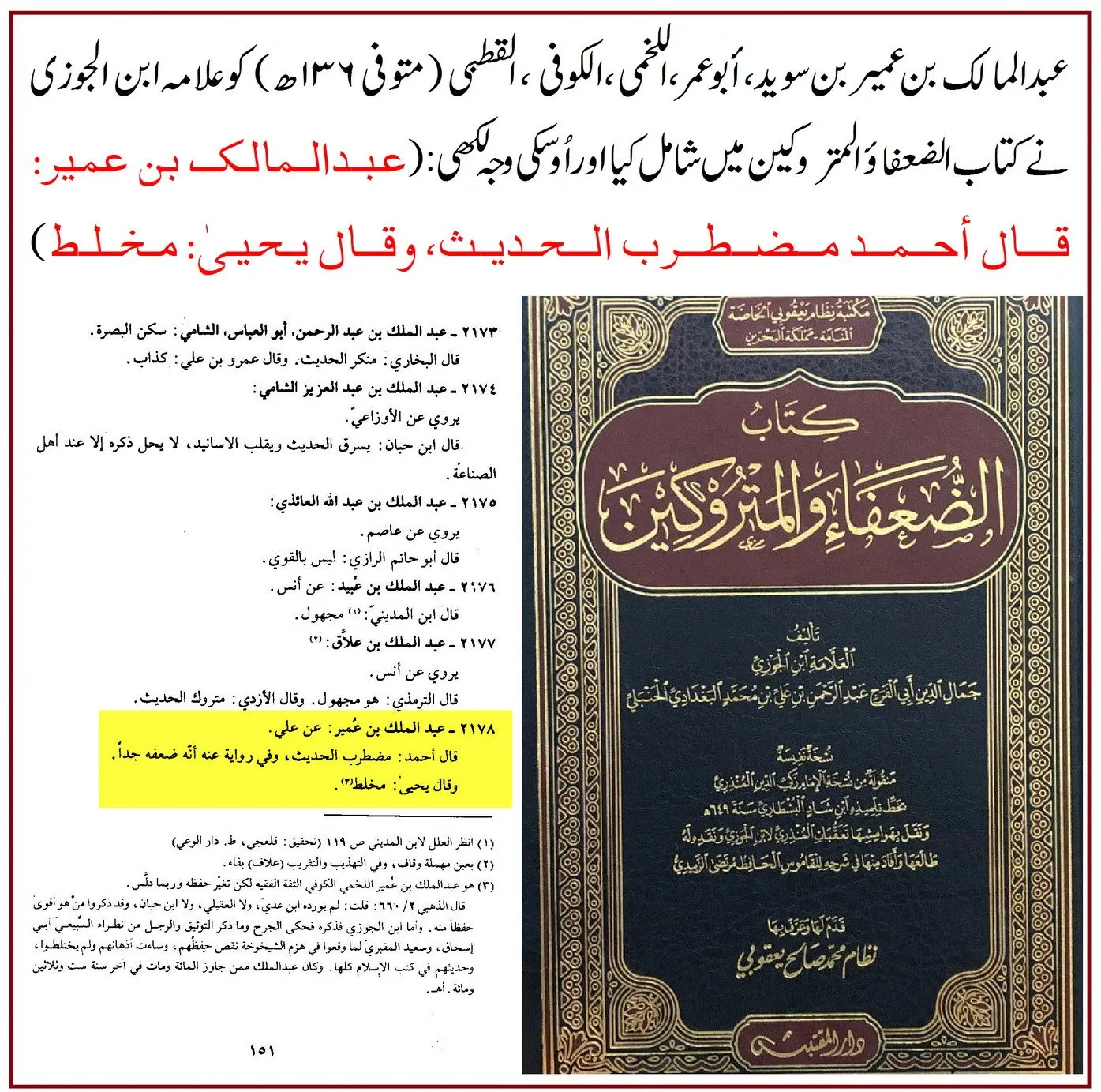
⑤ Ibn al-Jawzī
“He was severely weak.”
⑥ Ibn Ḥajar
«مدلس من الطبقة الثالثة… تغير حفظه لكبر سنه»
“He was a third-level mudallis, and his memory deteriorated in old age.”
② Central narrator weak, mudallis, and inconsistent
③ Leading scholars rejected its attribution to the Prophet ﷺ
➤ Thus, this narration is severely weak and attributing it to the Prophet ﷺ amounts to falsehood.
✔ Shuʿbah
✔ Sufyān al-Thawrī
✔ Zā’idah ibn Qudāmah
✔ Abū ʿAwānah
Ibn Ḥajar said:
«وأخرج له الشيخان من رواية القدماء عنه في الاحتجاج…»
Meaning: Bukhārī and Muslim only relied upon his earlier narrations for proof.
✔ Presence of ʿAbd al-Malik ibn ʿUmayr
✔ Presence of al-Masʿūdī (who became confused)
✔ Presence of Sharik al-Qāḍī (poor memory)
✔ Broken chains (munqaṭiʿ)
Additionally, the texts are contradictory:
➤ In one version, Rabīʿ speaks.
➤ In another, his brother speaks.
➤ Some mention laughter; others mention only greeting.
➤ Some mention the Prophet ﷺ waiting; others omit it entirely.
These are clear signs of disturbance and fabrication.
“You cannot make those in the graves hear.”
This hearing is specific and limited — it does not establish general speech after death.
① There is no authentic proof that the dead generally speak after death.
② The belief that the Prophet ﷺ attends the funeral of every deceased person is a clear fabrication.
③ Such claims fall under the severe warning:
«من كذب عليّ متعمداً فليتبوأ مقعده من النار»
“Whoever intentionally lies upon me, let him take his seat in the Fire.”
May Allah protect us from attributing falsehood to His Messenger ﷺ.
This article addresses an important issue: Can a person speak after death?
Some Barelvi innovators have based a false belief on this claim and alleged that the Noble Prophet ﷺ personally attends and performs the funeral prayer of individuals after their death. This is not only false but amounts to fabricating a lie against the Messenger of Allah ﷺ.
In this article, the following matters will be clarified:
❀ The ruling on the dead speaking in light of the Qur’an, Sunnah, and statements of the Imams
❀ A critical analysis of the chain and text of the fabricated narration
❀ The reality of the narrator ʿAbd al-Malik ibn ʿUmayr and the detailed criticism against him
❀ The ruling regarding his narrations in Ṣaḥīḥ al-Bukhārī
❀ The severe warning against fabricating lies upon the Prophet ﷺ
Through this research, it will become clear — like the brightness of daylight — that:
① The narration about the dead speaking is rejected both in chain and text.
② The belief that the Prophet ﷺ comes to perform someone’s funeral prayer is a clear slander.
③ ʿAbd al-Malik ibn ʿUmayr is criticized with detailed jarḥ and is also a mudallis.
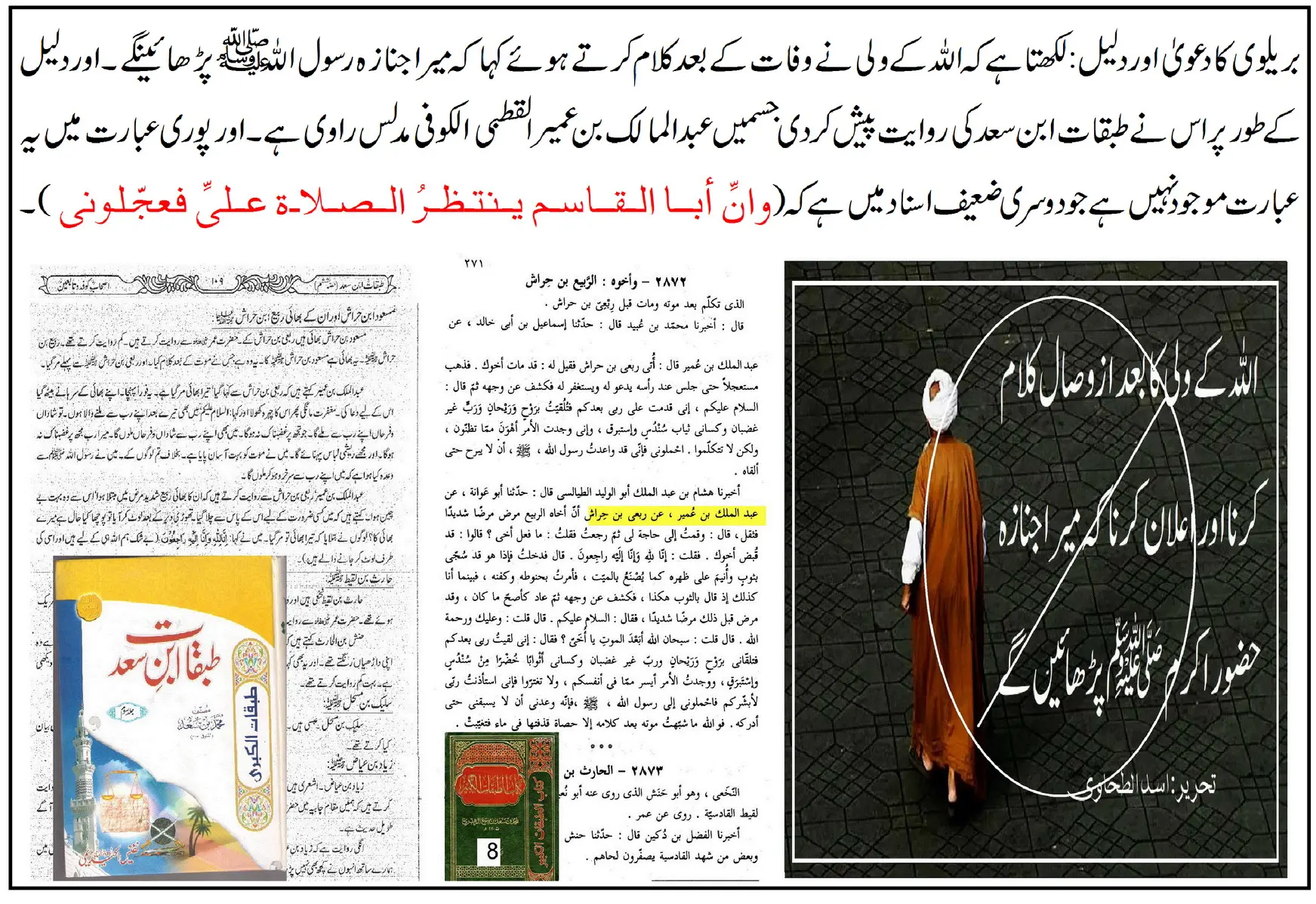
✿ The Claim of the Innovator ✿
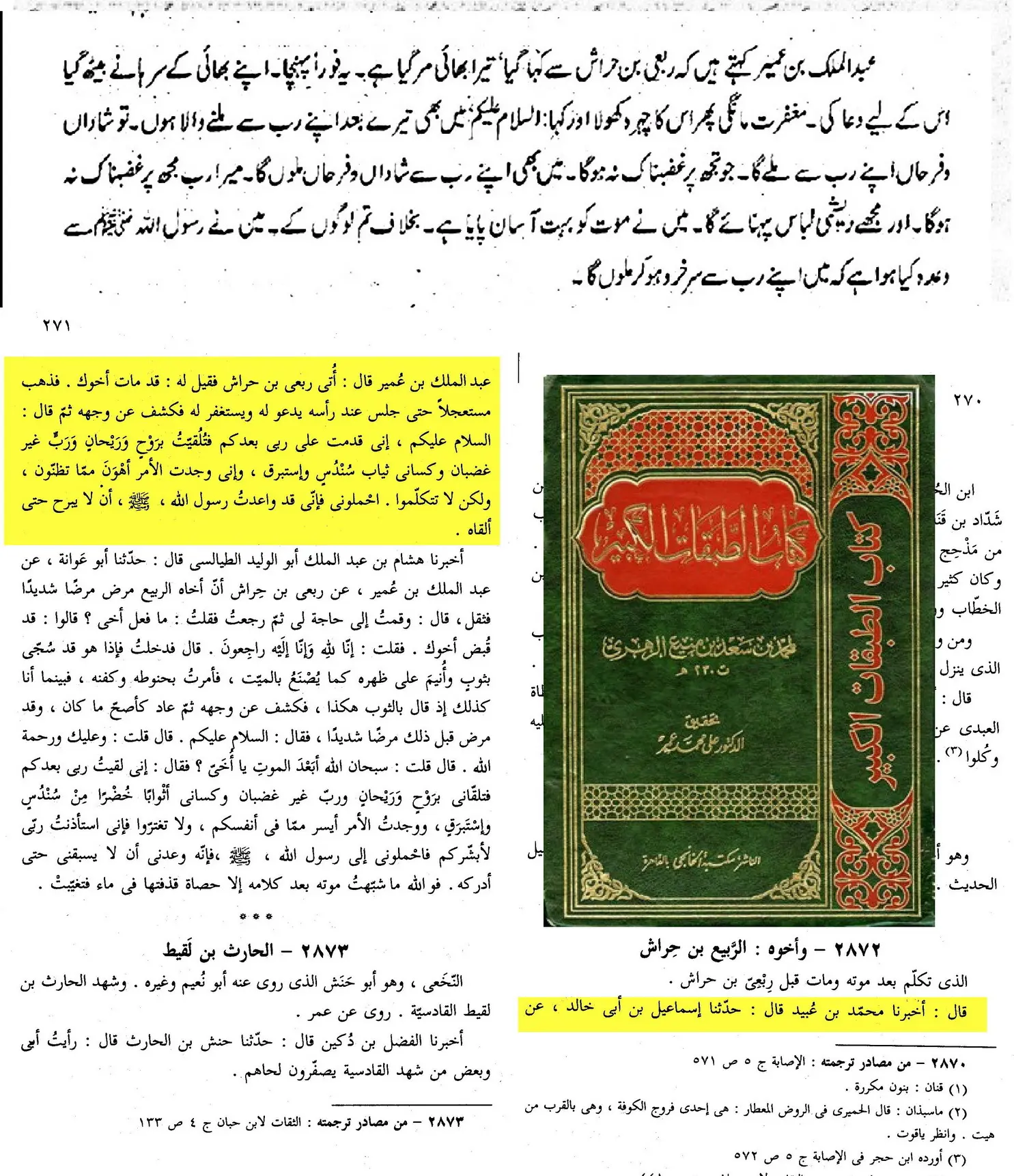
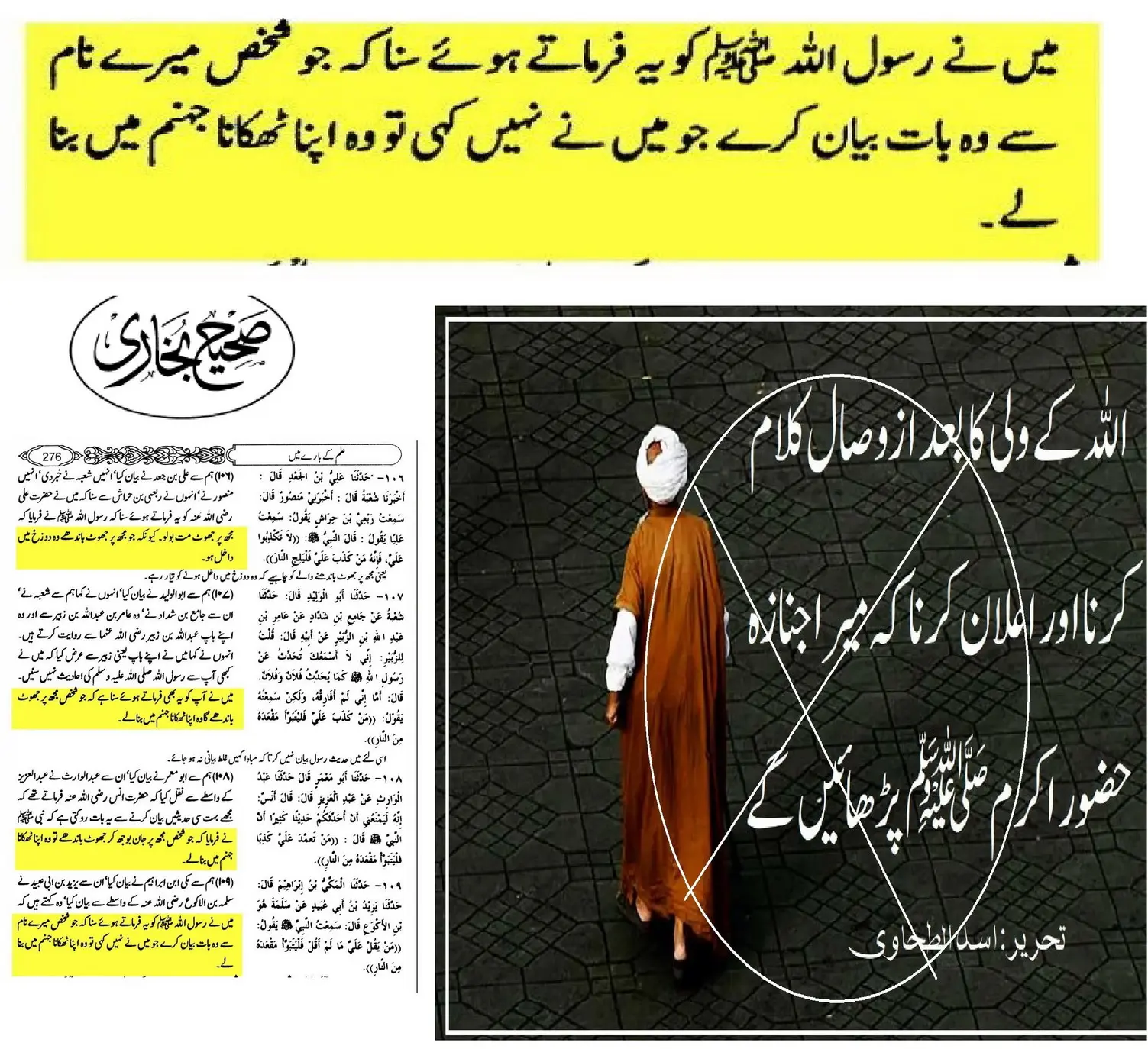
A Barelvi innovator falsely wrote:To support this false claim, he presented a rejected narration concerning the brother of Rabīʿ ibn Khirāsh. In it, it is alleged that after dying he greeted the people and said:“The early Imams held the belief that even after our death, the Noble Prophet ﷺ may perform our funeral prayer.”
This is the original slander that was daringly attributed to the Noble Prophet ﷺ.“Abū al-Qāsim (i.e., the Prophet ﷺ) is waiting to perform my funeral prayer.”
✿ Text of the Narration ✿
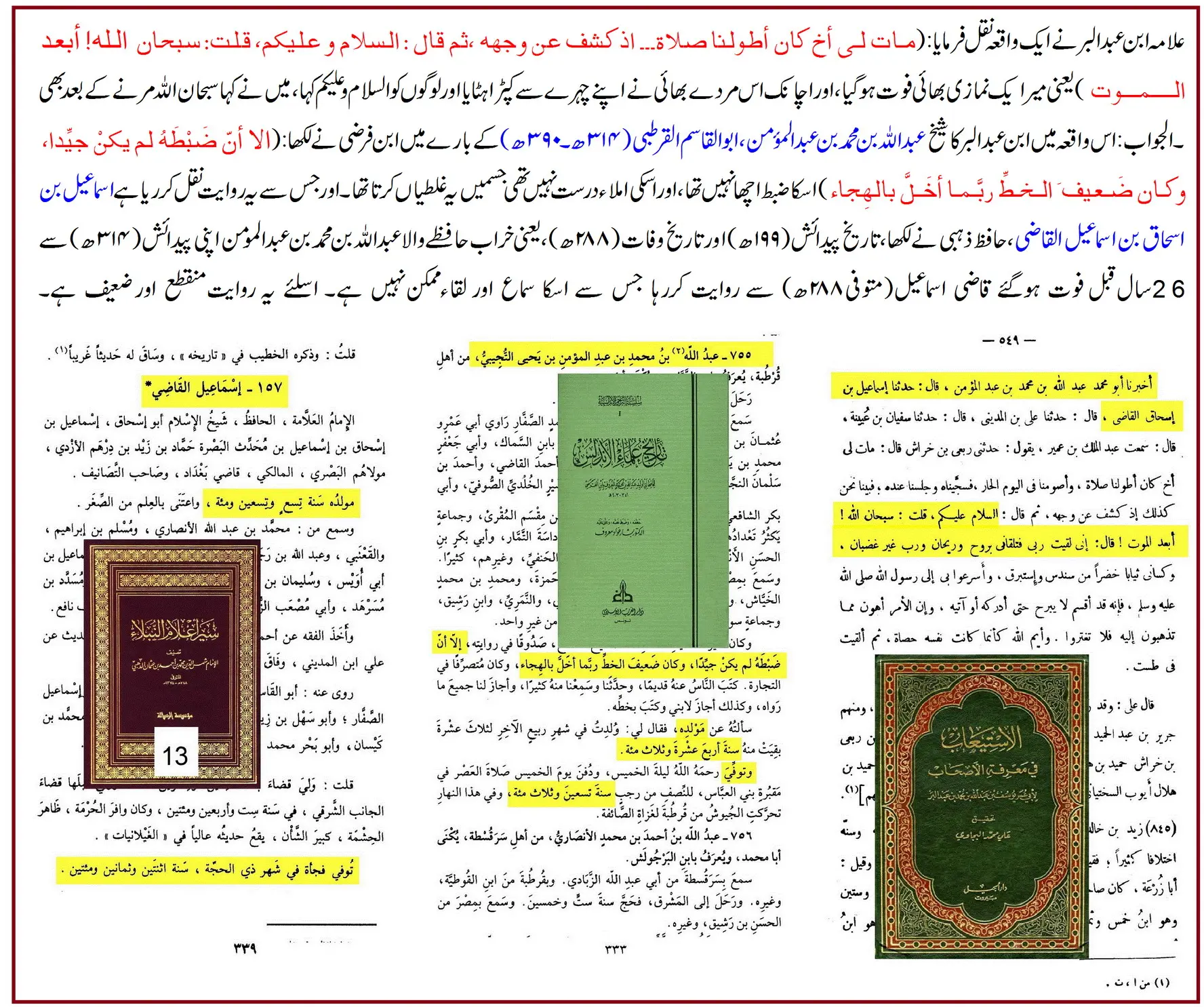
أخبرنا إسحاق الصفار... إلى آخره(Full chain and text as cited)
✿ Translation of the Report ✿
Rabīʿ ibn Khirāsh said:When this reached ʿĀ’ishah رضي الله عنها, she said:“We were four brothers. Among us, Rabīʿ was the most devoted in prayer and fasting. When he died, we were sitting around him and had sent someone to purchase his shroud. Suddenly he uncovered his face and said: ‘Peace be upon you.’ The people replied: ‘Peace be upon you! Are you speaking after death?’ He said: ‘Yes. I met my Lord, and He was pleased with me. He granted me comfort, fragrance, and silk garments. Indeed, Abū al-Qāsim (the Prophet ﷺ) is waiting to perform my funeral prayer, so hasten.’ Then he became like a pebble thrown into water.”
I heard the Messenger of Allah ﷺ say:
“A man from my Ummah will speak after death.”
✿ The Barelvi Argument ✿
From this narration, the innovator concluded:① A person can speak after death.
② The Prophet ﷺ attends to perform funeral prayers.
③ Since al-Dhahabī mentioned it in Siyar Aʿlām al-Nubalā’, it must be authentic.
Critical Examination of the Chain
✿ First Chain (via al-Dhahabī from Abū Nuʿaym)
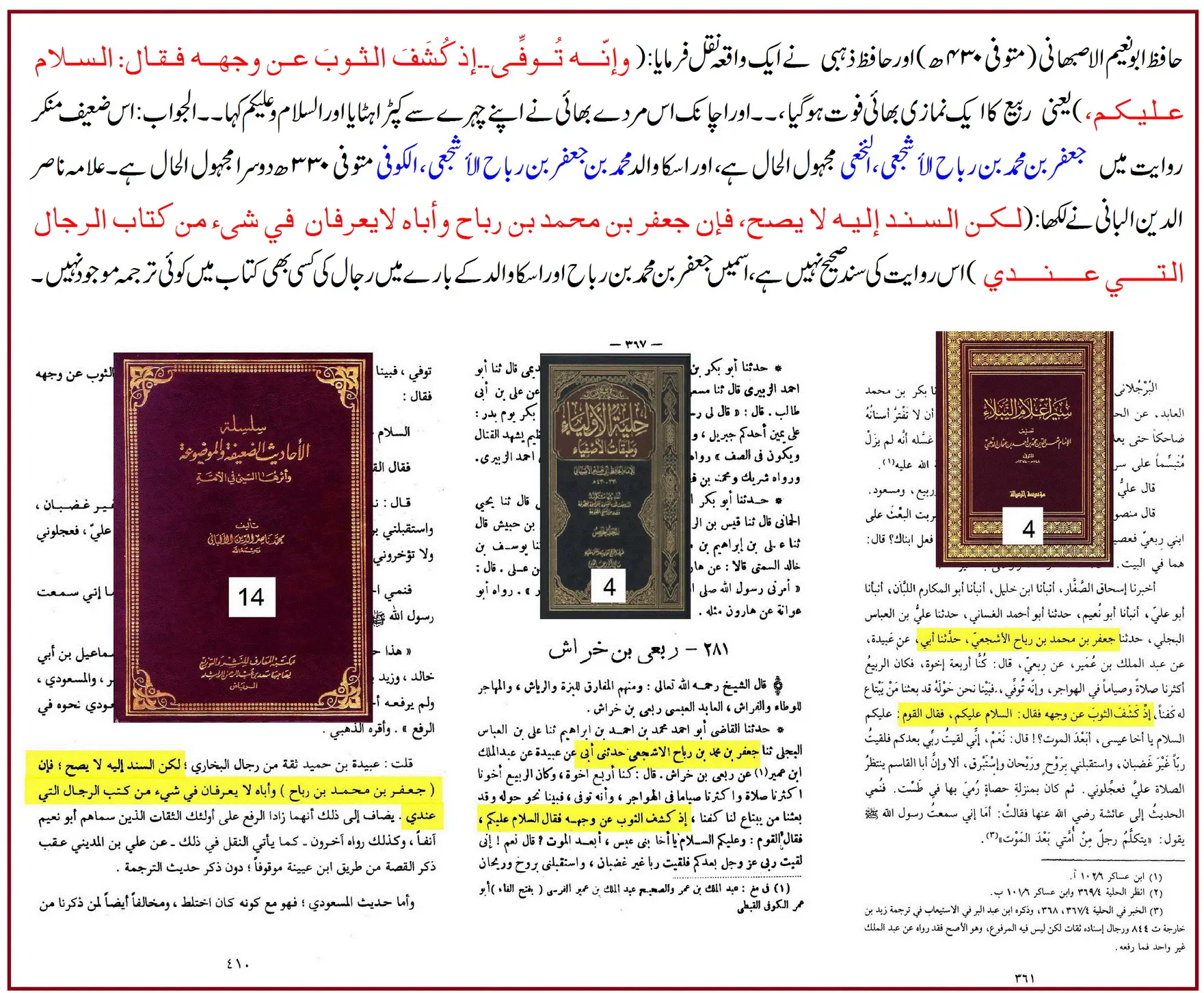
Two narrators in this chain are unknown:① Jaʿfar ibn Muḥammad ibn Riyāḥ al-Ashjaʿī – Unknown (Majhūl al-Ḥāl)
② His father – Also unknown
➤ Therefore, the chain is severely weak.
✿ Ruling of Shaykh al-Albānī رحمه الله
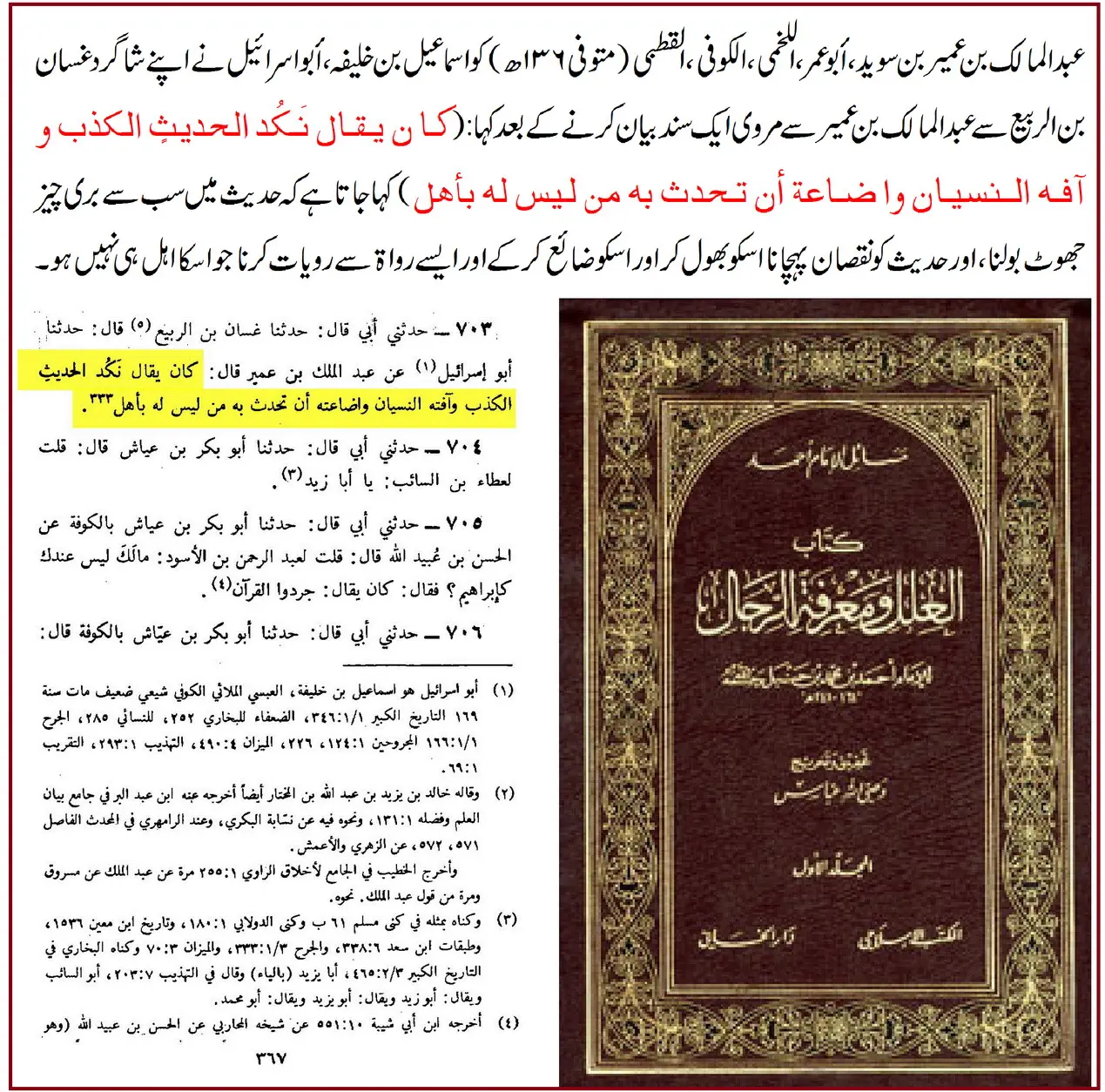
قال الألباني: «إسنادُه لا يصحُّ؛ لأنَّ جعفرَ بنَ محمدِ بنِ رياحٍ الأشجعيَّ وأباهُ مجهولان.»
Reference: السلسلة الضعيفة 4/367
Translation:
“The chain is not authentic because Jaʿfar ibn Muḥammad ibn Riyāḥ al-Ashjaʿī and his father are both unknown.”
✿ Ruling of Shuʿayb al-Arna’ūṭ رحمه الله
قال شعيب الأرناؤوط: «رِجالُ إسنادِه ثقاتٌ، لكنَّه موقوفٌ لا مرفوعٌ، والصوابُ وقفُه على عبدِ الملكِ بنِ عُميرٍ.»
Reference: تعليقه على حلية الأولياء 4/367
Translation:
“The narrators are trustworthy, but it is mawqūf, not marfūʿ. The correct view is that it stops at ʿAbd al-Malik ibn ʿUmayr.”
➤ Therefore, attributing it to the Prophet ﷺ is incorrect.
✿ The Status of ʿAbd al-Malik ibn ʿUmayr ✿
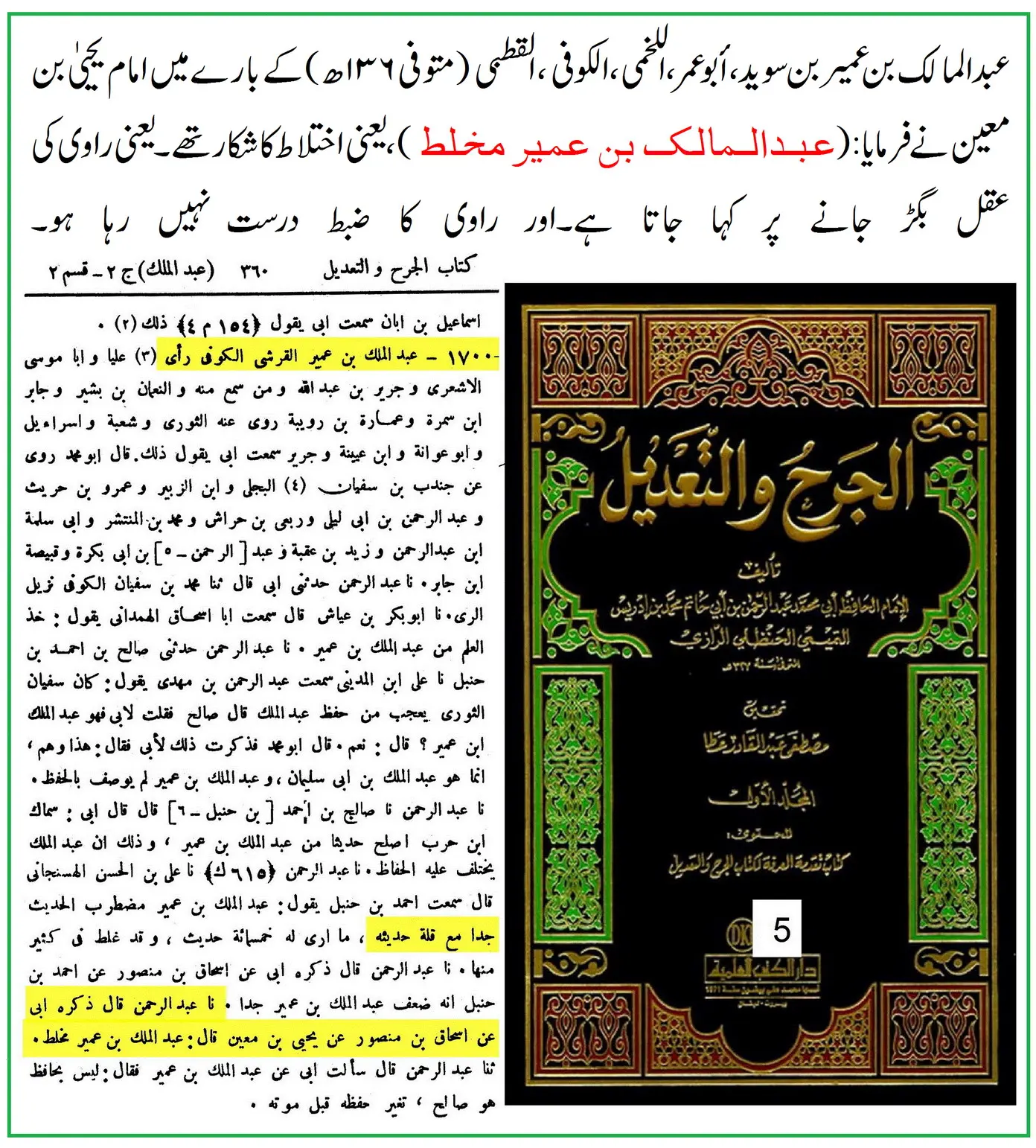
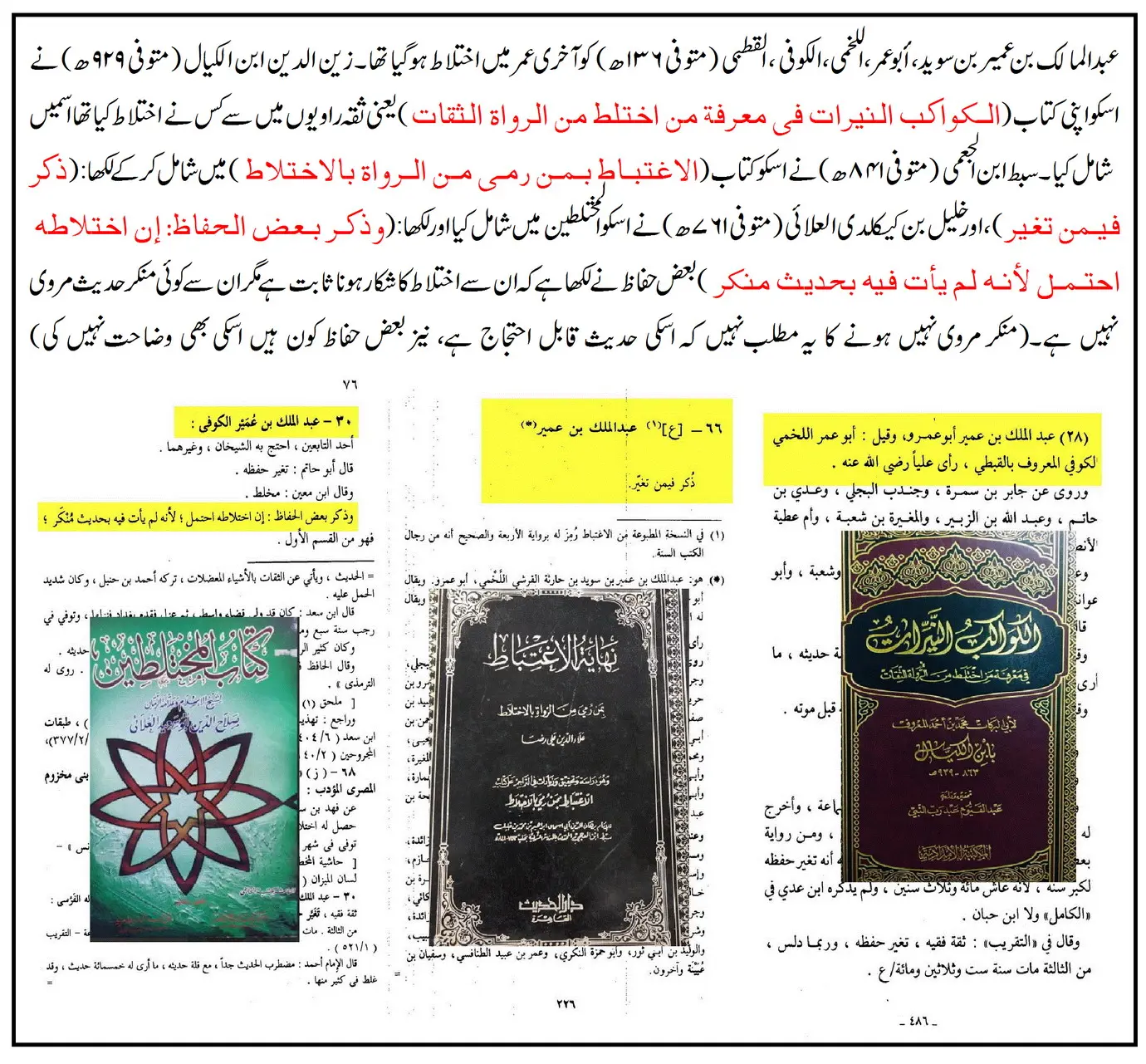
Major scholars criticized him severely:① Yaḥyā ibn Maʿīn
«عبد الملك بن عمير مخلط»
Reference: الجرح والتعديل 6/330
“He was confused (mukhlit).”
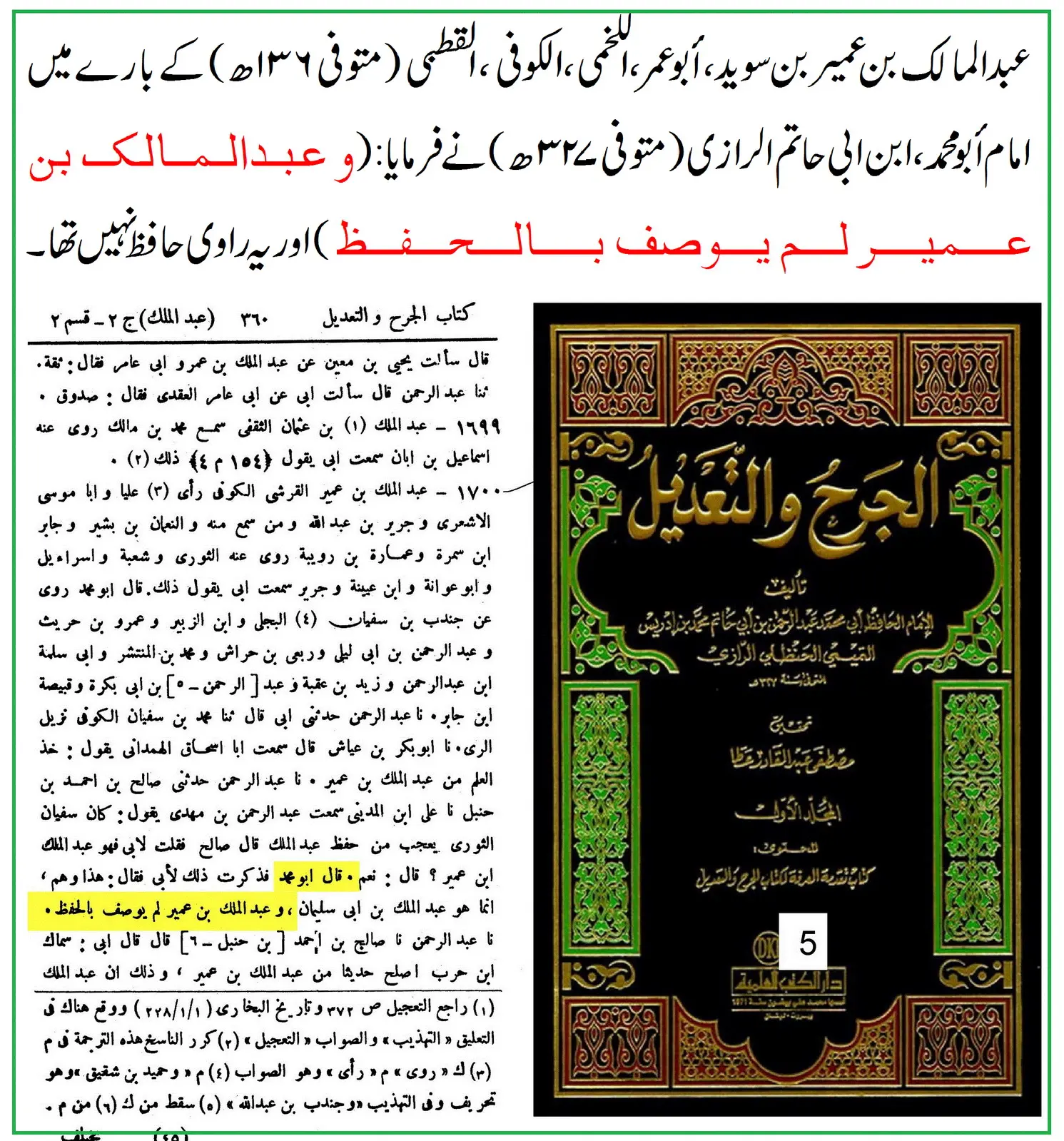
② Abū Ḥātim al-Rāzī
«ليس بحافظ… تغير حفظه قبل موته»
“He was not strong in memory and it deteriorated before his death.”
③ Imām Aḥmad
«مضطرب الحديث جداً… وقد غلط في كثير منها»
“He was extremely inconsistent in ḥadīth and made many mistakes.”
④ Al-Dāraquṭnī
«الاضطراب فيه من عبد الملك بن عمير»
“The inconsistency comes from ʿAbd al-Malik.”
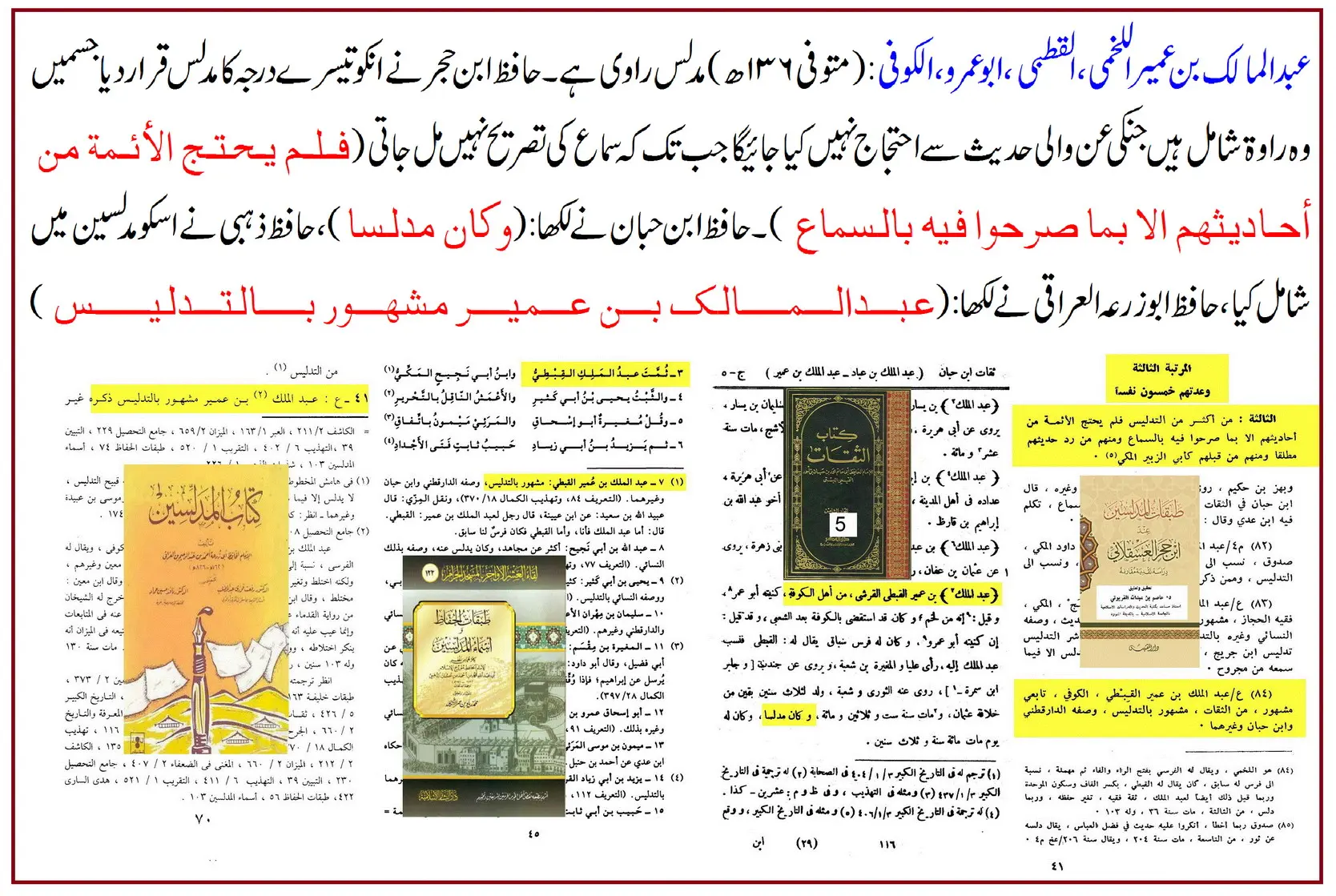
⑤ Ibn al-Jawzī
“He was severely weak.”
⑥ Ibn Ḥajar
«مدلس من الطبقة الثالثة… تغير حفظه لكبر سنه»
“He was a third-level mudallis, and his memory deteriorated in old age.”
Reference: فتح الباري 1/391
✿ Summary of Chain Defects ✿
① Unknown narrators in the chain② Central narrator weak, mudallis, and inconsistent
③ Leading scholars rejected its attribution to the Prophet ﷺ
➤ Thus, this narration is severely weak and attributing it to the Prophet ﷺ amounts to falsehood.
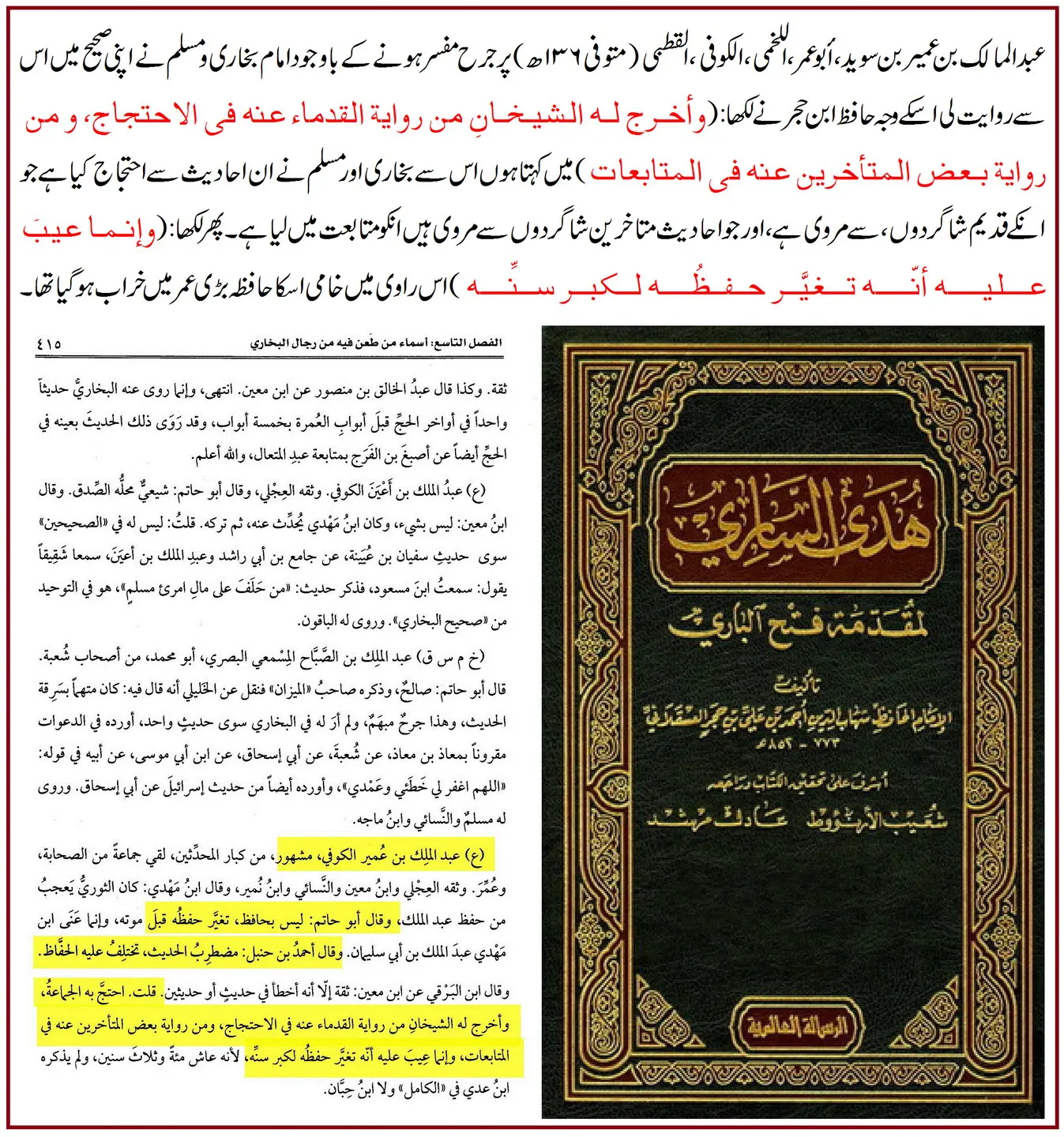
His Narrations in Ṣaḥīḥ al-Bukhārī
Imām al-Bukhārī only narrated from him through his early trustworthy students such as:✔ Shuʿbah
✔ Sufyān al-Thawrī
✔ Zā’idah ibn Qudāmah
✔ Abū ʿAwānah
Ibn Ḥajar said:
«وأخرج له الشيخان من رواية القدماء عنه في الاحتجاج…»
Reference: فتح الباري 1/391
Meaning: Bukhārī and Muslim only relied upon his earlier narrations for proof.
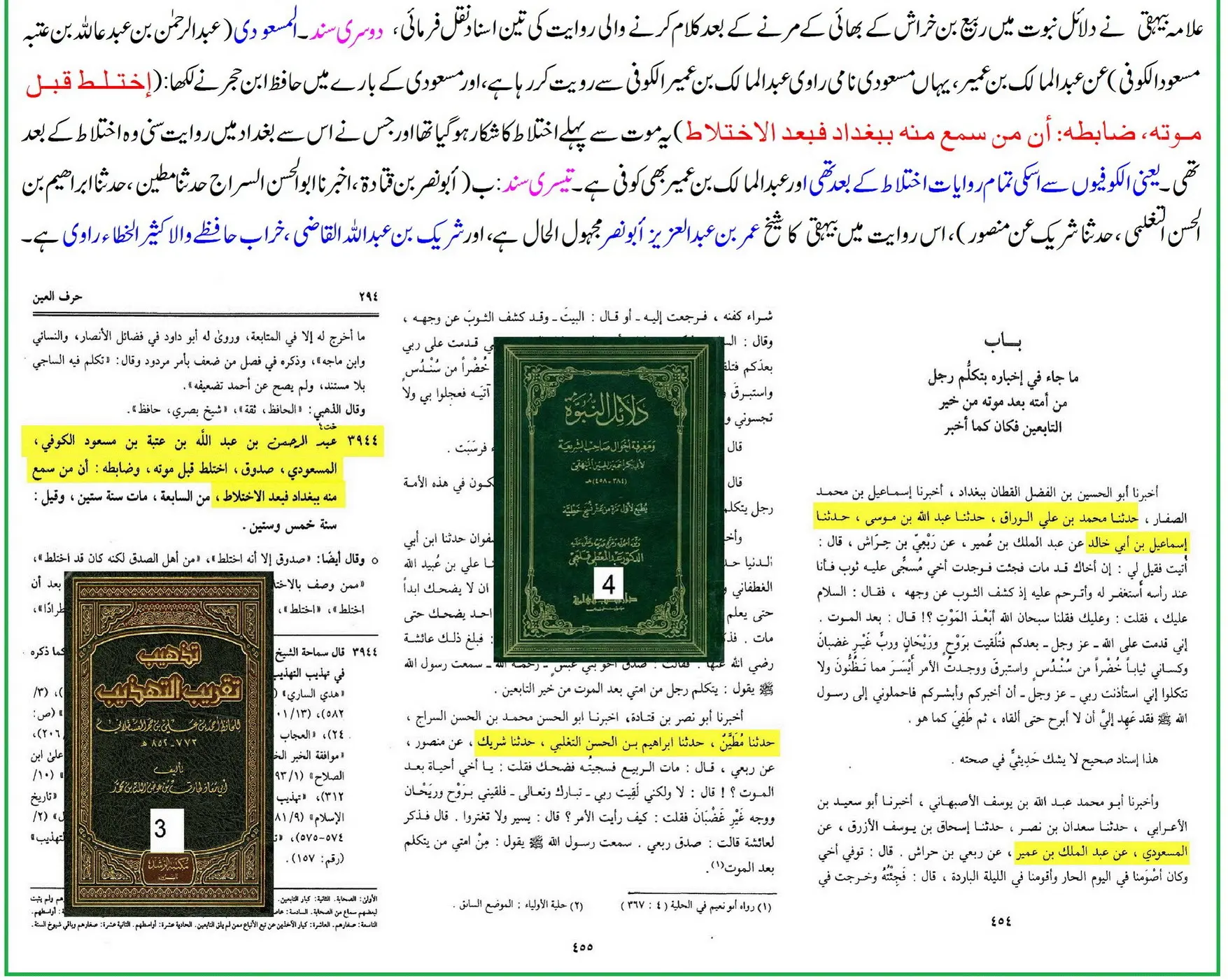
Further Chains (Ibn Saʿd, al-Bayhaqī, Sharik al-Qāḍī)
All remaining chains contain serious defects:✔ Presence of ʿAbd al-Malik ibn ʿUmayr
✔ Presence of al-Masʿūdī (who became confused)
✔ Presence of Sharik al-Qāḍī (poor memory)
✔ Broken chains (munqaṭiʿ)
Additionally, the texts are contradictory:
➤ In one version, Rabīʿ speaks.
➤ In another, his brother speaks.
➤ Some mention laughter; others mention only greeting.
➤ Some mention the Prophet ﷺ waiting; others omit it entirely.
These are clear signs of disturbance and fabrication.
Principled Refutation
❖ Qur’an
﴿وَمَا أَنْتَ بِمُسْمِعٍ مَنْ فِي الْقُبُورِ﴾
Reference: فاطر: 22
“You cannot make those in the graves hear.”
❖ Ḥadīth
“When a servant is placed in the grave, he hears the footsteps (of those departing).”
Reference: البخاري 1338
This hearing is specific and limited — it does not establish general speech after death.
 Final Conclusion
① There is no authentic proof that the dead generally speak after death.② The belief that the Prophet ﷺ attends the funeral of every deceased person is a clear fabrication.
③ Such claims fall under the severe warning:
«من كذب عليّ متعمداً فليتبوأ مقعده من النار»
Reference: البخاري 108، 109
“Whoever intentionally lies upon me, let him take his seat in the Fire.”
May Allah protect us from attributing falsehood to His Messenger ﷺ.

