

Compiled by: Abu Hamzah Salafi
الحمد للہ وحدہ، والصلوٰۃ والسلام علی من لا نبی بعدہ۔
All praise is for Allah alone, and peace and blessings be upon the one after whom there is no Prophet.
❀ Our objective is to academically analyze this allegation in the light of historical evidence.
❀ We shall demonstrate that Caliph Abu Yusuf was, in reality, a rejecter of blind imitation (taqlid) and a proponent of enforcing the Qur’an and Sunnah.
❀ During his era, subsidiary juristic branches were abandoned, scholars of Ahl al-Hadith were gathered, and rulings were derived based upon the books of Sihah and Sunan.
❀ It will become clear that some historians misunderstood mere agreement in deduction (istنباط) as taqlid, whereas the reality is contrary to this assumption.
② Foundation upon Qur’an and Sunnah: «لا يفتون إلا بالكتاب العزيز والسنة النبوية»
③ Encouragement of Ijtihad: «تكون أحكامهم بما يؤدي إليه اجتهادهم»
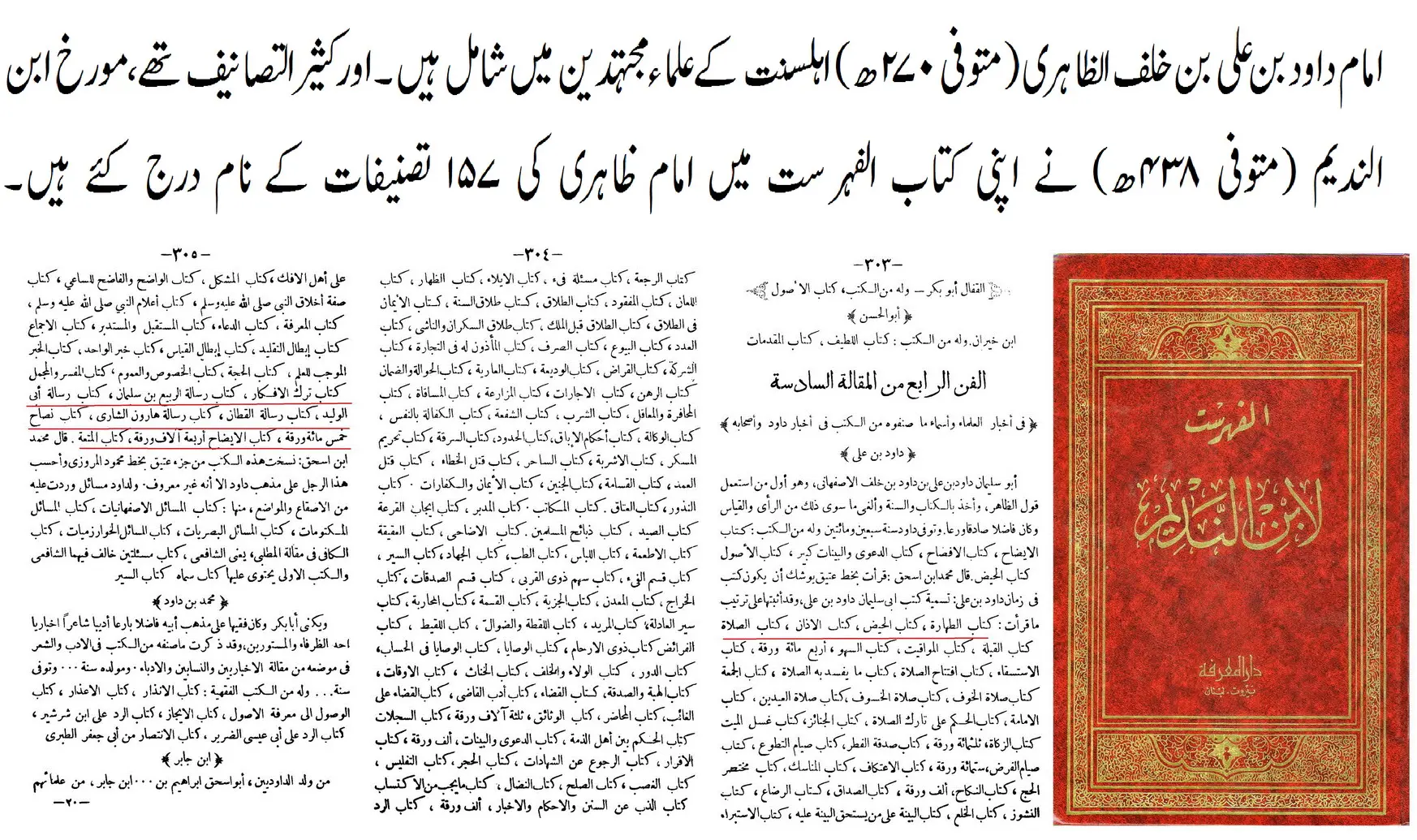
❀ Had he been a follower of Zahiri Fiqh, he would have enforced the books or principles of Dawud al-Zahiri — yet no such evidence exists.
❀ The reality is that he abandoned taqlid and promoted ijtihad and deduction — which is the pure methodology of Ahl al-Hadith.
① Sahih al-Bukhari
② Sahih Muslim
③ Jami‘ al-Tirmidhi
④ al-Muwatta’ of Imam Malik
⑤ Sunan Abi Dawud
⑥ Sunan al-Nasa’i
⑦ Sunan al-Bazzar
⑧ Musannaf Ibn Abi Shaybah
⑨ Sunan al-Daraqutni
⑩ Sunan al-Bayhaqi
❀ He gathered Ahl al-Hadith scholars to derive rulings directly from hadith collections.
❀ He regarded the Sihah and Sunan as primary sources.
Nowhere is it mentioned that he was a follower of Zahiri Fiqh.
② Truth lies in the Sunnah (Hadith books).
③ If people turn away, the Shari‘ah will be enforced by authority.
❀ This refers to methodological similarity in deduction, not blind imitation.
❀ Had taqlid been intended, the books of Dawud al-Zahiri would have been enforced.
Translation: He ordered that Bismillah be recited aloud at the beginning of al-Fatihah in prayer.
Translation: At times, he executed those who drank alcohol.
These rulings contradict the established positions of Zahiri jurists, including Ibn Hazm.
Translation: One who does not consider Bismillah a verse has the choice to recite it or not.
Translation: The punishment for drinking alcohol is forty lashes, and this is our position.
Yet Caliph Abu Yusuf sometimes ordered execution — contrary to the Zahiri stance.
② He abandoned speculative juristic branches and gathered Ahl al-Hadith scholars to derive rulings from the Sihah and Sunan.
③ His practical rulings differed from Zahiri positions.
④ Therefore, the claim that he was a follower of Zahiri Fiqh is entirely baseless and historically inaccurate.
The reality is that he was a Caliph upon the methodology of Ahl al-Hadith, who established the Qur’an and Sunnah as the sole criterion in his dominion.



الحمد للہ وحدہ، والصلوٰۃ والسلام علی من لا نبی بعدہ۔
All praise is for Allah alone, and peace and blessings be upon the one after whom there is no Prophet.
✦ Introduction
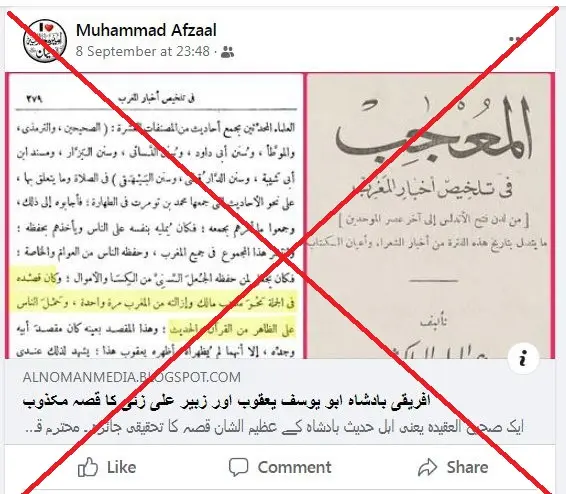
This research article is being written to clarify a highly important academic issue. Some individuals from the Hanafi and Deobandi circles allege that Caliph Abu Yusuf Ya‘qub ibn Yusuf al-Marrakushi (d. 595 AH) was a follower (muqallid) of Zahiri Fiqh, or that he enforced Zahiri jurisprudence in his kingdom.❀ Our objective is to academically analyze this allegation in the light of historical evidence.
❀ We shall demonstrate that Caliph Abu Yusuf was, in reality, a rejecter of blind imitation (taqlid) and a proponent of enforcing the Qur’an and Sunnah.
❀ During his era, subsidiary juristic branches were abandoned, scholars of Ahl al-Hadith were gathered, and rulings were derived based upon the books of Sihah and Sunan.
❀ It will become clear that some historians misunderstood mere agreement in deduction (istنباط) as taqlid, whereas the reality is contrary to this assumption.
✦ Testimony of Ibn Khallikan
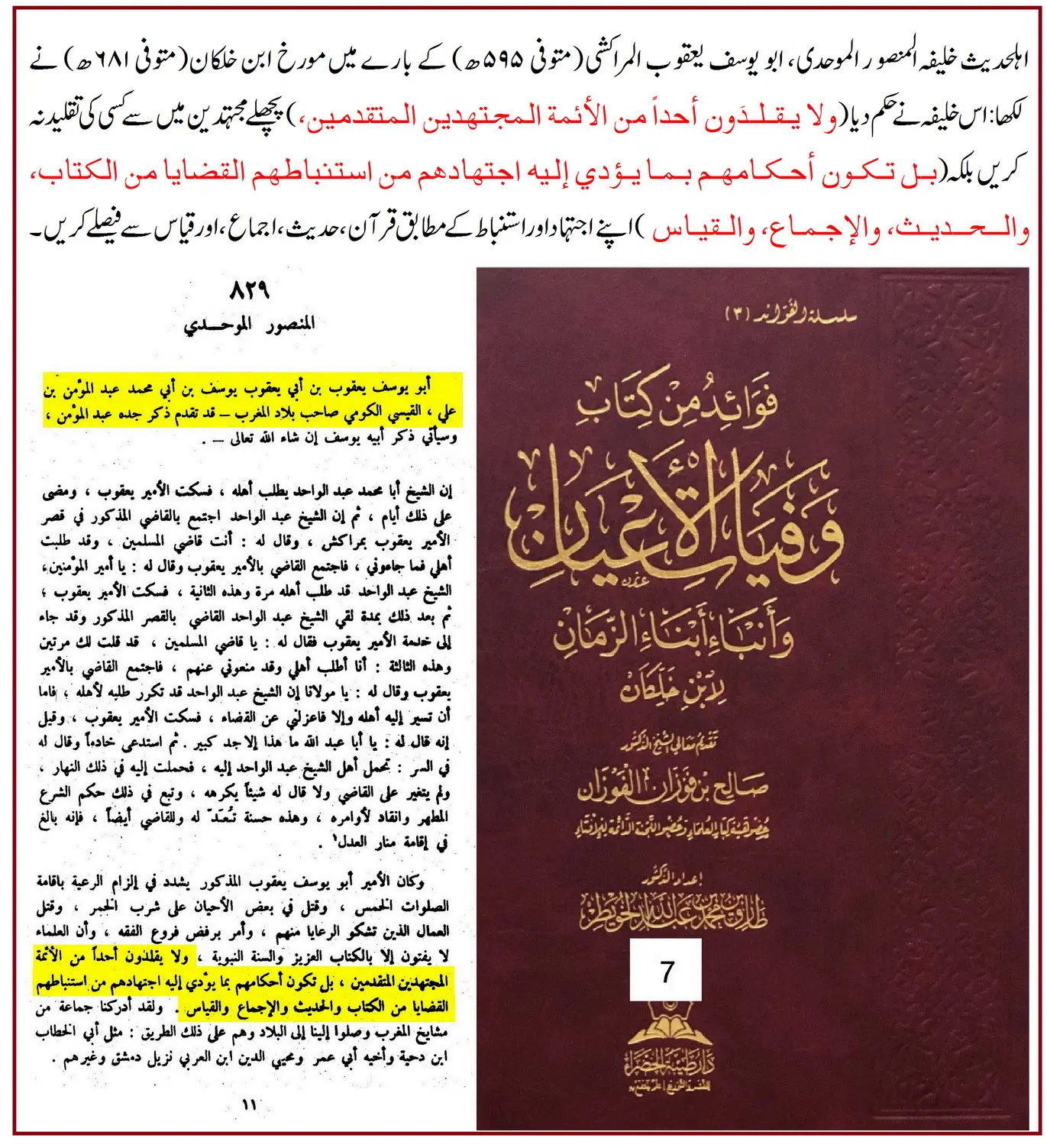
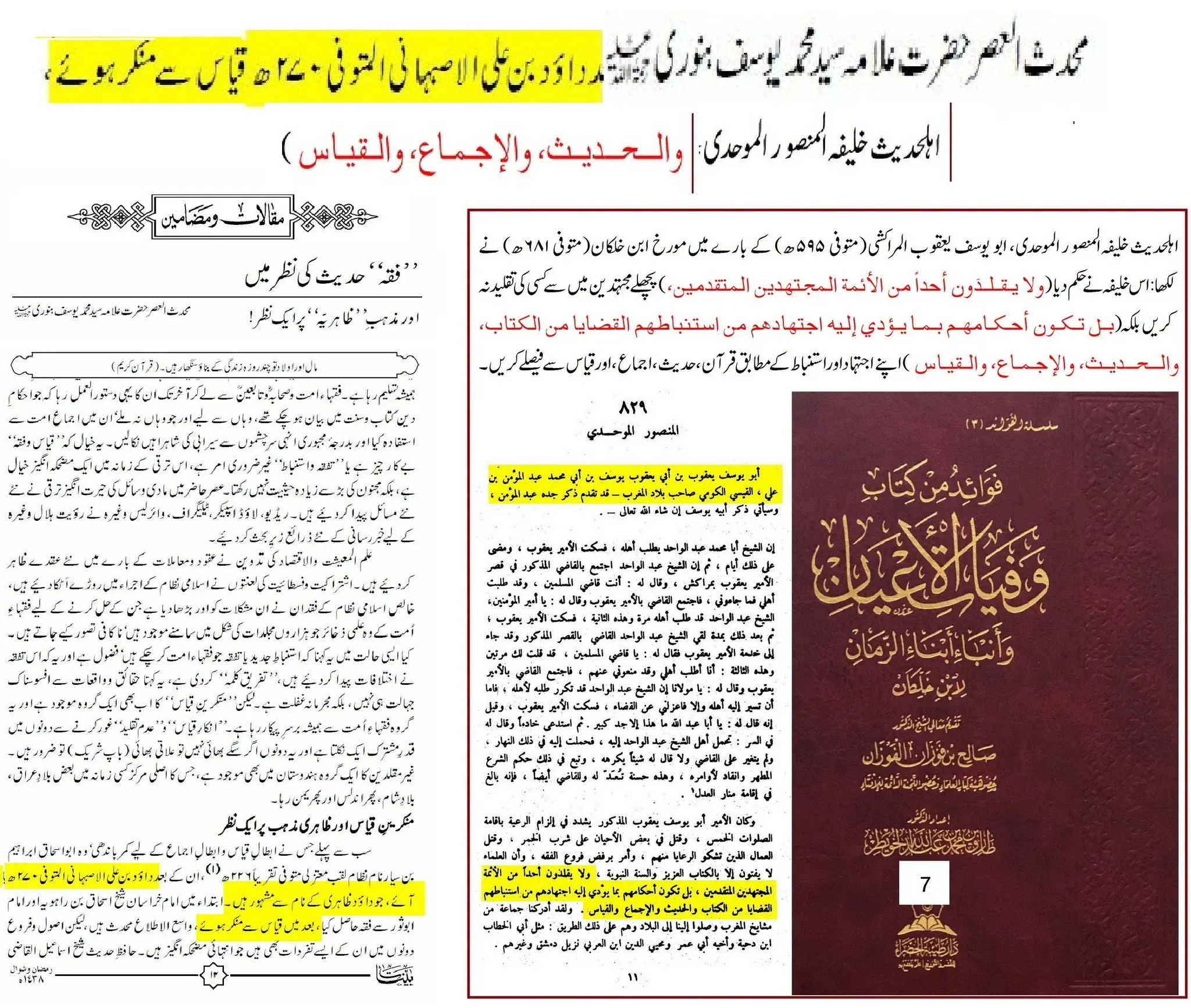
The renowned historian Ibn Khallikan (d. 681 AH), while describing the qualities and methodology of Caliph Abu Yusuf Ya‘qub al-Marrakushi, wrote:Arabic Text
«وكان ملكاً جواداً عادلاً متمسكاً بالشرع المطهر، يأمر بالمعروف وينهى عن المنكر كما ينبغي من غير محاباة ويصلي بالناس الصلوات الخمس، ويلبس الصوف، ويقف للمرأة وللضعيف ويأخذ لهم بالحق. وأوصى أن يدفن على قارعة الطريق ليترحم عليه من يمر به»
Reference: Wafayat al-A‘yan wa Anba’ Abna’ al-Zaman
Translation
He was a generous and just king, firmly adhering to the purified Shari‘ah. He enjoined good and forbade evil without favoritism. He led the people in the five daily prayers, wore woolen garments, would stand for women and the weak, and secured their rights. He instructed that he be buried by the roadside so that passersby might supplicate for him.✦ His Juristic Methodology
Ibn Khallikan further writes:Arabic Text
«وأمر برفض فروع الفقه، وأن العلماء لا يفتون إلا بالكتاب العزيز والسنة النبوية، ولا يقلدون أحداً من الأئمة المجتهدين المتقدمين، بل تكون أحكامهم بما يؤدي إليه اجتهادهم من استنباطهم القضايا من الكتاب والحديث والإجماع والقياس»
Reference: Wafayat al-A‘yan
Translation
He ordered that subsidiary juristic branches be abandoned, and that scholars should issue verdicts only in light of the Noble Qur’an and the Prophetic Sunnah. They were not to imitate any of the earlier Mujtahid Imams; rather, their rulings were to be based upon what their own ijtihad led them to derive from the Qur’an, Hadith, consensus (ijma‘), and analogy (qiyas).✦ Conclusion from This Text
① Negation of Taqlid: «ولا يقلدون أحداً من الأئمة»② Foundation upon Qur’an and Sunnah: «لا يفتون إلا بالكتاب العزيز والسنة النبوية»
③ Encouragement of Ijtihad: «تكون أحكامهم بما يؤدي إليه اجتهادهم»
❀ Had he been a follower of Zahiri Fiqh, he would have enforced the books or principles of Dawud al-Zahiri — yet no such evidence exists.
❀ The reality is that he abandoned taqlid and promoted ijtihad and deduction — which is the pure methodology of Ahl al-Hadith.
✦ Testimony of ‘Abd al-Wahid al-Marrakushi
The prominent historian ‘Abd al-Wahid ibn ‘Ali al-Marrakushi (d. 647 AH) writes in al-Mu‘jib fi Talkhis Akhbar al-Maghrib:Arabic Text
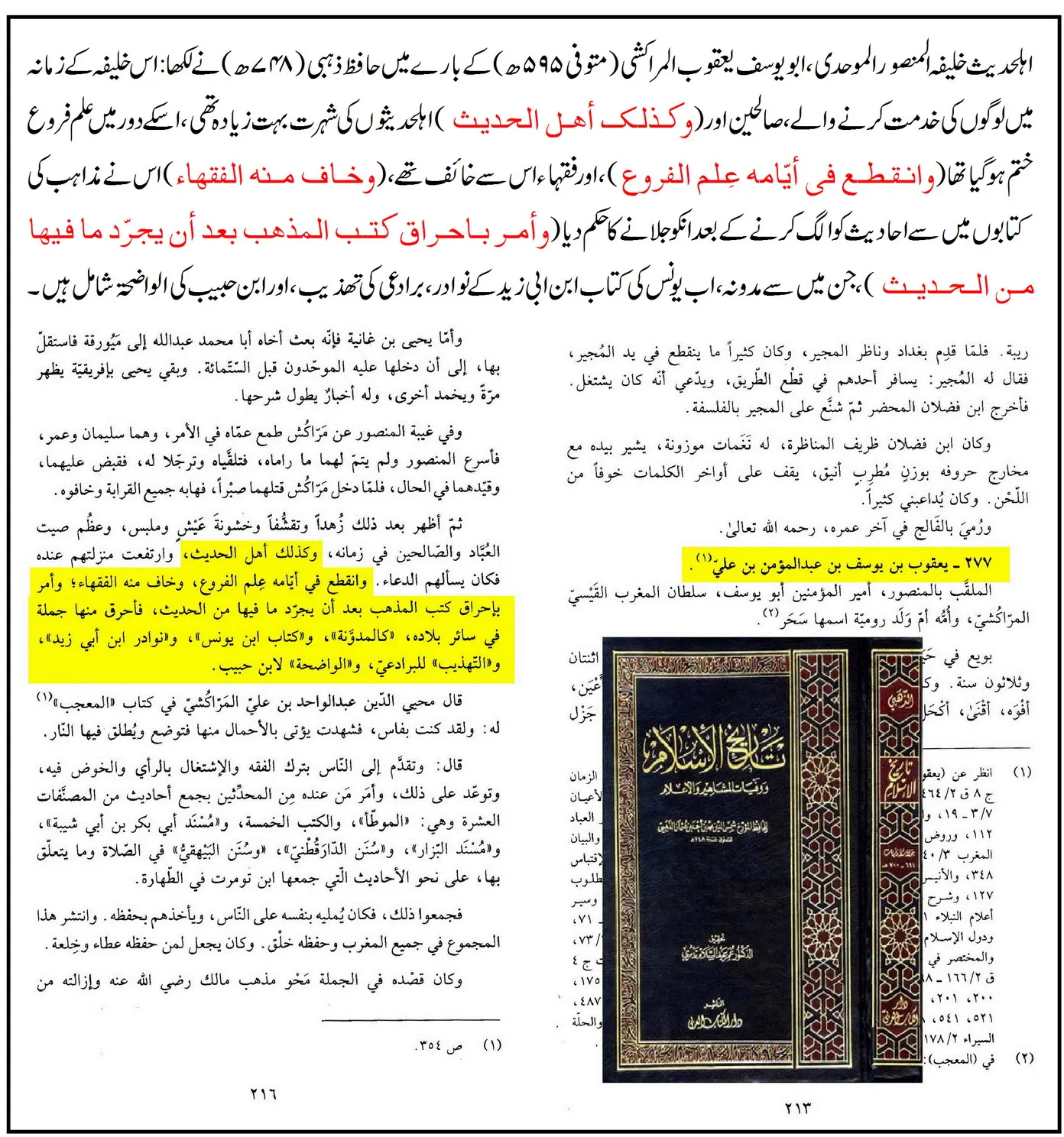
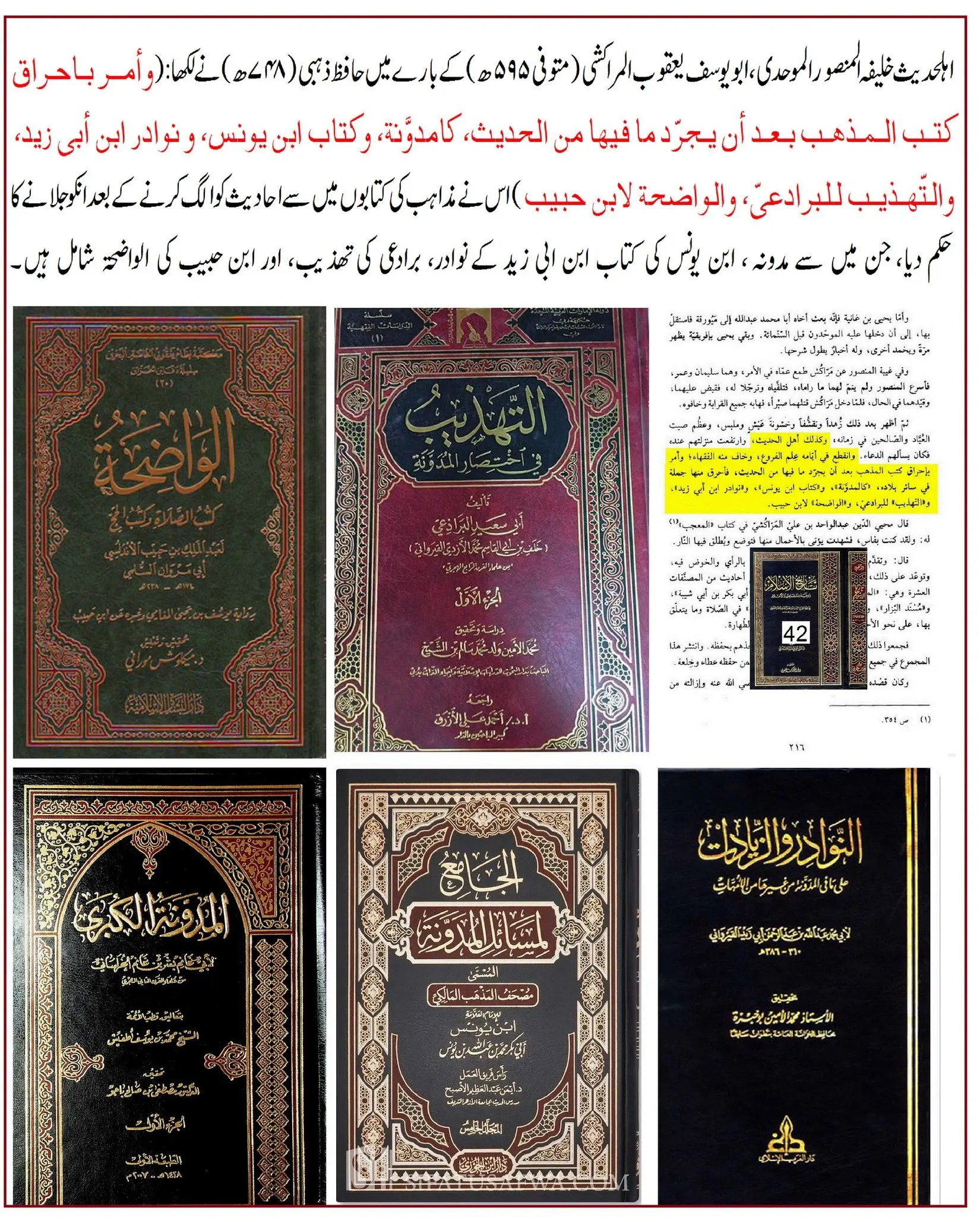
«وتقدم إلى الناس في ترك الاشتغال بعلم الرأي والخوض في شيء منه، وأمر جماعة ممن كان عنده من العلماء المحدثين بجمع أحاديث من المصنفات العشرة: الصحيحين، والترمذي، والموطأ، وسنن أبي داود، وسنن النسائي، وسنن البزار، ومسند ابن شيبة، وسنن الدارقطني، وسنن البيهقي في الصلاة وما يتعلق بها»
Reference: al-Mu‘jib fi Talkhis Akhbar al-Maghrib
Translation
He instructed the people to abandon engagement in speculative juristic opinion (ra’y) and not to delve into it in any respect. He commanded a group of hadith scholars in his presence to compile hadiths related to prayer and its rulings from the following ten works:① Sahih al-Bukhari
② Sahih Muslim
③ Jami‘ al-Tirmidhi
④ al-Muwatta’ of Imam Malik
⑤ Sunan Abi Dawud
⑥ Sunan al-Nasa’i
⑦ Sunan al-Bazzar
⑧ Musannaf Ibn Abi Shaybah
⑨ Sunan al-Daraqutni
⑩ Sunan al-Bayhaqi
✦ Important Point
❀ He ordered the abandonment of speculative opinion.❀ He gathered Ahl al-Hadith scholars to derive rulings directly from hadith collections.
❀ He regarded the Sihah and Sunan as primary sources.
Nowhere is it mentioned that he was a follower of Zahiri Fiqh.
✦ Testimony of Hafiz al-Dhahabi
Imam Shams al-Din al-Dhahabi (d. 748 AH) narrates:Arabic Text
«دَخَلْتُ عَلَى أَمِيرِ الْمُؤْمِنِينَ يُوسُف… فَقَالَ: لَيْسَ إِلَّا هَذَا، وَأَشَارَ إِلَى الْمُصْحَفِ، أَوْ هَذَا، وَأَشَارَ إِلَى (سُنَن أَبِي دَاوُدَ)، أَوْ هَذَا، وَأَشَارَ إِلَى السَّيْفِ»
Reference: Tarikh al-Islam
Translation
He said: “There is nothing except this,” pointing to the Mushaf; “or this,” pointing to Sunan Abi Dawud; “or this,” pointing to the sword.✦ Points Derived
① Truth lies in the Qur’an.② Truth lies in the Sunnah (Hadith books).
③ If people turn away, the Shari‘ah will be enforced by authority.
✦ Testimony of Salah al-Din al-Safadi
Arabic Text
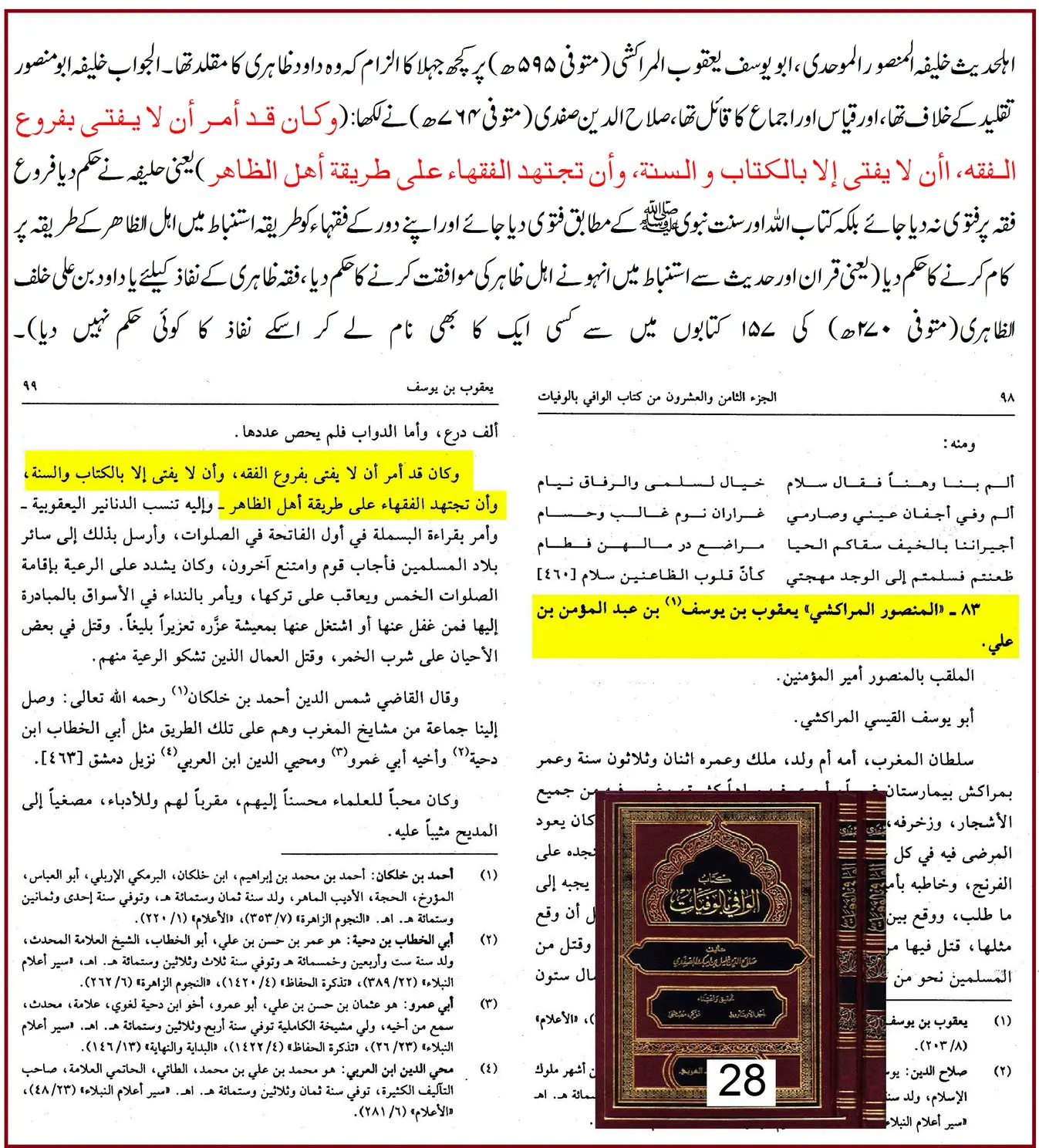
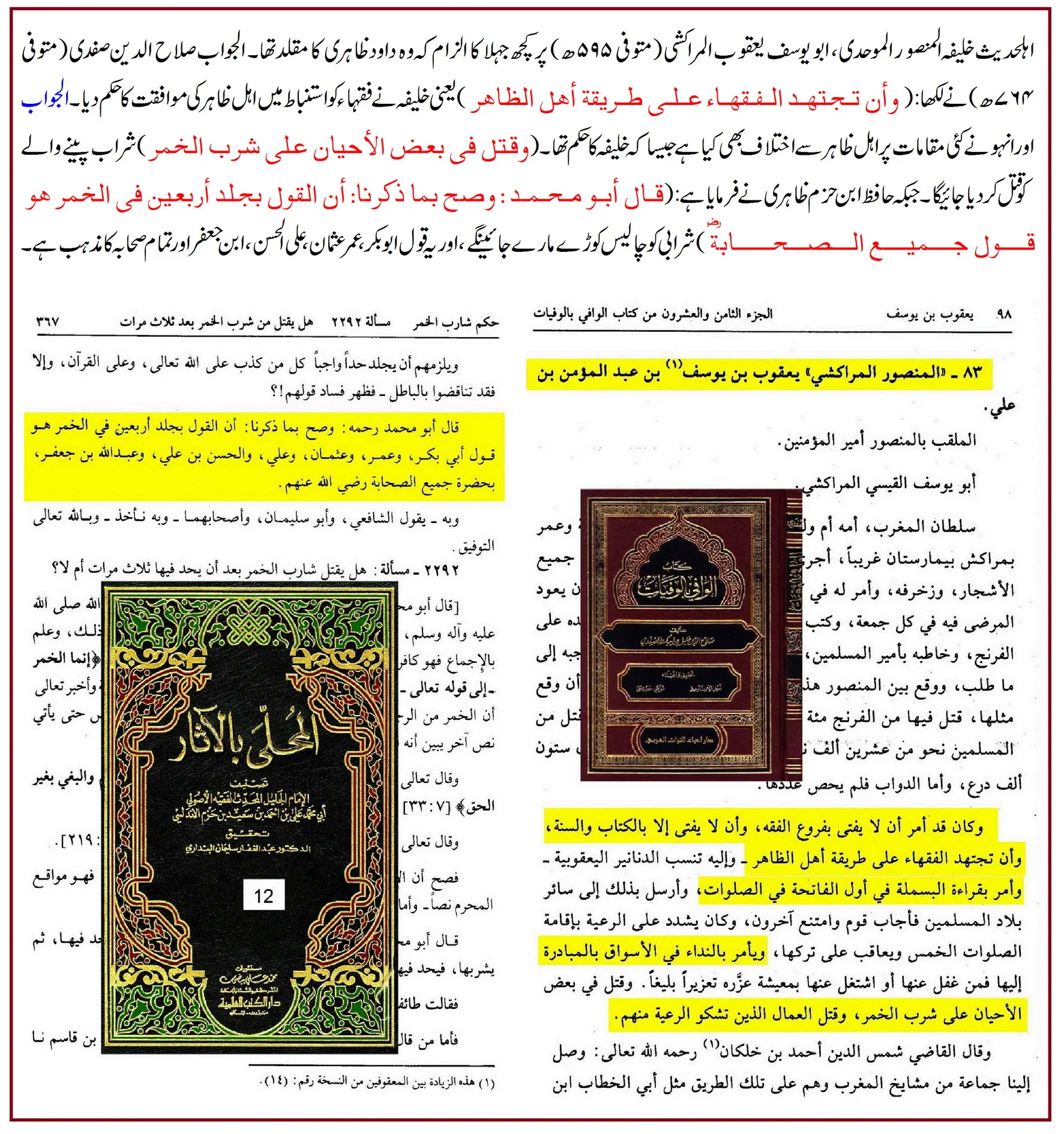
«وَكَانَ قد أَمر أَن لَا يُفْتى بِفُرُوع الْفِقْه، وَأَن لَا يُفْتى إِلَّا بِالْكتاب وَالسُّنَّة، وَأَن تجتهد الْفُقَهَاء على طَريقَة أهل الظَّاهِر»
Reference: al-Wafi bi al-Wafayat 28/98
Translation
He ordered that no verdicts be issued based on subsidiary juristic branches, and that only the Qur’an and Sunnah be used. The jurists were to perform ijtihad upon the method of Ahl al-Zahir.❀ This refers to methodological similarity in deduction, not blind imitation.
❀ Had taqlid been intended, the books of Dawud al-Zahiri would have been enforced.
✦ Practical Rulings
① Recitation of Bismillah Aloud
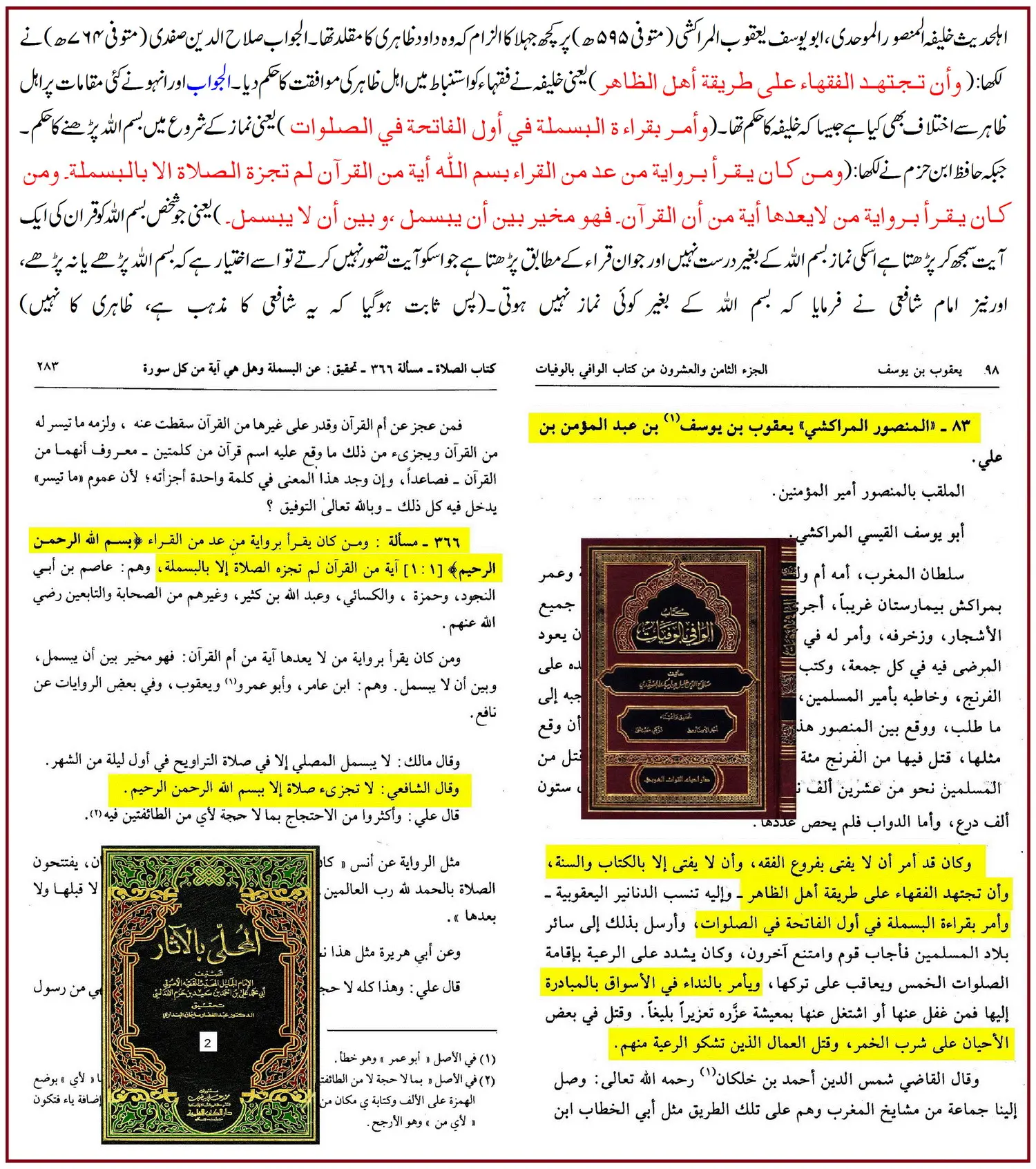
«وأمر بِقِرَاءَة الْبَسْمَلَة فِي أول الْفَاتِحَة فِي الصَّلَوَات»
Reference: al-Wafi bi al-Wafayat 28/98
Translation: He ordered that Bismillah be recited aloud at the beginning of al-Fatihah in prayer.
② Punishment for Drinking Alcohol
«وَقَتَلَ فِي بعض الأحيان على شُرْب الْخَمْر»
Reference: al-Wafi bi al-Wafayat 28/98
Translation: At times, he executed those who drank alcohol.
These rulings contradict the established positions of Zahiri jurists, including Ibn Hazm.
✦ Comparison with Ibn Hazm
① Bismillah Issue
«مَنْ عَدَّ بِسْمِ اللَّهِ… فَهُوَ مُخَيَّرٌ أَنْ يُبَسْمِلَ، أَوْ أَنْ لَا يُبَسْمِلَ»
Reference: al-Muhalla
Translation: One who does not consider Bismillah a verse has the choice to recite it or not.
② Punishment for Alcohol
«أَنَّ الْقَوْلَ بِجِلْدِ أَرْبَعِينَ فِي الْخَمْرِ… وَبِهِ نَقُولُ»
Reference: al-Muhalla
Translation: The punishment for drinking alcohol is forty lashes, and this is our position.
Yet Caliph Abu Yusuf sometimes ordered execution — contrary to the Zahiri stance.
✦ Final Summary
① Caliph Abu Yusuf Ya‘qub al-Marrakushi rejected taqlid and ordered verdicts based solely on the Qur’an and Sunnah.② He abandoned speculative juristic branches and gathered Ahl al-Hadith scholars to derive rulings from the Sihah and Sunan.
③ His practical rulings differed from Zahiri positions.
④ Therefore, the claim that he was a follower of Zahiri Fiqh is entirely baseless and historically inaccurate.
The reality is that he was a Caliph upon the methodology of Ahl al-Hadith, who established the Qur’an and Sunnah as the sole criterion in his dominion.

