


This excerpt is taken from the book Nūr al-ʿAynayn fī Ithbāt Rafʿ al-Yadayn ʿinda al-Rukūʿ wa Baʿdahu fī al-Ṣalāh by the Muḥaddith of the era, Ḥāfiẓ Zubayr ʿAlī Zaʾī رحمه الله.
عن أبى قلابة أنه رأى مالك بن الحويرث إذا صلى كبر ثم رفع يديه وإذا أراد أن يركع رفع يديه وإذا رفع رأسه من الركوع الله رفع يديه وحدث أن رسول الله صلى الله عليه وسلم كان يفعل هكذا
Translation:
Abū Qilābah (the Tābiʿī) said that he saw Mālik bin al-Ḥuwayrith رضي الله عنه: when he prayed, he would pronounce the takbīr and then raise his hands; when he intended to go into rukūʿ, he would raise his hands; and when he raised his head from rukūʿ, he would raise his hands. He then narrated that the Messenger of Allah ﷺ used to do the same.
◈ Ṣaḥīḥ Ibn Khuzaymah (1/295, ḥadīth 585)
◈ Ṣaḥīḥ Ibn Ḥibbān (3/175, ḥadīth 1870)
◈ Ṣaḥīḥ Abī ʿAwānah (2/94)
Abū Qilābah ʿAbdullāh bin Zayd was trustworthy (thiqqah). He was declared trustworthy by Muḥammad bin Sīrīn (the Tābiʿī) and Abū Ḥātim al-Rāzī.
There is consensus on his trustworthiness.
① Abū Qilābah
② Naṣr bin ʿĀṣim
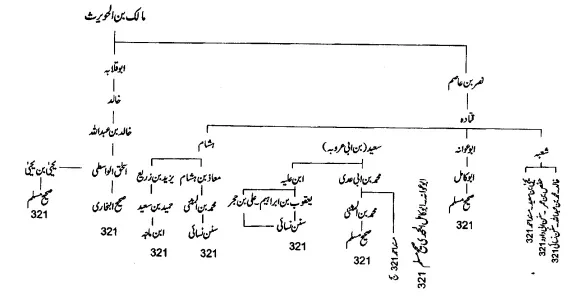
From Abū Qilābah, it was narrated by Khālid al-Ḥadhdhāʾ, and from him by Khālid bin ʿAbdullāh al-Ṭaḥḥān and Ismāʿīl bin ʿUlayyah.
From Naṣr bin ʿĀṣim, it was narrated by Qatādah, and from him by Shuʿbah, Saʿīd bin Abī ʿArūbah, Saʿīd bin Bashīr, Hammām, ʿImrān al-Qaṭṭān, Ḥammād bin Salamah, Hishām, and Abū ʿAwānah.
From Shuʿbah, it was narrated by ʿĀṣim bin ʿAlī, Khālid, Ḥafṣ bin ʿUmar, Yaḥyā bin Saʿīd, Abū Dāwūd al-Ṭayālisī, Sulaymān bin Ḥarb, Ibn Mahdī, Abū al-Walīd al-Ṭayālisī, ʿAbd al-Ṣamad, and Ādam bin Abī Iyās.
➤ None of these narrations mention raising the hands during the prostrations (sujūd).
The narration of Shuʿbah from Qatādah is understood to be based on explicit hearing.
In some of these narrations, raising the hands in sujūd is mentioned. However, Qatādah is a mudallis, and in the wording mentioning raising the hands in sujūd, there is no explicit declaration of hearing from him. Therefore, these narrations are weak.
In the narrations of Ḥammād, ʿImrān, and Saʿīd, raising the hands in sujūd is not mentioned.
The narration of Hammām implies:
◈ fī al-rukūʿ → before rukūʿ
◈ wa fī al-sujūd → before sujūd, i.e., when raising the head from rukūʿ
Thus, this narration is not explicit in its wording.
From Hishām, this narration is reported by Abū ʿĀmir, ʿAbd al-Ṣamad, Yazīd bin Zurayʿ, and Muʿāwiyah bin Hishām.
Only the narration of Muʿāwiyah bin Hishām mentions raising the hands in sujūd, while the other three do not.
The Battle of Tabūk occurred in 9 AH.
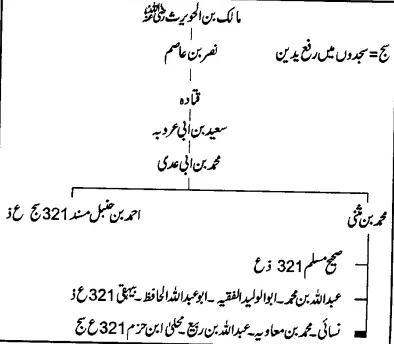
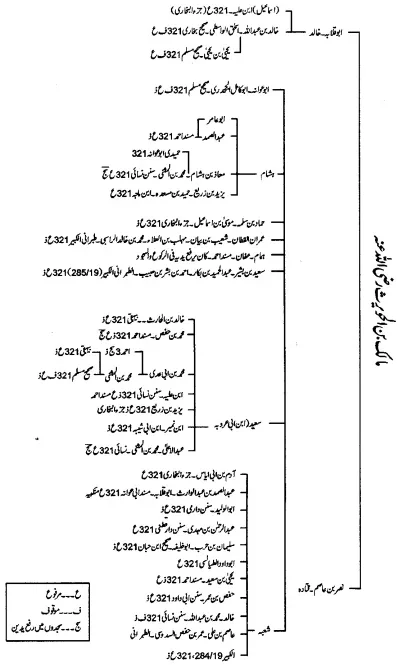
Arabic Text:
وشعبة فى النسخة غلط
Translation:
“The word Shuʿbah in the manuscript is incorrect.”
Ḥabībullāh Dīrwī al-Deobandī quoted this statement and, as was his habit, made sarcastic remarks upon it.
Arabic Text:
تنبيه وقع فى نسخة النسائي المطبوعة بالهند: شعبة عن قتادة بدل سعيد عن قتادة وهو تصحيف صرح عليه شيخنا أيضا فيه نيل الفرقدين
Translation:
“Note: In the Indian-printed copy of Sunan al-Nasāʾī, the wording ‘Shuʿbah from Qatādah’ appears instead of ‘Saʿīd from Qatādah’. This is a scribal error, which our Shaykh also explicitly mentioned in Nīl al-Farqadayn.”
From this statement, it becomes clear that Banūrī Ṣāḥib, like his teacher Anwar Shāh Kāshmīrī, considered the word Shuʿbah to be an error and held the correct wording to be Saʿīd.
This is the testimony of two senior Deobandī scholars.
This statement is completely false.
If one checks Musnad Abī ʿAwānah (vol. 2, pp. 94–95), the narration attributed to Shuʿbah is present through the chain of ʿAbd al-Ṣamad and Abū al-Walīd, and it does not contain any mention of raising the hands in sujūd.
This strongly indicates that the narration mentioning raising the hands in sujūd is not from Shuʿbah’s chain. The narration in Sunan al-Nasāʾī is from Saʿīd bin Abī ʿArūbah, not from Shuʿbah.
Arabic Text:
أخبرنا محمد بن المثنى: حدثنا ابن أبى عدي عن سعيد عن قتادة عن نصر بن عاصم عن مالك بن الحويرث أنه رأى النبى صلى الله عليه وسلم رفع يديه فى صلاته وإذا ركع وإذا رفع رأسه من الركوع وإذا سجد وإذا رفع رأسه من السجود حتى يحاذي بهما فروع أذنيه
It should be remembered that in the commonly circulated copies of Sunan al-Nasāʾī al-Ṣughrā (al-Mujtabā), due to a scribal error, “عن شعبة” was printed instead of “عن سعيد”.
◈ Vol. 1 p. 228, ḥadīth 672
◈ Another edition: Vol. 1 p. 343, ḥadīth 676
with the wording “Saʿīd from Qatādah”.
This is strong evidence that in al-Mujtabā, due to a copyist’s error, “Saʿīd from Qatādah” was replaced with “Shuʿbah from Qatādah”.
Imām al-Nasāʾī’s student Muḥammad bin Muʿāwiyah / Ibn al-Aḥmar was trustworthy.
(Ḥāfiẓ al-Mizzī quoted it via Shuʿbah in Tuḥfat al-Ashrāf, which shows that this error is an old one.)
Ḥadīth of Mālik bin al-Ḥuwayrith رضي الله عنه
The Narration
Arabic Text:عن أبى قلابة أنه رأى مالك بن الحويرث إذا صلى كبر ثم رفع يديه وإذا أراد أن يركع رفع يديه وإذا رفع رأسه من الركوع الله رفع يديه وحدث أن رسول الله صلى الله عليه وسلم كان يفعل هكذا
Translation:
Abū Qilābah (the Tābiʿī) said that he saw Mālik bin al-Ḥuwayrith رضي الله عنه: when he prayed, he would pronounce the takbīr and then raise his hands; when he intended to go into rukūʿ, he would raise his hands; and when he raised his head from rukūʿ, he would raise his hands. He then narrated that the Messenger of Allah ﷺ used to do the same.
Reference: Ṣaḥīḥ al-Bukhārī 1/102, ḥadīth 737; Ṣaḥīḥ Muslim 1/168, ḥadīth 391 (wording from Muslim); Dār al-Salām numbering: 864
Other Sources of This Ḥadīth
This ḥadīth is also found in the following books:◈ Ṣaḥīḥ Ibn Khuzaymah (1/295, ḥadīth 585)
◈ Ṣaḥīḥ Ibn Ḥibbān (3/175, ḥadīth 1870)
◈ Ṣaḥīḥ Abī ʿAwānah (2/94)
Abū Qilābah ʿAbdullāh bin Zayd was trustworthy (thiqqah). He was declared trustworthy by Muḥammad bin Sīrīn (the Tābiʿī) and Abū Ḥātim al-Rāzī.
Reference: al-Jarḥ wa al-Taʿdīl 5/58 – and it is ṣaḥīḥ
There is consensus on his trustworthiness.
Reference: al-Istighnāʾ fī Asmāʾ al-Maʿrūfīn bil-Kunā, p. 92
Routes of Transmission
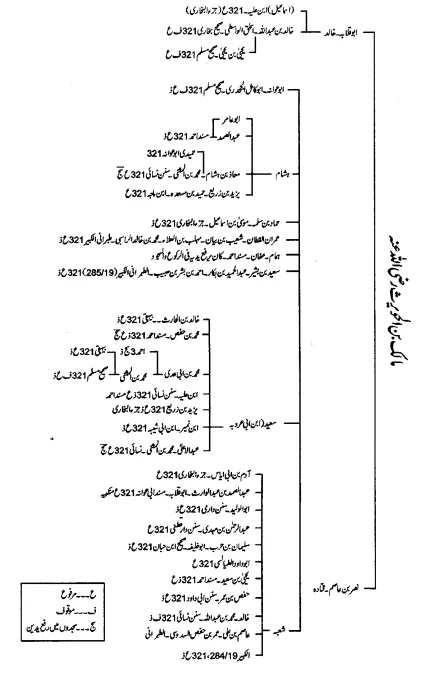
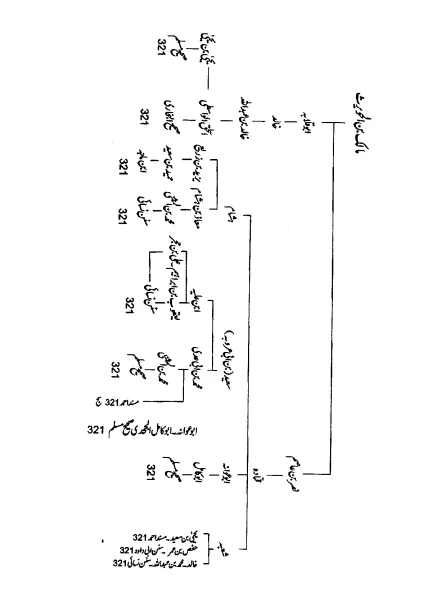
This ḥadīth was narrated from Sayyidunā Mālik bin al-Ḥuwayrith رضي الله عنه by two Tābiʿīn:① Abū Qilābah
② Naṣr bin ʿĀṣim
From Abū Qilābah, it was narrated by Khālid al-Ḥadhdhāʾ, and from him by Khālid bin ʿAbdullāh al-Ṭaḥḥān and Ismāʿīl bin ʿUlayyah.
From Naṣr bin ʿĀṣim, it was narrated by Qatādah, and from him by Shuʿbah, Saʿīd bin Abī ʿArūbah, Saʿīd bin Bashīr, Hammām, ʿImrān al-Qaṭṭān, Ḥammād bin Salamah, Hishām, and Abū ʿAwānah.
From Shuʿbah, it was narrated by ʿĀṣim bin ʿAlī, Khālid, Ḥafṣ bin ʿUmar, Yaḥyā bin Saʿīd, Abū Dāwūd al-Ṭayālisī, Sulaymān bin Ḥarb, Ibn Mahdī, Abū al-Walīd al-Ṭayālisī, ʿAbd al-Ṣamad, and Ādam bin Abī Iyās.
➤ None of these narrations mention raising the hands during the prostrations (sujūd).
The narration of Shuʿbah from Qatādah is understood to be based on explicit hearing.
Narrations Mentioning Raising the Hands in Sujūd
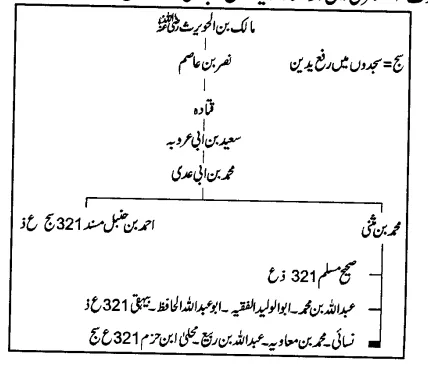
From Saʿīd bin Abī ʿArūbah, this narration was reported by ʿAbd al-Aʿlā, Ibn Numayr, Yazīd bin Zurayʿ, Ibn ʿUlayyah, Ibn Abī ʿAdī, Muḥammad bin Ḥafṣ, and Khālid bin al-Ḥārith.In some of these narrations, raising the hands in sujūd is mentioned. However, Qatādah is a mudallis, and in the wording mentioning raising the hands in sujūd, there is no explicit declaration of hearing from him. Therefore, these narrations are weak.
In the narrations of Ḥammād, ʿImrān, and Saʿīd, raising the hands in sujūd is not mentioned.
The narration of Hammām implies:
◈ fī al-rukūʿ → before rukūʿ
◈ wa fī al-sujūd → before sujūd, i.e., when raising the head from rukūʿ
Thus, this narration is not explicit in its wording.
From Hishām, this narration is reported by Abū ʿĀmir, ʿAbd al-Ṣamad, Yazīd bin Zurayʿ, and Muʿāwiyah bin Hishām.
Only the narration of Muʿāwiyah bin Hishām mentions raising the hands in sujūd, while the other three do not.
Benefit
Sayyidunā Mālik bin al-Ḥuwayrith رضي الله عنه came to the Prophet ﷺ with his delegation during the preparation for the Battle of Tabūk.
Reference: Fatḥ al-Bārī 2/110 under ḥadīth 628; Irshād al-Sārī by al-Qasṭallānī 2/16
The Battle of Tabūk occurred in 9 AH.
Reference: Fatḥ al-Bārī 8/111 under ḥadīth 4415
Statement of Anwar Shāh Kāshmīrī al-Deobandī
He said:Arabic Text:
وشعبة فى النسخة غلط
Translation:
“The word Shuʿbah in the manuscript is incorrect.”
Reference: Nīl al-Farqadayn p. 32
Ḥabībullāh Dīrwī al-Deobandī quoted this statement and, as was his habit, made sarcastic remarks upon it.
Reference: Nūr al-Ṣabāḥ p. 230
Statement of Muḥammad Yūsuf Banūrī al-Deobandī
He said:Arabic Text:
تنبيه وقع فى نسخة النسائي المطبوعة بالهند: شعبة عن قتادة بدل سعيد عن قتادة وهو تصحيف صرح عليه شيخنا أيضا فيه نيل الفرقدين
Translation:
“Note: In the Indian-printed copy of Sunan al-Nasāʾī, the wording ‘Shuʿbah from Qatādah’ appears instead of ‘Saʿīd from Qatādah’. This is a scribal error, which our Shaykh also explicitly mentioned in Nīl al-Farqadayn.”
Reference: Maʿārif al-Sunan 2/456
From this statement, it becomes clear that Banūrī Ṣāḥib, like his teacher Anwar Shāh Kāshmīrī, considered the word Shuʿbah to be an error and held the correct wording to be Saʿīd.
This is the testimony of two senior Deobandī scholars.
Refutation of Dīrwī Ṣāḥib
In response, Dīrwī Ṣāḥib wrote that just as Shuʿbah is found in Sunan al-Nasāʾī, it is also found in Ṣaḥīḥ Abī ʿAwānah.
Reference: Nūr al-Ṣabāḥ p. 230
This statement is completely false.
If one checks Musnad Abī ʿAwānah (vol. 2, pp. 94–95), the narration attributed to Shuʿbah is present through the chain of ʿAbd al-Ṣamad and Abū al-Walīd, and it does not contain any mention of raising the hands in sujūd.
Important Clarification
Here, the issue is not one of non-mention versus negation, because in the narration of Shuʿbah, there is absolutely no mention anywhere of raising the hands in sujūd.This strongly indicates that the narration mentioning raising the hands in sujūd is not from Shuʿbah’s chain. The narration in Sunan al-Nasāʾī is from Saʿīd bin Abī ʿArūbah, not from Shuʿbah.
The Ḥadīth of Raising the Hands in Sujūd in Sunan al-Nasāʾī
Imām al-Nasāʾī رحمه الله said:Arabic Text:
أخبرنا محمد بن المثنى: حدثنا ابن أبى عدي عن سعيد عن قتادة عن نصر بن عاصم عن مالك بن الحويرث أنه رأى النبى صلى الله عليه وسلم رفع يديه فى صلاته وإذا ركع وإذا رفع رأسه من الركوع وإذا سجد وإذا رفع رأسه من السجود حتى يحاذي بهما فروع أذنيه
Reference: Sunan al-Nasāʾī 2/205–206, ḥadīth 1086 (Dār al-Salām edition)
It should be remembered that in the commonly circulated copies of Sunan al-Nasāʾī al-Ṣughrā (al-Mujtabā), due to a scribal error, “عن شعبة” was printed instead of “عن سعيد”.
Proofs That the Correct Narrator Is Saʿīd bin Abī ʿArūbah
① Proof One
Aḥmad bin Ḥanbal narrated this same ḥadīth from Ibn Abī ʿAdī through the chain of Saʿīd bin Abī ʿArūbah.
Reference: Musnad Aḥmad 3/436, ḥadīth 15685
② Proof Two
Imām Muslim narrated the report of Muḥammad bin al-Muthannā from Ibn Abī ʿAdī through the chain of Saʿīd bin Abī ʿArūbah.
Reference: Ṣaḥīḥ Muslim, ḥadīth 391/26; Dār al-Salām numbering: 866
③ Proof Three
The same narration with identical chain and wording is found in Sunan al-Nasāʾī al-Kubrā:◈ Vol. 1 p. 228, ḥadīth 672
◈ Another edition: Vol. 1 p. 343, ḥadīth 676
with the wording “Saʿīd from Qatādah”.
This is strong evidence that in al-Mujtabā, due to a copyist’s error, “Saʿīd from Qatādah” was replaced with “Shuʿbah from Qatādah”.
④ Proof Four
Ibn Ḥazm narrated this ḥadīth in al-Muḥallā (4/92, issue 442) with his own chain from Imām al-Nasāʾī (al-Sunan al-Kubrā), explicitly naming Saʿīd bin Abī ʿArūbah.Imām al-Nasāʾī’s student Muḥammad bin Muʿāwiyah / Ibn al-Aḥmar was trustworthy.
Reference: Siyar Aʿlām al-Nubalāʾ 16/68
⑤ Proof Five
Ḥāfiẓ Ibn Ḥajar quoted this narration from al-Nasāʾī in Fatḥ al-Bārī (2/177), explicitly naming Saʿīd bin Abī ʿArūbah.(Ḥāfiẓ al-Mizzī quoted it via Shuʿbah in Tuḥfat al-Ashrāf, which shows that this error is an old one.)
⑥ Proof Six
Ḥāfiẓ Ibn Ḥibbān stated that at times Saʿīd becomes Shuʿbah and Shuʿbah becomes Saʿīd due to scribal confusion.
Reference: al-Jarḥ wa al-Taʿdīl 1/59
⑦ Proof Seven
The Ḥanafī scholar Ṭaḥāwī narrated this same report from Imām Aḥmad bin Shuʿayb al-Nasāʾī with the chain of Saʿīd.
Reference: Mushkil al-Āthār, new edition 15/57; Tuḥfat al-Akhyār 2/31, ḥadīth 632
⑧ Proof Eight
Imām al-Bayhaqī narrated the report of Muḥammad bin al-Muthannā with the chain of Saʿīd.
Reference: al-Sunan al-Kubrā 2/25, 2/71

