
Compiled by: Abu Hamzah Salafi
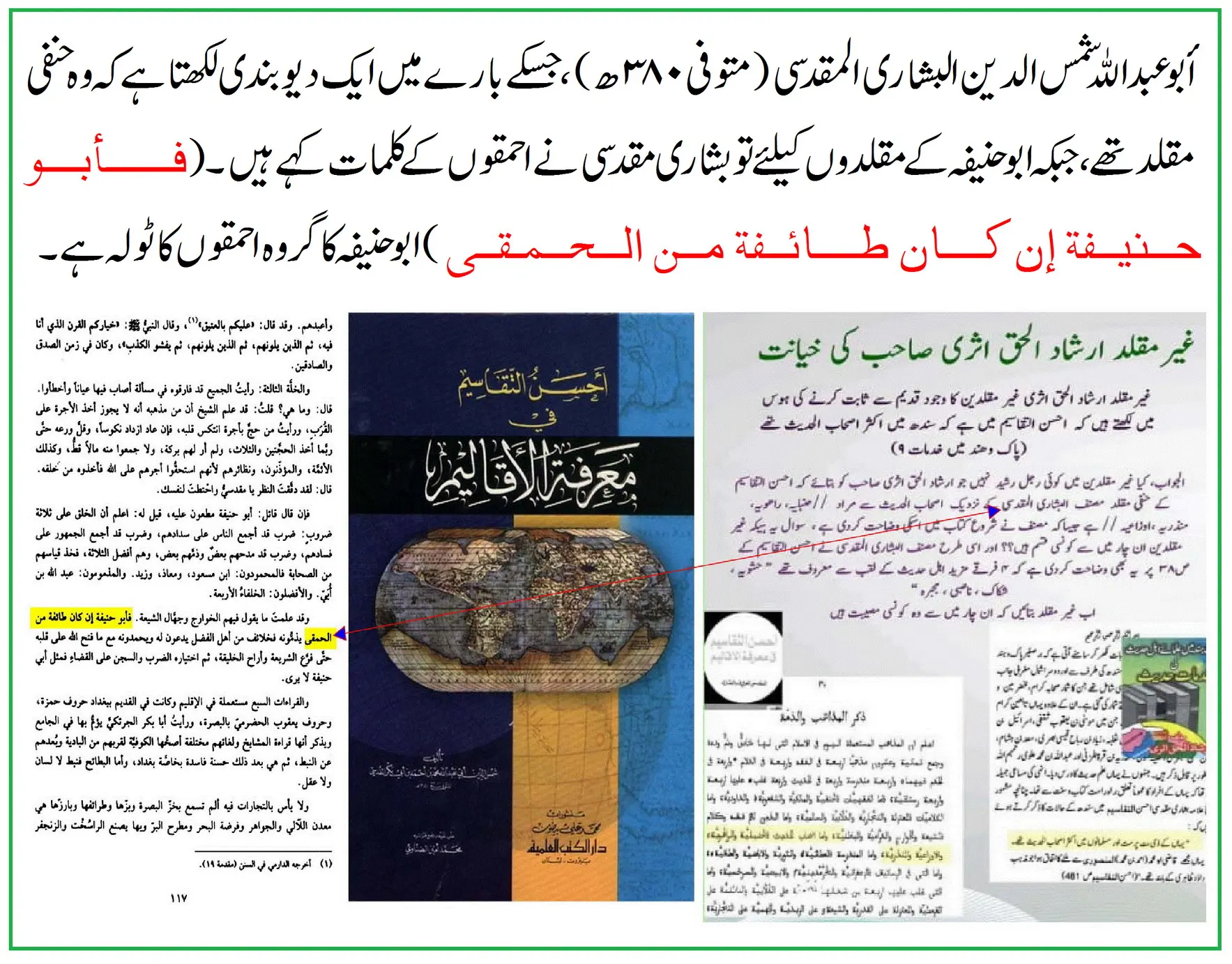
This article is, in fact, a researched response to an objection raised by a Deobandi critic regarding a statement of the 4th-century historian Abu ʿAbdullah Muḥammad ibn Aḥmad al-Bashshārī al-Maqdisī (d. 380 AH).
The objector claimed that according to al-Maqdisī, the term Aṣḥāb al-Ḥadīth refers only to four juristic schools (Ḥanbalīs, Rāhawiyyah, Awzāʿiyyah, Mundhiriyyah); therefore, non-muqallids or present-day Ahl al-Ḥadīth are not included in this designation.
In this article, we will:
① Present the original statement of al-Maqdisī.
② Analyze and respond to the objection.
③ Cite statements of the Salaf clarifying who Aṣḥāb al-Ḥadīth are.
(أحسن التقاسيم في معرفة الأقاليم)
✔ The roots of Ahl al-Ḥadīth in the Indian subcontinent are very ancient.
✔ A reliable historian of the 4th century explicitly wrote that most of the people of Sindh were Ahl al-Ḥadīth.
Therefore, the claim that Ahl al-Ḥadīth are a new sect or a later invention is nothing but ignorance.
(أحسن التقاسيم في معرفة الأقاليم)
“Currently, there are twenty-eight recognized schools in Islam: four juristic, four theological, four combining jurisprudence and theology, four extinct, and four ḥadīth-based… As for Aṣḥāb al-Ḥadīth, they are: the Ḥanbalīs, Rāhawiyyah, Awzāʿiyyah, and Mundhiriyyah.”
If all of these can collectively be called Ahl al-Ḥadīth, then those who derive religion upon the same basis—adherence to ḥadīth—are also deserving of this title.
Thus, present-day Ahl al-Ḥadīth represent an extension of the same Salafī methodology, and excluding them from Aṣḥāb al-Ḥadīth is an act of scholarly dishonesty.
✔ Ahl al-Ḥadīth are not a new group; rather, they are the continuation of those early Aṣḥāb al-Ḥadīth.
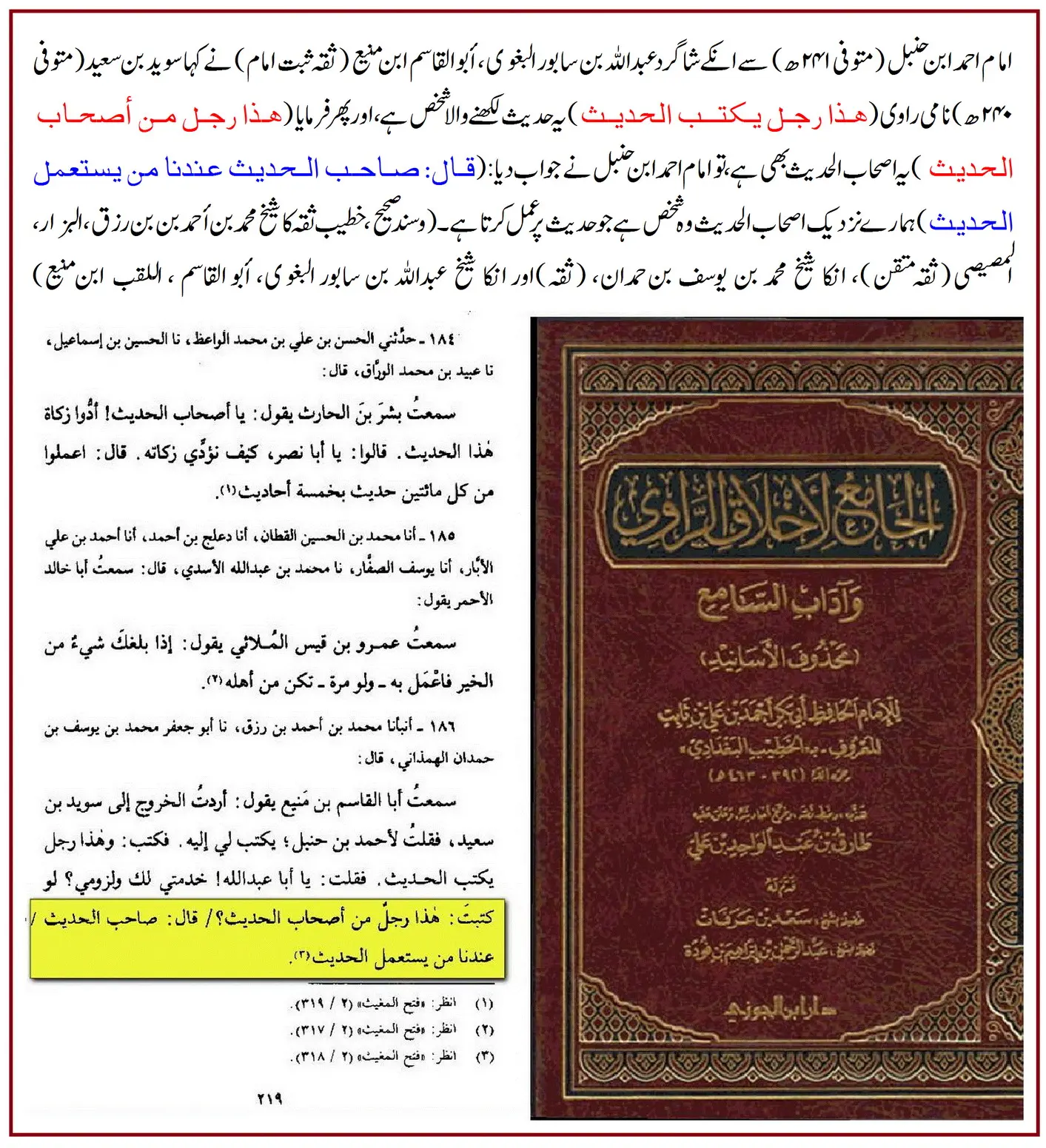
صاحب الحديث عندنا من يستعمل الحديث.
Translation:
Imām Aḥmad ibn Ḥanbal said:
“According to us, Aṣḥāb al-Ḥadīth are those who act upon ḥadīth.”
✔ Mere narration is not sufficient; the true distinction is acting upon ḥadīth.
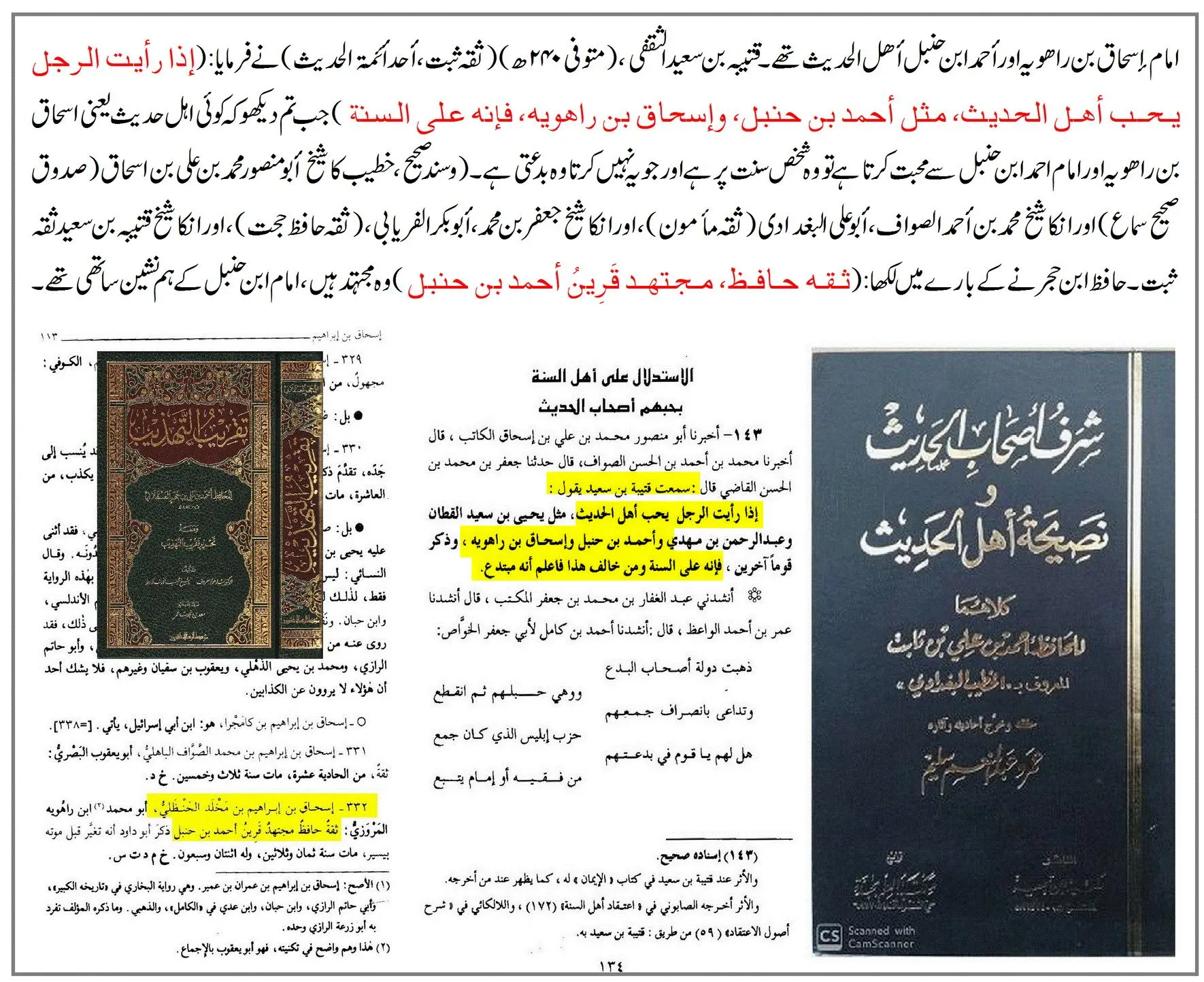
إذا رأيت الرجل يحب أهل الحديث – وذكر أحمد بن حنبل وإسحاق بن راهويه وغيرهما – فإنه على السنة، ومن خالف هذا فاعلم أنه مبتدع.
Translation:
“When you see a man loving Ahl al-Ḥadīth—such as Aḥmad ibn Ḥanbal, Isḥāq ibn Rāhawayh, and others—then he is upon the Sunnah. Whoever opposes this, know that he is an innovator.”
إذا رأيت الرجل يحب إسحاق بن راهويه وأصحاب الحديث، فاعلم أنه على السنة.
Translation:
“When you see a person loving Isḥāq ibn Rāhawayh and Ahl al-Ḥadīth, know that he is upon the Sunnah.”
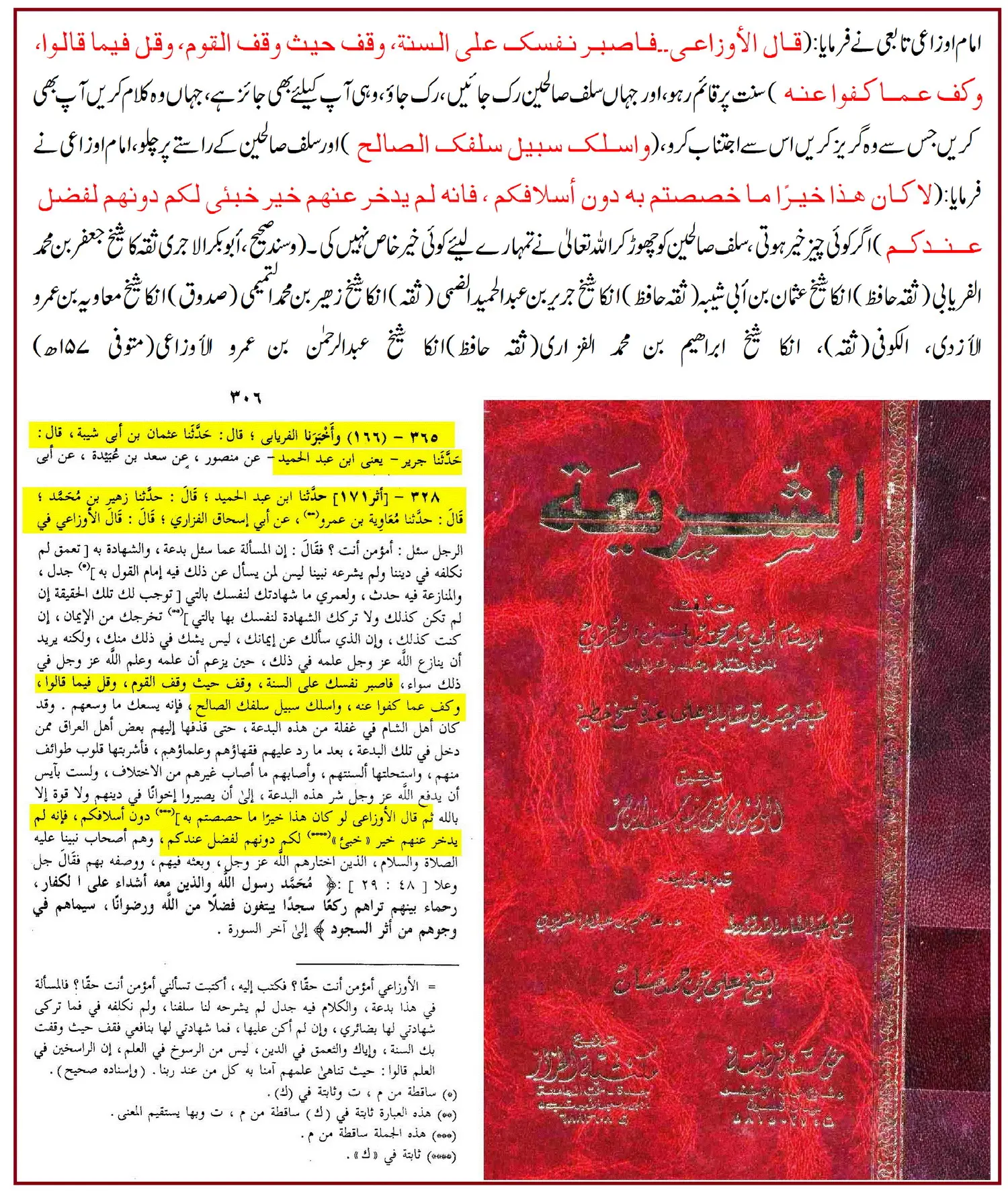
فاصبر نفسك على السنة، وقف حيث وقف القوم… فإنهم أصحاب نبينا ﷺ.
Translation:
“Restrain yourself upon the Sunnah, stop where the people stopped, say what they said, refrain from what they refrained from, and follow the path of your righteous predecessors—for they are the Companions of our Prophet ﷺ.”
✔ Imām al-Awzāʿī outlined the methodology of Ahl al-Ḥadīth: adherence to Sunnah and following the Salaf.
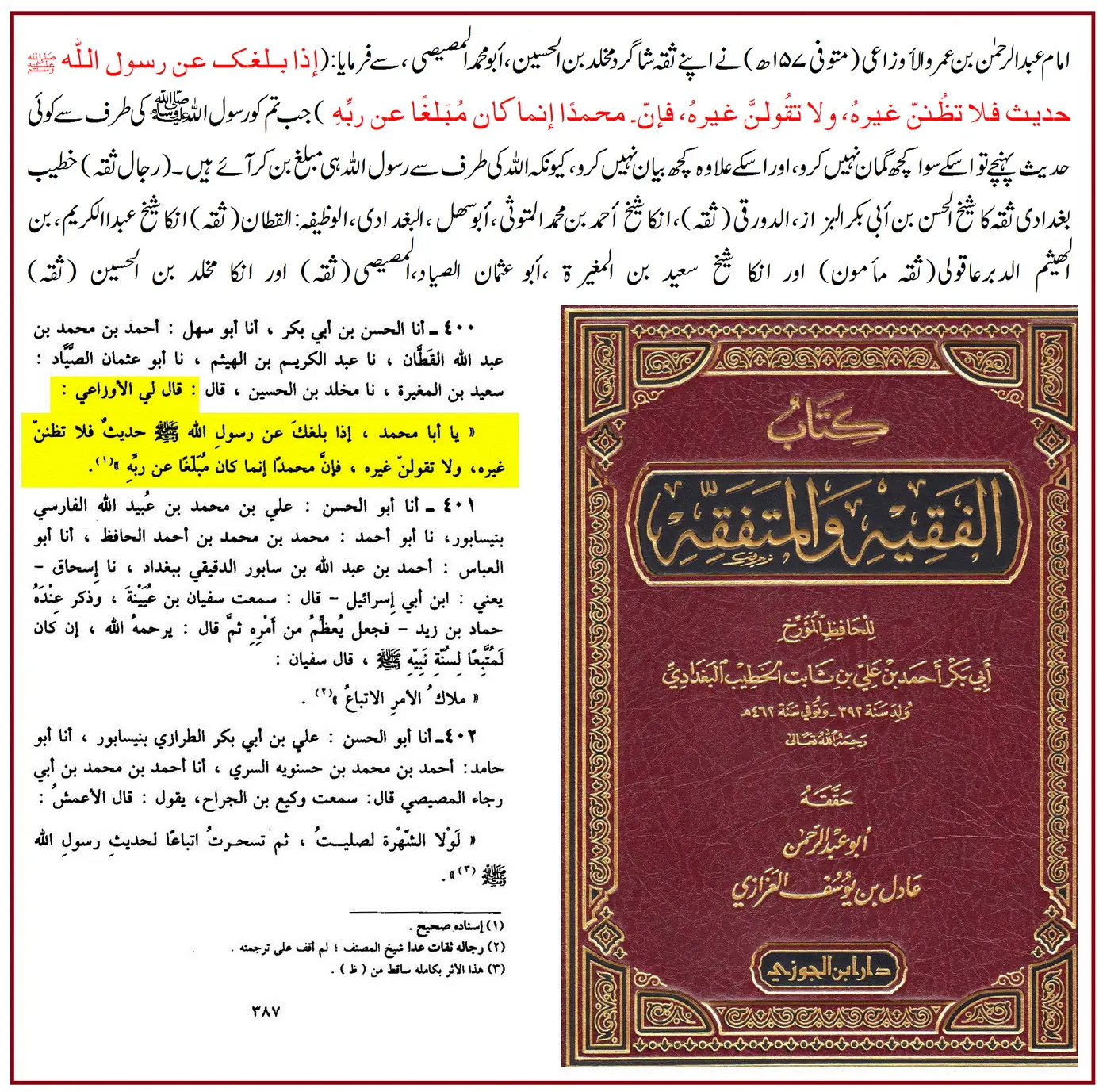
إذا بلغك عن رسول الله ﷺ حديث فلا تظنن غيره…
Translation:
“When a ḥadīth from the Messenger of Allah ﷺ reaches you, do not assume anything else, and do not say anything besides it, for Muḥammad ﷺ was only a conveyor from his Lord.”
✔ This is the foundational principle of Ahl al-Ḥadīth: stopping at the textual evidence.
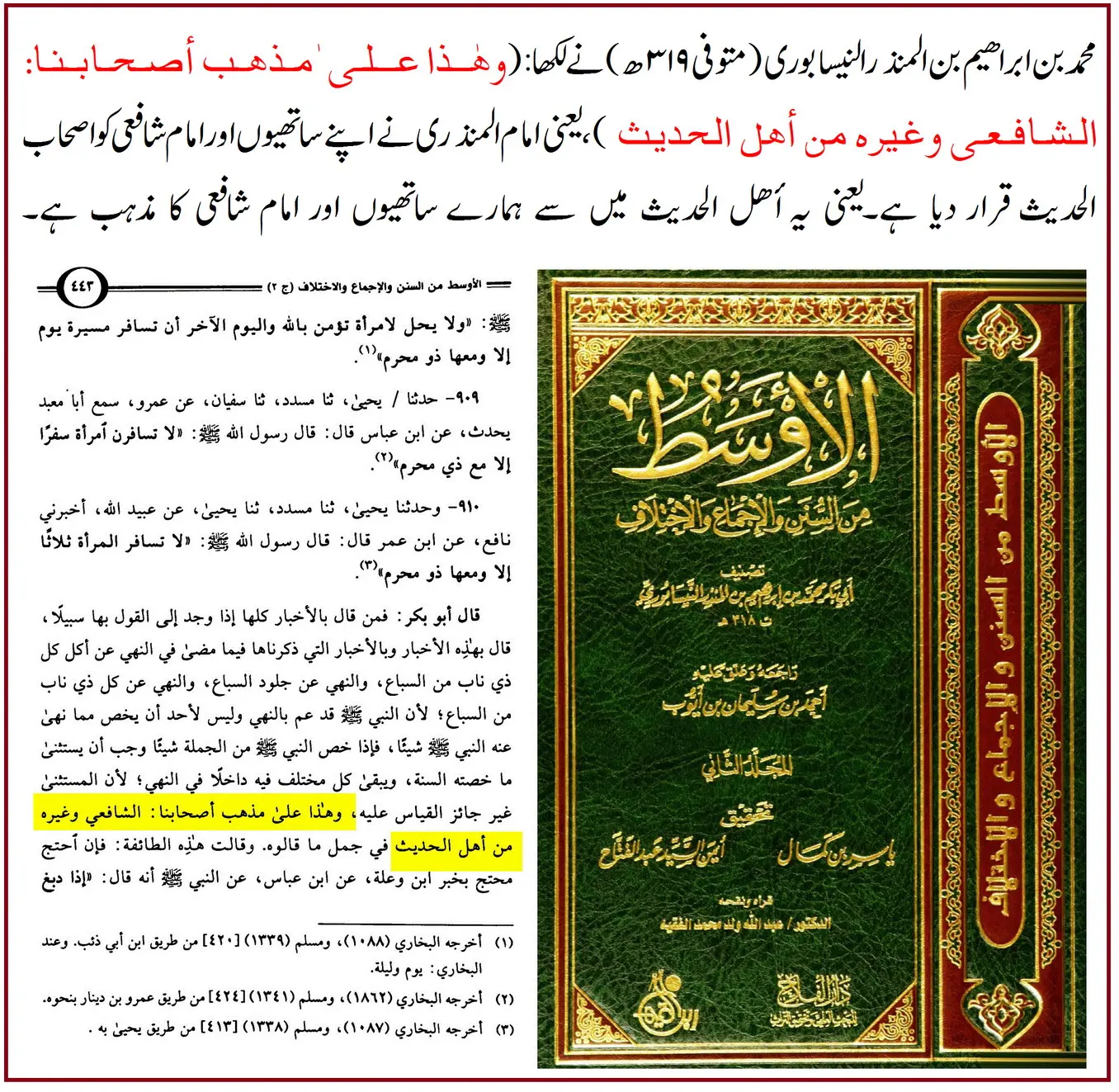
وهذا على مذهب أصحابنا الشافعي وغيره من أهل الحديث.
Translation:
“This is according to the methodology of our imām al-Shāfiʿī and others among Ahl al-Ḥadīth.”
✔ Imām al-Shāfiʿī is clearly included among Ahl al-Ḥadīth.
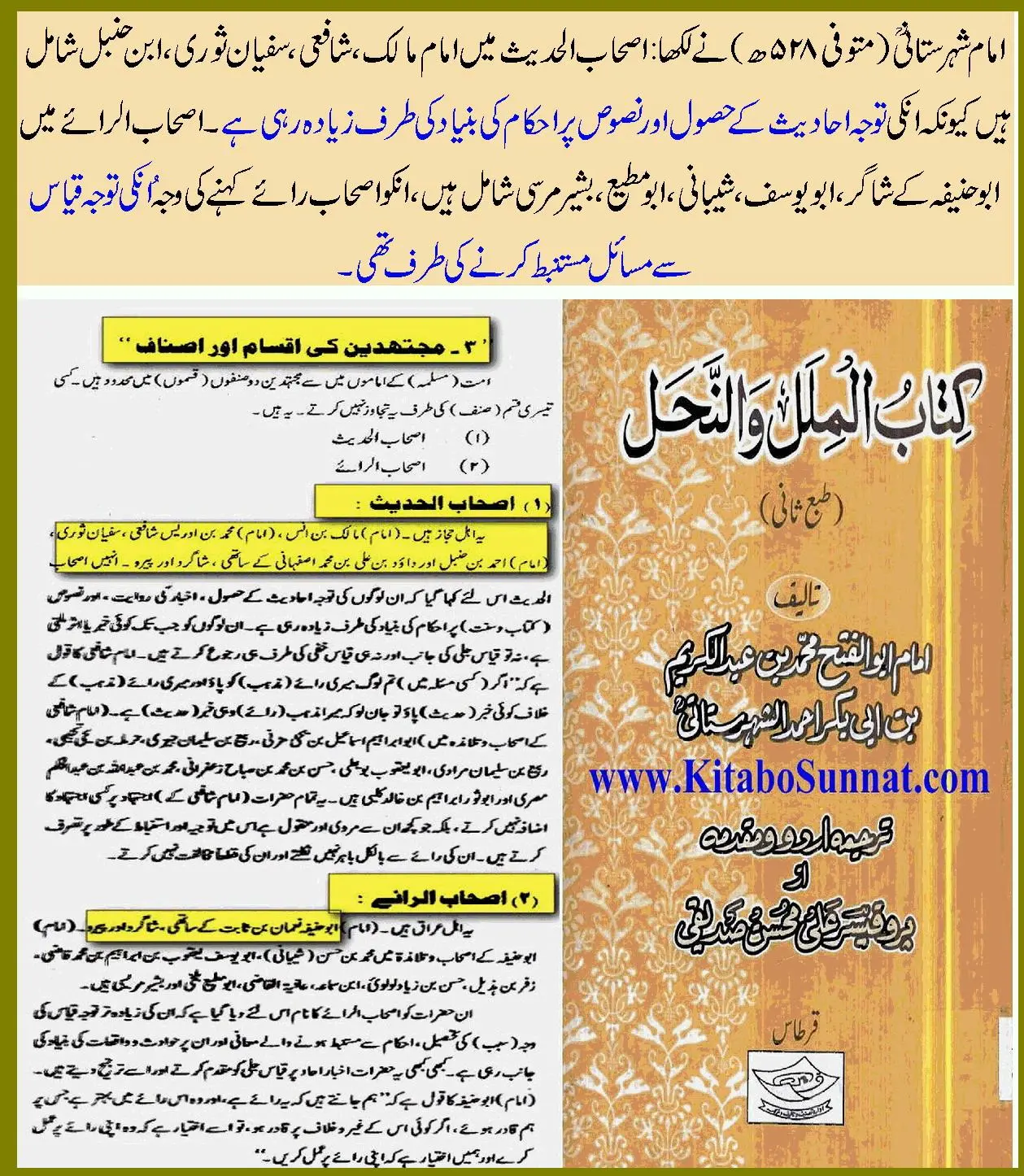
أصحاب الحديث… وإنما سموا أصحاب الحديث لأن عنايتهم بتحصيل الأحاديث ونقل الأخبار وبناء الأحكام على النصوص.
Translation:
“Aṣḥāb al-Ḥadīth are the people of the Ḥijāz: the followers of Mālik, al-Shāfiʿī, Sufyān al-Thawrī, Aḥmad, and Dāwūd al-Aṣfahānī… They were called Aṣḥāb al-Ḥadīth because of their dedication to acquiring ḥadīth, transmitting reports, and basing rulings upon textual evidence.”
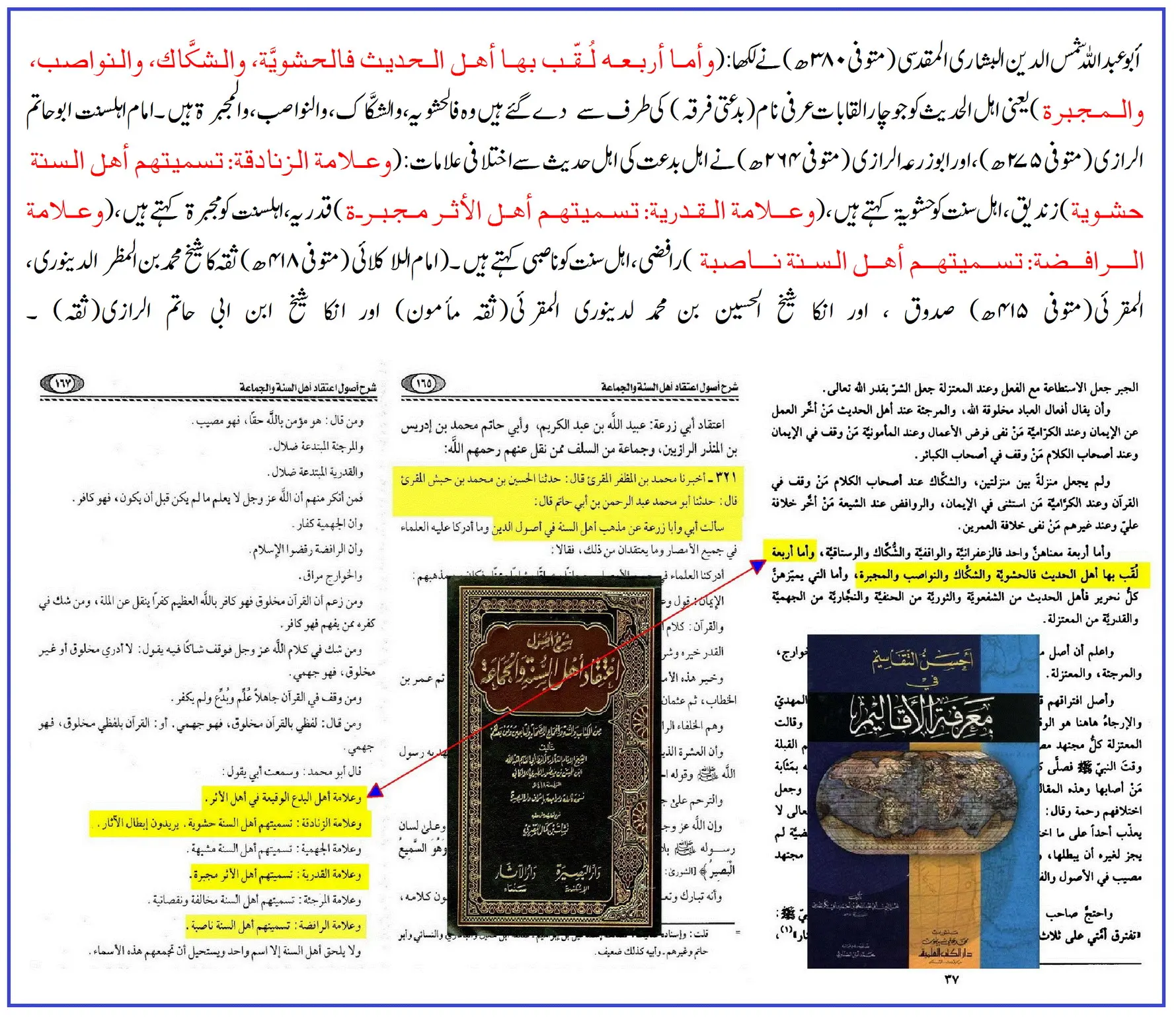
وأما أربعة لُقِّب بها أهل الحديث: فالحشويّة، والشكّاك، والنواصب، والمجبرة.
(أحسن التقاسيم في معرفة الأقاليم)
Translation:
“Ahl al-Ḥadīth have been labeled with four titles: Ḥashwiyyah, Shakkāk, Nawāṣib, and Mujabbirah.”
Imām al-Maqdisī himself did not label Ahl al-Ḥadīth with these names; rather, he merely reported how others insulted them.
النص:
وعلامة الزنادقة تسميتهم أهل السنة حشوية…
وعلامة القدرية تسميتهم أهل الأثر مجبرة…
وعلامة الرافضة تسميتهم أهل السنة ناصبة.
Translation:
① A sign of the heretics is that they call Ahl al-Sunnah “Ḥashwiyyah” in order to invalidate narrations.
② A sign of the Qadariyyah is that they call Ahl al-Ḥadīth “Mujabbirah.”
③ A sign of the Rāfiḍah is that they call Ahl al-Sunnah “Nāṣibī.”
✔ These titles are insults used by deviant sects, not self-identifications of Ahl al-Ḥadīth.
✔ Imām al-Maqdisī merely conveyed these labels as historical information.
✔ The Deobandi objection is based on ignorance and distortion.
✔ Imām al-Maqdisī and other historians confirmed that the majority of Muslims in Sindh a thousand years ago were Ahl al-Ḥadīth.
✔ The leading Salaf (Aḥmad, Isḥāq, Qutaybah, Awzāʿī, Shāfiʿī, Mālik, and others) were the great authorities of Ahl al-Ḥadīth.
✔ The derogatory labels (Ḥashwiyyah, Nāṣibī, Mujabbirah) were insults coined by innovators.
 Thus, the antiquity of Ahl al-Ḥadīth and the ignorance of the Deobandi critic stand clearly exposed.
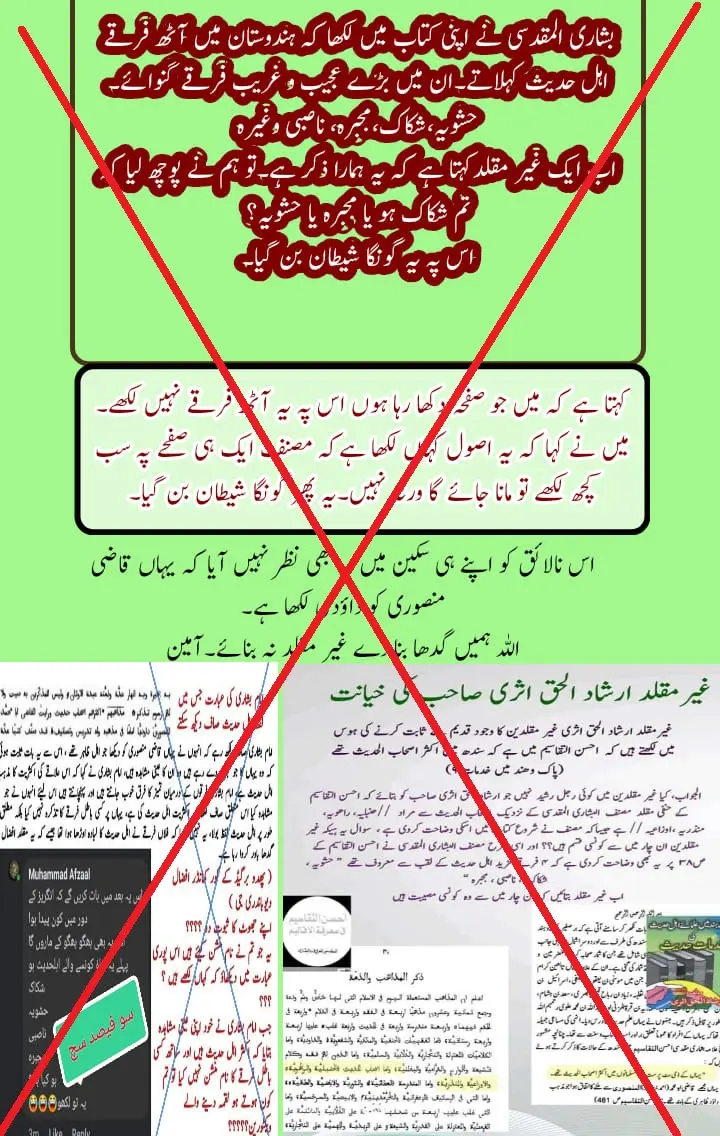
This article is, in fact, a researched response to an objection raised by a Deobandi critic regarding a statement of the 4th-century historian Abu ʿAbdullah Muḥammad ibn Aḥmad al-Bashshārī al-Maqdisī (d. 380 AH).
The objector claimed that according to al-Maqdisī, the term Aṣḥāb al-Ḥadīth refers only to four juristic schools (Ḥanbalīs, Rāhawiyyah, Awzāʿiyyah, Mundhiriyyah); therefore, non-muqallids or present-day Ahl al-Ḥadīth are not included in this designation.
In this article, we will:
① Present the original statement of al-Maqdisī.
② Analyze and respond to the objection.
③ Cite statements of the Salaf clarifying who Aṣḥāb al-Ḥadīth are.
Testimony of Imām al-Maqdisī
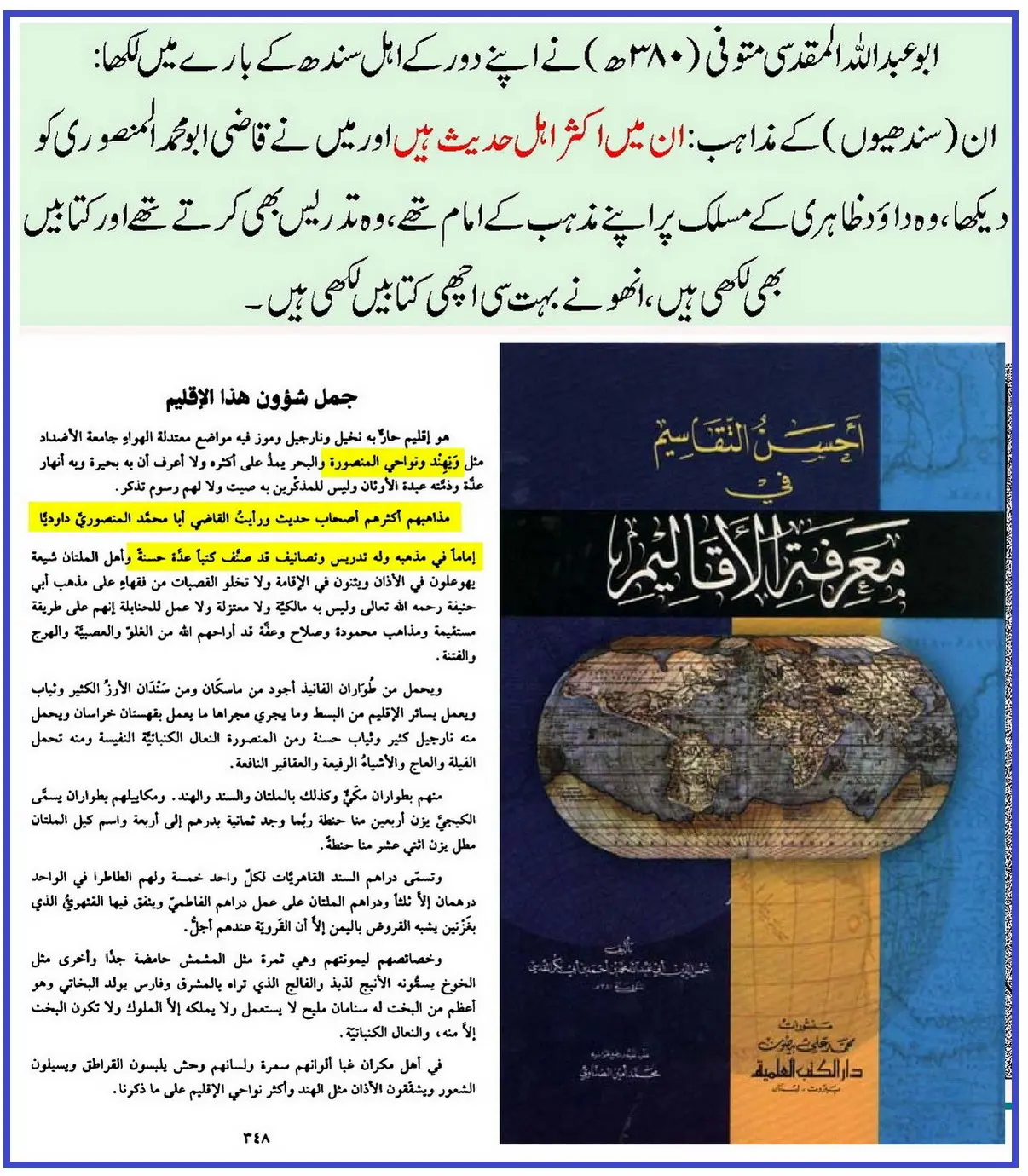
The Text (النص):
جمل شئون هذا الإقليم… مذاهبهم أكثرهم أصحاب حديث، ورأيت القاضي أبا محمد المنصوري داوديا إماما في مذهبه…(أحسن التقاسيم في معرفة الأقاليم)
Translation:
“With regard to this region (Sindh), among their religious affiliations, most of them are Ahl al-Ḥadīth. And I saw Qāḍī Abū Muḥammad al-Manṣūrī, who was an imām upon the madhhab of Dāwūd al-Ẓāhirī; he would teach and had authored several excellent books.”❖ Support from Shaykh Muḥammad Ikrām (Author of Āb-e-Kauthar)
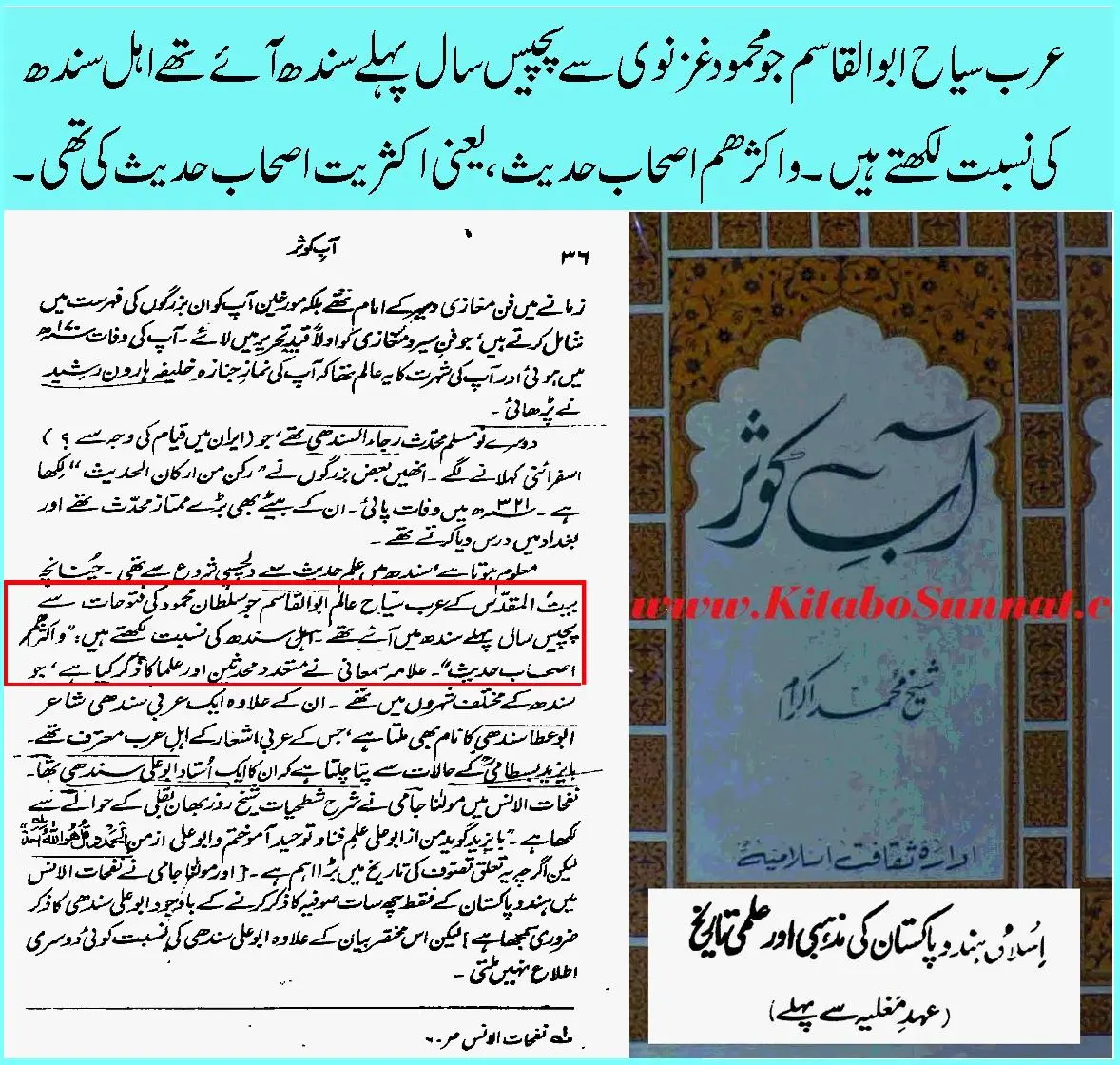
Shaykh Muḥammad Ikrām (a Ḥanafī author) also transmitted the same regarding the people of Sindh:“The Arab traveler Abū al-Qāsim of Bayt al-Maqdis, who came to Sindh twenty-five years before the conquests of Sulṭān Maḥmūd, writes about the people of Sindh: أكثرهم أصحاب حديث (most of them were Ahl al-Ḥadīth).”
✿ Conclusion
These historical testimonies clearly establish that:✔ The roots of Ahl al-Ḥadīth in the Indian subcontinent are very ancient.
✔ A reliable historian of the 4th century explicitly wrote that most of the people of Sindh were Ahl al-Ḥadīth.
Therefore, the claim that Ahl al-Ḥadīth are a new sect or a later invention is nothing but ignorance.
Objection 01
A Deobandi critic claimed:Hence, non-muqallids or present-day Ahl al-Ḥadīth are not included.According to Imām al-Maqdisī, Aṣḥāb al-Ḥadīth refers only to four schools:
① Ḥanbalīs
② Rāhawiyyah
③ Awzāʿiyyah
④ Mundhiriyyah
❖ Original Statement of Imām al-Maqdisī
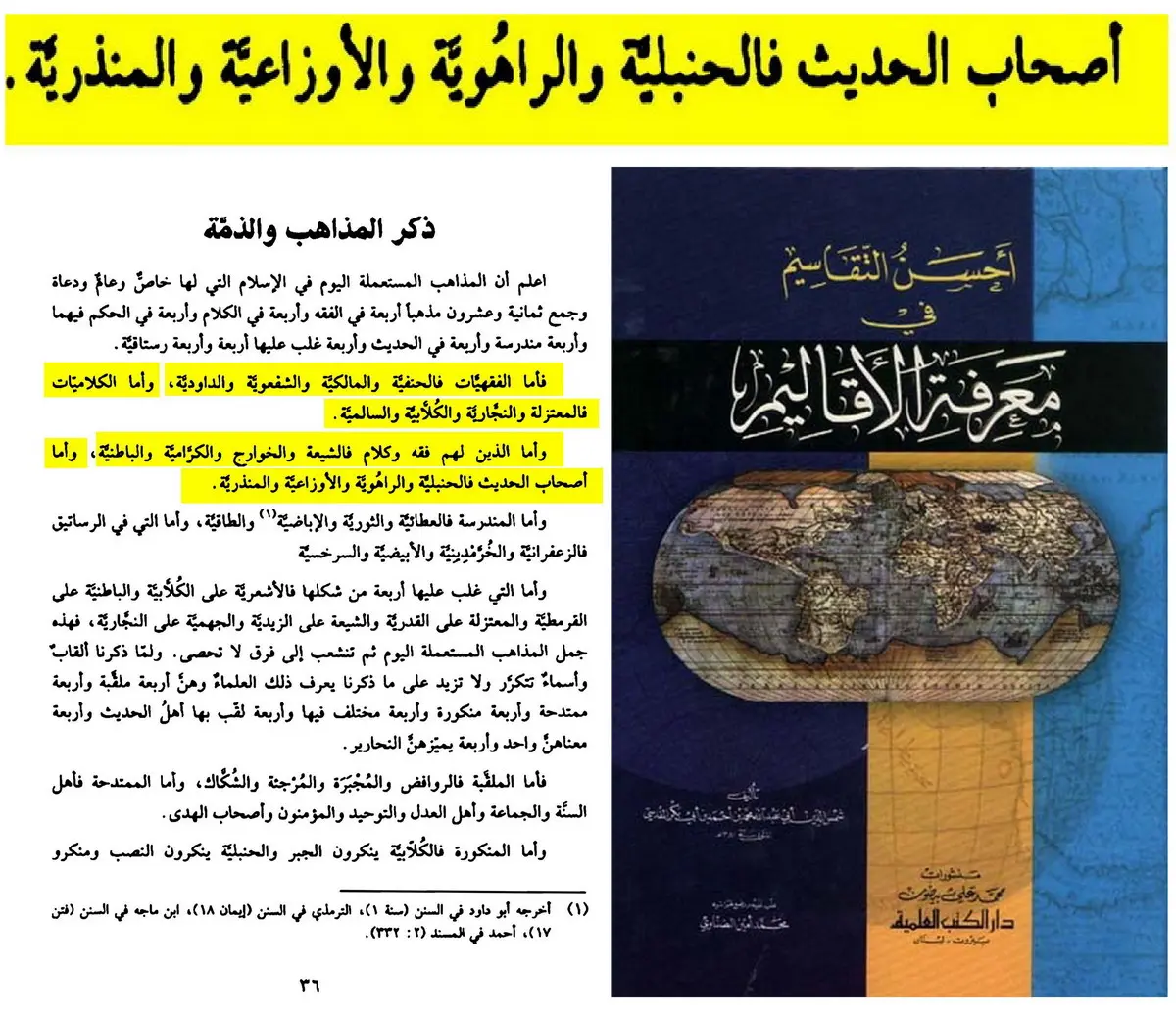
The Text (النص):
ذكر المذاهب والذمّة… فأما أصحاب الحديث فالحنبلية والراهويّة والأوزاعية والمنذرية.(أحسن التقاسيم في معرفة الأقاليم)
Translation:
Imām al-Maqdisī wrote:“Currently, there are twenty-eight recognized schools in Islam: four juristic, four theological, four combining jurisprudence and theology, four extinct, and four ḥadīth-based… As for Aṣḥāb al-Ḥadīth, they are: the Ḥanbalīs, Rāhawiyyah, Awzāʿiyyah, and Mundhiriyyah.”
◈ The Answer
Imām al-Maqdisī simultaneously declared all four of these schools as Aṣḥāb al-Ḥadīth, meaning their shared characteristic was adherence to ḥadīth.If all of these can collectively be called Ahl al-Ḥadīth, then those who derive religion upon the same basis—adherence to ḥadīth—are also deserving of this title.
Thus, present-day Ahl al-Ḥadīth represent an extension of the same Salafī methodology, and excluding them from Aṣḥāb al-Ḥadīth is an act of scholarly dishonesty.
✿ Summary
✔ According to al-Maqdisī, Aṣḥāb al-Ḥadīth is not a single sect, but every school whose methodology was acting upon ḥadīth.✔ Ahl al-Ḥadīth are not a new group; rather, they are the continuation of those early Aṣḥāb al-Ḥadīth.
Definition of Aṣḥāb al-Ḥadīth According to the Salaf
It is essential to understand who Ahl al-Ḥadīth are according to the great imāms of ḥadīth. Some key texts are presented below:✿ Imām Aḥmad ibn Ḥanbal (d. 241 AH)
النص:صاحب الحديث عندنا من يستعمل الحديث.
Reference: الجامع لأخلاق الراوي وآداب السامع 2/172
Translation:
Imām Aḥmad ibn Ḥanbal said:
“According to us, Aṣḥāb al-Ḥadīth are those who act upon ḥadīth.”
✔ Mere narration is not sufficient; the true distinction is acting upon ḥadīth.
✿ Imām Qutaybah ibn Saʿīd al-Thaqafī (d. 240 AH)
النص:إذا رأيت الرجل يحب أهل الحديث – وذكر أحمد بن حنبل وإسحاق بن راهويه وغيرهما – فإنه على السنة، ومن خالف هذا فاعلم أنه مبتدع.
Reference: شرف أصحاب الحديث ص 28
Translation:
“When you see a man loving Ahl al-Ḥadīth—such as Aḥmad ibn Ḥanbal, Isḥāq ibn Rāhawayh, and others—then he is upon the Sunnah. Whoever opposes this, know that he is an innovator.”
✿ Imām Isḥāq ibn Rāhawayh (d. 238 AH)
النص:إذا رأيت الرجل يحب إسحاق بن راهويه وأصحاب الحديث، فاعلم أنه على السنة.
Reference: شرف أصحاب الحديث ص 28
Translation:
“When you see a person loving Isḥāq ibn Rāhawayh and Ahl al-Ḥadīth, know that he is upon the Sunnah.”
✿ Methodology of Imām al-Awzāʿī (d. 157 AH)
النص:فاصبر نفسك على السنة، وقف حيث وقف القوم… فإنهم أصحاب نبينا ﷺ.
Reference: الشريعة للآجري ص 294
Translation:
“Restrain yourself upon the Sunnah, stop where the people stopped, say what they said, refrain from what they refrained from, and follow the path of your righteous predecessors—for they are the Companions of our Prophet ﷺ.”
✔ Imām al-Awzāʿī outlined the methodology of Ahl al-Ḥadīth: adherence to Sunnah and following the Salaf.
✿ Another Statement of Imām al-Awzāʿī
النص:إذا بلغك عن رسول الله ﷺ حديث فلا تظنن غيره…
Reference: الفقيه والمتفقه للخطيب
Translation:
“When a ḥadīth from the Messenger of Allah ﷺ reaches you, do not assume anything else, and do not say anything besides it, for Muḥammad ﷺ was only a conveyor from his Lord.”
✔ This is the foundational principle of Ahl al-Ḥadīth: stopping at the textual evidence.
✿ Testimony of Imām al-Mundhirī (d. 319 AH)
النص:وهذا على مذهب أصحابنا الشافعي وغيره من أهل الحديث.
Reference: الأوسط في السنن والإجماع والاختلاف
Translation:
“This is according to the methodology of our imām al-Shāfiʿī and others among Ahl al-Ḥadīth.”
✔ Imām al-Shāfiʿī is clearly included among Ahl al-Ḥadīth.
✿ Clarification by Imām al-Shahrastānī (d. 528 AH)
النص:أصحاب الحديث… وإنما سموا أصحاب الحديث لأن عنايتهم بتحصيل الأحاديث ونقل الأخبار وبناء الأحكام على النصوص.
Reference: الملل والنحل للشهرستاني
Translation:
“Aṣḥāb al-Ḥadīth are the people of the Ḥijāz: the followers of Mālik, al-Shāfiʿī, Sufyān al-Thawrī, Aḥmad, and Dāwūd al-Aṣfahānī… They were called Aṣḥāb al-Ḥadīth because of their dedication to acquiring ḥadīth, transmitting reports, and basing rulings upon textual evidence.”
Objection 02: Criticizing Ahl al-Ḥadīth
The Deobandi critic alleged that al-Maqdisī referred to Ahl al-Ḥadīth using derogatory titles such as Ḥashwiyyah, Shakkāk, Nawāṣib, and Mujabbirah.❖ Original Statement of Imām al-Maqdisī
النص:وأما أربعة لُقِّب بها أهل الحديث: فالحشويّة، والشكّاك، والنواصب، والمجبرة.
(أحسن التقاسيم في معرفة الأقاليم)
Translation:
“Ahl al-Ḥadīth have been labeled with four titles: Ḥashwiyyah, Shakkāk, Nawāṣib, and Mujabbirah.”
◈ Clarification
These labels were mockingly assigned by opponents and innovators.Imām al-Maqdisī himself did not label Ahl al-Ḥadīth with these names; rather, he merely reported how others insulted them.
✿ Testimony of the Imāms Regarding These Insults
❖ Imām Abū Ḥātim al-Rāzī (d. 275 AH) & Imām Abū Zurʿah al-Rāzī (d. 264 AH)النص:
وعلامة الزنادقة تسميتهم أهل السنة حشوية…
وعلامة القدرية تسميتهم أهل الأثر مجبرة…
وعلامة الرافضة تسميتهم أهل السنة ناصبة.
Reference: شرح أصول اعتقاد أهل السنة والجماعة 1/198
Translation:
① A sign of the heretics is that they call Ahl al-Sunnah “Ḥashwiyyah” in order to invalidate narrations.
② A sign of the Qadariyyah is that they call Ahl al-Ḥadīth “Mujabbirah.”
③ A sign of the Rāfiḍah is that they call Ahl al-Sunnah “Nāṣibī.”
✔ These titles are insults used by deviant sects, not self-identifications of Ahl al-Ḥadīth.
✿ Final Conclusion
✔ Insulting Ahl al-Ḥadīth is the practice of innovators and misguided sects.✔ Imām al-Maqdisī merely conveyed these labels as historical information.
✔ The Deobandi objection is based on ignorance and distortion.
 Comprehensive Summary
✔ Imām al-Maqdisī and other historians confirmed that the majority of Muslims in Sindh a thousand years ago were Ahl al-Ḥadīth.✔ The leading Salaf (Aḥmad, Isḥāq, Qutaybah, Awzāʿī, Shāfiʿī, Mālik, and others) were the great authorities of Ahl al-Ḥadīth.
✔ The derogatory labels (Ḥashwiyyah, Nāṣibī, Mujabbirah) were insults coined by innovators.
Thus, the antiquity of Ahl al-Ḥadīth and the ignorance of the Deobandi critic stand clearly exposed.