

Compiled by: Abu Hamzah Salafi
This article revolves around a single narrator of Hadith: Abu Sakhr Ḥumayd bin Ziyād (also known as Ḥumayd bin Sakhr, Ḥumayd bin Abī al-Mukhāriq al-Madanī; kunyah: Abu Sakhr).
Those inclined toward grave-veneration present two well-known narrations which mention calling upon (nidā’) at the grave or a specific connection with the grave. However, both narrations are solitary and weak reports of Abu Sakhr.

“By the One in Whose Hand is the soul of Muhammad ﷺ, surely ʿĪsā ibn Maryam will descend … then if he stands at my grave and says, ‘O Muhammad,’ I will surely respond to him.”
«لَئِنْ قَامَ عَلَى قَبْرِي…»
is a solitary addition (ziyādah) reported only by Abu Sakhr. It is not found in Ṣaḥīḥ al-Bukhārī, Ṣaḥīḥ Muslim, nor in the authentic established routes. This addition rests entirely upon this narrator.
“There is no one who sends salutations upon me except that Allah returns my soul to me so that I may return his greeting.”
«وَأُنْكِرَ عَلَيْهِ بَعْضُ حَدِيثِهِ، وَهُوَ مِمَّنْ لَا يُحْتَجُّ بِهِ إِذَا انْفَرَدَ.»
Translation:
Some of his narrations were considered objectionable, and he is among those whose solitary reports are not used as proof.
This constitutes explicit criticism.
«أبو صخر حميد بن زياد ضعيف.»
Translation:
Abu Sakhr Ḥumayd bin Ziyād is weak.
«… هو ضعيف.»
Translation:
He is weak.
«قال أحمد: ضعيف، وقال النسائي: ليس بالقوي.»
Translation:
Imām Aḥmad said: He is weak.
Imām al-Nasā’ī said: He is not strong.
«أبو صخر حميد بن زياد ضعيف.»
Translation:
Abu Sakhr Ḥumayd bin Ziyād is weak.
Although another statement “lā ba’sa bihi” is reported, the later and preferred position is that he is weak.
«صدوق يهم من السادسة.»
Translation:
Truthful but makes mistakes; from the sixth category.
Ibn Ḥajar clarified regarding this category:
«مقبول حيث يتابع، وإلا فليّن الحديث.»
Accepted when supported; otherwise, his hadith is weak.
Thus, when alone, he is not a proof.
«ضعيف»
He is not strong; rather, weak.
«رجاله ثقات على ضعف يسير في أبي صخر.»
Translation:
Its narrators are trustworthy except that there is weakness in Abu Sakhr.
This indicates that even al-Dāraquṭnī did not rely upon his solitary narrations.
➝ This is a rejected solitary addition (munkar ziyādah).
It is not acceptable as proof.
➝ The portion mentioning the return of the soul is a rejected addition.
The established matter is that salutations are conveyed to the Prophet ﷺ and he responds, but the specific description of the soul being returned is not established authentically.
② His solitary narrations cannot be relied upon.
③ The narration of calling at the grave in Musnad Abī Yaʿlā and the narration of “return of the soul” in Sunan Abī Dāwūd are both rejected in their additional wording.
④ Deriving permissibility of grave-veneration or seeking help (istighāthah) from these narrations is invalid.









This article revolves around a single narrator of Hadith: Abu Sakhr Ḥumayd bin Ziyād (also known as Ḥumayd bin Sakhr, Ḥumayd bin Abī al-Mukhāriq al-Madanī; kunyah: Abu Sakhr).
Those inclined toward grave-veneration present two well-known narrations which mention calling upon (nidā’) at the grave or a specific connection with the grave. However, both narrations are solitary and weak reports of Abu Sakhr.
◈ The Two Narrations in Question
①
Arabic Text:
«ثُمَّ لَئِنْ قَامَ عَلَى قَبْرِي فَقَالَ: يَا مُحَمَّدُ، لَأُجِيبَنَّهُ»
Reference: Musnad Abī Yaʿlā: 6584
Translation:
Abu Hurayrah رضي الله عنه reported that the Prophet ﷺ said:“By the One in Whose Hand is the soul of Muhammad ﷺ, surely ʿĪsā ibn Maryam will descend … then if he stands at my grave and says, ‘O Muhammad,’ I will surely respond to him.”
Clarification:
The phrase:«لَئِنْ قَامَ عَلَى قَبْرِي…»
is a solitary addition (ziyādah) reported only by Abu Sakhr. It is not found in Ṣaḥīḥ al-Bukhārī, Ṣaḥīḥ Muslim, nor in the authentic established routes. This addition rests entirely upon this narrator.
② Criticism (Jarḥ) of Abu Sakhr Ḥumayd bin Ziyād
Arabic Text:
«مَا مِنْ أَحَدٍ يُسَلِّمُ عَلَيَّ إِلَّا رَدَّ اللَّهُ عَلَيَّ رُوحِي حَتَّى أَرُدَّ عَلَيْهِ السَّلَامَ»
Reference: Sunan Abī Dāwūd: 2041
Translation:
The Messenger of Allah ﷺ said:“There is no one who sends salutations upon me except that Allah returns my soul to me so that I may return his greeting.”
Clarification:
This narration also comes solely through Abu Sakhr. Imām al-Dāraquṭnī and other scholars clarified that the established meaning is that salutations are conveyed to the Prophet ﷺ, but the description of the soul being returned is a rejected addition (munkar ziyādah).◈ Criticism (Jarḥ) of Abu Sakhr Ḥumayd bin Ziyād
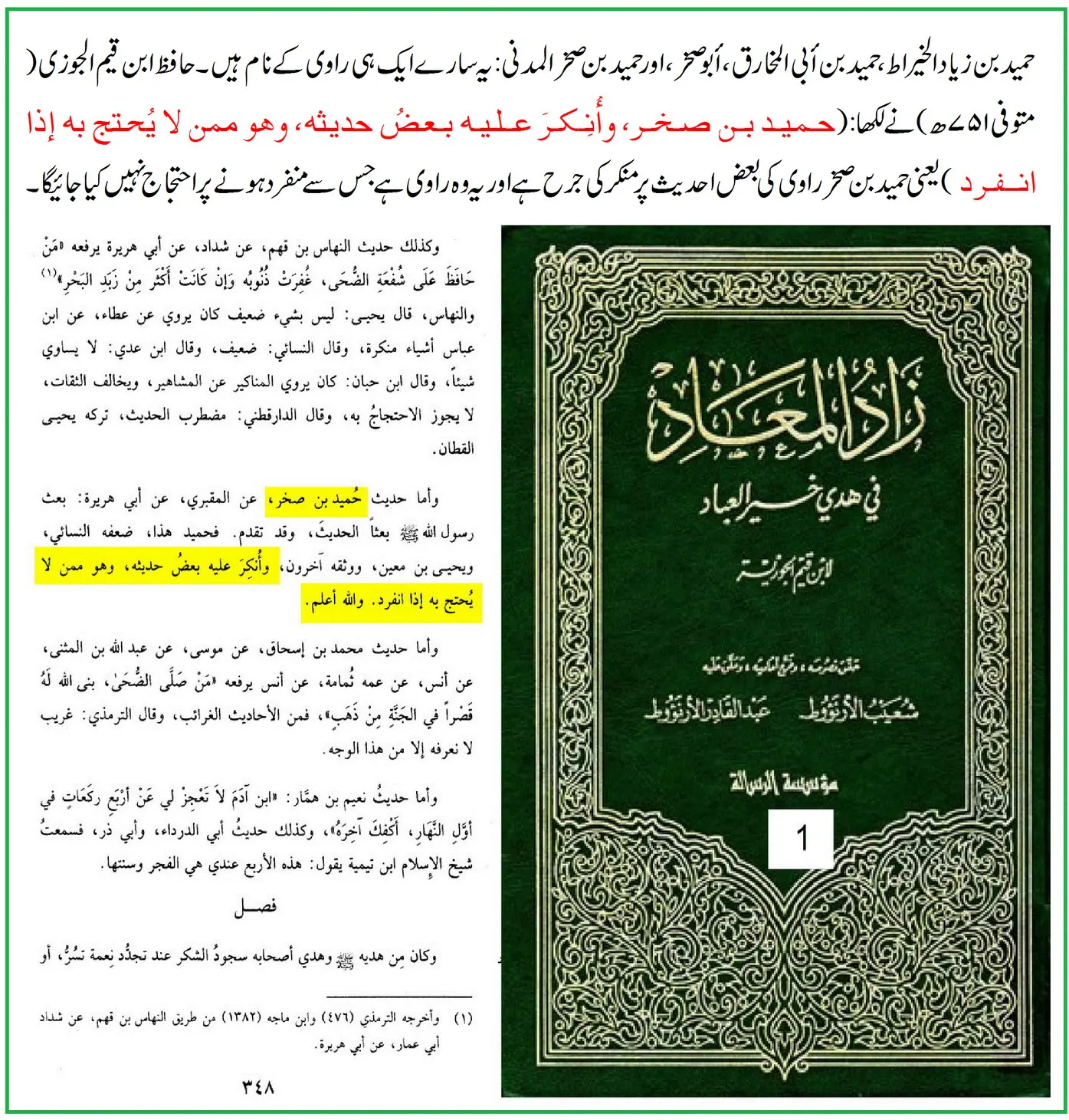
The majority of Hadith scholars declared him weak.① Ibn al-Qayyim (751 AH)
Arabic:«وَأُنْكِرَ عَلَيْهِ بَعْضُ حَدِيثِهِ، وَهُوَ مِمَّنْ لَا يُحْتَجُّ بِهِ إِذَا انْفَرَدَ.»
Reference: Zād al-Maʿād 1/305
Translation:
Some of his narrations were considered objectionable, and he is among those whose solitary reports are not used as proof.
② Imām al-ʿUqaylī (332 AH)
Included him in al-Ḍuʿafā’ al-Kabīr.
Reference: al-Ḍuʿafā’ al-Kabīr 2/348
This constitutes explicit criticism.
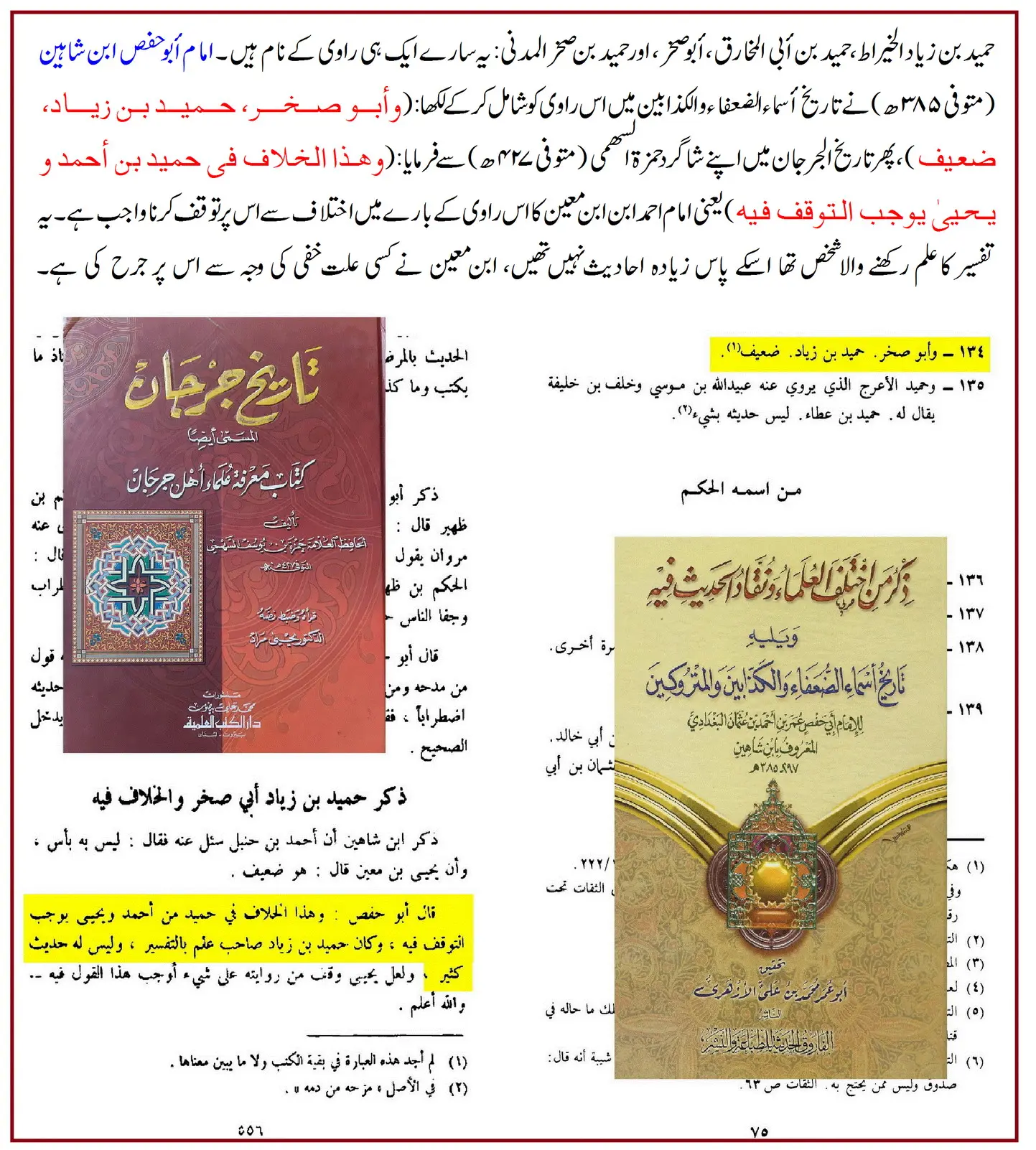
③ Ibn Shāhīn (385 AH)
Arabic:«أبو صخر حميد بن زياد ضعيف.»
Reference: Tārīkh Asmā’ al-Ḍuʿafā’ wa al-Kadhdhābīn: 134
Translation:
Abu Sakhr Ḥumayd bin Ziyād is weak.
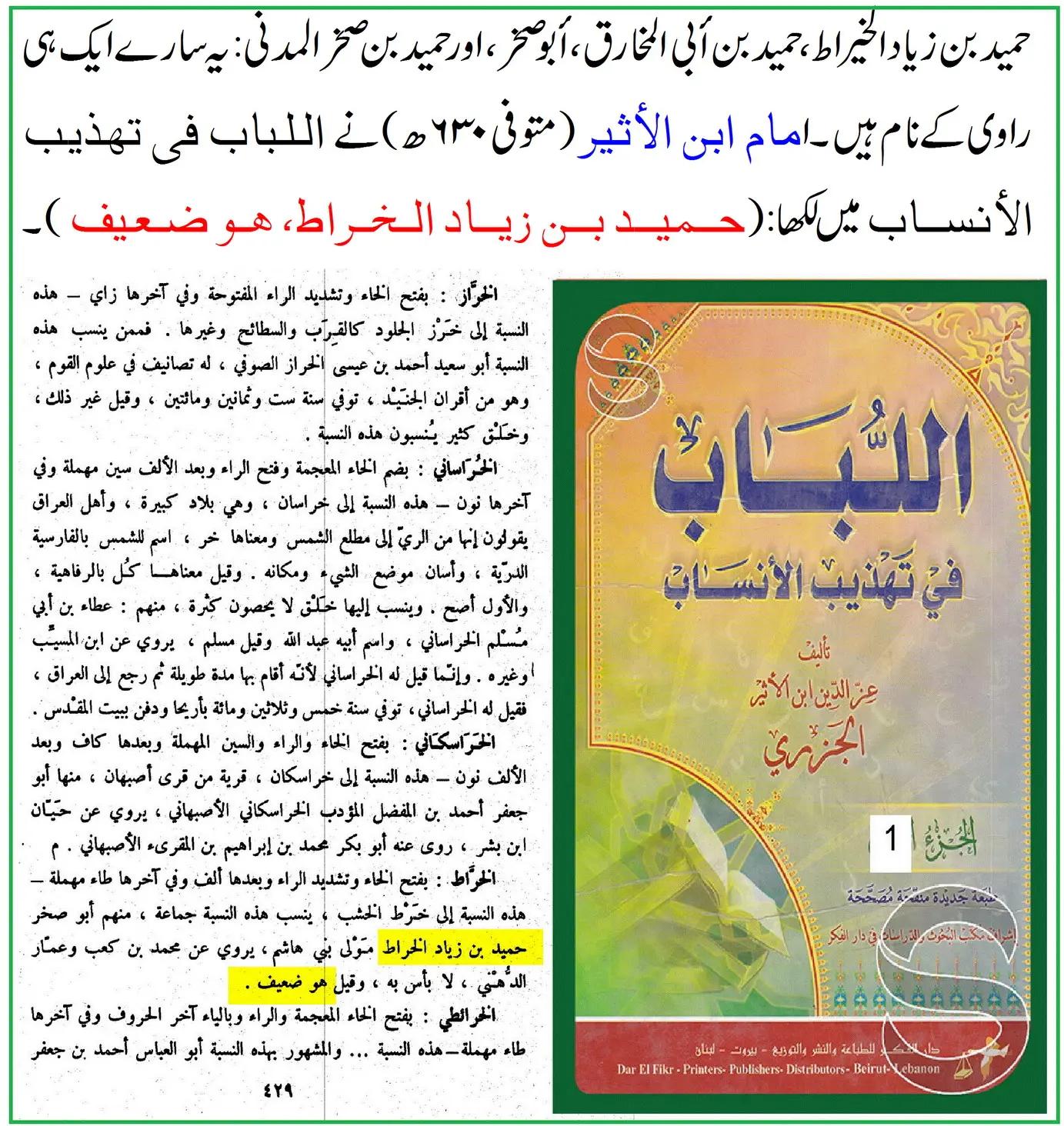
④ Ibn al-Athīr (630 AH)
Arabic:«… هو ضعيف.»
Reference: al-Lubāb fī Tahdhīb al-Ansāb 1/301
Translation:
He is weak.
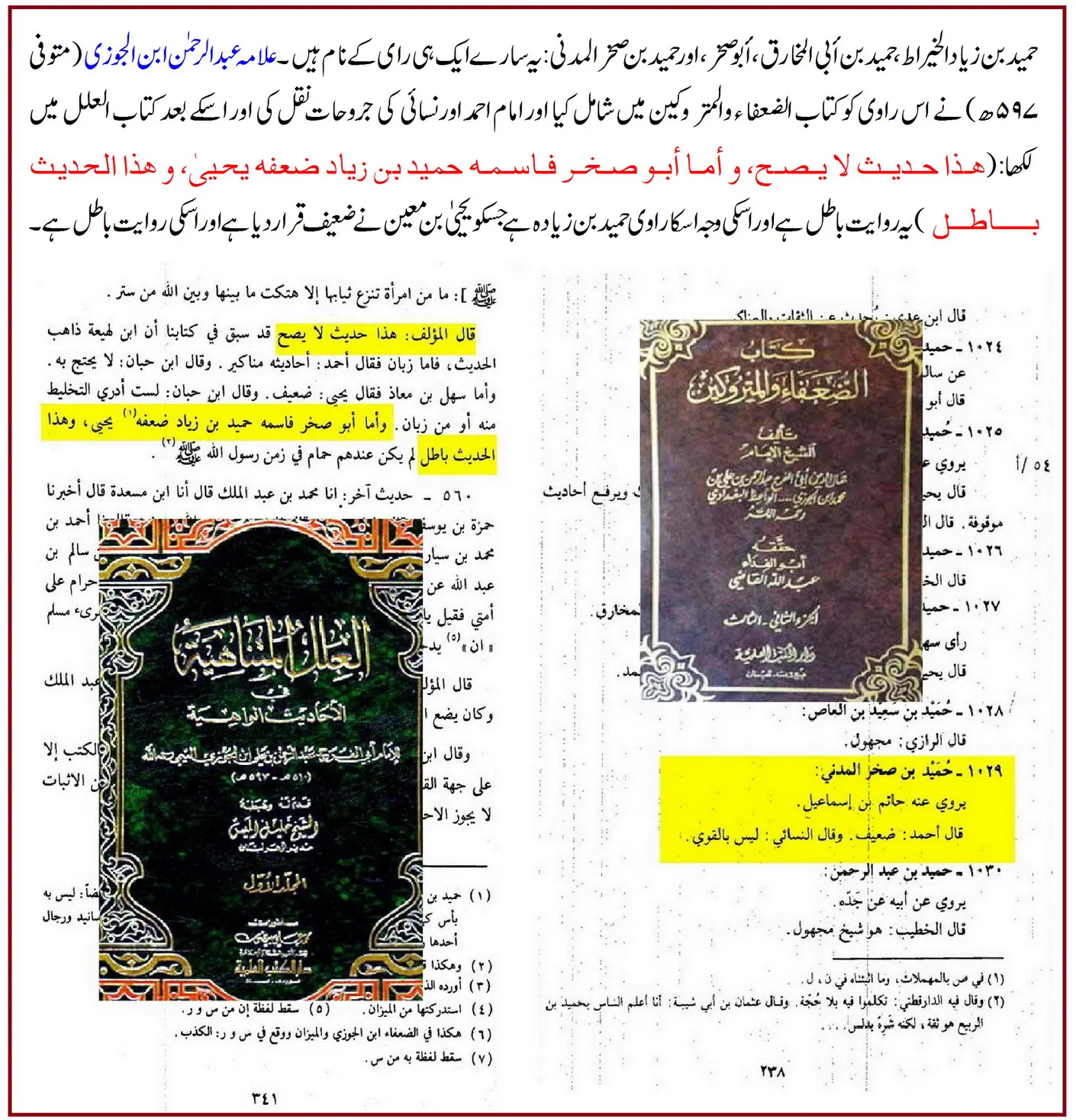
⑤ Ibn al-Jawzī (594 AH)
Arabic:«قال أحمد: ضعيف، وقال النسائي: ليس بالقوي.»
Reference: al-Ḍuʿafā’ wa al-Matrūkūn: 1029
Translation:
Imām Aḥmad said: He is weak.
Imām al-Nasā’ī said: He is not strong.
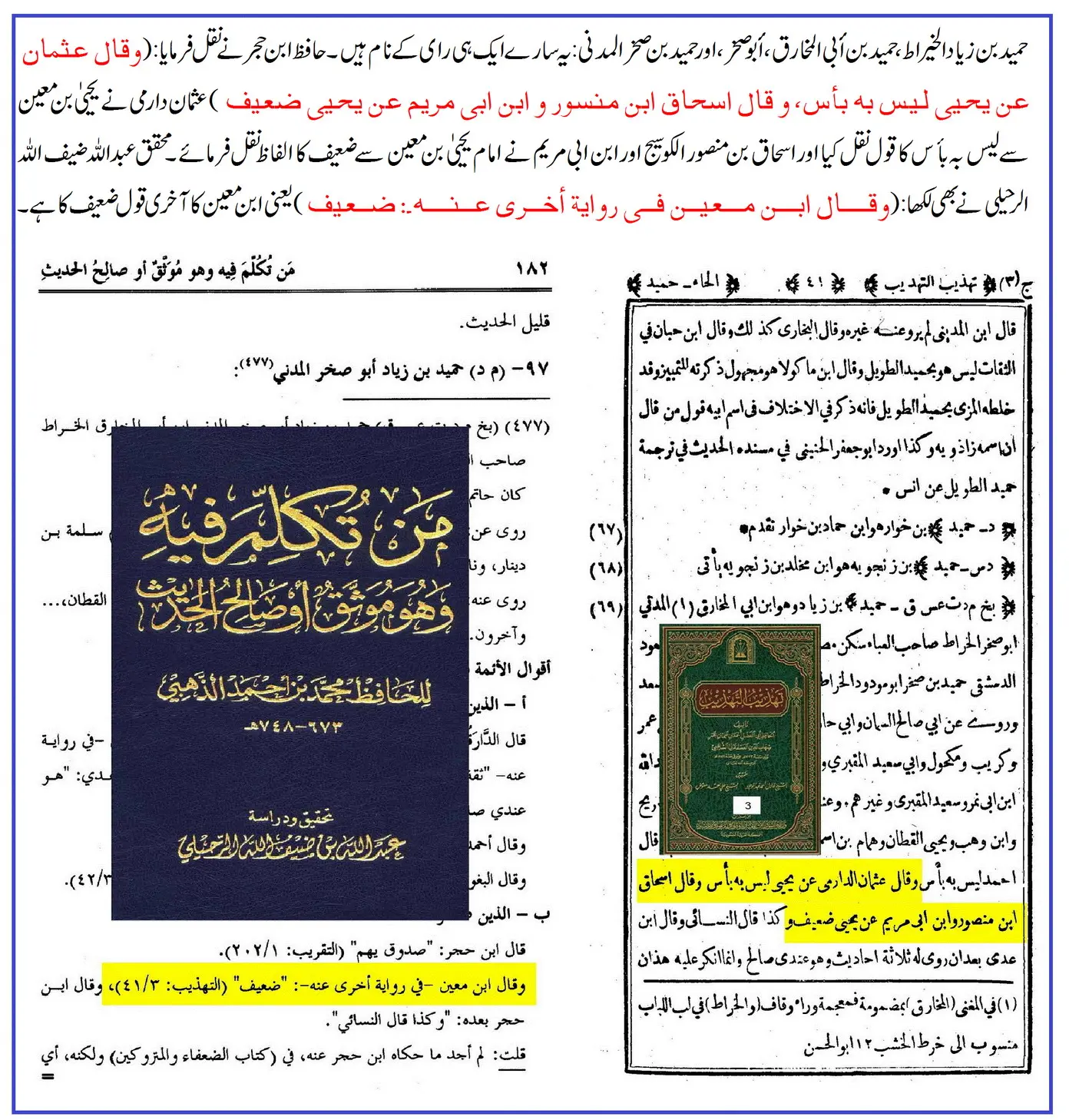
⑥ Yaḥyā bin Maʿīn (233 AH)
Arabic:«أبو صخر حميد بن زياد ضعيف.»
Reference: al-Jarḥ wa al-Taʿdīl 3/433
Translation:
Abu Sakhr Ḥumayd bin Ziyād is weak.
Although another statement “lā ba’sa bihi” is reported, the later and preferred position is that he is weak.
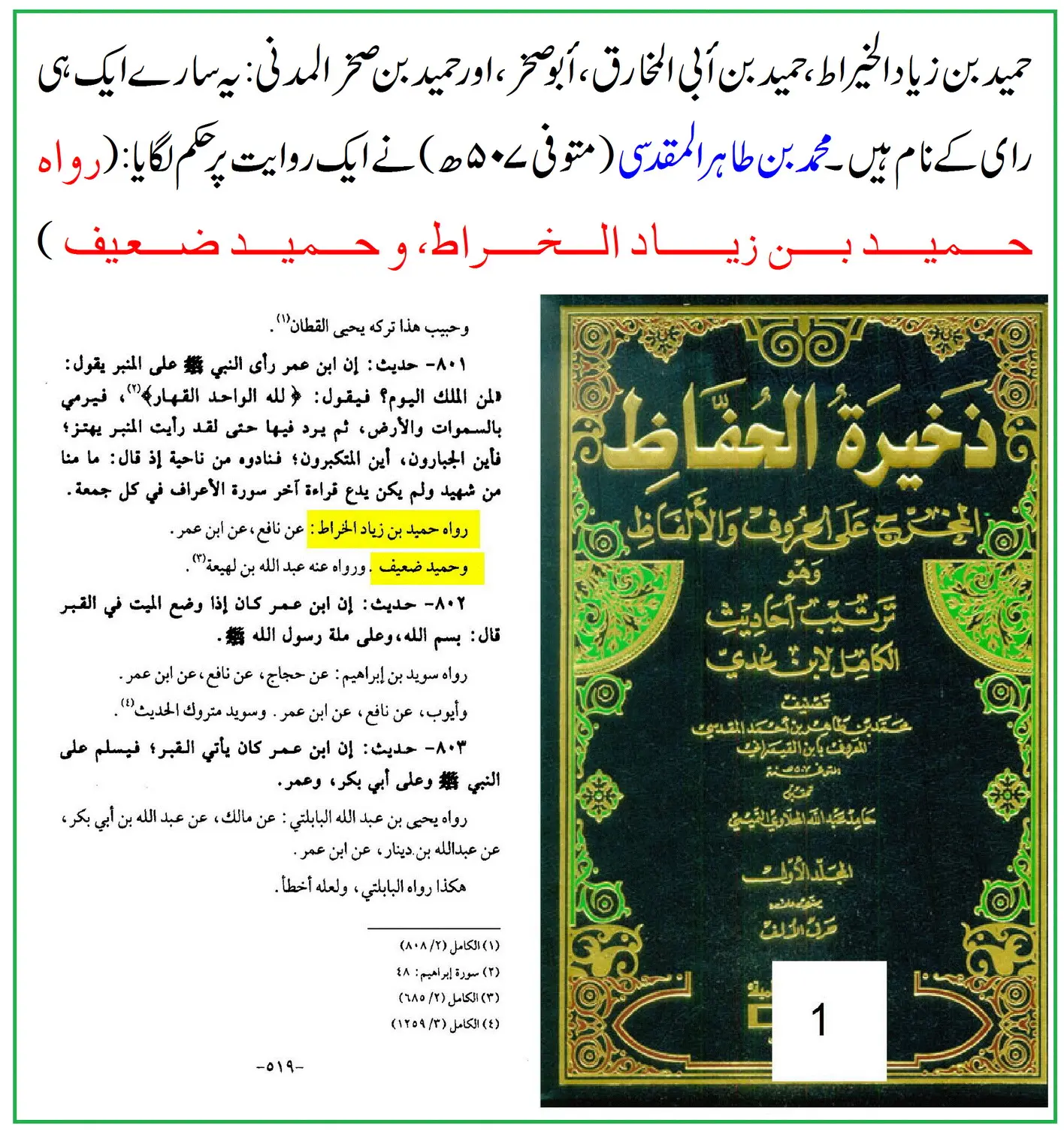
⑦ Ḥāfiẓ Ibn Ḥajar (852 AH)
Arabic:«صدوق يهم من السادسة.»
Reference: Taqrīb al-Tahdhīb: 1546
Translation:
Truthful but makes mistakes; from the sixth category.
Ibn Ḥajar clarified regarding this category:
«مقبول حيث يتابع، وإلا فليّن الحديث.»
Accepted when supported; otherwise, his hadith is weak.
Thus, when alone, he is not a proof.
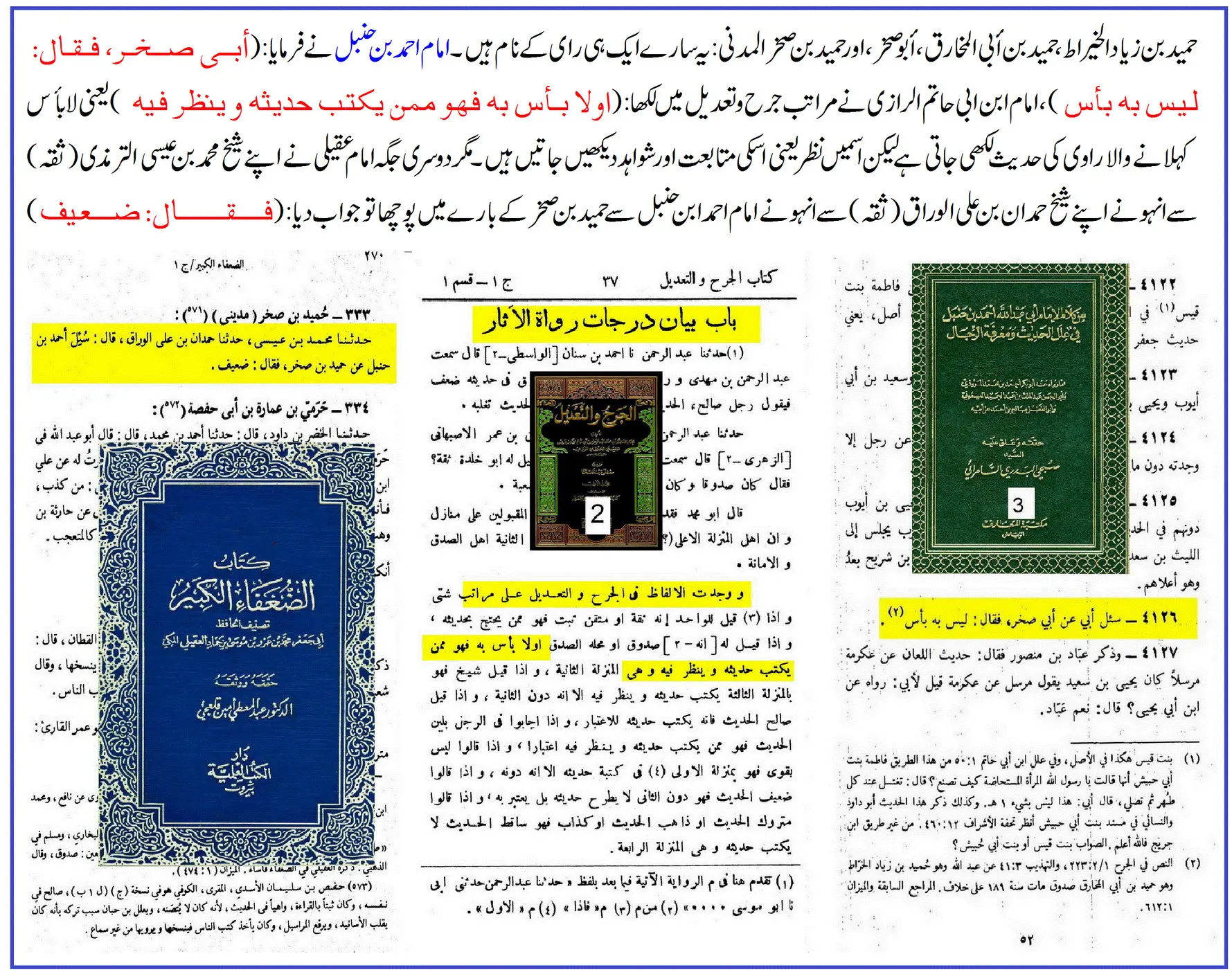
⑧ Imām Aḥmad bin Ḥanbal (241 AH)
Two statements are reported:- “Laysa bihi ba’s” (No harm in him)
- “Ḍaʿīf” (Weak)
⑨ Imām al-Nasā’ī (303 AH)
«ليس بالقوي»«ضعيف»
He is not strong; rather, weak.
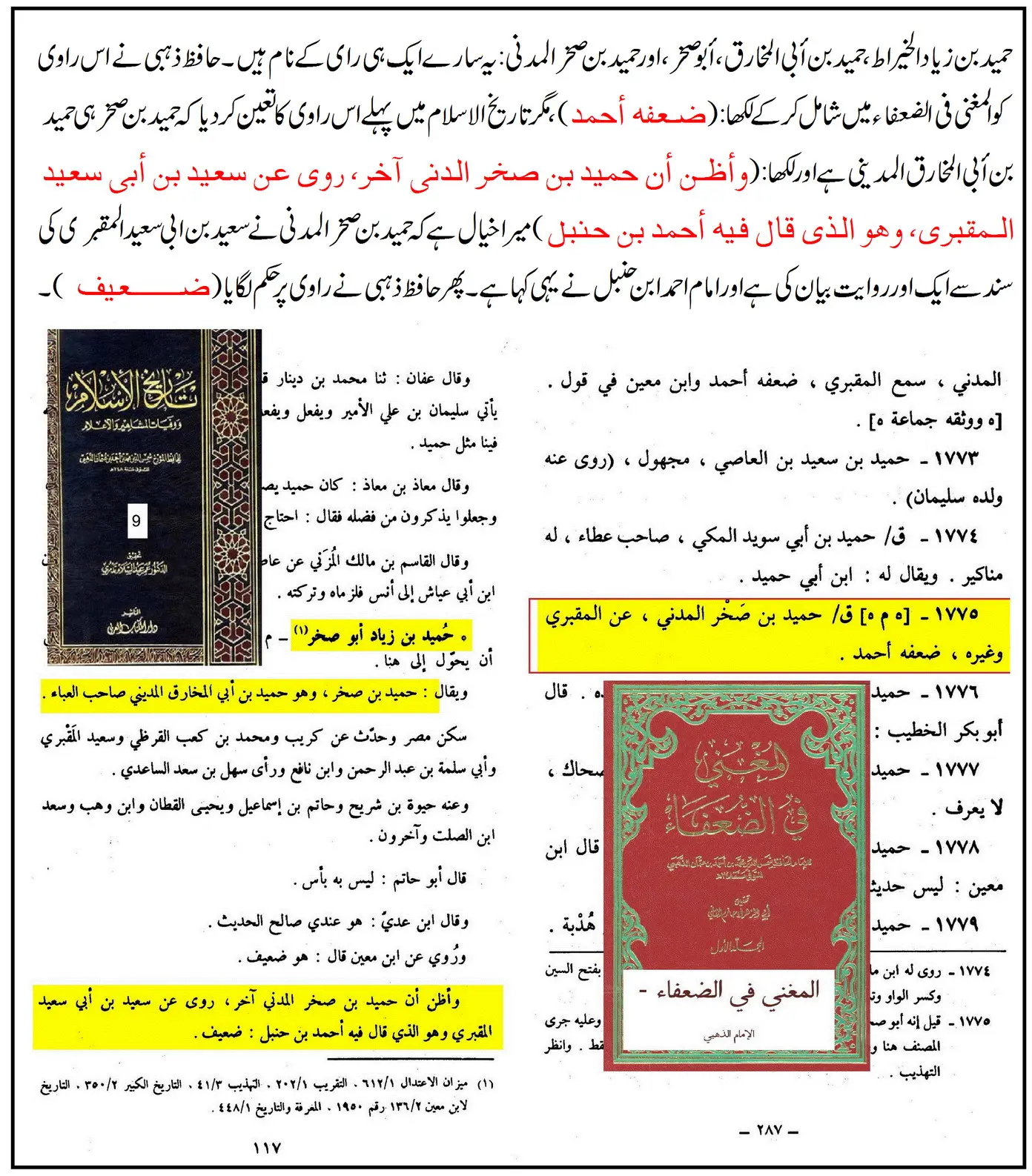
⑩ Ḥāfiẓ al-Dhahabī (748 AH)
Mentioned that Aḥmad declared him weak.
Reference: al-Mughnī fī al-Ḍuʿafā’: 1775
⑪ Ibn ʿAdī (365 AH)
Mentioned that he narrates reports which are not supported by others.
Reference: al-Kāmil 2/439
⑫ Shaykh al-Albānī (1420 AH)
Arabic:«رجاله ثقات على ضعف يسير في أبي صخر.»
Reference: Silsilat al-Aḥādīth al-Ḍaʿīfah: 4617
Translation:
Its narrators are trustworthy except that there is weakness in Abu Sakhr.
◈ Response to Those Who Declared Him Trustworthy
✔ Imām al-ʿIjlī
Declared him “thiqah,” but al-ʿIjlī is known for leniency in declaring narrators trustworthy. His statement cannot outweigh the majority’s criticism.✔ Imām al-Dāraquṭnī
Although he once called him “thiqah,” in al-ʿIlal and al-Tatabbuʿ, he preferred other narrators over him and stated that his reports lack support.This indicates that even al-Dāraquṭnī did not rely upon his solitary narrations.
◈ Ruling on the Two Narrations
① Addition in Musnad Abī Yaʿlā:
«ثُمَّ لَئِنْ قَامَ عَلَى قَبْرِي…»➝ This is a rejected solitary addition (munkar ziyādah).
It is not acceptable as proof.
② Narration in Sunan Abī Dāwūd:
«… رَدَّ اللَّهُ عَلَيَّ رُوحِي …»➝ The portion mentioning the return of the soul is a rejected addition.
The established matter is that salutations are conveyed to the Prophet ﷺ and he responds, but the specific description of the soul being returned is not established authentically.
◈ Final Conclusion
① Abu Sakhr Ḥumayd bin Ziyād is weak according to the majority of Hadith scholars.② His solitary narrations cannot be relied upon.
③ The narration of calling at the grave in Musnad Abī Yaʿlā and the narration of “return of the soul” in Sunan Abī Dāwūd are both rejected in their additional wording.
④ Deriving permissibility of grave-veneration or seeking help (istighāthah) from these narrations is invalid.

