
This excerpt is taken from the book "Noor al-Aynayn fi Ithbat Raf' al-Yadayn 'inda al-Ruku' wa Ba'dahu fi al-Salah" by the hadith scholar Hafiz Zubair Ali Zai رحمه الله.
Muhammad Ilyas Ghaman Sahib of the Deobandi school has published an advertisement:
Arguments Against Raising the Hands in Prayer!
In this advertisement, Ghaman Sahib has presented what he claims to be ten arguments; however, not a single "argument" among these is valid in support of his claim, nor is it correct to cite Imam Abu Hanifah with these alleged arguments.
In the following research article, these Ghamani arguments will be mentioned and a response will be provided:
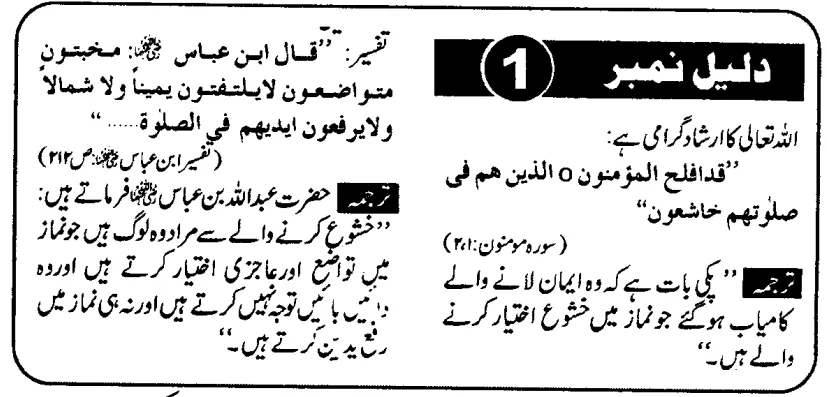
Ghaman Sahib has cited the first two verses of Surah Al-Mu'minun in his first "argument," in which there is no mention of the abandonment of raising the hands (both before and after the bowing). He then referenced the Tafsir attributed to Sayyidina Ibn Abbas رضي الله عنه, although this Tafsir is not even established from Sayyidina Abdullah Ibn Abbas رضي الله عنهما, and its main narrator, Muhammad bin Marwan Al-Suddi Al-Saghir, is a liar, and the rest of the chain is also a chain of lies.
The "Sheikh al-Islam" of the Deobandis, Muhammad Taqi Usmani Deobandi, has written in his fatwa:
As for Sayyidina Abdullah Ibn Abbas رضي الله عنهما, although he is unanimously recognized as an Imam among the commentators, firstly, his Tafsir is not established in book form with any authentic chain. The version currently attributed to Sayyidina Abdullah Ibn Abbas رضي الله عنهما under the name "Tanwir al-Miqbas" has a very weak chain, because this version is from Muhammad bin Marwan Al-Suddi Al-Saghir through Al-Kalbi through Abu Salih, and this chain has been declared by the hadith scholars as "the chain of lies."
For further details, see my book Research Articles
In contrast to this fabricated book, it is established that Sayyidina Ibn Abbas رضي الله عنهما used to raise his hands before and after the bowing.
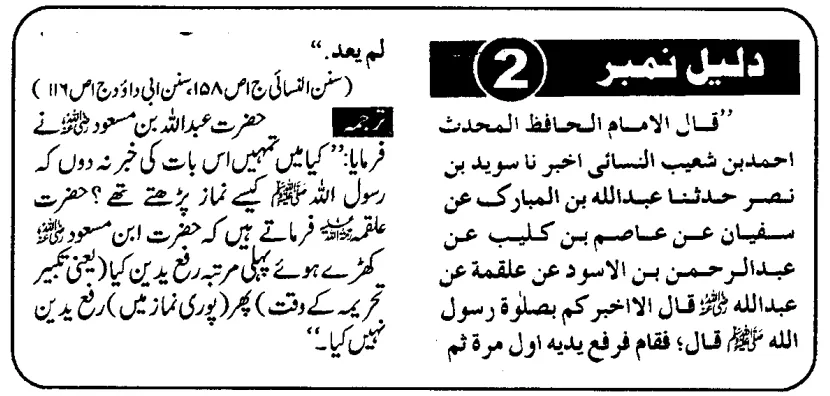
The chain of this narration is weak for two reasons:
First: Imam Sufyan ibn Sa'id ibn Masruq al-Thawri رحمه الله was a trustworthy worshipper but also a mudallis, as stated by Hussain Ahmad Madani Deobandi:
"And Sufyan does mudallas."
Ibn al-Turkmani al-Hanafi wrote about one narration:
الثوري مدلس و قد عنعن.
Al-Thawri is a mudallis and he narrated this narration from 'an.
Imam Sufyan al-Thawri was also declared a mudallis by Master Amin Okaraavi.
This narration is from 'an, and it is a well-known principle in the science of hadith that the narration of a mudallis from 'an is weak.
Second: This narration has been declared weak, erroneous, and based on misunderstanding by the majority of hadith scholars, among whom are the following names:
Abdullah ibn al-Mubarak, al-Shafi'i, Ahmad ibn Hanbal, Abu Hatim al-Razi, al-Daraqutni, Ibn Hibban, Abu Dawood al-Sijistani, al-Bukhari, Abdul Haq al-Ishbili, al-Hakim al-Nishapuri, and al-Bazzar, among others.
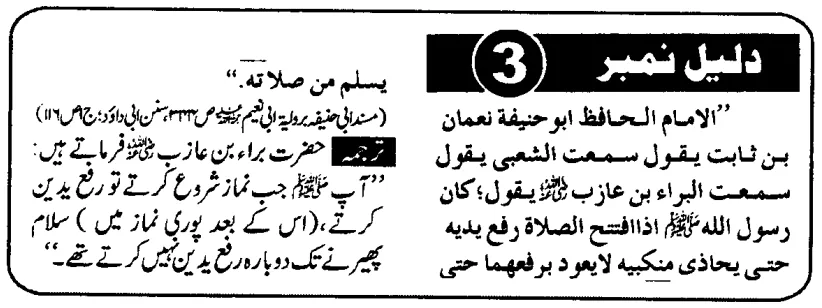
From Imam Abu Na'im to Imam Abu Hanifah, all the narrators of this narration are: Abul Qasim bin Balawi al-Nisaburi, Bakr bin Muhammad bin Abdullah al-Habbal al-Razi, Ali bin Muhammad bin Ruh bin Abi al-Harash al-Masisi, Muhammad bin Ruh, and Ruh bin Abi al-Harash (all six) are unknown, therefore this chain is rejected.
Note: Ghaman Sahib has also referenced Sunan Abu Dawood in the aforementioned narration
In Sunan Abu Dawood, there is another narration attributed to Sayyidina Bara' bin Azib رضي الله عنه which exists through two chains, one of which includes Yazid bin Abi Ziyad, who is considered a weak narrator by the majority of scholars, and the other chain includes Muhammad bin Abdul Rahman bin Abi Layla, who is also regarded as weak by the majority.
It is unknown why the "fortune" of the Deobandis includes so many weak, rejected, and fabricated narrations, or why they have an overwhelming obsession with collecting such narrations and deriving arguments from them?!
Do those who follow the blind imitation wish to oppose Ahl al-Hadith by abandoning authentic hadiths and turning to weak and rejected narrations in some false pretense?
Announcement: If Ilyas Ghaman Sahib and his fake Zahabi group collectively present this narration attributed to Imam Abu Hanifah with this chain from Sunan Abu Dawood, a gift of Sahihain and Sunan al-Arba'a will be sent to their names. Have courage!
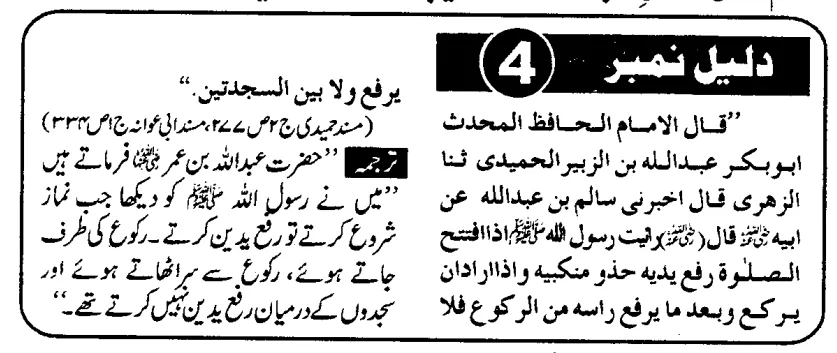
In this argument, Mr. Ilyas Ghaman has made seven mistakes:
First: The manuscript referenced is published by Habib al-Rahman Azmi of the Deobandi school, whereas the manuscript of Musnad al-Hamidi published from the region of Sham does not contain this phrase but rather affirms the raising of hands before and after the bowing.
Second: This phrase is not present in the ancient handwritten manuscripts of Musnad al-Hamidi; instead, it affirms the raising of hands before and after the bowing.
Third: The same narration of Imam Sufyan ibn Uyaynah رحمه الله is present in Sahih Muslim, affirming the raising of hands before and after the bowing.
Fourth: The central narrator of this hadith, Sufyan ibn Uyaynah رحمه الله, has the raising of hands before and after the bowing established with a sound chain of narration.
Fifth: The same hadith in the Mustakhraj of Abu Na'im al-Asbahani is present with the chain of Imam Hamidi, affirming the raising of hands before and after the bowing.
For further details, studying Noor al-Aynain
Sixth: The printed version of Musnad Abi Awanah is missing the conjunction "wa" (and), while it is present in Sahih Muslim, which affirms the raising of hands.
Seventh: The handwritten manuscript of Musnad Abi Awanah contains "wa," which undermines the Deobandi argument.
In contrast to the distorted manuscripts of Musnad al-Hamidi and Musnad Abi Awanah, it is established from Sahih al-Bukhari and other books that Sayyidina Ibn Umar رضي الله عنهما used to raise his hands before and after the bowing.
It is established from Hadith al-Siraj and other hadith books that Sayyidina Ibn Umar رضي الله عنهما's esteemed jurist son, Imam Salim ibn Abdullah al-Madani al-Tabi'i رحمه الله, also raised his hands before and after the bowing. Can Mr. Ghaman and his entire party provide sound or good evidence that Imam Salim ibn Abdullah ibn Umar رحمه الله abandoned the raising of hands?
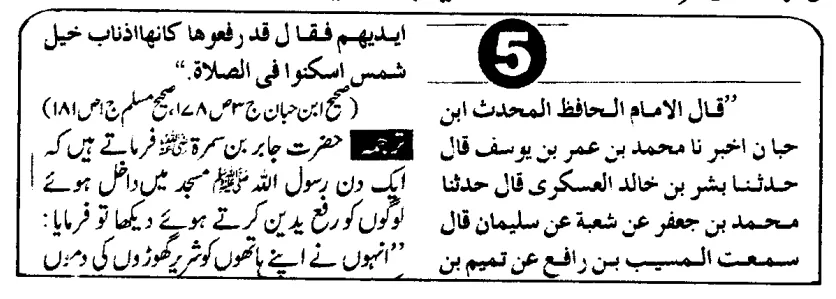

In this authentic Hadith, there is no mention of raising the hands before and after bowing (rukū), rather Mahmood Hasan Deobandi, in "Aseer Malta," stated: "Responding based on the narration of the tails of horses is not justifiable because it pertains to the greeting (salām), where the Companions said that we used to gesture with our hands during the salām. You prohibited this."
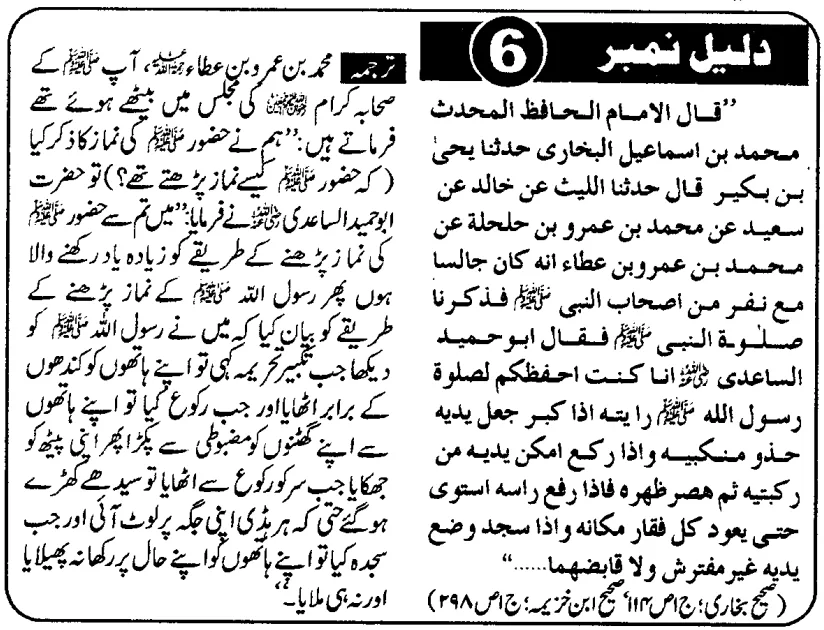
In this Hadith of Sahih al-Bukhari, there is no mention of the abandonment of raising the hands before and after bowing, and Muhammad Qasim Nanotwi (founder of the Darul Uloom Deoband) wrote: "The absence of mention is not evidence of non-existence... The respected Maulvi Sahib, as a rational argument, it is sufficient to say that lack of knowledge or lack of mention does not indicate the non-existence of a thing."
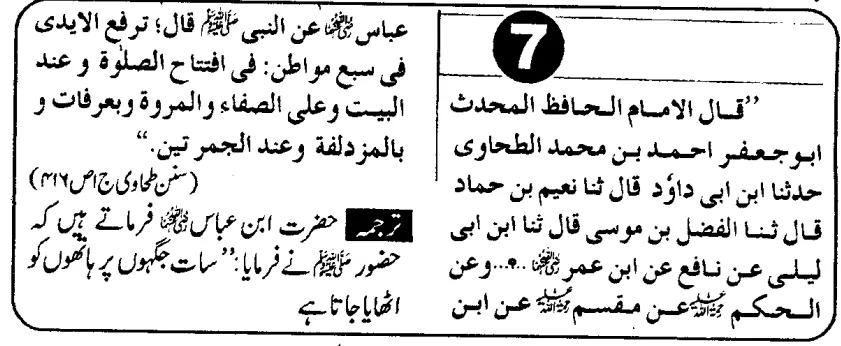
In the chain of this narration, Muhammad ibn Abdul Rahman ibn Abi Layli is considered a weak narrator by the majority of hadith scholars.
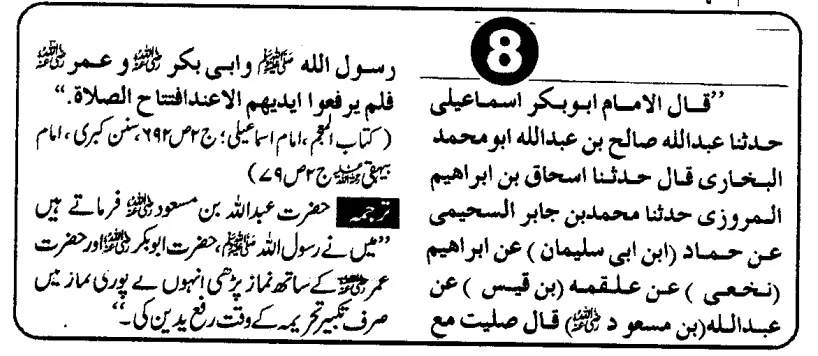
This narration is weak and rejected for several reasons:
➊ Its primary narrator, Muhammad bin Jabir, is considered weak and unreliable by the majority of hadith scholars. Hafiz Haythami stated: وهو ضعيف عند الجمهور
➋ The majority of hadith scholars have criticized this narration specifically; for instance, the famous Imam of Ahl al-Sunnah, Ahmad bin Hanbal رحمه الله, stated: This narration is rejected.
➌ Mr. Ilyas Ghaman has also referenced Imam al-Bayhaqi in the mentioned narration, and in that reference, Imam al-Bayhaqi has recorded criticism of Muhammad bin Jabir. For further details, see Noor al-Ainain
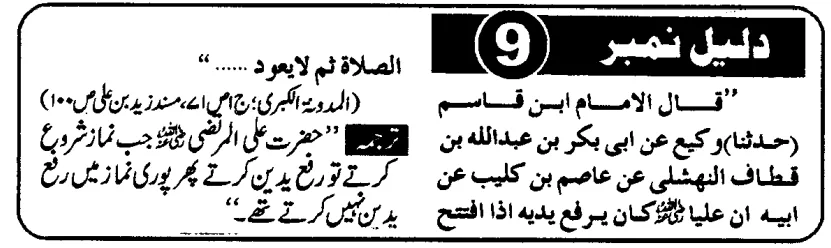
The Mudawwana al-Kubra is an unreliable and unsourced book, and the Musnad of Zayd is not a book of Ahl al-Sunnah but rather a fabricated book of Zaydi Shia; therefore, both references are incorrect and rejected.
Note: The narration of Abu Bakr al-Nahshali found in other books is weak due to its errors and mistakes.
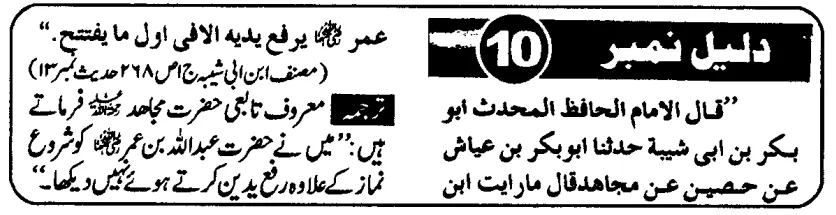
The narration from Musannaf Ibn Abi Shaybah is weak due to the error and misunderstanding of Qari Abu Bakr bin Ayyash رحمه الله and is rejected for two reasons:
● Imam Ahmad bin Hanbal, Imam Yahya bin Ma'in, and Imam al-Daraqutni have deemed this narration as a misunderstanding and false, and no reliable hadith scholar has authenticated it. Even if it were to be established by a minor hadith scholar, it would still be rejected in light of the majority's opinion.
● It is well established through many trustworthy narrators and authentic and good chains of narration that Sayyidina Abdullah bin Umar رضي الله عنهما used to raise his hands before and after bowing in prayer, among whom are the following narrators from his students:
Imam Nafi' al-Madani رحمه الله, Imam Muharib bin Dithar al-Kufi رحمه الله, Imam Tawus bin Kaysan al-Yamani رحمه الله, Imam Salim bin Abdullah bin Umar al-Madani رحمه الله, and Imam Abu al-Zubair al-Khufi رحمه الله.
Narrations based on misunderstanding and error are rejected against trustworthy narrators.
Dear readers! You have seen that Mr. Ilyas Ghuman and the Ahl al-Deoband do not possess a single authentic or good narration regarding the abandonment of raising hands before and after bowing.
It is narrated from Sayyidina Abdullah ibn Umar رضي الله عنهما that he saw the Messenger of Allah ﷺ, when he stood in prayer, he would raise his hands up to his shoulders, and he would do the same when bowing, and when he raised his head from bowing, he would do it in the same manner.
The narrator of this hadith, Sayyidina Abdullah ibn Umar رضي الله عنهما, states that at the beginning of the prayer, before bowing, after bowing, and when standing after two rak'ahs, he would raise his hands and said that the Noble Prophet ﷺ did the same.
The narrator of this hadith from Sayyidina Abdullah ibn Umar رضي الله عنهما is his esteemed son Imam Salim ibn Abdullah ibn Umar رحمه الله, who also raised his hands at the beginning of the prayer, at the time of bowing, and after rising from bowing.
و ما علينا إلا البلاغ
(21 November 2011, Sargodha)
Muhammad Ilyas Ghaman Sahib of the Deobandi school has published an advertisement:
Arguments Against Raising the Hands in Prayer!
In this advertisement, Ghaman Sahib has presented what he claims to be ten arguments; however, not a single "argument" among these is valid in support of his claim, nor is it correct to cite Imam Abu Hanifah with these alleged arguments.
In the following research article, these Ghamani arguments will be mentioned and a response will be provided:
Ghaman Sahib has cited the first two verses of Surah Al-Mu'minun in his first "argument," in which there is no mention of the abandonment of raising the hands (both before and after the bowing). He then referenced the Tafsir attributed to Sayyidina Ibn Abbas رضي الله عنه, although this Tafsir is not even established from Sayyidina Abdullah Ibn Abbas رضي الله عنهما, and its main narrator, Muhammad bin Marwan Al-Suddi Al-Saghir, is a liar, and the rest of the chain is also a chain of lies.
The "Sheikh al-Islam" of the Deobandis, Muhammad Taqi Usmani Deobandi, has written in his fatwa:
As for Sayyidina Abdullah Ibn Abbas رضي الله عنهما, although he is unanimously recognized as an Imam among the commentators, firstly, his Tafsir is not established in book form with any authentic chain. The version currently attributed to Sayyidina Abdullah Ibn Abbas رضي الله عنهما under the name "Tanwir al-Miqbas" has a very weak chain, because this version is from Muhammad bin Marwan Al-Suddi Al-Saghir through Al-Kalbi through Abu Salih, and this chain has been declared by the hadith scholars as "the chain of lies."
Reference: (Fatāwā Usmani, Vol. 1, p. 215)
For further details, see my book Research Articles
Reference: (Vol. 3, pp. 410-408, 505-503)
and Noor Al-Aynain
Reference: (New Edition, pp. 238-246)
. In contrast to this fabricated book, it is established that Sayyidina Ibn Abbas رضي الله عنهما used to raise his hands before and after the bowing.
Reference: (See Juz' Raf' al-Yadayn by Bukhari: 21, and Noor Al-Aynain, p. 246)
The chain of this narration is weak for two reasons:
First: Imam Sufyan ibn Sa'id ibn Masruq al-Thawri رحمه الله was a trustworthy worshipper but also a mudallis, as stated by Hussain Ahmad Madani Deobandi:
"And Sufyan does mudallas."
Reference: (Taqrir Tirmidhi Urdu p. 391, arranged by Muhammad Abdul Qadir Qasmi Deobandi)
Ibn al-Turkmani al-Hanafi wrote about one narration:
الثوري مدلس و قد عنعن.
Al-Thawri is a mudallis and he narrated this narration from 'an.
Reference: (Al-Jawhar al-Naqi vol. 8 p. 362)
Imam Sufyan al-Thawri was also declared a mudallis by Master Amin Okaraavi.
Reference: (See Tajalliyat Safdar vol. 5 p. 470)
This narration is from 'an, and it is a well-known principle in the science of hadith that the narration of a mudallis from 'an is weak.
Reference: (For example, see Nuzhat al-Nazar Sharh Nukhbat al-Fikr p. 66 with Sharh al-Mulla Ali al-Qari p. 419)
Second: This narration has been declared weak, erroneous, and based on misunderstanding by the majority of hadith scholars, among whom are the following names:
Abdullah ibn al-Mubarak, al-Shafi'i, Ahmad ibn Hanbal, Abu Hatim al-Razi, al-Daraqutni, Ibn Hibban, Abu Dawood al-Sijistani, al-Bukhari, Abdul Haq al-Ishbili, al-Hakim al-Nishapuri, and al-Bazzar, among others.
Reference: (See Noor al-Aynayn p. 130-134)
From Imam Abu Na'im to Imam Abu Hanifah, all the narrators of this narration are: Abul Qasim bin Balawi al-Nisaburi, Bakr bin Muhammad bin Abdullah al-Habbal al-Razi, Ali bin Muhammad bin Ruh bin Abi al-Harash al-Masisi, Muhammad bin Ruh, and Ruh bin Abi al-Harash (all six) are unknown, therefore this chain is rejected.
Reference: (See Musnad Abu Hanifah by Abu Na'im al-Asbahani, p. 156, Archive of the Meeting of Ahl al-Hadith, Issue 4, Vol. 1, p. 926, Research Articles, Vol. 3, p. 123)
Note: Ghaman Sahib has also referenced Sunan Abu Dawood in the aforementioned narration
Reference: (Vol. 1, p. 116)
, whereas this narration attributed to Imam Abu Hanifah is certainly not present in Sunan Abu Dawood, in fact, the name of Abu Hanifah is not found at all in the entire Sunan Abu Dawood.In Sunan Abu Dawood, there is another narration attributed to Sayyidina Bara' bin Azib رضي الله عنه which exists through two chains, one of which includes Yazid bin Abi Ziyad, who is considered a weak narrator by the majority of scholars, and the other chain includes Muhammad bin Abdul Rahman bin Abi Layla, who is also regarded as weak by the majority.
Reference: (See Research Articles, Vol. 3, p. 123)
It is unknown why the "fortune" of the Deobandis includes so many weak, rejected, and fabricated narrations, or why they have an overwhelming obsession with collecting such narrations and deriving arguments from them?!
Do those who follow the blind imitation wish to oppose Ahl al-Hadith by abandoning authentic hadiths and turning to weak and rejected narrations in some false pretense?
Announcement: If Ilyas Ghaman Sahib and his fake Zahabi group collectively present this narration attributed to Imam Abu Hanifah with this chain from Sunan Abu Dawood, a gift of Sahihain and Sunan al-Arba'a will be sent to their names. Have courage!
In this argument, Mr. Ilyas Ghaman has made seven mistakes:
First: The manuscript referenced is published by Habib al-Rahman Azmi of the Deobandi school, whereas the manuscript of Musnad al-Hamidi published from the region of Sham does not contain this phrase but rather affirms the raising of hands before and after the bowing.
Reference: (See Musnad al-Hamidi vol. 1 pp. 515-626)
Second: This phrase is not present in the ancient handwritten manuscripts of Musnad al-Hamidi; instead, it affirms the raising of hands before and after the bowing.
Reference: (See Noor al-Aynain pp. 70-71)
Third: The same narration of Imam Sufyan ibn Uyaynah رحمه الله is present in Sahih Muslim, affirming the raising of hands before and after the bowing.
Reference: (See Sahih Muslim: 390)
Fourth: The central narrator of this hadith, Sufyan ibn Uyaynah رحمه الله, has the raising of hands before and after the bowing established with a sound chain of narration.
Reference: (See Sunan al-Tirmidhi: 256, research by Ahmad Shakir رحمه الله)
Fifth: The same hadith in the Mustakhraj of Abu Na'im al-Asbahani is present with the chain of Imam Hamidi, affirming the raising of hands before and after the bowing.
Reference: (See vol. 2 pp. 12)
For further details, studying Noor al-Aynain
Reference: (pp. 64-76)
is beneficial.Sixth: The printed version of Musnad Abi Awanah is missing the conjunction "wa" (and), while it is present in Sahih Muslim, which affirms the raising of hands.
Reference: (See Noor al-Aynain pp. 76-81)
Seventh: The handwritten manuscript of Musnad Abi Awanah contains "wa," which undermines the Deobandi argument.
Reference: (See Noor al-Aynain pp. 78-79)
In contrast to the distorted manuscripts of Musnad al-Hamidi and Musnad Abi Awanah, it is established from Sahih al-Bukhari and other books that Sayyidina Ibn Umar رضي الله عنهما used to raise his hands before and after the bowing.
It is established from Hadith al-Siraj and other hadith books that Sayyidina Ibn Umar رضي الله عنهما's esteemed jurist son, Imam Salim ibn Abdullah al-Madani al-Tabi'i رحمه الله, also raised his hands before and after the bowing. Can Mr. Ghaman and his entire party provide sound or good evidence that Imam Salim ibn Abdullah ibn Umar رحمه الله abandoned the raising of hands?
In this authentic Hadith, there is no mention of raising the hands before and after bowing (rukū), rather Mahmood Hasan Deobandi, in "Aseer Malta," stated: "Responding based on the narration of the tails of horses is not justifiable because it pertains to the greeting (salām), where the Companions said that we used to gesture with our hands during the salām. You prohibited this."
Reference: (Al-Ward al-Shadhī p. 63, Taqrirat 65)
Muhammad Taqi Usmani Deobandi said: "However, the fair point is that the Hanafis' inference from this Hadith is questionable and weak."
Reference: (Darus Tirmidhi 36/2)
It has been established that both Mahmood Hasan and Taqi Usmani consider Ilyas Ghuman to be unjust.
In this Hadith of Sahih al-Bukhari, there is no mention of the abandonment of raising the hands before and after bowing, and Muhammad Qasim Nanotwi (founder of the Darul Uloom Deoband) wrote: "The absence of mention is not evidence of non-existence... The respected Maulvi Sahib, as a rational argument, it is sufficient to say that lack of knowledge or lack of mention does not indicate the non-existence of a thing."
Reference: (Hadiyat al-Shi'ah p. 199-200)
Benefit: The narration in Sahih al-Bukhari is corroborated by another chain in Sunan Abi Dawood and Sunan Tirmidhi, etc., which affirms raising the hands before and after bowing, and this chain is authentic. And all praise is due to Allah.
In the chain of this narration, Muhammad ibn Abdul Rahman ibn Abi Layli is considered a weak narrator by the majority of hadith scholars.
Reference: (See Fayd al-Bari vol. 3 p. 168)
Citing weak and rejected narrations from weak narrators is the work of people like Ilyas Ghuman.
This narration is weak and rejected for several reasons:
➊ Its primary narrator, Muhammad bin Jabir, is considered weak and unreliable by the majority of hadith scholars. Hafiz Haythami stated: وهو ضعيف عند الجمهور
Reference: (Noor al-Ainain p. 153, Majma al-Zawa'id 5/191)
➋ The majority of hadith scholars have criticized this narration specifically; for instance, the famous Imam of Ahl al-Sunnah, Ahmad bin Hanbal رحمه الله, stated: This narration is rejected.
Reference: (Kitab al-‘Ilal 1/144 no. 701)
➌ Mr. Ilyas Ghaman has also referenced Imam al-Bayhaqi in the mentioned narration, and in that reference, Imam al-Bayhaqi has recorded criticism of Muhammad bin Jabir. For further details, see Noor al-Ainain
Reference: (p. 151-154)
The Mudawwana al-Kubra is an unreliable and unsourced book, and the Musnad of Zayd is not a book of Ahl al-Sunnah but rather a fabricated book of Zaydi Shia; therefore, both references are incorrect and rejected.
Note: The narration of Abu Bakr al-Nahshali found in other books is weak due to its errors and mistakes.
Reference: (See Noor al-Ainain p. 165)
The narration from Musannaf Ibn Abi Shaybah is weak due to the error and misunderstanding of Qari Abu Bakr bin Ayyash رحمه الله and is rejected for two reasons:
● Imam Ahmad bin Hanbal, Imam Yahya bin Ma'in, and Imam al-Daraqutni have deemed this narration as a misunderstanding and false, and no reliable hadith scholar has authenticated it. Even if it were to be established by a minor hadith scholar, it would still be rejected in light of the majority's opinion.
● It is well established through many trustworthy narrators and authentic and good chains of narration that Sayyidina Abdullah bin Umar رضي الله عنهما used to raise his hands before and after bowing in prayer, among whom are the following narrators from his students:
Imam Nafi' al-Madani رحمه الله, Imam Muharib bin Dithar al-Kufi رحمه الله, Imam Tawus bin Kaysan al-Yamani رحمه الله, Imam Salim bin Abdullah bin Umar al-Madani رحمه الله, and Imam Abu al-Zubair al-Khufi رحمه الله.
Reference: (See Noor al-Aynayn, p. 159)
Narrations based on misunderstanding and error are rejected against trustworthy narrators.
Dear readers! You have seen that Mr. Ilyas Ghuman and the Ahl al-Deoband do not possess a single authentic or good narration regarding the abandonment of raising hands before and after bowing.
◈ Continuous Practice of Raising Hands in the Best Generations:
It is narrated from Sayyidina Abdullah ibn Umar رضي الله عنهما that he saw the Messenger of Allah ﷺ, when he stood in prayer, he would raise his hands up to his shoulders, and he would do the same when bowing, and when he raised his head from bowing, he would do it in the same manner.
Reference: (Sahih al-Bukhari, Vol. 1, p. 102, Hadith 736; Sahih Muslim: 390)
The narrator of this hadith, Sayyidina Abdullah ibn Umar رضي الله عنهما, states that at the beginning of the prayer, before bowing, after bowing, and when standing after two rak'ahs, he would raise his hands and said that the Noble Prophet ﷺ did the same.
Reference: (Sahih al-Bukhari: 739; Sharh al-Sunnah by al-Baghawi 3/21, Hadith 560, and he said: This hadith is authentic)
The narrator of this hadith from Sayyidina Abdullah ibn Umar رضي الله عنهما is his esteemed son Imam Salim ibn Abdullah ibn Umar رحمه الله, who also raised his hands at the beginning of the prayer, at the time of bowing, and after rising from bowing.
Reference: (Hadith al-Siraj 34/2-35, Hadith 115; its chain is authentic)
و ما علينا إلا البلاغ
(21 November 2011, Sargodha)

